




Abstract
This study examines the weight-related discourses in holiday advertising for Ozempic, a prescription drug originally developed for diabetes management but now widely marketed for weight loss. Sponsored Facebook advertisements for Ozempic were collected throughout December 2024, with 12 ads analyzed through Foucauldian discourse analysis. This analysis identifies three interrelated discursive constructs: (1) Santa Takes Ozempic, (2) Ozempic as the Perfect Holiday Gift, and (3) Medical Authority Meets Holiday Cheer. These advertisements use cultural symbols like Santa Claus and New Year’s resolutions messaging to (re)produce dominant and contested discourses about fatness and weight loss, while constructing pharmaceutical intervention as both a necessity and a gift. The analysis highlights how these marketing strategies mobilize biopower, construct self-surveillance as normative, and contribute to the commodification of health, reinforcing weight stigma under the guise of holiday celebration.
Keywords
Introduction
Dolly Parton, in her angelic voice, and Kenny Rogers, with his warm timbre, sing the lyrics, “I believe in miracles, I believe in magic too; Oh I believe in Santa Claus” (Parton, 2009), in a now classic Christmas song. Their words remind us that Christmas across North America and many other parts of the world is a season rich with imagery and traditions that celebrate togetherness and the enduring magic of Santa Claus. For the purpose of this paper, we refer to the holiday season as including Christmas (celebrated on December 25th) and New Year’s (celebrated on January 1st). The discourses of the holiday season around food, bodies, and weight are complex, with Christmas often known as a time of indulgence and celebration with foods while New Year’s, only a week later, is known as a time of reinvention of oneself often through dieting, exercise, and discipline. We first explore the history of Christmas, including its central figure, Santa Claus, and then provide a brief overview of New Year’s. We conclude the introduction with our research aims.
Modern Christmas traditions are driven by cultural and commercial forces and were fully established in America by the 1920s (Hodgson, 2023). Prior to this time, Christmas celebrations in America varied geographically due to diverse European cultural influences. By the 1860s, Christmas was “primarily a folk and religious holiday - a time of indulgent eating and drinking, shooting guns, and carnivalesque revelry as well as a time of religious solemnity for Catholics and a fair portion of Protestants” (Schmidt, 1991, p. 890). However, after the American Civil War (1861–1865), efforts were made to create a unifying national identity through a quintessential American Christmas. The growing influence of national media helped to solidify these traditions. Between 1870 and 1930, Christmas became increasingly commercialized, with practices such as decorating Christmas trees, gift-giving, and sending holiday cards becoming central to its celebration (Hodgson, 2023). However, economic hardship, particularly during the Great Depression, rendered these ideals unattainable for many, further highlighting the commercialization of the holiday and its evolving inaccessibility for some people (Hodgson, 2023).
One of the central figures of Christmas is Santa Claus, whose image has evolved over time, reflecting the cultural values and societal norms of different eras. Santa Claus has his roots in Dutch Sinterklaas and Nordic traditions, and was shaped by pre-Christian, Catholic, and Protestant influences, Victorian literature, and America’s consumer culture (Hodgson, 2023). Clement Moore’s popular 1822 poem, A Visit from St. Nicholas (commonly known as ’Twas the Night Before Christmas), described Santa Claus as “chubby and plump, and a right jolly old elf,” an image that endured for decades (Okleshen et al., 2000, p. 219). As cited by Hodgson (2023), Santa Claus has been described by Hagstrom (1966) as a “‘global icon’, a ‘fat man with a white beard in a red suit who brings gifts at Christmas’” (p. 292). While these traditional depictions emphasized joy and generosity, recent portrayals have reimagined Santa to align with contemporary ideals of health and fitness.
In the 2024 film Red One, Santa Claus becomes a very different being. Played by J. K. Simmons, Santa is portrayed as a muscular figure, preparing for Christmas Eve with an intense workout routine. In one pivotal scene, Santa performs 500 push-ups in five minutes, counted out by his wife, Mrs. Claus. This is followed by weightlifting, as his bodyguard Callum (Dwayne “The Rock” Johnson) encourages him by saying, “Looking strong.” This depiction blends Santa’s magical mythology with modern discourses of fitness and calorie-burning, as Callum claims Santa “burns 430 million calories every Christmas Eve.” This modern portrayal of Santa Claus mirrors contemporary cultural preoccupations with health, discipline, and physical perfection, illustrating how even cultural figures are reshaped by, and are reflections of, the values of their time.
As Okleshen et al. (2000) note, “Society’s collective memory of Santa Claus reflects the dynamic and interactive process between advertising, as well as other cultural institutions, and consumers” (p. 234). He has come to symbolize giving, joy, and good will for all people. Santa Claus has also been theorized to be God (Staver, 2014), bringing gifts to all the “good” children of the world while also being criticized by some anti-capitalists as symbolizing “‘outrageous lies’ designed to ‘keep the poor ground down’ and ‘children deluded into not making too much trouble’” (Hodgson, 2023, p. 297). In one study that explored stories and themes of Christmas in Austria through the analysis of children’s Christmas letters, researchers reported that Christmas themes encourage materialism by connecting “being good” with “getting gifts” (Kennedy et al., 2022). They found that Christmas myths help balance the conflicting values of generosity and self-interest, making the desire for material goods seem acceptable. However, these representations also reflect tensions within cultural narratives that intersect with discourses of health, morality, and materialism.
Following Christmas, the arrival of the New Year provides a symbolic opportunity for self-reflection and goal setting. As Hallinan et al. (2023) note, New Year’s Day marks a temporal transition that has been historically tied to many different cultures and practices. Now New Year’s resolutions, particularly in Western contexts, have evolved into a tradition of self-improvement to enhance health, relationships, or productivity (Hallinan et al., 2023). Among the most common resolutions is weight loss (Hallinan et al., 2023), reflecting societal constructs of ideal bodies and good health. This transition from the indulgence of the holidays to the restraint of self-improvement highlights cultural narratives that prioritize transformation and control.
Rössner et al. (2011) studied weight changes over Christmas among individuals classified as either “obese” or “normal-weight,” noting that “surprisingly the mean weight increase in the obese over Christmas was not significant” (p. 3). The expression of “surprise” in these findings reflects an underlying medicalized assumption that fat bodies are inherently excessive and prone to overindulgence. This assumption (re)produces discourses of self-control and bodily regulation, reinforcing weight stigma by framing fatness as a deviation from normative health expectations. Narratives of indulgence (through consumption) and restraint (through self-discipline) illustrate how holiday traditions become sites of biopolitical regulation, where individuals experience cultural pressures to align with dominant body ideals.
The holidays, and Santa Claus, are not merely festive traditions but cultural sites where discourses of health, fatness, and the body are actively constructed and regulated. As previously noted, holiday narratives often intertwine indulgence and joyful eating with medicalized warnings about overconsumption and its perceived consequences (Hallinan et al., 2023; Rössner et al., 2011). Just as Christmas has become increasingly commercialized, so too has health, as pharmaceutical industries and health organizations use cultural narratives to market consumer solutions to “problems.”
One such example is the expansion of direct-to-consumer prescription drug advertising, a practice that has grown significantly over the past several decades. This type of advertising is deeply contested, with critics arguing that it medicalizes normal human processes, such as hair loss, weight fluctuations, and emotional states, into disorders requiring pharmaceutical intervention (Donohue, 2006). Supporters, however, suggest that these ads democratize health information by providing consumers with greater awareness of available medical treatments (Donohue, 2006). Whether positioned as an informational tool or a mechanism of medicalization, direct-to-consumer advertising actively constructs health as an individual responsibility, encouraging consumers to view pharmaceutical intervention as essential to self-regulation and bodily optimization.
The rise of digital advertising has further intensified these processes, as pharmaceutical companies increasingly utilize social media platforms to deliver targeted ads based on algorithmic surveillance. While such precision allows corporations to reach highly specific audiences, it also raises concerns about public health misinformation, data privacy, and the erosion of democratic decision-making (Zenone et al., 2022). In Canada, “loophole” ads enable pharmaceutical companies to display drug names without disclosing their intended use, subtly constructing weight loss as an implicit medical necessity (CBC News, 2023). These digital marketing strategies reflect the broader biopolitical trend of governing health through surveillance, self-discipline, and pharmaceutical intervention. Products like the prescription drug Ozempic highlight this.
Ozempic is a brand-name medication belonging to a drug class originally developed and approved by Health Canada in 2018 for diabetes management (Health Canada, 2024; Herring, 2024). Although not officially approved for weight loss, it is sometimes prescribed off-label for this purpose; however, a higher-dose formulation, Wegovy, has been specifically approved for weight management in Canada (CBC News, 2023). Glucagon-like peptide 1 (GLP-1) receptor agonists such as semaglutide (sold under the brand names Ozempic, Rybelsus, and Wegovy) are designed to mimic the GLP-1 hormone, which increases insulin production in response to high blood sugar levels. Additionally, the GLP-1 hormone slows gastric emptying, prolongs feelings of fullness after meals, and consequently acts as an appetite suppressant (Fong et al., 2024). Due to its weight-loss effects, Ozempic has seen increased off-label use beyond clinical and prescribed contexts, particularly among individuals seeking to improve their physical appearance without medical oversight or necessity (Fong et al., 2024; Han et al., 2024).
Herring (2024) examines how public discourse around Ozempic has shifted from a diabetes treatment to a socially desirable weight-loss intervention, analyzing TikTok videos and direct-to-consumer advertisements through qualitative content analysis. Their study finds that TikTok content frequently emphasizes Ozempic’s weight-loss benefits through personal testimonials, which resonate with viewers by framing pharmaceutical intervention as a pathway to transformation. In contrast, direct-to-consumer advertisements, while adhering to Canadian regulatory guidelines, deploy bright visuals and engaging jingles that position weight loss as a desirable outcome (Herring, 2024). The increasing cultural interest in using this drug outside of medical necessity raises concerns about the role of digital platforms in shaping weight-loss discourse (Fong et al., 2024; Han et al., 2024).
These narratives unfold within a broader cultural landscape where fatness is discursively framed as a site of pathology, stigma, and social exclusion. Thinness and muscularity, by contrast, are positioned as markers of success, productivity, and self-discipline (Yamaoka & Stapleton, 2016). Discourses of health frequently (re)construct weight as a moral issue, linking fatness to indulgence, laziness, and unproductivity (Nutter et al., 2021). This moralizing of body size persists despite longstanding research demonstrating that long-term weight loss is rarely sustainable (Mann et al., 2007). The dominant belief that weight is an individual responsibility produces stigma, discrimination, and social exclusion, which are reproduced in health policies, clinical practices, and everyday discourses that frame weight reduction as an obligation (Brown et al., 2022). Health messaging often reinforces surveillance and self-discipline, urging individuals to regulate their bodies through simplified behavioral interventions such as “eat less and exercise more” (Brown et al., 2022; Talumaa et al., 2022). Weight stigma is noted to negatively impact healthcare received by individuals through disrespectful and harmful communication, a lack of individualized care, and the prescription of overly simplistic lifestyle interventions (Ryan et al., 2023). Additionally, health outcomes that are frequently blamed on higher weight, such as cardiovascular disease, are also connected to experiences of stigmatization (Hunger et al., 2015).
The integration of health-related themes into holiday advertising presents a unique opportunity to examine how these messages interact with established cultural symbols and narratives. This study critically examines how Ozempic advertisements during the holiday season construct and perpetuate dominant cultural ideals of bodies and normative constructions of health. By analyzing how these advertisements use cultural symbols like Santa Claus to merge festive cheer with pharmaceutical messaging, this research aims to uncover the deeper discursive practices that commodify health and reinforce weight stigma during a season traditionally associated with joy and generosity.
Methodology
Our study employs a qualitative research design grounded in Foucauldian discourse analysis. Guided by Michel Foucault’s theoretical constructs, we critically engage with both textual and visual elements of digital advertising to explore how discourses of health, embodiment, and morality are constructed, shaped, and reproduced. We first outline our theoretical lens informed by key Foucauldian concepts such as discourses, biopower, and self-surveillance. We then describe our data collection and analytic processes.
Theoretical Lens
Foucault conceptualized discourses as systems of knowledge that do not merely reflect reality but actively (re)produce it by defining the limits of what can be said, thought, and done within a given context (Foucault, 1972). For Foucault, power is not a hierarchical repressive force imposed by dominant institutions but rather a diffuse and relational network that operates through discourse to construct “truths” and shape subjectivities, defining what is considered normal, deviant, desirable, or pathological (Foucault, 1980). Through discursive formations, individuals are positioned within specific subjectivities, such as the “responsible health consumer” or the “undisciplined body,” producing knowledge that shapes bodies and behaviors (Foucault, 1980). Importantly, discourses are not neutral or static but dynamic and contested, continuously shifting as they are taken up, reinforced, or resisted.
Biopower, a form of power, shapes and governs populations through discursive and institutional norms that govern bodies, behaviors, and health practices and normalize particular ways of living as desirable or obligatory (Foucault, 1990). In the context of pharmaceutical advertising, biopower manifests in the promotion of medicalized weight loss as both a personal responsibility and a social good, reinforcing dominant health norms. However, while biopower negotiates and reinforces alignment with societal expectations, it also creates spaces for negotiation, resistance, and alternative discourses, as individuals interpret or contest dominant meanings (Foucault, 1980).
Heyes (2006) extends Foucault’s concept of biopower by demonstrating how commercial weight-loss organizations, such as Weight Watchers, utilize ascetic practices (practices of care of the self) to both engage individuals in practices of self-discipline and immerse them within relations of power. Heyes (2006) argues that while such programs promote self-knowledge, cultivate new capacities, and encourage self-care, they simultaneously reinforce normalization and self-surveillance.
Foucault’s theorization of discourse is particularly relevant for analyzing pharmaceutical advertising, which does not simply disseminate medical information but actively constructs knowledge about health, fatness, and the ideal body. Advertisements operate as discursive sites where meanings around weight, wellness, and medical authority are not just communicated but enacted and materialized through language and imagery. Rich and Lupton (2022) argue that health-related technologies and media, including pharmaceutical advertising, do not passively inform public perceptions of health but actively shape embodied practices, reinforcing norms around self-discipline, surveillance, and the medicalization of the body.
Biopower operates by framing health management as not merely a personal choice but a moral imperative embedded within discourses. Such discourses commonly equate health with discipline and productivity, positioning individuals as active agents responsible for their own regulation. Biopower thus encourages alignment with dominant societal norms, linking personal practices to broader strategies of population-level governance. Central to biopower is the concept of surveillance, which Foucault illustrates through the metaphor of the Panopticon, a circular prison design that constructs a system where inmates come to regulate their own behaviors in anticipation of surveillance (Foucault, 1995). While the Panopticon was originally a physical architectural model, Foucault employs it as a broader metaphor for how modern societies (re)produce self-surveillance among individuals. The Panopticon does not rely solely on physical surveillance but operates through diffuse cultural practices that (re)construct a sense of being watched and judged against societal standards (Foucault, 1995). Its power is not in actual observation but in the discursive production of watchfulness, where individuals navigate shifting pressures to regulate their bodies in relation to dominant health discourses.
In health-related advertising, this dynamic is mobilized through discourses that (re)frame health as a visible and measurable state requiring continuous scrutiny and alignment with dominant ideals of thinness and discipline. Advertisements embed messages that prompt self-surveillance, urging individuals to assess and correct their bodies through pharmaceutical interventions. Trainer et al. (2017) provide further insight into how surveillance surrounding food and weight before and after bariatric surgery (re)produces biopower, reinforcing self-discipline as both an external expectation and an internalized practice. Rather than operating as a simple response to external pressures, self-surveillance becomes a mode of subjectivity, shaping how individuals govern their bodies to align with normative health discourses.
By intertwining discourses, biopower, and surveillance, Foucault’s theories offer insights for analyzing how Ozempic advertisements mobilize cultural symbols like Santa Claus to perpetuate biopolitical power. These ads do not merely reflect existing cultural narratives but actively (re)construct them, encouraging self-surveillance and discipline in alignment with modern health ideals. This study employs a reflexive stance and Foucauldian discourse analysis to explore how holiday-themed pharmaceutical messaging (re)produces weight stigma, commodifies health, and reinforces societal pressures to conform to narrowly defined body ideals, particularly during a season traditionally associated with joy, generosity, and acceptance.
Reflexivity, Data Collection, and Sample
Reflexivity was maintained throughout the research process to critically engage with how our subjectivities, as researchers, are shaped and informed by broader social, cultural, and professional discourses surrounding bodies, health, and morality. Rather than simply acknowledging our identities or roles, reflexivity enabled us to consider how our perspectives and analytical insights are inevitably influenced by these broader discursive considerations.
These discursively produced subjectivities influenced our analytic engagement with the data. The principal investigator (Joy) is a registered dietitian in Canada with a PhD in Health, working as a faculty member in the Applied Human Nutrition department of Mount Saint Vincent University. He teaches client care, and his research focuses on body image, weight stigma, and arts-based methodologies. The second author (Bassey) is also a registered dietitian in Canada, nearing the end of her PhD in Applied Nutrition, and working as academic staff in the same department as the principal investigator. Her research focuses on critical appraisal of weight-focused interventions, such as bariatric surgery, using qualitative and arts-based methods. The third author (Mann) is also a registered dietitian in Canada and teaches about entrepreneurship and food provisioning within dietetics practice. Her research employs mixed methods within nutrition and dietetic practice innovations and influences on eating behaviors throughout the lifecycle.
The dataset included sponsored ads from Facebook. Sponsored ads are paid advertisements created by businesses or organizations to promote their content, products, services, or initiatives to a specific target audience on the Facebook platform. They are designed to appear seamlessly within users’ Facebook feeds, making them blend in with their content while being labeled as “Sponsored.” In this case, all advertisements were sponsored from online medical platforms for Canadians.
Data were collected from the principal investigator’s (Joy) Facebook feed during December 2024. A key consideration in this study is the role of audience targeting within digital advertising. The appearance of Ozempic advertisements in the principal investigator’s (Joy) Facebook feed is influenced by the platform’s algorithmic targeting mechanisms, which utilize browsing behavior, search history, and demographic information of the user to tailor advertisements to specific audiences. Recognizing this, the study adopts a reflexive stance, situating the researcher within the discursive field being analyzed and acknowledging how professional and personal identity influences consumer advertising. This approach highlights the multiple roles of the researchers within the study.
The decision to focus exclusively on the principal investigator’s Facebook feed was an intentionally reflexive methodological choice, acknowledging how his digital footprint, shaped by his personal interests in body image and health, constructed the dataset. This approach aligns with Foucauldian discourse analysis, emphasizing how algorithmic targeting not only reflects but also produces discourses of health and body ideals through personalized digital marketing. The other researchers, also registered dietitians, did not receive similar advertisements in their Facebook feeds. This discrepancy underscores how digital platforms discursively construct tailored health messages based on individual behaviors and interactions.
The dataset comprised twelve Facebook advertisements featuring Ozempic, with eleven image-based ads and one video. The predominance of image-based advertisements in the dataset reflects the algorithmically curated content of the principal investigator’s Facebook feed during the sampling period, where static ads appeared more frequently than video ads. This selection was not a methodological exclusion of video content but rather a reflection of the advertisements. Both types of ads can provide sites for Foucauldian discourse analysis, enabling an exploration of how visual and textual elements construct discourses of health, body ideals, and biopower in everyday digital interactions.
Consistent with Foucauldian discourse analysis and a poststructuralist paradigm, we intentionally move away from neo-positivist notions of data saturation (Braun & Clarke, 2021). Instead, we embrace a critical approach that prioritizes the multiplicity of meanings and the construction of discourses over achieving representational completeness. The sample of 12 advertisements was not aimed at empirical generalizability but at providing rich, context-specific insights into how holiday health discourses articulate biopower, self-surveillance, and societal expectations through pharmaceutical marketing.
Rather than following a pre-defined sampling strategy, our approach to data collection is reflective of the dynamic and contextual nature of digital advertising. The initial ad viewed on the Facebook feed was an ad featuring Santa Claus (Figure 1), promoting a critical inquiry into how holiday symbols are mobilized to construct discourses of health, body transformation, and societal expectations. Subsequently, all Ozempic ads displayed within the feed during the study period were included in the analysis. Our approach aligns with the emphasis on reflexivity within Foucauldian discourse analysis and on how research questions and focus are constructed through critical engagement with everyday discursive practices. Screenshot of Ozempic Advertisement 1 featuring Santa Claus before and after imagery.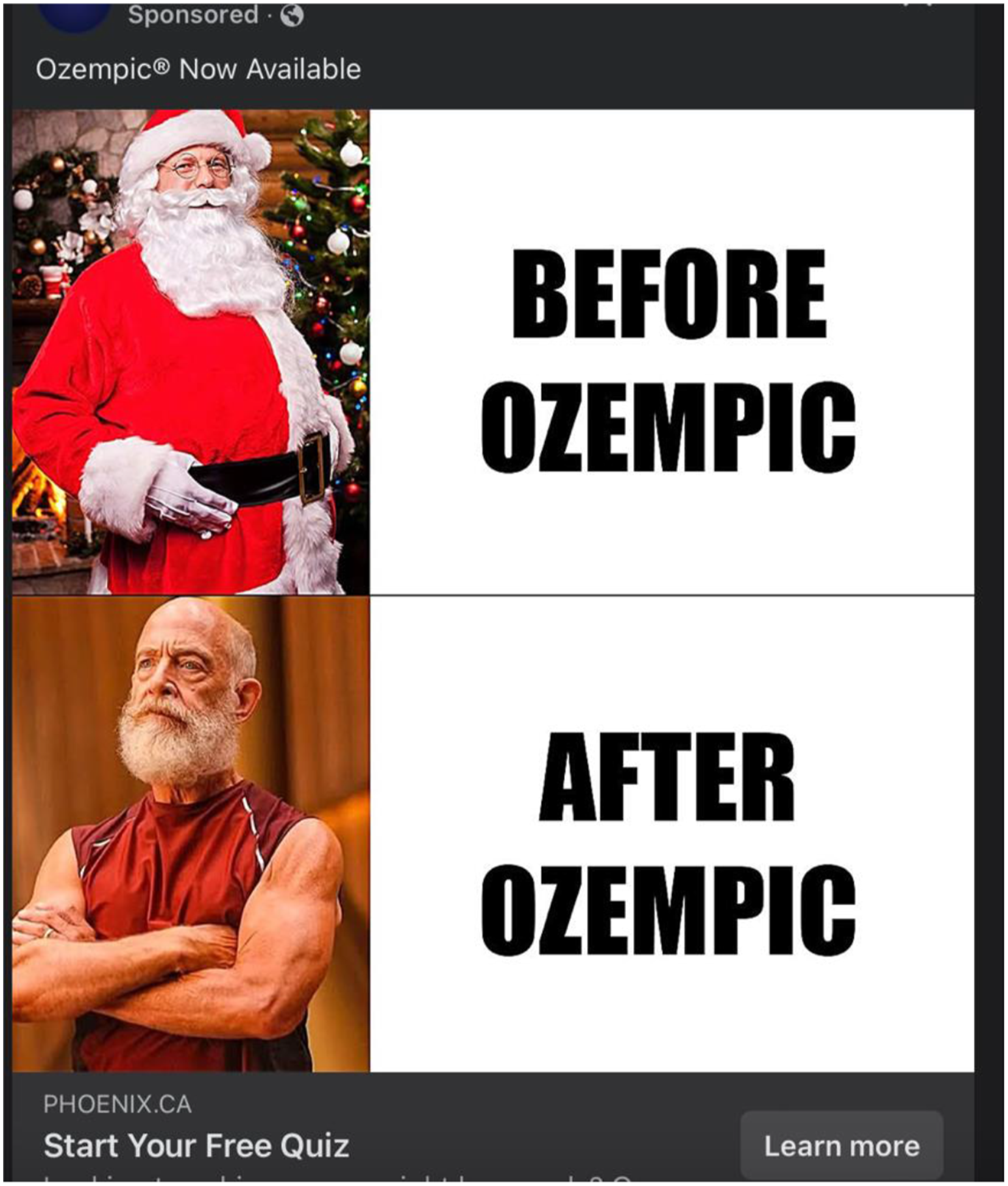
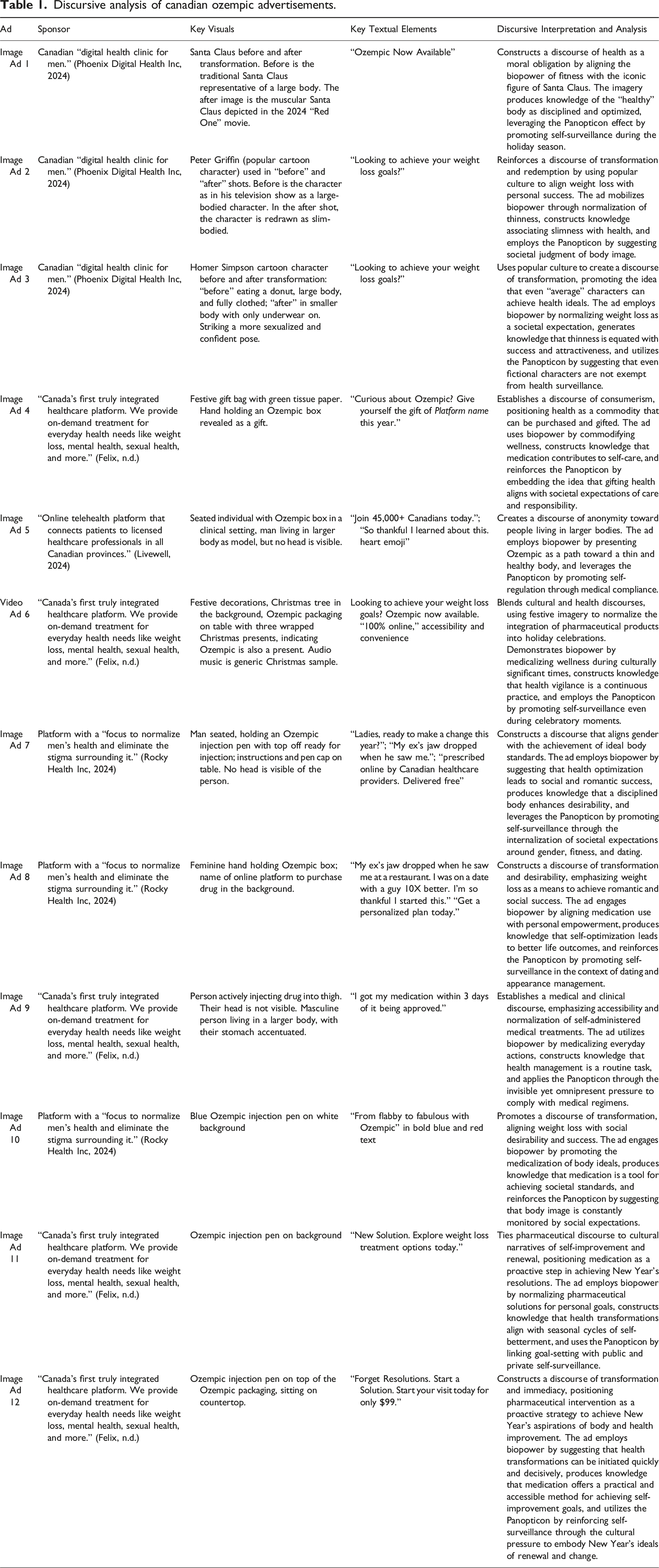
Discursive analysis of canadian ozempic advertisements.
Data Analysis
Foucauldian discourse analysis involves a detailed, critical examination of texts and visuals to explore how discursive practices are constructed and their social implications expressed (Arribas-Ayllon & Walkerdine, 2017). The analysis was guided by Foucault’s theoretical concepts of discourses, power (biopower), and the mechanisms of self-surveillance and disciplinary power, including the Panopticon as a metaphor for how societal norms regulate behavior through perceived observation.
The analytic process began with an open review of textual and visual elements to identify discursive constructs, focusing on how language and imagery mobilize power and discipline bodies. A coding book was developed to identify and construct patterns of meaning related to Foucauldian concepts, including biopower (e.g., constructing weight loss as a normalized practice), disciplinary power through self-surveillance (e.g., encouraging self-monitoring via New Year’s resolutions), and discursive practices (e.g., constructing narratives of holiday cheer, New Year’s resolutions, health, and morality). Our coding process embraced the multiplicity of meanings inherent in Foucauldian discourse analysis. Divergent interpretations among researchers were treated as opportunities to explore the contested and dynamic nature of discourse.
Ethical Considerations
This study adheres to ethical principles in research, ensuring that the analysis is conducted with respect for intellectual property and cultural sensitivity. No personal data were collected, and the analysis focuses solely on the publicly disseminated content of the advertisements. The images analyzed were publicly available on Facebook during the study period. These images are utilized under the fair dealing provisions of Canadian copyright law, as the purpose of their use is for academic critique, commentary, and research. Proper attribution is provided to the creators of the advertisements wherever necessary, ensuring the analysis remains within the bounds of ethical research practices.
Results
This analysis identifies and examines three interrelated discursive constructs: (1) Santa Takes Ozempic, (2) Ozempic as the Perfect Holiday Gift, and (3) Medical Authority Meets Holiday Cheer. These constructs do not operate in isolation but intersect, shaping and reinforcing discourses of health, morality, and self-surveillance.
Discursive Construct 1: Santa Takes Ozempic
This discursive construct illustrates how Ozempic advertisements participate in the (re)negotiation of cultural narratives around body ideals, particularly for men, by reimagining Santa Claus and other pop culture figures. Rather than merely depicting a before-and-after transformation, these ads (re)produce discourses about desirable bodies, mobilizing biopower to regulate normative health ideals and construct a disciplinary gaze consistent with the Panopticon (Foucault, 1980; Heyes, 2006).
For example, the visuals in Advertisement 1 (Figure 1) feature “before” and “after” images of Santa Claus, a cultural icon traditionally associated with warmth, generosity, and holiday cheer (Hodgson, 2023). The “before” image presents Santa with his iconic round belly, symbolizing a carefree indulgence and nonconformity to modern fitness standards. In contrast, the “after” image reimagines Santa as a muscular figure, akin to his depiction in the 2024 holiday movie Red One (the “after” image is in fact a photo still from the movie). This reimagining constructs a discourse of health and productivity, suggesting that even cultural symbols must adhere to contemporary fitness ideals to maintain relevance.
Morgan’s (2011) “ugly duckling to technoswan” narrative provides insight into how Santa’s transformation reflects broader cultural expectations that tie self-worth to bodily transformation as with Santa Claus in Advertisement 1. The advertisement’s use of “before” and “after” imagery participates in the construction of a visual narrative in which Santa’s traditionally fat body is positioned as an “ugly duckling” in need of transformation into a leaner, more disciplined, and culturally privileged figure. This transformation does not simply replace one version of Santa with another; rather, it negotiates and circulates discourses that equate body size with worthiness and productivity, reinforcing the broader moral economy of health. The advertisement illustrates how transformation is positioned as not just desirable but culturally imperative, aligning thinness with social privilege and self-improvement. Biopower operates by positioning self-discipline and bodily regulation as necessary conditions for value and success. Rather than simply coercing individuals into compliance, the ad produces self-regulating subjects who perceive weight loss as integral to social recognition and self-worth. Just as Morgan (2011) critiques the weight-loss surgery industry’s portrayal of transformation as the pathway to becoming a “technoswan,” this Ozempic advertisement similarly situates pharmaceutical intervention as an expected mechanism for aligning with dominant health discourses. This shift extends not just to individuals but to cultural icons themselves.
This transformation discourse is not limited to Santa Claus but extends to other popular fictional characters, including Peter Griffin from Family Guy (Advertisement 2) and Homer Simpson from The Simpsons (Advertisement 3). Like Santa, these characters are traditionally depicted with fat bodies and joyful relationships with food (e.g., cookies for Santa and donuts for Homer). However, the ads construct a narrative where their fatness is medicalized, and weight loss is framed as not merely aesthetic but as a moral duty aligned with societal expectations of health, productivity, and success.
Advertisement 3, featuring Homer Simpson, is particularly illustrative of this discourse. The “before” image shows Homer in his iconic blue pants and white shirt, eating a donut with his typical carefree demeanor. In stark contrast, the “after” image presents a transformed Homer, now in tight white underwear with a noticeably slimmer physique. The “after” image creates a more sexualized portrayal, suggesting that weight loss not only brings health benefits but also enhances desirability and sexual appeal. This visual shift reinforces the narrative that thinness equates to attractiveness and worth, encouraging viewers to internalize these standards through self-surveillance and discipline.
These advertisements invoke panopticism by framing body transformation as an expected norm, leading individuals to regulate their own bodies in anticipation of social scrutiny (Foucault, 1995). By positioning Santa Claus, Peter Griffin, and Homer Simpson as subjects of transformation, the advertisements reinforce the notion that body regulation is ubiquitous, and cultural icons, like ordinary people, must embody discipline and self-management. This discursive practice contributes to broader societal tensions around health, fatness, and morality, where pharmaceutical interventions are framed as essential tools for achieving desirable body standards.
Discursive Construct 2: Ozempic as the Perfect Holiday Gift
This discursive construct positions weight loss, and by extension, good health, as the culturally idealized gift, intertwining themes of transformation, renewal, and social validation with holiday seasonal narratives. Rather than simply promoting a product, the advertisements construct a discourse where pharmaceutical intervention is framed as an act of self-care and a meaningful offering that enhances social status and well-being. Through the lens of Foucauldian theory, these advertisements mobilize biopower by presenting health management as a moral duty, leveraging the Panopticon effect to encourage self-surveillance and align individuals with societal expectations of body ideals.
In Advertisement 4 (Figure 2), the message to “Give yourself the gift” of Ozempic during the holidays draws upon the emotional appeal of gift-giving, aligning weight loss with themes of renewal and self-improvement. The ad constructs a discourse of transformation, suggesting that health and weight loss are things to be given, a show of love and respect to yourself, as all gifts are interpreted to be. The discourse of gifting health is also evident in Advertisement 6, which features the Ozempic box and pen next to beautifully wrapped Christmas presents with a brightly lit Christmas tree in the background. This imagery implies Ozempic to be an ideal gift for giving. It is a gift that, according to the text, will help you “achieve your weight loss goals.” Screenshot of Ozempic Advertisement 4 featuring the drug with Christmas tree and presents.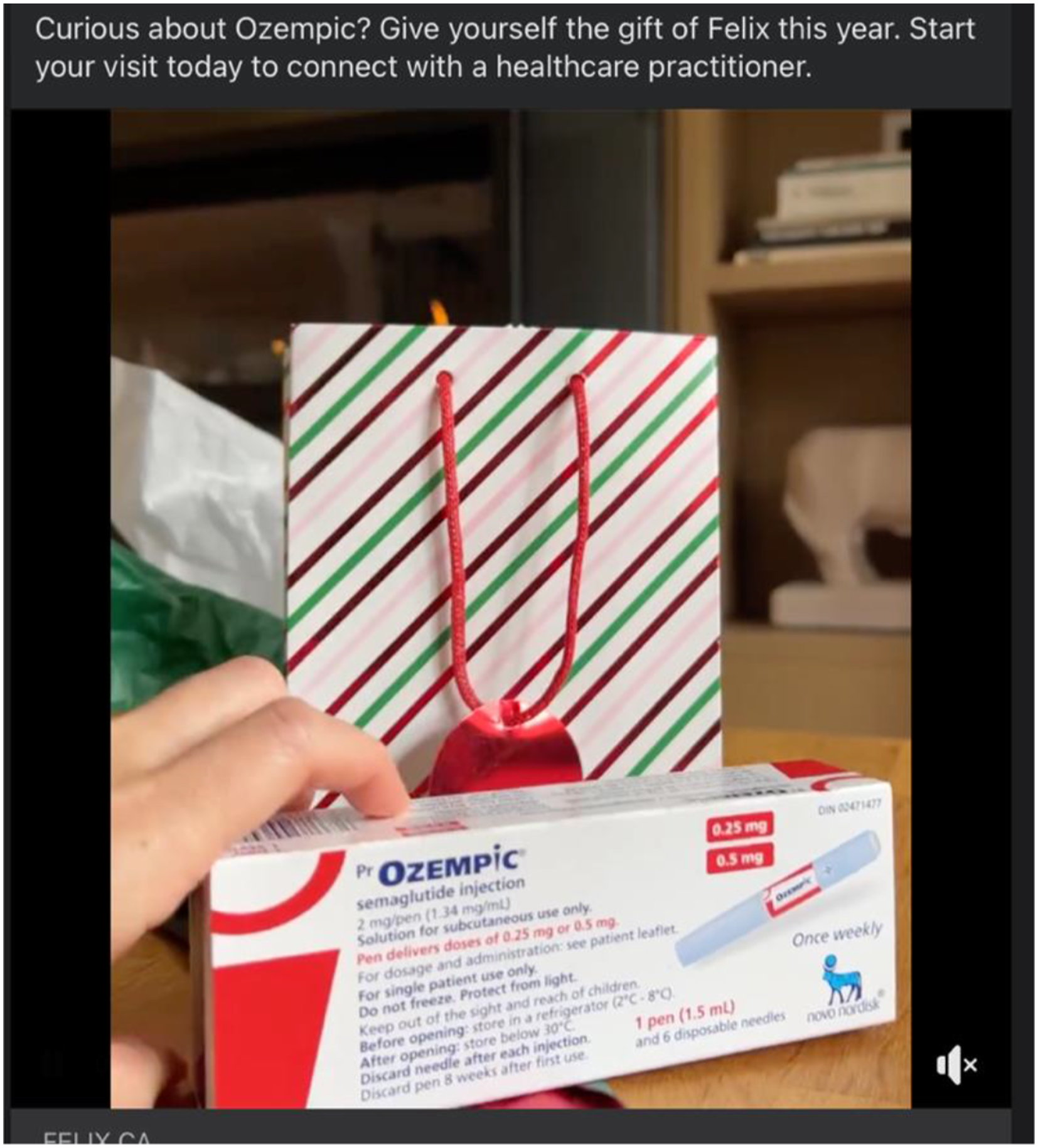
The statement “My ex’s jaw dropped when he saw me at a restaurant. I was on a date with a guy 10X better. I’m so thankful I started this” is key element in Advertisement 8. While this ad does not explicitly frame Ozempic as a holiday gift, it reinforces a discursive construction where self-improvement through pharmaceutical intervention is positioned as a means of achieving social legibility and desirability. The ad (re)produces knowledge that pharmaceutical weight loss functions as a mechanism for accessing social and romantic capital, reinforcing a discourse in which bodily transformation is tied to personal worth and success. This aligns with the broader holiday discourse of gifting, which constructs transformation as an act of self-investment and as a means to align with dominant aesthetic and health norms. The ad also operates within a panoptic way, where the possibility of being scrutinized encourages individuals to regulate their own bodies in accordance with normative ideals of thinness and desirability (Heyes, 2006).
Further reinforcing this discourse, Advertisement 10 uses the phrase “From flabby to fabulous with Ozempic,” discursively positioning weight loss as a binary transformation from undesirable to desirable. While the ad does not use the explicit language of gifting, it constructs weight loss as a socially valuable act of self-investment, aligning with neoliberal discourses of personal responsibility and self-discipline. Similarly, Advertisement 11 (Figure 3) utilizes a holiday design, creatively altering the slogan “New Year’s Resolution” to “New Solution,” suggesting that Ozempic is not merely a weight loss aid but a necessary solution for self-betterment. These advertisements (re)produce discourses in which weight management is positioned as a moral obligation, reinforcing the entanglement of health, morality, and self-worth. By presenting the New Year as a moment to reconstruct the body in accordance with societal ideals, these ads contribute to the biopolitical regime of self-regulation and normalization, where health becomes not just an aspiration but an imperative. Screenshot of Ozempic Advertisement 11 featuring a new solution for weight loss.
In most of the advertisements (Figure 4) that feature people, the individuals’ heads are not visible, a phenomenon Charlotte Cooper (2007) described as the “headless fatty” trope in media representation. The absence of heads constructs fat bodies as medical or societal “problems,” reinforcing discourses of dehumanization and medical intervention. As Cooper (2007) notes, As Headless Fatties, the body becomes symbolic: we are there but we have no voice, not even a mouth in a head, no brain, no thoughts or opinions. Instead, we are reduced and dehumanised as symbols of cultural fear: the body, the belly, the arse, food. Screenshot of Ozempic Advertisement 5 featuring a man, seated in a clinical setting, with the drug in the foreground. The man’s head is not visible in the frame.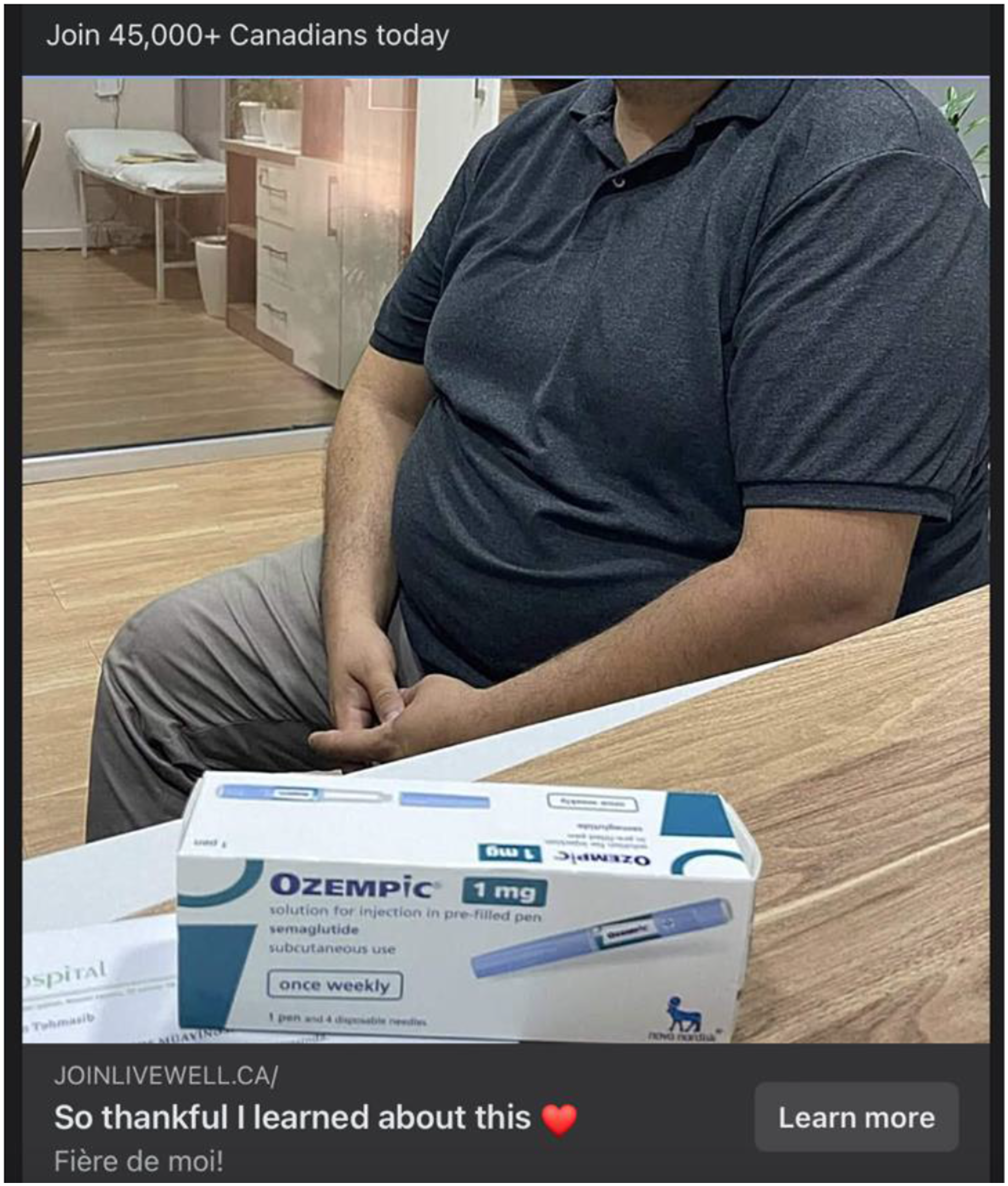
Within the discourse of gifting of Ozempic, this dehumanization positions weight loss as more than a personal transformation; it is positioned as a “gift” to society, reinforcing neoliberal discourses of self-discipline and bodily conformity. The representation of fatness as an object of intervention aligns with Foucauldian concepts of biopower, where the body becomes a site of discipline and control. The Panopticon effect emerges through the ads’ visual strategies, which (re)produce a disciplinary gaze that encourages viewers to scrutinize and assess bodies in alignment with dominant health and fat discourses. By positioning weight loss as a moral and social “gift,” these advertisements (re)produce discourses that privilege thin bodies as sites of discipline, success, and self-control, reinforcing but also complicating the shifting moral economy of health under the guise of holiday cheer and generosity.
In summary, this discursive construct portrays Ozempic as the ideal holiday gift, embedding pharmaceutical intervention within narratives of self-improvement, social success, and moral virtue. Through the construction of health as a commodity, the advertisements perpetuate societal discourses that equate body transformation with social validation or recognition, encouraging individuals toward self-surveillance and discipline in alignment with cultural norms around health and desirability.
Discursive Construct 3: Medical Authority Meets Holiday Cheer
This discursive construct examines how Ozempic advertisements strategically blend festive imagery with medical authority, positioning pharmaceutical health interventions as both commodifiable and emotionally fulfilling. While there is thematic overlap with the gift-giving construct, this section focuses specifically on how these ads mobilize biopower by presenting health management as a rational choice, softened by the cultural resonance of holiday cheer. This approach demonstrates how the advertisements (re)produce discourses where clinical interventions are not only normalized but also celebrated as integral to holiday traditions.
The visuals in Advertisement 6 (Figure 5) exemplify this discursive entanglement, where the Ozempic box is positioned alongside traditional holiday elements like gift wrap and ribbons. While previously discussed within the context of gift-giving, this ad also (re)configures a discourse where medical authority is strategically positioned within festive practices. The interweaving of clinical packaging with holiday decorations not only reinforces the commodification of health but also (re)positions pharmaceutical intervention as a culturally resonant act of self-care. This discourse integrates biopower by embedding health norms within holiday cultural traditions, positioning body transformation as part of broader cultural expectations around renewal and self-improvement. Screenshot of Ozempic Advertisement 6 featuring the drug next to a holiday gift bag.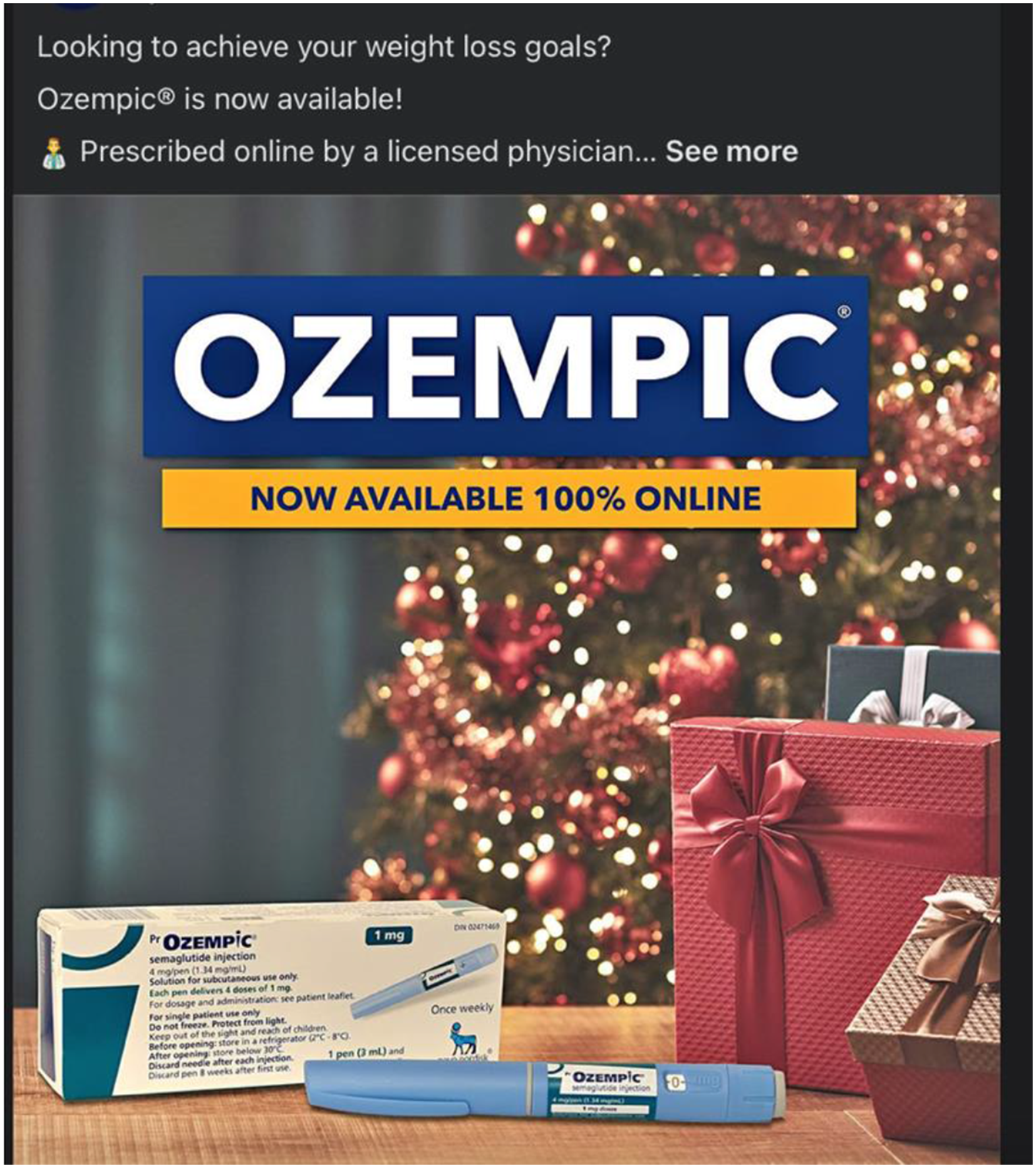
Several advertisements integrate clinical imagery, such as injection pens and physician endorsements, with festive holiday elements to construct a discourse that medicalizes weight loss while aligning it with seasonal traditions. For instance, Advertisement 7 features the phrase “Ladies, ready to make a change this year?” alongside an image of a hand holding an injection pen. This pairing situates the ad within a framework of medical legitimacy while simultaneously leveraging the cultural discourse of New Year’s resolutions, reinforcing urgency and self-discipline. This discursive strategy reflects Heyes’ (2006) analysis of how weight-loss programs mobilize emotional appeals to cultivate adherence to disciplinary regimes. Within this context, Ozempic is framed not only as a medically endorsed intervention but also as a necessary and desirable response to societal pressures surrounding body image and self-improvement.
These ads not only mobilize biopower by presenting health management as a rational choice but also cultivate a form of self-surveillance akin to the Panopticon effect, where individuals use self-surveillance and discipline in ways to try to meet the expectations of health and productivity. The festive framing invites viewers to monitor their behaviors subtly, embedding health norms into everyday holiday practices, from meal choices to social interactions.
The discursive entanglement of medical authority with festive cheer is also evident in Advertisement 11, where festive decorations surround an Ozempic box captioned “100% online,” positioning accessibility alongside claims to medical legitimacy. By embedding pharmaceutical solutions within holiday traditions, the ads situate health within consumerist discourses, reflecting the broader commercialization of well-being. The concept of biopower is mobilized through the positioning of health as a purchasable and giftable commodity, reinforcing the idea that self-regulation and body optimization are not only personal responsibilities but also seasonal expectations. In this framing, health is not merely an individual pursuit but a culturally prescribed imperative, aligning with the moral economies of gift-giving and holiday consumption.
The advertising strategy extends beyond promoting Ozempic as a medical intervention. They redefine health as both a personal responsibility and a marketable good, embedding pharmaceutical use within cultural narratives of comfort, renewal, and self-care. By blending medical discourse with holiday cheer, the advertisements construct a discourse where health management is not only rational and necessary but also emotionally satisfying. This multiple framing reinforces biopower by presenting health optimization as an accessible, comforting, and culturally significant practice, guiding individuals to self-regulate in alignment with seasonal expectations of renewal and transformation (Foucault, 1980).
By presenting pharmaceutical solutions as commodities that align with holiday traditions, the ads construct health as a marketable product, reflecting the broader commercialization of health. However, unlike the gift-giving construct that primarily emphasizes transformation as a gift to oneself or others, this construct critically examines how medical legitimacy is leveraged to promote health interventions as rational, necessary, and emotionally satisfying. Through this lens, the ads not only encourage self-surveillance but also subtly shift the discourse of health from a clinical necessity to a culturally resonant practice of seasonal renewal.
Discussion
Michel Foucault’s theoretical perspectives on power, discourse, and knowledge provide a critical lens for examining holiday advertising of prescription drugs, such as Ozempic, as a discursive practice. In Foucauldian terms, advertisements are not merely tools for selling products but mechanisms for shaping societal norms and values. Through strategic use of language and imagery, advertisements construct “truths” and knowledge that influence individual behavior and societal expectations. Within the context of health and weight loss, this becomes particularly evident as advertisements construct discourses that position themselves as authorities on acceptable body ideals and lifestyles, promoting self-surveillance and discipline (Foucault, 1980; Heyes, 2006).
Advertising contributes to the construction of Foucault’s concept of biopower, wherein power operates not through overt coercion but through the regulation of individual bodies in the name of health and well-being (Foucault, 1972, 1990, 1995). This dynamic is constructed in the Ozempic ads, which medicalize weight loss and frame it as both a moral responsibility and a social necessity. By presenting weight loss as achievable through pharmaceutical intervention, the ads contribute to discourses of health that connect physical transformation to personal success, discipline, and societal approval (Heyes, 2006; Trainer et al., 2017).
Cheek (2004), citing Armstrong (1983), notes that “the human body, as object of scientific/medical scrutiny, is both constructed by and, in turn, assists in the construction of scientific/medical discourse: ‘in short, the human body is both target and effect of medical practice’” (p. 1142). This idea is reflected in the Ozempic advertisements, which depict the body as both a subject to be transformed and an outcome of medical intervention. By framing weight loss through medicalized language and imagery, these ads reinforce the notion that the body must be disciplined and managed through pharmaceutical means to align with constructed societal standards of health and desirability.
Mackenzie and Murray (2021) demonstrate how healthy eating discourses are not neutral but rather serve the interests of various societal institutions, including state health organizations and commercial entities. Their analysis reveals how these discourses construct specific subject positions grounded in morality and citizenship, promoting the idea that being a “good” citizen involves adhering to prescribed health practices. This aligns closely with the findings of this study, where Ozempic advertisements utilize similar discourses to construct weight loss as a moral obligation and a marker of responsible citizenship. The ads contribute to discourses that frame pharmaceutical intervention as a rational and necessary step toward becoming a disciplined, productive member of society, perpetuating a narrow vision of health that excludes alternative narratives, such as body positivity or acceptance of diverse body types. Cheek (2004) explains that “at any time in history, certain discourses will operate in such a way as to marginalize or even exclude others. Which discursive frame is afforded presence is a consequence of the effect of power relations” (p. 1142). By promoting a singular vision of health as thinness, the ads contribute to the exclusion of broader, more inclusive understandings of health and well-being and people living within other types of bodies.
Tragantzopoulou et al. (2024) note that Foucault posits practices of self-surveillance and self-discipline as most effective when individuals perceive them as autonomous choices of self-care. Their research on healthy eating and pro-eating disorder websites confirms how, in the name of self-care, individuals are willing to invest significant time, attention, and money into dietary and fitness regimes. This aligns with the Ozempic advertisers’ strategy, which similarly constructs pharmaceutical intervention as a rational, personal choice in achieving idealized health and body standards (Tragantzopoulou et al., 2024).
The entanglement of Christmas mythology with health and medicalized discourses of fat becomes even more evident when considering evolving media depictions of Santa Claus. By depicting Santa as a muscular, disciplined figure, the film Red One constructs his identity anew, shifting him from a magical, heart-warming icon to one that must embody physical strength and endurance to fulfill his role. This portrayal is echoed in the Ozempic ad (Figure 1), where the medicalization of fatness reconstructs Santa Claus and his body to align with contemporary body ideals. While the film Red One includes calorie counts and references to healthy physical ability, the Ozempic advertisement similarly constructs health and weight loss not just as personal responsibilities but as prerequisites for fulfilling cultural roles and duties.
The festive imagery, including Christmas trees, gift-wrapped boxes, and holiday slogans, also constructs Ozempic as an integral part of the holiday season. For example, the slogan “Gift of health” reimagines the moral obligation of self-care within the cultural tradition of giving, constructing health as both a personal and societal expectation. It is sometimes unclear in the ads if the “gift of health” is for oneself, emphasizing self-care and personal transformations, or if the “gift” is for others by presenting a body more aligned with socially constructed discourses of healthier and more attractive bodies. Through Foucault’s (1995) concept of the Panopticon, in which individuals self-surveil and discipline themselves under perceived societal scrutiny, the Ozempic ads operate as a mechanism of the Panopticon, aligning individuals with dominant social discourses of health and fatness. The companies provide the means or the “gift,” by selling Ozempic, for individuals to position themselves as more productive members of society by transforming their bodies.
These narratives also blend emotional warmth with medical authority, constructing pharmaceutical intervention as not only rational but culturally resonant. These advertising strategies engage with broader cultural narratives, as highlighted in Kennedy et al. (2022), who discuss the blending of materialism and cultural ideals within Christmas myths. The sanctification of goods through associations with mythological figures like Santa Claus reproduces how Ozempic advertising positions pharmaceutical consumption as a moralized and socially approved act. This dual role of myths as tools for moral guidance and as mechanisms for enforcing consumer behavior reinforces the commodification of health, framing it as both a personal right and a collective ideal.
Additionally, the cultural figure of Santa Claus, celebrated for rewarding “good” behavior with gifts, mirrors the discourses tied to Ozempic as a self-gift for those striving to align with societal expectations of health and productivity. Just as Santa’s gifts serve as tokens of worthiness for those deemed “good,” Ozempic, marketed as a tool for weight loss, positions itself as a reward for individuals hoping to construct a body that embodies dominant standards of health and thinness. This framing suggests that by taking Ozempic, one positions themselves as a “good person” who not only aligns with societal ideals of physical appearance but also affirms their role in contributing to the economy and culture through heightened productivity.
In the article, Jolly, Fit and Fat: Should We Be Singing the “Santa Too Fat Blues”? published in the Canadian Medical Association Journal, the authors ask “why Santa remains jolly” despite being obese (Craig et al., 2006, p. 1563). While they conclude that an “overweight Santa Claus is as likely to be as jolly as a ‘healthy weight’ adult,” they attribute this to his active lifestyle, suggesting that Santa’s ability to “race from rooftop to rooftop and contort through chimneys” implies he practises “JOLLY (JOgging and Life-Long Yoga)” (Craig et al., 2006, p. 1564). This framing aligns with broader discourses of health and surveillance, where fat bodies (even the body of the magical and mythical character of Santa Claus) are continually measured and categorized, perpetuating the notion that happiness and productivity are contingent on physical fitness (Bailey et al., 2022). It also illustrates how societal and medical (bio)power operates through health narratives to regulate bodies and maintain normative standards.
It could also be argued that the Santa who practises JOLLY is constructed as doing the “right” things to potentially no longer be fat and to be a productive citizen (Cameron, 2019). He is represented more positively than other fat people who do not engage in such practices and who are constructed as “lazy,” reinforcing stereotypes about “unhealthy” fat people (Gibson, 2022). Such narratives contribute to the moralization of body size, framing thinness not just as a personal accomplishment but as a hallmark of virtue and worthiness, reproducing a cycle where health and morality are inextricably tied to compliance with these dominant standards.
Oswald (2024) argues that the popularity of Ozempic within the contemporary anti-fatness landscape is not merely a response to weight management demands but is deeply entangled with fatphobia and the moralization of thinness. Oswald’s (2024) argument connects with Foucault’s concept of biopower, illustrating how power subtly operates through the normalization of specific health practices and body ideals (Foucault, 1990). The Ozempic ads analyzed in this study mobilize biopower by promoting weight loss as both a personal responsibility and a societal expectation, reinforcing the idea that thinness equates to productivity, success, and moral virtue.
The implications of using cultural myths in health-related advertising cannot be overlooked. By leveraging the emotions and traditions of the holiday season, these advertisements reinforce weight stigma and construct societal pressures to conform to idealized body standards. In Foucauldian terms, the discourses of these ads produce knowledge about bodies and sustain the surveillance, disciplines, and relations of power that privilege thin bodies. Scholars like Puhl and Heuer (2010) have documented how weight stigma in media representations perpetuates discrimination, framing fatness as a deviation from societal norms of health and productivity. During the holiday season, which is a time layered with discourses of goodwill, celebration, and renewal, such advertising strategies intersect with and shape anxieties about weight and self-control. This convergence transforms moments of joy into contested sites of moral judgment about a person’s body, illustrating the fluid and often contradictory nature of holiday discourses and health messaging.
Through the lens of Foucauldian discourse analysis, this study illustrates how advertising constructs knowledge that frames health as both a personal journey and a collective ideal. The interplay between medical authority, cultural traditions, and emotional appeals underscores the complex ways in which power operates through discourse, particularly during culturally significant times like the holiday season. These findings call for a more critical and inclusive approach to health advertising, one that acknowledges the diverse ways individuals experience and embody health.
Conclusion
Our analysis underscores the role of holiday advertising in shaping societal norms around health, body ideals, and personal responsibility. Through the strategic use of Christmas and New Year’s symbols, appeals to dominant body norms, and scientific language, the ads analyzed in this research not only market Ozempic to consumers but also actively (re)produce and circulate narratives of discipline, weight loss, and societal approval. By reimagining Santa Claus to align with contemporary fitness ideals, the advertisements contribute to the (re)production of discourses that medicalize body image and health, embedding biopolitical power into festive cultural symbols.
These trends contribute to the (re)production of discourses that perpetuate weight stigma and commodify health, particularly during the holiday season, which is traditionally associated with joy and merriment. Perhaps, we might engage with these ads more critically, recognizing that the discourses they circulate not only shape but also contest and negotiate societal beliefs and values about bodies, often perpetuating societal pressures that distance us from self-acceptance. When the traditions of New Year’s demand for us to become a better, thinner, and more productive person, it is crucial to question whose interests are being served and at what cost to individual well-being.
In a world that often prioritizes unattainable ideals, we might do well to revisit the wisdom in Dolly Parton’s and Kenny Rogers’ lyrics for their song “I Believe in Santa Claus” (2009): I believe love should prevail at any cost, And I believe in Santa Claus.
These lines open a space for alternative discourses, ones that prioritize love for ourselves as we are and that foreground the magic of kindness, generosity, and acceptance over the disciplinary discourses of self-optimization and transformation. Perhaps, like Santa Claus, the ideal body is not a fixed or tangible reality but a discursive construct that we can actively (re)write to embrace every shape, size, and story, thereby resisting the normative pressures of contemporary health discourses. By embracing this spirit, we can move closer to valuing our bodies as they are rather than as ads tell us they should be.
Footnotes
Declaration of Conflicting Interests
The author(s) declared no potential conflicts of interest with respect to the research, authorship, and/or publication of this article.
Funding
The author(s) received no financial support for the research, authorship, and/or publication of this article.
