




Abstract
Multimodal critical discourse analysis is a dynamic approach to qualitative data analysis that expands critical discourse analysis to include multiple communicative modes—such as images, graphics, video, and sound/music—into the semiotic analysis of ideology and power relations within contemporary forms of communication. We reflect on the potential of multimodal critical discourse analysis to be combined with arts-based health research as an analytic method to deconstruct discourses that shape the health and well-being of marginalized communities. Specifically, we frame this potential within our research about men’s body image based a project using cellphilming and the deconstruction of cis-heteronormative and related ideologies.
Introduction
Multimodal critical discourse analysis (MCDA) is an emerging method, grounded in linguistic and visual communication scholarship, of identifying how different modes of communication—text, speech, image, sound—are used to achieve political purposes (Machin, 2013). In today’s multimedia-saturated world, where (health) discourses extend beyond purely linguistic forms, MCDA provides a method for decoding the diverse ways ideologies and knowledge are communicated. For example, the United States Food and Drug Administration’s public health campaign for smoking cessation within lesbian, gay, bisexual, transgender, and queer (LGBTQ+) communities called “This Free Life” uses online and streaming videos, social media, social influencers, and interactive games and quizzes to educate LGBTQ+ audiences on the negative consequences of smoking—moving beyond strictly linguistic forms of public health education (Navarro et al., 2019; US Food and Drug Administration, 2022). MCDA offers a pathway toward decoding this multimodal mosaic, where ideologies—such as neoliberalism influencing individual responsibility for health and weight (LeBesco, 2011)—and knowledges—such as biomedical practices—are engaged and negotiated within public health communication (Constantinou, 2005). By examining these diverse forms of communication, we can better understand how various social, cultural, and political ideologies are conveyed and how different types of knowledge are validated or contested in health discourses.
MCDA has been used within qualitative health research previously. For example, Harvey and Brookes (2019) studied dementia representations in commercial stock images using MCDA, revealing underlying discourses, such as social stigma, associated with dementia. We aim to demonstrate the utility of MCDA as an analytic lens for arts-based health research, particularly within queer contexts. MCDA can enhance the analytical depth and broaden the interpretive scope of such studies. In this “Pearl, Pith, and Provocation,” we begin by providing an overview of discourse analysis approaches relevant to health research, followed by a discussion on MCDA within arts-based methodologies. We then detail our research, Puppy Philms Project, a queer poststructuralist cellphilm study that examines how body image is constructed and impacts the health and well-being of gay, bisexual, trans, and queer men (GBTQ+) in the underexplored kink subculture of pup play, which we analyzed using MCDA. We also provide an example of our processes in the form of the analysis of one film. We conclude with reflections on the broader potential of MCDA in arts-based multimedia health research.
Discourses and Discourse Analysis: A Brief Overview
We begin by providing a brief overview of our understandings of discourses within our queer poststructuralist theoretical lens. Michel Foucault’s concept of discourse refers to the structures of knowledge and power that shape what can be thought, said, and understood within a society (Foucault, 1972). Discourses regulate and produce meaning, framing our perceptions of reality and normalcy. For Foucault, power is omnipresent and operates through discourses that control and define knowledge (Foucault, 1972). Judith Butler expands on these ideas by exploring how gender identities are constructed through performative acts sustained by societal discourses (Butler, 1990). Butler argues that gender is a series of acts and behaviors reinforced by heteronormative discourses, which privilege heterosexuality and marginalize all identities outside of heterosexuality and binary genders of man and woman (Butler, 1990). These discourses create normative knowledge that individuals, institutions (such as health institutions), and societies (re)produce, often unconsciously.
Heteronormative discourses significantly shape the health and well-being of individuals, especially concerning body image. For instance, media portrayals and advertising often perpetuate a narrow definition of attractiveness, typically aligning with white, cisgender, and heteronormative ideals of masculinity and femininity (Bordo, 1999). For instance, in Aotearoa, New Zealand, media representations often privilege hypermasculine and Eurocentric body ideals, pressuring gay and queer men to conform to unattainable beauty standards such as the muscular, “rugged” appearance associated with white settler masculinity (Kaulback & Maydell, 2024). The resulting culture of comparison and self-scrutiny, as well as the focus on cisgender and heterosexuality with healthcare that leaves out diverse gender and sexual individuals (Heiden-Rootes et al., 2023; Yesildemir & Akbulut, 2023), demonstrates the far-reaching impacts of these heteronormative ideals on health. For many GBTQ men, the pressure to conform to these ideals can exacerbate feelings of otherness. Research indicates that exposure to heteronormative body ideals is linked to body dissatisfaction, anxiety, depression, and eating disorders (Austen et al., 2022; Blashill, 2010; Bonell et al., 2023; Brennan et al., 2011; Filice et al., 2019). Previous work led by our research team has revealed that GBTQ+ men navigate body image tensions through connecting with other men and identifying with GBTQ+ subcultures that celebrate bodies that are more diverse than the dominant thin and muscular body standards set before men (Joy & Neish, 2021; Joy & Numer, 2018; Joy et al., 2021). Hence, our approach is informed by discourse analysis but also by principles of queer theory.
Queer theory, which has roots in gay and lesbian identity politics, expands and critiques identity politics to offer a broader, more fluid understanding of sexuality and gender (Jagose & Genschel, 1996; Spargo, 1999). Researchers who use queer theory often seek to disrupt fundamental assumptions about identity categories (DiGrazia & Boucher, 2005) and, in our research, we employ queer theory to interrogate body norms and sexuality. Queer theory allows for the possibility of questioning, exploring, and ultimately changing existing social and cultural arrangements of bodies, gender, and sexuality (Denton, 2016; Hesse-Biber, 2007; West & Zimmerman, 1987).
Critical Discourse Analysis
Critical discourse analysis (CDA) is the exploration of how power and dominance is reproduced through communicative modes, specifically the linguistic modes of speech and text (Fairclough, 1992; Hook, 2001; Van Dijk, 1993, 2015). Power is an attribute of social relations that exist between groups or individuals, based upon the establishment of hierarchies. While this can take form as direct material action, exercising power often involves employing discourses that shape how something or someone is represented (Foucault, 1972; Foucault & Rabinow, 1997; Hart & Cap, 2014; Yates & Hiles, 2010). In other words, communicative activity is shaped by power relations and ideology (Van Dijk, 1993). This ability to influence comes in many forms that are often difficult to detect. While these strategies may appear to be routine and/or natural forms of communication, they are, in fact, cyclical; ideology within discourses often reinforce dominant narratives of understanding and, in turn, maintain hegemonic structures of power and oppression.
CDA highlights what types of discourses are being foregrounded and legitimized (such as cis-heteronormativity) along with what types are being obscured, discredited, and/or concealed (Graham, 2011). In the framework of systemic functional linguistics (SFLs), which emphasizes language as a system of meaning, semantic choices are about selecting from different options in the language system to create meaning based on the social context, purpose, and audience. These choices involve selecting specific words, phrases, or structures to express a certain idea, emotion, or stance, and they shape how a message is understood by others. Every time we communicate, we make choices about which meanings to express and how to express them, for example, choosing “slim” or “skinny” or “thin”—while all these words describe a similar body type, each word carries different connotations or meanings influenced by social context. Language, therefore, plays a key role in reinforcing or challenging power and ideology which in turns affects the health of individuals. Drawing on Michael Halliday’s (1978) SFLs, discourse analysts argue that language must be understood within its social, political, and ideological context. Within this systemic-functional model of linguistics that ultimately shaped CDA (Halliday, 1978, 1995; Kress & Van Leeuwen, 2020), the focus of analysis is on the linguistic resources employed to accomplish some social purpose. In particular, there are perceived to be three meta-functions to language: (1) communicate ideas, (2) form relationships and identities, and (3) create coherence (Ledin & Machin, 2019). CDA helps decode the way these meta-functions of language are used to propagate ideologies by identifying and critiquing the “underlying repertoire of choices of meaning potentials that communicators could draw upon” (Machin, 2013). In other words, CDA involves asking to what political end people use the words they do to construct meaning. In the context of GBTQ+ men’s body images, we are analyzing how pups position themselves, their practices, and their community in relation to hegemonic discourses of how men ought to look and be.
The Multimodal Turn
With social media and digital spaces dominating the landscape of communications around the world today, communication research needs to adjust to the rich interplay of modalities utilized within these dynamic technologies (Ravelli & Van Leeuwen, 2018). While CDA has done a crucial service of deconstructing “naturalized” discourses into their underlying ideologies, its focus on linguistic analysis can overlook the interaction between various modes of communication, including but not limited to images, graphics, design/architecture, and audio/music (Fei, 2007; Kress & Van Leeuwen, 2001, 2020; Ravelli & McMurtrie, 2015). The turn toward multimodal discourse analysis, highlighted in a special issue of Critical Discourse Studies in 2013 (Machin, 2013), recognizes and attends to how different modes employ and integrate different “semiotic resources” (Machin & Mayr, 2012) toward fulfilling a specific communicative action. For example, while verb use in language can construct relations between subjects and objects, spatial positioning between elements within an image may be used to similar purpose.
The field of multimodal analysis is neither new nor self-contained; visual communication research and analysis have long traditions, particularly in anthropology and sociology (Machin, 2013), and scholars have taken the rich tools and approaches to multimodal analysis in a variety of directions (Constantinou, 2005; Dicks, 2014; Machin et al., 2016; Royce & Bowcher, 2013). However, multimodal analysis has been acknowledged as providing a unique framework to analyzing multimodal forms of communication. In particular, carrying on the legacy of CDA and of SFLs before it, the guiding social semiotic framework in multimodal analysis is to explore the semiotic choices made within and across modes (e.g., verb usage, visual cues and frames, color palettes, tempo and rhythm, and built environments), the associations or meaning potentials signified by such choices (e.g., connotation, juxtaposition, and genre), and the ideological purposes thereby achieved (e.g., reinforce a status quo, manufacture an enemy, and tell a compelling story) (Machin, 2013; Machin & Mayr, 2012).
Multimodal analysis uses communicative modes as a point of analysis. A communicative “mode” is the means of representation to achieve a social purpose, to be distinguished from the “media” or the means of dissemination (Constantinou, 2005; Jewitt, 2004). A communicative mode is a heuristic unit that interconnects with other communicative modes. These modes do not have clear and defined boundaries, nor are they necessarily in harmony with each other (Constantinou, 2005). Furthermore, different modes may also have different epistemological requirements or contexts (Kress, 2011; Machin, 2013; Machin & Mayr, 2012); for instance, compare the assumptions about modal-based knowledge embedded in the two adages “don’t believe everything you read” and “seeing is believing.” Linguistic modes have received the most attention within discourse analysis, particularly CDA, and this heritage has led to the importing of linguistic constructs into the toolkits for analyzing other modes (Constantinou, 2005; Ledin & Machin, 2019; Norris, 2004). In fact, some have described this transfer of constructs from one mode to another as an effort at producing a “grand theory” of communicative action firmly based upon linguistic forms (Ledin & Machin, 2019).
There is a major limitation to this approach; by privileging speech and text as the primary modes of communicative action, what is unique to the form and context of each mode is lost (Van Leeuwen, 2004). For example, different modes carry different “canons of use” (Ledin & Machin, 2019), that is, the standards of practice, genres, and/or traditions of a particular mode (e.g., in painted portraiture, photojournalism, or office design) that are drawn upon and responded to within each communicative action. Studying the interaction between different communicative modes provides a better understanding of the impact their dynamics have within contemporary communication. Therefore, as Machin et al. (2016) summarizes, “‘Multimodality’ was to follow the works of CDA, but its main innovation was to include not just language but all the semiotic modes that make up a social context” (p. 303).
The field of multimodal analysis comprises various theorists who have developed methodologies that can be particularly useful for health researchers. It is crucial for health researchers to consider these different approaches to determine which methodology best fits their research questions and data types. For instance, Kress and van Leeuwen’s (2001, 2020) visual grammar is ideal for studies focusing on the interaction between text and images, as it treats visual elements like a language with its own set of rules. Jewitt (2004) offers guidance for conducting systematic and replicable research across various modes, ensuring consistency and thoroughness in the analysis. Meanwhile, Machin and Mayr’s (2012) work provides detailed methods for analyzing the construction and deconstruction of meaning and power relations, making it suitable for complex multimodal texts (such as films). Machin and Mayr’s (2012) approach would be particularly appropriate for research using queer theory and poststructuralism because their detailed and structured methodology aligns well with the critical examination of power dynamics and the fluidity of meaning, which are central to both theoretical fens. Machin and Mayr’s (2012) work focus on the interaction of various semiotic resources and the analysis of social actors’ construction can uncover and challenge normative discourses, making it an excellent fit for exploring how identities and power relations are represented and negotiated in multimodal contexts.
Multimodal Discourse Analysis, Art, and Arts-Based Research
Multimodal discourse analysis is incredibly versatile in its applicability to analyzing the spatial organization of static artifacts like textual documents, infographics, and photos, as well as spatio-temporal organization of dynamic artifacts such as videos and animations (Bateman, 2013; de Saint-Georges, 2004). This broad scope of utility has been picked up to analyze a variety of creative forms and spaces. The museum, for instance, has been approached as a site and genre of discourse (Liao, 2018; L. Ravelli, 2007; L. J. Ravelli, 2006), as well as world exhibitions (Tucker, 2021). Specific artistic pieces have also been subject to multimodal discourse analysis, including narrative films (Bateman, 2013), television shows (León & León, 2022), children’s picture books (Foster, 2014; Nauval & Marlina, 2023), and digital art on social media (Bergman, 2020). However, one common denominator among these studies is the analysis of pre-existing (one might say “naturalized”) artifacts; they were created prior to the research being conducted.
What has not been a common practice of multimodal discourse analysis or MCDA is to integrate it with arts-based research. There are many ways art may enter into research: as a subject of research (research about art), as a form of inquiry (art as research), and/or as a methodology (art in research) (Wang et al., 2017). The latter refers to participatory, arts-based research in which art is produced by participants as data. Arts-based research can encompass a range of artistic practices, including visual arts, music, theater, dance, and creative writing, to generate data, present findings, and engage communities. The underlying philosophy of arts-based health research is grounded in the belief that the arts can provide deeper insights into human experiences, emotions, and social contexts, which are often difficult to capture through traditional research methods. Arts-based health research often emphasizes community engagement, especially with marginalized groups such as GBTQ men, by creating inclusive and accessible research environments. This approach fosters collaboration between researchers and community members, empowering participants to express their perspectives and experiences through creative means. By prioritizing the voices of those traditionally underrepresented in research, arts-based health research aims to produce more holistic and nuanced understandings of health and well-being. This approach allows individuals to express their experiences through multiple forms, such as visual art, music, or storytelling, offering deeper insights that may not emerge through traditional, text-based methods. For example, marginalized communities often experience health challenges that are intertwined with cultural, social, and emotional dimensions. By engaging these communities in creative practices, researchers can capture the complexities of their lived experiences, including feelings, identities, and interactions that may otherwise remain hidden in standard data collection. The creative process also empowers participants by valuing their personal narratives and giving them agency in how their stories are told.
With the exception of one study involving the analysis of performing and visual arts within a detention center (Turner, 2013), MCDA has not been intentionally employed with artistic creations made specifically for research. As previously noted, the majority of MCDA studies have conducted research about art, approaching artistic creations as a subject of research. There remains a range of possibilities to bring MCDA together with arts-based research, such as photovoice, cellphilms, digital storytelling, ethnodrama, and many others, to be able to facilitate both the creation of specific multimodal artifacts meant to answer research questions and the ideological critique of discourses with which those artifacts engage. One of the appeals of this merger is a greater capacity to be intentional about the communicative modes used to explore a research topic and the analytic framework employed to critically analyze them. In turn, such a methodological approach, in which the communicative modes and the methods of analysis are better coordinated, may help to move away from the noted dependence or privileging of linguistic analytic concepts on multimodal artifacts (Ledin & Machin, 2019; Van Leeuwen, 2004).
The Puppy Philms Project
Pups and the Pup Community
There is a growing subset of gay, bisexual, transgender, queer, and other (GBTQ+) men who participate in “pup play” practices, during which adults dress as and take on the role of young canines or pups (Lawson & Langdridge, 2020). Pups may engage in barking, cuddling, panting, and/or tail-wagging, sometimes while wearing collars and pup masks (often referred to as “hoods”) (Wignall & McCormack, 2017). Pup play is considered a subcategory of bondage, discipline dominance, submission, and sadism/masochism (BDSM) role play; as such, it is not an explicitly or universally sexual activity and has instead been referred to as a form of “serious leisure,” a recreational activity that participants find so meaningful and rewarding that they invest significant time and resources into building capacities required for the activity (Wignall & McCormack, 2017). While some men mimic pups, others within pup communities can take on the role of their “handlers,” who serve a dominant role in training pups (e.g., teaching dog tricks, feeding, disciplining, petting, and taking for walks) (Lawson & Langdridge, 2020).
One important aspect of pup play that has not been explored is how it relates to body image among GBTQ+ men. Research has indicated that negative body image can influence the sexual health and well-being of GBTQ+ men (Brady et al., 2019; Pakianathan et al., 2016). Body image has been noted to be constructed through the beliefs, values, and practices of ideal bodies within culture and society (Bordo, 1999). Discourses of tall, thin, fit, and white bodies are often the reference points from which GBTQ+ men perceive and scrutinize their own bodies and assess their own currency within the community (Drummond, 2005; Joy & Numer, 2018; Pyle & Klein, 2011). The racialized and masculinized forms of sexual capital that are typically valued, and the privileges afforded to “gym body” types, are a particular source of critical concern (Faris & Sugie, 2012; Gosine, 2007). This project seeks to understand how participation in the pup play subculture influences body image, which for many GBTQ+ men can be a source of emotional and mental stress.
Within existing literature, there are discourses that BDSM can help with people’s health and well-being. For example, BDSM has been noted to help people overcome anxiety, social discomfort, and other issues of well-being, including body image; for example, professional dominatrixes report their sessions with submissive clients as “healthy alternatives to sexual repression, as atonement ritual, as mechanisms for gaining control over prior trauma, and a process of psychological revitalization” (Lindemann, 2011). Most notably, Speciale and Khambatta (2020) posit that: […] Because kink participation typically involves open and in-depth communication about one’s desires and boundaries before and during the specific scene, kink involvement allowed them to feel more in control of intimate encounters, which led to feelings of increased safety and self-determinism. These exchanges allowed participants to reframe sexuality as joyful, positive, and empowering experiences. (pp. 350–351)
By using safe and consensual policies around BDSM activities, participants strip away the power of their trauma narratives, replacing them with a more positive focus (Speciale & Khambatta, 2020). Kink and BDSM play have been noted to build community connections, serve as a social activity for relaxation, and provide therapeutic healing for GBTQ+ men who have faced emotional and mental trauma relating to the stigma and discrimination of identifying as GBTQ (Lindemann, 2011; Speciale & Khambatta, 2020; Wignall & McCormack, 2017). These same therapeutic benefits have also been reported within people’s experiences of pup play, in particular (Langdridge & Lawson, 2019).
Since this “Pearl, Pith, and Provocation” focuses on the analytical method employed in our research, we will provide only a brief overview of the project, the methods, and the findings to provide context to readers (Joy, Bonardi, et al., 2024; Joy, Hammond, et al., 2024; Joy, Wassef, et al., 2024). In doing so, we also provide an introduction to the “pup” community and its cultural discourses. These aspects are covered in greater detail in other publications (Joy, Bonardi, et al., 2024; Joy, Hammond, et al., 2024; Joy, Wassef, et al., 2024), allowing us to concentrate on the advantages of using an MCDA approach. MCDA extends beyond the analysis of written or verbal interview transcripts, making it particularly suitable for arts-based qualitative research in health contexts.
Puppy Philms is qualitative research examining how identifying as a “pup” and participating in “pup play” shapes the body image and well-being among GBTQ+ men. We utilized an arts-based method known as cellphilming to engage participants (referred to as pups). Cellphilming involves participants creating short films using their mobile phones, a technique that leverages accessible and familiar technology (Bergold & Thomas, 2012; MacEntee et al., 2016, 2022).
The research received ethics clearance from Mount Saint Vincent University (#2021-023) and the Université de Montréal (#2021-1255). Participants were recruited throughout Canada and took part in three virtual workshops. Participants received guidance and support to create their cellphilms through the workshops, encouraging them to creatively represent their experiences (Joy, Bonardi, et al., 2024; Joy, Hammond, et al., 2024; Joy, Wassef, et al., 2024). Cellphilming gave participants a creative way to tell us their experiences of how pup play influences their body image and overall health. The research addressed three key questions: (1) How do GBTQ men perceive their bodies within the pup community? (2) What values and beliefs about men’s bodies are prevalent in the pup community? (3) How does identification with the pup community affect body image?
A total of 17 cellphilms were produced and are available online for viewing at this link: https://phillipjoy.ca/puppyfilms.html#/.
One participant, however, chose not to share their cellphilm publicly. The qualitative data analysis software program NVivo 12 Plus was used to store and to analyze the resulting cellphilms. NVivo offers the ability to code not only text but also images and videos, enabling an integrated analysis of the modes at work within the cellphilms. Annotations can be recorded at specific timepoints in videos. Three analysts (Joy, P., Hammond, C., and Hammond, B.) contributed to coding each of the videos; the codes from each analyst, which contained some shared as well as unique observations, were integrated into the final analysis.
Briefly, we used MCDA to analyze participants’ cellphilms, including the visual, auditory, and linguistic elements, to more deeply understand how being a pup (re)shaped participants’ body image, health, and well-being (Joy, Wassef, et al., 2024). We found that wearing pup gear, such as hoods, collars, and tails, facilitated a transformation of self-image. Participants expressed that this gear enabled them to temporarily detach from societal pressures related to body image, creating “pup-sonas” that allowed for more playful, liberated self-expression (Joy, Wassef, et al., 2024). Another key finding was that pup play provided a space for greater self-acceptance and playfulness, allowing participants to feel less judged based on dominant body ideals for queer men. However, some participants, especially trans individuals, noted that the pup community still reflected certain societal biases, such as privileging white cisgender male bodies and masculine ideals (Joy, Wassef, et al., 2024). All participants suggested that pup play offers a transformative practice for GBTQ men, allowing them to (re)negotiate their relationship with their bodies, resist dominant body standards, and foster mental health benefits through self-expression and non-judgmental play (Joy, Wassef, et al., 2024).
MCDA Analysis Processes
The Processes for Multimodal Critical Discourse Analysis.
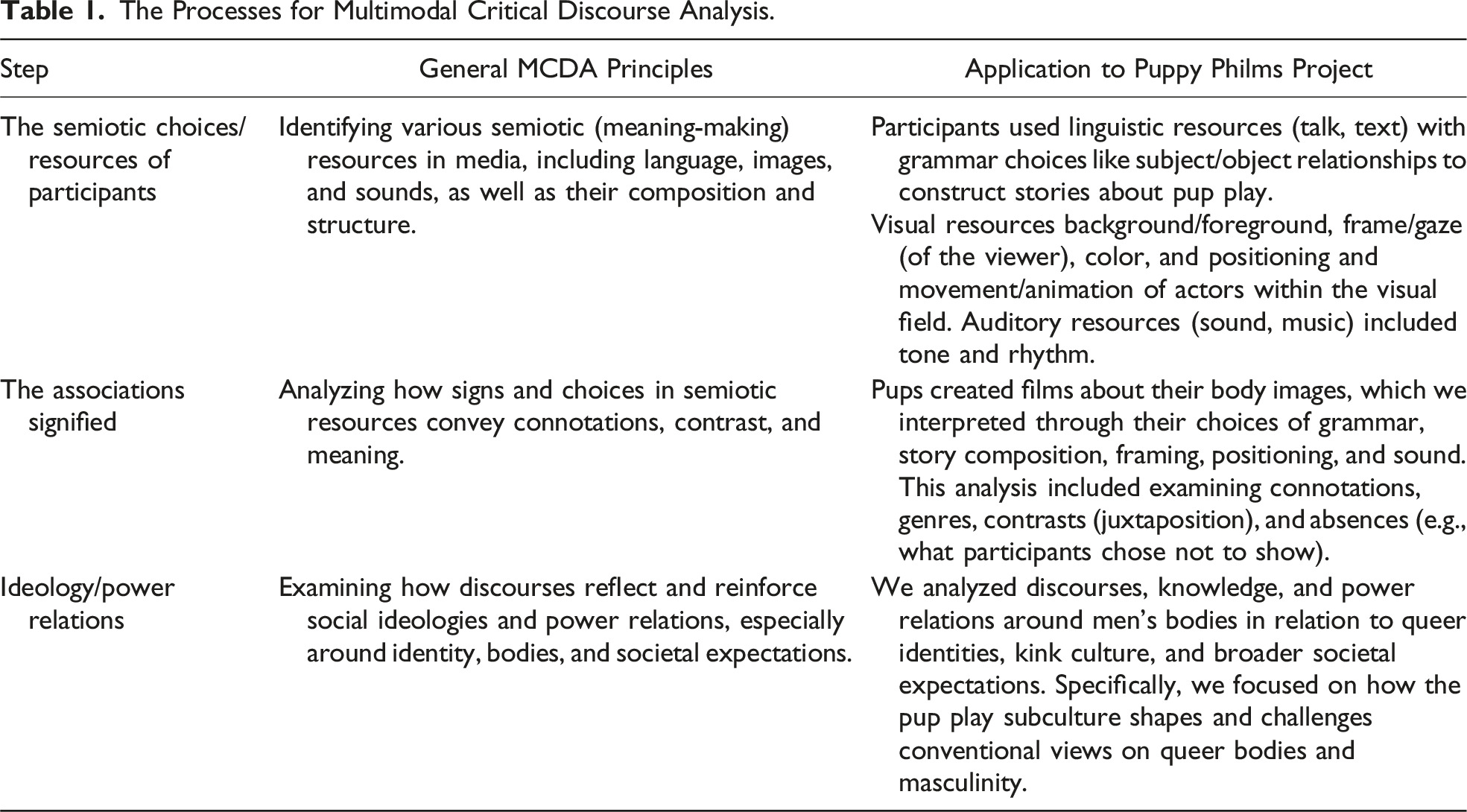
Through this lens, we were able to reveal deeper insights into how subjects positioned themselves within the context of pup play and how broader social dynamics of power and identity were communicated. The codes emerging from applying these analytic constructs to the cellphilms were then threaded to the ideological apparatus at work on and within queer and kink communities, in particular the dominance of cis-heteronormative discourses in shaping how GBTQ+ men think about themselves, their sexualities, and their bodies. Other relevant ideologies to gender and language were found to be embedded in the cellphilms as well, especially the neoliberal and commodified production of identity.
Pup Vy: An Example of MCDA Application
As previously mentioned, one of the main findings from our MCDA analysis was that the pup community can offer a supportive environment that contrasts with the often body-shaming mainstream and some queer subcultures, providing a space where diverse body types and identities are accepted and celebrated. Play is emphasized as a critical aspect of pup life, offering a therapeutic escape from societal pressures and body image anxieties. This finding was present in all cellphilms. In the next section, we provide an example of our MCDA processes using the cellphilm from Pup Vy that highlights this finding. We provide selected examples of the three different steps of our process in brackets.
At the time of participating in this project, Pup Vy identified as a non-binary, transgender Asian man who expressed their sexuality as relatively fluid. He was 20 years of age, a student, and had been a pup for almost a year. They said they joined the project in order to share their experiences so far within the community. Unlike most of the other videos, which used cellphone cameras to construct the dynamic image-flow semiotic mode, Pup Vy’s cellphilm is an animation sketched and recorded. The cellphilm entails an audio-recording (semiotic choice) of them talking about discovering the pup community, displaying minimal text and sketches of themselves as they explore their relationship to pup play. There is no background sound or music beyond the audio-recording (semiotic choice). Below we provide the transcript of the cellphilm in italics, descriptions of the image-flow in parentheses, and screenshots of pivotal moments.
Pup Vy begins the video by saying “Hello,” and the word “Hello” later appears in the top left corner of the screen. Pup Vy is addressing the audience—the video is directed (gazes) toward the viewer. This is reinforced later by the portrait-style of the sketches, with the pup faces looking out of the frame toward viewers (semiotic choice). The portrait-style takes most of the non-white space on the screen and there is only a single representation of a pup in each frame, which creates a one-on-one exchange between the pup and the viewer. This relationality, combined with the confessional-style of Pup Vy’s story which includes moments of suffering, can contribute to a heightened sense of closeness and intimacy, whereby viewers may relate to and feel compassion for the pup (semiotic choice). These semiotic choices make for a more raw presentation, supported by purely white background and pared-down use of visual and audio resources throughout most of the video. Not to suggest a lack of deliberation or creativity in how Pup Vy composed their cellphilm, the opening scene shows the final sketch that will be revealed as they finish their story. Intentionality and forethought is established as the beginning is linked to the ending (Figure 1). The final image shown at the beginning of the cellphilm (0:16).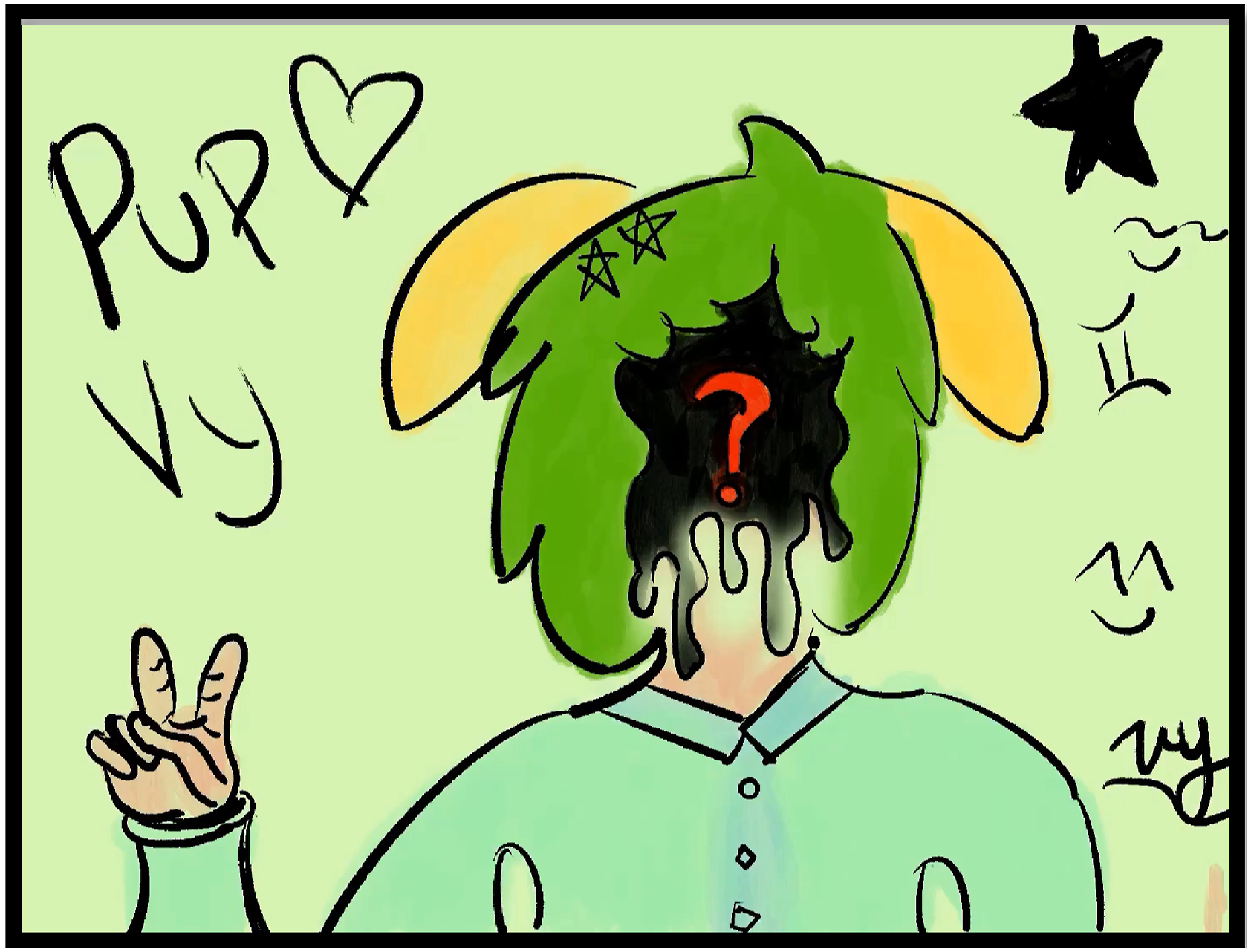
Before I was a pup I was struggling to find a safe space for me. (Squiggly lines appears on screen, then the screen goes blank).
Especially when the pandemic hit. When the pandemic hit,
(An oval is outlined in the centre of the screen).
I was very depressed, anxious. I had a lot of body dysphoria. I gained a lot of weight. But I came out as trans and nobody seems to … help me out … on saying that it’ll be OK. And, I was alone. I was very confused.
(The outlined oval has become two dog ears along with the outline of a face. There is an outline of hair on top of the head).
And it was hard for me to find a safe coping mechanism. I tried everything but it … nothing seems to work out.
(More layers and shading are added to the outlined head with dog ears).
Until I was introduced to puppy play. How was I introduced?
(There are two eyes outlined).
Well during the pandemic, an app became …
(The face and ears are erased. The “Hello” in the top left corner remains. See Figure 2 The first sketch before Pup Vy talks about first learning about pup play (1:22).
… very popular. It’s called TikTok. One day I was scrolling through TikTok and found a pup video on my “For You” page. I was really curious about what puppy play was.
(A new facial outline has been made. There are two dog ears).
And I started to do some research on Google and of course on TikTok. And. I was thrilled by it.
(The outline includes hair, but no eyes or nose, before it too is erased. A new face is being outlined. See Figure 3 The second face sketch just before it is erased (1:50).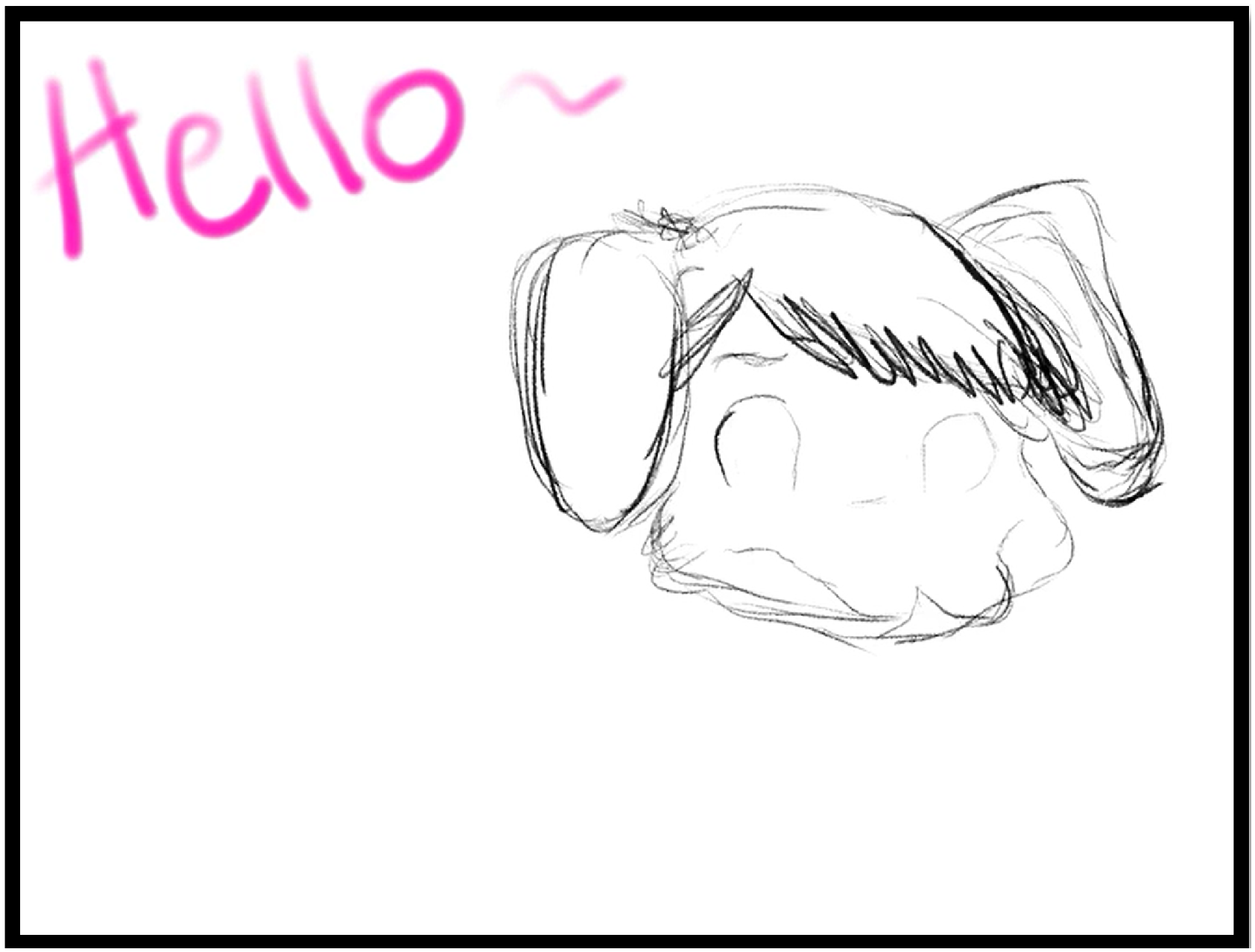
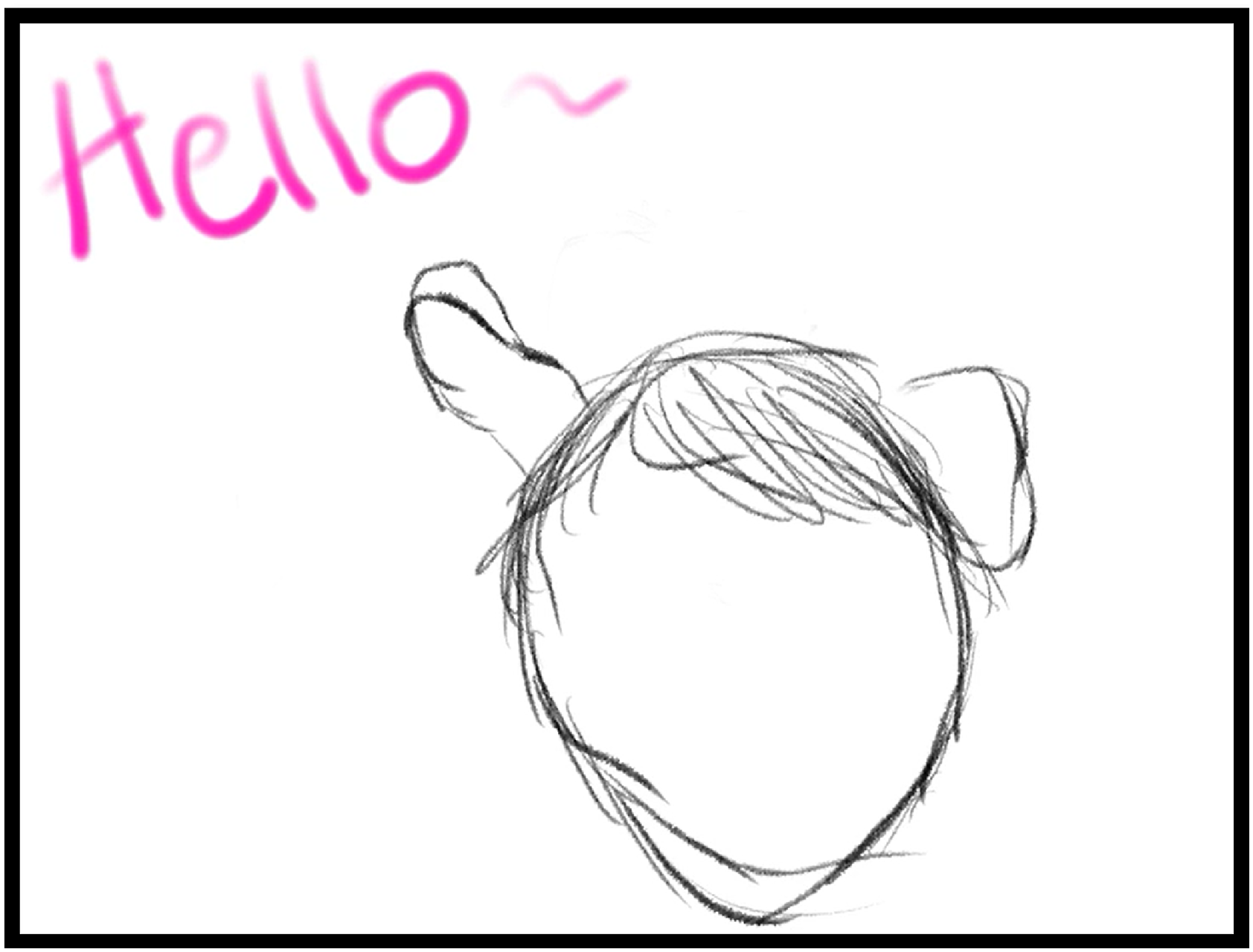
What we see and hear in this first 2 minutes of the cellphilm is Pup Vy’s body taking form. At the outset, in recalling the time before they were a pup, the squiggled sketch has no clear contours, no clear shape. This image is intended to depict the “body dysphoria” they speak about, a notable blending or conflating of two concepts: gender dysphoria toward one’s body that does not reflect the gender with which one identifies and body dysmorphia toward one’s body that is perceived to be majorly flawed or distorted (the associations signified). In the same breath, they reference both their weight and their gender transition, which weaves the above two forms of distress together. Just as no other body appears in the video, there is an absence of support depicted in this narrative of being “alone” and “confused”; the only one other social actor evoked at this point is the “nobody” who neither recognizes nor comforts Vy while their body is obscure to them (the associations signified).
The more defined image of a face with dog ears starts to appear as they describe searching for ways to cope and coming across puppy play (semiotic choice). At this point, however, they are on his third iteration of the sketch. They continue to erase and restart their drawing (semiotic choice). They sketch to re-enact the story of identity exploration, breakdown, and development into a pup. They depict the sketching process itself (including errors, backtracking, and layering) like a self under ongoing reconstruction, a body without stable boundaries, a continual becoming (the associations signified). Pup Vy’s speech may be another signifier of the uncertain ground to their identity. Vy takes many pauses between words and articulates in a slow, hesitant, and measured tempo (semiotic choice). The pauses demand viewers listen patiently and sit with the words as they unfold (semiotic choice). The pauses may signify that Pup Vy is taking time to deliberate on their choice of words and/or may struggle to give expression to their experiences. As they discuss their immersion into pup play, this third sketch endures longer than the previous two, remaining visible throughout the rest of the cellphilm.
I was so curious that I wanted to try it myself,
(This face has hair and, instead of a sharp chin line, there are curvy lines).
and so I bought my first pup hood.
(Dog ears have been drawn on the top of the head).
I tried it on and tried to be in a puppy space for the first time.
(The ears are erased and re-drawn).
It was hard at first as I’m not sure what I’m doing. But,
(The outline of a body is drawn).
I join a few groups of pups online on Facebook and Discord. Then, I make a lot of friends.
(Two arms have been outlined, along with the buttons and collar of a shirt or blouse. In the top right corner, there is a star. There is a question mark in the middle of the face).
And everyone was very kind and welcoming and teach me whatever I need to know.
(The top right star has been filled in. Under it, a Gemini astrological sign, squiggles representing the movement of air, and a smiley face have been drawn. Two stars have also been added into the figure’s hair).
And, I went to be in a puppy space after all the things they taught me. And it worked. I was shocked at how fun and safe it feels to be in puppy space. Ever since then, I’ve become very attached to it.
(A hand and arm have been added to the figure. It holds two fingers upwards indicating the peace sign. See Figure 4 The third face sketch, more elaborate than the first two (2:57).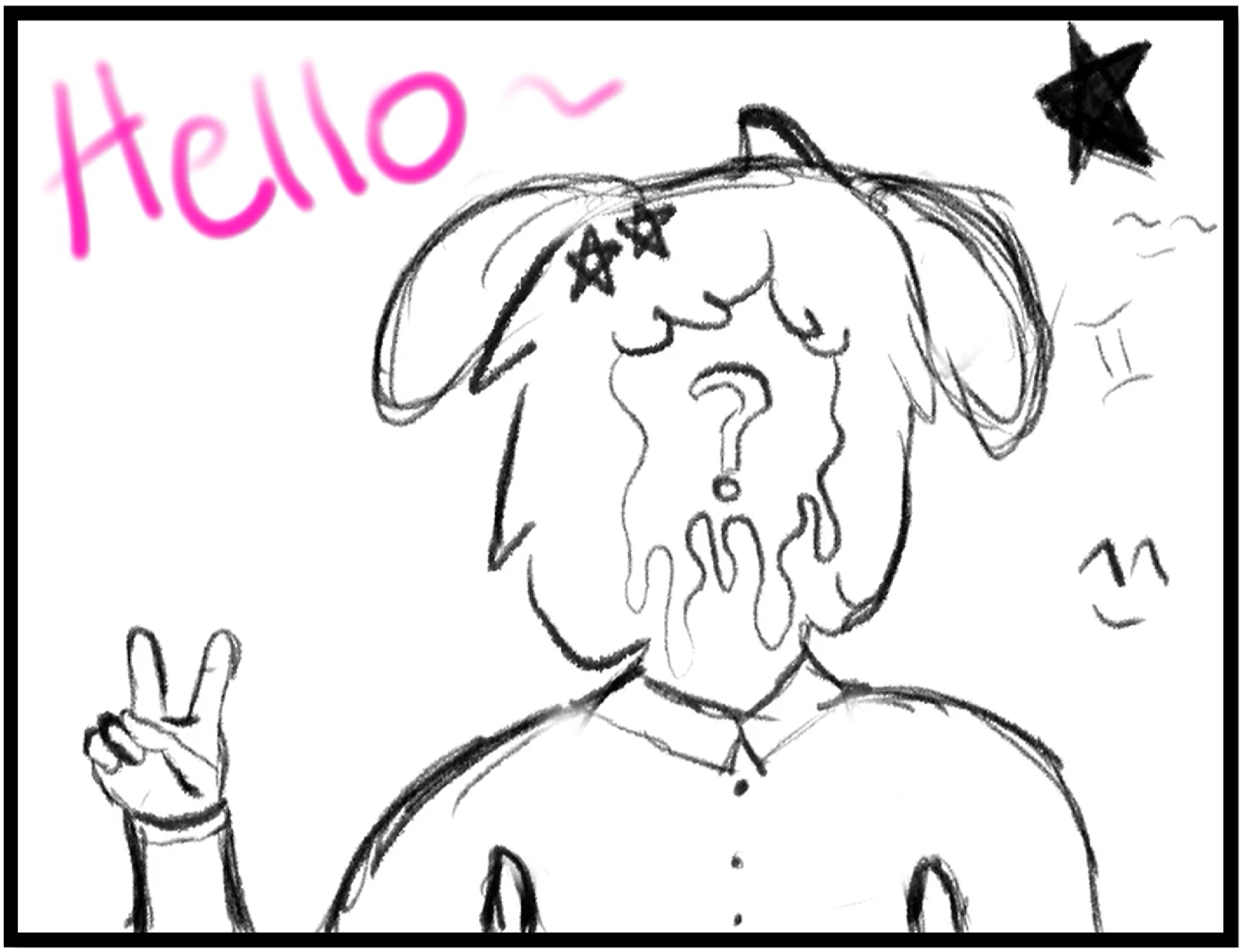
This third iteration of the pup sketch has become more embodied, expanding beyond a face to include shoulders, chest, arms, and a hand (notably, not a paw). The figure wears clothes. The addition of symbols to the sketch—a smiley face, an astrological sign, and stars both above and in the figure’s head—signifies the emergence of alignment; they are finding a space and a social organization within which they see themselves (the associations signified). They draw a hand making the peace sign as they narrate about finding supports and friends in the pup community, denoting not only an expression of non-violence but, specifically, a countercultural movement. Against the “nobody” who further alienated Vy from their body, the pup community is depicted as a “kind and welcoming” resistance to this mainstream indifference to body image struggles (ideology/power relations).
At the same time, Vy initiates their entrance into the pup community by commodifying it—by purchasing a pup hood, a facial garment that typically covers everything but a person’s eyes, has dog ears and snout often made of leather, rubber, or neoprene, and is often customized to fit. Pup hoods can range widely in price, but this act of buying a hood signals the material possession of pup gear as a “natural” and “essential” start to identify as a pup. Pup hoods are sometimes advertised as facilitating “puppy space,” mentioned above, which is not a physical space but a state of mind in which the person is fully embodying their pup identity. There’s a noticeable tension here with the pup figure sketches in Vy’s cellphilm, which may have dog ears and other doglike features, but they do not wear the distinct gear of the pup hood. As we will see in the final minute of Vy’s cellphilm, their embodiment as a pup and within the pup community is not fully assured.
The spatiality of this cellphilm, both in Vy’s story up to this point and in the animated production of the image-flow, is set predominantly within digital spaces. Vy discovers pup play on TikTok, studies it on Google, and connects with other pups on Facebook and Discord. Vy learns about and connects with the pup community online. Their entrance into “puppy space” is not, as mentioned above, a physical space but a state of mind, one that they have a “hard” time entering into initially; while they describe this difficulty, the puppy figure’s ears are erased and redrawn, but later as they find it “safe” and become “attached” to it, the figure becomes more static (it is not erased again or heavily revised). This shift in focus from digital space toward embodied mental space is another tactic in which the image-flow moves from showing an unclear, dissociated embodiment in gender/body trouble toward one that is more defined in puppy play. (The outlined figure is being retraced, this time with thicker, more solid lines. The hair and face are done first).
For me, the challenges of being a pup are: It’s hard to find someone with the same interest. And … it’s hard … to find … someone that’s the same as you are, the same as I am. That represents me.
(The drawing over is continued, this includes the figure and the symbolic images along the right side. Detail is added to the hands and to the body).
Sometimes I feel very jealous and gender envy of puppies that are more fit. They are cisgender and … much more … very beautiful and very handsome.
(Colour shading is introduced, starting with the dog ears in yellow and the hair in green).
It’s hard when you have body dysphoria as a human in regular life. It’s even harder when you have body dysphoria as a pup itself. It always feels like a competition to me. I always think to myself that maybe …
(The image is fully covered in, with the question mark shaded red against a black, melting face. See Figure 5 The third sketch as it is being colored in (4:03).
I’m not, I’m not such a good pup that I was, but …
(The words, “Pup Vy” with a heart are written in the top left corner and the word Vy, is written in the bottom left corner).
And I’ve always hated my body ever since.
(The image remains static while Pup Vy speaks. See Figure 1).
But, my friend come to rescue. They tell me everything they had a problem with and we work together to overcome that fear, that hate. The more I grow, the more I learn how to love myself in my body. With all the struggles I went through, my best friend and other pups have helped me to overcome my past struggles. Although I seem to have more worries and issues, I’ve learned how to live with them. And how to deal with it more in a healthy way. And, this is all the story that I have. Thank you.
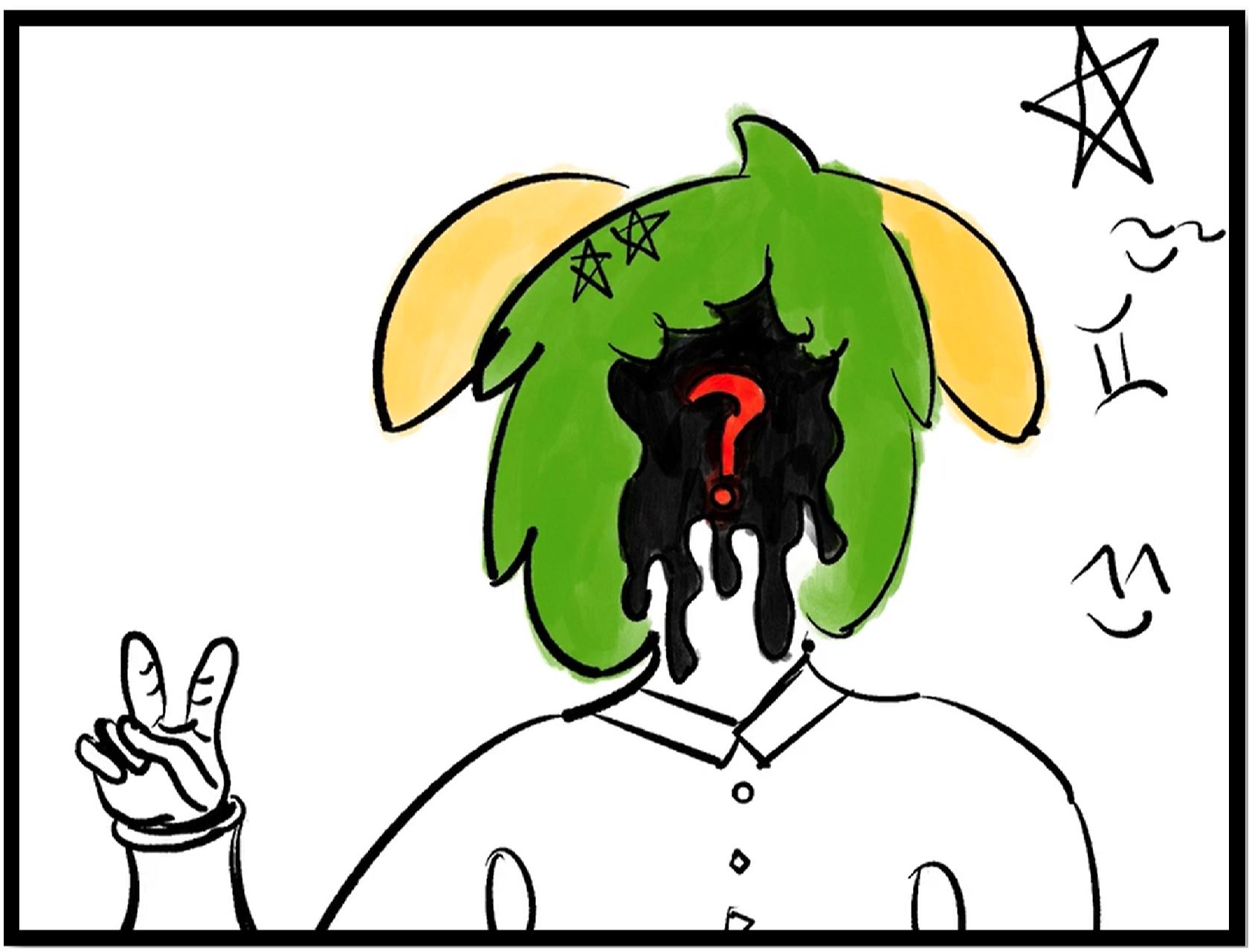
All three of the sketches that are the focal point of the cellphilm are of a hybrid being, a human and a pup; the last figure is standing upright with human features (hair, arms and hand, wearing a shirt, etc)., but with dog ears. It’s not clear if these ears are part of the person or gear that they wear; no other gear—hoods, tails, padded gloves—are showcased. The “melting” face with a question mark suggests an ongoing becoming or uncertainty of self (ideology/power relations). These elements more closely reflect the speech around continued “body dysphoria,” hatred of one’s body, and jealousy and envy toward “fit … cisgender” pups. However, the last sketch is retraced and colored in to denote something more solid or polished; the image remains static as Pup Vy talks about working through their struggles with others and coming to love their body more. Viewers can hear a discernible sigh (semiotic choice) when Vy discusses feelings of jealousy and gender envy. This sigh suggests that they’re not necessarily proud of this jealousy and feel powerless in front of it; they quickly affirm that, with support, they have worked through these feelings. This speech act of confessing judgment and expressing transcendence of it aligns with a pup sketch that is more detailed and more vibrant than the first two iterations.
Vy’s semiotic choices to animate instead of record video, to keep a nondescript background, and to evoke only a very few social actors render invisible much of the context of Pup Vy’s experience, such as their living situation, their relationships sexual or otherwise, and, most notably, their body. Viewers get only verbal snippets of their circumstances. Vy’s body remains problematic, perhaps less so for them according to their redemptive narrative of “overcom[ing] … past struggles” but rather for viewers of their cellphilm. The invisibility of their body suggests an intentional concealment from viewers, perhaps imagined to be the cis-heteronormative mainstream that has perpetuated their body image struggles (the associations signified). There is a subtle sense of refusal in Vy’s style of cellphilm, departing from the alleged realism of photography and videography toward an art form—animation—that is less tied to claims of authenticity, of “seeing is believing.”
In summary, Vy’s cellphilm brings together a variety of nuanced semiotic resources to depict how their body has been problematized under cis-heteronormativity as well as how it has taken form and coherence through pup play. From this analysis, we can delineate some promising interpretive opportunities for MCDA to be used in conjunction with arts-based research with queer/kink communities.
Conclusion
Our research, Puppy Philms, attempted to bring to light some of the ideologies shaping the bodies of queer/kink communities, especially the ideology of cis-heteronormativity. We used MCDA to analyze the cellphilm components beyond just speech and text but other elements of videos. Using the cellphilm provided by Pup Vy, we have demonstrated our processes for other health researchers. We believe MCDA is valuable for examining creative data produced in arts-based health research and for exploring discourses related to body, gender, and sexuality within queer/kink communities. MCDA builds on the traditions of visual communication research and critical discourse analysis; as an analytic practice, it may not only help expose hegemonic discourses at work that problematize queer/kink bodies and experiences but also contribute to better understanding the interplay and conflict between different communicative modes—the cracks within discursive power through which resistance may pass through. We hope that our study opens the doors to further exploration of discourses within queer/kink communities and their impacts on perceptions of self, body, and community.
We also recommend the use of MCDA to other health researchers utilizing multimedia as part of their research. MCDA has the potential to offer significant contributions to health research by allowing scholars to explore not only the verbal or textual elements but also the visual, auditory, and spatial dimensions of health discourses. By applying MCDA, researchers can examine phenomena such as the portrayal of health in media campaigns, social media health campaigns, or patient–doctor interactions captured in videos. It enables the investigation of research questions that focus on how health messages are communicated through various modes—such as body language, images, and sound—providing a more nuanced understanding of the multifaceted ways health-related ideologies and practices are constructed and experienced. The potential applications of MCDA are vast and limited only by the creativity of the researcher, making it a valuable tool for exploring a variety of research questions, from understanding patient experiences to analyzing public health narratives in digital media.
Footnotes
Acknowledgment
We would like to thank all the participants for their openness and efforts in creating their cellphilms.
Declaration of Conflicting Interests
The author(s) declared no potential conflicts of interest with respect to the research, authorship, and/or publication of this article.
Funding
The author(s) disclosed receipt of the following financial support for the research, authorship, and/or publication of this article: This work was supported by The Social Sciences and Humanities Research Council of Canada (SSHRC) (grant number 430-2021-00026).
