




Abstract
Understanding the needs and experiences of men across many areas of health and well-being has been obstructed by an ongoing difficulty for researchers to sufficiently engage men in qualitative health research. To reach novel, broader insights and ideas in the field of health and social sciences, we reflect on our experiences as researchers in body image, a field historically focused on women, to offer strategies on engaging men in qualitative health research. We present our ideas in three main sections, all underpinned by the centrality of stakeholder involvement and an awareness of the role of masculinities in shaping the research process. First, we address practical methods to reach men as participants. Second, we explore ways of maintaining men’s engagement following recruitment, such as novel approaches to language use in research materials. Lastly, we turn to the thorny challenge of eliciting high-quality data through the process of data collection. We consider tangible strategies as well as a heightened awareness of our positionality as researchers.
Introduction
At the Centre for Appearance Research, we conduct research investigating the role of body image in people’s lives. In this paper, we critically reflect on our experiences of using qualitative research methods to explore body image in men across different health contexts. By drawing on this historically feminized and sensitive topic, we intend to offer transmissible ideas to health and social science researchers and practitioners engaged in any fields in which eliciting and interpreting meaningful accounts from men about their lived experience can be challenging. Our discussion adopts a pragmatist paradigm, in which the real-world consequences of an endeavor aiming to address a social challenge are privileged over the pursuit of either a positivist or subjectivist version of truth (Yvonne Feilzer, 2010). In this paper, our endeavor is to provide an orientation toward high-quality research in men’s health and well-being. The pragmatist paradigm accommodates whichever worldviews and theoretical frameworks that are best placed to answer any specific research question. Accordingly, this paper draws on a number of frameworks given the range of studies and topics we discuss. Our aims are to stimulate readers’ own reflections and to offer tangible strategies on (i) the practicalities of reaching the men that any given research project seeks to engage, (ii) making the research process relevant and appealing to those men, and (iii) collecting and analyzing data in a gender-informed manner. In so doing, we acknowledge our lack of attention to gender plurality, which is itself an important area for development in the field of body image, but one which lies beyond our specific objectives.
The Challenge
From a broader public health perspective, we are presented with a double-pronged challenge regarding men’s health and well-being. First, irrespective of age or cause, men are on average more likely to die prematurely than women (White et al., 2011). Studies also show that 75% of deaths by suicide are in men (Freeman et al., 2017). Second, compared to women, men are less likely to participate in non-pharmacological health and well-being research (Maher et al., 2014). This disparity leaves a vital knowledge gap in understanding how to address men’s health and well-being needs. Further, it endorses the public narrative that men are uninterested in their health (Galdas, 2015; Scholz et al., 2017). However, given settings and support that take into account men’s needs and preferences, men are more likely to invest in their health and well-being. Such strategies indicated from qualitative literature include placing health interventions and screening services in community areas routinely frequented by men (e.g., barbershops) rather than in health service sites, and using more masculine-normalized language, such as that used by the UK charity Talk Club, who brand themselves as a “Mental Fitness” charity (Flurey, 2024).
Equally, when research is thoughtfully tailored to the interests and needs of the men it seeks to engage, these knowledge gaps are more likely to be addressed meaningfully (e.g., Ryan et al., 2019). As a necessary but not sufficient starting point, this can be fostered by ensuring stakeholder involvement (via participant representatives, practitioners, and/or members of the public) in the design, execution, and dissemination of research (Cowan, 2020).
To address the knowledge gaps across men’s health and well-being, we need to research men’s relevant subjective experience and identities (e.g., McVittie & Willock, 2006). This lies within the scope of qualitative methods, which offer a means of exploring participants’ subjective accounts in greater depth than quantitative methods, irrespective of the researchers’ paradigmatic orientation (Nassaji, 2020; Renjith et al., 2021). A qualitative research study may largely succeed in reaching its intended population of men, and these participants may be actively willing to engage. However, many factors can unfold during data collection and analysis that may inhibit the potential for generating—or acquiring (depending on one’s worldview)—meaningful knowledge. While the subjective relevance of the study to participants and its appeal are central in facilitating men to engage with research, a common barrier perceived by researchers is men’s difficulty in eliciting an emotional inner world (Oliffe & Mroz, 2005). An essentialist perspective would argue that men broadly possess less emotional literacy (“normative alexithymia”) and hence are less able to access and communicate personally sensitive experiences (McKenzie et al., 2018). In contrast, a social constructionist position—whereby language is conceptualized as the vehicle through which knowledge is constituted—proffers that men’s language, both verbal and non-verbal, is always performed in a situated manner (Potter & Wetherell, 1987). As such, displays of emotionality or unemotionality are conditioned by cultural factors and are contingent on specific contextual factors present in the data collection process, rather than representing men’s innate capacities (Brody, 1999; De Boise & Hearn, 2017). For example, men may unconsciously defend their masculinity to varying degrees depending on the context (Benjamin, 2015).
Societal pressures relating to masculinity are central to understanding men’s experiences. Gender socialization theories permeate across social sciences as a means of explaining how many boys and men learn, identify with, and perform masculine norms (De Boise & Hearn, 2017). Masculine norms operationalized as static constructs, such as stoicism and self-reliance, are often identified as sources of stigma surrounding male displays of vulnerability and conversations about mental health (Mahalik et al., 2023). In the sociological field, Connell’s (1995) concept of hegemonic masculinity presents the construct as a more fluid, contextual, negotiated performance, consisting of multiple masculinities due to their ever-shifting nature in social interactions (Robb, 2021). This hegemonic masculinity interpretation offers a richer means of building useful knowledge to navigate qualitative data collection with men. Viewing data collection as an intersubjective process, in which both the participant and researcher’s social identities shape the data and resulting knowledge (Robb, 2021), can also help us reflexively examine the data in such a way as to produce consciously informed knowledge (Braun & Clarke, 2019).
The challenge of needing to understand more about men’s health and well-being, within the context of masculinity pressures, is clearly a sizeable one. A more specific case topic may help to exemplify some of the real-world issues faced by health and social science researchers, as well as how we might address these.
Body Image as a Case Topic
Body image is a multifaceted construct encompassing individuals’ sensory perceptions, feelings, cognitions, and behaviors related to their body shape, size, function, and all aspects of physical appearance (Grogan, 2021). Historically, body image has been presented predominantly as the purview of girls and women, largely due to alarming trends toward body dissatisfaction and eating disorder development associated with the “thin” female ideal (Garner et al., 1980; Stice & Shaw, 2002). Feminist and objectification accounts of these broadly unattainable female appearance ideals have centered on patriarchal power structures, whereby appearance is assigned a more central role in signaling femininity than masculinity (e.g., Wilcox, 1997). Indeed, quantitative findings have generally signaled fewer body image concerns in men compared to women (e.g., Feingold & Mazzella, 1998).
However, there is growing recognition that sociocultural pressures exerted through media, peers, and personal and public role models have increased the salience of the “muscular ideal” and self-objectification in men and boys (Davids, 2019; Farquhar & Wasylkiw, 2007). Accordingly, muscular appearance is becoming an increasingly central facet of masculinity (Gattario et al., 2015). Some men who engage in resistance training with the aim of attaining this ideal can experience muscular gains as improved self-esteem and body satisfaction (Ganson et al., 2023). There are also widespread established health benefits from moderate muscularity (Momma et al., 2022). However, muscle dysphoria, involving negative perceptual distortion of one’s muscularity and cognitive preoccupation with muscularity, has been reported in 5%–15% of male samples (Vasiliu, 2023). Corollary outcomes can include disordered eating (e.g., extreme “bulking and cutting” practices for bodybuilding; Lavender et al., 2017) and misuse of anabolic-androgenic steroids and related unlicensed products (e.g., selective androgen receptor modulators; de Ronde & Smit, 2020; Pope et al., 2017). Self-objectification and body image concerns in men also pervade beyond muscularity, such as concerns around penis size, scalp, body and facial hair, height, and face shape (Grogan, 2021). Cosmetic surgery, including medically high-risk procedures such as leg lengthening (Elbatrawy, 2015), and harmful online ecosystems that attribute male appearance to life success and fixate on practices to maximize perceived attractiveness (known as “looksmaxxing”) can result in negative health and well-being outcomes, while also perpetuating body image concerns.
Despite this, qualitative research exploring men’s body image lags behind, with most research among this group quantitative in nature. Qualitative research focused on men’s experiences of body image across various populations has often either overlooked men or struggled to recruit and engage a representative sample of men in mixed-gender samples (e.g., Davey et al., 2019). For example, it is surprising that the newer construct of “positive body image” (concerned with appreciation of one’s body, a focus on its function over form, and self-care; Tylka & Wood-Barcalow, 2015) has received relatively minimal attention in research with men, given that men tend to report higher body functionality and appreciation compared with women (Soulliard et al., 2019). However, the current conceptualization and understanding of positive body image (PBI) is based on research conducted with women, thus questioning its potential applicability to men.
A common site of body dissatisfaction in men is hair loss. Despite the high prevalence of pattern baldness in men, there is a notable dearth of high-quality qualitative research on the experiences of affected men (Jankowski et al., 2021). A related health condition, alopecia (an autoimmune condition causing patchy scalp hair loss through to full body hair loss (Harries, 2022), is comparably prevalent in men as women. Yet, the qualitative literature in alopecia has generated knowledge of limited relevance to men, often focusing on a felt loss of femininity through hair loss, and difficult experiences of wearing wigs and undergoing medical tattooing (Davey et al., 2019; Stock et al., 2021). Similarly, despite prostate cancer being the most common form of cancer in men, and its primary treatment of androgen deprivation therapy (ADP) causing both aesthetic and functional physical changes, no research had explored body image in affected men prior to the authors’ research. Other conditions that can affect men but are societally portrayed as being a “woman’s disease,” such as breast cancer, may also have significant body image implications in men precisely because of their perceived femininity, and had received little qualitative attention before our research.
Summary Details of the Four Case Research Studies.
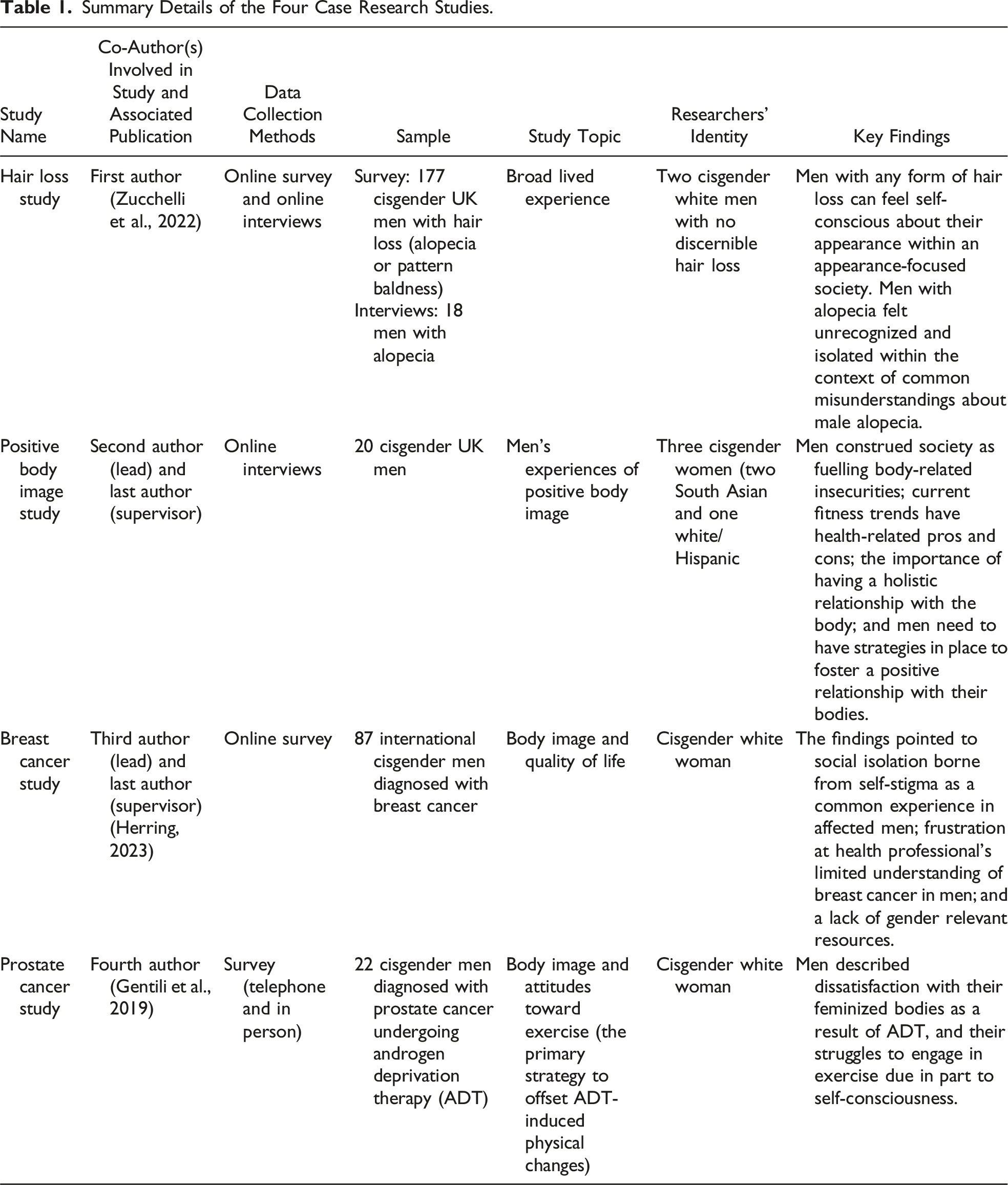
Reaching Men
When the first author sought advice from a men’s mental health charity for their study on reaching men with hair loss, the advice was clear: “Go to where men are, don’t expect them to come to you.” Such advice tallies with research that has utilized study-within-a-trial designs (to test gender-informed recruitment strategies), showing that recruitment strategies which actively reach into physical and virtual spaces populated by the targeted subgroups of men improve recruitment (e.g., Ryan et al., 2019; Turner-McGrievy, 2021). In the case of the hair loss study, the first author located suitable “subreddits” (forums) on Reddit for men with hair loss, from which most men with male pattern baldness reached the study.
With social media a key recruitment avenue in contemporary research, the first author’s experience highlights the importance of understanding men’s engagement with different social media platforms. For example, the market research company Statista claims that men account for 62%–67% of Reddit users worldwide (Statista, 2023), and in the UK men are notably more active than women on LinkedIn, equally active on X (formerly Twitter), and less active on Facebook and Instagram (Statista, 2018). However, it is also important to be aware of the demographic differences within such gendered trends. For example, according to Statista, UK users of Reddit are on average younger than Facebook and X users (Statista, 2022), and this was reflected in the hair loss study, in which participants recruited from Reddit were notably younger than the study’s median age. Similarly, Facebook support groups helped in recruiting men who were in mid-to-later life in the breast cancer study. Our experiences highlight that recruitment of men for research can be done successfully via social media–mediated support forums, if researchers understand which social media platforms are popular across different demographics.
Reaching participants from underrepresented ethnicities is clearly a wider concern across research conducted in western countries, and may be pronounced in men (Yates, 2020). For example, despite the fact that prostate cancer incidence is higher among black men (Chowdhury-Paulino, 2022), the author struggled to recruit this group and ultimately had an exclusively white sample. This may in part relate to a lack of patient or public involvement (PPI) from black men in this study, with research suggesting the inclusion of diverse groups in PPI as crucial to reaching underserved groups (Hatch, 2023). This study was the first in a PhD project, and the researcher did not gain any PPI until the subsequent study. The less relatable identity of the researcher—a white woman in her 20s (which was not explicitly named in the participant information but may have been detected via their name and PhD student status)—could have also deterred potential participants from feeling psychologically safe to share their personal experiences. In relation to the hair loss study, alopecia has been found to be over three times more prevalent in people of South Asia compared to white ethnicity in the United Kingdom (Harries, 2022). The first author was able to enlist a South Asian PPI advisor via targeted advertising through an alopecia charity. All PPI advisors on the study were compensated hourly for their contribution, costed within the project budget. The advisor appeared in a video advertising the study and also facilitated contact with various Asian men’s health organizations to advertise the study. Despite some engagement from these organizations, Asian representation in the final sample remained lower than the national Asian population (5% vs. 7.5%; The Office for National Statistics, 2022).
Engaging Men
Even if we are able to reach the men who represent our target populations, participant engagement is vital. Here, demonstrating self-relevance of the study topic for men may be key. This follows some broad gender differences identified for participation motives in health research, including women being on average more motivated to help others, and men being more motivated by direct personal health outcomes from participation (Lobato, 2014). With this in mind, highlighting self-relevance may be easier when conducting research that focuses on a specific health or well-being challenge that potential participants have experienced. For example, in three of our four studies, participants were selected based on having a specific health condition, whereas the PBI study sought any men to discuss their experiences related to PBI. This broader topic, also targeting a broader population of men, likely explained why recruitment was particularly challenging in this study.
From the world of marketing, we know that wording and visuals presented to men—in this case via study materials—may on average also affect men’s engagement (Wolin, 2003). At the Centre for Appearance Research, most researchers identify as women. As a result, we need to take great care that our research materials are not unintentionally, implicitly gendered toward female gender norms, and hence are less appealing to boys and men. For example, even the broad term “body image” may be loaded with gendered attributions, a term which could be interpreted as something experienced only by girls and women, and a problem attributed to the patriarchy. Again, here, PPI is key. In the breast cancer study, the PPI members steered the study’s language away from “body image” and toward “appearance concerns.” They also preferred “breast cancer in men” to “male breast cancer.” In the PBI study, PPI members advised renaming “positive body image” as “having a strong relationship with your body and appearance.” In terms of visuals, the PPI members of the breast cancer study advised the removal of the well-recognized (but contentious) pink ribbon—the Breast Cancer UK symbol—from all research materials. Further, in the PBI study, working with a professional web designer helped to create a study poster tailored to men, approved by the PPI group (see Figure 1): Study advert for the positive body image study.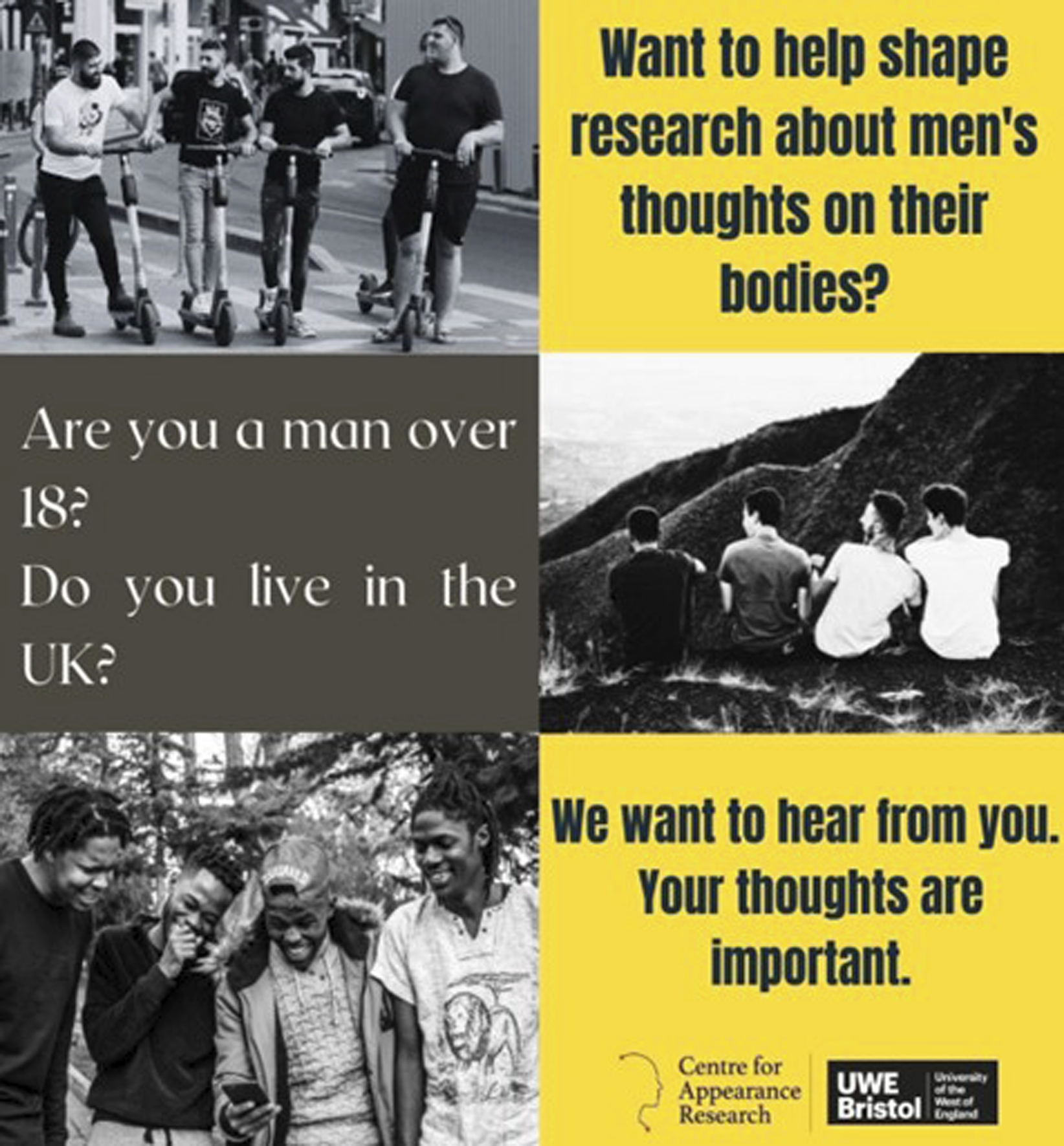
An additional strategy to help men feel prepared to share potentially sensitive information related to their specific health and well-being topic is to first normalize this process of sharing in men. In the hair loss study, we were able to draw on a video, facilitated by Alopecia UK, showing four men on a split screen discussing their experiences of living with alopecia. We used a snippet of this video to advertise the study, alongside promotional text aiming to normalize men sharing their experiences of alopecia. In the text, we also appealed to a shared health “mission” to better understand men’s needs and preferences (see Figure 2). By actively cueing potential participants’ male gender and shared purpose, this should have heightened this aspect of their social identity in the moment (Hornsey, 2008). With gender group identity primed, presenting the group norm of sharing personal experience should encourage men to participate with purpose (Armitage, 2002). The language of a “shared health mission” was also intended as both a collective and personal motive for participation, namely, by improving the experience of the overall male alopecia community, of which participants are members (e.g., through new guidance resources developed from the study on the Alopecia charity website). Promotional post on X (formerly Twitter) for the hair loss study.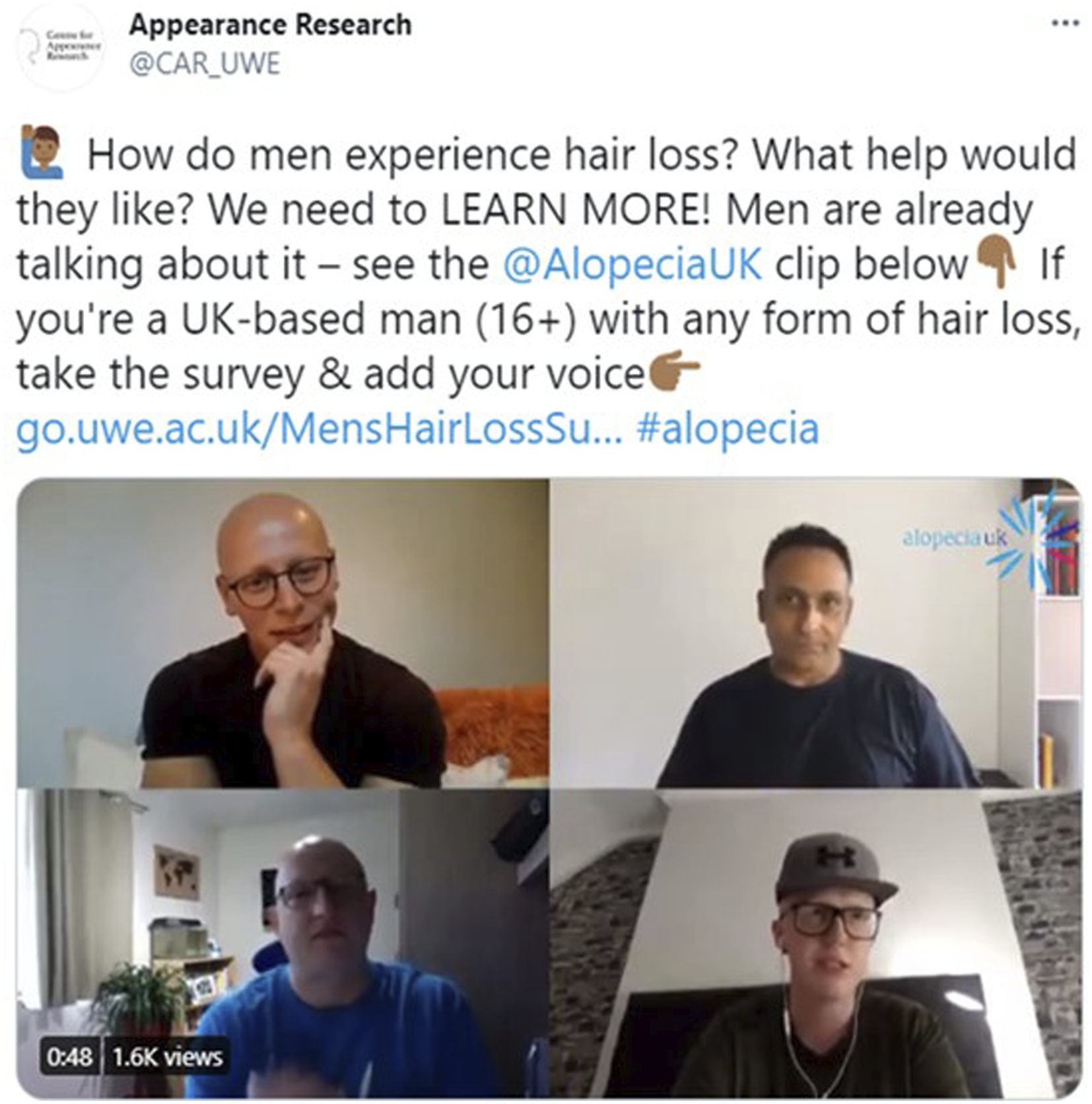
It can also be important to redress the potential for perceived power imbalances between researchers-as-experts and participants-as-subjects. Men may be less likely to engage if they feel like lower-status members of the process (Flurey, 2024). Therefore, as demonstrated in the advert shown in Figure 2, the first author was intentional about using language aimed at empowering men as sources of vital expertise: “How do men experience hair loss? We need to LEARN MORE!”
Another consideration to foster engagement relates to the forum through which we collect data. Online anonymous surveys, as used in the hair loss and breast cancer studies partly following PPI advice, may have reduced any potential restriction on men’s openness through fear of social judgment based on masculinity norms. Engaging “primer” questions may also help to cue participants’ reflections, such as a question in the hair loss study asking participants to rank life areas (i.e., social, occupation, and romantic) from most to least affected by their hair loss. This was followed by an open-ended question to stimulate more in-depth responses, alongside prompts: If you’re game, below is your chance to share anything that’s important to you about your experiences of hair loss. It could be anything at all, but if you’re not sure where to start, here are some pointers: Affects of hair loss on: ○ social life ○ work/education ○ leisure time ○ romantic relationships ○ general well-being ○ how you feel about yourself
If deciding to use a survey, we might also consider how to engage men through the tone of the content. Indeed, guidance on conducting ethical research in health and social sciences acknowledges that lengthy and technical participant information can cause participants to skip or skim the information (Oates, 2021), and thus be less likely to provide fully informed consent. In the hair loss study, the first author adopted—again, with PPI input—an unconventional approach to the writing style used across the survey, from the participant information to the full survey content. Drawing from their background as a freelance writer in men’s health, the first author adopted a conversational tone with (attempted) humor scattered throughout (example shown in Figure 3), with the intention of making the research material more colloquial and, consequently, more engaging. To gain participants’ views on this approach, we included a post-survey feedback where participants could share their experience of participating in the survey. Two pertinent responses include: I enjoyed the less formal writing style, I think it works well for what could be a potentially sensitive subject matter. I got a sense of personality from the survey wording which was nice. I felt a bit of tension over the playfulness as this can be an upsetting topic for me but on balance I like the attempt at fun. Example of conversational writing style applied to a participant information sheet in the hair loss study.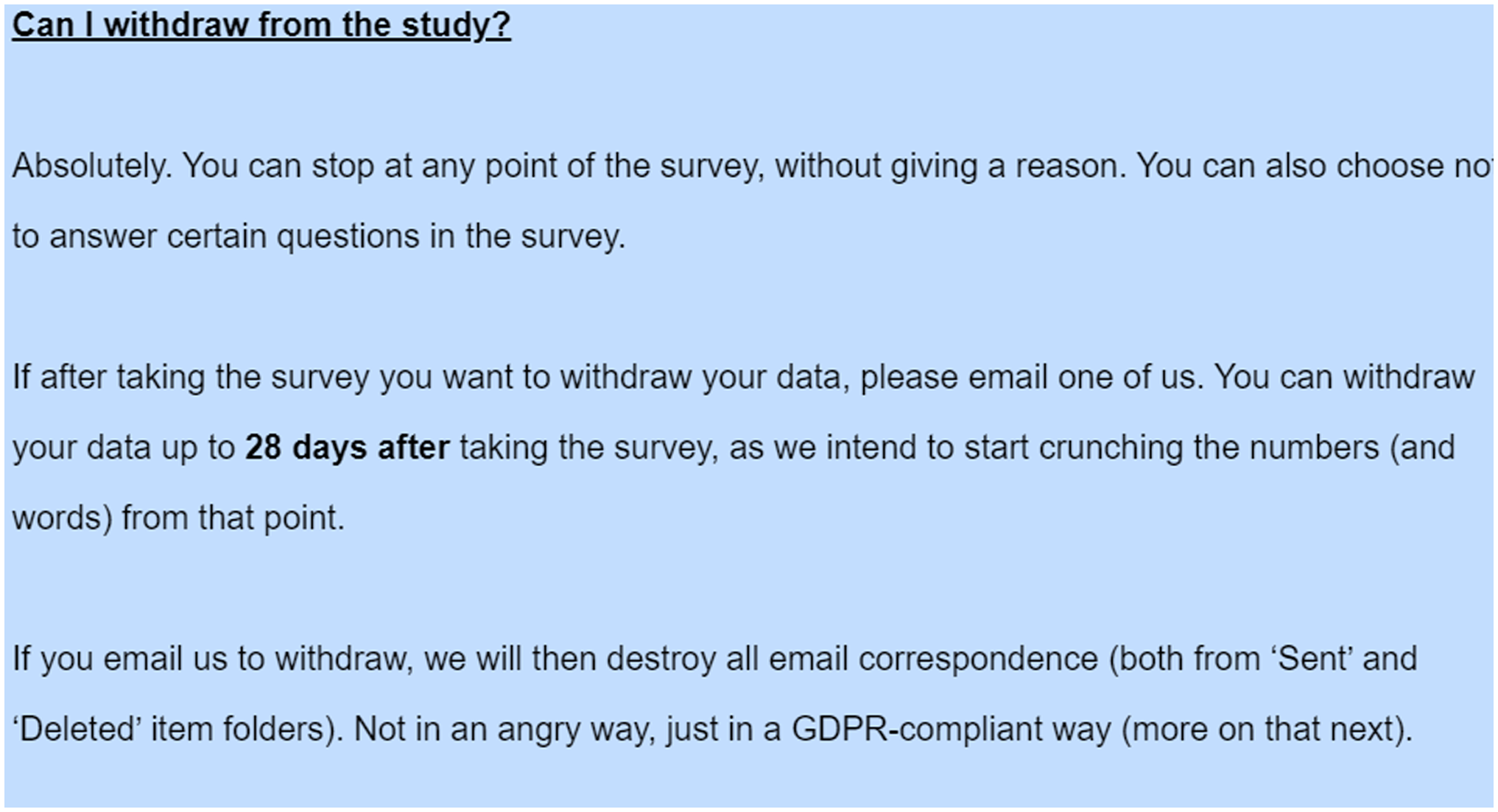
These responses point to the potential for such an approach to engage participants, with the important ethical caveat of maintaining appropriateness in tone. For example, in this study, the humor was largely either self-deprecating (i.e., toward the researcher) or deadpan, and never targeting potential sensitivities of participants. Clearly, the level of sensitivity of the topic as well as the researchers’ disposition will inform whether such an approach could be worthy of consideration.
However, interviews, as employed in three of our studies, may provide greater opportunity for rapport-building and personalized, self-relevant questions (Witty, 2014), as well as a richer source of data in the form of verbal and non-verbal data (especially relevant to discursive analytical approaches (Clarke, 2013)). In the PBI study, both interviewers used icebreaker activities at the start of the interviews. These involved asking the participant for a funny, boring, or interesting fact about themselves and a word association exercise for topic-relevant words (e.g., exercise, men’s health, and body image). These activities helped to ease into the topic and build rapport, which can also aid in minimizing any perceived power imbalances between the researcher-as-expert and participant-as-subject.
To engage men from underserved groups, showing self-relevance of the topic to one’s identity may also be vital. In the hair loss study, we included qualitative questions asking participants about any cultural influences on their experience of hair loss early in the survey and interviews. Doing so helped to create an important theme in the results around hair loss, compounding an existing sense of difference, namely related to ethnicity and sexuality (Zucchelli et al., 2022).
Eliciting and Interpreting Men’s Data
Reaching the men we intend to take part in our research and engaging them in the research process are prerequisites to collecting high-quality data. However, as noted, there remain further challenges to producing meaningful knowledge from the research. Regarding the commonly observed issue in health and well-being research of men downplaying personal difficulties, this may manifest in body image research as a minimization of body image concerns. For example, Jankowski et al. (2018) found that young British men tended to highlight the ubiquity of appearance pressures in men generally, while minimizing any impact such pressures had on them personally. One way to account for such minimization is to consider men’s views about societal pressures and the impact on men broadly as at least offering some insight into their own experiences. For example, in the hair loss and PBI studies, we opened our interviews with societal level questions such as “What are your thoughts on the pressure that men feel to obtain a ‘perfect’ body?’” and “How does our society view or treat men with alopecia?” At the analysis stage, interpreting participants’ responses to such questions at the latent (“below-surface”) level for signals of how these responses may reflect their own experiences added another perspective. This approach is informed by a view of masculinity as a defensive performance, offering further insights into the meaning behind participants’ accounts. Another way to gain a more detailed picture of men’s appearance concerns during data collection is to gently probe for tangible examples of any semi-formed accounts that participants share. In addition to expanding the nature of the conversation on the subject and allowing them to reflect contextually, this could also facilitate our understanding of how men talk about their bodies and appearance concerns more broadly.
Setting the conditions for participants to feel like they can lower any masculinity defenses is also vital. Here, we can consider the positionality of the researcher as an active agent in the intersubjective performance. Regarding the researcher’s gender, it may be argued that men may feel more open to sharing sensitive personal accounts with female researchers—as in three of the four studies. According to this argument, women generally pose less threat to participants’ masculinity and are perceived as a legitimate listening ear because of gender norms assigning emotional labor to women (Robb, 2021). This view was voiced by the PPI group members of the breast cancer study. Gender researchers do, however, warn of reinforcing gendered relations when women interview men, by the female interviewer adopting the performative position of femininity (Holmgren, 2013).
Conversely, gender congruence between a researcher and participant may actually hold greater potential for reciprocity and attunement, and thereby facilitate rapport and openness. In the hair loss study, the first author consciously made efforts to model emotional openness through judicious self-disclosure around his body image experiences at the start of the interview (e.g., “I came to research this topic because it was something I had struggled with”). The intention was to shift the performative context clearly away from masculine norms and hence give permission for the participants to follow suit. A related approach has been adopted by male qualitative researchers, such as Tristan Bridges. Bridges described his ethnographer position as the “least-masculine role” (Bridges, 2013), adopted to offer a listening ear and hence encourage openness from often-inexpressive men. When we view masculinities as malleable, negotiated performances, male researchers can also create space for emotional expressiveness from participants even within masculine relational modes in interviews. For example, Flood (2013) reflects on his experiences of interviewing men and how, despite sliding into familiar masculine modes, their conversations facilitated personal disclosure, perhaps due to their shared age demographic and mode of relating.
In the prostate cancer study, the fourth author reflected on their positioning as a young, Italian, female researcher speaking to older British men about their bodies. The researcher felt self-conscious about their “outsider” role and how participants may have felt reluctant to share sensitive accounts because of their divergent identities—namely, regarding gender, age, and nationality—and an assumed lack of attunement. The extent to which this happened is difficult to know. The second author felt less that her identity as a young Indian women prevented men from talking openly about their bodies. However, she found it difficult to follow some of the participants’ humor and colloquialisms in the moment, which could potentially stymie rapport. This disconnect may have a cultural as well as gendered element.
The third author also reflected that many of the men with whom she spoke deviated greatly from the interview topic in their responses. From the masculinity defensiveness account (Benjamin, 2015), this could be understood as a defensive strategy to distance oneself from feminine domains (i.e., body image), by answering questions indirectly and diverting the conversation to less threatening subjects (Robb, 2021). However, this is only one interpretation. The third author did feel able to steer the conversation back to the central topic, bolstered by the rapport they had established.
The language used to describe or allude to emotions and vulnerability, which may sometimes be euphemistic or underplayed by some men, should also be borne in mind both during the interview and when interpreting men’s accounts. In this regard, all four authors note the importance of reflexivity in considering how each of our own intersectional, gendered perspectives may shape our reading of the data. That is, we need to continually ask ourselves “What signals of expressed vulnerability may be lying under the surface here that my assumptions and experiences may be obscuring?” Alongside our subjective interpretation, member checking with participants and where appropriate with the PPI group can ensure that nothing of importance has been missed and that findings are relevant to the target group of men.
Conclusion
Drawing on body image as a feminized topic, we have reflected on our own experiences of conducting health qualitative research with men. Specifically, we have considered how we can gain high-quality knowledge about men’s health and well-being experiences across four different studies that explored different topic areas, using a range of data collection methods, conducted by researchers of different genders. Our reflections are just that—reflections—rather than empirical guidance. Yet, by illustrating our attempts to reach, engage, and understand men in the qualitative research process, we hope that this can sow seeds of reflection for all involved in researching men in the health and social sciences.
Footnotes
Acknowledgments
The authors would like to thank all collaborators and supervisors of the original research studies referred to in this discussion paper: Professor Diana Harcourt, Dr. Stuart McClean, Dr. Lucy McGeagh, Professor Amit Bahl, Professor Raj Persad, Dr. Nicole Paraskeva, Dr. Emma Halliwell, Dr. Paul White, Dr. Nick Sharratt, Dr. Kerry Montgomery, Jen Chambers, and Mahira Budhraja. The authors would also like to thank all the participants who gave their time and energy to the studies.
Author Contributions
All authors (i) made a substantial contribution to the design of the work or acquisition, analysis, interpretation, or presentation of data; (ii) drafted the article or revised it critically for important intellectual content; (iii) approved the version to be published, and (iv) participated sufficiently in the work to take public responsibility for appropriate portions of the content.
Declaration of Conflicting Interests
The author(s) declared no potential conflicts of interest with respect to the research, authorship, and/or publication of this article.
Funding
The author(s) disclosed receipt of the following financial support for the research, authorship, and/or publication of this article: This work was supported by the Vocational Training Charitable Trust Foundation under a grant awarded to the Centre for Appearance Research, UWE Bristol (no grant number), and Above and Beyond Bristol Charity (no grant number).
