




Abstract
Despite the increasing integration of arts-based methods within qualitative research, few expressive arts methods have been studied to understand their process, rationale and impact on the inquiry process. We conducted a grounded theory study on family experiences of paediatric HSCT where we simultaneously adapted and studied a ‘dialoguing with images’ (DI) expressive arts process as method. Fifteen family members participated in two interviews, drew an image and were guided through the DI method. We articulate the social process shared by researchers, participants and the images as they co-constructed knowledge through the DI method. The four distinct phases of the method include: 1) containing the imaginative space within an outer and inner frame, 2) creating an embodied image: image work is an expressive, generative process, 3) a shared, participatory aesthetic interpretation and 4) crystallizing stories of illness. The findings are grounded in expressive arts theory and philosophy, hermeneutics and analytical art psychotherapy theory.
Keywords
Arts-based research (ABR) is an emerging knowledge paradigm that gained prominence in the 1970s and 1980s in education, visual anthropology and sociology (Chilton & Leavey, 2014; Cole & Knowles, 2008; Hogan & Pink, 2010; McNiff, 2018; Sinner et al., 2006). The adoption of ABR in health research has occurred more recently, but is undergoing a prolific expansion (Boydell et al., 2016; Fraser & al Sayah, 2011). ABR is conducted within specific genres, which have previously been classified into three distinct categories: the visual arts (drawing, photovoice, photographs, photo-elicitation, painting, art installation, video/animation and film) (Angell et al., 2015; Archibald et al., 2014; Creighton et al., 2017; Woodgate et al., 2014), literary arts (storytelling, creative writing and poetry) (Fitzpatrick & Fitzpatrick, 2021; Rieger et al., 2018) and performance art (drama, dance and music) (Boydell, 2011; dos Santos & Wagner, 2018; Van Bewer et al., 2021).
Images are central to visual arts methods, offering children and adults the opportunity to return to the ‘language of images’, (Rollins, 2005, p. 219), creating new possibilities for understanding human experience. Images open communication, facilitate participatory engagement, enrich data quality, bridge the researcher–participant relationship (Glegg, 2019; Packman et al., 1998; Weber, 2012) and are particularly effective at evoking practice change (Cox et al., 2014; Weber, 2012; Woodgate et al., 2017). Image-based data collection often occurs in combination with other methods, such as interviews (Driessnack, 2006; Rollins, 2005; West et al., 2020), storytelling (Akard et al., 2015; Rieger et al., 2021) and participant observation (Rollins, 2005).
Despite the growing acknowledgement that the arts generate and translate unique knowledge (Boydell et al., 2012; Gonzalez de Armas et al., 2017; Rieger & Schultz, 2014), challenges to its methodological development persist. Scholars continue to debate whether ABR represents a unique knowledge paradigm due to the paucity of critical, philosophically informed literature (Boydell et al., 2012; Fraser & al Sayah, 2011). Similarly, the underpinnings of image-based methods are absent or poorly articulated.
Although researchers have increasingly integrated artistic methods into diverse forms of inquiry, few expressive arts methods have been studied to understand their process, rationale for use and impact on the research process. Despite this, significant work has focused on image-based methods (Bryan et al., 2019; Drew et al., 2010; Driessnack, 2006; Green & Denov, 2019; Liebenberg, 2009; Pink, 2021; Rollins, 2005). In a constructivist grounded theory (cGT) study of family experiences of paediatric haematopoietic stem cell transplant (HSCT) (West et al., 2020), we simultaneously adapted and studied a ‘dialoguing with images’ (DI) expressive arts (EA) process as research method (Dusome, 2010; McNiff, 2004). The DI approach had previously been used in practice and education, but the only research found employing it were two unpublished master’s theses (Dusome, 2010; Lippert Freie, 2014).
Research Design and Methodology
Shaun McNiff, a pioneer of ABR, argued the arts represent a distinct research paradigm (2012) and defined ABR as ‘the systematic use of the artistic process, the actual making of artistic expressions in all different forms of the arts, as a primary way of understanding and examining experiences by both researchers and the people they involve in their studies’ (p. 29). He (2018) argues that ‘artistic inquiry’ is a fundamental mode of human understanding that involves using the imagination ‘as a way of knowing’ (p. 29). Within our work, we adopted this perspective, as well as additional philosophical tenets from the EA (Knill, 2005; Levine, 2019; McNiff, 2004).
Our aim was to articulate the social process shared by researchers and participants as they co-constructed knowledge through the DI method. Using cGT analysis (Charmaz, 2014) we studied the specific phases of the DI arts-based method, facilitating understanding and an explicit articulation of the philosophical/theoretical grounding of each phase of the method. Fifteen family members from six families participated, including two fathers, six mothers, one male partner, three HSCT recipients (8–21 years) and three siblings (11–16 yrs). The range of time since HSCT at time of study recruitment was 2.5–5 years. The diagnoses which led to paediatric HSCT treatment included cancer, haematologic and genetic disorders )(West et al., 2020). Human ethics approval was obtained from a university ethics board and clinical site access committee. Parents provided written informed consent for study participation, and their permission for the researchers to approach eligible children, 7 years of age or older. Each child completed verbal and written assent.
Research Findings
Phases of the Dialoguing with Images Method.
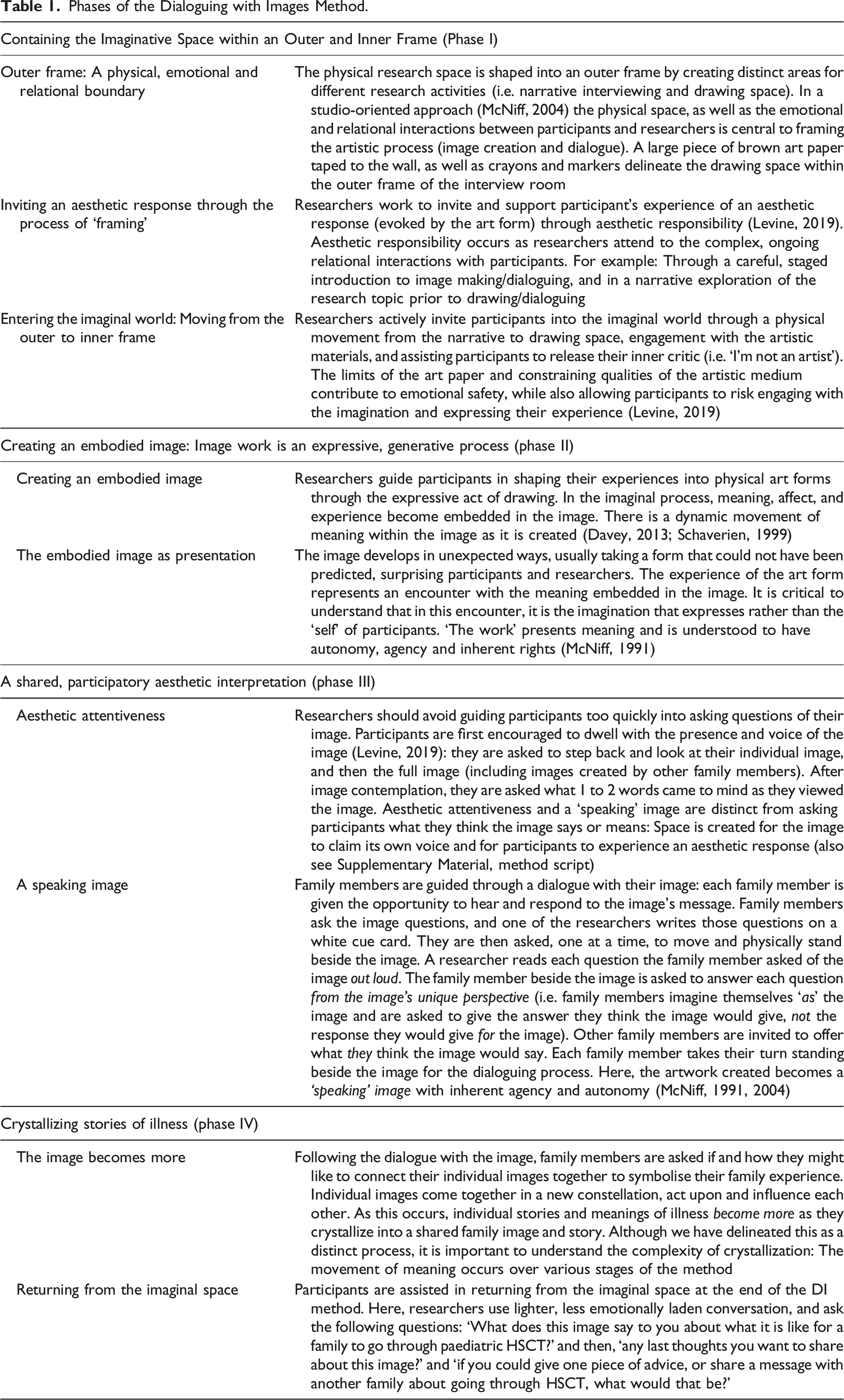
Containing the Imaginative Space within an Outer and Inner Frame
Central to the EA is the creation of an imaginal space (Knill, 2005; Levine, 2019; McNiff, 2018). Levine (2019) defines this as an aesthetic space where creativity is encouraged; it is within this space that participants are invited into expressive play as they create a specific art form.
Outer Frame: A Physical, Emotional, and Relational Boundary
Within our research, the imaginal space was framed by an outer and inner frame comprised of physical, emotional and relational components. The boundaries and limits created by these frames was what allowed freedom, play, and expression to unfold (McNiff, 2004, 2018; Schaverien, 1999). The outer frame included the room layout, art materials, and allocation of distinct spaces within the room for different research activities, including narrative interviewing, and a drawing space for image creation, viewing and ‘speaking’ with the image (McNiff, 2004). For a number of our research interviews, we used an interview room which had the appearance of a living room. During the second interview, a large piece of brown art paper was taped to the wall in a distinct space set apart from the seating area. When we conducted the DI method in a family home, the family was given the choice of where to draw their image (i.e. kitchen or outside table).
It is important to understand that the physical space of the created ‘studio room’ and art materials influenced participants and researchers, as well as the image expressed and the dialogue with the image. Drawing on cGT and the EA we argue that within the DI method the knowledge creation process moved beyond participants and researcher(s) to include the space, image and art materials (McNiff, 2004). The physical framing of the room created a space separate from participant’s everyday world: concerns of daily life were set aside for the purpose of a focused interaction with the research topic through artmaking. McNiff (2004) identifies this as temenos, a sacred space that is set apart; the boundaries that mark off the space allow participants to be supported and protected during the challenging process of shaping experience into physical form.
Inviting an Aesthetic Response through the Process of ‘Framing’
It is important to attend to the aesthetic response in EA research: the response the art form evokes. Levine (2019) described the aesthetic response as an ‘experience of having our breath taken away…feeling moved or touched’ (p. 37, 39). He speaks to the aesthetic responsibility the practitioner holds, which we took up as the aesthetic responsibility of the researchers in the artistic inquiry process. Aesthetic responsibility involves all the actions the researchers took to assist participants in artmaking, which included guiding them through an aesthetic response.
Aesthetic responsibility begins by attending to the relational components of the outside frame of the imaginative space. Examples of relational framing (Levine, 2019) from our work include a careful, staged introduction of the drawing activity and associated dialoguing process. The DI method was first introduced in the study invitation letter, parent consent, and ill child/sibling assents. Family participants completed two research interviews (2–6 weeks apart), the first was narrative. Relational framing also developed through a sensitivity to moments when the researcher’s ‘agenda’ was surrendered to follow the lead of participants as they spoke about their HSCT experiences. For example, as we started the first interview with one HSCT recipient (19 years, 14 at time of HSCT), she and her mother both became teary. They shared that they would cry as they talked about their experience, but said they were alright, and asked to continue. The recipient shared that she had a sister who had died a number of years before her HSCT, and they had received the same diagnosis.
Although we had an interview guide, when this family shared the death of the recipient’s sister from the same illness, I (CW) drew on my clinical judgement momentarily, which told me I needed to ask about her sister, who was central to this family’s HSCT experience. Each family member represented her in some way in the individual images they created in their drawing (recipient, brother and mother) (Figure 1).This family felt that the sister who had died was their guardian angel, and that she had watched over them during HSCT. At the end of this interview, the mother shared a photograph of her with us. This relational interaction, as well as those during the narrative interview, acted to frame the imaginative space for the subsequent process of artmaking. ‘Fearful Chaos’: brackets attached to specific images indicate family members’ individual drawings (HSCT recipient and mother); images in the drawing with no brackets are images drawn by the recipient’s brother. A sister, who died prior to the recipient’s transplant is symbolised as the family’s ‘guardian angel’ in each individual image.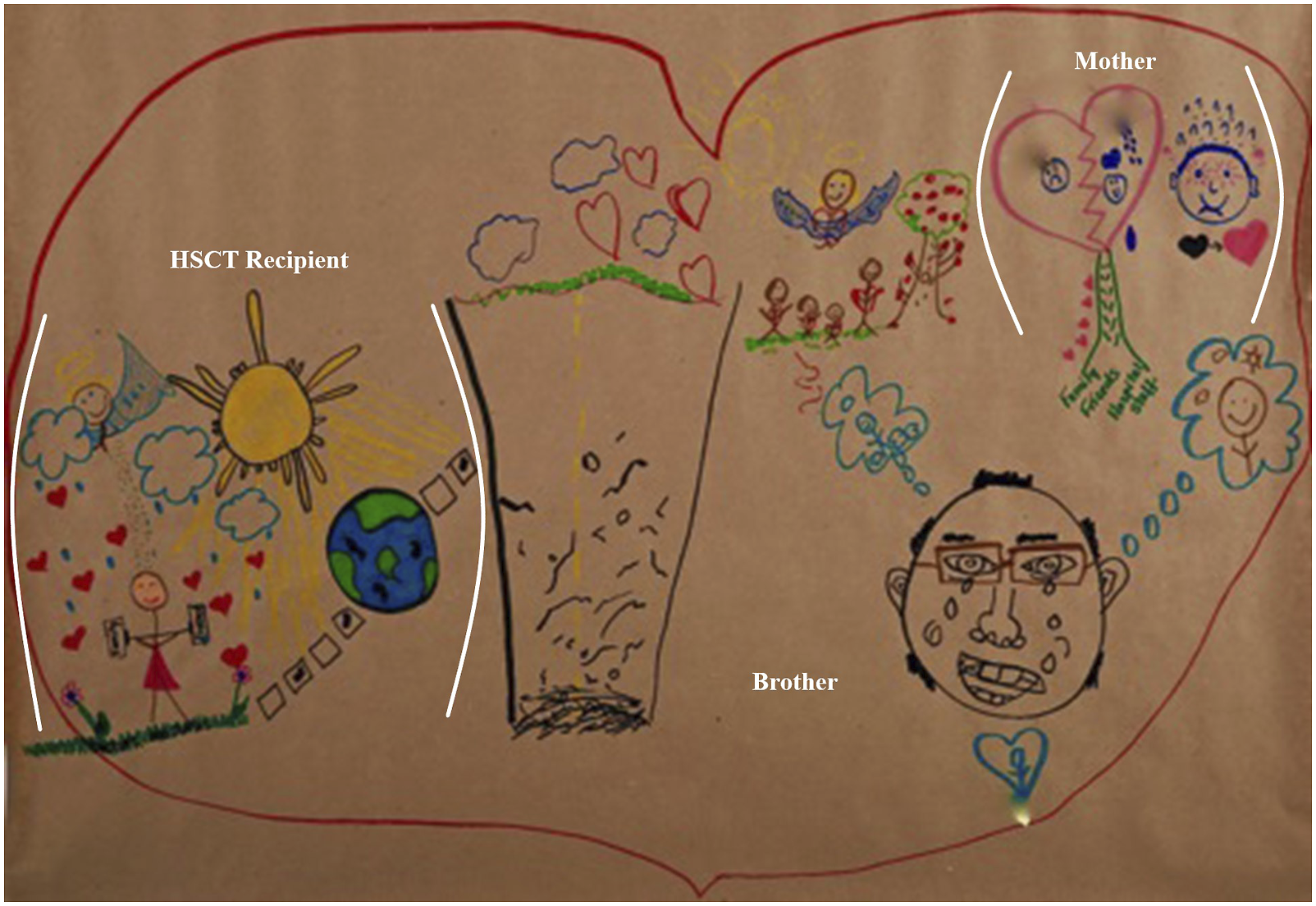
Another example of how relational framing occurred was the purposeful introduction of the DI process at the end of the first interview. After describing the drawing process, family members were asked to think of an image that would express their HSCT experience before they returned for the second interview. These conversations prepared participants for the DI activity:
What I (CW) found most surprising, was how open family members were to the drawing process, and for a number of participants, an image spontaneously emerged as the DI process was introduced. This mother drew her family at the bottom of the rabbit hole, a metaphor from the book Alice in Wonderland (Carroll, 1907) (Figure 2). During the first interview, she had not mentioned reading Alice’s Adventures in Wonderland with her daughter in the transplant room, this aspect of her experience was expressed only as the image presented itself. ‘Inspiring ∼ it is a long way down’.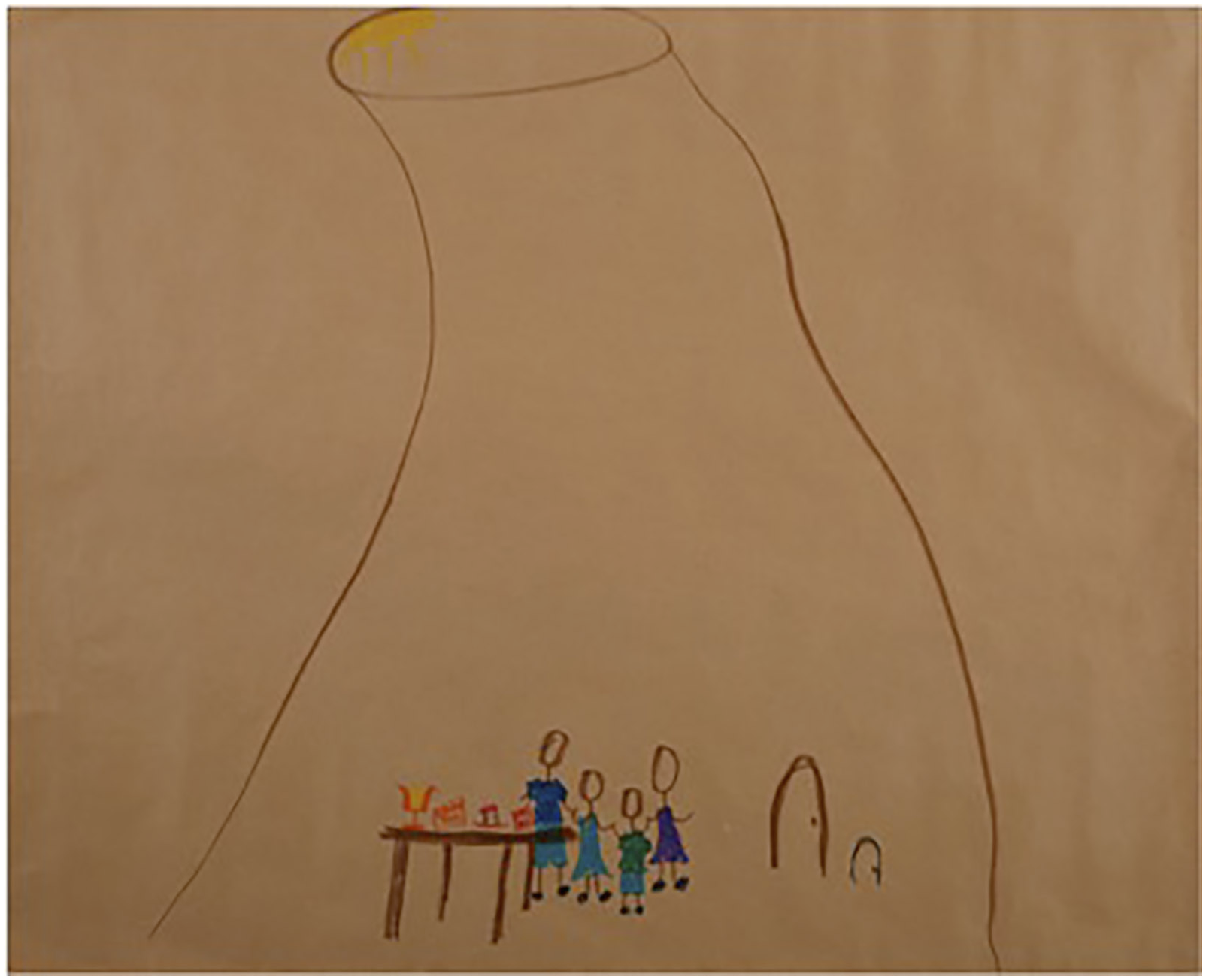
Entering the Imaginal World: Moving from the Outer to Inner Frame
During the second interview, participants were re-introduced to the drawing activity following a short narrative conversation, which facilitated a gradual and purposeful movement from the narrative research space into the expressive space where participants were invited to engage with the imaginal world (Levine, 2019; McNiff, 2018). Together, participants and the researchers physically moved into the space of the room specifically prepared for the DI method: prior to the interview, the researchers created a studio-oriented ‘drawing space’ which contained a large piece of brown art paper taped to the wall, coloured markers and crayons. The art paper was large enough to provide adequate space for the initial drawings of each family member (individual images drawn simultaneously, with family members standing beside one another). The drawing materials were specifically chosen to contain the emotive level of the expressive art experience by one of the researchers (DD) who is an experienced EA therapist.
The distinction between the outer and inner frame is important: the image is created and held within edges of the art paper, and the boundaries of that paper creates an internal space where participants explore and play with expressing their experience. For the most part, this remained private, a ‘space set apart’ (Schaverien, 1999, p. 65). Although Schaverien (1999) conceptualizes what happens in this inner space as ‘a way of relating to the self, or parts of the self’ (p. 65), from an EA perspective, the boundary of the art paper creates a space for engaging the imagination (Levine, 2019; McNiff, 2018). It is the containment of the expressive process within this outer and inner frame that allows participants to be emotionally safe as they risk expressing their experience through an arts-based medium (Levine, 2019; Schaverien, 1999).
The researchers remained present with participants in the inner drawing space, emotionally holding the space (Levine, 2019; Schaverien, 1999). Within this space, the researchers assisted participants to release their ‘inner critic’. Participants were hesitant when first entering the drawing space and needed reassurance that we did not expect them to create ‘artistic’ images, but rather, the process was about expressing their experience in the form of an image. Our work to explicitly address the uncertainty that participants often experienced allowed them to relax into artmaking (McNiff, 2004). A DI script segment illustrates this process (see Supplementary Material): It is really important for you to know there’s no right or wrong pictures. The pictures will help you tell your stories, and when you are finished drawing, we’ll play with the picture, asking the picture questions to help us understand some of the other pieces of your stories.
An example of how the release of the inner critic was facilitated in the drawing process is below:
McNiff (2015) argues that ‘depth is on the surface of what we do and perceive’ (p. 71): freedom created within the inner space of the artistic inquiry ‘allows the creative imagination to move according to its purpose…depth and simplicity are bound together’ (McNiff, 2004, p. 23). Each family in our study was unique, and when multiple family members were present and drawing beside one another, as researchers, we needed to follow multiple artistic processes simultaneously. Not all family members chose to engage with the space in the same way or with similar timing. Further, for some, there was a need to move in and out of the imaginal realm, pausing at times as the drawing proceeded. For the most part, family members remained engaged with the image during drawing rather than focusing on interaction with other family members or the researchers. As participants moved through the DI process, they needed to be supported in choosing their own path of engagement with the artwork as it came into form.
Creating an Embodied Image: Image Work is an Expressive, Generative Process
The image-making phase of the DI method focuses on the act of drawing, on ‘shaping’ experience into physical form (Levine, 2019). Participants created embodied images: affect, meaning and experience were expressed in them. Schaverien (1999) identifies this process as embedding life in the image (p. 86). Embodied images develop from a preconceived mental image (i.e. ‘an image in your head’) but as participants created their images there was movement of meaning and understanding (Davey, 2013; Schaverien, 1999). The original mental image was surrendered, and the art led the process: ‘the physical act of [drawing] takes precedence over the original idea…the picture develops in unexpected ways and usually takes a form which could not have been predicted and so it may surprise even its maker’ (Schaverien, 1999, p. 87).
The EA highlights a critical aspect of DI: it is the ‘work’ that expresses, not ‘the self.’ (McNiff, 1991). The image has autonomy, agency and inherent rights; it is actively involved in the process of expression and embodiment. McNiff (1991) argues that there is a need to temper the tendency ‘to see the image as a part of the artist who made it’ (p. 277). The sensory presence of embodied images has ‘a visceral impact on everything they touch' (McNiff, 2004, p. 17), including the created ‘studio’ space, art materials, participants and researchers. An aesthetic response is evoked (Levine, 2019), images are generative. Knowledge that was previously inaccessible comes into being: this is ‘knowledge that cannot be rendered discursively…it concerns experiences that are not formally amenable to discursive projection’ (Langer, 1967, p. 240).
Schaverien (1999) suggests that the interplay between the preconceived mental picture and the expressed image is central to the aesthetic process; however, we argue for an extension of these ideas: what occurred in the DI method was an imaginative, playful interplay between the preconceived picture, the image being expressed and the lifeworld (Husserl, 1936/1970). Our work highlights the importance of the ‘world’ of meanings that the image points to, calls to. Those meanings are involved in shaping the co-constructed understanding (Charmaz, 2014) that occurs in the research encounter. As participants created their image, placing their marks on the art paper, a creative interplay was initiated (Levine, 2019; Schaverien, 1999). The image acted as a form of ‘presentation’: it became an event in which meaning and understanding were moved into play.
The Embodied Image as Presentation
The creation of an embodied image is an aesthetic encounter in which the meanings the research topic is embedded in, present themselves, drawing in and addressing the participants and researcher(s). Gadamer (1989) asserted that ‘our experience of the aesthetic [the image]… is a mode of self-understanding. Self-understanding always occurs through understanding something other than the self’ (p. 95). It is through participants’ encounter with the image [the other] that understanding occurred. As multiple family members drew individual images parallel to one another, they engaged with their own imaginal expressions of HSCT, but also encountered the images that other family members were drawing on the shared art paper.
In discussing Gadamer’s hermeneutics, Palmer (2007) highlights the importance of the experience of art, which can be understood as presentation. In the encounter with an artwork, one’s expectations and ‘even our self-understanding’ (p. 123) are challenged. Gadamer argued that engagement with an artwork is not just a sensual encounter where the artwork is objectified and separate from the one who creates it, but in the experience of art we encounter a world: ‘since we meet the artwork in the world and encounter a world in the individual artwork…we learn to understand ourselves in and through it’ (p. 97).
The encounter with other family members’ images was not always comfortable. For example, a difficult interaction occurred in one of the interviews between two sisters. At first, the sisters focused intently on the drawing of their own images, not watching each other. They both chose to draw a tree, but as the drawing progressed, the recipient struggled, noticing her sister was also drawing a tree; she felt her sister was ‘copying’ her image (see Figure 3 and 4): HSCT Recipient’s Image. Sister’s HSCT Image.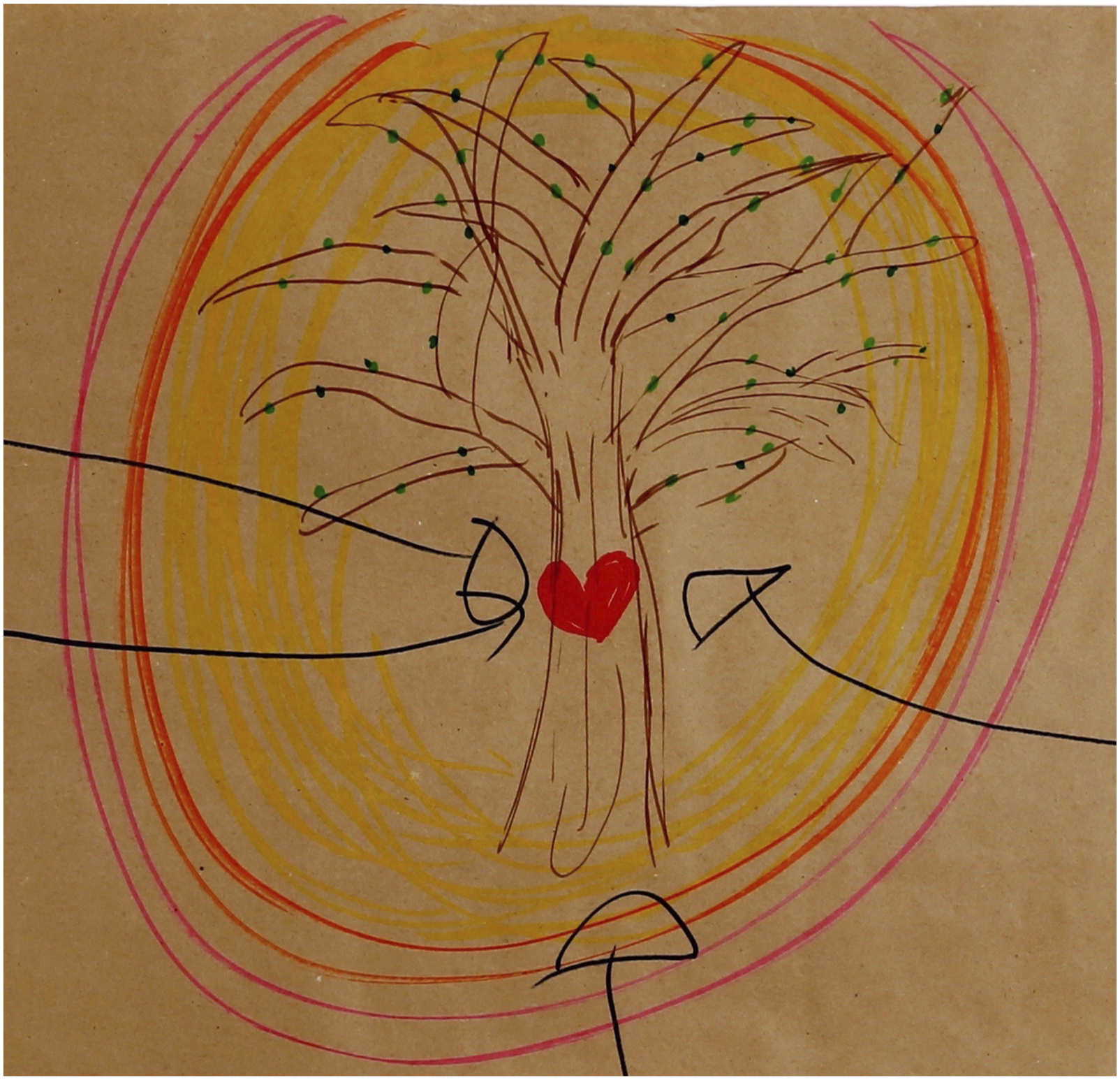
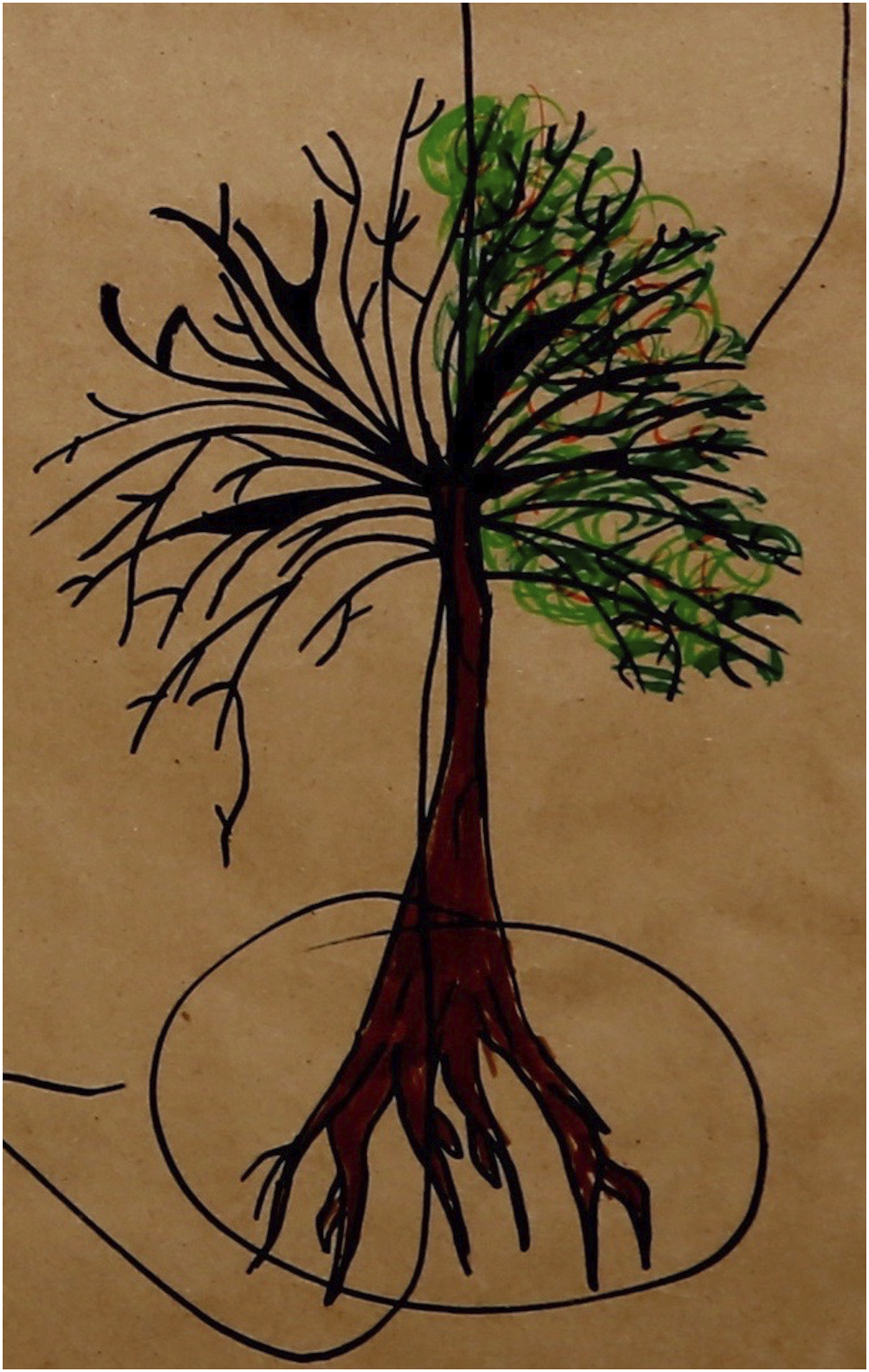
Within the space of the art paper, each family negotiated who took up drawing space, where their image would be drawn, and when they would begin. In this studio-oriented, artistic inquiry method, the researchers, participants, art materials and the image facilitated poiesis: ‘shaping a world’, shaping what had been given in human life (Levine, 2019). A co-construction of knowledge (Charmaz, 2014) occurred through the world that the image presented.
One illustrative example is a mother who expressed her family’s experience of HSCT by drawing her family members at the bottom of the ‘rabbit hole’, (see Figure 2). As this mother drew her family standing together, holding hands at the bottom of the rabbit hole, she stepped back from the drawing, the faces of the family members still blank. She sustained her gaze on the image, and slowly returned to the art paper, lifting the marker as if to begin filling in the facial expressions. She then stopped and did not add facial expressions, they were left blank (West et al., 2020). We did not ask her questions about this as she drew, but let the process unfold between her and the image. We remained present, continuing to hold and contain the frame of the image-making space.
Levine (2019) speaks about the important role of play in artmaking, noting that interpretation from a practitioner/researcher too early acts to shut down imaginative play. Hence, judgement is needed about the judicious use of comments, or questions as family members move through the drawing stage of this method. What was striking was that the image, as it was being created, was silently in dialogue with this mother, speaking back as she considered whether or not to add faces to the figures. The world of meanings associated with her HSCT experience spoke through the image. It was only in the subsequent dialoging process that she articulated what had occurred in these moments. When this mother was asked what she thought her daughter (HSCT recipient, not present) would ask the image, she said: ‘Mom…why no faces?’ Her response ‘as the image’ (how she thought the image would answer) was: ‘Because I didn’t know how you were feeling’. This mother later reflected on her engagement with the image during the drawing process: I couldn’t [add facial expressions]. I thought about it. I went to do it….I don’t even want to guess at where their thoughts…heads were…I would put a smile on my face…That was the part that…surprised me the most, I…didn’t even know what to put there…I couldn’t pick…because I was feeling 856 things…you try and know what your kids are thinking but I wouldn’t want to guess what kind of monsters were in their heads at the time.
Engaging in a Shared, Participatory Aesthetic Interpretation
Within the DI method, the creation of the image is followed by a purposeful, guided dialogue between the participants, researcher(s) and the image. The creative process of image-making involves a playful engagement with the imaginal world that eventually leads to the shaping of a ‘work’, or art form, which is ‘ushered into the world’ (Levine, 2019, p. 53). It is in the image’s relationship with others in that world [participants and researchers] that the aesthetic response is cultivated (Levine, 2019). Schaverien (1999) conceptualizes this as moving from the life in the image to the life of the image. In this transition, the researcher(s) hold an aesthetic responsibility, they support participants as they experience an aesthetic response, which involves two distinct phases: 1) aesthetic attentiveness (limited words) and 2) ‘a speaking image’ (entering a dialogue with the image, inviting the image to ‘speak’).
Aesthetic Attentiveness
Once the drawing was completed, family members were invited to step back to view their image. Limited verbal guidance was given. As researchers, there was a need to hold back at this point. It is important not to transition too quickly into a verbal dialogue, which, as noted earlier, may limit the image’s presence and voice (Levine, 2019). After the participant(s) had been given some time to experience a ‘shared gaze’ on the image (Schaverien, 1999), the researchers said the following: ‘So when you stepped back and looked at the picture you drew, what are one or two words that you thought of when you looked at your picture? And remember, there are no right or wrong answers. So, now, please look at the whole picture, everybody’s image together; What would be one or two words you would like to say about the whole picture?’
The aim was to draw participant(s) attention towards the image, fostering an experience of the artwork. Here, the aesthetic response that began during the act of drawing was extended. Through an attentiveness to what shows itself through the image, ‘we…allow the work and the shaping process to speak for themselves and, in this way, teach us something we may not already know’ (Levine, 2019, p. 39). This perspective is distinct from asking participants what they think the image says or means. For Gadamer (1989), this is contemplative dwelling, ‘it is a matter of “watching-with”a work…so that the works come to life in unexpected ways’ (Davey, 2013, p. 118, 119). These thoughts echo Hillman’s (1983) invocation to ‘stick with the image’, and with McNiff (2004), who views aesthetic contemplation as central to the EA: ‘…all of the creative methods of responding to images…will never take the place of visual contemplation of artworks, of breathing with them in the present moment’ (p. 13).
Participants used the following words to describe their images following aesthetic attentiveness: ‘“fearful chaos” (mother), “stormy” (father), “turmoil and despair” (mother), “wanting to go home” (recipient) and “ground hog day…reliving a bad day over and over…they were never ending (mother)”’ (West et al., 2020). When working with multiple family members, this can be particularly powerful, as each person will have their own aesthetic response, and in sharing those responses, they learn about what others see and how they respond to the image.
A Speaking Image
Family members were subsequently guided through a dialogue with their image, allowing them to speak with the image, to hear and respond to the image’s message. Each family member first asked the image questions. The researchers then asked each family member to physically move to stand beside the image. As the researcher read aloud the questions each family member had asked the image, family members were asked to imagine they were the image and to respond with the words they felt the image might give (rather than what their own response might be). In responding from the image’s perspective, their artwork became a ‘speaking image’: it was personified, its voice and agency were expressed. Other family members were then given an opportunity to respond as the image. The script segment guiding this phase of the interpretive process is included below: This is the part that might feel a little silly, but it won’t once we get into it. You can choose whatever question you think of as you look at the picture. If you can’t think of a question, that’s okay too. [second researcher wrote down participants’ questions on a cue card]. Now we are going to ask you to answer the questions, as if you were the picture. Please stand near the wall, right next to the picture. And this is the funny part of this activity. I’m going to ask you to pretend you are the picture. As I read your questions, you will answer as if you are the picture, what you think the picture would say. Everyone else is going to listen, and if they have a different idea of what the picture might say to a question, they can share their ideas.
The DI method is grounded in McNiff’s (1991, 2004) assertion that images have autonomy, agency and inherent rights. The dialoguing approach aims to honour the autonomy of the created image as it is brought to life through the shared dialogue. It is critical to understand that this is not self-expressive in nature, but rather, as family members further engage with the imaginal world by asking their image questions, a generative process unfolds: new understanding occurs as the image speaks (Levine, 2019; McNiff, 1991), ‘the work of art communicates itself’ (Palmer, 2007, p. 124). The image then holds the ability to reach ‘beyond the enclosure and space in which it originated’ (p. 199). It has a quality of aliveness, and through this interpretive process, movement of meaning occurs. To illustrate this, we will further explore an interview with the family introduced earlier (young adult recipient; adolescent sister). The segment below is an example of how the researcher worked to assist family members to ask the image questions, while also providing gentle guidance. At times, examples can be helpful when a family struggles with how to ask their image questions (see Figure 5): ‘Two sides: Happy and sad, past and present, symbols of life and growth’.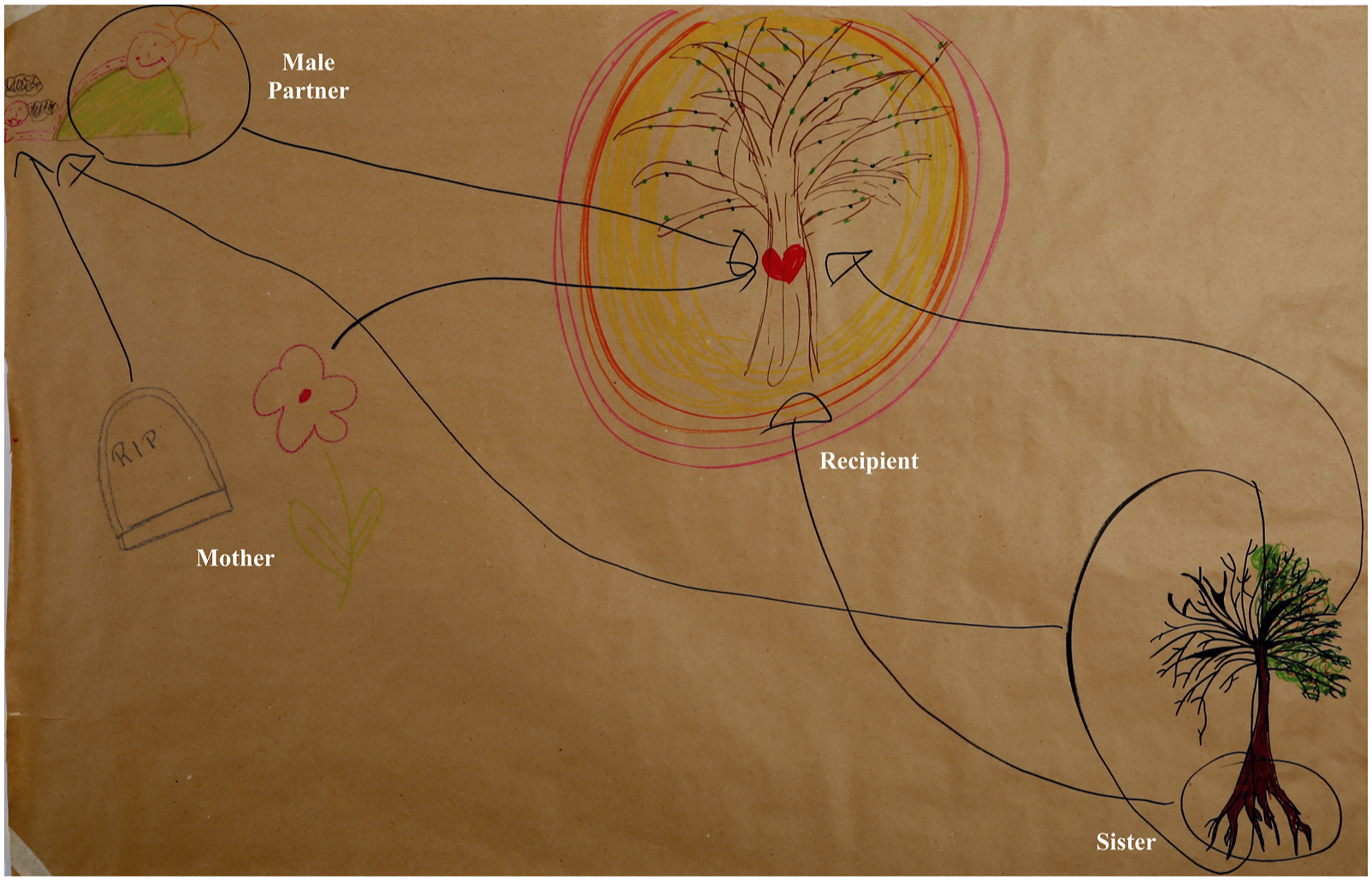
Here, this mother is coming to understand that it is not about asking her partner a question about his drawing, but rather, asking the question directly of his image, which illustrates how family members needed assistance in encountering the image. Below, the researcher guides family members to physically move to stand beside the image and assists them to speak ‘as’ the image:
After family members have given their initial responses ‘as the image’ to the questions they had asked, they are invited to move further into the shared aesthetic interpretation, as they are asked to explore the images drawn by other family members:
This exchange is important, as the question
Here, you can see the researcher guides this sister’s aesthetic response beyond her own image. This draws other family members into the image dialogue, allowing different family voices to encounter and engage with one another:
Once families were guided through the image dialogue, the researchers end the dialoguing process by asking family members what it was like to create their image:
Crystallizing Stories of Illness
The Image Becomes More
In the last phase of the DI method, family members are asked if and how they might want to connect their individual images together to symbolise their family experience of HSCT. Drawing on the EA and hermeneutics, we suggest that here, individual images come together in a new way, acting to further influence one another: individual stories and meanings of illness become more as they are crystallized into a shared family image. The following transcript segment (continuation of the family dialogue above) illustrates this aspect of the method:
This family agreed they wanted to somehow connect the grieving, painful aspects of each drawing to each other, while grouping the symbols of growth together in the center of their shared image.
They also negotiated who, and how the final images would be added:
The researcher acted as a guide, but the family held agency in determining if and how they would connect the images present in their artwork. Schaverien (1999) suggests the aesthetic object has an ability to contain and hold opposing forces ‘in a resolution that negates neither’ (p. 104). The opposing forces of grief and sadness became embedded in family members’ images beside symbols of growth, healing and illumination. During crystallization, these opposing symbols were linked together with arrows, allowing individual images to be transformed into a family image (see Figure 5). Further, they chose the sister who had experienced profound loneliness and separation during HSCT, to draw the arrows to connect the ‘grief’ and ‘getting better’ image components. The family’s decision to ask the sister to draw the arrows to connect their images positioned her at the center of a new family constellation: the sister was brought into the center, a position which had previously been held by the illness.
Crystallization is a complex process that occurred across the stages of this method. Paolo Knill (2005) articulated the centrality of crystallization theory in understanding the movement and clarity of meaning that happens when even small creative acts occur within a framed space that has been ‘“saturated” with artistic imagination’ (p. 123). He uses the metaphor of the growth of a seed to its full potential to illustrate this process; the seed, and the creative act, transforms to resemble the ‘clarity and order of a crystal’ (p. 123).
As family members stood beside each other drawing, they simultaneously encountered the images being created by others. Questions were raised and family members experienced some moments of discomfort as they witnessed those images. These glimpses into other images moved participants outside their own individual perspective, inviting curiosity about other family members’ experiences. The process of crystallization was extended as participants were guided into a shared gaze on the image. Schaverien (1999) used the metaphor of an art gallery to argue that in the shared gaze, images have their effects: ‘the viewer will let her or his gaze wander over the works, see what is there and locate herself [himself] in relation to the pictures…gradually she will enter the artist’s world… it is starting to affect her and to mingle with her own’ (p. 70). When we apply these ideas to the DI method, we understand that as family members gazed upon their own image, and the images of other family members, they located themselves differently, the images exerted their effect, which was further expanded during the image dialogue. Davey (2013) asked this central question: “If an artwork speaks so directly, why does the need to interpret arise?...No matter how forcibly a work announces itself, it remains an appearance: other aspects of it remain undisclosed…Understanding the declarative sense of a work does not rule out the need for interpretation. The profundity and richness of a work require...[interpretation]...to unfold its withheld capacity for expression. Interpretation allows a work ‘to become more’, in the sense of realising its undisclosed aspects” (Davey, 2013, p. 106, 107).
We argue that in the dialoguing process, there is a gradual movement of meaning and understanding within the image, as well as between the image, family participants and researchers. Davey (2013) proposes that ‘aesthetic experience involves partaking in a hermeneutic experience of movement’ (p. 85). The act of understanding itself is an experience of movement…‘from not knowing to knowing…becoming aware of something in a new light’ (p. 87). As such, the understanding that develops is generative in nature (Levine, 2019; McNiff, 1991, 2004), there is a distinct co-construction process (Charmaz, 2014) that occurred which was not limited to family participants and researcher(s) but extended and involved the image as well. This is a central, defining characteristic of using the DI process in qualitative artistic inquiry.
Returning from the Imaginal Space
Levine (2019) explores the importance of assisting clients [research participants in our work] to return to their everyday lives after the imaginal process: ‘a bridge has to be constructed that can help the person return to the life-situation’ (p. 66). We articulate the final movement in this method as assisting participants to return from the imaginal space. In our application of the DI method, this occurred through the use of lighter, less emotionally laden conversation and asking one or both of the following questions: ‘What does this image say about what it is like for a family to go through paediatric HSCT?’ and ‘If you could give one piece of advice, or share a message with a family about going through HSCT, what would that be?’
Discussion
The family systems-expressive arts research we conducted to understand family experiences of paediatric HSCT through a cGT inquiry was unique (West et al., 2020). Within that research, the DI research method was simultaneously studied. Our findings indicate that the defining feature of the DI method in cGT is that it extends the co-constructive process articulated by Charmaz (2014) beyond the topic, participants, and researchers to an arts-based exploration that includes the image as a co-constructive partner. We have articulated how we adapted this approach from the EA field for use in qualitative health research with ill children and their families. Our method findings draw on literature from the EA (Knill, 2005; Knill et al., 2003; Levine, 2019; McNiff, 2018), hermeneutic philosophy (Davey, 2013; Gadamer, 1989; Palmer, 2007) as well as Joy Schaverien (1999), a psychoanalytical art therapist. Although we developed and studied this method within paediatric illness, it would be highly applicable for use with individuals, and/or families in diverse areas of arts-based, qualitative research.
The use of drawing methods and visual arts interventions have a rich history in paediatric health research (Archibald et al., 2014; Driessnack, 2006; Foster & Whitehead, 2019; Green & Denov, 2019; Rollins, 2005; West et al., 2020; Woodgate et al., 2014). However, in reviewing previous image-based paediatric research, no other study was found where multiple family members engaged in drawing images together, or dialoguing with their image to explore, understand and share their illness experiences. Previous family drawing methods have predominantly focused on asking children to draw their families in an effort to assess areas of child psychological functioning and dysfunction. Further, the analysis of the images within paediatric family-based research has predominantly occurred through an ‘expert’ analysis using quantitatively based coding systems (Goldner & Scharf, 2012).
In paediatric HSCT, examples of quantitative, psychologically focused interpretations of children’s images are also prevalent (Packman et al., 1998, 2003). For example, the Kinetic Family Drawing-Revised (KFD-R) (Spinetta et al., 1981) has been used to compare HSCT sibling donor and non-donors perspective on ‘family communication, self-image, emotional tone, and overall family support’ (p. 178). Case studies within that work provided significant insight into siblings’ perspectives of themselves within the family and family dynamics during HSCT, but the analysis occurred through expert interpretation and the focus was on the siblings drawing the family (Packman et al., 1998).
The DI method should not be conceptualized as a ‘drawing method’, but rather, as an EA method that uses drawing (image work), as well as other imaginal modalities, to assist family members in exploring their HSCT experience, as well as sharing their experiences as they dialogue with their image. The co-construction of knowledge that family members shared with their created image and the researchers was not grounded in self-expression but was generative in nature. Additionally, individual images and understandings came to crystallize into a family story.
The emerging field of ABR has identified the ‘visual arts’ and ‘literary arts’ as two distinct genres (Chilton & Leavey, 2014). However, this work highlights that the DI method cannot be contained within either of those ABR genres, for it is inherently an intermodal process: it is defined by the movement between different modes of the imagination as described in intermodal theory (Knill, 2005; Knill et al., 2003). In the DI method, family members simultaneously and sequentially encountered different modes of imagination: image, sound and rhythm, movement, words, and action. For example, family members were asked near the end of the DI process if they would like to add a final image to connect their individual images together. Each family decided if and how they wanted to connect their images, illustrating the interaction between the image, sound/rhythm, movement and words to negotiate how they would create their final representation of their family story. Each family chose how they would act to complete the image process.
In artistic inquiry, imagination is a ‘way of knowing’ (McNiff, 2018, p. 29) and is understood to be intermodal (Knill, 2005). Imagination has multiple sensory modalities which are influencing and acting upon each other, which was evident in our findings. We argue that the EA represent a unique and largely unarticulated ABR ‘genre’ which is defined by the interaction of multiple imaginative modalities and is grounded in an aesthetic ontology and epistemology of the imagination (Knill, 2005; McNiff, 2018).
Strengths and Limitations
The limitations of our research include the small sample size, families varied in terms of which family members chose to participate and we were unable to recruit structurally disadvantaged or culturally diverse participants. Further, we could only include children 7 years of age and older due to the need for children to have sufficient emotional/cognitive development to express their experiences through word and image.
One of the critical strengths of this work is the purposeful grounding of the DI method in EA philosophy and theory. However, this will require that researchers using the DI method have knowledge of the EA literature, or at a minimum work with a researcher who has EA expertise. Given we adapted this method in a family-based study, the team composition also required research expertise in family systems theory/practice. Finally, including researchers with experience in serious paediatric illness was beneficial. In EA research, there is a need to build a strong interdisciplinary team where researchers bring distinct skills and abilities.
The use of this method also requires that researchers have the ability to create an imaginal space and an emotionally safe holding environment in which family members are supported in expressing illness experiences which may have been traumatizing and remained unexamined, which can be ethically sensitive, particularly when intense emotions are expressed. Participants were aware that they could stop the DI process if they felt distressed. Each family chose to continue when emotions were intense; however, there were times when family members chose to step back from the imaginal space, subsequently deciding when they would re-enter. Family members valued the opportunity to share their experiences, despite the emotion they experienced. As a research team, we reflected on the important distinction between tears of expression and tears of distress. Certainly, if distressed, family members should be given the opportunity to stop, or delay data collection, but there was a need for the researchers to be present and witness the emotions and tears that had not previously been expressed. Psychosocial support was available for participants, but no one requested or required that support in relation to their participation.
Future Research
Our method research highlights the need for more studies which rigorously examine the arts-based methods they employ. As researchers adapt specific ABR approaches, there is a unique opportunity to simultaneously study and extend current knowledge about specific methods. This is particularly urgent when using research methods that could potentially be developed into practice interventions. Although the DI process has been used in EA practice and education, prior to our research, there has not been an in-depth analysis and articulation of the process for using the DI approach in health research. At the current time, we are conducting a multi-site study which was funded based on this initial work. We are using the DI method before and after paediatric HSCT hospitalization, with other EA activities and digital storytelling. Future research also needs to examine the adoption of this method in other illness contexts, with families and individuals.
Conclusion
We have articulated four distinct phases of the DI method: 1) containing the imaginative space within an outer and inner frame, 2) creating an embodied image: image work is an expressive, generative process, 3) a shared, participatory aesthetic interpretation and 4) crystallizing stories of illness. The social process shared by participants, researchers and the image has been grounded in EA theory/philosophy, hermeneutics and analytical art psychotherapy theory. The psychosocial impact of paediatric HSCT on the family system is significant, lasting for months and years post-hospitalization (West et al., 2020). Integrating the individual illness experiences into a family experience is a complex process that does not always happen. The DI process highlighted the need for relational and emotional work following hospitalization. There is significant potential for use of the DI method in paediatric and adult qualitative research with individuals and families. We hope this research-based articulation and theoretical/philosophical grounding of this EA method will assist other researchers to apply it within diverse research contexts.
Supplemental Material
sj-pdf-1-qhr-10.1177_10497323221084924 – Supplemental Material for Dialoguing With Images: An Expressive Arts Method for Health Research
Supplemental Material, sj-pdf-1-qhr-10.1177_10497323221084924 for Dialoguing With Images: An Expressive Arts Method for Health Research by Christina West, Debra L. Dusome, Joanne Winsor, Andrea Winther Klippenstein and Lillian B. Rallison in Journal of Qualitative Health Research
Footnotes
Acknowledgements
We would like to acknowledge and thank the children and families who generously shared their time and experiences with us. We would also like to thank the Children's Hospital Research Institute of Manitoba for funding this research.
Declaration of conflicting interests
The author(s) declared no potential conflicts of interest with respect to the research, authorship, and/or publication of this article.
Funding
The author(s) disclosed receipt of the following financial support for the research, authorship and/or publication of this article: Children’s Hospital Research Institute of Manitoba Operating Grant (June 2014–2017)

Supplemental Material
Supplemental material for this article is available online.
References
Supplementary Material
Please find the following supplemental material available below.
For Open Access articles published under a Creative Commons License, all supplemental material carries the same license as the article it is associated with.
For non-Open Access articles published, all supplemental material carries a non-exclusive license, and permission requests for re-use of supplemental material or any part of supplemental material shall be sent directly to the copyright owner as specified in the copyright notice associated with the article.
