




Abstract
Youth in care experience many different types of relationships with their family of origin, foster family, and service providers including social workers, therapists, guidance counselors, and teachers. Consequently, they also experience multiple losses within these relationships prior to, upon entry, and when exiting systems of care (Font & Berger, 2015). Research shows that frequent changes in placement and school mobility cause a number of challenges for youth in building and maintaining relationships and that once important connections are interrupted through placement, relationships may be hard to maintain or less appealing for youth to invest in. Nonetheless, during this period of constant change and uncertainty, connections to supportive adults can provide a variety of benefits for youth in care (Geenen & Powers, 2007; Perry, 2006). This study explores the interactions between youth who have experienced placement under a child welfare mandate and their preferred type of relationships with different service providers. Specifically, this research examines how these relationships may promote or hinder the resilience of youth at different levels of risk exposure.
Resilience, from a social ecological perspective, is understood here as the capacity of individuals to navigate their way to the resources they need to succeed and their ability to successfully negotiate for resources to be provided in ways that are meaningful to them (Ungar, 2011). While resilience depends on the quality of the services and support a youth receives, the Differential Impact Theory (DIT; Ungar, 2017) suggests that individual change is a by-product of changes to the environment (Bronfenbrenner, 1979; Ungar, 2018; Wessells, 2018). According to DIT, though children at low and high levels of risk exposure may require a range of support and services, the impact of these resources will vary by the chronicity and severity of the child's experience of adversity (Ungar, 2017, 2018). Thus, how youth in care seek, perceive, and maintain relationships with service providers, and which type of relationship benefits them most, may depend on their experiences of adversity as well as their access to other supportive resources in their environment.
Background
Young people who have spent time in child welfare systems represent a vulnerable group, who unlike their peers, disproportionately experience negative outcomes in adulthood as they often lack the necessary support and services required for a successful transition out of care (Cameron et al., 2018; Geenen & Powers, 2007; Goyette & Blanchet, 2022; Sukumaran, 2021). Having less stable social networks than those peers and without the same opportunities to receive support from their families (Goodkind et al., 2011; Höjer & Sjöblom, 2014), young people in care require continued practical, economic, and emotional support to transition to adulthood (Rogers, 2011; Tysnes & Kiik, 2021; Urbanc et al., 2018).
In Canada, the number of children aged 0–14 years in out-of-home care at the end of 2019 was approximately 54,000 (Black et al., 2022), which rose to 61,104 children in 2022 (Pollock et al., 2024). Among these, 1,180 children (5.98 per 1,000 children) were residents of Nova Scotia (Pollock et al., 2024), the location of this study. Though this number accounts for various living situations such as permanent government care with foster families, extended family, or institutional settings, it usually does not include children seeking informal kinship services (Black et al., 2022). While these different child welfare systems provide a variety of services, key activities include child protection, child placement in alternate living arrangements, family support, and independent living services for youth leaving foster care (Tufford, 2019). However, during their time in care, multiple placement changes become the norm for these children, with each change bringing with it disruptions to their relationships with people in their home, school, and community (Okpych et al., 2023). Thus, “cycling in and out of relationships and family systems” becomes a way of life that young people in care endure to survive (Samuels, 2008, p. 76). Even so, youth themselves have identified a wide range of formal and informal relationships with adults and others from whom they might seek support (Cunningham & Diversi, 2013; Nesmith & Christophersen, 2014) and expressed how these relationships and close friendships lead to better outcomes (Jones, 2013). Furthermore, among youth in care, certain factors such as duration and frequency of contact, and similarities or shared traits have been correlated with psychological well-being, as well as providing young people access to other social networks (Ahrens et al., 2011; Jones, 2013). And yet, very little research has explored youth perspectives regarding close and important relationships with different care providers that might foster resilience and aid in their transition to independence after care ends.
Mentoring Relationships
Decades ago, researchers such as Garmezy 1985 and Rutter and Giller (1983) were among the first to draw attention to the importance of having at least one non-parental adult who provides consistent support as critical to the resilience of young people when exposed to atypical stress. Commonly referred to as “mentoring relationships” (Horn & Spencer, 2018), these connections can be developed with non-parental figures such as teachers, coaches, neighbors, and extended family members to provide young people with guidance, advocacy, emotional and practical support and serve as role models (Goldner & Mayseless, 2009; Horn & Spencer, 2018). Thus, informal or natural mentorship occurs when a non-parental relative, teacher, or someone who is naturally a member of the child's social network goes beyond their obligations to build a supportive relationship with the youth (Fruiht et al., 2021). For young people in care specifically, these mentoring relationships may be developed through “the various services with which they interact, including foster carers, youth workers and social workers” (Zinn, 2017, p. 565). In their study on the effects of turnover among social workers, Curry (2019) found that longer-term relationships between young people and workers carried special meaning given the closeness they were able to develop over time. However, for youth in care, the high rate of placement mobility and changes in case management often disrupt relationship building and contribute to relationship loss (Curry, 2019; Salazar et al., 2021). Social services staff, meanwhile, is expected to maintain continuity in their relationships with the children whom they supervise. Research has shown, however, that a great many of the workers that support children in care spend very little face-to-face time with those in their care, pulled away by the needs of bureaucracies (Collins, 2007). Even so, mentoring relationships with service providers that adhere to ethical standards for practice appears to have the potential to support the relational and instrumental needs of youth in care, promoting their resilience.
Service Providers as Mentors for Youth in Care
Resilience studies with at-risk children and youth suggest that mentoring relationships lead to positive psychosocial outcomes (Goldner & Mayseless, 2009) and support young people's transition to adulthood. However, many of these studies focus on natural mentoring relationships that are generally formed with an older, experienced, and supportive adult figure who is a part of the youth's community, extended family, or school environment. Through a meta-analysis exploring the role of natural mentors for foster youth, Thompson and colleagues (2016) found that many studies reported a positive relationship between natural mentoring and improved psychosocial, behavioral or academic outcomes, thereby concluding that natural mentors play an important role in the lives of many children and young people in care. In a more recent study, Sulimani-Aidan and Tayri-Schwartz (2021) explored from an ecological perspective the role of natural mentoring relationships as a protective and promotive factor for youth in care. More than half of the youth in their study reported having a formal mentoring relationship with a member of their care team such as a counsellor or social worker, thereby demonstrating how formal and professional relationships with staff have the potential to resemble mentoring in ways similar to relationships with a natural mentor (Sulimani-Aidan & Tayri-Schwartz, 2021). In a different study by the same team that had similar findings, Sulimani-Aidan (2017) found factors such as the service provider's personality traits, personal background, availability, and ability to see youth as trustworthy and treat them as more than “just a mentee” by offering “parental gestures” made the adult an ideal mentor for youth in care. Other important variables that qualify service providers as mentors include longer-term relationships (Curry, 2019), positive engagement through authenticity (Salazar et al., 2021), and strength and closeness of the support network (Best & Blakeslee, 2020).
Though these are important considerations regarding a foster youth's relationships with their service providers, they do not account for the different degrees of risk exposure and the influence of interacting systems that may hinder or support the youth's resilience in a broader socioecological context. Furthermore, it is unclear whether the different qualities that youth in care most value in their relationships with their service providers vary by the youth's risk profile and exposure to potentially traumatizing events.
Method
Building on prior work (Sulimani-Aidan, 2017; Ungar & Ikeda, 2017), this study takes a constructionist grounded theory approach (Charmaz, 2014) to understanding the relationships youth receiving Child Welfare Services (CWS) have with their service providers as well as exploring how youth who have experienced different types of adversity negotiate for and navigate their way through these relationships. The constructivist grounded theory is a research method that theorizes the interpretive work of research participants, while also acknowledging that the resulting theory is an interpretation derived by the researcher (Charmaz, 2014). In resilience research, a constructionist approach reflects a postmodern interpretation of the concept and defines resilience as the outcome from negotiations between individuals and their environments for the resources to define themselves as healthy amid conditions collectively viewed as adverse (Ungar, 2004).
This study is part of a larger longitudinal mixed methods study that is identifying the key factors in the lives of young people who show positive developmental pathways despite contact with CWS in Nova Scotia, Canada and how their experiences can explain young people's graduation to stable or precarious housing (homelessness) after services end. The study included qualitative in-depth interviews with youth in permanent care and custody, temporary care agreements, alternative family care, and clients of preventative community services offered to families at risk because of structural marginalization or abusive behavior. The study was approved by the Dalhousie University Research Ethics Board (REB#2020-5103) and received ethical clearance from the Nova Scotia Department of Community Services (DCS).
Sampling
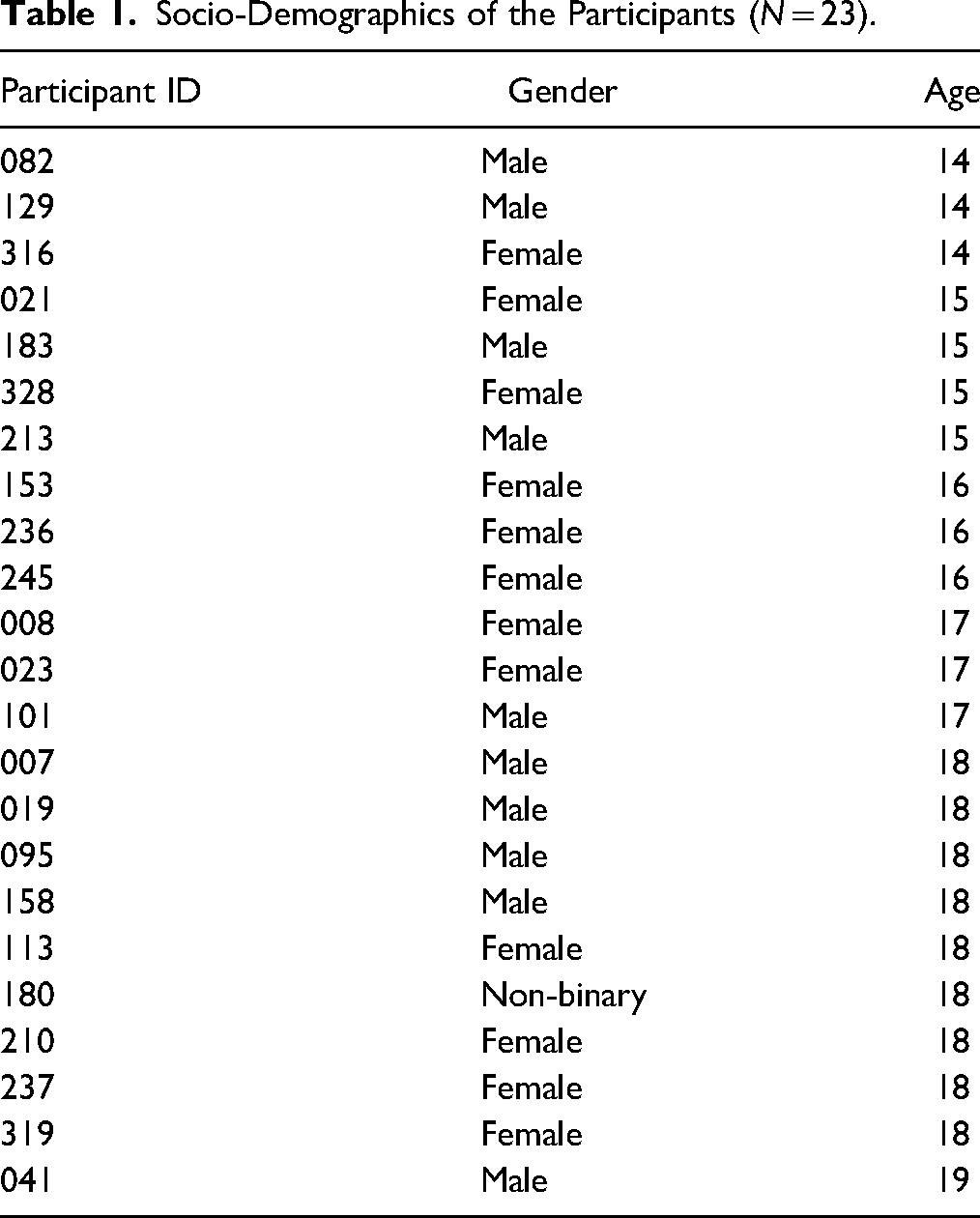
The qualitative sample was drawn from the participants enrolled in a quantitative survey at baseline (n = 292), who were initially nominated to the study through the Nova Scotia Department of Community Services (DCS) and agreed to be contacted by the research team. For the qualitative component, a purposeful subsample of these youth were invited to participate in interviews to help deepen our understanding of their pathways through services and the way resources are used to build resilience or, when lacking, accentuate patterns of vulnerability. These youth were chosen based on their scores on the quantitative measures of risk and resilience (high-risk/high resilience; low risk/high resilience; high risk/low resilience; low risk/low resilience), then matched for age and gender under each of the four categories. This paper presents an analysis of the qualitative data that comprised 23 interviews with youth aged 14–19 (mean age 16.6). The youth were racially diverse, with White (n = 8), Indigenous (n = 6), Black (n = 7), and other identifying (n = 2) participants. In terms of gender, 12 identified as female, 10 as male, and one as non-binary. The socio-demographics of the participants are listed in Table 1.
Socio-Demographics of the Participants (N = 23).
All participants were explained the reason for the study and invited to participate in both the quantitative and qualitative phases. Only those youth who agreed to be recontacted after completing the initial survey were eligible for a qualitative interview. Youth provided written or verbal informed consent for participation in the study which was formally documented by a research team member in writing. Participants were also asked to consent to audio recording and if they declined, consent for note taking was obtained. After obtaining informed consent, the youth were interviewed virtually through a secure Zoom account, using a semi-structured interview guide. The interviews were conducted by trained researcher assistants and took about 1–1.5 h. Psychological discomfort was mitigated in the interview protocol by explaining to all participants prior to the commencement of the interview that they were not required to answer any questions that made them uncomfortable or upset. They were also provided with information regarding follow-up support. Finally, a $50 gift card was provided to thank them for their time and participation in the interview.
Data Analysis
All interviews were audio-recorded through Zoom and transcribed verbatim, and participants were de-identified in transcripts and field notes to ensure confidentiality. The data was managed using the qualitative data analysis software ATLAS.ti.
An initial codebook was developed by the Principal Investigator (PI), a male-identifying senior researcher with expertise in mixed methods, and the Project Manager (PM), a female identifying researcher and PhD candidate. Each pilot coded two interviews. Based on the PI's feedback, some revisions were made, and the new codebook was used by the PM to code a third interview. The codebook was then tested by a masters-level Research Assistant (RA) who also coded the three interviews. Lastly, on the recommendation of the PI, a fourth interview was blindly coded by the PM and the RA and cross referenced to test inter-rater reliability. Throughout the process, several new codes were added, and revisions were made to the codebook which was then used to code the remaining interviews. This was done by a team of researchers consisting of the PM and three RA's, all masters trained professionals in health-related professions, who met weekly to share updates on the coding process. Thus, each interview transcript was coded twice by two members of the research team, with discrepancies discussed to resolve differences. Initial codes were applied to the transcripts that reflected themes as they emerged. Then, focused coding was used to categorize these codes into more defined categories. Themes and codes were extracted from the data and analyzed using procedures common to constructivist grounded theory (Charmaz, 2014). This procedure was applied to the first 10 interviews, with preliminary analysis informing minor additions and edits to the interview guide in order to include new themes as they emerged. Then the remaining 13 interviews were completed. Analysis was iterative, as researchers inducted meaning from the entire set of transcripts to develop initial themes, as well as revisited the transcripts to check on emerging concepts and confirm or disconfirm emerging theory linked to the data and extant literature. Finally, selective coding was used to organize the emergent concepts and develop a theoretical model to explain how youth receiving CWS experience relationships with their service providers.
Results
Main Themes
In the interviews, youth talked about their experiences with different service providers such as social workers, therapists or psychologists, guidance counsellors, and teachers, and their overall experience with the DCS. Though these experiences were unique for each participant, analyzed together, they identified repeating patterns of relationships with service providers as a negotiated process that has the potential to either promote resilience or disadvantage an adolescent further. Constructivist grounded theory analysis revealed two core categories, “relationship building” and “mentoring relationships.” Both categories had supporting themes that informed a youth's experience of both risk and resilience. A map of the findings is depicted in Figure 1.
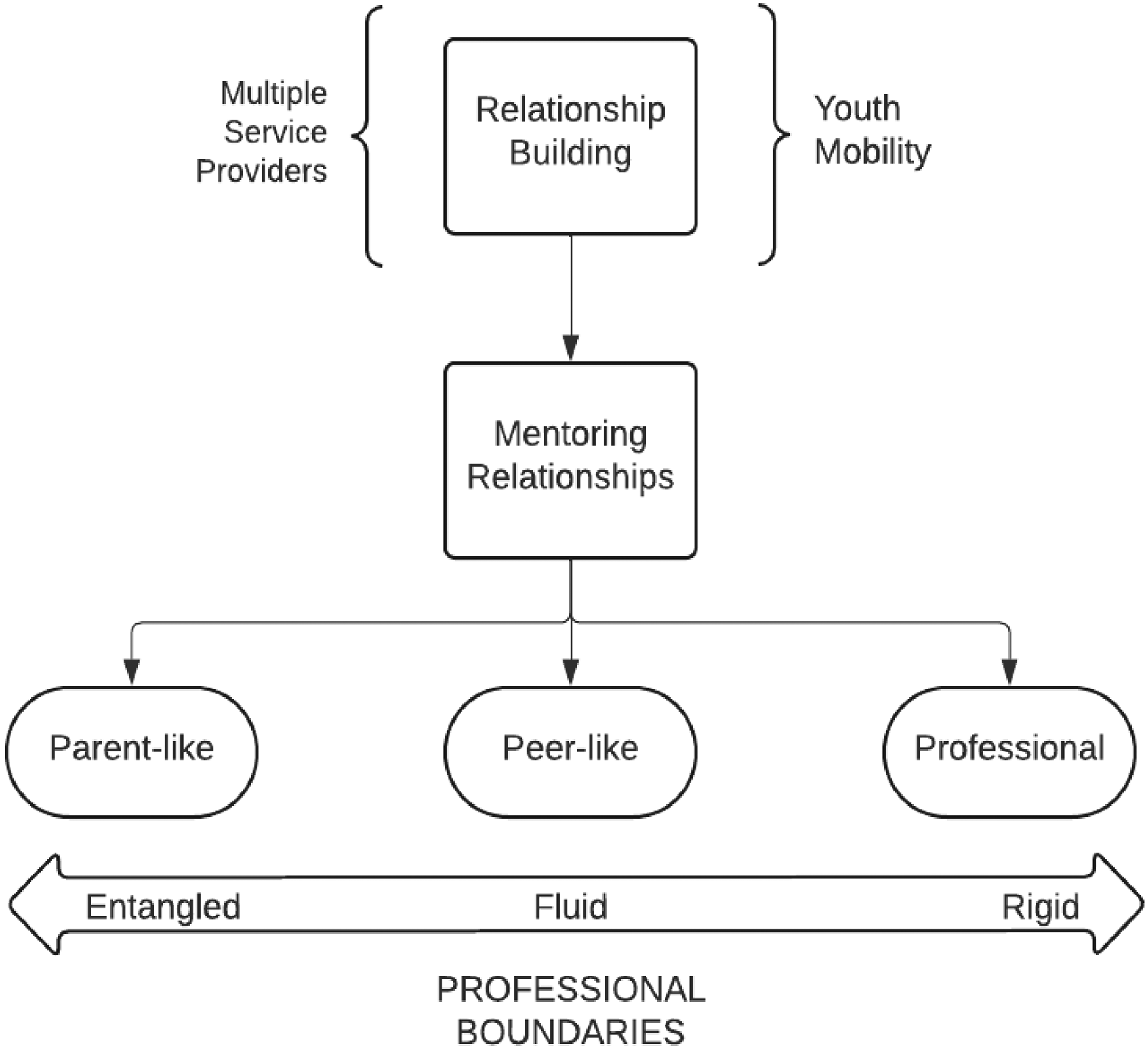
Model of relationship dynamics between youth receiving CWS and their service providers.
Relationship Building
Youth experience a multitude of formal and informal relationships during their time receiving CWS. Often, these relationships are transient due to having multiple placements or service providers which youth categorized as impeding the building and maintaining of a steady support system. Such relationship disruptions are amplified when they occur alongside other major changes in the young person's life, such as changing school or placements which often involves moving to a different community altogether. Though these factors are interconnected, they can be discussed under two broad themes, one from the perspective of youth mobility and the other regarding the experience of having multiple service providers.
Youth Mobility
Several youth reported multiple moves from one living situation to another ranging from foster care and group homes to respite homes to adoption. This led to changing schools and communities which were often stressful transitions. Moving schools, in particular, was a common cause of stress and fear, accompanied by loss of support from the youth's previous guidance counsellor or social worker. Changing schools also meant a change in teaching styles and most importantly, friends and peer groups. Thus, youth frequently reported difficulties in making new friends (especially daunting for those who were not socially competent) and losing connections with peers that had previously been experienced as supportive. When asked about how changing communities affected their school life, Participant 095 (18-year-old male) shared: It was kind of difficult because there wasn't like enough time to make friends. So it was like basically like I remember, especially going into A [school], or B [school]actually, when I moved from C [school], when I moved from there to the B school, I got there halfway in the year. And I remember everyone had like their own like school accounts and everything like that, because it was already set up because they had been school long enough to have something set up. But I was being moved around. So I didn't have one. And like, it just made everything a lot harder. Because most, like all the way through school people are using like the [new] emails and stuff and I didn't have one at the time. So they were like, able to sign in and play games on the computers, and I wouldn't be able to do that.
Though some youth took time to get comfortable with their new placements, certain provisions were found to be helpful during this process such as for Participant 021 (15-year-old female) who felt supported by her new school: “…when I came in the first day, I remember like, they had a table setup and like, they're introducing me to everyone, but not like, in an overwhelming way. So it was like, the school was good. Yeah, it was just the like, environment. Me seeing a different environment was a lot, yeah.” In this case, instead of expecting the youth to change or adapt, the system facilitated their growth by supporting the youth's integration into the school and new relationships.
Multiple Service Providers
More than half of the youth in our study mentioned having multiple service providers such as social workers and therapists due to changes in placements or personnel during their time receiving CWS. Youth had different reactions to these changes though most found it to be troubling, reporting inconsistency in service delivery. For example, abrupt and frequent changes often contributed to a lack of knowledge of the case among social workers and served as an obstacle to relationship building, as noted by the youth. When asked about their experience of having multiple social workers, Participant 129 (14-year-old male) shared: Annoying to be honest… Because like, I would, I'd have a decent relationship with one, and she'd leave and then I have to get used to a new one. And after I'd gotten used to her, they would leave. And then we have another one… It's just really like, kind of annoying because we keep getting a new one. Like, it feels like every other day we have a new social worker.
When asked to elaborate further, Participant 129 explained: I don't want to say stressful, but is was like, kinda hard to manage. Because it's like, I would get used to talking to this social worker, and like, she would become like almost my friend, and then she's gone. I don't see her anymore. So then we get a new social worker, it's like, it's kinda like hard to keep track, because it's like, I have to start learning—I mean, it's also kind of good, though, because like, it helps me with my people skills. Now that I think about it, because it's like, I have to meet new people. That's if you think about it in a positive way. I never looked at it that way.
Mentoring Relationships
We documented three patterns of relationship that youth expect from their service providers. Based on the youth's accounts of their experience, these were categorized as parent-like, peer-like, and professional. The following sections discuss these patterns in relation to the risk and resilience profiles of youth that best correspond to their preferred relationship pattern.
Parent-like
The first pattern of relationship the youth in our study described with their service provider was that of a parental figure. This role called for looser professional boundaries and tended to be most preferred by youth who had high exposure to adversity and/or very few other supportive relationships. When asked about their experiences with different service providers and what represents a good provider, responses by these youth mirrored what a child expects of a parent or caregiver. This included an expectation to be always available and reliable, which meant answering phone calls at all times of day. For instance, when a social worker's visits were less frequent, more risk-exposed youth tended to report feeling unimportant and uncared for. Participant 101 (a 17-year-old male) said: But like, in terms of how they treat you- like I mean, Key Assets [organization that supports youth receiving CWS with housing and other needs] has been decent, but how they treat you, like social workers, treat you they treat you like you're a second class citizen. It's awful that they don't give you any time in their day. Unless you're in temporary care in which case it will give you one time of their day for a month. It's just ridiculous. And then, now that I'm in permanent care, I haven't seen my social worker in six months or something like that, something crazy. I haven't talked to her in at least four.
When asked if the youth contacted his social worker outside of regular meeting hours, Participant 101 added: “Yeah, but only S. Like, the first social worker and the social worker I have now are just absent parents. So. It's ridiculous. They don't, they don't care.” Other parent-like expectations included the youth wanting their workers to express genuine care and concern, to be encouraging and emotionally and instrumentally supportive. This required a provider to check in on the youth's well-being regularly. As shared by Participant 153 about her teacher: So, she would always make sure that no one else knew if she had to talk to me specifically about something or is asking me how I was doing. She wanted to make sure that it was just that I knew and that she knew, and she was just making sure that I was okay, and that if I needed extra help, then she could set me up with a tutor, or whatever. She could call my mom or my grandmother and set me up with someone that can help me if there was an issue.
This need for emotional support was described as a parent-like expectation involving going out of one's ways to deliver support. For example, when asked how their therapist was considered helpful, Participant 153 (16-year-old female) shared: Well, she, like it felt like through the entire time that I was seeing her that she really did care about her patients. And she really did want to help. And she really wanted to try and fix things or help fix things, with everything going on, and that she just didn't want to put a bandaid on it and say that I'm okay and get her money and put me out the door. Like, it felt that she was like, take the time you need we can go over it's fine. It doesn't matter. Like, like if you need it, we'll do it. So, she… She was just, it felt like she actually cared about like, what I was going through, and she could actually relate to what I was going through.
Reviewing the profiles of the youth who most preferred that their service providers act like parent figures, it was found to be most common among youth who had experienced higher rates of risk exposure or a more serious lack of external support such as natural mentoring relationships or connections to significant others. For example, when asked what qualities of their service provider they liked the most, Participant 019 (18-year-old male) shared: “…and like reliable. I guess like caring in, like a way? But I guess that helps when you have like your own kids.” The interviewer then asked if that would mean being more maternal to which the youth responded “Yes.” Such comments seemed to indicate that for the youth with more extreme histories of neglect, a parent-like relationship with a professional could compensate for difficult pasts. This included Participant 019 whose father passed away and who had a history of abuse and severe mental health concerns, as well as experienced housing instability and racism. In another example, Participant 237 (18-year-old female) who lacked parental guidance from her birth mother was involved in the criminal justice system, had several mental health concerns including an addiction, experienced housing instability, and left high school before completing grade 12. When asked if her interactions with different social workers were helpful or unhelpful, she responded: “Not really, they just, they have so many kids on their caseload that it's like hard to like even build a connection with any of them.” On probing further whether or not this lack of connection affected her negatively, Participant 237 added: “Oh, of course, I mean, that would really affect anyone, like if- like a social worker is technically like your mother or father. So it's like building that connection. Would, uh, like help, honestly.”
Though finding a parent substitute through relationships with a service provider was a helpful coping strategy for these youth, the professional boundaries of the relationship in such cases became muddled over time as observed in the case of Participant 328 (15-year-old female). Participant 328 had experienced the death of a family member, violence in the community, and lacked adequate support. She described, though, a parent-like relationship with her guidance counsellor of five years as follows: And like, by accident, like one day, like I called her mom. And like, ever since then, like, I've always said mom to her. And she's always called me her daughter. Like, anytime anybody says ever, like met us… Like, we look alike, I was just something like that. Like, so like she like, she kind of took me in like as like. Yeah. Like, I can like lay down on her couch and just like, just pour my whole life out to her and that she'll just be there to like, listen, and just, like, help me, like, understand, like, what's going on… And like, how to fix it and how to like, keep my cool about it.
This relationship with the guidance counselor continued even after the youth moved to a different school and community. It's just because I don't know them! And I kind of made a connection with somebody and I don't want to stop that. But she told me she was like, I’ll like, call over there and like, get them to like, talk to you. And I was just like, no, she was like, she was like, but you can't keep coming here. And I was just like, yeah, that's that's not going to stop. I don't think so. Not at all. But she doesn't… I don't think she has a problem with that at all. Because I have her actual phone number. And like, ever since, like, I left there, like, she's just been there….I think she just like, uh she always brings up boundaries and like, because like, I'll like bust into her room and like scare her or like, she just brings up boundaries all the time. And I told her like, we don't have boundaries, like you've known me since I was this age, like, No. And like, I don’t think that would change in any way. Like I like would invite her to my wedding like it when I get older. Like, that's what I mean.
Peer-like
Somewhat less intense, but still with blurred professional boundaries, youth with moderate risk exposure tended to prefer peer-like relationships with their service providers. For professionals to fulfill this role they had to demonstrate flexible boundaries where the personality and background of the service provider were considered helpful in establishing peer-like connections and trusting relationships. Providers who were similar in age and gender, had the ability to swear, talked about themselves (e.g., shared stories about their hobbies) and subsequently got to know the youth beyond a purely therapeutic relationship, were seen as approachable and easier to talk with. These factors made the youth feel connected to and cared for as in the case of Participant 129 (14-year-old male) who experienced a peer-like connection with his teacher: Well, my English teacher, he, me and him we like, like a lot of the same things. Like he likes comic books, he likes video games. He likes doing all that stuff. So it's like, it's really easy to talk to him about things….I’m gonna say he still does because last time I spoke with him, he said like if anything was going on, because he's also a foster parent. So he knows what I've been going through. So it's like, he said, …if I ever need any help, I can just email him. Which I think is really, really nice.
In another example, the interaction style of Participant 236's (16-year-old female) current social worker was more age appropriate but still with loosened boundaries more typical of a peer relationship than a professional–client interaction: Oh, it's really good. I really like her. She's very, like, very different. Because the one I had when I was my first one, he was more for kids. And so his way and his approaches to stuff were a lot different to hers. And so she's a little bit different, where she's more laid back and because of like, she's just real, and she like, you can curse with her and stuff. And it's not weird, or, yeah, it's kind of like, it's good for my age. Like, yeah, it's really good.
Thus, some youth valued providers who made extra efforts to get to know their case and them personally as revealed by Participant 008 (17-year-old female) when describing interactions with her social worker: So like whatever we needed like she's always on top of it and like for like birthdays, she would bring gifts and like whatever mom needed she made sure it was done. And just like interacting with us because like some workers don't interact with you during your visit, they're just there, kind of like supervising but like she actually interacted with us and got to know us.
For youth who had experienced moderate levels of risk, a service provider who remained emotionally disconnected was experienced as selfish or disengaged from the work, with an obvious sense of disappointment conveyed through the stories the youth told. For example, Participant 158 (18-year-old male) did not find the connection they were expecting with their service provider, describing them as disingenuous or working for the sake of keeping employment but not for the good of their client: “It seems like, every time I've talked to them, it seems like they're pretty much just doing it for a paycheck, because it doesn't, like I know, obviously, that's not the case for a lot of them. But it seems that way, because there's like a disconnect between the counsellor and whoever's going to see them.”
The youth further notes how he had a better experience with a provider who was similar in age and gender, making him more relatable: I find when I applied for the military, I had to do like a medical evaluation or something. And there's like a young guy doing the thing, right. And he was asking me about mental health and stuff. And I find he was a bit easier to talk to because he was, you know, like a someone like myself. But these counselors were not someone like myself. They were like maybe 30, 40 year old women, right…
While most participants who preferred peer-like relationships with professionals came from moderately risky environments (based on their risk and protective factor scores, and narratives), there were occasionally participants with higher risk profiles whose preference was for these kinds of relationships. Participant 158, for example, grew up in a high risk environment in a family that faced multiple challenges including mental health concerns, anger issues, and surrounded by stigma and discrimination; he still managed to find supportive connections through a valuable mentoring relationship accessible through his extracurricular engagement in the Cadet Program: Um, I guess, like some good role models like my brother. And like, I was in Cadets. I don't remember if I mentioned that. We mentioned it, but we didn't talk about it, but no, like cadets, like the leading officer, whatever. She was a big role model for me as well. It's just kind of like having the good people around and learning from them instead of focusing on like, because my mother's whole family right, is big on drugs and all that. So I have a lot of role models in that department if I want anybody.
Professional
The third pattern of relationship the youth in our study sought from their service provider was that of a professional. While youth exposed to high and moderate levels of risk were highly critical of professionals who maintained strict boundaries or appeared emotionally disconnected, participants who reported lower levels of risk exposure generally preferred service providers who kept rigid boundaries. Typically, these participants described an already existing network of strong supportive relationships that helped buffer the impact of the risks they faced. In these cases, the service provider was considered helpful when they provided professional advice, instrumental support and advocated for the needs of their clients without becoming excessively intrusive or personally engaged. These youth described positive experiences with advisors or counsellors who helped them reach their goals, providing educational support or gave them helpful advice. Other positive experiences included times when therapists helped youth access medication, provided therapy for mental health concerns such as social anxiety and depression, supported dealing with family issues or everyday conflicts, and so on. The youth also reported learning coping strategies through therapy such as breathing exercises. In the words of Participant 007 (18-year-old male): “He [the therapist] helped me, and he helped my mom understand how to take care of me in a different way than what most kids were taking care of. It helped me become a better person at the end of the talking, of actually seeing him and so my attitude changed at that point of time.” While the participant engages well with their therapist, there is no mention in this description of something more personal. Instead, the relationship is well-bounded and supportive.
Indeed, social workers were perceived as supportive when they provided access to services as in the case of Participant 041 (18-year-old male) who was recommended for a summer job program for youth involved with CWS or low-income families. The participant was also able to access medical services such as dentists and a family doctor with the help of his worker: “After coming out of care, it's [well-being] definitely improved. But not, not, because I left care, but because of all the help that they got me.” Other sources of support that were found helpful by the youth were getting connected to therapists to help with placement transitions or for mental health concerns, dental care, and other healthcare services, getting their family connected to healthcare services, accessing income assistance and help with securing financial assistance to purchase articles such as work boots and a laptop. Youth also reported getting employment support through programs such as Skills to Succeed where they learned more about workplace etiquette, applying for jobs, building their resume, getting references, and other work-related training through formal and informal mentorship from other workers. Such descriptions, were, however, typical of a relationship with a youth where the transaction is functional and responsive but does not get constructed by the youth as something more than a professional response to their needs.
Thus, a teacher who teaches using interactive class activities and supports the youth's learning needs, a therapist or counsellor who provides helpful advice, medication, or treatment, and a social worker who connects a young person to the necessary support and services, are all relationships with clear professional boundaries that were favored by youth seeking such relationships. In these cases, despite experiencing some measures of risk, youth were able to find more intimate and healthy relationships through connections with significant others in their lives such as peers, extended family members, mentors, or foster parents. Participant 007 (18-year-old male), for example, who had lost all connection with his biological parents, found the structure and support from his foster family especially helpful, remaining with them until the age of 20. Though he reported having had at least seven social workers during his time receiving CWS, the inconsistency did not bother him as he felt confident that his foster mother could advocate on his behalf for the instrumental support he required periodically. In another case, Participant 021 (15-year-old female), was not seeking a parent- or peer-like relationship from their provider but wanted more of a personal connection with her foster mother: “Um, I wish she like… she built a connection with me aside from like, just like, cooking food, or, like, you know what I mean? Like, those type of necessity things. So like, I would feel more like comfortable. Like, I feel comfortable, but, like, more like it's a home in a sense.” Thus, youth who preferred (or tolerated) less emotionally connected and more formal relationships with their service providers tended to find other sources of support despite the risks they faced.
Discussion and Applications to Practice
This study yielded a grounded theory of how youth receiving CWS experience relationships with their service providers and how these experiences are informed by the youth's risk profile. The three patterns are: “parent-like,” “peer-like,” and “professional.” We also addressed how turnover among service providers and frequent youth mobility hinders the process of relationship building for youth receiving CWS.
Overall, it was observed that youth with low to medium risk profiles or those who had a good support system such as family, friends, or mentors to compensate for risk, preferred a more professional relationship with their service providers that maintained boundaries. These relationships avoided any need to supplant the already occurring natural support in a young person's life. Further, compared to youth in other categories, these youth were not as affected by multiple providers or changing placements. In contrast, higher risk youth such as those with experiences of severe trauma or with fewer sources of support benefited more from a parent- or peer-like relationship with their service provider. For these youth, experiencing a lack of formality in these relationships and fluid boundaries, whether constructing the professional as a peer or parent-like figure, appeared to provide a more secure attachment and compensate for resources that were otherwise unavailable in their environment.
Existing literature reports similar findings in terms of the needs and expectations of youth receiving CWS from their service providers. For instance, youth interviewed in a study by Curry (2019) noted the importance of their caseworker knowing them well and helping them manage their time in the system most effectively and expressively. Youth in that study also said that they preferred to have only one worker throughout their time in care. In another study by Sulimani-Aidan (2017) exploring mentoring relationships for youth in CWS placements, young adults’ perception of an ideal staff member was of someone who treated them and cared for them as if they were their own child by offering special, intimate, and parental gestures. In their findings, an ideal mentor or staff was one motivated by a sense of purpose in their work, and someone who would provide for the youth far beyond their formal duty. Our findings mirror these results. Youth who preferred parent-like relationships with their provider expected them to be always available, reliable, and provide emotional support, going beyond what is professionally expected of them. Other literature exploring relational qualities of social supports for youth in care noted that respondents emphasized similarities between them and their mentors, such as a similar background and similar experiences or interests, as factors that enhanced their relationships (Munson et al., 2010). In a study on mentoring relationships, young people used words such as- easy-going, relaxed, non-judgmental, someone you could trust, empathetic, honest, and authentic to describe their mentors (Brady et al., 2019). These findings resemble the peer-like expectations highlighted in our findings where the personality and background of the service provider were important criteria to establish trusting relationships with youth in care. Lastly, research on relationship strength and closeness of support networks for youth who had been placed in out of home care found that in addition to obtaining emotional support, concrete support, such as transportation, housing, food, and other tangible types of support was important to maintaining strong ties with their support networks (Best & Blakeslee, 2020). This was similar to our findings where youth who benefited from a professional relationship with their service provider often looked for instrumental support such as help with housing and access to services.
In a previous study by our research team, our findings were quite similar, leading us to conclude that diverse populations of youth with varying risk profiles tend to cluster into three distinct categories with regard to the kinds of relationships they prefer and benefit from when receiving CWS (Ungar & Ikeda, 2017). Young people in mandated services grouped their workers into three different but related roles: worker as informal supporter; worker as formal administrator; and worker as caregiver substitute. These previous findings show that the first role tends to blur worker–client boundaries where the worker acts as a caring empathic adult, lacking in authority. The second role positions the worker as a source of structure and consequences with firm boundaries but little tolerance for flexible case planning or emotional engagement; and the third combines qualities of the first two categories, positioning workers as authoritative parent-like caregivers with permeable but enforceable boundaries and well-articulated expectations (Ungar & Ikeda, 2017). Though this previous work predicted that workers that match a client's expectations for a specific type of therapeutic alliance will have better outcomes, the dynamics of how this would unfold was largely unexplored. Thus, to the best of our knowledge, this study is the first to integrate the three evident relationship patterns that youth receiving CWS seek from their providers as well as connecting the findings to an individual youth's risk and resilience profile. Though in our study, youth who had spent time in care had varied exposures to risks such as abuse and neglect, many were able to overcome these challenges with support from both formal and informal relationships.
Research and interventions that focus on changing individuals rather than changing the quality of their service ecologies can fail to account for the individual, familial, social, and structural disadvantage a young person might have experienced (Ungar, 2017). This paper demonstrated how adverse life experiences, protective factors such as social support, and other ecological aspects such as the ever-changing placements and providers play a role in how youth receiving CWS experience relationships with their service providers and whether they find these relationships helpful.
Our results, therefore, emphasize the need for flexibility by workers in how they manage their therapeutic alliance and style of service delivery to attune to an individual youth's risk profile. Thus, instead of expecting the youth to change, service providers can help negotiate the dynamics of their relationship and engage in a way that is tailored to their client. Success will depend, then, on the young person's own preferences. Our research supports trends in professional practice that emphasize a client-centered approach to intervention (Sanders & Munford, 2019), following the lead of young people with diverse histories of trauma and a range of natural and formal support to direct the kind of care they would prefer. Knowing which strategy to use to engage a youth with a worker will, it seems, require a degree of assessment and negotiation to arrive at the right fit.
Our findings also echo those of researchers like Keller and Pryce (2010) who showed that mentoring can resemble two familiar relationships—parent and friend. Both roles should, they argue, be balanced. While natural mentoring relationships organically develop in the youth's life, formal mentorships can be facilitated by an agency, such as Big Brothers Big Sisters (Greeson et al., 2015) or fostered through connections with various care providers as shown in our study. It is important to note that this does not mean that the workers must compromise their professional boundaries. It simply highlights the need to make an effort to honor a young person's preferences though a degree of self-exposure, being authentic and ensuring consistency in one's relationship with the youth over time, thereby adapting practices through which a client is made to feel more valued and cared for.
Though our findings offer important implications for policy and practice, there were some limitations to this study that must also be addressed. Using grounded theory to study the experiences of youth receiving CWS allowed us to develop a nuanced theoretical understanding of the phenomena. However, in any such analyses, theories yielded through the interpretation of the views and voices of participants do not stand outside of the research (Charmaz, 2014) and cannot be generalized to the larger population. Second, our study is based on interviews with 23 young people in one province of a single country. Studies with more diverse perspectives and larger sample sizes using different methods of inquiry such as a longitudinal or mixed-methods design are likely to add subtly to our understanding of young people’s experiences of their care providers when placed. Lastly, future research might wish to integrate voices of service providers to deepen our understanding of their role as a parent, peer, or professional and the specific practices they employ when negotiating professional boundaries.
Footnotes
Acknowledgments
The authors would like to thank the youth for participating in the study and sharing their experiences. We would also like to extend our gratitude to our research team members Janice Ikeda and Bryn Amirault for their help with data collection and coding.
Declaration of Conflicting Interests
The authors declared no potential conflicts of interest with respect to the research, authorship, and/or publication of this article.
Funding
The authors disclosed receipt of the following financial support for the research, authorship, and/or publication of this article: This work was supported by the Networks of Centres of Excellence (NCE).
