




Abstract
Keywords
Being a Black adolescent girl comes with its unique challenges (Epstein et al., 2017). This developmental period is unique given the relational processes that occur during adolescence (Smith, 2019). The socially ascribed concept of the “coming of age” process, or adolescence, overlaps with many of the positive facets of Black womanhood such as the importance of kinship, the mothering and daughtering process, experiences of love and the avoidance of exploitation, as well as negotiating the process of sharing one's true inner self with community elders due to the fear of judgment (Field & Simmons, 2019). These relatively positive experiences are juxtaposed with the negative aspects associated with being a young Black female, which may involve being subjected to negative racialized and gender-based stereotypes socially ascribed to Black women that often include portrayals of the Gold Digger, Diva, Jezebel, and Mammy among other controlling images (French, 2013; Townsend et al., 2010).
Despite their unique contextual experiences, Black girls are rarely centered in research and theory-building models for evidence-based practice specifically focused on adolescent development (Rogers & Butler-Barnes, 2022). There is research that explores the sexual harassment experiences of Black adolescent girls (2020) and research that explores their perceptions of gendered and racist stereotypes regarding decision-making (Opara et al., 2022). However, there is little research on interventions that focus on both the culturally responsive and gender-responsive needs of Black adolescent girls with the goal of identifying factors that protect the mental health and well-being of Black girls in clinical interventions (Loyd et al., 2022). This is especially true related to contexts where they are particularly disadvantaged (Crenshaw et al., 2015; 2022). This study reviews contextual reasons that affirm the necessity of interventions that center on Black adolescent girls and further identifies current approaches found in the literature designed to promote the success and well-being of Black girls in society. For the purposes of this study, culturally responsive interventions are defined as those that acknowledge the importance of Black cultural traditions such as Afrocentrism, collectivism, and other culturally salient practices (Lateef & Horton, 2022). Gender-responsive interventions are defined as those interventions that intend to address the unique needs of women and adolescent girls (Johnstone et al., 2022; Tolou-Shams et al., 2021).
Contextualizing the Well-Being of Black Girls
During adolescence, for Black girls, the coming of age process is often a relational experience that focuses on how girls develop both independence as well as interdependence with important individuals in their lives (Field & Simmons, 2019). Oftentimes the focus on being a young Black adolescent girl is absent or understudied as most studies are comparative or focus solely on the experiences of Black boys and men (Seaton & Tyson, 2019). The intersectional experiences and challenges of Black girls and women are often rendered invisible by the current state of emergency discourse surrounding the disadvantaged state of Black boys and men (Jacobs, 2017; Patton et al., 2016). Further, Black girls often have to navigate adolescent development under the constant threat of sexual and gender-based violence (Dorsey et al., 2022b). For example, Black adolescent girls are more likely to receive unwanted sexual harassment compared to White girls (Goldstein et al., 2007) and are also more likely to be sexually violated compared to other racial groups (Planty et al., 2016). The intersectional gender and racial stress associated with navigating these situations have been attributed to decreased health and well-being outcomes among Black women later in life in response to the persistent stressors associated with identifying across multiple socially disadvantaged groups (i.e., race, gender identity, sexual orientation, etc.; Perry et al., 2013).
Intersectionality and Gendered Racism
Many scholars use intersectionality as a framework to understand the unique contextual factors involved in adolescent development for Black adolescent girls (Cooper et al., 2022; Dorsey & Williams-Butler, 2022; Loyd et al., 2022; Rogers & Butler-Barnes, 2022). Intersectionality acknowledges the multiple identities that an individual possesses (e.g., race, class, gender, and sexual orientation among others) and examines how each identity mutually impacts the others (Collins & Bilge, 2016; Crenshaw, 1989). Intersectionality also places an emphasis on understanding power dynamics related to each identity as they relate to inequality, power, and privilege within an appropriate sociocultural context (Bowleg & Bauer, 2016; Cole, 2009; Else-Quest & Hyde, 2016). In focusing particularly on Black adolescent girls in this study, we add to the literature on how intersectionality is relevant, particularly for Black adolescent girls, and address the particular barriers that they face in achieving holistic health and well-being.
For example, gendered racism focuses particularly on how racial and gender oppression combine to create a marginalized status for those who hold identities that are not valued within society, which in the case of this study are Black adolescent girls (Essed, 1991). Oftentimes, racist and sexist stereotypes are used as an action of gendered racism against Black adolescent girls, which often results in feelings of powerlessness and invisibility as to who these youth truly are (Opara et al., 2022). These negative stereotypes, which originate from the traumatic practice of chattel slavery in the United States, often result in Black girls’ internalization of negative, demeaning, and controlling images, sometimes leading to the adultification and oversexualization of Black adolescent girls (Epstein et al., 2017; Morris, 2016).
Stereotypical Characterizations of Black Adolescence and Womanhood
Narratives associated with the Black female body often characterize it as undesirable or lacking in womanhood in comparison to ideas of “perfectibility” related to feminine beauty ideals (Avery et al., 2021) which are often rooted in White, middle-class femininity (Ringrose et al., 2019). Other perspectives have historically juxtaposed Black females as deviant in behavior and mannerisms and hypersexual among other socially undesirable undertones. For example, stereotypes such as the strong Black woman take the strength, resilience, and self-sacrificing nature that Black women have used as a survival mechanism to cope with race and gender marginalization and pervert these characteristics into nuanced sentiments that falsely indicate that Black women do not need or deserve to be protected from adverse events, experiences, and environments (Abrams et al., 2014; Collins, 2002; Harrington et al., 2010; Young & Hines, 2018).
It is likely that the endorsement of the strong Black woman stereotype begins in adolescence, in response to the advances in cognitive and social processes that render Black youth with the understood reality that they will likely navigate experiences of systematic oppression across the life course (Hughes et al., 2016; Steinberg, 2005). Anyiwo et al. (2022) found that Black adolescent girls with a higher endorsement of the strong Black woman stereotype were more likely to have received messages preparing them for racial barriers and experienced more racial discrimination than those who were less likely to endorse this stereotype. This demonstrates how societal messaging regarding negative stereotypes can be internalized by Black adolescent girls and potentially impact their mental health.
Negative stereotypes associated with the Jezebel, where Black women are portrayed as sexually promiscuous and rightly deserving of any unwanted sexual attention, have influenced the perception that Black women are incapable of rape or sexual assault. This perception has inadvertently contributed to a lack of legal protection and oftentimes legal justice for Black women who experienced rape both historically by White slave owners and by Black men (French, 2013). Underlying racist and sexist stereotypes related to Jezebel continue today and have detrimental consequences for Black adolescent girls.
For example, in the school setting, teachers may accept the sexual harassment of Black girls as a cultural norm within the Black community instead of an offense that needs to be punished because Black girls are viewed as persistently sexually available (Carter Andrews et al., 2019). Oftentimes verbal and physical sexual harassment from classmates is dismissed or minimized by the teacher and school administrators because of the proliferation of the controlling image of Black girls generally being promiscuous (2020; Tonnesen, 2013). Black girls may internalize this controlling image which may influence the likelihood of them engaging in risky sexual behaviors (Opara et al., 2022) which increases the need for culturally responsive sexual health interventions for Black adolescent girls (Dorsey et al., 2022a). The media often plays a large role in perpetuating negative stereotypes regarding Black women during adolescence (Ward et al., 2005) and the awareness of negative stereotypes has detrimental consequences for Black women's health and well-being later in development (Jerald et al., 2017).
Significance of Culturally Informed and Gender-Informed Interventions
A dearth of literature exists on empirical studies that have cultivated treatment approaches and strategies that center on the concerns, strengths, and well-being of adolescent girls of color (2019)
Griner and Smith (2006) found that interventions that target a specific cultural group are four times as effective than interventions with clients from a variety of cultural backgrounds. Furthermore, racial socialization and social support have also been found to be protective factors that promote resilience among Black university students (Brown, 2008). However, both racial and gender inequities are embedded within American society and are common to the lived experiences of Black females (Epstein et al., 2017; Haynes et al., 2016; Patton et al., 2016; Williamson et al., 2017). Endorsing Africentric values that take into account both the cultural and gender-specificity of the Black experience may function as a protective mechanism for developing self-esteem among developing young girls that will be beneficial later in life for positive developmental outcomes (Belgrave et al., 2000; Whaley et al., 2017). Africentric theory, ethnic identity, gender identity, and relational theory may all be especially salient in relation to prevention programs for Black adolescent girls (Corneille et al., 2005). Constantine et al. (2006) found that greater adherence to Africentric cultural values was predictive of higher levels of both self-esteem and perceived social support satisfaction among Black adolescent girls. However, it is unclear of the magnitude of empirical data within the literature that addresses both culturally responsive and gender-responsive interventions for Black girls, which is imperative to improving and sustaining the health and well-being of Black girls.
Current Study
This article presents a scoping review of the literature to determine the status of culturally and gender-responsive interventions currently available in the literature that focuses on the well-being of Black adolescent girls. A scoping review was selected as a precursor to a systematic review to identify the broad nature of evidence related to this topic and to ensure that there are an adequate number of articles focused on this subject within the literature (Munn et al., 2018). In the absence of a scoping review, it is unclear exactly how many articles there are currently in the literature that focus on centering the experiences of Black adolescent girls while also taking both a culturally and gender-responsive approach. It is of further importance to identify those articles designed to address the intersectional needs of Black girls while also building on their unique strengths.
Method
Inclusion and Exclusion Criteria
A scoping review methodology was chosen for the study due to the broad aims of the authors to identify culturally and gender-responsive interventions for Black girls. The sequential step framework outlined by Arksey and O’Malley (2005) was utilized to guide the design and implementation of the scoping review. The authors also relied on Preferred Reporting Items for Systematic Reviews and Meta-Analyses (PRISMA) as a framework utilizing PRISMA extension for scoping review reporting standards (Tricco et al., 2018). To answer the research question, study inclusion was constrained by the following criteria: (a) conducted within the United States; (b) participants self-identifying as Black females or girls under the age of 18 years; (c) the study was described as an outcome study, health, behavioral health, and or psychosocial intervention, and (d) the intervention was described as being either cultural informed or culturally sensitive. Additionally, we purposefully excluded studies that (a) only reported qualitative findings, (b) were unpublished findings, (c) lacked an experimental design, and (d) did not focus on addressing responsive developmental concerns for the well-being of Black girls.
Literature Search Protocol
To identify potential studies meeting our inclusion criteria, a list of search terms and concepts to identify the appropriate literature for the study's purpose was developed. Search terms were based on common synonyms used within benchmark articles. Additionally, database selection was decided in consultation with librarians’ shared database indexing between benchmark articles, and the availability of the university database system. Subsequently, the authors commenced the search on March 25, 2021, through March 27, 2021, in the following databases: (1) EBSCO Medline, (2) SCOPUS, (3) PsycINFO, (4) CINAHL, (5) SocINDEX, and (6) Family and Society Studies Worldwide. Prior literature suggests that scholarship focusing on Black children's strengths is limited compared to youth from other racial or ethnic backgrounds (Evans et al., 2012). Therefore, the likelihood of interventions focused on the cultural strengths of Black girls was predicted to be small. For this reason, we did not limit our search to a particular time frame.
The prior scholarship also suggests the conceptualization of culturally responsive interventions with Black American populations often includes Afrocentric frameworks (Gilbert et al., 2009). For example, the Nguzo Saba is an Afrocentric framework that emphasizes thematic cultural norms for populations of African descent (Karenga & Karenga, 2007; Lateef et al., 2022). Thus, while our focus was not on particular interventions for Black girls that apply Afrocentric or Nguzo Saba frameworks, we included these terms to ensure a full search for all potentially eligible intervention studies was included within our review. Using our inclusion criteria as a guide, the following terms were searched in each of the aforementioned databases:
In searching for racial/ethnic identity, our search terms included: “African American” OR “African Americans” OR “Black” OR “Black Americans.” In searching for Black Girls, our terms included: “Girls” OR “girl*” OR “Female” OR “female” OR “Woman” OR “woman” OR “Women*” OR “women*.” Based on prior literature for culturally centered interventions, our search terms included: “Afrocentric” OR “African centered” OR “culturally centered” OR “CSI” OR “Africentric” OR “Nguzo Saba” OR “Ngozo Saba” OR “Community based” AND “program” OR “intervention” OR “treatment” OR “prevention” OR “therapy” OR “technique.” Finally, for youth, we used search terms including “adolescent” OR “middle school” OR “youth” OR “child” OR “teen” OR “high school.”
Article Review Protocol
Results
The initial search of culturally responsive interventions for Black girls generated a total of 3,144 articles across all six databases. However, after removing duplicates, this number was reduced to 1,990. During phase one of our study screening, a total of 1,967 articles were excluded for failure to meet the inclusion criteria of the study. Using Cohen's k coefficient, the interrater reliability obtained in this study was .92, which Landis and Koch consider an excellent interrater agreement. For phase two, full-text review (n = 23) also resulted in an additional inclusion of 15 articles that upon future review, also failed to meet study inclusion. The final tally of studies that met study inclusion criteria was eight with the articles being published between 1998 and 2017. Topically, this study addressed an array of interventions for Black girls including sexual health and human immunodeficiency virus (HIV)/sexually transmitted infection (STI) prevention, self-concept, nutrition and obesity prevention, pregnancy prevention, culture, and academic success and future orientation. Methodologically studies ranged from one-group pretest/posttest designs to randomized control trials. In the following section, we report findings chronologically according to the year of publication (Figure 1 and Table 1).
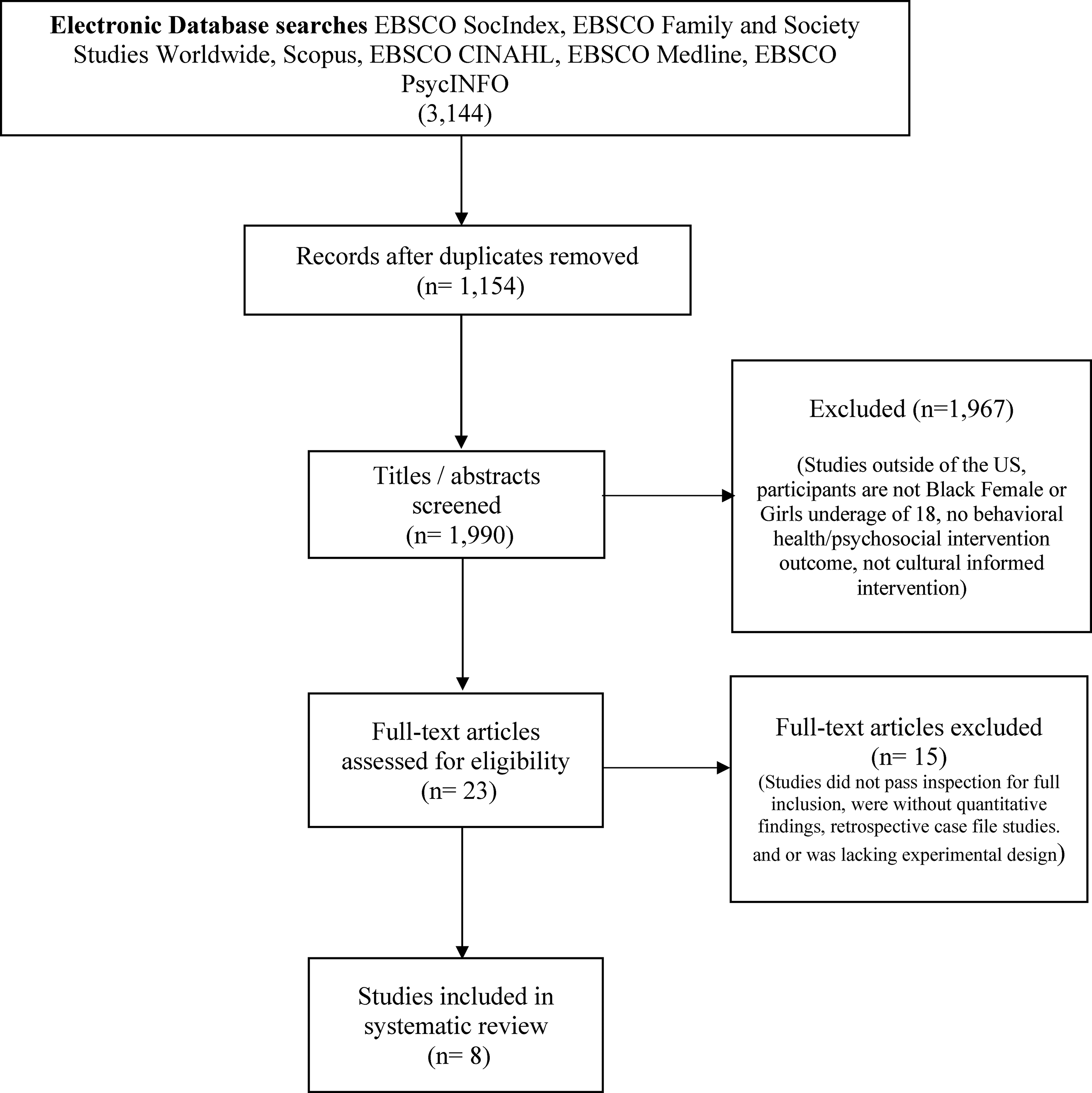
Flow diagram of search strategy, exclusion, and inclusion criteria.
Systematic Review of Culturally and Gender-Responsive Interventions for Black Girls.
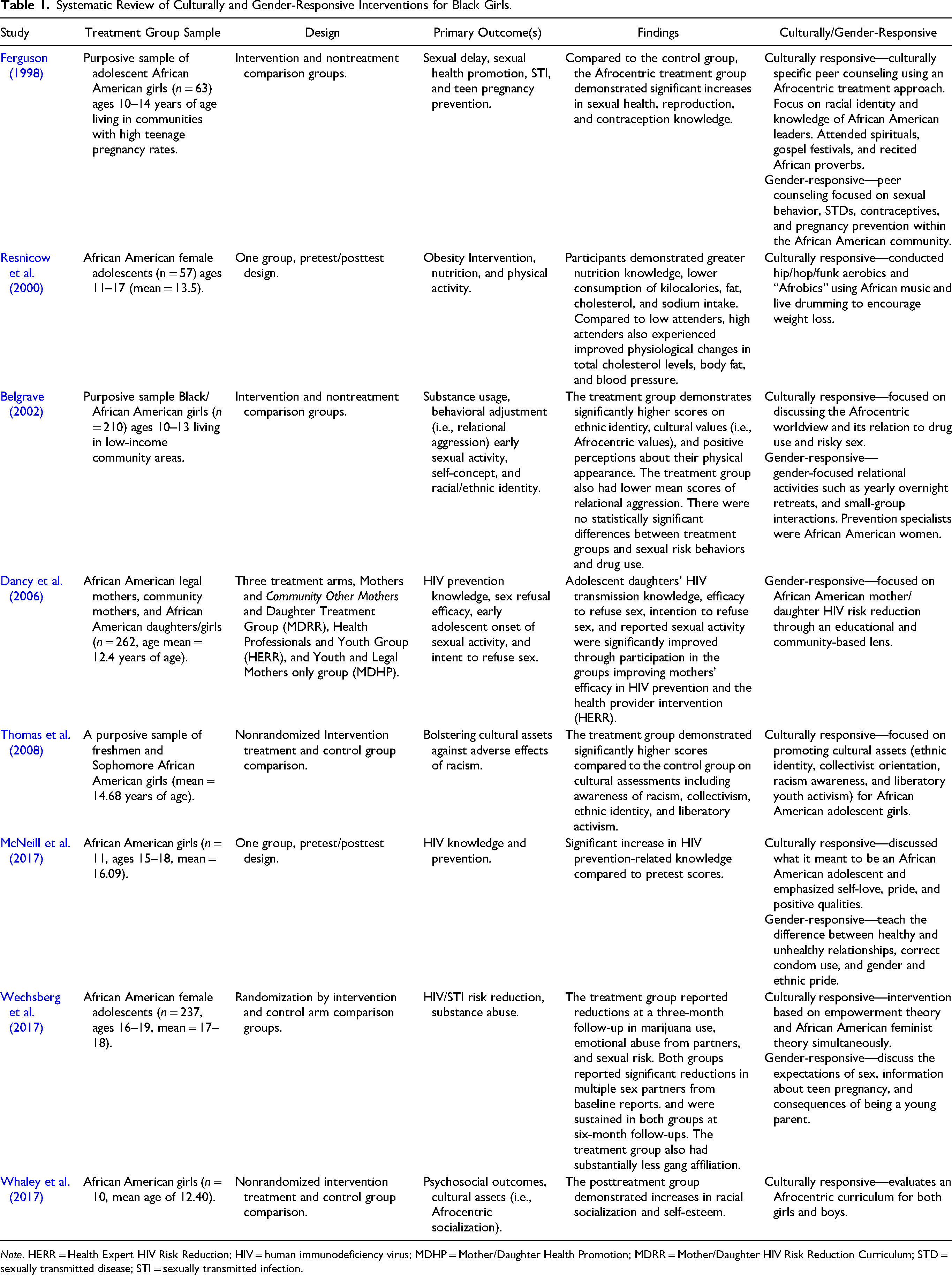
Note. HERR = Health Expert HIV Risk Reduction; HIV = human immunodeficiency virus; MDHP = Mother/Daughter Health Promotion; MDRR = Mother/Daughter HIV Risk Reduction Curriculum; STD = sexually transmitted disease; STI = sexually transmitted infection.
Ferguson (1998) evaluated the effectiveness of a peer counseling program among adolescent African American girls in Charlottesville, Virginia. In response to Charlottesville's high rates of pregnancy among teenagers, the program was centered on Afrocentric values and perspectives aimed at preventing adolescent pregnancy, and increasing knowledge of sexually transmitted diseases (STDs), and contraception options. Participants were made to partake in the Camp Horizon Adolescent Pregnancy Prevention Program (CHAPPP), a model from the Monticello Area Community Action Agency. The program is an after-school program that targets African American girls aged 10 to 14 years who are considered to be at risk of teenage pregnancy due to the fact that they live in resource-poor settings. The intervention used for this study was modeled after the CHAPPP and included an 8-week curriculum to teach and discuss sexuality with African American adolescent females using culturally specific peer counseling. Participants received 16 h of training in leadership skills, career options, sexual activity, sexuality, and ethnicity. The program included forms of spiritual concepts such as participants singing gospel music or attending gospel-related events. The ethnic identity component of the program included the teaching of Nguzo Saba and Kwanzaa principles. In all, a sample of 63 African American adolescent girls ages 12 to 16 were purposively sampled for the study. The participants were further divided into treatment and control groups based on their communities of origin (n = 30 control group, n = 33 treatment group). Participants were evaluated during preintervention and postintervention using Kirby's Knowledge Test and Behavior Inventory (Kirby, 1990). Results from a paired samples t-test revealed a statistically significant increase in knowledge of STDs, reproduction, and contraception among participants in the treatment group (p < 0.0007). In terms of the time of sexual debut, there was no significant delay in sexual debut between the treatment and control groups. However, three months posttest indicated that 88% of the participants in the treatment group reported having no sex (zero times) at the pretest and three-month posttest.
Resnicow et al. (2000) sought to evaluate the outcomes of the GO GIRLS! nutrition and physical activity program as an obesity prevention for overweight African American girls. Participants were recruited from public housing developments with eligibility limited to girls between the ages of 11 and 17. The program consisted of four-to-six-month cycles and lasted for two years, generally taking place after school for a total of 2 hr per session. Participants engaged in occasional field trips during weekends and/or during school holiday periods. The program's curriculum provided participants with an array of experiential activities (e.g., cooking classes, exercise activities, portion-controlled meals) aimed to improve their skills and efficacy at healthy living and healthy food consumption. To measure outcomes, baseline and follow-up data were collected on nutrition intake and dietary practices, as physiologic measures such as body mass index (BMI) and total cholesterol. Psychosocial measures such as self-esteem, social support, and self-efficacy measures were also utilized. Study findings demonstrated significant postintervention results at 6 months among participants associated with knowledge about nutrition, and low-fat eating practices. Changes were also demonstrated in total caloric intake and sodium intake, which were reported as clinically meaningful despite not reaching statistical significance. All other variables tested were not significant nor reported as being clinically meaningful changes.
Belgrave (2002) evaluated the efficacy of culturally appropriate programs aimed at substance abuse prevention for African American girls under Project Naja. Project Naja was intended to prevent drug use, decrease early pregnancy rate and early sexual activity, and enhance drug refusal skills. The program was targeted at girls aged 10 to 13 who lived in low-income areas and as a result, were at risk of high levels of drugs, and other negative health outcomes. The intervention also focused on promoting resilience in the areas of communication, decision-making, self-concept, gender identity, ethnic identity, and Africentric values. Overall, 210 (n = 55 treatment group; n = 92 control group) girls from low-income areas in Washington, DC, were recruited to be in the study. The Project Naja lasted for 2 years with activities including discussions of gender-related topics, presentations by women role models, and small-group tasks (to foster group working skills). The project was rolled out in 3 phases. The first phase included a rite of orientation (to promote group cohesion), which lasted for 9 months. The second phase involved the rites of passage (aimed at cultivating potent gender and ethnic identity plus drug and sex refusal skills), which lasted for a year. The final phase was a peer-led rite of discovery (to help participants to develop leadership skills), which also lasted for 9 months. Results showed that those in the treatment group scored higher than those in the control group in terms of Africentric values (p < .05), racial identity (p < .05), and perceptions of their physical appearance (p < .05). Also, girls in the treatment arm (Project Naja) demonstrated a higher ethnic identity (p < .05) as compared to the girls in the control group. There was no statistical significance in terms of relational aggression. However, girls in the treatment arm demonstrated lower means of relational aggression than the comparison group. In terms of attitudes toward risky sexual behaviors and drug use, there was no difference between the two groups.
Dancy et al. (2006) assessed the effectiveness of the Mother/Daughter HIV Risk Reduction Curriculum (MDRR); a community-based intervention aimed at reducing the risk of HIV among low-income African American adolescents in the US. The MDRR model emphasizes self-efficacy as well as skills acquired through modeling and imitation from the “community-other-mothers.” The MDRR is administered through two arms: the first directed toward young girls and the second directed toward mothers of adolescent daughters. The arm for girls follows a six-week class format that takes place in groups with role plays and group discussions to ensure retention of class content. Each class lasted for 2 hr with a specific focus on abstinence and information about the appropriate use of male and female condoms. The other arm focused on providing mothers with classes to ensure mastery of the MDRR curriculum in an effort to teach their daughters.
To support mothers’ competency in teaching the curriculum to their daughters, the program staff and health professionals provided a 12-week intensive class with components including mentoring, training, and providing each mother the chance to teach and lead portions of the curriculum. As part of the program, mothers brought their daughters to sessions and facilitated discussions from the curriculum. In all, n = 262 (mean = 12.4) young girls participated in the study across three study groups: 103 of the participants were in the MDRR; 62 were in the Mother/Daughter Health Promotion (MDHP); and 97 were in the Health Expert HIV Risk Reduction (HERR). Participants in the treatment arm (MDRR) were compared to two control groups—the MDHP curriculum, which provides content around nutrition, exercise, and staying healthy, and the HERR curriculum, which is similar to the MDRR, however, in this arm, health professionals provide teaching to the daughters as opposed to mothers as in the MDRR. Daughters in the treatment group demonstrated increased knowledge of HIV transmission, with the level of knowledge also increasing by age (p < .05). Mothers providing education on HIV-related topics to their daughters was significant in reducing early sexual debut among young girls (p < .05). In general, mothers and health professionals were both effective at delivering HIV prevention and transmission effectively.
Thomas et al. (2008) evaluated the impact of the Young Empowered Sister (YES!) program on cultural heritage among African American adolescents. The YES! is a school-based intervention aimed to enhance Black cultural identity among African American girls by promoting cultural factors that protect adolescents from the adverse effects of racism while increasing knowledge on racism, culture, and self-awareness through liberatory activities. The YES! is a 10-week program where participants engage in activities including discussions on topics such as the trans-Atlantic slave trade, the importance of Black unity, the Civil Rights Movement, and coping strategies for overcoming the negative effects of racism. The intervention embraced the principles of Nguzo Saba, Paulo Freire's philosophy of conscientization and praxis, and principles of holistic learning.
In all, 74 participants (control group = 38, treatment group = 36) were included in the study. The average age was 14.89 (SD = 0.67) and all participants were enrolled in high school (57% freshmen and 43% sophomores) at the time of the study. For descriptive analysis, a chi-square and t-test conducted revealed a statistically insignificant difference between the control and treatment group at the pretest and posttest except for grade level. Findings from the study indicated a statistically significant effect of the intervention on racism awareness (p ≤ .05). An analysis of covariance conducted on ethnic identity and Africentric values showed a significant impact of the program on those in the treatment group as compared to the comparison group (p ≤ .01, p ≤ .001, respectively). In terms of the Liberatory Youth Activism Scale and the Intentions to Liberatory Youth Activism Scale, participants in the YES! program scored higher on the measure as compared to the control group (p ≤ .05). In all, the study revealed that the YES! program had positive benefits among adolescents in developing positive ethnic identity, liberatory activism, and overall awareness of racism.
McNeill et al. (2017) assessed the impact of the Sisters Informing Healing Living Empowering (SIHLE) on increasing the knowledge of HIV prevention among African American youth in Michigan. The SIHLE intervention was designed for African American girls with the goal of promoting sexual health education, promoting the formation and realization of their ethnic identity, and gender empowerment. The SIHLE intervention consisted of a curriculum that was led and facilitated by an expert with two peer female facilitators aged between 18 and 21. In all, there were four sessions held during SIHLE meetings. In the first session, participants went through the “My Sistas, My Girls” curriculum which focused on building positive gender and ethnic identity among African American adolescent girls. The second session was “It's My Body,” which emphasized basic information on STIs and HIV with the overall goal of reducing risky sexual behaviors. The third session focused on helping participants develop skills around appropriate condom use and effective communication while the final session focused on helping participants identify healthy and unhealthy behaviors. In all, 11 adolescents aged between 15 and 18 (mean = 16.09, SD = 1.13) took part in the study after informed consent was obtained from participants and their guardians. All participants completed the 4-week long intervention including the HIV-related questions at the pretest and posttest. The results showed a statistically significant difference between HIV knowledge at the pretest and posttest (p < .05). At the pretest, the mean score for HIV knowledge was 67.6% (SD = 18.29) and at posted was 83.6% (SD = 9.61).
Whaley et al. (2017) evaluated the Imani Rites of Passage program (IROP). The IROP is an educational and cultural enhancement intervention aimed at helping African American adolescents develop a positive self-identity. The intervention took place over a 15-week period with training models including cultural identity building, academic excellence, self-control, and social skills building. The study also evaluated the effects of the cognitive-cultural model on cultural identity, academic excellence, and other psychosocial outcomes. The model suggests that Africentric socialization promotes self-identity as well as academic and social competence, which leads to a decrease in the risk of violence. The sample included 23 African American adolescents (n = 10 females; n = 13 males). The participants were grouped into two arms. In the treatment arm (Black females), their pre-and-post scores were compared to the single group of those in the control arm (Black boys). Results from a dependent sample t-test conducted revealed that there was a significant increase in racial socialization attitudes among girls from preintervention to postintervention (p < .005). In the self-esteem scale, girls demonstrated a slight increase in scores as compared to preintervention (p < .10). Overall, the cognitive-cultural model was proven to be effective in achieving its intended outcomes among girls in the treatment group.
Wechsberg et al. (2017) assessed the effectiveness of the Young Women's CoOp (YWC) and attention-control nutrition in reducing HIV/STI-related sexual risk behaviors and victimization among African-American female adolescents in low-income communities in North Carolina. The YWC arm focused on content around sex-related expectations, pregnancy prevention, gang influence, education, and female self-sufficiency. The content was based on evidence-based interventions aimed at empowering young adolescents and reducing substance abuse. The second arm focused on nutrition. Sessions include topics around healthy eating within budgetary considerations, reading and understanding nutrition labels, and the importance of physical exercise. In both arms, participants were debriefed and given booklets with lists of social and health providers within their various local communities. There were follow-up assessments at 3 months and 6 months to examine the intervention's impact over time. Participants included 237 African-American females aged 16 to 19 years with N = 118 in the YWC arm and N = 119 in the nutrition control arm. Both groups reported significant reductions in multiple sex partners from baseline reports. However, results showed that participants in the nutrition group were more likely to use a condom during the last sex episode. In terms of sex without a condom, there was a statistically significant difference between participants in the YWC as compared to those in the nutrition group (65% to 60% compared to 46% to 61%; p < .05). Also, there was a statistically significant reduction in marijuana use among the treatment group participants (p < .05). In a logistic regression model, findings indicated that treatment group participants were also less likely to belong to gangs at 6-month follow up (p < .05; confidence interval = 1.29 to 7.28).
Discussion and Applications to Practice
The goal of this study was to survey the literature to determine to what extent peer-reviewed journal articles currently center the experiences of Black girls related to culturally responsive and gender-responsive interventions. Given the unique historical and contextual experiences of Black girls during adolescence, it is important to identify whether there are interventions that take an intersectional approach in clinical interventions aimed at positive developmental outcomes specifically for this population. Eight peer-reviewed journal articles were identified including four articles focusing on sexual health, three articles focusing on cultural values, and one article focusing on physical health. Of these eight articles, four articles were both culturally responsive and gender-responsive, three articles were primarily culturally responsive, and one article was primarily gender-responsive with all articles providing an overall focus on the well-being of Black girls.
Focusing on sexual health interventions, it is important that culturally and gender-responsive sexual health interventions aim to address intersectional experiences among Black adolescent females in the U.S. (Williamson et al., 2017). Black females account for disproportionate rates of despairing sexual health outcomes, particularly STI contraction and higher teen birth rates compared to their peers from other racial groups (CDC, 2021). However, they also contend with social factors such as gender, race, and class biases that might inform how they navigate society's sexual health terrain (Evans et al., 2020). Prior studies regarding adolescent sexual activity in the U.S. have overwhelmingly focused on a girl's physiological appearance and pregnancy avoidance through abstinence-only education (Ferguson, 1998). Although those are areas of importance, delivering information about STDs/STIs, relationships, and cultural identity using a sociocultural lens may add increased value to how girls understand their body within the context of their lived experiences and decision-making (DiClemente et al., 2008; Williamson et al., 2017).
Ferguson (1998) points out that the role of traditional sexual health programs simply introduced anatomy and physiology as a means of preventing unplanned pregnancies, as opposed to including components guided by pertinent values and beliefs about one's body autonomy and unique culture. According to Ferguson (1998), using cultural values and beliefs to teach sexual health knowledge to Black adolescent females functions as a protective factor for understanding STDs and sexual activity. Perhaps exploring shared beliefs and values associated with being a Black female creates an environment that empowers girls to make informed decisions about their sexual health and behaviors. McNeil et al. (2017) highlight similar results whereby Black adolescent girls who engaged in discussions about the social and economic consequences of unplanned pregnancy, HIV/AIDS, and STD contraction, and their internalized meaning and value attributed to having a Black female identity retained higher levels of sexual health knowledge after the intervention was over. These findings buttress previous studies that also suggest Black girls are responsive to sexual health knowledge and benefit from culturally responsive modes of delivery (DiClemente et al., 2004, 2008; Sales et al., 2006).
Conversations about the context of Black females’ disproportionately higher rates of STDs compared to other groups of females may promote healthy sexual decision-making among Black adolescent females. Having a space where the voices of Black girls are centered and their well-being is deemed important is valuable to the development of self-awareness and self-efficacy (DiClemente et al., 2008; Wingood et al., 2002). Dancy et al. (2006) utilized the mother–daughter relationship to improve self-efficacy among daughters through mentoring and offering sexual health knowledge to reduce HIV risk-taking behaviors. Adequately equipped with comprehensive sexual health education, mothers can navigate HIV prevention by teaching strategies for avoiding HIV risks (Dancy et al., 2006). Sharing lived experiences, such as race and gender between a mother and a daughter may further validate the sexual health knowledge being delivered. Groups that offer shared experiences, or affinity around sexual health inquiries within the context of race and gender, are important for creating comradery and support, particularly for adolescent females whose self-efficacy development is often connected to other female associations (Stevens, 2002; Taylor et al., 1995).
As indicated by Wechsberg et al. (2017), there are important considerations for understanding the nuances involved in the lives of underserved and vulnerable Black females. Providing an intervention that includes cultural content specifically about females may impact sexual decisions such as reducing the number of sexual partners. Lived experiences laden with intersecting oppressions (i.e., contending racial and gender biases) may require Black adolescent females to make difficult choices that differ from the experiences of girls from other racial groups. For example, school environments and community or social systems all present barriers for Black girls to make healthy decisions (Epstein et al., 2017) and may prevent academic and social progress (Evans, 2019). Overall, creating interventions that prepare Black girls to face their day-to-day challenges is necessary for addressing disproportionate sexual health disparities (Prather et al., 2018).
Focusing on the cultural values interventions, cultural values are important to the development of adolescent females in general, but more specifically for Black adolescent females (Stevens, 2002). Black girls in the US are likely to encounter racial and gender inequities embedded within society's ethos, which has become common to the lived experiences of Black females (Epstein et al., 2017; Haynes et al., 2016; Patton et al., 2016; Williamson et al., 2017). Thus, Africentric values may function as a protective mechanism for developing self-esteem needed later in life (Belgrave et al., 2000; Whaley et al., 2017). Since adolescents are seeking to achieve a greater sense of self across and within various contexts (i.e., school and community; Oyserman et al., 1995; Tatum, 2003), learning to embrace one's racial and ethnic identity as a value to the world, may help to promote healthy self-esteem and decision-making needed to navigate various risks (Belgrave et al., 2000).
Understanding one's cultural value is an important milestone during adolescence as girls in particular become more sensitive to how they present themselves to the world and how the world around them receives them (Stevens, 2002; Taylor et al., 1995). Pursuing a greater sense of self during adolescence may present challenges to Black girls whose physical appearance may not meet Eurocentric standards of desirable beauty and womanhood (Wingood et al., 2002). Black females disproportionately experience racial discrimination and punitive treatment because of their appearance (Mbilishaka et al., 2021). Haynes et al. (2016) affirm this point by noting, as mentioned above, that U.S. society's racist and sexist ideals about Black womanhood create a sense of feeling invisible. These ideals impose sexual inferiority on Black women's bodies by permitting the likeness and essence of the Black female body to be objectified (sexually abused), stereotyped (reinterpreted), and donned (culturally appropriated; Haynes et al., 2016). Such narratives may ultimately promote deficit thinking among Black females (Haynes et al., 2016) whereby culturally focused interventions may be helpful for interceding for a healthy sense of self among developing Black girls in America.
Although the Civil Rights Act of 1964 prohibits discrimination based on race, Black adolescent females have consistently been dismissed for their personal appearance, including hair texture or not being “feminine” enough or socially desirable (Epstein et al., 2017; Tatum, 1997). Interventions that promote pride in Africentric values are on par with promoting a positive sense of self and well-being among Black adolescent females. Gaining the capacity to resist society's forces of adversity is expected of interventions that address culturally and sociopolitically lived experiences. As highlighted in the findings of Thomas et al. (2008), when exposed to an intervention aimed specifically to help girls navigate negative social messaging, Black girls increased their ethnic identity, racism awareness, and liberatory activism. Haynes et al. (2016) described this type of messaging as “master narratives” embedded within American society. These scholars suggest that master narratives are often implicitly rooted in the foundation of American ideology.
For example, the “American Dream,” suggests equality and opportunity, however, for the “other,” which denotes status and hierarchical structures (DeSantis, 1998), this dream is often unattainable, misinterpreted, or misunderstood regarding the Black American experience. These narratives are ideological scripts that establish social norms and assign status, power, and value (Acuff et al., 2012). Black adolescent females who are aware of these racist structures and develop their ethnic identity as a beneficiary of African American ancestry and legacy may maintain a positive sense of self when confronted with ideologies that intend to subjugate their existence and progress (Thomas et al., 2008). Several scholars highlight how having a positive, ethnic identity functions as a protective factor when faced with racist and oppressive experiences (Belgrave et al., 2000; Cross & Strauss, 1998). For developing Black girls, the benefits may extend far beyond adolescence to inform their activism toward changing biased and racist structures within broader American society (Thomas et al., 2008).
Tatum (1997) highlights the devaluation of Black adolescent girls' experience within the school or community context. Tatum asserts that although Black girls who navigate predominately White communities gradually become aware of their lack of social desirability compared to their non-Black peers, Black girls who navigate predominately Black communities also experience a lack of social desirability, but through devaluing messages about who they are or will become, which reinforces negative stereotypes and social scripts (Tatum, 1997). The findings established by Whaley and colleagues (2017) offer support for interventions that prioritize cultural identity in that they may buffer the effect of negative stereotypes. Africentric socialization may offer Black girls a protective “armor” against the psychological impact of negative social scripts and stereotypes upheld in the U.S. about Black females. Further, the findings of Whaley et al. (2017) expand our understanding of the potential value of culturally responsive interventions on academic performance among Black girls, particularly for girls entering disciplines where females are the minority (e.g., science, technology, engineering, and mathematics).
In addition to cultural identity, some scholars have discussed the important role of physical health in culturally responsive interventions (Jernigan, 2019, 2020). According to the Office of Minority Health, U.S. Department of Health and Human Services, more than 80% of African American women are overweight or obese (OMH et al., 2022). In 2017, Black adolescent females accounted for roughly 21% compared to roughly 15% of Black males who were overweight (OMH et al., 2022). Black girls may be disproportionately impacted by the risk of being obese, and have higher rates of chronic diseases (Dingfelder, 2013; Wingood et al., 2002). Access to healthy food options may be limited, especially for girls contending with stressful circumstances both at home and at school (Jernigan, 2019, 2020). Understanding the health context of Black Americans, particularly that of Black women often contending with poor access to responsive healthcare (Prather et al., 2018), is necessary for developing health consciousness about one's self and long-term well-being early in life.
Resnicow et al. (2000) findings place value on gaining health and diet information through an intervention at the community level, which led to reduced caloric intake. Increased health knowledge may buffer poor dietary choices and offer guidance on how to access healthy food options, particularly in communities where healthy food may not be readily available (i.e., food deserts). Although some scholars have found associations between body image dissatisfaction and unhealthy sexual attitudes and behaviors (Wingood et al., 2002), it is noteworthy that Black girls have traditionally viewed larger body sizes as appealing and desirable (Brown et al., 1998; Burk, 2015; Jernigan, 2020), which often conflicts with prevalent health messaging that promotes lower BMI.
Other scholars have indicated that Black adolescent females associate positive self-esteem and sense of self with larger body types, contradicting American standards of beauty (Jernigan, 2020). Yet, despite the physical appeal of larger body types or the lack of healthy options readily available in communities or schools, interventions that function as a vehicle for culturally relevant health information may arm Black adolescent females with the information needed to make healthier lifestyle choices that promote long-term health and well-being and positive self-esteem. It is important to note that even physical health inventions can be culturally responsive.
In thinking of the limitations of the study, many of the articles identified focused on Black girls in high-poverty and low-income settings which is not a surprise as three-fifths of the persistently poor are Black (McLoyd et al., 2016). As a result, it is important to note that these findings may not generalize to Black girls from higher socioeconomic backgrounds. Additionally, study inclusion was limited to only those focusing on addressing developmental concerns specifically for adolescent Black girls. Our specificity to concentrate on reviewing interventions aimed at Black girls is an evident strength of the study, given the relative absence of scholarship focused on programming design to support this population. However, our search strategy may have introduced selection bias by not including studies without this clear emphasis—possibly excluding youth programs that are either multicultural or mixed-gendered, but that may promote equally positive outcomes for Black girls that are not reported in this review. Furthermore, there is a possibility that our exclusion of studies only reporting some form of quantitative findings limited the number of reports from community-based programs for Black girls that have meaningful impacts, but because of methodological choices of reporting or quantitative restrictions, were not included within this review.
Despite these limitations, this review is strengthened by compliance with a robust, clearly defined systematic approach to the inclusion and exclusion of studies within six databases. Our study provides comprehensive findings on the state of culturally and gender-informed interventions to promote positive outcomes in Black girls. Moreover, our emphasis on interventions reporting quantitative findings provides an evaluative state of the literature for future researchers interested in identifying methodological gaps seeking to develop and rigorously evaluate implementation strategies toward developing generalizable knowledge to improve the overall well-being of adolescent Black girls.
For implications for practice, it is important to include the framework of intersectionality in understanding the actions of gendered racism that may impact the developmental outcomes of Black adolescent girls. Clinicians, educators, and researchers must note the role that gendered racism plays in the lives of Black adolescent females and address its likely impact on identity development among other outcomes including sexual health decisions among Black teen girls (Opara et al., 2022). A culturally responsive and trauma-informed approach that takes context into consideration and resists caricatures and stereotyping may also be beneficial in meeting the unique needs of Black adolescent girls within an appropriate context (Walker et al., 2015). It is important that future research and clinical interventions address the intersectional nature of development specifically for Black adolescent girls.
Footnotes
Declaration of Conflicting Interests
The authors declared no potential conflicts of interest with respect to the research, authorship, and/or publication of this article.
Funding
The authors received no financial support for the research, authorship, and/or publication of this article.
