




Abstract
Purpose:
Youth media practice (YMP) refers to various activities through which young people are empowered to express their views and develop critical reflectiveness via media productions. There is scant empirical research about YMP’s effectiveness. This study developed and field-tested an information and communication technology (ICT)–based YMP.
Method:
By using “My National/Ethnic Identity” as a heuristic production theme, a pilot study was conducted in Hong Kong in 2018. Participants shared and discussed photos online and conducted face-to-face presentations. The program was evaluated using a one-group pretest–posttest design. Participants included (N = 20) Hong Kong Chinese students aged 18–24.
Results:
Participants’ need for cognitive closure decreased, self-esteem increased, and their essentialist views on ethnic identity decreased.
Discussion:
This study demonstrates that YMP has potential to be a change-making strategy for future social work practice, and proper use of ICT can create space and opportunities for such reflective conversations.
Keywords
Youth media practice (YMP) empowers young people to express their voices through various media tools such as magazines, photos, social media, music, poetry, videos, and websites. YMP programs are usually community based, involve the use of production workshops, and individuals often produce media texts in teams (Buckingham, 2003; Buckingham, Grahame, & Sefton-Green, 1995; Harvey, Skinner, & Parker, 2002).
Although YMP has only recently appeared in the social work literature (Johnston-Goodstar, Richards-Schuster, & Sethi, 2014), it has a somewhat longer history in other human service settings, some of which emerged in 1980s. For instance, in the United States, Goodman (2003) identified various YMP conventions related to media technology, media literacy, and community arts. In the UK, Harvey, Skinner, and Parker (2002) identified various modes of YMP in youth work, community work, arts, and film production training. In Hong Kong, our initial research identified various forms of YMP in social services, arts, and schools, noting that they were usually done in media production competitions which were often purposely casual, interactive, and playful (Chan, 2003, 2006, 2008). Expected YMP outcomes usually included deeper identity exploration, enhanced self-esteem (SE), more self-reflection, and enhanced critical thinking (Buckingham et al., 1995; Johnston-Goodstar et al., 2014).
The emphasis on service users’ voices is not new for social work. The “dual focus” on both individual and social change has been a hallmark of social work throughout its history (Dulmus & Sowers, 2012), despite the fact that actual practices have often been criticized for being too individually or too environmentally focused (Julia & Kondrat, 2005; Mulroy & Austin, 2005). Recent social work studies indicated that engaging service users to tell their stories using media production might have some potential to bridge micro practice and macro practice (Chan & Yau, in press; Lenette, Cox, & Brough, 2015). Johnston-Goodstar, Richards-Schuster, and Sethi (2014) particularly noted that YMP has the potential to enable marginalized groups to more deeply understand their own situations and “speak back to” dominant perspectives. Thus, YMP can address the dual-focus mission at operational levels and contribute to the overall body of knowledge of social work in novel ways.
Unfortunately, there is scant social work empirical research evaluating the use and/or efficacy of YMP (Dussel & Dahya, 2016). The most current evidence was provided by Johnston-Goodstar et al. (2014) in the journal Social Work. The authors conducted a content analysis of a range of YMP activities in the Unites States, but they did not provide an appraisal of the effectiveness of the YMP programs themselves. There were also some anecdotal case studies showing how YMP had been applied in anti-violence movements (Sethi, 2014), enhancing urban youth’s well-being (Rose, Shdaimah, de Tablan, & Sharpe, 2016), and empowering suburban youth (Ranieri & Bruni, 2013). Other published and/or gray literature sources in this area were other anecdotal and/or opinion pieces having limited empirical knowledge. As a result of this literature gap, we contend that YMP requires further theorization and empirical field testing in social work, which served as the main rationale for this study.
The Process Steps of YMP
To date, there are some studies that describe the use of media productions in human services, which denote different emphases and steps (Goodman, 2003; Lambert & Hessler, 2018; Ohler, 2013). In general, the key stages of YMP minimally include (i) engaging participants with reference to specific themes, (ii) instructors working with participants to produce media texts, and (iii) facilitating participants to present their productions to broader audiences. Underscoring these three steps, outcome-oriented YMP focuses on how this process helped empower individuals to change in various ways.
Some practitioners and educators have suggested that teachers can make use of such production processes to enhance their students’ intellectual capacities by developing their personal knowledge as well as their critical thoughts and ideas (Buckingham, 2003; Goodman, 2003). Buckingham (2003), one of the earlier researchers to suggest using a pedagogical framework for YMP, explained that the main concepts defined by Lev Vygotsky helped to initially theorize this sequential media-learning process. First, it was posited that meaning making relies on symbolic mediators (e.g., sign, symbols, words) and that media production was deemed to be a powerful tool in promoting such processes. Second, facilitators (e.g., teachers, social workers) could assist learners via conceptual scaffolding, which means that there is a zone of proximal development between what a person can learn unaided and what she or he can learn with supports from another person. Identifying and utilizing such different zones can enable individuals to advance their knowledge and make intrinsic reflective changes. Subsequently, Buckingham (2003) contended that YMP can use a three-step scaffolding approach, in which teachers could enable students to (i) make their existing knowledge explicit in forms of media texts, (ii) render that knowledge systematically and generalize from it, and (iii) question the basis of that knowledge and move beyond it. Thus, YMP can be seen as a process which assists a person to externalize his or her thinking, allowing that person to “see” the thinking, and therefore, she or he may have more space and opportunities to affirm, reject, or modify their own thinking. This recommended scaffolding framework helps rationalize the pedagogy for YMP, making it highly relevant to critical self-reflection (Buckingham, 2003, 2008).
Harnessing Information and Communication Technology (ICT) to Advance YMP
ICT is an umbrella concept covering both digital productions and Internet-based communications. It refers to the convergence of various media systems, and it has impacted almost all human service disciplines (Chan, 2018b; Chan & Holosko, 2016). Although existing YMP programs have already adopted digital tools to create and edit media texts, they have not yet fully shown how interactions and communications can be enhanced by ICT (e.g., social media, instant messaging). Further, most of these are community based, and they primarily rely on face-to-face production activities in teams (Buckingham et al., 1995; Johnston-Goodstar et al., 2014).
Our earlier work noted various challenges in using community-based media production workshops to scaffold participants’ mind-sets—as it is not easy to locate suitable opportunities to implement these recurring scaffolding steps and as media production has become increasingly convenient and individualized in technologically advanced urban areas (Chan, 2003, 2006, 2008, 2010). While individuals can conveniently create media productions, for example, using their mobile phone apps without guidance or teamwork, it is not clear how program facilitators, for example, teachers, social workers, can take part in promoting participant reflections during a structured YMP production process.
Therefore, based on these experiences and lesson learned, we created a specific mode of YMP, which harnesses the use of ICT, to structurally create space and opportunities for facilitating reflective conversations. Its three premises are as follows: This model incorporates the use of blended social media to create a purposive social network space to recruit and engage individual participants. Our previous research showed that the design of one’s social network itself can greatly shape social relationships and content distributions (Chan, 2013, 2018a). Thus, this YMP model requires the use of a closed social media group. Before the project begins, a “group” has already been there, moderators have already posted proper instructions, images, and brief texts to the group, to present an atmosphere which is transparent and nonjudgmental. In this study, Facebook was used because it is the most popular social media platform in Hong Kong and its sophisticated access control settings allow researchers to create a closed group environment which facilitates research (Chan, 2018a; Chan & Ngai, 2018). This YMP model also incorporates a specific set of reflective conversation skills which suits asynchronous communication via social media, such as the purposive uses of disinhibition effects and continual feedback loops (Chan & Holosko, 2017; Chan & Ngai, 2018). Therefore, in principle, instructors/moderators should (a) work in teams to bring isolated utterances back to inclusive coherent and continual conversations; (b) speak (or type) in ways which are always nonjudgmental, casual, and humorous; and (c) enable participants to openly clarify their ideas, identify gaps, and unearth alternative narratives. At an operational level, these methods include (a) asking the basic “5W1H” questions (i.e., what, who, where, when, why, and how) to explore how participants came up with their existing ideas; (b) to provide participants with supplementary, comparative, or contrasting information; and (c) echo participant ideas with personal experiences, when appropriate. Finally, this YMP model uses editable digital images (i.e., rather than printed photos and texts) to enable participants to continually revise, elaborate, and prioritize their imagery expressions during the entire process, even in their final face-to-face presentations. Our previous research showed that asking reflective questions based on these editable images shared by participants could enable them to distance themselves from their own expressions and make better informed judgments (Chan, Ngai, & Wong, 2012). All of the previously mentioned elements were field-tested and crafted into the YMP model used in this pilot study.
A Heuristic Production Theme—Views on National/Ethnic Identity
This study adopted a heuristic production theme related to identity exploration because it was a program outcome identified and theorized by well-regarded studies researching YMP (Buckingham, 2008; Buckingham et al., 1995; Johnston-Goodstar et al., 2014).
Young people’s national/ethnic identity in Hong Kong is a topical issue having complexities. The UK government handed over Hong Kong to the People’s Republic of China (PRC) in 1997. The Hong Kong permanent identity card issued by the Hong Kong government has never stipulated a specific nationality, but it only stated the right of abode in the region. For more than a 100 years, Hong Kong citizens’ national/ethnic identity has various iterations such as Hongkonger, Chinese, Asian, British, and Global Citizen (Fung, 2004; Vickers & Kan, 2003).
In recent years, talking about one’s national/ethnic identity has become a rather uneasy experience for many young people in Hong Kong. The Public Opinion Programme of the University of Hong Kong (2017) showed that citizens continue to feel the strongest when identified as “Hongkongers,” then followed by a number of cultural identities. The feeling of being “citizens of the PRC” is the weakest among all identities surveyed, and this was particularly obvious in the 18–29 age-group. There were noted polarized views on national/ethnic identity that have created social pressure on young people to affirm a politically correct position.
Further, some government-supported infrastructures have tried to promote a comprehensive idealized sense of being Chinese via school curriculums (Leung & Yuen, 2012; Ma, 2010; Vickers & Kan, 2003). The Hong Kong government once tried to propose a stand-alone patriotic curriculum under the banner of national education, and this notion was seriously criticized as brainwashing the Hong Kong population (Kan, 2012). The local government eventually canceled this strategy under much public pressure (British Broadcasting Corporation, 2012; Chan, 2013).
Conversely, some activist groups have assertively promoted a radicalized version of local ethnic nativism and separatism (Veg, 2017). Some activists have openly declared a plan for independence from the PRC, which in turn triggered local incitement of open hatred against mainland Chinese people through various strategies including the use of violence (Hong Kong Free Press, 2016; Lam & Lum, 2018; Lau, Ngo, Lau, Kao, & Sun, 2016; Lo, 2015; Quackenbush, 2018; Wong, 2016).
It is questionable whether a pure PRC Chinese identity or a pure Hong Kong nativist–separatist identity can really fit the lived experiences of most young citizens in Hong Kong. First of all, it should be noted that some Hongkongers are not ethnically Chinese; they are from India, Pakistan, Thailand, and other cultures. Many other non-Chinese young citizens reside in Hong Kong because their parents need to work in Hong Kong, and they tend to identify their national identities with their home countries. Likewise, it is difficult to define who is purely “native” in this migrant city because parents of many locally born young Hongkongers are immigrants from mainland China and that many young Hongkongers came from mainland China when they were young. In addition, among these locally born Chinese Hongkongers, many of them have identified with a wider range of cultural symbols and role models in a more global context, and it is not uncommon for them to hold U.K. or U.S. passports. Despite this diversity in reality, polarized views have become dominant discourses at least in everyday media coverage.
Davies (2008) broadly defined “extremism” as not allowing for a different point of view, holding one’s own views as being quite exclusive, not allowing for the possibility of differences, and wanting to impose this view on others, in whatever means deemed necessary. Hate rhetoric, moral fundamentalism, cults, extreme nationalism, extreme separatism, and so on, all fall somewhere on this spectrum. This position implies that a call for a solid national/ethnic identity (no matter if it is purely PRC Chinese or purely Hong Kong nativist) can sometimes be dangerous, as it can easily become a call for an imagined idealized ethnic essentialism or “extremism.”
Within the context of civic/national education, a more desirable approach is to enable individuals to embrace a resistance to singular identity labels and an acceptance of a broader sense of a more hybrid (mixed) identity. Hybridity implies more than just a collection of multiple identities but having new combinations of them. This is an approach that focuses more so on protective psychosocial factors (e.g., SE, open-mindedness) than politically correct knowledge (e.g., particular political orientations). For example, Bhabha (1994) challenged the exoticization of cultural diversity because it stressed recognition of differences (and otherness). He suggested that we should recognize longer histories of cultural or ethnic mixing, and that may reveal the hidden history of hybridity in culture, and challenge the notion of pure cultures. Davies (2008) noted that the task for education is to celebrate not just a bland diversity but a resistant hybridity. In other words, rather than recognizing that there are multiple identities “out there,” Davies suggested that we can help citizens explore and acknowledge the multiplicities embedded in their own identities. As such, an individual can be simultaneously Asian, Chinese, British, female, music loving, durian hating, and so on. Davies also noted that extremist problems may emerge when one of these identities takes complete precedence over any other.
Against this background, the pilot YMP program developed and tested herein was designed to enable young participants to explore and express their views on national/ethnic identity in an environment saturated with polarized discourses (see Study Hypotheses section for a detailed explication on study hypotheses). This study fills a distinct gap in the social work literature, and it opens a discourse about using YMP to support youth civic engagement and other structured social interventions. The YMP presented shows a case study of sorts utilizing the information described above.
The YMP Pilot Program
Participants and Procedures
Our YMP recruited students via local teachers and student networks in Hong Kong. The inclusion criteria were Hong Kong residents who completed their high school public exams, aged 18–24, Hong Kong permanent residents, can read and write Chinese, and they were willing to express their views on their personal national/ethnic identity, in a social media group.
A three-stage pilot program was designed and carried out in Hong Kong in July 2018. Stage 1—Engagement: Participants were initially recruited and registered online; eligible and selected participants were then invited to attend a briefing (online/off-line), which introduced user-friendly media editing tools, explained the program details, and addressed confidentiality issues. Stage 2—Production: Participants first shared captioned photos on the project’s designated Facebook group at least 3 times weekly for 3 weeks, with reference to the overall theme “My National/Ethnic Identity.” Trained moderators collaboratively dialogued with each participant based on their images and texts posted, using the facilitative reflective conversation skills mentioned earlier. At the end of each week, a small award was offered to a participant who received the most number of responses (i.e., likes and comments) from all moderators and/or group members. Stage 3—Presentation: After 3 weeks of the online interactions, each participant had a face-to-face presentation with the research team, where they introduced all photos they posted, selected five of these, and prioritized them. Each participant verbally explained their decisions for choosing and prioritizing these selected photos. Incentives were offered for those who completed the project, and additional incentives were offered to those who presented higher quality productions.
Intervention Fidelity
This study used the following assurances to safeguard that the program was being implemented as planned: (a) the principal investigator (PI) and all research assistants (RAs) worked as moderators, (b) the moderator team had weekly meetings during the project to monitor ongoing progress, (c) the PI who is a local registered social worker in Hong Kong provided RAs with ongoing coaching and training, (d) a definitive set of field-tested reflective conversation skills were stressed and used throughout the project, and (e) the PI and an external rater regularly checked whether the conversations were in line with the conversational protocols based on textual materials available (i.e., replies in the Facebook group, transcripts from off-line presentations).
A Pretest–Posttest Study of the Program
Pretest–Posttest Design
The program was evaluated using a one-group pretest–posttest design. Two waves of assessment were successfully conducted: Time point 1 (T1)—before participants joined the online groups; Time point 2 (T2)—after the final presentations (OT1-X-OT2). Self-reporting questionnaires and observers’ ratings were used. Although the O-X-O design is usually seen as weak in internal validity, it can help provide some timely evaluation data. The whole notion of using YMP in social work is very new, and there is almost no empirical research in this area. Our study was deemed to be an essential formative step before any rigorous experimental design could be properly rationalized and implemented.
Data Collection
Selected background sociodemographic data were collected at the time of online enrollment before T1, which included gender, academic level, area of study, and school setting. Self-reporting measures were collected via online questionnaires at T1 and T2. Conversations on the Facebook group were recorded, retrieved, and copied from the Facebook group. Face-to-face verbal presentations were recorded and transcribed.
Measures
Self-reporting scales
Three validated psychometric measures were used to assess participants’ SE, need for closure (NFC), critical thinking disposition (CTD), which are related to expected outcomes commonly addressed in YMP. In addition, a hypothetical index was developed in this study to assess participants’ views on ethnic essentialism (EE).
SE was measured by the 10-item Rosenberg’s SE Scale (Rosenberg, 1979). The Chinese version of the Rosenberg’s SE Scale has been widely used in local studies and demonstrated good psychometric properties (Lau, 1989; Yeung, 1998). The SE score in this study is the mean of the answers from these 10 questions. A higher SE score implies a higher SE level.
NFC, also called need for cognitive closure, refers to an individual’s aversion toward ambiguity and desire for a firmer answer to a question (Webster & Kruglanski, 1994). It was measured by the 15-item NFC Scale (Roets & Van Hiel, 2011). The NFC Scale was originally a 42-item instrument developed by Webster and Kruglanski (1994); the scale was shortened by Roets and Van Hiel (2011), and it was this shortened version used in this project. The Chinese version of that scale has demonstrated proper psychometric properties (Moneta & Yip, 2004). Here, the NFC score is the mean of the answers from these 15 questions. A higher NFC score implies a stronger need for cognitive closure (i.e., more closed-minded).
CTD was measured by items selected from the CTD Scale (Sosu, 2013). The full version of that scale has two dispositional domains, namely, critical openness and reflective skepticism. In this study, only the critical openness subscale (including 7 items) was used. The critical openness subscale was translated by the authors with the permission of the original scale author (Sosu, 2013). A reliability study was conducted to examine the correlation between the English and Chinese versions. Bilingual volunteers answered the English version and then the translated Chinese version; results showed that the two versions had good correlation, r = .8, p < .01, N = 43. Here, the CTD score is the mean of the answers from the seven questions. A higher CTD score implies a stronger CTD.
Participant views toward EE was assessed by an EE score, which is an opinion index, synthesized by the authors of this article. Being inspired by theoretical debates regarding the epistemological nature of the concept of ethnic identity discussed in Zagefka (2009), this study developed four questions (in Chinese) including (a) “the ethnic identity of a person is unchanged throughout their life,” (b) “people from different ethnic groups can be clearly recognized,” (c) “the ethnic identity of a person could be diverse and hybridized” (a reverse scored item), and (d) “ethnic identity does not have unchanged essence” (a reverse scored item). The EE score is the mean of the answers from these four questions. A higher EE score implies a stronger agreement on an essentialist view of ethnic identity.
The response sets of all the scales (CTD, NFC, SE, EE) used in this study were configured in 10-point ranges, or readjusted to 10 points, in which 1 = extremely disagree and 10 = extremely agree. Since these targeted participants were local students, they were familiar with percentile-based assessment frameworks (e.g., in Hong Kong, many school assignments use “100 marks” to represent full marks). Therefore, it was assumed that a 10-point scale would be more consistent with students’ prior experiences rather than other scale ranges. Further, it has been noted that scale ranges which fit participants’ frames of reference often enhance instrument reliability (Coelho & Esteves, 2007; Yusoff & Mohd Janor, 2014). All scales reported good to excellent test–retest reliability (N = 44): CTD, r = .84; NFC, r = .9; SE, r = .92; EE, r = .9; p < .001 for all scales.
Observed identity (ID) patterns
This study developed a heuristic device—called an identity weighting pattern (hereafter referred to as ID pattern)—to depict the relative weightings of four ethnocultural identity components reflected by various data subsets. Its components were Hongkonger (H), Chinese (C), Asian, (A), and Global Citizen (G). Three nomenclature signs were used to indicate the relative weighting of these components including “more important than” (>), “equal to” (=), and “less important than” (<). For example, if H was observed to be the most important, followed by C, A, and G, then the ID pattern was recorded as H > C > A > G.
At both T1, and T2, participants were directly asked to use a 10-point scale to indicate their levels of identification with the four ethnocultural identity components in the self-reporting questionnaires. Ratings of the four components reflected by their answers were converted to ID patterns. At T2, textual materials were then identified, which included all Facebook posts shared by each individual participant, the five representative posts selected by each participant in face-to-face presentations, and the verbal replies to the question “how would you introduce your own ethnic identity” in face-to-face presentations. Some sample photos posted by participants are illustrated in Figures 1 –4. Weighting of the four components reflected by respective textual materials were interpreted and assessed by external raters.
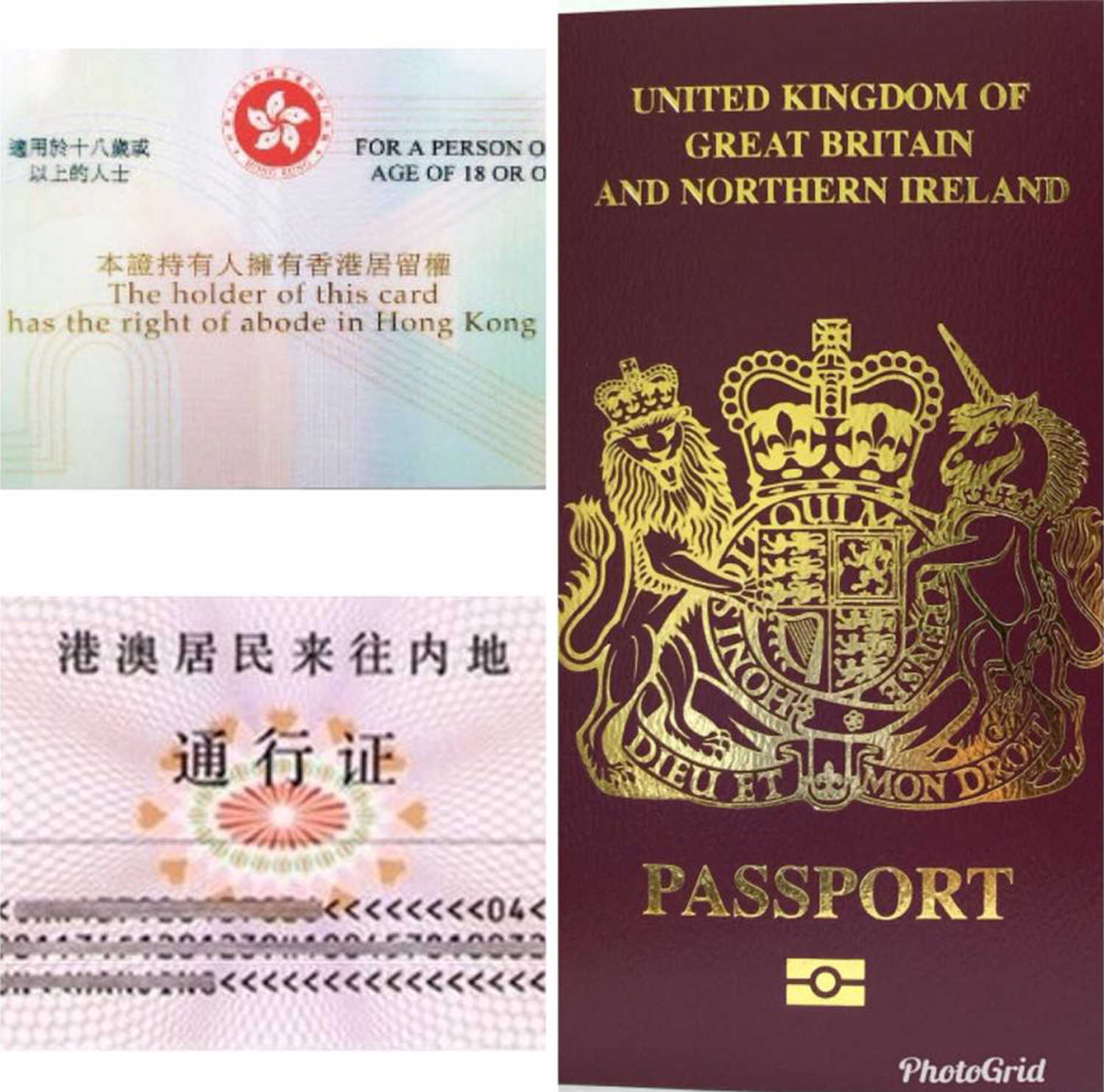
Can the documents fully represent my identity? Hong Kong people? Chinese people? British? It seems that the ID card has not fully expressed my identity.
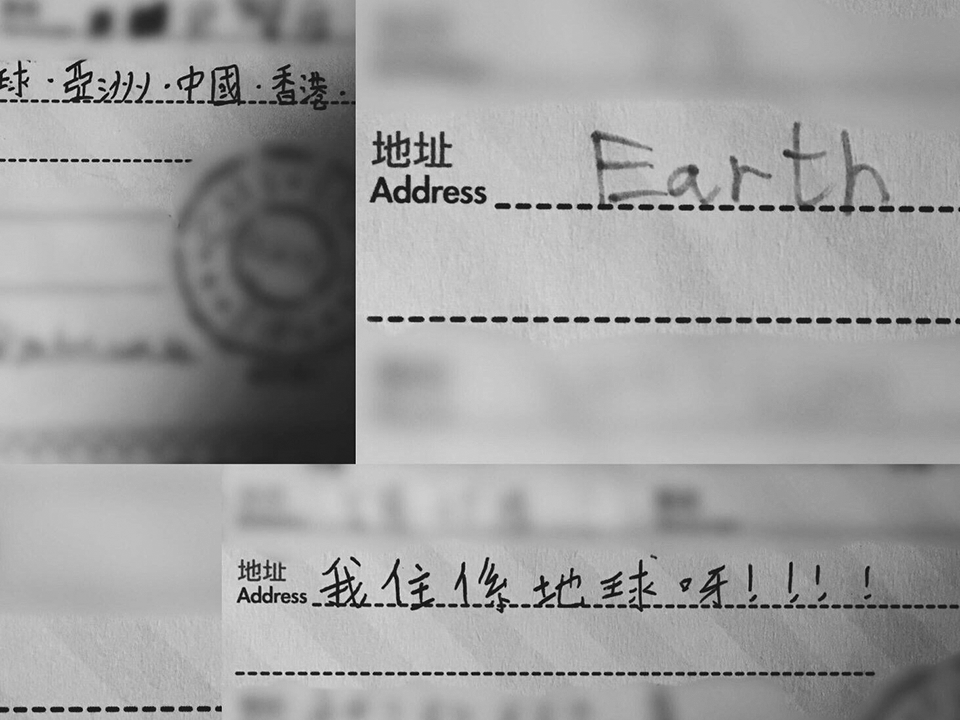
When I was a primary school student, there was an occasion that when I was asked to fill in my address. I wrote “Earth.” I really like the idea that “the world is a family.”
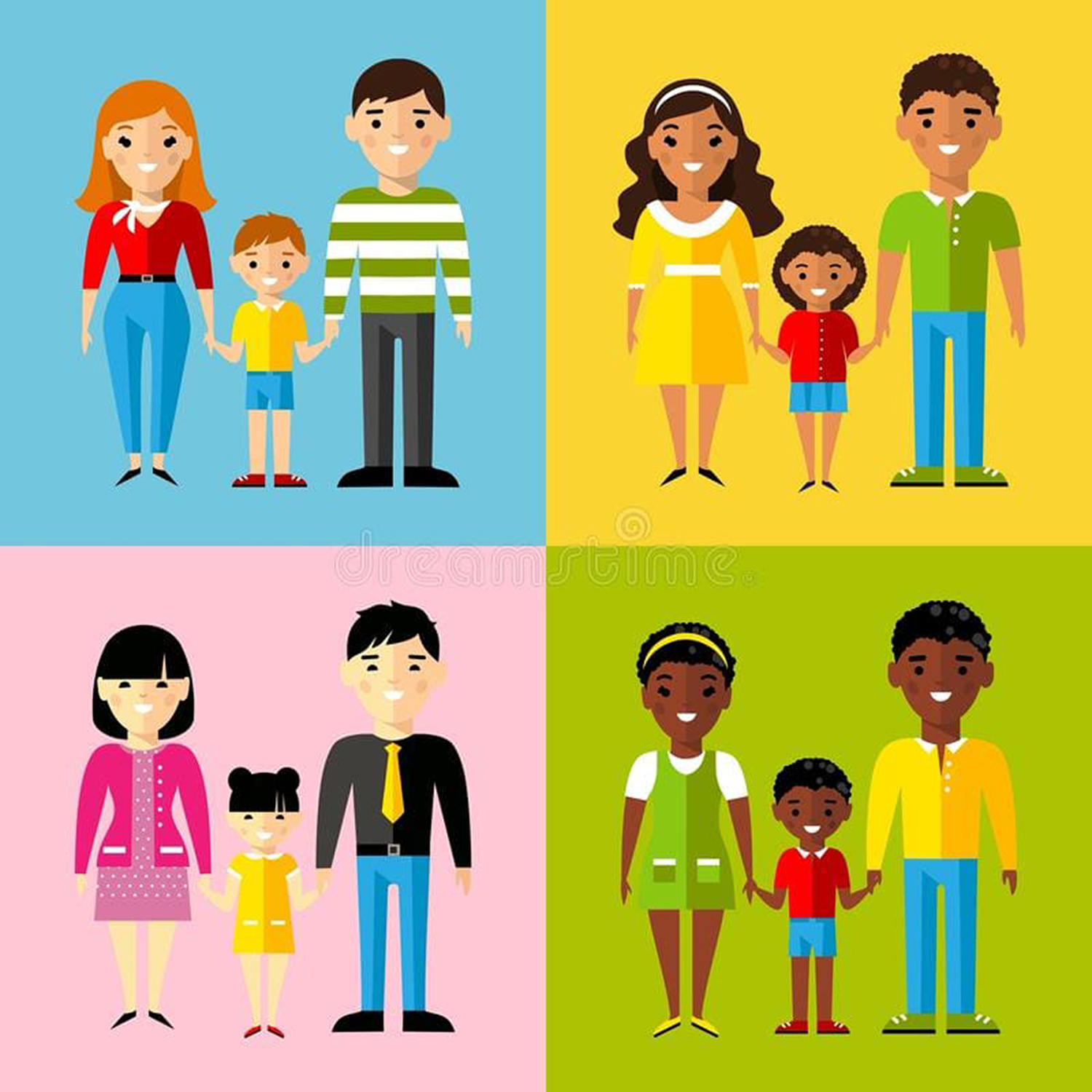
In the era of globalization, the world has gradually become a global village. The relationship between countries is getting closer. Everyone can be a “world citizen!”
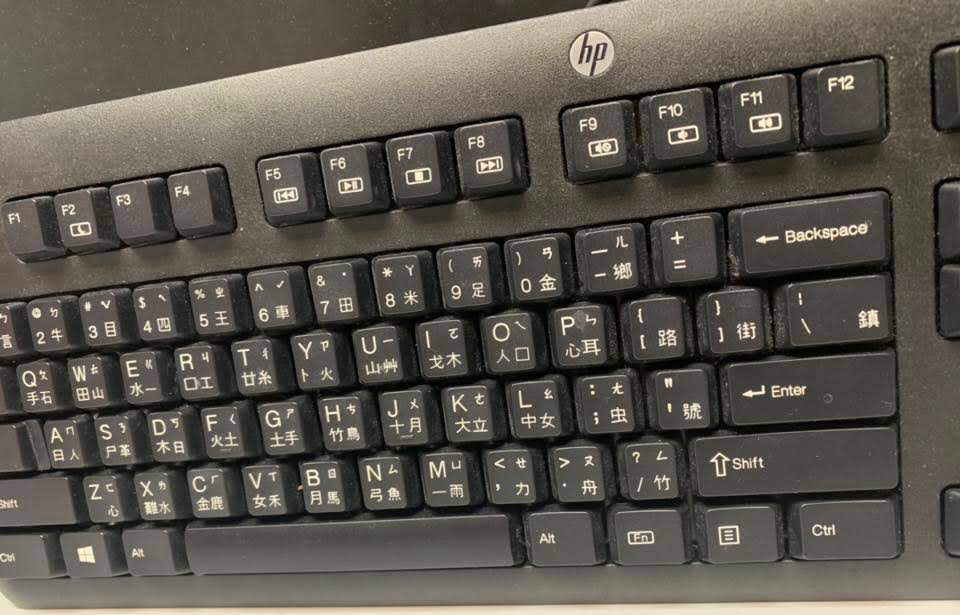
When the East meets the West on a keyboard.
Interrater reliability tests were conducted by two trained research team members who independently coded these data using the same set of working criteria. Results were then compared, and items having differences in coding were reviewed and discussed until all discrepancies were agreed upon consensually at 100%.
The accumulated unique counts of ID patterns of an individual participant displayed the extent of identity variation (of that participant). Only nonrepeating ID patterns were taken as additional counts. That is, if a participant presented an ID pattern in a text which was the same as an ID pattern appearing in previous occasions, it would not be considered as an additional unique counts. There were five occasions that participants expressed their ID patterns (pretest questionnaire, Facebook posts, five representative posts, the verbal replies to the question about national/ethnic identity, and posttest questionnaire). If a participant presented five different ID patterns in all five occasions, she or he would get a unique count of 5. Likewise, if a participant only presented a single ID pattern across all these occasions, she or he would get a unique count of 1. As such, increased counts meant increased variations.
Study Hypotheses
Five directional hypotheses were used to test variables in the YMP program: (1) one’s NFC score will decrease from T1 to T2, (2) EE score will decrease from T1 to T2, (3) CTD score will increase from T1 to T2, (4) SE score will increase from T1 to T2, and (5) ID patterns will vary across expression contexts and across time.
Data Analysis
Results from the pretest and posttest were analyzed and compared; significance of mean difference was measured by paired t tests. Analyses were performed using the IBM Statistical Package for the Social Sciences (SPSS v25).
Results
Sociodemographic Data
All (N = 20) participants completed the entire program. Participants were between 18 and 24 years; 11 were female and 9 were male. All were enrolled students in three institutions including the Hong Kong College of Technology, the Hong Kong Community College, and School of Professional Education and Executive Development of Hong Kong Polytechnic University. Further broken down, 17 were associate degree or higher diploma students, 2 were professional diploma students, 1 was bachelor’s degree student, 16 studied social sciences, 1 studied biological studies, and 3 were unknown. There were more than 50 people enrolled for the program; 34 participants were selected and invited to join the group based on criteria that they were permanent Hong Kong residents, they were above 18, had similar academic backgrounds, represented diverse institution backgrounds, and ensured equal gender distribution. Among the 34 invited participants, 14 dropped out after the program started, and 20 participants completely finished the 3-week program. This high attrition rate is largely related to the ease of online enrollment, as participants might have easily enrolled online without serious consideration, and they might have found that program contents do not fit in their interests or schedules after they really tested the program. A dropout rate between 40% and 80% has been reported in online learning systems (Bawa, 2016). The online enrollment method used in this study had largely increased the efficiency of subject recruitment, but it also shared such common limitations of other online learning systems.
Program Outcomes
The paired t-test results showed that most of the intended program outcomes were achieved with medium-to-large effect size (see Table 1). The NFC reduced (p < .001), essential views on ethnic identity weakened (EE, p < .05), and SE increased (p < .05). CTD also increased, but it didn’t reach a significant level (p = .08).
Pretest–Posttest Results of Self-Reporting Measures.
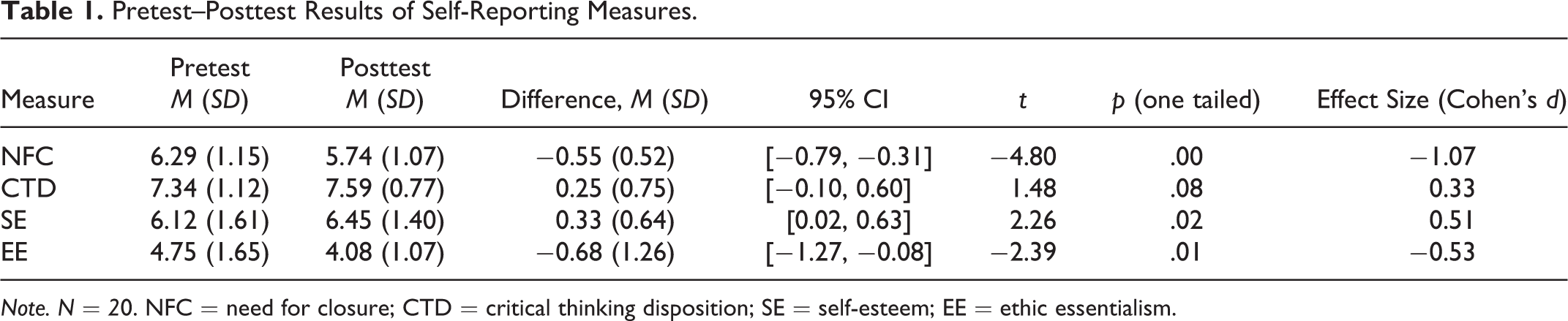
Note. N = 20. NFC = need for closure; CTD = critical thinking disposition; SE = self-esteem; EE = ethic essentialism.
Additionally, unique counts of ID patterns increased over time (see Table 2). Increased counts meant ID patterns varied across time points and across contexts (e.g., self-reporting questionnaires, online expressions, off-line selections, and verbal narrations). Most participants showed inconsistent patterns and only a few of them showed relatively unchanged patterns.
Pretest–Posttest Results of ID Patterns.
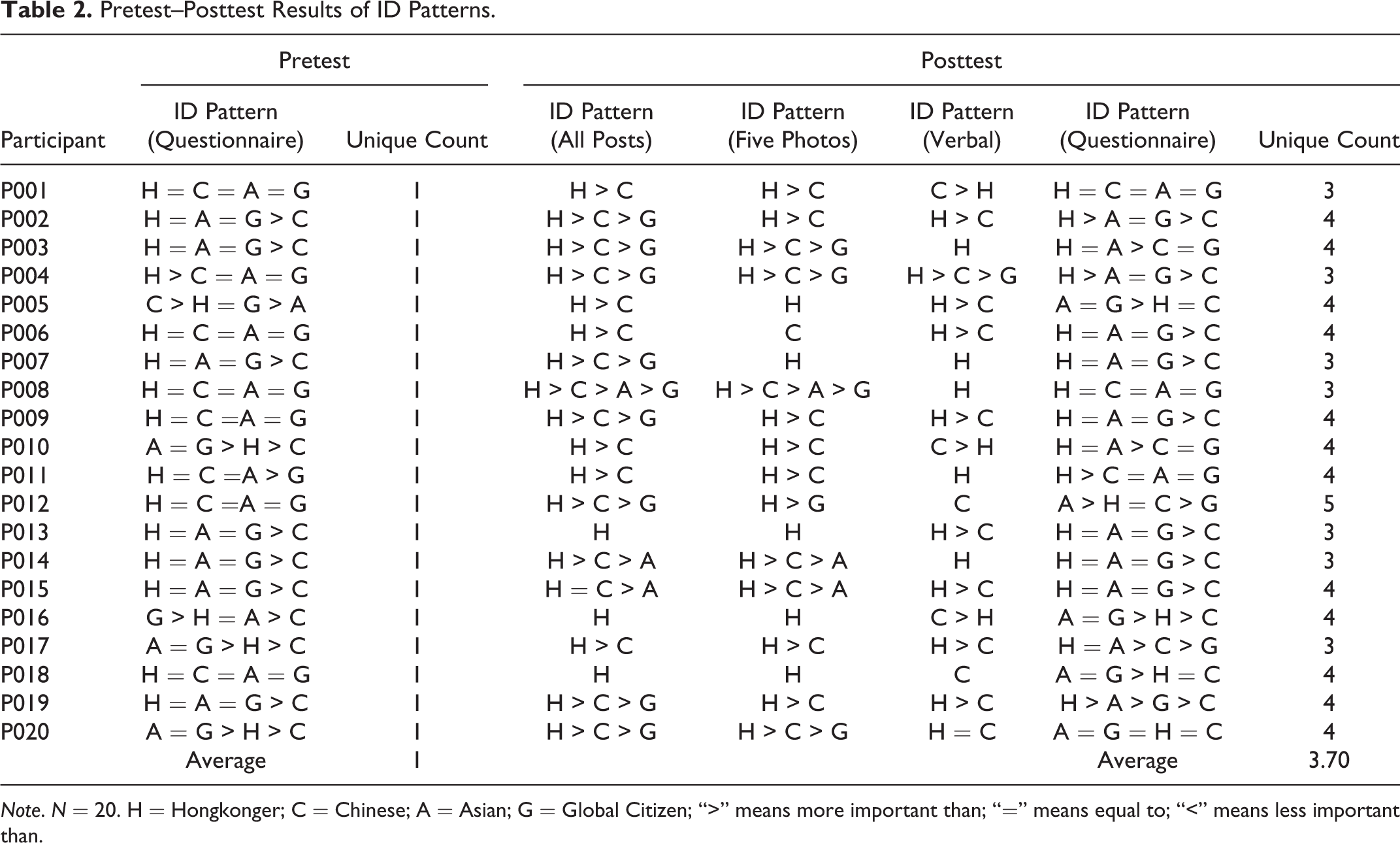
Note. N = 20. H = Hongkonger; C = Chinese; A = Asian; G = Global Citizen; “>” means more important than; “=” means equal to; “<” means less important than.
Discussion and Applications to Practice
The question remains—can we use YMPs to facilitate change in individuals? The findings suggest that this is possible. The pretest–posttest results showed that psychosocial outcomes were induced as intended, and the operational procedures were implemented as planned. These are initial findings that indicate the intervention’s acceptability and feasibility. Yet this is not generalizable. In this pilot case study, the sample size was fairly small. In addition, this is only one specific mode of YMP in a particular sociocultural context. Further, macro-level factors (e.g., how audiences are impacted by those media texts) were not assessed. Last but not least, additional hypotheses and assessments will be required to examine to what extent program outcomes can or cannot sustain.
These limitations notwithstanding, it seems more important to discuss the ways some of the program components, particularly the use of ICT, created space and opportunities for insightful and ongoing reflective conversations and hence may have contributed to the outcomes found herein.
Open-Mindedness and a Nonjudgmental Group Environment
Almost all participants significantly reduced their NFC—aversions toward ambiguity—immediately after the program. Average NFC score (i.e., closed-mindedness) reduced from 6.29 at T1 to 5.74 at T2, p < .001. Average CTD score (i.e., critical openness) also increased from 7.34 at T1 to 7.59 at T2; although it did not reach a level of statistical significance, it is close to statistical significance level (p = .08). Moreover, participants generally felt good about themselves. Their SE (self-worth) increased, as it was shown that the average SE score increased from 6.12 at T1 to 6.45 at T2, p < .05.
It may have been that the “closedness” of the program allowed for an “openness” in one’s mind-set. In this YMP project, participants needed to be appropriately screened and approved by project moderators before they could join the project’s Facebook closed group. Only current members could see the list of members in the group and viewed what members posted in the group. In this closed group environment, this program could maintain an atmosphere which emphasized openness and ambiguity; as young participants chatted freely, and therefore, they did not have a strong need to “close” their thinking, and most of them noted that they enjoyed the overall process. These issues corroborated information learned in previous studies (Chan & Holosko, 2017; Chan & Ngai, 2018).
In the final presentations, participants were asked whether they would like to have their posts remain with the group after the trial and/or whether or not they would like to depart from the group after the trial. Among the 20 participants, all opted to continue showing their posts in the overall group, and 16 opted to stay on as group members. Their willingness to stay in the group after the program suggested that perhaps this activity might have struck a responsive chord in their own personal lives, as they reflected upon it.
It was posited that at least two conversation principles may also have contributed to these outcomes. Foremost, the moderators carefully managed the social space, which was always open and decidedly nondogmatic. Despite the fact that one’s ethnic identity in Hong Kong is currently very politicized and polarized (as noted earlier), there have been a series of recent increasingly violent local social activities associated with nativism and separatism. Various vocalized extreme views (regardless if these views were about separatism or patriotism) are usually very prevalent on the Internet. Further, young people holding more moderate views may not bother to participate in these rather cynical and/or populist debates. However, this YMP model provided an online social network which allowed for ambiguity; all participants had an open and safe environment to share their ideas and were not judged.
Further in this program, there were some occasions when participants criticized both the central Chinese government and the local Hong Kong government. Rather than taking sides and fueling these disputes, moderators asked probing types of reflective questions to promote discussion. Specifically, one participant posted a comment using a very harsh language to criticize mainland Chinese women. This content could have easily triggered heated group discussions and/or fueled other cynical views. However, in this project, a moderator worked around this issue by asking the participant “I am interested to know what was your own identity (capacity) you used, when you wrote this post?” This moderator knew that the participant was born in mainland China, migrated to Hong Kong when she was a child, and she felt ambivalent about her mixed identity, as was noted in a previous post. After that question was tabled, the conversation turned more intrinsic and a more fruitful ongoing discussion with reflection ensued.
Additionally, much of the value of this YMP’s social network evolved from the way in which it fostered a playful and ambivalent atmosphere, in which participants were allowed to express visual images with brief captions rather than overt position statements. For example, some participants used photo-collages to compile images which potentially implied some criticisms toward the mainland Chinese government. Levity and humor served as important buffers here, allowing participants to recast or readjust their views accordingly. Paradoxically, serious and more strident position statements are sometimes counterproductive, as participants could easily be “hijacked” by their own prior expressions, as it has long been known that people might possibly develop and reinforce attitudes based on what they have already done or expressed (Bem, 1967; Burger, 1999; Festinger, 1957). This is not to say that an ambivalent expression is any more “authentic” than an opinion-based statement, but if such a parodical genre is more relaxed, it can leave more room for subsequent idea development rather than adversarial exchanges, as was noted in this YMP.
Reflectiveness and Asynchronized Conversations
Essentialist views on ethnic identity include beliefs such as one’s ethnic identity is innate and essentially has an unchanged essence. In this study, most participants had reduced their essentialist views on ethnic identity. Average EE score reduced from 4.75 at T1 to 4.08 at T2, p < .05.
In our project, moderators often helped participants unearth alternative narratives by asking them more reflective questions and providing them with more supplementary contextual information. For example, (i) there was a photo showing Bruce Lee as a Chinese hero-type icon, but the fact is that, at that time, Bruce Lee held a U.S. passport; (ii) there was also a photo showing Hong Kong local style dim sum, and the subsequent conversations led to the discovery that its tradition had originated in the northern part of mainland China; (iii) there was a photo showing a popular soft drink brand in mainland China which is enjoyed by young people, and ensuing conversations led to the resolve that its brand name involved a Japanese hiragana character; (iv) there was a photo indicating that Qibao (cheongsam) was a traditional ethnocultural symbol of Chinese women, but it was discovered that Qibao was an invention of recent times, and it was inspired by Manchu (non-Han) clothing style; (v) there was another photo saying that Aeroplane Chess (Ludo) is board game representing local Hong Kong cultures, but the subsequent conversations led to the discussion that it was adapted from the “cross and circle” game, which was originated in the UK; and (vi) some pictures suggested that the heavy metal bands in Hong Kong represented local youth culture, but the fact remains that heavy mental genre originated in the UK in the 60s.
Many conversations on social media do not happen in “real time,” as message senders send off their messages for recipients to view at their own convenience. Given that moderators’ communication skills may have facilitated many dialogues, we contend that it was the asynchronized communication which substantially enabled these moderators to have more time to conduct a proper and more factual background Internet search. This enabled moderators to pose more reflective questions and provide more timely and useful data-based information to individuals and the group, overall.
These asynchronized conversations facilitated the moderators to subtly reveal the history of hybridity existing in culture, art, or music and challenge the prevailing notions of pure identity. As such, new discoveries made the familiar strange, and the strange familiar. This helped participants to become more aware of more instances under which cultural fusions and ethnic mixing went beyond the ethnocultural symbols that were embedded in some of their postings.
Identity Expressions and Editable Images/Texts Enabled by Digital Tools
All participants revealed that their ID patterns varied over time. Average unique counts increased from 1 at T1 to 3.7 at T2. Most participants showed inconsistent patterns and only a few of them showed relatively unchanged patterns.
Digital images and text were editable, which enabled participants in our program to continually revise their expressions. This conveyed an important message to these participants—all contents (and hence thoughts) were allowed to be changed, until the last moment. The increased unique counts of ID patterns noted herein indicated that participant identity expressions varied across time and contexts. These variations were partly triggered by the use of different communication media and the fact that all images and texts were changeable and editable. Researchers have long suggested that the spatial affordance of visual communication can support cognitive processes and that these may not be possible in textual communication (Burn & Parker, 2003; Kress, 2009; Kress & Van Leeuwen, 1996). In this YMP, participants used images to express, elaborate, and prioritize their views on many occasions, but they also needed to explain each decision as far as possible and verbally tied their views to the overarching identity theme. These processes provided opportunities for participants to reassess and revise their previous views. In this program, there were two scenarios that illustrated the contributions of such essential visual communication.
We noticed that participants used the terms Chinese, Han, citizen of PRC, and a member in the Chinese race interchangeably. Therefore, in the presentations, we purposefully asked each participant to finger point to photos that represented their likes/dislikes, of which particular identities. This strategy was found to be very useful, as most participants clarified some misunderstandings that they did not actually realize, before they used the photos to facilitate their later explanations. The YMP incorporated offline face-to-face communications to enable participants to elaborate, prioritize, and conclude their imagery expressions, thoughts, and ideas. In the subsequent face-to-face presentations, some of them separated their dislikes of the Chinese communist party and their appreciation toward Chinese culture, overall.
Our findings showed that participants’ ID patterns were very inconsistent across time and context. For example, one participant (#P016) indicated an ID pattern showing H > C > A > G at T1 and indicated A > H = C > G at T2. That is, her Hongkonger identity was ranked lower, yet her Asian identity surpassed all other identities. The changes in another participant (#P005) were even more dramatic, as she indicated C > H = W > A at T1 and indicated A = W > H = C at T2. That is, her Hongkonger identity and Chinese identity almost reversed with her Asian identity and Global Citizen identity.
These findings illustrate how such YMPs can assist participants externalize their thinking and allow them to have opportunities to affirm, reject, or modify it. This is in line with the theoretical presumption of an operational model, in which meaning making relies on symbolic mediators (Buckingham, 2003; Vygotsky, 1978). It is likely that participants’ experiences in different communication modes (i.e., questionnaires, Facebook posts, selected photo sets, verbal narration) may have triggered different ideas and hence different identity priorities. Of course, these inconsistences may also simply reflect that currently young Hongkongers’ ethnic identities are by their very nature, rather unstable and, growing, changing, and evolving with one’s age. More research is needed before we can draw unequivocal conclusions about these findings and generalizability.
Concluding Remarks
This pioneering study offers some empirical evidence showing that a YMP can be utilized as a change-making strategy for social work and that proper use of ICT can create space and opportunities for reflective conversations. Because YMP’s pedagogy is closely relevant to identity exploration and critical reflection, this study chose a heuristic production theme related to national/ethnic identity and open-mindedness. Yet we recommend that it is also possible to use YMPs to supplement other social interventions in other contexts.
The whole notion of using YMPs in social work is very new, and there is almost no empirical research in this area, about its potential for use, research, and practice. As such, we need to further advance and examine such YMPs by using more rigorous research designs such as randomized control trials, in which participants are randomly assigned to either the group that receives interventions or the control group that does not receive interventions. In addition, there may be a need for more interdisciplinary collaboration, requiring partnerships with local social work practitioners, information technology experts, social scientists, and educators. We believe that such cross-sectoral partnerships and intellectual exchanges may create changes that extend beyond each of these disciplines, leading forward conceptually, theoretically, empirically, and more conclusively, to advance the use and importance of YMPs, as described in this study.
Footnotes
Authors’ Note
Michael J. Holosko retired from University of Georgia and he is now an “Independent research consultant”.
Declaration of Conflicting Interests
The author(s) declared no potential conflicts of interest with respect to the research, authorship, and/or publication of this article.
Funding
The author(s) disclosed receipt of the following financial support for the research, authorship, and/or publication of this article: This study is part of a bigger research funded by the Research Grants Council of Hong Kong.
