




Abstract
Although the stresses associated with academia and graduate studies are well recognized, there remains a gap in our understanding of how best to support the mental health of investigators and trainees in research teams. As part of the Healthy Professional Worker Partnership, we collected insights from trainees, co-investigators, the project director and the co-leads of a trainee support network. Their research involved conducting interviews that sometimes addressed sensitive or traumatic subjects. Using a public health theoretical framework with inductive thematic analysis of exit interviews and written feedback, we developed guidance for safeguarding the mental health of researchers. Key responsive interventions to address mental health challenges included regular training and check-ins, reducing the frequency of the interviews conducted by trainees and applying strategies to handle the mental health impacts of their content, and proactive workload management. Promising practices emerged, such as establishing a trainee support network and a compendium of resources, integrating debrief time, ensuring clear communication, and adapting expectations and timelines. Recommendations emphasize the importance of responsiveness, collaboration and flexibility, alongside a formalized onboarding process. Research teams, especially those that are large, geographically distributed, or undertaking research on challenging issues, need a systematic approach to promotion of mental health, prevention of mental ill-health, and remediation of mental illness. This study offers practical guidance for fostering healthier and more supportive research environments.
Background
Undertaking research, including during graduate studies, can be very challenging. There is evidence that mental health challenges such as stress, depression, and anxiety are common among graduate students and young researchers.1,2 For instance, one U.S. study has shown approximately 47% of PhD students and 37% of Master's and Professional students at the University of California reported being depressed. 3 A report on the status of graduate student mental health in the Department of Medical Biophysics at University of Toronto revealed that close to one-fifth of graduate students in that department reported experiencing suicidal thoughts at some point during the course of their studies. 4
Mental health problems stem from a variety of demographic, occupational, organizational, psychological, social, and supervisory factors. These include heavy workloads and “workaholism,” perfectionism within a competitive subculture, challenging supervisory relations, inflexible organizational policies, financial stress, disruptions to social networks, isolation, work–family conflict, burnout, impostor syndrome, uncertainty and job insecurity.1,5–12 Gender identity and gender roles are important intersecting factors associated with poorer mental health outcomes among graduate students and young researchers. Women and those who identify as nonbinary are particularly at risk.7,13 One observational study exploring the gendered experience of the pandemic lockdown among graduate students in Quebec revealed that women reported more stress, which was associated with more depressive symptoms, in adapting to new remote teaching methods. This may have been because these new methods of teaching seem to interfere with family responsibilities. 7
Faculty members struggle too.14,15 One recent Canadian study showed that almost two-thirds of academics reported experiencing mental health challenges, such as anxiety, psychological distress, depression, and burnout, at some point in their careers. 14 These can be attributed in part to work-related factors including, but not limited to, large workloads, administrative duties, peer review obligations, and stresses related to promotion and tenure,15,16 which are additionally influenced by gender and other intersecting identities. 17
The content of research and the context in which it is undertaken can influence the mental health of academics and trainees. Conducting emotionally demanding research can affect graduate students’ well-being. In one study, emotional distress arising from sensitive content was found to compound existing graduate school pressures such as large workload, time pressure and poor work–life balance. 18 Graduate students and other researchers can experience vicarious trauma due to emotionally demanding research.19,20
While interest in the mental health and well-being of graduate students, early-career researchers and other employees in academia has been building, our knowledge about how to provide optimal support for trainees and investigators is relatively limited. Given that the COVID-19 pandemic has worsened mental health worldwide, 21 and this has been shown to have an impact on the academic and research sector, 22 there is a pressing need to gain a better understanding of and to address mental health for researchers and research teams.23,24
The objective of this study was to identify leading practices for safeguarding the mental health of investigators and trainees in research teams. We begin with an overview of the framework that we used to inform our analyses and follow with a description of the methodology (including details about the trainee network) and findings (promising practices, interventions, challenges and recommendations). The trainee network co-leads and the project director offer reflections, and we conclude with key take-home messages and a synthesis of the guidance arising from the study. The overarching recommendations constitute a strategy for promotion of mental health, prevention of mental ill-health, and remediation of mental illness, with the aim of supporting trainee and researcher mental health at the individual and research team levels.
Orienting Analytic Framework
The Public Health Agency of Canada defines mental health as “the capacity of each and all of us to feel, think, act in ways that enhance our ability to enjoy life and deal with the challenges we face.” 25 Our research and data analysis processes were informed by this definition and by an approach to population mental health strongly influenced by key public health principles 26 : promotion of mental health, prevention of mental ill-health and remediation of mental illness. Mental health promotion refers to “the process of enhancing the capacity of individuals and communities to increase control over their lives and improve their mental health.” 26 (p. 36) Prevention is aimed at reducing the chance of “mental illness among populations who experience disproportionate prevalence.” 26 (p. 12) Remediation of mental illness entails early identification, support, referral to community-based resources, services, and treatment. 26
Functionally, there is overlap between the actions and interventions associated with each of these principles. Promotion and prevention can be intertwined with treatment to improve outcomes by managing the risk and protective factors which support recovery and resilience. 27 Likewise, prevention may include early identification and intervention efforts that are suitable for, and specifically geared toward, people who display early signs and symptoms of mental illness or addiction. 27
Methodology
The Healthy Professional Worker (HPW) Partnership is a pan-Canadian research collaboration examining mental health, leave of absence and return to work experiences of professional workers. Between 2018 and 2024, using a partnered multimethod research approach involving surveys and interviews, we undertook to propose, develop, and evaluate gender-sensitive interventions that promote the mental health of professional workers. Funded by the Canadian Institutes of Health Research (CIHR) and the Social Sciences and Humanities Research Council (SSHRC), the partnership brought together 25 coinvestigators and 28 trainees (graduate students and co-op students) across multiple sites, along with 22 partners from government, industry, and professional organizations. Under the leadership of the partnership director, 8 case study teams—focused on Academia, Accounting, Dentistry, Medicine, Midwifery, Nursing, Teaching and Leadership (cross-cutting)—were assembled, each with one team lead or co-lead, one or more co-investigators, and one or more trainees. The partnership director, both trainee network co-leads, and all trainees, save one, identify as women. Four of the co-investigators identify as men, while the remaining researchers identify as women. The gender mix of project co-investigators (84% women) and trainees (96% women) differs somewhat from the mix likely to be found in a broader academic context (71% of academics who participated in the partnership survey of mental health experiences identified as women). 28 While the subject matter and the explicitly gender-responsive approach taken in the project may have attracted more women (both investigators and trainees) to the project team, the preponderance of women researchers in this study ensured that experiences and perspectives of academic women, who have been historically disadvantaged, were captured.
During the partnership, members of the research team identified a variety of mental health challenges worthy of further investigation. This study sought to synthesize learnings with a view to developing guidance to mitigate these challenges for future research teams. Ethics approval was obtained first from the University of Ottawa and subsequently from the 15 other Canadian universities of the participating researchers in the study.
Near the end of the partnership, the study team invited trainees, co-investigators, the trainee network co-leads, and the partnership director to provide feedback on their experiences. A customized interview guide (Appendix) that addressed issues related to personal mental health, trainee network responsibilities, and best practices was developed by the study team through an iterative process. The invitation to participate was extended by the trainee network co-leads. Interviews of 7 trainees and the partnership director were conducted by the trainee network co-leads. Interviews were recorded and transcribed with otter.ai and transcriptions were reviewed for accuracy. Three co-investigators provided written feedback to the research coordinator, who de-identified the feedback before sharing it with the trainee network co-leads. All participants who provided feedback for this study identify as women.
We conducted a thematic analysis of the data collected, informed by the orienting public health framework described above. This resulted in specific suggestions with respect to promotion of mental health, prevention of mental ill-health, and remediation of mental illness as well as general recommendations with respect to team organization and operation.
Trainee Network
Given that the HPW project included many trainees across different teams and universities, it was written into the funding proposal that the partnership would establish the HPW trainee network early on to offer mutual support, sharing of knowledge and skills and mentoring opportunities. Supportive capacity-building was a core tenet of the partnership. Graduate students and postdoctoral fellows from different universities across the country with interests in mental health, work, and/or gender who joined the HPW project were invited to join the trainee network. The trainees came from different academic backgrounds and from across different case study groups, creating an opportunity for interdisciplinary connection and exchange. The trainee network was established in October 2019 and remained active throughout the project until the culminating workshop in June 2024.
There were approximately 16 trainees who actively participated in the network at any given time, and while the frequency of meetings varied based on members’ needs, we aimed to gather every 1 to 2 months. The meetings took place virtually and were usually one and a half hours long. During these meetings, project-related tasks were discussed, and trainees had an opportunity to ask for help and clarification regarding issues arising in their work. To facilitate communication and knowledge exchange, our network meetings provided an opportunity for trainees to present findings from relevant thesis work, discuss common challenges faced during data collection, compare and share findings from their case studies, and talk about the process of writing. In addition to discussion of project-related issues, trainees had an opportunity to connect and discuss other concerns. The goal was to create a space where everyone's ideas and views were welcome and where everyone felt valued and respected.
Since most of the HPW project was conducted during the COVID-19 pandemic, we made sure to check on each other at the beginning of each of these meetings. Trainees were provided an agenda prior to each meeting and minutes were shared afterward for those who were unable to attend. Topics covered were responsive to the needs of network members; for instance, one of the trainee network co-leads facilitated a virtual relaxation yoga session to help combat the isolation and stress everyone was feeling during the pandemic.
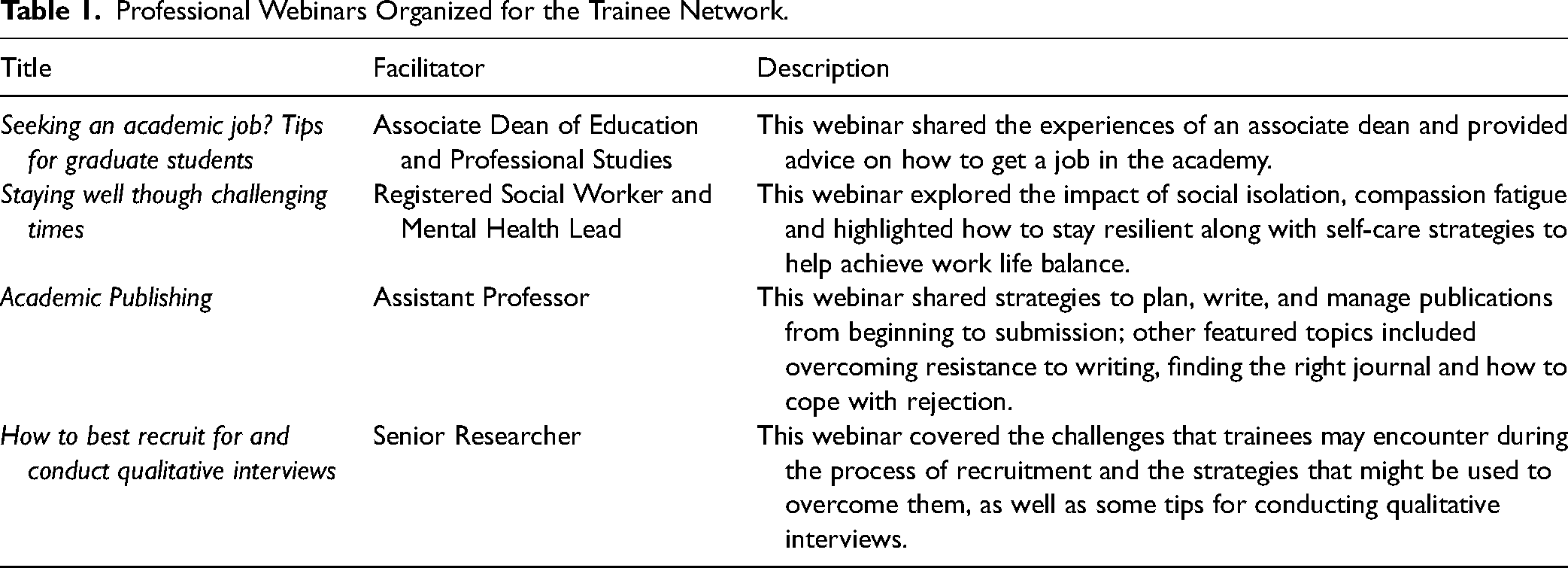
The trainee network aimed to provide its members with professional development and an opportunity to build skills in research, collaboration, leadership, and knowledge translation. We included professional development sessions for trainees and methodology seminars related to the partnership. Four additional professional webinars were organized for trainees by the trainee network coleads (Table 1).
Professional Webinars Organized for the Trainee Network.
Findings
Promising Practices
Promising practices include ideas, programs or policies that show potential to improve the mental health of trainees and research teams. Trainees and coinvestigators were asked about the most rewarding aspect of being part of the trainee network along with what could have been done better to support their mental health. Most trainees spoke about how rewarding it was to conduct interviews in a collaborative manner and the strong connections they formed with other trainees. The team leads had decided at the outset that, ideally, interviews should be conducted in teams of 2—an investigator or co-investigator and a trainee—in part to build capacity but also so investigators would have lived experience with the interviews. One trainee jokingly called this a “Batman and Robin” approach, a phrase that the rest of the team adopted. This approach allowed the investigator to take the lead asking questions while the trainee had time to formulate follow-up questions or seek clarification. Many felt supported by their profession lead and the partnership director in facilitating interviews. One trainee shared: This work is really meaningful. I have found it rewarding contributing and have enjoyed working with the investigators and leads. It has been reassuring for me to work with researchers that I admire, who have validated my work and recognized my contributions and value to this project.
Most trainees felt the experience of being a part of a larger team was rewarding. I learned so much by being part of a team of this calibre. The regular training and check-ins, with the addition of trainee leads who offered support and expertise were invaluable. I also had the opportunity to participate and be exposed to many aspects of designing and conducting a project of this size and met regularly with researchers/students in my field. Checking in with each other during trainee meetings about our mental health and any challenges we were facing was very helpful. Being open with each other, it was helpful to see that other trainees had similar experiences.
In sum, promising practices that are focused on creating a supportive and safe space for trainees to collaborate, connect, learn and practice new skills have potential for improving mental health.
Interventions
Trainees and coinvestigators were asked about the most rewarding aspect of being part of the trainee network and about what could have been done to better support their mental health. The interventions we identified are organized according to the aforementioned framework: promotion of mental health, prevention of mental ill-health, and remediation of mental illness.
Promotion
Mental health promotion refers to “the process of enhancing the capacity of individuals and communities to increase control over their lives and improve their mental health.” 26 We believe that taking part in shared interviews with different team members helped to promote mental health. Regularly scheduled case studies, trainee network meetings, training sessions and check-ins were invaluable in promoting trainee mental health as well as personal and professional capacity-building. The partnership director created an onboarding video for trainees to watch which provided a general overview of the research project that was found to be helpful. In addition, a document was circulated to trainees outlining interview tips, suggestions for promising practices prior to, during, and after conducting an interview. Helpful suggestions included setting aside 10 min to debrief with their interviewing partner about what they thought were the most salient points and other issues arising. The team structure aided in mental health promotion because multiple layers of support were built into the project through the partnership director, research coordinator, profession leads, co-investigators, trainee network co-leads, trainees, and co-op students.
Creating a community and culture where team members felt seen, heard, and valued helped with mental health promotion. Although team members lived across Canada and were not working together in a shared space, creating a safe, caring, and supportive virtual work environment became the reality and priority during COVID-19. Part of creating a successful virtual community of practice involved reserving time and space on the meeting agenda for a mental health check-in along with a period for questions and comments. The trainee network co-leads verbalized the importance and value of each team member's mental health and did their best to practice what they preached, including leading the aforementioned virtual yoga session. On a personal level, trainees were cognizant of mental health and identified the importance of staying in the moment, focusing on things they could control and spending quality time with family and friends as mental health promotion strategies.
Prevention
Prevention of mental ill-health aims to reduce the chance of “mental illness among populations who experience disproportionate prevalence.” 26 (p. 12) Recognizing potential mental health challenges for trainees and other researchers, and the factors involved, helps to support preventive intervention. Prevention is often synergistic with and connected to promotion; for example, flexibility played a large role in work satisfaction and well-being for this team, accomplishing both promotion and prevention.
Allowing trainees time and space after conducting challenging interviews proved helpful for decompression and debrief, especially for those trainees who felt stressed and burnt out. One co-investigator shared: After each interview a trainee and co-lead stayed on the call to debrief which was a helpful way for both of us to acknowledge and diffuse some of the stress. To cope with the stress of emotionally demanding interviews, I used the coping strategies that I apply in my everyday life. This includes recognizing, naming, and accepting the feelings, exercise, mindfulness and self-compassion, cooking, playing music and chocolate!
Enhancing the connectedness of individuals reduces the chance of mental health challenges. Trainees spoke about the power of sharing their experiences with each other, which reduced feelings of isolation. One of the trainees said: Listening to one another and providing strategies to navigate challenging situations was helpful.
Trainees shared that some of their stress and anxiety could have been prevented if they knew how to utilize the chain of command and if a clear message had been shared with them during their onboarding about who they should reach out to first. Knowing who to contact and when could have reduced concerns about burdening or bothering profession leads with questions that others, such as the trainee network co-leads, could answer.
Lack of role clarity was mentioned as a stressor for some trainees. Providing the team with a list of roles and responsibilities during onboarding could help alleviate feelings of uncertainty around who should be doing what. One trainee shared: Once I started interviews my stress level went down because I could accomplish tasks on my own and had some ownership.
When team members were assigned specific tasks with appropriate flexibility and support, they felt valued and enjoyed contributing to the larger research project.
The COVID-19 pandemic, which started early in the partnership, added another layer of complexity for the project as a whole. Although trainees were hired largely to undertake interviews and coding, the survey launch (initially planned for March 2020), recruitment of interview participants, and actual interviewing and analysis were all delayed. All the teams had to pivot to other tasks. Team leads decided that trainees should focus on literature review and synthesis, which was perceived as difficult by some teams but was welcomed by others. One trainee reflected on this pivot, saying: I appreciated that there was a pause button on the project and some regrouping that happened during that time. More energy was spent training the trainees and I really valued that support and team building.
Overall, there was general appreciation for the pause that took place and the regrouping that allowed for additional support and team-building to occur.
Remediation
Remediation of mental illness refers to early identification, support, referral to community resources and services and treatment. 26 Remediation and prevention can overlap and some actions or interventions that target prevention may also be suitable for individuals who display early signs of mental illness.
Providing opportunities for team members to reflect on their experiences both during and after the project was identified as a possible remediation strategy. One trainee reflected: I was very hesitant to share my experiences but even filling out this form feels therapeutic for me, thank you for doing this work.
Challenges
When we asked trainees about the mental health challenges they experienced, stress, anxiety, and burnout were mentioned by multiple respondents. The stressors associated with being a graduate student were compounded by COVID-19, personnel dynamics, and the mental health research subject matter.
Most of the stress mentioned by trainees was connected to expectations (of the partnership and of trainees themselves), communication issues (content, frequency, and format), understanding of tasks, and timelines for each specific case study group. Some trainees felt pressure to make progress and would compare their team to other teams who were further ahead on data collection, conducting interviews, and coding. There were times when trainees felt unprepared and uninformed on how to complete certain tasks, which led to potentially avoidable stress. Some trainees experienced additional stress because of conducting or coding large numbers of interviews. As part-time team members, some trainees found it hard to keep up with partnership progress and updates. One trainee said: I had a hard time evaluating priorities, given that I had much more to do compared with the number of hours I was supposed to be working weekly. I was paired with a trainee that did not complete any of the assigned coding, leaving me with a disproportionately heavy workload. Being directed to ask a fellow trainee left me in a vulnerable position, they assumed they were in charge of me. I felt prepared for the work but not for this unhealthy dynamic.
Another trainee said: I felt under-informed and unsupported by my case leads. Oftentimes I would reach out and receive no response. Perhaps I should have reached out to the trainee leads first.
The nature of the research was stressful for some trainees because the interviews they conducted involved sensitive content. One trainee shared: Some of the conversations we had with interview participants were difficult, we discussed issues related to suicide, family trauma and abuse.
The COVID-19 pandemic added multiple challenges for the project. It was a sometimes difficult for trainees to see how the literature review, interviews, coding, and data analysis fit together, and how results were going to be structured. Trainees were concerned about how their graduate work would be affected and what learning would look like moving forward. Trainees spoke about being anxious about their personal well-being as well as the wellbeing of their families. One trainee mentioned: COVID-19 increased my stress level. Changes to my home life and working time at the start of the pandemic with kids being homeschooled, sharing computers, and less time to work during the day impacted the time I was available for my schoolwork and this project. I straddle education and health care, both industries never shut down, just adapted and moved forward. I have a fatigue I’ve never experienced.
Overall, identifying the challenges experienced over the course of the HPW project helped clarify how to provide better support for graduate students and researchers.
Recommendations
Trainees provided specific and insightful feedback about how their mental health could have been better supported at every stage of the project.
The importance of every trainee having an onboarding experience with one of the trainee leads, not a trainee, was highlighted. Designating a trainee network co-lead to facilitate the onboarding process would ensure that each trainee receives consistent information. It would remove responsibility from trainees who may not feel comfortable onboarding their peers and reduce power differences among trainees.
In addition, trainees indicated that the workload was not always shared equally among team members. One trainee elaborated: My stress/anxiety/burnout feels directly correlated to the fact that I had to overcompensate for trainees who did not do their assigned work. It was jarring for me to work alongside this dysfunction. Trainees should only be allowed on the project if they can commit to at least six or more hours per week. Completing less than five hours a week creates an asymmetrical division of labour especially when there are deadlines. For my particular cohort, I think there needs to be significantly better vetting of qualified trainees. Perhaps an interview process where trainees are questioned on why they believe they are a good fit for the project, what skills they will contribute, and how they will actively embody the ethos of a healthy environment in their own work.
Trainees identified a variety of ways to use training and tools that would have helped to alleviate stress and promote equitable distribution of workload. For example, a centralized database of resources and a shared spreadsheet to keep track of interview logistics would have been helpful, especially given the number of different time zones trainees were working in. More training on the programs and platforms being utilized was desired by a few trainees. In addition, trainees would have appreciated an informal way to contact the group for issues that did not warrant an email. Platforms such as Microsoft Teams or Google Chat could have allowed for quick and immediate responses to questions surrounding interviews or how to use a particular software program for data analysis.
Trainees learned the hard way that conducting too many interviews in one day was detrimental to their mental health and well-being. One trainee said: At first, I would do multiple interviews per day, but I soon learned to book one a day maximum.
Another trainee shared: I actually had to take a break from doing interviews because that emotional toll kind of caught up with me and it's a really hard burden to carry. As trainees unless you’re talking with other trainees on your team, you kind of feel alone after and it just sits with you.
The partnership director reflected as well on the delicate nature of the research and thought it would have been beneficial to include a budget line on the grant pertaining to formal resources and support for all team members. As interviewers, we provided links to resources such as counseling and help lines to participants; however, there was no formal support offered for the researchers conducting the work. For a large team from across Canada, it could have been helpful to have a dedicated counselor or professional to debrief with team members when requested or required.
Discussion
Reflections of the Trainee Network Leads
Working with the trainee network was a transformational experience for us. We thoroughly enjoyed utilizing and applying research skills such as interviewing, data analysis, and writing academic papers as well as helping trainee network members to develop such skills. We learned a great deal about networking with other professionals in our fields and we appreciated the opportunity to refine our leadership, presentation, and mentorship skills to support graduate students from across Canada. The gratitude some trainees expressed to us for helping them during the process of research was very rewarding. Working and conducting interviews alongside trainees was beneficial because we understood and could relate to their feelings of compassion fatigue. Conducting interviews that deal with sensitive experiences such as mental health issues can be challenging; however, having a supportive community makes it easier.
During our trainee network meetings, as co-leads, we encouraged trainees to share their experiences with the research process as well as any other issue they felt was important to discuss during that time. Some of the trainees used this opportunity to share some milestones such as the birth of a child or thesis defense, which contributed to a sense of community. In some cases, trainees asked us to meet individually as they needed help with some work-related tasks (such as how to approach process of literature screening or how to access literature folders in Covidence). Some trainees faced difficult situations (for example, the father of one student had a very serious case of COVID-19) and in those cases, we met with them to provide much needed support. The work was meaningful, and we felt valued as team members and co-leads and enjoyed providing updates to the profession leads and partnership director. The partnership director exhibited strong leadership skills which helped us provide supportive leadership to the trainee network. The flexibility of the trainee network allowed us to balance our work with family and home responsibilities. Being part of the HPW Partnership gave us a renewed sense of confidence in our abilities as early career researchers and helped pave the path for the teaching and research that we are currently involved with or will be in the future.
Reflections of the Project Director
There are three key reflections to add specifically as the project director. First, although the management of research teams was not new, 29 the complexity of shared governance, including, for example, the need to secure ethics approval at 16 universities, and the sheer length of time of the partnership, were inherent challenges to maintain engagement of all project participants. It was important for the team to have had the time to gel in the pre-partnership phase. Moreover, this added to the sense of having been working together for nearly a decade. Having been a part of other large teams, some of the promising practices employed here were adopted and adapted from others. The idea of a trainee network, its strengths and limitations came from another partnership initiative, and it is hoped that the insights garnered here can be a way to pay it forward to other large research teams.
Second, undertaking a project on healthy professional work meant that one had to ‘walk the talk’. We were reading the literature, reviewing findings from survey respondents and engaging with interview participants on their mental health experiences as professional workers which uncovered several shared lived experiences. It was challenging, in the context of interviews, not to offer guidance, support and mentorship to participants whilst also being ‘the instruments’ by which we were collecting rich and meaningful data. Others have similarly reflected on the ethical and methodological challenges of gathering data through “difficult” stories, 30 to which we add reflections on having shared lived experience.
Third, undertaking research during the COVID-19 pandemic added additional complexity. Although our project did not receive any supplemental funding from the federal research agencies that funded our partnership, as was the case for most other projects, we opted to keep everyone employed, pivoting to literature review and synthesis activities that could be accomplished whilst waiting for a more opportune time to launch a survey, which was the last thing that professional workers in a crisis would have been interested in doing. This required additional capacity-building activities that we did not plan or anticipate undertaking but nevertheless added value to the ongoing research. Moreover, we never set out to do research on the impact of the pandemic, but that was something a project on mental health, leaves of absence and return to work needed to address during the time we were in the field.
Finally, having this opportunity to receive and reflect on feedback from project investigators and trainees is particularly valuable and we would encourage all project leads to undertake this kind of reflection as an important means to understand what worked well and not well and to learn how to do better going forward.
Limitations
Not everyone involved in the research project shared their experiences, which may have led to valuable perspectives being omitted from our narrative and reflections. Some trainees may have chosen not to participate out of concern for burning bridges as they transitioned away from the project. In addition, there is the possibility that those who experienced difficulties or had concerns felt uncomfortable sharing them due to the hierarchical structure of the team. For instance, a trainee who did not feel adequately supported by a co-investigator might have been reluctant to speak up, especially if they anticipated needing a reference for future research opportunities. Additionally, graduate students are often overextended, managing significant stress and time constraints, which may have limited their capacity to respond to our invitation for feedback. We know from the larger partnership project that academic women tend to seek out social support at work more often than men, 28 but because all participants who provided feedback for this study identified as women, we were unable to explore variation in the impact of gender on participants’ experiences. The COVID-19 context might have influenced our findings, as it was a particularly stressful and uncertain period for many. Lastly, the size and geographical spread of our research team presented logistical challenges, as coordinating feedback across multiple time zones and schedules proved difficult and might have been a deterrent to providing feedback.
Key Take-Home Messages
Eliciting feedback from team members and reflecting on our strategies, processes and experiences has been a valuable endeavor. Project outputs often remain the focus as research projects end, but reflections such as these can yield important insights for future research teams. The trainee network proved to be an enormously beneficial vehicle for supporting teamwork and mental health, and we would recommend that all research teams, especially larger and distributed ones, implement a formal trainee network. Other work on research teams has focused on leadership, communication, cohesion, mutual respect, and reflection, 31 which were all distinct strengths of this partnership. In addition to these attributes of effective interdisciplinary research teamwork, we have identified responsiveness, flexibility, and collaboration as being fundamental to supporting the mental health of investigators and trainees in research teams.
Responsiveness
The importance of responding decisively to internal and external issues that may impact research and researchers is a key learning from our project. When the COVID-19 pandemic hit, the partnership director reacted quickly and pivoted the research focus. This decision had a positive impact on the whole team and provided much needed time and space for case study teams to regroup and take steps to ensure that their mental health and well-being remained as intact as possible. When the trainee network co-leads noticed and themselves felt the emotional impact of conducting too many interviews in a short period of time, they discussed and implemented new guidelines for safe interviewing moving forward. We encourage other research teams to adopt interviewing approaches that include debrief time and guidance with respect to interview load in protocols from the beginning, along with strategies to handle the mental health impacts of interview content, and to adjust responsively as needed.
Flexibility
Providing flexibility in work schedules can allow trainees and investigators to manage effectively a range of commitments and can increase satisfaction with work. We recommend considering the workload of trainees and the team when assigning tasks and being conscious of the power dynamics that exist between trainees and more experienced researchers. Trainees often feel pressured to agree even when they do not have the necessary bandwidth. We encourage other research teams to prioritize flexibility and to speak openly about the importance of taking care of the mental health of their members through managing workload and making work schedules that accommodate breaks when needed.
Collaboration
Collaborating with a large team to reach a common goal can be incredibly rewarding, though it comes with its fair share of challenges. Strong leadership can facilitate collaboration, and effective collaboration can, in turn, build capacity for leadership. Identifying and implementing strategies for effective virtual collaboration with a large team from the start can significantly enhance productivity. Giving trainees the chance to contribute to presentations, publications, and attend conferences can boost their confidence and self-efficacy. We recommend leveraging training and tools that foster collaboration and a positive team culture. The opportunity for trainees to network with their colleagues and with accomplished researchers in their respective fields can create camaraderie and a feeling of community; these connections can continue beyond the research project and oftentimes colleagues become friends.
Future Research Directions
Mitigating the mental health challenges experienced by researchers remains an important priority. Future research should investigate the impacts of specific mental health interventions adopted by research teams on career trajectories, retention, and research output. Additionally, the intersections among mental health and factors such as gender, race, and socioeconomic status warrant deeper exploration to ensure that interventions are inclusive and equitable.
Although unique and sometimes problematic dynamics can arise in teams that are all-women or predominantly women, these were not a major issue for this team; more research is needed to understand the impact of gender and gender diversity on team dynamics. Finally, future research could explore the ways in which mental health can be supported in both small and large research teams.
Synthesis
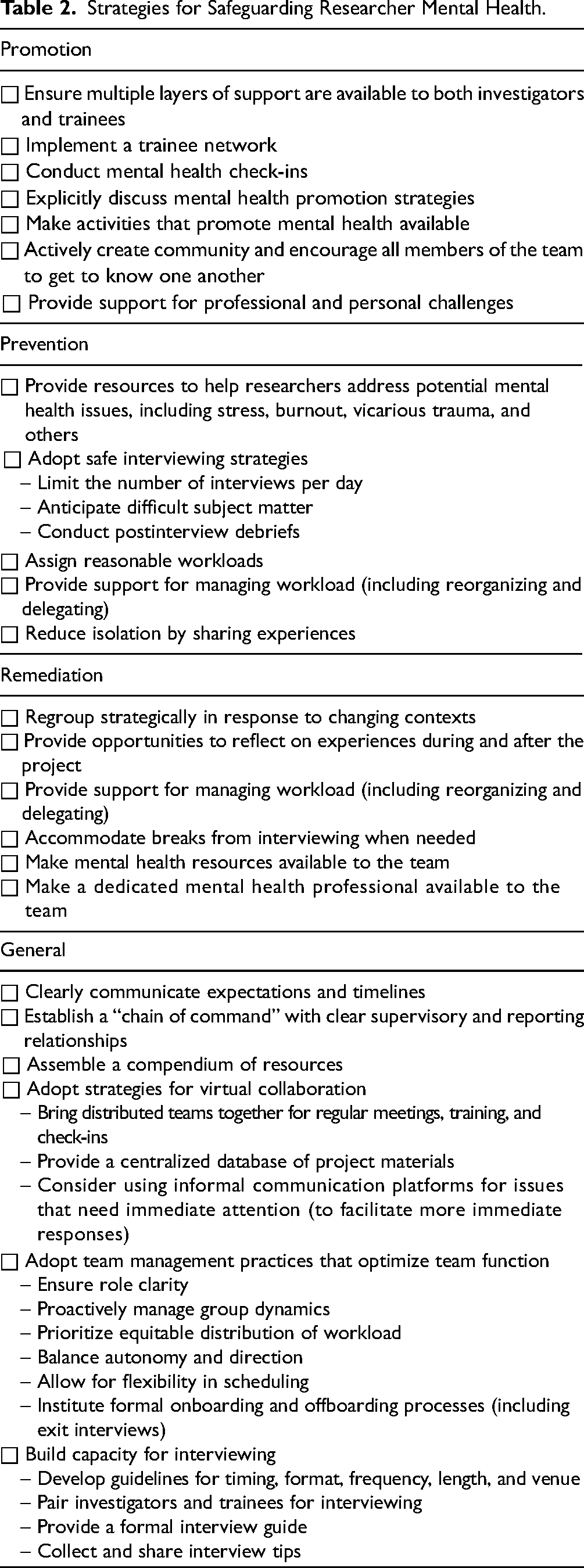
Broadly applicable learnings from the study, in the format of suggestions aimed at lead researchers, are synthesized in a checklist in Table 2.
Strategies for Safeguarding Researcher Mental Health.
Conclusion
Mental health is increasingly recognized as an important component of overall health, but guidance on how to promote mental health, prevent mental ill-health, and remediate mental illness in research team settings is remarkably absent from the literature. Using experience garnered through a large mental health research project, we offer concrete strategies for safeguarding the mental health of investigators and trainees. Our findings can be applied in a range of academic settings and have the potential to improve the working conditions and work experiences of trainees and investigators alike. The strategies we identified are rooted in real-world challenges faced by academic teams and the approaches we suggest can be tailored to specific contexts or virtual collaborations. Our findings serve as both a call to action and a roadmap for academic institutions seeking to create healthier and more supportive research cultures.
Footnotes
Acknowledgments
We offer thanks to all the trainees and coinvestigators who participated in the HPW project and who took the time to share their experiences with us. We would also like to thank the project coordinators Lisa Childs and Audrey Kruisselbrink who assisted with the coordination of the Partnership including the coordination of ethics across multiple sites.
Declaration of Conflicting Interests
The authors declared no potential conflicts of interest with respect to the research, authorship, and/or publication of this article.
Funding
This research was supported by the Canadian Institutes of Health Research and Social Sciences and Humanities Research Council of Canada Partnership Development Grant for Healthy and Productive Work (Grant No. 895-2018-4014).
Ethical Approval
Ethics approval was obtained first from the University of Ottawa (S-05-19-2508) and subsequently from 15 Canadian universities with participating researchers in the study.
Data Availability
The datasets used during the current study are available from the corresponding author upon reasonable request.

Author Biographies
Appendix
What mental health issue(s) if any did you struggle with the most as a trainee? (ie, stress, burnout, depression, anxiety) Have conducting interviews or doing any other tasks as a part of your trainee role impacted on your mental health experiences? If so, how? How did you cope with stress related to conducting emotionally demanding interviews? Did COVID-19 have an impact on your mental health (positive/negative or both)? If so, what changes did you notice? Do you feel you were provided with adequate training that prepared you for the tasks that were asked of you? If not, what training would you have liked to participate in? What did you find the most challenging during your time as a trainee? What was the most rewarding part of being part of the trainee network? What could have done better to support your mental health as a trainee? If there is anything you could change about the trainee network, what would it be? Do you have any other comments/suggestions surrounding how mental health support could be improved for researchers/trainees who are part of a larger team?
HPW Focus Group—Examining Researcher/Trainee Mental Health
Thank you for agreeing to participate in our focus group. Our intention is to open a dialog in order to understand your experience as a trainee. We want to know what worked well and what we could have done better to support your mental health. Our aim is to recommend best practices for other research teams. Your participation is completely voluntary and you are welcome to leave the focus group at any time.
Personal mental health
Trainee network responsibilities
Best practices