



Abstract
Background
The convergence of information technology (IT) and operational technology (OT) in physical assets offers significant benefits but also presents challenges, particularly in aligning the lifecycles of IT and physical assets. A review of 24 serious games related to asset management and rail revealed a research gap in synchronising the separate IT and OT lifecycles, highlighting the need for a serious game specifically addressing this issue. Consequently, a serious game has been developed to educate professionals on lifecycle alignment within IT/OT convergence.
Aim
This study aims to iteratively design and evaluate an artefact, the IT/OT Railway Game, to address IT/OT convergence challenges, with an emphasis on understanding the potential of IT/OT lifecycle alignment, assessing strategies, and applying them in a simulated railway context.
Method
The game was developed using the Design Science Research Methodology (DSRM) and evaluated using the Framework for Evaluation in Design Science (FEDS). Four design iterations and three evaluation cycles were conducted, with 118 participants across 14 sessions. The evaluation focused on playability, game mechanics, and achievement of intended learning outcomes.
Results
The study designed and evaluated a serious game to educate practitioners on IT/OT lifecycle alignment. A three-step evaluation assesses playability, game mechanics, and learning outcomes to measure learning effectiveness. Findings show a measurable improvement in participants’ knowledge and ability to apply IT/OT lifecycle alignment strategies in practice. Furthermore, the study suggests that participatory design can be used not only in serious game development but also as a learning strategy.
Conclusion
The IT/OT Railway Game demonstrates the potential of serious games as practical tools for addressing sociotechnical challenges, such as IT/OT lifecycle alignment. While developed for the railway industry, its principles are transferable to other sectors. Future research should explore its adaptability and effectiveness in broader industrial and academic contexts.
Keywords
Introduction
Industrial control systems, such as programmable logic controllers (PLCs) and relays, historically operated physical assets in isolation. Today, these systems are increasingly connected via information technology (IT) systems, offering benefits such as cost savings, improved reliability, enhanced adaptability, and reduced (Ehie & Chilton, 2020; Govan Kuusk et al., 2013; Hehenberger et al., 2016). However, these benefits come with challenges, including software-related failures that can disrupt operations. In this study, IT refers to hardware and software for managing, while operational technology (OT) encompasses hardware and software ensuring asset functionality (Gartner, 2021a; 2021b). Their growing interconnection, known as IT/OT convergence, is reshaping industrial sectors worldwide and introduces lifecycle alignment challenges that this research seeks to address (Garimella, 2018; Kuppusamy & Mariappan, 2021).
IT/OT convergence introduces not only technical challenges but also sociotechnical ones, as lifecycle misalignment spans technology, organisational structures, and decision-making processes. These interdependencies require solutions that address both technical complexity and human collaboration.
Identify Problem & Motivate
While IT/OT convergence promises efficiency and adaptability, its success depends on aligning the distinct lifecycles of IT systems, OT systems, and physical assets. These lifecycles differ markedly in duration, evolution speed, and management practices. Figure 1 illustrates these differences: IT components typically follow short upgrade cycles driven by rapid technological innovation, whereas physical assets often operate over decades under stable conditions. OT systems, positioned between these domains, introduce additional complexity. Typical differences between the lifecycles of IT and the physical asset that IT is part of. Based on experiences with train systems in the Netherlands, adapted from Van Dongen (2015).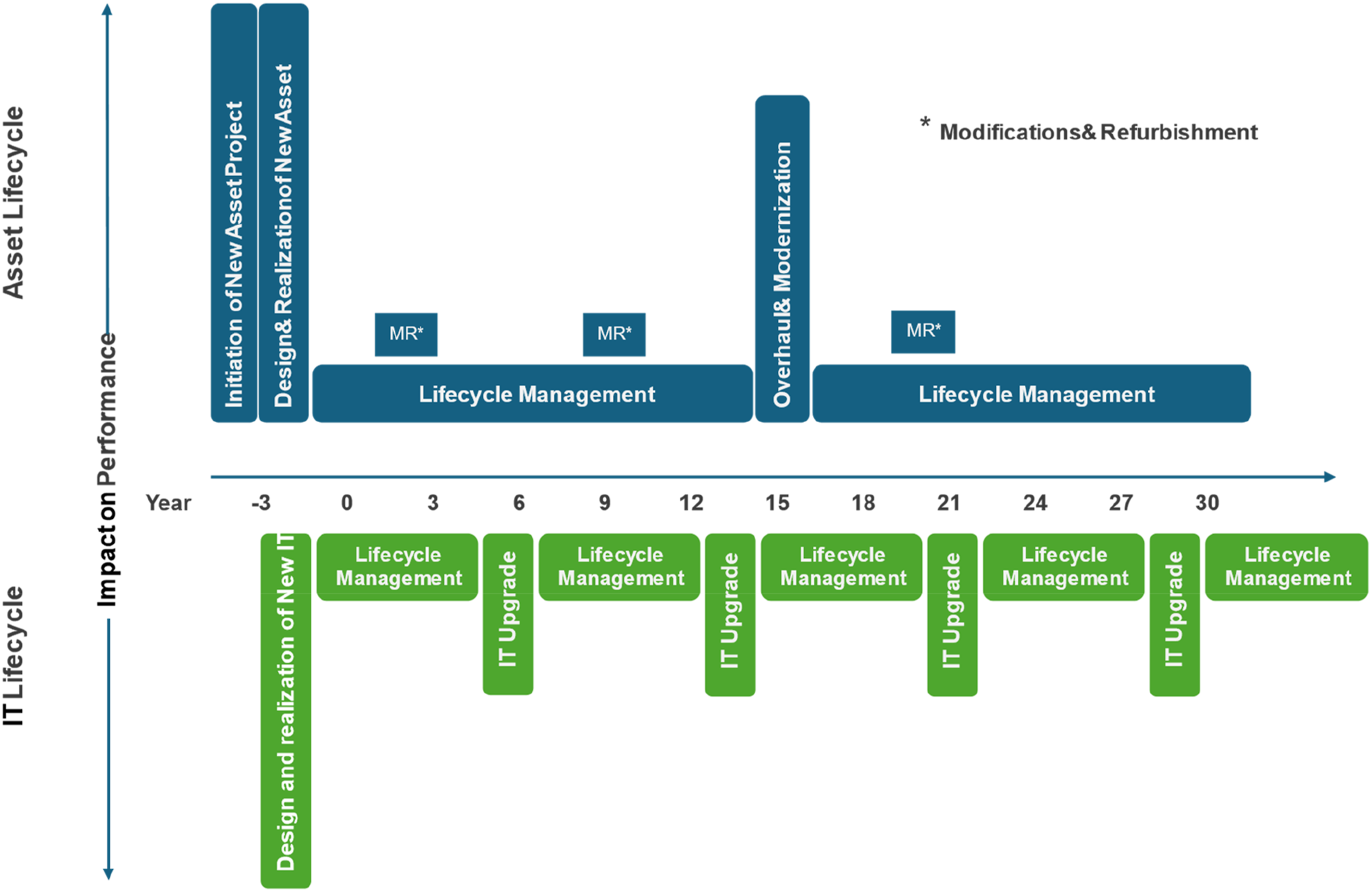
These differences are aggravated by organisational silos, where IT and OT responsibilities fall under separate domains with differing priorities and governance structures. The result is a persistent misalignment that complicates decision-making, leads to sub-optimal asset management strategies, and increases the risk of operational disruptions. Digitalisation initiatives, which increasingly depend on IT/OT convergence to expand capacity, enhance reliability, and improve energy efficiency (European Commission, 2011; Scordamaglia, 2019), further amplify these challenges. Addressing them requires more than replacing physical devices with digital counterparts; it demands integrated lifecycle management approaches (Kuppusamy & Mariappan, 2021; Schäfer et al., 2024).
These issues are not merely theoretical. In the Dutch railway sector, software-related failures within converged IT/OT environments have caused rolling stock breakdowns, delays, and stranded passengers (Bremmer, 2024; Nu, 2019; Peters, 2024). Such incidents underscore the importance of developing improved lifecycle management methods across IT, OT, and physical assets to ensure reliability and safety in critical infrastructure.
Asset Management in Converged Environments
Managing these interdependent lifecycles is not only a technical, but also an organisational challenge, particularly for asset management functions traditionally focused on physical assets. Asset management has historically overseen and maintained equipment, buildings, and infrastructure across their lifecycles. However, IT/OT convergence complicates this task because assets, OT, and IT components now have increasingly interdependent lifecycles. Furthermore, IT and asset management departments often pursue different goals and priorities. Comparable challenges appear in business-IT relationships. Strategic alignment can move IT from a support role to a source of competitive advantage (Henderson & Venkatraman, 1990). Achieving this alignment requires executives to share goals and commit to common strategies (Reich & Benbasat, 2000). In converged environments, misalignment between physical assets, OT, and IT lifecycles leads to sub-optimisation and decision-making difficulties (Pieriegud, 2018). Successful management of IT/OT-converged assets, therefore, requires balancing financial, technical, and organisational considerations (Hehenberger et al., 2016; Kraeling & Fletcher, 2017; Murray et al., 2017; Singh, 2021) and aligning lifecycles across departments (Kok, Martinetti, et al., 2024). This alignment is critical to ensure reliability, cost-effectiveness, and resilience in increasingly digitalised industrial environments.
Literature Review
To explore practice-oriented solutions for these alignment challenges, we briefly reviewed serious games in asset management and railway contexts. The scan identified 11 games primarily focused on asset management and 13 on railway operations. Asset management games typically target skills such as balancing cost, risk, and performance (Asset Management Academy, n d; Hermans, 2022; Kuipers, 2016; Pouwer, n d; ROBAMCI, n d; Van Breda et al., 2023), strengthening collaboration and communication (KWR, 2023; Ogink, 2025; Van den Boomen et al., 2012), simulating real-world dilemmas (den Heijer et al., 2023), and advancing data-driven asset management (Ogink, 2025). They also emphasise selecting a few strategic actions, sequencing them appropriately over time, and assessing risks that may affect their success (Hodkiewicz, 2015).
Similarly, railway-focused games cover infrastructure maintenance (Alderliesten et al., 2019; Rajaonah et al., 2018), capacity management (Kortmann & Sehic, 2010; Lebesque et al., 2020; Meijer, 2015; Meijer et al., 2012), resilience against threats (Soroudi et al., 2022), service logistics (Parada Puig, 2015), and disruption handling (Clegg et al., 2023). Some use VR to enhance operational safety and situational awareness (Rail XR Solutions, n d; Robinson, 2024), while others address recruitment and talent assessment through problem-solving and planning scenarios (Alhadeff, 2017) or support infrastructure planning and station development (Mayer et al., 2010). Across these domains, serious games serve as interactive tools to build knowledge, awareness, and teamwork, with developers ranging from academic institutions to industry organisations. However, none of these games explicitly address IT’s role within asset management or emphasise awareness of lifecycle alignment between IT and OT, highlighting a research gap this study seeks to fill.
Given this gap, it is essential to consider why serious games are an appropriate approach for addressing lifecycle alignment challenges in IT/OT-converged environments. Serious games encourage learning by simplifying complex content, clarifying goals and their significance, and providing timely feedback (Krath et al., 2021). Evidence from educational contexts shows that serious games can improve comprehension, manage system complexity, and offer interactive learning experiences (Bayeck, 2020; Meijer et al., 2012), enhance social interaction (Garcia et al., 2020), and support exploration of multi-actor problems with competing goals (Hoysala et al., 2013). Moreover, serious games frequently outperform traditional instruction in knowledge retention (Riopel et al., 2019), with board games yielding significantly higher knowledge attainment than non-game conditions (Gauthier et al., 2019). Finally, gamification is generally regarded positively by participants (Henry et al., 2024).
Research Question and Hypothesis
Existing serious games in asset management and railway contexts do not address IT/OT lifecycle alignment, leaving a gap in tools that foster cross-domain understanding and decision-making. To address this gap, we developed the IT/OT Railway Game, a serious game designed to improve decision-making around IT/OT alignment within asset management in a digitised railway context.
The game aims to build connection and mutual awareness between IT and asset management domains, helping players recognise where IT and OT are separate, where coordination is necessary, and how differing lifecycle dynamics (e.g., slower-changing OT versus faster-changing IT) influence decision-making. Throughout this study, we use the terms “IT and OT alignment” and “alignment of IT with the physical asset lifecycle” interchangeably, as IT systems typically interface with physical assets through OT.
The following research question guides this study:
What effect does the IT/OT Railway Game have on participants’ knowledge of aligning IT and OT systems’ lifecycles?
Based on prior evidence that serious games enhance learning and collaboration, we hypothesise:
Playing the IT/OT Railway Game will increase participants’ knowledge of IT/OT lifecycle alignment, positively affecting their ability to apply it.
Methodology
The methodology adopted in this study is illustrated in Figure 2. This method uses the Design Science Research Methodology (DSRM) (Peffers et al., 2007) to guide the process, with the Framework for Evaluating Design Science (FEDS) (Venable et al., 2016) to evaluate the game concepts. In this study, continuous evaluation is employed according to FEDS, which involves evaluation after each iteration. Because of this continuous evaluation, no further assessment or evaluation is performed after step 4 of DSRM, as expected when DSRM is performed without FEDS. Research methodology, adapted from Peffers et al. (2007) and Venable et al. (2016).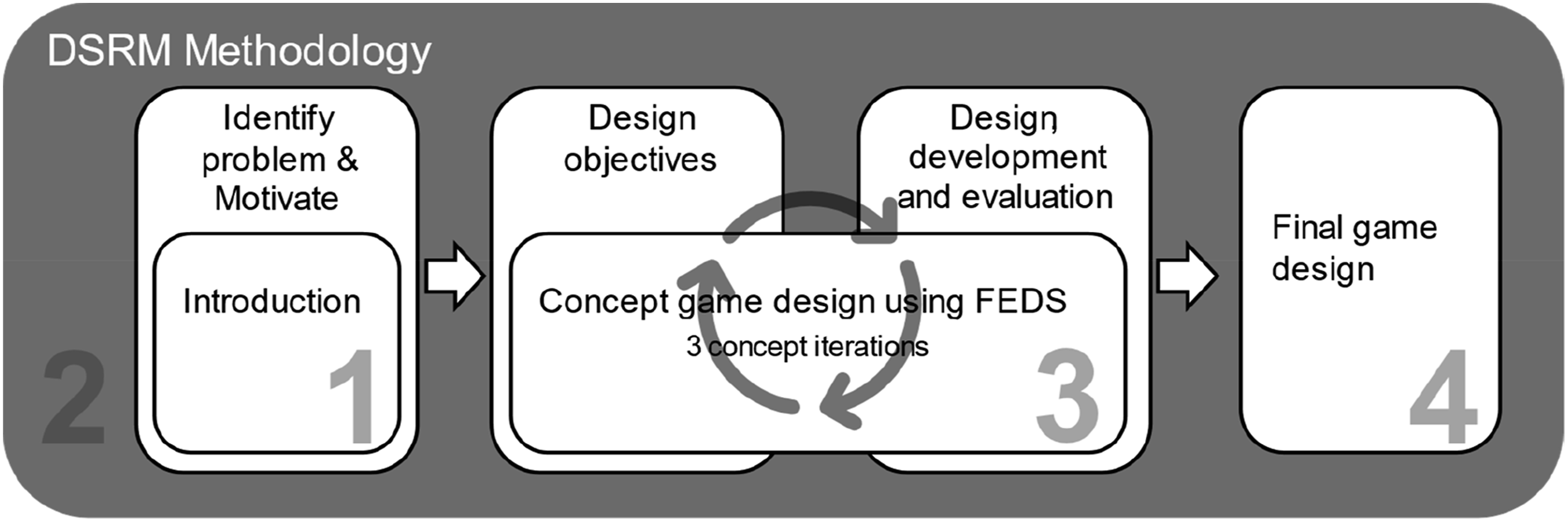
Design Objectives
The primary objective of a serious game is to present situations, exercises, and challenges that enhance each individual’s learning capacity (Pashler et al., 2008). Therefore, the goal of this study is:
To create a learning environment to learn about the lifecycle alignment of IT/OT convergence assets. They learn about the topic by doing, rather than merely reading or hearing about it.
To achieve this goal, the following intended learning outcomes (ILOs) have been identified. These ILOs are based on semi-structured interviews with practitioners. The ILOs are mapped on three different levels of Bloom’s Taxonomy (Armstrong, n d; Bloom, 1956). ILO1 is on the second level of the taxonomy, indicating an understanding of the material. ILO2 is at the fifth level of the taxonomy and involves assessing ideas and materials. ILO3 is on the third level of the taxonomy and focuses on applying information in new situations. After playing the game, the participant can: • ILO1 – L2 Understand - After playing the IT/OT Railway game, the player will understand the concept of IT/OT lifecycle alignment within the lifecycle of physical assets. • ILO2 – L5 Evaluate - After playing the IT/OT Railway game, the player can evaluate IT/OT lifecycle alignment strategies during decision-making in the lifecycle of physical assets. • ILO3 - L3 Apply - After playing the IT/OT Railway game, the player can practically apply IT/OT lifecycle alignment in everyday business situations.
Design, Demonstration and Evaluation
As mentioned, the design, development and evaluation of the artefact created in this study were iteratively conducted using the DSMR process and evaluated using FEDS.
The following three steps were followed during the game design process. 1. Prototype design by the researchers 2. Demonstration session(s) with future players 3. Evaluation of the results
The result is a game design concept or game iteration. Since we underwent multiple development cycles, several concept versions of the game were created, ultimately leading to the final game design. During these sessions, the researchers made observations, see (Kok et al., 2026).
In each game iteration, we will reflect on the following aspects: 1. Did we achieve the learning goals and relevant design objectives, and how can we further improve? 2. What did this iteration contribute to the final design?
When using DSRM, the artefact and design decisions should be evaluated (Sonnenberg & Vom Brocke, 2012). Therefore, we have selected FEDS of Venable et al. (2016) for the design evaluation of this study, as FEDS is specifically designed for this purpose. In this study, a combination of formative and summative evaluation was used, with the former focusing on improving the design of an artefact, e.g., assessing the game’s playability. The summative evaluation assesses the effectiveness of the artefact, e.g., how well it conveys the intended learning outcomes (ILOs).
The initial evaluations aimed to assess the game’s playability and mechanics through a technical evaluation, as the game must function properly before its learning objectives can be evaluated. Then the focus shifted to evaluating learning objectives. A more naturalistic evaluation is desired when the focus is on assessing the learning objectives. FEDS suggests four different evaluation strategies. Based on the outcomes of this section, a human risk and effectiveness evaluation strategy appears to be the most suitable for this study.
Concept Game Design
During the development of the IT/OT railway game, four game design concepts and three evaluation iterations were done. Initial iterations focused on balancing IT visibility and realistic revenue generation. Subsequent iterations refined the mechanics and validated the learning goals through technical and naturalistic evaluations. The focus of this paper is on the significant iterations. There have also been minor changes between each iteration; for example, removing a typo on a card. These minor changes are not explained in this paper. An overview of the different game iterations and the corresponding validation tools is shown in Figure 3. In the sections below, these different iterations are elaborated upon. Overview of the different game iterations and evaluations.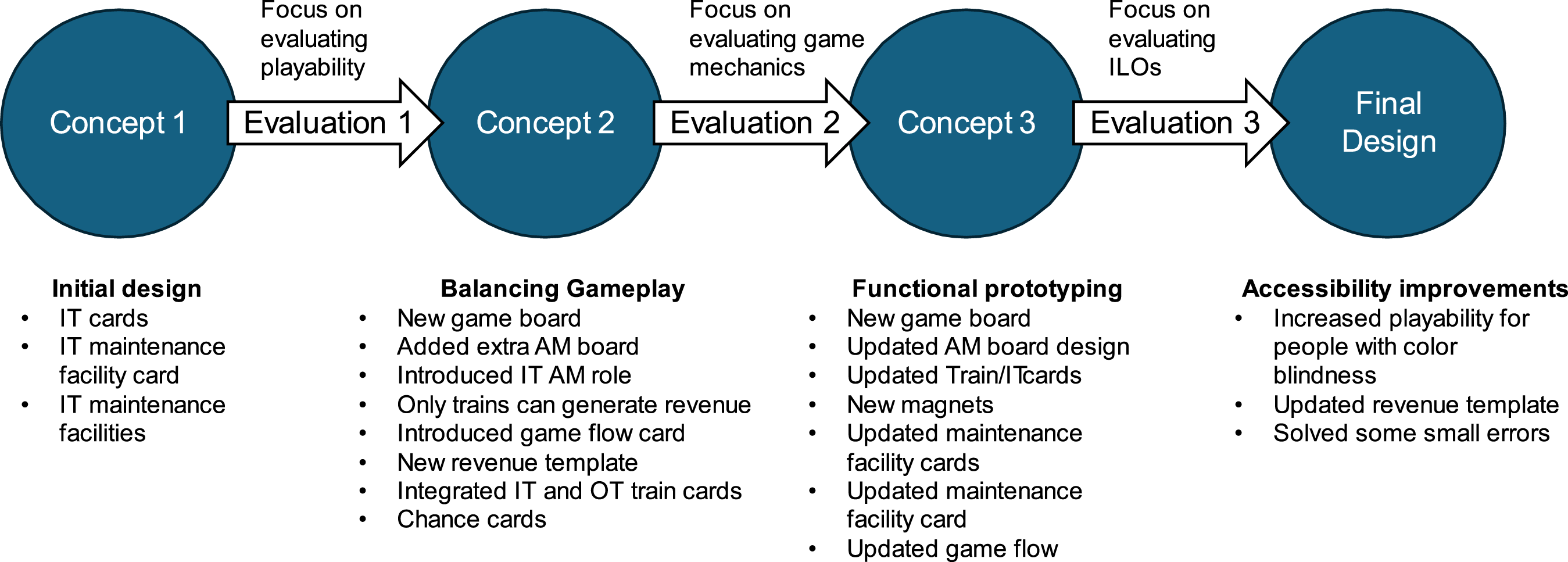
Game Design [Concept 1]: Initial Design
A first iteration of the artefact was created to demonstrate its value, building upon an existing game (Parada Puig, 2015). Four practitioners from a railway company were interviewed through semi-structured interviews for the initial prototype design. Based on the results of these interviews and the researchers’ experience, a basic prototype of the game was created (Kok et al., 2024Kok, Moerman, et al., 2024).
This basic prototype was the first design concept of the game, demonstrating the value of IT. In this game concept, players can play one of four different roles. These roles are operations manager, asset manager, maintenance manager, and financial manager (Martinetti et al., 2017; Parada Puig, 2015). The goal of this iteration was to demonstrate the learning goal that IT requires management, as it also needs maintenance, and that it can generate additional revenue. In this iteration, two essential additions were tested: the IT maintenance facility card and a separate IT card that showed the specific costs, revenues, and maintenance requirements of IT.
Evaluation [Concept 1]: Evaluation of Playability
Evaluation concept 1 was the initial evaluation that consisted of observations during gameplay, an individual post-game questionnaire for each player, and a plenary evaluation. The focus of this evaluation was on the playability of the game and increasing awareness that IT needs to be managed. Playability centres on the user experience and how enjoyable and intuitive the game is (Olsen et al., 2011).
The result of this iteration showed that the game provided a pleasant experience to play. However, to better balance the game, the following four aspects were identified as areas for improvement. First, unplanned maintenance occurrences should be simplified as they currently require a too complex dice roll. Second, there should be less focus on logistical aspects, as the game is about increasing awareness that IT needs to be managed, rather than focusing on logistics. Third, installing IT should not increase the capacity to transport passengers, as is currently the case. Last, IT is now very visible; it should be more hidden to better reflect reality. In the subsequent evaluation iteration, the focus should be on evaluating the game mechanics.
Game Design [Concept 2]: Balancing Gameplay
The game’s first iteration was a pleasant experience, but it did not function as intended. Therefore, the focus of this second iteration is on balancing the various game mechanics more effectively.
The second iteration, therefore, has three goals. First, to address unbalanced gameplay, as unplanned maintenance was overly complex, and there was too much focus on logistics. Second, to ensure that income could only be earned by transporting passengers, rather than through IT. Last, IT elements should be less visible in the game to reflect reality.
In this second iteration, the following six additions contributed to the final design: first, a new game board was introduced to facilitate gameplay, along with combined train and IT cards that are used to conceal IT on the backside of the cards. Second, a new flow card is introduced to facilitate gameplay. Third, the IT asset manager was added as a new role for the players, together with an accompanying asset management board to visualise the IT lifecycle. Fourth, a first version of chance cards to facilitate unplanned maintenance is introduced. Fifth, a first version of a revenue sheet is introduced to simplify the calculation of expenses and revenues. Last, from this iteration onwards, only trains can generate revenue.
Evaluation [Concept 2]: Evaluation of Game Mechanics
In this second evaluation iteration, we sought feedback on how to enhance the robustness of the game mechanics and determine if these mechanics effectively support the intended gameplay.
The outcome of this second evaluation was that players felt the game materials were low-quality, mainly because they were made from basic printing paper. The players made several suggestions on how to improve the game materials. Additionally, they noted that the game board design was unclear, as it was misaligned with the asset management boards. Furthermore, the names of the stations used in the game were confusing with the train names, as both ended with the same letters, such as A, B, and so on. Lastly, the stations were scattered around the game board, while the stations were presented from top to bottom within the asset management boards. This misalignment made it confusing to follow the distinct steps within the game for each train and to calculate the revenues in the final step.
A new questionnaire should be developed to evaluate intended learning outcomes in the next evaluation iteration.
Game Design [Concept 3]: Functional Prototyping
In the second iteration, the players questioned the quality of the game mechanics and recommended better alignment of the game board with the AM boards. Therefore, in this third iteration, we aimed to enhance the visual appeal and user experience of the game mechanics. Additionally, considerable effort was invested in aligning the game board with the asset management boards to improve gameplay.
The following additions were made during this third iteration to improve the gameplay of the final design. The game board and game flow card were updated to better align with the AM board. Furthermore, the game materials were improved to better support the gameplay. For example, the train/IT cards are bigger and plasticised for better readability.
Evaluation [Concept 3]: Evaluation of ILOS
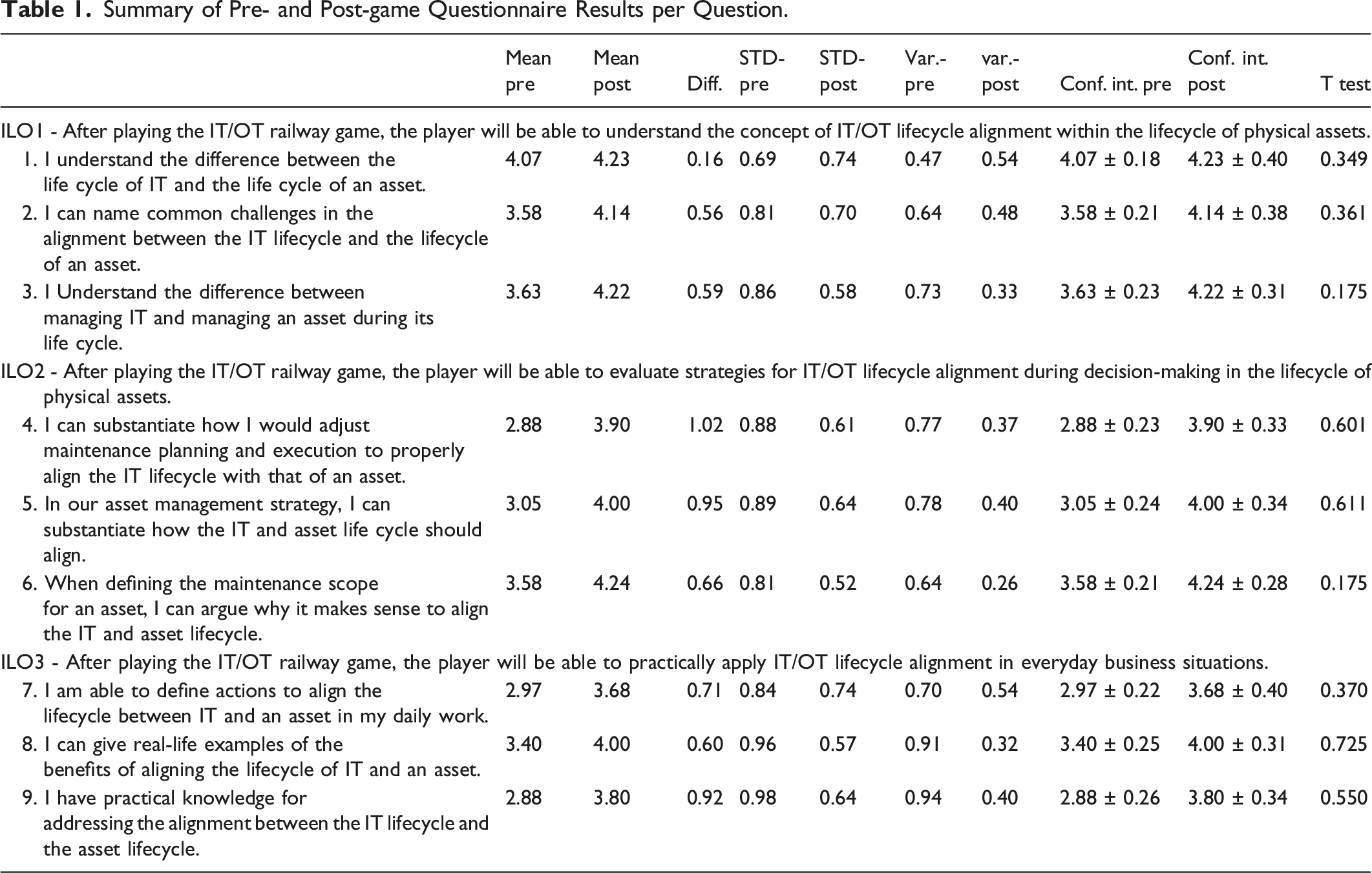
This third evaluation concept focused on assessing the learning objectives to gain insight into how effectively the game helps participants achieve them. The knowledge of the participants is evaluated by self-assessment with an online questionnaire. Every participant was asked to complete the same pre- and post-game questionnaire. The pre- and post-game questions are also equal, and they use a five-point Likert scale. Using this before-and-after comparison, we could evaluate the game’s impact on the learner’s assumed knowledge development.
The questionnaire explains the three intended learning outcomes (ILOs) of the game and asks questions on: 1. The current knowledge of the different ILOs. 2. The backgrounds of the players.
The questions were tested during a game session with 11 industry professionals. After this test, another 11 groups, and a total of 63 people, played the game. A total of 62 participants have completed the pre-questionnaire. However, 2 participants had a data correction, and 7 participants were manually removed from the dataset: • Two respondents had errors in their unique numbers. These numbers were corrected based on their work experience (40310 pre-number incorrect & 80109 pre/post number incorrect) • One respondent did not agree with their data being used and thus was removed. • Six respondents only filled in the pre-questionnaire and were excluded from the dataset. During the session on 20-11-2024, two people left during gameplay; therefore, the post-questionnaire was not completed.
Summary of Pre- and Post-game Questionnaire Results per Question.
Game Design [Final]: Accessibility Improvements
From several game sessions, it has become apparent that the current colour scheme is not ideal for people with colour blindness. Therefore, another game iteration was made to improve this aspect. The most significant change was adding text to the orange and green magnets to clarify the type of maintenance they refer to.
Final Game Design
In this final game design, the goal for participants is to transport the requested passenger capacity per station. For this, sufficient trainsets should be available, taking into account both planned and unplanned maintenance of the trainsets and the IT systems included. Additionally, suitable maintenance facilities should be available to perform the necessary maintenance.
Roles Within the Game
During the game, participants assume one of the following five roles of a rolling stock operating company. Participants must decide from their perspective, and each role is associated with a specific game component. 1. The operations manager (OM) oversees the operation of the train fleet, ensuring the appropriate capacity is available when needed, and guides the team through the various steps of each round. 2. The maintenance manager (MM) oversees the maintenance facilities. They must ensure that the right facilities are available to maintain the different types of trains. 3. The OT asset manager (OT AM) is responsible for maintaining each train type. They need to decide on the different OT lifecycles and communicate which maintenance is coming. 4. The IT asset manager (IT AM) is responsible for maintaining the IT assets on board each train type. They need to decide on the different IT lifecycles and communicate the kind of maintenance that is forthcoming. 5. The financial manager (FM) oversees the financial aspects of the operation. They should support the team in deciding between various investment options.
Game Mechanics
The game is played in rounds consisting of four different steps. • Step 1: Invest – Players can invest in trainsets (OT), IT systems, or maintenance locations. • Step 2: Planned Maintenance – Players perform planned maintenance on OT and IT systems in accordance with their respective maintenance schedules. • Step 3: Unplanned maintenance – Players simulate unplanned maintenance by rolling the dice and drawing a card. • Step 4: Calculate Revenues – Players calculate revenue by accounting for passenger revenue, logistics costs, and planned and unplanned maintenance costs.
Steps 1-4 are summarised in a flowchart to assist the players during the game; see Figure 4. Game flowchart.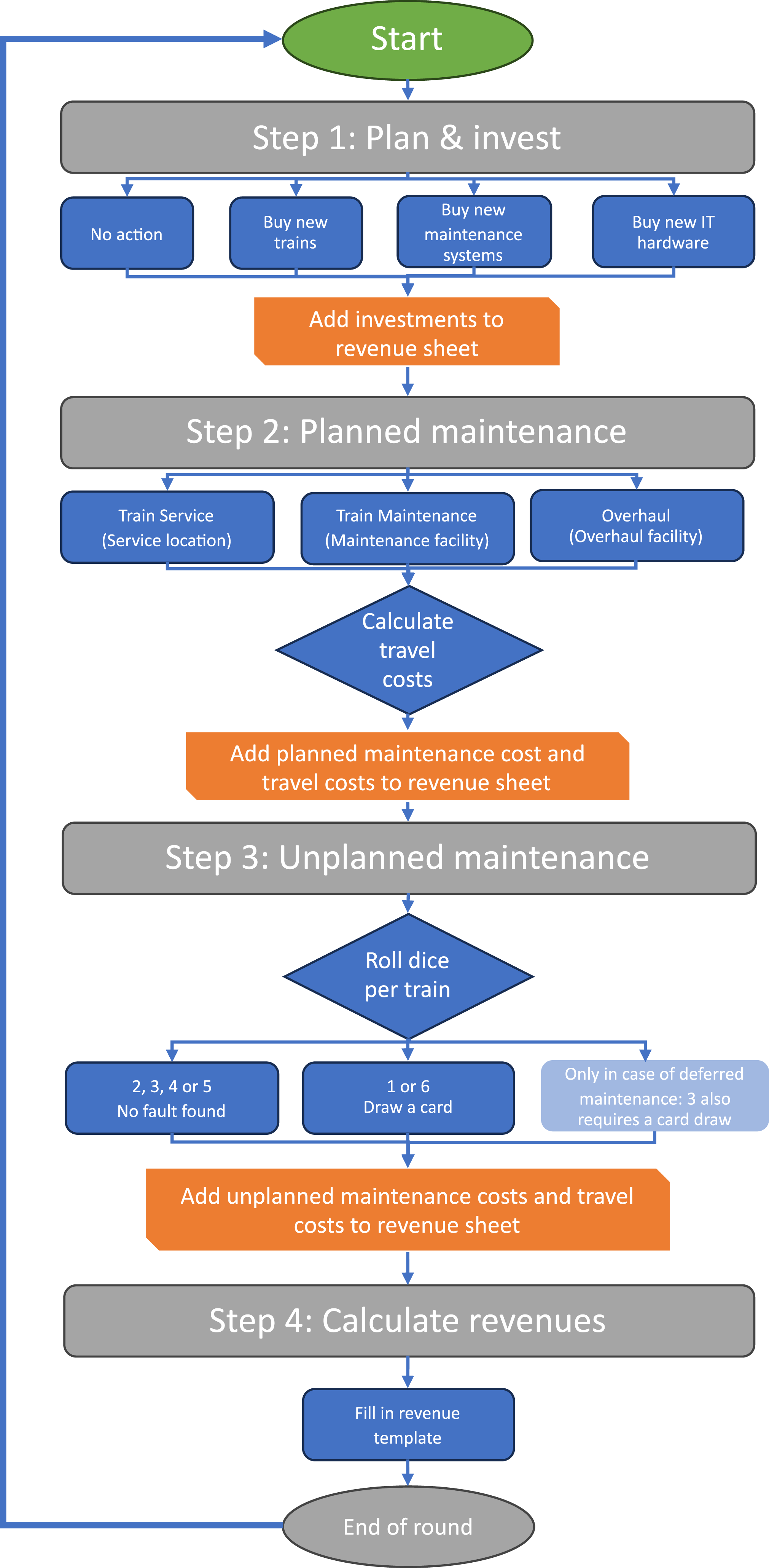
The Game Board
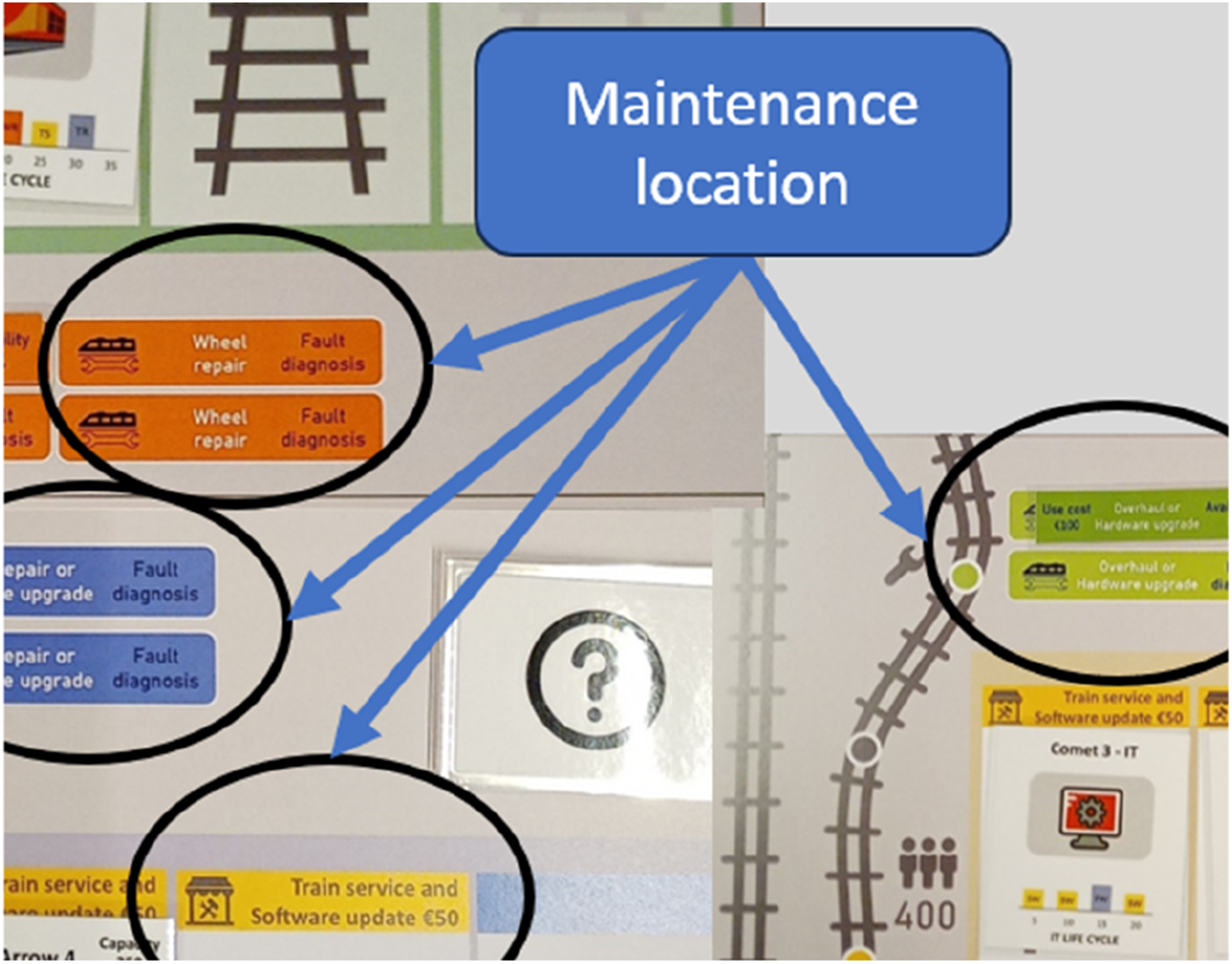
The game board consists of three stations and four maintenance locations, as shown in Figure 5. The stations are named Green, Yellow, and Blue. Maintenance locations are at different points along the tracks and are indicated by a spanner icon. The different types of maintenance locations are train service or software update (yellow), wheel repair (orange), overhaul or hardware upgrade (green), and train repair or firmware update (blue). Players can place train cards on the tracks available at the various stations. These trains transport passengers. Next to each station, the required capacity per round is shown by an icon depicting three people. Game board.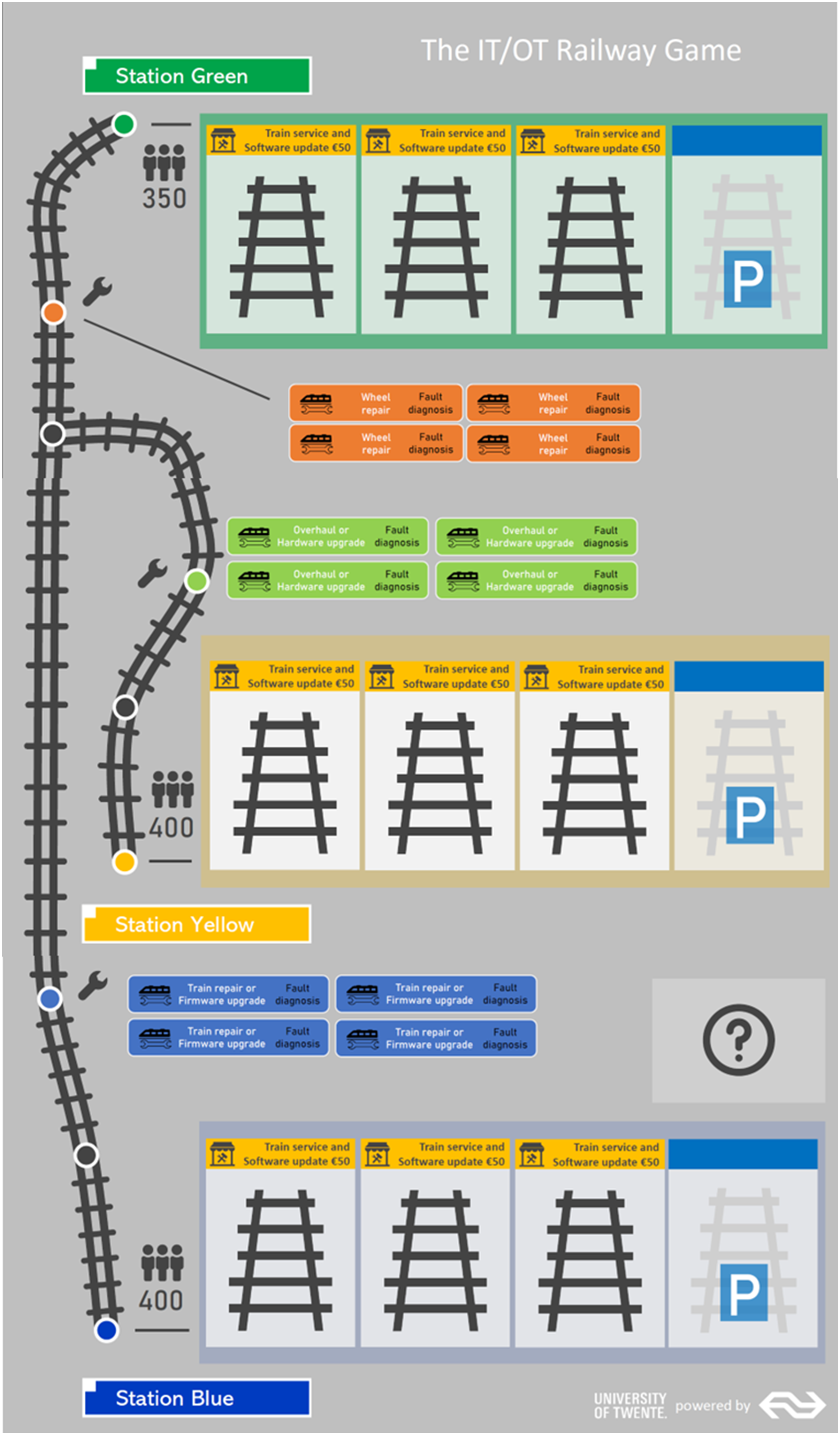
Asset Management Boards
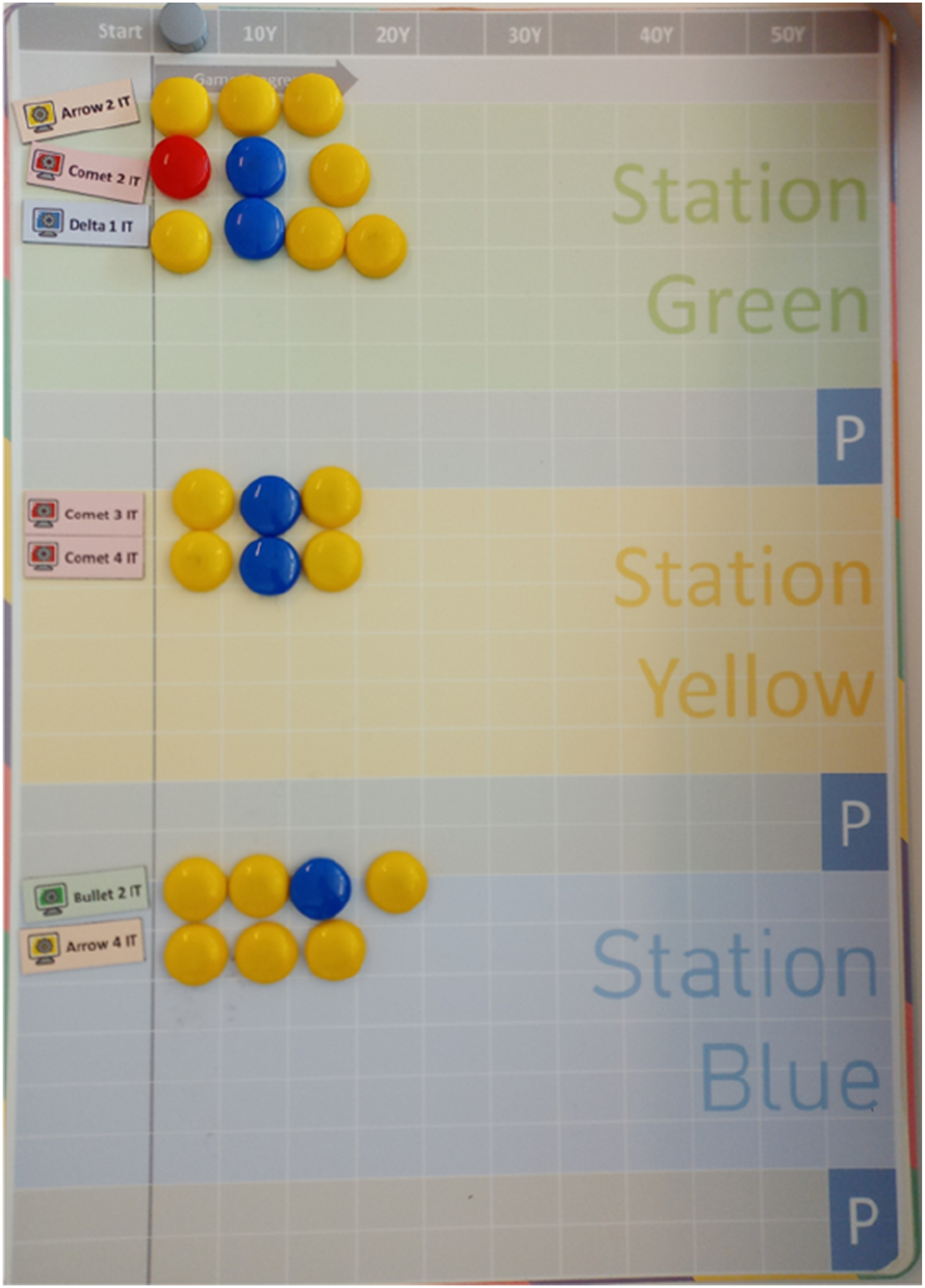
Two asset management boards are available, one for the OT AM (Figure 6) and one for the IT AM (Figure 7). The OT AM board gives an overview of the upcoming maintenance activities of each train type on the game board. Likewise, the IT AM board gives an overview of each train type’s upcoming IT maintenance activities on the game board. OT asset management board. IT asset management board.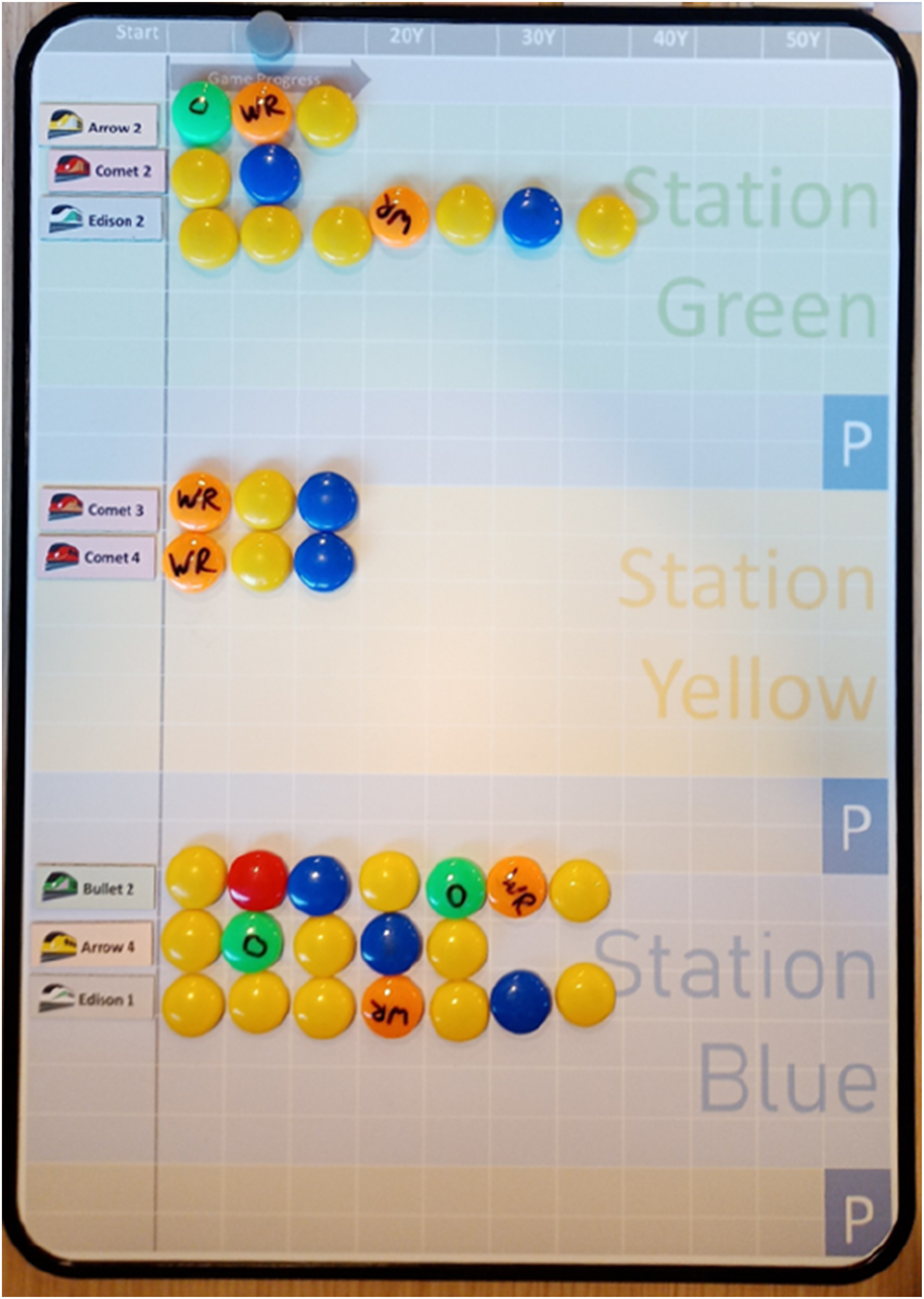
Train Cards
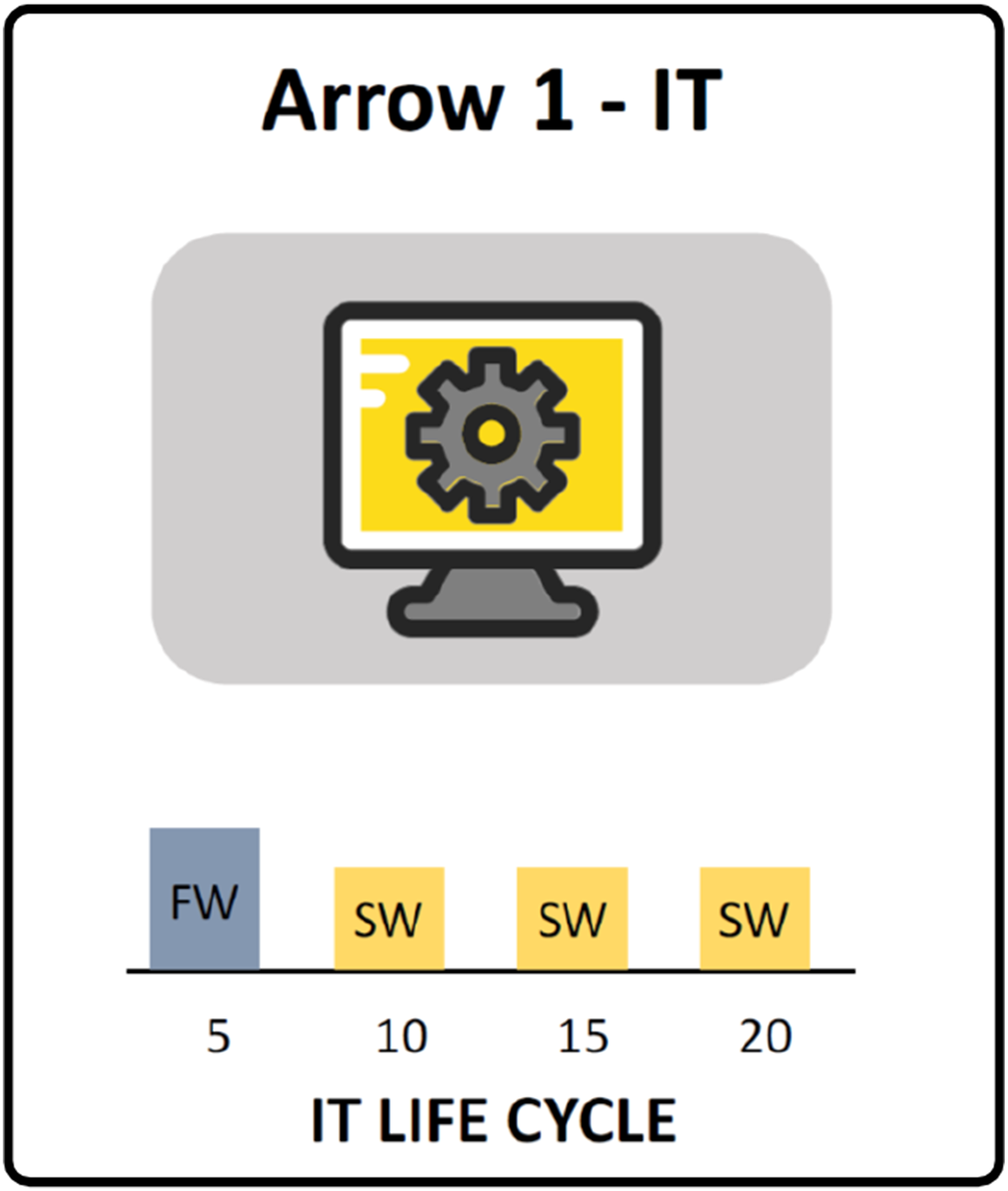
There are 20 different train cards divided into five different subseries. The front of these cards displays the train type’s capacity, lifecycle, and price (Figure 8). On the back, the lifecycles of the corresponding IT systems are described (Figure 9). Train card front, OT lifecycle. Train card back, IT lifecycle.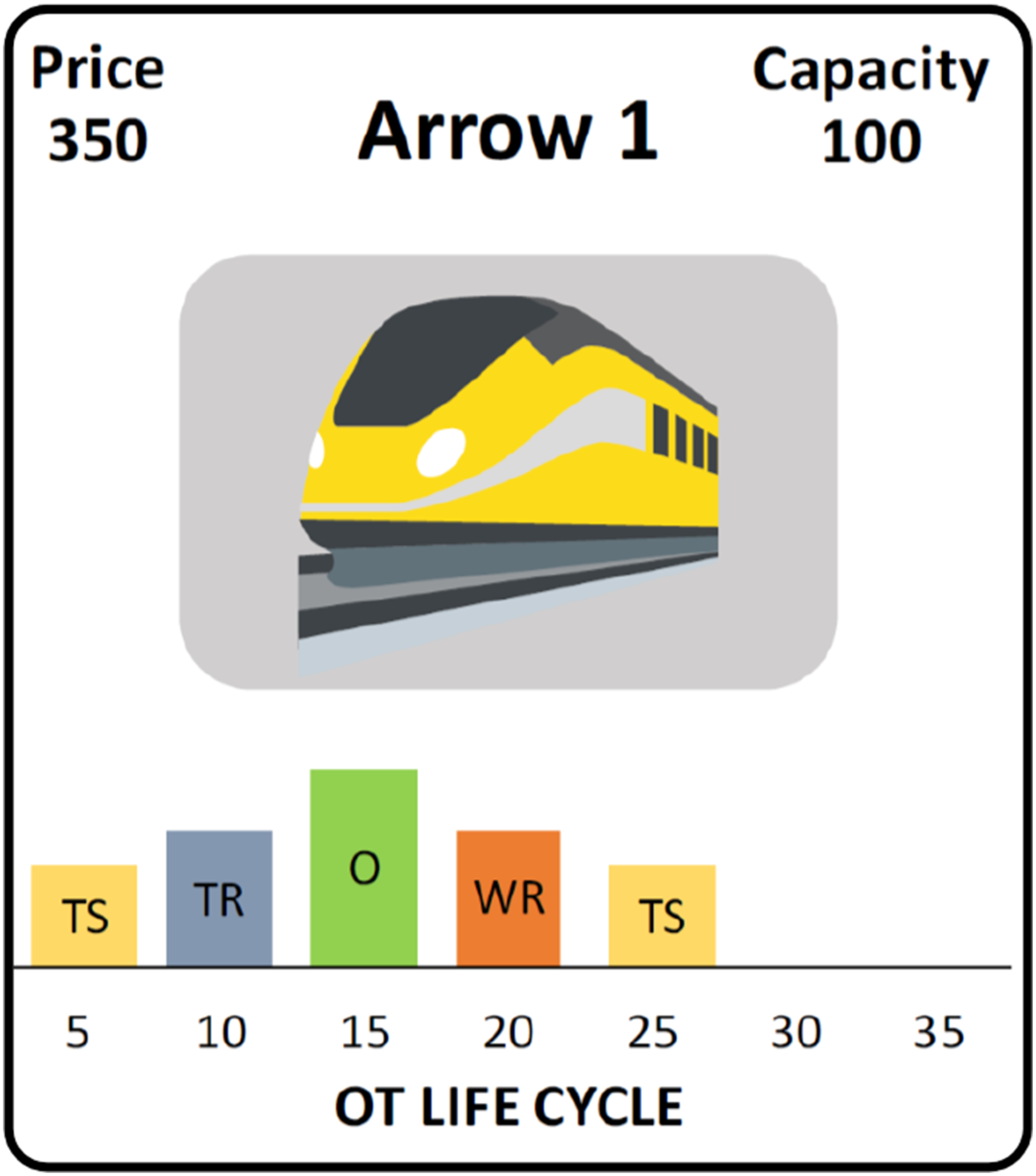
Maintenance Facility Cards
There are four different maintenance locations available (Figure 10). First, it is possible to have the trainsets serviced and the software updated at each station. Second, there are three specific maintenance locations. 1. Wheel maintenance: This involves re-profiling the wheels. 2. Train maintenance and firmware update: Here, regular maintenance of the trainsets can be carried out, and IT firmware can also be updated. 3. Overhaul and hardware upgrade: OT overhaul can be performed here, and IT hardware can be replaced. Maintenance facilities on the game board.
NB. It is also possible to conduct complex fault analysis at these three locations. If new maintenance facilities are needed, they can be purchased from the “New Maintenance Facilities Card”, if available (Figure 11). Overview of new maintenance facilities that can be acquired.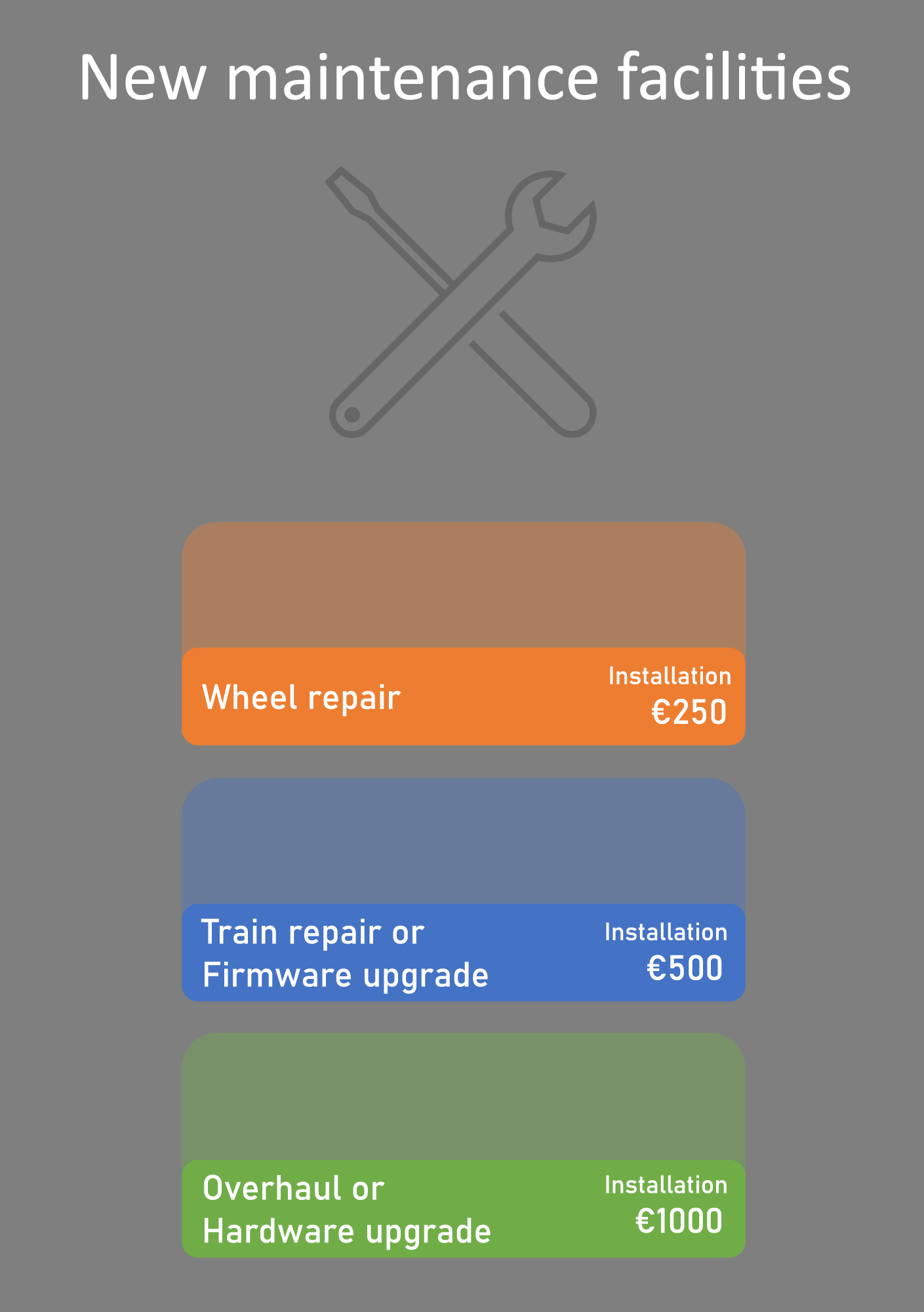
Unplanned Maintenance Cards
There are 12 unplanned maintenance cards available. Four cards relate to IT, four to OT, and four are generic unplanned issues; see Figure 12 for example. Example of an unplanned maintenance card.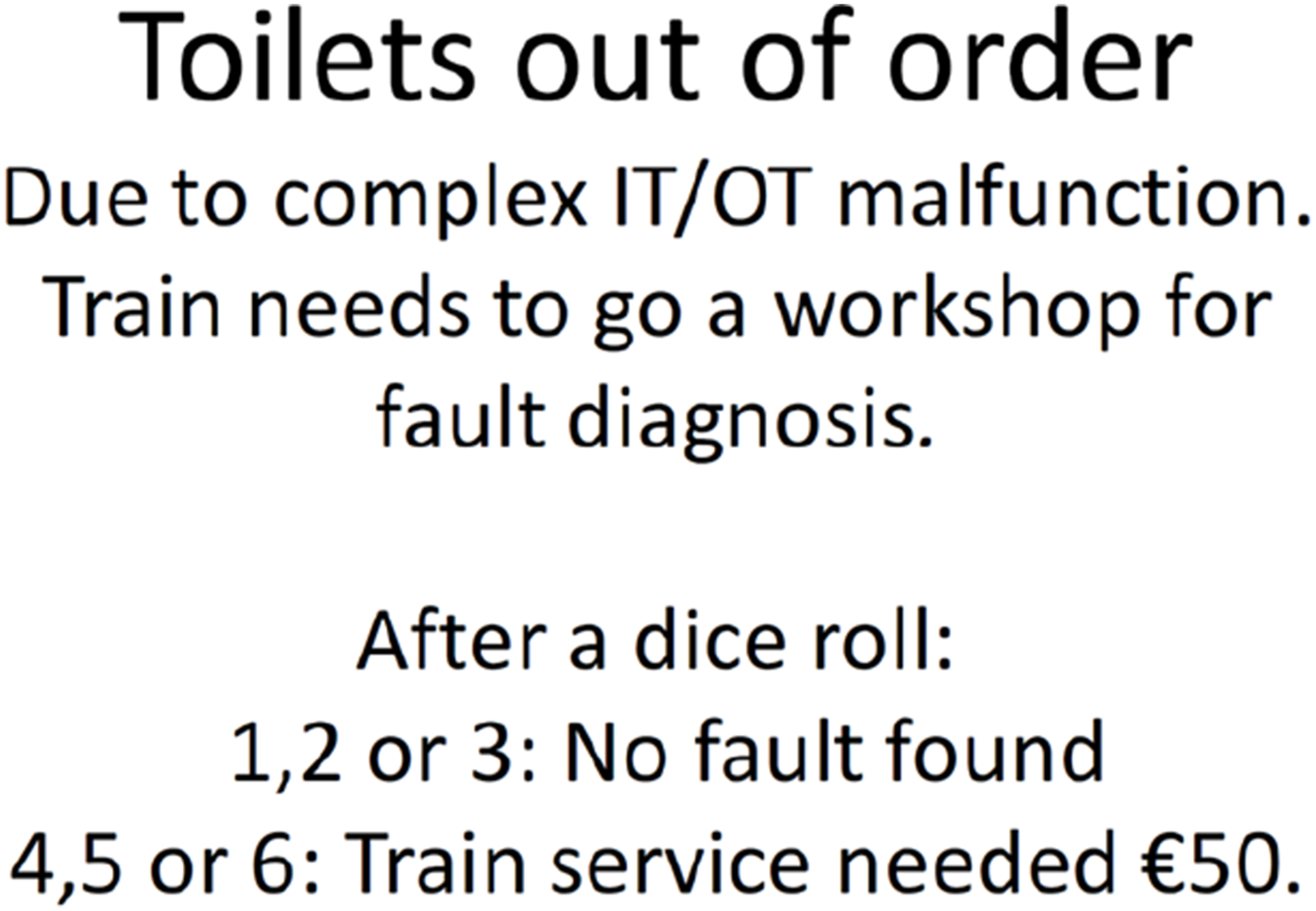
Discussion
This study investigated how the IT/OT Railway Game influenced participants’ understanding of IT/OT lifecycle alignment and their ability to apply these concepts in practice. The outcomes of this study supported the hypothesis that engaging with the game would enhance knowledge and practical application, as participants demonstrated improved mean scores across all questions related to the intended learning outcomes (ILOs). These findings indicate a positive effect of the intervention.
Arnab et al.’s (2015) LM-GM model links learning objectives to game mechanics, ensuring players learn through interaction rather than external content. In the IT/OT Railway Game, mechanics encouraged interaction and helped participants grasp the broader impact of IT integration on managing physical assets. While we simplified some elements for playability, these choices still supported core learning mechanisms and contributed to positive outcomes, showing how LM-GM balances engagement with meaningful learning.
The evaluation of the game followed an iterative approach, combining formative and summative assessments to ensure both playability and learning effectiveness. Formative evaluations, often qualitative, were conducted throughout development to refine game mechanics, playability, and educational content, while the final evaluation used quantitative measures of intended learning outcomes (ILOs). This approach aligns with Olson et al. (2011), who advocate integrating usability, playability, and learning assessments across the development cycle. They emphasise that testing using both qualitative and quantitative methods helps maintain functional balance and optimise educational effectiveness. The continuous feedback loop adopted in this study reflects these principles, contributing to improvements in game mechanics and learning outcomes.
A participatory design approach further strengthened the game’s relevance by involving stakeholders from IT and OT domains as co-designers (Ampatzidou & Gugerell, 2019). While the primary goal was to create an effective learning tool, reflections from the co-design process suggest that co-creation itself offered valuable learning opportunities, enabling deeper engagement with lifecycle alignment concepts.
Limitations and Suggestions for Future Research
While the IT/OT Railway Game showed positive learning outcomes, several design simplifications limit its comparison to real-world IT/OT environments. First, participants were assigned a shared goal, which promoted collaboration but reduced realism, as organisational settings often involve conflicting priorities that influence decision-making. Second, the game allows participants to view each other’s actions (for example, IT and OT managers can view each other’s schedules). While this transparency enhances coordination, it differs from the operational silos typically observed in practice. Third, the game mechanics did not consistently link deferred IT maintenance to system failures. Such maintenance delays are closely associated with increased risk, and this relationship was underrepresented in the simulation.
These design choices reflect Harteveld’s (2011) Triadic Game Design framework, which emphasises a need for balance between reality, meaning, and play in serious games. Simplifications of the IT/OT Railway game improved playability and engagement, strengthening the “play” dimension. The “meaning” dimension remained intact by keeping objectives and mechanics purposeful, relevant, and applicable to participants’ work. However, simplifying complexity and unpredictability in real IT/OT environments reduced the “reality” dimension.
Although the IT/OT Railway Game was developed specifically for the railway sector, the challenges it addresses, such as lifecycle alignment and cross-domain collaboration, are relevant across various industries. Preliminary testing with non-railway professionals and engineering students provided positive feedback, suggesting the game’s potential for broader applicability. Future research should examine the game’s effectiveness in other industrial contexts and academic environments, explore design variations that introduce conflicting objectives and reduced transparency to better simulate organisational dynamics, and finally explore the potential of participatory game design as a dual-purpose tool for both development and learning. Thereby, advancing serious game research and fostering stakeholder engagement.
Conclusion
This study aimed to enhance understanding of IT/OT lifecycle alignment by developing and evaluating the IT/OT Railway Game - a serious game created using Design Science Research Methodology (DSRM) and evaluated using the FEDS framework. A review of 24 asset management and railway games identified a research gap in synchronising the separate IT and OT lifecycles, underscoring the need for a serious game to address this issue. By iteratively refining the game based on playability, game mechanics, and intended learning outcomes (ILOs), the study demonstrated that playing the game improved participants’ knowledge retention and their ability to apply lifecycle alignment concepts in a simulated railway context.
The findings confirm the potential of serious games as practical tools for addressing sociotechnical challenges, such as IT/OT lifecycle alignment. Participatory design not only supported game development but also proved valuable as a learning approach, and while the game targets rail, its principles are transferable to other sectors, suggesting broader applicability.
The limitations include simplified representations of real-world complexity and assumptions about the impact of IT maintenance. Future research should test the game in other sectors and further explore participatory design as a learning strategy.
Overall, this study advances knowledge of serious games in railway and asset management, offering a practical and engaging approach to enhance learning and collaboration in today’s digital environments.
Footnotes
Acknowledgements
We thank all the participants who helped develop and evaluate this game. Additionally, we would like to thank Holland High Tech and NS for their funding of this research. The funders did not influence the writing of this research.
Declaration of Conflicting Interests
Arno Kok is employed by the Nederlandse Spoorwegen (NS).
Funding
Financial support was provided by Nederlandse Spoorwegen (NS) and by Holland High Tech with a PPP surcharge for research and development in the top sector HTSM.
Ethical Considerations
An ethical review was not required for this study as all data were collected anonymously and no identifiable personal information was used. The research was conducted in accordance with relevant institutional guidelines. Informed consent was obtained as described in the dedicated section.
Informed Consent
At the start of each session, the study’s objectives and procedures were explained to participants. At the beginning of each questionnaire, participants were reminded of their voluntary participation in the study. Additionally, explicit informed consent was obtained from each participant at the start of each questionnaire. Although this level of consent was not strictly required, it was implemented to ensure transparency.

Data Availability Statement
Alongside this article, the dataset will be published on the 4TU data storage server (see Kok et al., 2026).