



Abstract
Background
Biodiversity crisis requires researchers to reflect on tools and strategies to engage with different stakeholders. We propose that
Aim
To intervene in the emerging public discussion on BDO in Finland, we designed a land use board game and during the design process, played it with
Method
We analyze how our framings of biodiversity offsetting and our design choices
Results
Game design choices strongly frame the topic of the game and thus influence the function of a serious game. Thus, the framings of the topic should be considered carefully during the game design process, especially in the context of serious games.
Keywords
Background
Serious games as interaction tools
As one of the most pressing problems faced by humanity, the biodiversity crisis requires researchers to reflect on the tools and strategies available to sensitize and engage various stakeholders. Habitat destruction via land use changes has been identified as the main cause of the ongoing biodiversity crisis worldwide (Maxwell et al. 2016; Newbold et al. 2015, 2016). Biodiversity offsetting (BDO) is a relatively new policy tool aiming to reconcile nature conservation with other land uses. BDO means that local losses of biodiversity are compensated by producing or conserving similar habitats elsewhere. BDO has been implemented into policy in different legislative frameworks, for example, in the USA, Australia, and some EU countries, but it is only emerging in countries like Sweden and Finland. We propose that serious games can be designed to introduce stakeholders to a novel environmental policy tool like biodiversity offsetting, and to communicate and discuss research results on environmental problems and their potential solutions.
Land use changes result from choices embedded in complex social networks and power relationships. These involve a wide range of public and private stakeholders in various land use practices, such as nature resource use and management, building and development, and restoration and conservation. BDO as a policy tool aiming to reconcile conservation and other land uses influences and gets influenced by these different multistakeholder practices. We argue that a serious game can be designed to simulate the complexities and challenges of BDO in order to foster discussion on the justifications and implementation of this policy tool among the stakeholders. In the case of an emerging policy like BDO in Finland, it can contribute to understanding a new policy tool. Much like Fabricatore et al. (2020), we think that a serious game designed to take into account the uncertainties, unpredictability, and wickedness of environmental problems can be a good platform for stakeholders to discuss them.
To intervene in the public discussion on BDO emerging in Finland, we designed a board game on biodiversity offsetting and played it with public and private stakeholders expected to encounter and implement BDO as the policy development proceeds in Finland. The aim was to encourage players to think and discuss the topic of the game, connecting the gaming sessions to other group discussion designs with a similar aim (e.g., Marková et al. 2007), such as dialogue workshops (e.g., Cuppen, 2012; Nygren et al., 2017; Tuohimaa et al., 2016). In other words, the game is designed to provide both structure and contents for a discussion among the players (Asplund et al. 2019), similar to workshop discussion tasks and structures. We analyze how the interaction of our design choices and intended framings contribute to the message of the game, which we consider important for the design of SGs.
Serious games, framing, and environmental issues
Serious games (SGs) are games for non-entertainment purposes (Radchuk, Kerbe, and Schmidt 2017) and they provide an arena for social interaction (Ouariachi, Olvera-Lobo, and Gutiérrez-Pérez 2017) in the form of a narrative, feedback mechanisms, rules, and time pressure (Reeves and Read 2009). They also offer possibilities for experiential learning and encounters with strange or new issues (e.g., Dieleman and Huisingh 2006). In addition, SGs can provide a tool for understanding the complexity of environmental issues (Den Haan and Van der Voort 2018; Dieleman and Huisingh 2006; Eisenack 2013; Fjællingsdal and Klöckner 2020; Galeote et al. 2021; Hallinger et al. 2020), including nature conservation (e.g., Moreau, Barnaud, and Mathevet 2019; Page et al. 2016; Redpath et al. 2018), natural resource management (Wesselow and Stoll-Kleemann 2018; Wessels 2016), and land use (Taillandier and Adam 2018).
As all forms of media and communication, games inevitably frame the issues that are portrayed in them (Wicks 2005:342). Frames are a way to understand and analyze the world, to create and communicate meanings and beliefs (Fine 1983; Goffman 1974; Laws and Rein 2003; Rein and Schön 1993; Wagenaar 2011:222–27). Framing refers to the selection of some aspects of a phenomenon and making them salient (Entman 1993:52). Frames are often multiple and overlapping and can even be in conflict with one another. For example, the same forest can be discussed and understood as a group of trees to be cut as timber, as a home for squirrels and birds, as a place to pick mushrooms and as a potential lot of building new houses. Framing and frames influence the world, including decision-making—for example, what gets discussed and how, who can participate in the discussion and whose expertise is relevant (Laws and Rein 2003; Rein and Schön 1993; Wagenaar 2011:222–27). In the case of understanding a forest as a tree stand managed for resource extraction, the framing suggests forest professionals as the experts of the matter. Instead, in the case of a forest presented as a habitat for endangered species, the knowledge of nature conservation experts becomes relevant. This means that frames are also inevitably political—they communicate a certain view to the world and its problems. Certain problem definitions and framings lead to a certain set of possible solutions (Laws and Rein 2003; Rein and Schön 1993; Wagenaar 2011:222–27).
In the case of environmental issues, the way our relationship with nonhuman nature is framed has an impact on how we organize and implement said practices (Pascual et al. 2021). Building on the example above, a game about forest management would convey a different message and framing about forests than a game about endangered forest species. Framings get embedded into the game by different kinds of design choices. For example, Au (2021) reflects on how the board game Pandemic (Leacock 2008) depicts international cooperation of pandemics in the light of the COVID-19 pandemic—the unbalanced roles in the game reflect how “cooperation fails when certain stakeholders are excluded from decision-making and are treated differently based on their unequal access to resources, expertise, and financial means.” (Au 2021:600).
Goffman (1961) used games as an early example for frame analysis. Subsequently, frame analysis has been utilized in understanding the gameplay as social situation (Fine 1983), and in general to make sense of games and play (e.g., Allison et al. 2019; Conway and Trevillian 2015; Mayer, Warmelink, and Zhou 2016; Mortensen 2011; Stenros 2010). However, frame analysis has been much less used to examine game design choices or games as media communicating certain framings. As games communicate meanings and beliefs, and offer an understanding of the world and topic they are depicting and simulating (Booth 2021:146–47), they can also be harnessed to intentionally affect players (Bogost 2007; De La Hera et al. 2021). In games, frames extend from game elements and aesthetics to storyline, characters, mechanics, and rules. Therefore, designing a (serious) game involves constructing meanings, and the designers need to find a shared understanding (i.e., framing) of them during the process (Glock 2003; Kultima and Sandovar 2016). This shared understanding forms the design philosophy (Howell and Stevens 2019)—for example, the framings designers want to communicate to the players—guiding the design process. Consequently, simulating complex phenomena like BDO will always entail simplification and choosing what to include and exclude, and choices regarding how to frame the issue(s) at hand for the desired message. However, as game design is a “second-order design problem” (Salen and Zimmerman 2003:168), designer can only indirectly offer specific experience, as the play emerges from the interaction of the player(s) and the designed system. As such, the message of the game is also affected by the framings the players bring into the play situation, as they decode the message of the designer.
There are also different perceptions of the function of SGs. According to Mayer et al. (2016), they can be seen as tools, innovations, persuasion, or self-organization. The perceived purpose affects the design process, as the designers need to negotiate their design values (Kultima and Sandovar 2016; see also: Flanagan, Nissenbaum, and Belman 2007). This happens, for example, by balancing between good playability and meticulous simulation. In any case, the design process of a SG involves intentional “message framing” (Smith and Petty 1996), when designers implement the frames they want to convey to the players into the game.
There are several approaches for persuading the players, depending on how rigidly the game design forces the desired message to the players (Antle et al. 2014). “Procedural rhetorics” (Bogost 2007) refers to the way the game dynamics make rhetorical claims about the real world processes (Mayer et al. 2016), and analyzing them can contribute to understanding, for example, how to influence behavioral changes (Coulton 2015). Persuasion strategies in games have been further categorized as game-centric, player-centric, or content-centric (de la Hera Conde-Pumpido 2017).
Intervention—Kompensaatiopeli offsetting game
Offsetting Game Project
BDO itself contains ideas about the relationship between humans and the nonhuman nature, for example, about the fungibility of biodiversity values. Fungibility in BDO means, for example, that the destruction of 10 hectars of forest is allowed, if an equal or bigger amount of similar forest is planted, protected, or restored elsewhere. The concept of BDO can be framed in different ways—for instance as a necessary tool in biodiversity crisis to compensate losses (Moilanen and Kotiaho 2018), as a neoliberal encroachment to our relationship with nonhuman nature (Apostolopoulou and Adams 2017), or as competition for land resources and a market in the game developed by Bull and Strange (2017).
The aim of the Offsetting Game Project (2018–2021) was to present and simulate BDO through a tabletop game that inspires group discussion and reflection. We wanted to design a game grounded in research on BDO and conservation conflicts. It was targeted for Finnish stakeholders involved in land use planning, conservation, and use of natural resources such as planners, developers, and NGOs. They did not have much practical experience on BDO yet since the preparation of BDO legislation in Finland had only been started, and our aim was to introduce BDO to them through this game.
The game offers framings of BDO for the players to play with and consequently intervenes in the public discussion of BDO. As we wanted the game to inspire players to think and discuss certain issues while playing the game, especially in the post-game debriefing session (see Crookall 2010), it falls into the “serious games as persuasion” category in the framework of Mayer et al. (2016). The final version of the game was published and printed in 2021 and it can be downloaded for free from the project website (https://projects.tuni.fi/offsetting-game/).
We based our project on original research on conservation conflicts and biodiversity offsetting in Finland and France (Author 3 2020; Author 1 2013; 2015; 2018; 2020) as well as research by many others. Our starting points were the views and research results that BDO often does not live up to its promise of “no net loss of biodiversity” and is ridden with uncertainties (Bekessy et al. 2010; Bull and Brownlie 2017; Gardner et al. 2013; Gordon et al. 2015; Griffiths et al. 2019; Maron et al. 2012, 2018; Tregidga 2013). The process of creating a game about BDO research forced us to think of offsetting as a system organizing the relationships between different stakeholders and nonhuman nature and to think how to communicate key elements of this system to the players (Akmal and Coulton 2019).
The game development followed iterative game design process during which we tested different versions of the game prototype with other researchers, students, and stakeholders (e.g., Fullerton 2014; Mildner and Mueller 2016). We used participatory design approach (Spinuzzi 2005), which allowed us to utilize early on the topic expertise of the key stakeholders, who were also the target audience of the game. As suggested by Ampatzidou and Gugerell (2019), we used different types of testers for distinctive purposes in order to get the most out of the participatory design process (see Lanezki, Siemer, and Wehkamp 2020). Environmental scientists and other topic experts were used to peer review the presented scientific content throughout the design process (Illingworth and Wake 2019). Testing with our main target audience—the Finnish stakeholders in land use planners, conservation, and development—allowed us to reflect how they received our framings of the topic and to get an early user feedback on the game design (see Mildner and Mueller 2016). In addition, these sessions helped in building their ownership towards the game, which is one of the key benefits of participatory design (Ampatzidou and Gugerell 2019; Tuohimaa et al. 2016). Playing with board game hobbyists, who were familiar with a variety of board games and, to some extent, game design principles, we were able to get expert feedback on playability issues of the game.
After creating the first fully playable game prototype, we played it with stakeholders in Finland (20 sessions with forestry teachers, municipal forest managers, citizens, three different groups of land use planners in three sessions (in two municipalities, in one region, and in one private company), citizens, regional environmental authorities, real estate developers, researchers, gamers in a gaming café, a mining company, a regional landowner association, and a conservation NGO) and in France (10 sessions with an environmental NGO, a land use planning agency, a construction company, local residents, ecologists, consultants working with offsetting projects, and regional administration). Sessions were facilitated by one or two researchers who explained the goals and rules of the game. Sessions lasted between 2 and 3.5 hours with a 20- to 45-minute debriefing session at the end. After each session, we asked players about their experience: how did the game feel, how realistic it was, what was enjoyable about it, and what were the main messages learned in the play session. Feedback discussions varied a bit depending on the test group (see Ampatzidou and Gugerell 2019) and provided us information of the most interesting and important issues for various stakeholders, which was considered in the future iterations. Thus their roles also varied between informants and testers (Lanezki et al. 2020), but every group gave us valuable access to different perspectives and experiences on the implementation of BDO and on conservation conflicts.
Between each Finnish session, we reflected on how to improve the game and usually tested the updated version of the game in the following game session (in addition to internal testing in between sessions). Drawing on tester experiences and feedback, we made some modifications to the design, such as introducing new mechanics (e.g., mitigation hierarchy) and new player actions to make their game experience more realistic and engaging. Some mechanics were left out, as they either seemed unnecessarily complicated or did not add value to the player experience. Game sessions and feedback were recorded and partly transcribed and analyzed conjointly by the authors. Due to the clarity and space constraint, it is not possible to report the full analysis of the test sessions in this article. Furthermore, we feel that it is important to first discuss how we framed BDO during the design process, to be able to consider to which extent the target audience received the intended framings, and how the game as designed, in addition to their background and other contextual issues, might have affected their framing of the topic.
Brief description of “Kompensaatiopeli” offsetting game
The game is intended for four or six players divided in two factions. The game “board” is made of a 5 × 5 set of nature tiles drawn from a pool of 55 tiles (see Image 1). Tiles represent four different nature types: forest, meadow, water and wetland, and polluted land. Twenty five of the 55 tiles are species tiles that depict altogether 20 different endangered species, chosen among species in real life offsetting and conservation conflicts in Finland and France. The setup of Kompensaatiopeli offsetting game, with 5 × 5 nature tiles set in the middle. Photo by Jonne Renvall.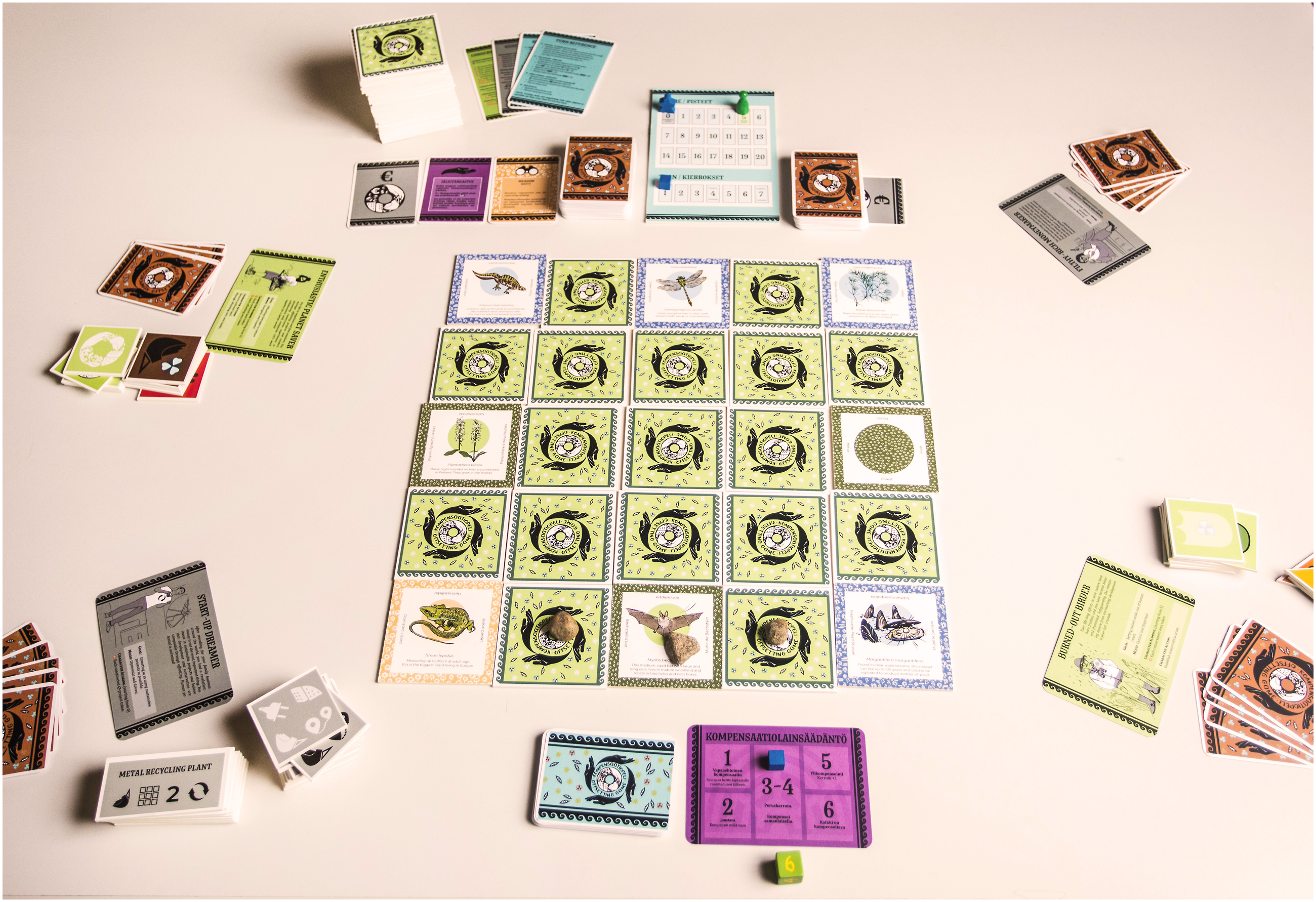
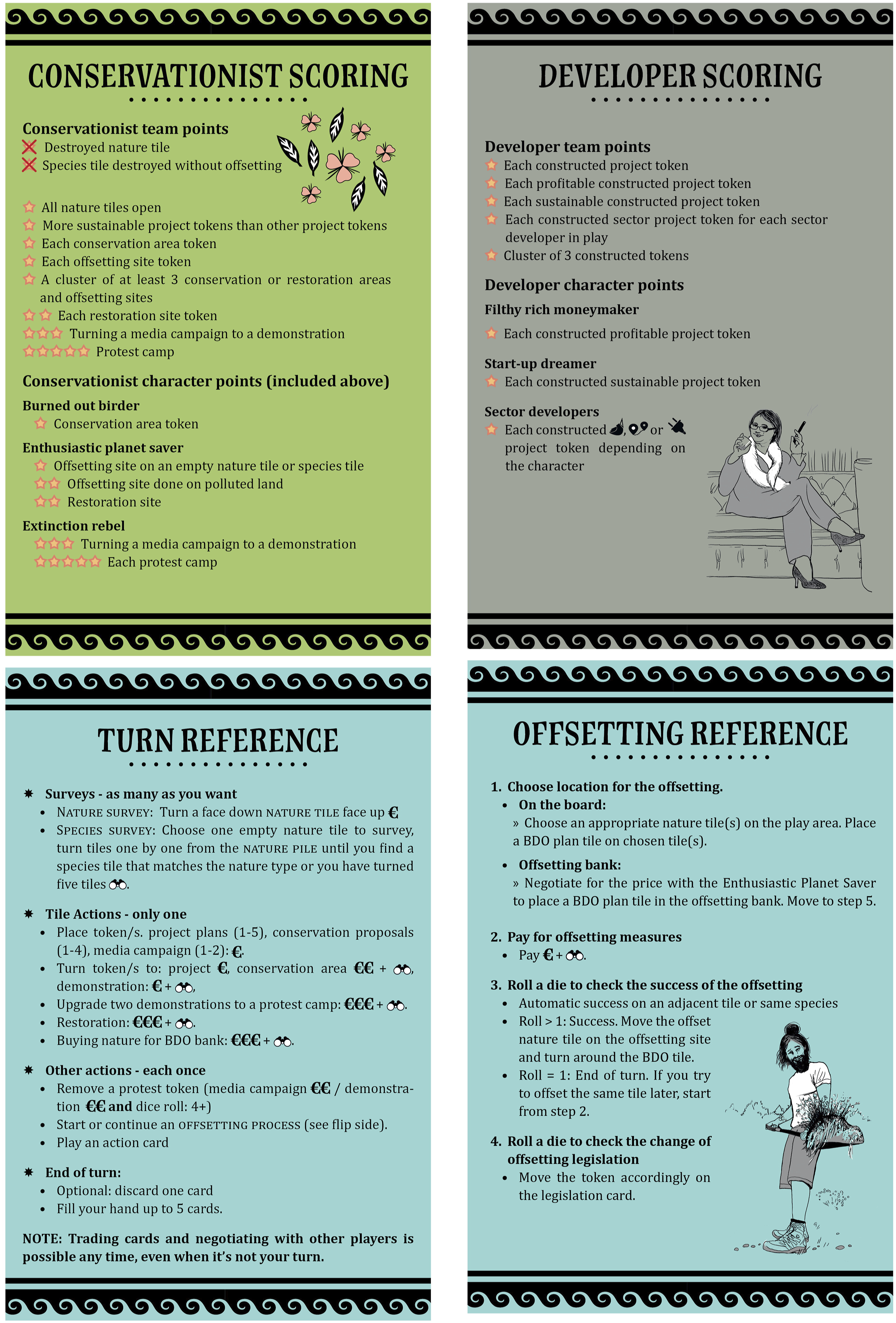
Each player chooses one role from two opposing factions (“teams”). There are six developer roles and three conservationist roles to choose from, with four key roles that are always in the game (see Appendix 1 in attachments). The number of developer and conservationist players should always be equal. The game proceeds in turns (see Image 2) and is played by using hand cards to pay for actions (see Image 3), some of which are only available to specific roles or factions. Hand is replenished after each turn. Two-sided reference cards: Scoring of both teams and turn reference and offsetting reference. Examples of player hand cards. From the top left: Back of the hand card, two action cards: change of legislation and Oops, Resource card. Knowledge cards: water and wetlands, forest, meadow, and holistic knowledge card that can be used as any type of knowledge.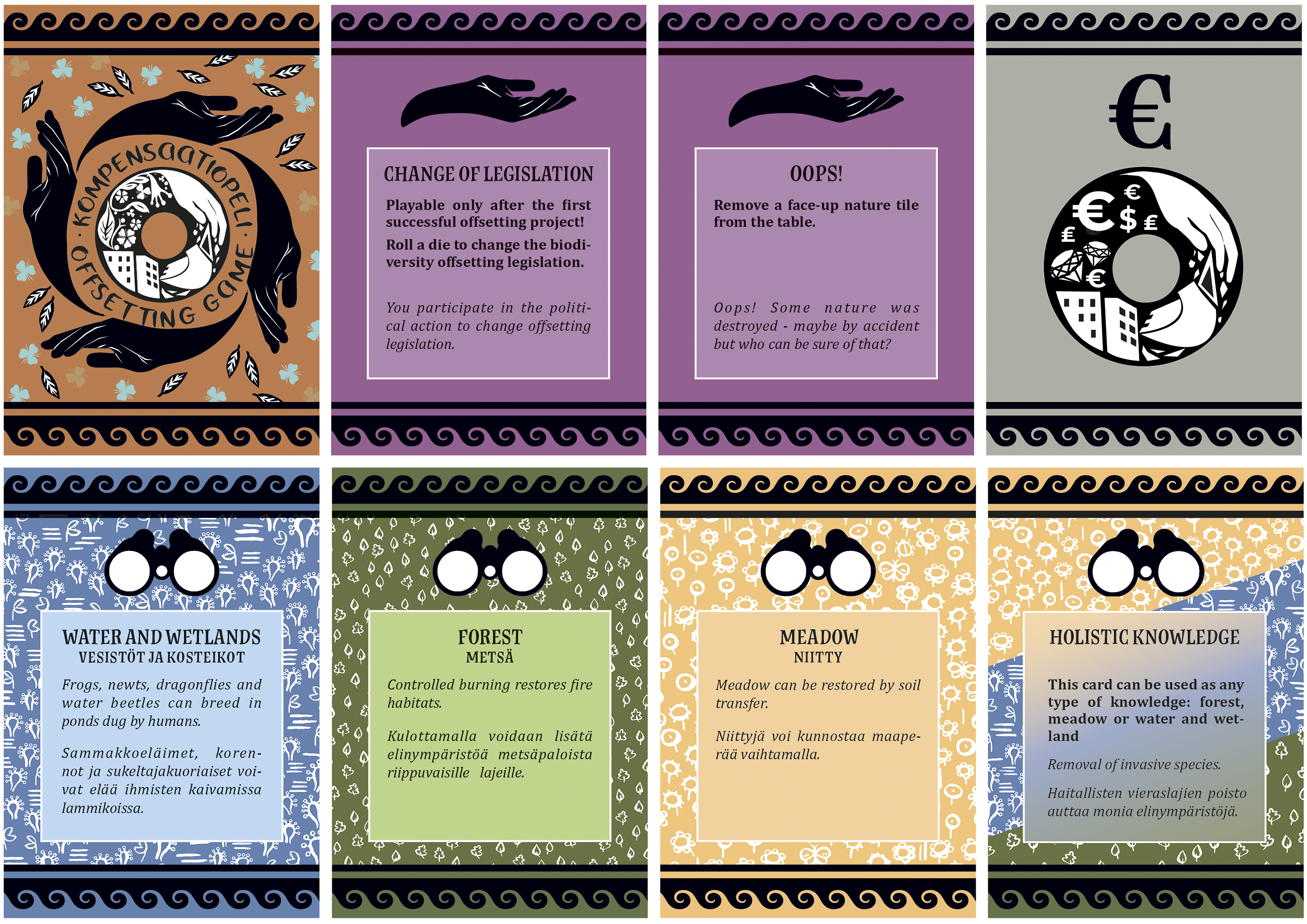
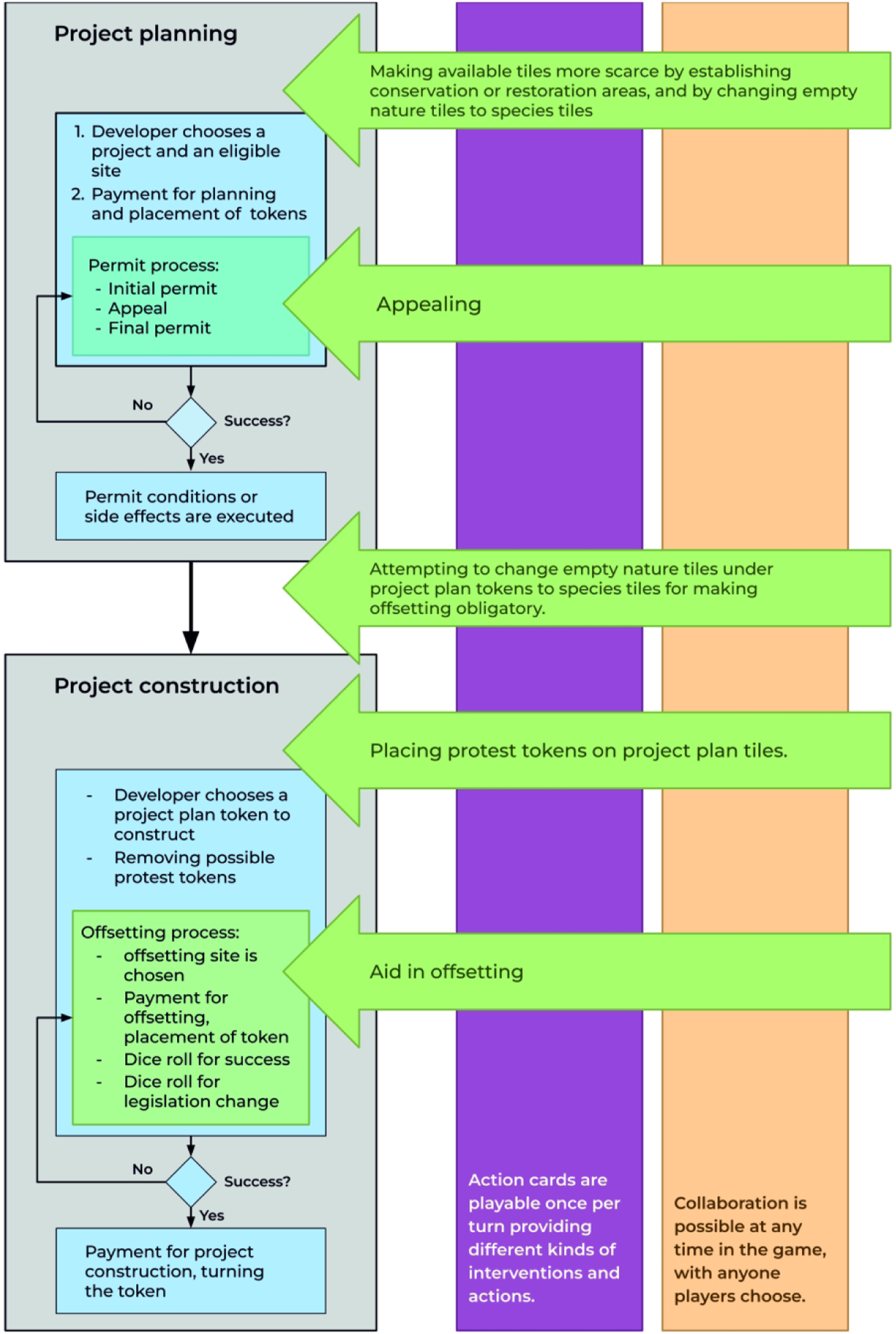
The two factions have asymmetric goals that award the players—and their respective faction—points. The aim of the developers is to replace nature tiles with constructed project tokens (e.g., airport, wind power park, and ecological housing). Conservationists instead aim to protect nature tiles by slowing projects down with their actions. They attempt to establish “conservation areas” on nature tiles, turn polluted land into “restoration areas,” place “protest” tokens on project plans, and replace “empty” nature tiles with species tiles since species need to be offset, becoming costly for developers in their construction projects. See Figure 1 for a conceptual presentation of offsetting in the game and Figure 2 for a conceptual overview of the game flow. Top figure presents the mitigation hierarchy of biodiversity offsetting, adapting from a figure type widely used to describe BDO ( see, e.g., IUCN 2016). Bottom figure describes key game design elements in connection to the mitigation hierarchy. The flowchart represents how the game design frames the relationship between development and conservation actions. Planning and construction of development projects (including permit and offsetting processes) by developers form the core process in the game design (gray flow on the left), while the conservationists make different interventions (green arrows), attempting to slow down development. Action cards (purple box) can be played and collaboration (yellow box) happens in many instances, influencing the game flow.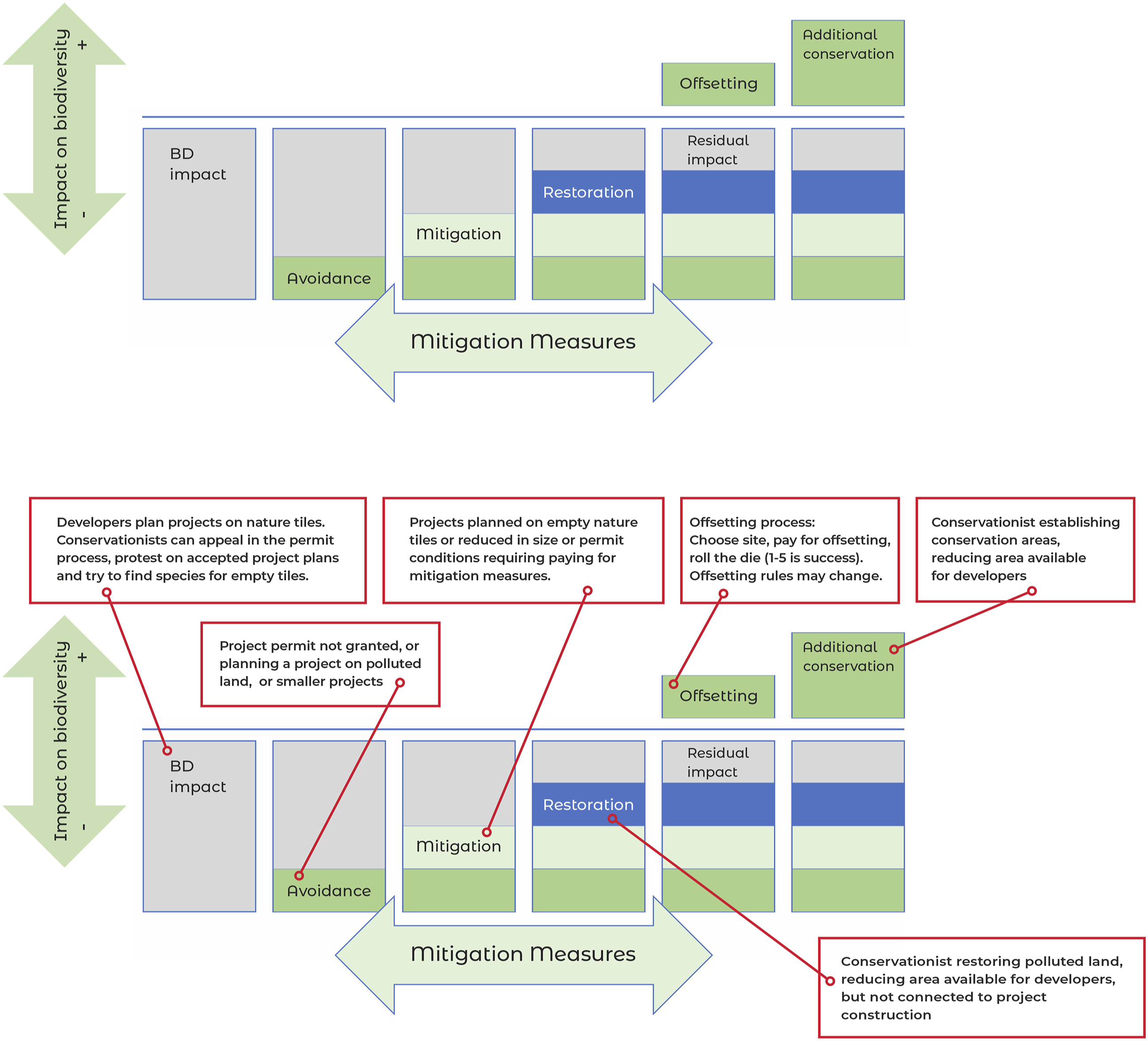
At the end of the game, developers score points from each placed project token, while conservationists get points from conservation area, restoration, offsetting, and protest tokens. The game ends after four (six players) or seven (four players) rounds, and the faction with more points is the winner. If the players desire, the personal points collected by specific players can also be calculated.
Analysis
Framings and design choices
The aim of our analysis is to examine how we translated our framings of BDO into specific design solutions intended to communicate desired messages to the players. We want to contribute to analyzing how framing of the topic of a game is interconnected with the design of SGs. We further highlight the importance of explicit discussion of values and framings during the design process (cf. Steen and van de Poel 2012). Open discussion helps avoid value conflicts (Kultima and Sandovar 2016) and contesting framings that easily occur in multidisciplinary design teams and can obfuscate the design goal and hinder the design process, thus affecting the quality of the game as designed. We build on Howell and Stevens (2019), by describing how our design philosophy affects the game as designed, through the design choices we made. We propose that to be able to analyze the interplay between the game and the players—especially the framings the players make based on the game—a careful analysis of the offered framings and design choices supporting them is needed. Our research question is: How were our framings about BDO translated into game design choices of the Offsetting game?
While designing “Kompensaatiopeli,” we explicitly paid attention to how to frame our subject topic, biodiversity offsetting. As proposed by Steen & Van de Poel (2012), we discussed at length about our own intended values that we wanted the players to experience while interacting with the game.Both our own research on the matter and the stakeholder game test sessions influenced our ideas on how to simulate and frame BDO, which elements, societal actors, and processes to include and exclude in the game and how. For example, some stakeholders expected a game that would teach the technically correct steps in a BDO process, but we did not want to present BDO as an unproblematic, technical process. We present the much used conceptual figure of offsetting, overlaying our design choices on it, in Figure 1.
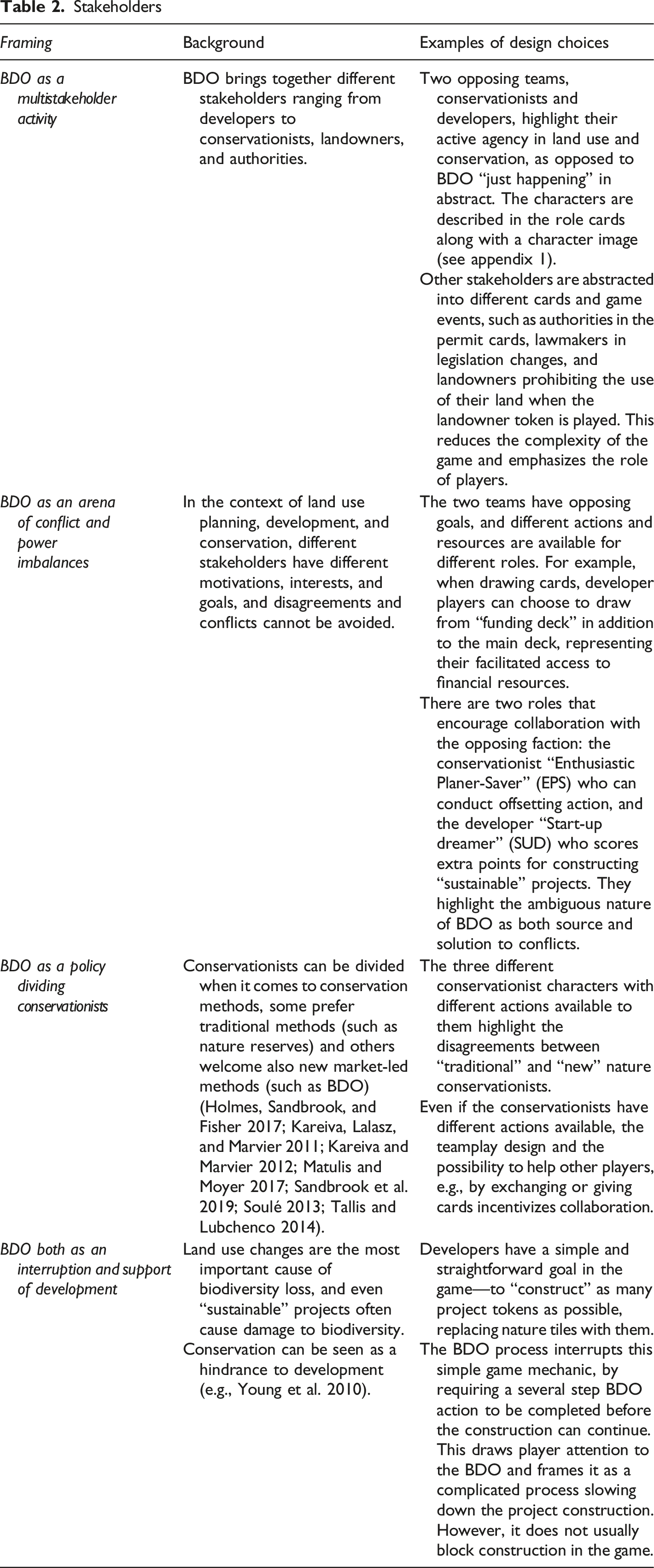
We chose to frame BDO in the game as a complex, uncertain, and disputed policy tool and practice, embedded in the relationships and power structures of land use planning, development projects, and nature conservation. This meant that we decided to also simulate the context in which BDO is implemented—the development and planning processes and their power imbalances. In the analysis we present the most important framings we wanted to communicate with the game and analyze how they have affected our design choices. We present our analysis and results in the form of 3 tables, describing the intended framing, its background, and examples of design choices made based on these framings.
Framing BDO as an illusory solution
Framing BDO as an illusory solution
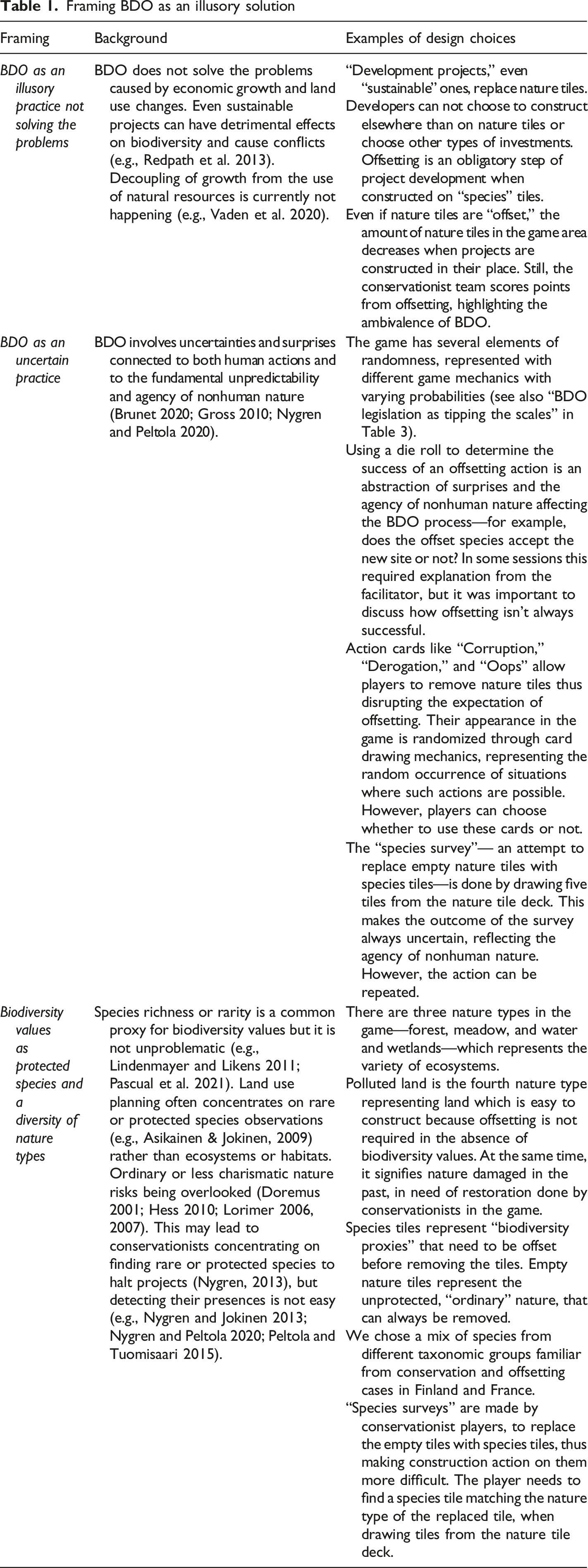
We wanted every game session to contain an offsetting process at least once, therefore avoiding biodiversity damage completely in the game while still constructing projects is not possible. Through meticulous playtesting and iteration, the design imposes the developers to construct on “species tiles” (that require offsetting) sooner or later. Moreover, the implicated background, known by many stakeholders in the target group and in our gaming sessions, was that constructing on protected species habitat was difficult and contested without offsetting and required a derogation, following the EU conservation legislation (see, e.g., Beunen 2006; Beunen and Duineveld 2010). By introducing BDO in such a situation, offsetting can enable development on land that was previously mostly off limits. The game design also presents offsetting as an improvement in the face of inevitable development projects destroying biodiversity. Consequently, we framed development as inevitable and offsetting as an additional obstacle to project construction, requiring more time and resources. From design perspective, this framing means that the ratio of “empty” nature tiles (not requiring BDO) and the ones that contain protected species has been balanced in a way it is rarely possible to build a project without needing to offset at least once. In addition, we designed conservationists as unable to halt development and only able to slow it down.
The game always ends with more nature tiles converted into constructed project tiles than when starting it even if BDO has taken place. We translated the uncertainties related to BDO as a precarious BDO process, depending on the availability of suitable hand cards and the result of a die roll. With specific cards, like “Oops” action card (see Image 2), players can even destroy nature tiles without offsetting them. We also chose to represent biodiversity values in the form of protected, often charismatic species on colorful nature tiles (see Image 1). Conservationists attempt to “find” species that require offsetting by turning tiles from a pile of unused tiles to replace the empty nature tiles on the game board.
BDO as a multistakeholder activity
As we wanted to frame BDO as an activity involving diverse stakeholders with multiple interests and goals, the game emphasizes their actions and interactions. Therefore, the players get to play the roles of key stakeholders. However, we simplified the stakeholders into two factions (“teams”), similarly as both Moreau et al.(2019) and Page et. Al (2016) used in their simulation games on conflicts over conservation, management, and the use of land and natural resources.
Stakeholders
Normative goals of BDO
BDO is based on certain normative goals and ideals which we translated into the game design in different ways. It was not possible to include all of the technical stages and details of BDO (see, e.g., Moilanen and Kotiaho 2018) for a comprehensive view), but we chose the most important ones—mitigation hierarchy and no net loss of biodiversity (NNL). Our design choices with these normative goals follow our general framing of BDO as a complicated and uncertain tool that often fails to fulfill its own core principles.
Mitigation hierarchy is perhaps the most important principle in BDO—impacts to biodiversity should first be avoided, then mitigated, and only then offset (see, e.g., IUCN 2016). It was challenging to implement this principle in the game design—the hierarchy prescribes that offsetting should be the last resort, yet offsetting should not happen too rare in an offsetting game. For players playing a developer character, BDO gets framed as a complicated and costly phase inside the game, which encourages developer players to avoid it—either by not constructing on species tiles (following the mitigation hierarchy goal of avoiding damage) or by circumventing offsetting obligations (highlighting the uncertainties of BDO).
Normative goals of BDO
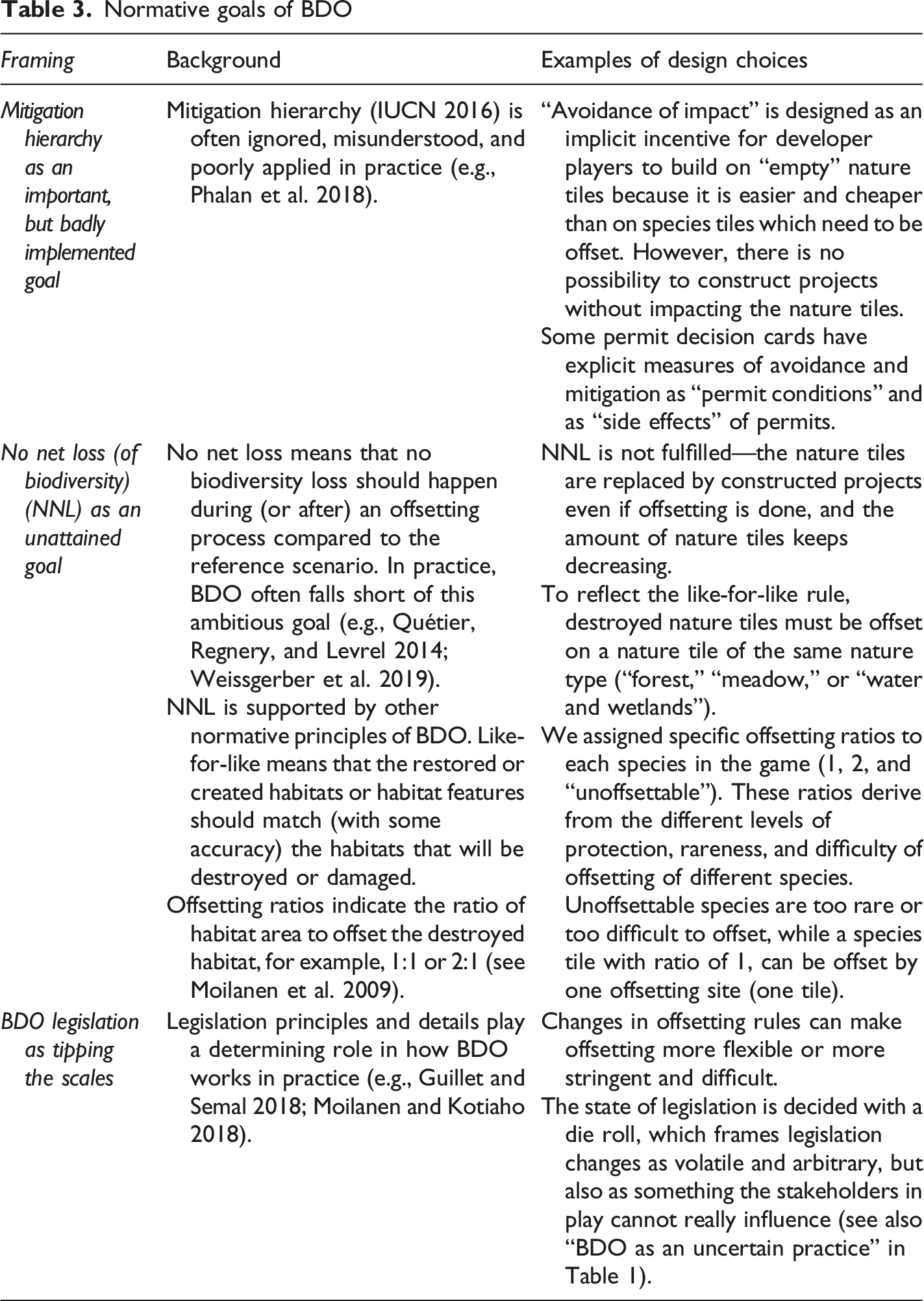
Moreover, we wanted to highlight how small changes in the rules of offsetting tip the scales between constructing and conservation in the game. There is a possibility to change the offsetting rules by a die roll, making the rules more flexible or more stringent.
Discussion and conclusions—interaction between frames and design choices
As our analysis about embedding BDO framings in the game design shows, there are many different game design choices that affect the framing of the message of the game, and they range from game aesthetics to core rules. The framings can also be multiple and overlapping. For example, we chose to present the key game characters strongly embedded in a system with power imbalances and divided them into two opposing factions. This choice offers less freedom to the players for interpreting their roles and it allows less space for them to make meaningful decisions during play, thus framing stakeholders as bound by their pre-established goals. On one hand, it might give a too rigid framing of the possibilities of stakeholders, but on the other hand, we wanted to avoid players getting a too optimistic understanding of the possibilities to reconcile development and conservation, and of the outcomes of BDO. This example illustrates the interaction between framings and design choices: an intentional framing (development vs conservation) influenced the design choices (e.g., roles with limited actions), which in turn created a framing of stakeholders trapped by their goals and a set of actions. Another example of interaction is the design choice to simplify the complicated politics of legislation changes into a die roll which frames legislation changes as random and thus out of the sphere of influence of the stakeholders.
Such choices also reflect how the game design values need to be negotiated during the design process (Flanagan et al. 2007; Kultima and Sandovar 2016). We had to discuss the framing of BDO many times over in the design team, and sometimes we had to make choices between realistic simulation and good game design (a contested matter in itself), reflecting also on the conflicting understandings of the purpose of our game (Mayer et al. 2016; Wu and Dunkel 2019) and our differing disciplinary backgrounds (environmental policy and game studies). In many cases, we had to first negotiate our framings on the topic, or the design process, in order to decide which elements of BDO were central to our message and for the purpose of the game. Key elements—like the BDO process—were emphasized with more detailed and engaging mechanics, while those framed as less central were simplified or excluded. Although the imbalance and interconnectedness between some mechanics can be further framed as a metaphor for incompatible elements of BDO, it must be said that some playability issues originate from the shortcomings of the design process and could have been solved with more game testing and better allocation of resources.
The amount of randomness and the way it is represented through different game mechanics was discussed at length during the design process. It was a deliberate choice to have several random elements to frame BDO as an uncertain process. They highlight the incoherence and the complexity of the network of actors and processes surrounding BDO, and the differences in probabilities. Whereas die rolls always have the same probability, for the card/tile drawing probabilities change dynamically as the game progresses making it more probable that a certain card/tile appears. This highlights how the stakeholders have more agency in some activities, like nature surveys, while other things, like the success of BDO, decided by the final die roll (1 is failure), do not only depend on the resources used but also on the agency of the target species. Thus, as the focus of the game is on the agency (and the lack of) of human stakeholders, the failure aspect was greatly abstracted. We acknowledge that for the players, the subtle variance in probabilities might not become apparent during the play, but it can be used as a basis for reflection in post-game debriefing discussion (see Crookall 2010).
One of our design goals was to highlight the power differences when conservationists try to oppose developers who have more monetary resources. However, random elements have limited effect on the progress of the game, and we made sure by playtesting that the message of the game does not suffer from the random elements. Casual mechanics, like dice rolling, also received positive feedback during the test sessions with the target audience—stirring up lots of excitement, laughter, and frustration. They also offered an approachable element for the players who were less familiar with board games. Furthermore, discussing (apparent) randomness and the lack of agency in BDO process are some of the topics we wanted the players to experience while playing, and to reflect on during the post-game debriefing sessions. It was also noted during the test sessions, that reflecting and discussing the in-game decisions did not typically happen during the play. This varied from session to session, but for many of our testers, the cognitive burden of learning to play and focusing on the goals of the game did not leave room for reflecting the serious content, BDO, and the conflict between conservation and development. Reflecting the game events with real world events and experiences seemed to be easier for players who had more experience on playing board games, or who retained more analytical approach to playing. Thus, we put more focus on the post-game debriefing, which is crucial for any serious game, and where most of the deeper learning happens in any case (Crookall 2010).
Our analysis shows that designing a simulation game entails choices that are political, and their effects should always be carefully and consciously considered especially when designing serious games. Moreover, we propose that especially serious games simulating environmental problems and their solutions should pay attention to what kind of understanding of the societal context and framing of the problem they are offering to the players. These framings should also be tested how players interact with them. In a future publication, we will discuss how stakeholders and other players engaged and contested our framing and introduced their own framings when playing during the test sessions.
Footnotes
Acknowledgments
Game illustrations were made by artist, illustrator Julia Prusi. The game design team consisted of the authors of the article, and the steering committee members were Dr. Taru Peltola, Dr Karoliina Lummaa, Dr. Toni Lahtinen, Dr. Jarmo Saarikivi and Dr. Heta Heiskanen. We would like to thank Koneen Säätiö, and STUE at the Tampere University for funding and support. Thank you for all the stakeholders, students, collagues, and board game hobbyists who participated in developing the game.
Declaration of Conflicting Interests
The author(s) declared no potential conflicts of interest with respect to the research, authorship, and/or publication of this article.
Funding
The author(s) disclosed receipt of the following financial support for the research, authorship, and/or publication of this article: This work was funded by Koneen Säätiö. Work of Ville Kankainen was also supported by the Academy of Finland project Centre of Excellence in Game Culture Studies (CoE-GameCult, 312395).

The role list table as an appendix 1.
Role
Aim in the game
Fluff text
Developers
Filthy rich money maker
Constructing profitable projects.
You have fought long and hard to gain your fortune, and now you can reap the benefits from the most lucrative projects. You know how to betray, lie and deceive. Some hippies and little flowers are not going to prevent you from getting what you desire the most: more money!
Start-up dreamer
Constructing sustainable projects.
After travelling for your family business around the world, you had a revelation: money is not the most important thing. You invest in sustainable projects and believe that development and conservation are compatible through offsetting. Human potential is unlimited!
Mobile opportunist
Constructing mobility projects.
In your former position as the minister of transport, you dismantled the state monopolies and are now harvesting the results as an investor in mobility services. The people and the goods are on the move, no anarchists or protected species can stop the circulation of capital!
Cynical materialist
Constructing material projects.
Growing up as a factory worker, you unexpectedly inherited lucrative shares in the mining industry. You are now ruling an empire in the materials business that your ungrateful, lazy children can’t wait to inherit. Did someone say nature? There is nothing more natural than what is buried in the ground!
Energetic Futurist
Constructing energy projects.
You became rich by selling your patent of revolutionary carbon capturing technology to fossil fuel giants. You think humankind should leave the problems of planet earth behind and harvest the extraordinary powers of technology! By investing in lucrative energy projects you will accumulate enough resources to realize these dreams!
Real estate millionaire
Constructing real estate projects.
You are the most successful real estate investor in the country. You know how to charm people, organize cocktail parties and fake a smile. Living the high life is much more rewarding than worrying about weeds and mosquitoes.
Conservationists
Burned Out Birder
Protecting nature from development and setting up conservation areas.
Your life-long efforts to save nature have been fruitless and you have become bitter and frustrated. Safeguarding the remaining nature from encroaching development is your last crusade.
Extinction Rebel
Protecting nature from capitalism and setting up media campaigns/demonstrations/protest camps.
Capitalism and economic growth have fucked up the planet, and sustainable development and offsetting are just avatars of the same dying system. This has to stop! You know how to attract public attention and mobilize people.
Enthusiastic Planet Saver
Reconciling nature conservation and economic development. Conducting ecological restoration and offsetting.
You like to negotiate and find solutions. You manage offsetting projects and conduct pioneering conservation experiments in collaboration with companies. Let’s work together for a better world!