



Abstract
Background
This paper contributes to the ongoing work of the ISAGA Special Interest Group (SIG) on Game Science, coordinated by em. prof. Jan H.G. Klabbers since its initiation in October 2021. It builds on the themes explored during the ISAGA Symposium ‘On the Architecture of Game Science’ (Simulation & Gaming, 49(3), June 2018). In this article, we further develop the scientific foundations of Game Science by advancing the understanding of the facilitator’s role through a systems-theoretical intervention framework.
Method
Considering the continuum from rule-based to open games, we present systems theory to enlighten the role and function of the facilitator. First we explain on the role of Argyris’ learning levels, and then apply Ashby’s Law of requisite variety to offer guidelines on when, with what, and how to intervene from an adaptive systems perspective. Additionally, we illustrate how Beer’s Viable Systems Model provides facilitators with an adaptive analytical tool for defining when, how, with what and where to support learning.
Outcome
This paper scientifically supports the role and function of the facilitator by conceptualizing facilitation along the continuum of rule-based, hybrid, and open games, enhancing learning across this spectrum.
Conclusions
This framework offers a scientific foundation for facilitators to decide when, how, with what to intervene, while providing clear guidance for their role in enhancing learning across different types of games.
Keywords
Introduction
Gaming and simulation have traditionally been a facilitation-driven activity. From the start of the scientific assessment of the field, loosely defined as the start of the ISAGA community in the early 1970s, the facilitating role has been an integrated part of the description of the method (Kriz, 2025). In the current literature the main focus has been on the role of the facilitator to improve the reliability of gaming and simulation, particularly as a training and learning instrument (Kikkawa et al., 2025; Leigh et al., 2021; De Wijse-van Heeswijk and Leigh, 2022), but also as a research instrument (Duke and Geurts, 2004; Van Den Hoogen et al., 2015).
In this article, we contribute to the theoretical underpinning of the facilitator role and function in terms of the science level, meaning the scientific philosophy that justifies the activity as a form of situated knowledge generation, because games provide an environment that is suitable to generate knowledge in action and knowledge on action (Klabbers, 2000, 2009). We believe the role and function of the facilitator can be professionalized and enhanced using various insights from the angle of systems theory. Our aim is to provide a science-level generic structure to the facilitation literature. We address facilitation of games in general, and more particularly elaborate the functions of the facilitator within game systems. As previously explored in our publications on game science (Meijer et al., forthcoming Wintersim 25), we argue that game science functions as a scientific system oriented meta-discipline, providing the foundational structure that supports various fields of study. Systems, though present in all scientific disciplines, are interpreted and applied in distinct ways depending on the knowledge domain. By framing the facilitator’s role within a systems-level perspective, we can assert that their core functions—guiding interaction, fostering engagement, and ensuring coherence—are not only relevant but essential across diverse areas where games serve as a tool, from education to psychology, and beyond.
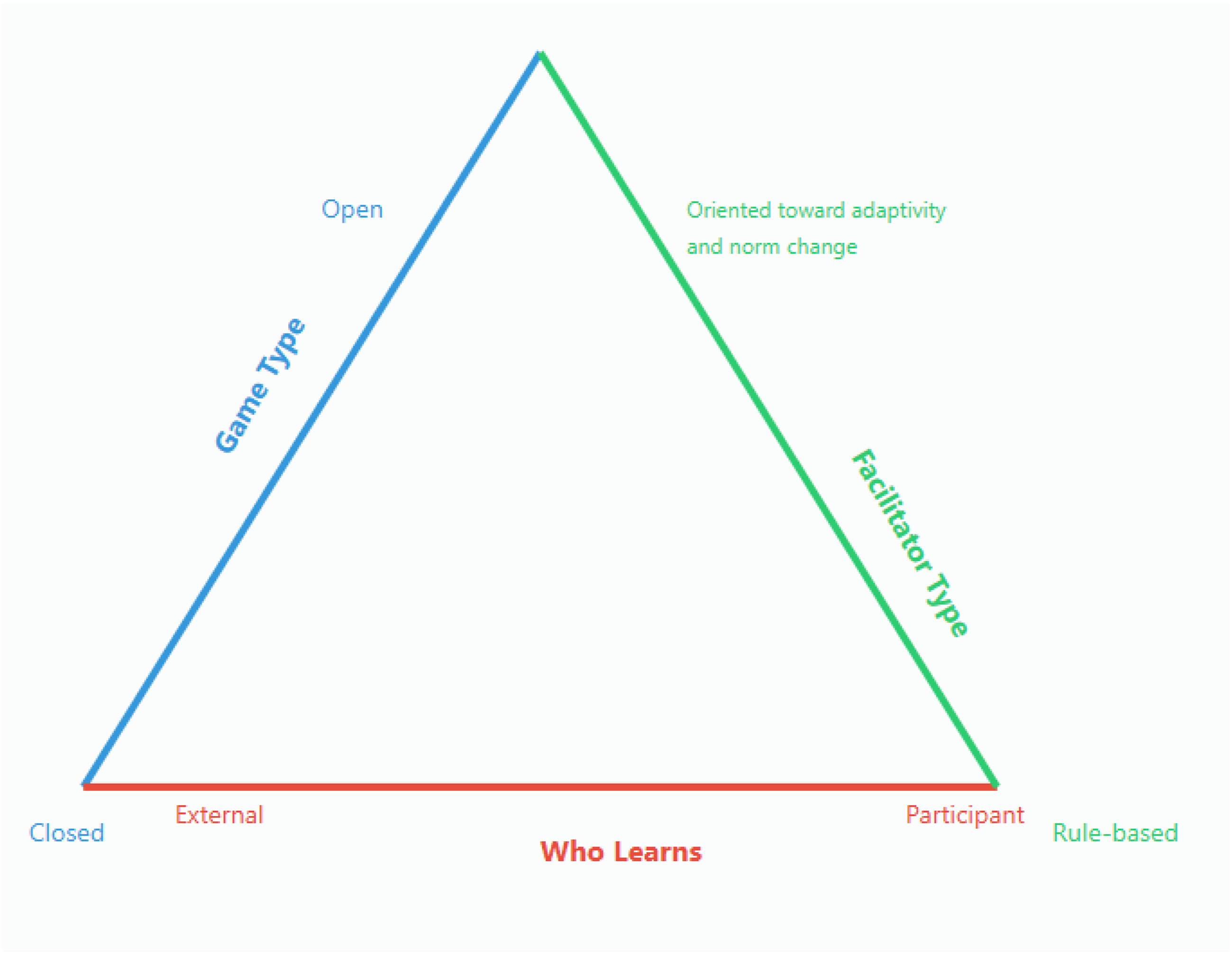
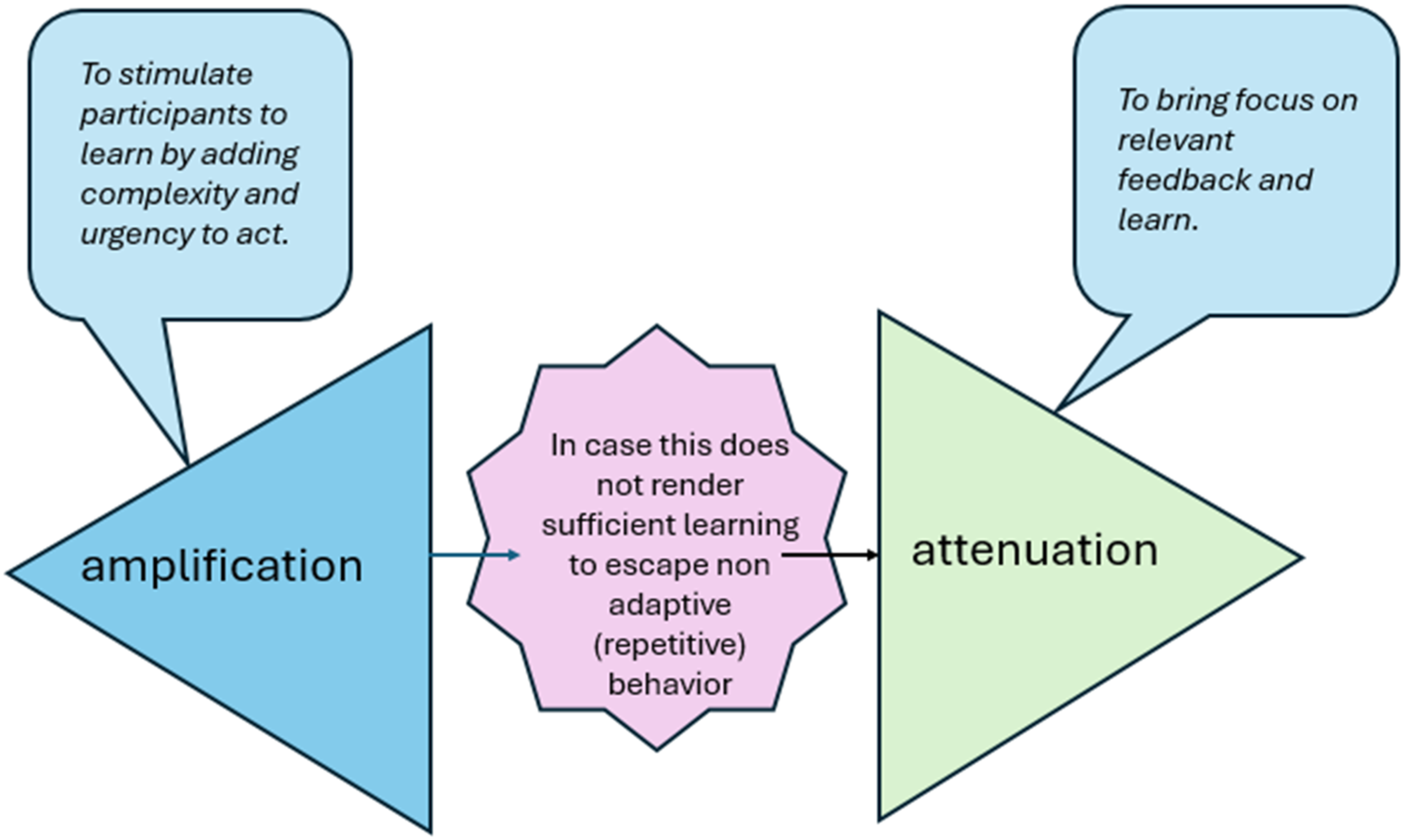
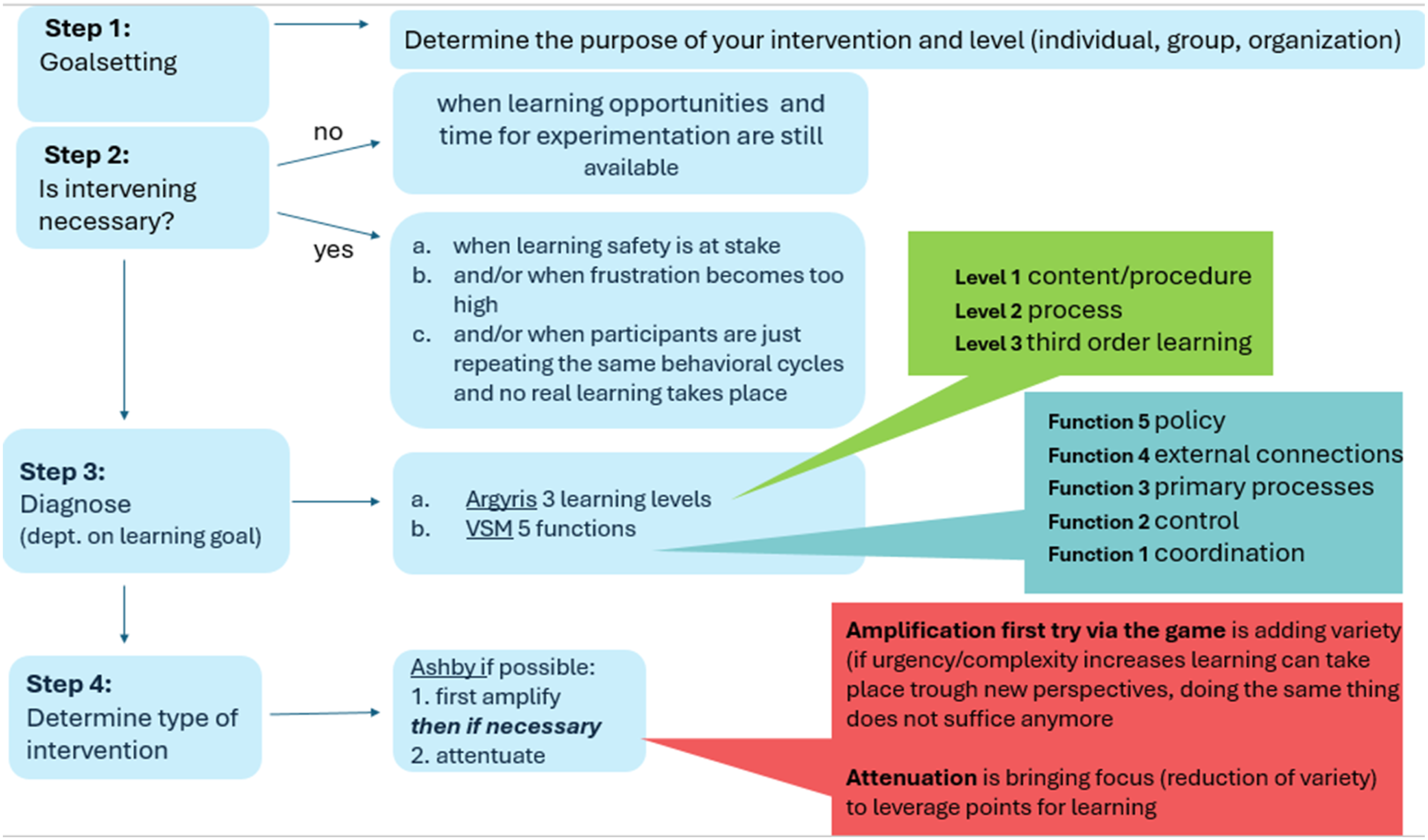
This article proposes a stepwise conceptual framework to support facilitators in navigating the complexity of learning in and from games. The framework evolves through four stages, each grounded in systems theory and learning theory. From a structural understanding of game types (Figure 1, a continuum of games), to three dimensions of facilitation (Figure 2), to intervention strategies (Figure 3, applying attenuation and amplification in facilitation), and finally to the integration of the levels of learning of Argyris, the Viable System Model and Ashby’s regulation principles into a practical facilitation model (Figure 4: Adaptive Facilitation Framework). This cumulative structure aims to integrate theory and practice into a usable facilitation design approach. Continuum of game types. Three dimensions of facilitation. Applying attenuation and amplification in facilitation. Adaptive facilitation framework: Integrating Argyris, VSM and Ashby’s regulation principles.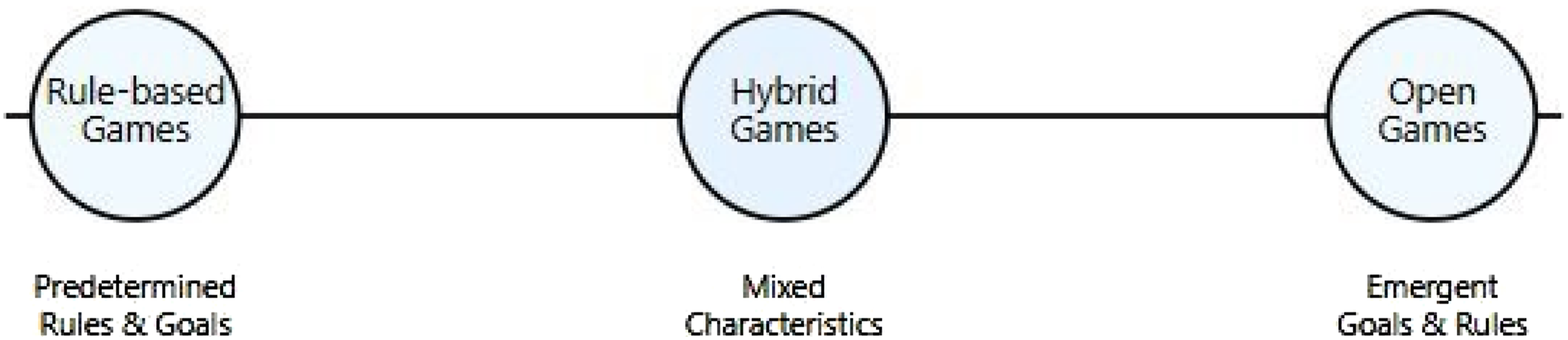
Meaningful Play and the Role of Facilitation: Navigating the Rule–Open Game Continuum
Facilitation in gaming should align closely with the game’s internal structure and logic. Understanding this connection requires clarifying the ontological and epistemological assumptions of different game types (Klabbers, 2009). Facilitation varies across the continuum from rule-based to open games. Rule-based games follow a normative feedback model grounded in a rationalistic worldview, where truth is knowable and embedded in norms, procedures, or models (Nakayama, 2022; Samsura et al., 2013). Open games, by contrast, generate feedback through participant interaction. These games typically start with a broad scenario and a few initial constraints—such as roles or situational context—but leave space for the rules, goals, and dynamics to evolve during play (Klabbers, 2009). In open games, learning and meaning emerge through exploration, role negotiation, and reflexive interaction, rather than through predefined pathways or outcomes. All games are temporary social systems in which the expectancies and interactions of players together with roles, rules and resources generate an internal socio-technical structure.
Most games fall somewhere between these two extremes. Between these extremes lie hybrid games, which contain both structured elements and spaces for participant-driven exploration. These hybrids often require facilitators to adaptively shift between directive and open-ended facilitation styles. In all game types, regardless of their appearance, we can identify actors, rules, and resources (Klabbers, 2009). Actors take on roles defined by the game’s structure, which sets boundaries for action and interaction. Rules can enable or constrain behavior and often carry symbolic meaning—such as the relation between game currency and real-world money. A chess game is fully rule-based, but many simulations incorporate both fixed and emergent elements. Rule-based games are often allopoietic—serving externally defined goals. Open games are autopoietic, meaning they enable participants to define goals and generate meaning collaboratively (Klabbers, 2009).
Because of this complexity, games can foster valuable learning—both for participants and observers (Lukosch et al., 2018). They provide rich, realistic environments that mirror social behavior and offer adaptive feedback (Crookall, 2010; Klabbers, 2009). By enabling experimentation, reflection, and adaptation, games support deep learning grounded in situated experience. They function as socio-technical systems (Bekebrede et al., 2015; Raghothama, 2017), where the interplay between structure, roles, and resources simulates real-world complexity (Kikkawa et al., 2022, 2025). As abstract representations of reality (Kriz, 2022), games allow participants to explore systemic behavior and dynamics. Facilitators help players navigate this balance between structure and openness, guiding learning through complexity (De Wijse-van Heeswijk, 2023; Leigh et al., 2021; van Laere et al., 2021). In addition, “A major goal of the designer (and facilitator) is to set the right conditions for meaningful play, and to improve the players’ ability to identify the underlying structure of the issue: to read the “story” so to say (Klabbers, 2018, p. 357). The continuum between open and rule-based games can be traced back to the influential classification proposed by Caillois (2001) (original work 1958), who, building on earlier work such as Huizinga’s Homo Ludens (2008) (originally published 1938), was among the first to systematically distinguish between paidia (spontaneous, unstructured play) and ludus (rule-based, goal-oriented play).
The facilitator’s role, actions, and skills vary according to the type of game. In rule-based games with predefined learning objectives and structured gameplay, facilitators guide participants through established procedures, ensuring rules are followed and learning goals are achieved (Klabbers, 2009). In open or free-form games, where participants define their own goals and strategies, the facilitator supports navigation through ambiguity and complexity, fosters reflection, and helps participants connect game dynamics to real-world contexts.
Because of these different demands, facilitators must adapt their approach—ranging from structured guidance to participant-driven reflection (Leigh, 2003; De Wijse-van Heeswijk and Leigh, 2022). In all game formats, facilitation typically involves multiple phases: briefing and introduction, in-game support, and a debriefing phase to reflect on the experience and transfer insights to real-world applications (Kikkawa et al., 2025; Kriz, 2010).
Research on both analogue and digital games confirms the facilitator’s significant influence on learning outcomes. Studies show that learning is enhanced when facilitators use questioning and tailored interventions—collectively referred to as facilitation design—to prompt critical thinking and reflection (Alf et al., 2023; De Wijse-van Heeswijk, 2023; Nakamura, 2021; Van Laere et al., 2021; de Wijse-van Heeswijk et al., 2025).
Furthermore, games are not limited to analogue formats. What defines them is not their medium but their structure and the realism of human interaction within the system. Whether analogue, digital, hybrid, or AI-supported, games that embed meaningful roles, rules, and resources—and engage participants in reflective action—fall within the scope of this framework. Digital and AI-driven formats can connect to games as we conceptualize them here because given these can support realism, interactivity, and feedback, as long as they preserve the socio-technical nature of learning through simulation.
Theoretical Foundations for Facilitating Games: Insights From Systems Theory and Cybernetics
In this paragraph, we outline the theoretical foundations of our framework. Our aim is to develop a scientific model for understanding the role of facilitators in supporting learning in both rule-based and open games based on systems theory. Systems theory is a scientific approach that studies how systems function across different domains, focusing on feedback, interconnections, and emergent properties (Ashby, 1956; Bertalanffy, 1969; Klabbers, 2009). In later sections, we refer to selected systems concepts that help further clarify how facilitators can support learning in these complex environments. Games can be seen as bounded systems, often referred to as the “magic circle,” which encapsulates the structure and dynamics of the game while linking them to real-world systems (Klabbers, 2009; Salen et al., 2004).
Argyris’ levels of learning (1977, 2002), Ashby’s Law of Requisite Variety (1956) and Beer’s Viable System Model (VSM) (1984, 1995) offer complementary perspectives on dealing with complexity. Argyris explains how learning is related to systems. Ashby (1956) argues that a system must have sufficient adaptive possibilities to match the complexity of the environment. In facilitation, this suggests that a facilitator should be as flexible and responsive as the variety of behavior that arises in games. Beer’s VSM (1984, 1995) adds a structure to this idea by distinguishing five functions that must work together to maintain system viability: Operations, Coordination, Control, Intelligence, and Policy. Facilitators can use this model to identify which areas of a game system may be unstable or out of balance and then intervene to help restore functionality or learning opportunities. Interventions may be routed through the game itself or handled by direct facilitation.
Second-order systems theory shifts attention from the game as an object to the way participants and systems shape each other over time. Scholars like Von Foerster, Luhmann (1995), and Maturana and Varela (1980) showed that systems are not just acted upon—they respond and adapt. In games, when players change their behaviors, it can affect the entire system’s dynamic. Facilitators can observe such shifts as potential learning moments. Von Foerster’s distinction between Trivial and Non-Trivial Machines helps explaining this: some responses follow predictable logic, while others depend on subjective interpretation (Hoogen et al., 2015; Klabbers, 2009). The latter are especially relevant to learning because they show how meaning is co-constructed and cannot be reduced to fixed rules.
Before diving into how systems theories can support facilitation we first need to explain further on how facilitation involves three dimensions (on types of games, who learns and facilitation styles), which facilitators need to consider to understand the dependencies in facilitation.
Facilitation of Games: A Three-Dimensional Framework
Effective facilitation requires understanding how different game structures and learning objectives shape the facilitator’s role. This framework outlines three dimensions of facilitation to support adaptive learning environments.
Dimension 1: Game Type (Closed vs. Open Games)
Game facilitation ranges from structured, rule-based (closed) games to flexible, exploratory (open) ones. In closed games, facilitators maintain structure, enforce rules, and guide players toward predefined goals—supporting first-order learning within procedural contexts. Their interventions are directive and focused on ensuring gameplay coherence.
Example: In Richard Duke’s Slogan management game, participants work within a fixed structure, producing and selling slogans under set rules.
In open games, facilitators co-develop rules and goals with participants. Their role is exploratory, encouraging reflection and supporting meaning-making. Open-ended questions help players link game dynamics to real-world complexity, facilitating second- and third-order learning.
Example: In the policy simulation Youth Care game (Radboud University, 2022), evolving policy scenarios invite players to define goals and reflect on outcomes, simulating dynamic systems.
Dimension 2: Who Learns (Participants vs. External Observers)
Facilitation depends on whose learning is prioritized. Peters and Vissers (2004) distinguish four game types. 1. 2. 3. 4.
Example: In the Youth Care policy game mentioned earlier, the facilitator minimized intervention to allow realistic participant behavior, enabling both observers and players to derive insights.
Dimension 3: Facilitator’s Learning Style
A facilitator’s own learning view shapes how they intervene. Those who see learning as rule-based may impose structure even in open games. Conversely, facilitators with a process-oriented view allow for ambiguity and reflection. Though other sources confirm a games internal structure influences the behavior of facilitators as well (de Wijse-van Heeswijk et al., 2025). Elyssebeth Leigh (2003) observed that facilitators grounded in procedural thinking favor content-based interventions. Those who accept uncertainty use role-based and reflective methods, aligning with third-order learning.
Building on the distinction between game types introduced in Figure 1, we now present three dimensions of facilitation that help interpreters of gameplay understand how learning unfolds in different contexts. These dimensions are grounded in the philosophical and systemic underpinnings of Game Science (Klabbers, 2009). They operationalize foundational ontological (properties of the games and their interrelations) and epistemological distinctions (how knowledge/learning is acquired in games including who learns) by translating them into concrete facilitation roles and strategies. In doing so, they form a conceptual bridge between abstract theory and practical application.
Considering these three dimensions is essential when selecting or conducting a game. Facilitators must first identify the intended and/or emergent learning outcomes and how these shape the interventions needed. At the same time, they should remain aware of how their own learning style may influence the process, ensuring interventions serve the learning goals rather than personal preferences. To support this, we now turn to the levels of learning of Argyris, subsequently Ashby’s theory on attenuation and amplification, and finally the Viable System Model (VSM) by Beer and as frameworks to guide when, with what and how to intervene.
Facilitation and Adaptive Learning
Facilitators must respond to both structure and emergence. Currently a framework is lacking that facilitators can use to refer to when establishing when to intervene, with what, how and where in the game. Though there is no totalitarian truth the framework we build here based on three main system theories (subsequently Argyris, Ashby and Beer) can help, because games are also social systems. The combination of diagnosing with Argyris learning levels, using Ashby’s perspective on adaptivity and Beer’s systemic functions gives facilitators a way to monitor and act when systems become too rigid or too chaotic. Rather than relying on instinct alone. Facilitators can then assess whether participants are operating within a viable pattern or if intervention is needed to realign gameplay and learning. In the following we will first explain the relevance of Argyris’ learning levels to know what type of learning is happening or needed, then we explain how Ashby`s theory on adaptivity relates to learning in systems (which adds to knowing how to intervene either by enlarging perspectives and/or bringing focus) and then we complete with the useful functions of survival and hence learning established by Beers’ Viable Systems Model to know on what to intervene.
Seeing Learning as Adaptivity
Learning in and from games is closely tied to adaptivity. Drawing on Argyris and Schön’s work (Argyris, 2002; Visser, 2007), we can distinguish three levels of learning that are useful for understanding what types of learning can occur in games. 1. First-order learning focuses on acquiring new information, rules, or skills. 2. Second-order learning involves changing the processes by which action is taken, including questioning norms and routines. 3. Third-order learning, often referred to as deutero-learning, is a form of systems-level reflection. It involves questioning one’s role in the system and considering how actions relate to larger patterns of meaning and personal values (de Wijse-van Heeswijk et al., 2025).
This third level is especially important in open games where participants are asked to explore ambiguous situations. In such settings, facilitators can help participants recognize when they are learning about the system itself, but also about how they engage with it. For example, a participant may gain insight into how their leadership style affects others in the game. This kind of insight is not about the content of the game but about the participant’s stance toward complexity, which is central to third-order learning.
Understanding and recognizing these three levels of learning occurring in games, can help in various ways. Firstly to explore what type of learning happens; can participants understand and apply relevant concepts and procedures? (first order learning), can participants optimize processes of for instance coordination and cooperation by adapting norms toward changing demands? (second order learning) and do they understand how to add value from their roles for themselves and the organizations they are engaging in? (third order learning).
In achieving learning and hence adaptivity it is crucial all three levels are tied (de Wijse-van Heeswijk et al., 2025). Therefore the facilitator can use these levels as diagnostic tool to determine what type of learning may be lacking and needs further intervention. For instance if concepts and processes are well understood but are being executed for the wrong reasons (the organization they play in the game loses connection with the demands of their environment) the participants may lack the understanding that the long term viability may be at stake.
The levels of learning have been applied to games before (Gugerell & Zuidema, 2017; De Wijse-van Heeswijk et al., 2025) and have proven to be a relevant frame of reference toward diagnosing types of learning in games and provide a helpful diagnostic tool to know what type of learning occurs and what type may be lacking.
Integrating the Viable Systems Model (VSM) into Game Facilitation
The Viable Systems Model (VSM) offers facilitators a systems-oriented lens to navigate between structure and flexibility dependent on the course of learning within the game. Especially in hybrid games—such as Duke’s Hex game—facilitators may shift intentionally between closed and open styles to meet learners’ needs. Players are given roles and resources but must collaboratively define strategies, allowing facilitators to adapt their support throughout different phases of learning. This enables progression from rule adherence to reflection and innovation. For example, in complex simulations like TOPSim (n.d.), facilitators help participants make sense of system feedback, linking it to their strategies and assumptions. By combining the three dimensions—game type, learner focus, and facilitation approach—with VSM, facilitators can bring focus to where to locate gaps in learning.
Applications of Systems Theory in Facilitation of Games: Attenuation or Amplification and Active or Passive Regulation
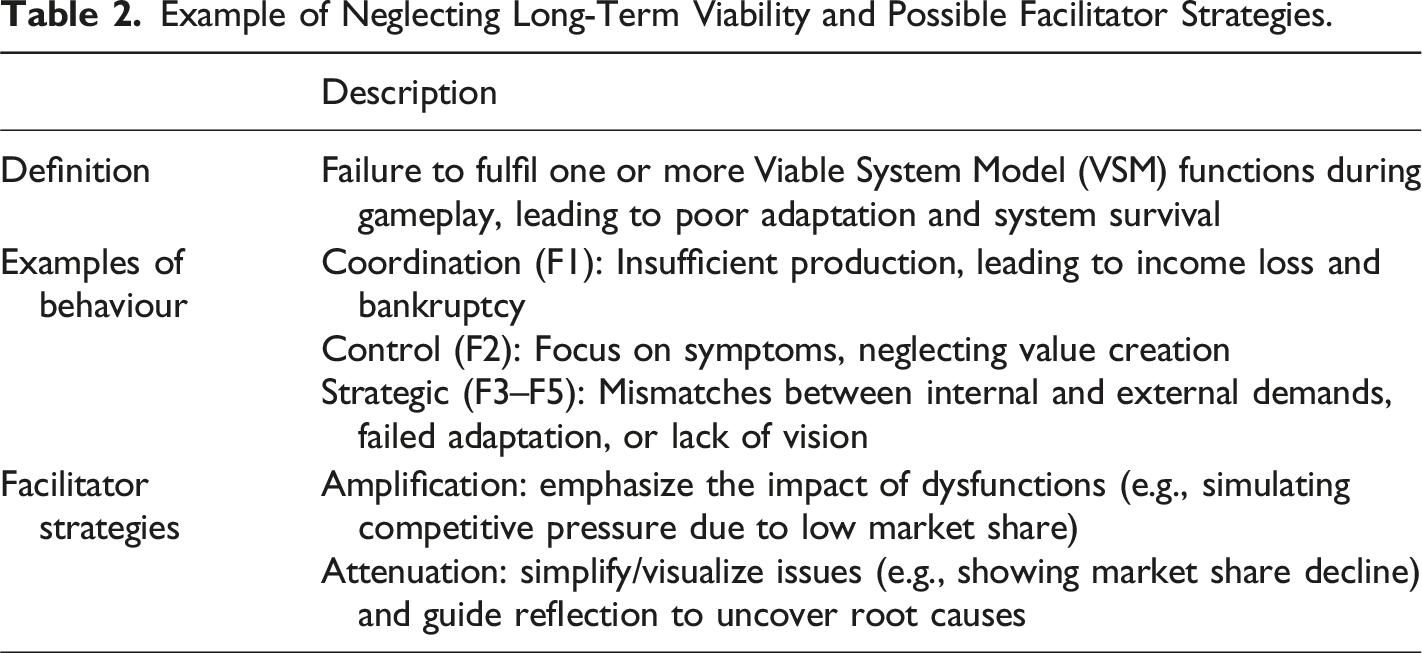
Systems theory offers useful tools for facilitating games, especially when managing learning conditions within the Magic Circle. Ashby’s theory of adaptation identifies two main strategies: attenuation (absorbing or reduction of variety) and amplification (increasing variety by adding stimuli), applied through passive or active regulation.
Ashby also distinguishes between error-controlled and cause-controlled regulation. Error-controlled interventions are triggered when participants repeat mistakes or fail to adapt. Here, the facilitator intervenes to break ineffective loops. Cause-controlled interventions deal with underlying barriers—such as stress or information overload—requiring actions like pausing the game to enable reflection and recalibration.
The dimensions in Figure 2 have set the stage for balancing decisions on interventions. Figure 3 applies Ashby’s theory to distinguish attenuation and amplification strategies.
Ashby’s theories on adaptivity aided in identifying how to intervene, now we need further direction on what to intervene for our framework. To decide how to intervene and where the system might be misaligned, facilitators can use Beer’s Viable Systems Model (VSM). It offers facilitators a way to diagnose how learning dynamics unfold and whether the system enables adaptive learning.
Facilitation Using the Five Functions of the VSM as Diagnostic Lens
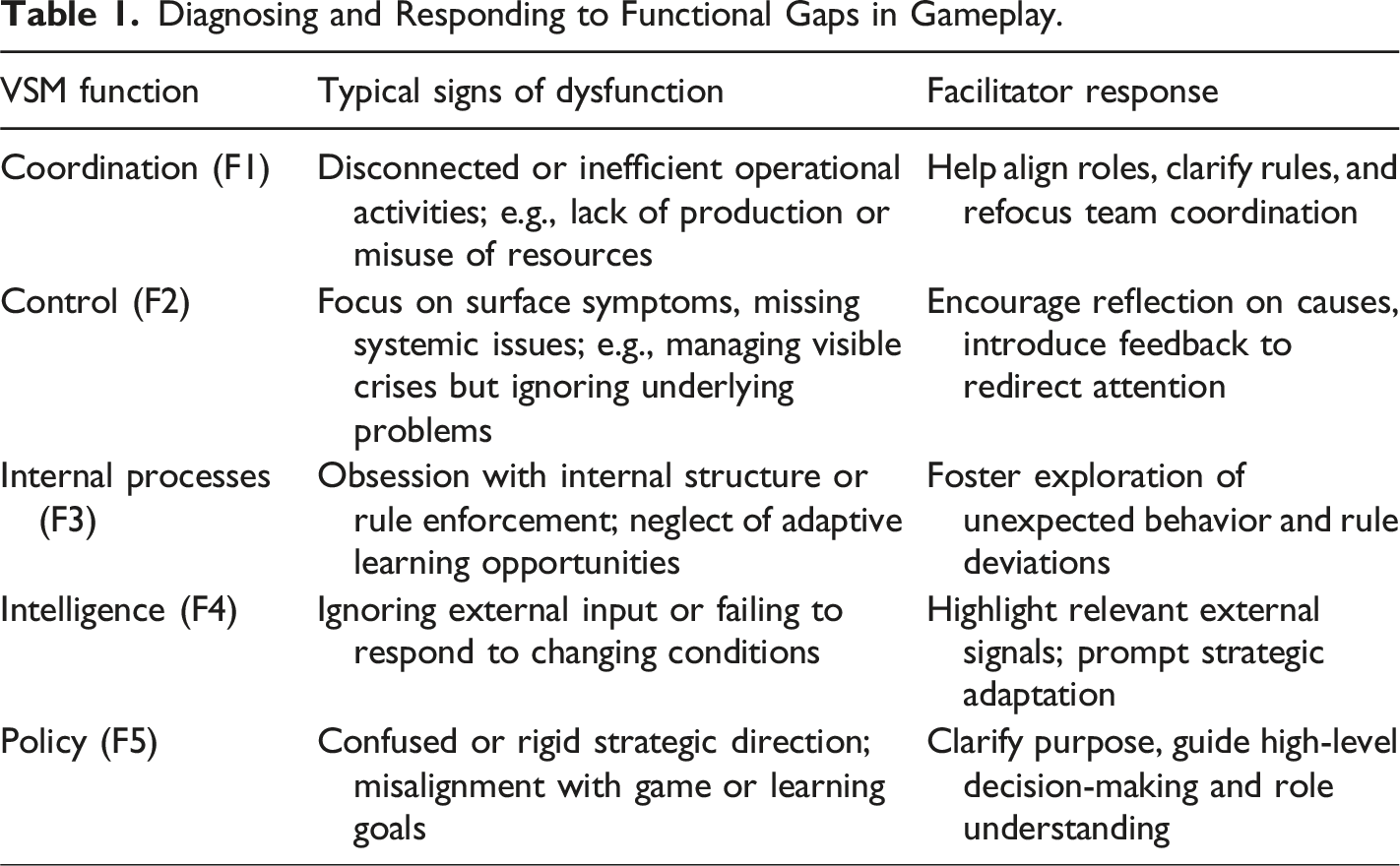
The five functions of the Viable System Model (VSM) offer facilitators a structured lens for diagnosing and supporting learning in games. Each function represents a necessary condition for system viability—and thus for meaningful gameplay and learning. The facilitator can assess whether these functions are active and balanced, and intervene accordingly. • • • • •
Challenges for Facilitators from the VSM Perspective
Beer identifies recurring problems when system functions are not fulfilled effectively, undermining adaptivity and learning. The same applies to facilitators: when they fail to perform certain functions, their guidance may hinder rather than support learning. Below we describe how each VSM function may translate into facilitation pitfalls providing empirical examples. • • • • •
Patterns of Behaviour and Facilitator Strategies Based on VSM and Ashby in Adaptive Learning
Diagnosing and Responding to Functional Gaps in Gameplay.
Example of Neglecting Long-Term Viability and Possible Facilitator Strategies.
When and How to Intervene: A Stepwise Framework for Adaptive Intervention
So far we have sketched how either Argyris’ learning levels (to assess what type of learning happens, what type of learning is missing) and the VSM (to assess what functions of adaptivity are lacking and need to be fulfilled to be a learning system) helps to identify what functions a facilitator can uptake as well. In addition, Ashby`s systems theory also provides clues for knowing how (amplification and attenuation) and when to intervene because if the game still offers enough learning possibilities (in Ashby’s terms `variety’) and learning safety (for more directions in assessing learning safety see ethical facilitation article De Wijse, 2021).
For Steps in the Adaptive Facilitation Framework.
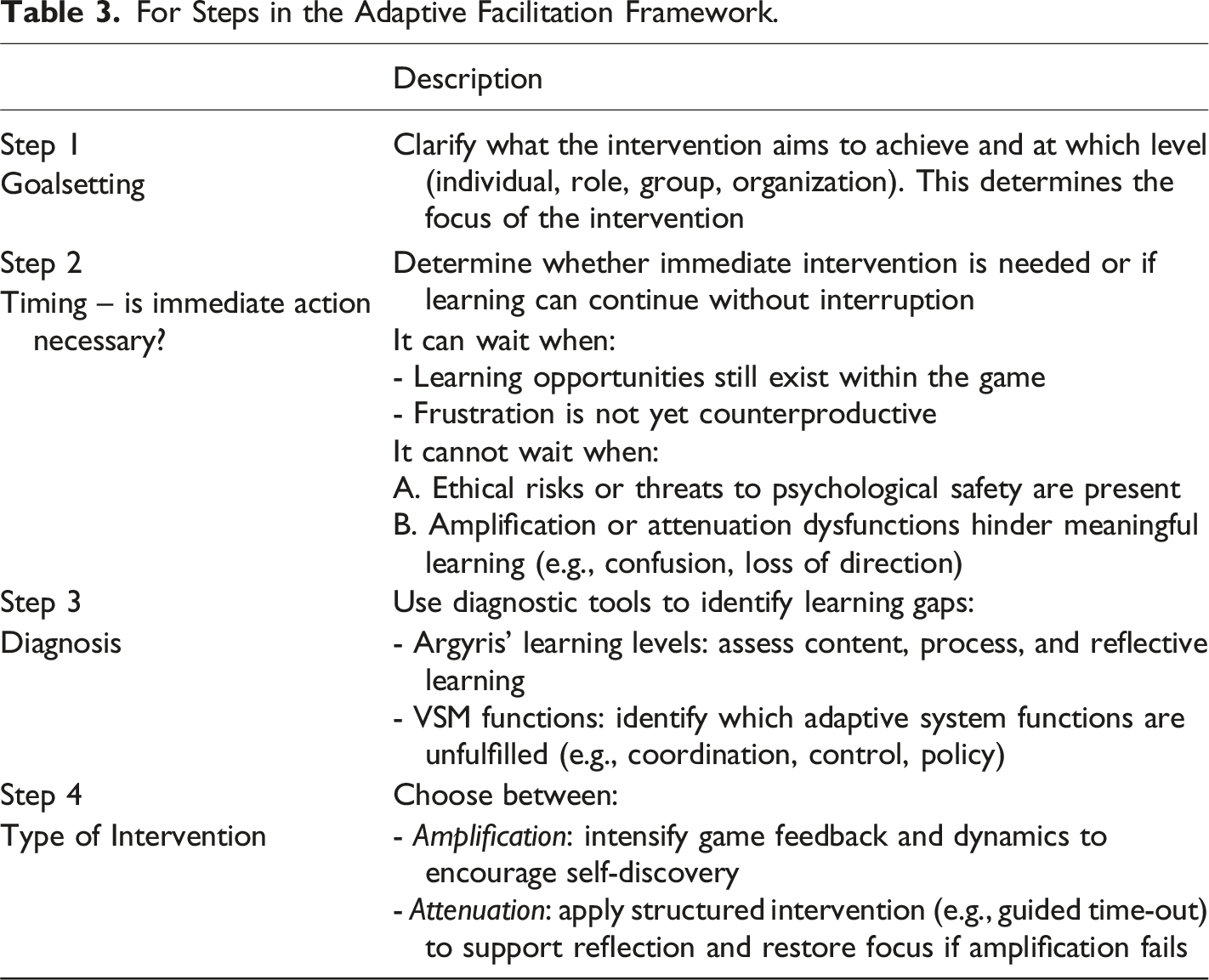
Although this article introduces Ashby before the Viable System Model (VSM), the framework presents them in reverse order by design. Ashby laid the foundation for understanding system adaptivity, upon which Beer built the VSM by defining specific system functions for survival. Ashby’s principles are broadly applicable across system levels, allowing facilitators to apply amplification or attenuation without committing to a specific lens (such as VSM or Argyris’ learning levels). However, in complex learning environments like games, it is often preferable to first select a focus—such as VSM or learning levels—to reduce cognitive load and optimize learning.
For further explanations we have added a worked example Figure 5 in the following. Adaptive facilitation framework: Integrating Argyris, VSM and Ashby’s regulation principles with examples.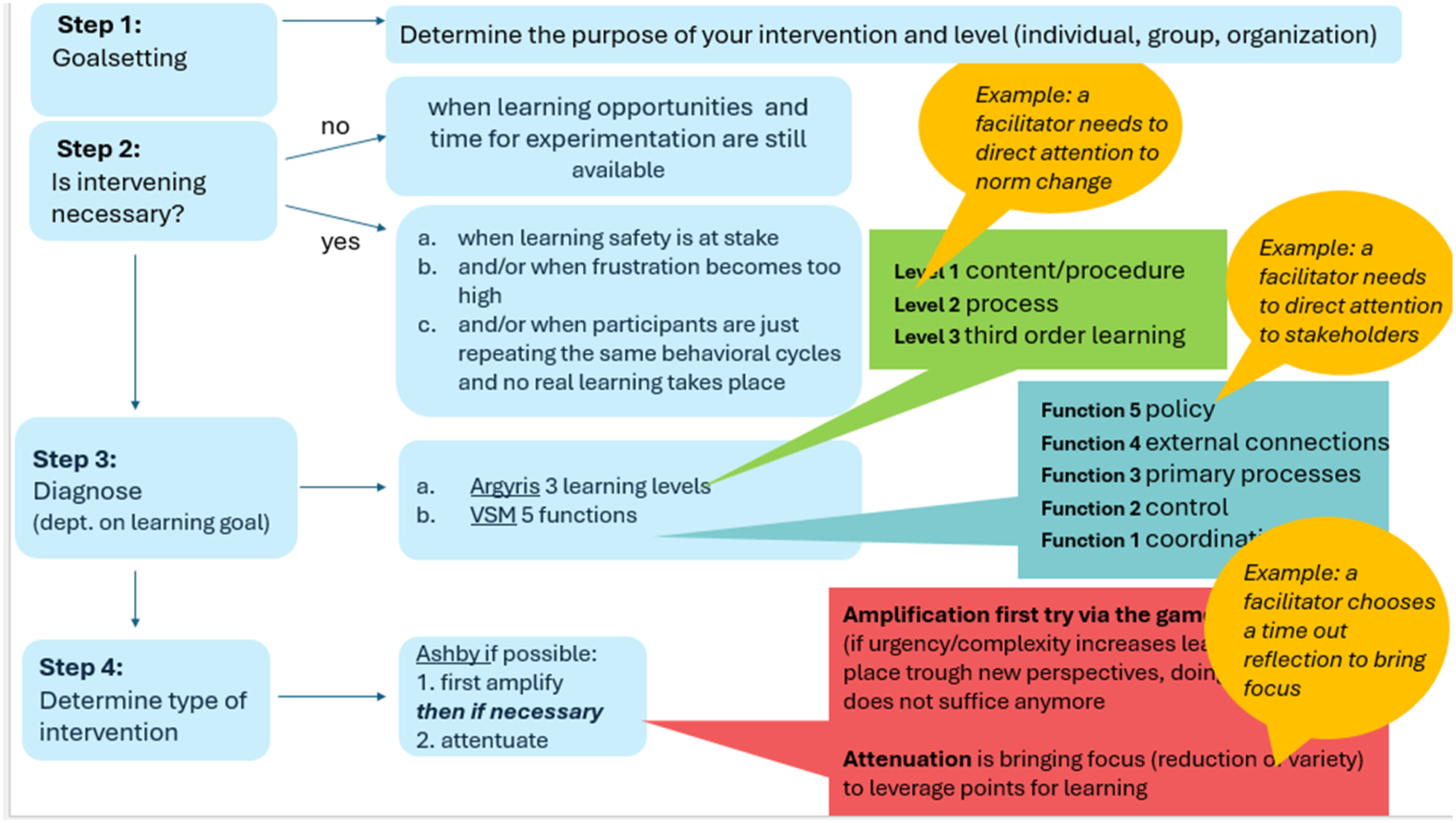
However, facilitation games involves more than applying abstract models. A facilitator is also a person who must develop a sense of timing, empathy, and contextual awareness (de Wijse-van Heeswijk, 2021). Experience with specific groups, settings, and game types helps facilitators judge when to intervene and when not to (de Wijse-van Heeswijk and Leigh, 2022). A strictly mechanistic method may risk alienating participants, especially since games can evoke strong emotions, unexpected dynamics, and meaning-making in real time. In such moments, the regulatory logic of systems theory may become too technical to apply without disrupting the game’s natural flow. Facilitators need to balance structure and spontaneity—supporting learning without intruding into emergent group processes.
Discussion and Future Directions
Facilitators play a crucial role in managing learning conditions in both open and rule-based games. Their presence helps maintain a safe, ethical, and goal-oriented environment, as emphasized in the literature (Cheng et al., 2014, 2020; Dieckmann, 2012, 2020; Kato, 2010; Leigh et al., 2021). Beyond guiding gameplay, facilitators create reflective space and adapt to evolving dynamics.
Although digital tools such as reflective prompts (Mohaddesi et al., 2023), adaptive feedback (Leemkuil & De Jong, 2012; Meij et al., 2020), and scaffolding in simulations (Faber et al., 2023) support learning, they do not fully replace the facilitator’s ability to respond to emergent, systemic challenges. Research into hybrid and digital facilitation is growing, but more understanding is needed into how these models can substitute or complement human facilitation in complex learning environments. Future studies should examine how facilitators—digital or physical—interact with game systems to enhance learning and explore when personal presence is essential versus when digital mechanisms suffice.
While the VSM and Ashby’s principles offer facilitators a robust structure for analyzing and guiding learning processes, they cannot fully account for the social, emotional, and ethical complexities of real-time gameplay. Games are lived experiences, and their outcomes are influenced by unpredictable human behavior, shifting group dynamics, and emergent meaning-making. Facilitators must therefore remain reflexive and responsive, using their own judgment, interpersonal skills, and ethical compass to decide how and when to intervene. Models such as the VSM can serve as a frame of reference for decision-making on what intervention to use how and when but they should not be followed rigidly; rather, they must be interpreted via the game context and the evolving needs of participants.
Evidence from outside game studies shows that predispositions explain only part of behavior; institutional and structural conditions often matter more (Petousi & Sifaki, 2020). In practice, facilitators’ actions are co-shaped by systemic constraints and evolving dynamics, not disposition alone. While the Adaptive Facilitation Framework clarifies intervention logic, it cannot capture asymmetries of voice, status, and emotion. Effective facilitation therefore attends to power relations, emotional labor, and facilitator positionality, which shape who speaks, what is heard, and how learning transfers beyond the game. Further ethical guidelines in dealing with learning in games can be found in the previous work of the lead author (De Wijse-van Heeswijk, 2021; De Wijse-van Heeswijk and Leigh, 2022).
In the near future we will conduct a follow up theory testing process tracing study toward how the framework is witnessed in case studies to answer questions on does it work sufficiently in practice and does it support the learning processes in the game.
The frameworks of Argyris, Beer and Ashby help facilitators navigate systemic complexity and adjust their interventions accordingly. Yet, in the broader landscape of game-based learning, additional frameworks like gamification facilitation raises new questions. How do motivational strategies and external feedback systems compare to adaptive facilitation within games? Gamification in itself should probably be considered a separate stream on its own. While gamification literature provides valuable insights into motivational strategies (Alsawaier, 2018; Zainuddin et al., 2020), its conceptual link to the facilitation of games has not yet been systematically explored. Gamification typically refers to the use of game elements—such as points, rewards, or progress tracking—in non-game environments to influence behavior or engagement. Games, by contrast, are comprehensive socio-technical systems with embedded roles, rules, and resources designed to enable situated, interactive learning. Although the two approaches differ in structure and intent, there may be overlapping mechanisms—particularly around feedback, reflection, and engagement—that warrant further comparative analysis. Future research could examine how facilitation strategies in games relate to gamification practices, where synergies exist, and where distinctions are essential due to differing learning objectives or system complexity. This could support a more integrated understanding of how facilitators can draw from multiple frameworks to optimize learning in diverse game-based environments.
Conclusion
Despite growing interest in the facilitator’s role, little guidance exists on their specific functions or how to intervene effectively. This article shows how systems theory offers concrete tools for diagnosing and enhancing adaptive learning to. • Assess which functions are underdeveloped among participants and support their development. • Reflect on their own role in fulfilling or compensating for these functions, aligning actions with the game’s structure and learning goals.
Systems theory provides a neutral, functional lens to understand behavior and learning needs. Rather than reacting intuitively or addressing only symptoms, facilitators can draw on systemic insights to enable deeper reflection and sustainable learning outcomes.
Still, the framework for adaptive facilitation does not resolve all challenges in game facilitation. Each game session is shaped by a unique mix of players, structures, technologies, and cultures, called “eigen behaviour” by Von Foerster (Achterbergh & Vriens, 2010). Facilitators must remain responsive to these dynamics and flexible in how they adjust their interventions.
Importantly, facilitation must allow for exploration, ambiguity, and even frustration—phases such as the “valley of despair” often precede breakthroughs in thinking and behavior. The framework is not a complete philosophy but a functional tool to guide reflection and adaptive responses.
This paper introduced a systemic framework for game facilitation, combining the learning levels of Argyris, the Viable Systems Model (VSM) and Ashby’s cybernetic principles to support reflective and adaptive learning. The framework equips facilitators with practical guidelines and tools to decide when, how, and with what to intervene across different game types and learning goals. It is a functional frame of reference to guide reflection and adaptive responses. By clarifying how facilitation functions align with game structures and learner roles, it offers a flexible model that strengthens both theory and practice.
While the article draws on various theoretical traditions—systems thinking, learning theory, and facilitation—it is grounded in Game Science. The argument builds from a foundational view of games as socio-technical systems and translates this into applicable facilitation strategies. Future research could explore how the epistemological, structural, and systemic dimensions presented here can be more explicitly integrated into game design and facilitator training.
Our framework supports decision-making based on systemic understanding rather than intuition. While it provides structure, the model can be selectively applied based on context and facilitation goals.
Future research could explore how AI-supported or hybrid facilitation can enhance game-based learning. Understanding how facilitators engage with these evolving environments will be essential to deepening the scientific foundations of Game Science.
This article offers a first step toward integrating systems theory into the facilitation of games. Game Science benefits from interdisciplinary contributions like these, which strengthen both its theoretical underpinnings and its practical applications.
With special thanks to Dr Jan Achterbergh who inspired me with the book Organizations, Social Systems conducting experiments.
Footnotes
Declaration of Conflicting Interests
The authors declared no potential conflicts of interest with respect to the research, authorship, and/or publication of this article.
Funding
The authors received no financial support for the research, authorship, and/or publication of this article.
Informed Consent
Not applicable as this is a theoretical contribution.
