




Abstract
Background.
Reframing could be considered to represent individual and collective twofold values in social learning. When reframing is promoted, it benefits to generate learning processes involving collective inquiry occurring in inter and outer formal education. Digital games, popular as an application for the young generation, are considered a specific community in which social learning occurs by playing games. Serious games (SG) are a type of digital game involving educational purposes. Hence SG is selected as a suitable educational strategy to promote reframing. The previous research investigated features of a gameplay experience associated with reframing. This study develops further based on these game features to examine if/how they improved reframing capabilities. From an educational perspective, specific guidelines were proposed as the research findings to assist serious games in designing and applying game features to enhance the gameplay experience of reframing.
Methods.
An expert evaluation was used to assess the guidelines. The seven experts with experience in game design and teaching were chosen to review the designed guidelines. These experts were required to rate the guidelines using a 5-point Likert scale. All experts offered positive feedback on the finding.
Results.
Research data were analysed and validated via the Content Validity Index. The results showed that a total of 5 guidelines was remained and updated.
Conclusion.
These guidelines can be applied to assist students, game designers, related educators, and researchers who use games to promote reframing or require evidence to link game features with social learning.
Background
Due to the nature and importance of reframing, this study is motivated to focus on it. For the aim of the research, reframing is conceptualised as people’s ability to redefine their and other people’s aims and values, reflect strategies and methods, and reshape the new criteria of success, which is triggered via observation of and communication with other participants and the environment (Brown, 2010; Conklin, 2005; Mezirow, 1990; Wenger et al., 2011).
Reframing is regarded as a learning outcome/value of social learning (Muro & Jeffrey, 2008; Wenger et al., 2011). Social learning explains that learning is an interpersonal process driven by communication among cognition, behaviour, and environmental influences (Bandura, 1977). During this process, people improve together through observing and shaping their emotional attitudes and behaviours and participating in collaborative knowledge-building, decision-making, and problem-solving (Bandura, 1977; Muro & Jeffrey, 2008). Today social learning is seen as a core paradigm for promoting social development and change (Muro & Jeffrey, 2008), as we live in an era defined by complex, multi-stakeholder issues that can only be addressed through collective learning, reflection, and action (Fabricatore et al., 2020).
Still, a big challenge is to foster people’s reframing capability using educational strategies. Reframing represents an educational priority, being central to addressing real-world, collective problem-solving processes involving actors driven by diverse and possibly conflicting viewpoints (Conklin, 2005; Fabricatore et al., 2020; Wenger et al., 2011). Serious games (SG) are considered one of the educational strategies that can be effective in improving students’ critical thinking and problem-solving (Hwang & Chen, 2017), promoting the development of transferable knowledge, skills and attitudes by engaging players in activities driven by meaning-making, and by setting scenarios that mirror real-world situations (Fabricatore & Lopez, 2019). Games thus represent ideal platforms to promote social learning (Bakhanova et al., 2020; Den Haan & Van der Voort, 2018; Fabricatore et al., 2020). However, the literature has highlighted the need for further research, in particular, to investigate the relationship between specific game features and social learning outcomes that these may promote (Den Haan & Van der Voort, 2018; Voulgari & Komis, 2011). The next challenge is to ensure that the educational strategy is adopted, which means the methods and outcomes of SGs’ usage. Previous studies highlight that SGs are designed in order to improve related learning outcomes. For example, Bressler and Tutwiler (2021) propose that mobile augmented reality games provide benefits to support serious science learning; SGs have been shown to successfully promote the acquisition of teachers’ domain-specific knowledge and skills (Johnson & Kim, 2021, Alyaz & Genc, 2016, Lameras et al., 2014). However, little explanation is shown for the methods of game-making relevant to enhancing learning outcomes in these studies. In order to address these challenges, this paper presents a guideline and its verification to help: i) students with critical reflection on their learning; ii) teachers to promote social learning by exploring games features and what we can learn from serious games; iii) game designers to clarify decisions on designing and developing new computer games and highlight the choices to be made when using games in educational contexts. The guideline describes the application and matching of game elements that can be selected in the SG for promoting reframing. These game features have been identified according to content analysis of specific games.
This paper includes six sections. In Section 2, related research background is involved, and the research question is presented. For example, the nature of reframing is discussed and explains the reasons that serious games are utilised as an effective platform to analyse social learning. After this, our previous work is described, involving a model of game features promoting reframing. Section 3 shows the research methodology, including conceptualisation and validation of these guidelines from the experts' panel. The results of this study are shown in Section 4. The way to use related guidelines is discussed, and in the last Section 6, this paper is concluded and states future works.
The nature and importance of reframing
The concept of reframing is derived from the framework of value creation which was first developed by Wenger et al. (2011). Wenger et al. (2011) examined the value creation of social learning based on virtual communities (VC), which comprise more or less distributed collectives. Among these collectives, individuals could share some interests, communicate and are connected with related stimulation, knowledge (e.g., information flows) and joint action. In this context, Wenger et al. (2011) highlighted the importance of fostering reframing, given that its nature supports the transition of community members' views and actions from individualism to collectivism and consequently creates valuable outcomes to promote the operation of the entire community. According to this, reframing could be considered to represent a twofold value. From the individual's perspective, it means an enhanced potential, including critical reflection, questioning personal worldviews, interacting with others, and acquiring capacity that individuals alone could not obtain (Bandura, 1977; Mezirow, 1990). Literature (e.g., Brookfield, 2015; Howard, 2003; Mamede et al., 2008; Saric & Steh, 2017) has also highlighted that reframing is a core element of critical thinking representing a key mediator of other types of learning (e.g., problem-solving) when non-trivial scenarios need to be critically examined. From the collective perspective, reframing represents the important development of the whole community and signifies the development of new, shared ways of interaction (Bandura, 1977; Conklin, 2005; Muro & Jeffrey, 2008). The twofold value of reframing benefits all learning processes involving collective inquiry occurring in inter and outer formal education (Conklin, 2005; Pedaste et al., 2015).
Serious games
Whilst there is no absolute agreement on a definition of serious games (SG), most scholars agree on a core meaning when the primary purpose of SGs is within education (Bontchev et al., 2021). In particular, when applications from relevant areas such as game-based learning (Deterding et al., 2011; Plass et al., 2015) are included rather than simply entertaining (Landers, 2014; Susi et al., 2007; Michael & Chen, 2005). Game-based learning products are, therefore, widely considered a subcategory of SGs (Connolly et al., 2012; Hainey et al., 2016). This paper similarly considers SGs through the conceptualisation of digital games/ game-based learning design to consider how they promote behaviour change and/or the development of knowledge, skills and attitudes (Hainey et al., 2016; Connolly et al., 2012; De Lope & Medina-Medina, 2017). In addition, SGs can be utilised as a specific community where social learning can be generated (Bolter & Grusin, 1999) because video games offer a very rich ground for studies on VC (Tardini & Cantoni, 2005). According to Gee (2007), players have different identities when playing games (e.g., the real player and the virtual character). Tardini and Cantoni (2005) indicate that, based on the relationship between the real player’s and the virtual character’s identities, two different VCs can be constructed, namely the playing community and the player community. In the playing community, for example, the virtual characters interact in the game’s world with other characters or non-playing characters to complete tasks such as killing monsters. In the players’ community, for instance, the interaction is generated between the real players who are interested in the same game (Newman, 2012). In this context, the study adopts SGs as a suitable platform/community to provide guidance for the design of SGs. This can assist students, game designers, related educators and researchers who use games to promote reframing or require evidence to link game features with social learning.
Our previous work on the study and research question
According to these descriptions mentioned before, there exists, therefore, a relationship between games and learning values, with reframing generated in social learning and the use of games supporting social learning (Bakhanova et al., 2020; Medema et al., 2016; Den Haan and Van der Voort, 2018), as shown in Figure 1. Based on the relationship, the previous work presented a model of ten game features promoting four functions of reframing by investigating and analysing 5,940 players’ comments on the TOP 5 role-playing (RPG) games. However, this model focused on examining features of a gameplay experience associated with reframing. Further research is needed to investigate if/how the features improved reframing capabilities. So, from an educational perspective, this article proposes the research question: The background to the research.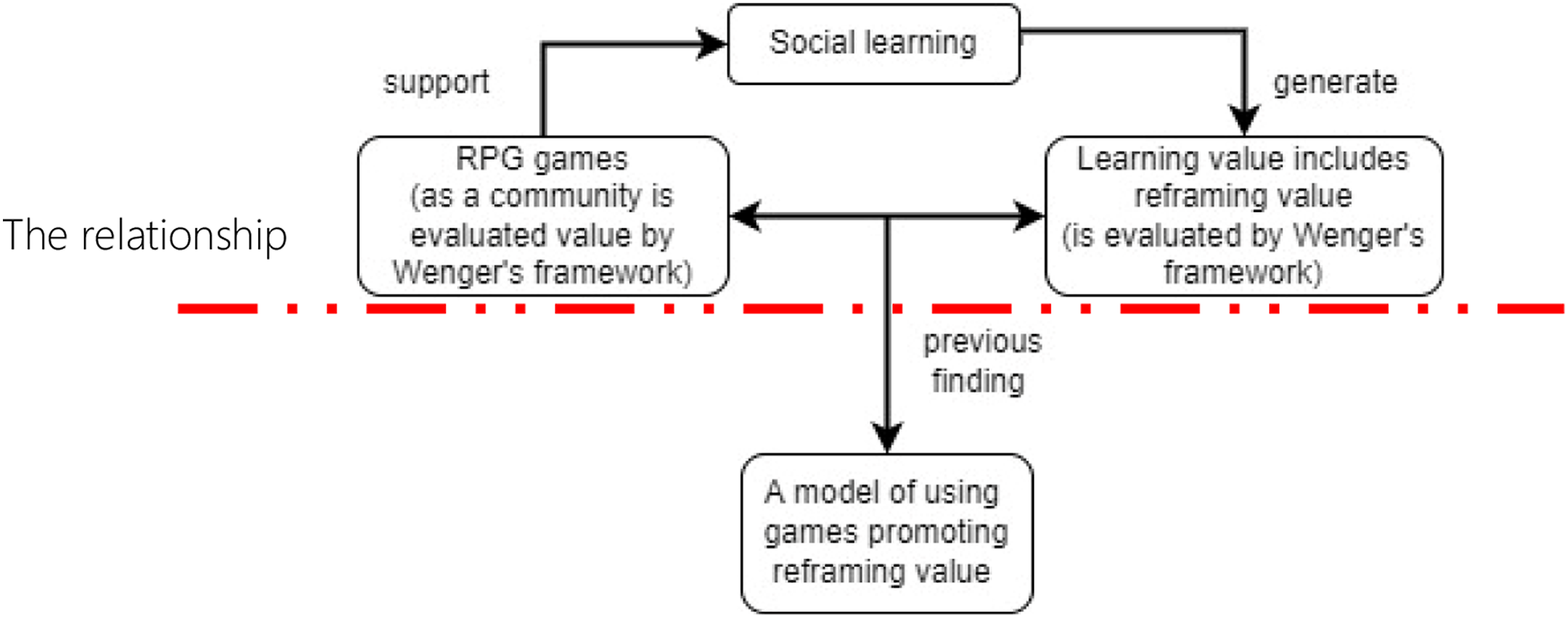
How to effectively utilise the model to design and apply game features to enhance SGs gameplay experience of reframing?
Firstly, however, we need further clarification on the model and related terms being used.
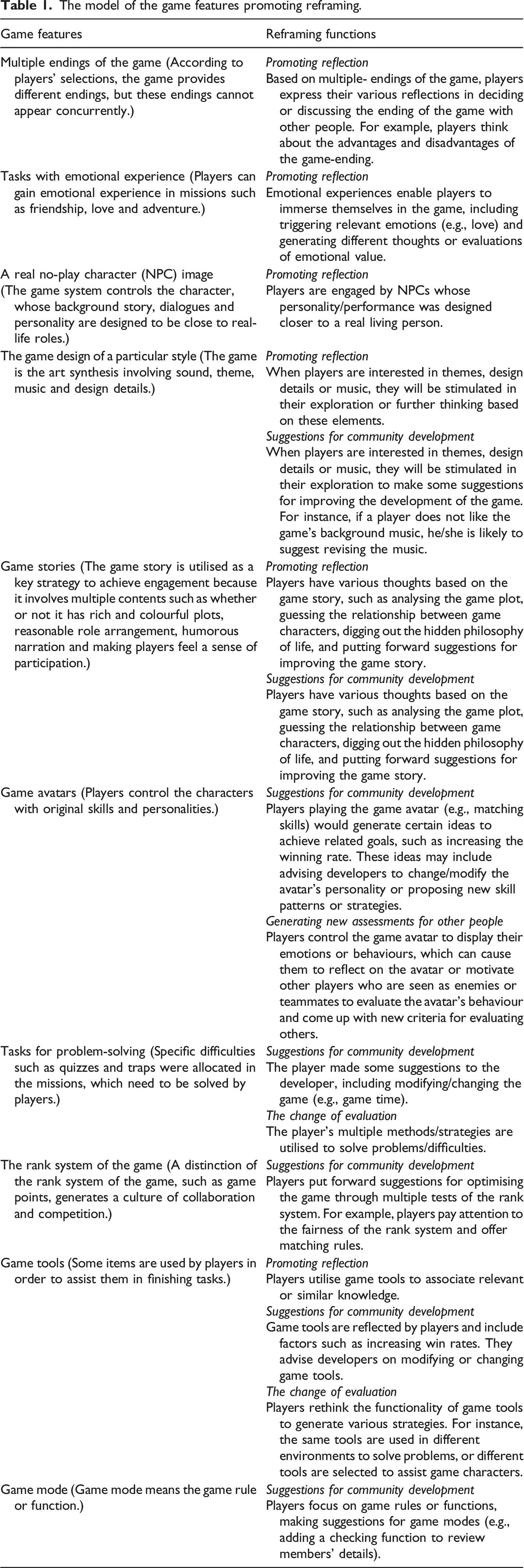
According to Wenger et al. (2011), reframing is split into four functions, including promoting reflection: learning contents and values trigger rethinking; the change of evaluation: changing the processes and patterns of evaluation; generating new assessments for other people: reframing the assessment standard (e.g., views, relationship) for other people; suggestions for community development: reshaping the new expectation for whole community development (e.g., institutional change and new frameworks).
The model of the game features promoting reframing.
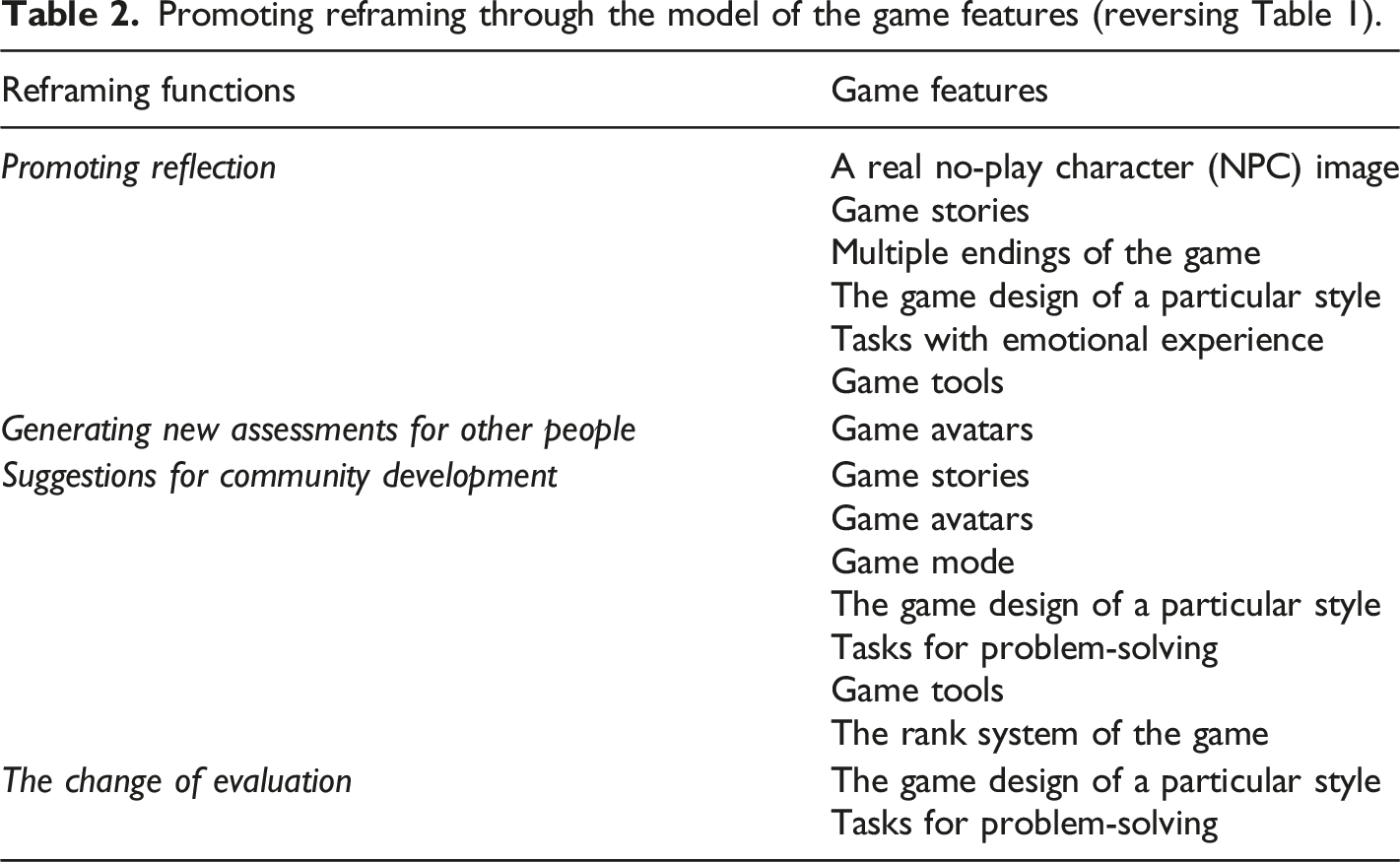
Promoting reframing through the model of the game features (reversing Table 1).
Research methodology
The research method is composed of conceptualisation and validation, including identification of the guidelines for SGs design based on research aims and content validation of the guidelines.
Conceptualisation
The construction of guidelines is examined to cover the situations in which guidelines are possibly used, from the perspective of students, teachers and game designers’ applications, respectively. For example, game designers were likely to design a game that is required to cover all reframing functions, so the guideline would provide a relevant strategy. According to this, the guidelines were generated. See Figure 2. The methodology for conceptualisation.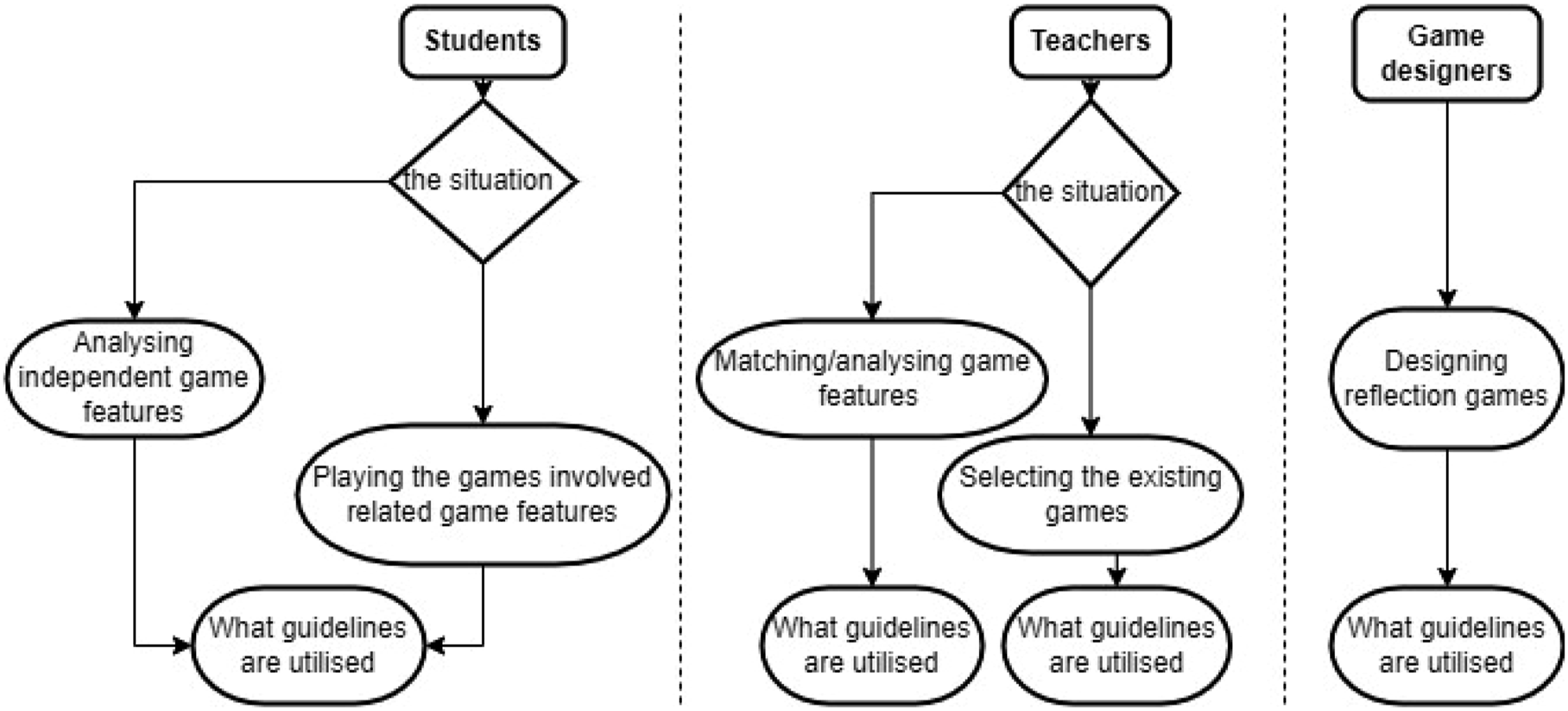
Content validation
For the second part of the methodology, expert evaluation was adopted to investigate the content validation of guidelines. In light of some studies, an expert evaluation rating scale for domain content was five to seven experts (e.g., Dumas & Grajo, 2022; Razali et al., 2022). Hence, this research selected seven experts from their focus areas of teaching (n =3) or game design (n =4). In this study, all seven experts have more than five years of experience in relevant fields, especially three experts with over ten years of experience. It is important to select experts who focus on their fields (De Jans et al., 2017).
The research method that expert evaluation was used to identify issues and support experts offering advice was adopted (Khowaja & Salim, 2019; Nielsen & Molich, 1990). The data for this part were collected using a questionnaire to obtain an evaluation from the experts who were given the guidelines and two weeks to finish the survey. The questionnaire's content includes the description of guidelines with two more added columns. For one of the additional columns, a 5-point Likert scale (1 Strongly Disagree, 5 Strongly Agree) was utilised to require the experts to indicate the level of agreement. In another column, the experts' extended comments were listed.
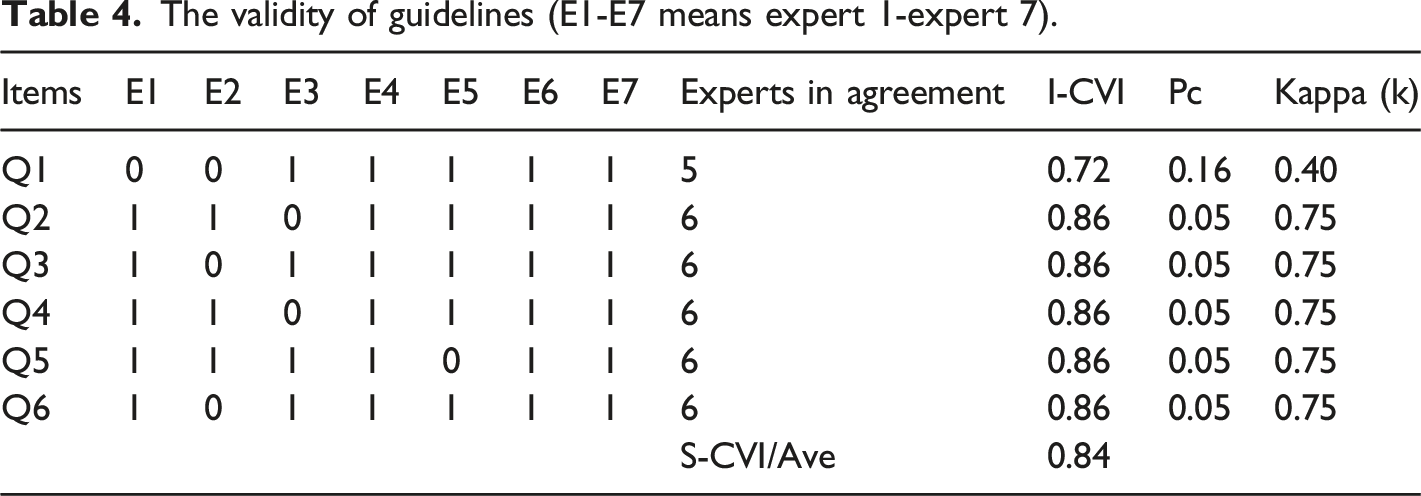
In order to measure the relevancy and clarity of the guidelines, the Content Validity Index (CVI) (Zamanzadeh et al., 2015) was utilised. As Zamanzadeh et al. (2015) indicate that prerequisites of assessment (e.g., if there is a potential bias happening) could be completed by carrying out this method that calculates both item levels (I-CVIs) and the scale level (S-CVI). This investigation obtained the I-CVI by dividing the number of experts associated with the assessment element by the total number of experts (Razali et al., 2022); S-CVI is calculated using the total number of elements to divide the sum of the obtained I-CVIs (Razali et al., 2022; Zamanzadeh et al., 2015).
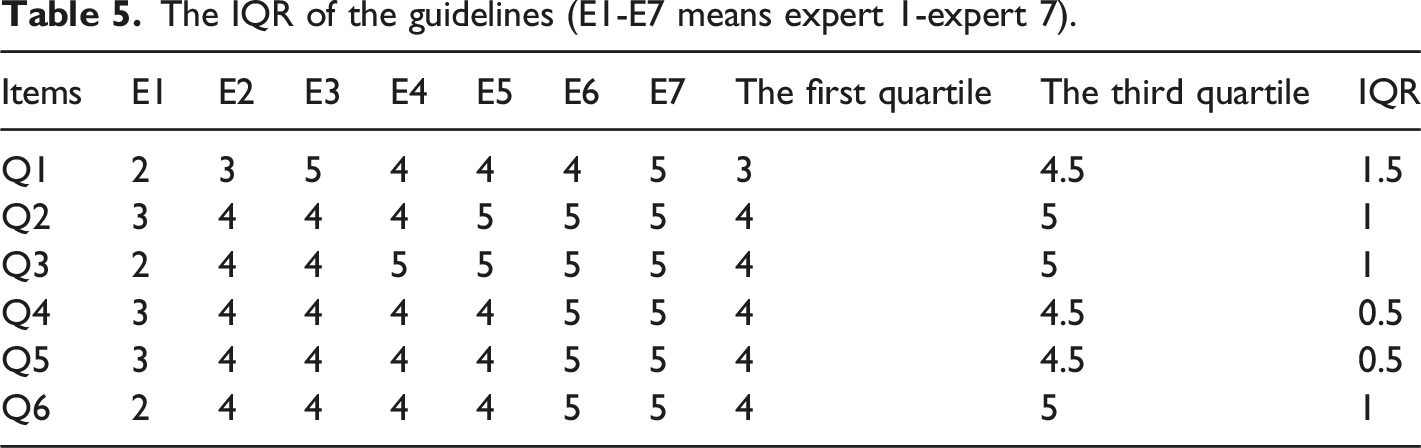
The consensus analysis (i.e., measuring consensus and evaluating experts’ opinions) (Heiko, 2012) was also used in the second part of the methodology in order to enhance the verification of the guidelines. According to Heiko (2012), the Interquartile Range (IQR) was frequently utilised in the consensus among the answers as a measurement of variability in terms of the distribution of quartiles of the data. The data is divided into three equal parts, including the first, second and third quartiles and IQR (the first quartile subtracted from the third quartile) (Razali et al., 2022). The elements with an IQR score should remain when the score is one or less. Otherwise, the elements were eliminated.
Results
The results are presented in the following, including the description of the guidelines and the validity findings.
The description of guidelines
Q1 was eliminated, according to the results of the validity of guidelines. (The old version: each game feature can be utilised independently. Some SGs only cover one game feature, which also means that there is the potential to promote reframing for these games.)
Q2 Game features will be matched to assist game design and selection of the existing games, according to different game features that support reflection of different dimensions (i.e., promoting reflection, the change of evaluation, generating new assessments for other people and suggestions for community development). For example, such tasks for problem-solving (promoting: the change of evaluation; suggestions and for community development) and game stories (promoting: promoting reflection; suggestions for community development) can be selected synchronously to create value in three dimensions (i.e., promoting reflection; the change of evaluation; suggestions and for community development).
An example of using a promoting-reframing-value game.
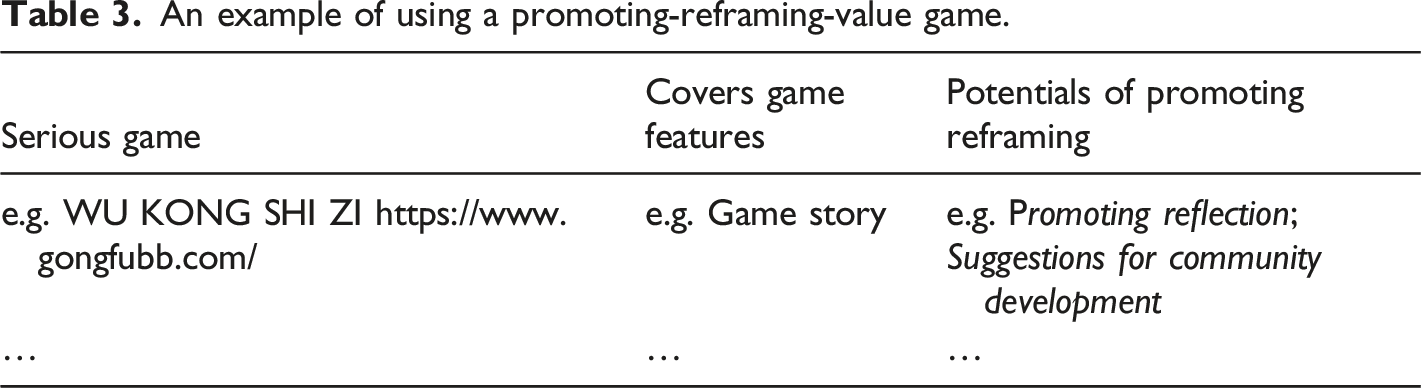
Q4 This model can provide a reference/standard for identifying the quality of serious games. For example, good serious games will be recommended to students, teachers, schools, or parents. From the perspective of promoting reframing, if the game covers related game features, this means that the game can be confirmed as having the potential to promote reflection.
Q5 To promote a specific criterion of reframing, some related game features will be considered in advance. The research found that some game features showed positive effects on promoting reframing. For example, two game features (the game design of a particular style and game stories) supported promoting reflection.
Q6 The following matching effects of game features need to be considered. Some identified game features are consistently oriented at supporting the same criterion of reframing. For example, tasks with emotional experience, game avatars and game stories together impact promoting reflection. Secondly, there is wide variability in how the game features promote criteria of reframing. Some criteria included one or three game features that supported two or three criteria, while others used mixed game features (e.g., some supported two or three criteria, others supported one).
The validity of guidelines
The validity of guidelines (E1-E7 means expert 1-expert 7).
The IQR of the guidelines (E1-E7 means expert 1-expert 7).
Discussion
Revision for guidelines
The seven experts did not provide extended comments to revise these guidelines. According to the findings, Q1 was eliminated. Nevertheless, Q1 involves the content that each game feature can be utilised independently, which is suggested to integrate into Q3, and the new Q3 is described in Section 4.1.
How to use these guidelines
The users (i.e., students, teachers and game designers) who utilise this paper can reference the following flow processes to use related guidelines. (1) The research background is provided to students, teachers and game designers, enabling them to understand why the model has been proposed. (2) The related terms and concepts, such as reframing, are mentioned in the research background. This is to ensure that students, teachers and game designers know the aim of the model, which is to use specific game features to promote the four functions of reframing. Meanwhile, the related descriptions of the model are offered in Tables 1 and 2, which explain the relationship between the four functions of reframing and game features. The information should be read in advance of using the model. (3) The guidelines are used based on the model, which will get more benefits. The model is described using Tables 1 and 2, which include two columns (‘Game features’ and ‘Functions of reframing’). In Table 1, the first column lists game features, and the second column lists related criteria of reframing that have been promoted by the game feature, together with how the game feature promotes these specific criteria. For example, game stories can be found in the first column, and the reader can then check the second column of game stories to find that game stories support two criteria of reframing (i.e., promoting reflection and suggestions for community development). Table 1 can therefore be used to identify game features present within a game and what value they may help to reframe, for example, developing a community. Table 2 reverses the column order, so in the first column, it lists the criteria of reframing and in the second game features. It can therefore be used when particular reframing is desired, for example, promoting reflection, and particular game features can then be identified that may enable this to occur.
Conclusion
This research provides specific guidelines to apply, clarifying how the game features promote reframing from the perspectives of students, teachers and game designers. The validation of experts with rich experience and skills in the relevant areas was used to verify the guidelines. This can give weight to the outcomes, but if a prototype of the reframing game can be investigated, that would be better. In future, a simple prototype will be planned, and the same experts assess the prototype will be adopted as another verification cycle.
Footnotes
Declaration of Conflicting Interests
The author(s) declared no potential conflicts of interest with respect to the research, authorship, and/or publication of this article.
Funding
The author(s) received no financial support for the research, authorship, and/or publication of this article.
Ethical Statement
The research does not involve human participants and/or animals, so the 1964 Helsinki Declaration and its later amendments or comparable ethical standards are not applicable to this paper.
Consent Statement
All testers agree with their testing data that can be published.
Data Availability Statement
The data that support the findings of this study are available from the corresponding author upon reasonable request.
