



Abstract
Background
Online gaming motivations are differently associated with
Methods
The study comprised 16,033 participants playing a different number of games on Steam. Our study was based on the 800 most played games only and included participants where we had access to gender and job details. We employed a secondary data analysis approach by using an existing data set (O’Neill et al., 2016), looking into the actual
Results
We found that IT professionals and engineers played puzzle-platform games, allowing for enhanced spatial skills. Managers showed an interest in action roleplay games where organisational and planning skills can be improved. Finally, engineers were associated with strategy games that required problem-solving and spatial skills. There were apparent
Conclusion
Our study found that online
Keywords
Background
With the rise of better internet and people engaging more on social networking, online video gaming on dedicated platforms such as Steam and Twitch is growing rapidly, with many people even on traditional video game consoles (e.g., Nintendo, PlayStation) connecting with each other to play online games. Such is the success of online video gaming that it has been professionalised into electronic sports (e-sports) and has grown into a multibillion-dollar industry. The global gaming market has been valued at USD 198 billion in 2021, and it is predicted to reach a value of USD 340 billion by 2027 (Industry Reports, 2021). While there is a substantial increase in global online gaming, studies into the possible soft skills that can be gained from playing online games to improve employability are in their infancy and require further investigation. Hence, we investigated the actual gaming behaviour of Steam gamers in different professions.
Soft Skills and Gaming
One study found that online video games can be used to develop graduate attributes and specific skills about resourcefulness and adaptability that are associated with the employability of university graduates (Barr, 2017). The study employed a randomised controlled trial using an intervention and a control group. It measured the effects of playing selected games on the attainment of the specified graduate attributes by employing self-report instruments. However, this study was experimental and failed to look at the actual gaming data of the participants in different jobs, unlike the present study. Other studies have focussed on the soft skills that can be developed through extracurricular activities while at university and their relationships with actual or perceived employability (Lau et al., 2014; Sulastri et al., 2015). Sulastri et al., (2015) confirmed that extracurricular activities showed a significant relationship with success in finding a job for recent university graduates (Sulastri et al., 2015). Additionally, Lau et al., (2014) found that extracurricular activities had differing effects on the perceived employability of graduates: leadership skills were improved from involvement in sports clubs and creativity benefited from being involved in music clubs. Consequently, the job applicants’ varied participation in extracurricular activities allows employers to distinguish the best candidates from the large pool of applicants (Stuart et al., 2011). Similarly, gaming behaviour and performance could be part of the recruitment selection process.
There is already a range of research investigating how playing online video games affords the development and strengthening of soft skills, including problem solving, spatial ability, risk management, and team-working (Prensky, 2012; Shute et al., 2015; Simons et al., 2021). Furthermore, other studies have shown that online gaming can elicit emotional and behavioural engagement from gamers (Adeyemi et al., 2021; Lim et al., 2020; Peters et al., 2018; Sabourin & Lester, 2014). Game-based learning can support learning and promote positive affect and engagement (Sabourin & Lester, 2014). Lim et al., (2020) used social cognitive theory (SCT), emphasizing that learning happens through social context, to explain the wishful identification with an online video game personality and emotional engagement leading to gamers’ behavioural change. Finally, Peters et al., (2018) posited that self-determination theory (SDT), where people can become self-determined if their needs to autonomy, competence and relatedness are fulfilled, can be seen as an ideal basis for understanding and designing game-based projects to improve learning (Peters et al., 2018).
However, much less is known about this relationship and employability using actual gaming data of individuals representing different professions. The increase in video gaming and how the soft skills associated with online video gaming are related to employability warrants further investigation by using actual data to enable young people to recognise and capture these skills in their curriculum vitae. Consequently, gamers’ gaming habits can be analysed, and courses can be designed in skills that reflect the gamers’ aptitudes by looking at the video gaming behaviour and the soft skills gained by playing a particular game. Similarly, Laumer et al., (2012) have suggested using online games as self-assessment tools in recruiting processes by allowing applicants to gain a more realistic idea of the job they want to apply for, including the soft skills required. This would lead the candidate to only apply for the role that fits their profile (Laumer et al., 2012).
The best candidates may be missed in the recruitment process of new staff because organisations do not consider the soft skills that have been gained through non-work activities (e.g., online gaming), and perhaps applicants’ online gaming experience should be part of the hiring process (Petter et al., 2018). Previous research has not looked at the actual experiences of video game players, such as the actual games played or the actual gaming behaviour. Hence, we do not know to what extent career interests are reflected in the gameplay. By understanding this, we may be able to demonstrate more clearly how these align with career interests, leading to clear implications. Firstly, employers and employees can recognise that games are associated with soft skills. Secondly, game developers can work on honing these soft skills more closely in their design. Thirdly, places of learning, such as universities, can allow students to reflect and incorporate gaming as part of their career development and to consider how gaming can be included in the curriculum to enhance students’ employability. However, data on career planning and online gaming are lacking. The current study would fill this gap in the research. This study aimed to look at the gaming behaviour of participants and determine whether individuals in different jobs would be associated with a specific type of video game and whether this varies by gender.
Online Gaming and Employability
Past research has found that video gaming preferences are associated with players’ personality traits, disciplinary backgrounds, and motivations. For example, individuals who played action games had higher extraversion and lower neuroticism scores than participants in other gaming genres (Braun et al., 2016). Hosein (2019), on the other hand, found that young people studying a physical science or engineering degree were more likely to play multiplayer games than those from other disciplines. Giammarco et al., (2015) further looked at the relation between video game motivations and career interests. Although their research did not look at participants’ actual employment or focused on online video gaming, they found through their self-reported questionnaire of 264 participants that gaming motivations were differently associated with career interests. For example, an interest in engineering was associated with arousal, competition, diversion, fantasy, and social interaction as the primary gaming motivations underlying the play and may explain the associations that Hosein (2019) found concerning multiplayer games. Additionally, career interests in supervising and managing others and consulting services (e.g., IT professionals) were associated with higher levels of competition and social interaction (Giammarco et al., 2015). Therefore, we would expect engineers and IT professionals to play online video games representing these gaming motivations if they followed their career interests.
Cognitive and Emotional Skills Gained from Online Gaming
Just as all sports are not the same, online video games may be related to varying soft skills and traits. Hence, the cognitive and emotional benefits of playing video games (Pallavicini et al., 2018) can map on to different employability skills. These vital transferable skills are needed to enter and operate successfully in work. For example, those who play shooter video games show more accurate and faster attention allocation, higher spatial resolution in visual processing, and enhanced rotation abilities than those who do not play (Green & Bavelier, 2012). These are key skills that are often associated with particular career pathways. For example, spatial ability strongly predicts success in STEM (Science, Technology, Engineering, and Mathematics) careers (Wai et al., 2010). Indeed, this claim has some credence, as Hosein (2019) found through a longitudinal study that teenagers who were heavy gamers, particularly girls, were more likely than those who did not play to go on to do a physical STEM degree (Hosein, 2019). Additionally, research has found that spatial skills can be trained in a relatively short period (e.g., by playing shooter video games) and that these skills can be transferred to other spatial tasks outside of the gaming environment (e.g., working as an engineer) (Uttal et al., 2013).
Several online games can be indicative of professionally valuable skills (e.g., problem-solving and leadership skills) (Lisk et al., 2012; Shute et al., 2016). In a study, business students were asked to play Sid Meier’s Civilisation (a turn-based strategy game) and participate in different assessment exercises. The idea of Sid Meier’s Civilisation is to build a civilisation from scratch (from ancient times to the modern age). The players need to expand while simultaneously protecting their existing borders. Additionally, the players of Civilisation build new cities and infrastructures while trying to promote their own culture. Actions are planned carefully, and critical thinking is required when players are confronted with high levels of complexity of the game. In the multiplayer mode, players interact and trade with other players of Civilisation. The study found that the students with higher scores on the game had better problem-solving, organising, and planning skills than those with lower scores (Simons et al., 2021). These students who did well in this gameplay may probably be in manager or engineer-type roles that reflect these skills, which will reflect their discipline. Additionally, playing action video games can reduce reaction times without negatively affecting accuracy. This increased speed has been found across various tasks beyond game situations (Dye et al., 2009). Therefore, these games may be beneficial for those careers requiring fast reaction times (e.g., managers). A key aspect of many professions, particularly management roles, is decision making in uncertain situations. Many games simulate this type of decision making. For example, one study investigated whether playing action video games would improve probabilistic inference for a perceptual decision-making task (Green et al, 2010). Significant results were made in different modalities confirming the role of probabilistic inference as a mechanism allowing for improved performance in various tasks and transfer of the learning to other tasks (Green et al., 2010).
Wright et al., (2002) investigated creative player actions by looking at the social complexity of the game talk while playing Counter Strike which is a semi-realistic shooter game where the player can act as a terrorist or counterterrorist. The game is played in a multiplayer setting, and the communication between the players is through an in-game chat system or prescribed commands sent to the team members and opponents. The game requires carefully planned tactics and combat strategies. The study concluded that by playing multiplayer shooter games, everyday rules of social interaction could be reproduced and challenged, supporting a successful workplace interaction (Wright et al., 2002). Another cognitive benefit of playing any type of online game is enhanced creativity which is a sought-after employability skill for any profession. Jackson et al. (2012) found that 12-year-old children’s online gaming was positively associated with creativity, measured using a test of creative thinking. However, these findings were cross-sectional and therefore, it is unclear whether online gaming develops creativity or whether creative children prefer playing video games (Jackson et al., 2012).
Shute et al., (2015) found that Portal 2 can develop players’ spatial, problem-solving, and persistence skills (Shute et al., 2015). These skills are beneficial for an engineering career (McGarvey et al., 2018). Portal 2 is a puzzle-platform, single-player video game that challenges the player to solve complex maze-like problems using physics-based rules. However, as soon as the player learns one type of puzzle, the rules can change drastically and force the player to unlearn the newly-acquired strategies to quickly learn the new required structure to be able to play the game. Engineering is a spatially demanding job. Playing puzzle-platform games could be used to enhance the spatial skills of future engineers.
Action role-playing video games (e.g., The Elder Scrolls V: Skyrim) allow players to enhance their problem-solving skills (Shute et al., 2016). Exposure to games where there are open-ended problems with very few instructions will enable gamers to learn by trial and error, contributing to improved problem-solving skills (Prensky, 2012). A longitudinal study was conducted where it was found that the more strategic games were played by adolescents, the more improvements there were in problem-solving skills after a year. Consequently, there were higher academic achievements (Adachi & Willoughby, 2013). The Elder Scrolls V: Skyrim revolves around the player’s character, Dragonborn, who is on his quest to defeat Alduin, a dragon whose aim is to destroy the world. It is a video game that can be played from a first or third-person perspective. The player develops the character by completing quests and by improving skills. The game follows open-world tradition by allowing the player to travel anywhere in the game at any time. In another study, it was found that computer-based roleplay simulations (experiential learning) could be employed to change the behaviour of managers and teach new material at work (Kok et al., 2018). Similarly, an online game could be used to acquire and develop managerial skills.
Computerised game-based approaches have been developed for serious purposes to educate, motivate, and change the behaviour of players (Fleming et al., 2017). Games have been used in education to help students learn new information and engage with the learning material in a more interactive and fun way (Van Eck, 2006). Additionally, human resources (HR) have used various business training games to support corporate training programmes (Bellotti et al., 2013) and different video games have been used for skills assessments in problem solving and leadership (Lisk et al., 2012; Shute et al., 2016). However, very little is known about online gaming behaviour based on the actual games played and how career interests are reflected in what people play. That is why the current study aims to look at the actual gaming behaviour of the participants to further support the future career planning and professional training of gamers.
Methods
We investigated the gaming behaviour of Steam users and additional administrative data (i.e., job details and gender) provided by Game Academy Limited by using logistic regression. To determine whether there were any associations between different job types, gender, and the games played, we employed a secondary data analysis approach by using a large existing data set (O’Neill et al., 2016). We hypothesised that different games would be played by the individuals representing different job categories, including gender.
Participants
The study comprised 16,033 participants playing a different number of games (1–387 games) on Steam: 420 females (3%), 12,969 males (81%), and 2,644 others (16%). There were 1,141 (7%) engineers, 1,852 (12%) managers, 1,067 (7%) IT professionals, and 11,973 (74%) other job categories. Steam is the largest video game distributor with over 34,000 downloadable games and approximately 95 million active monthly users (2019) allowing for a broad spectrum of users. Our study was based on the 800 most played games only and included participants where we had access to gender and job details. These first three job categories were coded based on the most popular types of professions provided by the participants. We also created a fourth category for all the participants outside of the three main categories (other). If a profession contained the word engineer but did not contain the word software, IT, information, or informational, it was classified as an engineer. When the job title included the word developer or software, it was categorised as an IT professional. Finally, if the job title had the word manager, this was classified as a manager. The current research was approved by the University of Surrey research ethics committee.
Research Protocol
We have looked at the overall number of games played, time spent playing (percentiles from 30% to 95%), job categories (engineers, managers, and IT professionals), and gender by using a large secondary data set focusing on the online gaming behaviour of Steam users (O’Neill et al., 2016). Gaming behaviour was measured by time spent playing (in percentiles). In our sample, men represented 81% of the sample. In general, gamers play between 1 and 387 games on Steam. Most gamers play over five games (65%). However, men are more likely than women to play more than five games. Amongst the professions, IT professionals were more likely to play over five games (75%) in comparison to managers (64%) and engineers (66%).
Statistical Analysis
Top 10 Most Played Games (Steam), N = 16,033 (Males and Females).
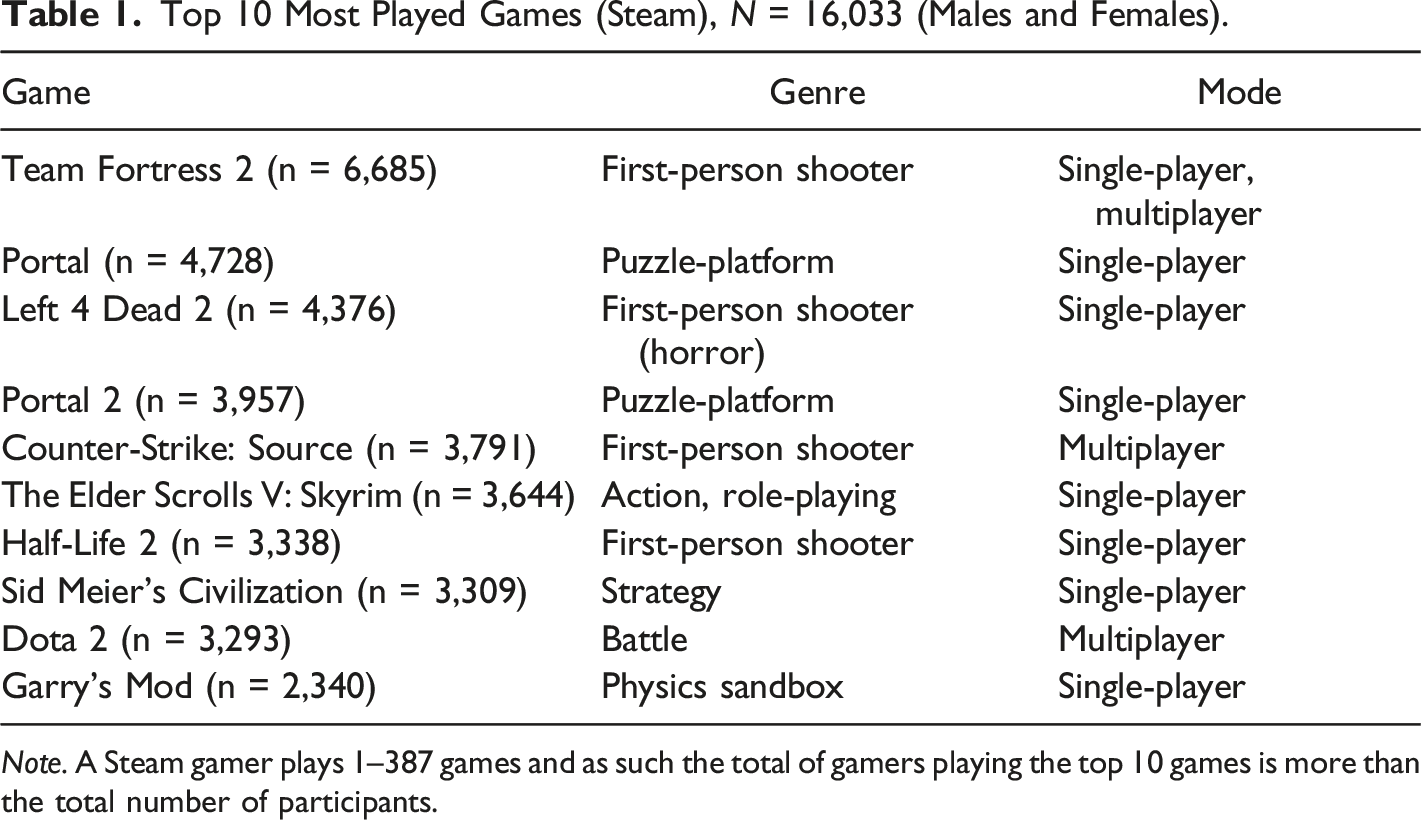
Note. A Steam gamer plays 1–387 games and as such the total of gamers playing the top 10 games is more than the total number of participants.
Results
Logistic Regression Table, Top Ten Games.
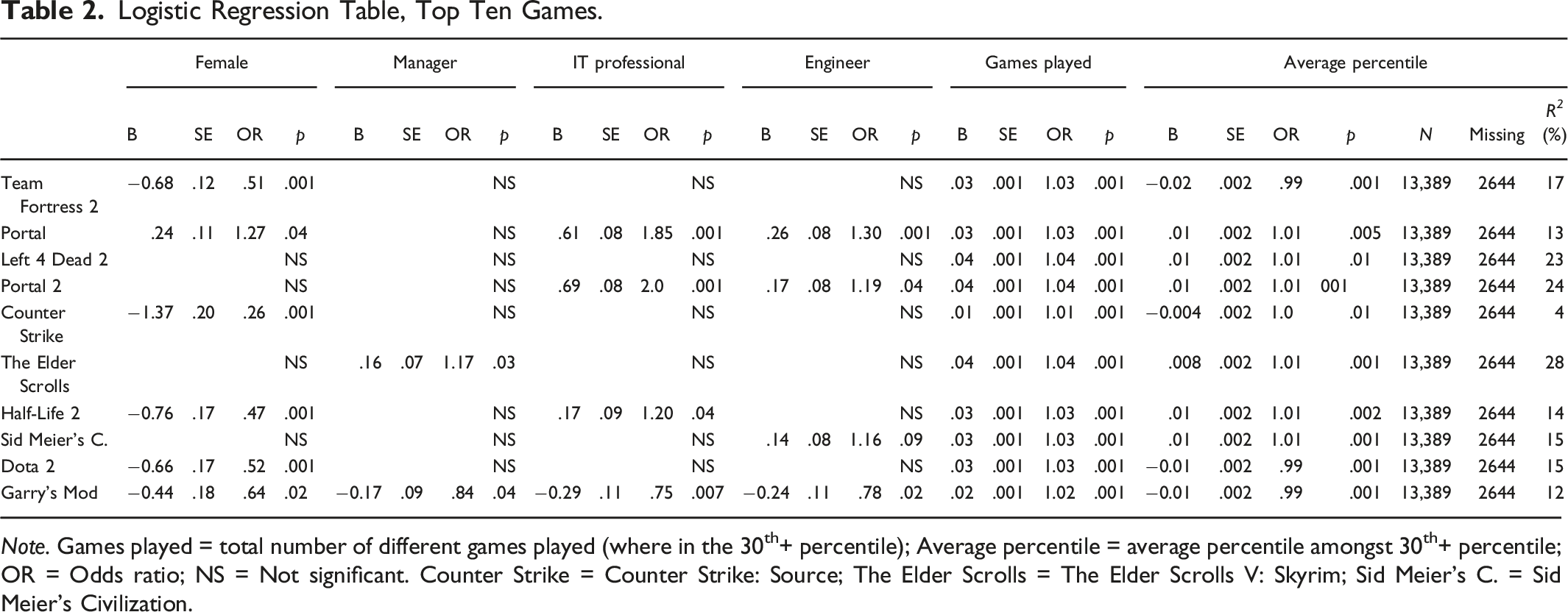
Note. Games played = total number of different games played (where in the 30th+ percentile); Average percentile = average percentile amongst 30th+ percentile; OR = Odds ratio; NS = Not significant. Counter Strike = Counter Strike: Source; The Elder Scrolls = The Elder Scrolls V: Skyrim; Sid Meier’s C. = Sid Meier’s Civilization.
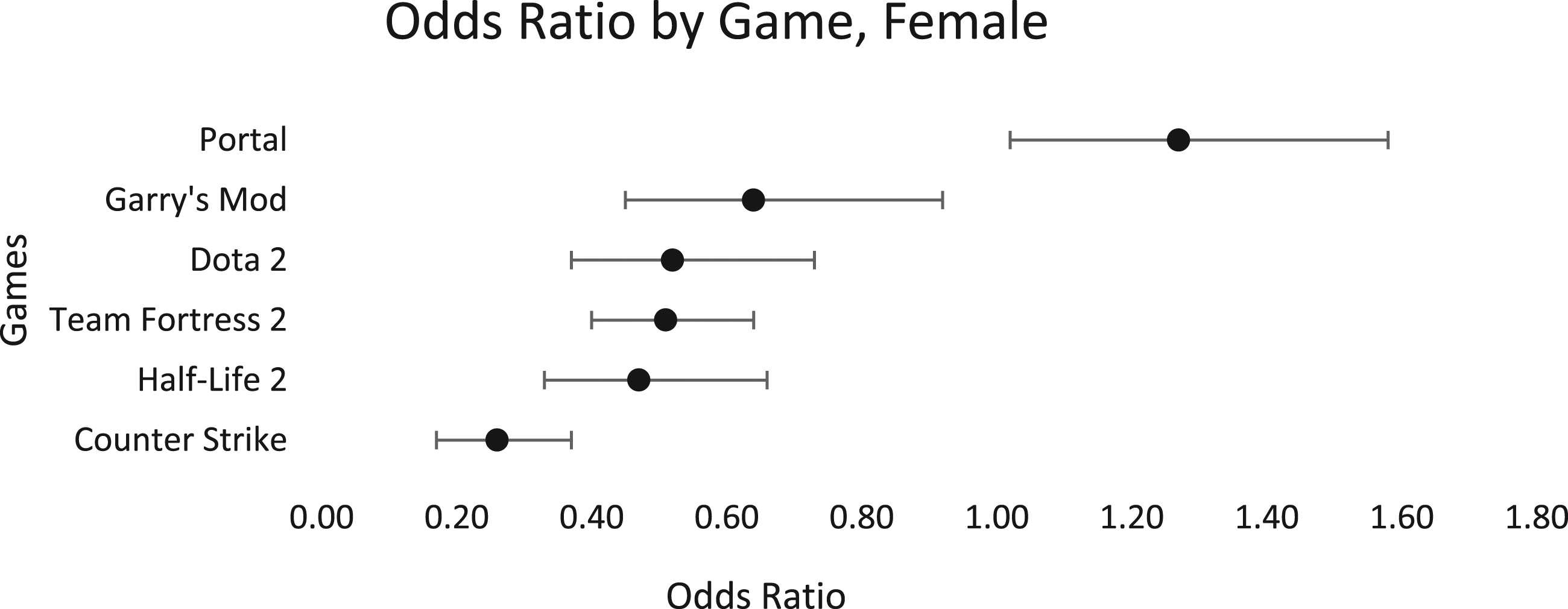
Odds ratios by games with statistical significance only (female).
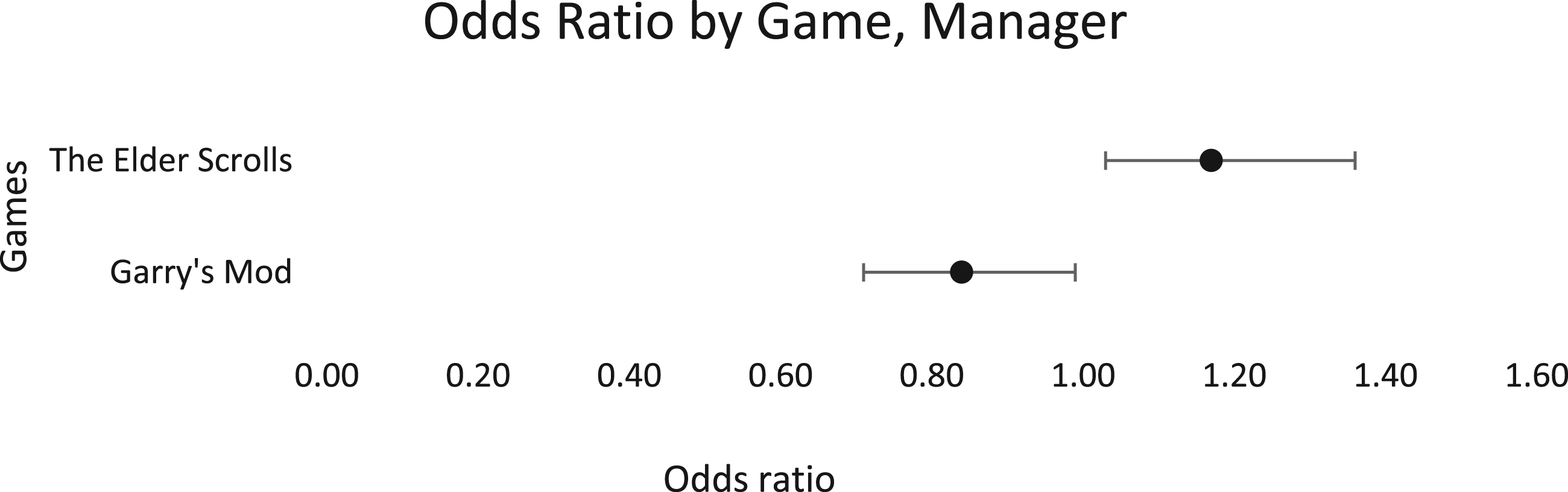
Odds ratios by games with statistical significance only (manager).
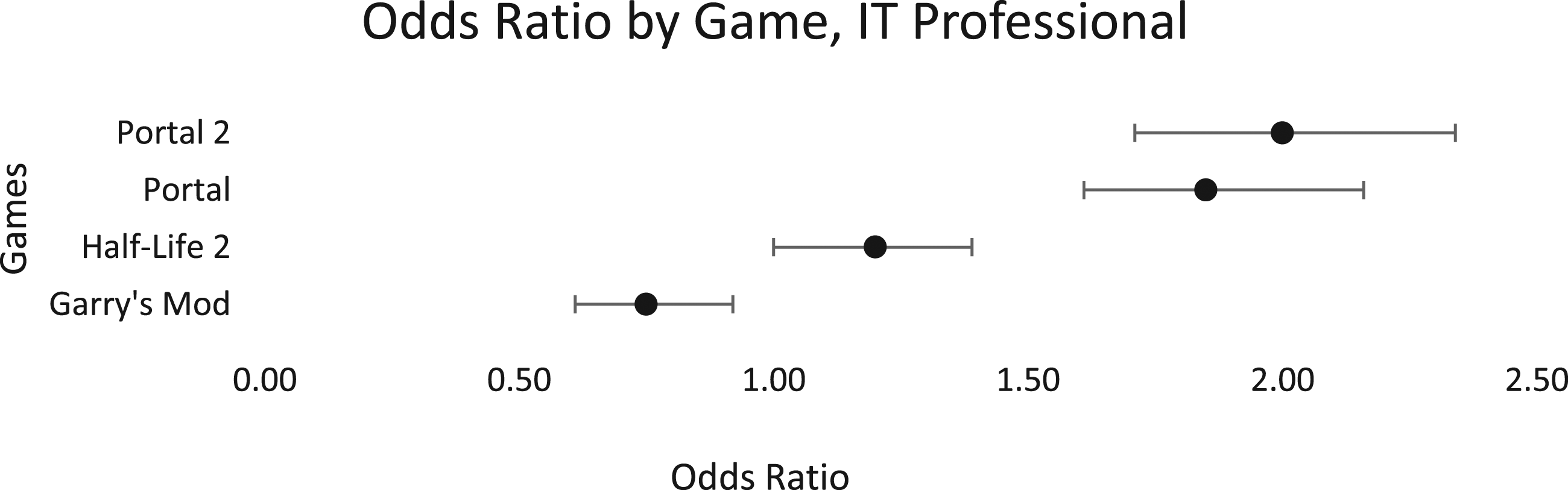
Odds ratios by games with statistical significance only (IT professional).
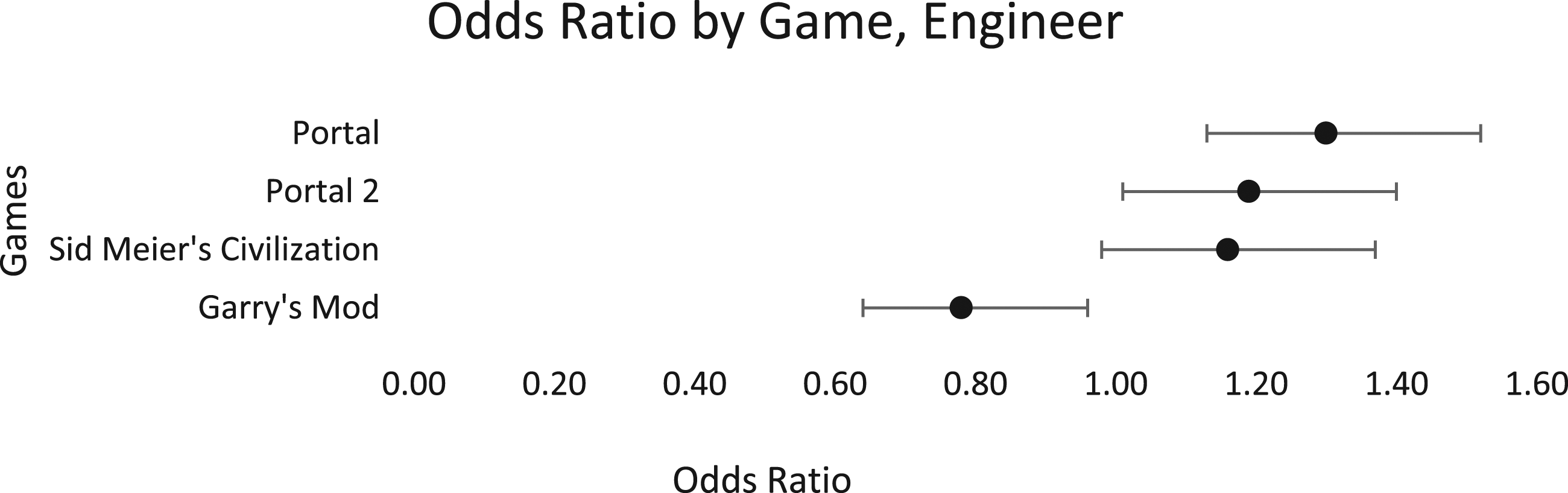
Odds ratios by games with statistical significance only (engineer).
Discussion
The purpose of the current study was to look at the actual gaming behaviour of Steam users to establish the likelihood of playing certain online games (based on different job categories and gender). We expected clear differences between the three job categories (engineers, IT professionals, and managers) and the type of online games played. We also predicted that there would be gender differences in Steam online gaming behaviour. This further extended the theory and findings of Giammarco et al., (2015), who suggested that gaming motivations were differently associated with career interests.
There is clear evidence to suggest that puzzle-platform games (e.g., Portal and Portal 2) were more likely to be played by engineers and IT professionals rather than managers, representing the non-technical job category. Portal is a technically competitive game in a single-player format where complex maze-like problems challenge players using physics-based rules. It is a game where rules change quickly and the players are expected to learn and adjust to the new rules, leading to improved spatial, problem-solving, and persistence skills (Shute et al., 2015). Both engineers and IT professionals are motivated to play online games that are highly competitive (Giammarco et al., 2015), the gaming environment offered by Portal and Portal 2. We also found that women were more likely to play the puzzle-platform games in a single-player format (Portal).
Managers are motivated by the competitiveness of an online game (Giammarco et al., 2015). On the other hand, managers were associated with playing action roleplay games (e.g. The Elder Scrolls V: Skyrim). In the Elder Scrolls V: Skyrim the player develops the character by completing different quests and by improving skills in a competitive single-player environment. The game allows for enhanced problem-solving skills, an essential skill for anyone in a managerial position (Shute et al., 2016). Engineers played the strategy game (e.g., Sid Meier’s Civilisation), where the player builds a civilisation from scratch. It is a highly complex game requiring critical thinking, leading to increased problem-solving, organising, and planning skills (Simons et al., 2021).
Finally, there was a clear gender difference concerning the types of games played. Males mainly played shooter games (e.g., Team Fortress 2, Counter Strike: Source, Half-Life 2, and Dota 2) and Garry’s Mod (physics sandbox), whereas females showed interest in the puzzle games (e.g., Portal), confirming current research findings. Women are known to play more single-player games and actively avoid hostile environments that can be experienced in a multiplayer gaming environment. Fox and Tang (2017) suggested that there can be various structural issues such as sexual harassment when playing and competing with others in a multiplayer setting (Fox & Tang, 2017). It is also possible that female gamers avoid multiplayer games to mask their gender (Quandt et al., 2014) and therefore focus on games that offer a gaming environment without any harassment by others.
Limitations and Future Directions
While we have been able to find some strong associations between the job categories and the type of actual online games played, there are some clear limitations to the present findings. We have used only three job categories, not allowing for a deeper analysis between the games played and the job categories. In future studies, it would be important to expand the level of detail in the jobs (engineers, IT professionals, and managers) towards professions that could be seen to be less technical and more pro-socially and relational, such as the creative industries and social care. Additionally, through repeat analysis of a cohort of individuals, it would be useful to track the evolution of gaming. The cross-sectional nature of the data does not allow us to confirm the reasons why a specific job category plays an online game.
Furthermore, we cannot report any possible enhancements in soft skills (e.g., problem-solving skills) when playing a particular game, as this was not measured as part of the study. Our recommendations for future work would also include investigating whether certain games enhance specific soft skills using an experimental design based on a participant’s personality, discipline, intended career path, and career motivations and determining whether skills development in games is dependent on gender. We would also aim to investigate what aspects of games can be developed further to enhance skill development.
Conclusion
To conclude, the skills gained from playing an online game can assist gamers in further strengthening valuable skills required in pursuing a specific career (e.g., engineer, manager, or IT professional). These findings have clear implications for career support provided by career technology firms and for the professional training of employees. Additionally, universities should allow students to reflect on and incorporate gaming as part of their career development and let universities consider whether more gaming should be encouraged to enhance students’ employability. Some professions appear to play particular games, and persons entering the employment market can play these to learn new skills and leverage these to help build professional social networks. Organisations have recently employed serious games as part of their recruitment process to enable future employees to understand what a workday looks like (Laumer et al., 2012). Hence, organisations may be able to develop their serious games to demonstrate to future employees how their video-gaming skills may parallel real-life employment.
Footnotes
Declaration of Conflicting Interests
The author(s) declared no potential conflicts of interest with respect to the research, authorship, and/or publication of this article.
Funding
The author(s) disclosed receipt of the following financial support for the research, authorship, and/or publication of this article: The funding is through the Small and Medium-Sized Enterprise (SME) Innovation Voucher Scheme, at University of Surrey, UK.
