




Abstract
Background. Serious games are gaining increasing prominence in
Intervention. This article presents the
Methods. We conducted test sessions with agricultural stakeholders in Finland and Sweden, and analysed quantitative and qualitative, audio-recorded and transcribed, material for opportunities and challenges related to dialogues, engagement, interactivity and experienced relevance.
Results. The qualitative analysis of recorded dialogues shows that the Maladaptation Game has potential to
Conclusions. The results indicate a need for complementary approaches to this type of game but also suggest the importance of moderation when the game design is aimed at creating dialogue around a complex environmental challenge such as
Background
Games that focus on climate change mitigation and adaptation are an increasingly prominent feature within the fields of climate change communication, participatory research and collaborative learning (Flood et al., 2018; Ouariachi et al., 2017; Reckien & Eisenack, 2013; Valkering et al., 2013). These games are designed for students, lay audiences or expert groups and focus on urban, rural or generic infrastructural or planning challenges, and range from role plays and board games to digital games. Their purpose often varies, ranging from engaging policy makers and other stakeholders to imagine possible solutions for complex problems (Onencan et al., 2016), to improving climate literacy among young people (Harker-Schuch et al., 2020; Ouariachi et al., 2017).
While these games frequently focus on mitigation efforts and address lay audiences, a growing number are now addressing the challenges related to climate adaptation (Flood et al., 2018; Lawrence & Haasnoot, 2017; Valkering et al., 2013; Neset et al., forthcoming). Games that address mitigation efforts frequently have concrete outputs, e.g. decreasing/increasing emissions, land use or energy use as outcomes linked to choices that can be made in the game, while climate adaptation is frequently more focused on options and trade-offs. To date, there is a lack of knowledge about how target audiences for climate adaptation games react to games in which choices and examples differ from their immediate understandings of adequate options for decision-making. In response to this knowledge gap, this article presents a case study which analyses the potential of serious gaming to address trade-offs in adaptation decision-making.
The case study focuses on a game that falls into the category of climate adaptation games: The Maladaptation Game. A game focusing on maladaptive outcomes provides a particularly suitable case for analysing the role of decision support in complex environmental issues. Adaptation to climate change does not only involve intricate interactions between climate systems and society, the responses also involve trade-offs with potentially negative – maladaptive – outcomes for different actors. Maladaptation has been sparingly used in the literature so far, though some conceptualisations are now emerging (Juhola et al., 2016; Magnan et al., 2016). While these definitions have nuanced differences, they all attempt to capture the feedbacks of an adaptation action and what negative consequences they may have over different spatial and temporal scales.
The context of this game revolves around the challenges that the Nordic agricultural sector might meet in terms of climate variability and change. Agriculture in the Nordic countries has been described as a winner of the climatic changes (IPCC, 2007), although climate-related challenges for Northern Europe are increasingly being emphasized (Hoegh-Guldberg et al., 2018; IPCC, 2014). A literature review (Wiréhn, 2018) showed that the agricultural sector will need to adapt to the potentially positive changes, such as a longer growing season, but will also be required to address potentially severe impacts related to changes in precipitation and temperature, and in particular to extreme events such as heavy precipitation and drought. Other impacts, such an increased risk of pests and weeds, will further demand the implementation of adaptation measures to avoid infestations and yield losses.
While agricultural adaptation measures are frequently addressed in the scientific and grey literature, few of these are currently evaluated with regard to potential negative effects (Antwi-Agyei et al., 2018; Islam & Nursey-Bray, 2017). Knowledge regarding the assessment of trade-offs currently relies on expert knowledge from the agricultural sector, since most of these measures have not yet been implemented, and observations of negative outcomes are scarce. Hence, the aim of employing the Maladaptation Game is to enhance discussion and dialogue, and stimulate debate between experts on the possibility, severity and trade-offs between various outcomes if implementing adaptation measures.
While Harteveld and colleagues (2011) discussed different routes for game design to strengthen engaging experience and social interaction, studies that focus specifically on dialogues, have shown that games that are played in ‘collaborative mode’ (van der Meij et al., 2020) create favorable conditions for reflection and dialogue, but do not necessarily lead to increased learning outcomes as these dialogues might focus on basic actions and game features rather than reasoning around the more specific choices made in the game. In their recent study, van der Meij et al. (2020), presented evidence that scripting bears potential to enhance the level of dialogic acts and collaborative learning in serious gaming. In this study, we analyze to what extent the game stimulates players to unfold the challenges and options provided in the game.
As Mitgutsch and Alvarado (2012) argued, serious games are frequently assessed in respect of ‘the quality of their content’ but rarely in relation to their intention-based design. While several studies attempt for assessment tools for serious games (e.g. Foster & Mishra, 2011; Mitgutsch & Alvarado, 2012; Mayer et al., 2014; König & Wolf, 2016; Ouariachi et al., 2017), Mitgutsch and Alvarado (2012) included criteria that are directed to the assessment of purpose in serious games, and suggest core elements for their Serious Game Design Assessment Framework. These are related to the purpose of the game, which ‘’should be reflected in all the elements that support the game system’’ (Mitgutsch & Alvarado, 2012: 123), namely the content, fiction & narrative, game mechanics, aesthetics and graphics and framing of the game. This assessment framework was intended to guide the assessment of serious games, as ‘’a constructive tool to offer grounds for critical discussions about serious games’’ (Mitgutsch & Alvarado, 2012: 123), rather than an objective instrument. In this study, we adapt elements of the framework to our research questions, to allow the analysis of two areas (i) engagement and interactivity, as well as the (ii) experienced relevance of the game. The concepts of engagement and interactivity as well as the lack of common definitions have been extensively addressed (Harteveld et al., 2011; Quandt & Kröger, 2013; Whitton & Moseley, 2014). In this study, we focus on aspects of game mechanics, graphical representations as well as the role of the challenges and options that are provided in the game to create engagement and interactivity.
The second area, experienced relevance, includes reflections on the purpose of the game in relation to the content, narrative, as well as the framing of the game. While purpose refers to the intended impact on the player, the remaining elements reflect both the information provided, as well as the context, outline and setting of the game (Mitgutsch & Alvarado, 2012).
This article presents the design and application of the Maladaptation Game and assesses how the game and its specific features can support dialogue, engagement and interactivity. The Maladaptation Game is intended to support participatory research in agricultural climate adaptation and was designed to bring together stakeholders from the agricultural sector in Sweden and Finland to engage in the exploration of climate challenges and adaptation measures, assessing the potential maladaptive outcomes and discussing their relevance and related trade-offs.
The Maladaptation Game
Maladaptation in Nordic Agriculture – The Scientific Background for the Game
The game is based on the concept of maladaptation (Juhola et al., 2016), which addresses the potential negative outcomes of any climate adaptation measure. These negative outcomes are divided into three categories: (i) impacts that rebound on the implementing actor or sector, (ii) impacts that shift vulnerability to other actors or sectors, and (iii) impacts on the common pool, which erode sustainable development. The study of climate adaptation measures in agriculture is based on a review of scientific and grey literature (Wiréhn, 2018), analysed in relation to potential negative impacts as well as being complemented and categorized based on interviews with sector professionals (Neset et al., 2019). This assessment provided the data that is the content of the game. Four climate-related challenges, namely: changes in precipitation, increasing temperatures and drought, increased occurrence of pests and weeds, and a prolonged growing season, are the entry point of the game. These challenges, which have been identified as the most prominent generic categories that Nordic agriculture might face under a changing climate, were selected from the literature review and interviews with farmers and extension officers in two Nordic agricultural regions (Neset et al., 2019; Wiréhn, 2018). For each of these challenges, a number of adaptation measures, as well as several potential negative outcomes that could occur due to implementation, have been identified and subsequently included in the game (Neset et al., 2019; Wiréhn, 2018).
The number of adaptation measures that are either already in practice or included in recommendations or farmers’ own considerations differ in number for each challenge. Similarly, the number of negative outcomes differs for each measure. The negative outcomes were categorised based on the theoretical framework of maladaptation (Juhola et al., 2016). Climate change adaptation by definition aims to decrease vulnerability and as such it is a positive intervention – commonly referred to as successful adaptation. The game design stimulates a discussion regarding ‘how, for whom, from what perspective’, to assess what choices players make when offered different solutions that all have potential negative consequences for themselves, their neighbours or society/the environment at large. Hence, the overarching aim of the research project is to improve the scientific basis for the assessment and understanding of maladaptation, while the game itself – even though it is built on a review of scientific information and practical knowledge – is methodologically challenging because the options and examples might not match with the players’ perspectives, or could even be considered irrelevant or inadequate as options for agricultural decision-making.
Game Design
The Maladaptation Game is constructed as a single-player game but is designed for application in group settings where one or more participants are engaging as one player to stimulate subsequent discussion regarding their individual choices, reflections and outcomes. The game is web-based and multiple players can engage simultaneously. A moderator interface allows the researcher to collect the settings and results for each player involved in a session, store these for analysis and display the results on a moderator screen.
The target group for the game is agricultural stakeholders in the Nordic countries. In order to negotiate the different options and their potential negative outcomes, some prior understanding of the challenges and measures related to climate change adaptation in the context of crop production is required.
The gameplay comprises the four challenges, each containing multiple options and consequences that the player has to consider before making a decision (Figure 1). In the starting position, the player receives a limited number of coins to pay for the different measures, and the task is to keep costs as low as possible. While considering the feasibility and costs of each measure, the player has to negotiate the trade-off with the potential negative effect that is connected to each of the measures.
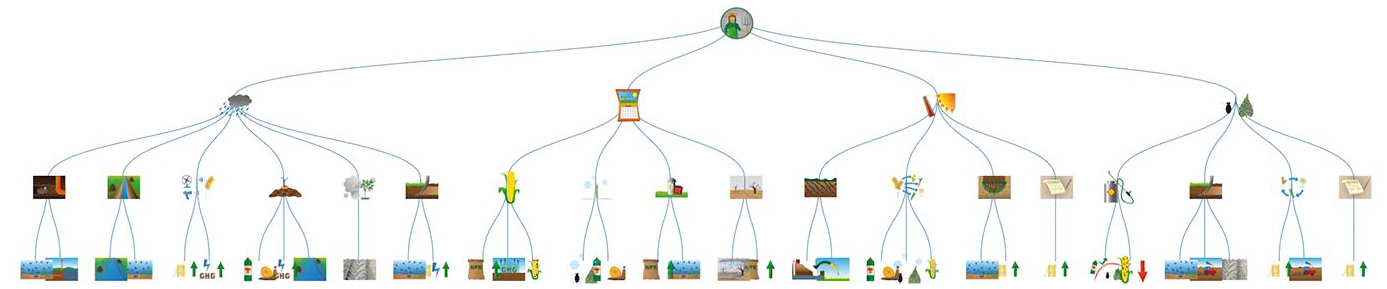
Schematic outline of the Maladaptation Game.
The player must proceed through all four challenges, one at a time. The general idea is that, when entering a specific challenge, the player must test all the adaptation measures, and explore each of the assigned potential maladaptive outcomes, prior to making a decision. Adaptation measures and maladaptive outcomes are both illustrated on the cards (Figure 2) and explained on the reverse of each card. While the costs of each adaptation measure are expressed as a number of coins, the cards that present the feature of the maladaptive outcomes do not indicate the severity or scope of the outcome, because it is intended that the player will negotiate and reflect upon these impacts and their relevance and gravity in this specific context. On completion of a challenge, the player returns to the first page, to select another challenge. The choices made in each of the four challenges accumulate to the final score, which is displayed on a small scoreboard featuring the summary of the finalized challenge, the remaining number of coins, and a Maladaptation score (M-score) which represents the negative impact of the potential maladaptive outcome (Figure 3). This score is pre-set and based on a ranking of maladaptive outcomes as to whether they impact upon the implementing actor (low score), other actors/sectors (medium score) or the common pool in terms of environmental or wider societal impact (high score).
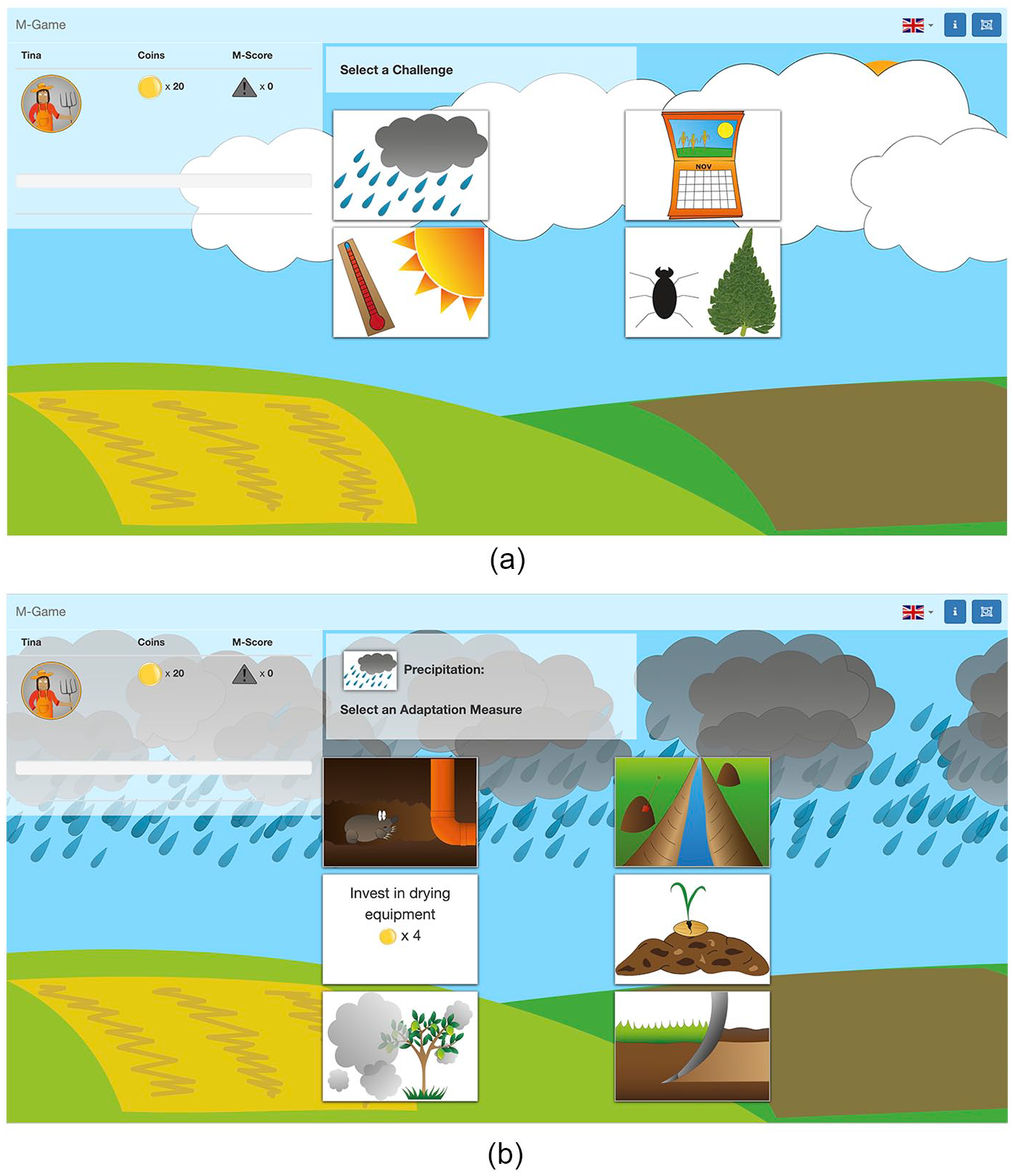
a) and b): The user interface of the Maladaptation Game. 2a) presents the entry view for the game, with four challenges; 2b) presents the view when selecting the ‘precipitation’ challenge, which can be addressed by means of six different measures. One of the cards is turned to reveal a text explaining the illustrated adaptation measure.

The scoreboard of the Maladaptation Game, summarizing the choices and results for each player.
The game is finished when all four challenges are completed. In this final view, the scoreboard presents the selections made, as well as the remaining number of coins and the final M-score. The moderator screen shows all the scoreboards that were included in a given gaming session in one collected view to allow for comparison, discussion and reflection after the finalization of the game.
The game mechanics of the Maladaptation game are straightforward, and include hovering and selection by clicking. By hovering over a card, the player can turn it. A text description of the adaptation measure and its associated cost, are then displayed on the back of the card (Figure 4). For advancing in the game, the player needs to select a specific card by clicking on it and then click on the continue button. Once an adaptation measure is selected, a card displaying a potential negative outcome associated to the selected measure is presented. By hovering over the card, a text description of the outcome is displayed and the player can accept or reject the outcome by clicking on the corresponding buttons.
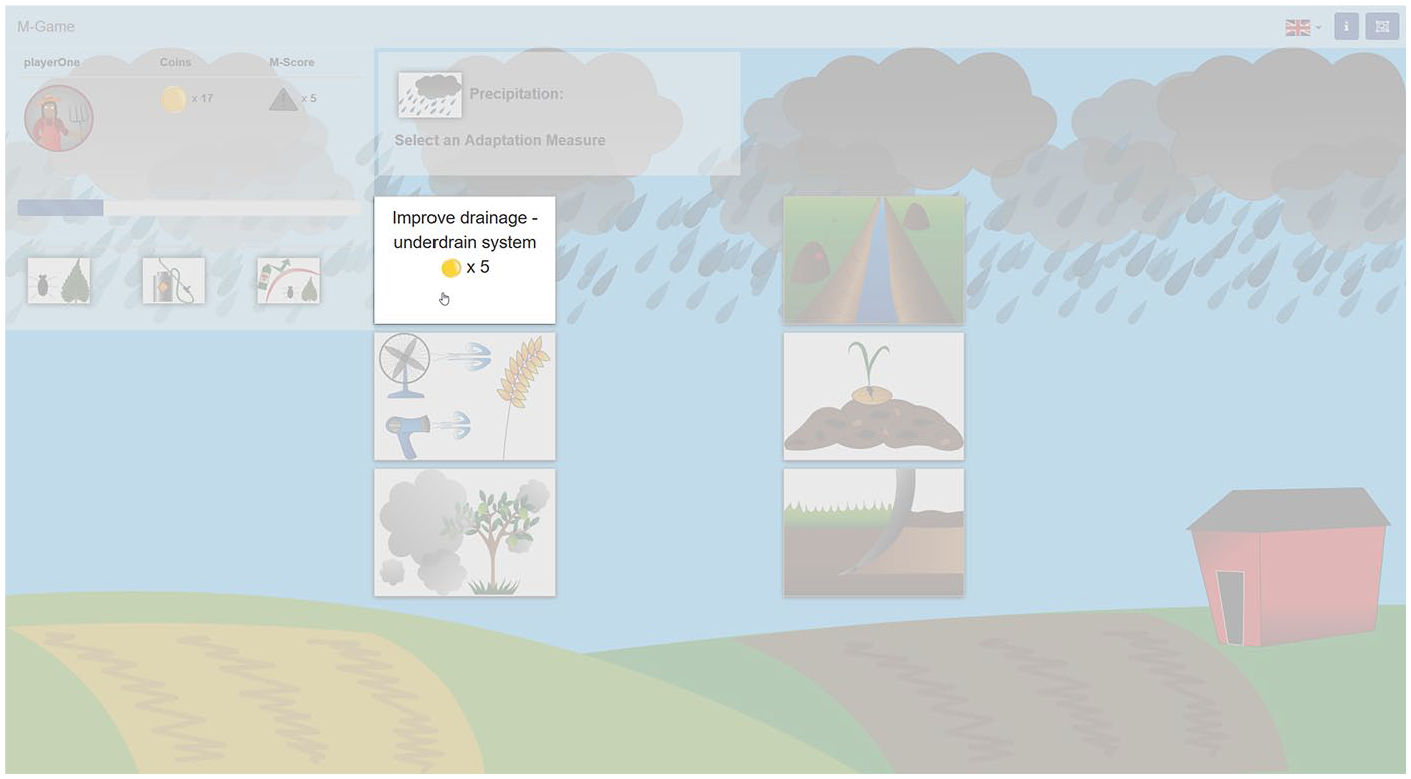
The interface of the Maladaptation Game, exemplifying the hovering function.
Methods
This study presents the results of participatory research in the field of agricultural climate adaptation. The analysis of qualitative and quantitative research data aims to assess the gameplay and user experience, with a specific focus on the participants’ feedback on engagement, interactivity and the relevance of the game. This study is guided by three research questions: (1) How can serious gaming support a dialogue on trade-offs in Nordic agriculture? (2) What opportunities and challenges does the game present in terms of engagement and interactivity? (3) What type of game features influence the experienced relevance of the game?
The game has been tested and evaluated in a number of sessions throughout the project and revised in accordance with the collected feedback, mainly to clarify issues, avoid misconceptions and improve the gameplay. In addition to the serious game design and application, this article presents results from 20 test sessions that were organized in parallel in Finland and Sweden, with 37 participants in total. Each session had a moderator present that introduced the game and posed some introductory and follow-up questions to the participants. Introductory questions were opening up to the subject area of climate change adaptation, such as: ‘’How should Swedish/Finnish agriculture adapt to climate change? What needs to be done? Who is responsible for adaptation?’’. Follow-up questions aimed to encourage the players to reflect about the experience, and about the game itself, guided by questions such as: ‘’ What are your thoughts after playing the game? How would you use the game in your work? What are your reflections regarding the specific maladaptive outcomes in the game? Were any important aspects missing?’’. The moderator was one of the involved researchers, and in several sessions, one or two additional researchers were present. Participants were selected to represent the field of agriculture from various perspectives, and had an agricultural background, whereas most of them also had personal experience of farming and farm management. In order to match the single-player mode of the game, but still capture discussions that are triggered during the session, players were recruited in homogeneous pairs, in terms of professional background or area of interest, and played jointly during the sessions. Nevertheless, for various reasons, three of the participants had to play by themselves. In these cases, the moderator engaged by asking questions around choices, such as: “How did you reason when you chose between adaptation measures and maladaptive outcomes?’’, and discussing issues with the participant during the game to capture the rationale behind choices made in the game and the emerging thoughts related to the game-play or content. The main role of the moderator was, however, to observe the gaming session with minimum interference and to present the introductory and follow-up questions according to the semi-structured interview guide (Morgan et al., 1998). As several scholars have argued (Crookall, 2013; Curtis, 2014; Reckien & Eisenack, 2013), science-based serious games can function as an interface for dialogue between scientists and the public, or as in this study practitioners, to facilitate discussions on subjects that are raised in the game either with the present scientists or between the players.
The sessions lasted one hour on average, including a set of questions relating to the more general research field of climate adaptation in agriculture both before and after the gameplay. Sessions were held in the work or education environment of the participants, and players used laptop computers. Each of the sessions was audio-recorded and transcribed verbatim. The transcripts were thematically analysed for discussions related to the areas of (i) engagement and interactivity, and (ii) experienced relevance of the game. The thematic analysis of the transcripts was conducted by three researchers that also had participated in the gaming session, two of which as moderators and one as additional researcher. Results of the qualitative analysis are presented in section 4.2.
All choices made in the game during the sessions were logged individually, and a compilation of decision pathways for the 20 game sessions were analysed. The results of this quantitative analysis are presented in section 4.1 (Figures 5–8).
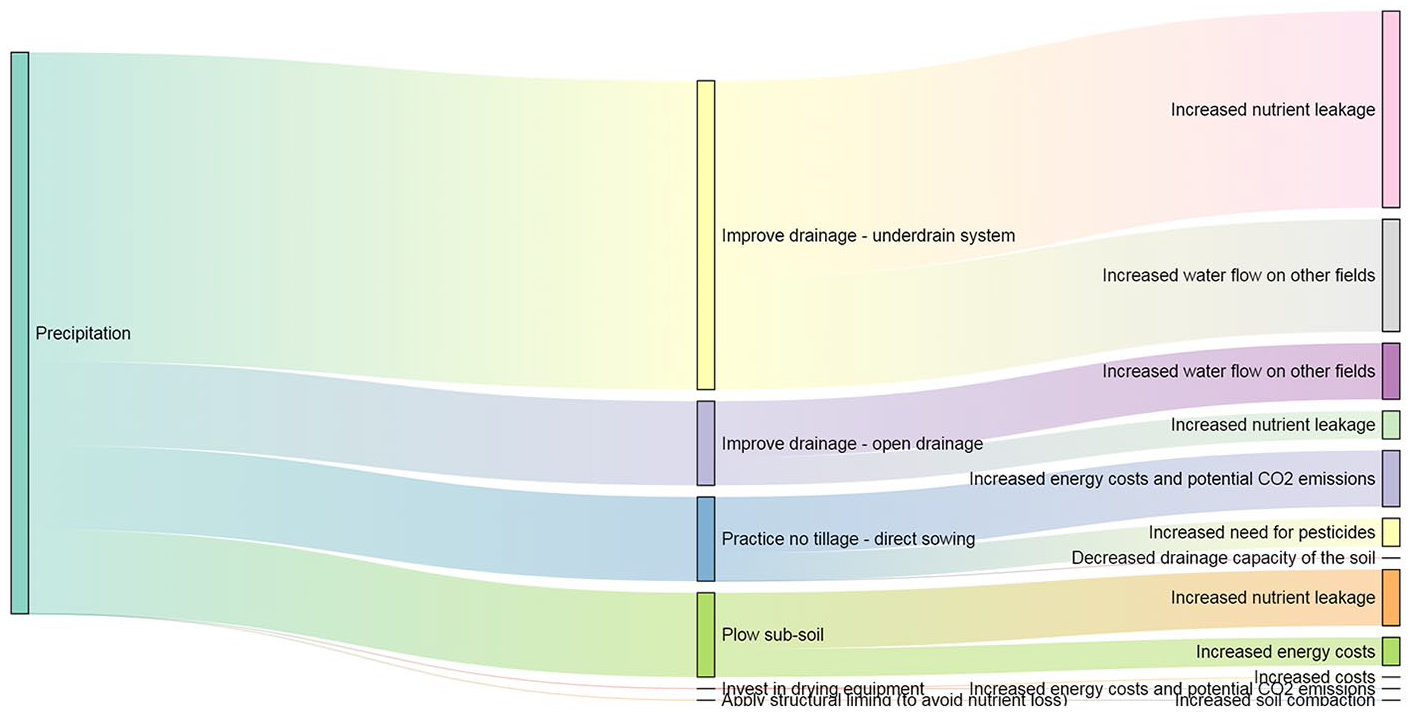
Illustration of the decision pathway for the 20 gaming sessions. The figure represents the summarized results for the precipitation challenge, presenting the division for the different adaptation options and the accepted maladaptive outcomes.
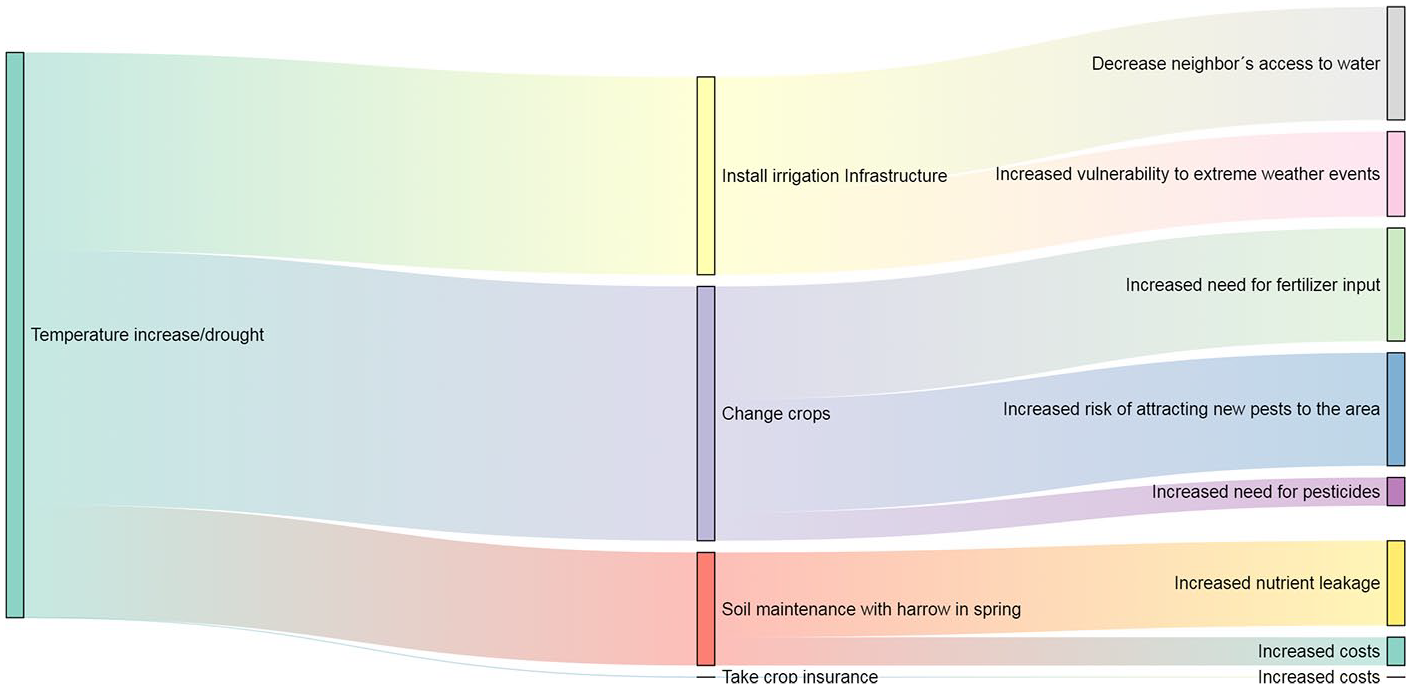
Illustration of the decision pathway for the 20 gaming sessions. The figure represents the summarized results for the ‘temperature/drought’ challenge, presenting the division for the different adaptation options and the accepted maladaptive outcomes.
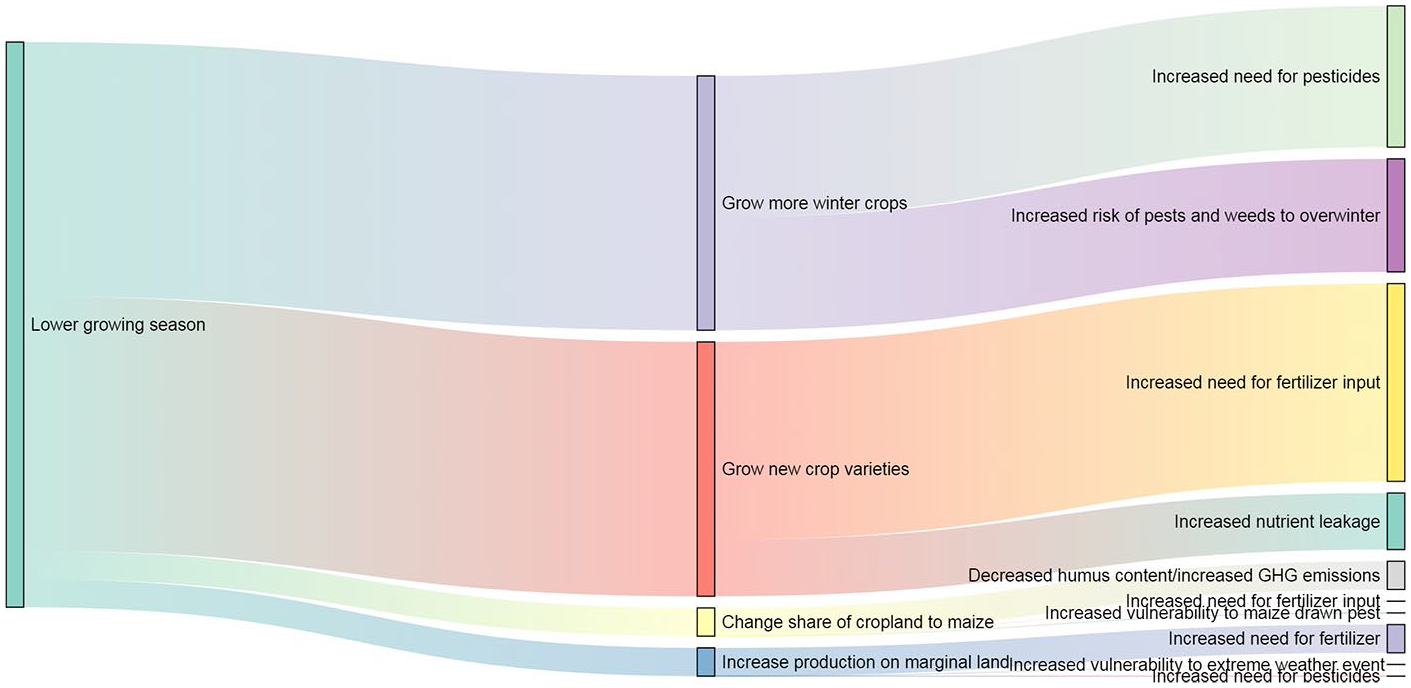
Illustration of the decision pathway for the 20 gaming sessions. The figure represents the summarized results for the ‘growing season’ challenge, presenting the division for the different adaptation options and the potential maladaptive outcomes.
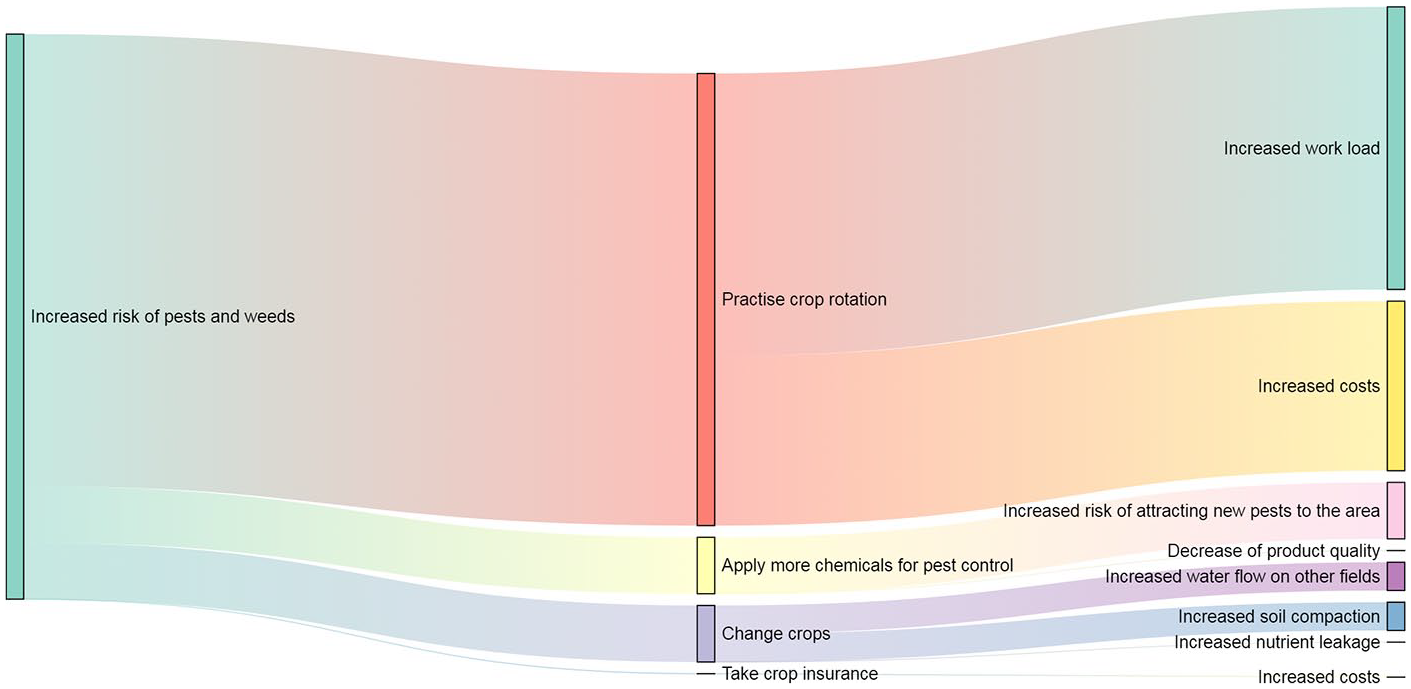
Illustration of the decision pathway for the 20 gaming sessions. The figure represents the summarized results for the ‘pests and weeds’ challenge, presenting the division for the different adaptation options and the potential maladaptive outcome.
Participants were informed about the aim of the study prior to the start of the test session and stated their informed consent to the scientific analysis and publication of the recorded data. All participants were over the age of 16 and hence had the right to sign the consent form themselves. The project follows the ethical code of conduct of the Swedish Research Council (www.codex.vr.se), and no identifiers, such as names or affiliations of the participants, are included in any of the analysed or published material.
Results and Analysis
Gameplay Assessment
As the game includes a randomized selection of the maladaptive outcomes that appear for each adaptation measure, players’ strategies are not entirely comparable if referring to the selection pathways alone. Similarly, players selected adaptation measures for very different reasons, arguing from their experience, professional opinion or guided by other factors, such as ethical concerns or personal preferences. While the specific reasoning of the participants during their engagement with the game reveals the wider understanding that informs the research field of climate adaptation (Wiréhn et al., 2020; Neset et al., 2019), the quantitative recording of each game allows for an examination of any patterns and possible strategies that may appear.
The game was tested in ten gaming sessions each in Finland and Sweden. Since this study did not set out to make comparisons between the countries, but rather aimed to capture different aspects of the game, we are presenting the material as one data set. As inherently established by the game design, all sessions addressed the four climatic challenges, and below we present the division between selected pathways for each of the challenges. It is important to note, however, that the gaming mechanism picks one maladaptive outcome randomly from a number of options; hence, players are not provided with the opportunity to select from the comprehensive list of possible options. As such, the results are not comparable in terms of frequency, but rather are indicative regarding the type of options selected.
Challenge 1: Precipitation
The challenge of precipitation, or more correctly increased and more intense precipitation, which is commonly discussed in the scientific and grey literature in relation to occurrence during the wrong periods of the growing season, is assigned six different adaptation measures in the game, ranging from improved drainage to investment in drying equipment. As Figure 5 shows, the two most prominent choices were improved drainage as underdrain systems and improved open drainage, while two of the adaptation measures were not selected at all during the gameplay. Figure 5 also illustrates the maladaptive outcomes that players accepted as part of these adaptation measures.
Challenge 2: Temperature and Drought
The challenge of increased temperature and drought was assigned four different adaptation measures in the game, including the implementation of irrigation systems, changing to more drought-resistant crops, subsoil ploughing and taking out crop insurance. As presented in Figure 6, the most commonly selected measures were the first two, while none of the participants selected ‘take crop insurance’ to tackle this challenge. Participants appeared to accept the potential maladaptive outcomes related to these measures to a similar degree. While this is not entirely indicative of participants’ overall perceptions of maladaptive outcomes, the discussions concerning these revealed several perspectives on the risks related to adaptation measures concerning their own farm economy compared to environmental impacts with a wider geographical impact, such as decreasing groundwater levels or the increased risk of attracting new pests to the area.
Challenge 3: Prolonged Growing Season
While a prolonged growing season was the only potentially positive type of challenge represented in the game, the participants in the test sessions did not question the necessity of adapting to this challenge. Adaptation measures included changing the types of crops grown and expanding cultivation to marginal lands. The two most commonly selected adaptation measures were changing to winter crops or starting to grow new types of crops (Figure 7). Among these, the maladaptive outcome of increased need for fertilizer was the most frequently accepted; however, this was also given for 3 out of 10 possible maladaptive outcomes under this challenge.
Challenge 4: Pests and Weeds
To address the challenge of an increased occurrence of pests and weeds, the game presents four adaptation measures to the player – increased use of pesticides, mechanical control, crop rotation and insurance. While the last of these was not selected by any of the players, crop rotation was the single most selected measure (Figure 8). The potential maladaptive outcomes to crop rotation, increased costs or workload, were hence also the most accepted maladaptive outcomes. This adaptation measure affects only the implementing actor and might hence be judged by the player to be low in terms of negative impacts. The possible impacts could be averted by changing management practices, cutting costs, or – as some players suggested – even create more work opportunities in the countryside. Some players, however, did also question whether there would actually be a higher workload when using crop rotation.
As the main purpose of the Maladaptation Game is to stimulate dialogue on different options for addressing climate change in Nordic agriculture, and negotiating their unintended negative impacts, the outcomes of the game are not of primary importance; nevertheless, they are indicative of certain options being more or less attractive to the players.
To some extent, maladaptive outcomes were accepted not because the players weighed up the trade-offs between different maladaptive outcomes but rather because they did not agree with the potential negative outcome as presented in the game. This could be linked to a lack of belief that the outcome would be correct, e.g. a belief that direct sowing would not actually increase energy costs or CO2 emissions, and thus players accepted this negative outcome in order to continue the game while selecting the measure that they regarded as most important. Another example concerns the growing of new crop varieties, when several players stated that this measure does not necessarily involve an increased need for fertilizer input, since it depends on the crop type. Hence, these players accepted this outcome, not as an increased input of fertilizer but in terms of an option to cultivate new crops that do not demand higher inputs.
Engagement, Interactivity and Experienced Relevance
An assessment of the game from a communication theoretical perspective (Asplund et al., 2019) identified a number of opportunities and barriers that to some extent resonate with the current literature on serious gaming. In this section, we expand upon this analysis with reference to comments and feedback collected during the gaming sessions. In accordance with criteria presented in game evaluation studies (Mitgutsch & Alvarado, 2012), we discuss feedback and observations that were captured during and after the test sessions in two categories: (i) engagement and interactivity, relating to criteria such as game mechanics and graphics, and (ii) experienced relevance, covering issues such as purpose, content and information, narrative, as well as the framing of the game.
Engagement and interactivity
During the test sessions and in response to the introductory and follow-up questions, observations and feedback were collected relating to the user experience, gameplay, flow and engagement. While several of the participants were not used to digital games, the simple mode of interaction and card-play-like selection of measures enabled most of them to interact smoothly with the game’s user interface. Nevertheless, a number of participants refused to directly interact with the game, asking their co-players, or even the moderator, to take over, at least at the start of the session.
Despite an introduction to the game’s mechanics and an explanation that players can first investigate any decisions and still return to the overview of adaptation measures as long as the ‘accept’ button has not been selected for a maladaptive outcome, anxiety about accidentally making a false selection was expressed by some players, but actually occurred in only a single case. Other participants, despite the given instructions and the request to go through their decision-making process thoroughly, were so eager to finish the game or to see what was coming next, that they rushed through some of the challenges without deliberating between all the options. Frequently, however, participants provided the feedback that the game was easy to play, and described it as rather straightforward as well as fun, and quick to get into due to the images and short texts on the cards, and had a simple enough structure that it was possible to engage quickly.
Elements that hindered the flow of the gameplay were most frequently related to the interpretation and questioning of the options (adaptation measures and maladaptive outcomes) given in the game. Although the illustrations on the front of the card were complemented by explanatory text on the reverse, users at first engaged in interpretations of the illustrations and sometimes perceived it as difficult to interpret these illustrations. Thus, the moderator had to frequently remind the players to explore the text on the reverse for explanations to ensure that the players explored all the options.
The simplicity of the four challenges, which could subsequently be addressed in any selected order, facilitated quick engagement and smooth progression in most of the game sessions. While a number of initial questions recurred during several of the sessions, in relation to what type of farm and geographical/temporal context the players were expected to refer to, the challenges themselves generated an engaging dialogue between the players (and with the moderator in the case of single players), involving negotiations related to the selection of adaptation measures as well as the impacts and relevance of potential maladaptive outcomes. The options provided in the game provoked a dialogue on the ‘dilemma’, since the players jointly had to agree on accepting one of the potential negative outcomes to proceed. Moreover, as the provided options were frequently questioned by players, these game features often raised valuable discussions for understanding maladaptation in the Nordic agricultural sector.
The game was especially praised for its effect on inducing discussions and thought processes on new perceptions and causal relations – “Even quiet people, like myself, get inspired to speak”, as one participant reflected. As such, the simplicity of the game ensured quick progression and engagement, although the game mechanics and design did not support a flow experience or any concrete feedback aside from the progression of costs and maladaptive points.
Experienced relevance
During the gaming sessions, and in particular when responding to a follow-up interview question after having completed the game, participants reflected on the relevance and applicability of the game, from their own professional perspective as well as with regard to the target audience and suitable setting for the game.
The experienced relevance was frequently related to: (i) agreement with the options provided in the game, (ii) simplifications made in the game, and (iii) reflections related to the relevance of the game to specific user groups or educational settings.
As the game was designed to stimulate discussion concerning the adaptation options and their potential negative outcomes, disagreement with different options in terms of relevance or applicability provided valuable research data. Nevertheless, disagreement also reflected a critique of the relevance in terms of the credibility of the included options, and presented a barrier to the user experience. As such, agreement and disagreement with the game’s content is one of the crucial issues that will require further attention if the game is to be used in sessions without a moderator being present to explain the value of these disagreements and the aim of validating the state of current research from expert perspectives.
Participants voiced criticisms about the generalizing character of the game, because no specific type of farm, geographical location or temporal scale for the decisions were given. Neither did the game include any feedback mechanisms from choices made in one challenge to another. This type of simplification led to an experienced lack of relevance by some participants, who referred to the game as abstract, too simplified or black and white, while other participants accepted this setting, saying: “it’s understandable that ‘everything’ cannot be included”, “whatever I choose there’s a negative outcome, it’s true, but life’s like that”. Participant strategies for addressing this included creating their own narrative for the game and engaging with each challenge separately, but with reference to their prior reasoning. A third type of player response was to not express any opinion regarding the generalization of the game setting and to proceed to engage with each of the challenges in a more task-oriented way, addressing and negotiating the options given in relation to their specific knowledge and background, noting that these different options would imply alternative results in various farm settings. These players were therefore not always primarily focusing on the outcomes, but on evaluating the measures. This is exemplified by a participant negotiating between choices for a ‘longer growing season’: “I’d probably choose this [winter crops] because it has high yield potential. These [marginal lands] include a lot of uncertainty. This [maize] would work if you had an animal farm. But the least painful option is this [winter crops]. It includes least investment.”
In response to a follow-up question posed by the moderator at the end of each gaming session, participants reflected on the relevance of the game to different user groups and educational or collaborative settings. While all participants noted some potential use of the game, three specific areas of application were identified: education, use for practitioners to stimulate dialogue on climate adaptation, and to stimulate a policy-practitioner dialogue to problematize the adaptation options and practices of conventional agriculture. Educational programmes were exemplified by both agricultural education at high-school level, and also higher education in agronomy, or to challenge students of related environmental subjects. In general, participants noted that a good knowledge of the agricultural system would be required in order to understand that the positive effects of adaptation measures are implicit. Some participants outlined that the game could be played as part of an introduction to the subject area, to challenge and provoke dialogue, or as a group exercise, led by a teacher who explains why adaptation measures will need to be implemented in the first place.
Participants expressed differing perspectives on the extent to which the game could stimulate dialogue with practitioners. While some participants thought that the game would be too blunt for farmers, or only works when the player doesn’t know too much, but knows enough, others noted that it would be suitable for starting a dialogue both with farmers and in a farm-advising context, as well as for administration or professional education, because the game provided an eye opener and visualized examples and challenges. One frequently articulated critique was the lack of context-specific information, such as the inclusion of temporal aspects, investment, systemic decisions, food markets, or the impacts of aspects such as farm leases on decisions about drainage or other investments, which would be required to meet the level of interest for agricultural practitioners and experts. In line with this argument, participants argued that an adequate framing of the game and sufficient agricultural background knowledge and/or information was required to avoid the risk that the game portrays the agricultural sector in a negative sense, and farmers as environmental scoundrels (cf. Asplund et al., 2013; Hallgren et al., 2010). In line with this, participants asked for extended explanations, including references to the scientific and grey literature for measures and outcomes in order to increase the educational value of the game. As one participant explained, “it would be good to see the meaning and cost-efficiency of each measure.” Furthermore, participants emphasized the value of showing the costs and the risks that farmers are taking to create climate benefits and produce food.
In order to improve the relevance, several participants asked for further development of the game to broaden its scope, such as providing in-game options to select a farm type and to provide only the selection of adaptation measures that would be relevant to the given farm types, to rank the adaptation options as well as to include feedback mechanisms and restrict the available coins to force the player to negotiate between options. Aspects such as soil conditions, biodiversity or animal husbandry (in relation to an increased need for fertilizer) were asked about. Frequently, participants requested that the positive outcomes of adaptation measures should be included, as the game – by design – was focusing on the potential negative outcomes alone, which was experienced as giving a wrongful impression of Nordic agriculture and the opportunities that climate adaptation provides. A concrete addition that was made by several groups was to include an illustration of the fundamental function of supplying food that is provided by agriculture – as one participant expressed it, to add a “food production chart – how much do we produce in this system” while the game proceeds.
Discussion
This study has specific focus on dialogue, engagement, interactivity and experienced relevance, drawing on the development and analysis of game sessions with the Maladaptation Game.
While the Maladaptation game did not include any scripting of dialogues, which van der Meij et al. (2020) proposed to increase the learning effects of gaming dialogues, the game structure, imposing a dilemma that needed to be jointly solved by the players, and provoked a certain level of disagreement with the available options and potential negative outcomes, increased the level of dialogue between the players. Our results suggest that even without specific dialogue scripting, this type of serious game has the potential to support dialogues on trade-offs in climate adaptation. To some extent these dialogues were enhanced by the role of the moderator to encourage reflections and negotiations for progression steps in the game, which needs to be taken into account if considering the game to be played without any moderation. This further relates to the role of dialogue between participants as well as researcher and participant to allow for a science-practice dialogue.
The game design literature employs the concepts of engagement and interactivity in multiple and sometimes inconsistent ways, depending on whether social, psychological or behavioural aspects are foregrounded. Further research and conceptual clarity are needed on the meanings and purposes of increasing interactivity and engagement in game design (Harteveld et al., 2011; Moseley & Whitton, 2014). Research on digital games frequently includes theoretical and empirical approaches to social aspects, engagement and interactivity (Quandt & Kröger, 2013). In this study, we paid particular attention to how players interact with the concept (i.e. the dimensions of maladaptation) that is integrated into the game. We propose that game research also holds the possibility of addressing how games contribute to sense-making processes on the very topic of the game. As this game was designed to initiate dialogue and to capture generic challenges in climate adaptation, and in particular the potential negative outcomes of implemented adaptation measures, the risk of giving a simplified and unwarranted picture of agriculture was one of the key challenges, as participants in this study pointed out. The results of this study suggest that this type of game would need to be played in a setting that ensures that players have sufficient general knowledge about the subject to interpret the information given in the game, and that information needs to be provided during the introduction to the game, either as text or as an explanation given by a moderator or teacher. In particular, a link to the positive aspects of climate adaptation and food production needs to be ensured. These findings are also supported by Harker-Schuch et al. (2020), who argued that providing the relevant frame of climate change, addressing the emotions and interests of players, choosing the right material, tools and vehicles to deliver the content are crucial in supporting the learning outcomes. Furthermore, as Onencan et al. (2016) showed in their gaming intervention, stakeholders were not prepared for natural disasters within their decision-making sphere, but game play helped to enhance their capacity for strategic foresight and to prepare them for the future.
The choosing between a rock and a hard place framing of the game, which forces the player to select the least negative impact, challenges players in two ways; primarily, players reacted to the negative outcomes as limiting their opportunity to do the right thing, but it also provoked an important discussion about for whom this impact would be negative, under which conditions and on what timescale. As such, the game infringes the principles of positive engagement and motivation in environmental communication (O’Neill & Nicholson-Cole, 2009; Wibeck, 2014), in order to fulfil the aim of the game in this research and communication context. The game hence failed to create a flow, but did present choices and decisions that triggered engagement in line with Whitton and Moseley’s (2014) engagement as commitment, referring to the willingness to pay attention, to engage in negotiations, disagreement and dialogue and, as such, contributed to a better understanding of the challenges that lie ahead in order to advance our preparedness to meet climatic changes in Nordic agriculture.
Limitations and Suggestions for Future Research
This article presents a qualitative study with a limited scope in terms of opportunities for the collection of quantitative data. Employing a serious game with focus group or group interview methodology, the results are based on the thematic analysis of the audio recordings from game sessions, and present a context specific material. While this specific type of game was aimed to facilitate dialogue and negotiations between participants, and to enable qualitative research, additional aspects related to motivation, understanding and learning could be addressed with surveys and in-depth debriefing interviews. The study further revealed a number of improvements that were either identified by the participants’ suggestions or observed as obstacles during the game sessions, which would need to be incorporated and tested in subsequent studies.
Conclusions
The study was guided by three research questions, that focused on how serious gaming could support a dialogue on trade-offs in Nordic agriculture, what opportunities and challenges that the game presents, related to engagement and interactivity, as well as what type of game features participants identify as influencing the experienced relevance of the game. The results of this study show that the game bears potential for stimulating dialogue between participants, negotiating and jointly making sense of different options provided in the game. Opportunities that were identified mainly related to engagement in dialogues as well as the interactivity between players and the easy interaction within the game. Challenges that were identified related in particular to the experienced relevance of the game options and the overall game setting. This study emphasises the need for complementary approaches to address the complexity of the topic as well as the importance of moderation in game designs that aim at facilitating dialogue for addressing environmental challenges, such as agricultural climate adaptation.
Footnotes
Declaration of Conflicting Interests
The authors declared no potential conflicts of interest with respect to the research, authorship, and/or publication of this article.
Funding
The authors disclosed receipt of the following financial support for the research, authorship and/or publication of this article: This study was funded by the Swedish Research Council FORMAS (under Grant No. 2013-1557). Open access funding was provided by Linköping University as part of the Swedish Bibsam consortium.
Author Biographies
Contact:
Contact:
Contact:
Contact:
Contact:
Contact:
Contact:
Contact:
Contact: