




Abstract
Background.
Aim and Method. We propose the concept of
Results. The study’s results indicate that the Microgame used in our study represented an engaging experiential experience. It was able to foster the
Conclusions. Microgames are a novel approach towards
Keywords
Introduction
Today’s work environments are characterized by dynamics of change and increasing uncertainty (Thelen, Herr, Hees, & Jeschke, 2011). Such uncertainties are one characteristic of complex, socio-technical systems that involve both complex physical-technical systems and networks of interdependent actors (De Bruijn & Herder, 2009). Examples of such systems are energy systems, infrastructures such as railways, supply chains, or transportation networks. Although some state that our knowledge about complex systems will never be complete and that uncertainties will always remain (Berkes, 2007), it is crucial for actors within complex systems to gather as much understanding about the system as possible to enable well-founded decisions and actions. Thus, in complex systems, knowledge sharing and learning have become critical competencies for individuals and organizations, leading to increased performance (De Vries & Lukosch, 2009). Organizations have to encourage learning on the job to enable people to make more informed decisions on what to learn and do (Marsick & Volpe, 1999). As an answer to this particular learning need, it is crucial to develop mechanisms that support situated learning closely to the workplace (De Vries & Lukosch, 2009).
The time span between the moment when relevant knowledge is required and when this knowledge becomes obsolete in today’s complex work environments becomes shorter and shorter. Innovative, authentic ways of learning are required to facilitate learning at the workplace, and to update knowledge continuously (Thelen et al., 2011). However, the transfer from what has been learned to the workplace seems to be difficult, and involves five stages as defined by Eraut (2004). Our first assumption is that by providing engaging learning experiences, simulation games can support the whole learning process, because they provide a situation where the learner can directly acquire new knowledge and skills. Furthermore, Eraut, Alderton, Cole, and Senker (2000) introduce three aspects that support learning, challenge, support and confidence. When there is no challenge in a task, or no sufficient support, confidence drops, and with it the motivation to learn drops. Our second assumption is that well-designed games challenge learning and provide support for learning, resulting in motivation to learn. This article shares the results of our study on Microgames, particularly how they can support situated learning while at the same time offering challenging and engaging game experiences.
Understanding Microgames
Microgames are short gaming activities, which can be incorporated into daily workflows. They are based on a certain instructional concept, situated learning (Lave & Wenger, 1991), which means that the learning activity starts from a real-life situation. With this approach, the learning facilitated by the use of Microgames is oriented on real-life situations and challenges, and gets a strong relation to the workplace.
Microgames as a special type of simulation games can represent quasi-real models of complex systems. Simulation games in general are defined as ‘a special type of model that uses gaming techniques to model and simulate a system’ (Duke & Geurts, 2004). They combine the representation of a reference system, like an existing container transportation network or a new infrastructure, with engaging game mechanics and elements like competition, rules, roles and scoring (see for a recent example also Bekebrede, Lo, & Lukosch, 2015). This combination makes them powerful tools for simulating social dynamics (Kriz, 2003). With the provision of a gaming environment where players can relate their actions within the game to their needs and interests in the outside world, such as their work place, simulation games support situated and authentic learning (Yusoff, Crowder, Gilbert, & Wills, 2009). Simulation games, by virtue of being motivating and engaging, can help foster self-regulated, active learning (Lukosch, Littlejohn, & Margaryan, 2013). There is no general proof for the positive effect of simulation games on learning outcomes yet (see e.g. the overview of Sitzmann, 2011). Noticing this lack of a sound empirical grounding so far, we can at least rely on theoretical considerations underpinning the effects of simulation games (Herz & Merz, 1998). Kolb’s concept of experiential learning introduces learning as the creation of knowledge through the transformation of experience (Kolb, 1984). Experiential learning means learning through the combination of experience and perception, which is also the basis for Microgames.
Existing Research on the Use of Microgames
To our knowledge, only a few studies address Microgames in particular. In a comparative study within a high-school environment, Brom, Preuss, and Klement (2011) showed that the use of Microgames was at least as effective as traditional learning methods. Furthermore, the game group within the experiment was able to retain reinforced and integrated knowledge better than the control group. The Microgames in this context were used as a brief activity between a traditional lecture and a de-briefing phase. Related to our own approach, this experiment focused on high-school students, while we try to explore the use of Microgames in the professional field and in higher education. Additionally, Brom et al. (2011) defined their Microgames as “relatively simple computer games that do not require special skills to play”, which is not applicable to the Microgames we propose for the study and understanding of complex systems and situations. van Rosmalen, Boyle, van der Baaren, Kärki, and Del Blanco Aguado (2014) illustrated the design and first experiences with mini-games based on the 4 Components Instructional Design (4C/ID) Method (van Merriënboer & Kirschner, 2012). These mini-games were meant to support students in higher education in acquiring knowledge about research methods. The evaluation showed that it is difficult to find a well-balanced design of the mini-games regarding the information provided – due to their characteristic of being a mini-game, a single game play should not take too much time, on the other hand, enough information has to be transferred to play the game and to reach any learning effect. The terms micro- or mini-game are also often used in relation to mobile games, where they refer to the provision of small applications that can also be used for learning or other serious purposes (Alsmeyer et al., 2008; Bellotti, Berta, De Gloria, Ferretti, & Margarone, 2004). More research is needed to determine the effectiveness of shorter games to foster active learning at the workplace. In this article, we add to this field of research by illustrating crucial concepts on which Microgames are based, and introduce our first experiences with Microgame sessions.
One Approach to Situated Learning: Microtraining
Today’s complex, fast developing working environments require the design of situated learning activities (De Vries & Lukosch, 2009). During the last decade, the concept of Microtraining has been developed to address this learning need (De Vries & Brall, 2008; De Vries & Lukosch, 2009; Overschie, Lukosch, & de Vries, 2010; Overschie, Lukosch, Mulder, & de Vries, 2013). Microtraining represents an approach of short learning activities with a time span of 15-20 minutes for each learning occasion. More important, Microtraining sessions always start from a recent challenge, problem or topic from the workplace. As Figure 1 illustrates, they follow a certain structure of an active start, a demo or exercise phase, followed by a feedback and discussion.
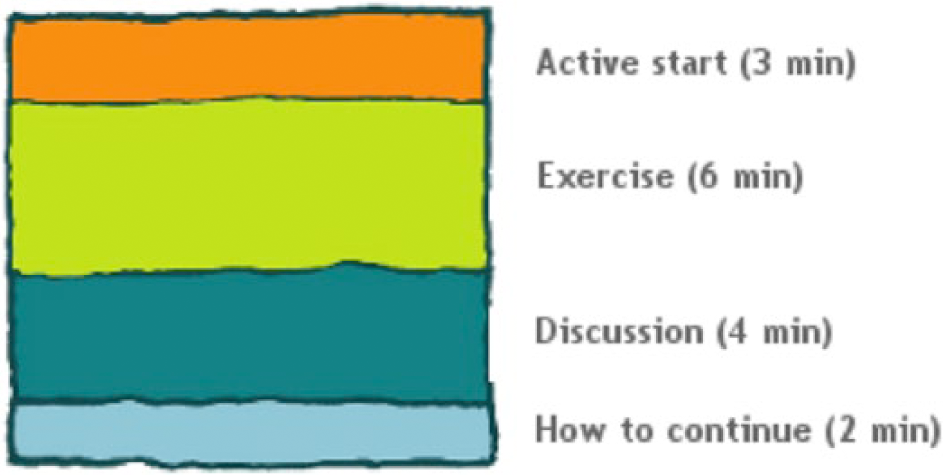
Structure of a microtraining session.
Each Microtraining activity closes with a short reflection phase on what has been learned and what should be done or learned next (De Vries & Lukosch, 2009; Thelen et al., 2011). Within one Microtraining session, one specific problem can be addressed. If problems are more complex, those sessions can be bundled up to a series of Microtraining sessions as presented in Figure 2.
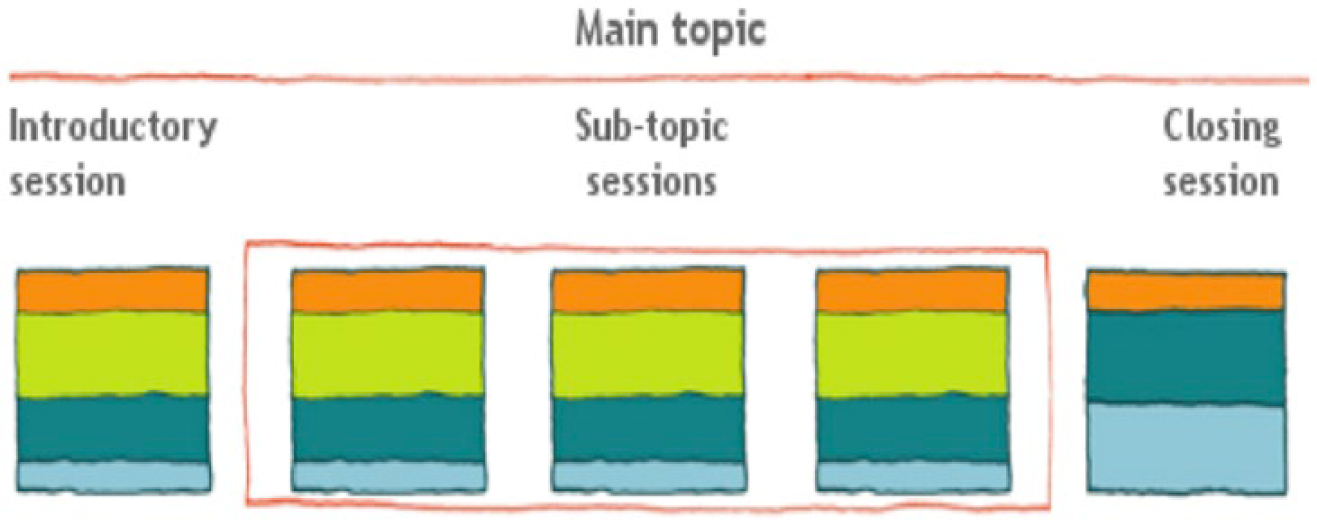
A series of Microtraining sessions.
As the Microtraining approach is very flexible and can be customized to particular learning needs, it is important to specify the particular Microtraining intervention clearly (Thelen et al., 2011). The most important underlying theory for the Microtraining approach is the theory of social constructivism. This theory implies that knowledge is created based on a social process of interactions within a group of people (Vygotsky, 1978). Following this theory, every individual constructs his or her own mental model of the world around. In interaction with others, this model can be enriched, changed and enhanced. Learning in this sense means acquisition of knowledge through participation in a sociocultural practice (Lave & Wenger, 1991). The mental models also include tacit knowledge; knowledge that is mainly acquired by doing, and that cannot be easily transferred from one person to another (Nonaka & Takeuchi, 1995).
From Microtraining to Microgaming
Developing the Microtraining concept further into the direction of active, situated learning at the workplace led us to the design of one particular type of simulation games, the so-called Microgames. Comparable to the Microtraining approach, Microgames support situated learning, as they always start from a well-defined, actual problem. This problem or challenge is then translated into a learning goal and a game concept. Not only the game itself, but also the development process is brief on purpose, to retain the strong relationship to the problem formulated at the beginning of the development process. The development of one Microgame takes on average no longer than ten weeks in total and begins with a so-called gamestorm, a brainstorm session together with the problem owner, where the game’s learning goals, target group, main scenarios and mechanisms are defined.
To allow for social learning, the Microgames are embedded in a learning portal, in our case the so-called ‘Whitebox.’ Herewith, several Microgames can be bundled into a learning series to answer more complex problems. The portal is presented in Figure 3.
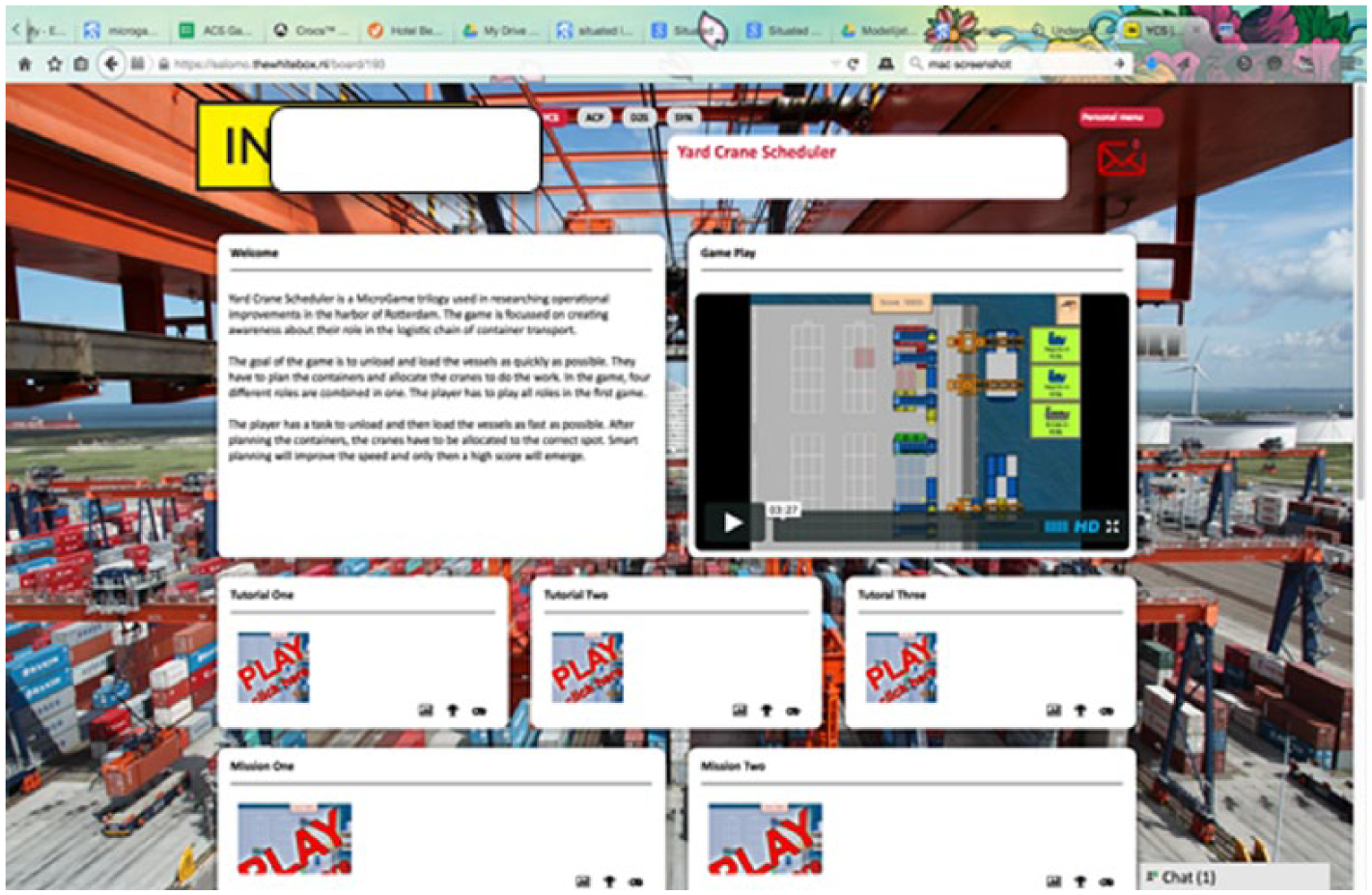
The Microgame’s portal “the Whitebox.”
The Whitebox can also include other learning material, like short texts, movie clips, tutorials etc. It hosts games with varying difficulty levels, where users can unlock more difficult game levels after they complete a certain level.
Key feature of the Whitebox is that it can deliver the games on-site and gives the opportunity to train anywhere and anytime, thus supporting situated learning. It also provides the opportunity to collect data indicating the progress of the participant. The portal can also be used to provide structured, more formal learning experiences. With that approach, an organization is able to design its own learning trajectory using the Microgames. Similar to the Microtraining method and to game play in general, a Microgame includes a reflection or de-briefing phase. In this phase, players can look back to what has been learned within the game and enter a dialogue on how the lessons learned could be transferred to real work situations. Within face-to-face sessions, a game facilitator organizes the de-briefing, in some cases also supported with additional learning material and evaluation instruments. Within an online setting, de-briefing can take place using the forum of the portal, or by providing learning material for further reflections.
In the following section, we illustrate how the Microgame approach has been applied to a complex system, namely container terminal operations in a large seaport.
Case Study: Challenges in Integrated Planning of Container Terminal Operations With a Focus on Yard Management
The need for transportation of goods has been constantly growing during the last decades due to globalized markets and competition (Mačiulis, Vasiliauskas, & Jakubauskas, 2009). Following the rise in global trade, the transport of containerized goods increased from 85 million TEU (Twenty Foot Equivalent Unit, a standard measure for container size) in 1990 to 531.4 million TEU in 2010, an increase of 600% over 20 years (United Nations [UN], 2011). These massive volumes of containers require dedicated infrastructures like container terminals for handling to ensure their smooth transfer towards their final destinations. Container terminals can be described as interfaces for container flows between the seaside and the landside, with a storage area in between (Figure 4).
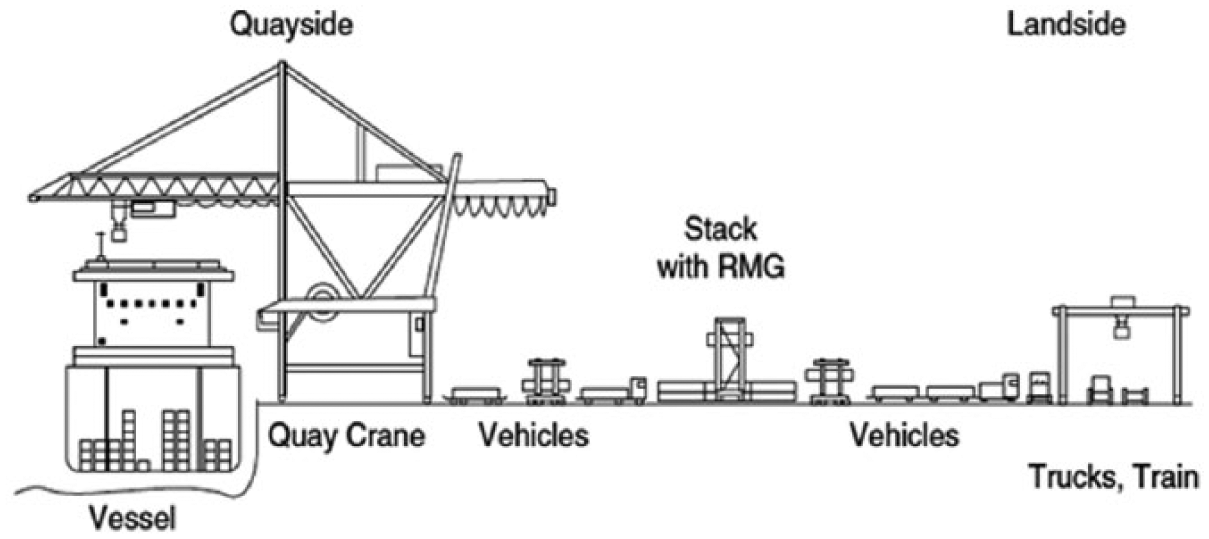
Container terminal schematic.
However, planning and managing the transfer of containers between sea and land remains a complex task, as many stakeholders and resources are involved. Ships berth at the quay where containers are loaded and unloaded by the means of large Quay Cranes. Vehicles such as trucks or Automated Guided Vehicles (AGVs) carry the containers to or from the yard where the containers are stored. The containers arrive to or leave from the yard by the means of trucks, trains or barges. The yard cranes, a variation of which are called Rail Mounted Gantry (RMG) cranes, shown in Figure 4, are used for stacking the containers in the yard (Steenken, Voss, & Stahlbock, 2004). Managing the yard of the container terminals is a sophisticated and complex process, as yard space is a scare resource. The storage and stacking of incoming and outgoing containers heavily influences the overall performance of the container terminal (Steenken et al., 2004). Figure 5 (Meisel, 2009, p. 18) illustrates the components of container terminal operations, and the role and interfaces of yard management as part of this complex system.
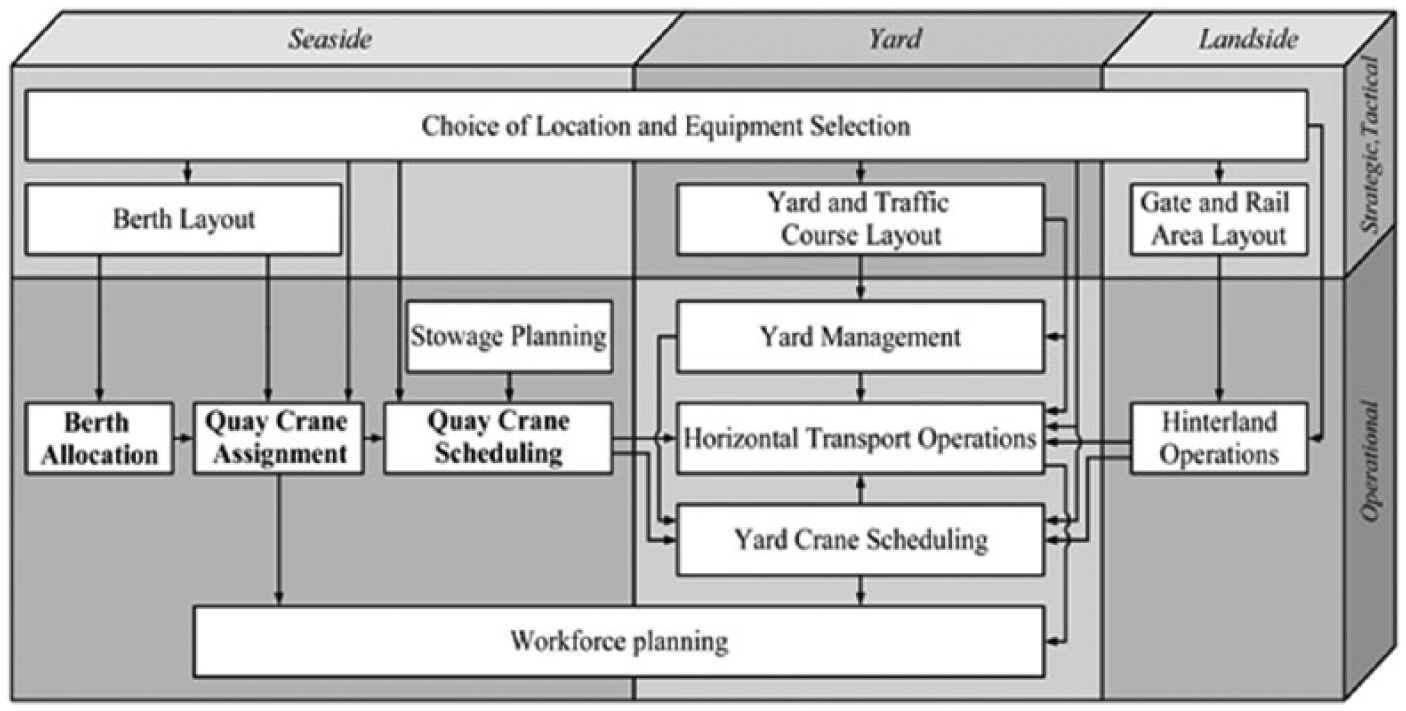
Overview of container terminal operations.
Yard management is comprised of the following tasks:
Reservation of yard capacity for containers from individual ships,
Planning of storage locations for individual containers,
Repositioning of containers within the yard if needed (Meisel, 2009, p. 25)
Although yard management is explained as a set of separate sub-tasks, it is largely intertwined with various other planning and operational activities as illustrated in Figure 5. A common approach towards this challenge is to divide the whole process into sub-planning processes. However due to the interdependencies between various planning operations, this method can lead to undesirable results and sub-optimal solutions (Meier & Schumann, 2007). An example is that the performance of the quay cranes is much higher than that of the gantry cranes in the yard. Therefore containers belonging to the same categories should be distributed in the yard rather than allocating them in the same yard location to avoid over-utilization of some gantry cranes and under-utilization of others. If they are not distributed, the transport vehicles also need to queue to be served by an over-utilized gantry crane (Steenken, Voss, & Stahlbock, 2004). However, in practice the distribution of containers in the yard to ensure uniform utilization and reduction of waiting times of vehicles is rarely observed. If the number of gantry cranes is less than the number of blocks in the yard, which is often the case, they need to be moved around where the stacking and retrieval operations need to take place. This consumes a lot of time and affects the utilization capacity of the gantry cranes, also leading to more waiting times for the transport vehicles, thereby potentially delaying the ships or missing a hinterland connection (Meisel, 2009).
Situational Awareness (SA) seems to be one of the most crucial skills when dealing with dynamic situations. SA includes the perception of a given situation, its comprehension and a conceptualization of the future (Endsley, 1995). The challenges in yard operations are not tangible and often invisible in practice, and therefore they are difficult to demonstrate to employees and training the employees to find solutions is hard. The interdependency and complexity of the planning tasks are not visible for a single stakeholder. In a container terminal, one planner is e.g. only responsible for the planning of the quay cranes, where another planner handles the yard planning. A suboptimal plan of one of the planners can have severe effects on all resources and handling in a container terminal and beyond. Thus, our aim was to provide an engaging learning tool that visualizes the interdependencies of the planning tasks within a container terminal. It had to be engaging, as we want to achieve a high motivation to use it at the workplace, to enable a situated learning experience. The tool had to be oriented on an actual problem, as described here, and had to be short in time span, so the accessibility and acceptance of the tool was guaranteed. We therefore chose a Microgame called Yard Crane Scheduler (YCS) as a situated learning tool to enable players to experience the actual, interdependent and complex system of a container terminal with its planning tasks. As the Microgame should be short, we had to simplify reality. We evaluated the validity of this simplified model of reality in the Microgame with experts from the field.
The Yard Crane Scheduler Game
Yard Crane Scheduler Game Design Process
We chose the Triadic Game Design (TGD) philosophy (Harteveld, 2011) to design a well-balanced Microgame. The TGD philosophy starts from three equally important game components: play, meaning, and reality. It stresses that simulation games should be entertaining as well as meaningful and valid. The ‘meaning’ aspect is the aspect of the game that addresses the learning goal, the instructional technology and methods, and the transfer of the learning (Harteveld, Guimaraes, Mayer, & Bidarra, 2010). The ‘reality’ aspect relates to the representation of the actual system, involved actors and their decisions and actions, as well as the validity and fidelity of the game (Harteveld et al., 2010). The third aspect, ‘play,’ includes factors such as rules, engagement, fantasy, and fun (Harteveld et al., 2010). The development process started with a game storm session with four experts in terminal operations and two game designers that included the three aspects of TGD. The first phase of the game storm was related to the reality aspect of the game. In this phase, experts and game developers discussed the leading problem in container terminal planning and what solutions would be needed. Phase two addressed the aspect of meaning. The participants agreed on which parts of the problem and problem solving process should be transferred to the game, and what actions and decisions a player could take in the game. An important element of the meaning phase is how the learning objectives should be defined. The main learning goals for the YCS game were formulated as
The learner becomes aware of the interdependencies of the individual planning tasks within a container terminal.
The learners improve their skills in interdependent planning.
Phase three was related to the play aspect of the game. Experts and game designers developed the core game mechanics, how players could win (or lose) the game, which kind of right and wrong decisions could be made, and what kind of strategy would underlie the game. The scoring mechanism was designed, since this was a key element in measuring performance of the participants.
Game Description
The main task of the YCS game is to manage the yard by aligning the interdependent planning tasks and resource allocation activities in the container terminal. The game focuses on the two main challenges discussed in the previous section: The dynamic planning and distribution of containers in the yard and the allocation of resources to ensure maximum utilization. If these two challenges are met, the time a ship needs to spend at the terminal will decrease. This is a major key performance indicator for the terminal as it determines customer satisfaction. The top view of the terminal with quayside and yard storage areas as represented in the game is shown in Figure 6.
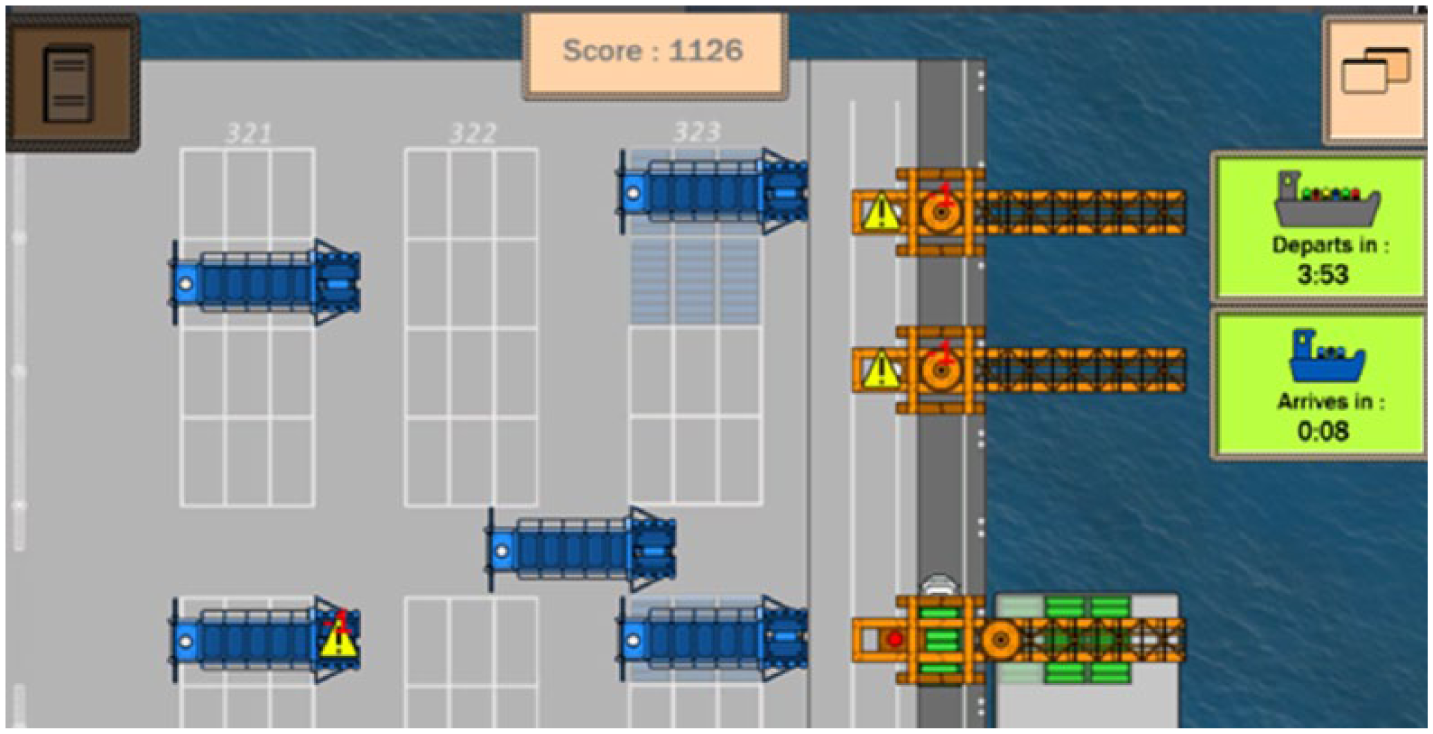
Yard Crane Scheduler screen shot.
Though the gate area is not shown on the screen, trucks pick up import containers during the game play and leave through the gate area. The handling equipment such as the quay cranes and the gantry cranes are also shown on the screen, as well as the arrival and departure times for ships. The vehicles for transporting containers between the ships and yard are Automated Guided Vehicles (AGVs). The main tasks the players are expected to perform are as follows:
1. Making a yard storage plan for import containers
As shown in Figure 6 at the top right, the arrival times of various ships are clearly indicated. Based on this, players have to develop a yard storage plan for import containers.
If the rectangle around a ship symbol is red, the player has not completed the plan. The scheduling is complete if the color of the ship matches the color of the containers. Players need to click on an arriving ship to make an unloading plan for yard storage of import containers. Each container needs to be dragged to a position in the yard, as shown in Figure 7. The rectangle is green if all containers are planned. As the focus of the game lies on the planning of import containers in the yard, the export containers don’t need any planning and they are automatically allocated to slots in the yard.
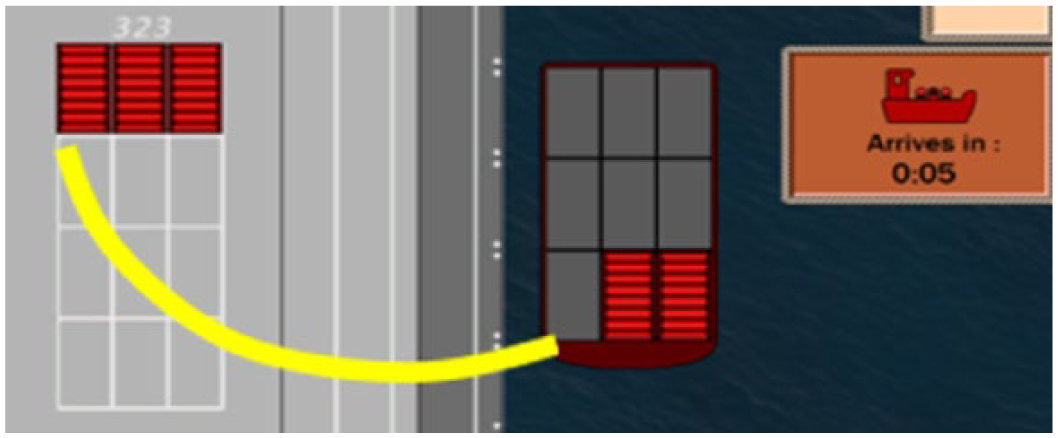
Import container yard storage plan.
2. Resource allocation
The quay cranes have to be assigned to ships for loading and unloading operations and should be aligned to the rows of the import containers that have a storage location. The yard gantry cranes also need to be allocated for storage and retrieval operations in the yard. The export containers are marked with an arrowhead symbol. They don’t require any yard storage plan, however they require allocation of yard gantry cranes for them to be transferred to the ship.
3. A bonus activity
As the landside operations are crucial for maintaining a healthy yard capacity, a bonus activity is available for players to make extra points. Trucks arrive to collect yellow containers to be transported to the hinterland. There is a limited time available for the truck to make this collection. Managing to load the yellow container on the truck leads to an extra score for the player. The various scoring mechanisms are explained in the following sub-section along with the game play.
Game Play and Scoring
Players require registration and an account to access the game within the Whitebox portal. Once players register successfully, they can start playing the game an unlimited number of times, at their own convenience, and even outside a moderated game session. The materials on the portal contain the introduction to the game, a set of three tutorials to get familiarized with the game rules, and a number of missions with varying difficulty levels. Players need to complete each mission to unlock the subsequent one. Each game play takes about 8 to 10 minutes on average to finish. A score is displayed after every mission. The players are awarded points based on their performance on three categories:
Ship/Vessel turn around time. The faster the ship leaves the terminal, the more points the player receives. This is a key parameter for terminal operations as ships are their clients and their satisfaction is very important for their business. If all the planning processes are well integrated and resource allocation is done properly, players can ensure a quick ship turnaround time.
Number of containers handled. The number of containers handled within the given time limit is very important for the efficiency and performance of container terminal operations.
Resource utilization. As discussed in the challenges in the previous section, a major issue in yard operations is either under-utilization or over-utilization of cranes in the terminal, therefore points are allotted if cranes are optimally utilized.
The composite score, displayed at the top right corner, is the sum of the above scores. Figure 8 shows the screen representing the composite score. This screen is also used as de-briefing information by providing an immediate overview of the accomplishments of the player.
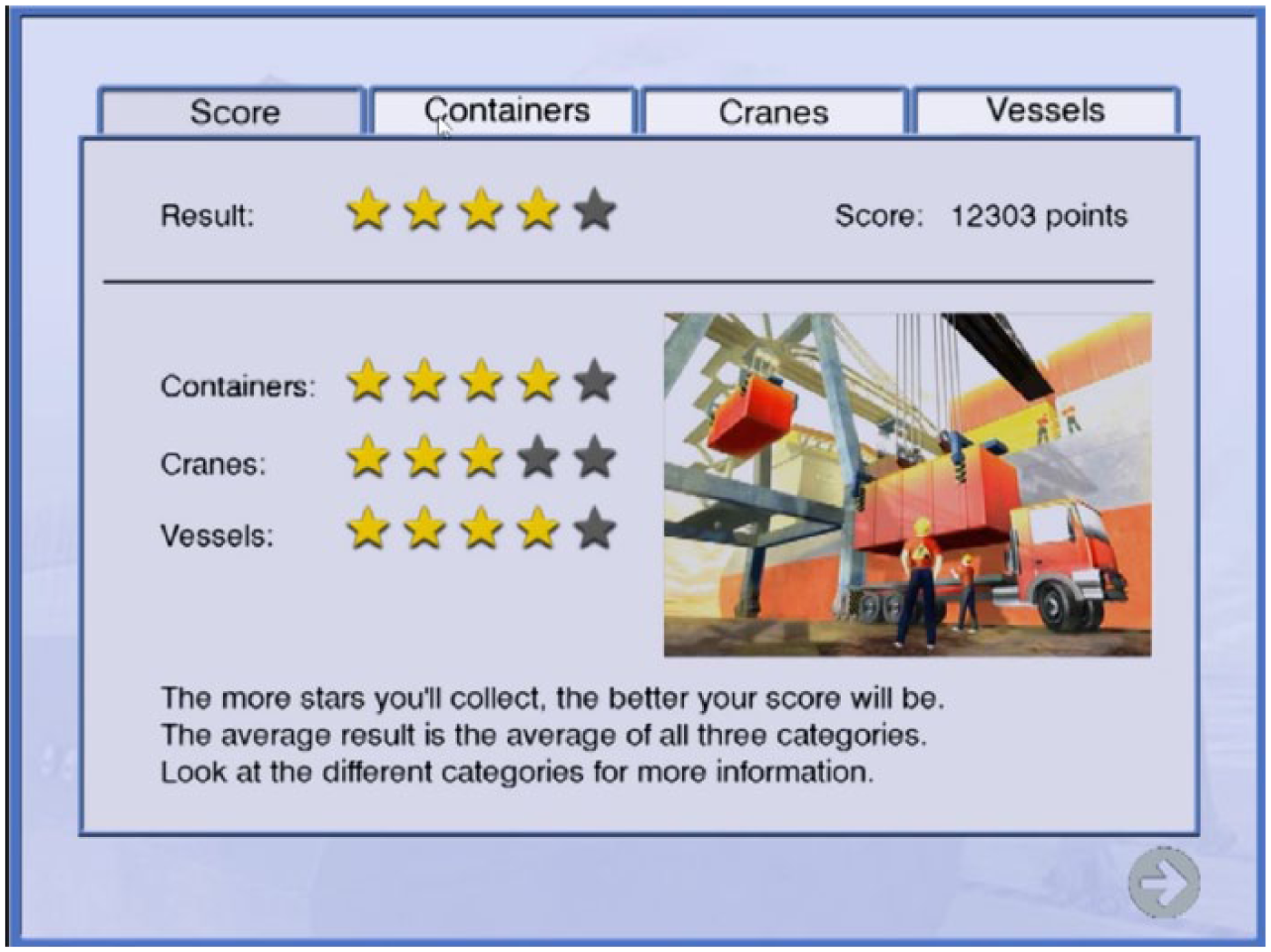
Composite score, provided at the end of the game.
Test Sessions and Evaluation
Evaluation Set-Up and Methodology
Following the Triadic Game Design philosophy (Harteveld, 2011) also for evaluation, we aimed at assessing the game along the three elements of the framework, reality, meaning and play. The game’s evaluation was performed in two steps. First, a face validation by experts in container terminal operations focused on the reality and meaning aspects of the framework to establish the rigor of the game and its practical uses in the industry. Within this step, we checked whether the ‘right’ actions and decisions had been included in the game sufficiently (reality), and whether the learning goals were reflected in the game (meaning). Secondly, potential users tested the game on meaning and play to gather more insights in the validity of the learning goals, and the ‘fun’ element of the game to encourage sustained use.
1. Expert validation of the game
Set-up of the test sessions with experts
Six experts currently working in a leading container terminal company with professional work experience of between 3 and 25 years played the game to test its efficacy and practicality as a training tool for efficient container terminal operations. The experts played the game multiple times. After several play sessions a validation survey was sent to these experts for face validation.
Results of the expert evaluation
The responses of the experts are briefly summarized in this section in a qualitative way. The outcomes of the expert evaluation are illustrated along the three aspects of the game design framework in Table 1.
Expert Validation Results.
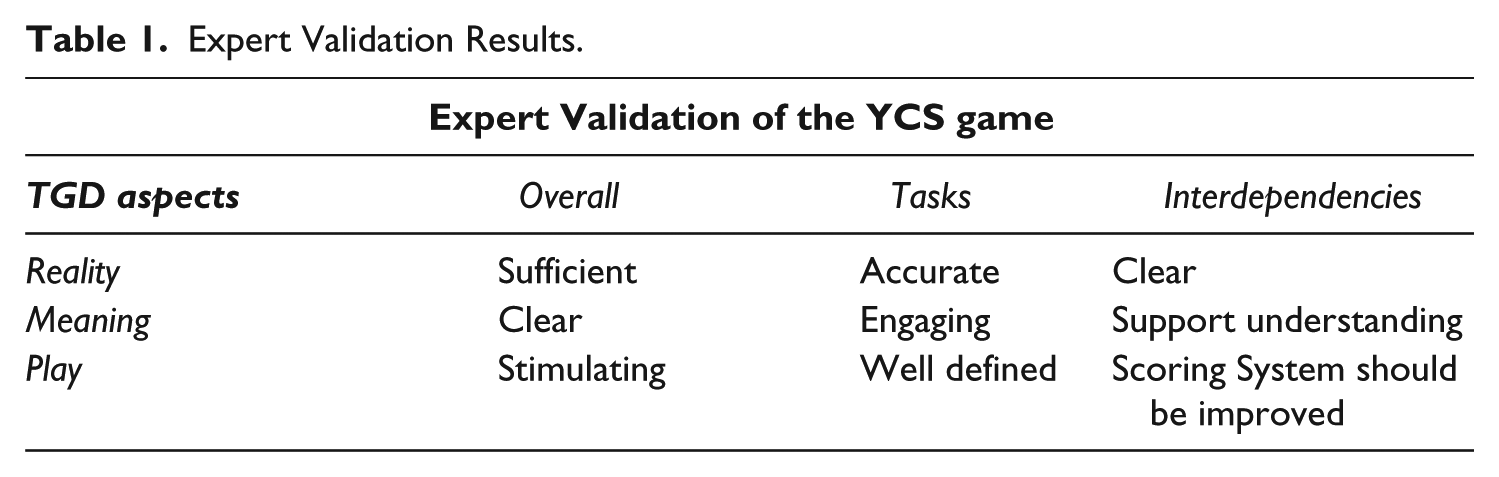
Taking into account the time constraints and complexity of operations, five of the six experts agreed or strongly agreed that the game’s level of realism was sufficient. All the experts agreed or strongly agreed that the tasks in the game represented the container terminal operations in an accurate manner. They also agreed that the various interdependencies among the roles and processes in the terminal operations had been well incorporated in the game. All the experts agreed that the challenges posed by the tasks in the game could be well related to those in reality. However, suggestions were made for future versions of the game regarding terminal rules, and storage locations and protocols.
Face validation: Meaning
All the experts agreed or strongly agreed that the objective and learning purpose of the YCS game was clear after playing it. All the experts unanimously strongly agreed that the YCS game could be used as a training instrument for future employees in integrated planning of container terminal operations. They also indicated that simulation gaming is an excellent tool in doing so. The experts’ opinion was mainly based on the engaging learning experience, clearly illustrating the interdependencies and complexity of the planning tasks, even in its simplified representation. The strong emphasis on turn-around times of the ships supports the awareness of the real time pressure experienced in container terminal planning.
Face validation: Play
All the experts either agreed or strongly agreed that the tasks in the game had been well defined and had been designed in a stimulating fashion for the players. Four of the six experts agreed with the scoring mechanism of the game, with suggestions regarding changes of the scores for equipment utilization.
2. Test sessions with potential users
Set-up of the test sessions
90 students majoring in supply chain management from the United States and the Netherlands played the game during a facilitated game session. One game session took about 1 hour and 45 minutes, combining briefing, game play and de-briefing. The game facilitator introduced the session with a briefing lecture about container terminal operations. Thereafter, the facilitator introduced the YCS game and its learning objectives. Also, the possibility of winning a prize was announced in order to increase the motivation of the participants. Participants were first asked to fill in a pre-game survey that asked for demographical and game-related information such as age, professions and familiarity with computer games to study the profile of the participants. Thereafter they were asked to play the tutorial session of the YCS game to familiarize themselves with the rules of the game. Then, they were asked to play the varying missions of the game at least for three times, so their scores reached steady state and were not transitional scores while still learning the ins and outs of the game. The game facilitator was provided with an overview of the scores of the participants. The highest and lowest scores were publicly displayed after every game play. After the game plays were completed, the game facilitator opened a de-briefing discussion about the game, the various strategies participants followed, challenges faced and issues that were encountered during the game. The high scorer were identified and rewarded with a small present after asking them to explain their strategies. Additionally, players with lower scores were asked about their strategies. This was done as we assume that both winning and ‘loosing’ strategies are valuable to learn about the do’s and don’ts in container terminal operations. Finally, the game facilitator concluded the session providing a link from the experiences of the game session to container terminal operations in the real world. After the de-briefing lecture, participants were requested to fill in a post-game survey to evaluate the usefulness of the game for fostering the awareness of interdependent planning tasks in container terminals and for improving planning skills.
Results of the test sessions: Survey Results
The post game survey focused on the usefulness of the YCS game as a training instrument as well as the playability for the users. Therefore the focus of the survey was on the ‘meaning’ and ‘play’ aspects of TGD. From the 90 students who participated in the test sessions, 83 completed their response. We will next summarize the feedback of the participants. As the test group consisted out of logistics students only, we assumed that they had some knowledge about the system represented in the game. For the reality aspect, we preferred the evaluation by the experts, even though some feedback on this aspect was also given during the de-briefing with the students. The main results of the tests with the students are illustrated in Table 2, and summarized below.
Potential Users Test Session Results.
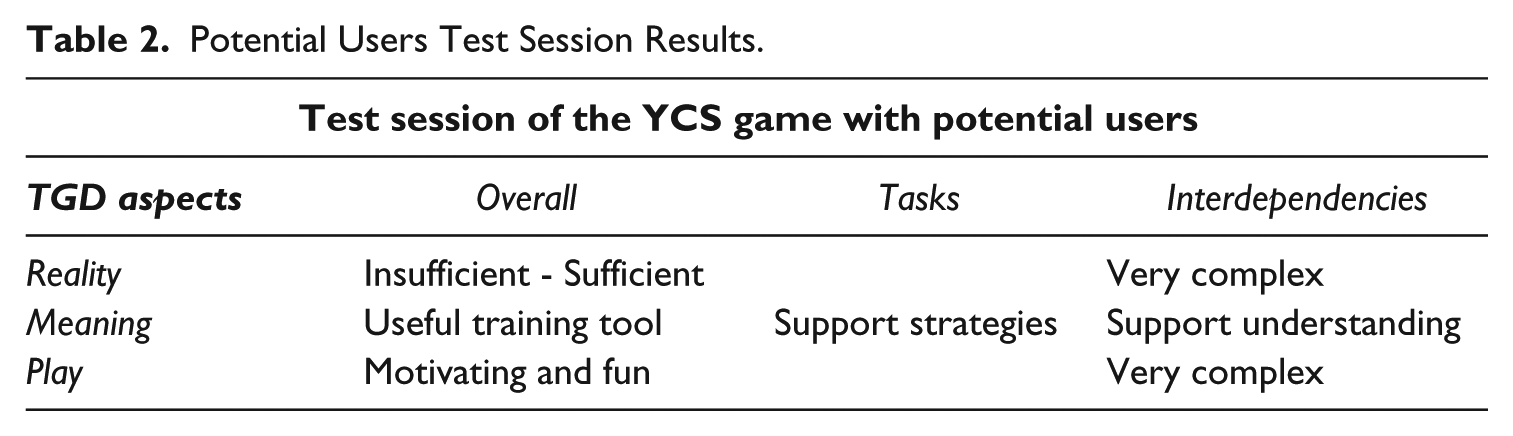
1. Meaning: Complexity of the system within the game
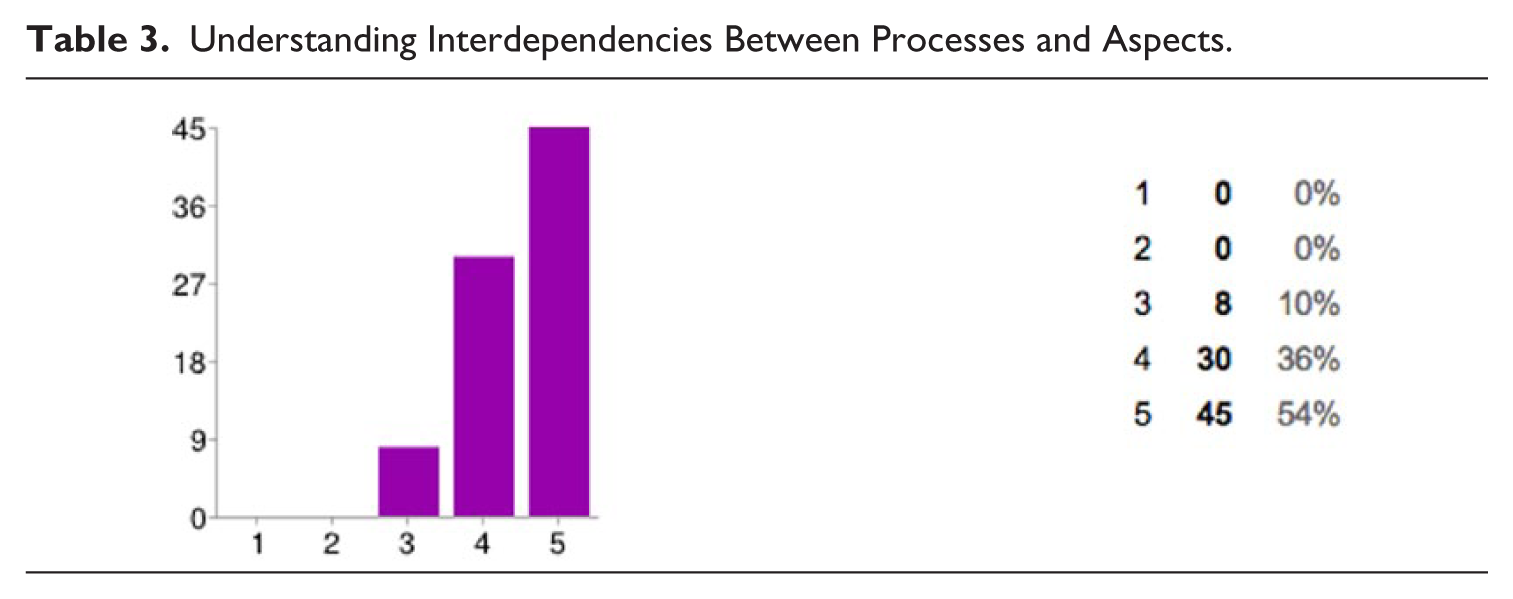
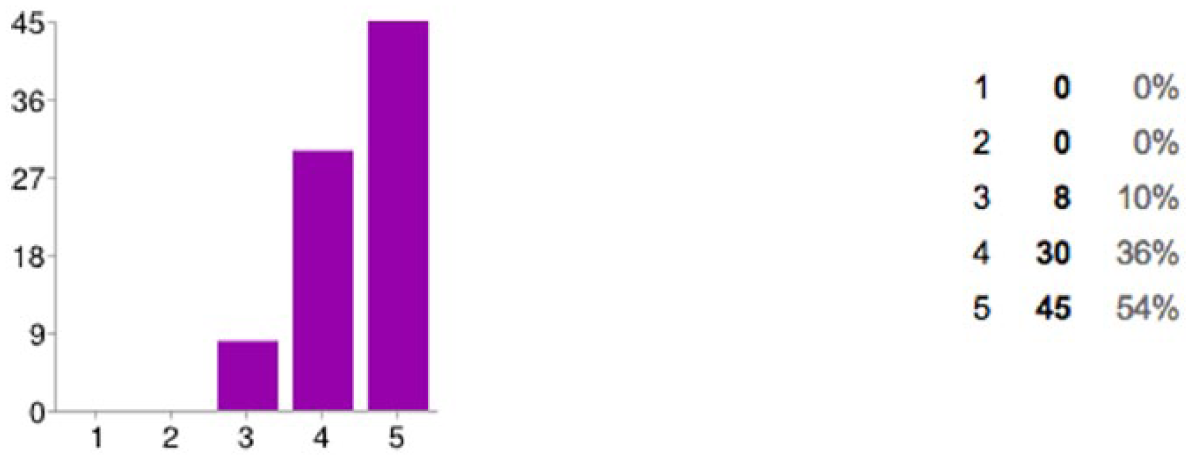
On a scale of 1 to 5, with 5 meaning that they strongly agree and 1 meaning that they disagree, the majority of the participants indicated that they understood the various processes and interdependencies in container terminal operations after playing the game, as shown in Table 3.
Understanding Interdependencies Between Processes and Aspects.
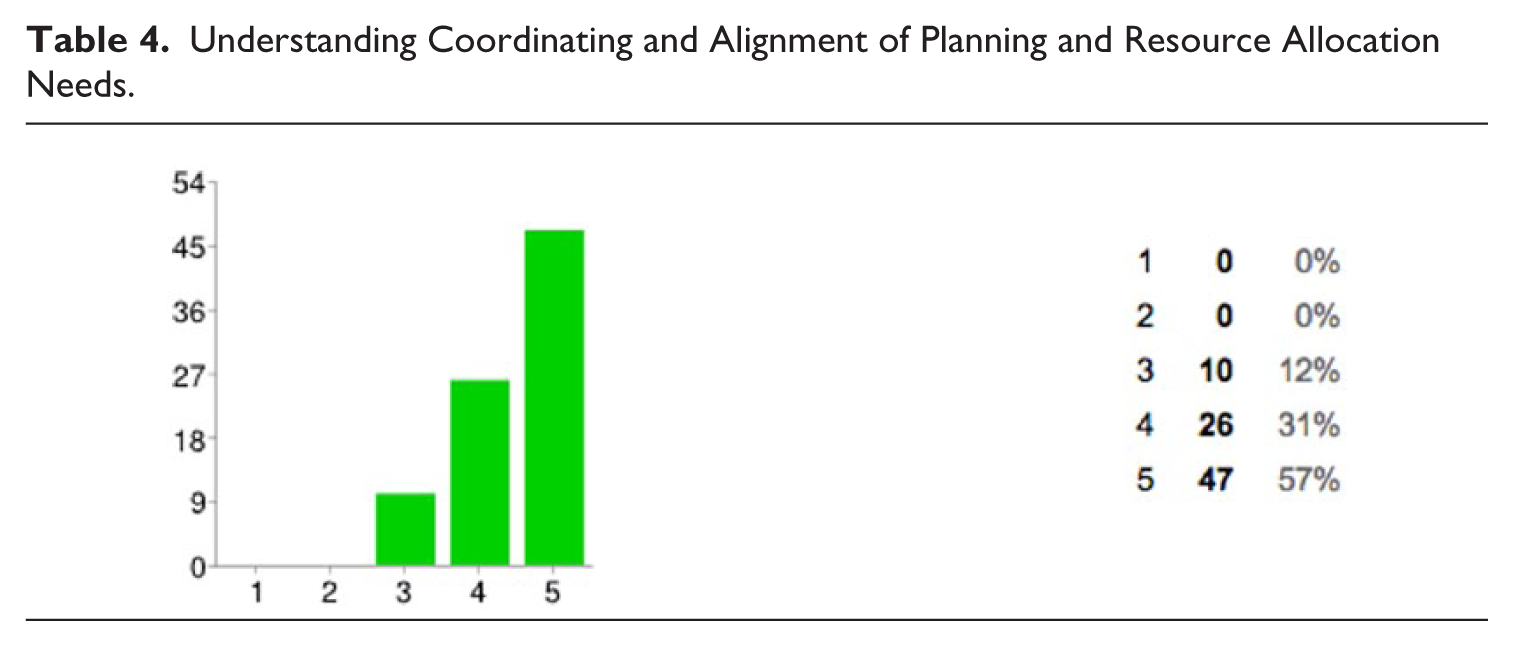
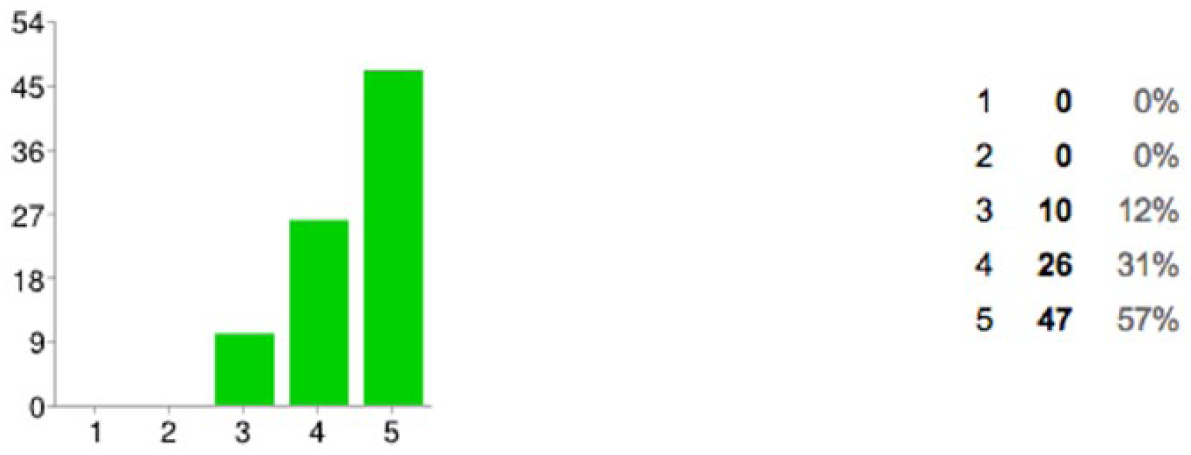
Furthermore, the majority of the participants agreed (see Table 4) that they understood the need for coordinating and aligning planning and resource allocation in container terminal operations after playing the game.
Understanding Coordinating and Alignment of Planning and Resource Allocation Needs.
2. Meaning: YCS game as a training tool
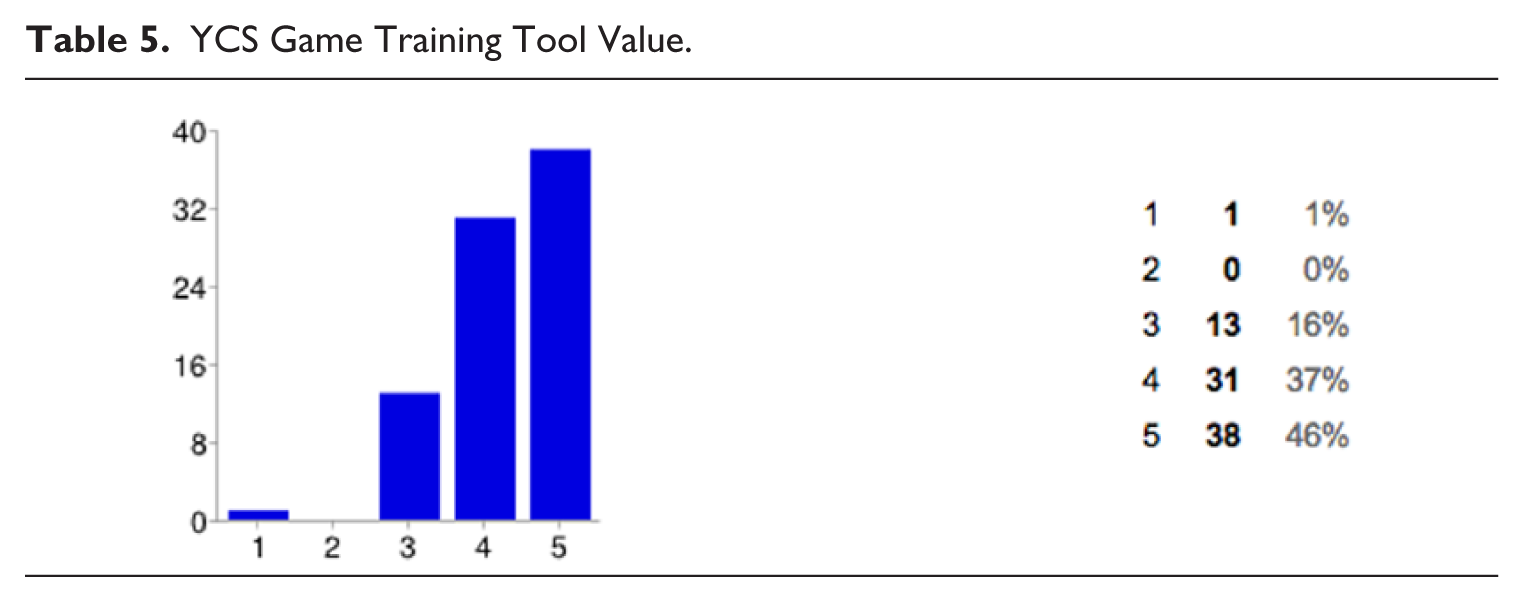
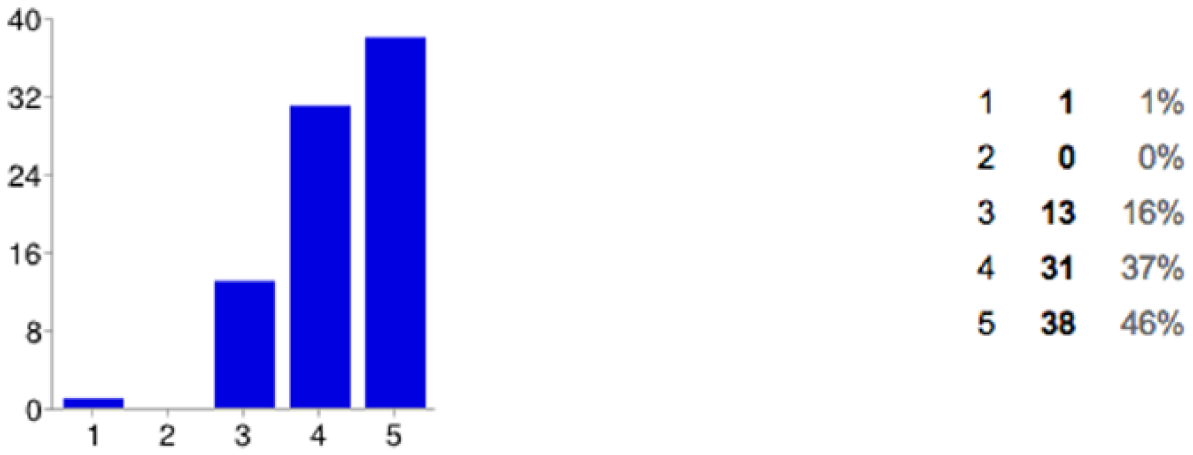
The majority of the participants felt that the YCS game was an excellent training tool to learn about solving challenges in complex yard planning operations and that it would be useful for their professional career in future, see Table 5.
YCS Game Training Tool Value.
In summary, we saw from the answers related to the ‘meaning’ aspect of the YCS game, that the game was overall valued as a valid training tool for container terminal operations.
3. Play: Motivation to play the YCS game
When questioned about the fun element of the game to ensure that participants were motivated to continue playing the game even after the test session, most of them felt that it was stimulating and fun to play, as shown in Table 6.
Game Play Motivation.
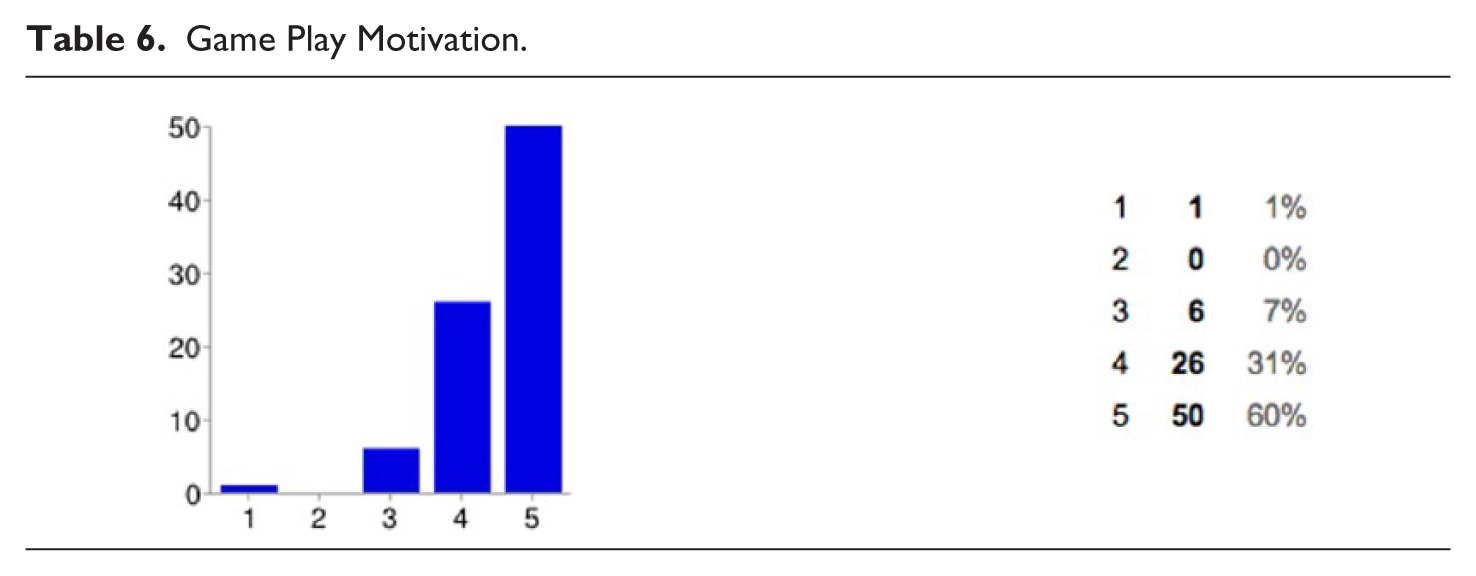
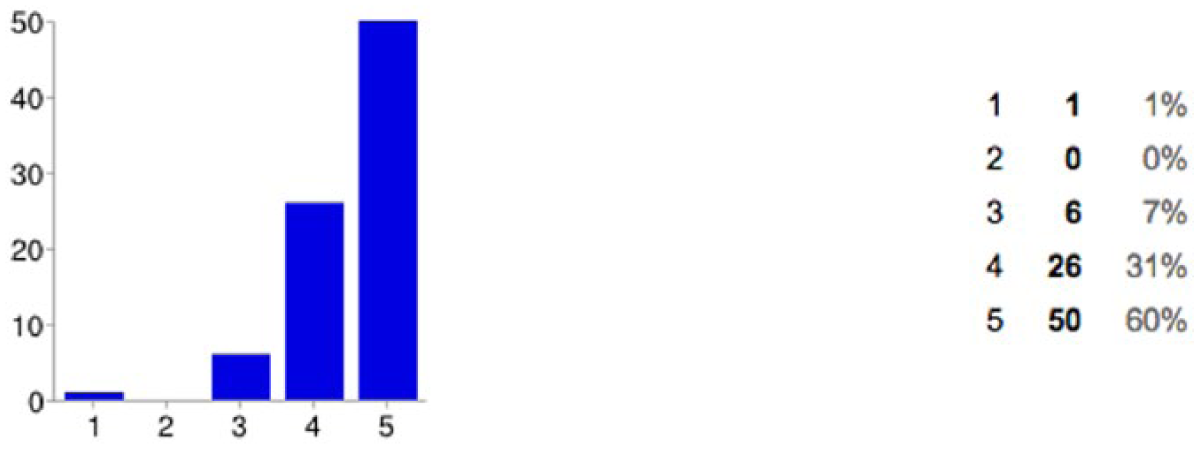
We can thus summarize that the YCS provided a meaningful and at the same time engaging learning experience. The discussion during de-briefing confirmed these findings.
Results of the test sessions: Observations during de-briefing
The de-briefing of the game sessions was semi-structured along certain topics, which mainly focused on the playability of the game. The de-briefing was opened with a question regarding the playing experience, and which aspects of the game could be improved. The participants reported that the game was fun to play, but could be more ‘realistic’. The background music was disturbing for some but very useful for others. For some players, the game froze. Several players pointed out that the negative points for idle resources were experienced as unfair and unrealistic. After the initial open discussion, a player with a high score was asked about the strategies she applied in the game. The participants with high scores reported that they tried to plan ahead, aiming at an optimal resource allocation. They tried to realize parallel working of cranes, and placing the containers in the yard as close as possible to the vessels. After that, players with a lower score were asked about possible reasons why they did not reach a higher score. The participants said that they became aware of how a container terminal works through the game, although they found the representation and tasks very complex. They reported that they would need more attempts to improve their performance.
Limitations of the game
The following observations regarding the reality aspect of the game have been made in close consultation with professionals in the container terminal business. First, to make the game less complex the stacking has been limited to one container per yard position, whereas in reality four or five containers are stacked. Secondly, some parts of the container terminal such as the gate area are not visible. Third, some of the terminal rules are not followed. These three points are mainly related to the fact that the reality had to be simplified to enable a meaningful and engaging game experience.
It has to be noted, that a few technical issues occurred during game play. A minority of students found the game a bit complex. Some score data were lost due to insufficient network connectivity. All issues were reported and will be fixed in next version of the YCS game.
Discussion and Conclusions
Transfer of knowledge from a learning experience to the work floor is challenging (Eraut, 2004). Based on the initial results, the YCS Microgame was valued both by experts and students within the logistics field as an excellent training instrument to become aware of the independent, complex planning processes in container terminals. Especially the engaging and challenging interactive design, enabling for an experiential learning experience, was valued. The game was able to represent the complex, interdependent planning tasks of a container terminal. The players engaged with the complex system as a whole in an active way. The simplified model of a container terminal supported the experiencing of the complex system, while the time limitations of the interdependent tasks in the game made it challenging. We can thus state that the YCS game is able to support the development of knowledge, which can be transferred to an actual problem at the workplace. It provides a simplified, but still realistic situation, where players have to extract the knowledge and skills needed in order to solve the complex planning tasks. This could foster, as described in the introduction, the confidence in such planning tasks. However, so far, the effects are not yet analyzed and interpreted. This will be done after future sessions with additional methods and tools.
In our study, the YCS game has been developed and evaluated according to the three dimensions of the Triadic Game Design philosophy: reality, meaning and play. Regarding the reality, or fidelity, of the game, some abstractions and simplifications had to be made to develop a stimulating, short simulation game. Nevertheless, the experts stated that the functional and physical realism of the game are sufficient in order to obtain its goals. The goals, or meaning, of the game, had been set together with experts in container terminal planning and focus mainly on the awareness and of the interdependency of the task and related skill development. The Microgame is able to illustrate the dynamic and interrelatedness of planning operations, and still provides a joyful experience, as was stated by the majority of the test persons. Especially the de-briefing with a focus on playability, but also on strategies applied within the game, supported the learning experience provided by the YCS game. With this combination, the game is able to foster the communication of explicit knowledge (on the interdependencies of the planning tasks), which is in line with our aim to develop a situated, experiential learning experience.
Limitations of the Study and the Microgaming concept
The study population limited the study somehow, as we could not test the game in a structured game session with experts so far. To develop Microgames into a validated training method, further evaluation with experts from the field and game sessions within the field have to be carried out. Comparative studies have to be included to study the difference between the effects of the Microtraining approach and traditional learning methods.
We assumed that Microgames as a modeled situation represent an additional learning step between a learning activity and the real situation. As Eraut (2004) stated, tackling challenging tasks can give rise to learning, when well supported and successful. With their limitations, mainly due to their shortness, Microgames seem to be a promising approach towards supporting the transfer of learning into the workplace. In future studies, we will further investigate how the Microgames and the Whitebox can contribute to an engaging learning climate and what effect this has on situated learning.
In summary, we can conclude that the conceptualization of the Microgame studied here as a web-based, short simulation game answers both the need for a dynamic representation of a complex problem and for flexible, situated learning approaches in complex working environments. Future work on the concept of Microgames will include the proper interpretation of the quantitative data gathered, related to the (learning) effects of the game. We will further explore how realistic the Microgames should be designed to enable well-balanced, situated learning occasions and how an implementation, using the WhiteBox as learning environment, could be implemented in real work settings. The design and evaluation of such settings will contribute to the understanding of using short games as an approach to foster workplace learning. On the development site, effort will be put in the design of a multi-player version of the game. This aims at increasing the awareness of the different roles involved in the integrated planning process.
Footnotes
Acknowledgements
This article is an augmented and enhanced version of a paper presented at the 45th annual international conference of the International Simulation and Gaming Association (ISAGA), Dornbirn, Austria, July 7-11, 2014. We would also like to thank Dr. Stephanie Eckard and Prof. Dr. Thomas Corsi for their support in organizing the test sessions for the YCS game at the University of Maryland, College Park, MD, United States, and Dr. Gwendolyn Kolfschoten for her valuable input on the game design. Furthermore, the authors would like to thank the reviewers for their valuable comments.
Author Contributions
HL wrote this article’s Abstract, the main parts of the Introduction, and the sections on Microtraining and Microgaming. She also worked on the article’s Conclusions. SK described the game and performed data analyses as well as working on the article’s Introduction and the Conclusions section. DG worked on Microgaming’s description and provided data for the analyses. AV contributed to the analyses and interpretation of the data, and to the conclusions section.
Declaration of Conflicting Interests
The authors declared the following potential conflicts of interest with respect to the research, authorship, and/or publication of this article: The institution, which funded this research, Dinalog, encourages the researchers involved to discuss all aspects of the research outcomes, both positive and negative. They do not have a direct interest in one special type of outcome of our research, and they do not ask for prior approval before publishing the results. Therefore, there are no conflicting interests between our work as researchers and the funding by Dinalog.
Funding
The authors disclosed receipt of the following financial support for the research, authorship, and/or publication of this article: The study discussed in this article is supported by Dinalog, the Dutch Institute for Advanced Logistics.
Author Biographies
Contact:
Contact:
Contact:
Contact: