



Abstract
The widespread use of teams across society has driven interest in understanding team effectiveness. Prior reviews often focus on specific disciplines or contexts (e.g., sports or medicine). Using systematic bibliometric protocols enriched with machine learning, this study synthesizes 6,051 peer-reviewed publications from Scopus and WoS, covering 1992 to 2022, to examine the evolution of team effectiveness research, key contributors, influential publications, and emerging trends. Results reveal exponential growth—Co-authorship, co-citation, and co-word analyses—identified influential venues, authors, publications, and 10 thematic pillars: TEAM PROCESSES; TEAM COMPOSITION & DIVERSITY; EMERGENT STATES; TEAM COGNITION; LEADERSHIP; TECHNOLOGY, VIRTUAL & HYBRID TEAMS; TEAM OUTCOMES & EFFECTIVENESS INDICATORS; ORGANIZATIONAL CONTEXT & TEAM SUPPORT; TEAM DEVELOPMENT & TRAINING; and MULTI-TEAM SYSTEMS & INTER-TEAM DYNAMICS. Emerging trends include AI integration, adaptive leadership in diverse contexts, and conflict resolution in hybrid teams. This review offers a research agenda and a dynamic, open-access dataset to support future studies.
Keywords
In a constantly evolving world, teamwork has emerged as a cornerstone of organizations (Salas et al., 2018). Across diverse sectors, organizations increasingly depend on teams to address complex challenges, drive innovation, and respond effectively to rapidly changing conditions (Mathieu et al., 2019). While the literature lacks a unified definition of team effectiveness (Peralta et al., 2018), this study defines team effectiveness as a team’s ability to achieve its performance objectives (Hackman, 1987; Mathieu et al., 2008), to meet or exceed stakeholder expectations (Salas et al., 2004), and to sustain long-term functionality (Sundstrom et al., 1990). Effective teams coordinate their efforts through dynamic interactions among members (Kozlowski & Ilgen, 2006), maintain viability, and foster individual satisfaction, growth, and well-being (Cohen & Bailey, 1997). Moreover, team effectiveness is an adaptive and iterative process shaped by team inputs, emergent states, and mediating mechanisms that enable sustained performance and continuous learning (Ilgen et al., 2005). When teams work effectively, they drive higher productivity, improved work quality, increased worker motivation, and enhanced customer satisfaction (Glassop, 2002; Hindiyeh et al., 2023). Teams possess a unique capacity to combine and leverage the diverse knowledge, skills, and experiences of their members, enabling outcomes that surpass the sum of individual contributions (Rico et al., 2011), a phenomenon often referred to as “collective wisdom” (Mathieu et al., 2019; Salas et al., 2008).
However, not all teams achieve their full potential (i.e., are effective), and some even experience negative outcomes (Hackman, 1990; Morrison-Smith & Ruiz, 2020). Why some teams succeed while others fall short depends on multiple complex factors that have been studied from multiple disciplines such as psychology, sociology, and engineering, each contributing with unique approaches and methodologies (Ramírez-Zavala et al., 2024). For example, from organizational psychology, some researchers suggest that team effectiveness can be influenced by the team’s purpose, leading to a range of taxonomies identifying team types (Cohen & Bailey, 1997; Gilson et al., 2015; Mathieu et al., 2017). Others link team effectiveness to key attributes such as performance (Srivastava et al., 2017), motivation (DeChurch & Mesmer-Magnus, 2010), and satisfaction with the team itself, the job, or the organization (De Dreu & Weingart, 2003). These attributes are often organized into team effectiveness models, starting with the well-known Input-Process-Output (IPO) model (Hackman & Morris, 1975), and its subsequent Input-Mediator-Output-Input (IMOI) (Ilgen et al., 2005). In engineering, team analysis is often approached through systems models and simulations to predict how team interactions and structure affect team performance in, for example, complex environments such as aerospace mission control centers (Mostafapour & Hurst, 2020; Rosen et al., 2010; Salas et al., 2015). As a result, research on team effectiveness has grown exponentially over the past three decades, creating a vast yet fragmented body of literature. To gain a broader understanding of the issues involved and the research that has been conducted to this date, there is a pressing need for a systematic, quantitative synthesis that captures the breadth and depth of the team effectiveness domain.
This study complements existing systematic literature reviews about or closely related to team effectiveness and team performance in several ways. However, although these reviews are valuable in themselves, they did not provide the holistic perspective that we aim for. First, a considerable fraction of the existing reviews focuses on specific subfields or contexts, such as sports teams (Salcinovic et al., 2022), medical teams (Roberts et al., 2022), engineering teams (Borrego et al., 2013; Takai & Esterman, 2017), scientific teams (Cooke et al., 2015; Yu et al., 2019), or small teams in organizations (Reiter-Palmon et al., 2021), and thus do not offer a comprehensive, generalizable view of team effectiveness across disciplines. Second, many of the existing reviews rely on narrative or qualitative methods (DeChurch & Mesmer-Magnus, 2010; Hindiyeh & Cross, 2022; Mathieu et al., 2019; Yu et al., 2019), which may be less effective in identifying large-scale patterns, emerging trends, and collaboration networks. Those reviews that use quantitative approaches tend to involve small sample sizes (e.g., 80 publications in Patrício & Franco, 2022, and 136 in Srivastava et al., 2013), potentially reducing the reliability of their findings (Donthu et al., 2021). Even the existing larger-scale bibliometric reviews, such as those by Emich et al. (2020) and He et al. (2023), focused their analyses on selected journals, excluding contributions from conferences or fields like engineering and medicine. Third, from a methodological perspective, in reviews published before 2019, the use of systematic protocols for selecting and analyzing studies was often not emphasized, which can undermine their comprehensiveness and reproducibility (e.g., Cooke et al., 2015; Delgado-Piña et al., 2008). Finally, while some reviews analyze extended periods of over 20 years (Abelson & Woodman, 1983; Hindiyeh & Cross, 2022; Humphrey et al., 2010; Patrício & Franco, 2022; Salas et al., 2004; Salcinovic et al., 2022), others focus on shorter timespans (Borrego et al., 2013; Cohen & Bailey, 1997; Kozlowski & Bell, 2013; Mathieu et al., 2008; Reiter-Palmon et al., 2021; Rico et al., 2011; Srivastava et al., 2013) or do not specify a clear timeframe (Cooke et al., 2015; Delgado-Piña et al., 2008; Kendall & Salas, 2004), potentially limiting their ability to capture long-term trends and the evolution of theoretical and methodological approaches in the field.
Building upon the limitations identified in previous reviews and considering the growing volume of team effectiveness research, this study seeks to address existing gaps by conducting a comprehensive bibliometric review analysis of the entire team effectiveness literature published over the past 31 years (1992–2022) using a combination of Scopus and Web of Science (WoS) databases. Bibliometric analysis is particularly well-suited for this purpose, as it offers a structured and objective framework to identify trends, themes, and key theories, while mapping the evolution of topics and major contributions (Donthu et al., 2020, 2021; Hallinger & Chatpinyakoop, 2019; Herrera et al., 2010). By employing a systematic approach non-restricted to specific types of teams or contexts and integrating both quantitative and qualitative analyses, this review provides a holistic perspective that enriches and deepens the understanding of team effectiveness for both new and experienced researchers. Specifically, this study addresses the following research questions:
RQ1—Evolution: What insights does the changing volume of publications over time provide about the maturation and trajectory of research on team effectiveness?
RQ2—Outlets: What do publication patterns across the different disciplines, areas, and academic venues reveal about the multidisciplinarity of team effectiveness research?
RQ3—Contributors: How have significant contributors, collaborative networks, and cultural and geographic factors collectively shaped the development of team effectiveness research?
RQ4—Publications: What do the dynamics between seminal publications and emerging influential works reveal about the evolution of theoretical foundations and the shifting priorities in team effectiveness research?
RQ5—Themes: How does the thematic clustering of keywords shape the evolution of research priorities in team effectiveness and highlight emerging trends and future directions?
In answering these research questions, this study contributes to the team effectiveness literature by: (1) visualizing publication trends on team effectiveness over five periods, including the identification of the most influential areas, journals, and authors; (2) describing how groups of key authors have contributed to seminal topics, summarizing the foundational works and their impact on future research; (3) analyzing the evolution of keywords, their grouping into topics, and their evolution over the specific periods; (4) proposing a future research agenda on emerging or unexplored topics; (5) creating a freely available comprehensive database covering the entire body of team effectiveness literature published since 1992 in Scopus and WoS, not restricted in scope or context, and enriched in multiple ways to facilitate new research studies from other researchers; and laterally to the study goals; and (6) strengthening a systematic review protocol for bibliometric analyses through the integration of PRISMA guidelines and the use of machine learning to enhance reliability, reduce potential bias, and minimize errors when handling large volumes of publications.
The remainder of this manuscript is organized as follows: Section “Methodology” details the bibliometric review protocol, data extraction, and analytical techniques utilized. Section “Results (Step 5-A)” presents the results, divided into five parts, each addressing a research question. Section “Discussion (Step 5-B)” discusses the findings and identifies research gaps. Finally, Section “Conclusions (Step 5-C)” summarizes the main contributions and limitations.
Methodology
This study adopted the review protocol proposed by Donthu et al. (2021) and Zupic and Čater (2015), which divides the review process into four stages: (1) defining objectives and scope; (2) choosing bibliometric techniques; (3) collecting data; and (4) conducting the bibliometric analysis and reporting findings. However, this protocol lacks intermediate steps where the validity and consistency of the data are ensured, as occurs in traditional systematic literature reviews. We therefore added some additional steps, enriching the protocol by adopting the PRISMA guidelines for reporting all relevant information in systematic literature reviews (Page et al., 2021) and by adding the use of machine learning techniques to minimize the risk of bias while simultaneously increasing data reliability. For a better understanding, the steps that were explicitly added to the adopted protocol have been highlighted with a bold dashed outline (see Figure 1).
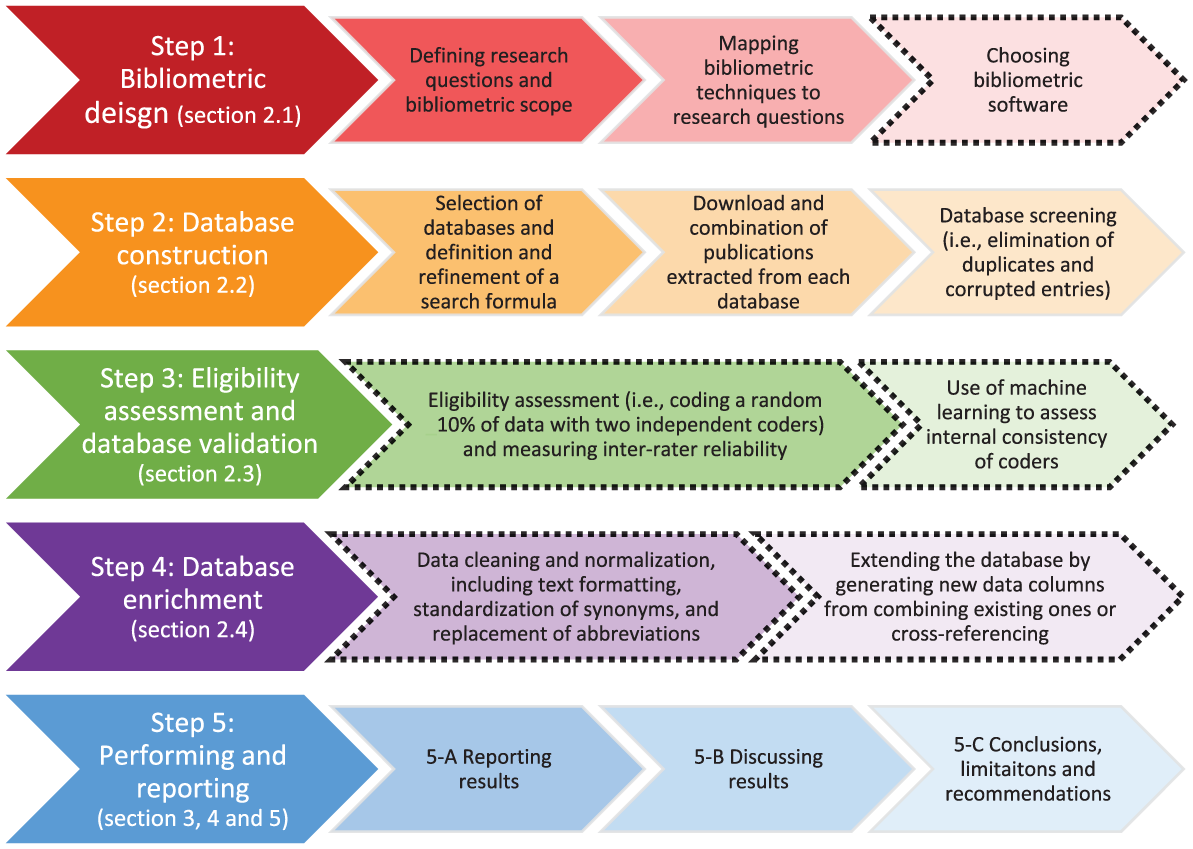
Bibliometric review protocol used in this study.
Research Design (Step 1)
Defining the Research Questions and Bibliometric Scope
As outlined in the introduction, this study addresses five research questions (RQs) concerning the evolution, contributors, disciplines, influential publications, and emerging themes in the team effectiveness literature. To provide a relevant, efficient, and cohesive analysis, the scope was limited to the period 1992 to 2022, for three main reasons. First, over 95% of indexed publications on team effectiveness emerged in this period (although the percentage could be different if non-indexed or non-digitally available publications are considered). Second, literature growth shifted from a linear to an exponential pattern around 1992, mirroring the scientific acceleration described by Price (1963). Third, this period encompasses the emergence of key theoretical frameworks such as the IMOI model (Ilgen et al., 2005) and the rise of cross-disciplinary approaches.
Mapping Bibliometric Techniques to Research Questions
To answer each RQ, we employed a combination of bibliometric techniques with qualitative analyses (see Table 1).
Research Questions Mapped with Analysis Techniques.
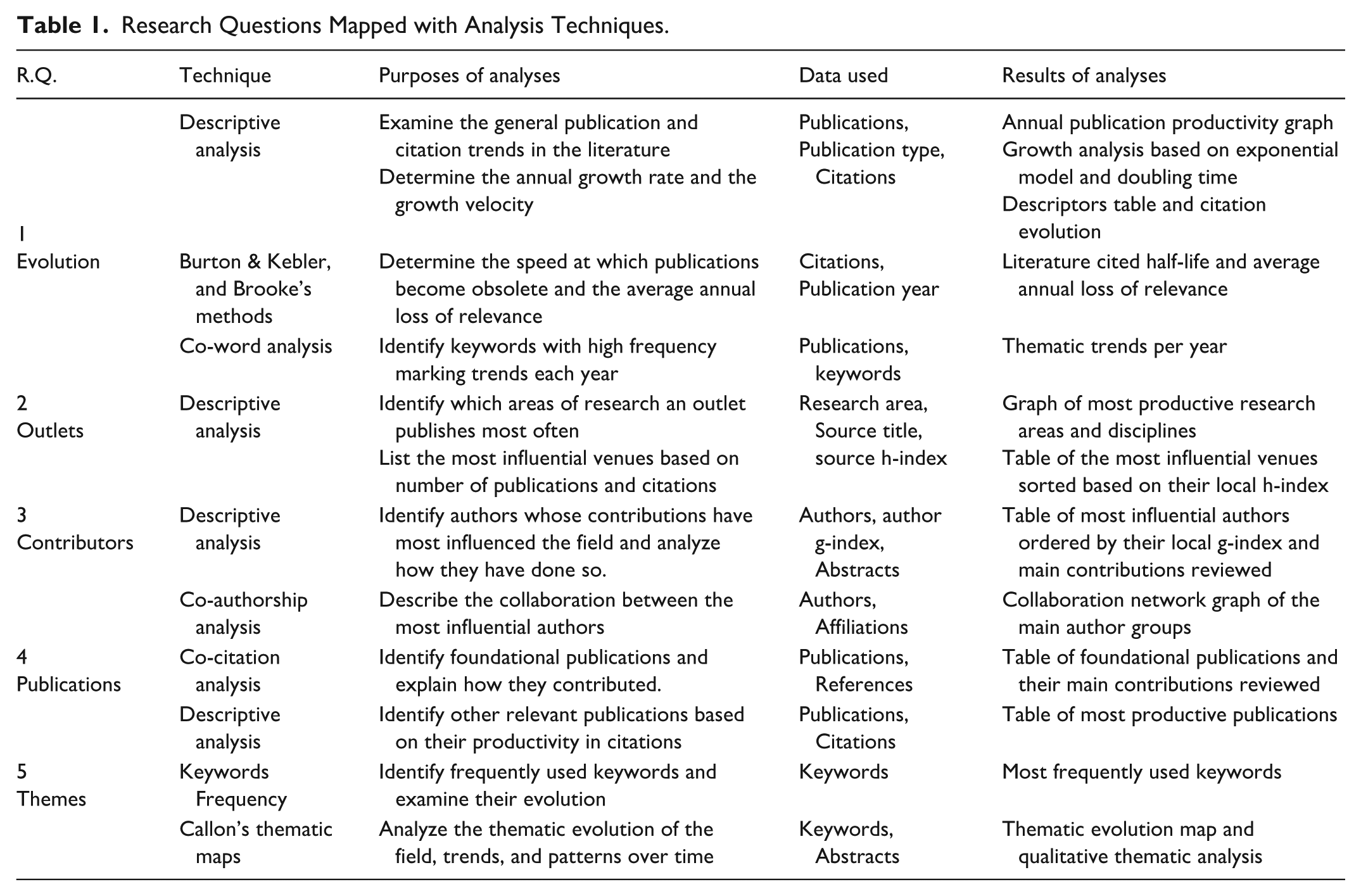
The annual aging factor, which indicates the speed at which the literature loses relevance and is replaced by new publications (Brookes, 1970).
Additionally, we analyzed yearly thematic trends by identifying the 1 to 3 most representative keywords per year, offering insights into the factors behind peaks and drops in productivity. While temporal keyword trends reveal shifts in research priorities, they offer limited insight into broader conceptual patterns. To address this, we conducted an inductive classification of the most frequent keywords based on their conceptual proximity and thematic coherence. Keywords were grouped iteratively, with new thematic pillars created when integration was not feasible.
Finally,
To ensure transparency and encourage longitudinal analysis, data sheets, figures, and tables generated from the enriched dataset were made available online in an interactive format. These materials will be updated regularly to reflect changes in citation dynamics or keyword trends beyond the study’s original 1992 to 2022 timeframe (see Data Availability section for more information).
Choosing a Bibliometric Data Analysis Tool
We conducted the analyses using the Bibliometrix R package and its web interface Biblioshiny (Massimo & Cuccurullo, 2024), which offer a comprehensive suite of bibliometric and scientometric tools. Compared to alternative tools such as VOSviewer or CiteSpace (Moral-Muñoz et al., 2019, 2020), Bibliometrix provides greater usability, customization, and integration with R-based data workflows. It also supports critical preprocessing tasks, including duplicate removal across databases and harmonization of author and keyword data. However, VOSviewer was employed to generate the collaboration network (Figure 6), as it allowed for more effective cluster visualization with reduced visual noise.
Database Construction (Step 2)
Selection of Databases and Definition and Refinement of a Search Formula
The search for publications was conducted using the Scopus and Web of Science (WoS) databases. These two sources were selected for three primary reasons: (1) their extensive indexing of peer-reviewed literature, ensuring comprehensive coverage; (2) their advanced filtering and export capabilities, which facilitate refining the search in systematic reviews; and (3) their disciplinary breadth, allowing the inclusion of team effectiveness publications across diverse domains such as engineering, health sciences, and psychology. Other databases, such as Google Scholar, were excluded due to well-documented limitations for systematic reviews, including lack of transparency, poor metadata quality, and the inclusion of non-peer-reviewed materials (Giustini & Boulos, 2013; Harzing & Alakangas, 2016).
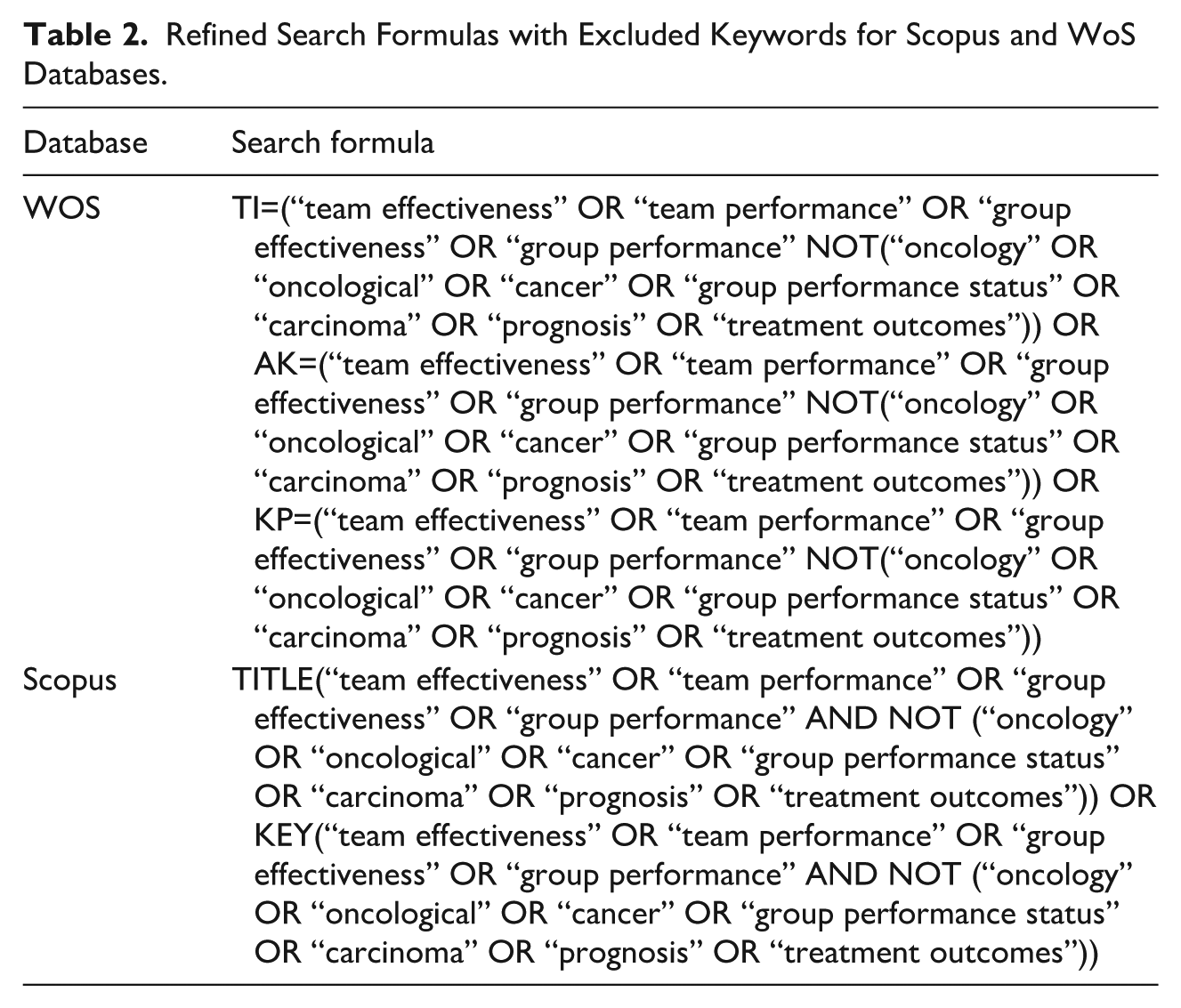
To be included in the review, a publication had to contain at least one of the following expressions in its Title or Keywords fields (including Author Keywords and Keyword Plus in WoS): (a) team effectiveness, (b) group effectiveness, (c) team performance, or (d) group performance. The Abstract field was excluded from the search to reduce false positives. This decision was based on domain-specific ambiguities, particularly in health sciences, where the term “group performance” often refers to patient cohorts and their clinical outcomes. To further refine the query, a set of exclusion terms (e.g., “oncology,” “cancer,” “prognosis”) was added using Boolean logic to suppress irrelevant records (see Table 2).
Refined Search Formulas with Excluded Keywords for Scopus and WoS Databases.
The following exclusion criteria were added as filters to the search formula to further refine the selection of publications:
Publications published before 1992 and after 2022 were excluded to limit the scope of the study to the past 31 years.
Publications that are not peer-reviewed were excluded to ensure data quality.
Non-English papers were excluded to achieve uniformity in language.
Download of Publications and Database Normalization
The initial search yielded 10,743 publications (5,789 in Scopus and 4,954 in WoS). After applying the exclusion criteria, 9,684 publications remained. A total of 51 publications were identified as self-duplicated (publications repeated within the same database) or corrupted (publications with missing or erroneous information in key attributes such as, for example, publications with source title in the year column and no author names).
A detailed PRISMA flowchart summarizing the identification, screening, and eligibility process is provided in Figure 2.
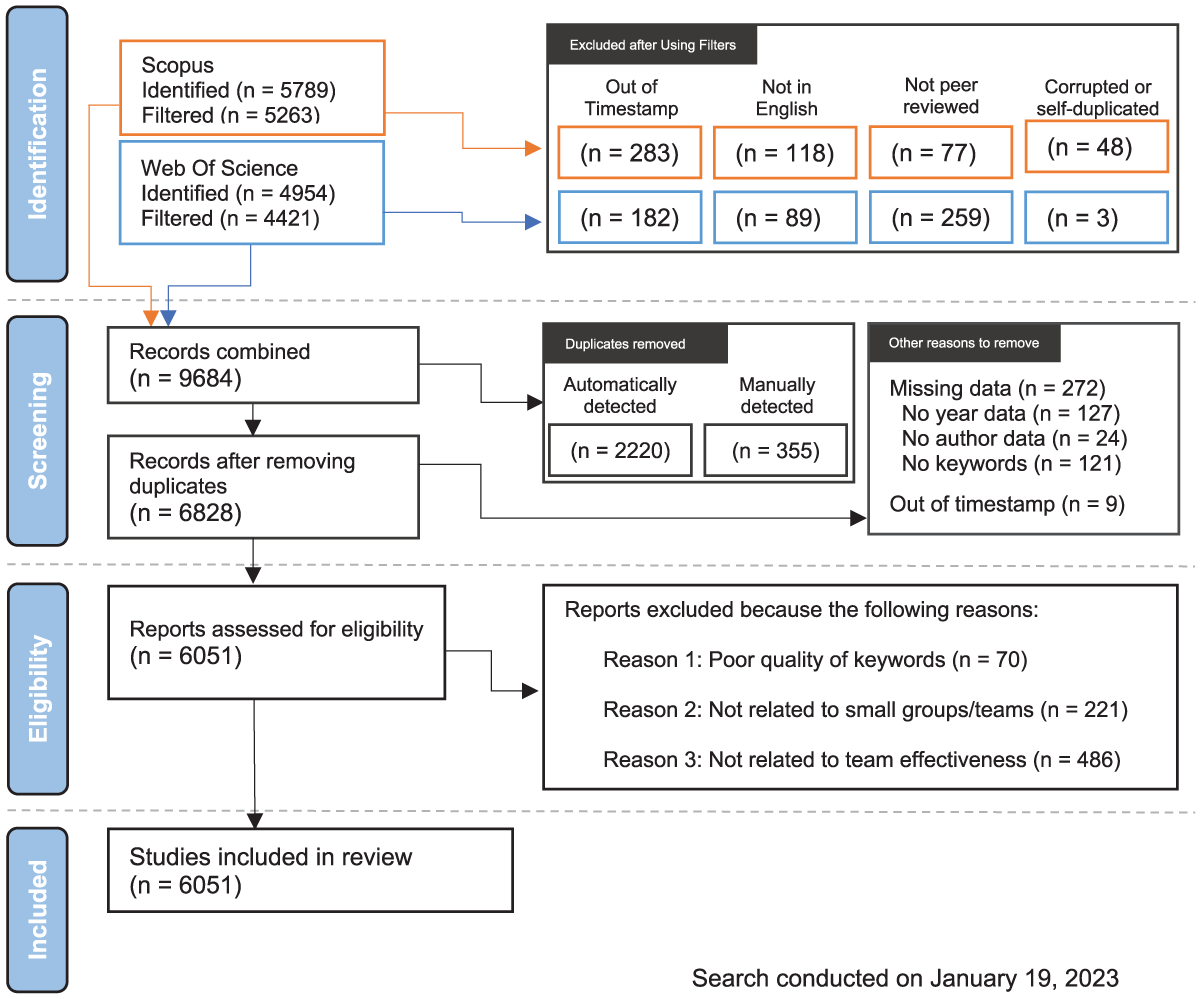
PRISMA-based flow diagram for publication identification, screening, and eligibility. 1
Database Screening
We applied a multi-step protocol combining automated and manual methods to identify and resolve duplicates across databases. First, we used a combination of Google Spreadsheet functions (i.e.,
Eligibility Process and Database Validation (Step 3)
Eligibility Assessment and Inter-rater Reliability Calculation
The data compilation resulted in 6,828 publications. These publications were checked for eligibility by two independent coders. To independently code 10% of the data, as advised by Bakeman et al. (2005) (i.e., 700 publications in this study), the following inclusion criteria were used:
The publication possesses complete data of the following critical attributes for bibliometric analysis: publication year, title, author(s), source or journal, and keywords.
Each publication features a minimum of three keywords.
After reading the title and abstract, the publication is found to focus on the study of team effectiveness.
The publication focusses on small groups or teams of humans, excluding studies involving teams of exclusively animals, digital agents, or robots. However, mixed teams of humans with robots or digital agents were included.
For computing the inter-rater reliability (IRR) between the two coders after coding the 10% of the data, the modified Cohen’s kappa (
Discrepancies between coders about the inclusion of publications were discussed and solved. Most discrepancies arose from challenges in assessing the eligibility of publications with ambiguous titles or uninformative abstracts. The remaining 90% of publications were reviewed by the first coder.
Use of Machine Learning to Evaluate and Validate the Consistency of Coders
To assess potential coder fatigue and strengthen confidence in the screening process, we implemented an auxiliary validation using machine learning (ML), as recommended for large-scale review efforts (Belur et al., 2021; Donthu et al., 2021). We used the SimpleML plugin for Google Spreadsheets (Guillame-Bert et al., 2022), training 10 independent models using a 70% sample of the human-coded dataset. The models used publication metadata (e.g., title, abstract, authors, keywords) along with coder decisions as input. Among several algorithms tested, Gradient Boosted Trees (GBT) was selected for its robustness with heterogeneous data and its ability to handle missing values effectively.
Each model produced independent binary inclusion/exclusion predictions above the records in the database. The final classification was determined through majority voting across the 10 models. For example, if 8 of 10 models predicted inclusion, the publication was labeled as included, with a confidence of 80%.
Model-level predictions demonstrated strong consistency, with an inter-model agreement rate of 96.14%. When compared with the decisions of the human coder, we found a high level of inter-agreement
Records with discrepancies between the ML model and the human coder, or with inter-model agreement below 70%, were manually re-evaluated. This led to the review of 554 records (8% of the corpus), resulting in the inclusion of 35 previously excluded publications and the removal of 16 that had been incorrectly retained. These results support the ML-based approach as a valid supplementary mechanism for quality assurance in large-scale bibliometric screening.
Database Enrichment (Step 4)
To prepare the final dataset for bibliometric analysis, we implemented a structured six-step data cleaning and enrichment protocol, including: (1) standardization of special characters and punctuation marks (i.e., removing erroneous placement of semicolons such as “team;effectiveness” and standardizing formatting of keywords with regard to single quotes, apostrophes, and hyphens, such as “selfeficacy” and “self-efficacy”); (2) substitution of acronyms by their full meanings (for a total of 199 acronyms, see Appendix A); (3) substitution of synonyms (e.g., team and group) and plural forms (e.g., team and teams) in keywords, including those with similar contextual meaning (e.g., “team effectiveness” and “group performance”), see Appendix B for the total list of synonym groups; (4) filling in missing information for the analysis. Of the 6,051 publications chosen to review, the 1,914 (32%) publications from Scopus did not contain information on the research area. To overcome this gap, we cross-referenced data from the SCImago database (SCImago, 2024) with our records, using the source title as a unique identifier. Subsequently, and to standardize the research areas between the WoS and SCImago databases, all research areas were remapped using the Institutional Profiles Research Areas table (Clarivate, 2024b), which categorize 252 different research areas into 6 research disciplines (Arts & Humanities, Clinical, Pre-Clinical & Health, Life Sciences, Engineering & Technology, Physical Sciences, and Social Sciences). The remapping process, which involved a subjective decision, was carried out in parallel with another coder, obtaining an IRR of k = 0.845; (5) source titles that made references to conference series were identified and replaced by the actual name of the conference. Likewise, conferences performed in multiple years were combined into a single source title; and (6) extension of the database to include the number of annual citations obtained by each publication, as well as the dates of a paper’s first and latest citation, the interval between these dates (i.e., active years), and the year the paper garnered its largest number of citations (i.e., zenith).
Results (Step 5-A)
Temporal Trends in Team Effectiveness Research
The bibliometric results indicate that team effectiveness literature, encompassing a total of 6,051 publications, has experienced significant growth from 1992 to 2022. Figure 3 shows that journal articles dominate the landscape, constituting 66% (3,987 publications) of the corpus and averaging around 127 publications annually. Publications at conferences followed a similar upward trend until 2008, when production stabilized with a slight downward trend. The cumulative markers at 25%, 50%, and 75% (i.e., vertical black flags) highlight an acceleration in scientific production.
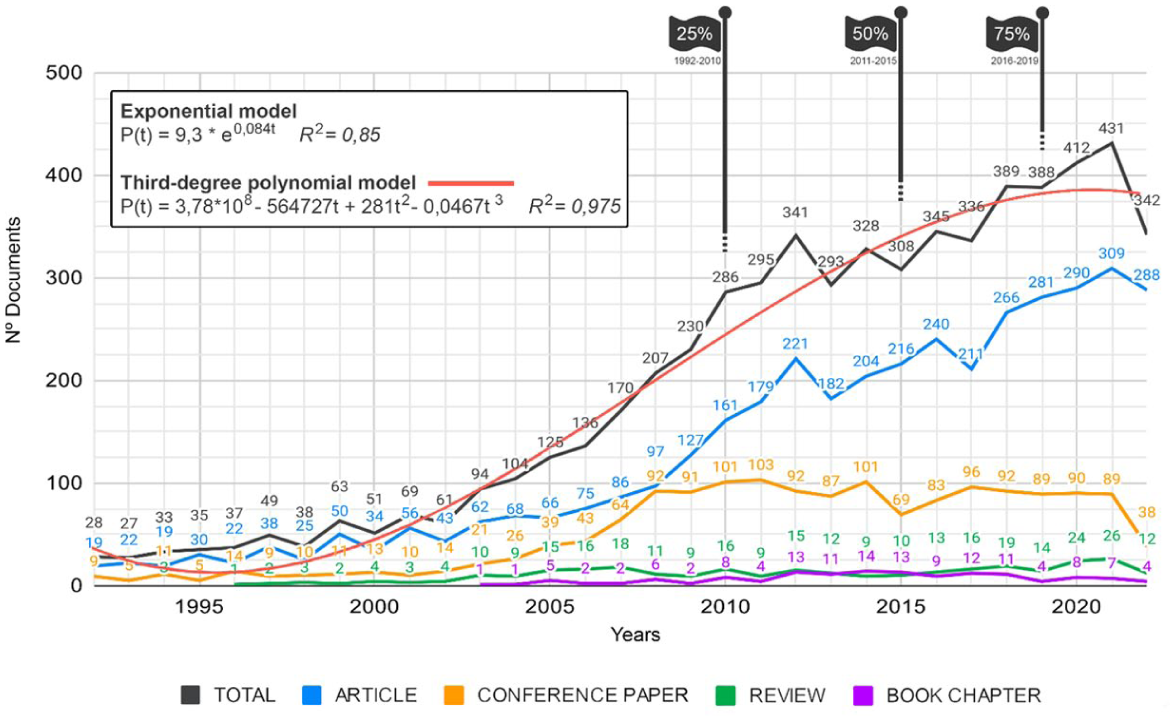
Team effectiveness publications per year from 1992 to 2022 [ LIVE FIGURE 3 ].
The overall growth in publication volume follows an exponential trend, consistent with Price’s Law of scientific development (Price, 1963). Between 2002 and 2022 (and despite a slight slowdown between 2012 and 2017), there was a significant acceleration that highlighted the emergence of the field as a significant research front, reaching a historic peak of 431 publications in 2021. The annual exponential growth rate was calculated at 10.3%, indicating that the volume of publications doubles roughly every 6.6 years, a faster pace than the 10 to 15 years reported by Price (1965). Both an exponential model and a third-degree polynomial model were fitted to the data, yielding strong coefficients of determination (R² = 0.85 and R² = 0.975, respectively, see Figure 3). However, it is important to recognize that these models are primarily descriptive and not predictive.
The calculation of the half-life yielded a value of approximately 14.5 years, which is significantly higher than the average of 4.8 years reported in the latest Journal Citation Report (Clarivate, 2024a) for journals ranked in the top 10 research areas for team effectiveness publications (see Section “Disciplines and Venues in Team Effectiveness Research”). The annual aging factor was calculated at 0.9532, indicating that the literature retains 95.32% of its relevance from the previous year, with annual decrease in interest of approximately 5%.
Additional analyses were conducted, revealing some side findings about the quantitative growth and impact of team effectiveness research. Highlights include the rapid increase in publications and authors, shifts in citation patterns, thematic specialization, the accelerated onset but shorter lifespan of citations in recent works, and the prominent role of review articles as highly cited syntheses of knowledge. For a detailed breakdown of these results, including publication trends, keyword evolution, citation distributions, and productivity, see Appendix C and Appendix D.
Scientific production on team effectiveness has evolved following the thematic priorities of each era, as shown in Figure 4, with peaks directly related to the emergence of topics that responded to the social, technological, and organizational challenges of their time. For example, in 1997, terms related to “group support systems” began to gain traction, coinciding with a notable increase in scientific production. This phenomenon can be explained by the growing interest in collaborative technologies that improved decision-making and communication in teams. The importance of these technologies in organizational settings probably catalyzed an increase in empirical research evaluating their effectiveness. Later, in 2001, another peak in publications was linked to both this topic and “selection,” a concept that reflects the interest in how to select ideal members for effective teams, especially relevant in a context of increasing globalization and greater diversity in teams.
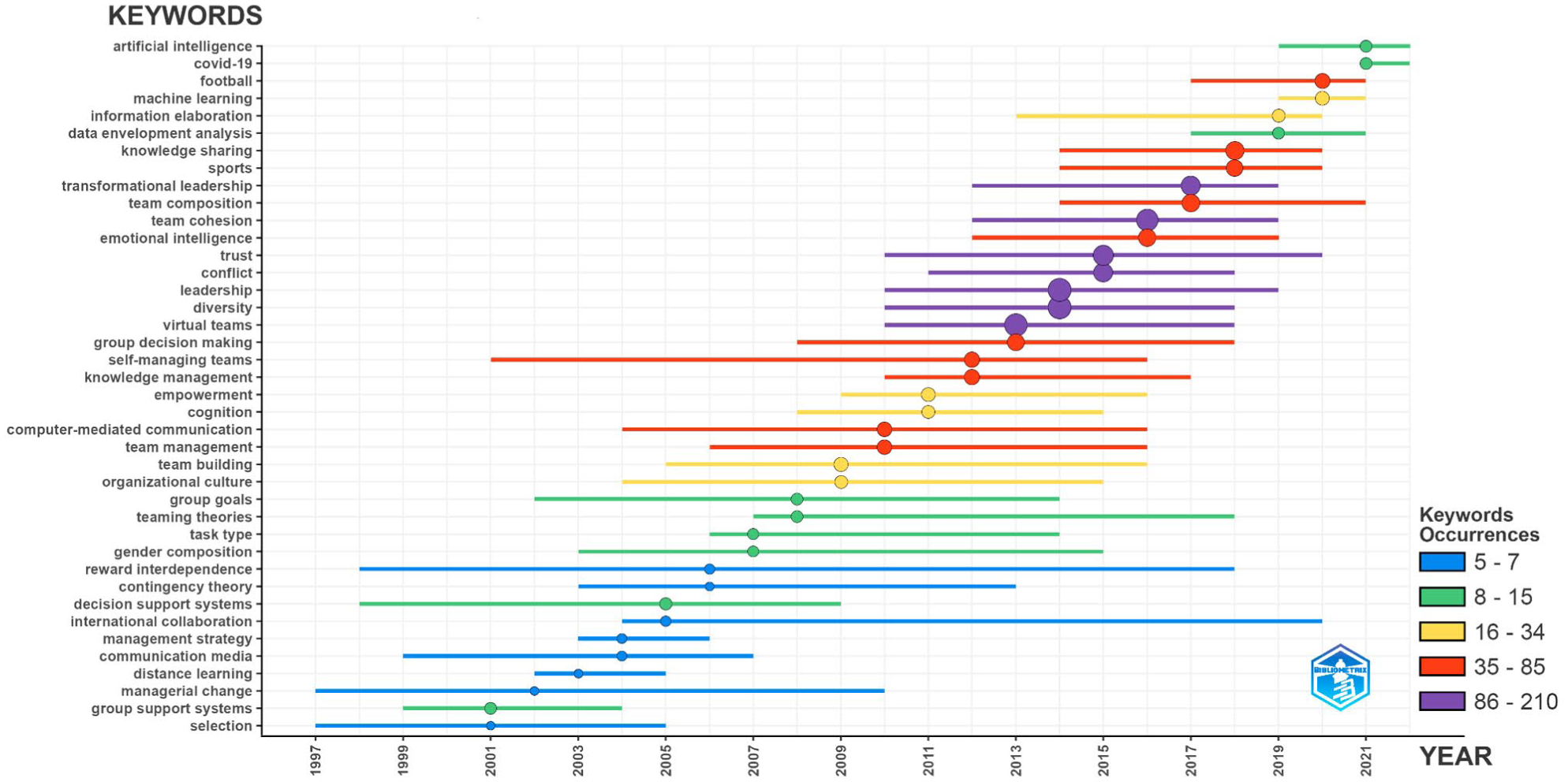
Team effectiveness trending keywords per year between 1992 and 2022.
From 2010 onwards, a change in thematic priorities is observed towards increased interest in topics such as diversity, leadership, and virtual teams. These changes reflect a transition toward a more complex and multifaceted approach. Scientific production during this decade seems to respond to the increasing integration of global and distributed teams, as well as to the need to understand how factors such as cohesion, trust, and conflict influence team effectiveness. This thematic interest peaked between 2013 and 2014, which coincides with a sustained growth in publications and the consolidation of these areas as pillars of the field.
In recent years, emerging topics such as artificial intelligence and machine learning have begun to shape scientific production, although their impact has not yet reached the level of consolidation of other topics. Their integration in contexts such as sports performance analysis and automated decision-making indicates a shift towards more advanced technological research. Meanwhile, topics such as international collaboration and self-managed teams have maintained sustained interest over time, suggesting that they represent central and recurring issues in the study of team effectiveness.
The inductive classifications of keywords resulted in the identification of 10 meta-themes or thematic pillars that, together, capture the conceptual structure of the field and synthesize its major research streams (see Table 3). Each thematic pillar is illustrated with up to 23 of the most frequently used keywords by authors in this review.
Top 23 Most Frequently Used Keywords Within Each Thematic Pillar, Ranked by Frequency of Occurrence [LIVE TABLE 3].
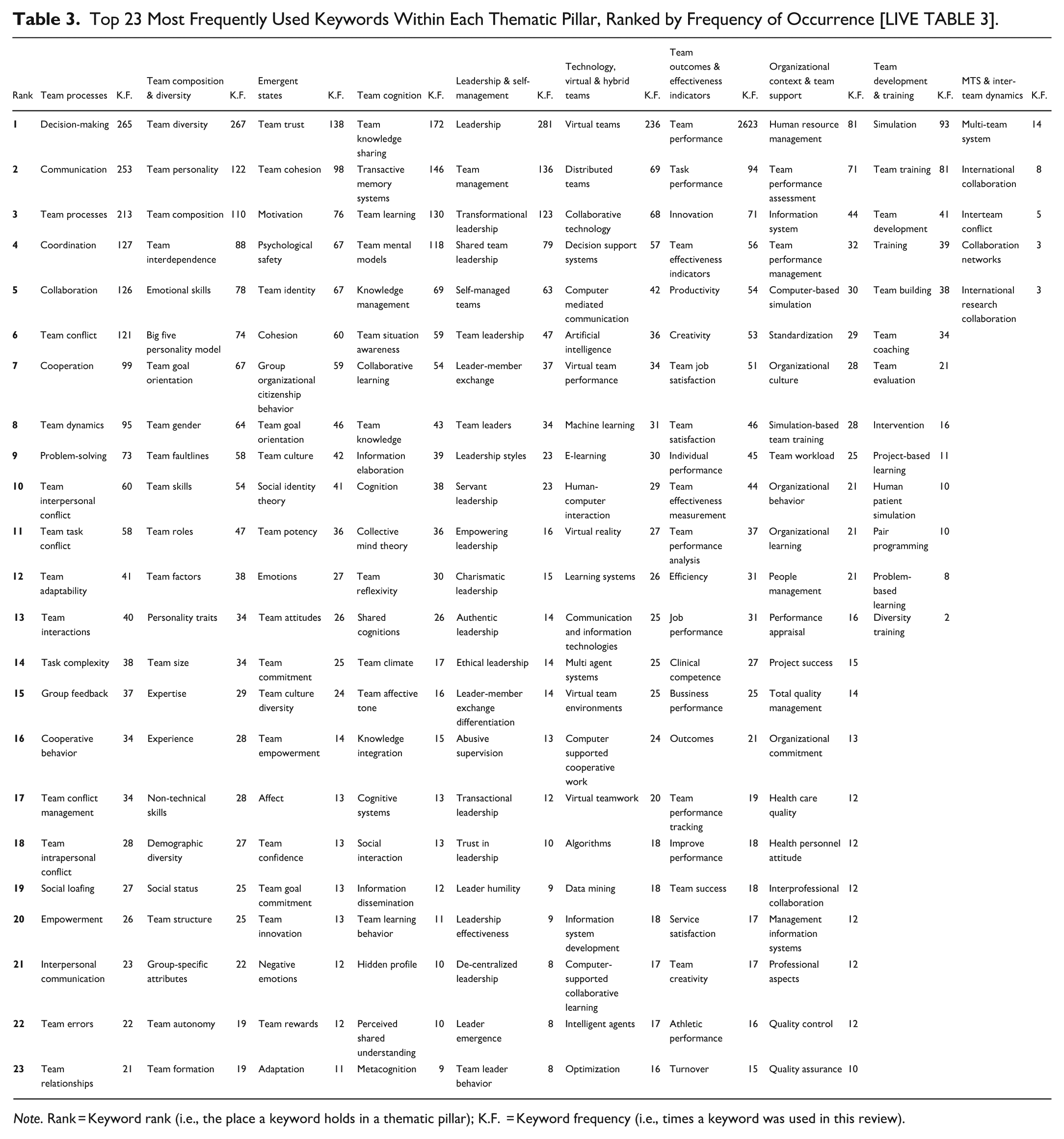
Note. Rank = Keyword rank (i.e., the place a keyword holds in a thematic pillar); K.F. = Keyword frequency (i.e., times a keyword was used in this review).
Disciplines and Venues in Team Effectiveness Research
The identification of the most influential research areas and disciplines in team effectiveness yielded the ranking shown in Figure 5, which lists the 24 most influential research areas. Since a publication can belong to multiple areas, the count exceeds the total number of unique publications in the dataset.
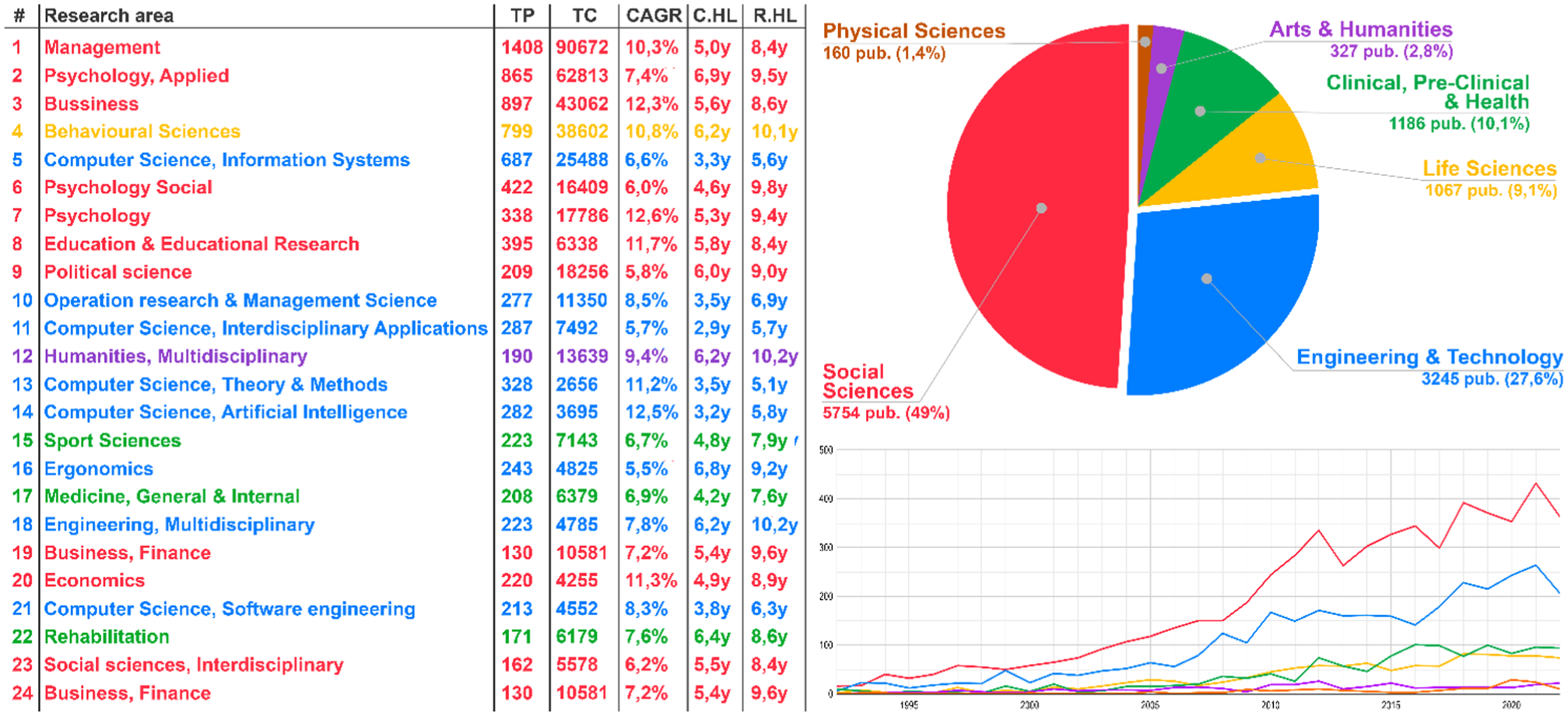
Most influential team effectiveness research areas and disciplines [LIVE FIGURE 5].
A significant majority of the reviewed publications falls within the Social Sciences discipline, accounting for 49% of the corpus. However, Engineering & Technology has exhibited the fastest growth, with a compound growth rate (CAGR) of 12.5%, surpassing that of the Social Sciences. This trend is further reflected in the lower cited half-life of Engineering & Technology publications (4 years), compared to 6 years for Social Sciences, indicating a faster knowledge turnover and possibly more time-sensitive innovations in technical contexts.
The most influential venues, sorted based on their local h-index, are presented in Table 4 (the complete list of top venues can be found in Appendix E). The table’s results show a clear imbalance in the representation of generalist and specialized journals addressing team effectiveness, with a higher number of generalist journals dominating the top-ranked positions. This imbalance reflects distinct patterns of fragmentation and convergence within venues. Fragmentation refers to the thematic and methodological diversity seen in generalist journals, such as A
Ranking of Most Influential Venues in Team Effectiveness between 1992 and 2022 [ LIVE TABLE 4 ].
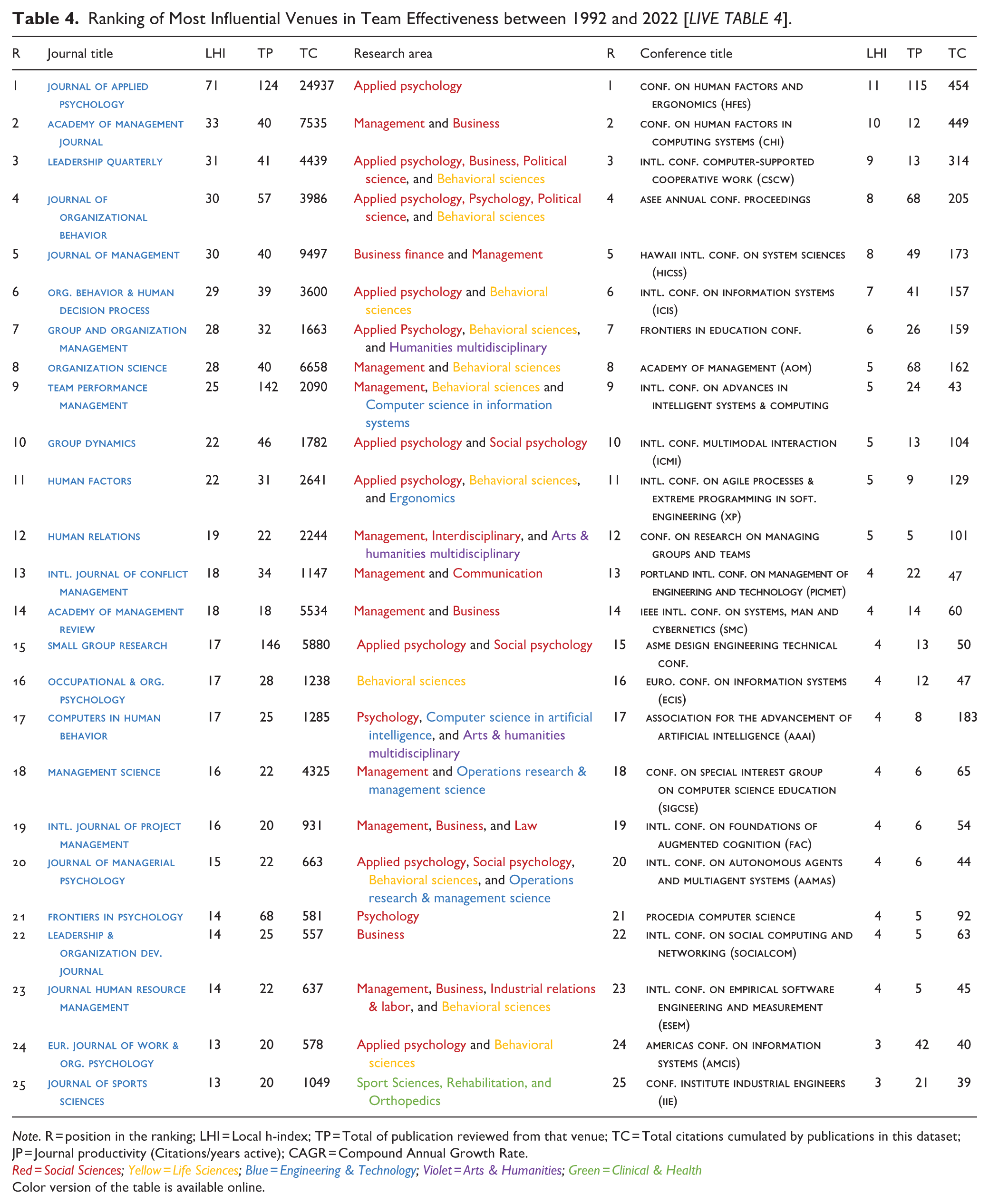
Note. R = position in the ranking; LHI = Local h-index; TP = Total of publication reviewed from that venue; TC = Total citations cumulated by publications in this dataset; JP = Journal productivity (Citations/years active); CAGR = Compound Annual Growth Rate.
Conferences, meanwhile, offer unique platforms for incubating emerging research and exploring interdisciplinary approaches. Within this diverse ecosystem, some conferences stand out for their clear focus on team research. Examples include the
C
The analysis of the prevalence of keywords in disciplines resulted in a list of at least 15 prevalent words in three of the six disciplines (see Table 5). In the “Clinical, Pre-clinical & Health discipline,” terms such as
Top 15 Most Prevalent Keywords in Each Discipline [LIVE TABLE 5].
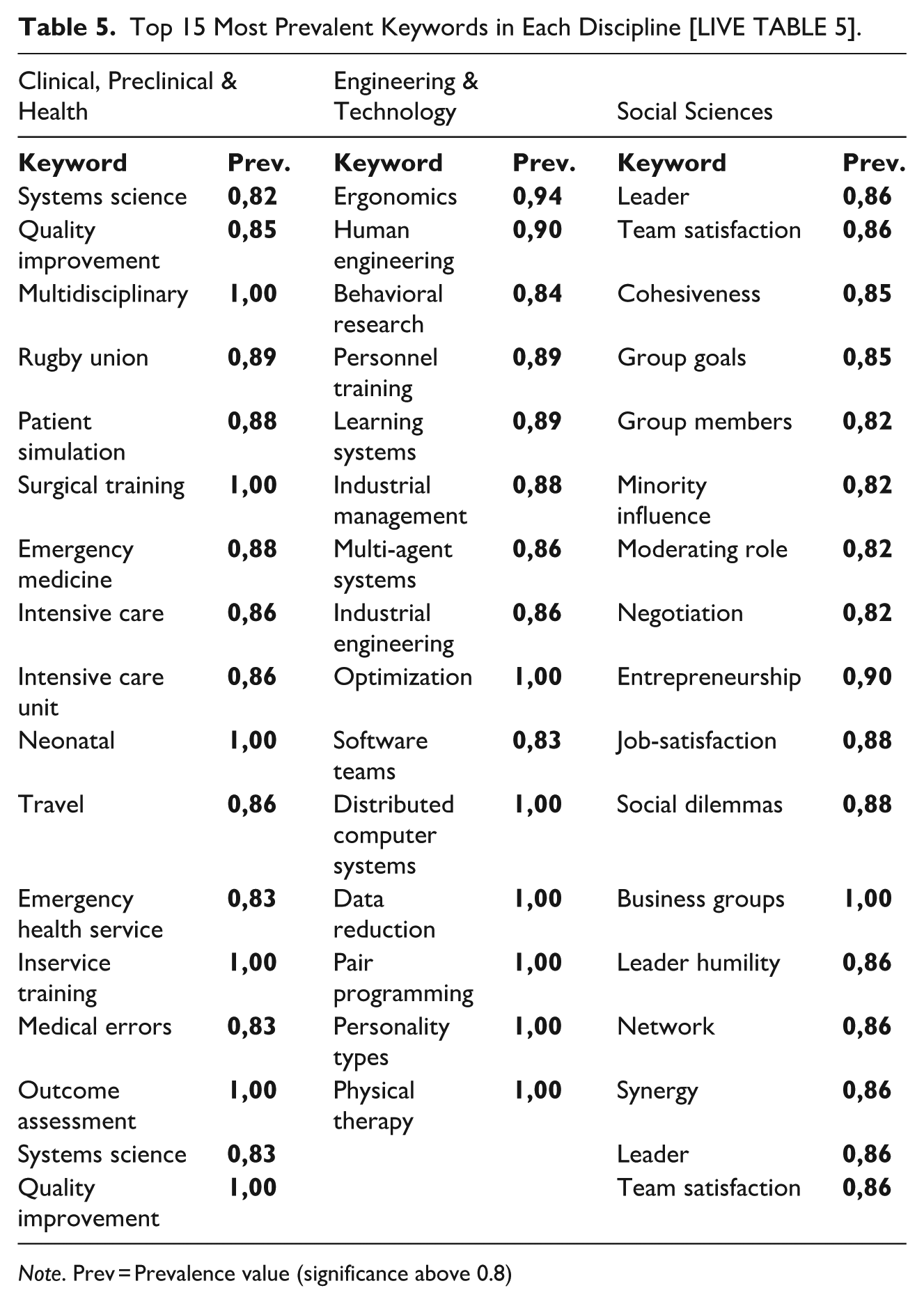
Note. Prev = Prevalence value (significance above 0.8)
Finally, the results of the prevalence analysis also show that 45.61% of the keywords have a multidisciplinary nature, influenced not only by their applicability, but also by factors like technological advances, cultural shifts, and emerging priorities.
Key Contributors and Collaboration Networks
The identification of the main contributions made by the main contributors resulted, first of all, in a list of 62 authors representing the most influential top 1% in team effectiveness (the full list can be found in Appendix F). To facilitate subsequent qualitative analysis, Table 6 focuses on the 20 most influential authors, presenting their main contributions and keywords used.
Top 20 Most Influential Authors in Team Effectiveness Between 1992 and 2022 [LIVE TABLE 6].
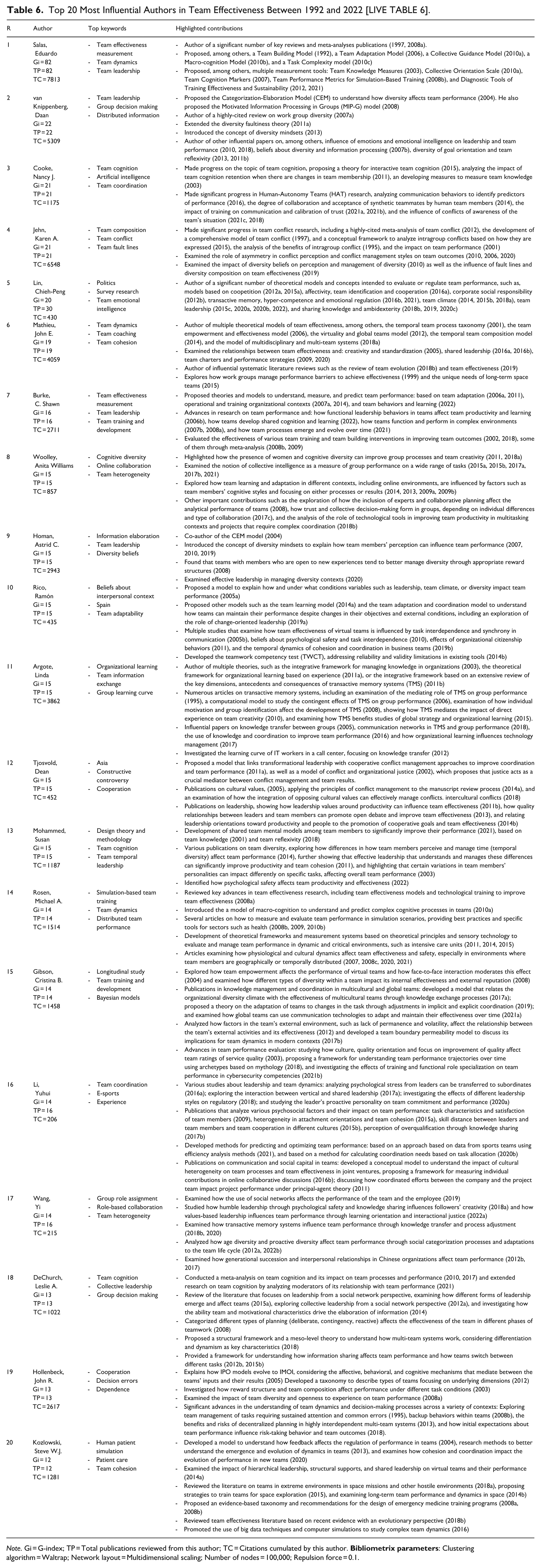
Note. Gi = G-index; TP = Total publications reviewed from this author; TC = Citations cumulated by this author.
The influential scholars in Table 5 contributed significantly to the ten thematic pillars, based on their impact and focus. Salas, Mathieu, Jehn, Hollenbeck, Burke, and Tjosvold advanced models of coordination, conflict, and team adaptation advanced
In addition, we conducted a country‑level productivity assessment to discover which countries where more active in the publication of team effectiveness literature. More details about the methodology, the map, and the complete analysis results are presented in Appendix G.
The co-authoring analysis resulted in a collaboration map composed of 13 clusters (see Figure 6). We have analyzed the frequency and prevalence of the keywords used by the authors of each cluster with the aim of labeling them as leading research groups in the investigation of certain topics. All except four of the top 1% of most influential authors are represented in the collaboration network; the exceptions are Lin C.P., Woolley A.W., Argote L., and Wang Y.
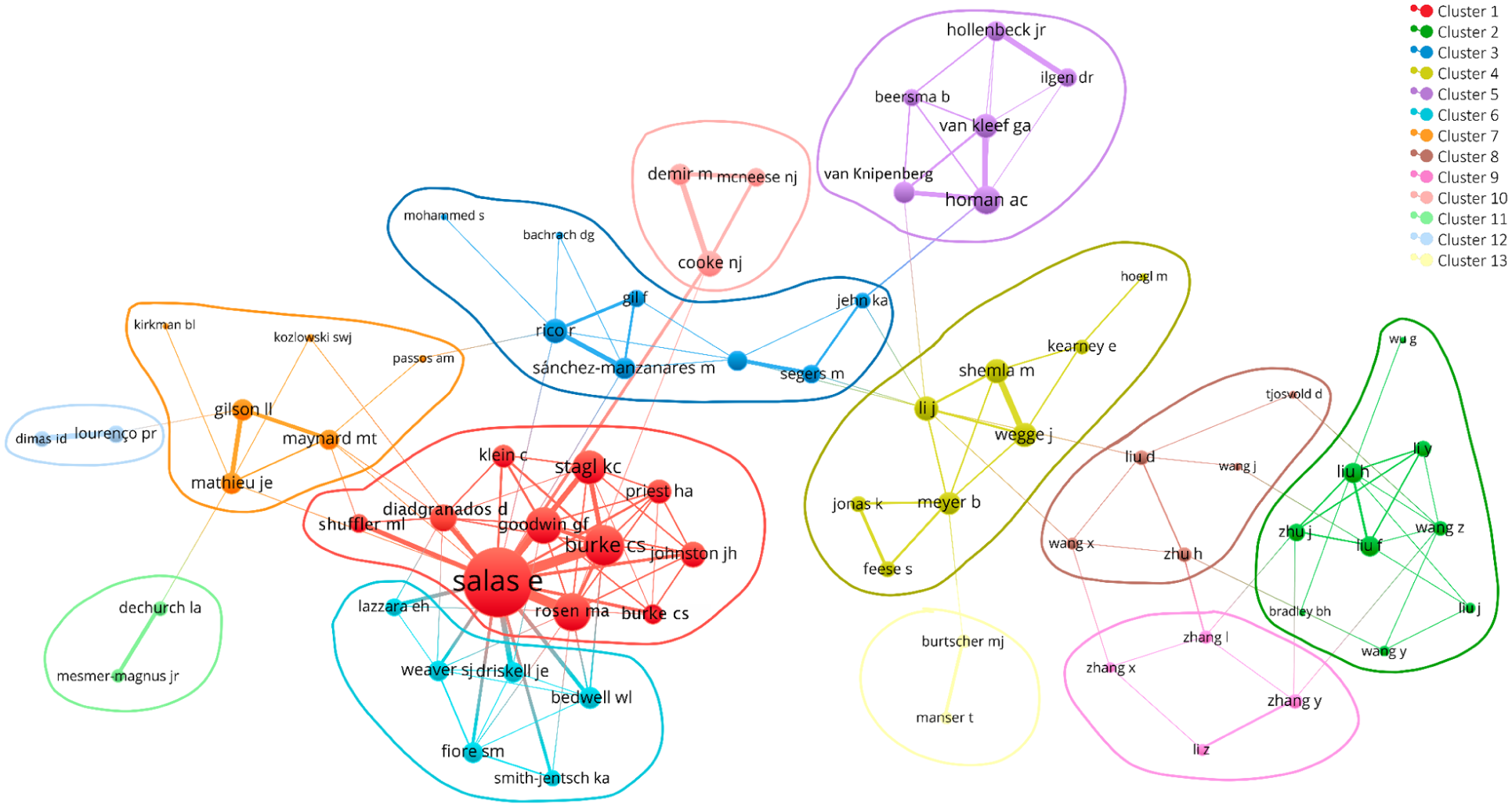
Collaboration network of authors in team effectiveness research based on a co-authorship analysis [LIVE FIGURE 6].
The analysis of keywords per cluster reveals clusters emerging as experts in specific topics. For example,
Co-Citation and Landmarking Analyses
To identify landmark publications, we conducted a co-citation analysis, generating a list of 22 foundational publications on team effectiveness (see Table 7). We thoroughly reviewed these publications to enrich the table with detailed information on the study goals, key variables and concepts, and main findings. In addition, the type of publication (distinguishing between reviews/meta-analyses and original contributions (theoretical, methodological, or empirical) is listed.
Top 22 Foundational Publications in Team Effectiveness [ LIVE TABLE 7 ].
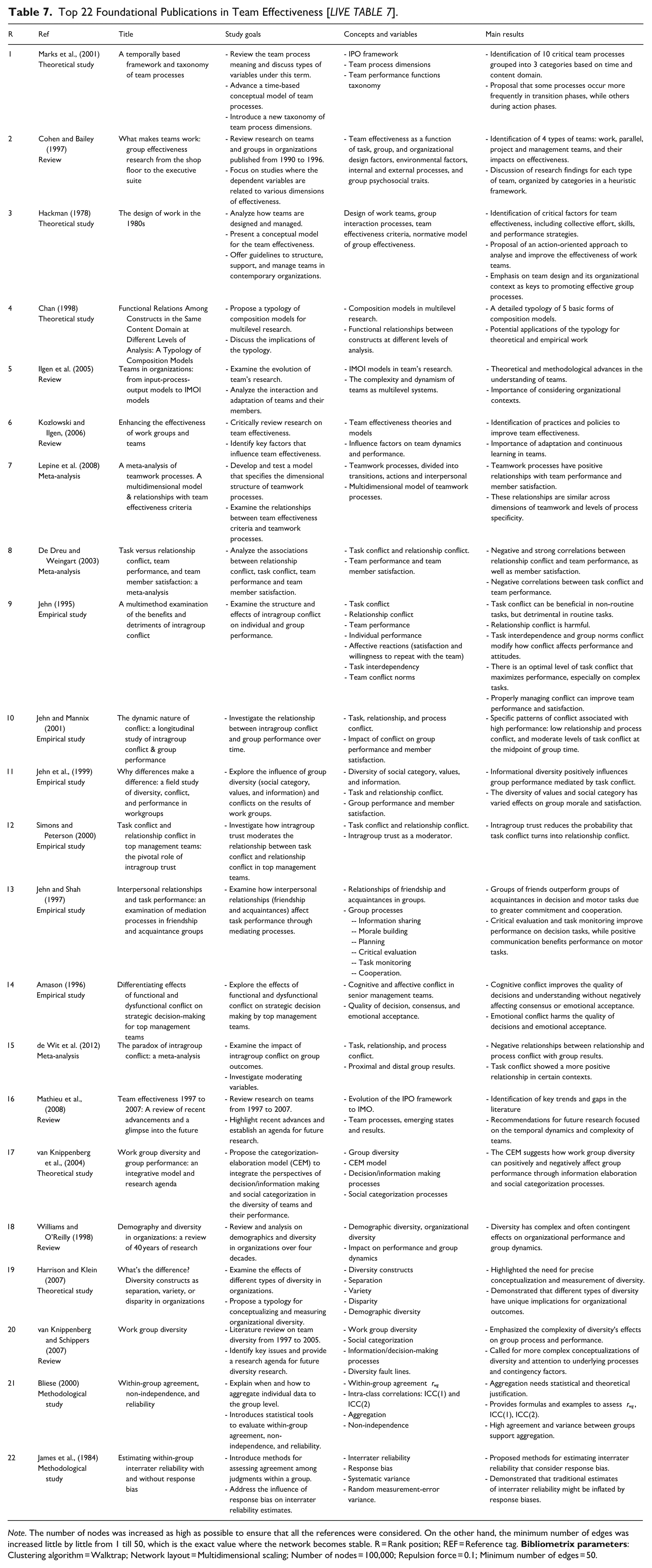
Note. The number of nodes was increased as high as possible to ensure that all the references were considered. On the other hand, the minimum number of edges was increased little by little from 1 till 50, which is the exact value where the network becomes stable. R = Rank position; REF = Reference tag.
In the case of team effectiveness, the co-citation network reflects the convergence of multiple theories and lines of research. A first notable finding is that almost the half of landmark publications are integrative in nature, either literature reviews or meta-analyses aimed at synthesizing empirical findings in specific domains, such as team conflict, diversity, trust, or leadership. While some reviews were highly relevant for their ability to condense and mature the literature findings (e.g., Cohen & Bailey, 1997; Kozlowski & Ilgen, 2006; Mathieu et al., 2008; van Knippenberg & Schippers, 2007; Williams & O’Reilly, 1998), some of these integrative works also introduced widely accepted theoretical models, such as the evolution from the IPO to the IMOI model (Ilgen et al., 2005), adding an element of originality to their role in shaping the literature.
A relevant finding is the strong presence of research on conflict and diversity, reflecting their cross-cutting influence on team performance. Types of conflict (task, relationship, process) and their effects on cohesion and outcomes have been widely studied. Similarly, diversity, especially through the Categorization-Elaboration Model (CEM), attracts high citation volumes due to its relevance across contexts. Consequently, classic works (e.g., Jehn, 1995-2001; van Knippenberg & Schippers, 2007) are central in co-citation networks. Notably, foundational frameworks (e.g., Arrow et al., 2000; McGrath, 1984) are absent from top co-cited works, possibly due to diffuse influence or integration into more recent reviews that consolidate and reinterpret core theoretical contributions. However, applying more flexible threshold (number of edges) in the co-citation analysis yields a broader set of landmark publications, indirectly capturing these foundational publications (see Appendix H).
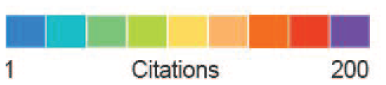
Table 8 presents the 10 most highly cited publications on team effectiveness over time. The color intensity of the squares on the timeline for each publication reflects the number of citations received per year.
Evolution of Most Productive Publications in Team Effectiveness Between 1992 and 2022 [LIVE TABLE 8].
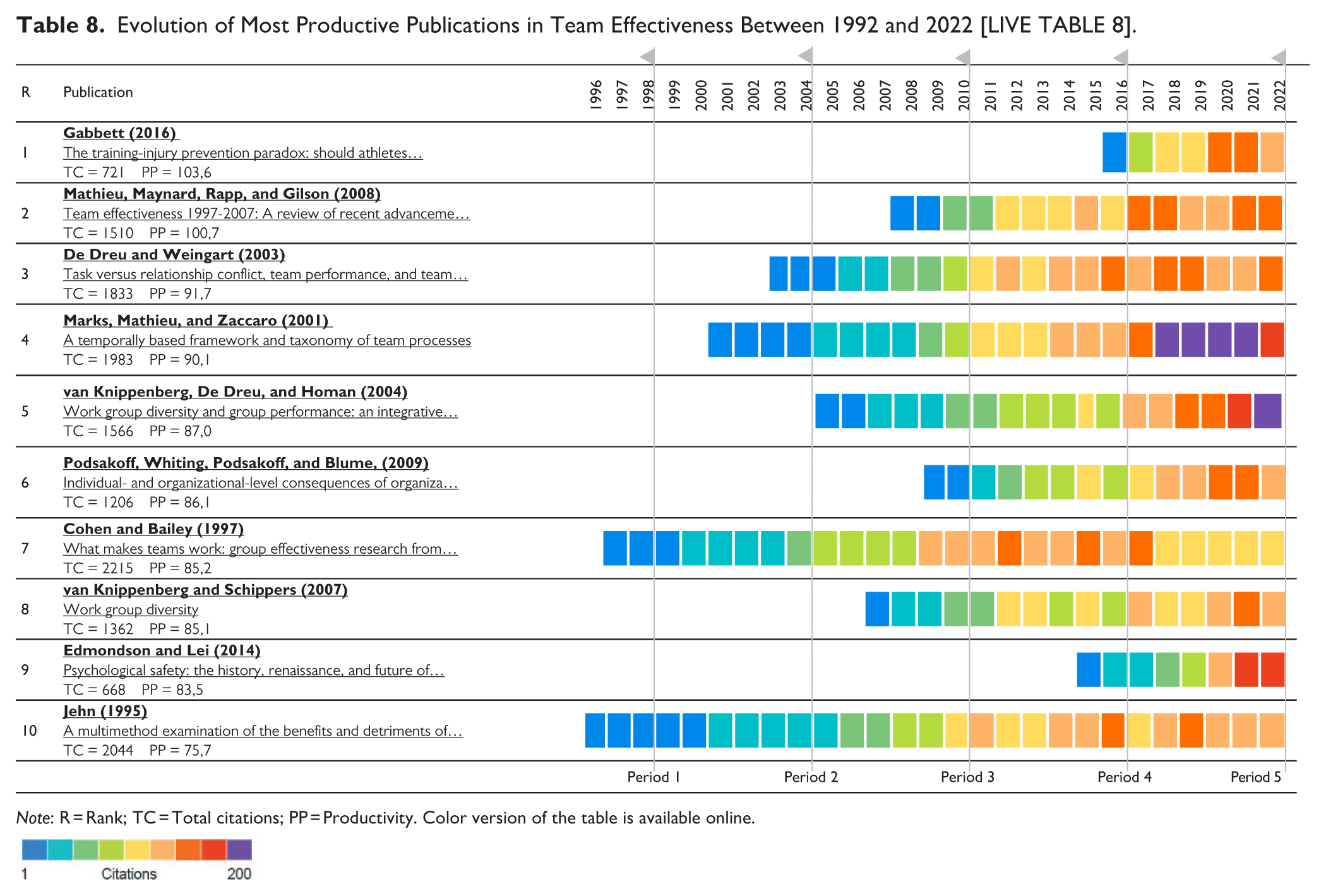
Note: R = Rank; TC = Total citations; PP = Productivity.
The results show that a significant number of publications identified as seminal publications in the co-citation analysis are also among the most cited over time (namely Cohen & Bailey, 1997; De Dreu & Weingart, 2003; Jehn, 1995; Marks et al., 2001; Mathieu et al., 2008; van Knippenberg et al., 2004; van Knippenberg & Schippers, 2007). The productivity analysis also shows additional notable publications, such as the work of Edmondson and Lei (2014) on psychological safety, Gabbett (2016) on the training-injury prevention paradox, and Podsakoff et al. (2009) on organizational citizenship behaviors.
Publications that show strongly increasing amounts of citations in period five (i.e., Edmondson & Lei, 2014; Marks et al., 2001; van Knippenberg & Schippers, 2007), reflect an interest of team effectiveness researchers to understand the dynamics of (effective) processes and emergent states of teams (e.g., psychological safety as contributor to performance) and the importance of understanding how diversity impacts team performance. Older works from Jehn (1995: on intragroup conflict) and Cohen (1997: a review of teamwork research from 1990-1996) show a decline in the number of citations that they received in period 5.
Thematic Evolution
The analysis of keywords popularity, presented in Figure 7, resulted in the construction of an evolutionary ranking of the 15 most used keywords. Different colored lines highlight the evolution of keyword popularity over time, with grey reserved for keywords lacking other connections.
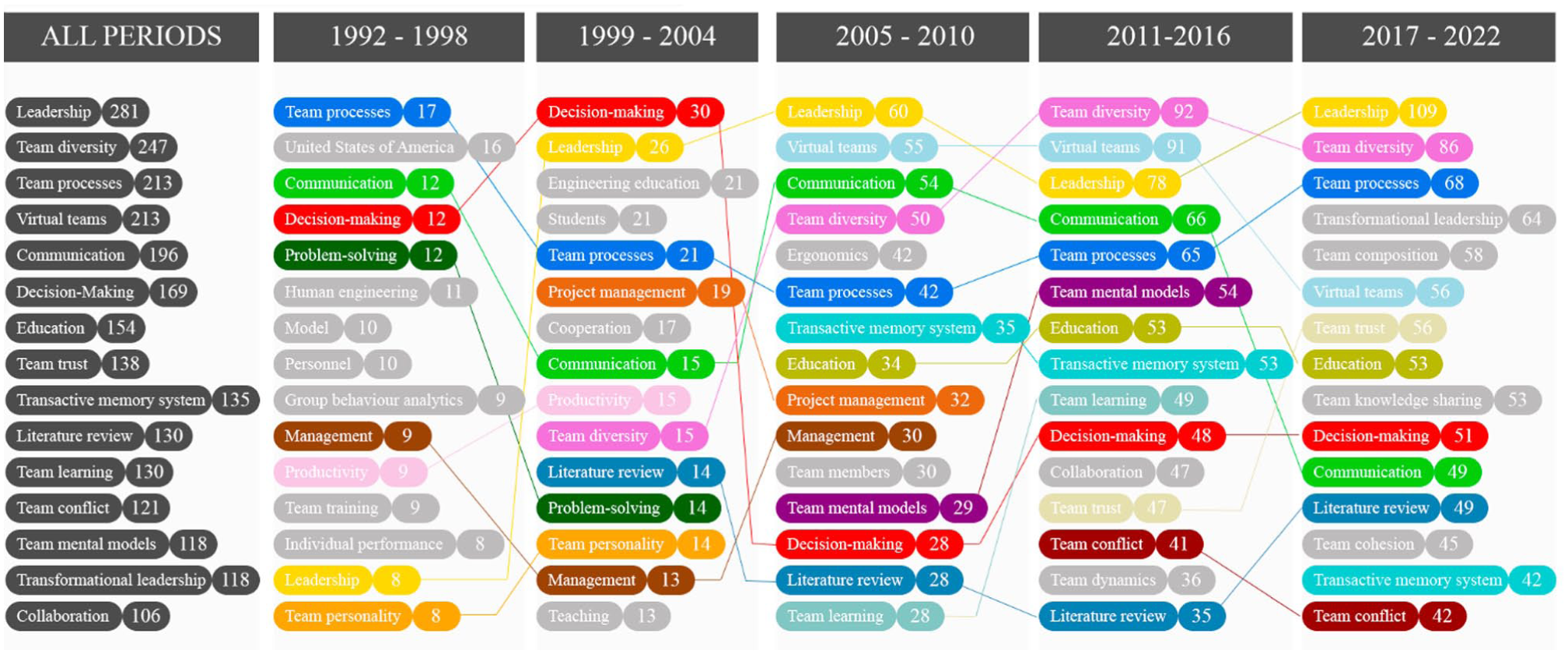
Most frequently used keywords in all periods and per periods [LIVE FIGURE 7].
Team dynamics, especially works on T
For its part, the thematic analysis based on density and centrality according to Callon et al.’s (1991) framework resulted in five thematic maps, each corresponding to a specific subperiod (see Figure 8). The size of each theme correlates with the number of publications. The color of the identified themes corresponds to its destiny in the subsequent period (the color legend is included in the same figure).
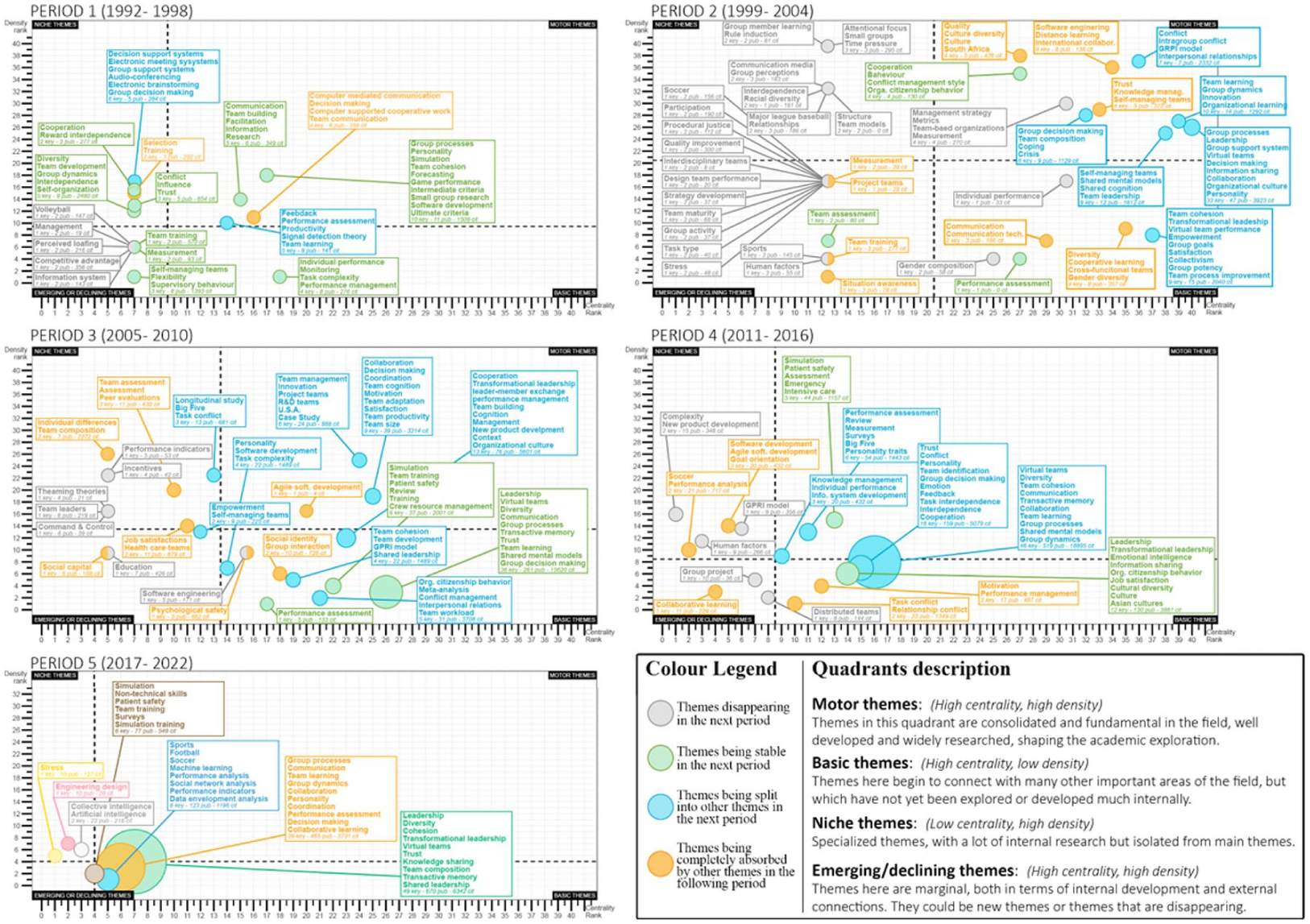
Thematic evolution maps in team effectiveness research across five subperiods using the Callon et al. (1991) density and centrality technique.
Among other things, these maps show an increase in the proportion of publications classified under specific themes, from 36% to 64%, accompanied by a thematic consolidation that reduced the themes from 16 in the first period to 7 in the last. Furthermore, the complexity of keywords increased considerably, with an increase in the average number of keywords per theme from 3 to 15. In parallel, the proportion of keywords grouped into themes decreased from 13% to 2%, reflecting a greater diversity of approaches and perspectives in the field.
The thematic evolution results, consistent with those provided in Figures 7 and 4, show a clear progression toward more specialized and sophisticated topics in the study of team effectiveness. Both the keywords and trends analyses highlight the consistent presence of group dynamics and the rise of team leadership, especially transformational leadership, starting in Period 2. This leadership theme, which absorbed related areas such as virtual teams, emerged as a key focus toward the end of the period, reflecting the increasing integration of leadership, cohesion, and adaptability as critical factors in dynamic and virtual environments. Additionally, the consolidation and evolution of themes and keywords underscore the field’s maturation, marked by research topics such as team diversity and virtual teams. These trends reflect a deepening understanding of the multifaceted nature of team effectiveness.
To interpret the results of the thematic analysis and obtain a better understanding of the underlying themes and how these evolved over time, a qualitative analysis is presented below based on the reading of titles and abstracts of the publications classified in each of the themes identified in each period. This approach captures nuances and emerging trends that may not be evident through purely quantitative methods and hence offers an enriched perspective on the evolution of priorities and approaches in team effectiveness research. This table includes detailed description of the themes along with comprehensive bibliographic references, helping readers to explore specific details or gain deeper insights into the changes shaping the field and future research opportunities.
Period 1 (1992–1998)
In period 1, team effectiveness research began to solidify around foundational constructs while also incorporating early signals of technological change. During this period, 86 out of 247 publications (35%) were classified into one of 18 identified themes, reflecting the growing complexity of the team effectiveness literature and its efforts to establish core theoretical foundations. Consistent with early models (e.g., Hackman & Morris, 1975; McGrath, 1984), teams were primarily conceptualized as bounded, co-located entities, with effectiveness linked to factors such as
Significantly, even at this early stage, the theme of
Period 2 (1999–2004)
In period 2, a clear “thematic explosion” occurred, with 210 out of 442 publications (48%) classified into one of 40 identified themes. This period marked a sharp broadening of the field, with many themes emerging or expanding significantly, though several would later fade, as indicated by their limited continuity in subsequent periods. The dispersion in centrality and density highlighted the exploratory and experimental nature of this phase. Research became both more diverse and more applied, often focused on the practical challenges of increasingly complex and technologically enabled organizations. This was visible in the broadening scope of team effectiveness research to include team learning, expertise coordination, emotional intelligence, and group decision-making, all reflecting increasing organizational complexity.
There was also a notable shift toward group-level analyses, emphasizing the importance of collective synergy for team effectiveness. Core themes such as
Meanwhile,
Period 3 (2005–2010)
In period 3, research in team effectiveness became increasingly integrative and systemic, with 632 out of 1,154 publications (55%) classified into one of 26 identified themes. This period marked a conceptual shift, as previously isolated themes, such as
Key motor themes included
Meanwhile,
Period 4 (2011–2016)
In period 4, the field entered a phase of thematic consolidation, with 1,080 out of 2,298 publications (57%) classified into one of 16 identified themes. This consolidation reflected a maturation of the field, as research increasingly focused on refining core constructs and applying them to high-stakes, real-world contexts. Central themes during this period included
Meanwhile,
Period 5 (2017–2022)
In period 5, the field of team effectiveness entered a phase of heightened thematic consolidation, with 1,471 out of 2,298 publications (64%) classified into just seven dominant themes. This reflects a field that has not only matured but is now actively responding to novel socio-technical, organizational, and cognitive challenges.
Technological advancements played a transformative role. The emergence of AI-driven interactions, including tools for predictive analytics and automated facilitation, reshaped how teams are monitored and supported. AI-based systems such as chatbots and meeting assistants can now moderate discussions, analyze emotional tone, and generate real-time summaries, directly influencing team processes and decision-making. Predictive analytics tools use communication and behavioral data to anticipate burnout, disengagement, or emerging conflict, enabling timely interventions and personalized support strategies. Likewise, immersive environments such as VR and the metaverse have become experimental platforms for team collaboration, learning, and development.
Traditional themes were revisited through more nuanced lenses.
Importantly, this period marked the rise of multi-team systems (MTS) and inter-team collaboration as frontier research areas. Teams are increasingly embedded in broader networks requiring coordinated action, shared resources, and aligned objectives. Studies began developing frameworks to understand how such interdependent systems function effectively, with a focus on boundary management, shared leadership, and ensuring that virtual voices are equitably represented across distributed settings (DeChurch & Zaccaro, 2010; Luciano et al., 2015). Overall, this period signals a shift toward embracing the complexity, fluidity, and hybrid nature of modern teaming, highlighting the importance of adaptability, inclusiveness, and intelligent system integration in shaping the future of team effectiveness.
Discussion (Step 5-B)
The results obtained in this study significantly expand the understanding of the evolution and dynamics of research on team effectiveness. Below, we discuss key findings in relation to the research questions and the theoretical framework used, as well as the theoretical and practical implications that emerge from this analysis.
RQ1—Evolution: What Insights Does the Changing Volume of Publications Over Time Provide About the Maturation and Trajectory of Research on Team Effectiveness?
Bibliometric data show exponential growth since 1992 (10.3% annual increase), with a clear shift from conference proceedings to journal publications after 2008, indicating a maturing, peer-reviewed discipline. Despite a 5% annual decline in interest in the articles annually, the publication rate keeps rising, and the volume will likely double in size within 6.6 years. Growing complexity in organizational tasks, expanded reliance on team-based structures, and the growing importance of teamwork all drive this expansion. While slight slowdowns may hint at saturation in some areas, a 14.5-year citation half-life underscores the field’s ongoing relevance. Rather than indications of stagnation, and as evidenced in the trending keywords, we expect a new phase of inquiry, especially in multi-computer systems and AI-mediated interactions. Additionally, by classifying keywords, 10 thematic pillars were created that have shaped the literature of the past three decades: (1) T
RQ2—Outlets: What Do Publication Patterns Across the Different Disciplines, Areas, and Academic Venues Reveal About the Increasing Multidisciplinarity of Team Effectiveness Research?
Publication patterns demonstrate the growing multidisciplinarity of team effectiveness research, reflecting the inherent complexity of team dynamics, which demands expertise from diverse fields. While social sciences lead with 49% of publications due to foundational group dynamics and organizational behavior theories, engineering, and technology disciplines are growing 12.5% annually. This rapid expansion mirrors technological advances such as digital collaboration tools and AI, requiring new frameworks and methods that engineering and technology can uniquely provide. However, these fields’ publications become obsolete 33% faster than those in social sciences, indicative of a fast-moving innovation cycle.
The thematic diversity of journals and conferences further underscores this multidisciplinarity. Generalist journals function as key hubs, facilitating interdisciplinary perspectives to tackle real-world problems in team research that span leadership, technology implementation, and human performance in high-stakes or biologically demanding environments (e.g., healthcare, emergency response, or ergonomics). In contrast, specialist journals tend to focus on the social sciences, reflecting their deeper roots in the study of human and organizational behavior, with the notable exceptions of Group and Organization Management and Team Performance Management.
Specialized conferences such as the Conference on Research in Group and Team Management and the Human Factors and Ergonomics Society (HFES) have also emerged as key contributors to the field, potentially shifting publication trends and highlighting the need to include conference output in systematic reviews.
Finally, the prevalence of bridging keywords further underlines the multidisciplinarity of the field. Over 45% of keywords, such as “communication” and “simulation,” are linked to multiple disciplines. For example, “communication” is not only a central topic in psychology and organizational studies but also a critical component in designing systems for remote or AI-mediated collaboration in technological fields. Similarly, “simulation” bridges engineering and social sciences by enabling experimental designs that mimic real-world team scenarios. These bridging terms illustrate how the field leverages its multidisciplinary nature to address evolving challenges in increasingly complex team environments. Nevertheless, a fair share of keywords remains prevalent in a single discipline, opening up new research opportunities for studies in non-disciplines.
RQ3—Contributors: How Have Significant Contributors, Collaborative Networks, and Cultural and Geographic Factors Collectively Shaped the Trajectory of Team Effectiveness Research?
The development of team effectiveness research has been shaped by a confluence of important contributors. The study identified 62 lead authors, with a strong focus on leadership, diversity, and models of team effectiveness. These influential authors have also played a pivotal role in advancing the thematic pillars of team effectiveness by developing integrative theories, empirical models, and applied frameworks. Scholars like Salas, Mathieu, and Burke contributed to core themes such as team processes (pillar 1), leadership and self-management (pillar 5), and team development and training (pillar 9). Meanwhile, van Knippenberg, Jehn, and Homan shaped our understanding of team composition and diversity (pillar 2), conflict management, and emergent states (pillar 3). Others, like Cooke, Mohammed, and Argote, deepened insights into team cognition, knowledge management, and shared mental models (pillar 4), especially in technology-rich environments (pillar 6). DeChurch and Hollenbeck advanced models of multi-team systems and inter-team dynamics (pillar 10) and distributed leadership, reflecting the field’s shift toward greater complexity and interdependence. This trajectory of team effectiveness research illustrates a strong lineage with classic theories of team effectiveness and the 10 pillars identified in our research. Foundational works falling beyond our 31-year scope but with considerable impact in team effectiveness literature by McGrath (1984), Sundstrom et al. (1990), and Hackman and Morris (1975) all stressed how inputs (e.g., composition, structure, leadership), contextual factors (e.g., organizational resources, reward systems), and internal processes (e.g., communication, coordination) jointly shape team outcomes. The insights on synergy (Hackman & Morris, 1975), team viability (Sundstrom et al., 1990), and especially the Input-Process-Output (IPO) paradigm (McGrath, 1984) have proven remarkably durable over time. At the same time, our results highlight that the team effectiveness literature also evolved beyond these foundational works by foregrounding the complexity of inter-team systems, hybrid configurations, and human-technology collaboration and the adaptability required in dynamic, high-risk, and virtual environments in recent publications, dimensions not fully articulated in earlier work.
Our results highlighted new emerging pillars in team effectiveness. While older reviews noted the role of technology in passing (Sundstrom et al., 1990), we show a new emphasis on AI-driven interactions (i.e., the integration of artificial agents into team processes, including algorithmic decision-making, automated facilitation such as AI-powered meeting assistants, and predictive analytics based on communication data such as linguistic markers, network structure of participation dynamics), remote collaboration platforms (i.e., the increasing use of tools such as video conferencing, shared digital workspaces, and asynchronous communication systems to coordinate distributed teams), and immersive environments as central to team functioning (i.e., the use of virtual and augmented reality settings for training, team development, and real-time behavioral assessment: pillar 4). Another expansion in the team effectiveness literature is going from a single-team setup to complex networks of interdependent teams, requiring new theories on how these systems coordinate and share resources (pillar 6). Originally subsumed under broad concepts like cohesion but coined in 1999 (Edmondson, 1999), physiological safety as a construct now receives dedicated focus as a key driver of open communication, learning, and innovation (pillar 7). While earlier work in knowledge management and learning focused for example on feedback loops, current studies delve deeper into how teams store, transfer, and retrieve knowledge in real time, often across boundaries (i.e., leveraging transactive memory systems, collaborative learning routines, and cross-team reflexivity to support continuous adaptation and integration of distributed expertise: pillar 9). Earlier frameworks addressed conflict as mostly detrimental (De Dreu & Weingart, 2003; Jehn, 1995); a more recent work explores how structured approaches and mediation strategies can harness conflict for creative or performance benefits (van Knippenberg et al., 2004).
RQ4—Landmark: What Do the Dynamics Between Seminal Publications and Emerging Influential Works Reveal About the Evolution of Theoretical Foundations and the Shifting Priorities in Team Effectiveness Research?
This section identifies 22 key publications that have established basic theories, models, and empirical findings in team effectiveness research. The 22 publications were classified into three major thematic categories, which were effectively mapped to the thematic pillars mentioned above, reaffirming their validity as a theoretical framework for future research. Beyond these fundamental works, additional studies have been identified that address emerging and niche areas within the field, including research on the effects of virtual environments on teamwork and diversity management. These emerging studies reconfigure and expand established frameworks for addressing contemporary problems and, given their influence, are positioned as future promises to be established as seminal.
RQ5—Themes: How Does the Thematic Clustering of Keywords Shape the Evolution of Research Priorities in Team Effectiveness and Highlight Emerging Trends and Future Directions?
Thematic keyword analysis across the past three decades reveals a clear pattern in the evolution of team effectiveness research, reflecting shifting organizational, technological, and societal priorities. In line with prior reviews (e.g., Ilgen et al., 2005; Mathieu et al., 2008), the findings from this study demonstrate not only the continuity of foundational topics, such as team processes and communication, but also the progressive emergence of complex, interdisciplinary, and technology-infused themes that signal the field’s maturation. Future scholarship must embrace this complexity and continue to explore how human and machine capabilities can be harnessed to build the next generation of effective teams. From these results a number of promising evolutions in team effectiveness research are highlighted, in addition to future research directions that are presented in Table 9 .
Research Agenda.
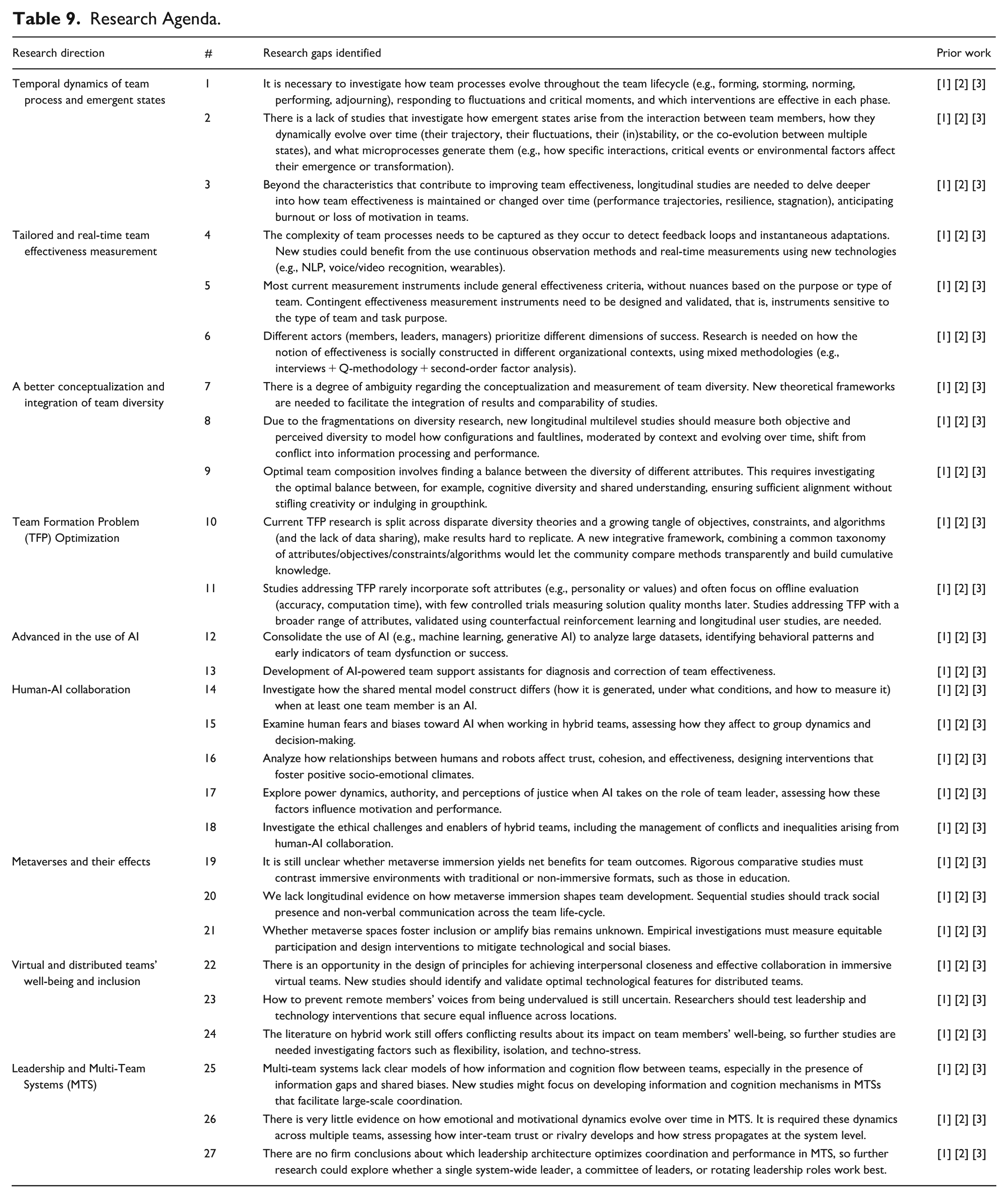
A promising direction for future research lies in exploring how emerging technologies, such as the metaverse, AI-powered agents, and machine learning systems, can be integrated into team dynamics to enhance effectiveness. Teams are no longer composed solely of human members operating within physical or even traditional virtual boundaries. Increasingly, they include sophisticated technological entities capable of interacting, supporting, and even making decisions alongside humans. For instance, recent studies have investigated the use of the metaverse as a learning and collaboration environment, where immersive technologies such as virtual reality (VR) headsets enable students to conduct and analyze team meetings in simulated, embodied settings (Grabowski et al., 2024). These environments allow for the real-time observation and evaluation of behaviors, offering granular and dynamic data on team interactions.
This real-time behavioral data serves as fertile ground for Natural Language Processing (NLP) and affective computing techniques, which can extract insights about team climate, identify emotions, detect communication breakdowns, and map team roles and interaction patterns (Dichev et al., 2022). The development of Large Language Models (LLMs), such as ChatGPT, further enables the rapid analysis of large volumes of unstructured team communication data, including emails, chat logs, and meeting transcripts. These models can help uncover latent patterns of conflict, decision-making, and collaboration, generate automated feedback reports, and propose customized interventions tailored to a team’s unique needs and characteristics. AI can also offer innovative solutions to team formation problems (TFP). For example, optimization algorithms, such as genetic algorithms, can evaluate numerous combinations of team members based on skills, cognitive profiles, and interpersonal traits to maximize cohesion and performance (Pasupa & Suzuki, 2022). These tools hold potential to improve not only how teams are built but also how they evolve and adapt over time. However, the seamless integration of these technologies into real-world team contexts requires careful study. Future research should investigate both the enablers and barriers of AI-human collaboration, identifying the conditions under which these tools enhance or hinder team effectiveness. In particular, scholars must examine the ethical, psychological, and organizational implications of AI participation in team settings. Frameworks are needed to guide best practices for integration, ensuring that these systems support (not disrupt) core team processes such as trust, cohesion, and shared accountability (Seeber et al., 2020).
Beyond the role of AI and technology, future research should continue to explore dynamic team processes under conditions of complexity, uncertainty, and change. In high-stakes or long-duration contexts, such as surgical teams or space crews, adaptability and resilience become critical to sustained effectiveness. Understanding how team composition, diversity, and role structures evolve across different phases of the team lifecycle is essential for designing more robust and enduring teams. The shift toward hybrid work environments introduces additional challenges. Questions around power dynamics, equity, and access to opportunities demand empirical attention. Comparisons between hybrid and fully virtual teams are needed to assess differences in cohesion, performance, well-being, and knowledge sharing. Moreover, strategies must be developed to foster trust and interpersonal connection in fully virtual settings, including the adaptation of classic models, such as Tuckman’s stages of team development, to suit digital or asynchronous collaboration.
Finally, the growing prevalence of multi-team systems (MTS) calls for the development of frameworks that can measure effectiveness both at the system-wide and individual team levels. These interdependent networks face complex coordination demands that require communication, resource-sharing, and leadership across team boundaries (Luciano et al., 2015). Future work should examine how to map and manage critical interdependencies, design adaptive leadership structures, and ensure equitable participation, especially in contexts that blend virtual and in-person teams. Understanding how to support psychological safety, shared goals, and information integration across distributed units will be key to unlocking the full potential of MTS configurations. Conclusions (Step 5-C)
In addressing the need for a comprehensive review of the team effectiveness literature, our study employed rigorous bibliometric analyses to depict the landscape and evolution of the entire research corpus from 1992 to 2022 focusing on team effectiveness, encompassing 6,051 publications. Our analysis provides a detailed overview of the field’s evolution, key contributors, landmark publications, and emerging trends and themes. While recent decades have shown a significant increase in team literature, existing reviews often focus on specific facets of team research, leading to a fragmented overview of how research onto team effectiveness has evolved over time. Moreover, our review has demonstrated that team effectiveness is a highly multidisciplinary field, integrating insights from management, psychology, education, computer science, and organizational behavior, among other disciplines. By identifying influential researchers, journals, collaboration networks, and evolving research frontiers/theme’s/discourses, our analysis offers valuable insights and sets forth future research agendas aimed at advancing team effectiveness research.
While this study emphasizes a rigorous methodology designed to minimize bias and ensure robust findings, certain limitations should consider. First, as with any systematic review, both the design of the search formula and the study eligibility stage involve a certain degree of subjectivity. Different researchers might use alternative search formulas or adopt new inclusion criteria during the eligibility phase to focus on specific contexts of team effectiveness, such as education. This could lead to different and more context-specific results. Second, despite our efforts to group keywords with strictly the same meanings (semantically speaking), a risk of bias remains. For instance, other researchers might be interested in developing a more standardized categorization of the list of keywords and synonyms as an ontology that could lead to new results. Additionally, the current tendency of journals to force researchers to select keywords from predefined lists might influence the prevalence of certain keywords in our analyses, potentially misrepresenting topic evolution and emerging theme detection. Future research could explore thematic analysis of abstracts, allowing for more linguistic freedom. Third, attributes such as the references used in each publication were not refined due to the extensive work required to manually standardize all the styles and formats of references. Future researchers could apply artificial intelligence techniques to automate reference purification, thereby obtaining more precise results in co-citation analysis. Fourth, our duplicate removal strategy may introduce an unintended bias by hindering the fact that some contributions were first introduced in conference proceedings years before their more developed journal versions, potentially impacting the thematic analysis. Future research could explore strategies that better account for the temporal progression of ideas between conference and journal versions to mitigate this effect. Conclusively, our rigorous bibliometric approach not only fills a crucial gap in the literature but also provides a roadmap for furthering our understanding of team effectiveness and its implications. This sets forth a promising direction for future research to build upon the foundations laid by this comprehensive review, fostering a deeper and more integrative perspective on team effectiveness.
Footnotes
Declaration of Conflicting Interests
The authors declared no potential conflicts of interest with respect to the research, authorship, and/or publication of this article.
Funding
The authors received no financial support for the research, authorship, and/or publication of this article.
Data Availability
To promote further collaboration and advancement in the field of team effectiveness, we have publicly released our systematically refined database along with the necessary files for conducting bibliometric analyses using Bibliometrix. These resources are available under the CC BY 4.0 license, inviting other researchers to explore new research questions and to expand upon the existing knowledge in this field. Proper referencing to our published paper is required for any use of the data. The data can be accessed through this  .
.
Additionally, all figures and tables presented in this manuscript are available as dynamic, interactive versions, which will be periodically updated after publication to reflect new developments and citation data in the field. Readers are encouraged to for the most recent versions and for downloadable data files.