




Abstract
This study explores how individuals from diverse backgrounds contribute to creating safe environments for constructive intergroup dialogue on divisive issues in community settings. Through an analysis of unique recordings from four real-life conversations, the research reveals how participants’ individual behaviors—personal engagement (such as self-disclosure and risk-taking) and interpersonal engagement (like validating others)—along with group dynamics, foster a positive climate that enables free expression and sustained engagement, even when safety is challenged. The findings offer valuable insights into the processes and dynamics of intergroup dialogue, highlighting participants’ active roles in fostering safe and brave spaces in polarized communities.
Keywords
Introduction
Mounting polarization and fragmentation are weakening our social fabric, making it increasingly difficult for communities to navigate the complexities of social and cultural diversity and work toward shared goals. Cultivating bridging social capital—connections across different social, cultural, or demographic divides—is crucial to counter this challenge. These connections help restore trust, solidarity, and strengthen social cohesion, which are fundamental pillars of resilient democracies (Fukuyama, 2000; Putnam, 2000). Research highlights the potential of intergroup dialogue (IGD)—a facilitated and structured conversation between diverse individuals and groups—to promote mutual understanding and relations across societal divides (Dessel & Rogge, 2008; Doornbosch & Van Vuuren, 2019; Frantell et al., 2019; Israel, 2020; Miles & Shinew, 2022). However, escalating political rivalry, incivility in public discourse, and the deeply entrenched “us-versus-them” mindset make these connections increasingly difficult to build (Marcucci et al., 2023; Miles & Shinew, 2022). This challenge is exacerbated by a lack of “conversational receptiveness”—a reluctance to constructively engage with opposing views (Oliver-Blackburn et al., 2023; Yeomans et al., 2020).
While community dialogue initiatives led by practitioners, such as those from the Listen First Project, have made significant strides in bridging civic divides, much of the existing IGD research has concentrated on academic settings (Dessel & Rogge, 2008; Frantell et al., 2019). This leaves a gap in understanding how IGD functions in broader community contexts (Paluck et al., 2019). Additionally, most studies primarily focus on IGD outcomes (Dessel & Rogge, 2008), offering limited insight into what transpires within these sessions (Frantell et al., 2019; Paluck et al., 2019; Yeomans et al., 2020). This gap may stem from restricted access to data (Dessel et al., 2006), as practitioner-led sessions are rarely recorded due to privacy concerns or potential negative impacts on outcomes (Essential Partners, 2018). Moreover, prior research has relied heavily on methods such as interviews, pre-post surveys, and reflection papers (Frantell et al., 2019), which may elicit socially desirable responses. Although alternative approaches have been used, including participant notes, researchers’ observations (Crankshaw et al., 2019; King, 2014), or facilitators’ experiences (Geary & Manusov, 2023), there remains limited understanding of participants’ actual behavior in community-based dialogues.
Our research takes a unique approach by shifting the focus from IGD outcomes to the content and dynamics of the dialogue itself. Specifically, we analyze participants’ real-time behavior during community dialogues, using rare recordings of four sessions held in a local D.C. community (U.S.) during the Spring of 2020. Building on prior research highlighting the impact of “group climate” on IGD outcomes (Frantell et al., 2019; Muller & Miles, 2017), we focus on how participants help create a “safe” space for constructive engagement across divides. Importantly, the research emphasizes that within the context of IGD, “safety” does not equate to comfort or the absence of risk. Instead, it requires participants to confront challenging issues, demonstrate “bravery,” and embrace risk-taking (Arao & Clemens, 2013). Creating such an environment is a dynamic, collaborative process (Fast, 2018; Noterman & Rosenfield, 2014) that involves active engagement from both facilitators and participants. Creating a safe space is thus viewed as a “communicative endeavor” (Geary & Manusov, 2023), where facilitators set the stage and establish essential conversational conditions (Dessel et al., 2006; Nagda & Zúñiga, 2003), and participants help maintain a secure environment for diverse perspectives.
To comprehend the participants’ role and the dynamics involved in establishing a safe environment, this study addresses the following research question: RQ: How do individuals from diverse backgrounds and identities engage in real-life intergroup community dialogues on contentious issues, and what behaviors and dynamics promote or threaten a safe environment for constructive conversations?
By conducting an in-depth analysis of participants’ real-time behavior in community-based intergroup dialogues, this study aims to enrich existing literature, providing a deeper understanding of the dynamics and processes within IGD sessions by specifically focusing on the active role participants play in cultivating a positive and safe climate. Additionally, it seeks to offer practical insights to professionals on creating spaces that promote social cohesion and inclusion within polarized communities.
Intergroup Dialogue
IGD can be defined as a facilitated, face-to-face, small-group conversation that addresses contentious issues, providing a safe and structured opportunity for individuals from diverse social and identity groups to develop trust, mutual understanding, and relationships (Dessel & Rogge, 2008; Gurin et al., 2013). IGD allows participants to examine social norms, values, and ideologies shaping their (often unconscious) beliefs. Additionally, it encourages participants to suspend judgments and assumptions, fostering collective thought and facilitating collaboration and collective action (Dessel & Rogge, 2008; Escobar, 2011; Frantell et al., 2019).
IGD research primarily focuses on its outcomes, with less attention given to the processes and facilitation involved. Regarding outcomes, studies have shown that IGD may lead to changes in attitudes, beliefs, and behaviors towards out-groups, as well as changes in the perception of the self and others. Favorable outcomes include better understanding and improved relationships, reduced prejudice and stereotyping, reappraisal and recategorization of outgroups, increased empathy, critical consciousness, and skills development (Dessel & Rogge, 2008; Escobar, 2011; Frantell et al., 2019). Participants also report an increased commitment to “collaborate on action to work against injustices and bring about change” (Nagda & Maxwell, 2011, p. 6). However, despite its benefits, the effectiveness of IGD hinges on contextual factors and specific conditions, including equal status, intergroup cooperation, shared goals, and support from authorities (Allport, 1954; Geary & Manusov, 2023).
In terms of processes, research often focuses on how IGD operates, including the dynamics of group interaction and communication. Important psychological and communicative processes in IGD are typically evaluated through pre- and post-test surveys (Dessel & Rogge, 2008; Frantell et al., 2019). Psychological processes encompass cognitive and emotional mechanisms individuals use to make sense of their social world. These include stereotyping, prejudices, and discrimination (Dovidio et al., 2004). Other examples are expressing emotions, reflecting on identities (which are connected to systems of privilege and power), and thinking actively (about the dialogue; Frantell et al., 2019; Gurin-Sands et al., 2012). Communicative processes refer to how individuals in different groups communicate with one another. Key communicative actions include engaging oneself, active listening, asking questions of genuine interest, critical self-reflection, providing constructive feedback, and appreciating differences (Frantell et al., 2019; Gurin et al., 2013; Nagda, 2006).
Furthermore, research highlights the vital role of facilitators in successful IGD. Their task is to foster an open and welcoming atmosphere where participants can develop “affective self-other relationships through personal storytelling and sharing, empathic listening, and interpersonal inquiry” (Nagda & Maxwell, 2011, p. 5). Additionally, facilitators are responsible for creating a learning environment that promotes “appreciation for and understanding of differences, that are often connected to participants’ identities or personalities” (Nagda & Maxwell, 2011, p. 7). By encouraging personal storytelling and exploring grey areas (Herzig & Chasin, 2006), they enable critical self-reflection, perspective-taking, and enhanced understanding of both participants’ own identities and those of others. To establish a “safe” dialogue space, facilitators establish clear boundary conditions for discussing contentious issues, effectively manage group dynamics, and promote constructive communication (Dessel et al., 2006).
This research aims to gain deeper understanding of IGD processes by analyzing recordings of dialogue sessions instead of relying on traditional post-dialogue data collection methods. It examines participants’ engagement during community dialogues on contentious issues, specifically focusing on how they contribute to establishing a positive group climate. The study builds upon existing research highlighting the impact of “group climate” on IGD outcomes (Frantell et al., 2019; Muller & Miles, 2017). With a lack of IGD research on group climate, scholars have turned to concepts from group counseling, which defines group climate as the “general emotional atmosphere of the group” (McClendon & Burlingame, 2010, p. 165). This research seeks to enhance understanding of how a positive climate is cultivated in IGD. Rather than attributing safety solely to structured formats or facilitator interventions, it explores participants’ active roles in creating a safe environment and links this process to the concept of safe spaces. Unlike previous studies, which typically used Group Climate Questionnaires to assess aspects like engagement, avoidance, or conflict (Muller & Miles, 2017), this study directly observes participants’ real-time behaviors in establishing and maintaining a positive group climate.
Safe Spaces: “Safe from Risk” or “Safe to Risk”
The idea of safe spaces, commonly characterized as “a space that protects against harm and promotes expression of marginalized identities” (Anderson, 2021, p. 286), has gained widespread acceptance. However, a critical examination of the term reveals the complexity and inherent ambiguity of the concept (Fast, 2018). Hunter (2008) identified four components of safe spaces: physical qualities, metaphorical safety, a sense of familiarity, and a place for risk-taking. Despite offering a sense of safety for normative identity groups, dominant spaces often lack security for marginalized groups (Fast, 2018). In essence, safe spaces typically protect marginalized groups, shielding them from criticism and harm while encouraging self-expression.
The “paradoxical nature” of safe spaces (Noterman & Rosenfield, 2014) lies in the combination of “protection” against harm while also facilitating “risk taking” behavior. A safe space, therefore, can be interpreted as being safe from risk, which entails protection from potential offense or opposition through homogeneity of opinion, or being safe to risk, involving engagement with controversial opinions or opposing views while respecting differences. To avoid the false promise of safety, Callan (2016) distinguishes between two types of safety: dignity safety, based on the respect all humans deserve, and intellectual safety. Fostering a positive learning environment necessitates creating conditions for risk-taking (Hunter, 2008). Research on psychological safety in workplaces shows that environments encouraging interpersonal risk-taking promote diversity, adaptability, and innovation (Edmondson, 2018). To enhance understanding and foster relations, it is crucial to intellectually challenge individuals (Flensner & Von der Lippe, 2019) while also safeguarding dignity safety.
In the context of IGD, a safe space can be characterized as “an environment in which everyone feels comfortable in expressing themselves and participating fully, without fear of attack, ridicule or denial of experience” (National Coalition of Dialogue and Deliberation, 2022). Safety does not imply avoiding controversial topics, difficult moments, or the absence of challenge and risk. Escobar (2011) highlights that a safe dialogue space is marked by relationships that enable sustained engagement, even during challenging moments. Ideally, such a space should foster unity among participants despite navigating divisive issues (Escobar, 2011).
This study recognizes that safe spaces are not static and a-contextual, emphasizing the importance of understanding them within the ongoing relational efforts involved in their cultivation (Fast, 2018; Noterman & Rosenfield, 2014). The establishment of a secure environment requires active collaboration of participants (Hunter, 2008). As a result, safe spaces can be considered as “lived spaces” which may change depending on who occupies them (Al-Saji, 2012). Viewing safe spaces as a group process rather than an outcome aligns with previous IGD research on group climate (Muller & Miles, 2017).
To investigate the participants’ role in establishing a safe environment in community dialogues, this study examines their dialogic engagement. Engagement is generally defined as “an orientation that influences interactions and the approach that guides the process of interactions among groups” (Taylor & Kent, 2014, p. 384) and plays a crucial role in assessing group climate and the outcomes of IGD (Muller & Miles, 2017). Dialogic engagement, being a two-way and relational process (Taylor & Kent, 2014), requires participants to navigate the tension between self-interest and concern for others. Establishing a “safe” dialogue space involves a delicate balance between advocacy (making oneself understood) and inquiry (understanding others; Escobar, 2011). Participants must not only share their own stories and perspectives but also engage with diverse views while demonstrating appreciation for differences (Nagda, 2019).
In sum, this study defines a safe dialogue space as one where participants from diverse backgrounds and identities engage constructively with others, displaying behaviors aimed at ensuring safety and sustained engagement. Such a space encourages psychological risk-taking, ensures dignity safety, fosters openness, promotes respect for differing views, and cultivates unity. Additionally, it supports sustained engagement, even during challenging moments.
Method
This study uses an inductive, qualitative approach based on the tenets of Grounded Theory Methodology (GTM; Glaser & Strauss, 1967; Strauss & Corbin, 1998). The heart of GTM lies in “engaging a phenomenon from the perspective of those living it” (Corley, 2015, p. 600). To better understand and interpret the discovered reality, researchers have to go beyond the surface and immerse themselves in the data (Charmaz, 1995). By employing GTM, this study seeks to enhance our comprehension of participants’ lived experiences and behaviors within IGD sessions. It analyzes rare recordings from four community dialogues in a real-world setting, addressing a critical gap in IGD literature by exploring what occurs within IGD sessions. Specifically, the research examines how participants engaged with diverse others during these dialogues, with a focus on the establishment of a positive group climate. Using a descriptive, explorative case study approach, the research aims to provide a rich, detailed portrayal of participants’ behaviors and the dynamics that unfolded during these sessions.
Case Description
This study’s dataset consisted of four dialogues involving small groups each comprising 6 to 10 participants, all residents of the same local community in the D.C. area, U.S. The initial conversation in March 2020 took place over dinner at the facilitator’s home, but in response to the COVID-19 pandemic, the subsequent three conversations in May and June 2020 were conducted online via Zoom. This period coincided with the peak of the Black Lives Matter (BLM) protests and the COVID-19 pandemic. Topics included “immigration/race” (Dialogues 1 and 4) and/or “reweaving community” (Dialogues 2 and 3). The objective was to promote shared understanding and relationship-building among participants, rather than engaging in debates or persuasion. The in-person session lasted approximately 120 min, while the online sessions were around 90 min each. All dialogues were recorded and transcribed, resulting in 170 pages of double-spaced text.
Participants
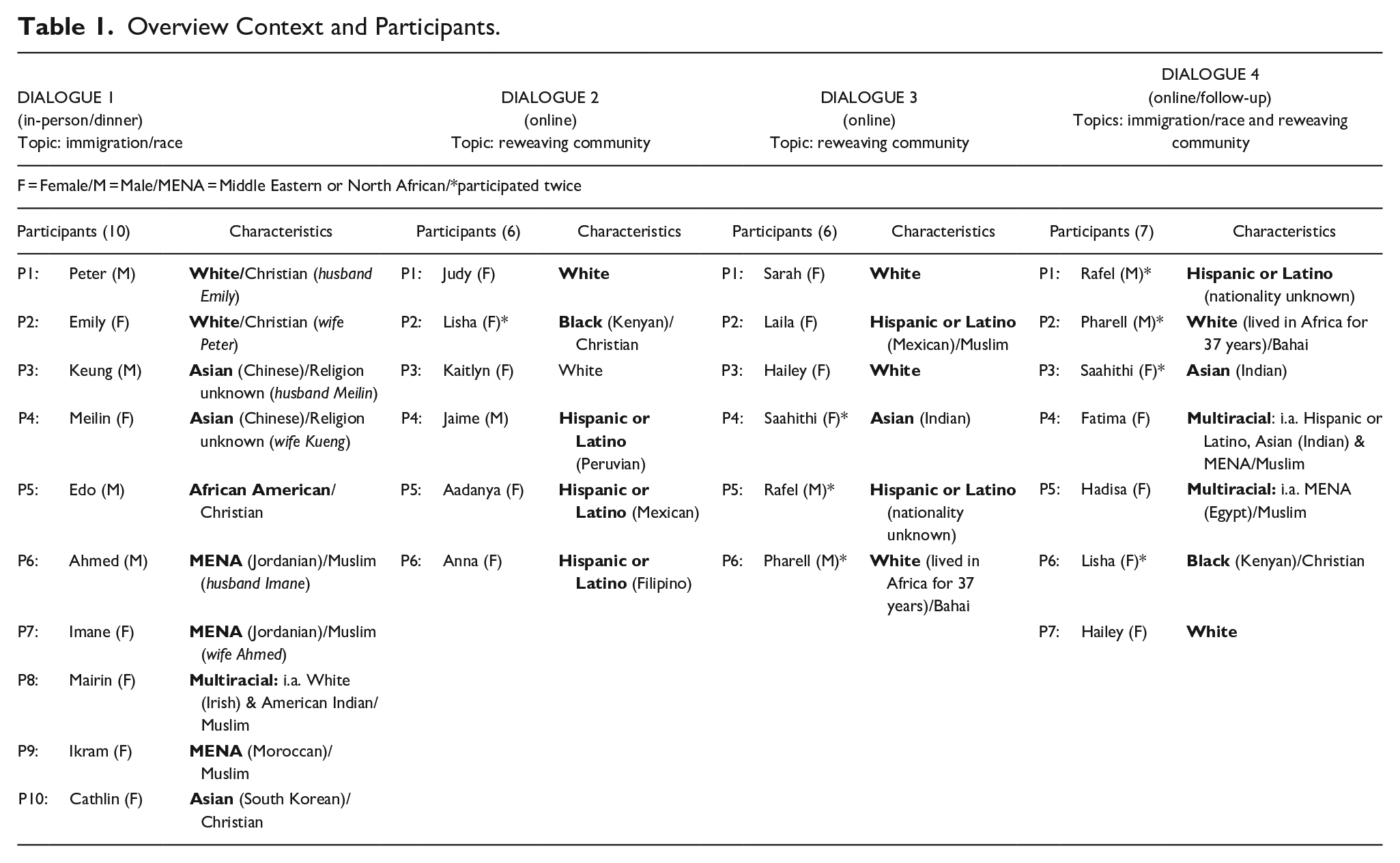
In total, 29 participants with diverse backgrounds and identities participated in the dialogues, including individuals of different genders, ages, races, ethnicities, and religions. Table 1 provides an overview of the participants in all four dialogues, including pseudonyms, gender, and race/ethnicity. Religious affiliations were systematically disclosed only in the initial dialogue.
Overview Context and Participants.
Recruitment
Voluntary participation is essential in IGD as it fosters ownership and responsibility (Herzig & Chasin, 2006). This study utilized a convenience sample, recruiting participants via a local organization connected to the nationwide initiative “Welcoming America,” which is dedicated to building inclusive communities. Additionally, community leaders and participants of previous dialogues were contacted to invite further participants (a detailed description of the recruitment process can be found in the Online Appendix). To ensure diversity of backgrounds and perspectives, participants were selected based on the following criteria: (a) being over 18 years of age, (b) residing in the local community, (c) representing diverse backgrounds and identities, and (d) demonstrating interest in the conversation topic along with a willingness to participate.
Dialogue Format and Conditions
This study adhered to Allport’s (1954) conditions for IGD and conformed to guidelines from dialogue practitioners (Essential Partners, 2018). This included a trained facilitator, an established dialogue protocol, and communication agreements.
Trained Facilitator
The first author, a resident of the local community and a trained facilitator by Essential Partners led the four IGD sessions. Within intergroup dialogues, facilitators strive for neutrality by focusing on process facilitation rather than participating in the dialogue or representing any of the dominant identity groups involved in the dialogue. However, we recognize that complete neutrality is inherently difficult to achieve. Although the first author is a member of the dominant group (white), particularly in discussions around immigration/race, her European background, lack of U.S. citizenship, and absence of affiliations with political parties or participant groups contributed to her perceived credibility and objectivity (see also “Positionality Statement” in both the manuscript and the Online Appendix).
Established Dialogue Protocol
Unlike traditional IGD research in academic settings, which typically employs a four-stage model (Zúñiga et al., 2007) involving multiple sessions, the dialogues in this study were one-time events. They required no formal training and employed the Reflective Structured-Dialogue (RSD) format developed by Essential Partners (see Herzig & Chasin, 2006). A detailed description of the basic format used in the dialogues including time frames and prompts can be found in the Online Appendix.
Communication Agreements
Ground rules for behavior and communication, frequently referred to as communication agreements in IGD, were established. These agreements included fostering curiosity, respecting others’ views, practicing active listening, suspending judgments, refraining from criticism or persuasion, respecting confidentiality and adhering to time limits, using “I” statements, and exploring differences while seeking common ground (Essential Partners, 2018).
Ethical Considerations
The authors of this study compiled a unique dataset comprising four recordings of IGD in community settings and obtained informed consent from the participants. To safeguard participants’ rights, the authors followed guidelines and obtained ethical approval from the Ethics Committee of the Behavioral, Management, and Social Sciences (BMS) Faculty of the University of Twente [approval number 230601]. To maintain confidentiality and anonymity, pseudonyms were used and transcripts were anonymized.
Data Analysis
Positionality
The first author, a trained dialogue facilitator and a member of the organizer of the dialogue series, facilitated the conversations in this study. This involvement may have fostered a positive predisposition toward IGD. Furthermore, all three members of the research team share a European background, the same nationality, and are white, which might have influenced the study’s goal and focus. For instance, the first author only identified as “Caucasian” after moving to the U.S., reflecting a shift in racial identity perspective. In Europe, despite variations across countries, nationality (and religion) often take precedence over race in social classifications, while in the U.S., race plays a more prominent role. Also, European researchers generally may be more hesitant to ask about race and ethnicity due to the cultural sensitivity of this data and privacy regulations such as the General Data Protection Regulation (GDPR). In their analysis, the authors chose not to categorize participants by racial and ethnic identities, recognizing that such categories can be inconsistent and easily lead to simplification or stigmatization. Despite the potential influence of the team’s shared racial and cultural background, their diversity in terms of gender, religion, sexual orientation, and IGD experience provided a more balanced and nuanced perspective. For transparency, an extended version of the Positionality Statement is available in the Online Appendix.
Thematic Analysis
To identify categories and themes, the authors employed Braun and Clarke’s (2006) thematic analysis procedures, which include: (1) developing familiarity with the data, (2) generating codes, (3) identifying themes, (4) reviewing and refining themes, (5) defining and naming themes, and (6) locating exemplars. The data analysis was an iterative process with the constant comparison between data collection, analysis, and conceptual theorizing. The first author initiated open coding of the transcripts, employing sensitizing concepts associated with IGD processes (e.g. critical self-reflection, expressing emotions, asking questions, appreciating differences) and characteristics of safe spaces (e.g. openness, risk-taking) to establish the initial set of codes for participants’ behavior. In the subsequent round of coding, the second author validated and reviewed the initial codes. As a result of refining and recategorizing codes, the study established second-order categories related to participants’ behavior in establishing a safe environment, with a specific focus on their engagement. Two main categories emerged: personal and interpersonal engagement. Subsequently, behavioral patterns were analyzed to identify conversational group dynamics. Following this, potential safety threats were assessed focusing on participants’ behavior aimed at ensuring safety and sustained engagement. Finally, notable variations across dialogues and groups were identified within the scope of the study. In the final round, the last author validated the overall findings. Throughout this entire procedure, the authors discussed discrepancies, ambiguities, assumptions, and potential biases that affected how codes and dynamics were identified and interpreted.
In the analysis, the authors focused on how individuals—irrespective of their backgrounds and identities—contributed to establishing a safe atmosphere. While participants were intentionally recruited to ensure diversity in backgrounds, identities, and perspectives (as shown in Table 1), they were not selected based on specific group-level experiences. Additionally, within the IGD sessions, participants were encouraged to engage and respond as unique individuals, rather than as representatives of broader social groups. As a result, the study prioritizes understanding participants’ individual behaviors and contributions, rather than categorizing them by race or ethnicity or making broad generalizations. However, when significant differences were observed across dialogues or groups, they are briefly addressed within the scope of the study.
Figure 1 illustrates the main categories, second-order categories, and first-order codes along with the relationship between participants’ behavior, conversational dynamics, and potential safety threats.
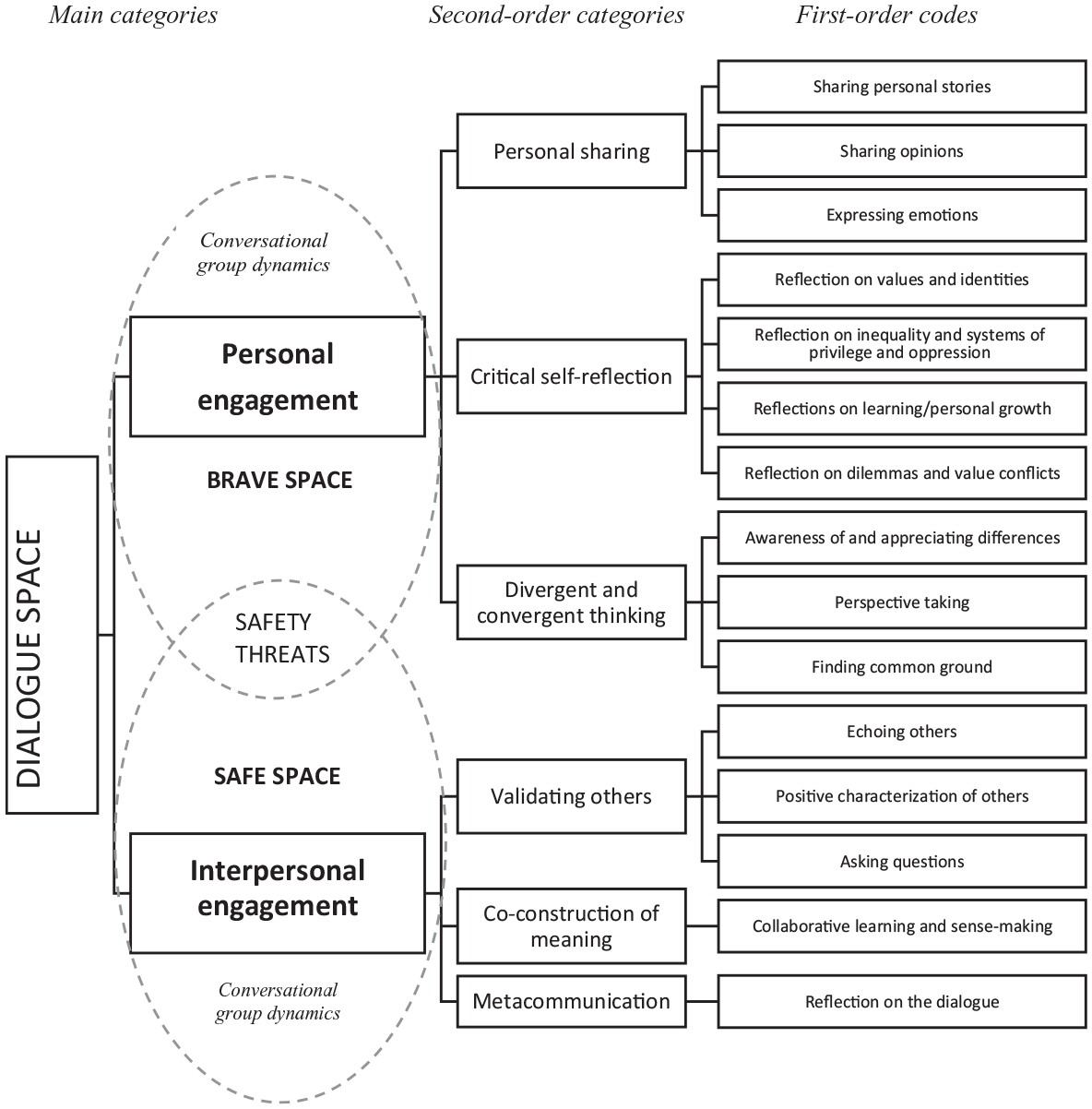
Overview categories and codes and relationship between participant’s behavior, conversational dynamics, and potential safety threats.
Results
In presenting the results, we first provide a general overview of participants’ individual behaviors in establishing a safe environment across all four dialogues. Next, we offer a detailed portrayal of the main categories illustrated by relevant findings from the four individual dialogue sessions. Subsequently, we explore how participants navigated potential safety threats, focusing on their behaviors to ensure safety and sustained engagement in the dialogues. Following this, we analyze the group dynamics that emerged from participants’ behaviors to foster a safe environment for IGD. Finally, we briefly address notable differences in engagement observed across the four dialogues and groups.
Participants’ Individual Behaviors Across All Four Dialogues
The analysis of participants’ behavior identified a consistent pattern across all four dialogues, as in each dialogue, individuals exhibited two forms of engagement—personal and interpersonal—thereby contributing to the establishment of a safe environment (see Table 2).
Participant Behavior Across Four Dialogues: Personal and Interpersonal Engagement.
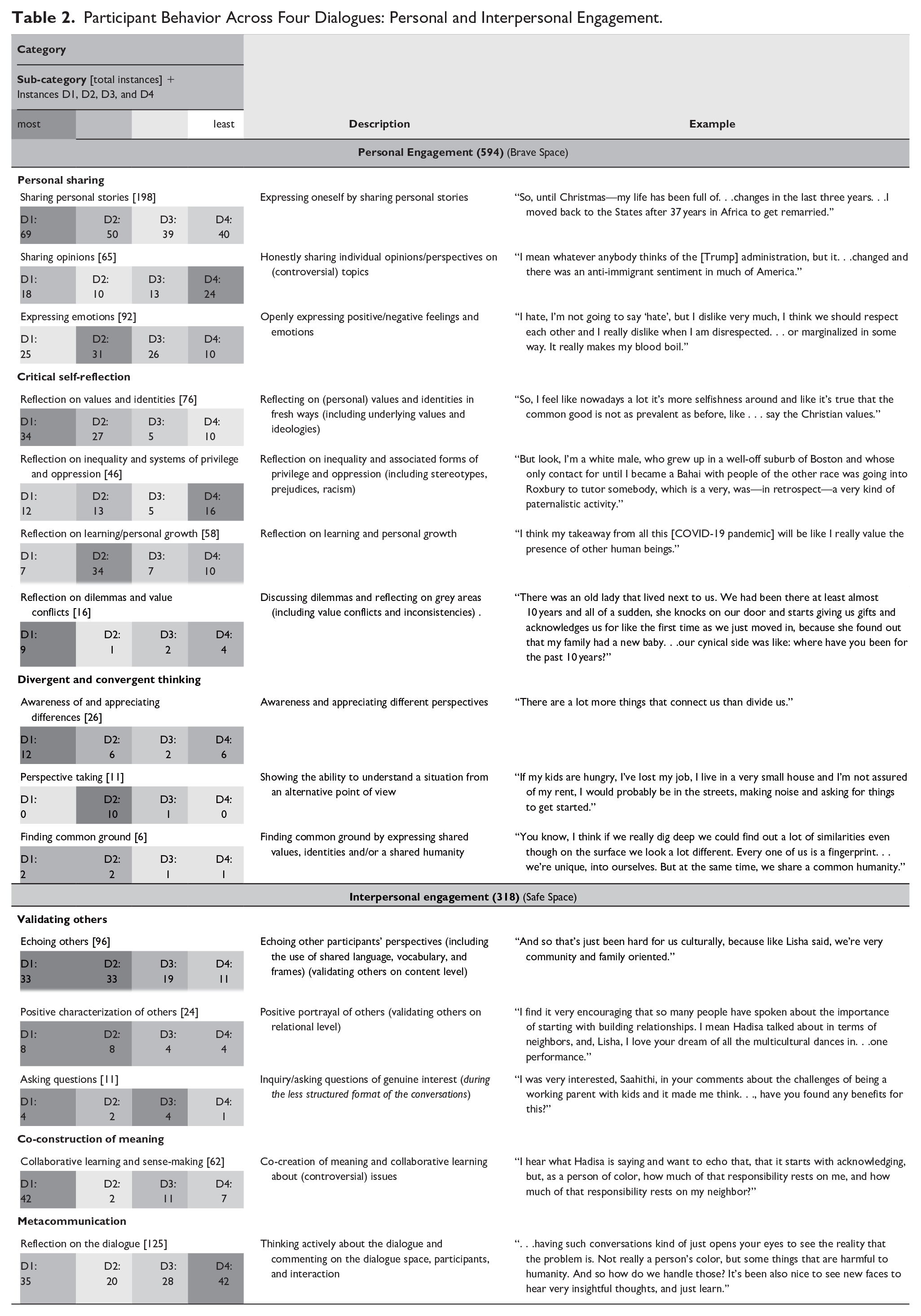
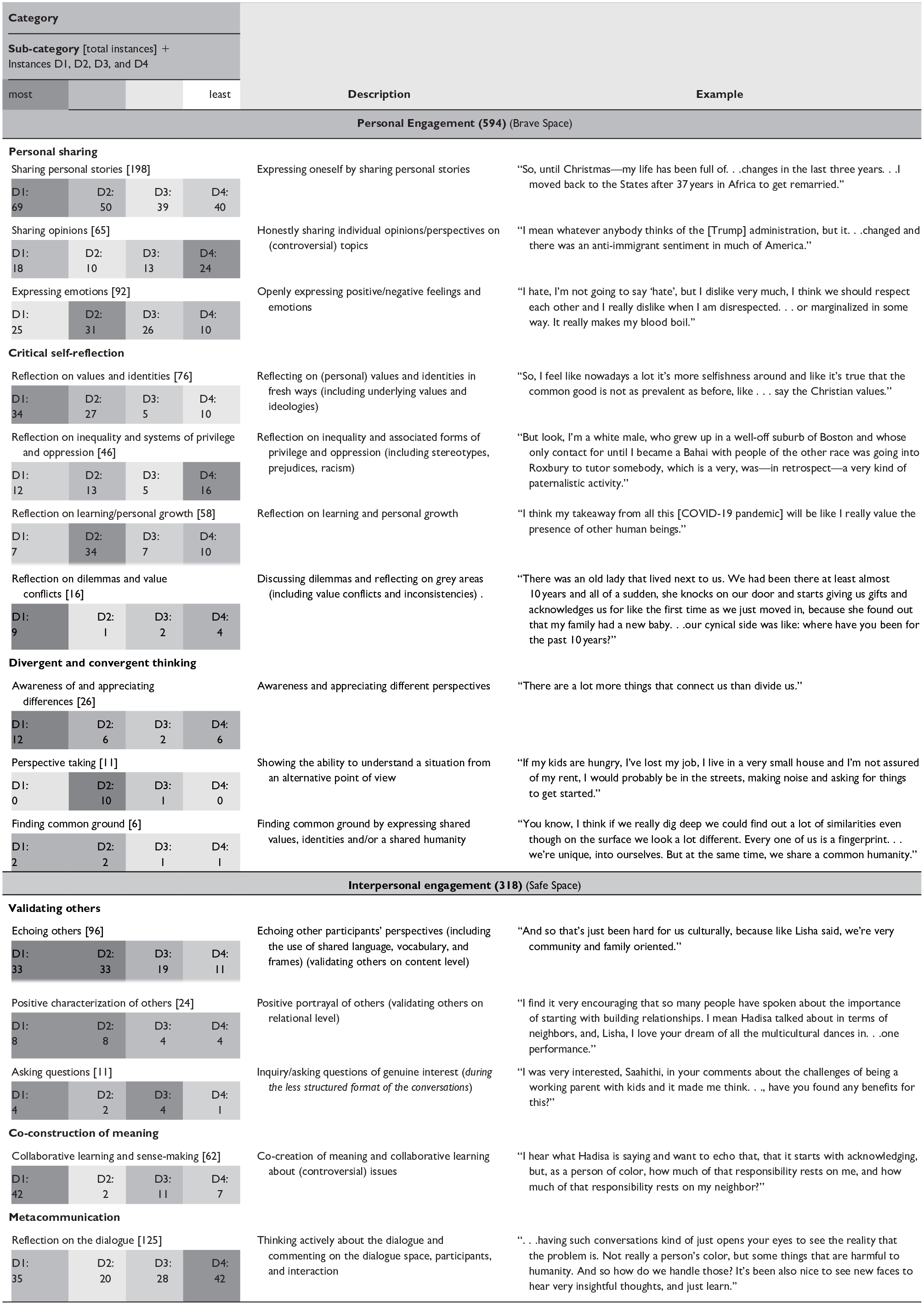
The findings indicated that, rather than merely responding to prompts, participants actively engaged in the facilitated and structured dialogue space by openly sharing personal narratives. Individuals from diverse backgrounds and identity groups demonstrated a remarkable openness and a willingness to express themselves on controversial issues, even in the presence of those often perceived as socially threatening. Through their personal engagement, marked by self-disclosure and risk-taking, the conversational setting transformed into a brave space. This engagement manifested in three main ways: personal sharing, critical self-reflection, and balancing divergent and convergent thinking. Personal sharing encompasses openly sharing stories, opinions, and emotions. While recounting their stories and perspectives, participants frequently engaged in critical self-reflection. This involved contemplating values and identities and reflecting on inequality and their position within systems of power in relation to privilege and oppression. Additionally, they reflected on learning and personal growth and discussed dilemmas and value conflicts, exposing their inconsistencies and uncertainties. Participants also balanced divergent and convergent thinking, demonstrating an awareness of and appreciation of differences, engaging in perspective-taking, and actively seeking common ground.
In addition to bravely expressing themselves and demonstrating risk-taking behavior through personal engagement, participants actively maintained a safe space, ensuring that others could also freely express themselves through interpersonal engagement. Despite the limited opportunities for questions and direct responses within the structured dialogue format, participants exhibited interpersonal engagement in various ways. This included validating others by echoing each other’s perspectives at the content level or employing positive characterizations at the relational level. Notably, during the less structured part of the conversation where the participants were encouraged to pose questions of genuine interest, they actively co-constructed meaning through collaborative learning and sense-making. Additionally, participants engaged in metacommunication, discussing their shared experiences and reflecting on the dialogue.
These results underscore the dynamic nature of safe spaces, emphasizing the inherent relationality and mutuality in dialogical engagement. Creating a positive environment demanded significant relational efforts, with participants balancing between concern for self and concern for others.
The next section provides a more detailed portrayal of the main categories, supported by relevant findings from individual dialogue sessions.
Personal Engagement: Establishing a Brave Space
The study’s findings revealed that, instead of showing a lack of conversational receptiveness or simply following instructions, participants fully embraced the opportunity to openly engage with unfamiliar, diverse individuals in their communities. The three main categories of their personal engagement—personal sharing, critical self-reflection, and both divergent and convergent thinking –are illustrated with examples from the in-person dialogue, followed by relevant findings from the online dialogues.
Personal Sharing
From the outset of the initial dialogue, individuals from diverse backgrounds and identities openly shared personal stories related to the topics of immigration and race. For example, Cathlin, who came to the U.S. from Korea in her early childhood, introduced herself, remarking, “. . .we moved with our family from Korea . . .some people were friendly and other people either ignored us or did not want to stick to us, or had mean things to say to us.” While recounting their narratives, they were not hesitant to express their opinions and emotions. Furthermore, they engaged in critical self-reflection regarding these issues, as demonstrated below.
Critical Self-Reflection
Participants frequently reflected on values and identities. Keung, a recent immigrant from China, expressed gratitude for the diversity within their community. He attended the dialogue to listen to others, learn about different perspectives and cultures, and explore ways to contribute. He also contrasted the openness in the U.S. with his home country, highlighting: this is really different in my country. We don’t have the chance to see, to talk to each other. . .we are a little shy we do not want to talk to stranger people. Here the people [are] . . .open minded, they share their opinion. . .I feel so grateful. . .since I have come here.
Reflecting on diverse cultural values and identities, expressing emotions, and appreciating differences, Keung demonstrated engagement and a willingness to connect with diverse individuals in his community.
Ikram, who moved from Morocco to the U.S. at a young age, described her immigration experiences as a “spiritual path.” She highlighted the contrast between Morocco’s homogeneity and the diversity in the U.S. Ikram strongly believed in the interconnectedness of humanity, expressing the idea that: “If you don’t know who you are, be of service, and you will discover who you are. . .And if you know who you are, you are me.” She viewed the immigrant story as a journey towards a shared origin, with human relations connecting us to God, the “source of life.” By reflecting on her religious values and identity, Ikram demonstrated openness and personal engagement.
Participants also frequently reflected on inequality and systems of privilege and oppression related to immigration and race. Remarkably, participants from diverse minority groups candidly discussed instances of stereotypes, prejudices, or encounters with racism.
For example, Mairin shared her multicultural family heritage, emphasizing her Irish American and Swiss German roots. The complexity of her identity was further highlighted by her great grandfather’s unique ancestry, being a “quarter Irish American, but three-quarters American Indian.” Navigating her upbringing in the American “melting pot,” Mairin reflected on her father’s silence about their American Indian heritage due to prevailing stereotypes portraying Indians as the “bad guys” and “savages.” Only in her adult years did Mairin grasp the reasons behind her father’s silence and strong aversion to figures like John Wayne. Mairin’s mother balanced the family narrative with pride in their Irish roots but also acknowledged hardships faced by the Irish-American community. Despite encountering challenges and negative stereotypes, Mairin reflected on her youth as “growing up in white privilege” and emphasized being “grateful for what you have and also try to coexist and learn from other people.” She advocated for “open-mindedness” recognizing that “it takes a lot of courage to get rid of stereotypes” because “we feel so secure in our own tribal blanket.” Through her openness in sharing personal narratives, reflecting on negative stereotypes, acknowledging her privilege, and embracing diversity, Mairin demonstrated both vulnerability and courage.
Edo, an African American born in Alabama, shared his remarkable story: I’m the fifth generation of college-educated African Americans, which for a lot of people is unfathomable. And I find that people want to put me into a certain box, but I don’t belong in that box. I have actually lived a very privileged life.
Despite acknowledging his privileged life, he also recognized the challenges faced by African Americans “whose generational wealth was destroyed because of riots and bombing and other kind of things like lynching.” Edo recounted personal experiences with racial tensions, including incidents of KKK members burning crosses in his yard. He expressed his concerns about racism, noting “the pendulum of racial tension has always gone back and forth. . .I think we’re living in a time with intolerance right now. I think that our President identifies with white nationalists.” Despite these concerns, Edo expressed gratitude, stating “I feel privileged, I feel blessed” to be born in America, emphasizing its positive aspects while acknowledging its faults. By reflecting on stereotypes and discrimination while also acknowledging his privilege, he showcased a profound level of vulnerability and engagement.
Meilin, a recent immigrant from China, initially reserved, demonstrated remarkable openness by voicing concerns about participating in the dialogues during the COVID-19 pandemic. She highlighted media labeling it as the “Chinese virus” or “yellow virus” and addressed the increasing discrimination against Asians, particularly worrying about her son’s future. She stated, “I’m worried whether when he grows up he will be. . .racially stereotype[d], and [I wonder] whether he can successfully prosper here, whether he can get good education but also [if he] will be prejudiced [against] because of his race. . .” She argued that immigration is rooted in racial stereotypes and that “unconsciously or subconsciously, people are judged by their color.” She observed success as more accessible to white individuals or those more confident. Despite challenges, Meilin admires American freedom and values and recognizes the importance of assimilation. Coming from China, with its “strict censorship” where “you cannot talk freely about your opinions and you will be censored,” Meilin displayed exceptional openness and courage by sharing her emotions and dilemmas with diverse strangers.
In sum, despite facing stereotypes or discrimination, individuals from various minority groups oftentimes simultaneously expressed appreciation for differences, positive emotions like gratitude, or even a sense of privilege.
When participants from the majority group engaged in critical self-reflection, they were more likely to address their own privilege or dilemmas related to issues of immigration/race. For example, Emily, a Caucasian woman from Buffalo, New York, reflected on her upbringing in a large, low-income Irish Catholic family. Recounting her experience of studying French and visiting Switzerland, she reflected on her American mindset, stating “I studied French for years but I could barely communicate. Because we think that the whole world should just speak English: Why learn another language?” While engaging in challenging conversations with “family members who are pro-halting immigration and pro-Trump,” she often emphasizes that they, too, are descendants of immigrants. However, she also acknowledged her privilege, noting, “But it’s easy for me to say that as like a white woman who, you know, grew up with enough of things.” Additionally, Emily openly reflects on the dilemma of potential competition from Asian and Indian students for her children in education and employment, despite overall support for immigration. After watching a documentary on the diligence of Asian students, she expressed conflicted feelings and felt a sense of urgency for her kids to excel in education. Through sharing her personal story, reflecting on dilemmas, and acknowledging her privilege, Emily demonstrated both courage and vulnerability.
Divergent and Convergent Thinking
In their contributions, participants frequently expressed appreciation for differences, concurrently emphasizing the importance of finding common ground. Peter, the Caucasian husband of Emily, shared his passion for travel and curiosity about the world. He strongly advocated for the “strength of diversity,” stating “if we’re all in our own little communities, that is sometimes more satisfying, it’s easier, it’s not as challenging, but what that group can achieve, coming from different perspectives, different gifts, different visions. . .[is] so much more.” By demonstrating curiosity and emphasizing the power of diversity, Peter expressed his appreciation for differences while also advocating for the importance of seeking common ground.
Despite their differing backgrounds, participants of the first dialogue found common ground by reflecting on shared religious values and emphasizing their common humanity. For instance, Imane, a Jordanian Muslim woman, underscored the universal message of love within religion rather than discrimination, highlighting the shared origin of humanity from Adam and Eve. Similarly, Cathrin, a Korean Christian, emphasized the belief that “God is a God of all nations, and that everyone deserves to be treated with dignity.” Overall, by appreciating differences while actively seeking common ground, participants effectively balanced divergent and convergent thinking.
Relevant Findings from Online Dialogues
The three online dialogues revealed similar findings to those observed in the in-person session, showcasing participants’ active engagement by personal sharing. While engaging in critical self-reflection, participants of Dialogue 4 revisited the theme of stereotypes, echoing the discussions about immigration/race from the first dialogue. Lisha, who immigrated from Kenya, expressed a similar sentiment to Edo in Dialogue 1, to convey her frustration: people are trying to put me in a box, which I’m like, well I don’t fit into that box. And I’m not going to let you put me in there. . .and it’s usually either way, it could be a Caucasian or it could be sometimes African Americans who wonder why I behave like a white person.
Growing up in Kenya without facing racial concerns, Lisha first encountered racism after relocating to the U.S. However, she emphasized the importance of distinguishing recent African immigrants from African Americans, descendants of former slaves. By reflecting on the complexity of her identity, she challenged conventional beliefs about her community and addressed biases.
In Dialogue 2, which focused on reweaving community, participants were encouraged to share personal stories of how the COVID-19 pandemic had impacted their lives. In this session, participants demonstrated high levels of engagement in different ways. Members from both the majority group and minority groups frequently emphasized learning and personal growth. Additionally, they acknowledged the growing inequality caused by the pandemic, demonstrating awareness of their privilege. Remarkably, participants not only expressed emotions, such as empathy towards those less fortunate but also engaged in perspective-taking, considering issues from others’ perspectives. For example, Jaime, a Peruvian male, stated, “Can you imagine a person without a job, in loneliness, completely alone is going to be very complicated in these times?” Overall, through reflections on learning and personal growth, expressing emotions like gratitude, reflecting on their privilege, and engaging in perspective-taking, participants demonstrated openness and empathy.
Furthermore, participants balanced divergent and convergent thinking by appreciating differences while actively seeking common ground. For example, in Dialogue 2, Judy, a Caucasian woman, emphasized, “I certainly learned that there’s more that connects us than disconnects us.” Moreover, while religious values brought participants of the first dialogue together, Dialogues 2 and 3 revealed a shared strong engagement with communities and social issues, fostering unity among participants. For instance, in Dialogue 2, Anna, a Filipino woman, voiced gratitude for her community and recognized the significant contributions of its members: I think this conversation tonight is very helpful and it kind of reaffirms what I already was thinking before that this. . .community is very strong and that there are a lot of smart people doing a lot of smart things to help others. . .you guys are like the living proof of what I thought was the case here in the city. . ..
She even added, “It makes me feel like I’m not doing enough, frankly.” Thus, the dialogues not only showcased the potential for promoting unity in diversity but also acted as a catalyst for collective action and social cohesion.
Overall, individuals from various backgrounds and identities demonstrated personal engagement and risk-taking in both in-person and online dialogues by openly sharing personal stories, opinions, and emotions. In conversations about immigration/race, minority group participants frequently addressed stereotypes or discrimination, while participants from the majority group more often reflected on privilege, dilemmas, and value conflicts. In online dialogues about reweaving community, participants exhibited empathy and a growth mindset through perspective-taking and reflection on learning and personal growth. Participants actively fostered unity in diversity by balancing divergent and convergent thinking. Their contributions transformed the dialogue space into a brave space where diverse individuals felt empowered to take risks and express themselves freely.
Interpersonal Engagement: Establishing a Safe Space
In addition to using the space for brave self-expression, participants actively cultivated a positive climate that encouraged others to openly express themselves. Their interpersonal engagement, categorized into three subcategories—validating others, co-construction of meaning, and metacommunication—was instrumental in transforming the dialogue setting into a truly safe space. Key findings within these subcategories are illustrated with excerpts from the four dialogues.
Validating Others
In the dialogues, participants from various identity groups validated others on both content and relational levels by echoing each other and employing positive characterizations to affirm one another.
In the initial dialogue, Emily, a Caucasian woman, referenced Edo, an African American man, stating, “So, you have five generations of college education, I’m only the second generation.” She also recognized his observation of varying levels of racism throughout history, noting, “unfortunately, pendulums do swing, like you said.”
Additionally, participants even adopted other’s language, vocabulary, and frames. In Dialogue 2, several participants echoed a metaphor introduced by Aadanya, a Mexican woman, comparing the pandemic to a storm, portraying some individuals in luxury yachts while others were struggling without a life raft. For example, Anna, a Filipino woman, echoed “it depends where you are, if you’re on a small boat or a big boat, like Aadanya says.”
Validating others not only contributed to fostering a positive atmosphere and warm relations but also proved to be an extraordinary means of ensuring sustained engagement, even when encountering potential safety threats, as will be discussed in a subsequent section.
Participants also demonstrated interpersonal engagement by asking questions of genuine interest. For example, in Dialogue 1, Meilin, a Chinese woman, raised a question about the allocation of spots for a limited number of Asians at American top universities, sparking a discussion about the fairness of such criteria and leading to a broader examination of the American educational system. Posing questions helped maintain a balance between advocacy, expressing personal viewpoints, and inquiry into others’ experiences.
By echoing the experiences of others, using positive characterizations, and asking questions of genuine interest, participants fostered an atmosphere of safety, respect, and dignity for all involved.
Co-construction of Meaning
During the less structured parts of the dialogues, participants from both the majority group and minority groups co-constructed meaning on controversial issues.
In Dialogue 3, Hailey, a Caucasian woman, expressed concern about the erosion of the shared understanding of “liberty” amidst the COVID-19 pandemic, sparking a discussion about American values. Rafel, a Latino man, argued that individualism may have been stretched too far, emphasizing the interconnectedness of individuals within society, stating, “You are part of an ecosystem. You are part of a society and everybody has to do their bit to live in a society. . ..” Pharell, a Caucasian male, advocated for liberty with limits, saying, “I don’t want to live there where people are free to run red lights. I mean, there’s got to be limits” Laila, a Mexican woman, echoed Pharrell’s view, emphasizing that liberty stops when you disrespect others. Furthermore, she highlighted common values between Christians and Muslims, emphasizing a shared humanity: “We’re brothers and sisters in humanity so we always have to be caring and respectful for everybody. . .” Through collaborative efforts in constructing meaning and incorporating diverse perspectives, participants developed a shared language and mutual understanding, critical for building relationships and fostering cohesive communities.
Metacommunication
Participants also fostered conversational safety through metacommunication, actively reflecting, and providing feedback on the dialogue. For instance, in
Dialogue 1, Ahmed, who immigrated from Jordan, humorously remarked, “I hope I did not exceed my limit” in reference to adherence to timeframes.
Participants frequently cited the benefits of IGD as outlined in the literature. In Dialogue 4, Lisha from Kenya argued that engaging in these types of conversations may help individuals realize that there is no need to “fear other human beings.” Many expressed gratitude for the opportunity to interact with different individuals in a safe environment within their divided communities. Pharell, a Caucasian male, in Dialogue 4, particularly appreciated the depth of the stories shared and the opportunity to meet new people. He praised the positive tone, curiosity, and acceptance in the conversations, viewing them not as “difficult conversations, maybe difficult stories.” He concluded, stating, “I have found this evening very rewarding. And I’m grateful to [the organizer] for the initiative and to [the facilitator] for. . .your facilitation.”
In various instances, participants acknowledged the educational value of the dialogues. For example, in Dialogue 4, Saahithi, an (Asian) Indian woman, expressed, “I’m still trying to understand my own complicated sort of thoughts around race and racism. So, I really appreciate it. It’s been very educational. . .I’ve been able to share my thoughts about it. . .it’s been personally helpful.” Overall, the dialogues facilitated learning and deepened participant’s understanding of self and complex issues.
In sum, participants actively contributed to creating and maintaining a safe space through their interpersonal engagement. This included validating others on both content and relational levels, co-construction of meaning, and engaging in metacommunication.
Potential Safety Threats
The findings revealed not only behaviors that promoted a safe environment but also potential threats to it. To understand how these challenges were addressed, the study will analyze three instances from Dialogues 1 and 4.
In Dialogue 1, Ikram, a Moroccan Muslim woman, raised concerns about the safety of the facilitated dialogue space. She questioned the goal and motives of the dialogues, expressing “mixed emotions” about the purpose of the initiative. Ikram candidly admitted, “I first didn’t know what to make out of this dinner.” She was particularly concerned about the facilitator’s neutral role, which was focused on process facilitation rather than participation in the conversation. She said, “I was just thinking about how are you going to use this. . .. I had an impression but it was like we’re part of this project.” Notwithstanding her mixed feelings, Ikram’s personal values and strong commitment ultimately led her to fully engaging in the dialogue. She reflected on the experience by saying, “I think values what comes to me, right now from meeting everybody, generosity, trust, full self-expression, and really what appeals to me is that the listening that comes from or the kind of communication that comes from really the willingness to wanting to listen and to trust. . .. that listening is really. . .[what] gives other people their speaking.” Ultimately, Ikram overcame her initial hesitation and actively contributed to creating a safe and open dialogue space, demonstrating a strong commitment to engaging in difficult conversations across divides.
In Dialogue 4, during a follow-up session with some returning members, participants expressed the desire to expand the scope of the safe dialogue space beyond its current setting by exploring practical opportunities for civic engagement. Saahithi, an (Asian) Indian woman, questioned the effectiveness of the conversations, stating, “I’m just wondering, hearing all these different stories. How much of this is like-minded people talking to each other?” She stressed the need to move from talk to action, asking, “Is there a way to get to action if we need to bring other people along, and I don’t know what that looks like. . . I just wanted to throw that out there.” Pharell, a Caucasian male, echoed this sentiment. He explained that he joined the follow-up dialogue because “I felt like I only had the appetizer, I wanted to add the main course I want better.” Later, he suggested that perhaps it is “not just creating spaces for. . .conversation, but to find tasks that we can do together that everybody can get behind.” These findings suggest a potential risk to sustained engagement: participants may seek concrete outcomes beyond the exchange of perspectives, resulting in feelings that the dialogue is not productive.
In Dialogue 4, another safety threat emerged when Hadisa, a multiracial Muslim woman, courageously shared her experiences of discrimination from Black security guards during the BLM protests. She admitted, “I have very conflicting feelings. And if I were to base it on my own personal experience and my family’s historical experience in this country, I would probably get killed. Because my personal opinion is very unpopular.” As a government agent in D.C., she described being profiled by Black security guards and police due to her headscarf, which led to humiliating searches despite her having proper clearance. She noted the cyclical nature of oppression, stating, “Those who were suffering and were being oppressed become in the next decade and next generation become oppressors.” Recognizing the potential for offense, she asserted her reality, emphasizing the uniqueness of her experience: I don’t like saying if somebody gets offended, but this is my reality, this is my truth. . .My story is a little bit different. Even for Muslims, my story’s a little unique as well. So, I have my narrative, but I keep my mouth shut because I know my narrative is not a popular narrative.
By sharing her countercultural narrative, Hadisa confronted her listeners with an uncomfortable truth, requiring their commitment to ensuring her safety. Despite the protocol preventing direct responses, several participants engaged with her story. Fatima, also a multiracial Muslim woman, displayed visible emotional reactions, taking a moment to gather herself before sharing: “I was listening to Hadisa. I had to go get a glass of water after listening to her.” Expressing resonance, she added, “It was like a mouthful and a half. But she said a lot of things that, I think, resonate with me. . ..” Rafel, a Latino participant, acknowledged Hadisa’s narrative, expressing: You actually have to take the time and actually listen to their stories and not try to cut in or how Hadisa was saying, that we can’t dismiss their. . .narratives just because of, it might be a little controversial or might be not part of the main line. . .
Lisha, a Kenyan woman, also validated Hadisa’s perspective, noting,
By validating others on both content and relational levels, affirming their dignity, and embracing their vulnerability and risk-taking, participants actively maintained a safe space where controversial views could be shared without fear of attack.
In summary, these findings highlight the dynamic and often risky nature of safe spaces, necessitating active engagement from both facilitators and participants. Facilitators must foster a safe and trusting environment while managing expectations. Meanwhile, participants need to demonstrate openness, take risks, and remain dedicated to maintaining safety through validation and sustained engagement, even when facing challenges.
Group Dynamics Fostering a “Safe” Environment
While individual participants contributed to establishing a safe environment through personal and interpersonal engagement, analyzing their behavior also unveiled specific conversational group dynamics in both the in-person and online dialogues. Participants collectively cultivated a safe/brave space in three ways:
Risk-Taking Behaviors
Rather than being safe from risk, participants in this study demonstrated risk-taking behaviors, showing openness, vulnerability, trust, and a willingness to self-disclose and engage with difficult topics. Both majority and minority participants shared personal stories, as well as honest opinions and emotions, indicating that they felt safe to risk. Minority participants candidly discussed their experiences with stereotypes and racism without fear of backlash. Majority participants actively engaged with sensitive topics such as race and privilege, overcoming typical discomfort and self-protection tendencies (DiAngelo, 2018; Nelson et al., 2023). Contrary to earlier findings which found the majority group members lacking awareness of their advantageous position (Schneider, 2022) or remained silent due to fear (Nagda & Zúñiga, 2003), they openly discussed value conflicts and reflected on their privilege, fostering a “brave” space for dialogue.
Behavioral Mirroring
Examining participants’ behavior revealed that their responses were not only influenced by the designated conversation prompts but also by a tendency to mirror the behaviors of others. Despite a dialogue protocol discouraging direct responses, particularly in the initial phase, participants frequently echoed other’s reflections on topics, resulting in the reinforcement of specific patterns within the dialogues. For instance, in Dialogues 1 and 4, where immigration/race was discussed, one participant’s initiation of reflections on topics such as stereotypes prompted others to share similar stories and experiences. Beyond merely sharing similar content, participants went as far as to echo each other’s perspectives and sometimes even employed identical language. This not only led to positive reinforcing cycles but also contributed to cultivating a shared understanding and nurturing a positive atmosphere.
Positive Affirmations
In contrast to the prevailing us-versus-them mentality and the increasing incivility in the current public debate, participants in this study prioritized maintaining dignity safety, fostering a constructive group climate. Positive affirmations, both on relational and content levels, were pivotal, as participants expressed appreciation for others, demonstrated respect, and civility, and echoed each other’s sentiments. Their conduct not only cultivated a positive atmosphere but also promoted understanding and warm relations.
In sum, the analysis of participants’ behavior within both in-person and online dialogues not only revealed their individual contributions through personal and interpersonal engagement but also highlighted the emergence of distinct group dynamics that contributed to establishing and maintaining a positive climate for IGD. Through their actions, participants both individually and collectively transformed the dialogue space into a brave/safe space, where individuals from diverse backgrounds and identities could freely express themselves without fear of reprisal while engaging in discussions on contentious issues.
Brief Overview of Variations Across Dialogues and Groups
This study focused on examining participants as unique individuals, rather than categorizing them by racial or ethnic groups. The findings underscore the importance of avoiding stereotypes and generalizations, as participants actively challenged biases associated with their group identities during the dialogues. The analysis also indicated that individual behaviors are often more closely linked to personal factors than to group characteristics. For instance, Asian participants exhibited a wide range of experiences, from Harvard-educated individuals fluent in English and well-integrated to newly immigrated Chinese participants facing language and cultural challenges, complicating broad generalizations about these groups. Furthermore, the dialogues varied in communication modes, with only one conducted face-to-face and three held online, which may have influenced participants’ behaviors and complicated the ability to generalize across these settings. Nonetheless, we will briefly address significant variations observed across dialogues and groups.
The study revealed varying engagement levels across the four dialogues. The structured RSD format limited opportunities for direct responses, resulting in a higher frequency of personal engagement (594 instances) compared to interpersonal engagement (318 instances). Notably, Dialogues 1 (in person) and 2 (online) exhibited particularly high levels of personal engagement (188 and 184 instances, respectively) compared to lower levels in Dialogue 3 (101) and Dialogue 4 (121). Interpersonal engagement, while present in all sessions, was significantly higher in the in-person dialogue (122 instances) than in the online dialogues, which recorded 65 in Dialogues 2 and 4, and 66 in Dialogue 3. The higher engagement in Dialogue 1 can be attributed to its in-person format and longer duration, which fostered more interaction. Similarly, the elevated personal engagement in Dialogue 2 may be linked to it being the first conversation held during the pandemic, where participants were eager to connect with neighbors amidst social distancing. Additionally, the presence of more extroverted participants in Dialogue 2 likely contributed to the increased personal engagement.
Variations in group composition, including gender balance, minority-majority representation, and group size, may have influenced the level of engagement across dialogues. Dialogue 1, which included 10 participants with a disproportionate number of minority group members, had the most engagement, while Dialogue 3, with only 6 participants and a balanced majority-minority split, had the least. These differences suggest that group dynamics, such as a larger and more diverse group, may foster greater interaction and openness, influencing the depth of dialogue and observed behaviors.
Additionally, the sensitive nature of the topic of immigration/race in Dialogues 1 and 4 may have affected participants’ specific behaviors. These discussions prompted higher instances of sharing personal opinions as metacommunication, where participants reflected on the dialogue itself. Furthermore, participants also often reflected on stereotypes, and only these two dialogues noted potential safety threats, particularly evident in Hadisa’s risky sharing of an uncomfortable truth. This suggests that the dialogue topics play a critical role in shaping how participants engage and respond, especially when those topics involve emotionally or socially charged issues.
While variations in group composition, communication modes, conversation topics, and other contextual factors likely influenced participants’ engagement in the dialogues, the current study did not explore these differences in depth. Further investigation is needed to fully understand their impact, which will be addressed in the next section.
Discussion
This study explored IGD in community settings as a potential avenue to foster bridging social capital in increasingly polarized societies. Focusing on a case study of rare recordings from four real-world dialogues, it examined participants’ real-time behaviors, particularly in establishing a safe environment for the expression of self and others. The findings highlight that creating safe spaces extends beyond establishing preconditions—it requires active participant engagement. Additionally, the study underscores the inherent relationality and mutuality in dialogical engagement, with participants balancing concern for self and others. Analysis of participants’ behavior in both in-person and online dialogues revealed two modes of engagement: personal and interpersonal. Personal engagement required participants to actively take the stage by responding to prompts and engaging with diverse perspectives, demonstrating a willingness to self-disclose and take risks. This involved sharing personal narratives, critical self-reflection, and balancing divergent and convergent thinking, thereby fostering a brave space for dialogue. Interpersonal engagement demanded dedicated efforts to cultivate a safe environment where others could freely express themselves without fear of judgment or attack. This included validating others both in terms of content and relationships, as well as engaging in metacommunication about the dialogue. While a consistent pattern emerged across all four dialogues, the prevalence of specific subcategories and behaviors varied depending on the conversation’s context, communication mode, group composition, and topics discussed.
Moreover, the results highlighted the paradoxical nature of safe spaces, encompassing both the safety to take risks and the safety from risk. Creating safety demanded bravery and sustained engagement while facing potential safety threats. Participants in this study successfully navigated potential safety threats and ensured safety for others who courageously shared their challenging narratives, by validating them, echoing their perspectives, and employing positive characterizations. In this way, they contributed to a space that provided both the safety to take risks and safety from risks.
Finally, examining participant behavior revealed various group dynamics, including risk-taking behaviors, behavioral mirroring, and positive affirmations, that contributed to a positive climate. Participants exhibited risk-taking by freely expressing themselves while discussing controversial topics, indicating the high level of trust that is crucial for both participant engagement (Taylor & Kent, 2014) and bridging social capital (Fukuyama, 2000). Additionally, behavioral mirroring, where participants echoed other’s contributions or used similar language, reinforced specific themes and patterns. Positive affirmations, on both content and relational levels, promoted respectful and constructive interactions. In this way, participants, individually but also collectively, contributed to promoting a safe environment. In a society marked by division and incivility, participants upheld dignity and safety, resulting in a positive group climate and warm relations.
Overall, recognizing the active role participants play in fostering a safe climate is crucial for the success of IGD in community settings. This understanding enhances IGD’s ability to address the current challenges of connecting people across divides. By creating safe spaces for brave conversations, IGD helps to build bridging social capital in polarized communities, ultimately contributing to the development of more cohesive and inclusive societies.
Theoretical Contributions
IGD Processes in Action
This study significantly contributes to IGD research by offering new insights into its processes and dynamics, particularly in community settings (Frantell et al., 2019). Unlike previous studies that predominantly rely on participants’ self-reports or facilitators’ perspectives, this research adopts a novel approach by analyzing recordings of actual IGD sessions. This methodology allows for the examination of participants’ real-time behaviors, particularly in how they contribute to creating a safe environment, and offers a more immediate and authentic view of how IGD processes unfold within real-life conversations (Frantell et al., 2019; Nagda, 2006).
While some findings align with prior research in academic settings—where similar psychological and communication processes such as critical self-reflection, emotional expression, self-engagement, thinking actively about the dialogue, and appreciation of diversity have been highlighted (see Frantell et al., 2019; Nagda, 2019)—this study moves beyond abstract concepts by providing rich, detailed accounts of how participants actively challenge stereotypes, reflect on systems of power and privilege, and navigate value conflicts. The study also uncovers new insights into group dynamics, including risk-taking, positive affirmations, and behavioral mirroring, offering a more nuanced understanding of how individual and group actions foster a positive climate for effective IGD.
Dynamic and Risky Nature of Safe Spaces
This study advances the understanding of how a positive group climate is cultivated in IGD by linking it to the concept of “safe spaces.” It proposes that safety in IGD does not mean avoiding discomfort or risk; rather, it necessitates bravery and risk-taking (Arao & Clemens, 2013). Furthermore, it challenges the idea that safety is a static condition established solely through structured formats and facilitation. Creating safe spaces is framed as a dynamic, collaborative process (Fast, 2018; Noterman & Rosenfield, 2014) that requires active engagement from both facilitators and participants. Rather than assessing group climate through facilitators’ experiences or Group Climate Questionnaires (Frantell et al., 2019; Muller & Miles, 2017), this study shifts the focus to the crucial role participants play in co-creating and sustaining a positive and safe environment. Amid increasing social polarization, it illustrates how participants actively contribute to fostering a positive climate, engage in risk-taking behaviors, and maintain sustained engagement even during challenging moments. By emphasizing the dynamic and risky nature of these spaces, the research nuances the understanding of how to foster environments that support courageous and meaningful dialogue across differences.
Practical Implications
The research also offers valuable insights for professionals aiming to create safe spaces that promote social cohesion and inclusion within polarized communities.
Prioritizing Individual Over Group Identity
This study emphasizes the importance of recognizing participants as unique individuals, rather than making assumptions based on group identities. Treating one individual’s experience as representative of an entire group’s perspective can reduce individuals to just their identity (such as racial or ethnic identity) rather than acknowledging their full personhood. By inviting participants to share their unique personal narratives on complex issues such as immigration/race, we create a space for others to see the lived realities behind abstract arguments, deepening our understanding of different identities. To prevent stereotyping, facilitators can encourage the sharing of untold or underrepresented stories, fostering richer and more inclusive discussions. For example, they might invite members from minority groups to share “subordinate knowledge” (Anderson, 2021), as illustrated by Lisha’s distinction between newly immigrated Africans and African Americans. Similarly, Edo’s reflections on privilege reveal the complexity of identity. As an African American, he is often perceived as illiterate and poor, despite his affluent and well-educated background. Dialogue facilitators play a key role in managing time and space for each unique individual participant, ensuring that every voice is heard and valued.
Managing Group Dynamics
In addition to influencing individual behaviors, facilitators can shape group dynamics by cultivating an environment that encourages open expression and risk-taking. This can be achieved through prompts that challenge participants to explore the complexity of issues, including reflections on stereotypes, privilege, and value conflicts. Facilitators should remain mindful of dynamics such as behavioral mirroring, where one participant’s expression of stereotyping may encourage others to do the same. By managing these interactions thoughtfully, facilitators can promote positive cycles of discussion. In addition, validating individuals who take risks—such as Hadisa’s courageous sharing of a countercultural narrative about discrimination by Black security guards during the BLM protests—creates a sense of safety for participants to openly express their honest thoughts and feelings without fear of reprisal. Employing positive affirmations on both content and relational levels, further supports a safe and constructive atmosphere, enhancing the overall effectiveness of IGD.
Leveraging Natural Settings
This study involved one-time community dialogues with a final follow-up involving prior participants who expressed a strong desire for collective action and social change. To promote sustained engagement and collaboration, it is imperative to build enduring relationships, and trust, and facilitate collaboration. This requires ongoing conversations centered around shared goals. Leveraging natural settings such as diverse communities of practice where individuals already collaborate despite differing viewpoints (O’Donnell Goldensher, 2021) could be instrumental in cultivating long-term relationships and driving social change.
Limitations and Future Research
This descriptive nature of this case study, which examined four intergroup dialogues in a community setting, limits its findings due to a small sample and inherent constraints. To gain a deeper understanding of IGD as a safe space, the following issues need to be addressed:
Including All Voices
Successful IGD relies on voluntary participation, which tends to attract individuals with specific backgrounds or personality traits, like open-mindedness, tolerance, language proficiency, and strong social skills. Although participants were carefully selected to ensure a diversity of backgrounds and perspectives, the study was conducted in an affluent D.C. community where most participants were relatively privileged and English proficient. Future research should focus on developing strategies to better engage individuals with limited language proficiency, less developed social skills, or those from underrepresented groups. Furthermore, in light of the increasing political polarization, it is crucial to include individuals from across the political spectrum, especially those with more extreme or divergent viewpoints. This would provide a more comprehensive understanding of intergroup dynamics and ensure that IGD can be effective across a broader range of social, cultural, and political contexts.
Comparison Across Dialogues and Groups
Our descriptive study offers a rich account of participants’ behaviors within four real-life community dialogues, aiming to offer a comprehensive portrayal of how individuals—regardless of their backgrounds or identities—contributed to fostering a positive and safe group climate, which is essential for successful IGD. Rather than focusing on why participants engaged in specific behaviors or comparing different dialogue formats or groups, we highlight how safety is co-constructed in IGD, emphasizing the active role participants play in cultivating spaces for transformative dialogue. However, future research could benefit from comparing different dialogue formats (e.g., face-to-face versus virtual settings like Zoom, conversation topics) and group characteristics (e.g., prior familiarity, group size, gender balance, minority-majority representation). Such comparisons could provide valuable insights into how a safe environment for IGD can be effectively created. Additionally, understanding how the sense of safety varied across different groups and participants with diverse identities would provide a more nuanced perspective. While our findings suggest that participants generally felt safe enough to share, the absence of in-depth interviews limits our ability to analyze variations in perceived safety or explain why these differences occurred. Future research could explore these differences in more depth and investigate how engagement levels within dialogues may serve as indicators of perceived safety across various participant demographics and group settings.
Exploring Collaborative Dynamics in Creating Safe Spaces
This study recognizes the dynamic nature of safe spaces, viewing them as a collaborative effort between participants and facilitators. While the focus was on exploring participants’ roles in fostering safety, further research is needed to examine the dynamics between participants and facilitators in creating safety, as well as the impact of the dialogue protocols used. Analyzing the behaviors of both participants and facilitators in similar contexts could deepen understanding of how they work together to create safety during challenging conversations across divides. Additionally, future studies could explore the effectiveness of various dialogue formats across different settings and groups to determine their impact on participants’ dialogue skills and ability to engage with diverse perspectives. Such research could enhance our understanding of how these dialogues contribute to individual resilience, personal growth, and the improvement of societal discourse as a whole.
Facilitator’s Role
Lastly, another key area for future exploration is the role of facilitator “neutrality” in (moral) discussions. While neutrality and focus on process facilitation can prevent bias, it may also lead to negative consequences such as deception and mistrust (Silver & Shaw, 2022). In this study, this was illustrated by Ikram’s concerns about the goal, motives, and lack of personal engagement of the facilitator, who focused on process facilitation and did not actively participate in the dialogues. Research should examine whether facilitators should keep neutrality and a more distant position or adopt a more open and personally engaged approach to foster trust and credibility among participants.
Conclusion
Amidst societal polarization and a prevailing culture of debate, IGD holds the potential to foster understanding and relations among diverse residents in fragmented communities. While facilitators play a crucial role in setting the stage, participants emerge as the true protagonists in this story. Rather than being passive observers, they—both individually and collectively—actively shaped the dialogue space, creating a safe environment for the expression of self and others. To establish safety, they bravely shared personal stories, opinions, and emotions. Moreover, amidst potential safety threats, they demonstrated sustained engagement and actively contributed to maintaining a safe environment for others. Through personal and interpersonal engagement, along with evolving group dynamics, the dialogue transformed into a brave and safe space where all perspectives are valued and dignity safety is respected. Understanding the potential of intergroup dialogue to cultivate bridging social capital offers hope for fostering social cohesion and inclusion in increasingly diverse and polarized societies.
Supplemental Material
sj-docx-1-sgr-10.1177_10464964241302071 – Supplemental material for Brave Conversations Within Safe Spaces: Exploring Participant Behavior in Community Dialogues
Supplemental material, sj-docx-1-sgr-10.1177_10464964241302071 for Brave Conversations Within Safe Spaces: Exploring Participant Behavior in Community Dialogues by Linda M. Doornbosch, Mark van Vuuren and Menno D.T. de Jong in Small Group Research
Footnotes
Declaration of Conflicting Interests
The author(s) declared no potential conflicts of interest with respect to the research, authorship, and/or publication of this article.
Funding
The author(s) received no financial support for the research, authorship, and/or publication of this article.
Ethical Approval
The Ethics Committee of the Behavioral, Management, and Social Sciences (BMS) Faculty of the University of Twente provided ethical approval for this research [approval number 230601].

Supplemental Material
Supplemental material for this article is available online.
Author Biographies
References
Supplementary Material
Please find the following supplemental material available below.
For Open Access articles published under a Creative Commons License, all supplemental material carries the same license as the article it is associated with.
For non-Open Access articles published, all supplemental material carries a non-exclusive license, and permission requests for re-use of supplemental material or any part of supplemental material shall be sent directly to the copyright owner as specified in the copyright notice associated with the article.
