




Abstract
Relatively little is known about how the composition of individual conflict management styles affects group functioning. This is unfortunate because, specifically in short-term project groups, this conflict management style composition may be pivotal given the strong task focus rather than establishing norms to guide or manage conflict. Therefore, we examined whether conflict style asymmetry within short-term project groups affects the link between intragroup conflict and the performance of groups. Data were collected among short-term project groups and the results suggest that asymmetry in both forcing and the problem-solving conflict management styles moderates the negative effect of task, relationship, and process conflicts on the performance of groups. We offer a discussion of the implications of these findings.
The effectiveness of individuals and work groups depends in part on how well they are able to handle their conflicts (Rahim, 2002; Tjosvold, 1998). Workplace conflicts are inevitable and arguably on the rise in today’s organizations as hierarchical structures are flattened, and the work force becomes more diverse. Meta-analyses suggest that, in general, conflicts are detrimental to group performance (De Dreu & Weingart, 2003; De Wit et al., 2012) and that potential beneficial effects depend on contingencies (De Wit et al., 2012; O’Neill & McLarnon, 2018) such as the capability of groups to manage their conflicts. Therefore, it is pertinent to examine conflict management processes and how those affect group functioning.
Extant theory and research on conflict management either focused on how individuals manage their conflicts (e.g., Friedman et al., 2000) or how groups collectively manage their conflicts (e.g., Somech et al., 2009). Relatively little is known about how the configuration of individual conflict management styles affects group functioning. This is unfortunate because, specifically in short-term project groups, this composition may be pivotal given their strong task focus (Gersick, 1988).
Short-term project groups operate autonomously toward the attainment of a unique project goal within a limited time span and the group is disbanded after the project is completed (Turner, 2006). To gain competitive advantage, organizations need to be flexible and using project teams allows this (e.g., Savelsbergh et al., 2012). Members of short-term groups face the challenge of finishing their work within a relatively short time period (Druskat & Kayes, 2000), which means that their attention is mostly on the functions that must be performed to be able to reach the group’s goal such as planning and monitoring progress (Mathieu et al., 2008). This enhanced task focus may come at the expense of team- or relationship-oriented behaviors, and members do not invest in increasing interpersonal understanding and establishing conditions to guide or manage conflicts (De Poel et al., 2014; Marks et al., 2001). Thus, ideally the type of conflict dictates the conflict management approach to use (Tjosvold, 2006), however, in short-term project groups members may fall back on their individual self-regulatory systems (i.e., conflict management style; Huang, 2010) when confronted with conflict. The goal of the current article is to examine the moderating role of conflict management style asymmetry within short-term project groups from a group information processing perspective. We contribute to the literature by showing that asymmetry in a cooperative conflict management style (i.e., problem solving) as well as asymmetry in a competitive conflict management style (i.e., forcing) protects groups from the negative consequences of task, relationship, and process conflicts.
Conflict in Groups
Conflicts are likely to emerge whenever people work together and are broadly defined as perceived incompatibilities by those involved (Boulding, 1963). The literature usually makes a distinction between task, relationship, and process conflicts. Task conflicts are disagreements among team members, including ideas, thoughts, and viewpoints related to the task (Jehn, 1995). Relationship conflicts refer to disagreements and incompatibilities among team members about nonwork personal issues, such as social events, gossip, and politics (Rispens, 2014). Process conflicts are defined as disagreements about the delegation of task responsibilities and resources; in other words, debating who should do what and who is responsible for what (Behfar et al., 2011; Jehn, 1997).
There are divergent theoretical perspectives and empirical evidence regarding the outcomes of conflict for groups. Conflict may be seen as detrimental for group functioning and performance as it is a force that may disrupt group processes, impair decision making, and hinder creativity and performance (Jehn & Bendersky, 2003). Within workgroups and teams, conflict narrows the range of attention within the group and impairs the group’s integrative problem-solving ability. When a workgroup experiences conflict, group members can engage in resolving, ignoring, or fighting the conflict rather than spending effort and time on the tasks at hand which hurts task performance. Indeed, empirical studies in the domain of intragroup conflict report evidence for the detrimental consequences and demonstrate how conflict impairs group functioning and performance (see Rispens, 2014, for an overview).
Task conflicts may have potential positive outcomes because different ideas are expressed, concepts are clarified, task understanding increases, and higher quality decision are made (De Wit et al., 2012; Jehn, 1995). Some studies indeed provide empirical evidence for the positive consequences of task conflict for group creativity (Farh et al., 2010), for task understanding and decision quality (Amason, 1996), and for team innovation (De Dreu, 2006). However, meta-analytic evidence indicates that whether task conflict can benefit group performance is heavily dependent on team-level contingencies (e.g., type of task; De Wit et al., 2012), and members’ behaviors to handle the conflict (e.g., cooperating or competing; DeChurch et al., 2013).
Conflict Management Styles in Groups
Conflict management styles are usually conceptualized at the individual level and are defined as the patterned tendencies of one’s approach to conflict (Thomas, 1976; Van de Vliert, 1997). Such a patterned tendency helps people to guide their thoughts, feelings, and behaviors toward conflict (Huang, 2010). People tend to have a preferred or default conflict management style, although it is possible to adapt to other styles depending upon the situation (Ayub et al., 2017).
Different conflict management styles have been classified based on the Dual Concern theory (Blake & Mouton, 1964; Deutsch, 1949; Pruitt & Rubin, 1986). According to the Dual Concern theory, one’s conflict management style is a function of concern for the self as well as of concern for others. Based on these two axes, usually four different styles are distinguished: forcing, avoiding, problem solving, and yielding. A person who has a high concern for self but a low concern for others is likely to engage in forcing behavior (i.e., making threats, persuasive arguments, etc.). People with both a high concern for self and others are more likely to engage in problem-solving behaviors in which they will look for a solution that satisfies the needs and concerns of all parties involved as much as possible. People are more likely to display yielding behavior (i.e., giving in to the wishes of the other party) when they have a low concern for self and a high concern for others. A low concern for self and others is likely to result in a preference for avoiding the conflict (e.g., reducing the importance of the issue, trying to avoid thinking about the conflict, or even literally trying to avoid the conflict party). A fifth style was added later: compromising, which is the result of an intermediate concern for self and for the other party (De Dreu et al., 2001).
In the current study, we focus on two conflict management styles: forcing and problem solving. Both styles are active, conflict engaging, and are characterized by a high concern for self. They differ in their concern for the other. Given the nature of short-term project groups in organizations, we expected a high concern for self. Even though employees often are part of (several) teams, they are usually evaluated and rewarded individually which might promote a competitive orientation (Beersma et al., 2003; Van Vijfeijken et al., 2006). However, being a member of a team and collaboratively working on interdependent tasks combined with an individual performance evaluation may promote a cooperative orientation. Therefore, we decided to include problem solving as well. These two styles adhere to the competitive (forcing) versus cooperative (problem solving) approach introduced by Deutsch (1949) and are representatives of the major ways to handle conflict.
Conflict management styles within short-term project groups are conceptualized here as a configural property which originates from individual members’ experiences, attitudes, perceptions, values, cognitions, or behaviors (Klein & Kozlowski, 2000). Conflict management style asymmetry is the degree to which a group’s members differ regarding a particular individual conflict management style. In configural group property terms, this is the dispersion, or variation, of members’ conflict management style (Klein & Kozlowski, 2000).
Conflict management is an important aspect of teamwork. When conflicts are managed effectively, it may improve group’s decision making and group outcomes. Effective conflict management allows group members to choose from a large range of alternatives, and to closely inspect the available options, which in turn increases educated guesses, performance, and cohesion. Ineffective conflict management will likely result in dysfunctional behaviors and lower group productivity (Putnam, 1986). DeChurch et al.’s (2013) meta-analysis indicated that team members’ interactions while working through disagreements play a pivotal role in determining team performance and affective team outcomes. Furthermore, based on the theory of requisite variety, we argue that detection of asymmetry in conflict management style within groups enhances awareness of a broader variety of behaviors the group can use to manage the experienced conflict (Ashby, 1956). This might start a discussion within the group about how to manage the conflict. Based on this, we argue that asymmetry in conflict management style acts as a moderator on the relationship between conflict type and the performance of a group.
We view groups as information processing entities. Teams and workgroups have cognitive properties that are distinct from a combination of the cognitions of individual members, referred to as collective cognition (Hinsz et al., 1997). Previous research has established that collective cognition can be conceptualized by four phases: accumulation, interaction, examination, and accommodation. In the accumulation phase, groups gather, perceive, filter, and store information. During the interaction phase, groups retrieve, exchange, and structure information. In the examination phase, members negotiate, interpret, and evaluate information. Finally, when groups integrate, decide, and act on the information, accommodation occurs (Gibson, 2001).
According to the information processing view of groups, when groups experience conflict, this might set in motion the interaction and examination phases (Gibson, 2001). In a situation where group members align in their default conflict management style (i.e., symmetry), it is likely that these groups immediately jump to action, to the accommodation phase, without discussing possible alternatives because no one interprets the symmetry as problematic (Bettenhausen & Murnighan, 1985). When everyone in a group is handling conflict similarly, whether it is problem solving or forcing, there will be limited or no discussion about the way in which the conflict is managed. When individuals’ styles are symmetrical, group members will not detect differences in approaches, and will not be triggered to broaden their behavioral repertoire. Thus, in these groups, the members fail to take the situation into account and fall prey to premature consensus, and they may even fall prey to groupthink (i.e., heuristic processing; Janis, 1972).
When individual group members’ conflict management styles are not aligned (i.e., asymmetry), members vary in terms of preference. These differences come to the surface during conflict episodes and group members can become aware of these differences. Group members are likely to realize different approaches are possible when team members perceive differences among themselves in their conflict management styles. This realization can lead to a group discussion about how to deal with the conflict situation at hand. Based on the theory of requisite variety, we argue that detection of differences in conflict management style within groups raises awareness of a broader variety of conflict management behaviors the group can use to manage the experienced conflict (Ashby, 1956). This is likely to fuel a discussion within the group about how to manage the conflict, and members are likely to search for alternatives. In fact, these situations are reminiscent of earlier research into dialectical inquiry and devil’s advocacy in groups that demonstrated their value regarding group decision making and the performance of groups (Schweiger et al., 1986; Schwenk & Valacich, 1994). Applying devil’s advocacy usually entails that one or more members define a solution to a problem, after which that plan is given to other members (i.e., devil’s advocates) who are instructed to find fault with it (Schwenk, 1984). If the plan resists the scrutiny of the devil’s advocates, it is supposed to be free of the effects of groupthink and thus viable. Similarly, dialectical inquiry refers to a debate between two opposing sets of viewpoints in which the benefits and limitations of opposing sets of ideas are presented and discussed (Katzenstein, 1996; Schweiger et al., 1986). Thus, becoming aware of differences in a conflict management style might motivate groups to engage in the process of conflict management in which they search for and discuss alternatives for their current conflict situation (Tekleab et al., 2009). These groups are then able to make an educated choice for how to handle the conflict, which will protect or preserve their performance.
To state our expectations formally:
One could argue that, for task conflict, we should hypothesize a positive moderation effect of asymmetry in conflict management styles. However, as will become clear in the “Method” section, we measured the levels and types of conflict a few weeks before the end of the project. Previous research has indicated that task conflicts may have positive performance consequences but only in the early and in middle stage of a project (Jehn & Mannix, 2001).
Method
Sample and Measures
We collected data from 94 student short-term project groups at a Dutch university. Only groups consisting of three people or more were included, resulting in a sample of 70 student workgroups (401 members: 302 women, 96 men, three did not disclose gender; Mage = 22.9 years, SD = 5.55). Participants worked in small groups to set up and conduct a research project together, supervised by staff members. Their task as a group consisted of studying a topic in depth (by searching and discussing topic-relevant literature and their individual research questions), to codesign their study (by making decisions regarding the design of their collective study), and to collectively gather the necessary empirical data. To perform well, all members had to put in equal effort, which is indicative of a medium to high level of task interdependence (Van der Vegt & Janssen, 2003). Finally, each member examined their own research question based on the collectively collected data and wrote a research report about it. This resembles teamwork in organizations, where group members must take independent actions and decisions while coordinating and collaborating with their group members. This project lasted one semester, in which groups usually met once or twice per week, and the data presented here were collected in the final stage of the semester (except for two of our control variables). This sample was suitable for the current study because these student project teams were highly comparable with one another in terms of task and life cycle. The mean size of these project groups was M = 6.41 (SD = 1.73).
Intragroup conflict
We used a validated Dutch translation of the Intragroup Conflict Scale (Jehn et al., 2008; Rispens & Jehn, 2012) to measure the three types of conflict a few weeks before the end of the semester. The items had seven response options ranging from 1 (not at all) to 7 (a lot). Four items measured relationship conflict, an example item is “We often disagree about personal issues” (Cronbach’s α = .91). Task conflict was measured with five items, for example, “We often disagree about task related issues” (Cronbach’s α = .87). Process conflict was measured with four items. An example item is “We often disagree about the way our work has to be done” (Cronbach’s α = .91).
Because the measures of the conflict types were worded at the group level, we assessed whether aggregation to the group level was justified by calculating the ICC(1) and the ICC(2) values of task, relationship, and process conflict. We also calculated rWG values of the conflict type scales. rWG is an index for within-group agreement which can take values between 0 and 1, and in general a value of .70 or higher is considered to reflect a reasonable amount of agreement within a group (James et al., 1984). For relationship conflict, the ICC(1) value was .09 (F = 1.63, p = .01), the ICC(2) value was .39, and the average rWG was .84. For task conflict, the ICC(1) value was .13 (F = 2.04, p ≤ .001), the ICC(2) value was .57, and the average rWG was .81. For process conflict, the ICC(1) value was .13 (F = 2.05, p ≤ .001), the ICC(2) value was .63, and the average rWG was .81. Together, these values suggest that aggregation of the conflict types to the team level was indeed warranted.
Conflict management style asymmetry
We measured conflict management style at the individual level because they represent the subjective general or default style of each group member’s manner to respond to conflict situations. We used items from the validated Dutch Test of Conflict Handling (DUTCH; De Dreu et al., 2001) to measure the forcing and problem-solving styles. We measured forcing with four items, for example, “I push my own point of view” (Cronbach’s α = .86) and problem solving also with four items, for example, “I examine issues until I find a solution that really satisfies me and the other party” (Cronbach’s α = .83), on scales from 1 (never) to 7 (always). We used the within-group standard deviation to assess the asymmetry within groups (Jehn et al., 2010; Klein et al., 2011).
The performance of groups
Group members’ reports were graded by staff members using a scale from 1 (complete fail) to 10 (excellent). Given Steiner’s (1972) taxonomy of tasks, these short-term project groups had to perform collective tasks with additive elements. Group members shared responsibility, had an equal share of input, and had to work together to perform well, which are all aspects indicative of additive tasks (Steiner, 1972). Because we were interested to assess how well the group as a whole performed, we averaged the scores of group members’ grades to represent how well the group as a whole performed (cf. Van Kleef et al., 2009). We calculated the ICC(1) value—which describes how strongly grades in the same group resemble each other—and the F test and found the ICC(1) value was .20, F = 2.75, p ≤ .001. The ICC(2) value indicates the reliability of between-group differences and was .46. Together these values justify aggregating this variable to the group level (Bliese, 2000).
Control variables
Because teams in which members know each other likely communicate and cooperate differently than teams in which members do not know each other (Guzzo & Dickson, 1996), we controlled for familiarity among team members. Familiarity was measured (when the project started) with two items: “How well do team members know each other?” and “How close are the relationships among people in this team?” The items had seven response options ranging from 1 (not at all) to 7 (very well/close) (Cronbach’s α = .76). We controlled for group size because that may influence individuals’ reactions and performance (Jehn, 1995). Furthermore, we controlled for the mean level of the forcing and problem-solving style respectively. Harrison and Klein (2007) strongly suggest to statistically control for the mean (in our case the mean level of both problem solving and forcing in teams) when the goal is to establish the effect of within-team distribution (i.e., standard deviation of forcing or problem solving). Controlling for the mean level helps to verify that conflict management style asymmetry moderates the relationship between conflict type and the performance of groups above and beyond the mean level.
Analytical strategy
We tested our hypotheses with hierarchical linear regression models. For each regression, the control variables were added in the first step. The main effects were added in Step 2, and the interaction effects in Step 3. We mean-centered the dependent variables before creating interaction variables (Aiken & West, 1991). We analyzed the results for the conflict types separately to avoid problems related to multicollinearity.
Results
Means, standard deviations, and correlations are displayed in Table 1. In H1, we predicted asymmetry in forcing to moderate the relationship between each type of conflict and performance of groups such that a high asymmetry in forcing would buffer the negative relationship between conflict type and performance of the group. Our analyses indeed revealed moderation effects of asymmetry in forcing (β = .36, p < .01) on the relationship between task conflict and performance (see Table 2, Model 1; Figure 1). We created interaction plots following the procedures of Aiken and West (1991) and Dawson (2014). In line with this procedure, the slopes were computed from b coefficients obtained from regression equations that adjust the interaction term to reflect meaningful values of the moderator. Because there were no theoretically meaningful breaks in the moderating variable of conflict management style asymmetry, high and low scores were defined as one standard deviation above and below the mean. Simple slope analyses revealed that the slope for groups with high forcing asymmetry was not significant (t = 1.62; p = .119) whereas the slope for groups with low forcing asymmetry was significantly negative (t = −3.88; p ≤ .001). Regarding relationship conflict, forcing asymmetry significantly moderated the link with the performance of groups (β = .25, p < .05; Table 2, Model 2; Figure 2). Simple slope analysis showed for groups with high asymmetry in forcing, relationship conflict was not significantly related to the performance of the group (t = .34; p = .73). Rather, in groups with low asymmetry in forcing relationship conflict was significantly negatively related to the performance of the group (t = −3.28; p ≤ .001). Forcing asymmetry did not moderate the relationship between process conflict and performance (β = .20, p > .05; Table 2, Model 3). These results partially confirm H1: Intragroup asymmetry in the forcing conflict management style buffered the negative relationship between task and relationship conflict and the mean level of performance of these short-term project groups.
Descriptives and Correlations (N = 70).
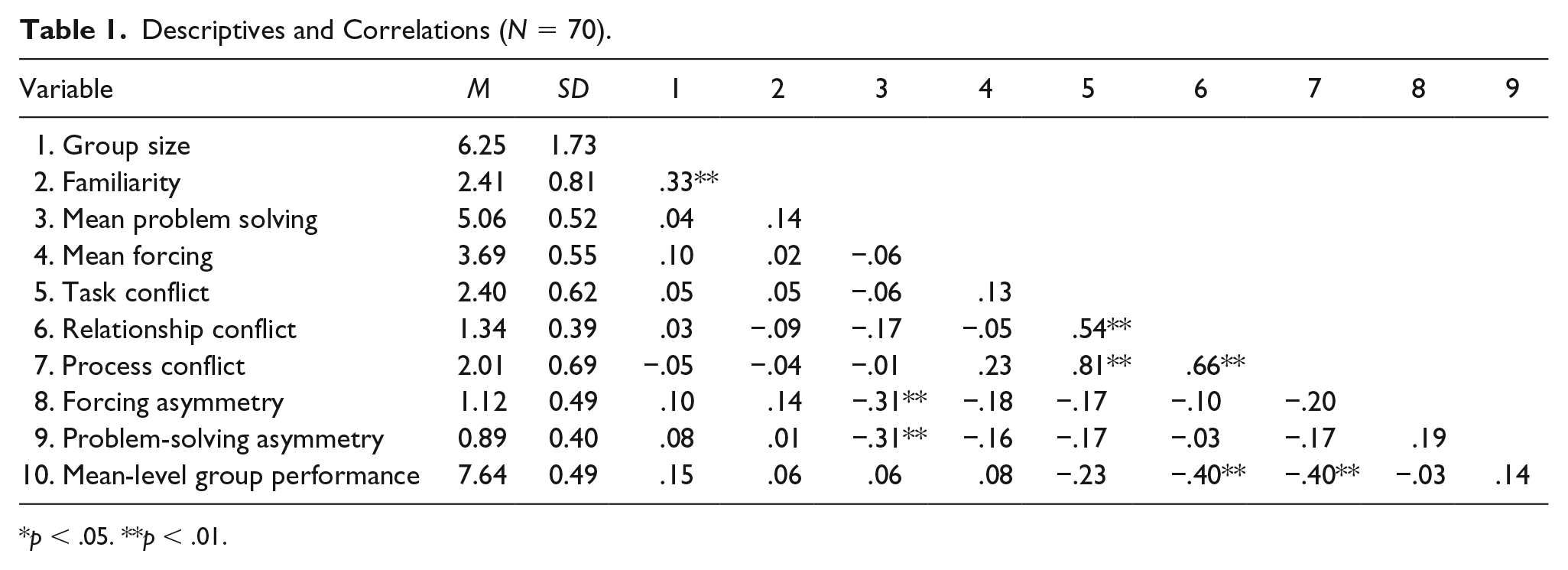
p < .05. **p < .01.
Overview of the Regression Analyses (N = 70).
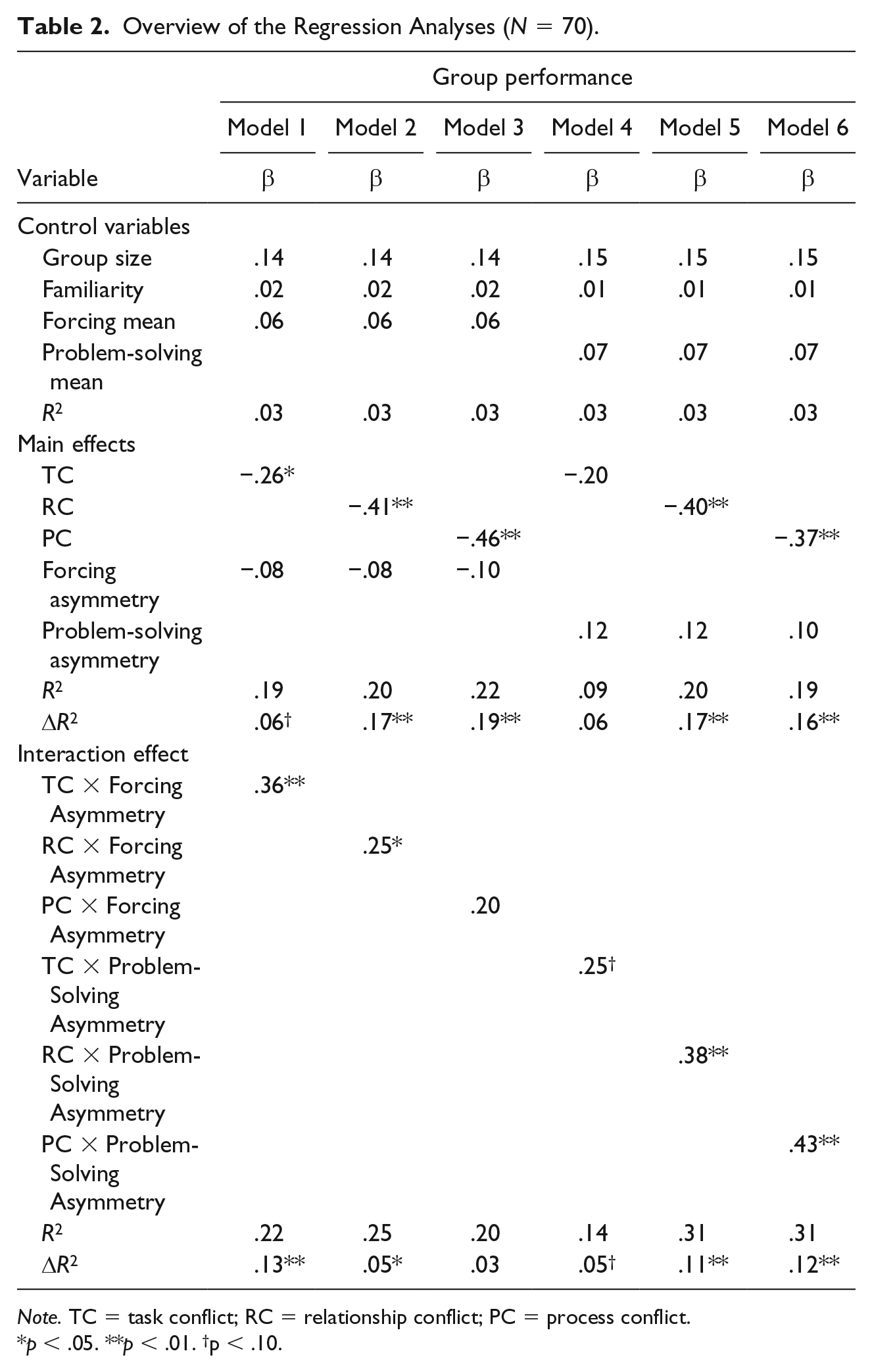
Note. TC = task conflict; RC = relationship conflict; PC = process conflict.
p < .05. **p < .01. †p < .10.
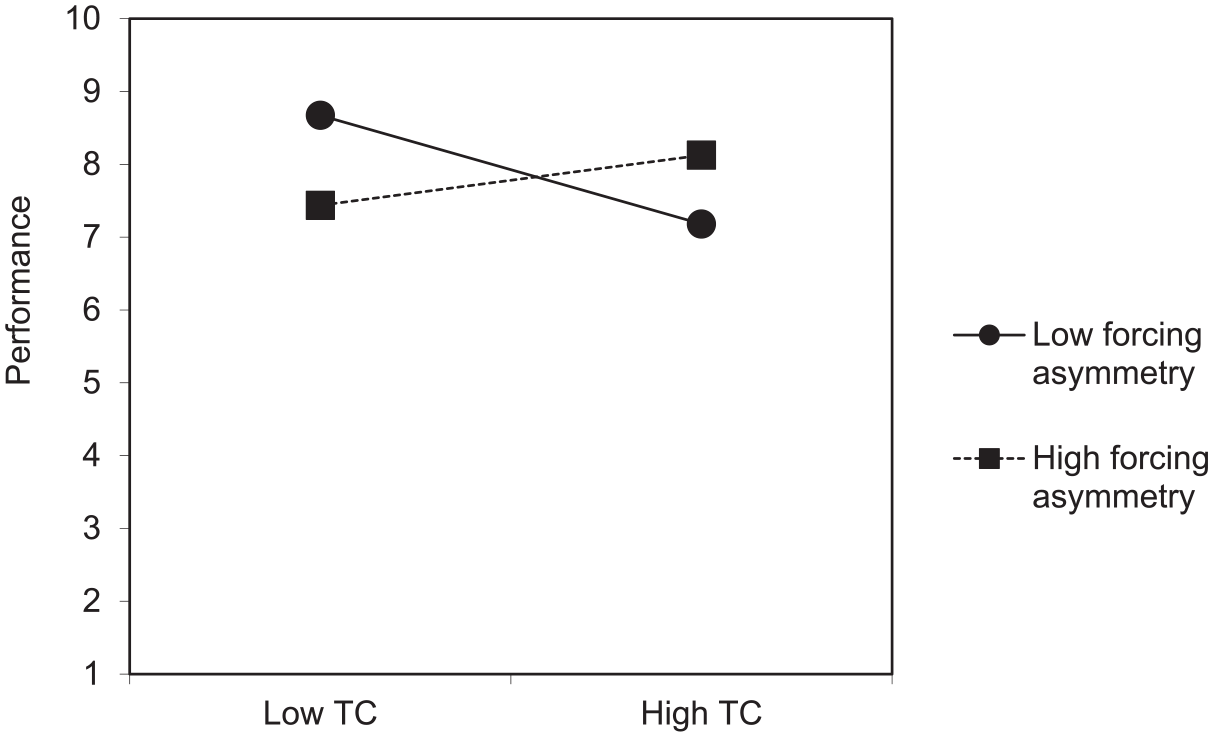
The moderating effect of forcing asymmetry on the relationship between TC and the performance of the group.
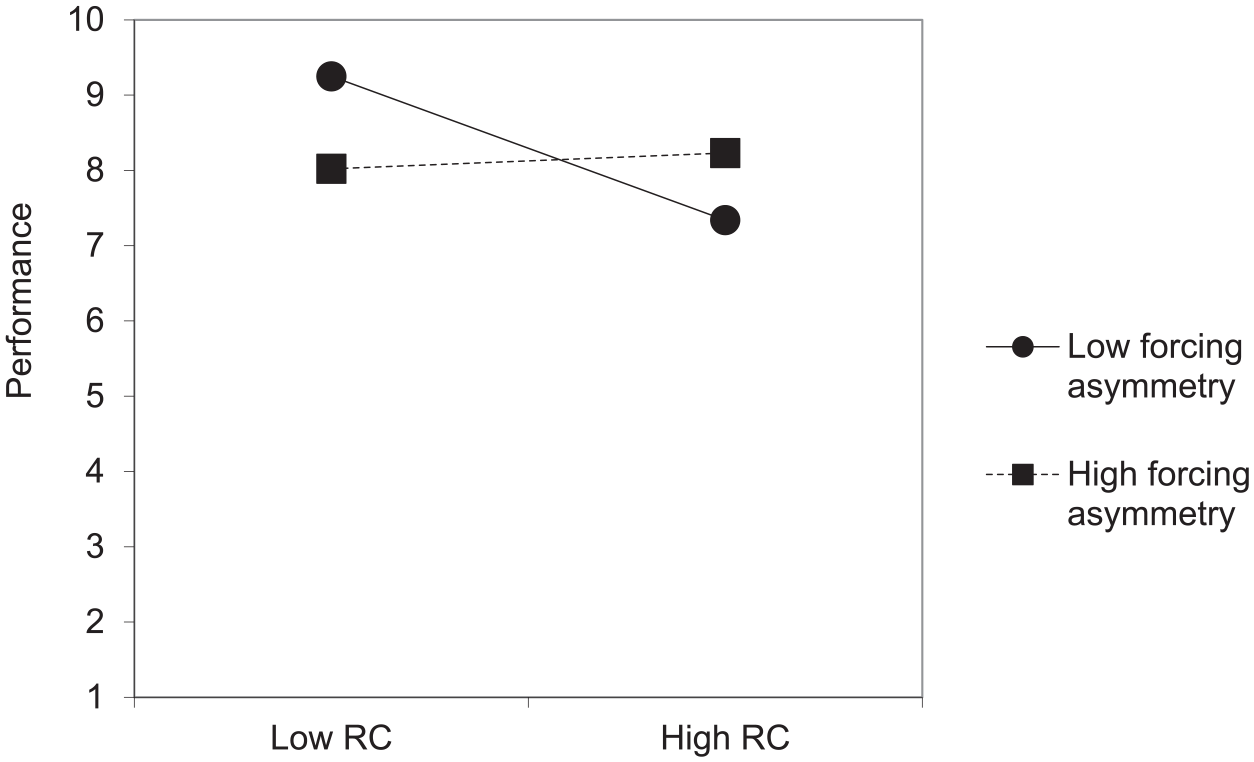
The moderating effect of forcing asymmetry on the relationship between RC and the performance of the group.
In H2, we predicted asymmetry in problem solving to moderate the negative relationship between each type of conflict and the performance of groups such that a high asymmetry would buffer the negative relationship. Problem-solving asymmetry marginally significantly moderated the relationship between task conflict and the performance of groups (β = .25, p = .07; see Table 2, Model 4; Figure 3). Simple slope analyses revealed that the slope for groups with high problem-solving asymmetry was not significant (t = 1.33; p = .19), whereas, for groups low on problem-solving asymmetry, the slope was significantly negative (t = −2.22; p = .03). Problem-solving asymmetry also moderated the link between relationship conflict and the performance of groups (β = .38, p ≤ .01; Table 2, Model 5; Figure 4). In groups with high asymmetry in problem solving, relationship conflict was significantly positively related to the performance of the group (t = 2.20; p = .03). In groups with low asymmetry in problem solving, relationship conflict was significantly negatively related to the performance of the group (t = −3.69; p ≤ .001). Again, we found that process conflict and asymmetry in problem solving interacted significantly (β = .43, p < .01; Table 2, Model 6; Figure 5). Groups high on problem-solving asymmetry seem to benefit from process conflicts (t = 2.69; p = .01), whereas groups low on problem-solving asymmetry suffered (t = −3.45; p = .001). Together, these results confirmed H2. Asymmetry among group members regarding a problem-solving style to manage conflicts protects against the negative influence of the conflict types on the performance of these short-term project groups. 1
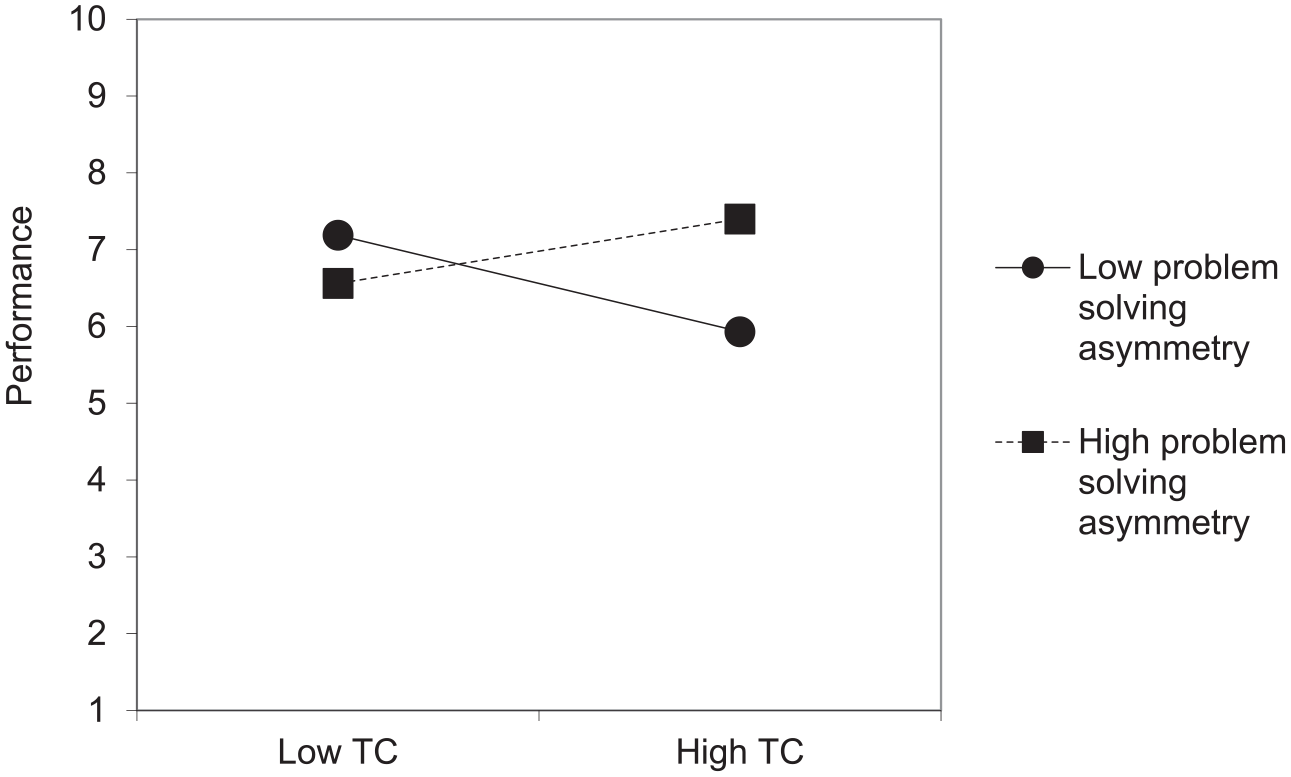
The moderating effect of problem-solving asymmetry on the relationship between RC and the performance of the group.
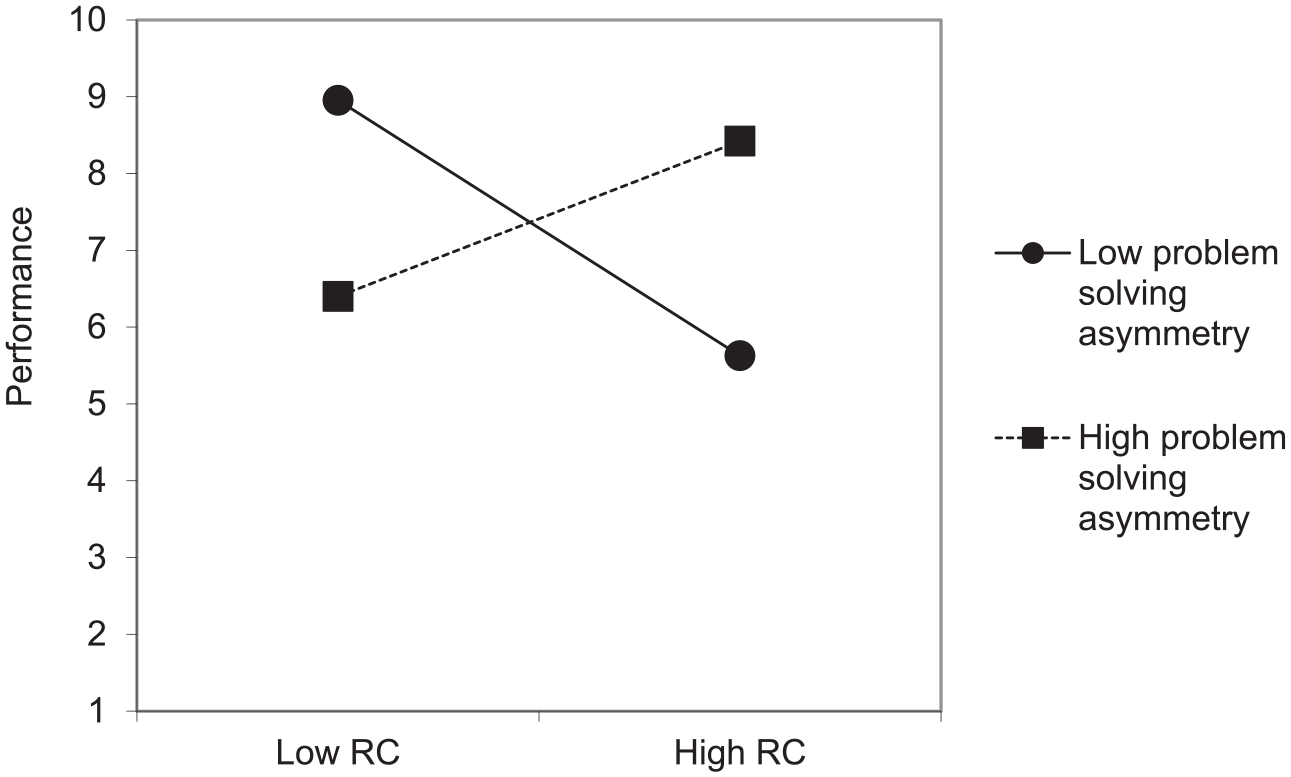
The moderating effect of problem-solving asymmetry on the relationship between RC and the performance of the group.
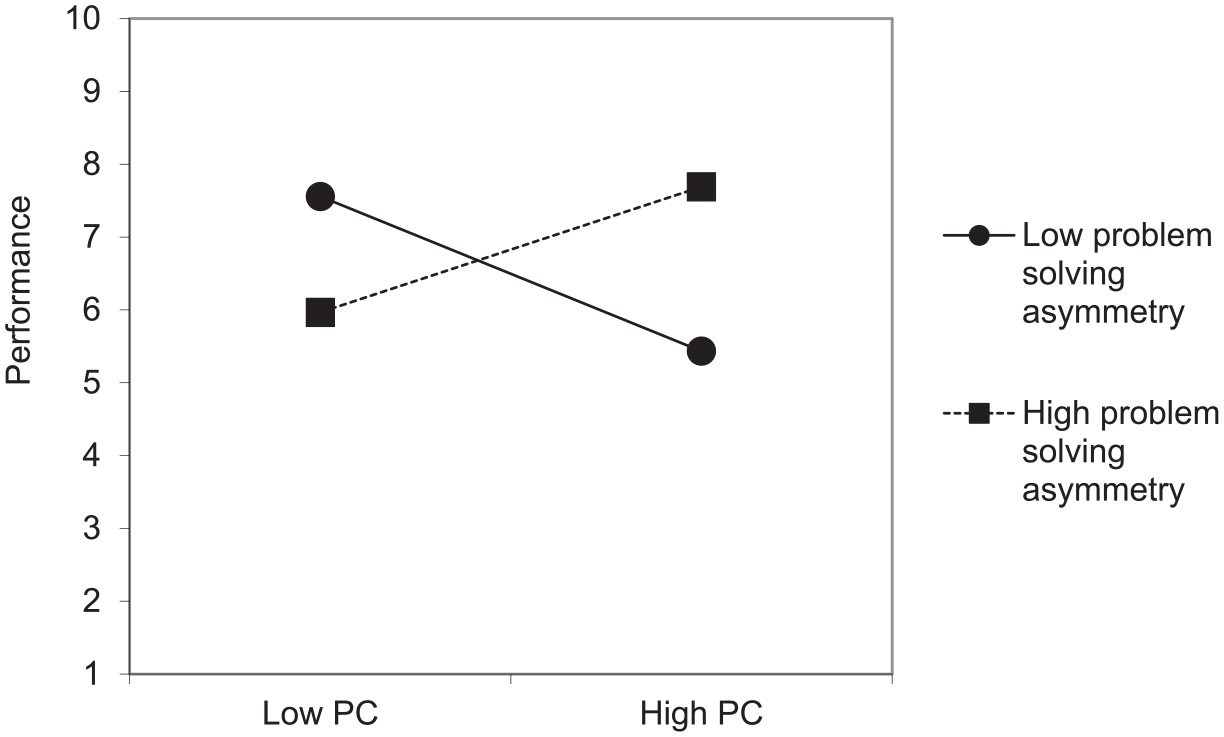
The moderating effect of problem-solving asymmetry on the relationship between PC and the performance of the group.
Discussion
In this study, we proposed that the asymmetry on a conflict management style affects short-term project group functioning when confronted with conflict. Nowadays, teams and project groups can be characterized by fluid boundaries (Mortensen, 2014), variable life spans (Wageman et al., 2012), and multiple group memberships (O’Leary et al., 2011). Groups and teams in organizations are no longer stable entities, which means that the basis on which conflict management theories were developed and tested changed. Therefore, we felt the need to study conflict and the composition of conflict management styles within short-term project groups to detect whether a reconsideration of those theories is necessary.
The results of our study provide evidence that a high asymmetry in forcing buffered the negative relationships of task and relationship conflict with the performance of groups. In fact, when group members hardly differ in terms of forcing, the performance of groups decreased in situations of task conflict. The same was noted for problem solving. When group members hardly differed, the performance of the group suffered from task conflicts. In contrast to forcing asymmetry, we found that a high level of problem-solving asymmetry was positively related to the performance of groups in situations of relationship and process conflicts.
Our findings suggest that asymmetry in a conflict management style may prevent groups from falling prey to premature consensus and groupthink (Janis, 1972; also see Farmer & Roth, 1998). When group members align on a conflict management style, it may be that the style is implemented without much discussion (if any) about possible alternatives (Bettenhausen & Murnighan, 1985). As results suggest, in those situations, conflict may harm the performance of a group. Thus, that it might not be necessarily similarity in a conflict management style that determines the relationship between conflict type and the performance of groups as suggested in previous research (Somech et al., 2009), but rather whether consensus on how to manage the conflict has been reached consciously by the group. The asymmetry in conflict management style may be a catalyst that motivates the group to go through the phases of the collective cognition cycle rather than immediately implementing action (Gibson, 2001). Differences in a conflict management style may start a discussion whereby group members assess alternatives, make a choice, and implement that choice. The selected and implemented strategy then is likely to be a collective choice.
Surprisingly, groups with a high level of problem-solving asymmetry, relationship, and process conflict were positively related to the performance of the group; theoretically, we expected a buffering effect. Perhaps discussing how to manage late process conflicts (which probably deal with issues related to responsibilities regarding data collection or data entry) enabled these groups to find a creative way of conflict handling to perform even better. Furthermore, there is some indirect evidence that relationship conflict can be positive for group outcomes. Some previous studies reported a positive correlation between relationship conflict and group performance (see, for example, De Dreu, 2006; Jehn et al., 2008). This suggests that the consequence of relationship conflict can be positive under certain conditions, thus perhaps variation in problem-solving style is one of those moderating factors. Future research should investigate this possibility more deeply.
Prior research has demonstrated how important a collective conflict management style is for the functioning and performance of teams (Kuhn & Poole, 2000). For example, a study by Somech et al. (2009) found that (long-term) teams with a collaborative conflict management style outperformed those with a competitive style. Our study highlights that it is important for short-term project groups that their members differ in a conflict management style. When there is asymmetry in a style, it may fuel a group discussion about how to react to the conflict situation. Research suggests that open communication about these issues can have important benefits to team functioning (Tekleab et al., 2009). In groups with a symmetric conflict management style, a “silently agreed upon” group norm on how to handle conflict may emerge. This can hinder effective conflict management or resolution because members do not search for and discuss alternatives which is often linked to high performance (Bettenhausen & Murnighan, 1985).
As with all studies, the current study has its limitations. The student sample provided an excellent way to investigate asymmetry of a conflict management style in newly formed, short-term project teams working on a new, nonroutine task. However, short-term project teams are usually composed of members from different functional areas with differing levels of experience (Chiocchio, 2015). Therefore, future research should examine conflict management style asymmetry in functional diverse short-term project groups to enhance the external validity of the presented findings.
Second, the current study examined the composition of one cooperative (i.e., problem solving) and one competitive (i.e., forcing) conflict management style at one point in time. Although past findings are consistent in finding that forcing belongs to the competitive style and problem solving to the cooperative style (Rahim, 1983), studies also demonstrated that the other conflict management styles of the DUTCH (avoiding, compromising and yielding; De Dreu et al., 2001) belong to these dimensions (see, for example, Huang, 2010). The question that remains is whether asymmetry in all five conflict management styles is beneficial for short-term project groups. Although we have no reason to believe that the same will not hold for the other types of conflict management styles, future studies are needed to verify this belief.
Third, we think our study is the first step to examine the role of asymmetry in conflict management style in short-term project groups. We assumed that asymmetry in a conflict management style may surface during a conflict episode, and consequently motivates members to collectively search for, debate, and decide on ways to manage the conflict. As one reviewer suggested, it may be that team reflexivity, when team members engage in a conscious reflection of their work processes and functioning (Schippers et al., 2003), is a (partial) mediating factor. Future research needs to empirically examine whether this is indeed the case. Preferably, future studies would also include behavioral data in addition to survey data (e.g., Behfar et al., 2008). Adding observational data or coding group communication will enable researchers to observe whether discussions on how to deal with a conflict situation emerge in groups with conflict management style asymmetry but not in those with conflict style symmetry. Finally, one may argue that the measure of group performance was inadequate given it was measured at the individual level. Although these short-term project groups experienced task interdependence and relied on other members to be able to achieve a good final result, we recommend future studies to include group-level performance indicators.
To conclude, the results of this article expand our understanding of conflict management style asymmetry in short-term project groups. Specifically, the results suggest that asymmetry in a competitive (i.e., forcing) and a cooperative (i.e., problem solving) conflict management style either buffers the negative relationships between conflict and the performance of groups or enables groups to benefit from conflict. In the presence of conflict, short-term project groups seem to perform better when members differ rather than align in their competitive or cooperative conflict management style.
Footnotes
Declaration of Conflicting Interests
The author(s) declared no potential conflicts of interest with respect to the research, authorship, and/or publication of this article.
Funding
The author(s) received no financial support for the research, authorship, and/or publication of this article.
