




Abstract
The aim of this study is to identify the barriers and facilitators for help-seeking behaviors among British South Asian (BSA) women. A cross-sectional qualitative method was applied, among 15 BSA women who have experienced domestic violence (DV). Five overarching themes emerged: survivors’ lack of recognition and realization of abuse, fear of the negative effects of abuse, informal help-seeking support and barriers, formal help-seeking support and barriers, and advice from survivors for developing help-seeking opportunities. These barriers and facilitators were linked to intersectional socialization, which have influenced the help-seeking behaviors of BSA women. This study can be helpful for researchers, policymakers, and service providers in understanding the complications in terms of help-seeking behaviors and facilitators for BSA women who experience DV and to develop culturally appropriate interventions to inspire effective help-seeking strategies for South Asian women who experience DV.
Keywords
Introduction
Domestic violence (DV) is a major public health problem in the United Kingdom and all over the world (Flay, 2016; Walby & Allen, 2004). One in four women in the world has suffered from DV during their lifetimes (Department of Health and Social Care, 2017). DV encompasses physical violence, as well as coercive control, gaslighting, economic abuse, online abuse, threats, intimidation, emotional abuse, and sexual abuse (GOV.UK, 2018). In the United Kingdom, each year, approximately 2 million women experience DV (Mellows-Facer & Dar, 2013).
The U.K. government has undertaken several initiatives to prevent DV against women, such as the “Tackling Violence Against Women and Girls Strategy,” in which the government included crimes (rape, female genital mutilation, stalking, harassment, and digital crimes such as cyber-flashing, “revenge porn,” and “up-skirting”) and unwanted behavior in the physical and online world, all of which should have no place in society. Preliminary evidence suggests that these kinds of programs have been moderately successful in reducing the rates of DV against women and girls (GOV.UK, 2015; New Strategies Domestic and Sexual Abuse Violence Against Women and Girls, 2022). However, several issues still remain within U.K. policy about DV against women, such as limited attention toward ethnic minority groups (Interventions Alliance, 2021). Research suggests that the factors that determine violence against women may vary by ethnic group, and it is important to understand DV within the context of different ethnic backgrounds (Anitha, 2011; J. C. Tonsing, 2016).
“South Asian” refers to persons having inherited roots in India, Pakistan, Bangladesh, Nepal, Bhutan, Sri Lanka, Afghanistan, and the Maldives (South Asian Association for Regional Cooperation [SAARC], 2020). This South Asian ethnic minority group is the biggest, making up half of all ethnic minorities in the United Kingdom (Iqbal et al., 2012). It is important to consider that there has been a significant expansion in the British South Asian (BSA) population (Anitha, 2011) and that this group is becoming an increasingly important part of the United Kingdom’s economic and social environment. There is a call to promote inclusion and to overcome any social disadvantages experienced by this group (Anitha, 2011). However, DV still remains a problem for many South Asian ethnic minority women (Siddiqui, 2013). The Crime Survey for England and Wales (CSEW) gave the percentage of South Asian women, aged 16 to 74, who were victims of DV one or more times in 2017 as 3.4% (Office for National Statistics, 2018). According to Thiara and Roy (2020), the survey results of “Vital Statistics” found that around 50% of BSA women experienced DV compared with all BME (Black and minority ethnic) women and children. There are several unique ways in which South Asians can experience abuse such as through in-laws. South Asian women suffer from many social injustices and many also experience racial discrimination, migration, and English language difficulties, which makes them vulnerable to DV (Jeevan, 2009). This form of abuse can include coercion, manipulation, and control by in-laws, exacerbating the women’s vulnerability and complicating their help-seeking behaviors (Gill, 2004; Rai, 2024; Soglin et al., 2020). The existing body of research on DV against South Asian women suggests that various risk factors, such as cultural stigma, fear of social ostracization, and a lack of awareness about available resources, also discourage South Asian women experiencing DV from seeking formal help and this often leads them to rely on informal aid networks such as family and friends instead (Abraham, 2000; Anitha, 2011; Bhuyan, 2008; Gill, 2004; Mahapatra & Rai, 2019; Raj & Silverman, 2007; Tripathi & Azhar, 2022).
The barriers to seeking help for DV can differ among South Asian women living in the United Kingdom depending on residency, with distinct factors potentially being relevant for residents and immigrants (e.g., illegal status, immigrant/temporary visa status; Anitha, 2010). Research to date has largely focused on South Asian women with insecure immigration status, and so less is known about the barriers to help-seeking for DV among South Asian women who have permanent residency in the United Kingdom. This current qualitative research is expected to aid the identification of differences or similarities in the obstacles and facilitators for help-seeking behaviors among BSA women compared with other South Asian women in the United Kingdom who do not have permanent residency. It is crucial to separate both groups in terms of investigating the reasons for barriers and facilitators for help-seeking behaviors among BSA women who experience DV.
This research interprets the findings using intersectional socialization in the Discussion section. Intersectionality theory was developed by Crenshaw (1990) for Black and other racialized women who have suffered from DV, as the author wanted to disclose the inequality of gender and race which are indivisible in such an environment (Crenshaw, 1990). In addition, intersectionality stresses how the concurrent, multiple, and interlocking oppressions arise from the intersection of hierarchies of power and social systems (race, ethnicity, gender, class, culture, and immigration status) experienced by women (S. A. Mann & Grimes, 2001). Socialization denotes the lifelong process of learning which influences the behavior, beliefs, language, cultural norms, attitudes, and actions of the society in which an individual is raised (Britannica, 2010; Cromdal, 2006; O. I. Femi-Ajao, 2016; Pisharodi & Parameswaran, 1994). This current study has sought to enhance the literature on the help-seeking behaviors of BSA women who have experienced DV by examining the barriers and facilitators for help-seeking behaviors associated with intersectional socialization (e.g., ethnicity, gender, religion, patriarchy). The awareness and understanding of these barriers and facilitators may support the development of interventions to encourage effective help-seeking among South Asian women affected by DV.
This research aims to investigate the barriers and facilitators for seeking help for DV among BSA women survivors of DV. The study focuses on the perceptions of DV survivors and of the service providers who work with them.
Method
Study Design
This research has been conducted using a qualitative interview-based method, with the aim of producing rich exploratory data on the DV experiences of BSA women. A critical realist position has been taken because the aim of this study is to make inferences from data about real-world phenomena which might be slightly different from one perspective to another (Willig, 2012). Critical realism combines ontological realism (the real world is independent of people’s knowledge) and epistemic relativism (there is no confirmation that knowledge corresponds to how things are) (E-International Relations, 2014). For example, in this current research, data have been collected from BSA women survivors of DV, while the data analysis and construction of findings have been considered according to the researcher’s independent observation, knowledge, understanding, and experiences. Overall, it can be said from the critical realist position that the researcher is able to see the reality but that the interpretation of data may be delivered from the researcher’s own perspective, which could be somewhat different from the perspectives of others.
Participant Recruitment
For this qualitative research, 15 BSA women were recruited from July 31, 2020, to February 16, 2021, with the help of service provider organizations in North-West England. Eligibility criteria included being born in the United Kingdom or having indefinite leave to remain in status, being from any generation, having lived experiences of DV, and being 18 years or older. The participants were recruited through the convenience sampling method (Dheensa et al., 2020; O. Femi-Ajao, 2018; Robinson, 2014).
The researcher remotely contacted staff (through emails, voice and text messages, and verbal discussion over the phone) at the gatekeeper organizations (non-governmental organizations [NGOs]) to inform them about the research project and the research aim of recruiting BSA women with their support such as Women’s Aid, Sakhi for South Asian Women, the Women Empowerment Group-APPSUKF (Association of Pakistani Physicians and Surgeons of the UK Foundation), Apna Haq, Hope Training and Consultancy, Bangladeshi Women’s Organisation, Imkaan, Duncan Lewis Solicitors, Survivors UK, Humraaz, Nour Domestic Violence Charity, Ethnic Health Forum, the DV-Gender-Faith Group, charities for refugees and asylum seekers, as well as some online DV survivors’ groups who did not give consent for their organizations’ names to be disclosed. They were also given copies of the participant information sheet (PIS) and the advert, which had the research details, to be displayed on their respective organizations’ websites. The researcher also circulated the advertisement remotely on the most prominent social media platforms and professional media websites to recruit participants via service providers.
Data Collection, Interviews, and Data Transcription
The study received ethical approval from the University Research Ethics Committee (Ref: 2020-7981-13795). However, the study’s procedures were amended in response to the COVID-19 pandemic, so that BSA participants were interviewed between July 31, 2020, and February 16, 2021. The women interested in this research were informed about and connected with the researcher through the service providers. Afterward, the researcher provided a PIS through email or messaging service (the participants’ preferred method) via an online or offline platform. In that way, BSA women had the opportunity to ask the researcher questions via the same remote communication platform before their interviews to ensure that they were fully informed about the study. These interviews were semi-structured and were all undertaken remotely through audio calls (online, mobile). Informed consent was recorded verbally before the start of each interview, which lasted for 45 to 90 min and were audio-recorded using an encrypted recording device. This research carefully considered safety measures for participants, in order to reduce the risks and maintain privacy and confidentiality, and used informed consent, distress, and debrief protocols. The researcher followed the University’s lone worker policy to ensure the safety and security of both the participants and researcher. The researcher also used pseudonyms, as given in Table 1.
Descriptive Summary of Study Participants Characteristics.
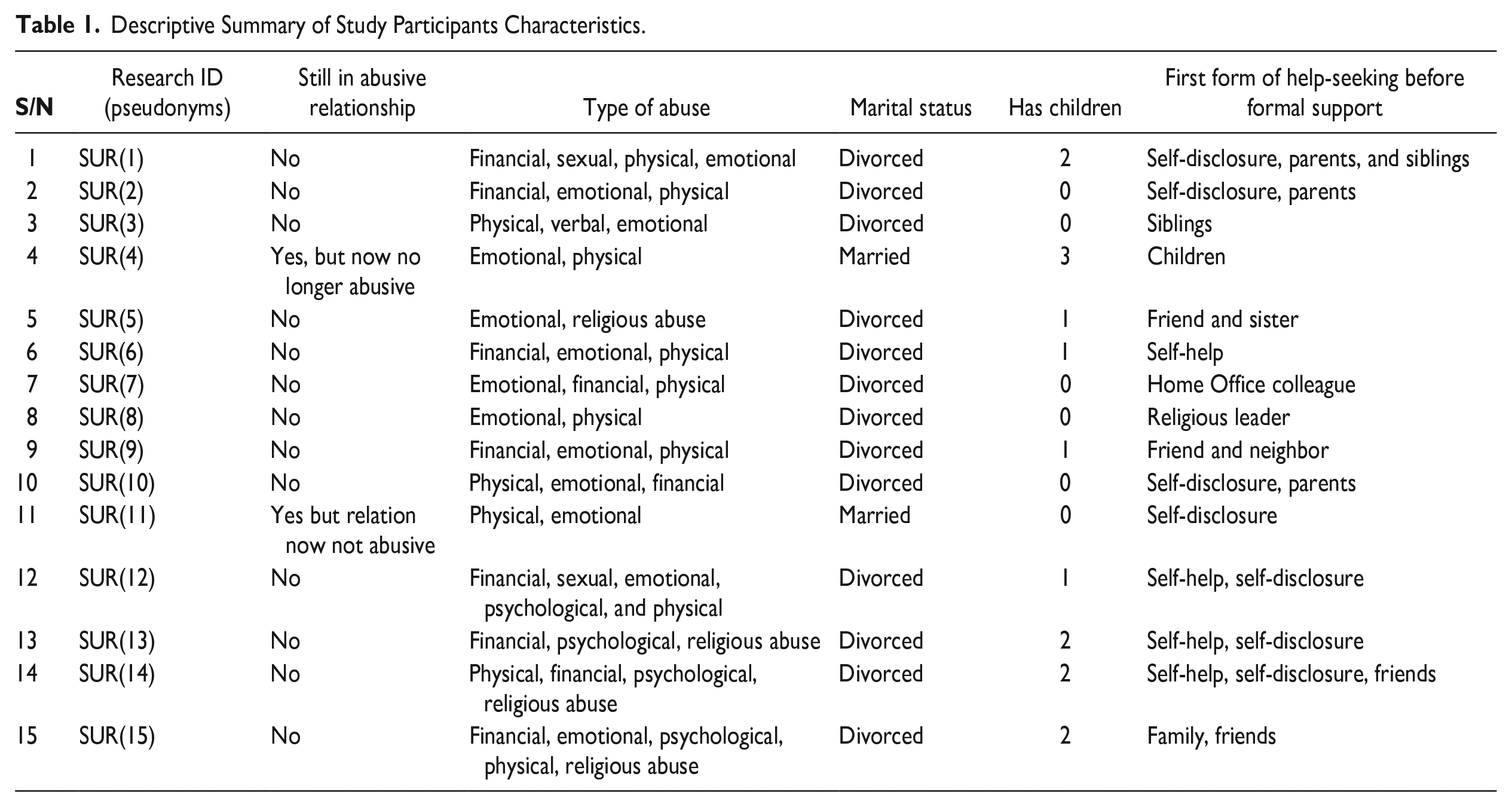
The interview guide used with BSA women was adapted from O. I. Femi-Ajao (2016). The researcher is multilingual (with fluent Bengali, Hindi, and Urdu) and has been trained to conduct qualitative research; however, according to the preferences of the participants, all interviews were conducted in English, except for two in which a mix of languages (Urdu, Bengali) were used. The interview guide included open-ended questions, allowing participants to deliver information from their perspectives (Drake & Jonson-Reid, 2008). All interviews were recorded and the recordings were transcribed via the verbatim transcription method with the help of professional transcription services. The non-English interviews were translated into English by the researcher as she is multilingual and reviewed with two peer debriefers in order to establish their credibility (Spall, 1998). These peer debriefers were research colleagues of the researcher from the University. After that, these two transcriptions were sent to professional transcription services. The transcripts were checked by the author and an academic experienced in qualitative research.
Data Analysis
Inductive latent thematic analysis is used in this qualitative research; this has six phases and helped generate relevant themes from the data (Braun & Clarke, 2019). This type of qualitative research is suited to this data analysis method, helping the researcher to understand, interpret, and discuss the ideologies underlying how research participants describe the issues. After that, all transcriptions were transferred to the NVivo 12 software in order to classify, sort, and organize the data, and to maintain an audit trail that would assist in the identification of themes and patterns (Wolf, 2003).
Results
Most of the BSA women participants had experienced all types of abuse, such as physical, psychological, sexual, and financial. All were divorced except for two participants, who had stayed with their husbands/partners who were no longer abusive. Table 1 identifies the informal groups within which BSA women would disclose about DV and seek help before contacting formal support organizations; these included parents, siblings, friends, colleagues, and religious leaders. Regarding de-identification/anonymization purposes, the researcher did not precisely apply any participant’s ethnic identification (e.g., Bangladeshi, Pakistani, Indian) in any quote.
Five themes have emerged from the data: survivors’ lack of recognition and realization of abuse; fear of the negative effects of abuse; formal help-seeking support and barriers; informal help-seeking support and barriers; and advice from survivors for developing help-seeking opportunities.
Survivors’ Lack of Recognition and Realization of Abuse
Although the participants were British citizens or had the right to live in the United Kingdom, it was found that 13 (80%) were raised by their South Asian families from childhood to treat DV as a hidden and normal matter. With such learned cultural norms, attitudes, and behaviours, BSA women may be limited in their ability to perceive behaviour as abusive, even though it would meet the UK Home Office (2012) definition of DV. BSA women’s perceptions about DV in married life is that it is the right of the husband because they used to see the same violence when they were growing up in their own families with their mothers and aunts tolerating this abuse from their husbands: I must have probably been about three or four and he (father) was shouting at my mum about—I don’t know, he was shouting at her about something, and he (father) was pulling her hair and hitting her, like smacking her and stuff. So I grew up seeing that, but because I saw it all the time, it didn’t affect me, so it was normal. It was normal to see that. (SUR4)
Although participants were born and brought up in the United Kingdom, they were not completely acculturated to the United Kingdom due to their South Asian upbringing. Due to this lack of acculturation, this participant reported that violence-related news which was circulated about people of different ethnic backgrounds was not familiar or understandable to her. The participant also shared that a lack of familiarity with and awareness of seeking help, such as complaining about DV and securing shelter, was not expected or well known in her community: Sometimes the abuse what you read about in—on like, you know, when it comes to abuse, it’s about people that aren’t South Asian, and you can’t relate to it. And you—because you know, they can go away and they can get a council flat or this or that, and that’s not very common within our culture. Because we don’t have those sort of resources—like it’s we don’t really know about that sort of stuff, we’re quite in terms of the resources available we’re not that fully aware. (SUR7)
This participant similarly shared that she did not realize that she had suffered from DV and she simultaneously did not like allowing people to talk negatively about her marital relationship. She had the prior mindset of being reluctant to recognize abuse to prevent any misinterpretation of her marriage. The BSA women mentioned that the underlying cause of silence in seeking help is associated with the intersections of diverse perspectives (religion, gender, and patriarchy): For me there were a lot of things. First of all, I didn’t ever associate myself as a victim or a survivor of abuse. What I was going through I didn’t think it was abuse. I had no knowledge that this was abuse. Even if I had seen it already, or seen advertisements, I didn’t ever associate that with myself. Secondly, I didn’t want people to think of me in a certain way, or think of my marriage, or my husband in a certain way . . . I also felt like it wasn’t—you know how sometimes that you’re meant to be a garment for one another, and I misinterpreted those things to think that—I think it was a cultural and a very misogynistic understanding, a patriarchal understanding of religion to assume that you’re not meant to talk about these things. (SUR3)
Fear of the Negative Effects of Abuse
All BSA participants shared their experiences of fear in connection with DV and how this blocked them from seeking help from others. The BSA women talked about the fear of physical torture, financial abuse, harm to their children, emotional abuse, culture-based blame, and the patriarchal views of society: I think there’s a lot of fear about in terms of dealing with the police, and what happens. And there’s the fear of being alienated from their own community for flagging up something that’s wrong. (SUR7) He (husband) said, “Do you (victim) want to live or you want to die? Do you want to see your son? You will be saved without seeing your son. I will take him away where you can never reach us.” (SUR6) We find it fearful to speak up because you have to understand we rely on our family for their support. We also financially how we’re going to cope—if the woman is well educated even. The thing is with the abusers, they control you so much that you feel as though if you leave the marriage, you can’t function. So they cut off all the bridges, they cut off your financial support, they cut off everything, so that you only rely on them, you see, . . . (SUR8) I was also scared to ask for help because of the culture of our society, you know, like those things that, “Oh, your daughter got divorced? Oh, she must have done something. No, men are never wrong. Women are always wrong.” (SUR 6)
One survivor also added how she had been perturbed in relation to cultural identities, in that if she had disclosed the abuse, which would have been breaking the cultural norms, then she might have been forced out of her South Asian community: You don’t really talk about it (abuse) because you have to admit that . . . So, all these things, but you still do it because you want to please your family. There’s a certain expectation. And if you reject everything from your culture then you are not going to be part of that culture. And as human beings, we need belonging. Even if you’re Asian or white or black, we need an identity, and our heritage is the basis of that identity and the value that forms from that heritage. (SUR5)
Participants also had fears about uncertain futures for their children and siblings because, if they were to divorce, nobody would marry their children and siblings in the future, since divorce is a stigma within the community (Hunjan, 2004; Hyman et al., 2011). Women’s economic solvency was also at risk because of divorce, as they were financially dependent on their husbands. Participants also shared their anxieties in dealing with the statutory services, as this can cause isolation from the community. A few relevant quotes illustrate this below: What can we do in terms of being South Asian, being Asian, you know, you’ve got everything to think about, like I mentioned earlier, your families, your siblings, your children, finances, where would you go. If you’re totally dependent on your partner, where would you go? (SUR12) So, yeah, it was just the shame, I guess it was the stigma attached to it and the labelling. And also, I get—when after I’d got divorced, people were making comments to my fourteen year old daughter, you know, “your mum’s a divorcee.” And making comments about my daughters that they were not from a good family, ’cos their mother was like this. (SUR13) I think there’s a lot of fear about in terms of dealing with the police, and what happens. And there’s the fear of being alienated from their own community for flagging up something that’s wrong. (SUR7)
Informal Help-Seeking Support and Barriers
Several informal barriers were identified that prevented BSA women from securing support, such as perpetrators’ controlling behaviours, parents’ unhelpful behaviours, survivors’ lack of courage, perpetrators misusing religion, and patriarchal society. Participants reported a number of obstacles which prevented survivors from contacting parents, families, relatives, and friends for assistance, such as restricted mobility, isolation from their support systems, emotional abuse, and financial control. Some participants’ family members were not supportive; for example, when participants had the opportunity to complain to their family members, they did not help them, as the families did not consider abusers’ controlling behaviours as a serious matter that could potentially take on an extreme level of life-threatening abuse in the future. In addition, families were uncooperative because of an emphasis on the practice of cultural norms whereby women should be tolerant of all kinds of abuse. One participant regretfully pointed out the helplessness of her childhood upbringing, claiming that her parents wanted to raise children that were more likely to fulfill their (the parents’) dreams than to fulfill their own dreams: Because the day I got married, my father said to me, and my auntie said to me, “Whatever happens in that house . . .” I still remember these words. I was twenty-two. “Whatever happens in that house, you ignore it and you put up with it, and you do not come back.” (SUR12) . . . and my mum kind of realised something was going on and stuff . . . she would just say . . . “look keep trying, keep trying, to make it work . . . ” (SUR13) they don’t raise you to chase your dreams, they don’t raise you to contribute your best to the world and society, or—they don’t raise you to—they raise you to make them (selves) look good, and to look after them, and to go into another family and serve that family. You’re always—you’re like a slave. (SUR4)
Perpetrators also misused religion to control their wives’ help-seeking behaviours. Some participants claimed that the perpetrators were in powerful positions (doctors, lawyers, psychologists, religious leaders, etc.) and could convince family members and people in the community of their (the perpetrators’) innocence. In most cases, survivors were blamed for the abuse and the perpetrator received support as a result of his power. Although patriarchy exists widely, in many societies there are attempts to reduce its power; however, it is still predominant in South Asian cultures (Thandi, 2012). In this research, the participants also believed patriarchal society to be a barrier which supports men, even if they are abusers. However, some participants received informal support from friends, relatives, and colleagues: he does not allow me to talk to somebody, like my family about it. Yeah, he said, okay you can talk with your family, but in front of me. (SUR9) I didn’t know much about my religion, he knew a lot, I actually thought that everything he told me about the religion, was correct. But he used religion as a way to abuse me. And I was so scared that God would punish me because previous to that I’d lived a very Western life and I’d changed, I wanted to be good, and I felt—and he used to say things like, obviously, I’m your husband, you need to obey me. (SUR15) In-laws said to participant’s parents: “You should have taken your daughter back. We don’t want your daughter. What she’s good to us for? We wanted her to earn and support our son. We wanted her to buy us a house. What is she doing? (SUR6) like no one would listen ’cos I’m (survivor) like twenty-four, I’m a student, he (perpetrator) is a teacher, he’s a psychologist, so I just thought no one would believe me, no one would listen to me. He was part of the Mosque as well, so I don’t know. (SUR10) But I think community people like to brush it under the carpet as well, you know. They know exactly what’s going on, but they do not hold these men accountable. (SUR5) I think culturally it’s been very normal, and mother just wanted my marriage to work. So I don’t think she understood it was abuse. It was only until I told my siblings and they said, “It’s abuse, you need to call 999.” (SUR3)
One participant had help from her colleague when she continued working from home during the COVID-19 pandemic. In addition, some participants’ self-awareness and decision-making helped and motivated them to come out of abusive situations. Participants emphasized the benefit of traditional and social media (TV, online, mobile, or telephone), which helped them to realize they were experiencing DV: I was able to make phone calls, video calls, but my ex would always be with me, so I wasn’t able to talk freely—the only way that I spoke to my manager, because I was working from home, she just told me, look, pack your things and go back to your parents . . . she herself had been a victim of domestic abuse . . . (SUR7) But thank God I was—I think as I said I had inner strength, I had very good family support, at least my grand dad, my father, which kept me going, though they were not in this country, they were in different country. But I think it’s just me the way—I think it’s just my inner quality I would say that I have left, as in no I would never settle for less, and I have to move on. (SUR2) I think I started reading online about abuse and stuff like that, and then I started recognising the abuse as I started reading online, you know. (SUR5) I spoke to—I actually—no, I actually didn’t speak to anyone if I’m being honest, I didn’t speak to any of the agencies, I think when I watched that BBC report it gave enough information about domestic violence. (SUR7)
Formal Help-Seeking Support and Barriers
BSA women have portrayed how the statutory services, such as the police, doctors, and social services, were not properly trained to understand the nature of abuse in the South Asian community, which is different from the mainstream or White British group. So, participants sought staff of similar ethnicity who could understand their problems: I remember when I used to go to GP, they would just give me antidepressants, and that would make me like a zombie, you know, yes medication will help, obviously I’m a health professional and I understand. But all you need is that support, you know, you can talk to someone, I think we have lack of resources in that, we just all jump into medication very quickly. (SUR2) So then I was seeking counselling . . . And I specifically wanted an Asian person, or a Muslim person, because you know English people—and I’m sure they’re good at their counselling, but there are certain things that they wouldn’t understand because they’re not from our community. Because they would just say, a normal person would just say, “Just move out.” But you know how it is in our community, we can’t move out. (SUR4) We need specialist BAME worker in every aspect of front line staff, I guess . . . In hospitals, in nursing, in midwifery, the council, children’s services, in schools even, for schools and teachers to understand and recognise, when a child discloses. Because obviously children in schools are—you know, taken during the summer holidays for forced marriages . . . (SUR13)
Participants shared their limited knowledge, opportunities, and understanding about formal DV resources, which was the cause of barriers to seeking help. This helpless situation caused a lack of access to securing the appropriate support for DV, such as financial support and accommodation support: I know the covert, coercive control law has come in, but it’s not understood very well by the police, social services, frankly even the judges, you know. They don’t really understand. They don’t have the time to understand it. You know, unless like you’re dying, they don’t frankly care. (SUR5) I don’t learn about anything, I didn’t—I think maybe in sociology they say, women—there’s just one section in our books that say, women are like more than men experience domestic violence, that was it. We didn’t learn about anything. Yeah, never. (SUR10) I knew of no services. Children services called me once, I told them what happened, they said, okay fine and didn’t proceed. The police had actually given me some leaflets about women’s aid and stuff. And to be honest with you, I wasn’t ready to even talk about it, because my priority was my children and earning a living. (SUR14)
Several participants shared the benefit of counseling support which helped them to realize that they were experiencing DV and to regain the mental strength to become emotionally stable. BSA women found support from religious leaders with positive attitudes and also from Citizen’s Advice, which is an independent organization specializing in confidential information and advice to assist people with legal, debt, consumer, housing, and other problems in the United Kingdom (Citizens Advice, 2022). Participants had contacted all the formal services (police, doctors, DV service providers, advocates) through self-help and informal support: I don’t need any support, I just need somebody to listen to—or believe me really, which—but thankfully, I—’cos I’m educated in the sense that I understood, The Citizens Advice, I went there and, you know, I suppose I had to pick myself up, there was no choice. One of the good things was that on—in the hospital there was an Imam chaplain who helped—he understood this. But he didn’t take it to safeguarding or anything . . . —he understood, looking back, he understood that I needed space. I didn’t need to be bombarded with safeguarding and other services coming at me, because I was completely vulnerable but I needed—I just needed a little bit of a push up. Like, yes, you’re okay, you’re going to be okay and that’s it. (SUR8) when I left the marriage in May 2020, and by this point I came back home and my family didn’t recognise me, I had lost a lot of weight, and mentally as well I wasn’t the person that I was before I got married . . . So I got counselling pretty much immediately after I had left because I just couldn’t understand what had happened, and that helped me massively, it helped my recovery. (SUR7)
Advice From Survivors for Developing Help-Seeking Opportunities
In this research, the BSA women participants provided their opinions and recommendations about how survivors can take the opportunity to seek help from the formal and informal sectors. In terms of providing informal help-related suggestions, participants emphasized two types of informal support for BSA women. First, family support is needed in times of emergency, and families also need to be educated to realize that abuse is not acceptable in any culture. Second, participants also suggested involving religious organizations and religious leaders to build awareness programs about DV: I think families also need to do their due diligence and if they know that somebody is abusive within their family, they need to get help. (SUR3) There needs to be a lot more discussion about domestic abuse. It needs to not be a taboo or stigmatised topic. I think there needs to be a lot of education. . . . Education to parents, to family members. I think all age groups need to know about this because unfortunately there’s a lot of the older generation still think this is okay, and I think it needs to be shown that actually your daughter or your son being divorced is better than them being dead or beaten up by a stranger. (SUR3) You need to get the local Mosques, the Imams, who maybe hold surgeries once a week. Maybe on a weekend where women can come in under their own discretion and speak to people. Not about breaking up a marriage, but about maybe getting support, rights they have, And maybe also—not maybe but bringing to account the men and some of the men aren’t physical. (SUR13) I think that the agencies have started to understand the diversity issue, and I think these agencies, they do have—I mean, they did have more workers from that background, like South Asian, Muslim background, who can truly like empathise and understand exactly what’s going on. (SUR5)
Survivors suggested a number of formal support-related events and activities. To enhance the understanding of DV against BSA women and how to help them, it is necessary to engage everybody within a DV awareness-related program. This would also help in inhibiting various barriers to help-seeking behaviours, such as preventing the misuse of religion and breaking the stigma about DV being a private matter: I think everybody involved in that case, whether it’s the perpetrator, the survivor, the extended family, especially within the South Asian, scholars and that—I think everybody needs the support and the awareness that this is wrong, this is wrong. It’s not even in their religion that you can abuse a woman, okay? (SUR12)
Most of the participants later started to work in third-sector organizations to help other survivor women who had experienced DV. Thus, they have also made some recommendations based on their real-life experiences which could help other survivors, for example, recruiting South Asian staff in each service area, such as schools, religious places, hospitals, and everywhere. The BSA women have emphasized that South Asian staff are able to understand the South Asian culture, which will help them to identify DV and help BSA women: So I think you need to have more police officers who are from the South Asian community to understand this. You need it in the local Mosques. You need it in the organisations. You need it in children’s services. You need specialist BAME workers in literally every organisation whether it’s the council, whether it’s children’s services, in schools even, for schools and teachers to understand and recognise, when a child discloses, children in schools are taken during the summer holidays for forced marriages, FGM as well, you know, so you need to have a specialist BAME worker in every aspect of front line staff, I guess. In hospitals, in nursing, in midwifery, in everything. (SUR13)
Participants also shared the benefits of technological advancement and especially appreciated online forms of support. One participant underscored how she found support independently via online technology because, while she was experiencing DV, she used this digital support which gave her the autonomy to take the initiative against DV: I think maybe because we know how to reach out, you can use technology, do a Google search, and reach out, I do think there’s more—I know that I feel I have more power or have the liberty to be able to do that . . . (SUR3)
Participants reported that it is crucial for women to be aware of any support around them, and that this could be medical support, mental health support, or any service from any kind of organization. Professionals also need to be trained to identify DV to help survivors in times of crisis: So I think it would be very helpful to women to know there are loads of organisations, not only that organisation, it could be your GP and they will refer you to this kind of organisations. And there are mental health professionals, other professionals . . . and also the professionals need to see the signs and symptoms it could be. (SUR2)
Discussion
This qualitative research has explored the specific barriers and facilitators for help-seeking behaviours among BSA women who have experienced DV. During the interviews with BSA women, several themes emerged: survivors’ lack of recognition and realization of abuse; fear about the negative effects of disclosing abuse; informal help-seeking support and barriers; formal help-seeking support and barriers; and advice from survivors for developing help-seeking opportunities. It was revealed that all barriers and facilitators for help-seeking behaviours among BSA women were similar to those among South Asian immigrant women in other high-income countries such as the United States, Canada, Sweden, and Hong Kong (Anitha, 2010; Sabri et al., 2014; Swati Shirwadkar, 2004; J. Tonsing & Barn, 2017; Voolma, 2018). This research interprets the findings using intersectional socialization, as given below.
Intersectional Socialization
The underlying causes for all of the barriers and facilitators are described using the concept of “intersectional socialization” (Hoffmann, 2019). This term is the combination of two other terms: socialization and intersectionality. Socialization occurs by parents transmitting their own attitudes and those of their country of origin to their children (Arends-Tóth & Van de Vijver, 2009; Jennings, 1984). In this study, the participants’ help-seeking behaviours were influenced by their sociocultural upbringing, which intersects with diverse inseparable identities. Crenshaw (1990) applied intersectionality to highlight how women who experience DV have indivisible diverse categorical identifiers of socioeconomic status (e.g., ethnicity/race, gender, age, class, language, religion; Bhandari, 2018; Crenshaw, 1990). So, “intersectional socialization” comprises the intersections of socialization messages that individuals learn from their family and community in their lifetime. In this study, the intersections between sociocultural categories such as gender, patriarchy, religion, and ethnicity are constructs that are internalized in the socialization process. The impact of intersectional socialization on help-seeking behaviours has developed a range of barriers and has limited the facilitators for help-seeking behaviours among BSA women as discussed below.
Although each participant had successfully reached out to service providers, this was the most challenging part for them in seeking help (because of fear, mistrust, or insufficient informal support). The underlying causes for this fear and mistrust depended upon the patriarchal culture practiced via families and relatives because they would constantly try to protect their family honor (izzat), image and reputation from the shame, victim-blaming, and stigma of DV, which adversely influenced the participants’ choices in seeking help from others (Anitha, 2010; S. Shirwadkar, 2004). Patriarchal solid norms within the South Asian community in Hong Kong may create significant barriers to help-seeking (Hussain & Khan, 2020). Some participants in this current study shared that their mothers, who were first generation, silently continued their abusive relationships and pressurized their daughters to stay in their own abusive relationships and continue practicing the sociocultural norms of their ethnic groups, similar to those underlying the concept of family honor that constrains BSA women from escaping abusive relationships. For that reason, BSA women keep DV matters secret until it is life-threatening. Similar views from other studies have identified acceptance of DV because of a lack of family and community support in Canada and the United States (R. M. Mann, 2010; Sabri et al., 2018). Moreover, such acceptance means these crimes are unreported and invisible, blocking opportunities to develop support systems for DV survivors (Abraham, 1998; Liao, 2006). This study indicates that DV is often perceived as a private family matter across BSA societies, but it is also evident in few literatures that Latin American, Middle Eastern, and certain Western communities also tend to view DV as a family issue, discouraging survivors from seeking support from outside due to cultural norms and societal pressures (Haj-Yahia, 2002; Logan et al., 2004; Perilla et al., 1994).
BSA women stated that their parents forcefully took them to South Asian countries during the summer holidays in order to force them into marriages (Belur, 2008). Some BSA women’s families did not take incidents of DV seriously because they only cared about their status/honor, which they believed would be destroyed if the community knew about the DV (Sabri et al., 2014). A comparison of these findings from the current study with those from other studies confirms that the relevant evidence is that “izzat (honour) continues to exert a powerful influence on the choices and avenues open to women when faced with violence in the home” (Anitha, 2010, p. 476).
From this research, gender and religious role expectations are the other underlying barriers for help-seeking. Women often felt isolated in their abusive journeys because they live in a highly male-dominated environment and society, in which men exercise their rights more than women (Hulley et al., 2023). The BSA participants in this research felt they had fulfilled the wills of their parents, siblings, and relatives, such as agreeing to their families’ decisions about marriage, and protecting these marriages to sustain the families’ reputations, with or without any adverse situation. Following these gender roles and expectations, previous studies have demonstrated that BSA men are inherently more privileged than women, and that the responsibility of girls is to follow these culturally prescribed gender roles, for example, upholding the honor of the family (Abraham, 2000; Dasgupta, 2000; Vandello & Cohen, 2003). Besides gender, religious identity has also influenced the help-seeking behaviours of BSA women. Participants in this study shared how they had been restricted, because of the religious misconceptions promoted by their husbands, to remaining in abusive relationships instead of seeking divorce or separation. Although ethnicity, gender, family, and religion are separate concepts, they are all interconnected components in the intersectional socialization that affects the barriers and facilitators for BSA women’s help-seeking behaviours in response to DV.
Although DV is a global public health problem, its nature is different according to culture and race (Ahmed, 2006). The participants talked about professionals with little expertise or training in how to support BSA women, and about inadequate awareness of the nature of DV in the South Asian community compared with the mainstream White British community. Burman et al. (2004) found similar results in their research. This situation is comparable to that of South Asian immigrant women who have experienced DV, with research suggesting that statutory service providers and professionals lacked a clear understanding and significant knowledge of the culture and circumstances of the various ethnic communities in delivering their services (Belur, 2008).
Figure 1 illustrates intersectional socialization (gender, patriarchy, religion, and ethnicity) as a root cause (brown color underneath the tree) that influences help-seeking behaviours, producing several barriers (branches of the tree) such as lack of awareness of DV, the hiding of DV, misinformation, stigma, fear of victim-blaming, isolation, insufficient and inappropriate support from statutory and voluntary services, and racism, as well as facilitators (also branches of the tree).
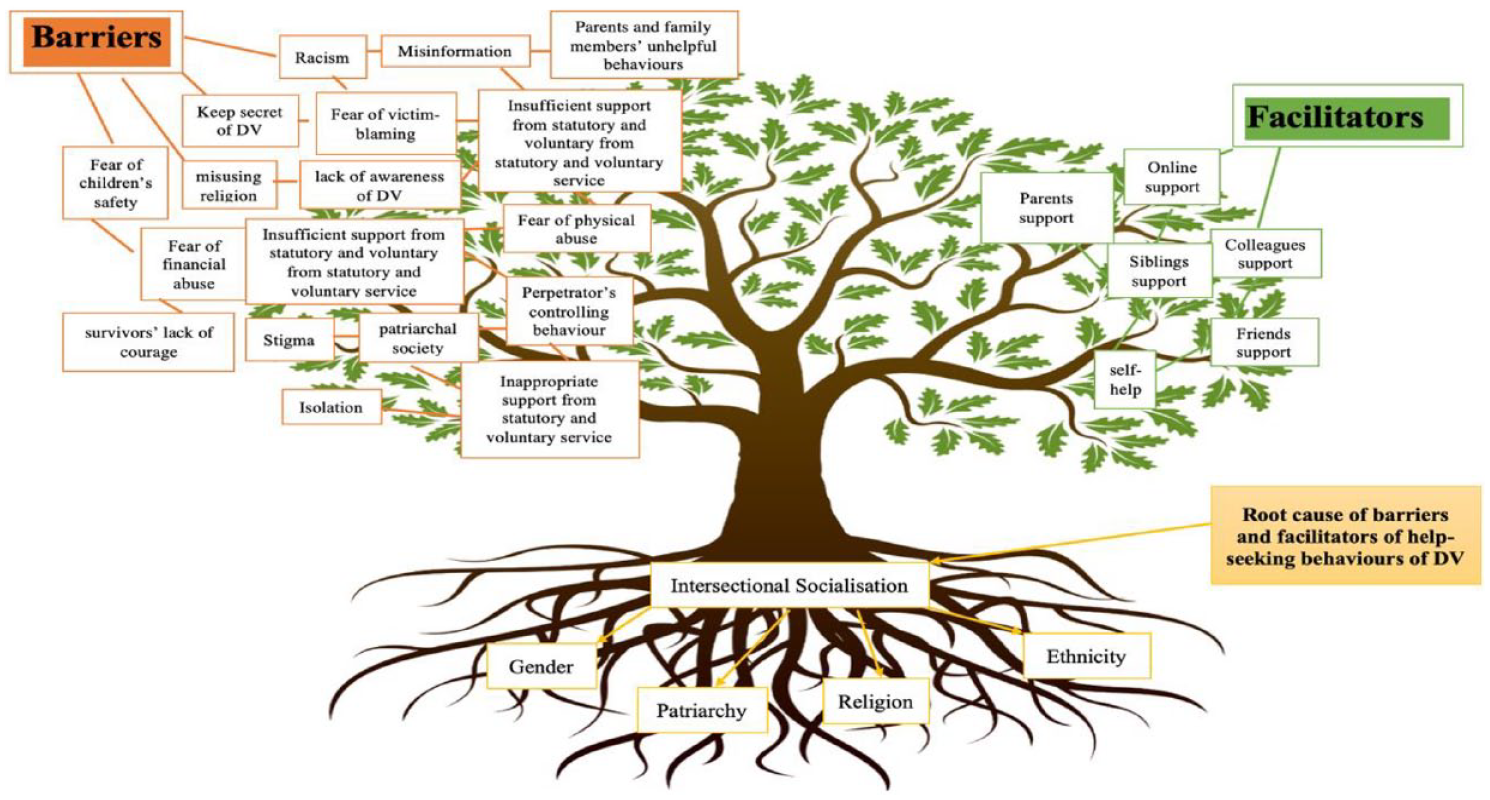
Root Cause of Barriers and Facilitators for Help-Seeking Behaviors of DV.
This study has identified that the advantages of culturally similar staff in DV services underscore the potential for expanded trust and disclosure, supported by research on cultural competence (Betancourt et al., 2003). However, systemic constraints within DV support services can limit their significance (Hague & Mullender, 2006). Moreover, interconnected communities, confidentiality concerns, and dual relationships can deter survivors from seeking help (Gill & Banga, 2008).
Addressing men’s engagement would be beneficial for DV prevention. Engaging men through culturally appropriate interventions and involving religious community leaders can often increase positive attitudes (Haj-Yahia, 2002; Katz, 2006). Comprehensive approaches, including systemic reforms, community engagement, and robust confidentiality measures, are essential to support survivors and prevent DV effectively.
This finding sends a critical message to all service providers both formal and informal of BSA women. It highlights that barriers and limited facilitators for seeking support for DV are not exclusive to South Asian immigrant women but also affect British-born and raised women (participants for this study), who may not face immigration issues or language barriers. Alarmingly, many BSA women continue to believe, like their ancestors, that DV is a part of South Asian culture or tradition, perpetuating its recurrence across generations. It is crucial to convey that DV is not a cultural norm and should be recognized as a crime rather than a private or hidden matter.
To implement strategies addressing this issue, it is essential to understand the intersectionality of South Asian cultural diversity. This understanding can help DV service providers become more culturally sensitive and competent. For example, when working with BSA women, DV service providers should consider all intersecting identity factors related to diverse barriers to seeking help, such as social norms, family honor, and gender inequality (Lockhart & Danis, 2010).
This study has shown the importance of informal support for BSA women, as all of the participants’ pathways to formal assistance were through informal support, such as self-help (online or offline), or from parents, siblings, friends, colleagues, and neighbors. The research proposes that, by understanding the barriers and facilitators of help-seeking behaviours among BSA women, positive socialization messages through the informal support they receive can help them protect themselves from DV. These findings are supported by other current studies which have highlighted informal support for DV survivors and how survivors are also more likely to disclose DV to informal supporters than to formal support agencies (Gregory et al., 2019; Shamoon, 2018). Such findings may help policymakers and researchers to differentiate the individuality of BSA women from South Asian immigrants and the British population by allowing them to critically analyze the interconnected issues of identity which currently raise barriers and limit opportunities (Cook & Glass, 2014; Ng & Sears, 2010; Tariq & Syed, 2017).
Limitations and Strengths
The reason for selecting the participants based on South Asian ethnicities is that these (Pakistani, Indian, Bangladeshi, other) communities make up 6.8% of the population in the United Kingdom (Institute of Race Relations, 2020). However, this research has only focused on Bangladeshi and Pakistani BSA women, that is, those who are British born, brought up, or are British citizens, as well as on those who have permission to live in the United Kingdom; the research did not cover those with immigration or language problems. The experiences of this group of women may be different to those of other South Asian women experiencing abuse (Ahmad et al., 2009). Within the thematic analysis approach, the primary researcher conducted the analysis, so there may be scope for bias in the interpretations drawn. The researcher, who also played the role of interviewer, used field notes as a means of self-analysis to capture reflections on her experiences and the emotional impact of conducting a sensitive study (DV). In addition, she demonstrated reflexivity through peer supervision meetings and discussions with colleagues in her research group. Reflexivity served as a methodological tool that aided the researcher in understanding how factors such as ethnicity, cultural identity, gender, and religious background could influence participant recruitment, rapport-building, data collection, data analysis, and the overall research process. It also helped address potential biases. All of the BSA women participants are Muslims, so it is possible that South Asian women from other religions may have different perspectives compared to this group. This study has focused on BSA women within the South Asian community; however, future studies should also explore the experiences of BSA men who have experienced DV. In spite of these limitations, this research has gathered rich data from BSA women, due in part to the positionality of the primary researcher, who is a South Asian woman herself. This significantly affected the quality of data collected, as the BSA women interviewed engaged well with the author and openly shared their lived experiences of DV.
To date, research has often not distinguished between the experiences of BSA people who are immigrants and those who are permanent residents, despite the likelihood that these two populations face different pressures (Ali et al., 2019; Anitha, 2010; Gill, 2004; Mirza, 2016; Wellock, 2010). A strength of this research, therefore, is that it makes this distinction and focuses specifically on BSA women who have experienced DV.
Implications
Despite the findings displaying the exclusive barriers and facilitators for help-seeking behaviours among BSA women who experience DV, there is a strong need for an initiative that focuses on how DV is defined and understood within specific communities, such as BSA women, because South Asian groups are not homogeneous (Interventions Alliance, 2021). The South Asian population may be diverse in their religion, country of origin, residency status, and cultural background, which shape how they experience and respond to DV (Gill, 2009; Interventions Alliance, 2021). This is essential for researchers, policymakers, and service providers (statutory services, NGOs) working to change negative perceptions or attitudes which prevent help-seeking for DV, as 80% of BSA women in this study informed that they did not perceive DV as a crime.
In this research, the participants recommended arranging DV awareness-related events in local religious centers (mosques) or community centers, involving BSA women along with their family members. This is because supportive members of families and communities have been helpful for survivors in seeking help against violence (Sabri et al., 2018). The awareness and understanding of these barriers and facilitators may support the development of interventions to encourage effective help-seeking among South Asian women affected by DV. Participants also recommended arranging culturally appropriate awareness programs, campaigns, and interventions with survivors, their husbands, in-laws, and families. There have been a number of studies conducted on such culturally appropriate interventions, counseling, and advocacy programs in the United States, although none of these have included any outcome evaluation to measure the size or scale of their effects (Abraham, 1995; Dasgupta et al., 1997; Kim, 2000; M. S. Liao, 2006; Munshi et al., 2015; Preisser, 1999; Tripathi & Azhar, 2022).
The BSA women participants also stated the benefits of DV counseling support, which gave them new insights into and alternative meanings for their DV experiences. Before visiting counseling services, the participants believed that they were suffering from marital problems or that they themselves had limitations in not sustaining their marital relationships, which is similar to the findings of Buchanan and Wendt (2017) study. The results show that BSA women hide the DV that they experience, as they fear the distress and honor-related humiliation and embarrassment that their families would face. Therefore, it is important for mental health professionals, counselors, social workers, GPs, midwives, school representatives, and councils to be conscious of these culturally and socially rooted barriers based on the intersecting identities of BSA women, and to educate BSA women regarding disclosure of DV (refer to the above figure showing intersectional socialization as the root cause of barriers to DV disclosure). Authorities also need to introduce effective assessment strategies for the early diagnosis of DV to help BSA women. In this regard, the participants suggested that efforts should be made with regard to early detection because families can also ignore the complaints of the abused until the abuse becomes extreme. Participants suggested recruiting South Asian staff in every sector, such as hospitals, GP (general practitioner doctor) surgeries, NGOs, police stations, and schools, in order that the problems can be better understood from a similar cultural perspective. As this research was conducted remotely due to the COVID-19 pandemic, the participants recommended that researchers and service providers should develop online-based events, training, awareness programs, and DV support groups, which would help to give survivors a way to learn how best to seek help. This theoretical journey, therefore, may assist researchers to develop online/remote interventions for BSA women who are experiencing DV and are not always able to seek help in person to address it.
Conclusion
With proper knowledge of South Asian cultural norms, both statutory and voluntary organizations should be able to train all service providers (government-employed DV support staff including police, health care staff, social workers, family lawyers, as well as DV specialists from NGOs) to ensure survivors’ confidentiality, gain their trust, and achieve their comfort, safety, and security. The findings also identify research areas for further study to conceptualize the difficulties in terms of help-seeking behaviors and facilitators for BSA women who experience DV and to develop culturally appropriate interventions to encourage effective help-seeking among South Asian women affected by DV.
Footnotes
Disposition editor: Cristina Mogro-Wilson
Author Contributions
All authors contributed to the writing of this submission.
Declaration of Conflicting Interests
The author(s) declared no potential conflicts of interest with respect to the research, authorship, and/or publication of this article.
Funding
The author(s) received no financial support for the research, authorship, and/or publication of this article.
Ethical Statement
We have read the journal’s research transparency policy prior to submission.

Data Availability Statement
No datasets were generated.