



Abstract
Despite younger maternal age being a risk factor for child welfare involvement, the literature on decision making once young mothers are investigated for child protection concerns is limited. This article examines characteristics and decision making related to investigating workers’ determinations that young children of adolescent and young adult mothers are at risk of future maltreatment. Using a provincially representative data set, this study found that children of young mothers were more likely to be deemed at risk of future maltreatment than those of adult mothers, and this assessment was also related to more intensive child welfare involvement. Among young mothers, a risk determination was strongly associated with maternal mental health concerns and socioeconomic circumstances. Practice and policy shifts should address the need for timely and effective material and emotional supports.
Adolescent and young adult mothers are faced with multiple well-documented challenges, including poorer physical and mental health outcomes and lower levels of educational and vocational attainment (Boden, Fergusson, & Horwood, 2008; Patel & Sen, 2012). In addition to long-term physical, emotional, social, and educational challenges (Chen et al., 2007; Jutte et al., 2010), children of young mothers are at increased risk of maltreatment and child welfare involvement (Lee & George, 1999; Putnam-Hornstein & Needell, 2011). Factors associated with maltreatment by young mothers are complex and multidetermined (e.g., poverty, homelessness, family disruption, trauma, and substance abuse) and are similar to those that predict the likelihood of early parenting (Flaherty & Sadler, 2011; Kirby, 2002; Klein, 2005). Young mothers investigated for maltreatment have higher concentrations of risk conditions and behaviors, including poverty, housing instability, few social supports, mental health concerns, substance abuse issues, intimate partner violence (IPV), and children with functioning concerns (Fallon, Ma, Black, & Wekerle, 2011). They are also more likely to have a personal history of child welfare involvement compared with adult mothers (Hovdestad, Shields, Williams, & Tonmyr, 2015; Putnam-Hornstein, Cederbaum, King, Cleveland, & Needell, 2013).
Young maternal age is associated with more intensive child welfare involvement following an investigation (DePanfilis & Zuravin, 2001; Fallon et al., 2011; Hovdestad et al., 2015). One Canadian study found that after controlling for a number of risk factors, families with young mothers were more likely than older mothers to be transferred to ongoing services, a decision that represents the workers’ impressions that these families require further support and supervision (Fallon et al., 2011). A second study found that among cases involving infants with a young primary caregiver who had a noted mental health issue, 81% were transferred (Filippelli, Fallon, Trocmé, Fuller-Thomson, & Black, 2017). On the other hand, adolescent mothers investigated for allegations of maltreatment in California were less likely to be substantiated and receive services than older mothers (Putnam-Hornstein, Simon, Eastman, & Magruder, 2015). Children of younger mothers investigated for maltreatment were more likely to be placed in out-of-home care than children of older mothers (Hovdestad et al., 2015; Needell & Barth, 1998).
The literature has established that young mothers are more likely to be reported for child protection concerns and, once reported, they are generally more likely to remain involved with the child welfare system. It is unclear how demographic, social, emotional, and socioeconomic conditions shape child welfare service trajectories for young mothers in particular. One aspect of decision making during an investigation that may determine how workers respond to young mothers and their children is the assessment that children are at risk of future maltreatment (Cross & Casanueva, 2009; DePanfilis & Zuravin, 2001). Risk of harm (in addition to events that have resulted in harm) is written in the Child Protection Standards in Ontario, such that risk of future maltreatment is a justification for a child protection investigation and receipt of additional child welfare services (Children, Youth and Family Services Act, 2017). Accordingly, a recent study in Ontario found that the substantiation of current maltreatment was largely predicted by the workers’ assessment of future risk of maltreatment; investigations in which there was a risk determination had more than 6 times the odds of substantiation (Stoddart, Fallon, Trocmé, & Fluke, 2018). In addition to raising concerns about the problematic practice of validating an event of previous maltreatment by the risk of a future maltreatment, the authors argued that future research should explore which factors are associated with a risk determination.
This study begins to address that knowledge gap with young mothers (defined here as ages 21 years and younger), a population that is already considered high risk. Young mothers have reported child welfare involvement as intrusive and destabilizing (Haight, Finet, Bamba, & Helton, 2009; Maxwell, Proctor, & Hammond, 2011). These women express concerns about their children being removed from their care, which may be triggered by their personal experience in the foster care system (Aparicio, 2017; Haight et al., 2009). Their fear of child welfare involvement may have the unintended effect of placing their children at further risk, because child welfare support may alleviate some of the challenges and barriers that young parents experience (Pryce & Samuels, 2010). These combined circumstances provide further justification for this study’s objectives: to examine how workers’ risk determination influences subsequent decision making for investigations involving adolescent and young adult caregivers and to assess which caregiver-, household-, and maltreatment-related factors contribute to the conclusion that their children are at risk of future maltreatment.
Method
Data from the most recent cycle of the Ontario Incidence Study of Reported Child Abuse and Neglect (OIS-2013) were used for this analysis (Fallon et al., 2015). The primary objective of the OIS is to produce a provincial estimate of the incidence of child maltreatment in Ontario and to document investigation-level decision making. A cluster sampling design was used to first select a representative sample of 17 out of 46 child welfare agencies in Ontario and then to sample cases within these offices. Cases opened for investigations between October 1 and December 31, 2013, at the randomly selected sites were eligible for inclusion. In larger agencies, open cases were randomly subsampled (capped at 250 cases). The final step of sample selection involved identifying children who had been investigated for child protection concerns. Child welfare workers responsible for those investigations were asked to complete a data collection form that included more than 40 questions about risk factors and demographic characteristics of the child and family as well as factors related to maltreatment concerns and decisions during the investigation. Participating workers were trained and given an OIS-2013 Guidebook for definitions of each question (Fallon et al., 2015). The OIS-2013 protocols and procedures for data collection, data handling, and secondary analyses were reviewed and approved by the University of Toronto Research Ethics Board.
Sample
The unweighted sample for this analysis included 1,107 investigated young children (ages 0-3 years), whose primary caregiver was their biological mother. The sample was restricted to children below 4 years due to the increased vulnerability among infants and very young children (Fallon et al., 2013; Filippelli, Fallon, Fuller-Thomson, & Trocmé, 2017; Filippelli, Fallon, Trocmé, Fuller-Thompson, & Black, 2017), as well as the fact that younger mothers are more likely to have young children. Indeed, in the OIS-2013 data, 93% of children being cared for by younger mothers (ages 21 and below) were younger than 4 years. Two sets of weights were then applied to derive provincial annual estimates. Results were annualized to estimate the volume of cases investigated by each study site over the full year. Regional weights were then applied to reflect the size of each site relative to the child population in the province, to account for nonproportional sampling. For this secondary analysis of OIS-2013 data, the final weighted estimate for child maltreatment investigations involving young children was 26,904 investigations.
Measures
Case information collected from the investigating worker included family demographics, maltreatment-related, caregiver, and socioeconomic characteristics, as well as short-term service dispositions. The primary disposition examined in the analysis was the workers’ determination that the child was at significant risk of future maltreatment (yes vs. no/unknown). This is a specific question on the OIS-2013 instrument, which asks workers, in their “clinical judgment,” whether they believed that the child was at risk of future maltreatment at the close of the investigation (Fallon et al., 2015). Additional dispositions reflecting decisions made during the investigation included: referral to additional services beyond the parameters of ongoing child welfare services, such as family counseling, behavioral health services, and social assistance (yes vs. no); transfer to ongoing child welfare services (yes vs. no); and placement in out-of-home care (yes vs. no/considered). Explanatory variables included characteristics of the caregiver and family, characteristics of the investigation, and socioeconomic risk factors.
Maternal age was recoded from a categorical primary caregiver age question, such that we defined two groups: adolescent and transition-age mothers (ages 21 years and below) and adult mothers (ages 22 and older). Maternal racial/ethnicity was coded as either White or Indigenous/visible minority. The latter category includes Indigenous (6.7%), Black (8.2%), Latin American (3.1%), Arab/West Asian (3.1%), East Asian (3.3%), South Asian (2.3%), Southeast Asian (1.7%), and other (0.7%). Child welfare workers were asked to identify concerns about the investigated child’s primary caregiver, in this case, the biological mother. These caregiver risk factors were recoded as dichotomous variables indicating whether each of the following was confirmed or suspected (vs. no or unknown) by the worker: (a) substance abuse (alcohol or drug/solvent abuse); (b) cognitive impairment; (c) mental health issues; (d) few social supports; and (e) a history of being in foster care or a group home. Family and household composition were characterized in two ways. First, we assessed if there was a second caregiver in the household (in addition to the biological mother), which resulted in a dichotomous variable indicating if this was a single-parent household (yes vs. no). Second, we determined whether there was a second caregiver outside of the household (yes vs. no).
Investigations in Ontario can involve an alleged event of child maltreatment or risk of future harm, which does not include specific allegations of events of maltreatment, only concerns about future maltreatment given the family’s circumstances. The primary reasons for the investigations included the following categories: (a) risk only investigation; (b) physical or sexual abuse; (c) neglect; (d) emotional maltreatment; and (e) exposure to IPV. Physical and sexual abuse were combined given the relatively low frequency of sexual abuse allegations within this sample (1.1%). Where there was an allegation of maltreatment, workers could select up to three maltreatment types. Co-occurring maltreatment allegations were characterized by whether investigations for an event of maltreatment included both a primary and a secondary maltreatment type. An additional dichotomous variable was calculated that indicated whether the family had a prior investigation.
Socioeconomic risk factors included economic hardship, income source, and housing-related variables, which are particularly relevant to young parents. Severe economic hardship is a dichotomous variable, which was measured by whether or not, during the 6 months prior to the investigation, the family had run out of money for basic necessities (food, shelter, or utilities). Three additional indicator variables (yes vs. no) were coded based on whether the household’s primary source of income was social assistance and/or other benefits (e.g., disability and unemployment insurance), whether the mother was living with family or friends, and whether the family had moved 2 or more times in the last year.
Analysis
Descriptive bivariate comparisons were conducted, and statistical differences were assessed using chi-square testing. First, we assessed differences among investigated young children by maternal age and across investigative decisions and demographic, maltreatment-related, family, and socioeconomic characteristics. Second, we examined differences in the determination that young children were at significant risk of future maltreatment across the same covariates and among children of younger mothers (21 years and below) and children of older mothers (22 years and above). To determine the relative contribution of demographic characteristics and key risk factors to a risk determination among children of younger mothers, a logistic regression model was specified, which included only the statistically significant variables from the descriptive analysis. The Nagelkerke pseudo R2 was used to assess the proportion of variance explained by the included variables (Nagelkerke, 1991). Estimated frequencies of investigations involving very young children were calculated using the full sample weight, but bivariate and multivariable significance testing used unweighted data. Given the relatively small sample size for younger mothers, using the full sample weight had potential to inflate statistical significance and overstate marginal findings (Johnson & Rust, 1992). Accordingly, we opted for a more conservative and ultimately more parsimonious approach to assessing significance.
Results
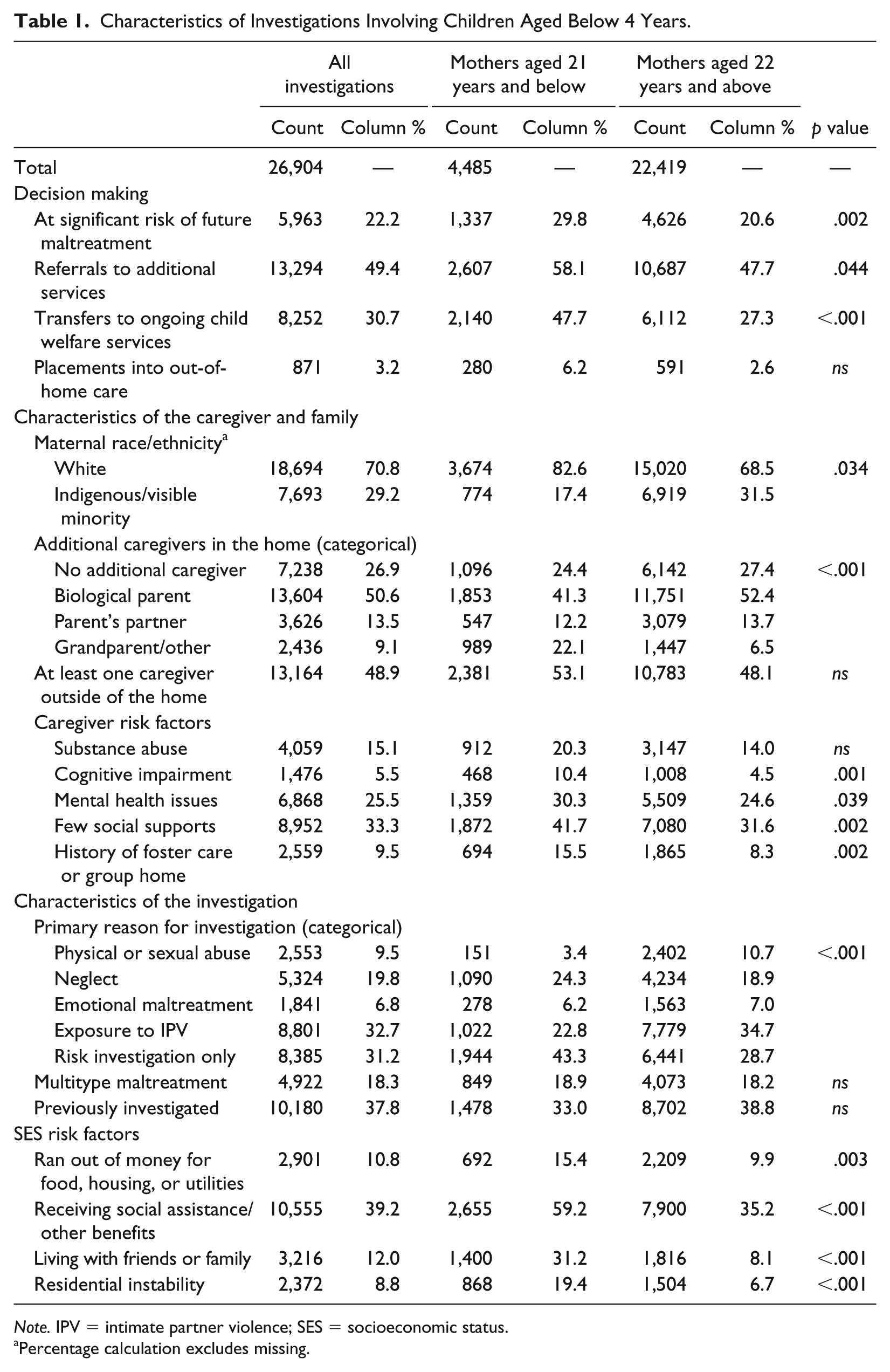
There were an estimated 26,904 child protection investigations involving very young children living with their biological mothers in Ontario in 2013. In approximately 17% of these investigations, the mothers were age 21 and below. Table 1 presents differences between younger mothers and their adult counterparts across key investigative dispositions and characteristics. Children of younger mothers were significantly more likely to be deemed at risk of future maltreatment, and these families were more likely to be referred for additional services beyond child welfare and to be transferred to ongoing child welfare services. Young mothers were more likely to be White. Cognitive impairment, mental health issues, and few social supports were noted more frequently for young mothers, as was a history of spending time in foster care or a group home. Young mothers were more likely to be investigated for risk alone or for neglect, but less likely to be investigated for physical or sexual abuse, emotional maltreatment, or exposure to IPV. Young mothers differed significantly from their older counterparts on all socioeconomic indicators, with younger mothers experiencing higher rates of economic hardship, receiving social assistance, living with friends or family, and residential instability.
Characteristics of Investigations Involving Children Aged Below 4 Years.
Note. IPV = intimate partner violence; SES = socioeconomic status.
Percentage calculation excludes missing.
Risk Determination
The determination that there was significant risk of future maltreatment for investigations of young children appeared to be associated with subsequent decision making, but that relationship differed by maternal age. Figure 1 presents the proportion of cases at each decision point in which workers believed that there was significant risk to the young child. Among investigated children of younger mothers, nearly 30% were considered at risk, but this proportion increased to almost 40% among those who were referred for additional services, 55% among those who were transferred to ongoing services, and more than 80% among those who were placed into out-of-home care during the investigation. The same pattern emerged among children of older mothers, although the proportions were not as high (21% of investigations, 31% of referrals, 51% of transfers, and 63% of placements).
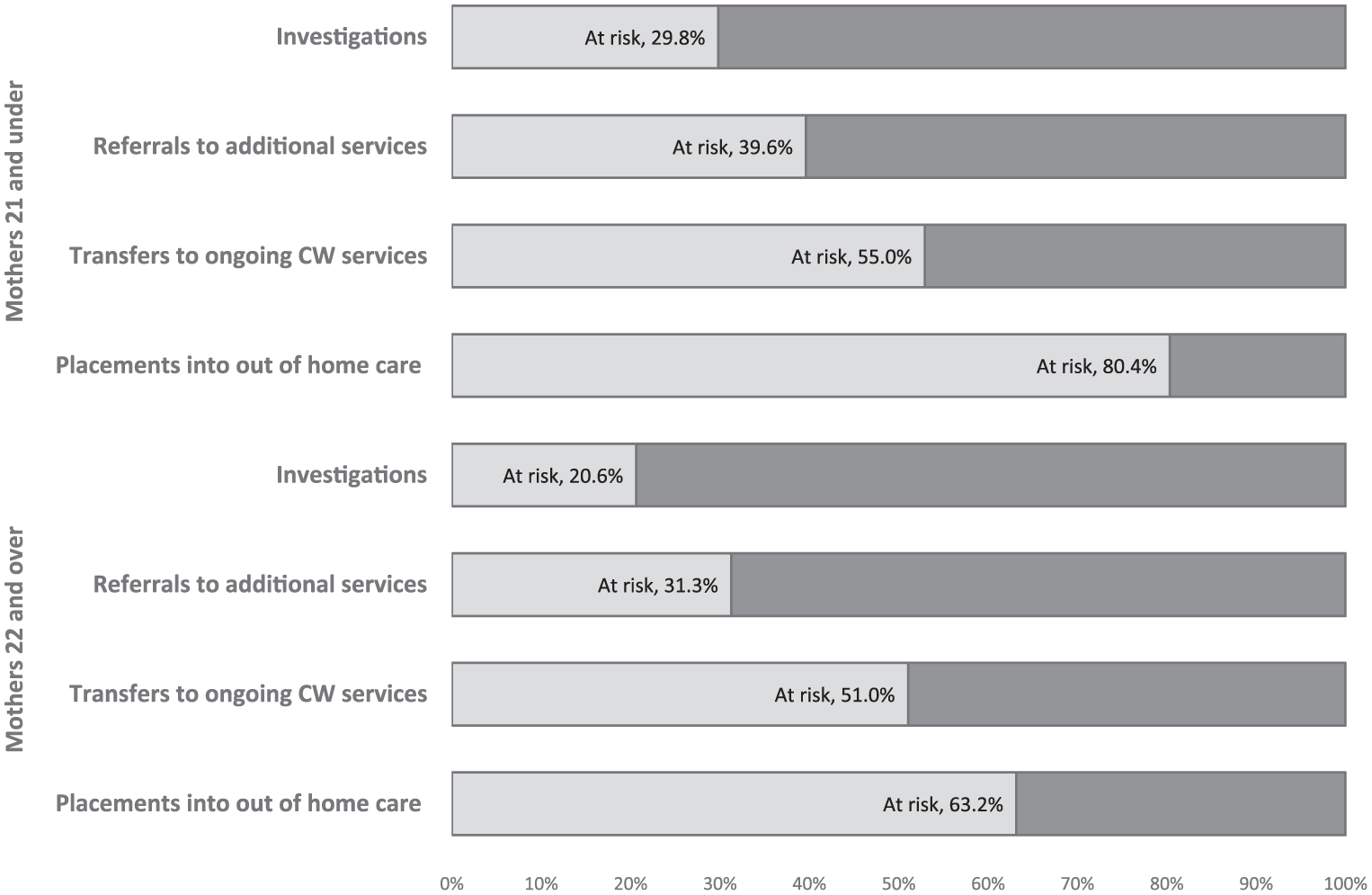
Risk determination and investigative decision making.
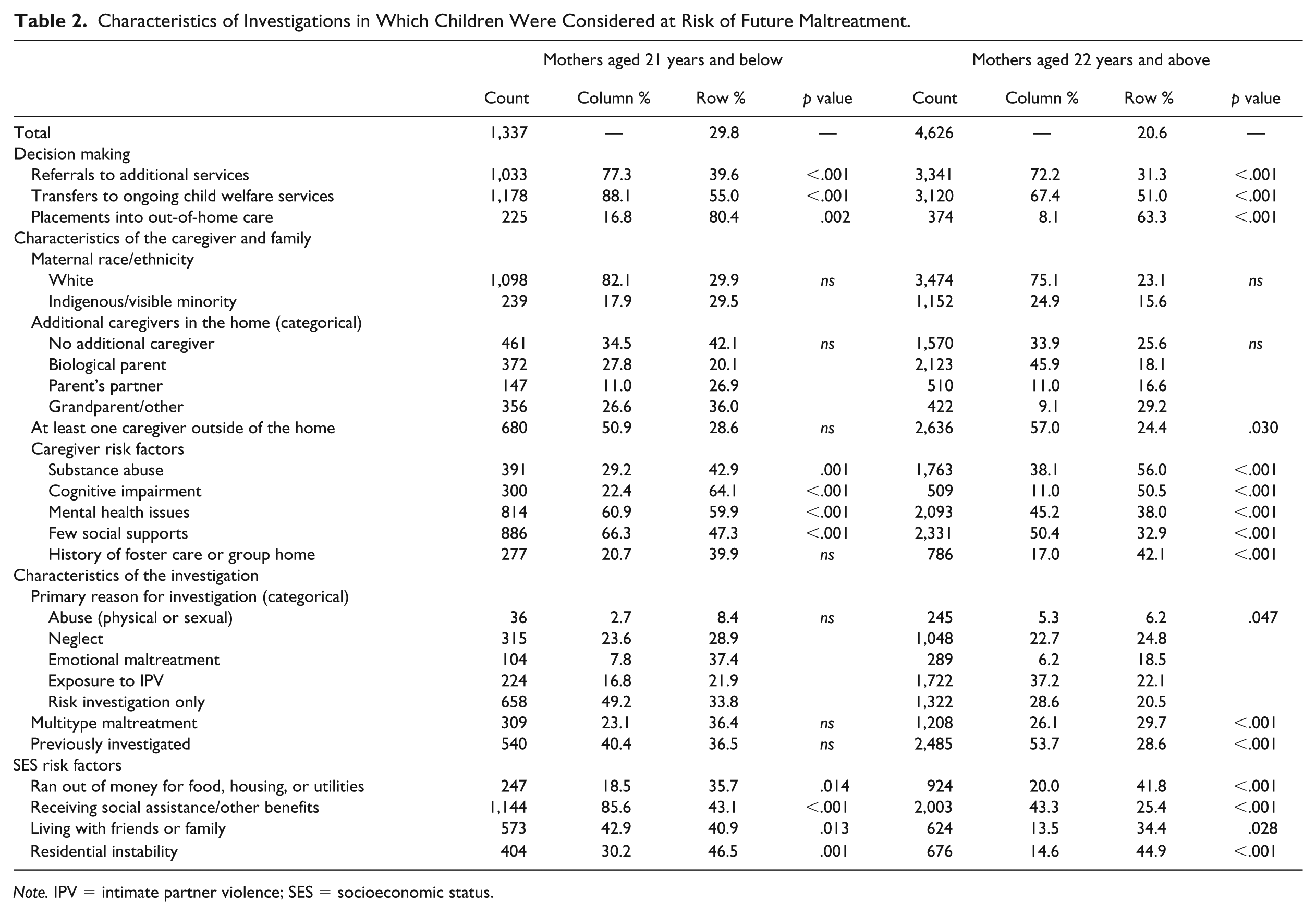
Table 2 presents characteristics of investigations involving young children that resulted in determination that there was a risk of future maltreatment. Among children of younger mothers, a risk determination varied significantly by caregiver and socioeconomic risk factors. Young mothers who were struggling with substance abuse, cognitive impairment, mental health concerns, and social isolation had higher rates of a risk determination than young mothers who were not. Similarly, children of young mothers who experienced extreme economic hardship, who were receiving social assistance, who were living with friends or family, or who had moved at least twice in the last year were more likely to be considered at risk than those who were not. Among older mothers, there were similar findings, except there were also differences related to the characteristics of the investigation. Children in families where there were concerns about neglect and exposure to IPV were more likely to be related to a risk determination than other investigation reasons, and investigations involving co-occurring maltreatment allegations were more likely to result in a determination that there was a risk of future maltreatment. Among mothers aged 22 years and above, a history of previous investigations was also associated with higher rates of a risk determination.
Characteristics of Investigations in Which Children Were Considered at Risk of Future Maltreatment.
Note. IPV = intimate partner violence; SES = socioeconomic status.
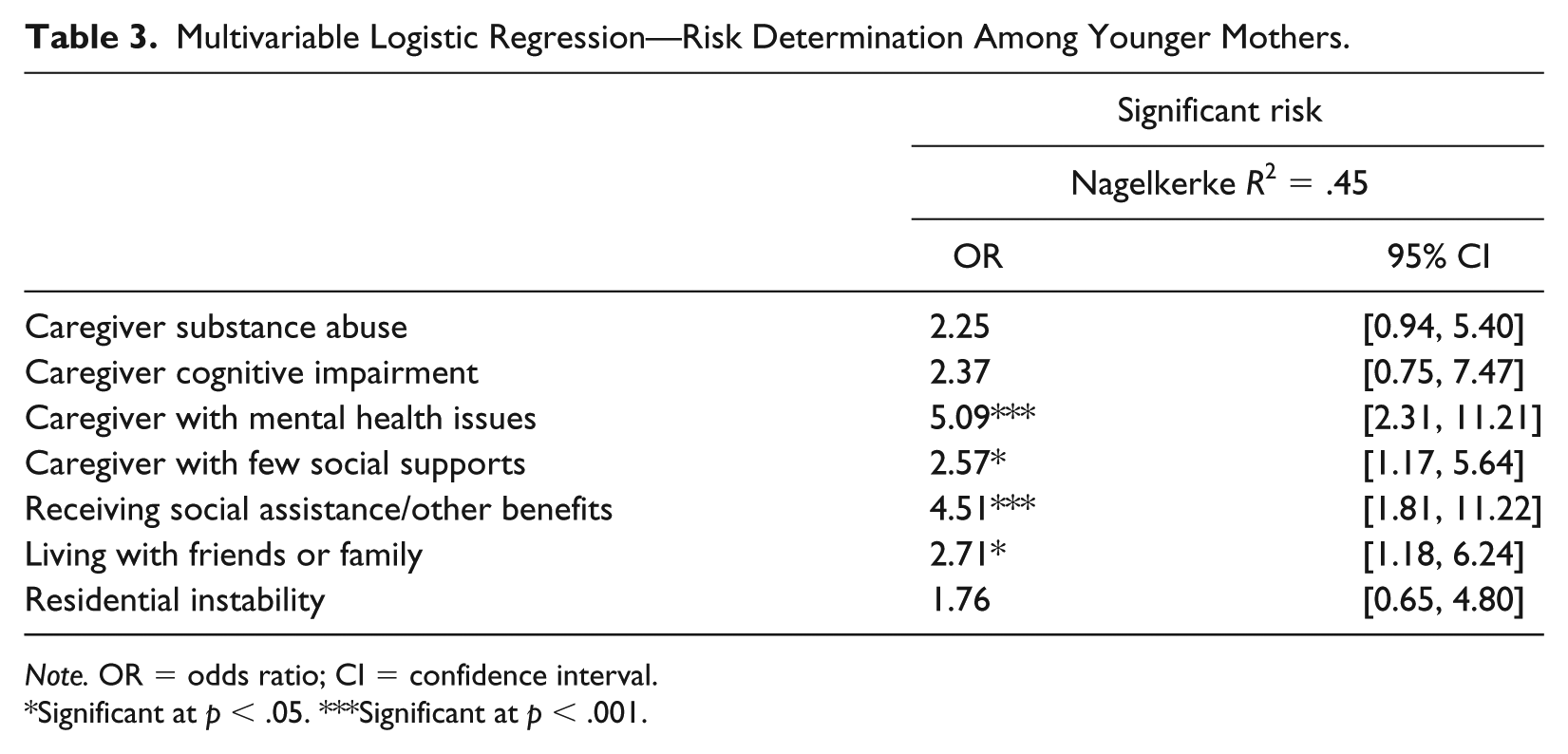
The results of the multivariable logistic regression model assessing the contribution of risk factors to the decision that there was a risk of future maltreatment among investigated children with younger mothers are presented in Table 3. Only those variables that were significant at the bivariate level were included in the logistic regression, and together, these variables explained about 45% of the variance in the decision to transfer to ongoing services. When accounting for all of the included characteristics, this decision was strongly associated with maternal mental health issues (odds ratio [OR] = 5.09, 95% confidence interval [CI] = [2.31, 11.21], p < .001) and the household receiving social assistance and other benefits (OR = 4.51, 95% CI = [1.81, 6.24], p = .001). Young mothers with few social supports or living with family and friends also had higher odds of experiencing the determination that there was a risk of future maltreatment.
Multivariable Logistic Regression—Risk Determination Among Younger Mothers.
Note. OR = odds ratio; CI = confidence interval.
Significant at p < .05. ***Significant at p < .001.
Discussion
The results of this study confirm previous research, which indicates that young mothers investigated by child protective services present with higher concentrations of known risk factors for maltreatment and child welfare involvement including social, economic, and emotional challenges (Fallon et al., 2011; Hovdestad et al., 2015; Lee & George, 1999; Putnam-Hornstein & Needell, 2011). Children of young mothers in Ontario were more likely to be considered at risk of future maltreatment, despite the fact that they were less likely to be investigated for allegations of physical and sexual abuse. Moreover, these families were more likely to be transferred to ongoing child welfare services and be referred for additional (non–child welfare) services. Given the relatively higher rates at which investigated young mothers in this study experienced mental health issues, social isolation, histories in foster care, socioeconomic vulnerability, and housing insecurity, it is unsurprising that they were being investigated for reasons associated with those same conditions, namely, neglect and risk (Coohey, 1996; DePanfilis, 1996). These same factors were strongly associated with the determination that young children of young mothers were at risk of future maltreatment, an assessment that helped to shape their trajectories through the investigative process. For all mothers in this study, the proportion of those considered at risk of future maltreatment increased at each decision point, but it was more pronounced for younger mothers. Indeed, among young mothers whose children were placed out-of-home during the first 30 days of the investigation, 80% were assessed as presenting a persistent risk to their young children (compared with 63% of older mothers).
The higher concentration of risk factors among investigated younger mothers largely carried over to those who were deemed at risk of future maltreatment. Both the bivariate comparisons and the multivariable logistic regression indicated that the most significant factors associated with the risk determination were caregiver risks and socioeconomic circumstances. Young mothers struggling with personal mental health issues and few social supports had higher odds of a risk determination than young mothers who were not. Importantly, being a young mother has been associated with a higher likelihood of postpartum depression, and having few social supports increases this risk among young mothers (Reid & Meadows-Oliver, 2007). Previous research documents the role of adolescent and caregiver behavioral health in investigative decision making (Filippelli et al., 2017; King, Fallon, Filippelli, Black, & O’Connor, 2018) and suggests that when mental and behavioral health services are limited, the child welfare system may be filling a key service gap. Wait times for community-based mental health services and publicly funded psychiatric services in Ontario are notably long (Kowalewski, McLennan, & McGrath, 2011; Kurdyak et al., 2014). One report found that the average wait times for youth needing intensive treatment, counseling, or therapy were 6 months and longer (Office of the Auditor General of Ontario, 2016). The findings of this study indicate the presence of mental health concerns as one potential precursor for a risk determination, yet it is unclear whether the child welfare system is an appropriate mechanism for addressing those concerns. Nonetheless, it is evident that to effectively meet the needs of investigated young mothers, the child welfare system must increase its capacity to make services accessible and collaborate with mental health providers, especially given the increased risk of postpartum depression among young mothers. The results of this study suggest that workers are making some connections to services outside of child welfare, because nearly 40% of young mothers with a risk determination were referred. Given the extent to which mental health need and social isolation determine more intensive involvement in child welfare services, the referral rate should be higher.
The fact that younger mothers considered at risk of future maltreatment experienced socioeconomic vulnerability at such high rates speaks to both the social status of young parents and the persistence of poverty in determining child welfare involvement and decision making (Lee & George, 1999; Lefebvre, Fallon, Van Wert, & Filippelli, 2017). More than 85% of young mothers with a risk determination were receiving social assistance or other income support, and not surprisingly, young mothers receiving benefits had far higher odds of a risk determination, even after controlling for other factors. Living with friends or family may be an indicator of marginal housing, which was also associated with a risk determination. One potential explanation for this response to poor and marginally housed young mothers is the 1997 starvation death of a 5-week-old baby born to a young mother who was supervised by a Toronto child welfare agency and living in a homeless shelter (Robson, 2005). The coroner’s inquest into the circumstances surrounding his death resulted in a number of recommendations targeted toward the prevention of similar tragedies, including increased scrutiny and expectations of child welfare agencies serving pregnant and parenting high-risk young mothers. Addressing material needs (i.e., income and housing) is not necessarily the purview of child welfare, and yet, families contending with these issues are overrepresented among the child welfare involved population. If poverty determines risk of future maltreatment, policy and funding should be directed toward ameliorating the conditions under which young mothers parent. This approach is consistent with a more recent push to adopt a social model of child welfare intervention with children and families, which posits that many of the reasons families come into contact with child protective service are socially determined (Featherstone, Gupta, Morris, & Warner, 2018).
Research has found that psychological distress, lack of perceived support, and maternal history of childhood maltreatment are associated with higher childhood abuse potential among young mothers living in poverty (Zelenko, Huffman, Lock, Kennedy, & Steiner, 2001), which suggests that an assessment of risk of future maltreatment is appropriate. However, population-based research has found that younger maternal age was not a predictor of re-reporting among a cohort of infants with an initial allegation of maltreatment (Putnam-Hornstein et al., 2015). Given these contradictory findings, continued research should determine the likelihood of placement in out-of-home care and recurrence of maltreatment allegations among young mothers investigated for child protection concerns, particularly those with a risk determination and those who receive ongoing child welfare services.
Limitations
Limitations of this analysis are largely related to the nature of the data set. The OIS-2013 is cross-sectional, reporting decisions made during investigations and across a range of case, caregiver, and household characteristics. Workers who were primarily responsible for conducting the investigations completed the data collection instrument at its conclusion. This information was not independently verified, and workers could make decisions about the case and subsequently complete the data collection instrument to justify their assessment. The conclusions made about the investigations as represented in the data set usually reflect a time period of 30 days; however, it is unknown what the trajectories of service were for these children and families beyond that time period. Caregiver risk factors and other key variables may not have been known to the investigating worker at the time the data collection instrument was completed and therefore may be underestimated. Furthermore, there are no measurements of severity for issues such as child or caregiver functioning concerns, nor are there any validated instruments for determining clinically significant conditions (e.g., depression and substance abuse). Individual worker characteristics were also not included in the analysis as these characteristics have not necessarily explained differences in decision making, at least in studies using similar data (Lwin, Fluke, Trocmé, Fallon, & Mishna, 2018). Because these are cross-sectional data, conclusions cannot be drawn about temporality or causality.
Implications for Practice
Results from this study offer child welfare administrators, policy makers, and practitioners important data to inform and improve the approach to working with families of young mothers. Because investigating workers were more likely to deem young mothers with mental health issues and limited social supports a risk to their young children, providing these caregivers with appropriate and accessible resources that alleviate these challenges may assist in mitigating the risk of maltreatment. In addition, the high rates of social assistance among young mothers with a risk determination indicate a need for child protection organizations to better address families’ material needs related to poverty, such as housing and income support. Referrals to evidence-based interventions that address the identified constellation of challenges, such as home visiting programs, may reduce further burden on the child welfare system and the families involved (Chaiyachati, Gaither, Hughes, Foley-Schain, & Leventhal, 2018; Duffee et al., 2017). Moreover, efforts by child welfare organizations to develop better relationships with external service providers can ensure that these families are receiving supports that adequately meet their needs. Future research can expand on these results by exploring how risk determination and child welfare involvement is impacted by appropriate and timely service provision.
Conclusion
Adolescent and young adult mothers are more likely than their older counterparts to experience high-risk contexts, and this phenomenon appears to be driving decision making during child welfare investigations. Although they are no more likely to be struggling with mental health concerns than adult mothers, the presence of such concerns was a primary factor in the determination that their children were at risk. In a province where publicly funded mental health services are markedly limited, the child welfare system may be serving as a critical safety net for young mothers who cannot navigate or receive timely services elsewhere. Moreover, socioeconomic vulnerability, a well-established correlate of early motherhood, appears to play a significant role in decision making for these young families. Given that younger mothers are less likely to be investigated for allegations of physical and sexual abuse, the urgency in these cases appears connected to maternal circumstances that are not necessarily covered by official child welfare mandates. Meeting the needs of investigated young mothers requires internal and external innovations to the child welfare system at both the practice and policy levels.
Footnotes
Disposition editor: Sondra J. Fogel
Declaration of Conflicting Interests
The author(s) declared no potential conflicts of interest with respect to the research, authorship, and/or publication of this article.
Funding
The author(s) disclosed receipt of the following financial support for the research, authorship, and/or publication of this article: Funding for the Ontario Incidence Study was provided by the Ontario Ministry of Children and Youth Services. Support for this secondary analysis was provided through a Social Sciences and Humanities Research Council of Canada Insight Grant (#435-2018-0936).
