




Abstract
Homicide remains a major cause of death globally. The global risk differentials are a persistent public health challenge. Africa’s homicide rate of 13 victims per 100,000 people is markedly higher than the European average (2.2 per 100,000 people). To understand the causes of such large differences, homicide research needs to move from country-level rates to disaggregated analyses in which homicide is broken down by victim, offender, and incident characteristics. We conducted a pilot study in which the European Homicide Monitor (EHM) coding manual is applied to a South African research location and compared to an extreme point in the Global North, Finnish urban areas. We find differential patterns in the two locations. The high-rate context of South Africa manifests a younger offender and victim age structure, a higher share of criminal and revenge motives and the use of firearms, and incidents in public places. In contrast, the comparatively low-rate Finnish context shows a higher relative share of intimate partner violence and familial incidents taking place in private places. The role of alcohol and drugs appears more salient in Finnish urban homicide, a finding calling for replication. We conclude by discussing the methodological challenges revealed by the pilot comparison.
In 2021, approximately 458,000 persons in the world were the victims of homicide. The risk of becoming a homicide victim is not, however, equal in various parts of the world. Of the total homicide victims, 176,000 were killed in Africa and 17,000 in Europe. The numbers translate into different levels of risk, with 13 per 100,000 people in Africa and 2.2 per 100,000 people in Europe being victims (United Nations Office on Drugs and Crime [UNODC], 2023, pp. 9–10).
Homicide trends also differ across the globe. The much-discussed homicide drop has mostly taken place in Europe and North America. It is largely absent in South America. The African trend is difficult to ascertain because of data gaps, indicating first a declining and then a stagnating trend at a high level (UNODC, 2019, p. 11, 2023, p. 65). Thus, the European and the African homicide rates and trends represent global extremes.
The continental comparisons and trend differentials hide variations at national and regional levels. Within Europe, the Northern subregion shows very low homicide rates. For example, in Finland, the rate was 1.7 in 2020, compared to 34 per 100,000 population in South Africa (UNODC, 2024). Apart from the huge difference in risk, homicide trends have been similar in the two countries. The Finnish homicide rate more than halved between the early 1990s and 2020 (Kivivuori, Rautelin, et al., 2022), while the South African rate also declined from above 60 to below 40 per 100,000 people. However, a trend reversal has occurred in the last 10 years in South Africa, with the numbers now increasing (UNODC, 2019, p. 22, 2023, p. 55), while the homicide drop has seemingly ended or reversed in the Nordic region as well (Suonpää et al., 2024).
From the standpoint of criminological analysis of lethal violence, homicide rates and their fluctuations constitute a starting point rather than an endpoint. By simply comparing rates, we do not know what makes them different; even similar rates can hide differential homicide patterns. Therefore, homicide researchers have sought to develop instruments that enable the disaggregation of homicide comparisons and trends. The European Homicide Monitor (EHM) project, initiated with funding from the European Union, represents just such a disaggregation effort (Granath et al., 2011).
The EHM has thus far been applied almost exclusively within Europe, apart from the Dutch Caribbean. In this article, we examine its feasibility for analyzing South African homicide data. The purposes of the analysis are primarily methodological. Yet at the same time, the first African application of the EHM approach can yield substantial findings on homicide at the opposite ends of the global continuum.
EHM-Based Comparative Framework
This research applies the EHM in South Africa to test the feasibility of cross-comparative research in the Global South and the Global North. We briefly discuss key prior research based on the EHM framework and prior comparative work done in Africa. Apart from studying Finnish and South African homicide, we only discuss select studies comparing research sites from multiple countries for the purpose of illustrating the challenges of extending the EHM comparison base from its European core to other parts of the world.
Comparative Research Using the EHM Framework
The EHM is a detailed coding manual that disaggregates homicide into its constituent parts. More than 90 original variables break homicide down into such terms as victim and offender characteristics, incident aspects, conflict types and motivations, as well as criminal justice reaction to homicide (Granath et al., 2011). The system has been used extensively in intra-European comparisons. In addition to an original study broadly comparing Finland, Netherlands, and Sweden, the EHM network has been used, for instance, to research homicide clearance (Liem et al., 2019), disaggregated trends in Europe (Suonpää et al., 2024) and specific types of homicide, such as firearm homicide (Krüsselmann et al., 2023) and intimate partner homicide (Liem et al., 2017). 1
For the current analysis, the piloting of the EHM in the Dutch Caribbean is of particular interest, as the analytic grid was applied outside continental Europe for the first time. The Dutch Caribbean Islands, as former colonies of the Netherlands, consist of six small islands: Curacao, Bonaire, Aruba, Sint Eustatius, Saba, and Sint Maarten. The societies on these islands are characterized by strong income inequalities and a relatively strong subculture of transnational crime, such as smuggling. The pilot study covered the same years as our study, 2014 to 2018. One of the key findings of this on-going pilot study is that to an extent Caribbean homicide is linked to conflicts originating in the Netherlands (Van der Zee, 2022). Thus, the study has revealed a post-colonial connection between Dutch and Dutch Caribbean homicide patterns. From this standpoint, a comparison of Finland and South Africa is different because Finland has no colonial past in South Africa. It is also possible that island societies have distinct features that differentiate them from larger countries and cities in continental contexts (Lehti et al., 2019). It is also noteworthy that the Dutch Caribbean Islands are constitutionally part of the Kingdom of the Netherlands. Currently, the EHM pilot is ongoing in that area.
Comparative Research in Africa
As noted above, the EHM approach has not been previously applied in Africa. Comparative homicide research in Africa is rare, especially research that extends beyond rate comparisons to disaggregate subtypes of homicide.
A notable recent exception is a study conducted in Francophone West Africa by a Canadian-African research team led by Cusson et al. (2017). They used local media sources to quantify and disaggregate 1,000 homicide incidents from Burkina Faso, Ivory Coast, Niger, and Senegal. The results indicated that the most typical types of homicide in this area were familial homicide, homicide in the context of property crime, and male-to-male altercations. The percentage of cases related to property crime (23%) appears high when compared to typical findings from Europe. While these types of conflict are also prominent in Northern homicide cases, the research team found two types of homicide currently nonexistent in the Global North: lynchings and cases linked to sorcery allegations (Cusson et al., 2017, p. 306). They studied a thousand homicide cases, with only 24 having been classified as political assassinations, a rare occurrence both in West Africa and the Global North.
Homicide in Study Locations
Finland
The Finnish homicide rate has for a long time been higher than is typical of the Nordic region (Lehti et al., 2019), regardless of the drop in the number of homicides since the early 1990s (Lehti, 2014; Suonpää et al., 2024). In recent years, the positive decreasing trend appears to have ended, and the number of homicides has increased (Kivivuori, Kolttola, et al., 2022). In 2021, the Finnish homicide rate was 1.7 per 100,000 people (Suonpää & Raeste, 2022). However, it is uncertain whether the observed increase indicates a change in trend or random fluctuation.
Finnish homicide has traditionally been characterized by drinking-group conflicts between previously acquainted men. The parties involved in such conflicts are typically middle-aged and economically marginalized males with alcohol abuse problems. This is the most prevalent type of homicide conflict in Finland. The pattern has often been interpreted as reflecting the economic marginalization and resulting life problems of men with a drinking problem. Theoretical reflections based on institutional anomie theory have additionally suggested that universal welfare benefits without elements of social control can sustain ways of life that increase the risk of violence (Kivivuori & Lehti, 2006; Savolainen et al., 2008).
In recent years, the Finnish homicide context has increasingly often involved drugs in contrast to alcohol (Suonpää & Raeste, 2022). Intimate partner homicide is the second most prevalent type of homicide after (often substance abuse related) quarrels between friends or acquaintances, accounting for roughly 25% of annual homicide cases in Finland (Suonpää et al., 2023).
South Africa
Drawing on data from 202 countries, the UNODC noted in its 2019 Global Study on Homicide that the worldwide risk of homicide victimization had declined consistently for 25 years (UNODC, 2019, p. 11). But in South Africa, this type of crime has increased annually since 2011/12, with a particularly strong increase occurring after the COVID-19 pandemic (UNODC, 2023, p. 55). In 2022, 27,066 persons were murdered in South Africa. This number is 74% higher than what was recorded in 2011/12 (Faull & Bruce, 2023). The South Africa trend forms an exception to the global trend.
South African homicide research that has gone beyond describing rate patterns to disaggregating the defining features of incidents has found that most homicides stem from arguments. Such incidents usually take place among men who have an acquaintance-type relationship at some level (Center for the Study of Violence and Reconciliation, 2007). Young men feature disproportionately higher in South African homicide figures both as perpetrators and as victims, with men in the age group of 15 to 29 years having the highest homicide victimization rates in the country, 184 per 100,000 (Lindegaard, 2017).
In terms of income distribution, South Africa is one of the most unequal countries in the world. A society without Nordic-style decommodification of life chances places extensive pressure on socially disadvantaged persons to maintain or improve their position in the social hierarchy (Yesufu, 2022). The high risk of men committing violent crimes has been interpreted as a means for them to achieve social mobility, belonging, and respect and establish street credibility in contexts of “advanced marginality” (Lindegaard, 2017, as cited by Lindegaard & Jacques, 2014; Wacquant, 2008).
Research Contexts
In this article, we explore the cross-cultural applicability of the EHM framework by applying it to the opposite extremes of global homicide: Finland, representing the Global North, and South Africa, representing the Global South. The two sites represent global extremes in terms of homicide rates. In terms of social arrangements, they also tend to occupy different ends of the global variation continuum.
The two research sites differ markedly in several social indicators. Finland ranks 11th and South Africa 109th in the global Human Development Index (United Nations Development Program [UNDP], 2022). Life expectancy at birth is 20 years higher in Finland (82) than in South Africa (62). Schooling duration is nearly equal in the two countries (13/11 years). In 2022, the net national income per capita was 47,883 in Finland and 13,538 in South Africa (in U.S. dollars; Organisation for Economic Co-Operation and Development, 2023). Thus, the per capita average income is more than three times higher in Finland than in South Africa. Our comparative design thus captures highly divergent societal contexts.
However, it needs to be added that South Africa is nowhere near the least developed nations of the world. Indeed, the HDI classifies it as one of the more highly developed nations, whereas Finland belongs to the category of very high development. Compared to all African countries, South Africa ranks fifth in human development, behind four Mediterranean countries. In the sub-Saharan area, South Africa ranks first in human development, joined only by Gabon in the group of highly developed countries (UNDP, 2022). This means that while our study captures global extremes in geography, it does not cover extremes in development rankings.
The same applies to rule of law. The World Justice Project’s Rule of Law Index (2023) places Finland third and South Africa 54th among 132 countries. However, in the sub-dimension of order and security, South Africa ranks 119th while Finland ranks tenth. Interestingly, both countries thus rank lower in the sub-dimension of order and security than in the general rule of law. This probably reflects, among other things, relatively high homicide rates.
Finnish Context
Situated in northern Europe, Finland has a population of 5.5 million (2021). In terms of socio-political institutions, Finland belongs to a group of Nordic welfare states that includes Sweden, Denmark, Norway, and Iceland. It has a compulsory and free-of-charge school system, connecting all youths to educational institutions up to the age of 18. Regarding the criminal justice system, Finland represents a culture of penal moderation, with policy emphasis on prevention and rehabilitation. The Finnish data used in this comparative pilot study is limited to 10 largest cities with more than 100,000 people 2 because the South African pilot sample was likewise based on an urban area (see below on data).
South African Context
With a population of 60 million, South Africa is by far a larger nation than Finland, and it is also more heterogeneous in terms of population composition and a history shaped by complex colonial relations. For the purposes of this pilot study, the South African data were collected in Umlazi, a township within the metropolitan area of Durban, a city located on the western coast. The population of Umlazi is almost completely of native African origin.
Historically, the Umlazi township is part of the residential architecture designed by the former apartheid regime to provide cheap labor for white employers in the southern industrial basin of Durban. Although it was founded under the British colonialism in 1862 as a native reserve (Britannica, 2017), it was proclaimed a township in 1962; Africans living around the Central Business District, with a predominantly white population, were forcibly removed and resettled there as part of the slum clearance project enshrined in the notorious Group Areas Act 1950. The act sought to create separate high-density, low-cost residential suburbs for the different disenfranchised race groups (Maharaj, 1992). Given the already high levels of poverty in the native reserves around the city, the act exacerbated the rural–urban migration to Umlazi, which further contributed to the social disadvantage of early African settlers. This resulted in crowded homes and gave rise to backyard shacks, forming an impoverished and overcrowded housing estate (Braude, 1996). The overcrowding placed Africans at even more of a social disadvantage and likely exacerbated social problems such as crime.
One aspect of the historical-structural and power-related configurations of crime patterns in the Umlazi area were the overcrowded, single-gender hostels for migrant workers employed by neighboring white businesses. They contributed to high levels of homicide from the 1970s until the regime shift to democracy in 1994. Homicide due to political and ethnic differences was endemic in such hostels, spilling over into the Umlazi township, which made the community ungovernable by the ruling apartheid regime (P. Zulu, 1993).
This brief socio-political and historical account provides the historical context against which homicide rates in Umlazi need to be understood. Based on the 2011 census, the population of Umlazi is approximately 404,811, with a population density of 8,500 persons per square kilometer, and 99.4% of people are of the Black African race group (Frith, 2023). Some estimates from as early as 2007, though, have projected a population of about one million inhabitants (Mthembu, 2007). Due to such uncertainty regarding the base population, calculating the homicide rate is problematic.
Umlazi is serviced by one police station and two satellite offices. It is one of the townships with the highest homicide rates (L. Zulu, 2022). Between January and March of 2022, 103 murders were reported in Umlazi, which was a 68% increase compared to the same period in 2021 (Maqhubela, 2022). Firearms are three times more likely to be the weapons of choice in reported homicide cases, which largely occur in public spaces, in residential areas, and at liquor stores. Arguments, misunderstandings, retaliation, and revenge were among the most frequent motives for committing homicide (L. Zulu, 2022).
Data
We deploy the EHM short coding manual (Granath et al., 2022) in a South African study location and compare the findings with an equivalent Finnish dataset. For both countries, we decided to focus on the period 2014 to 2018.
Finnish Data
The Finnish dataset derives from the Finnish Homicide Monitor (FHM; Lehti & Kivivuori, 2012). The system first began operating in 2002 and was one of the inspirations for the later European-wide EHM system. The FHM data structure is compatible with the EHM. The FHM is a national indicator system, meaning that all victims of lethal violence in Finland are entered into the system by the police officers leading the case investigations. The information content of the system has been designed by researchers for research and monitoring purposes.
Since the South African research location was an urban and semiurban district in the city of Durban, we limited the Finnish comparison data to the ten largest cities in Finland. The cities range in size from the capital of Helsinki (664,000 population) to Pori (84,000 population). As municipalities, they cover both dense urban areas and semiurban or suburban areas with lower population density.
South African Data
The South African dataset was collected by the criminology department of the University of KwaZulu-Natal, based in Durban. Rather than relying on media reports (Cusson et al., 2017), we drew on case investigation dockets created by criminal justice authorities since the data source is most closely aligned with sources normally used in the EHM framework. The availability of these data source suggest that South African data sources are better than in many African countries, where comparative homicide research has had to rely on press sources (Cusson et al., 2017).
The original data source was formed by the police investigation dockets in the Umlazi township area. The Department of Safety and Liaison in the Province of KwaZulu-Natal was utilized to establish initial contact with relevant actors (Station Commanders) at police stations in the Umlazi area and thereby gain access to the dockets. The Safety and Security Department of the South African Police Services (SAPS) issued the research permit on April 4, 2022. The department provided the South African team with three research interns to assist with the data collection process, in cooperation with the team’s own research assistant.
The EHM short coding manual (Granath et al., 2022) was then used to adapt the data obtained from the dockets so that it better conforms to EHM variables. The EHM coding manual was designed to come up with a reliable, accurate, and valid way of analyzing the collected data. All closed cases that fell within the selected time frame in this area of Umlazi were included in the sample. Thus, all cases with an ongoing investigation were excluded along with cases where there had only been an attempted homicide, as defined by the EHM coding manual. The comparative dataset contains 127 victims from Finnish cities and 116 victims from the South African data. The differences between the two datasets, and their implications for the results, are further discussed in the limitations section below.
Results
Using descriptive analysis, we report here the comparative findings based on the EHM’s short manual variables. In this section, all comparative findings are counted, from the valid entries to the EHM’s short classification grid. The extent of missing information is shown and discussed below in the methodological examination of the pilot sample. We focus on descriptive comparisons. We conducted a more complex analysis (multinomial regression) for the purpose of making the descriptive comparisons more accurate, adjusting for the differential age structures being compared.
Persons Involved in Homicide
We started by looking at the age-crime curves in the two research locations. We noted a clear difference in the shape of the age-crime curve. South African homicide is more heavily concentrated in younger age categories than is Finnish homicide, and this applies to both victim and offender populations. In this comparison, the South African data also more closely resembles typical age distributions in European contexts (Granath et al., 2011); Finland is an anomaly with its flatter age distribution tilted toward middle-aged groups.
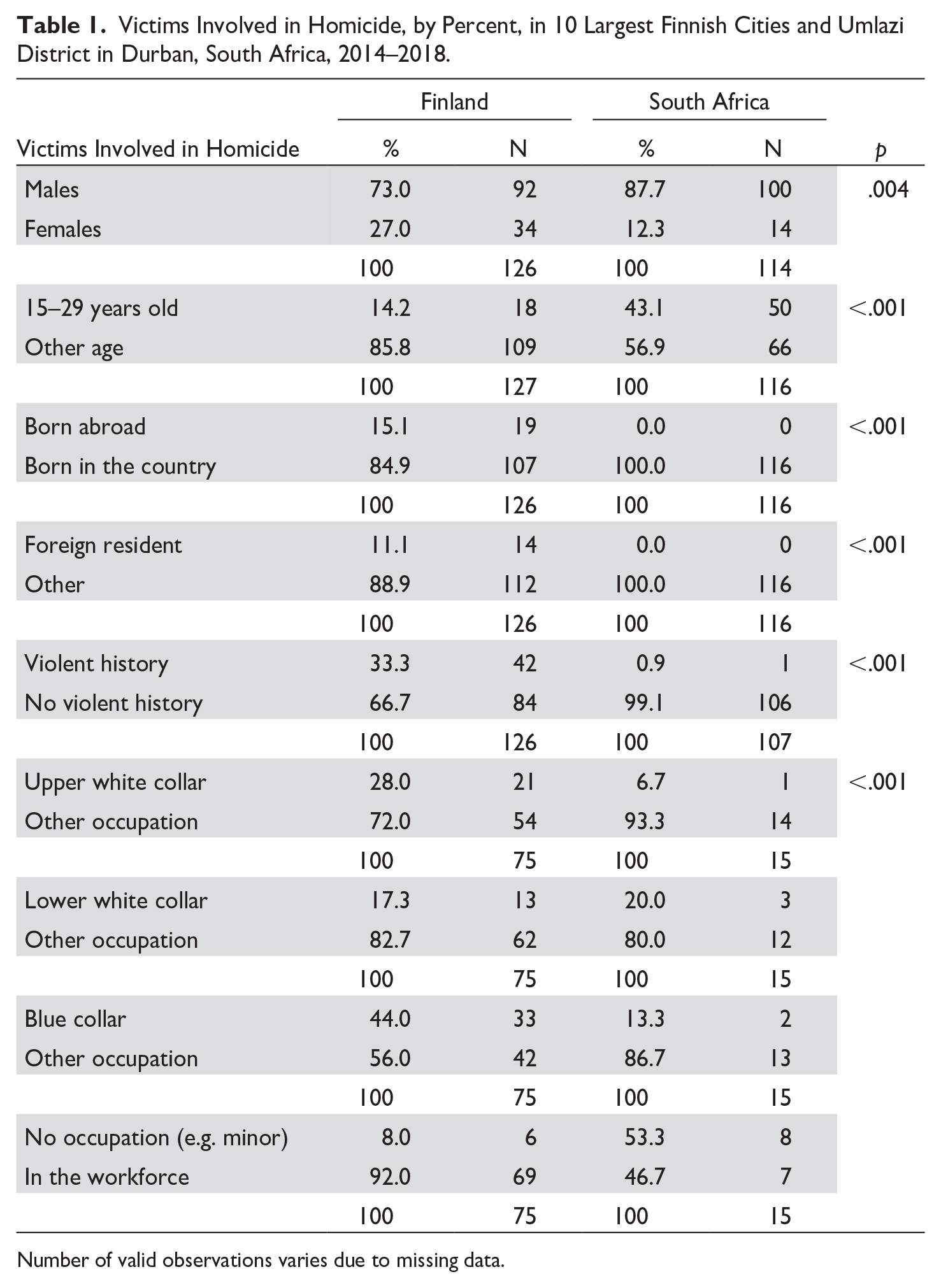
Regarding other patterns, we first looked at the victims (Table 1). Males and young persons in the age category of 15 to 29 years were more often victims of homicide in South Africa, as is evident in the above age-crime curves. The South Africa dataset includes no immigrants (persons born abroad or foreign residents) as homicide victims, while approximately 1 in 6 (15%) Finnish urban homicide victims were born abroad.
Victims Involved in Homicide, by Percent, in 10 Largest Finnish Cities and Umlazi District in Durban, South Africa, 2014–2018.
Number of valid observations varies due to missing data.
Finnish victims more often had a history of violence. This is probably due to the data source, since the FHM explicitly asks the investigating police about prior acts of violence. In terms of occupations, Finnish victims were more likely to be upper white-collar or blue-collar, whereas South African victims were more likely to be lower white-collar (sales workers in services mostly) or young persons without an occupation.
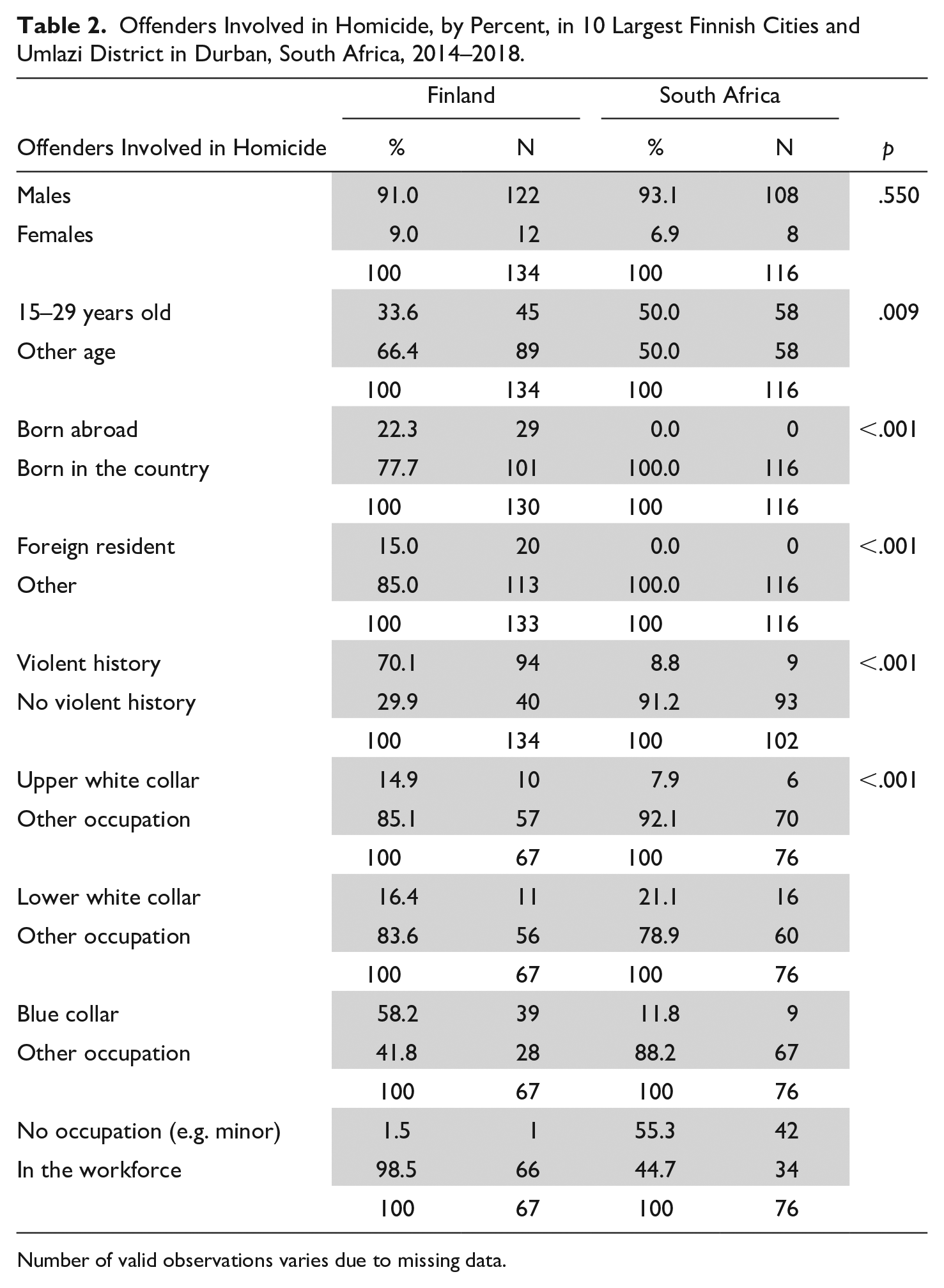
As regards offenders, the share of males was the same in the two datasets (Table 2). The share of immigrants was relatively high in Finnish cities, where 22% of the offenders had been born abroad. This offender type was non-existent among South African offenders. The share of offenders with a history of violence is considerably small in South Africa, a difference probably reflecting differences in the data sources. In South Africa, the offenders tended to be service workers (lower white-collar) or young persons without an occupation. With respect to in the victim population, the occupational differences between the two samples probably reflect the younger age composition of the South African pilot sample.
Offenders Involved in Homicide, by Percent, in 10 Largest Finnish Cities and Umlazi District in Durban, South Africa, 2014–2018.
Number of valid observations varies due to missing data.
Incident Characteristics
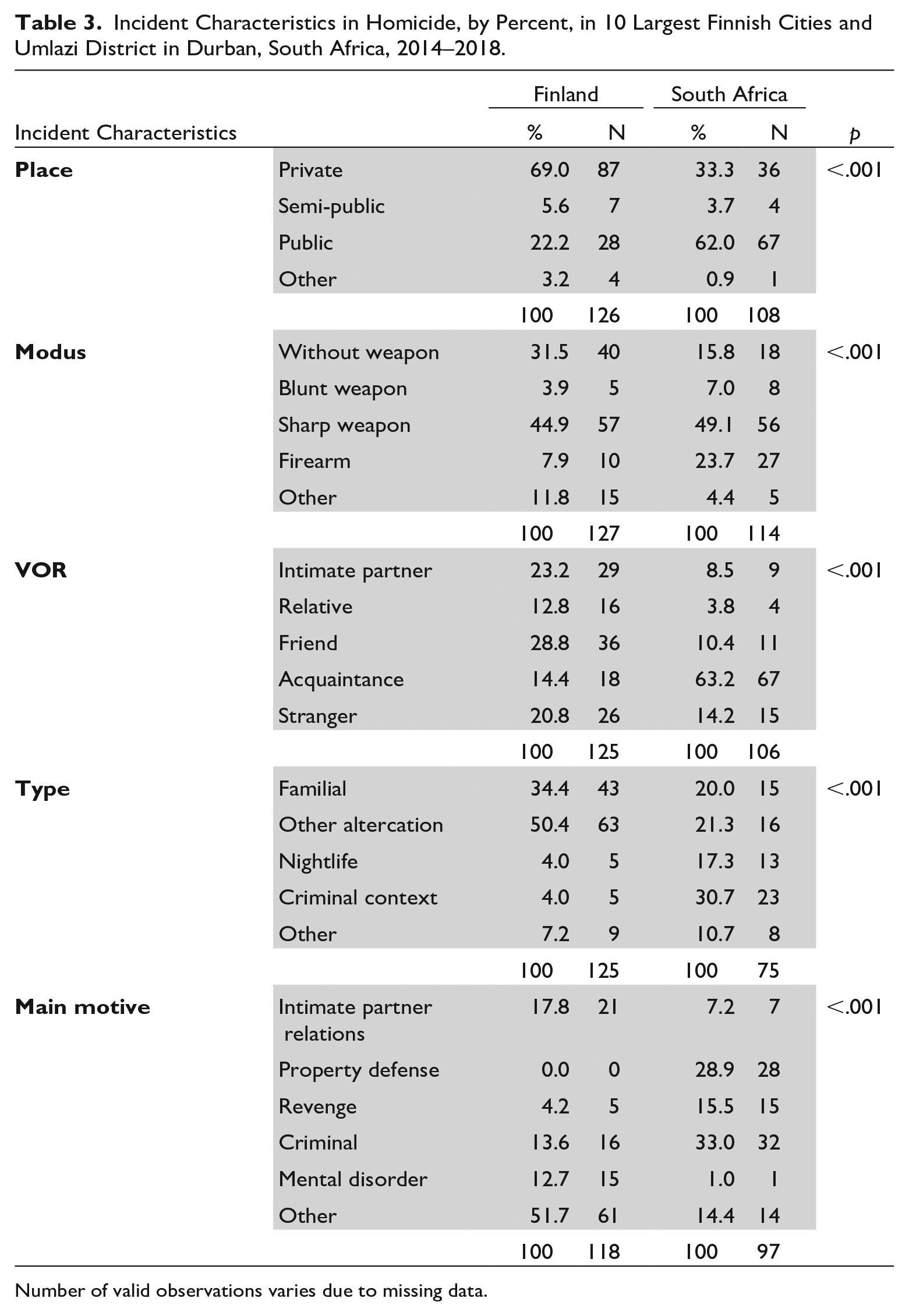
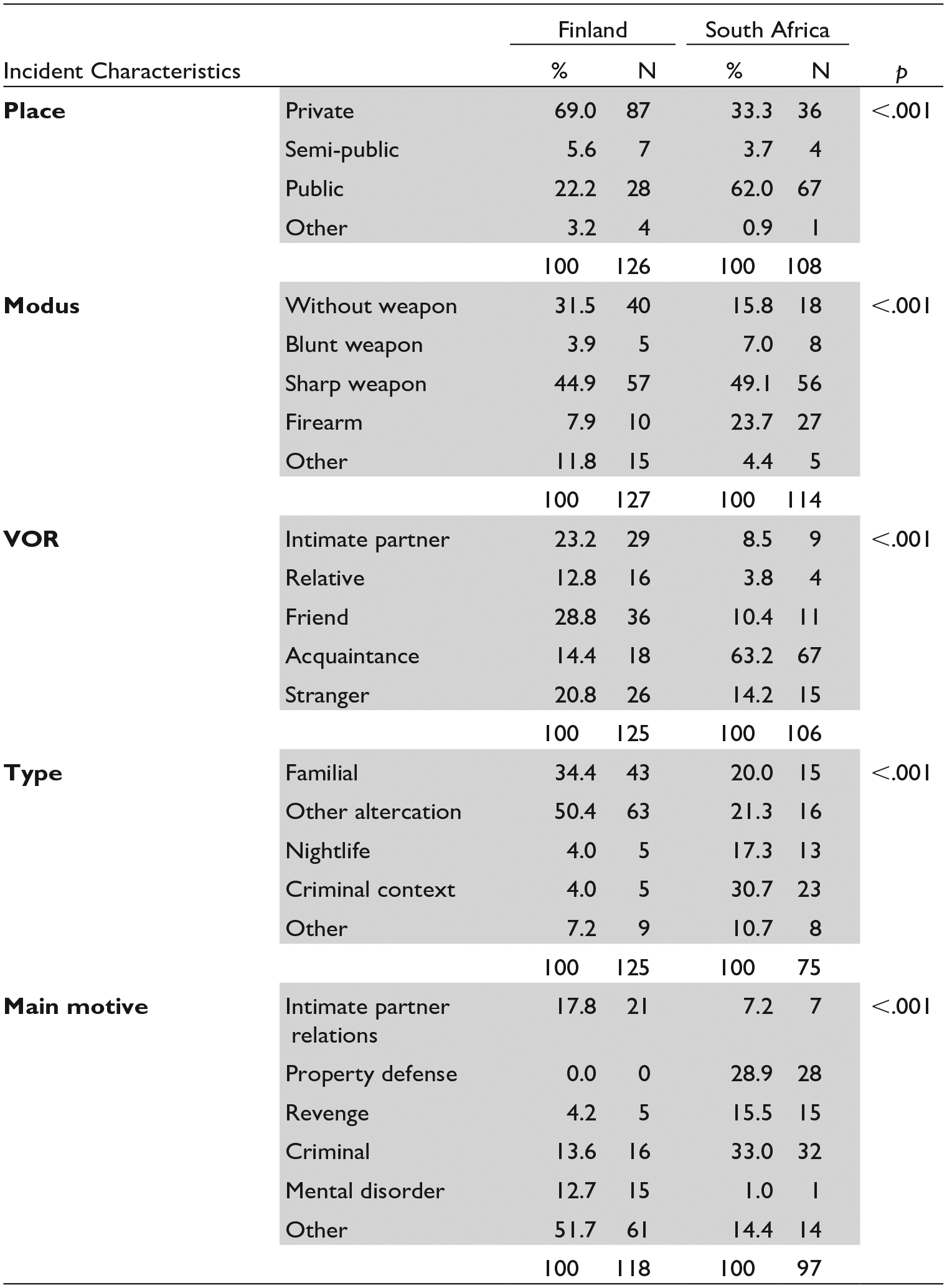
We next examine the lethal incidents (Table 3). In Finland, private places (69%) were frequently the sites of lethal incidents. In South Africa, public places were more frequently (62%) the sites of homicide. Sharp objects and especially firearms were more frequently used in South Africa, where nearly one in four incidents (24%) were committed with a firearm. The Finnish incidents more often involved violence without weapons and other types of violence. In South Africa, most homicides took place between acquaintances, whereas intimate partner homicides were relatively rare. In Finland, the most common type of homicide involved friends, with intimate partner homicide being the second most common type.
Incident Characteristics in Homicide, by Percent, in 10 Largest Finnish Cities and Umlazi District in Durban, South Africa, 2014–2018.
Number of valid observations varies due to missing data.
Regarding the homicide type, the classification “other altercation”—consisting most often of alcohol-related, unplanned quarrels—and familial homicide dominate the Finnish scene, whereas nightlife and a general crime context dominate the Durban homicide scene. Almost one third (31%) of the incidents in the South African pilot data were associated with a criminal context. The observed differences also indicate that the relative share of intimate partner homicide and familial homicide is higher in Finnish cities than in the South African pilot research site.
Motive distributions also differ in the two locations. In South Africa, property defense is a prominent motive, but relatively rare in Finland. Revenge and criminal motives are also more frequent in South Africa.
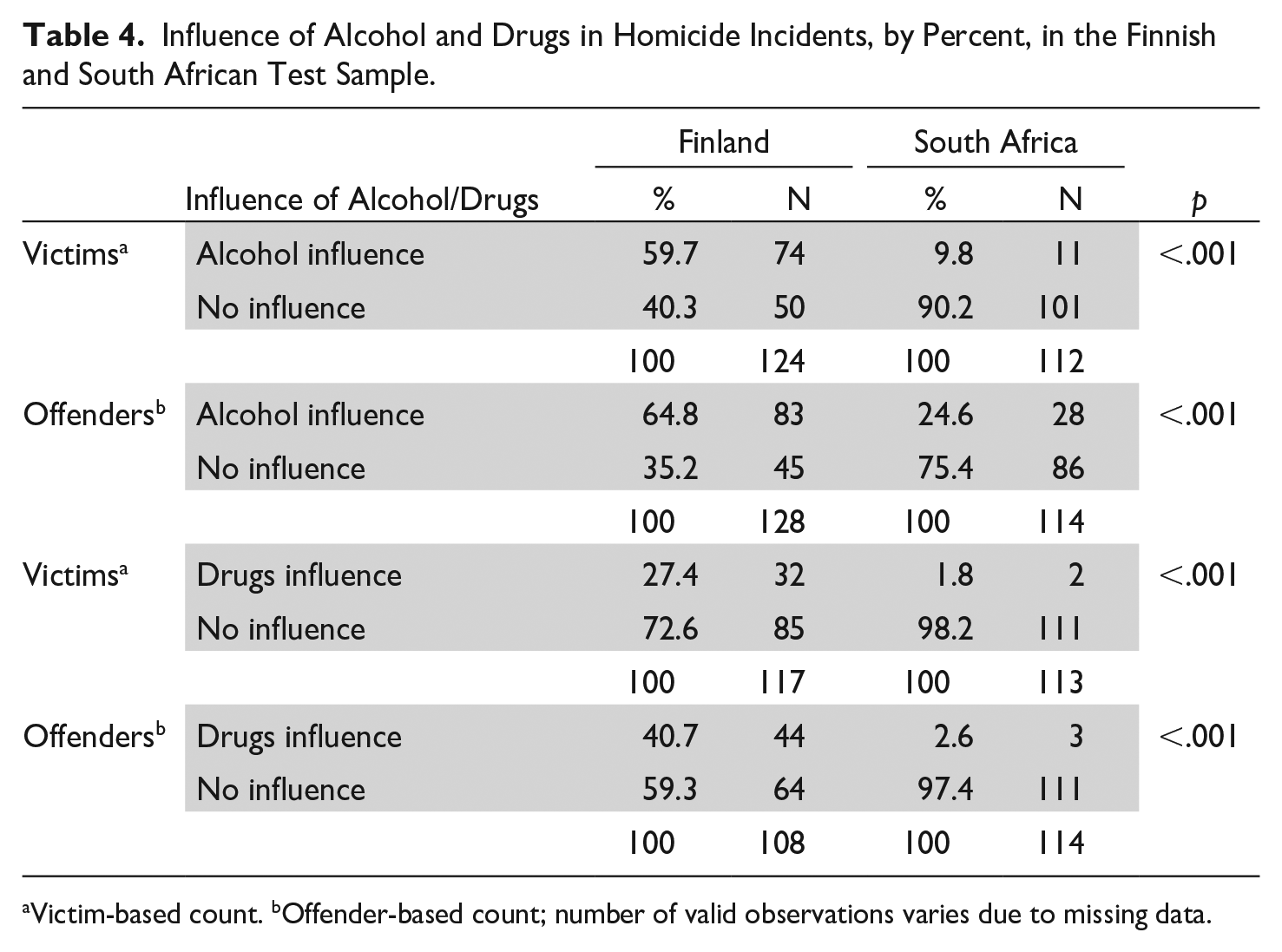
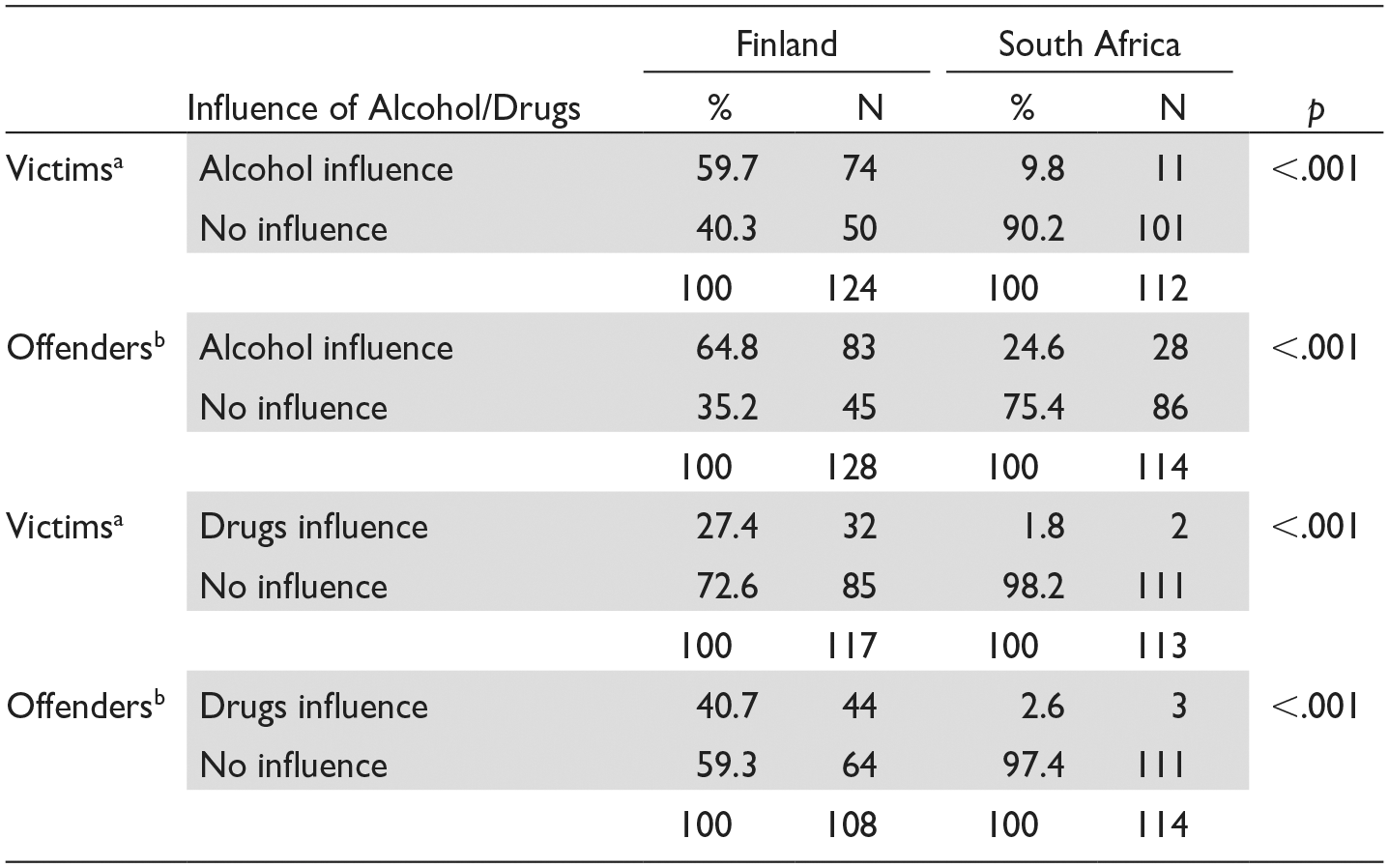
Table 4 examines the role of intoxicants in homicide events. Based on the available information, Finnish homicide is much more strongly linked to alcohol and drug problems than South African homicide. In Finland, both victims and offenders are quite often under the influence of alcohol or drugs during the incident. We observe that in Finnish urban homicide, as large a share as 41% of the offenders and 27% of the victims were under the influence of drugs at the time of the offense. The corresponding figures were 3 and 1, respectively, in Umlazi, South Africa. It is important, though, to note that the data often also reveal a victim–offender overlap in intoxication because both parties may be under the influence of either substance at the time of the incident. In line with other results, this overlap was somewhat stronger in Finnish urban homicide (in a third of the cases) when compared to the South African data (11% of the cases).
Influence of Alcohol and Drugs in Homicide Incidents, by Percent, in the Finnish and South African Test Sample.
Victim-based count. bOffender-based count; number of valid observations varies due to missing data.
The comparative finding on intoxicants should be considered tentative due to differences in the data sources. In the Finnish system, the system itself asks the investigating police to report on this issue based on the totality of his or her knowledge. On the contrary, it is of interest that the South African data also reveal that one in four offenders (25%) were under the influence of alcohol, while the corresponding percentage was 65% in Finland.
Influence of Age Distribution on the Findings
One of the most prominent differences between urban homicides in South Africa and Finland is the relatively old age of the offenders and particularly the victims in Finland (see Figure 1 above). The mean age of the victims was 31.4 in South Africa (median 30.0) and 44.4 in Finland (median 45.0). This 13-year age difference—partly reflecting the underlying difference in the age pyramid between the two countries—is likely to impact the comparison of other characteristics of lethal incidents. It is therefore possible that some of the observed pattern differentials reflect the underlying age structure. For example, the relatively high share of public-place killings in South Africa could reflect the difference in age distribution, especially if young people are more likely to hang out in public places.
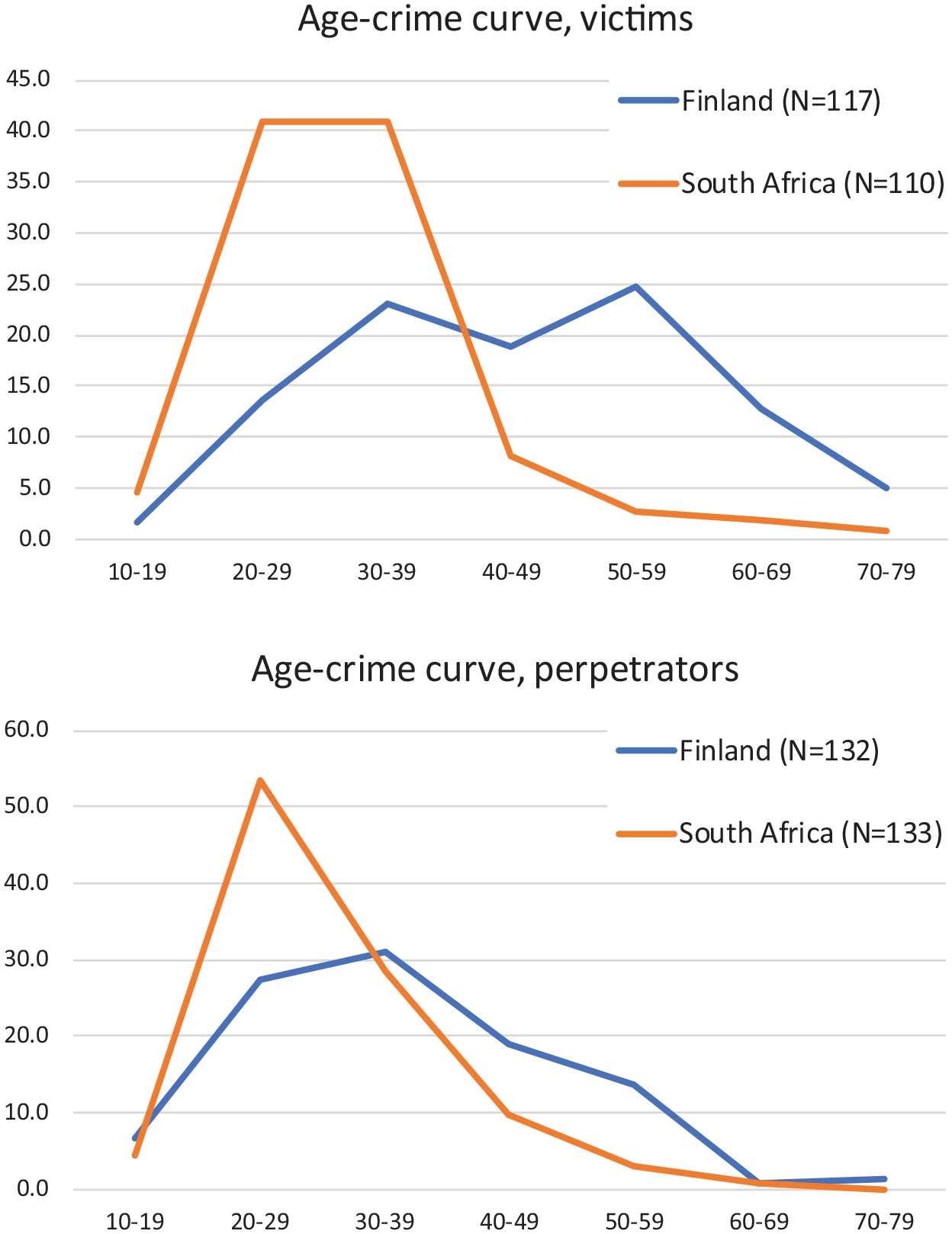
Victim and Offender Age Distributions by Country: 10 Largest Finnish Cities and Umlazi District in Durban, South Africa, 2014–2018.
Therefore, we examined whether the differences in incident characteristics remain statistically significant when accounting for differences in the age structure of the victims. We estimated multinomial regressions for the incident characteristics displayed in Table 2, and we calculated predicted probabilities where the age of the victims was fixed at the mean. The age-adjusted models (not shown, available upon request) do not meaningfully differ from the models shown in Table 2. This indicates that the differences in the characteristics between the two countries are not explained by the differences in the age distribution of the victims.
Missing Data
We examined the extent of missing data in the coded variables to tentatively assess the adequacy of the sources. In doing so, we assessed dichotomous variables where all substantial entries were coded as 0 and missing data as 1. We then cross-tabulated the dichotomous variables by country. Of the 14 variables examined in this manner, six showed differential proportions (p < .05) of missing data in victims counts, while five showed them in offender counts.
The South African data indicate a higher share of missing information regarding the specific age of the victims and offenders (5% and 14%, respectively) than the Finnish data (1% and 0%, respectively). However, the rougher variable indicating only whether the person was a minor had far less missing data, and the extent of the missing data did not differ in the compared sites. Place of offense had more missing data in South Africa (7%) than in Finland (1% in the victim count, 2% in the primary offender count). Violent history also had a greater share of missing data in South Africa (8%–12%) than in Finland (1%–0%). For drug use by the primary offender, South Africa had a smaller share of missing data (2%) than Finland (19%).
The greatest amount of missing data pertained to the variable on profession of the offender or victim: in South Africa, the share of missing data was 87% for victims and 35% for offenders, while the corresponding shares for Finland was 41% and 50%, respectively. The largest discrepancy in the extent of missing information was in the EHM variables on homicide type and main motive. Thirty-five percent of the data on homicide type was missing for South Africa in contrast to 2% for Finland. Main motive was not codable in 16% of South African cases, in contrast to 7% to 9% of the Finnish victims and primary offenders. 3
Discussion
In this research, we compared homicide patterns in Finnish cities with an urban and semiurban research site (township) in Durban, South Africa. The main objective of the study was to conduct a methodological pilot exploring the feasibility of applying the EHM approach to cross-comparative research. As a test site, we chose the township of Umlazi in Durban, South Africa. During the course of conducting this feasibility study, substantial findings emerged.
Differences in Urban Homicide
The main difference between the compared sites is that South African homicide is heavily concentrated among young victim and offender populations, whereas the age–crime curve for Finnish homicide is flatter and tilted toward older age groups. South African homicide is more often linked to firearm use and criminal or revenge motives, while Finnish homicide is more often linked to drinking group violence between older males and intimate partner conflicts. The typical places where the incidents occur are consistent with these observations: Finnish homicide typically takes place in private places, whereas South African homicide often occurs in a public space.
The main motives for the homicides also tend to differ between our pilot research sites. In South Africa, property defense, revenge, and crime-related motives predominate, whereas in Finland, intimate partner conflicts and “other” motives, typically involving petty quarrels over alcohol or similar matters, predominate.
We also observed big differences regarding the presence of alcohol and drugs in homicide cases. Finnish homicide seems much more closely linked to such intoxicants. However, this finding may also reflect the data sources. Still, the finding that 25% of South African offenders were drunk while the corresponding share in Finland was 65% may indeed indicate real differences rather than differences in source materials.
Interestingly, the differences in homicide patterns between Finland and South Africa partially resemble the differences between Finland and Sweden and the Netherlands (Granath et al., 2011). This finding implies that Finland could be an “outlier” in terms of its homicide patterns, rather than South Africa. This similarity pertains to homicide patterns, not to rates of lethal violence. South Africa has far higher homicide rates than European countries such as Sweden and the Netherlands.
Since our study was a methodological pilot, it is premature to draw policy conclusions based on it. The general patterns do, however, suggest that the challenges in preventing homicide are quite different at different ends of the global homicide continuum. South African violence might be alleviated via welfare-oriented policies and supporting the availability of nonviolent conflict resolution mechanisms. The Finnish pattern points more toward the need for more preventive alcohol- and drug-related policies, linking control and activation to social policy, and to more effective policing and criminal justice measures toward intimate partner violence (IPV) and familial offenders.
Limitations and Research Needs
The purpose of this research was to compare global social extremes in the application of the EHM approach. Thus, while we limited the Finnish data to more urban conditions, this does not make the research sites similar. However, while the selected Finnish cities are generally smaller in population than the South African research site, both include urban and semiurban areas in terms of city centers, suburbs, and less urban neighborhoods. With respect to the South African data, a few dockets were missing some crucial information, such as the age of the victim and/or of the offender, motive for the killing, type of homicide, relationship between the offender and the victim, and information related to the offender’s motive(s) as well as information related to the offender. However, most information in the dockets could be coded according to the EHM short manual. Furthermore, due to the sensitive nature of the data, the South African team only had access to closed homicide cases in South Africa. The pilot sample size was also relatively small, and all the cases were collected from one area, Umlazi. Due to such limitations, the results of this study cannot be generalized to all South Africa. However, its findings provide a foundation and way forward for future research on homicide in South Africa.
For most EHM short variables, the extent of missing data was similar in both research sites. As regards the profession of the homicide parties, the extent of missing data was high in both sites, making any conclusions based on this variable highly tentative. The highest divergence in missing data pertained to the variables on main motive and type of homicide. More attention should thus be devoted to both variables when further developing the EHM manual, at least if the system is applied outside Europe. Our examination of the share of cases coded as “other” also revealed challenges in terms of the main motive variable, with a very high frequency of “other” codes occurring in the Finnish data. To a degree, the problems with classifying the main motive of homicide may be unique to Finnish homicide patterns, characterized as they are by unplanned drinking group violence between friends and acquaintances. Yet, some improvements might be needed from the African perspective as well, such as incorporating sorcery-related conflicts (see Cusson et al., 2017). Also, this study has revealed that it would be useful to include a variable that captures apprehension on the part of witnesses to relay information to the officials when making global comparisons, as the level of trust toward authorities is likely to vary considerably across research settings. While acknowledging these differences and challenges, the results and the discussions of the research teams suggest that the EHM classification manual can be applied to South African conditions. This finding supports the broad applicability of the coding scheme because the social realities in South African townships and Finnish urbanities are quite different.
In Finnish urban homicide cases, the proportion of female victims is larger (27%) than in the South African pilot study site of Umlazi (12%). It is important to note that due to the much higher homicide rate, the risk of female homicide victimization is higher in Umlazi. The general pattern linking higher female victimization rates to lower overall homicide numbers corresponds to the so-called Verkko’s homicide law (Verkko, 1951). According to it, changes and differentials in homicide are typically explained by male behavior. This observation can be generalized to other aspects of homicide as well. The high rate of homicide is linked to the higher share of young male offenders, to criminal and revenge motives, to firearms and to a lower share of intimate partner and familial cases. Nevertheless, the prevalence of female homicide victimization calls for more research attention. To that effect, we need more extensive global coverage of EHM-based comparative research. It is particularly important to use data that incorporate all categories of victim, enabling the comparison of homicide risks and patterns.
Overall, this study suggests that extending the EHM approach to other parts of the world is indeed feasible. As information becomes available, it will be instructive to compare non-European sites, such as South Africa and the Dutch Caribbean, analyzing the extent to which they are similar to or diverge from European patterns, and how different colonial histories are reflected in homicide patterns. Finally, some violence-relevant social megatrends, such as climate change and demographical structures, predict increasing homicide rates in Africa over the coming decades (UNODC, 2023, p. 35), further justifying efforts to study African homicide rates in a manner that enables disaggregation and global comparison.
Footnotes
Declaration of Conflicting Interests
The author(s) declared no potential conflicts of interest with respect to the research, authorship, and/or publication of this article.
Funding
The author(s) disclosed receipt of the following financial support for the research, authorship, and/or publication of this article: The Finnish research contribution was partially funded by the Strategic Research Council (SRC) established within the Research Council of Finland (grant nos. 352600 and 352601).
Ethical Approval
The Finnish Homicide Monitor has ethical approval by the University of Helsinki Ethical Review Board in Humanities and Social and Behavioral Sciences (Statement 5/2022).