



Abstract
Introduction:
Cultural diversity in health care requires nursing students to develop transcultural sensitivity and critical thinking to provide equitable care. This study explored the relationship between transcultural nursing sensitivity and critical thinking among senior nursing students in Türkiye.
Methods:
A descriptive, cross-sectional, correlational design was conducted with 151 senior nursing interns from a university nursing department. Data were collected online using the Student Information Form, the California Critical Thinking Disposition Inventory, and the Turkish Intercultural Sensitivity Scale.
Results:
The mean age of participants was 22.49 ± 1.52 years; 74.2% were female and 84.1% were Turkish. While 72.8% had experience with culturally diverse patients, 88.8% lacked formal intercultural training. Mean scores reflected moderate-to-high intercultural sensitivity (87.4 ± 11.47) and critical thinking (254.04 ± 27.85). Critical thinking significantly predicted intercultural sensitivity (β = .688, R2 = .473, p < .001).
Discussion:
Findings confirm a significant correlation, supporting integration of these skills into nursing education.
Introduction
The growing ethnic variety in health care necessitates that nurses cultivate intercultural understanding to deliver compassionate and thorough treatment. Critical thinking is essential for comprehending cultural differences, providing individualized treatment, and mitigating prejudice (I. Antón-Solanas, Tambo-Lizalde et al., 2021). It is essential for nursing students to develop critical thinking and multicultural sensitivity to enhance the quality of care (Mohammadi et al., 2023; Shiraev & Levy, 2020). Culture influences individuals’ health views, coping strategies, and health care behaviors. Consequently, embracing a multicultural viewpoint is essential in nursing. In multicultural cultures, health care personnel must possess cultural competence to provide inclusive and effective services (Liu et al., 2021; Young & Guo, 2020). Globalization and migration underscore the necessity of comprehending cultural disparities in health care environments (Fung et al., 2023).
A transcultural nursing strategy seeks to address patients’ cultural requirements and enhance outcomes via improved cultural comprehension (Shahzad et al., 2021; Vázquez-Sánchez et al., 2021). Delivering culturally appropriate treatment necessitates consideration of patients’ beliefs, attitudes, and lifestyles (I. Antón-Solanas, Huércanos-Esparza et al., 2021). This level of care can only be attained via systematic knowledge and the continual enhancement of critical thinking in nursing education (Jin & Ji, 2021; Mousazadeh et al., 2021; Taşçı et al., 2022). The examination of the correlation between critical thinking abilities and transcultural nursing sensitivity in intern nursing students is crucial.
To frame this issue conceptually, Deardorff’s Intercultural Competence Model, established in the 1990s, offers a robust framework for fostering open-mindedness in health care, particularly within cosmopolitan communities. It underscores the significance of cultivating openness, respect, and curiosity, as well as the competencies required for engaging with various cultures (Esmaeili & Kuhi, 2025). The Cultural Competence Development Model by Papadopoulos, Tilki, and Taylor delineates a four-stage process: cultural awareness, cultural knowledge, cultural sensitivity, and cultural competence. This paradigm emphasizes the necessity of self-reflection and critical analysis, urging health care workers to perpetually assess their own attitudes and behaviors (Papadopoulos et al., 2004; Theodosopoulos et al., 2024).
Building on these frameworks, nurses must employ clinically critical thinking and integrate their professional expertise with patients’ cultural values to deliver culturally competent and patient-centered care (Balante et al., 2021; Hughes et al., 2020; Okeya, 2021; Uslu et al., 2022). Critical thinking enhances nurses’ cultural competence, facilitates comprehension of patient requirements, and underpins the provision of individualized care by informing clinical judgments (Caring Staff, 2024; MedicalResearch.com, 2023; Transcultural Nursing Society, 2018). A critical viewpoint highlights the significance of subjective knowledge by examining individual health practices and the cultural influences that impact them. Recognizing patients as independent entities and respecting their cultural contexts enhances the significance of the treatment process. This method, when used consistently, delineates cultural sensitivity in nursing (Alsaleh, 2020).
Extending this perspective to education, nursing students may integrate culturally sensitive practices into health care systems. Research indicates that students’ critical thinking tendencies are influenced by elements like academic level, pre-university living environment, reading habits, engagement in research, and participation in social activities (Taşçı et al., 2022). Students dedicated to a nursing profession typically exhibit elevated self-efficacy, increased research involvement, and enhanced critical thinking abilities (Jin & Ji, 2021; Nguyen et al., 2023). Despite these efforts, experts assert that educational institutions, especially medical and nursing schools, must continue to strengthen training in cultural sensitivity, diversity, racial relations, and ethnic awareness (Young & Guo, 2020). For example, cultural competence is increasingly regarded as a fundamental component of undergraduate and graduate nursing training in Taiwan. Nursing educators are progressively including this skill into courses (Chang et al., 2024). H. L. Lin et al. (2021) underscored the necessity for freshly graduated nurses to actively implement cultural knowledge in clinical environments and to perpetually enhance their cultural competencies. Proposed educational strategies encompass the compulsory incorporation of culturally sensitive care into curricula, the implementation of direct or virtual interviews with individuals from varied cultural backgrounds, and focus group discussions regarding patients’ cultural attributes (Alvarez & Domenech Rodríguez, 2020; McDonald et al., 2021).
In light of Türkiye’s cultural richness, it is important for intern nursing students to develop transcultural nursing competences during their study to deliver culturally sensitive care. Given Türkiye’s cultural richness, educating interns to acknowledge and integrate many cultural values, beliefs, and traditions into nursing care may foster inclusion and better treatment outcomes. This study seeks to investigate the correlation between transcultural nursing sensitivity and critical thinking skills among senior nursing students. In light of Türkiye’s cultural richness, it is important for intern nursing students to develop transcultural nursing competences during their study to deliver culturally sensitive care. Given Türkiye’s cultural richness, educating interns to acknowledge and integrate many cultural values, beliefs, and traditions into nursing care may foster inclusion and better treatment outcomes. Therefore, this study aimed to examine the relationship between transcultural nursing sensitivity and critical thinking skills among senior nursing students.
It was hypothesized that intern nursing students would demonstrate significant differences in transcultural nursing sensitivity and critical thinking skills according to their descriptive characteristics. Furthermore, it was hypothesized that critical thinking skills would significantly predict transcultural nursing sensitivity levels.
Method
Design
This descriptive, cross-sectional, and correlational quantitative study aimed to evaluate the transcultural nursing sensitivity levels and critical thinking skills of intern nursing students and to examine the relationship between these two variables.
Setting and Participants
The population of this descriptive and cross-sectional study consisted of 188 intern nursing students enrolled in the Nursing Department of the Faculty of Health Sciences at Bolu Abant İzzet Baysal University, Türkiye. A convenience sampling approach was employed to include all eligible students who were enrolled in the internship program during the 2023 to 2024 academic year. A formal power analysis was not conducted, as the study aimed to include the entire population of eligible intern nursing students. This approach was considered sufficient to ensure representativeness of the study population. Of these, five students declined participation. A total of 151 students (80.3%) who voluntarily participated and attended internship courses between April 1 and July 1, 2024, were included in the final sample. Students who were not actively attending or who did not complete the survey within the designated timeframe were excluded. Since the study had a cross-sectional design, no follow-up process was implemented.
Data Collection Procedure
The researchers visited the fourth-year classes prior to sessions to clarify the aims and procedures of the study. It was emphasized that participation was entirely voluntary, that individuals could withdraw at any time without providing a reason, and that all collected data would be handled confidentially. Informed consent and data collection were conducted online from June 1 to July 1, 2024, using Google Forms. All data were obtained through self-administered online questionnaires, and identical measurement procedures were applied for all participants. Since the study involved a single group of intern nursing students, assessment comparability across groups was not applicable. Since this was a single-group cross-sectional study without exposure or comparison groups, separate information for exposed and unexposed participants was not applicable.
Ethical Considerations
To conduct the research, requisite permits were obtained from the Bolu Abant İzzet Baysal University Social Sciences Human Research Ethics Committee (Approval number: 2024/133, April 1, 2024). Institutional approval was also granted by Bolu Abant İzzet Baysal University (E-73351307-100-2400067987). Authorization was secured by email from the original authors of the Turkish validity and reliability studies of the scales used.
Student Information Form
The researchers created a “Student Information Form” based on a literature review to collect sociodemographic and cultural data from the participants (Gradellini et al., 2021; H. L. Lin et al., 2021; Tosun & Sinan, 2020). The form contains questions on the participant’s age, gender, ethnicity, place of birth, previous experience in delivering care to patients from many cultures, and training in intercultural nursing care. To guarantee content authenticity, the form underwent evaluation by three nursing specialists, and requisite modifications were implemented in accordance with their input.
This study categorized individuals by their birthplace and ethnic origin not for cultural or labeling purposes, but to illustrate the sociodemographic variety of the sample and to uncover possible structural imbalances. The American Psychological Association (APA, 2024) advocates for the inclusion of demographic data in research, asserting that this practice may enhance comprehension of ethnic differences in educational and health outcomes (APA, 2024; Gaias et al., 2020). Research, including that of Betancourt et al. (2003) and Camphina-Bacote’s Model of Cultural Competence, highlights the obstacles minority individuals encounter in accessing health care systems, underscoring that acknowledging these disparities is essential for attaining cultural competence. The objective of the studies in this study is to ascertain the impacts of sociocultural structures and to establish a basis for future research in this domain. As this study focused on the relationship between critical thinking and transcultural nursing sensitivity, no variables were identified or controlled as effect modifiers.
California Critical Thinking Disposition Inventory
California Critical Thinking Disposition Inventory (CCTDI) was developed by the American Philosophical Association to evaluate critical thinking disposition (Facione et al., 1994). Kökdemir (2003) conducted the validity and reliability assessment of the scale in Turkey. The scale has 51 items and is divided into six subscales: truth-seeking, open-mindedness, analyticity, systematicity, self-confidence, and curiosity. Increased scores on the subscales indicate a significant tendency in that dimension. The sum of the subscales produces the critical thinking propensity score. The minimum total score is 60, and the maximum is 360. A score of 240 indicates a limited capacity for critical thinking, whereas a score of 300 or more reflects a robust capacity for critical thinking. The Cronbach alpha reliability coefficient of the CCTDI was determined to be .88 in the validity and reliability study (Kökdemir, 2003) and .91 in the current study.
Turkish Intercultural Sensitivity Scale
This scale, developed by Chen and Starosta (2000), consists of five emotional components crucial for intercultural sensitivity. The scale includes attributes of accountability in communication, tolerance for cultural variety, trust in dialogue, pleasure in engagement, and attentiveness. In 2011, Bulduk and colleagues conducted the Turkish validity and reliability evaluation of the scale. The scale has a 5-point Likert-type format, with a score range from 24 to 120. The test does not have a cut-off score; higher scores indicate a greater level of intercultural sensitivity. The Cronbach alpha reliability coefficient for TISS was .71 in the validity and reliability study (Bulduk et al., 2011) and .90 in the current study.
Bias
Several measures were taken to minimize potential sources of bias. To reduce selection bias, all intern nursing students enrolled in the 2023 to 2024 academic year were invited to participate, and voluntary participation was emphasized. Information bias was minimized using anonymous, self-administered online questionnaires to encourage honest responses. Measurement bias was reduced by employing standardized instruments with established validity and reliability in Turkish (CCTDI and Turkish Intercultural Sensitivity Scale [TISS]). Researcher bias was minimized, as data collection was conducted independently by participants without direct researcher influence. The low nonresponse rate (2.7%) was not expected to affect representativeness.
Data Analysis
Data were analyzed using the Jamovi statistical software (version 2.9.7), and normality, skewness, and kurtosis were assessed using the Kolmogorov–Smirnov test. The data had a normal distribution, allowing the use of parametric tests. The data analysis included frequency distribution, percentage distribution, arithmetic mean, independent samples t test, one-way analysis of variance (ANOVA), Bonferroni test, and simple linear regression analysis. Descriptive variables were examined to assess potential confounding effects. No subgroup or interaction analyses were performed. All questionnaires were fully completed; therefore, no missing data imputation was required. Analyses were performed using complete-case data without weighting adjustments, as a convenience sampling strategy was used. Sensitivity analyses were not applicable, as the study employed a single cross-sectional data set. The study outcomes were evaluated utilizing a 95% confidence interval and a significance threshold of p < .05. This study was designed and reported in accordance with the STROBE (Strengthening the Reporting of Observational Studies in Epidemiology) guidelines to ensure transparency and completeness in reporting observational research. All continuous variables were analyzed as raw scores without recategorization or arbitrary grouping.
Results
Of the 188 intern nursing students invited to participate in the study, five declined participation, and 32 did not complete the data collection within the specified period. Consequently, a total of 151 students (80.3%) who provided complete responses were included in the final analysis. No missing or incomplete questionnaires were identified, and all participants were included in the statistical analyses.
The mean age of the participants was 22.49 ± 1.52 years; 74.2% were female, 84.1% were Turkish, and around 61% reported being born in a rural area. During their training, 72.8% of the interns shown proficiency in providing care to individuals from other cultures, whereas 88.8% expressed insufficient education in intercultural nursing care (Table 1). No missing data were observed for any of the variables.
Distribution of Descriptive Characteristics of Intern Nursing Students.
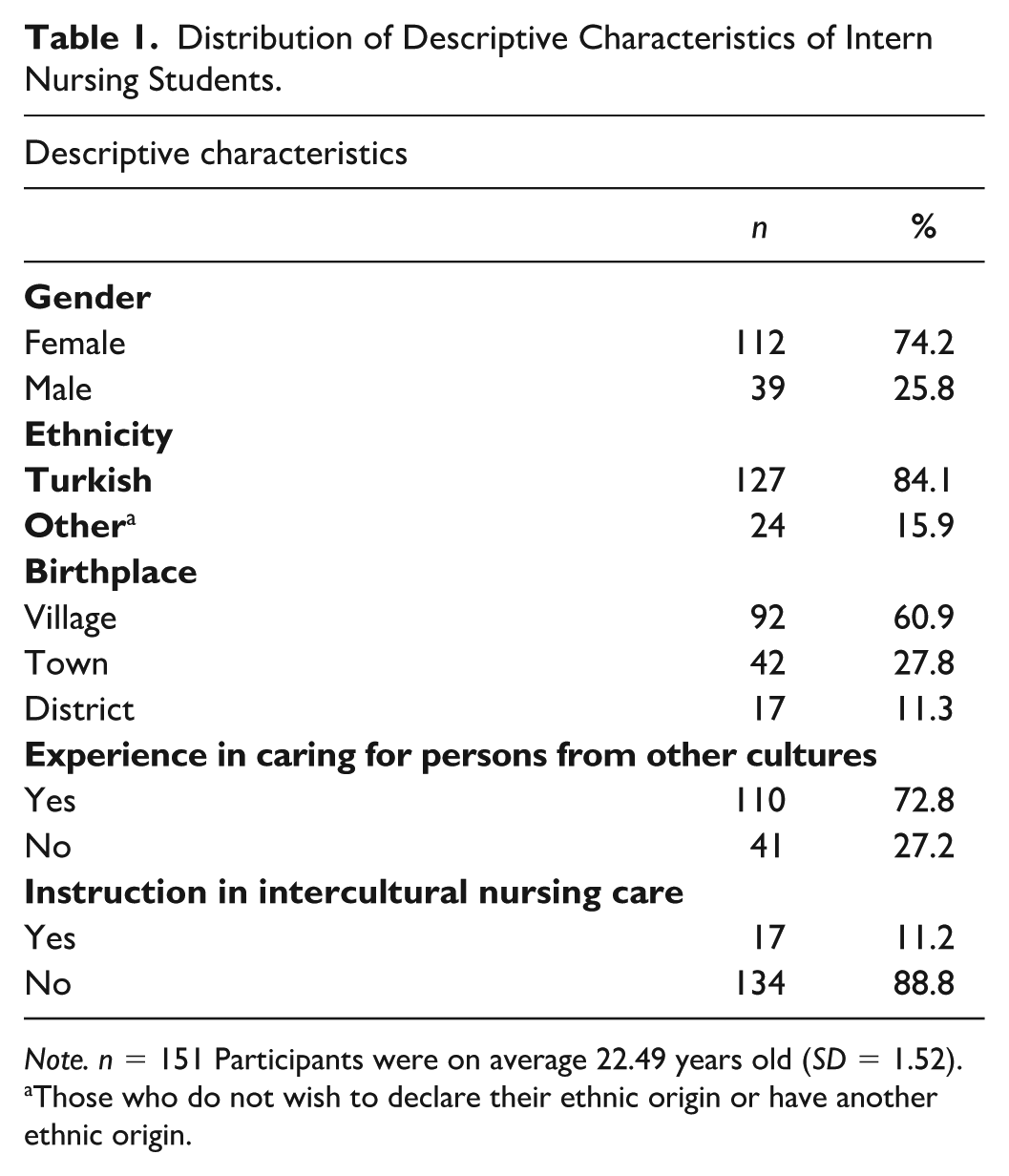
Note. n = 151 Participants were on average 22.49 years old (SD = 1.52).
Those who do not wish to declare their ethnic origin or have another ethnic origin.
The primary outcome variables of the study were the total and subscale scores of the TISS CCTDI score of the students was 87.4 ± 11.47 (range: 47–116), with the highest subscale score recorded in responsibility in communication (3.74 ± 0.56, range: 1.43–5). The mean CCTDI score was 254.04 ± 27.85 (range: 187–328), with the highest subscale score being analyticity (50.74 ± 5.97, range: 33–64) (Table 2).
Descriptive Statistics of TISS and CCTDI Scores and Their Subscales.
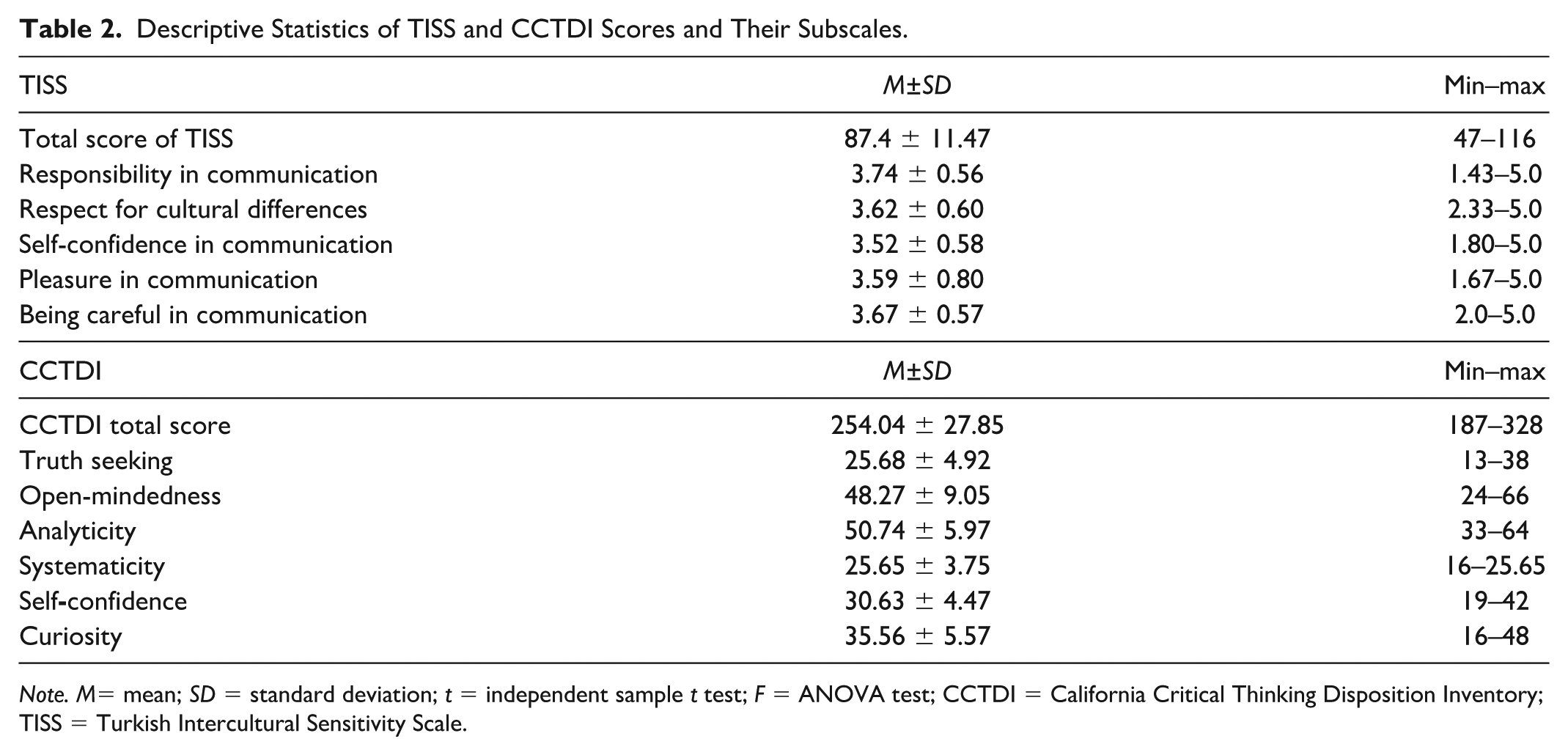
Note. M= mean; SD = standard deviation; t = independent sample t test; F = ANOVA test; CCTDI = California Critical Thinking Disposition Inventory; TISS = Turkish Intercultural Sensitivity Scale.
Table 3 presents the analytical results of TISS total and subscale scores categorized by birthplace, ethnicity, and intercultural nursing care education. No significant difference was seen in TISS total scores (F = 0.51, p = .600) when transcultural sensitivity levels were examined according to birthplace. In the comparison of TISS total and subscale scores based on birthplace, a significant difference was identified in communication attention levels among individuals from villages (3.69 ± 0.61), cities (3.80 ± 0.48), and districts (3.31 ± 0.52) (F = 4.54, p=.012). The Bonferroni test was performed to evaluate the differences among the groups, considering the homogeneity of variance distribution. The Bonferroni test results demonstrate that communicative attention scores of individuals from districts were significantly lower than those from villages (p = .040) and cities (p = .010).
TISS Total and Subscale Scores Based on Birthplace, Ethnicity, and Intercultural Nursing Care Education.
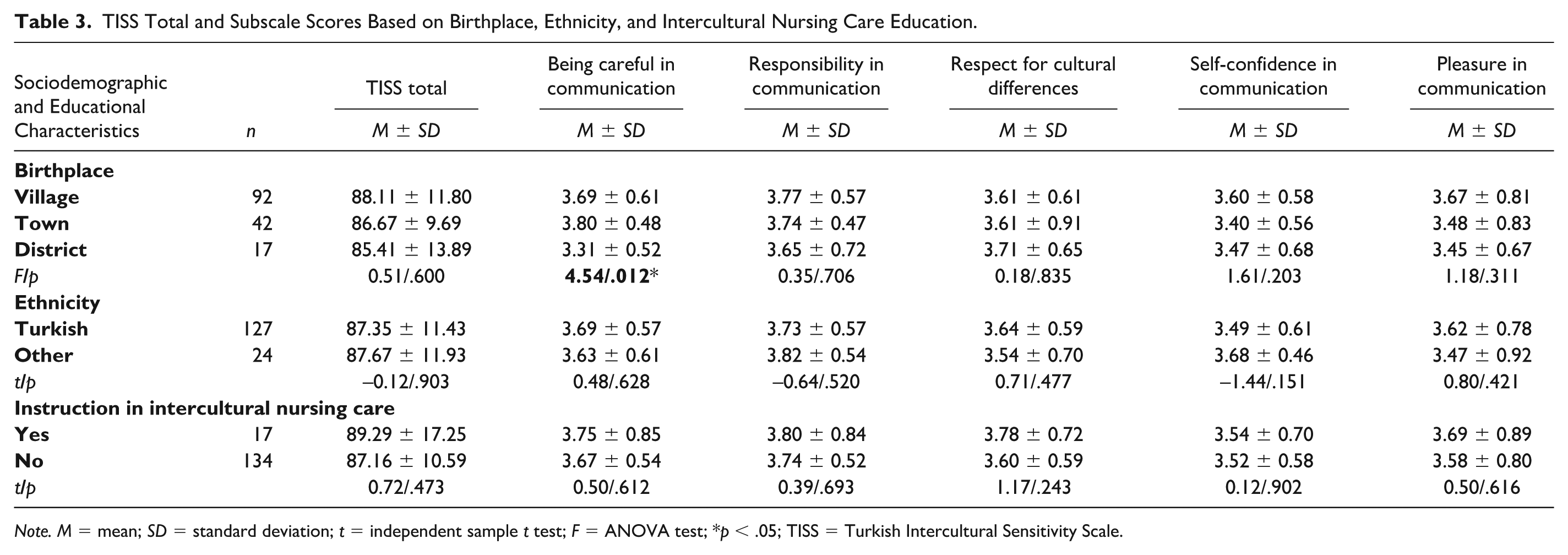
Note. M = mean; SD = standard deviation; t = independent sample t test; F = ANOVA test; *p < .05; TISS = Turkish Intercultural Sensitivity Scale.
No significant differences were found in the TISS total and subscale scores across ethnic groups (p > .05). An analysis of intercultural sensitivity levels indicated no significant difference between individuals who had training in transcultural nursing care (89.29 ± 17.25) and those who did not (87.16 ± 10.59) (t = 0.72, p = .473). No significant differences were found in the CCTDI total and subscale scores across ethnic groups (p > .05) (Table 3).
An examination of the difference in critical thinking levels following training in transcultural nursing care revealed no significant disparity between those who received the training (262.56 ± 37.83) and those who did not (252.96 ± 26.31) (t = 1.34, p = .182) (Table 4).
CCTDI Total and Subscale Scores Based on Birthplace, Ethnicity and Intercultural Nursing Care Education.
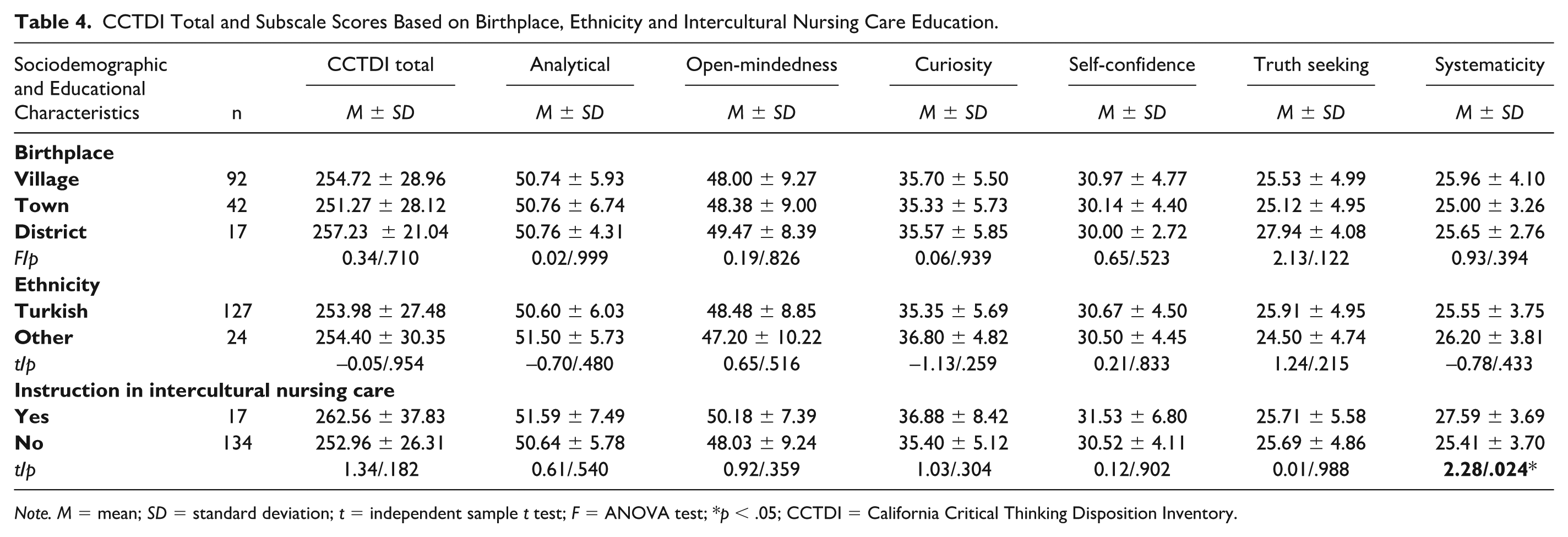
Note. M = mean; SD = standard deviation; t = independent sample t test; F = ANOVA test; *p < .05; CCTDI = California Critical Thinking Disposition Inventory.
A linear regression analysis was conducted to see if critical thinking predicts intercultural sensitivity. The model demonstrated statistical significance, F(1.145) = 130.28, p < .001, R2 = .473. The findings indicate that critical thinking skills contributed to 47.3% of the variance in intercultural nursing sensitivity levels. As the participants’ critical thinking skills enhanced, their intercultural nursing sensitivity levels also elevate (β = .688, p < .001). A one-unit increase in critical thinking correlated with a 0.271-point increase in intercultural sensitivity (Table 5). All analyses were conducted using unadjusted estimates, as the study aimed to examine direct bivariate relationships between the variables. No confounder adjustments or relative risk estimations were applicable due to the cross-sectional and correlational design of the study.
Regression Analysis Showing the Predictive Effect of Critical Thinking Abilities on Intercultural Nursing Sensitivity.

Note. F = simple linear regression analysis.
Discussion
In the delivery of health care services, particularly within multicultural settings, nurses’ intercultural sensitivity and critical thinking abilities are essential for addressing individual needs and delivering holistic care. Research concerning nursing or midwifery students in our country revealed that the percentage of nursing students proficient in providing care to patients from diverse cultural backgrounds ranged from 38.8% to 85.5%, whereas our study determined this figure to be 72.8% (Ayaz-Alkaya & Simones, 2024; Kılıç & Sevinç, 2018). The increase in cultural diversity within Türkiye’s health care services is due to the country’s status as a destination for immigrants.
State of Critical Thinking Tendencies
Upon analyzing the average CCTDI scores of the students involved in the study, it is evident that the propensity for critical thinking is at a moderately low level, as corroborated by similar studies in the literature (Çalışkan & Doğan, 2022; Kılınç & Kaya, 2022; Koraş Sözen & Karabulut, 2021; Taşçı et al., 2022; Uyar & Güven, 2020). The inadequate critical thinking skills of students may hinder their capacity to offer comprehensive and enduring answers to intricate clinical circumstances, so impacting patient care. A research in China revealed that nursing students possess a moderate level of critical thinking disposition, which is essential for providing efficient care (Jin & Ji, 2021). This is the minimal score among nursing students across the nation. The findings suggest that varied curricular resources and approaches aimed at enhancing critical thinking skills in nursing education can promote the development of these abilities. Nursing education in Türkiye should be evaluated on methods to enhance critical thinking skills.
Intercultural Sensitivity and Awareness Status
The study indicates that the interns’ intercultural sensitivity levels above the average. Comparable outcomes have been documented in research concerning nursing students, with average intercultural sensitivity scores consistent with the results of the current study (Ayaz-Alkaya & Simones, 2024; Beser et al., 2021; Çiftçi et al., 2021; Dur et al., 2022; Karasu et al., 2022). The statistics indicate that nursing students frequently exhibit considerable intercultural sensitivity. Interaction with individuals from diverse cultural backgrounds might augment the intercultural understanding of nursing students (Gradellini et al., 2021). A study conducted in Turkey indicated that university students in the West shown more intercultural sensitivity than those in the East (Beser et al., 2021).
Intercultural communication is an essential element of culturally competent nursing care (Larsen et al., 2021). Nursing students may encounter several barriers, such as linguistic differences, cultural practices, and religious beliefs when providing care to individuals from varied cultural backgrounds (Shahzad et al., 2021). This study demonstrated that participants born in districts exhibited lower levels of communicative attention relative to those born in villages and towns. Previous studies demonstrate that nursing students who interact with many cultures and possess foreign experience show improved communication attention (Dur et al., 2022; Kılıç & Sevinç, 2018). This suggests that varied cultural experiences may improve attention in communication. Our investigation revealed that the reduced attention in conversation, as indicated by prior literature, was due to the participants’ uniform ethnic backgrounds. In culturally homogeneous groups, the requirement for attention may decrease due to shared gestures, facial expressions, and pronunciation. The participants’ inadequate professional experience and limited exposure to intercultural interactions may potentially intensify this issue. Students living in districts had less knowledge of intercultural communication compared with their peers in villages or towns, possibly due to the heightened frequency of direct interactions in smaller groups.
No significant variations in intercultural sensitivity and critical thinking abilities were detected among ethnic groups in our study. This discovery indicates that individuals’ perceptions of cultural differences are influenced not just by ethnicity but also by more profound cognitive processes. Stereotypes arise as a natural consequence of social categorization, leading individuals to assess others based on generic prejudices while disregarding their distinct traits (Annenkova & Domysheva, 2020). Simplistic portrayals of certain national groups are frequently seen in intercultural communication, potentially obstructing successful communication in health care environments. In this context, the cultivation of conscious awareness highlighted in Campinha-Bacote’s (2002) Model of Cultural Competence is essential for mitigating stereotypes and promoting a more nuanced understanding of cultural variety. Consequently, the data acquired in our study represent not only demographic disparities but also people’s cognitive inclinations in cultural engagement.
The study revealed that a limited number of participants had undergone intercultural training, and it was determined that such training did not significantly influence their intercultural sensitivity levels. Previous study have yielded similar findings: Tosun and Sinan (2020) that 30% (n = 95) of nursing students received intercultural nursing training, whereas Öner Yalçın and Öztürk (2022) documented a considerably higher proportion of 79.5%. Nonetheless, these studies also determined that intercultural training did not significantly affect students’ levels of intercultural sensitivity. Similarly, Karasu et al. (2022) reported that 62.6% of students possessed information pertaining to intercultural nursing; nevertheless, no statistically significant difference in intercultural sensitivity was detected. The research conducted by Dur et al. (2022) shown that students participating in an intercultural nursing course attained significantly higher scores in cultural differences and interaction confidence. M. H. Lin and Hsu (2020) found that nursing students who participated in cultural diversity training demonstrated improved cultural competency. The results suggest that several contextual factors may affect the effectiveness of intercultural nursing education. The effect of this training on intercultural sensitivity remains unclear. The impact is anticipated to vary depending on the content, duration, and intensity of the training.
The Role of Cultural Sensitivity in Critical Thinking
This study revealed that trainees’ critical thinking abilities substantially influenced the variability in their intercultural nursing sensitivity levels. A growth in critical thinking correlated with an increase in intercultural sensitivity. This finding suggests that critical thinking is an essential component of intercultural sensitivity. Deardorff’s Intercultural Sensitivity Process Model asserts that intercultural sensitivity develops along with critical thinking. The enhancement of critical thinking abilities improves the ability to understand other perspectives (K. Yıldırım & Çağlayan, 2022). The study underscores the crucial significance of cultural sensitivity, indicating that more than 50% of intercultural sensitivity may be ascribed to differences in critical thinking.
The study conducted by Uyanık and Tanrıverdi (2021) revealed a significant positive link between nursing students’ intercultural communication skills and critical thinking tendencies, corroborating our results. Studies demonstrate a substantial relationship between intercultural sensitivity, assertiveness, interpersonal confidence, empathy skills, and intercultural communication competence among health sciences students and their critical thinking tendencies (Kılıç & Sevinç, 2018; Öner Yalçın & Öztürk, 2022; Uyanık & Tanrıverdi, 2021). This study demonstrated that the critical thinking skills and intercultural nursing sensitivity of senior nursing students correspond with findings from relevant literature and intercultural models. The study’s findings suggest that nursing students possessing excellent critical thinking skills may utilize these talents as a vital element in improving their intercultural sensitivity. Developing critical thinking skills throughout nursing education is deemed vital for promoting awareness, improving technique, and implementing transcultural nursing care in the future (Leyva-Moral et al., 2023; Okeya, 2021; Tseng et al., 2025).
In the nursing care process, advanced critical thinking and problem-solving skills are crucial for the swift and effective identification of nursing diagnoses, as critical thinking disposition improves decision-making and fosters safe, effective, and proficient nursing practices (Bayram et al., 2022; Tønnessen et al., 2020; Çalışkan & Doğan, 2022). Further investigation in the literature highlights the importance of critical thinking skills in areas, such as clinical decision-making, problem-solving, and patient care in nursing (Çalışkan & Doğan, 2022; Koraş Sözen & Karabulut, 2021; Nguyen et al., 2023; Tønnessen et al., 2020; N. Yıldırım & Çatal, 2022). Nevertheless, studies regarding its influence on intercultural nursing sensitivity are limited. Thus, the study’s findings are considered to significantly enhance the literature in this field. An increase of one unit in critical thinking abilities correlated with a 0.271-point rise in intercultural nursing sensitivity, demonstrating that critical thinking has a statistically significant beneficial influence on intercultural sensitivity. Therefore, improving the critical thinking skills of interns is essential for increasing their transcultural sensitivity. The study’s findings suggest that, according the Papadopoulos, Tilki, and Taylor Model, these two ideas may be effectively integrated into nursing education programs only when they are simultaneously internalized.
Based on these findings, several educational and practical implications can be suggested to strengthen both critical thinking and intercultural sensitivity in nursing education. The findings indicate that implementing focused measures to enhance critical thinking in nursing education and clinical practice is essential. These approach may encompass simulation-based training, scenario-driven education, and case study analysis augmented by inquiry-based learning methodologies. In addition, it is highly suggested to provide comprehensive teaching programs that strengthen nurses’ comprehension of culturally varied health beliefs and practices, promote sympathetic communication, and facilitate the provision of patient-centered care. Nursing courses must be updated to include multicultural nursing topics. The incorporation of international mobility programs, including Erasmus+ student exchanges, curriculum enhancement projects, and global academic collaborations, is seen beneficial for fostering critical thinking and intercultural sensitivity in nursing students.
This study seeks to enhance the literature by examining the correlation between transcultural nursing sensitivity and critical thinking abilities, both of which are vital elements in nursing education. Engaging in research with intern nursing students is seen beneficial, since it captures the viewpoints and skills of persons at the juncture of entering clinical practice. The utilization of verified and trustworthy measuring instruments in data collecting, along with the implementation of suitable statistical techniques in data analysis, enhances the credibility and interpretability of the results. The findings of this research are anticipated to offer valuable insights for the formulation of educational initiatives aimed at improving cultural sensitivity and critical thinking in nursing curricula.
This study has several limitations. First, its cross-sectional design prevents establishing causal relationships between critical thinking skills and intercultural nursing sensitivity. Second, the sample was drawn from a single university in Türkiye, which restricts the generalizability of the findings. Finally, the data relied on self-reported measures, which may be subject to reporting bias. This bias may have resulted in an overestimation of participants’ self-perceived intercultural sensitivity levels. Future research with larger and more diverse samples, including different institutions and cultural contexts, and using longitudinal designs, may provide a more comprehensive understanding of these relationships.
Limitations
This study has several limitations. First, its cross-sectional design prevents establishing causal relationships between critical thinking skills and intercultural nursing sensitivity. Second, the sample was drawn from a single university in Türkiye, which restricts the generalizability of the findings. Finally, the data relied on self-reported measures, which may be subject to reporting bias. This bias may have resulted in an overestimation of participants’ self-perceived intercultural sensitivity levels. Future research with larger and more diverse samples, including different institutions and cultural contexts, and using longitudinal designs, may provide a more comprehensive understanding of these relationships.
Strengths
This study seeks to enhance the literature by examining the correlation between transcultural nursing sensitivity and critical thinking abilities, both of which are vital elements in nursing education. Engaging in research with intern nursing students is seen beneficial, since it captures the viewpoints and skills of persons at the juncture of entering clinical practice. The utilization of verified and trustworthy measuring instruments in data collecting, along with the implementation of suitable statistical techniques in data analysis, enhances the credibility and interpretability of the results. The findings of this research are anticipated to offer valuable insights for the formulation of educational initiatives aimed at improving cultural sensitivity and critical thinking in nursing curriculum.
Conclusion
This study demonstrated that intern nursing students have restricted critical thinking skills, whereas their intercultural sensitivity levels were above average. Intercultural nursing sensitivity was shown to develop concurrently with the improvement of critical thinking abilities. Consequently, critical thinking may be seen as an auxiliary and enabling element of cultural competency. Nurses who have robust critical thinking abilities are better prepared to comprehend the demands of patients from many cultural backgrounds and to administer care processes more efficiently.
Supplemental Material
sj-docx-1-tcn-10.1177_10436596251412782 – Supplemental material for The Relationship Between Transcultural Nursing Sensitivity and Critical Thinking Skills: A Study on Intern Nursing Students
Supplemental material, sj-docx-1-tcn-10.1177_10436596251412782 for The Relationship Between Transcultural Nursing Sensitivity and Critical Thinking Skills: A Study on Intern Nursing Students by Saadet Can Çiçek, Şeymanur Özdemir Arslan and İrem Öztürk Bardak in Journal of Transcultural Nursing
Footnotes
Acknowledgements
The authors sincerely thank all participants for their valuable contributions to this research.
Author Contributions
Data Availability
The data sets generated and/or analyzed during the current study are not publicly available due to privacy and ethical considerations but are available from the corresponding author on reasonable request.
Declaration of Conflicting Interests
The authors declared no potential conflicts of interest with respect to the research, authorship, and/or publication of this article.
Funding
The authors received no financial support for the research, authorship, and/or publication of this article.
Ethical Considerations
The Social Sciences Human Research Ethics Review Committee at Bolu Abant Izzet Baysal University approved the research (Approval No: 2024/133) on April 1, 2024. In addition, permission was granted by Bolu Abant İzzet Baysal University to conduct research with students with approval number E-73351307-100-2400067987. Participants provided written consent online before beginning the interviews.
Consent to Participate
The data for this study were collected through an online survey. Participants were provided with detailed information regarding the purpose, methodology, and confidentiality principles of the research, and it was emphasized that participation was entirely voluntary. Informed consent was obtained from all participants online via Google Forms. Only those who gave their consent were included in the study.
Consent for Publication
Informed consent was obtained from the participants via Google Forms, confirming that their provided data could be used anonymously in scientific publications. Only those who gave their consent were included in the study.

Supplemental Material
Supplemental material for this article is available online.
References
Supplementary Material
Please find the following supplemental material available below.
For Open Access articles published under a Creative Commons License, all supplemental material carries the same license as the article it is associated with.
For non-Open Access articles published, all supplemental material carries a non-exclusive license, and permission requests for re-use of supplemental material or any part of supplemental material shall be sent directly to the copyright owner as specified in the copyright notice associated with the article.
