




Abstract
Introduction:
Few interventions have focused on Latino family caregivers to persons with dementia, addressing their unique needs. This review aimed to identify best practices in cultural adaptation to make recommendations for adapting interventions for Latino family caregivers of persons living with dementia.
Method:
This scoping review was conducted following the Joanna Briggs Institute Scoping Review guidelines, with findings extracted and summarized from 17 studies addressing cultural adaptation.
Results:
Frameworks guiding the adaptations were comprehensive, addressing cultural values and traditions and the social context faced by Latino family caregivers. Features of the adaptations included diverse teams of researchers and community members, including Latino family caregivers, to inform the integration of cultural values into the content, mode, and place of intervention delivery.
Discussion:
Culturally adapting evidence-based interventions will increase the number of available interventions for Latino family caregivers to persons living with dementia, thus reducing inequities in caregiver support.
Background
The Latino/Hispanic population is the fastest growing segment of older adults in the United States (Garcia et al., 2017). The strong association between aging and dementia coupled with the elevated risk for dementia among Latinos point to a growing number of Latinos being affected (Wu et al., 2016). This in turn implicates more family/friends, defined as family caregivers, who are taking on the role of providing care and support for the person living with dementia. Both the increase in numbers and the significance of the condition underscores the growing impact of Alzheimer’s disease and related forms of dementia (ADRD) for Latino families.
Caregiver burden has been reported to be greater among Latino family caregivers compared with non-Latino caregivers. Latino caregivers typically spend more hours per week on caregiving activities compared with their non-Latino counterparts, utilizing fewer formal care services (e.g., personal care, case management, and homemaking; Fenton et al., 2022; Gallagher-Thompson et al., 2003). Specific to dementia family caregivers, Latino caregivers perform a greater number of personal care tasks for their family members than non-Latino caregivers and take on more responsibility as dementia progresses (American Association of Retired Persons & The National Alliance for Caregiving, 2020). Results from a cross-sectional study of 139 Latino family caregivers to persons living with dementia indicated that about one-third of caregivers scored as mildly depressed, 17% scored as severely depressed, and almost all (90%) reported caregiver burden, ranging from mild to severe (Luchsinger et al., 2015). Given the negative outcomes for Latino family caregivers, there is a need to further consider the role of culture in family caregiving and how it may impact caregiver experiences, including their understanding of the clinical condition and seeking a diagnosis, the caregiving role and who takes on this role, and the utilization of community support services (Balbim et al., 2019; Dilworth-Anderson et al., 2020; Falzarano et al., 2022; Zarzycki et al., 2022).
While a substantial number of interventions have been designed and tested to examine their impact on reducing caregiver burden and improving health outcomes among family caregivers to people living with dementia (Gilhooly et al., 2016; Shi et al., 2020), fewer interventions have focused specifically on Latino family caregivers. Llanque and Enriquez (2012) conducted a review to identify intervention studies that targeted Latino family caregivers of persons living with dementia and identified only 10 published studies. Of these, seven publications were from the Resources for Enhancing Alzheimer’s Caregiver Health (REACH) studies. One decade later, another review and meta-analysis of interventions for Latino family caregivers to persons living with dementia was undertaken (Dessy et al., 2022). In this review, the authors identified 23 studies, with six studies focused exclusively on Latino family caregivers. While the authors noted progress in adapting interventions specifically for Latino family caregivers, they recommend the need for further studies that are designed with a focus on addressing the sociocultural context of caregivers.
To contribute to the knowledge of how to culturally adapt or tailor interventions specifically for Latino family caregivers of persons living with dementia, there is a need to identify best practices used in adaptation, including the elements of the intervention that are targeted in the adaptation as well as relevant adaptation frameworks (Barrera et al., 2013). Few studies targeting Latino family caregivers to persons living with dementia have provided sufficient detail regarding the adaptation process. This review, therefore, draws from the wider literature on Latino family caregiving to provide a more complete understanding of the process. The overall aim of this review was to gather information pertaining to cultural adaptation to make recommendations to inform future research about culturally adapting interventions for Latino family caregivers of persons living with dementia.
Method
A scoping review methodology was considered the best choice for reviewing the literature on cultural adaptation for Latino family caregivers. The review included both qualitative and quantitative observational studies to identify cultural aspects important to consider as well as intervention studies testing culturally tailored interventions for family caregivers. The scoping review was conducted following the Joanna Briggs Institute Scoping Review guidelines (Peters et al., 2020), following the Preferred Reporting Items for Systematic Reviews extension for Scoping Reviews (PRISMAScR) checklist (Supplemental Appendix 1).
Step 1: Defining the Research Question
The scoping review addressed the following questions(a) what frameworks have been used in adapting interventions for Latino family caregivers; (b) what are the characteristics of the adaptation process; and (c) how have cultural values and beliefs important to Latino family caregivers been integrated into the adaptation process.
Step 2: Identifying Relevant Studies
Although the terms Hispanic and Latino are often used interchangeably in research, throughout the review, Latino was used to denote persons living in the United States whose origins can be traced to the Spanish-speaking regions of Latin America (Carteret, 2011). The following inclusion criteria guided the search (a) Latino family caregivers are the focus of study, regardless of the condition of the person they are caring for; (b) the study provides information about values that are important to Latino caregivers, describing how these values could be integrated into a measure or an intervention for Latino caregivers; and (c) study describes process of adapting or tailoring an intervention for Latino caregivers. Studies were excluded if (a) Latino family caregivers were not the primary focus; (b) the process of cultural adaptation was not described in the intervention studies; and (c) non-English studies.
The initial process was to identify the concepts for the search: Latino caregivers (Concept 1), cultural translation/adaptation (Concept 2), and interventions (Concept 3). The search string (Supplemental Appendix 2) was developed in collaboration with a health-sciences librarian and peer-reviewed by a second librarian according to the Peer Review of Electronic Search Strategies (PRESS) guidelines (McGowan et al., 2016). The PRESS review was completed on the PubMed search (January 1, 1990, to May 13, 2022) and determined sound logic, correct syntax, and no additional recommendations for adding or subtracting subject headings or keyword terms. The search was then expanded to PsycINFO (January 1, 1990, to May 13, 2022) and Scopus (January 1, 1990, to May 13, 2022), with final retrieval of 218 records from PubMed, 118 from PsycINFO, and 322 from Scopus (see Figure 1).
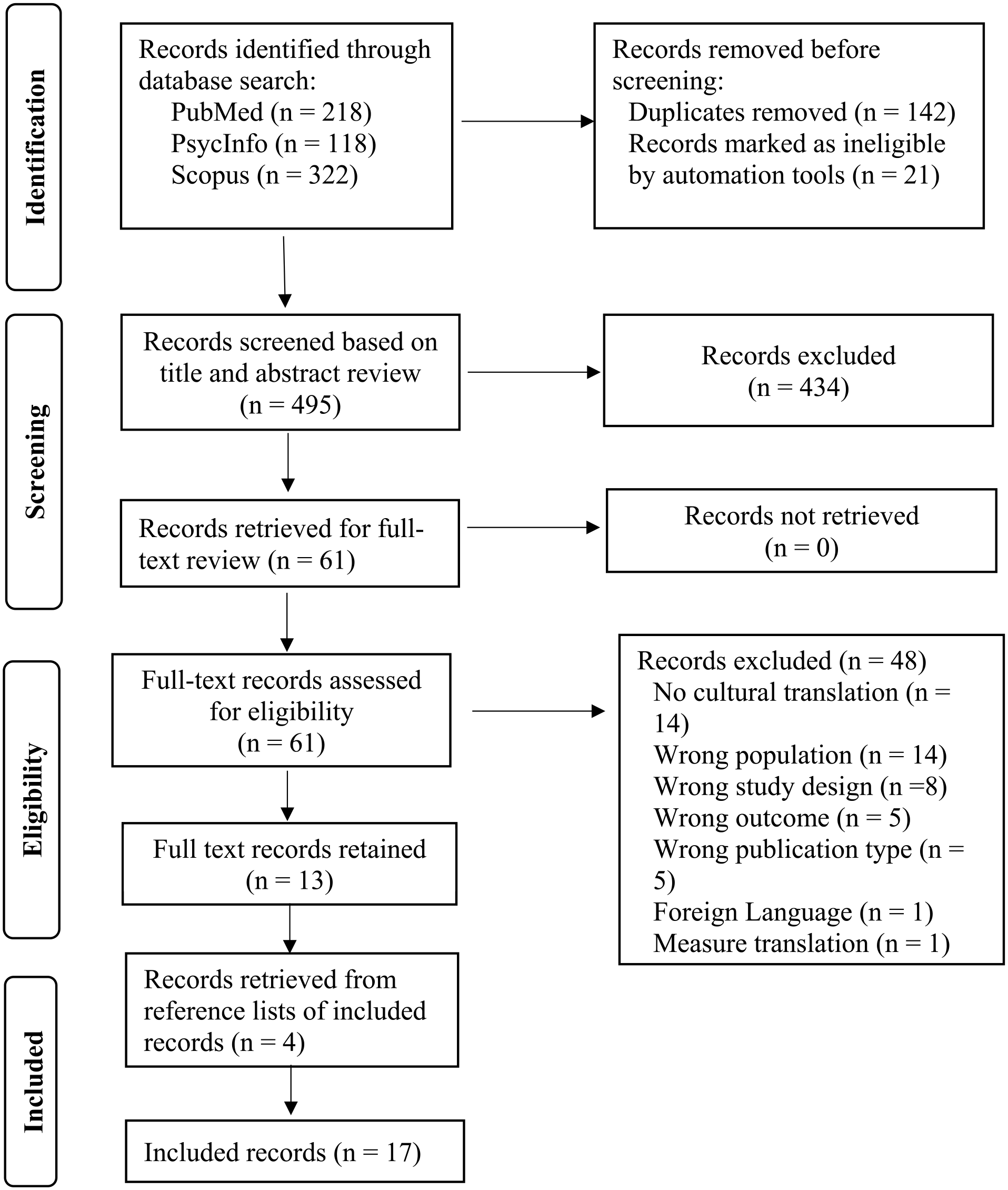
PRISMA Flow Diagram.
Step 3: Selection of Studies
Results from all searches (n = 658) were imported into EndNote X9, duplicates removed (n=119) or marked as ineligible by automation tools (n = 21), and then imported into Rayyan (Ouzzani et al., 2016) where an additional 23 duplicates were identified and removed, leaving 495 records for abstract screening. Two team members independently screened the titles and abstracts, with disagreements resolved through discussion with the research team. A total of 61 studies were identified as eligible for full-text review and reviewed by two independent reviewers, with discrepancies resolved through research team discussion, with 48 studies excluded. Thirteen articles were retained with four further articles retrieved from hand-searching reference lists of eligible studies, leaving 17 studies.
Step 4: Extracting and Charting the Results
The research team developed a data abstraction tool. Two reviewers independently abstracted data from two studies and discussed differences in data extracted. Following that, they abstracted the data from the remaining articles, meeting regularly to discuss abstracted data with the team, to resolve discrepancies.
Step 5: Summarizing and Reporting the Results
Data were summarized based on the caregiver population, study design, whether an adaptation framework was used, and if so, the type of framework, distinguishing characteristics of the adaption, and study results.
Results
Samples in the 17 retained studies included family caregivers to persons with cognitive decline and dementia, older adults, young children, stroke, diabetes, cancer, or depression, with cognitive decline or dementia being the most frequent condition (Table 1). About one-third of studies included the caregiver/care recipient dyad, one study included the family unit, with the remainder included only the family caregiver. Latino family caregivers were mostly classified as Mexican American, although several studies included caregivers from Puerto Rico, Cuba, and South America. About half of the studies were described as pilot studies (Beasley et al., 2014; Cruz-Oliver et al., 2016; Kajiyama et al., 2018; Mendez-Luck et al., 2019; Parra Cardona et al., 2012; Perrin et al., 2010; Santos et al., 2021; Valdez et al., 2013), most often utilizing a pre-post design to examine the effectiveness of an adapted intervention. Two studies described their protocol for cultural adaptation (Rush et al., 2015; Torres Blasco et al., 2022). The remaining studies were descriptive qualitative or quantitative designs with the objective of understanding the context of Latino family caregiving to guide the adaptation of an intervention or measure (Kao et al., 2010; Luna et al., 1996; Neary & Mahoney, 2005; Phillips et al., 1996; Rocha, 2019; Rote et al., 2019).
Summary of Included Articles.
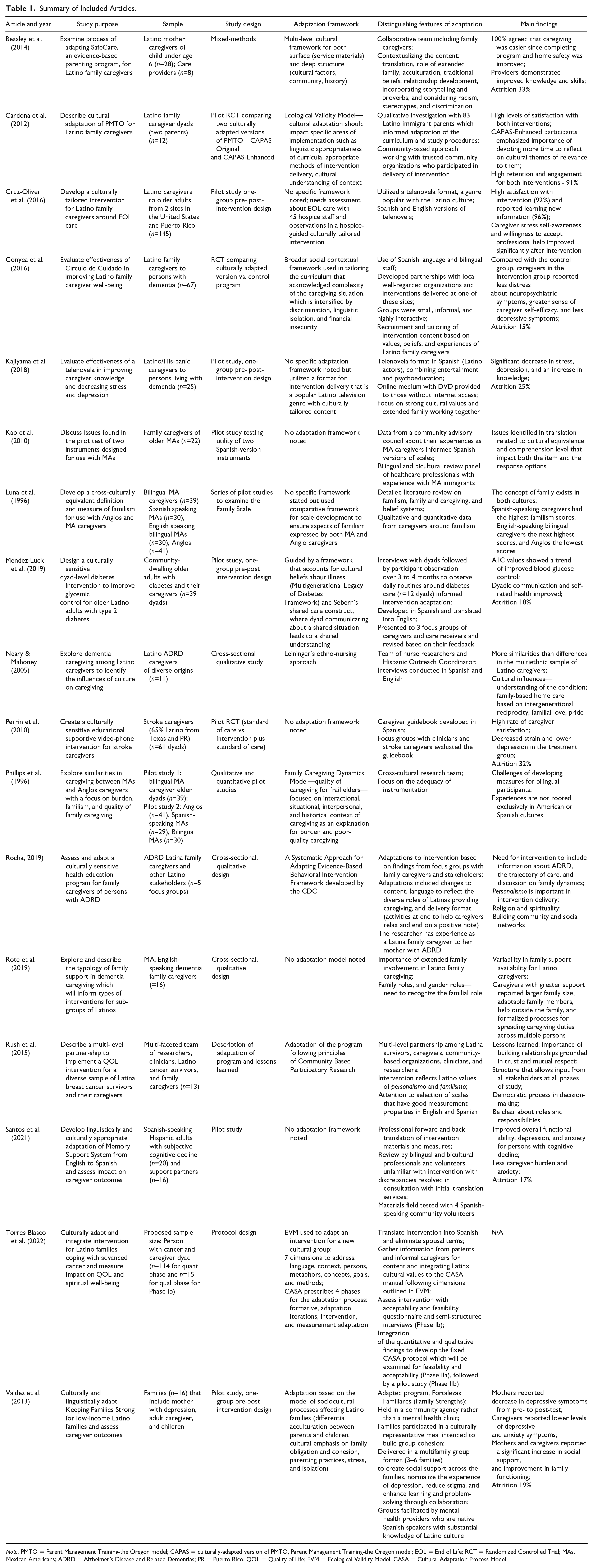
Note. PMTO = Parent Management Training-the Oregon model; CAPAS = culturally-adapted version of PMTO, Parent Management Training-the Oregon model; EOL = End of Life; RCT = Randomized Controlled Trial; MAs, Mexican Americans; ADRD = Alzheimer’s Disease and Related Dementias; PR = Puerto Rico; QOL = Quality of Life; EVM = Ecological Validity Model; CASA = Cultural Adaptation Process Model.
High levels of satisfaction and generally low attrition rates were reported in the pilot studies (Cruz-Oliver et al., 2016; Gonyea et al., 2016; Kajiyama et al., 2018; Mendez-Luck et al., 2019; Parra Cardona et al., 2012; Phillips et al., 1996; Santos et al., 2021; Valdez et al., 2013). A number of outcomes were examined across studies, and although conclusions are limited and related to weak designs, results are promising with the culturally adapted interventions showing improvement in caregiver outcomes across many domains. Studies reported improved caregiver knowledge (Beasley et al., 2014; Cruz-Oliver et al., 2016; Kajiyama et al., 2018), decreased stress, depression, anxiety, and caregiver burden (Cruz-Oliver et al., 2016; Gonyea et al., 2016; Kajiyama et al., 2018; Perrin et al., 2010; Santos et al., 2021; Valdez et al., 2013). Among other outcomes reported, Cruz-Oliver et al. (2016) reported that caregivers were more likely to accept professional help, Mendez-Luck et al. (2019) reported improved communication and self-rated health of caregivers and Valdez et al. (2013) reported improvements in social support and family functioning.
Frameworks Guiding Cultural Adaptation
Beasley et al. (2014) utilized a multilevel cultural framework that addressed both surface and deep structures to adapt an evidence-based parenting program for Latino caregivers (Resnicow et al., 2000). Surface structure adaption was focused on cultural branding of the program, such as creating program materials to match the characteristics of their population. Deep structure adaptation focused on tailoring the intervention to include cultural values and tradition, aspects that may impact outcomes of the intervention. Both Parra Cardona et al. (2012) and Torres-Blasco et al. (2022) used an ecological validity model (Bernal et al., 1995) to guide their adaptation process. According to the model, adaption of an intervention for a new cultural group must address language, context, persons, metaphors, concepts, goals, and methods. Examples of how these aspects were integrated into the intervention process include translation, culturally relevant stories, and visual aids as well as the integration of Latino family values, traditions, and communication styles. Several investigators utilized frameworks which acknowledged the social context faced by Latino family caregivers, including poverty and racism, which compound the complexity of their caregiving situation (Gonyea et al., 2016; Mendez-Luck et al., 2019; Phillips et al., 1996; Valdez et al., 2013). Mendez-Luck et al. (2019) utilized the Multigenerational Legacy of Diabetes Framework (Scollan-Koliopoulos et al., 2005) that accounts for cultural beliefs about the illness to guide tailoring their dyadic intervention for Latino persons with diabetes and their family caregivers. Rocha (2019) utilized a framework developed by the Centers for Disease Control (CDC) which provides a systematic approach for adapting evidence-based interventions, with assessment, preparation, and implementation phases. While about half the studies did not report a framework for adaptation, some investigators utilized the results of interviews, focus groups, and participant observation to inform the adaptation (Mendez-Luck et al., 2019; Parra Cardona et al., 2012; Rocha, 2019; Rush et al., 2015; Torres Blasco et al., 2022).
Distinguishing Features of the Adaptation
More than half of the studies utilized a team to guide the adaption, with Latino family caregivers participating on the team (Beasley et al., 2014; Rush et al., 2015) as well as a combination of researchers and service providers, with at least some members experienced in working with Latino families (Beasley et al., 2014; Gonyea et al., 2016; Kao et al., 2010; Luna et al., 1996; Neary & Mahoney, 2005; Parra Cardona et al., 2012; Rocha, 2019; Rush et al., 2015; Santos et al., 2021; Torres Blasco et al., 2022; Valdez et al., 2013). Investigators described utilizing modes of intervention delivery that would appeal to Latino family caregivers, including processes such as storytelling and proverbs that helped to contextualize the content. Both Cruz-Oliver et al. (2016) and Kajiyama et al. (2018) used a telenovela approach. Interventions were facilitated by bilingual facilitators, importantly those who had experience in Latino outreach (Kao et al., 2010; Neary & Mahoney, 2005; Rocha, 2019; Valdez et al., 2013). Place of delivery was also considered. Valdez and colleagues (2013) chose a community agency for the delivery of their mental health family intervention program rather than a clinic setting.
Investigators acknowledged that translation into Spanish was a necessary but insufficient aspect of cultural adaptation. Three studies focused on measurement, with the goal of establishing scales with good psychometric properties among Latino family caregivers to be used for measuring the impact of the adapted interventions (Kao et al., 2010; Luna et al., 1996; Phillips et al., 1996). Phillips et al. (1996) identified the challenges that exist in measurement for bilingual or Spanish-speaking caregivers as language equivalence does not equate to cultural significance. For example, the country of birth of the target population must be addressed when translating and adapting measurement scales as there are differences within the Spanish dialects that could impact the meaning and understanding of measurement scales (Kao et al., 2010).
Integration of Cultural Values Into Adaptation
Lack of knowledge about a condition or disease, or cultural beliefs about the cause of an illness, such as dementia being attributed to old age, were recognized as important to address in adapting an intervention. Investigators collected information on caregiver beliefs about the conditions they were caring for through semi-structured interviews (Beasley et al., 2014; Mendez-Luck et al., 2019; Neary & Mahoney, 2005; Rocha, 2019; Rote et al., 2019). Using entertainment, psychoeducation, and culturally significant actors (i.e., religious leaders), these forms of delivery provided disease education to help change attitudes and build knowledge about the condition (Cruz-Oliver et al., 2016; Kajiyama et al., 2018). In adapting their dyadic diabetes intervention, Mendez-Luck et al. (2019) included discussion about the participants’ views about diabetes and activities related to diabetes care. In several studies focused on dementia family caregiving, foundational content about dementia, its causes, and its progression was added (Gonyea et al., 2016; Kajiyama et al., 2018; Rocha, 2019). Addressing cultural beliefs was associated with positive effects in the satisfaction, helpfulness, and acceptance of the adapted interventions (Beasley et al., 2014; Kajiyama et al., 2018; Mendez-Luck et al., 2019). Addressing knowledge and cultural beliefs helped Latino caregivers become more aware of burden and more open to receive professional support (Cruz-Oliver et al., 2016).
Semi-structured interviews were used to probe family involvement in the context of program engagement, gender beliefs, obligations to parents and own families, social and family contexts of caregiving, and improving communication (Beasley et al., 2014; Neary & Mahoney, 2005; Rocha, 2019; Rote et al., 2019). Investigators described interventionist training to build understanding of the importance of family within the Latino culture, incorporate the extended network directly and indirectly into services, and ensure mastery of delivery of the core components of the intervention (Beasley et al., 2014; Parra Cardona et al., 2012). Gonyea et al. (2016) adapted their content based on the cultural value of familism to include greater sensitivity in how a sense of family was experienced, internalized, and expressed by participants. Torres Blasco et al. (2022) integrated training on improving communication skills for couples and improving family communication dynamics, including adaptations for non-spousal caregivers by eliminating spousal terms and using more generalized caregiving terminology. In several studies, adaptations specifically addressed improving family communication (Rush et al., 2015; Torres Blasco et al., 2022; Valdez et al., 2013). For example, Rush et al. (2015) focused on improving communication skills among cancer survivors and their caregivers by emphasizing the impact of the diagnosis on everyone in the family and valuing the family unit over individual interests.
Most reviewed studies targeted relationship development as a key aspect of adaptation (Beasley et al., 2014; Cruz-Oliver et al., 2016; Gonyea et al., 2016; Mendez-Luck et al., 2019; Neary & Mahoney, 2005; Parra Cardona et al., 2012; Rocha, 2019; Rote et al., 2019; Rush et al., 2015; Santos et al., 2021; Torres Blasco et al., 2022; Valdez et al., 2013). The integration of the cultural value of personalismo (a personal connection; Kelley et al., 2020) was seen through various strategies used by researchers to understand the nature of relationships, how and when to discuss personal information, remembering children or other family members, remembering important events and managing communication (Beasley et al., 2014). Investigators partnered with trusted community-based partners in the form of local Latino community agencies, advisory board members, consultants, and churches and utilized bilingual or Latino research staff, interventionists or outreach coordinators (Gonyea et al., 2016; Mendez-Luck et al., 2019; Neary & Mahoney, 2005; Parra Cardona et al., 2012; Rocha, 2019; Rote et al., 2019; Rush et al., 2015; Santos et al., 2021). Investigators incorporated specific training for their interventionists to foster relationship-building through being present at interventions for a longer time to provide for mutual exchange of conversations, using interventionists with past experience of the disease, bilingual staff or volunteers, or through the use of cultural experts to help administer the intervention (Gonyea et al., 2016; Parra Cardona et al., 2012; Rush et al., 2015; Santos et al., 2021; Torres Blasco et al., 2022). Group interventions were conducted to encourage interaction among the researchers and group members (Beasley et al., 2014; Cruz-Oliver et al., 2016; Gonyea et al., 2016; Rocha, 2019; Valdez et al., 2013). Rocha (2019) emphasized the importance of activities at the end of the sessions to help caregivers relax and end on a positive note. Valdez et al. (2013) provided a culturally representative meal before the delivery of the intervention to build group cohesion. Investigators reported that participants felt “heard” when adaptation was centered to their personal needs (Gonyea et al., 2016; Mendez-Luck et al., 2019; Valdez et al., 2013).
Discussion
This scoping review aimed to describe the process of adapting interventions for Latino family caregivers, including frameworks guiding the adaptation, characteristics of the adaptation, and how cultural values important to Latino family caregivers were integrated into the intervention. While the number of interventions tailored for Latino family caregivers to persons living with dementia is growing, few studies have provided sufficient detail about the adaptation process, including guiding frameworks. This information is essential to inform future research in this area. Based on the findings from this scoping review, recommendations are made to guide both practitioners and researchers (Figure 2).
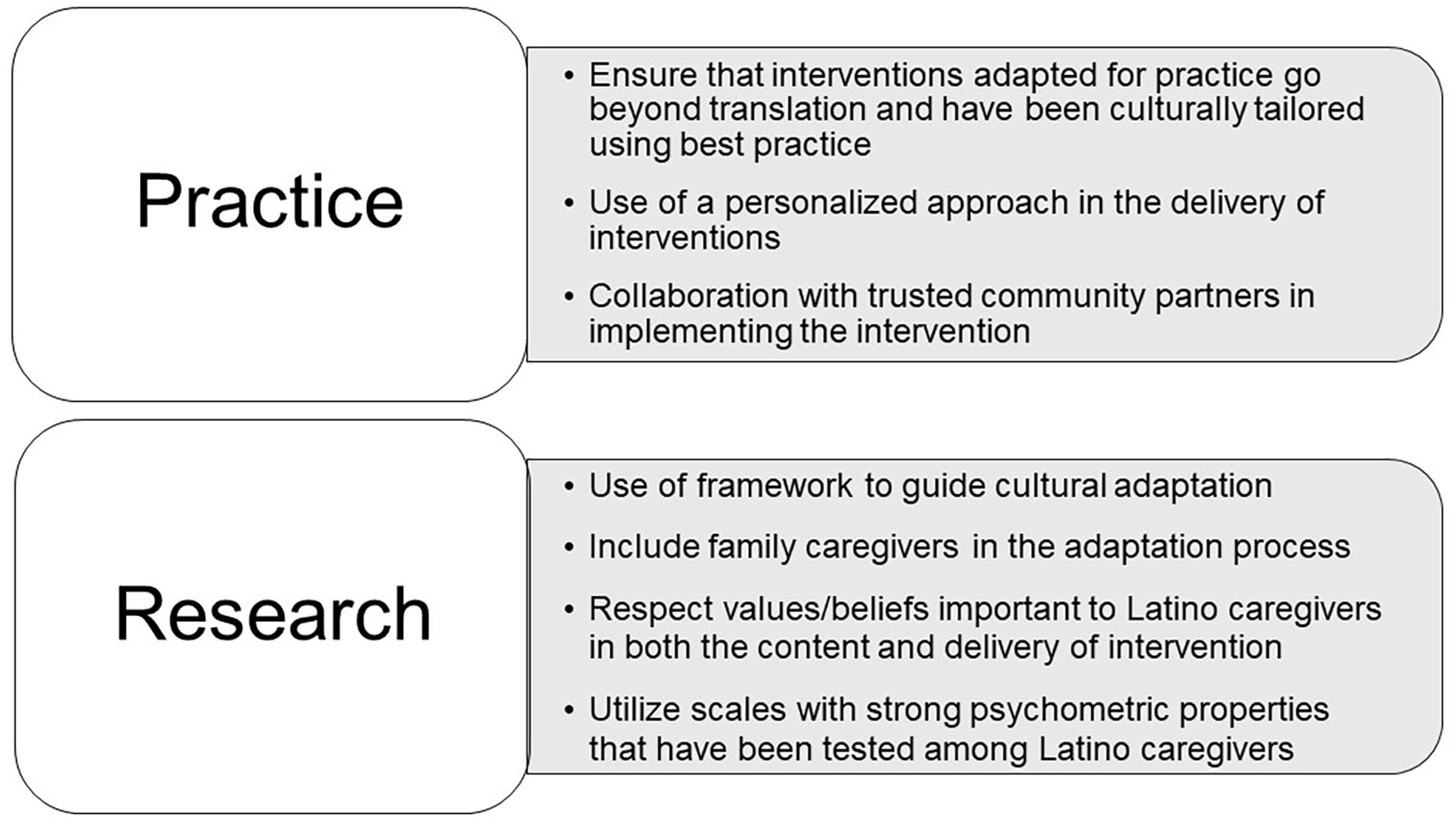
Practice and Research Recommendations Based on Findings From Scoping Review.
Practice and Research Recommendations
Adapting a supportive care intervention for the practice setting requires more than Spanish language translation; it is imperative that the selected intervention for Latino family caregivers has been adapted using best practice. Modifications to the delivery and content of the intervention to include cultural elements may enhance participation among Latino family caregivers (Parker et al., 2023). The reviewed studies emphasized the importance of a personalized approach, including partnerships with trusted community organizations and individuals who have experience with Latino family caregivers. Delivery of the program necessitates an understanding among practitioners who implement the program of the cultural nuances and care preferences of Latino family caregivers. Translation of an intervention into practice could utilize community health workers (CHWs)/promotores in delivering the intervention (Varma et al., 2022). Trust is paramount, and as trusted members of their respective communities, CHWs can play a significant role in working with the team to develop trust with Latino family caregivers to persons living with dementia.
The review also offers recommendations to guide research. The first recommendation concerns the use of a framework to guide the adaptation. About half the studies did not describe a framework that guided their adaptation process and very few within the context of family caregiving for persons living with dementia. Frameworks help to systematically identify the many dimensions that are important to consider in the adaptation process (Barrera et al., 2013). Dessy et al. (2022) identified the need for future research that addresses the psychosocial, cultural, and economic factors that impact Latino family caregivers. A framework can provide a more comprehensive approach to adaptation, ensuring that factors such as the above are considered in both the content and the delivery. Within the review, several frameworks that consider the broader social context and how this contributes to the complexity of caregiving for Latino family caregivers were identified. Frameworks such as the multilevel cultural framework (Beasley et al., 2014) and the Ecological Validity Model (Parra Cardona et al., 2012; Torres Blasco et al., 2022) can guide cultural adaptation of an intervention for family caregivers. Gonyea et al. (2016) used a social contextual framework that acknowledged the discrimination, isolation related to language, and financial insecurity experienced by Latino family caregivers in adapting their intervention, using case examples that integrated many of these themes.
A second recommendation relates to the methodology of the adaptation. Several studies described a community-based participatory approach in conducting their research (Beasley et al., 2014; Rush et al., 2015) while other investigators used the content from focus groups or interviews with family caregivers to inform their work. Including the voices of the target population of family caregivers in the adaptation process, through participatory-based research, will contribute to the feasibility and relevance of the adapted intervention.
A third recommendation concerns the content and delivery of the intervention, addressing values important to Latino family caregivers. The reviewed studies demonstrated the importance of integrating content that acknowledged and respected the cultural beliefs of Latino caregivers, including beliefs about the condition, familismo (importance of family) (Kelley et al., 2020), and personalismo. Within the context of dementia family caregiving, several surveys have reported limited knowledge among Latinos about risk factors for dementia and the consequences of the diagnosis (Cruz, 2013; Gelman, 2010), with early symptoms of Alzheimer’s, including memory loss, attributed to old age and assumed to be an inevitable part of aging. In adapting interventions, it may be necessary to address the issue of health literacy around dementia and its causes by adding content about dementia, its diagnosis, and trajectory. Consideration of the strong value of family among Latinos can inform the adaptation of future interventions. In a national survey, 82% of Latino family caregivers reported at least one other unpaid relative or friend helping with caregiving responsibilities (Evercare, 2008). While many interventions have focused on a primary caregiver, considering the strong emphasis on family among Latinos and the likelihood of more than one caregiver, future intervention research could expand the focus to target multiple family members.
Concomitant with the need for further research to develop culturally tailored interventions for Latino family caregivers of persons living with dementia, a fourth recommendation relates to measurement. There is a need for scales with strong psychometric properties among Latino family caregivers to reliably measure the impact of the intervention. Within the reviewed studies, few investigators described the reliability and validity among Latino family caregivers of their selected measures (Gonyea et al., 2016; Rush et al., 2015; Santos et al., 2021). Rush et al. (2015) described selecting PROMIS measures that follow a strict translation protocol for cross-cultural and language translation (Eremenco et al., 2005). Two studies included in this review (Kao et al., 2010; Luna et al., 1996) underlined the importance of measurement and issues of cultural equivalence, with a focus on familism. Kao et al. (2010) identified the pitfalls related to using Spanish-translated versions of a scale that has been developed and tested only with English-speaking caregivers, including issues both at the level of the item and the response options. In many studies, related to the lack of measures tested among Latino family caregivers, investigators have, of necessity, relied on translated scales, without evidence of cultural equivalence for this population (Gallagher-Thompson et al., 2001). More recently, several studies have been conducted to examine the issue of cultural equivalence among measures developed for family caregivers (Teresi et al., 2020a, 2020b), helping to address the gap in reliable and valid measurement for Latino family caregivers.
Limitations
The review findings need to be considered in light of some limitations. Although we used a rigorous search strategy, screening, and extraction process, it is possible that some studies may have been missed. In line with the scoping review methodology and considering our research objectives, a quality appraisal was not conducted. Given the nature of the review, while we were able to describe the elements that were considered and the process of adaptation, there is insufficient evidence to comment on the added benefit of a culturally adapted intervention vs. an intervention that has not been culturally adapted. While the analyses and results were described for Latino caregivers in general, there is some evidence that subgroups of Latino family caregivers may approach caregiving with different values and beliefs, particularly around familismo. (Gelman, 2014; Martinez et al., 2022). It was not possible to conduct the analyses by sub-group related to missing information in the articles or insufficient numbers for certain groups, thus affecting the generalization of the recommendations.
Conclusion
The challenges faced by Latino family caregivers to persons living with dementia are compounded by their limited access to Spanish-language materials and culturally sensitive resources (Alzheimer’s Association, 2021). Adapting evidence-based family caregiver interventions is a key to increasing access to resources for Latino family caregivers (Wu et al., 2016). The findings from this review provide recommendations for future research aimed at adapting interventions for Latino family caregivers with the goal of reducing inequities in health care access for this vulnerable group.
Supplemental Material
sj-docx-1-tcn-10.1177_10436596241256328 – Supplemental material for A Scoping Review to Contribute to Knowledge About Culturally Adapting Interventions for Latino Family Caregivers of Persons Living With Dementia
Supplemental material, sj-docx-1-tcn-10.1177_10436596241256328 for A Scoping Review to Contribute to Knowledge About Culturally Adapting Interventions for Latino Family Caregivers of Persons Living With Dementia by Daria B. Neidre, Roxana E. Delgado, Kimberly S. Peacock, Luis P. Luy and Carole L. White in Journal of Transcultural Nursing
Supplemental Material
sj-docx-2-tcn-10.1177_10436596241256328 – Supplemental material for A Scoping Review to Contribute to Knowledge About Culturally Adapting Interventions for Latino Family Caregivers of Persons Living With Dementia
Supplemental material, sj-docx-2-tcn-10.1177_10436596241256328 for A Scoping Review to Contribute to Knowledge About Culturally Adapting Interventions for Latino Family Caregivers of Persons Living With Dementia by Daria B. Neidre, Roxana E. Delgado, Kimberly S. Peacock, Luis P. Luy and Carole L. White in Journal of Transcultural Nursing
Footnotes
Acknowledgements
The authors gratefully acknowledge the expert assistance of Emme Lopez, MLS, in conducting this scoping review.
Declaration of Conflicting Interests
The author(s) declared no potential conflicts of interest with respect to the research, authorship, and/or publication of this article.
Funding
The author(s) disclosed receipt of the following financial support for the research, authorship, and/or publication of this article: This work was supported by the Retirement Research Foundation (grant number #2021318).

Supplemental Material
Supplemental material for this article is available online.
References
Supplementary Material
Please find the following supplemental material available below.
For Open Access articles published under a Creative Commons License, all supplemental material carries the same license as the article it is associated with.
For non-Open Access articles published, all supplemental material carries a non-exclusive license, and permission requests for re-use of supplemental material or any part of supplemental material shall be sent directly to the copyright owner as specified in the copyright notice associated with the article.
