




Abstract
In this article, we systematically review the literature on the ethics of nudging. Since the publication of the book Nudge by Richard Thaler and Cass Sunstein in 2008, a rich literature has been developed on the question whether it is ethical to nudge people. This is an important area for research as nudges are commonly used by governments and private corporations to alter the behaviour of citizens and consumers. In order to gain a complete overview of this literature, we conduct a systematic search of academic sources. We investigate which ethical issues with nudging are discussed. We find four major ethical issues, namely worries regarding 1) autonomy, 2) welfare, 3) long-term adverse effects, and 4) democracy and deliberation. We discuss each ethical issue by highlighting how it is defined, what the critique constitutes, what its sub-issues are, and which defences of nudging have been argued for. In this way, the systematic literature review provides a comprehensive overview of the literature on the ethics of nudging to date. The results of our systematic review contribute to a better understanding of the ethical issues with nudging, as well as of the current state of the literature on these topics.
Introduction
In this article, we aim to systematically review the literature on the ethical issues with nudging. The term nudge was coined by Thaler and Sunstein (2008), who argue that insights from psychology and behavioral economics can be used to influence people’s choices without limiting their freedom of choice. They define nudges as “any aspect of the choice architecture that alters people’s behaviour in a predictable way without forbidding any options or significantly changing their economic incentives” (Thaler and Sunstein, 2008: 6) where choice architecture means “the context in which people make decisions (Thaler and Suntein, 2008: 3). More precisely, nudges can be defined as attempts to steer an agent’s behaviour by means of targeting their “shallow cognitive processes”, rather than preventing or hindering certain choice alternatives to be chosen. Closely related to the notion of nudge is the concept libertarian paternalism - the idea that nudges can be used to steer people subtly towards choices that improve their welfare whilst still respecting their freedom of choice (Thaler and Sunstein, 2008). Both nudging and its libertarian paternalist justification are controversial and have sparked a vast literature on the ethics of nudging that encompasses arguments from economics, law, politics, public policy, and philosophy. Against this backdrop, we will systematically review the academic literature on the ethics of nudging and aim to investigate the ethical issues with nudging in the debate.
Discussing the ethics of nudging is important because nudges, as a means of behaviour modification, are argued to be capable of steering the choices of consumers and citizens on a large scale. Such influence raises potential concerns about abuse, violation of autonomy and manipulation. In addition, the goals of nudging need to be ethically evaluated because the directions in which people are nudged could significantly impact society and its members. A normative discussion is required to decide who may decide on the goals of nudges, for which goals nudges are appropriate and who should benefit from the use of nudges.
Nudging is commonly used in both the public and the private sector. In the public sector, the UK government has attracted attention by widely adopting nudge practices under the Cameron administration (Halpern, 2015). In 2010 it launched a specialised Behavioral Insights Team to investigate and execute behavioral public policies. Many other governments have since erected similar behavioral centres for nudging (OECD, 2020). Government’s active aim to influence citizen behavior poses ethical questions about citizen autonomy, political power and political legitimacy.
Likewise, in the private sector, many corporations use nudges. Especially large tech firms are notorious for using behavioral insights to affect consumer behavior (Yeung, 2017). The combination of behavioral research with vast amounts of behavioural data allows corporations to effectively steer consumer behaviour (Zuboff, 2019). Corporate power to persuade and influence consumers raises questions regarding the moral permissibility of nudges. If corporate nudges are effective, it can be questioned whether nudges respect autonomy and if economic transactions improve consumer welfare. Therefore, it is highly relevant to investigate which ethical issues exist with respect to nudging.
Before commencing, we need to present how this review relates to previous reviews on the nudging literature. Schmidt and Engelen (2020) present an overview of the arguments in the debate on the ethics of nudging, which is valuable and of high quality. However, they do not systematically review the literature. They simply focussing on concisely presenting the argument in favour of and against nudging. Second, Vugts et al. (2020) do systematically review the literature, albeit only with respect to the ethical issue of autonomy, and only on a selection of 33 articles. We use their valuable insights to structure our own discussion of autonomy. Third and last, Congiu and Moscati (2022) review the literature on three points: the definition of nudging, the justifications of nudging, and the effectiveness of nudging. Our review shares some overlap mainly on the point of the definition. Aside from the definition, their review engages more with the empirical literature, where we focus on the philosophical literature, as our focus is on ethical issues.
This literature review proceeds in two parts. First, we discusses how the articles included in the review were selected and analysed in the methodology section. Subsequently, in the results section we present the ethical issues in the literature.
Methodology
Since we expect to find discussions of the ethics of nudging in various disciplines, this review uses three disciplinary databases: EbscoHost (academic search complete), Web of Science (core collection) and Scopus. Together, these databases contain publications from professional societies and reports, as well as peer-reviewed journals and online resources, covering a wide variety of research disciplines.
Two sets of search terms are used. The first set consists of the search term ‘nudg*’ (to include nudge, nudges, nudging, etc.) and the related phrases ‘choice architect*’ and ‘libertarian paternal*’. The search terms in the second set capture the concept of ethical issue, as defined previously. These include ethic*, moral*, valu*, norm* and virtue*. Together, these sets form the following search string: nudg* OR “choice architect*” OR “libertarian paternal*”) AND (ethic* OR moral* OR valu* OR norm* OR virtue*.
Entering these search terms in the selected databases and excluding all languages other than English yields 488 results in Ebsco, 1039 in Web of Science and 1248 in Scopus (see the PRISMA table in Figure 1 below). After filtering out duplicates, the total of unique identified records is 1693. PRISMA Table Results database search.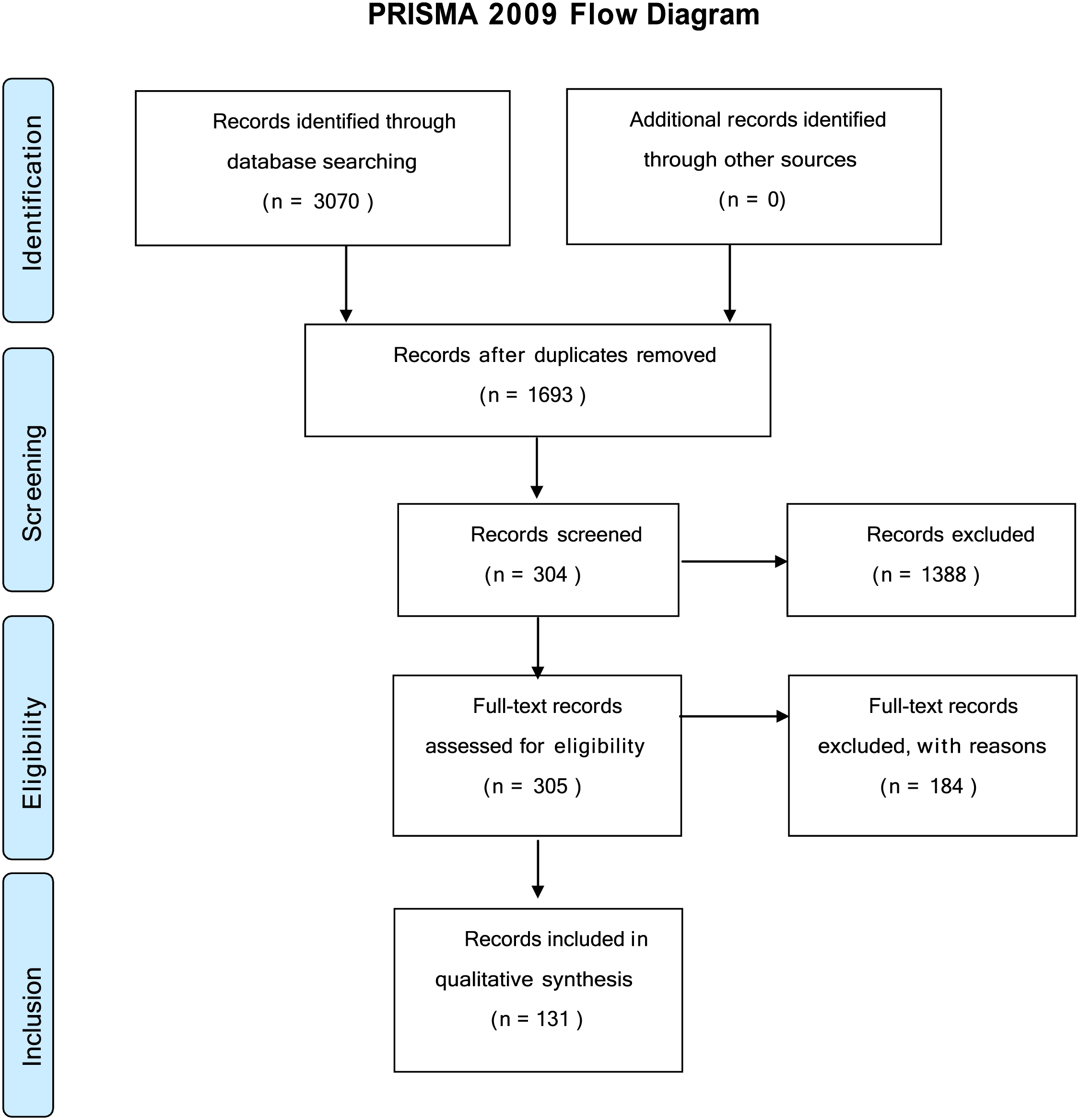
In the screening stage, we assess the eligibility of all records. The sole inclusion criterion for eligibility is that a record must significantly discuss the ethical issues with nudging. The records can be divided into four categories: a) peer reviewed journal articles; b) books; c) book chapters or sections; and d) commentaries, reviews, editorials, and responses. To assess the eligibility of a peer reviewed article, we read the title, abstract and bibliography. For books, we read the title, table of contents and the introduction. For book chapters that have an abstract (commonly those in edited collections), we read the title, abstract and bibliography while for those that do not have an abstract, we read the introduction instead. Since most commentaries do not contain substantial arguments, they were excluded. Filtering the records based on these criteria leaves a total of 305 unique results. Subsequently, we read the screened records in full to definitively assess their relevancy. We exclude another 184 records that as they do not meet the defined inclusion criterion, which leaves 131 records.
We analysed these records by annotating them. All sections that go into either the definition of nudge or the morality of nudges, broadly conceived, were marked. For those marked section that concern the morality of nudging was then asked: is the author raising an ethical issue here? If the answer was affirmative, it was asked whether this ethical issue was seen previously in the review, or if the ethical issue was new to the review. In this way, we uncovered four ethical issues, as presented in the following section.
General results
In this result section, we start with a general overview of the literature. We then present our findings with respect to four ethical issues with nudging.
The literature on the ethics of nudging commenced with the publication of the book Nudge in 2008. As becomes evident from Figure 2, the number of contributions has gradually been growing since then. Entries ranked on year of publication.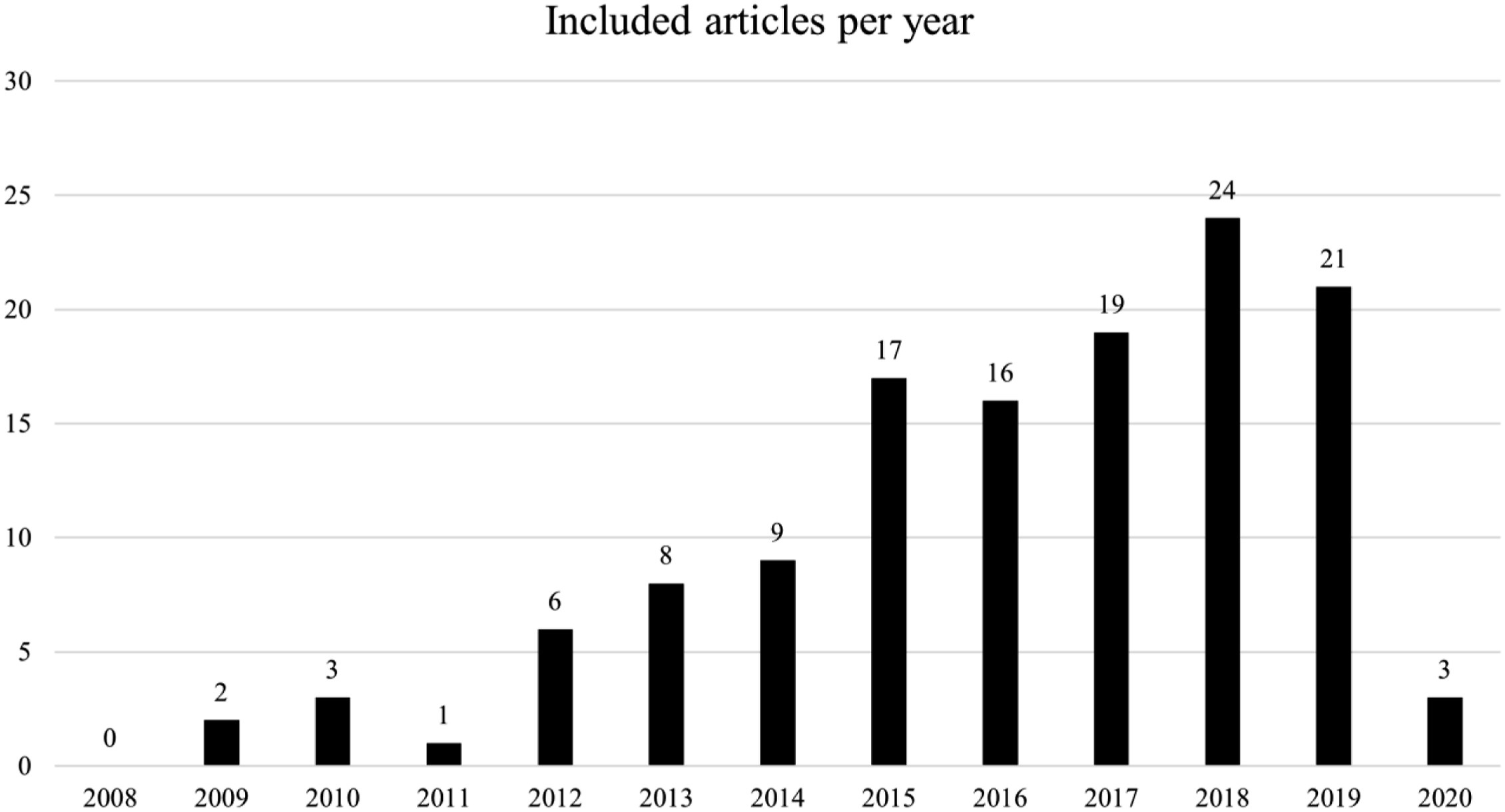
Research fields
The articles can be categorized into their respective research fields (Figure 3). In the largest research field, healthcare, the morality of nudges aimed at improving health is discussed. This domain includes discussions about using nudges to increase organ donation, stimulate healthy living (e.g., by discouraging drinking and smoking (Quigley, 2014; Ram-Tiktin, 2018; Schmidt, 2016), stimulating healthy nutrition (Bonotti, 2015; Korthals, 2015) and physical exercise), increase vaccination rates (Navin, 2017), pediatric practice (M’hamdi et al., 2017; Navin, 2017; Stanak, 2019) decrease winter deaths (Allmark and Tod, 2014), steer patient choices during important health decisions such as to operate or not (Epstein, 2017; Gorin et al., 2017), and steer people to register for pre-emptive screening of diseases (Damhus et al., 2018; Hofmann and Stanak, 2018). It also includes questions surrounding informed- and presumed consent (Whyte et al, 2012; Cohen, 2013; Gelfand, 2016; Mehlman et al., 2018) and the question whether family members of a patient could be nudged (Blumenthal-Barby and Opel, 2018; Chandler and Gruben, 2016; Sharif and Moorlock, 2018). In the second field, philosophy, the morality of nudges is discussed in abstractum, without explicitly applying them to any area of empirical research. The third field contains records discussing politics, legislation, and law, focusing on the morality of nudges by the government or the legislator to improve citizen well-being. The fourth research field tackles the morality of nudges in technology. This field mainly focusses on digital technology, but it also includes records on the question whether robots could nudge (Borenstein and Arkin, 2016, 2017; Burr et al., 2018), the relationship between technology as a shaping factor and nudging as a shaping factor (Dorrestein and Verbeek, 2013) and adaptive or personalised choice architectures (Susser, 2019). Economic sources discuss the formulation of economic concepts such as preferences, rationality and welfare and their respective normative implications. Next, the environmental studies domain includes all nudges that aim to steer people towards greener choices (see for example Hilton, et al. 2018). The last fields consist of one or two papers: nudging decisions in information security (Renaud and Zimmerman, 2018), nudging in marketing (Smith et al., 2013), nudging as financial regulation (White, 2017), nudging charitable donations (Hobbs, 2017), and nudging safety in the process industry (Lindhout and Reiniers, 2017). Records per research field.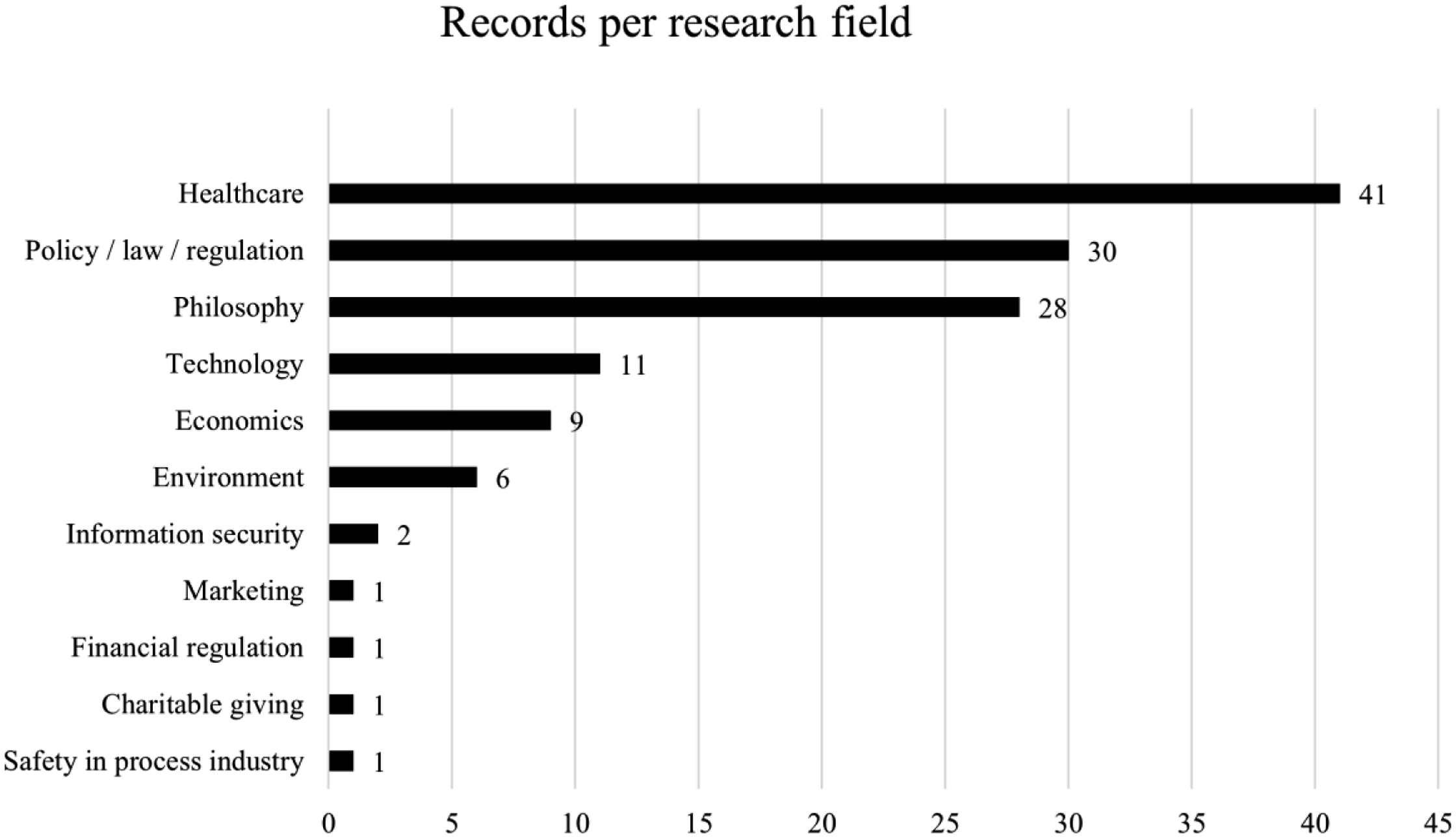
Nudger
Of each record we have identified who are considered to be the nudgers or choice architects. As can be seen from Figure 4, the government is by far the most frequently mentioned candidate to perform nudging. Some authors even define nudging as an act performed by the government, or as a policy tool (Grüne-Yanoff, 2018; Häußermann, 2020). This can be attributed to Thaler and Sunstein’s (2008) plea for governmental nudging to improve citizen wellbeing. While a large part of the literature focuses on the government as nudger, nudges need not necessarily be performed by the government, as private actors can nudge too. Often mentioned candidates other than the government are physicians, technological designers, and engineers. Nudgers mentioned.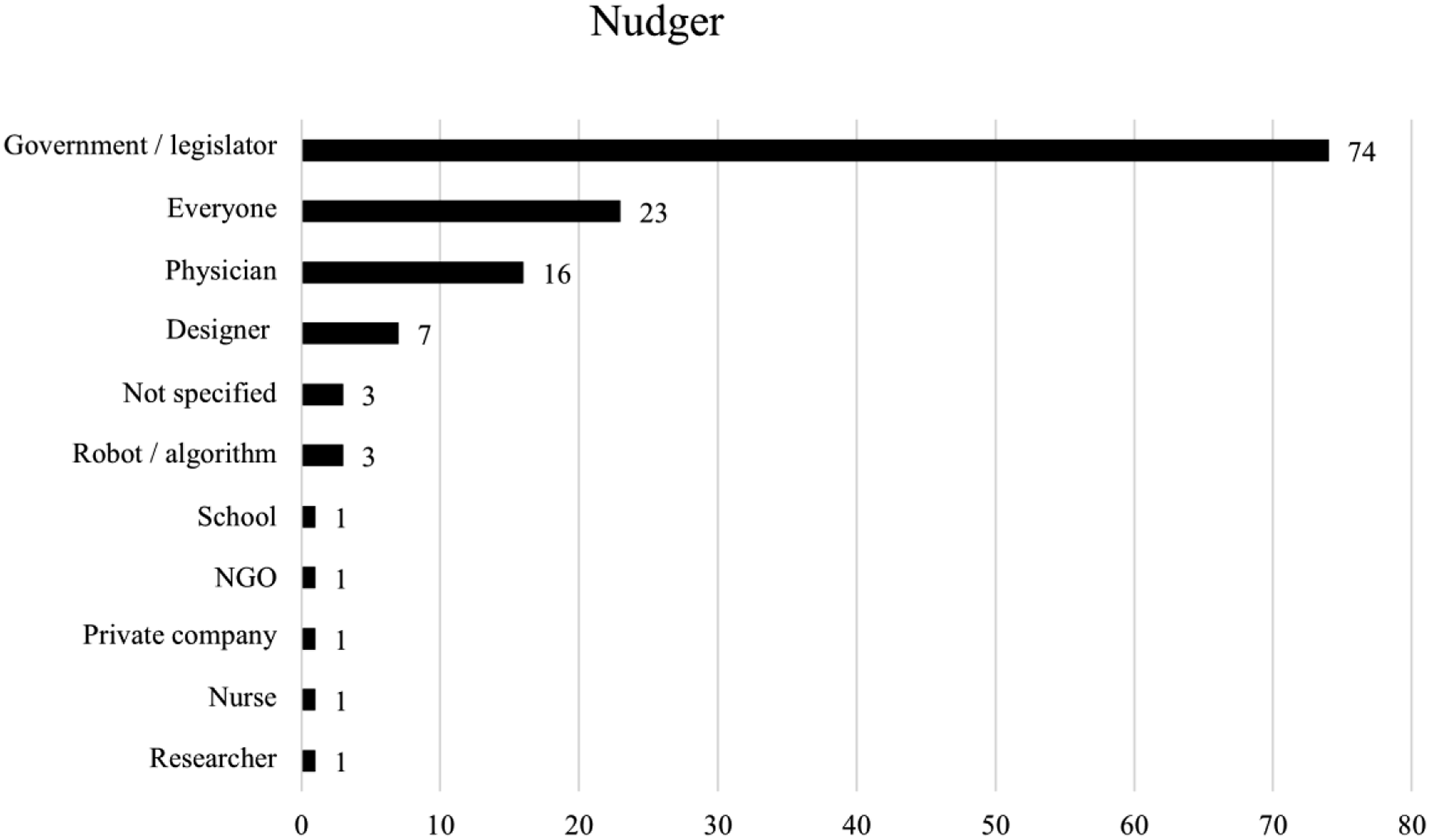
Ethical issue: Autonomy
One of the most prominently discussed ethical issues in the literature is the concern that nudges violate autonomy. 86% of the included records mentioned this issue (Figure 5). However, different authors have different conceptions of autonomy. To make clear which conceptions of autonomy are used in the literature on the ethics of nudging, Vugts et al. (2020) conducted a literature review on 33 articles and found three conceptions of autonomy used in the debate: 1) freedom of choice, 2) agency and 3) self-constitution. We found no reason to divert from this trifold conceptualization, so we use this conceptualization to structure our discussion of the issue of autonomy. Overview of how records stand towards the proposition “nudges violate autonomy”.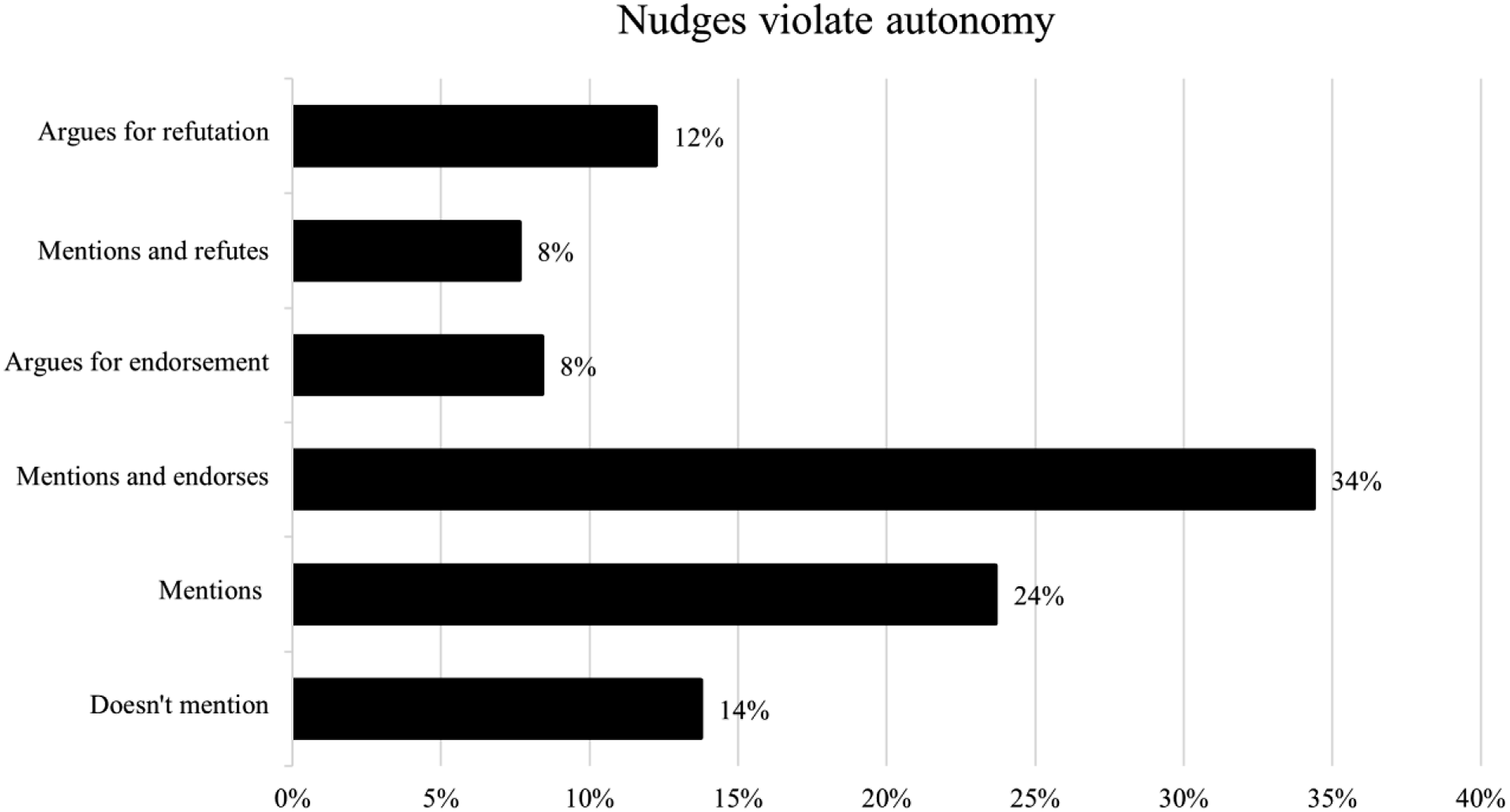
Freedom of choice
Autonomy conceptualized as freedom of choice involves having access to relevant alternatives without being forced to make any particular choice (Vugts et al., 2020). Authors who emphasize the importance of freedom of choice use a negative conception of liberty as the absence of control, pressure, or coercion (Berlin, 2017). This form of autonomy encompasses the absence of external pressures on an agent that might prevent her from acting as she wishes. Thaler and Sunstein (2008) argue nudges respect autonomy understood as freedom of choice because nudges leave people’s choice-set unchanged and do not provide significant (financial) incentives. Therefore, they argue, a nudged agent retains all options and is thus free to choose as she pleases: her autonomy understood as freedom of choice is respected.
In reviewing the literature, we found two strands of criticism that challenge the idea that nudges respect freedom of choice. The first strand of criticism argues that nudging violates the republican idea of freedom. Central in this ideal of freedom is the concept of arbitrary power, defined by Pettit as “(1) the capacity to interfere (2) with impunity and at will (3) in certain choices that the other is in a position to make.” (Pettit, 1996: 578). Crucially, Pettit focuses on the capacity to interfere rather than actual interference. Grüne-Yanoff (2012) applies this argument to governmental nudges and libertarian paternalism as he states that governments can exert arbitrary power over its citizens using libertarian paternalistic policies, thereby violating their autonomy. Thus, the ethical issue that he raises with respect to nudges is that governments capable of nudging can shape their citizen’s choices at will, which places them in a position of subjugation and constitutes a violation of autonomy. In the healthcare domain, a similar argument is made by Hamilton (2018) who uses the republican ideal of freedom to argue that physicians have arbitrary power over their patients when they nudge them to provide informed consent.
The second challenge to the idea that nudges respect freedom of choice is that nudges do not allow people to go their own way if they are not “easily resistible” (Saghai, 2013: 489). For Saghai, “[a]n influence does not sufficiently preserve freedom of choice if we are unable to easily resist it.” (Saghai, 2013: 488). So, the easy resistibility criterion requires nudges not only to leave the choice-set intact, but also to give choosers a genuine opportunity to resist the influence of the nudge. If the force of the nudge is of such strength that it substantially impacts an agent’s ability to make her own decision, the nudge violates her autonomy understood as freedom of choice, even if it leaves her choice -set unaffected. This critique of nudging can be reformulated as the idea that nudges are either effective, or easily resistible but cannot be both. Illustratively, Floridi (2016) argues there is a trade-off between the effectiveness and the easy resistibility of nudges. A similar argument can be found in Mills (2018).
Some authors aim to settle the question of whether nudges respect freedom of choice by empirical arguments that should prove the resistibility of nudges. Viale (2018) argues neurological processes prevent us from being cognitively able to resist the influence of nudges. However, this is contradicted by another empirical argument as Felsen and Reiner (2015) argue based on neurological evidence that nudges do not influence people more strongly or more invisibly than other factors that people encounter in everyday life. They argue that because of this, nudges do not hurt autonomy in any relevant sense.
Agency
Autonomy as agency involves capacity to reason, critically reflect, and make choices (Vugts et al., 2020). In contrast to autonomy as the absence of external pressures, this is a more positive conception (Berlin, 2017). To be autonomous requires not only having options and being free from interference but also having the internal capacity to reflect on the options provided and being free to act on them to achieve personal goals. A further difference with the first conception of autonomy is that this conception concerns the internal psychological processes of agents, as it requires mental capacities to deliberate, critically reflect and reason about preferences.
Nudges are criticized for violating autonomy as agency because they target shallow cognitive processes - the fast, automatic, and intuitive type 1 processes - to alter people’s behavior (Saghai, 2013). In this way, it is argued, nudges fail to treat people as reasoning subject and so diminish control and agency (Hausman and Welch, 2010; Lanzing, 2019; Noggle, 2018). Bovens argues: “there is something less than fully autonomous about the patterns of decision-making that Nudge taps into. […] we are not fully in control of our actions” (Bovens, 2009: 4). An example of such an argument can be found in MacKay and Robinson (2016) who focus on a specific type of nudges, namely defaults. When presented with a choice defaults are the alternative which the chooser “will obtain if the chooser does nothing” (Thaler and Sunstein, 2008: 83). For example, in certain countries citizens are considered organ donors by default whereas in other countries, they are not considered organ donors by default. Setting a default is a nudge because it does not affect the choice, yet has an effect on which alternative is chosen by most users. This can be explained by inertia, or by choosers experiencing the default as a recommendation. MacKay and Robinson argue that defaults seek to circumvent rather than engage reason and argumentative capacities. In their view, defaults circumvent rather than engage a reflective and deliberative choice and therefore harm autonomy as agency. In sum, autonomy as agency requires that agents are in control over their decisions by reflecting and deliberating about preferences. Nudges are critiqued for diminishing or circumventing critical reflection. This could have the effect that people make choices they might never make out of their own accord (Muldoon, 2018).
Engelen (2019a) refers to the idea that an agent is rational when she is able to think and reflect clearly as “process-rationality” (p 218). Being rational is then to be able to reason and reflect on preferences and believes. However, Engelen argues that a person should be called rational when she attains her desired outcomes, irrespective of the mental processes that she uses to achieve these outcomes. He refers to his form of rationality as “outcome-rationality” (Engelen, 2019a: 222). Outcome rationality differs from process rationality in that it does not require an agent to think rationally or deliberate about her choices. It only requires she makes choices that are in line with her core values.
Engelen argues that it is rational for an agent to act in a way that allows her to realize her self- chosen goals. Nudges undermine an agent’s rational thinking by targeting shallow cognitive processes. However, they can steer towards choices the agent endorses and allow her to resist those nudges towards choices she does not endorse. Ergo, a nudge is compatible with her status as a rational agent. This argument illustrates that rationality is not necessarily part of autonomy as agency, and that it is disputed whether the irrational influence that nudges exert is a sufficient basis to conclude nudges violate autonomy.
An important and often mentioned sub-worry regarding agency is that of manipulation. Manipulation is considered to be intentionally subverting someone’s deliberative capacities in a surreptitious way (Wilkinson, 2013). A such, manipulation prevents agents from reasoning about their preferences and is therefore a form of harming someone’s autonomy as agency. Manipulation is conceptualized as circumventing people’s “capacity for reason […] by exploiting nonrational elements of psychological makeup” (Blumenthal-Barby and Burroughs, 2012: 5), or as “using methods that pervert choice” (Wilkinson, 2013: 347). The manipulation critique thus states that nudges target what was previously defined as shallow cognitive processes and thereby trick agents into making decisions they would never have made on their own.
However, to call a nudge manipulative it must also be surreptitious; it must influence the nudgee in a secret, opaque way. This is because when an agent discovers she is being manipulated, she can correct the manipulative influence and restore her agency (Bovens, 2009). The surreptitious component of manipulation is voiced by several authors with respect to nudges: they are a form of “hidden steering” (Lanzing, 2019: 553), they occur “in a way that is not obvious to the subject” (Blumenthal-Barby and Burroughs, 2012: 5) and “without making it apparent that this is occurring.” (Aggarwal et al., 2014: 3). Accordingly, it has been argued that nudges are ethical, if they are transparent (Kanev and Terziev, 2017). For example, Bovens (2009) argues that to avoid manipulation, every nudge should in principle be detectable for a watchful person. Hansen and Jesperson argue transparency can even be considered as the main criterion to evaluate whether a nudge is manipulative (Hansen and Jesperson, 2013). The problem here is that the covert nature of nudges usually determines their success; both Bovens (2009) and Grüne-Yanoff (2012) argue nudges will be more effective when they are opaque. An often-cited phrase is that “nudges work best in the dark” (Bovens, 2009: 13). Hence, it might be difficult to nudge both effectively and transparently. To reduce the tension between the two, Ivankovic and Engelen (2019) offer a new concept: watchfulness. To be watchful is the “capacity of individuals enhanced by resources at their disposal to detect ex post and non-transparent nudges that undermine their aims” (Ivankovic and Engelen, 2019: 23). They also provide ways in which societies can ensure they are sufficiently watchful of nudges.
There is controversy over the relationship between manipulation and transparency. Some reject that transparency is sufficient for acceptable nudging because “[b]eing open about nudges does not make them less manipulative.” (Nys and Engelen, 2017: 205). For these authors, the manipulation is to influence an agent’s choices so that she fails understand the reasons for her own behavior. Whether the failure to understand herself is caused in a transparent or in an opaque way is irrelevant. In this sense, these authors argue, nudging techniques are manipulative, even when the nudge is transparent. A similar argument is advanced by Glod (2015), who argues that the fact that nudges aim to target shallow cognitive processes, rather than that they are opaque, is what makes them manipulative.
Self-constitution
The third conception of autonomy is concerned with identity, individuality, authorship, and authenticity (Vugts et al, 2020). It emphasizes that someone’s “ultimate values are not contingent; they are essentially his or hers – the result of a reflective endorsement that constitutes his- or herself” (p 11). When autonomy as self-constitution is violated, a person may still have significant attainable choices (freedom of choice) and may still be able to reason about how these options relate to her preferences (autonomy as agency) but her deepest values and preferences are not truly her own. A violation of autonomy as self-constitution is thus the negation of someone’s authorship over her own life, prevention of someone’s ability to set her own ends or the imposition of alien values.
As autonomy as self-constitution requires that an agent can set her own ends, it requires that agents do not simply have preferences over choice alternatives, but that they also have higher- order preferences over their lower-order preferences. As this conception of autonomy presumes a hierarchy between preferences, it is sometimes called hierarchical autonomy, which is often attributed to Harry Frankfurt (Blumenthal-Barby, 2010).
Nudges harm autonomy as self-constitution when an agent’s lower- and higher-order preferences are aligned, and a nudge persuades her to act contrary to her higher-order preferences. For example, when someone’s aim is to eat healthily, yet is nudged in the supermarket to buy junkfood. In such a case, a nudge can lead to a situation in which an agent does not understand her own behaviour as she is nudged to act contrary to her higher-order preferences (Bovens, 2009). This concern is central to the issues of autonomy as self-constitution. Iyer (2017) adds to this discussion from a virtue ethics lens and argues it is important to act for the right reason. If a nudge is the reason for acting, the actor does not engage, nor train her practical intelligence.
However, Nys and Engelen (2017) argue it is unlikely this will happen: “[t]he more a nudge goes against a person’s settled preferences, the more it makes her aware of the influence (ceteris paribus)” (p 204). If an agent is nudged towards a choice she endorses, the nudge is seamless, and the agent will intuitively follow it. If on the other hand she is nudged towards a choice she strongly dislikes, she will become aware of the influence, making the nudge transparent to her, and she will become able to resist it. Thus, according to them, a nudge is effective for those who endorse the nudged alternative, yet resistible for those who reject it and hence capable of respecting autonomy as self-constitution.
Another argument in defence of nudging states that in situations where higher- and lower-order preferences diverge, a nudge could restore unity by influencing the agent to behave in line with her higher-order desires (Bovens, 2009). Hierarchy of preferences can explain situations of akrasia, in which an agent’s a higher-order desire to abstain from a hedonistic pleasure is overruled by a lower-order desire to indulgence in that pleasure. It has been argued that nudges can help to choose in accordance with higher-order preferences and so increase the agent’s autonomy (Engelen and Nys, 2020). Barton (2013) argues that unwilling smokers can be made more autonomous by nudging them away from smoking because it improves their ability for self-rule. Sawicki states that the irrational influence of nudges can still enhance one’s autonomy if the nudge helps to override unwanted “internal or external hindrances” (Sawicki, 2016: 223). Engelen (2019a) argues that in those situations, process rationality (agency) is sacrificed for outcome rationality (self-constitution). So, while nudges are means of irrational persuasion, they can help to attain rational outcomes when they bring in line our lower-order with our higher-order preferences.
Critics nevertheless argue that nudges do not merely trick agents to choose in conflict with their higher-order preferences but corrupt people’s higher-order preferences. Hence, it is argued that nudges violate autonomy as self-constitution because they interfere with an agent’s ability to choose her own ends and preferences. This issue is raised by Baldwin (2014) who argues that nudges “involve re-shaping the target’s idea of their own welfare” (p 14). A closely related critique is that nudges may lead to a “fragmented self” (Bovens, 2009: 8), which means that if nudges successfully exert influence on someone and she makes choices she would never have made of her own accord, she may no longer recognize her choices as her own. When nudges often succeed in changing behaviour, people might come to question their true preferences and even start to doubt their ability to form proper judgment (Dold and Schubert, 2018).
Libertarian paternalism and normative nudges are especially vigorously criticized for violating autonomy as self-constitution because these nudges imply that some authority identifies bad choices and tries to replace them with better alternatives. Some authors interpret this as disrespectful as it “suggests the superiority of those who design the nudges or perhaps even their contempt for those whom they nudge” (Hausman, 2018: 277). The ethical issue that nudges violate autonomy as self-constitution thus includes the critique that nudges show a lack of respect. This lack of respect critique has been alternatively formulated as: “disrespectful social control” (Hausman and Welch, 2010: 134), “a violation dignity” (Mortensen et al., 2019), “contempt” (Hausman, 2018: 277), “stigmatizing” (Hukkinen, 2016), “insulting” (Kasperbauer, 2017: 54), “arrogant”, “condescending” (Jennings et al., 2016), “reducing the citizen’s voice in his or her destiny” (Baldwin, 2014: 19), nudges “treat people like children” (Hausman, 2018: 276) and treating people as “puppets on strings” (Wilkinson, 2013: 342). The common denominator of these critiques is that nudging insufficiently recognizes people as a source of authority over their own preferences and thus violate autonomy as self-constitution.
Ethical issue: Welfare
The issue of welfare is concerned with the proposition that nudges improve welfare. This is mostly in accordance with or in response to Thaler and Sunstein (2008), who argue governments should nudge citizens to ensure they make welfare-optimal decisions. They argue this is necessary as many people frequently act irrationally. Irrational behaviour is here understood as acting against one’s own interests. To illustrate the ubiquity of irrational behaviour, Thaler and Sunstein (2008) list many examples in which people makes choices that fail to optimize their welfare. The two most prominent examples of irrational choices are 1) people who choose unhealthy food while claiming to be on a diet; and 2) people who maintain credit card debt against expensive interest rates while having money in their saving accounts. Therefore, Thaler and Sunstein’s argue that governments should not assume that people behave rationally but instead take note of the ways in which people frequently behave irrationally and help them to make better choices to optimise their welfare.
Importantly, Thaler and Sunstein do not presuppose any idea of what constitutes welfare (Thaler and Sunstein, 2008). People should be nudged to choose the things that maximise their welfare in line with their own individual conception. Thaler and Sunstein’s idea of welfare has been called an “informed preference” criterion of welfare (Rebonato, 2014: 362), because it seeks to steer people toward the choices that they would make themselves if they were completely rational and informed. This is reflected in Thaler and Sunstein’s adage: making choosers better off “as judged by themselves” (Thaler and Sunstein, 2008: 5). Thaler and Sunstein’s argument has found agreement in the literature on nudging (see Figure 6). As stated in the definition section, for many authors nudges are equivalent with the goal of improving the welfare of the nudgees. We will refer to the authors that argue nudges should be used to improve welfare as libertarian paternalists. However, as can also be seen from Figure 6, it is disputed that nudges always improve welfare. In this section on the issue of welfare, we distinguish eight arguments against libertarian paternalist nudges and the idea that they can improve welfare. Overview of how records stand towards the proposition that “nudges improve welfare”.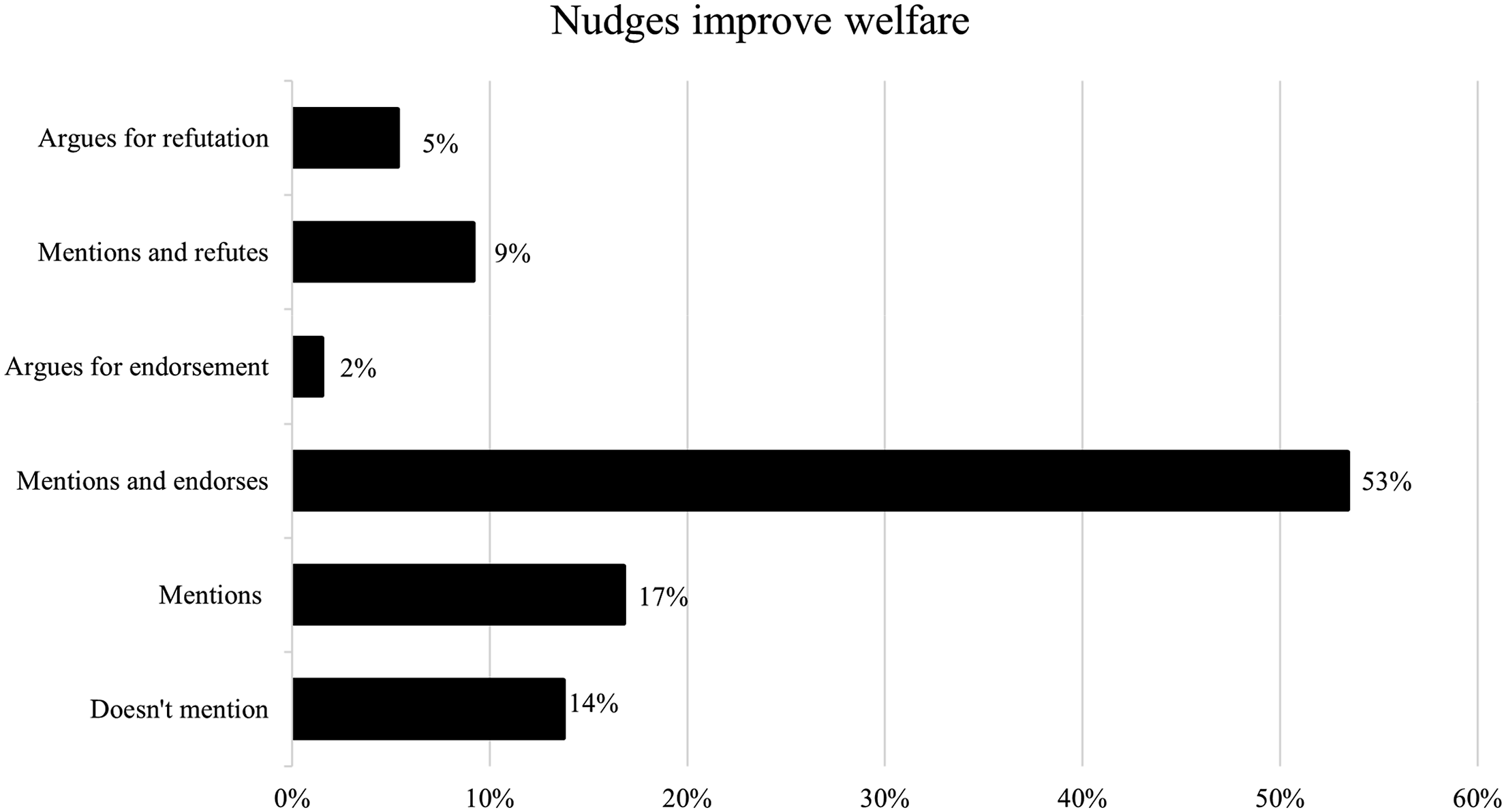
Existence of true preferences
The first argument against authors who argue nudges improve welfare is that their conception of welfare presupposes the existence of true preferences while true preferences do not exist. Thaler and Sunstein’s argument for welfare improving nudges presupposes the existence of true preferences because their argument to nudge people towards better choices needs a direction to nudge people into. According to Thaler and Sunstein, the optimal direction is towards welfare maximisation. When they state an agent makes an error, and that choices can be optimised in terms of welfare, they presuppose the possibility of ranking choices based on their expected utility. They refer to the alternative with the highest expected utility as an agent’s “true preferences” (Thaler and Sunstein, 2008, p2). The underlying premise of the argument is thus that a set of optimal preferences exists for every individual. For proponents of libertarian paternalist nudges, the fulfilment of true preferences functions as a normative criterion. This welfare criterion is the key justification for interfering with people’s choices in the nudge debate.
However, the existence of true preferences is disputed. It is argued that even when people show inconsistent and contradictory preferences, none of the preferences reflect the person’s true preferences (Sugden, 2008; Lecouteux, 2015). Critics argue that proponents of libertarian paternalist nudges lack a way to assess an individual’s true preferences (Glod, 2015). Libertarian paternalists reply that true preferences are those preferences that an individual would have if she were completely informed and had unlimited cognitive abilities. They thus reconstruct what an agent would prefer in ideal circumstances. Critics find this answer unsatisfactory; they argue that such a reconstruction of preferences is implausible and cannot be performed objectively. Sugden asks: “Even if we can specify what it would mean to have these supernatural powers, how do we discover how some ordinary human being would act if he were somehow to acquire them?” (Sugden, 2008: 232). Therefore, the reconstruction of true preferences is criticized as “preference purification” (Häußermann, 2020: 47) or preference “laundering” (Dold and Schubert 2018: 226). The true preferences critique of welfare promoting nudges is thus that since it is impossible to reconstruct someone’s true preferences, true preferences cannot be used as a justification for nudging.
Critics who dispute the possibility of reconstructing true preferences argue that every attempt at reconstruction is an imposition of one’s own values. Blumenthal-Barby argues that the choice architect’s assessment of what others truly prefer amounts to a “perfectionist account of well- being” (2010: 2). Wright and Ginsburg add that nudges often favor “long-run ex ante preferences” over more short-term hedonistic in-the-moment preferences without “a defensible basis” (Wright and Ginsburg, 2012: 1061). Glod argues that instead of aiming to fulfill an informed-desire criterion of welfare, nudgers impose their own idea of what constitutes wellbeing on others, giving insufficient weight to the particular situations and views of different people (Glod, 2015). For Grüne-Yanoff, this means libertarian paternalism is unable to incorporate “the plurality nor the subjectivity of people’s values” (Grüne-Yanoff, 2012: 644). Hence, the critique is that libertarian paternalists try to nudge people towards choices that are healthy and financially prudent while there is no way to determine whether these goals are genuinely and truly preferred by all agents. Without the notion of true preferences, a sound justification for nudging people towards these choices, which they would not have made of their own accord, is lacking. As a result, it has been argued that the proponents of libertarian paternalist nudges and particularly Thaler and Sunstein, “fail to take seriously their targets’ true preferences” (Scoccia, 2019: 79).
Irrationality leading to suboptimal choices
For proponents of welfare nudges, the reason that agents fail to optimise their welfare is that due to bounded rationality, willpower and self-interest, agents fail to make optimal choices. Agents suffer from “limitations of attention, information, cognitive ability, or self-control” (Häußermann, 2020: 47) and hence fail to identify which choices will lead to the greatest welfare. Instead of reasoning about their preferences, agents rely on fast heuristics, which make them susceptible to biases such as hyperbolic discounting, status quo bias, endowment effects, hot and cold states, social proof, and optimism- and availability bias (Kahneman, 2011). The result is that people’s preferences are inconsistent: they spend money on diet programs while eating too much (Glod, 2015). They maintain saving accounts while paying for expensive credit (Thaler, 2015). The key conviction in a large part of the literature on nudging is that “inconsistent choices may be treated as mistakes” (Häußermann, 2020: 47).
Two critiques have been proposed against the idea that people are irrational. First, it is argued that inconsistent choices are not as common as claimed. Rebonato argues that many findings on behavioural mistakes are “artfully overemphasized in their literature” (Rebonato 2014: 392). In a similar vein, many economists criticize the behavioural findings for being done in laboratory settings that fail to mimic ‘the real world’ (Lodge and Wegrich, 2016) and that many findings of irrationality are “mere artefacts of the experimental design” (Barton and Grüne-Yanoff, 2015: 353). Relatedly, it is argued that behavioural experiments usually involve small incentives, suggesting that people make better decisions when the stakes are higher (Glaeser, 2005).
Second, it is argued that proponents of libertarian paternalist nudges are too quick to dismiss choices as mistakes (Baldwin, 2014). For example, Glod offers an example about a person who eats unhealthily, while saying she needs to lose weight. He argues that it might be the case that this person does not act contrary to her preferences but rather engages in “cheap talk” (Glod, 2015: 616-617) suggesting people genuinely prefer short-term pleasure (smoking, fast food, spending money) while claiming to prefer long-term prudent choices that are the norm. Governments should acknowledge citizens enjoy such pleasures. Likewise, it is argued that in healthcare, physicians must admit that not all people value health as strong as they do. For these people, it might not be a mistake to refuse pre-emptive screenings or vaccinations (Ploug et al., 2014; Giubilini et al., 2019).
Critics of libertarian paternalist nudges thus state that people who prefer short-term pleasure over long-term health and wealth are too eagerly judged to make mistakes. Libertarian paternalists are too focussed on the aforementioned values, health, wealth, and happiness, and are therefore too willing to argue that “departures from those preferences represent defects” (Wright and Ginsburg, 2012: 1061). Consequently, the argument is that libertarian paternalists are overly eager to dismiss choices they do not endorse as mistakes and are quick to dismiss alternative ideas of what constitutes a good life.
Epistemic access
Critics of libertarian paternalist nudges argue that even if true preferences would exist, and even if people were irrational, it would still be impossible to effectively nudge people towards more welfare because it is impossible to uncover people’s true preferences, due to limited epistemological access to these preferences (White, 2013). It is argued that it is impossible for the government to assess properly which nudges would optimise citizen welfare. To make this argument Rizzo and Whitman quote Bentham: “It is a standing topic of complaint, that a man knows too little of himself. Be it so: but is it so certain that the legislator must know more?” (Bentham, 1996, XVII.17). The argument that governments cannot know what citizens truly prefer was prominently made by Hayek (Binder, 2014). The Hayekian knowledge problem states that the knowledge in a well-functioning economy is so dispersed and decentralized that it would be impossible to centrally gain sufficient knowledge to manage the economy effectively. This argument is especially forceful because of libertarian paternalist’s insistence that nudges should make everyone better off on their own terms. The key idea of the criticism is that people are the best judges of what brings them happiness, even if they sometimes err. The government has no meaningful access to this knowledge. Therefore, this argument is referred to as the argument of constrained epistemic access (Fumagalli, 2016).
Heterogeneity
Thaler and Sunstein (2008) insist everyone should be made better off on their own terms. However, it is argued that in a population of heterogeneous people, a one-size fits all nudge steers some people away from well-being (Korobkin, 2009; White, 2017, 2019). The worry is that due to the large differences within population, a part of the population is nudged into directions they disapprove of (Engelen, 2019a). Binder (2014) connects the heterogeneity argument to the earlier critique that nudges steer people towards general benefits such as health and wealth, rather than towards their own true interests. He argues that libertarian paternalism misses the heterogeneity point because they wrongly assume everyone equally values these typical goods.
This criticism is further extended by Rizzo and Whitman (2009a), who argue that to construct effective nudges, governments must not only know their citizen’s true preferences, but must account for the fact that heterogeneity has multiple dimensions (Rizzo and Whitman, 2009a). Firstly, nudgers would have to account for pluralism, as different people have various conceptions of the good (Grüne-Yanoff, 2012; Ewert, 2017). Secondly, nudgers would have to account for differences in behaviour. Whereas some people save too little, some may save too much. A one- size-fits-all nudge to promote saving would then push the latter group in the wrong direction. Thirdly, biases are not uniform among the population and people may have different self- correction methods (Rizzo and Whitman, 2009a). To effectively nudge an agent to his optimal welfare, not only knowledge of their preferences is required, but also knowledge of how far they are away from their optimal choice to devise the optimal nudge. Fourthly, nudgers would have to account for differences in how people react to a nudge (Baldwin, 2014). Finally, reactions to one specific nudge may differ especially between social, economic, and cultural groups (Selinger and Whyte, 2011).
Privacy
In response to the heterogeneity argument which states that if nudges seek to optimize individual welfare, they cannot rely on a one-size-fits-all approach, Sunstein (2016) argues nudges should be personalized to nudge every agent towards her personally optimal alternative. According to Sunstein, especially defaults are suited for personalization. The idea is simple: if an agent must make a complicated choice with many alternatives, for example choose a healthcare plan among many options, the agent could be nudged by pre-selecting a personalized default option for her, based on her characteristics such as age, income, and medical situation or based on behavioural data. In this way, personalized nudges can circumvent the heterogeneity problem.
Various authors have reacted to personalized nudges and argue this raises a new worry regarding privacy (Acquisti et al., 2017; Nahmias et al., 2019). Critics worry that personalized nudges demand the collection of citizen information on a gigantic scale, leading to the violation of privacy. Kapsner and Sandfuchs argue that the need for information about preferences is “the source of one of the greatest temptations for libertarian paternalists when it comes to collecting information about citizens and invading their private spheres.” (Kapsner and Sandfuchs, 2015: 458). In addition, the large-scale collection of citizen data is criticized on its potential for misuse. Ranchordás (2019) argues data are mostly processed automatically, leading to algorithmic profiling risks. While this argument applies solely to governmental nudging, the privacy worry also arises in business. With the notable difference that in business, the goal of collecting data is often not to find out which nudges optimize individual welfare, but to discover which nudges are most effective at persuading customers to buy or use products and services. Such nudges likewise produce threats to privacy (Smith et al., 2013) and of algorithmic bias (Lanzing, 2019).
Online nudges that are personalized and optimized for effectiveness with the help of user-data have been called “hypernudges” (Yeung, 2017: 118), “digital nudges” (Karlsen and Andersen, 2019: 1) or “data-driven nudges” (Ranchordás, 2019: 12). With these digital nudges, it is easy to collect statistics, giving choice architects and their algorithms the possibility to learn which nudges are most effective for each type of user. This makes such digital – personalized - nudges potentially more effective than their offline counterparts, hence the name ‘hypernudge’ (Yeung, 2017).
Cognitively limited nudger
The rationale for libertarian paternalist nudging is that people make suboptimal choices due to cognitive biases and errors. It is argued that libertarian paternalist nudging will be unsuccessful because choice architects are equally susceptible to biases and errors as the people they seek to nudge (Blumenthal-Barby, 2010). The argument of the cognitively limited nudger thus states that it is impossible for the government to help people make better choices, since bureaucrats suffer from the very same cognitive biases.
Lodge and Wegrich (2016) call this the ‘rationality paradox’: libertarian paternalism stresses that people are biased but is blind to how irrationality affects the execution of libertarian paternalistic policies. In other words, based on evidence that all people suffer from cognitive biases, it is incorrectly argued we must grant a small number of people the power to make important choices on behalf of everyone. Rebonato calls the same idea the “libertarian paternalistic predicament” (Rebonato 2014: 379) and Binder (2014) refers to roughly the same idea as the ‘compounded knowledge objection’. These problems are increasingly receiving attention in the literature. There is an emerging field of research called ‘behavioural political economy’ which investigates how behavioural ideas influence politics and the public domain (Schubert, 2017b).
Abuse and public choice problems
Another argument against the case for welfare-optimising nudges is that governments could abuse nudging or be either inclined or under pressure to use nudging for other goals than optimizing welfare (Calo, 2014; John, 2018). The literature on public choice investigates which incentives policymakers have. Arguments from this field are used to question “whether policymakers have the right incentives to implement wise policies, given their own self-interest and the lobbying efforts of interested parties” (Rizzo and Whitman, 2009a: 908). Various authors refer to Glaeser, who argues that paternalism has historically been “been abused by governments responding to special interests or to seek to aggrandize their own authority” (Glaeser, 2005: 2). This critique is applied to libertarian paternalist nudges, of which it is argued that they are even more prone to abuse than traditional paternalist policies as they operate covertly, making it harder to detect abusive practices (Hausman and Welch, 2010). Several authors mention worries concerning public officials misusing the power of nudges, see Thaler and Sunstein (2008), Blumenthal-Barby (2010), and Wolcott (2019).The fear is that public officials and politicians could employ nudges to organize the support they need for political goals (Calo, 2014). Worse still, Schubert (2017b) argues that policy makers have a long-term interest in aggravating thinking biases in the population as policy makers have an interest in a docile and following citizenship. He suggests that if this is the case, public officials might actively try to foster biases.
Exploitation of error and economic harm
Similarly, private actors might seek the exploitation of error. In the literature, there are worries concerning marketeers who seek to foster the biases of consumers to improve their profits (Glaeser, 2005). Marketeers use nudge techniques to attract consumer attention and persuade them into purchasing (Yeung, 201). Consequently, consumers are nudged into buying things they do need or even want (Smith et al., 2013). Companies thus “use intentional choice architecture to nudge us towards purchase decisions that are good for their profit line but in some ways bad for” consumers (Schmidt and Engelen, 2020: 7). In this way, nudge techniques can divert consumers, leading to suboptimal choices. Ultimately, if private parties succeed in massively inducing or fostering thinking errors, this could lead to inefficient markets in which consumers make poor choices, generating substandard welfare losses and economic harm.
In reaction, the critique on private use of nudging techniques has been used to justify the use of governmental nudges, as it is argued that the government should counter private influences to protect consumers from adverse influences (Curchin, 2017). Bovens states that “the government may be fighting a losing battle” against private parties if it cannot use the same techniques (Bovens, 2009: 15). Even more pronounced, Schmidt and Engelen (2020) refer to the use of nudges by private parties; they claim the defining question in the debate on ethics of nudging is: by who we want to be influenced: private parties, or the government? In contrast, Baldwin (2014) and Gigerenzer (2015) both object to the idea that governments should engage in a combat with private parties for control over relevant choice architecture. Both authors note that private parties are likely superior at constructing nudges, considering their ability to spend massive amounts on advertising. Alternatively, the government could deploy tactics to mitigate the influences of private choice architecture. Schmidt (2019) identifies five alternative strategies. First the government can “replace a private nudge with a public one” (p 531). For example, they could ban cookie consent pop-ups on private websites, which generally nudge users toward accepting all cookies and replace them with a standardized pop-up. Second, the government can instigate regulation for which nudge-techniques private parties are allowed to use. Third, the government can mandate that private parties nudge towards “good” choices. This is done in the food industry, where producers are compelled to nudge consumers to purchase healthier products. Examples are New York’s attempted ban on large soda containers, and government mandated use of traffic light food labelling (Thorndike et al., 2014). Fourth, the government can aim to counteract private nudges by making them less effective. Fifth and finally, the government can seek a softer form of regulation by cooperating with private parties and aiming to convince them to abandon bad nudging practices (Schmidt, 2019). Lavi (2018) adds one more alternative and argues that the designers of “bad” or “evil” (p 1) nudges might be recognized as being liable for the law. Gigerenzer (2015) adds to this list of options by arguing that the government should not seek to gain control over relevant choice architecture but should rather educate citizens to make them more resistant to the influences of choice architecture. The government could consider boosting citizens to promote their welfare (Grüne-Yanoff, 2018; Hertwig and Grüne-Yanoff, 2017). So, if the intention of the government is to counteract the influence of private nudges, designing public nudges is but one of their available alternatives. However, Sims and Mueller (2019) disagree that boosting would always be normatively superior to nudging and challenge the idea that the distinction between nudging and boosting has a normative status.
Easy resistibility, transaction costs, and harm
Proponents of libertarian paternalist nudging argue that when a person is nudged into the wrong direction, she could simply resist the nudge without harm caused. So, the argument goes, the welfare improvement for some nudgees does not come at a cost for others. For this to be the case, two conditions need to be satisfied. The first is the condition of easy resistibility, which states that agents who do not wish to be nudged can disregard the influence of the nudge without significant effort. The second is the condition of no additional burden, which states that agents are not negatively affected by the nudge through additional effort or cost. If a nudge steers part of the population in a welfare promoting direction and at the same time avoids affecting all others adversely in any way, the nudge constitutes a Pareto-improvement, which means that the nudge improves total welfare without making anyone worse-off.
As we have already addressed the easy-resistibility criterion in the definition and autonomy sections, we will now turn to the condition of no additional burden. Critics worry that nudges do in fact lead to an additional burden for people (Vallgårda, 2012). This argument states that nudges impose costs on those who do not prefer the choices they are nudged into. Nudges make one alternative easier and more intuitive, while making other alternatives more difficult to choose. Thaler and Sunstein note that some nudges “in a sense, impose cognitive (rather than material) costs, and in that sense alter incentives” (Thaler and Sunstein, 2008: 8). According to them, these costs must be small as nudges must still be “easy and cheap to avoid” (Thaler and Sunstein, 2008: 6). Because the costs of nudges are supposed to be small, proponents of nudging argue these costs do not significantly impact welfare considerations.
This is disputed by critics of nudging who argue the costs of nudging can be substantial and meaningful for those whose preferences diverge from the nudge. The costs of nudges can take various forms. To avoid a nudge, a person “may have to [1] give up time, [2] take on an annoyance, [3] walk a little further, [4] pay a little more money or forfeit some money or material goods, [5] execute willpower, [6] feel bad about himself (self-scorn), [7] undergo social scorn, or [8] have to think a little harder” (Blumenthal-Barby, 2010: 20). All these hindrances may be argued to incur a cost on nudgees. The first four hindrances describe how nudges make it more difficult or costly to for choosers to obtain their chosen alternative when they wish to resist a nudge. These costs have been described as “transaction costs” (Glod, 2015: 601) and “friction costs” (Mills, 201: 404). The last four hindrances describe the mental, emotional, and social pressures that nudges can exert over people. Authors who want to emphasize these forms of cognitive costs have described them as a “psychological tax” (Kirchgässner, 2014: 12) and as an “aggregate burden” (Baldwin, 2014: 16). Some authors worry that libertarian paternalistic policies affect everyone, helping those who would make ‘bad’ choices while hindering those who already make ‘good’ choices (Baldwin, 2014). Baldwin argues this could be seen as unfair to well-behaving people, as libertarian paternalism presents them with an additional burden with the sole aim of helping those behaving “less responsibly” (idem).
Ethical issue: Long-term adverse effects
The issue of long-term adverse effects is concerned with the worry that nudges create adverse effects that only become apparent over longer periods of time when people have encountered multiple instances of nudges. In the nudge literature, most authors believe the moral evaluation of nudges should proceed on a case-by-case basis (Sunstein, 2014, 2015; Hansen et al., 2016; Engelen, 2019a, 2019b; Houk, 2019; Schmidt and Engelen, 2020, Yeung, 2012). Most of the records in the literature review discuss the ethics of nudging without reference to long-term effects (see Figure 7).
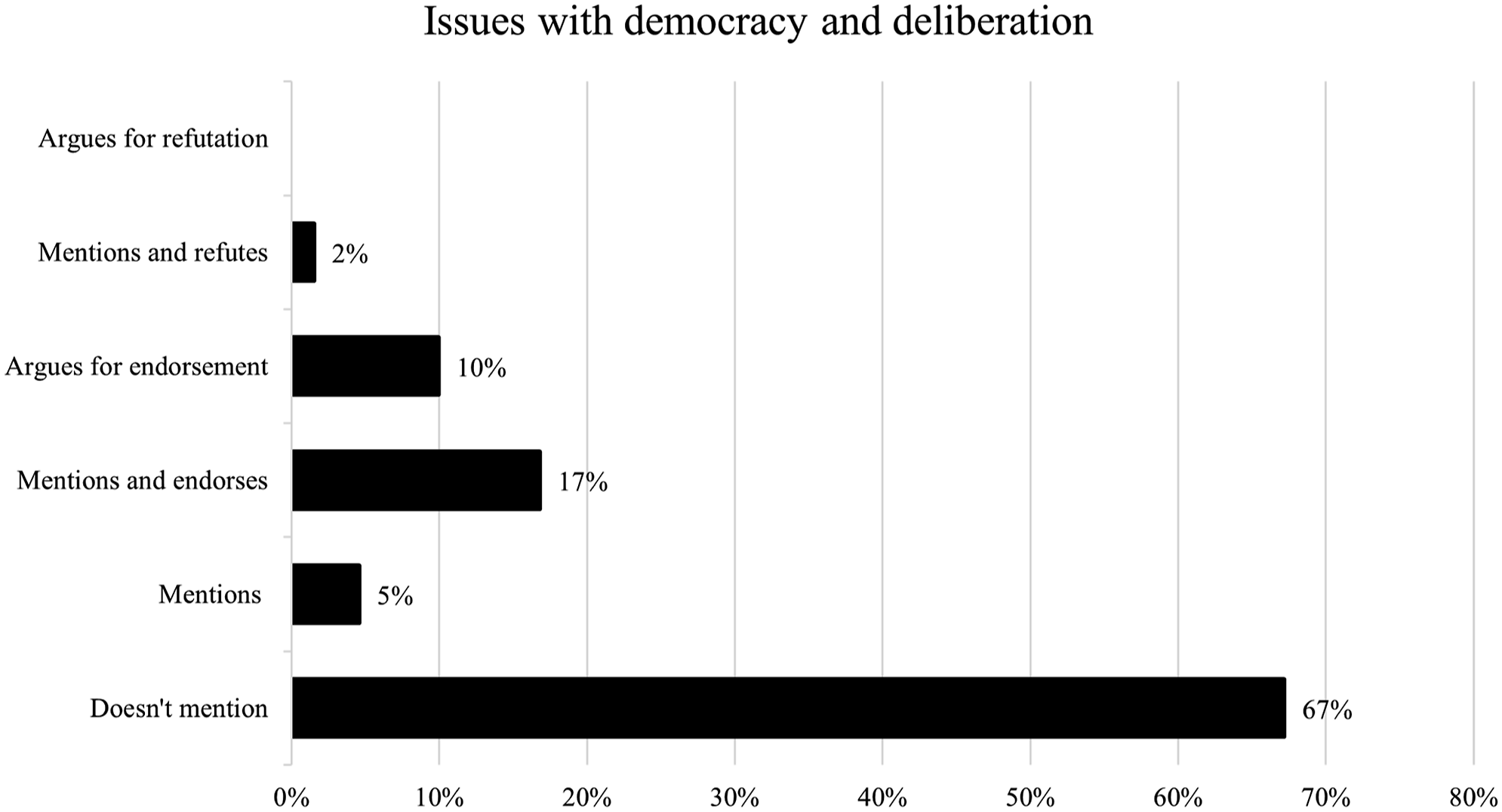
However, some authors disagree with such an approach and argue that nudges should be evaluated through a more dynamic lens (Binder, 2014; Coggon, 2020; Lepenies and Malecka, 2015). Binder and Lades criticize libertarian paternalism for its “mainly static out-look” because they argue the case for libertarian paternalism has “strong intuitive appeal when described as one-shot situations without any regard for inter-temporal dynamics” (Binder and Lades, 2015: 17). It is their suggestion that some prominent ethical problems with nudging only become apparent when analysing their long-term effects. Overview of how records stand towards the proposition “nudges cause long-term adverse effects”. Overview of how records stand towards the proposition “nudges cause issues with democracy and deliberation”.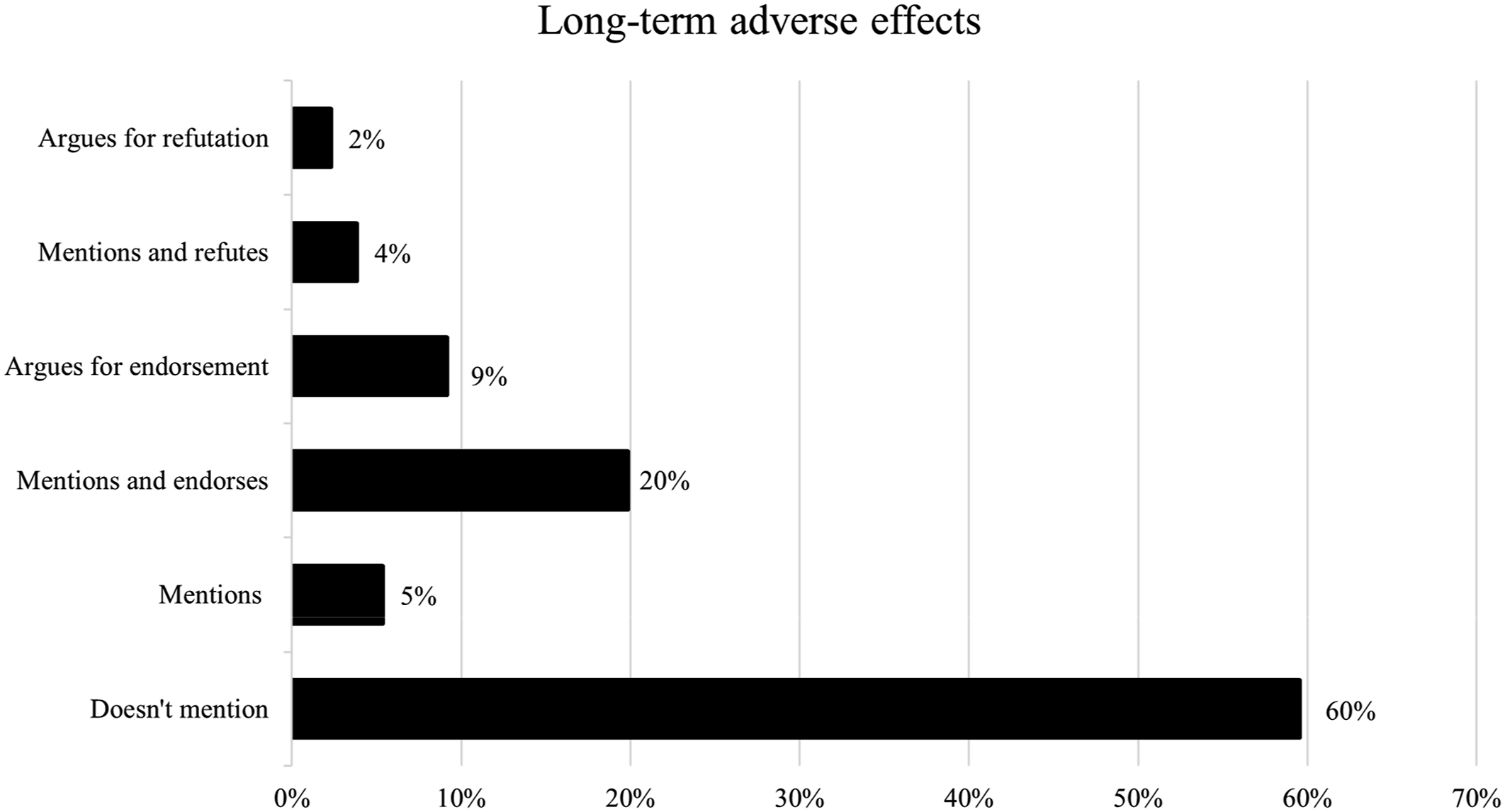
Infantilization
The ethical issue of infantilization states that agents who are subject to many nudges over a longer period will develop eroded autonomous decision-making capabilities and will lack “responsibility in matters regarding [their] own welfare” (Bovens, 2009: 11). The infantilization critique is thought to be especially forceful in discussions regarding libertarian paternalism, in which it is argued governments should widely adopt behavioral policies that nudge citizens towards better choices, as a great number of them will make people reliant on nudges. Schmidt refers to a similar idea as “the undermining worry” (2019: 536) and Riley (2017) uses the concept ‘epistemic injustice’. Similar worries have been voiced by Binder and Lades, who state that “individuals may learn to be dependent and inactive” (Binder and Lades, 2015: 18), and Rebonato worries that in a nudged world, people are no longer stimulated to make deliberated decisions (Rebonato 2012). Moreover, one aspect of the infantilization issue is that nudging distorts an agent’s process of learning what she prefers (Dold and Schubert, 2018) and hence lead to the “learning of faulty preferences” (Binder, 2014: 524). Various authors have argued that citizens should not be nudged to welfare but should rather be left alone so that they can experiment with their choices so they learn what they truly value (Schubert, 2017b). Extending on this point, Dold and Schubert (2018) argue that the process of learning what one’s preferences are, is valuable in itself, as it allows an agent to recognize her preferences as her own. Finally, Burgess argues that nudges impair agent’s ability to improve morally (Burgess, 2012).In response to the issue of infantilization, several points have been raised. First, it is argued that the process of coming to learn for oneself what makes one better off has its value, but this value can be outweighed by other things, such as the consequences of the mistakes made along the way and the benefits of achieving what makes one better off via a much shorter route. Second, it has been disputed that “structuring choice environments prevents people from trying out different” choices than the choice architecture favours (Blumenthal-Barby, 2010: 14). Third, under a different definition of rationality, one that focusses less on autonomous reasoning and more on attaining one’s ends, nudges can be said to systematically help rather than hurt autonomous decision-making since they help attaining one’s ends (Schmidt, 2019: 536). Fourth, Schmidt asks: “to form a steely will, should we be exposed to as much temptation as possible?” (p 536). His point is directed against the argument of learning. He maintains that for agents to learn their preferences and train their willpower, it is unnecessary for them to live in a world full of temptation and devoid of helpful choice architecture as people can also develop their preferences in a more helpful world. Schmidt therefore argues that infantilization is not a genuine worry. Fifth, Heilmann (2014) notes that a genuine opt-out could mitigate worries about infantilization. He argues that if people are free to opt-out of nudges, they are also free to make their own choices. As long as people can maintain this freedom of choice, they will not become infantilized.
Mistrust
The issue of mistrust states that nudges can cause people to mistrust choice architects. Avitzour et al. (2019) raise the issue that when physicians nudge their patients, this could decrease patient’s trust in their physicians. Consequently, nudging would harm the doctor-patient relationship. They conducted an experiment which demonstrates such nudging may indeed hamper patient trust. Ploug and Holm (2015) add that especially over the long-term patients may come to distrust the entire healthcare system if they feel their preferences are systematically neglected and overridden. In the policy domain, Button (2018) similarly upholds that a nudging government may expect “reactance” and risk losing the trust of the public. Likewise, Ewert (2019a) argues trust is vital for a functioning state-citizen relationship and nudges may jeopardize this relationship when citizens feel they are nudged towards ends they reject. Clavien (2018) agrees governmental nudges may foster mistrust and adds that a nudging government may undermine its own communications. However, Button (2018) stresses that more empirical research is needed to establish such an effect.
Ethical issue: Democracy and deliberation
The issue of democracy and deliberation is concerned with the worry that nudges weaken democratic institutions. Governmental nudges, their justificatory strategy libertarian paternalism, and more broadly the idea of using behaviourally inspired policies as envisaged in the field of Behavioural Public Policy, have been criticized for hurting democracy and the fundamentals on which it rests such as public deliberation, civic capacity, and political legitimacy (Ewert, 2019b). In this section, we discuss four worries of democracy and deliberation, namely political transparency, deliberation, the slippery slope argument, and excess responsibility. While these worries could be viewed as a form of long-term adverse effects, we will treat them here as separate for three reasons. First, these arguments are exclusively relevant for the government and its treatment of citizens. Second, these arguments can only be understood in collective terms. Third and most importantly, taking the issues of democracy and deliberation separately does justice to the literature in which political problems are also treated rather separately.
Political transparency
The issue of political transparency states that it is wrong for governments to implement nudges without enabling the public to scrutinize those nudges. In the section on manipulation, we have briefly touched on the importance of transparency. Here, we will focus on its political relevance, which is linked to other political issues because it is a prerequisite for “accountability”, “respect”, “deliberation”, “consent”, and “acceptance” (Hansen and Jesperson, 2013: 15).
For political legitimacy, it is fundamental the public must observe, understand, and deliberate all policies and laws (Farrell, 2015). Only in this way the government can be made accountable, providing the necessary legitimacy for its actions (Yeung, 2016). However, nudges jeopardize democratic control because they are opaque and can be implemented without proper support, creating a situation in which citizens are unable to challenge the government. In essence, the issue of political transparency thus states that nudges escape democratic legitimacy due to their lack of transparency. There are various forms of transparency. The notion of transparency was put forward by Thaler and Sunstein (2008), who proclaimed all nudges should adhere to Rawls’ ‘publicity principle’, which they understand as a requirement for governments to be “able and willing” to publicly defend each nudge they deploy (Thaler and Sunstein, 2008: 244). Bovens (2009) discusses what type of transparency would be required for democratic legitimacy. He identifies two stronger notions of transparency by distinguishing between type- and token transparency. Type transparency requires the government to be transparent about the fact that it uses nudge techniques. Token transparency is more demanding since it requires every instance of a nudge can be detected. Bovens contends that there should be “in principle token transparency”, which means that every single instance of a nudge is discoverable for “a watchful person”. In this way, watchful people would be able to inform others if deemed necessary, making nudgers accountable to the public.
Several authors agree that in principle token transparency is sufficient for democratic control (Grüne-Yanoff, 2012) as the essential reason to provide transparency is that potential abuses of its mandate can be observed (Schmidt, 2019). In principle token transparency provides this warranty. However, others propose more far-reaching measures, such as a mandatory public registry of all nudges (Lepenies and Malecka, 2015: 435).
Deliberation
Nudges have been criticized as undemocratic because they are not accompanied by sufficient deliberation or public discussion. It is argued that nudges lack “political legitimacy” and that there is no public procedure for their evaluation (Hukkinen, 2016: 7). Policy makers can independently decide to implement nudges “without putting effort into cumbersome legislative and deliberative processes” as they “do not require political support, parliamentary procedure and debate” (Lepenies and Malecka, 2015: 430). This amounts to a loss of control for citizens (Gumbert, 2019). Critics stress that the implementation of policies regarding a conception of welfare require a wide conversation in which all parts of society participate in an open discussion (Button, 2018). Citizens must engage in discussions about what brings them welfare, not leave it to experts (Ewert, 2019a; Mols et al., 2015). In a similar vein, Brunon-Ernst (2018) argues that there is a risk that individuals who refuse to adopt widely accepted social norms will be nudged to comply. He argues that for social norms to be legitimately imposed on all, transparency and deliberation are necessary requirements. An additional advantage of deliberation is that it accommodates concerns of constrained epistemic access (Schiavone et al., 2014).
Another critique put forward is that nudges produce adverse effects on public discourse (Martin, 2015). Public deliberation is defined by Martin as the capacity of “citizens in a democracy to know and understand the moral and political problems that define their common lives” (Martin, 2015: 452). Martin, Sawicki (2016), Button (2018) and Ewert (2019a) all argue that nudges frustrate this ‘civic’ capacity, as nudges focus on irrational persuasion, diverting citizens from deliberation, ultimately undermining public discourse Gumbert (2019) applies this critique to food policies by arguing that citizens should participate in democratic deliberation about food policies. Nudges prevent this, as they nudge citizens to behave in line with governmental policies rather than inviting citizens to reflect on them. Similarly, Farrell (2015) applies this argument in the debate on organ donation defaults and argues that nudges must be “assessed by reference to the extent to which they promote deliberative participation” (p 278).
Several authors maintain that nudges can be democratic provided that they are subject to democratic control. Schmidt (2019) states that deliberation is important but maintains that nudges can be subjected to public deliberation. Häußermann adds that for nudges to be legitimate, citizens must be “actively involved” in the process of bringing them about, which means that citizens must “actively deliberate and participate in the decision about its aim and purpose, its effects and consequences, and its form and substance” (Häußermann, 2020: 57 Similarly, Lindhout and Reiniers (2017) mention nudges warrant more democratic control than Rawls’ publicity principle. They propose nudges should adhere to Habermas’ “democratic communication principles”, which for them means that nudges must be “understandable, truthful, sincere and respectful” (p 254).
Slippery slope
Authors who argue for the slippery slope argument state that nudges which are part of a wider libertarian paternalistic policy lead to a dynamic in which progressively more stringent measures are taken, which ultimately culminates in coercion (Rizzo and Whitman, 2009b). The critique is that while the appeal of libertarian paternalist policies is that they respect freedom of choice, over a longer period they will create the political support for the bans they were designed to prevent. For example, if the government lacks support for introducing a ban on smoking and introducing a ban without support is considered illegitimate, then under the same rationale there is no justification for policies that will create support for such a ban. Nudges aimed at changing social norms that will eventually lead to support for a ban are therefore unjustified (Coggon, 2020). Coggon draws the conclusion that libertarian paternalism is “deficient on its own terms” for this reason, as it does not acquire democratic support legitimately (p 142). For a defence of nudges against such criticisms, see Nagatsu (2015).
Excess responsibility
The final democratic issue is the issue of excess responsibility which states that in some cases, a nudge “burdens people with more responsibility that they can (reasonably be expected to) manage” (Alfano and Robichaud, 2018: 1). Nudges try to induce people to either save more money, live healthier or make greener choices. By devising a policy which aims to alter citizen behaviour, but respects freedom of choice, the government leaves the ultimate choice to act with citizens. In this way, the critique argues, the state makes its citizens responsible for those political issues (Schubert, 2017a). This critique has been connected to Foucault’s concept of ‘responsibilization’, which states that by focussing on individual behaviour, the government makes the individual responsible for societal problems. Such a line of reasoning is found in Curchin, who argues that libertarian paternalism “emphasises the personal responsibility of the poor for their circumstances” (Curchin, 2017: 231). Two additional adverse effects of excess responsibility have been proposed in the literature. First, Gumbert (2019) suggests it leads to a social mechanism in which people are forced into competition with each other to become better, that is more responsible, citizens. Second, Roberts (2018) suggests that some vulnerable people will not respond to nudges. By addressing their individual responsibilities, libertarian paternalism risks leaving them behind. The issue of excess responsibility may be seen as a critique on transferring responsibilities from the public to the private domain, especially hurting the most vulnerable. Worries about the relationship between nudges and inequality are also mentioned by Allmark and Tod (2014). A related criticism is that the benefits of nudges will not be spread evenly across the population (Ménard, 2010). Likewise, Lehner worries that nudges may be resistible only for a selective portion of the population, allowing it to “escape the costs while benefiting from the gains” (Lehner et al., 2016: 175). Lehner quotes Sunstein and Reisch (2013) who found evidence that nudging works best on the uneducated part of the population.
In contrast to the issue of excess responsibility, various authors argue that nudges rather take away too much responsibility from citizens (Bovens, 2009; Selinger and Whyte, 2011; Schubert, 2017b; Baldwin, 2014; Floridi, 2016). This critique echoes the infantilization issue, which states nudges do not let agents decide for themselves and hamper their possibility to take responsibility for their own welfare.
Conclusion
Having reviewed the literature on the ethics of nudging, we identified 1693 potentially interesting articles, of which after a selection process 131 we identified as relevant for the literature on the ethics of nudging. After analysing these 131 records, we found that there are four major ethical issues with nudging in the literature: the violation of autonomy, questions whether nudges can in fact improve welfare, long-term adverse effects, and harm to democracy and deliberation.
Footnotes
Acknowledgements
We are grateful to two anonymous referees for their valuable input and suggestions.
Funding
The author(s) disclosed receipt of the following financial support for the research, authorship, and/or publication of this article: Paul Kuyer received funding from the PROTECT project, which is supported by the European Union’s Horizon 2020 research and innovation programme under the Marie Skłodowska-Curie grant agreement No 813,497.
