



Abstract
Serendipity has played a significant role in the history of invention. Yet, little is known about whether serendipitous inventions are perceived as more or less innovative and thus achieve greater success in seeking funding than those resulting from deliberate processes. The current study explores this issue using a matched-pair sample of 168 serendipitous and non-serendipitous inventions used by entrepreneurs to raise capital through crowdfunding. The results demonstrate that serendipitous inventions are more positively related to crowdfunding success than non-serendipitous ones via perceptions of product innovativeness. Thus, serendipitous inventions appear to be socially rewarded rather than penalized in the context of crowdfunding.
Introduction
Innovation is serendipity, so you don’t know what people will make.
Tim Berners-Lee, inventor of the World Wide Web
Name the greatest of all inventors. Accident.
Mark Twain, author, and inventor
The history of invention is marked by numerous examples of serendipity—the unexpected discovery of solutions brought about by purposeful action (Fultz & Hmieleski, 2021). Examples of serendipitous inventions include a wide range of groundbreaking products appearing across many industry sectors, such as food and beverage (e.g., Coke, potato chips), games and toys (e.g., Play-Doh, Silly Putty), consumer products (e.g., microwave ovens, nonstick pans), medical devices (e.g., X-rays, implantable pacemakers), and pharmaceuticals (e.g., chlorpromazine, penicillin). This rich history of serendipitous inventions illustrates the dynamic interplay between chance and the prepared mind in the creative process (De Rond & Morley, 2010; Dew, 2009; Yaqub, 2018). It also highlights how advancements in business and society often occur in ways that are unplanned.
While the significant contribution of serendipity to innovation is well-established through historical instances (e.g., Fink et al., 2017), the stories of serendipitous discoveries behind numerous innovative products and services often remain obscured until after achieving commercial success (Roberts, 1989; Thorson, 2017). The pattern of such historical accounts is unsurprising, considering that introducing connotations associated with serendipitous or unplanned occurrences at the outset may cast a shadow over initial perceptions of serendipitous innovations, potentially hindering their reception. This point is aptly expressed by Friedel (2001, p. 36), noting that “It is easy to sing the praises of ingenuity or perseverance; cleverness will always have champions; sheer talent or great breadth and vision will evoke admiration. But the moment we acknowledge the role of chance—of luck—we seem to diminish the creative act and particularly the humanity we attach to it.” These circumstances raise the question of whether openly acknowledging the serendipitous origins of new inventions garners reward or penalty from outside observers.
The initial perception of serendipitous inventions is a critical issue, as these impressions can significantly influence an entrepreneur’s ability to secure funding for product development and commercialization. This can be particularly pronounced in environments where funding decisions are made quickly and based on emotional appeal instead of extensive due diligence. To this end, the current research focuses on serendipitous inventions pitched in crowdfunding—a means of acquiring entrepreneurial capital dependent on initial impressions of products formed with little information (Parhankangas & Renko, 2017). This form of funding is especially vital because of its tremendous growth as a source of startup capital (Short et al., 2017) and due to its importance for entrepreneurs who have historically been underserved by more traditional types of venture financing (e.g., venture capital, bank loans; Anglin et al., 2022). Therefore, the current study seeks to address the following: Why and how do narratives of serendipitous invention influence funding support?
To examine our research questions, we build on insights from attribution theory’s prepared mind perspective. Attribution theory suggests that individuals are more likely to perceive an invention as unique or valuable when they associate it with its inventor’s internal characteristics or dispositions. In other words, creations originating from a prepared mind are more esteemed and perceived as having a greater chance of success when viewed by others (Glăveanu, 2022). Moreover, this view suggests that serendipitous inventions hold distinct appeal due to their perceived high levels of originality and usefulness—key attributes of product innovativeness. Observers highly value these inventions because they originate when prepared minds connect the dots or intermesh unique knowledge elements (Baron, 2006). The outcome, though unforeseen, arises from purposeful action, offering a solution to a problem that is actively being pursued (e.g., Mertonian serendipity) or to an issue that was not initially targeted for resolution (e.g., Walpolian serendipity; Yaqub, 2018). These insights hold significant relevance within crowdfunding, as they converge to underscore that funders will be especially likely to view products as innovative—and, consequently, be more inclined to offer funding—when witnessing the depiction of an inventor’s prepared mind aligning with the disruptive potential of a serendipitous opportunity (e.g., De Rond & Morley, 2010; Dew, 2009; Yaqub, 2018).
The primary contribution of the current research lies in broadening the discourse on innovation within crowdfunding literature. Specifically, we shed light on the significance of narratives pertaining to the genesis of inventions, showcasing how they shape perceptions of innovativeness and influence the ability of entrepreneurs to obtain critical early-stage funding. Our study develops theoretical arguments and provides empirical evidence regarding how attributions of serendipitous invention influence perceptions of a product’s originality and usefulness, subsequently impacting funders’ decisions. Despite the central importance of innovative products in crowdfunding campaigns, little evidence exists on how perceptions of innovation are formed. Prior studies have primarily focused on outcomes related to pitches involving innovative products (e.g., Chan & Parhankangas, 2017; Davis et al., 2017; Lu et al., 2023), neglecting the process by which perceptions of innovation emerge. In addition, while several serendipitous inventions have led to novel products used in our daily lives (Baer, 2014), there is a scarcity of scientific literature in innovation research examining the initial perceptions of these inventions and the extent of support they receive in their nascent stages. Most existing studies are also exploratory in nature, using case studies and historical examples (e.g., Austin et al., 2012; Busch & Barkema, 2020). Consequently, there is a growing call among scholars for empirical investigations into serendipity, aiming to examine its relationship with other important drivers and outcomes across different contexts (e.g., Busch, 2022). By investigating how serendipity serves as a catalyst for innovation within the crowdfunding context, our research offers a more comprehensive understanding, revealing both the inputs and outcomes of product innovation. This is an important contribution because understanding the significance of narratives surrounding the genesis of inventions and the underlying mechanism allows entrepreneurs to craft more persuasive stories about their products or services—aiding their ability to acquire funding and attract initial customers.
Theoretical Development and Hypotheses
Role of Innovation in Crowdfunding
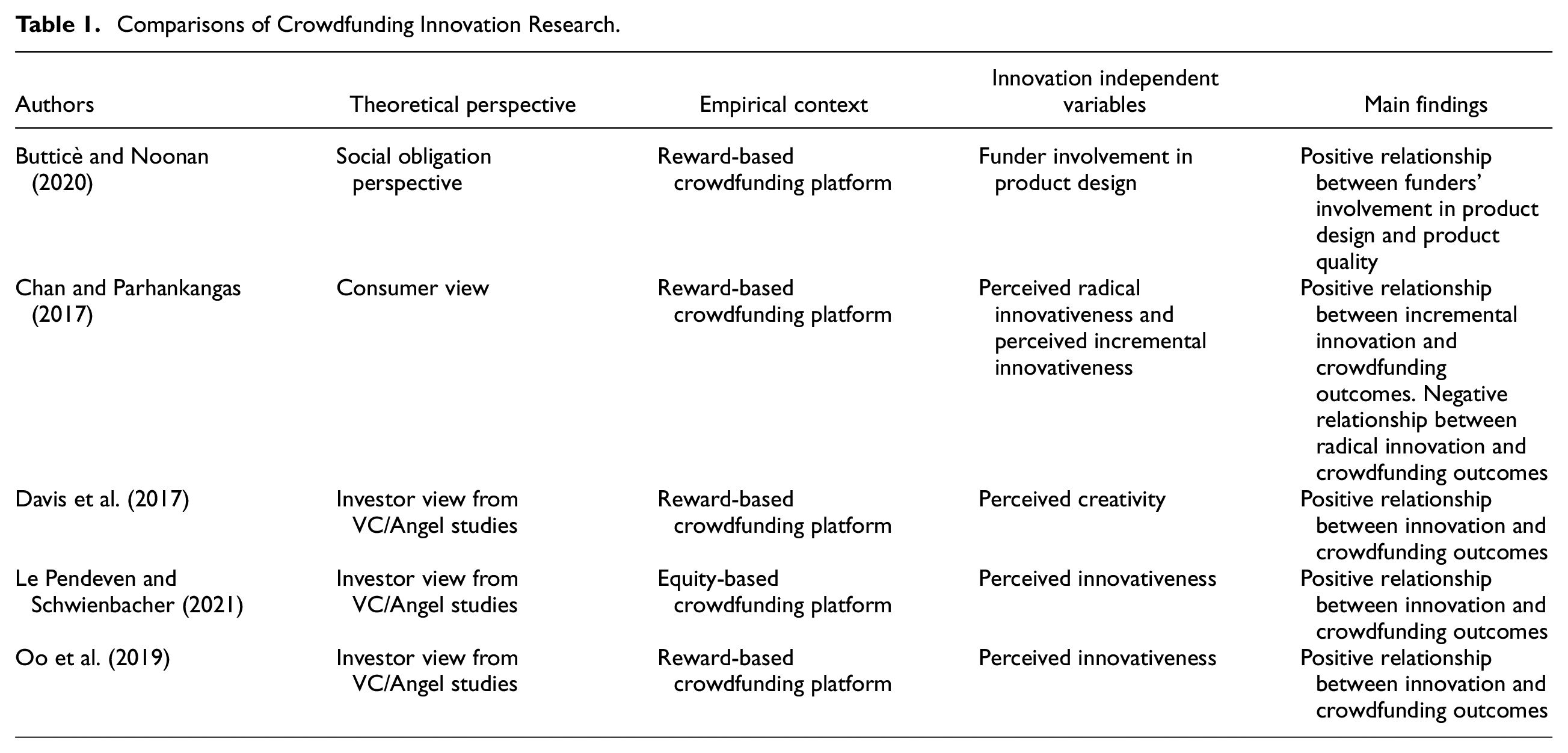
The primary purpose of crowdfunding is to support creative ideas and the development of innovative products. As crowdfunding literature has matured, two key streams of research have emerged. Some studies have focused on the role of entrepreneurs (i.e., jockey) by examining how their demographic, psychographic, and behavioral characteristics influence funders’ decisions to back their campaigns (e.g., Anglin et al., 2022; Allison et al., 2015, 2022; Colombo et al., 2015; Moss et al., 2018). Other studies have instead centered on the role of the entrepreneurial opportunity (i.e., horse) by explaining how certain aspects of a product influence campaign outcome and funders’ judgment (e.g., Chan & Parhankangas, 2017; Davis et al., 2017; Le Pendeven & Schwienbacher, 2021). Even though research on the “jockey” has seen significant growth, only a handful of studies have focused on the “horse.” As described in Table 1, research focusing on the nature of products or inventions that are elemental to crowdfunding campaigns examines the generalized impact of innovation on funding outcomes. Most studies have not focused on investigating the antecedents of innovation. One exception we have identified is a study by Butticè and Noonan (2020), which explores the role of funders’ involvement in product design on their perceptions of product quality.
Comparisons of Crowdfunding Innovation Research.
Therefore, our examination of serendipitous inventions and their influences on perceptions of product innovation aims to address this overlooked gap by providing a broader perspective on why funders support such products. When focusing on the origins of the invention, it is important not to ignore the inventor. To this end, drawing from the insights of the prepared mind perspective, we follow a logic suggesting that serendipitous inventions are unveiled by individuals who actively explore decision choices for originality and usefulness, intermeshing knowledge elements, identifying unexpected opportunities, and bringing those opportunities to life. The development of such unexpected opportunities can take place as a response to either a current problem at hand or an unforeseen problem the individual had not previously attempted to address. Our theorizing assumes that innovation occurs at the intersection of preparation and chance by engaging in a sensemaking process that allows for the emergence of entrepreneurial opportunities that can be exploited in an agentic fashion (Baron, 2006; Fultz & Hmieleski, 2021; Yaqub, 2018). Next, we describe the nature of serendipitous invention in more detail.
Serendipitous Invention
We define serendipitous invention as the unexpected discovery of a new product or a new feature in an improved product brought about by purposeful action toward trying to solve a problem. This definition integrates diverse insights and reflects prior scholarly contributions that describe invention and serendipity (e.g., De Rond & Morley, 2010; Dew, 2009; Fultz & Hmieleski, 2021; Yaqub, 2018). Two aspects of serendipity are important to clarify since they are elemental to the phenomenon. First, serendipity results from intentional effort toward achieving a specific goal. This distinguishes it from concepts such as pure chance or luck, which can occur with little preparation or effort (e.g., winning the lottery or meeting your future spouse at the laundromat). For example, if Isaac Newton had not tried to solve issues relating to gravity and the laws of motion, an apple falling on his head would have unlikely triggered the thought that a force (gravity) must be acting on the apple. An apple dropping on a different person’s head would have been unlikely to trigger such a serendipitous discovery in a less prepared mind. In essence, serendipity requires more than being in the right place at the right time. Second, a serendipitous invention can either be an unexpected solution to a given problem at hand (Mertonian serendipity) or to a problem that was not intended to be solved (Walpolian serendipity). Thus, it can take the inventors in a discontinuous (or unplanned) way further down the path that they were seeking to go (Merton & Barber, 2004) or lead them down an entirely different path that they did not previously anticipate (Yaqub, 2018). In other words, serendipitous inventions can advance the current plans of a startup in unforeseen ways or serve as a fortuitous opportunity for shifting the business in a new direction. With this conception of serendipitous invention in mind, we turn to the theoretical basis for developing our research model linking products formed in this manner with perceptions of innovation and the achievement of crowdfunding success.
Attribution Theory and Perception of Serendipitous Inventions
Attribution theory provides a framework for examining how a person’s positive or negative impressions of specific events are shaped by their perceptions of the cause (Heider, 1958). Specifically, individuals tend to associate internal or external attributions with specific behaviors, outcomes, and events (Heider, 1958; Hennessey, 2010; Ross, 1977). Outcomes are viewed as more meaningful when they are believed to result from internal attributes and less salient or valued when attributed to external circumstances. For this reason, individuals tend to attribute their own successes to internal causes and their failures to external forces (i.e., self-serving bias; Forsyth, 2007). Moreover, on average, people overattribute the behavior of others to personal dispositions and underestimate the role of the context or situation (i.e., fundamental attribution error; Ross, 1977). Together, these examples demonstrate the power that internal versus external attributions place on the perceptions of individual observers.
In the context of this research, events related to the discovery of an invention are likely to be perceived as unique or more highly valued when credited to the internal traits of the inventor(s). This is because such attributions imply that the outcome is due to a combination of talent and effort, enabling the inventor(s) to recognize and seize the opportunity. This is commonly referred to as the “prepared mind” perspective and is congruent with the celebrity (or genius) that is often associated with the success of entrepreneurs (e.g., Bill Gates, Steve Jobs, Elon Musk). Some authors have gone so far as to make the prepared mind core to their conceptualizations of serendipity. For example, De Rond and Morley (2010) define serendipity as “the relationship between good fortune and the prepared mind.”
Similarly, Louis Pasteur, who has been frequently linked with serendipitous invention, is famously quoted as saying that “chance favors the prepared mind.” Yet, on the other hand, the “just world” perspective ascribes situational attributions to serendipitous invention—placing it more akin to randomness rather than the effort and preparedness of the inventor. In support of this perspective, a series of experiments conducted by Lembregts et al. (2014) found descriptions of products invented by accident to be less valued by consumers who strongly believe in the “just world” perspective than those described as having been developed solely through traditional planning. These authors argue that consumers penalize serendipitous inventions via a “just world” perspective, assigning situational attributions of luck or chance to such products and believing they are less deserving of consumer support than non-serendipitous ones. However, the study generally depicts serendipitous invention as accidental and thus fails to provide insights into the dispositional (internal) characteristics—such as talent, effort, instrumentality, and open-mindedness—that enabled inventors to discover and commercialize the products examined in the study manipulations.
In addition, prior research has observed a link between a belief in the “just world” perceptive and inclinations toward traditionalism and a preference for structured hierarchy (Rubin & Peplau, 1975). Given that crowdfunders often demonstrate greater openness to innovation, higher risk tolerance, acknowledgment of talent and effort, and stronger support for socially progressive projects that challenge traditional norms and structures (Bagheri et al., 2019; Cumming et al., 2024), we build from the internal (i.e., prepared mind) rather than situational (i.e., just world) attribution of serendipitous inventions by focusing on narratives delivered by entrepreneurs describing their inventions. We adopt this approach because logic taken from attribution-related research suggests that individual funders will attribute inventors’ achievements to their unique insights rather than the situational context (Ross, 1977). This view is consistent with our definition of serendipitous invention and aligns with the entrepreneurship literature emphasizing the intentional or agentic role of serendipity in the identification and exploitation of entrepreneurial opportunities (e.g., Busch & Barkema, 2022; Dew, 2009; Fultz & Hmieleski, 2021). Overall, this reasoning forms the foundation for our baseline assumption that serendipitous inventions will be supported by individual funders who attribute them to the innate qualities of the inventors (Glăveanu, 2022). Consequently, these fortuitous outcomes should engender heightened support from individual funders, thereby enhancing the success of projects featuring such serendipitous inventions.
In the following sections, we develop a conceptual model explaining the link between serendipitous invention and funding success. Specifically, this model predicts that crowdfunding campaigns featuring serendipitous inventions will be perceived as more innovative and will receive greater funding than those based on non-serendipitous inventions.
Serendipitous Invention and Perceptions of Product Innovativeness
To link serendipitous invention with perceptions of innovation, we focus on the two elemental components of innovation—originality and usefulness (Markides & Geroski, 2005). Originality refers to a product’s perceived novelty compared to current market offerings (Amabile, 1988; Moldovan et al., 2011). Drawing on the insights of attribution theory’s prepared mind perspective, we begin by suggesting that serendipitous inventions are associated with perceptions of higher originality than other inventions. This prediction is based on logic suggesting that for serendipitous invention to occur, individuals must “connect the dots” to discover a previously unforeseen, novel solution (Baron, 2006; Copeland, 2019). Moreover, the “surprise” nature of serendipity inherently implies the presence of novelty in the fortuitously identified solution. Further, this surprise element can elicit emotional responses that enhance perceptions of novelty because it captures people’s attention and generates enthusiasm that becomes attributed to the entrepreneur and their invention (Roberts, 1989; Thorson, 2017). In sum, we propose that potential funders will perceive serendipitous products as more original because these campaigns highlight the inventors’ internal dispositions and unique processes that contributed to generating and commercializing them, unlike regular (non-serendipitous) inventions. On the other hand, non-serendipitous inventions, which result from deliberate planning, research, and effort, may also be perceived as original but without evoking the same sense of surprise and impressions of novelty typically associated with serendipitous discoveries.
Next, we expect that serendipitous inventions will be associated with the second key aspect of product innovation—perceptions of usefulness. Usefulness refers to whether a product is thought to benefit and/or fulfill the needs of specific consumers (Amabile, 1988; Goldenberg et al., 1999; Moldovan et al., 2011). Therefore, an in-depth understanding of user needs, expectations, and underlying characteristics is necessary to develop a useful product (Callahan & Lasry, 2004; Cooper, 1979; Zirger & Maidique, 1990). When individuals perceive an invention as serendipitous, they may attribute its success to the ability of the inventor to turn unpredictable events or circumstances into a meaningful opportunity. This attribution can enhance the perceived value of serendipitous inventions, as they are seen as remarkable occurrences involving special individuals rather than simply the result of planned effort (Amabile, 1988; Goldenberg et al., 1999; Moldovan et al., 2011). Moreover, because serendipitous inventions often arise from a combination of chance and preparedness, they are likely to be perceived as particularly valuable due to the synergy between luck and readiness (von Hippel & von Krogh, 2015). Finally, research often distinguishes between planned, deliberate innovation and emergent, unexpected innovation. Serendipitous inventions fall into the category of emergent innovation, characterized by unexpected breakthroughs or discoveries made by individuals who were uniquely able to connect the dots between disparate pieces of information. Emergent innovations are generally perceived as more disruptive than planned innovations because they challenge existing assumptions and paradigms (Markides & Geroski, 2005). Consequently, serendipitous inventions may be valued more highly for their potential to disrupt established norms and create new opportunities—thus enhancing overall perceptions of their usefulness. We, therefore, reason that serendipitous products will be perceived as more useful than non-serendipitous products as they benefit and fulfill consumers’ needs through unexpected (or discontinuous) solutions. Overall, the perceptions of product innovativeness consider both product originality and product usefulness.
Taken together, we have described how serendipitous invention results from a nonlinear process while also explaining that it is not random. It requires a prepared mind that possesses the ability to turn unexpected insights into an invention. Consequently, crowdfunding campaigns based on explanations of serendipitous inventions are likely to be attributed to the unique nature of the entrepreneur(s) rather than random chance. This perception makes their products appear particularly innovative to potential funders. We therefore offer our first hypothesis as follows:
Perceptions of Product Innovativeness and Crowdfunding Success
We now explain why the perceived innovativeness of serendipitous inventions is likely to result in greater crowdfunding success. In so doing, we again focus on the two key components of innovation concerning originality and usefulness. First, the originality found within serendipitous inventions will likely engage crowdfunders and motivate them to support these campaigns. The originality of such products stems from their uniqueness and newness compared to other products in the marketplace, making them more appealing to crowdfunders (e.g., Derbaix & Vanhamme, 2003; Goldenberg et al., 1999). The premise of reward-based crowdfunding is to “bring new ideas to life” (Kickstarter, 2024). Thus, when a product brings an entirely new attribute that crowdfunders have never seen, they are more likely to become excited and pledge their support. Moreover, since people tend to discuss products they find interesting and/or surprising, crowdfunders are more likely to share information about new products with their friends and family, an assumption supported by the notion that product originality tends to generate greater “buzz” via word of mouth (Moldovan et al., 2011).
Furthermore, findings from a number of studies in innovation literature have suggested that product originality is a significant source of competitive advantage (Chandy & Tellis, 1998; Geroski et al., 1993; Langerak & Hultink, 2006). Early adopters tend to search for unique and original products on a reward-based crowdfunding platform like Kickstarter. Consequently, products with a higher level of originality are likely to attract substantial support. The “serendipitous innovator” who comes up with a unique product may be perceived as possessing the internal attributes of a trendsetter (or trend leader), one who is ahead of general or current market trends (Hopp et al., 2019). Funders become part of the trendsetting process via feedback, vicarious enjoyment, opinion-shaping through word of mouth, and trendsetter positions. This enthusiasm can result in a willingness to pledge to the campaign and receive products as rewards.
Next, by definition, useful products fulfill customer needs. Therefore, the tangible benefits inherent in innovative products should motivate funders to support crowdfunding campaigns and become early adopters. We begin with the premise that the utilitarian value of a product is determined by its ability to provide functional benefits. Scholars have shown that crowdfunders largely behave like consumers when deciding which campaigns to back (Chan & Parhankangas, 2017). Product usefulness is one of the main attributes that is consistently linked to the success of a new product (Cooper, 1979; Dahl et al., 1999; Gatignon & Xuereb, 1997; Henard & Szymanski, 2001). Indeed, a long tradition of consumer behavior suggests that individuals prefer products that provide clear utility (e.g., Billeter et al., 2011). Since product usefulness is one of the key considerations in a purchase decision (Chuang et al., 2014), crowdfunders will favor useful products when deciding whether to provide financial support and receive products as a reward. The nature of reward-based crowdfunding reinforces such a decision since platforms offer products as part of a campaign (Short et al., 2017). Such funders may also encourage friends and family to seek a functional, effective, relevant, and indispensable product, attracting even more customers and contributing to campaign success. Taken together, the originality and usefulness inherent in perceptions of innovative products should be especially appealing to crowdfunders, enhancing the success of campaigns based on such products. We therefore propose the following:
Indirect Effect of Serendipitous Invention on Crowdfunding Success
Thus far, we have hypothesized that serendipitous invention is positively associated with perceptions of product innovativeness (Hypothesis 1), which positively enhances crowdfunding success (Hypothesis 2). In forming these hypotheses from prepared mind logic, we suggested that serendipitous inventions will be attributed to the internal characteristics of the inventors—their intentionality, insight, effort, talent, open-mindedness, and domain expertise—which enabled them to identify and commercialize the opportunity for a new and useful product that came about through unexpected means. To this end, crowdfunding campaigns pitching serendipitous inventions are argued to be perceived as more innovative than those created by less serendipitous means and, in turn, garner greater financial support. Thus, the underlying mechanism of perceived innovativeness is expected to mediate the relationship between serendipitous invention and funding success. As such, we offer our final hypothesis as follows:
Methods
To test our hypotheses, we used Kickstarter, a reward-based crowdfunding platform, as our context. Kickstarter is the most popular crowdfunding platform, frequently used in prior crowdfunding studies (e.g., Anglin et al., 2018; Courtney et al., 2017). The nature of this platform is based on an exchange of rewards (products) and financial support between entrepreneurs and funders. Entrepreneurs propose new products (or product ideas) and request funding to develop and manufacture them, while funders evaluate ideas and determine whether to fund them in exchange for rewards. Kickstarter is a vibrant funding platform that has brought in more than 22 million funders, pledging over $7 billion since its launch in 2009, and introduced many early-stage innovative products to the marketplace (Kickstarter, 2024). Kickstarter platform allows us to examine the relationship between early-stage serendipitous inventions and funding success, as well as the underlying mechanism.
Sampling Frame
Even though serendipitous inventions are not uncommon, they occur less frequently than inventions that employ a more traditional problem-solving approach. Given the relatively low base rate of serendipitous inventions, using a random sampling method was not feasible. Instead, we followed prior research in constructing a matched-pair sample study design (Anglin et al., 2022; Harris & Bromiley, 2007; O’Connor et al., 2006). This approach allowed us to compare serendipitous inventions to counterfactual (non-serendipitous) inventions with similar crowdfunding campaign characteristics.
We identified campaigns that raised money for their serendipitous inventions, then matched them with highly similar campaigns for non-serendipitous inventions to construct our matched-pair samples of crowdfunding campaigns using coarsened exact matching (Blackwell et al., 2009). First, following a recent study that examined other rare phenomena (Oo et al., 2019), we identified campaigns with serendipitous inventions by using keywords likely to be found in the accounts of serendipitous inventions. Consistent with the literature on serendipity, we used accident* and serendipi* as keywords to find related keywords by using the Google English dictionary provided by Oxford Languages. 1 These keywords are accident*, adventitious, aleatory, by chance, casual, coincidental, fluky, fortuitous, inadvertent, involuntary, luck*, misguided, mistaken, random, serendipi*, subconscious, unanticipated, unconscious, unexpected, unforeseen, unintended, unintent*, unknowing, unlooked-for, unmeant, unplanned, unpremeditated, unthinking, and unwitting. We focused on campaigns featuring product design, games, fashion, food, and technology since such categories tend to offer consumer products as rewards (Chan et al., 2020; Oo et al., 2019). Our search yielded 10,627 campaigns that included pitch videos from the inception of Kickstarter to the time of data collection (April, 2009–December, 2022). Trained independent coders then manually verified each campaign in the context surrounding the serendipitous nature of the invention. Interrater reliability was high since Krippendorff’s alpha was 0.74, and disagreements were resolved by one of the authors. Given that the above keywords were frequently used in contexts other than serendipitous invention (e.g., “This does not cover normal wear and tear, accidental damage”; “Lucky again, I found a great CNC guy”; “If, by chance, we overestimated the costs of getting on console, the leftover funds will go into the stretches below”), most campaigns that included the keywords were false positives. After manual screening and excluding campaigns where entrepreneurs do not appear in campaign media, we were left with 84 campaigns seeking funding for products invented serendipitously. Of these 84 campaigns, two were relaunched campaigns featuring the same product from previous campaigns. These were not excluded as they represent distinct campaigns with different characteristics (e.g., campaign outcome), and each campaign was treated as a separate unit of analysis. See Table A of Appendix 1 for more information illustrating keywords associated with serendipitous inventions.
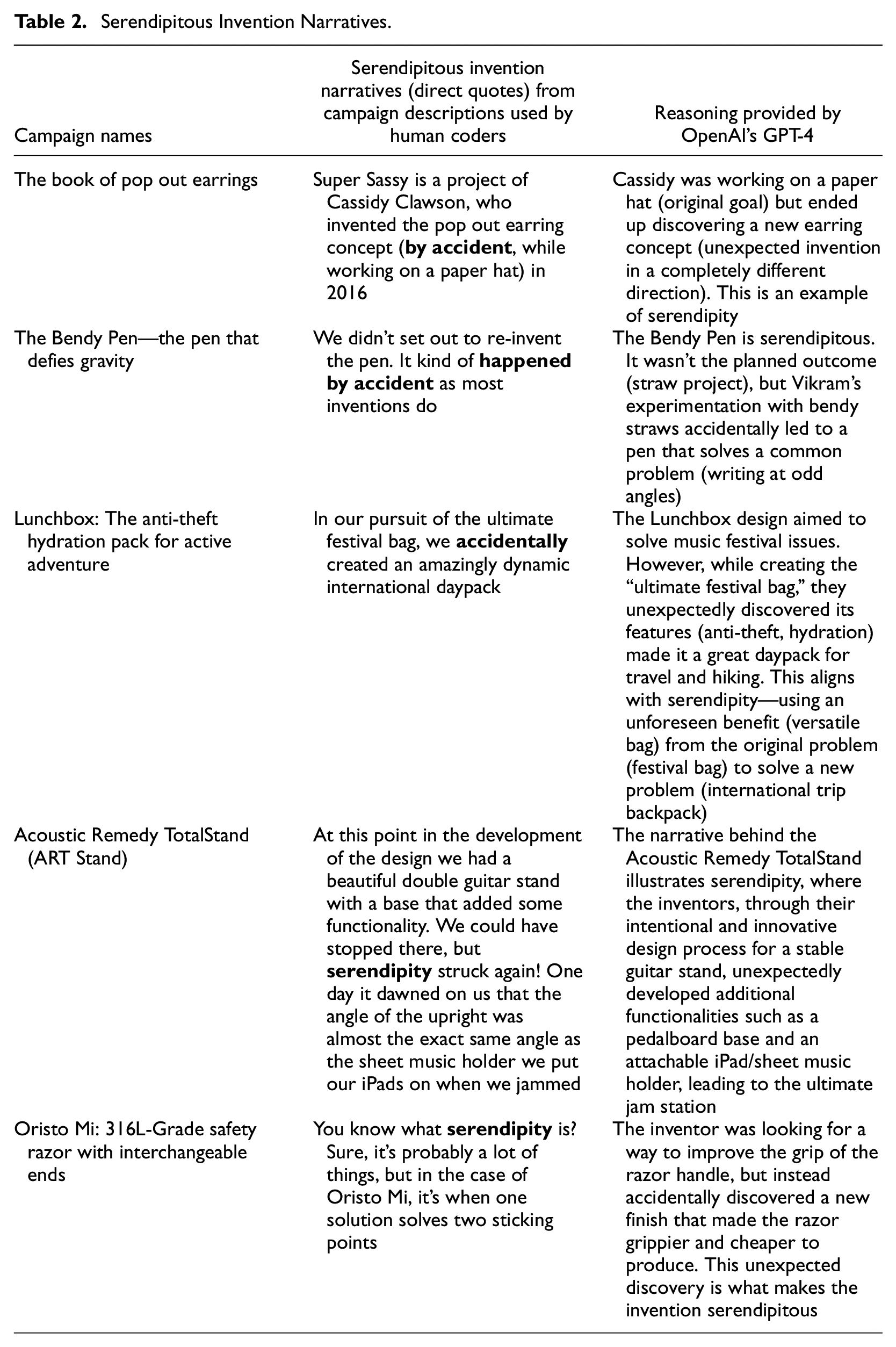
In addition to following existing crowdfunding research (e.g., Franzoni & Tenca, 2023; Jiang et al., 2023) by using interrater reliability to ensure consistent classification of serendipitous inventions, we took a step further with an additional robustness check. Specifically, we benchmarked our raters’ manual classifications of serendipitous inventions against computerized classifications generated by advanced large language models (LLMs). We leveraged the capabilities of LLMs like OpenAI’s GPT-4 to minimize the influence of human bias and coder fatigue. These LLMs are trained on extensive datasets exceeding 300 billion words and 1.7 trillion parameters (Chaka, 2023). This allows them to perform “zero-shot classification,” effectively categorizing text without specific training data examples (Liu et al., 2023). Recent studies, such as Loukas (2023), have demonstrated GPT-4’s ability to classify complex text with high accuracy (83%), as it can comprehend context beyond individual words or phrases. Gilardi and colleagues (2023) have also found that such models surpass human accuracy in text annotation and classification tasks. To optimize GPT-4 for our specific needs, we provided it with our definition of a serendipitous invention. We then uploaded full campaign descriptions of all identified serendipitous inventions. GPT-4 read each campaign description and classified whether the product or a feature of the product was accidentally discovered. It offered a brief explanation for each classification decision. Overall, our rater’s classification and the robustness check through GPT-4 classification remain consistent for all serendipitous inventions. The consistency observed between the two raters’ classifications and the results of the robustness check conducted through the GPT-4 classification reaffirm our approach’s reliability (see Table 2 for examples of campaigns classified as serendipitous inventions).
Serendipitous Invention Narratives.
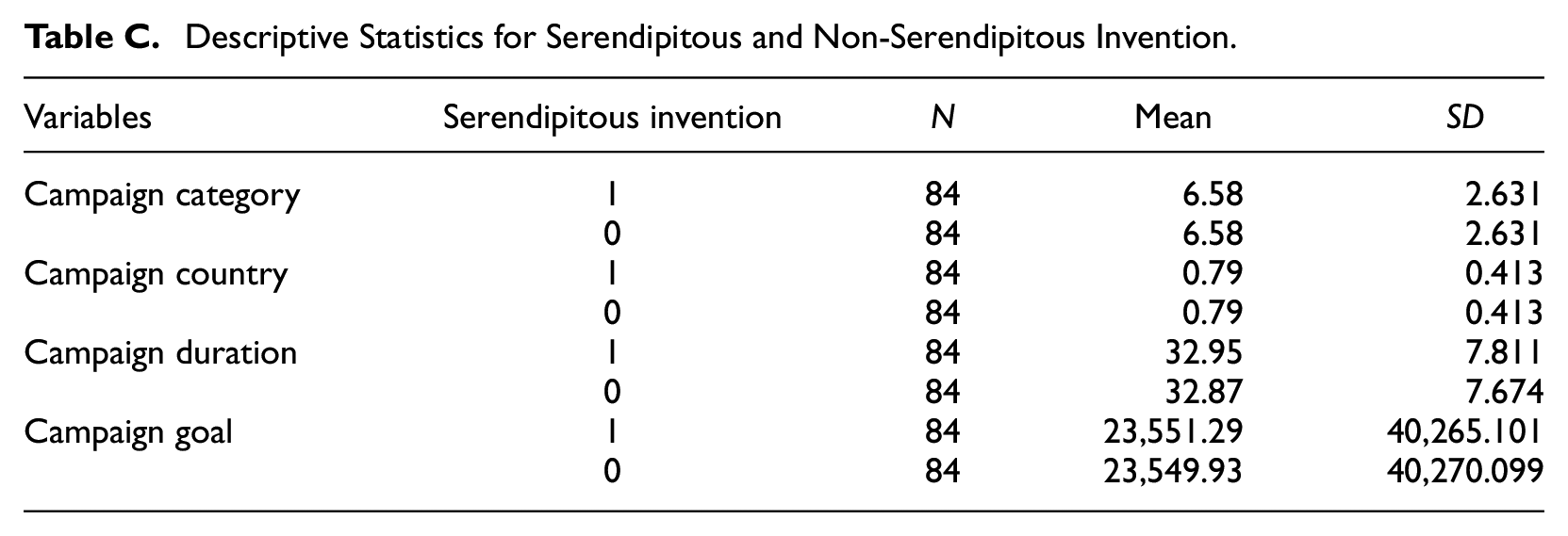
Next, we used coarsened exact matching (CEM) to find matched pairs, as described by Blackwell and colleagues (2009). CEM is a technique that refines the calculation of causal effects by diminishing disparities between the treatment group (serendipitous invention) and the control group (non-serendipitous invention). This method surpasses other matching techniques by better harmonizing the groups’ distribution traits, thus mitigating statistical bias risks (Iacus et al., 2012). We relied on prior crowdfunding research to choose four variables: (a) the amount of funding sought (campaign goal), (b) the number of days a campaign went live (campaign duration), (c) the category in which a product was classified (campaign category), and (d) whether the campaign was based in the United States (campaign location). We further refined the last two variables (i.e., campaign category and campaign location) to be exact matches. Prior research used them as either matching criteria in research design or covariates in research analysis (e.g., Anglin et al., 2022) because these variables are related to the treatment (i.e., the campaign) and/or outcome, thereby strengthening the rationale behind our methodology. Given that some control variables require the evaluation of entrepreneurs, we continued to iterate the matching process until each successfully paired campaign prominently featured entrepreneurs in its campaign media. The matching technique resulted in a final matched sample of 168 campaigns, with an in-sample multivariate imbalance (L1) of 0.046, showing a high balance (Blackwell et al., 2009). An L1 score of 0 indicates perfect balance, with higher values reflecting greater disparity between the groups (maximum L1 = 1). Table B of Appendix 1 shows univariate imbalance after matching. L1s for all variables are 0.00, indicating a very high balance. Table C of Appendix 1 shows descriptive statistics for the matching variables in the treatment and control sets. The mean and standard deviation values were nearly identical in both sets (e.g., the average campaign duration for serendipitous inventions is 32.95 days, while for non-serendipitous inventions, it is 32.78 days). Furthermore, we also conducted a t-test and found no significant difference between campaigns based on serendipitous versus non-serendipitous inventions in terms of campaign goal (p = 1.00), campaign duration (p = 0.94), campaign location (p = 1.00), and campaign category (p = 1.00). Overall, L1 values, descriptive statistics comparing two sets, and the t-test collectively suggest that creating a matched-pair sample was successful. While our matched pair was successful, one potential concern was the possibility of pre-Kickstarter stage survivorship bias, meaning serendipitous inventions that never launched crowdfunding campaigns on Kickstarter wouldn’t be included in our sample. However, such bias is likely to be equally present for non-serendipitous inventions as well. Moreover, both serendipitous and non-serendipitous inventions in our sample include successfully and unsuccessfully funded campaigns (cf., Taeuscher et al., 2021). Therefore, the effects of survivorship bias are unlikely to affect our ability to test the study hypotheses meaningfully in the context of crowdfunding.
Measures
Crowdfunding Success
Our dependent variable is crowdfunding success. Prior research states that reward-based crowdfunding platforms may serve as early adopter markets where preorders can be placed for new products (Brem et al., 2019). In line with this assumption and prior crowdfunding studies (e.g., Anglin et al., 2018), we operationalized crowdfunding success using two measures: campaign outcome (whether a campaign met its funding goal; 1 = yes, 0 = no) and amount of money raised (in USD).
Serendipitous Invention
Campaigns that included inventions described as serendipitous among our matched pairs were assigned a value of 1, while those with inventions described as being non-serendipitous were assigned a value of 0. To categorize an invention as a serendipitous invention, we followed the approach of prior literature on the serendipity of entrepreneurship (Dew, 2009). Specifically, we identified serendipitous inventions of new products or new features as the unexpected discovery of solutions via particular purposeful actions, that is, finding a solution to an unexpected problem (Walpolian) or unexpectedly finding a solution to a given problem (Mertonian; Yaqub, 2018). The following campaign descriptions are examples of serendipitous inventions versus non-serendipitous inventions taken from our sample.
Serendipitous invention: I was always told that the best ideas were the ones that were invented by accident; however, I never understood that until I accidentally invented the Tuggo! Non-serendipitous invention: As an industrial designer for the outdoor industry and an avid cycler, I found that I needed a bag that I could confidently carry into a client’s office and also one that I can comfortably ride with. I soon decided to challenge myself to design and create one myself.
In the first example, it is apparent that the Tuggo, a dog toy, was serendipitously created. The second example shows the non-serendipitous nature of the invention (i.e., intentionally solving a problem without the occurrence of serendipity). We have provided more examples of serendipitous inventions in Table 2.
Product Innovativeness
We proposed perceived product innovativeness, combining two key attributes of product originality and product usefulness, as the mediating variable in our proposed model (Sethi et al., 2001). Both attributes were measured using four-item scales developed by Li and colleagues (2015). For product originality, the attributes were original, novel, unusual, and unique. For product usefulness, the items were useful, necessary, beneficial, and fulfills a need. Two coders, who were blind to the purpose of the research and had professional experience in reviewing products independently, rated items on a 7-point Likert-type scale (ranging from 1 = strongly disagree to 7 = strongly agree). These individuals—one man and one woman—are freelance product testers who evaluate products to be sold on marketplaces such as Amazon, eBay, etc. They were both in the age range of 25 to 34, the most common age segment of funders in crowdfunding. They were each instructed to rate the originality and usefulness of the products from the standpoint of potential customers, which is what they typically do in their professional capacity. Their experience is one of the reasons why we chose to use professionally trained raters instead of crowdfunders, who may lack experience evaluating a diverse range of products. This decision was particularly important given that our aim was to gather evaluations that closely reflect real-world assessments. To ensure data accuracy, we followed the approach of prior studies by explaining the concepts of originality and usefulness to raters and having them independently review the first 20 campaigns as training. In terms of issues encountered during the coding of the variables for the first 20 campaigns, most inconsistencies were related to the tendency to gravitate toward neutral (i.e., 4) on the 7-point Likert-type scale (ranging from 1 = strongly disagree to 7 = strongly agree), which is a common issue in the use of Likert-type scales (Chyung et al., 2017). Therefore, instead of using the midpoint as a dumping ground, we asked them to focus their cognitive effort by reviewing each product carefully and using the midpoint as a last resort. To avoid overly retrospective evaluation, we created standardized documents using the actual pitch videos, product images, and descriptions of these campaigns for coders to rate product attributes. One of the authors then reviewed the ratings and discussed ways to adjust them to achieve a level of agreement and consistency. After obtaining the ratings for all campaigns in the sample, interrater reliability was assessed using Krippendorff’s alpha, which was found to be sufficiently high (alpha = .76). The reliability value was comparable to prior studies that rated similar attributes (e.g., Miron-Spektor & Beenen, 2015). We then averaged two coding values of items for both attributes to form our measure of perceived product innovativeness. We also calculated Cronbach’s alpha to assess the internal consistency of these measures, which produced a result of .83.
Control Variables
In addition to the matched-pair criteria, which operate as built-in controls to minimize confounding effects in the research design stage (Heyden et al., 2017), we also included several individual control variables in the analysis stage. First, we controlled for entrepreneurs’ demographic characteristics, such as gender and ethnicity, since these can influence potential funders’ perceptions regarding the quality of entrepreneurs and their ventures (Anglin et al., 2018). When the campaign media featured more than one individual, we used various elements of campaign pages, such as pitch videos, campaign descriptions, creator profiles, and social media links, to identify the gender and ethnicity of lead entrepreneurs (Davis et al., 2017). Gender was coded 0 for females and 1 for males, while ethnicity was coded 0 for racial minorities (i.e., non-white) and 1 for white entrepreneurs.
In addition, we controlled for campaign characteristics such as campaign duration and campaign goal since these factors have been shown to impact crowdfunding success (Mollick, 2014). Moreover, as several studies have likened being featured on Kickstarter to earning a medal of honor for innovative campaigns (e.g., Butticè et al., 2017; Stevenson et al., 2022; Taeuscher et al., 2021), we controlled for this featured effect using a binary variable (Project We Love = 1, otherwise = 0). For entrepreneur-related characteristics, we controlled for prior crowdfunding experience by counting the number of crowdfunding campaigns launched by the entrepreneur and prior backing experience (i.e., internal social capital), the number of campaigns an entrepreneur had supported. In addition, we included variables indicating whether an entrepreneur is well-connected in the crowdfunding community. Prior functional experience was accounted for as well, as entrepreneurs with prior functional experience are often regarded as experts. In addition, prior research indicates that user entrepreneurs can be seen as more appealing to funders, so we controlled for user entrepreneurship (coded as 1 if the entrepreneur is a user entrepreneur and 0 otherwise; Oo et al., 2019).
Further, we controlled for pitch video quality, image count, word count, and FAQ count in campaigns since these are often proxies for the quality of business ideas and the preparedness of entrepreneurs (Davis et al., 2017; Kunz et al., 2017). Pitch video quality was measured on a 7-point Likert-type scale using a two-item scale created by Chan and Parhankangas (2017). We averaged the ratings of two raters since interrater reliability was high (Krippendorff’s alpha = .88). Likeability and trustworthiness were measured using two-item scales created by Cornelis and colleagues (2022). Given the high interrater reliability (Krippendorff’s alpha = .82 and .86, respectively) between the two raters, we averaged their ratings to measure likeability and trustworthiness. The presence of a Facebook account, other external websites, and collaborators in the entrepreneur’s profile was also controlled for, as additional informational sources may confer legitimacy to the entrepreneur. Following Rose et al. (2021), we also controlled for the product development stage by assigning codes (1 = idea stage, 2 = concept stage, 3 = prototype stage, 4 = market-ready stage). Finally, given that narratives about serendipitous inventions may be more compelling than those of non-serendipitous inventions, we followed the approach of Gorbatai and Nelson (2015) and assessed compelling elements using three compositional variables: lexical diversity, readability, and concreteness. Lexical diversity was measured by calculating the ratio of the number of unique words to the total number of words in the campaign description, and readability was measured using the Flesch reading ease score (Chan & Parhankangas, 2017). Following prior crowdfunding studies, the concreteness of the narratives was captured using DICTION content analysis software (Digitext, Inc. Austin, Texas) (Parhankangas & Renko, 2017).
Statistical Analyses
Since our measures for the dependent variable were dichotomous (campaign outcome) and continuous (amount of money raised), we used logistic and linear regression analyses for each measure. We applied a bootstrapped mediation analysis using the PROCESS macro developed by Preacher and colleagues (2007) to test mediating effects through product innovativeness. Similar to other crowdfunding studies (e.g., Anglin et al., 2018; Momtaz, 2021), we observed skewness in our dependent variable, the amount of money raised, along with some control variables, such as the campaign goal. To address this, we applied a natural logarithm transformation to these variables, including the amount of money raised, campaign goal, prior crowdfunding experience, prior backing experience, image count, and word count. Given that some of these variables had zero values (e.g., prior crowdfunding experience) in our data, we followed a common practice by adding a small positive constant to the values of all of these variables before applying the log transformation (Changyong et al., 2014).
Results
Before testing our hypotheses, we checked for the presence of multicollinearity. Variance inflation factor (VIF) values were less than 2.38 for each variable included in the analyses (mean VIF = 1.54), which is well below the threshold of 10 (Hair et al., 1998). Table 3 shows descriptive statistics and correlations among variables. Table 4 displays the results of linear regression analyses examining the effect of serendipitous invention on product innovativeness.
Descriptive Statistics and Variable Correlations.
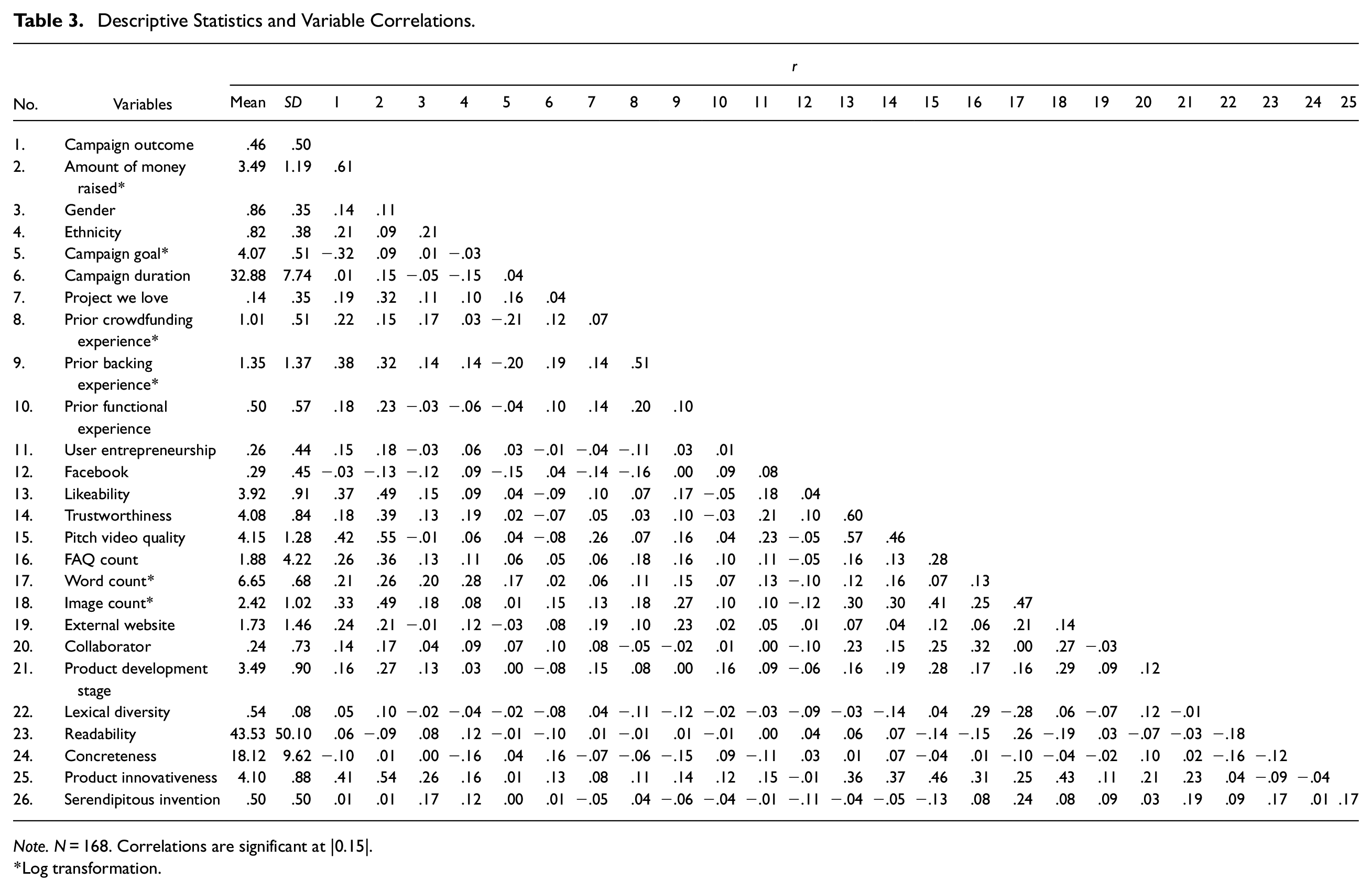
Note. N = 168. Correlations are significant at |0.15|.
Log transformation.
Prediction of Product Innovativeness.
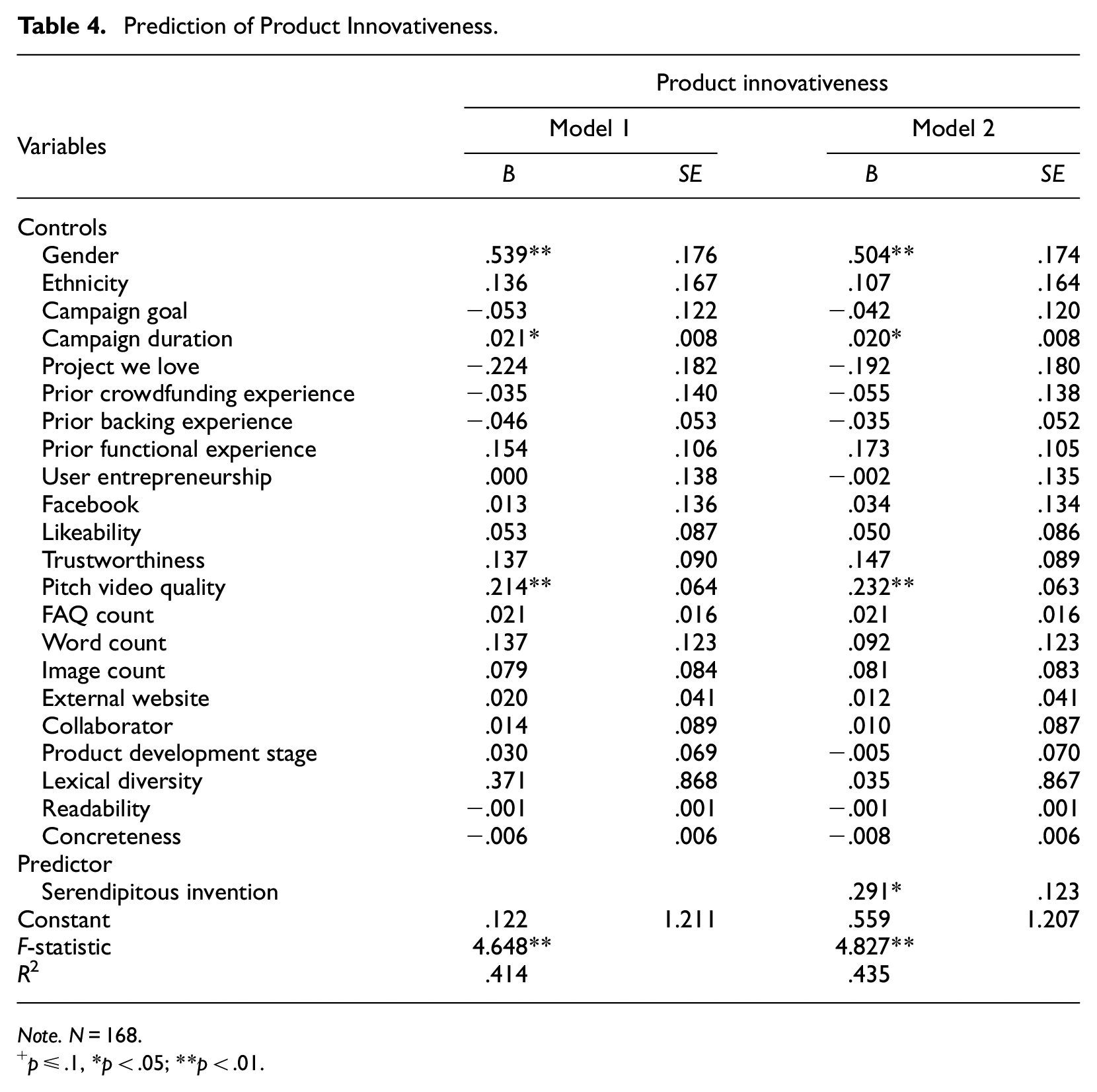
Note. N = 168.
p ≤ .1, *p < .05; **p < .01.
Hypothesis 1 predicted that serendipitous inventions will be more positively associated with perceptions of product innovativeness than non-serendipitous inventions. Model 1 of Table 4 is the base model with controls only. Model 1 shows that gender, campaign duration, and pitch video quality are positively associated with perceptions of product innovativeness. When we added serendipitous invention to Model 2, we found a significant positive relationship with product innovativeness (B = .291, p < .05). Thus, the results support Hypothesis 1.
Hypothesis 2 predicted that perceptions of product innovativeness will be positively associated with crowdfunding success. Regression analysis, shown in Table 5, captured crowdfunding success using two variables: campaign outcome and amount of money raised. Models 3 and 5 are base models, with controls only. The results indicate that campaign goal is negatively associated with campaign outcome, mirroring findings from other studies (e.g., Courtney et al., 2017). On the other hand, prior backing experience (i.e., internal social capital) and likeability are positively related to campaign outcome, consistent with results found in previous studies (e.g., Colombo et al., 2015; Cornelis et al., 2022). In addition, we found that prior functional experience and pitch video quality positively influence campaign outcome. We added our key variables of interest to Model 4, with results for campaign outcome and Model 6 showing amount of money raised. As shown in Model 4, product innovativeness (B = 1.028*, p < .05) has a significant positive association with campaign outcome. Model 6 also provides consistent results since product innovativeness (B = .313, p < .01) has a significant positive relationship with amount of money raised. Collectively, these results support Hypothesis 2.
Prediction of Crowdfunding Success (Campaign Outcome and Amount of Money Raised).
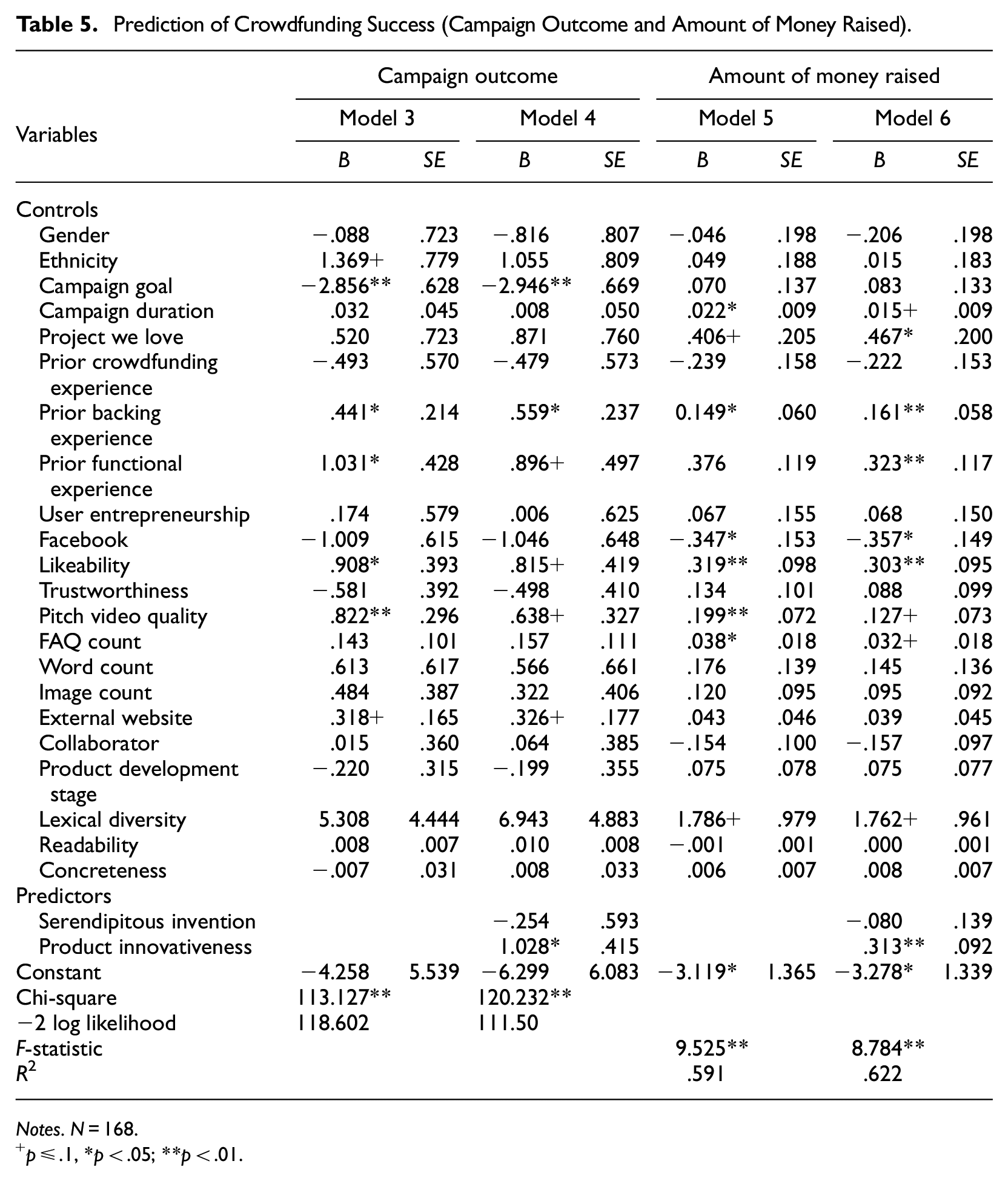
Notes. N = 168.
p ≤ .1, *p < .05; **p < .01.
Hypothesis 3 predicted that perceptions of product innovativeness will mediate the relationship between serendipitous invention and crowdfunding success. After testing direct effects, we ran mediation analyses using the bootstrapping method, which is appropriate for a small sample size and does not rely on normal sampling distribution. Consistent with prior studies, we used 1,000 bootstrapping samples (e.g., Barnes et al., 2017; Molly et al., 2019). As shown in Table 6, the indirect effect of serendipitous invention on crowdfunding success via product innovativeness is both positive and significant for campaign outcome (0.299, 95% CIs [0.011, 30.892]) and amount of money raised (0.091, 95% CIs [0.014, 0.208]). Thus, these results support Hypothesis 3. Overall, the findings provide support for our proposed theoretical mechanism, which posits that product innovativeness mediates the relationship between serendipitous invention and crowdfunding success.
Indirect Effect of Serendipitous Invention on Crowdfunding Success Via Product Innovativeness.
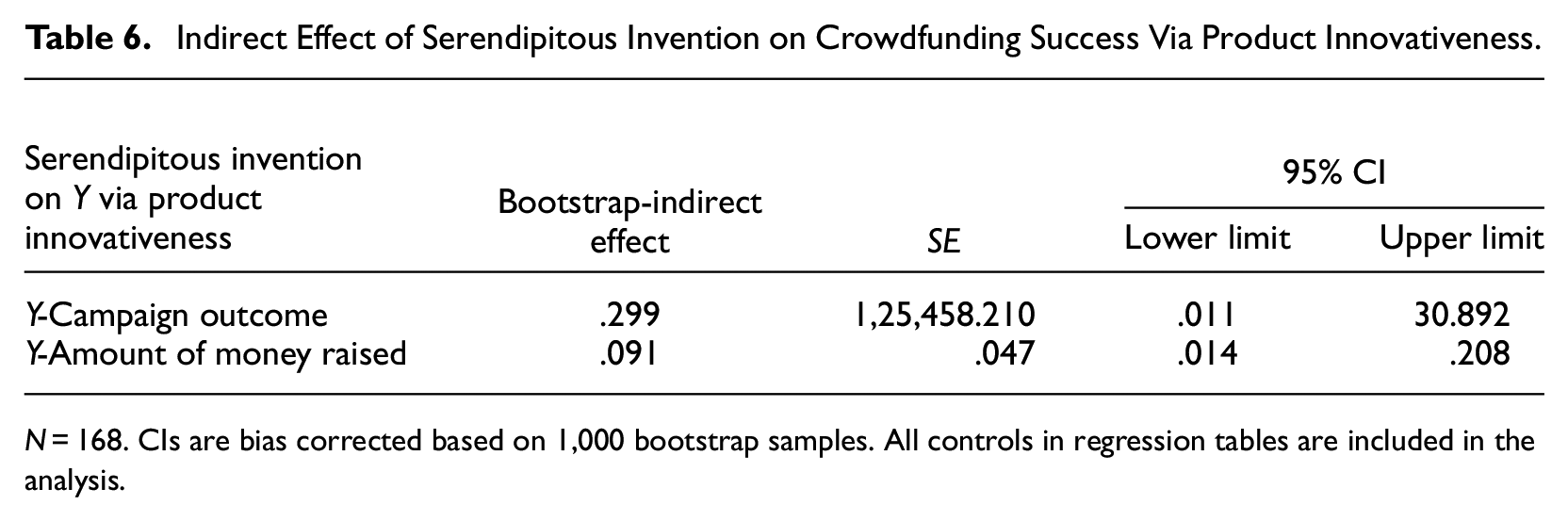
N = 168. CIs are bias corrected based on 1,000 bootstrap samples. All controls in regression tables are included in the analysis.
Discussion
The recent growth in crowdfunding has democratized inventions and their commercialization (Brem et al., 2019). It provides inventors, problem-solvers, and nascent entrepreneurs a platform to present their ideas, tell their stories, and partially presell their products to finance their ventures. Given the importance of this funding source for aspiring entrepreneurs (Anglin et al., 2022; Short et al., 2017), much research has investigated how and by whom pitches are expressed (Allison et al., 2022; Colombo et al., 2015; Moss et al., 2018). Surprisingly, little research has explored the nature and background of how pitched products were invented. Due to the prominent role of serendipity in the history of invention (De Rond & Morley, 2010) and uncertainty regarding whether serendipitous inventions are initially perceived favorably or negatively (Glăveanu, 2022; Lembregts et al., 2014), our study examined how pitches for serendipitous (vs. non-serendipitous) inventions relate to crowdfunding outcomes. The stories provided in crowdfunding campaign descriptions present a unique way to identify serendipitous inventions in their early stages of development and commercialization. Drawing on insights from attribution theory’s prepared mind perspective, we took advantage of those stories to empirically examine the influence of serendipitous inventions on crowdfunding market reactions. Our results extend beyond prior studies of innovation within this context (e.g., Davis et al., 2017; Chan & Parhankangas, 2017) by exploring the serendipitous origins of inventions as one key factor that may enhance perceptions of innovation and, in turn, increase the odds for achieving crowdfunding success. Below, we describe how the findings of our study contribute to entrepreneurship literature, discuss practical implications, review limitations and directions for future research, and end with some concluding thoughts.
Contributions to the Entrepreneurship Literature
The results of our study enrich the portions of the entrepreneurship literature relating to crowdfunding, innovation, and emergent processes. The primary contribution of our findings is to the general area of crowdfunding research. Prior studies have provided evidence for the effect of innovation-related constructs on crowdfunding outcomes (Chan & Parhankangas, 2017; Davis et al., 2017; Le Pendeven & Schwienbacher, 2021; Oo et al., 2019; see Table 1 for details), but most research has been silent on why some products, yet not others, are perceived to be innovative. Our study delved into the role of serendipity as an important element for innovation, particularly within the crowdfunding context. This examination adopted a holistic view that encapsulates both the antecedents and consequences of product innovation. This approach is crucial, as it highlights the importance of narratives that detail the origins of inventions and perceived innovativeness. Indeed, perceived innovativeness aligns with the nature of (reward-based) crowdfunding, as many funders could be considered as lead users who are motivated to support new and innovative products. In other words, prospective crowdfunders behave like potential consumers, viewing reward-based programs as a means to both support the development of innovative ideas and obtain products as rewards (Chan & Parhankangas, 2017). By examining important attributes from a funder’s perspective, we illustrated, in the current research, how a distinct form of opportunity discovery—serendipity—influences perceptions of innovation, subsequently shaping the achievement of crowdfunding success. Empowered with this knowledge, entrepreneurs need not worry about whether sharing narratives around serendipitous inventions might be penalized; instead, they should recognize that such fortuitous occurrences are likely to be perceived as innovative and worthy of support.
Our findings additionally inform the entrepreneurship literature on the role of serendipitous innovation. Despite many serendipitous inventions becoming viewed as life-changing, paradigm-shifting, and successful in the market (Baer, 2014), limited scientific evidence exists regarding how such inventions are initially perceived and eventually become successfully converted into commercialized products. To advance this area of research, some scholars have begun examining the serendipitous invention phenomenon (e.g., Dew, 2009; Busch & Barkema, 2022; Mirvahedi & Morrish, 2017). However, these studies have primarily been either conceptual or involved qualitative explorations (e.g., Busch & Barkema, 2022). This highlights the growing call among scholars for empirical investigations into serendipity’s relationship with other key drivers and outcomes across various contexts (e.g., Busch, 2022). A recent study by Fultz and Hmieleski (2021) is one of the first studies to empirically demonstrate how serendipitous inventions can generate favorable performance for new ventures. The results of our study complement those of Fultz and Hmieleski (2021) by explaining that the benefits of serendipity for entrepreneurs can be traced back to the early stages of new venture development—including an enhanced ability to obtain financial resources via crowdfunding.
Practical Implications
Our findings provide several practical implications. First, literature on innovation and entrepreneurship has viewed problem-solving as the outcome of planned or routine processes that unfold in a linear fashion. Apart from this view, our theoretical arguments and empirical findings suggest that serendipity can lead to an innovative solution. These findings demonstrate the benefits of serendipitous invention and the need to recognize the practical value of ideas for new products that emerge through nonlinear (or discontinuous) means. Therefore, we suggest individuals have an open mind and recognize how intentional efforts that may begin via traditional, linear means can potentially create opportunities for nontraditional, discontinuous opportunities to emerge and be shaped into unexpected solutions.
Second, our findings highlight the perceived innovativeness of serendipitously created products and how early adopters support these products. As such, inventors of serendipitously developed products could benefit by communicating a compelling narrative about their invention’s origins when trying to commercialize their work. This approach is likely to be particularly effective when targeting early adopters. Besides having an innovative product, they also have an exciting story they can share on crowdfunding platforms to obtain early-stage funding. Rather than such stories being perceived as luck or chance that could be frowned upon as unearned, crowdfunders appear to view such creations as the result of a “prepared mind” and reward those who are mindful enough to identify and capitalize on such opportunities. Thus, serendipity should not be viewed as a dirty word in the crowdfunding context but instead as a description of something likely to be considered particularly special and innovative.
Third, we believe that crowdfunding success of serendipitous inventions—drawing on the support of hundreds of funders—should provide confidence to more sophisticated investors (e.g., venture capitalists and angels) because such serendipitous inventions have demonstrated their preliminary success via crowdfunding. Thus, our findings legitimize the inventor-entrepreneur’s narrative about serendipitous inventions (Maier et al., 2021; Taeuscher et al., 2021). Knowledge regarding the market traction gained by crowdfunding campaigns of serendipitous, as compared to non-serendipitous, inventions could, therefore, provide useful insights to include in the due diligence process used by venture capitalists (and other more traditional types of investors) to de-risk their investments to some extent.
Limitations and Future Research Directions
Our research has a few limitations, which may indicate fruitful future research. First, even though we proposed and tested a key mechanism that mediated how serendipitous invention relates to crowdfunding success, other processes (e.g., social influence) may also influence these effects. For example, funders may have a preconceived preference for serendipitous inventions after viewing a story in the media that leads them to support a campaign. Due to the lack of data related to the background of funders on Kickstarter, we were not able to capture and control this type of social process. Given that our research focuses on product attributes (i.e., perceptions of innovativeness), exploring such mechanisms is beyond the scope of this study. Nonetheless, future researchers may wish to experiment on how funders and investors make funding decisions and how these decisions may differ regarding serendipitous inventions versus traditional problem-solving.
Second, in applying attribution theory, our theoretical arguments were based on the prepared mind perspective. Consistent with our definition and measurement of serendipitous invention being grounded in the intentionality and agency of the entrepreneur rather than random luck or chance, we built and tested our model drawing from the perspective of the “prepared mind”—arguing why serendipitous inventions are likely to be perceived as innovative. While the results supported the prepared mind view, we did not explicitly measure and test this perspective against inventions that came about without the involvement of intentionality or agency. Thus, future research might use experimental methods to create and contrast vignettes describing fictitious campaigns based on products invented through serendipitous means involving intentionality and effort to solve a problem, compared to accidental inventions that came about randomly by chance with no effort being made to solve any given problem.
Third, our focus on the crowdfunding context limits the generalizability of our findings to other situations in which serendipitous narratives about the origins of inventions may impact the ability of entrepreneurs to raise capital. For example, it is possible that the unplanned nature of serendipity could deter venture capitalists and/or bank lenders who are accustomed to evaluating business ideas resulting from more traditional means and typically make greater funding commitments than individual crowdfunders. Given the degree to which crowdfunding success mirrors consumer demand, such a perspective would appear misguided based on our findings. Nonetheless, future research might explore a more diverse range of entrepreneurial funding mechanisms to comprehensively understand how serendipitous narratives impact capital acquisition strategies across different settings.
Finally, we interpreted our results based on a relatively small field sample. Using a fairly labor-intensive manual coding process, we did our best to identify serendipitous inventions. We could only identify 84 campaigns, yielding 168 after matching them with non-serendipitous ones. It is possible that we did not detect relationships that might be significant when applied to a larger sample. While we partly overcome this limitation by using the bootstrapping approach, deemed suitable for a small sample (Hayes, 2018), we encourage scholars to identify other contexts where serendipitous inventions may occur. We hope future research will build on our study to explore antecedents and outcomes of serendipitous inventions in different contexts.
Conclusion
Drawing from attribution theory’s prepared mind perspective, the current research found that serendipitously invented products are perceived as being more innovative than those created through non-serendipitous means through perceptions of product innovativeness. Our exploration of serendipitous inventions expands on mainstream problem-solving research, which has previously emphasized traditional (or linear) problem-solving approaches. We hope our work may spark an important body of research in the innovation entrepreneurship literature—opening the doors for further study of serendipitous inventions.
Footnotes
Appendix 1
Descriptive Statistics for Serendipitous and Non-Serendipitous Invention.
| Variables | Serendipitous invention | N | Mean | SD |
|---|---|---|---|---|
| Campaign category | 1 | 84 | 6.58 | 2.631 |
| 0 | 84 | 6.58 | 2.631 | |
| Campaign country | 1 | 84 | 0.79 | 0.413 |
| 0 | 84 | 0.79 | 0.413 | |
| Campaign duration | 1 | 84 | 32.95 | 7.811 |
| 0 | 84 | 32.87 | 7.674 | |
| Campaign goal | 1 | 84 | 23,551.29 | 40,265.101 |
| 0 | 84 | 23,549.93 | 40,270.099 |
Declaration of Conflicting Interests
The author(s) declared no potential conflicts of interest with respect to the research, authorship, and/or publication of this article.
Funding
The author(s) received no financial support for the research, authorship, and/or publication of this article.
