




Abstract
Sustainable development, as outlined by the Sustainable Development Goals (SDGs), constitutes a critical agenda for global progress. However, the looming climate challenges impede the realization of these goals. Entrepreneurship emerges as a vital catalyst for economic growth and societal welfare, yet its traditional model faces challenges in the face of environmental degradation and resource scarcity. Sustainable entrepreneurship (SE), rooted in environmental preservation and societal benefit, holds promise in addressing these challenges.
This article explores the nexus of financing and SE, recognizing the pivotal role of funding in fostering a sustainable business ecosystem. Drawing upon a comprehensive review of literature and bibliometric analysis conducted between December 2023 and January 2024, utilizing a dataset of 64 articles sourced from the Web of Science (WoS), this study delves into the intricacies of funding sustainable ventures. It scrutinizes the hurdles faced by sustainable entrepreneurs in accessing traditional financing avenues, including risks, market uncertainties and longer return on investment periods.
The emergence of alternative financing methods, such as crowdfunding, venture capital (VC) and business angels (BAs), signifies a paradigm shift in funding sustainable ventures. These unconventional channels challenge the notion that sustainability compromises profitability for investors. By synthesizing existing knowledge and identifying research gaps, this review lays a robust groundwork for future investigations in this crucial domain.
The systematic structure of this review encompasses the delineation of objectives and methodology, data analysis, insights derived from the study and concluding remarks with recommendations for future research. This article serves as a guide for scholars, practitioners and policymakers navigating the evolving landscape of SE financing, striving towards a greener and more prosperous future.
Keywords
Introduction
Sustainable development stands out as one of the most significant topics of our era (Shepherd & Patzelt, 2011). Climate challenges pose a serious obstacle to achieving the goals set by the SDGs. The SDGs are a set of 17 global goals established by the United Nations (UN) in 2015, making it an ambitious agenda aimed at eradicating poverty, protecting the planet and ensuring that all people enjoy peace and prosperity by the year 2030 (United Nations Development Programme, 2023).
Entrepreneurship is intricately connected to the wealth and prosperity of nations, serving as a primary driver of economic growth, job creation and the enhancement of population welfare (Goswami et al., 2024). However, as the environment degrades and resources become increasingly scarce, it represents a pivotal moment towards a greener economy (Gu et al., 2023; Shepherd & Patzelt, 2011). Due to this fact, entrepreneurship has been increasingly recognized as a key element in addressing the immense challenges that society currently faces, especially when it comes to implementing actions that strive to achieve the established goals (Vasilescu et al., 2023).
SE revolves around preserving nature, supporting life and benefitting the community by identifying opportunities to develop future products, processes and services for both economic and non-economic gains, which encompass benefits for individuals, the economy and society as a whole (Shepherd & Patzelt, 2011). As SE entails pursuing economic, social and environmental goals within business activities, its success is shaped by diverse internal and external factors (Matera et al., 2023).
Funding is a crucial prerequisite for most new ventures (Wöhler & Haase, 2022), with the accessibility of financing options playing a pivotal role in establishing a sustainable business ecosystem (Zamfirache et al., 2023). Nevertheless, sustainable entrepreneurs often encounter heightened challenges in securing funding due to the distinctive characteristics, motivations and amplified risks associated with their ventures compared to traditional entrepreneurship (e.g., Bergset, 2015; Shepherd & Patzelt, 2011; Yacoub et al., 2022). These challenges might hinder the implementation of their solutions for society (Pabst et al., 2021).
The challenge of funding can stem from various factors, including a lack of understanding about the sector or the technology utilized by lenders (Aristei & Gallo, 2021), associated risks, extended return on investment periods (Ghisetti et al., 2017), market uncertainty, regulatory factors or exit strategies (Wustenhagen & Teppo, 2006), as well as the costs linked with SE (Vasilescu et al., 2023).
The challenge of obtaining traditional funding has led to the growth of alternative financing methods, which bridge the gap for those struggling with conventional channels (Tenner & Hörisch, 2021). These unconventional channels, such as crowdfunding, VC, social banks, philanthropic organizations (Hebb, 2013) and BA (Botelho et al., 2023), challenge the perception that entrepreneurship may yield lower profits for investors, potentially resulting in less funding allocated to this sector. Existing literature demonstrates that within the domain of sustainability, profitability can be comparable, contingent on the specific contexts being examined (Kraus et al., 2018).
Written between December 2023 and January 2024, this article endeavours to comprehensively explore the intersection of financing and SE through a meticulous examination of existing literature coupled with a bibliometric analysis. The overarching objective is to combine diverse studies in this domain, delineate common threads and pinpoint avenues for future research. By synthesizing existing knowledge and identifying lacunae, this review seeks to lay a robust groundwork for forthcoming investigations in this pivotal field.
The structure of this systematic literature review (SLR) adheres to the following framework: The second section delineates the objectives of the review and the methodology employed. The third section offers data analysis. The fourth section presents an analysis of the knowledge acquired during the study. Finally, the fifth section presents the conclusions drawn and offers suggestions for future research.
Objectives and Methodologies
A literature review is a process of identifying, evaluating and synthesizing previous research on a specific topic. Relevant literature is an essential part of any research project as it helps researchers understand what has already been done in a particular field of study, identify research gaps and develop new research (Paul & Barari, 2022; Snyder, 2019).
Traditional reviews frequently involve a degree of subjectivity in both data collection and interpretation. Perhaps as a result, there has been a surge in the popularity of SLRs (Kraus et al., 2020).
The objective of an SLR is to pinpoint all relevant empirical evidence that meets predetermined inclusion criteria to address a specific research query (Snyder, 2019). Unlike traditional reviews, SLR stems from their methodical, comprehensive, transparent and replicable characteristics, making them applicable across diverse fields and studies (Siddaway et al., 2019). Through the application of systematic methodologies, biases can be mitigated, supplying trustworthy outcomes (Snyder, 2019).
We employ an SLR methodology. As a result, we maintain the integrity of our sample by following Linnenluecke et al. (2019), Marín-Palacios (2023) and Almeida and Gonçalves (2023).
Similar to other types of review articles, the beginning of an SLR typically involves formulating a question, stating objectives or clarifying its purpose (Khan et al., 2021). Building upon this assumption, the following research objectives (RO) have been formulated:
RO1: Identify key authors, articles and scientific journals that have published articles in the field of financing SE. RO2: Identify opportunities and barriers in the field of financing SE. RO3: Contribute to knowledge about financing SE by identifying gaps for future studies.
The adoption of bibliometrics is steadily broadening its application across various academic disciplines (Aria & Cucurullo, 2017). As a result, we have chosen to utilize two freely available software tools: Bibliometrix 4.1 was employed for aggregating data on authors, affiliations, journals and related information in the ‘Main Information’ section, and VOSviewer 1.6.17 served as a bibliometric tool to apply bibliographic coupling and consolidate selected articles. This acknowledges the significance of clustering scientific publications in bibliometric studies (Van Eck & Waltman, 2017), which will be elaborated upon in the ‘Knowledge Analysis’ section.
To conduct this analysis, specific criteria have been applied to select relevant articles, which are detailed bellow:
Keywords and Database
In this section, we establish the search terms to be employed. To conduct a thorough exploration of financing and sustainable new ventures (SNV), we employ the keywords listed below:
TS = (‘entrepreneur*’) AND TS = (‘financing’ OR ‘fund*’ OR ‘loan’ OR ‘lending’) AND TS = (‘green entrepreneur*’ OR ‘sustainable entrepreneur*’ OR ‘ecological entrepreneur*’ OR ‘environmental entrepreneur*’ OR ‘ecopreneur*’ OR ‘green business*’ OR ‘green firm*’ OR ‘green ventur*’ OR ‘green enterpris*’ OR ‘green corporat*’ OR ‘green start*’).
The database was selected after choosing the keywords. Therefore, WoS was used as it is recognized as one of the most comprehensive databases of scientific articles in various fields of knowledge (Crossan & Apaydin, 2010).
Inclusion and Exclusion Criteria
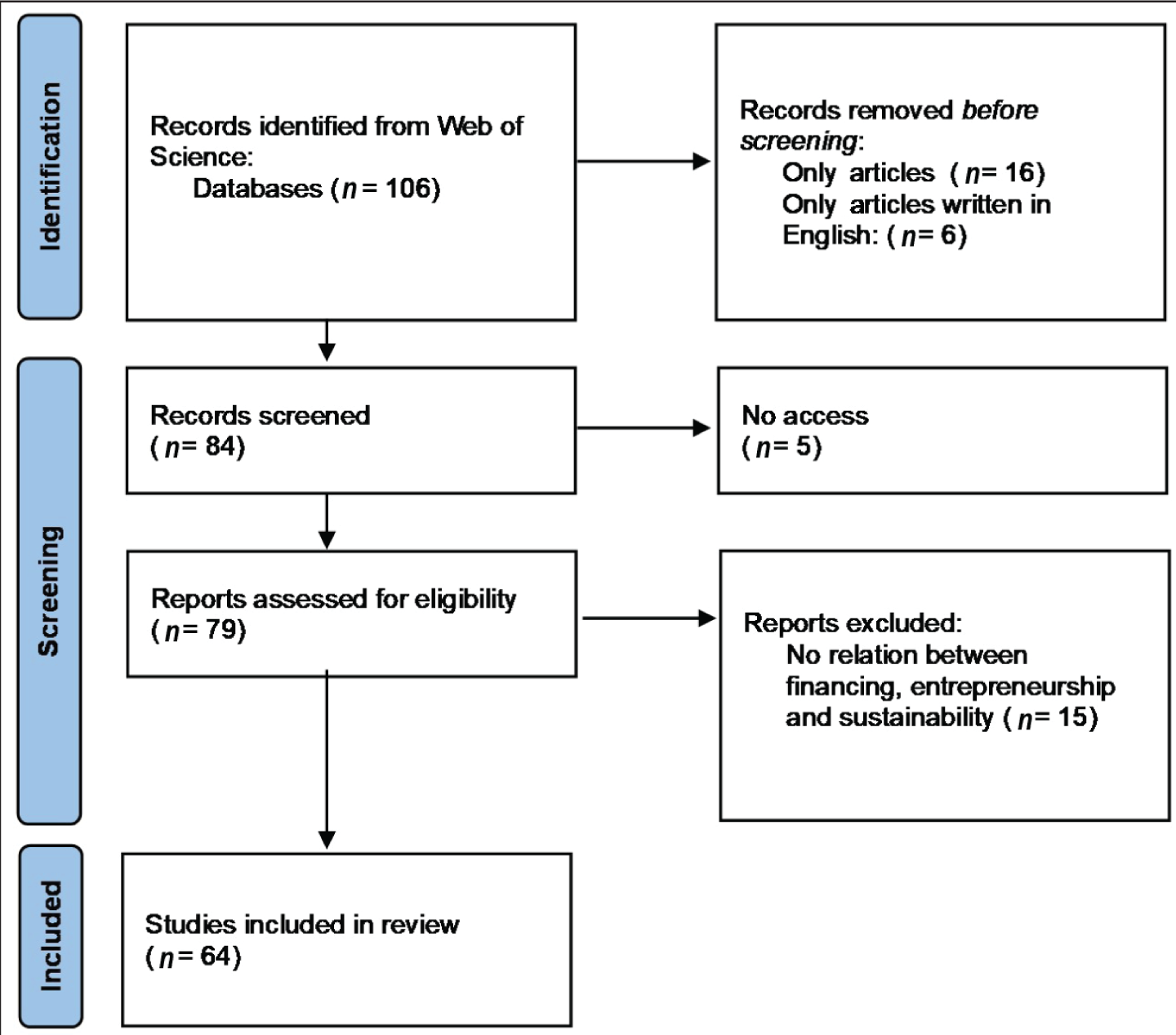
This section outlines the criteria for inclusion and exclusion. The criteria encompassed the following: (a) articles accessible in WoS; (b) peer-reviewed articles; (c) articles written in English; and (d) articles investigating the correlation between financing and SE. No constraints regarding time period or categories were enforced to facilitate a comprehensive exploration across diverse fields of study.
The PRISMA guidelines assist in reporting reviews in a clear, transparent and sufficiently detailed manner to enable result reproduction (Rethlefsen & Page, 2021). Figure 1 allows for the recording of the article selection process through a PRISMA flowchart.
PRISMA Flowchart.
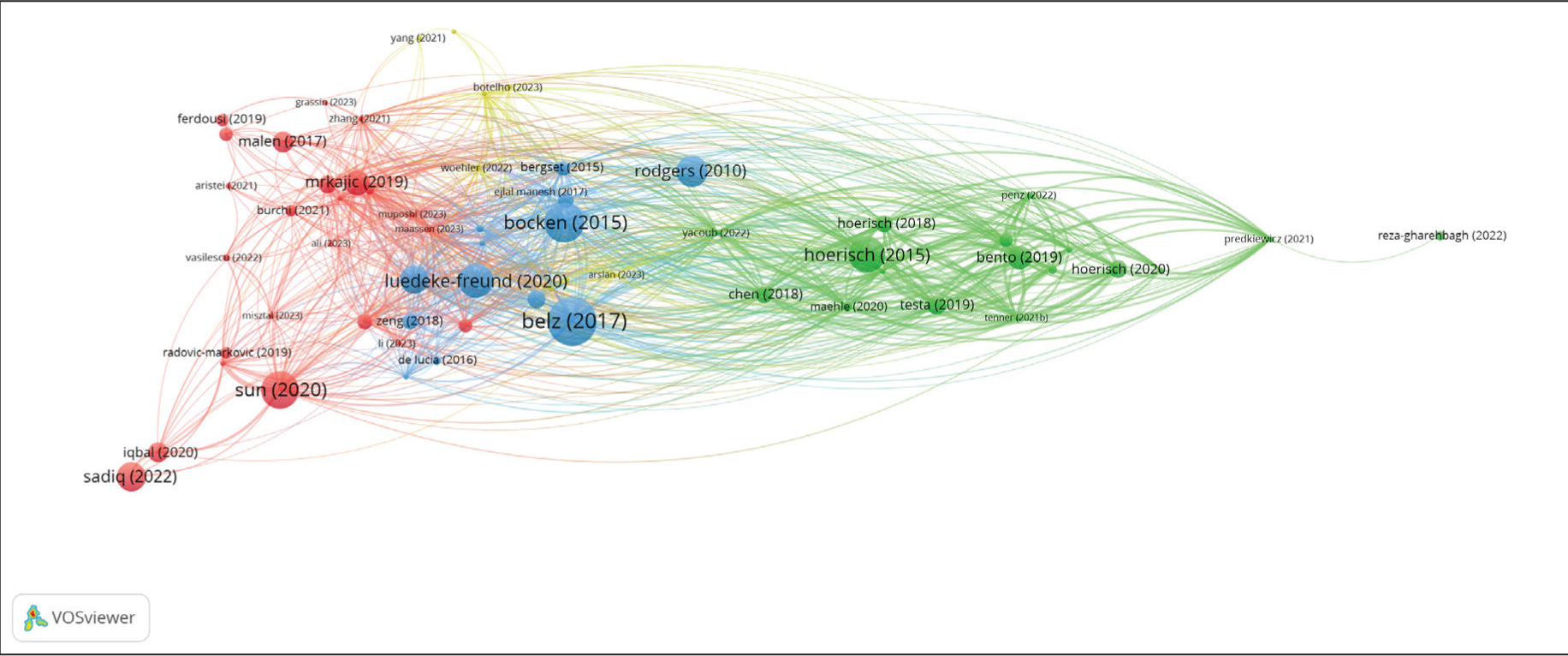
Network Visualization.
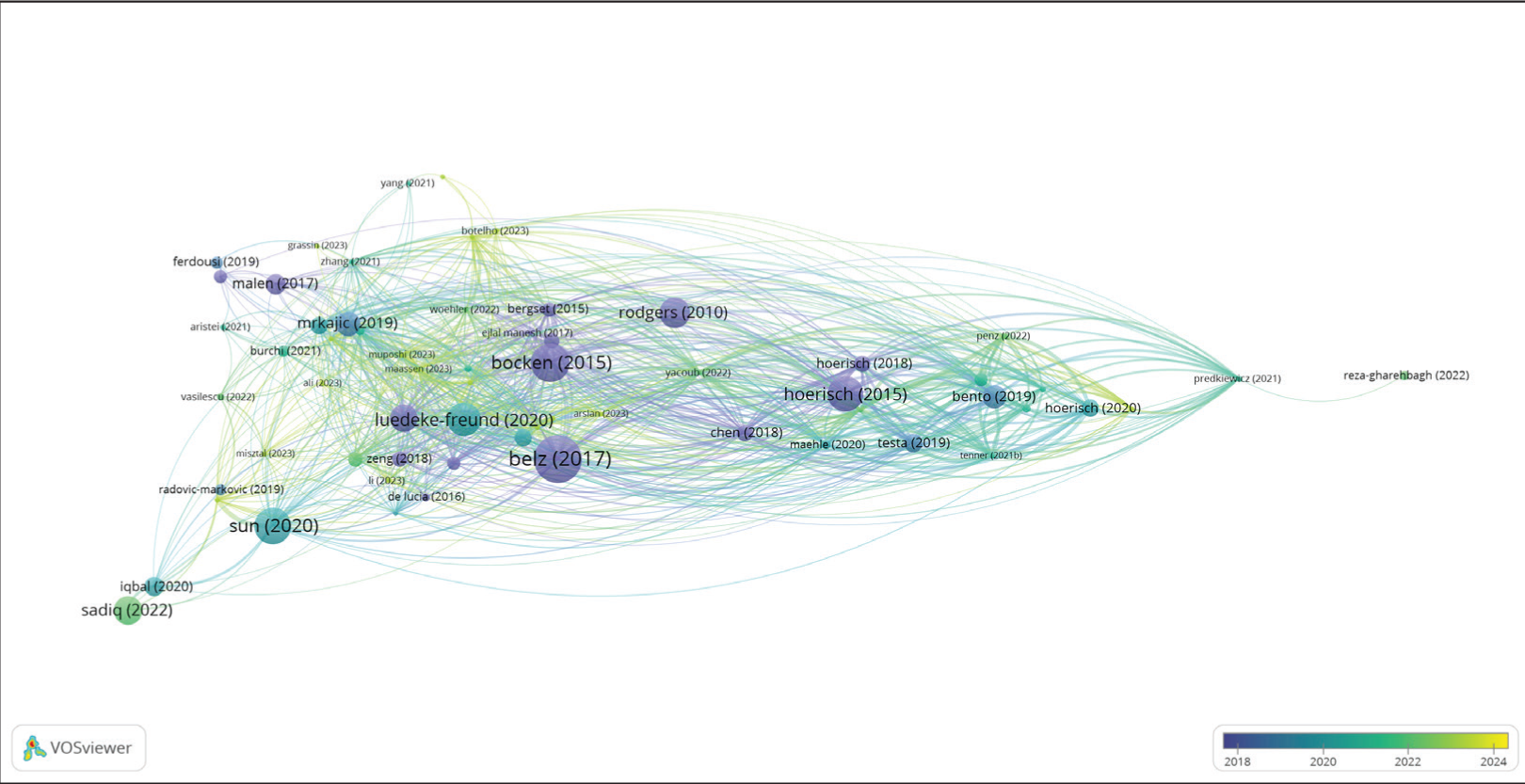
Overlay Visualization.
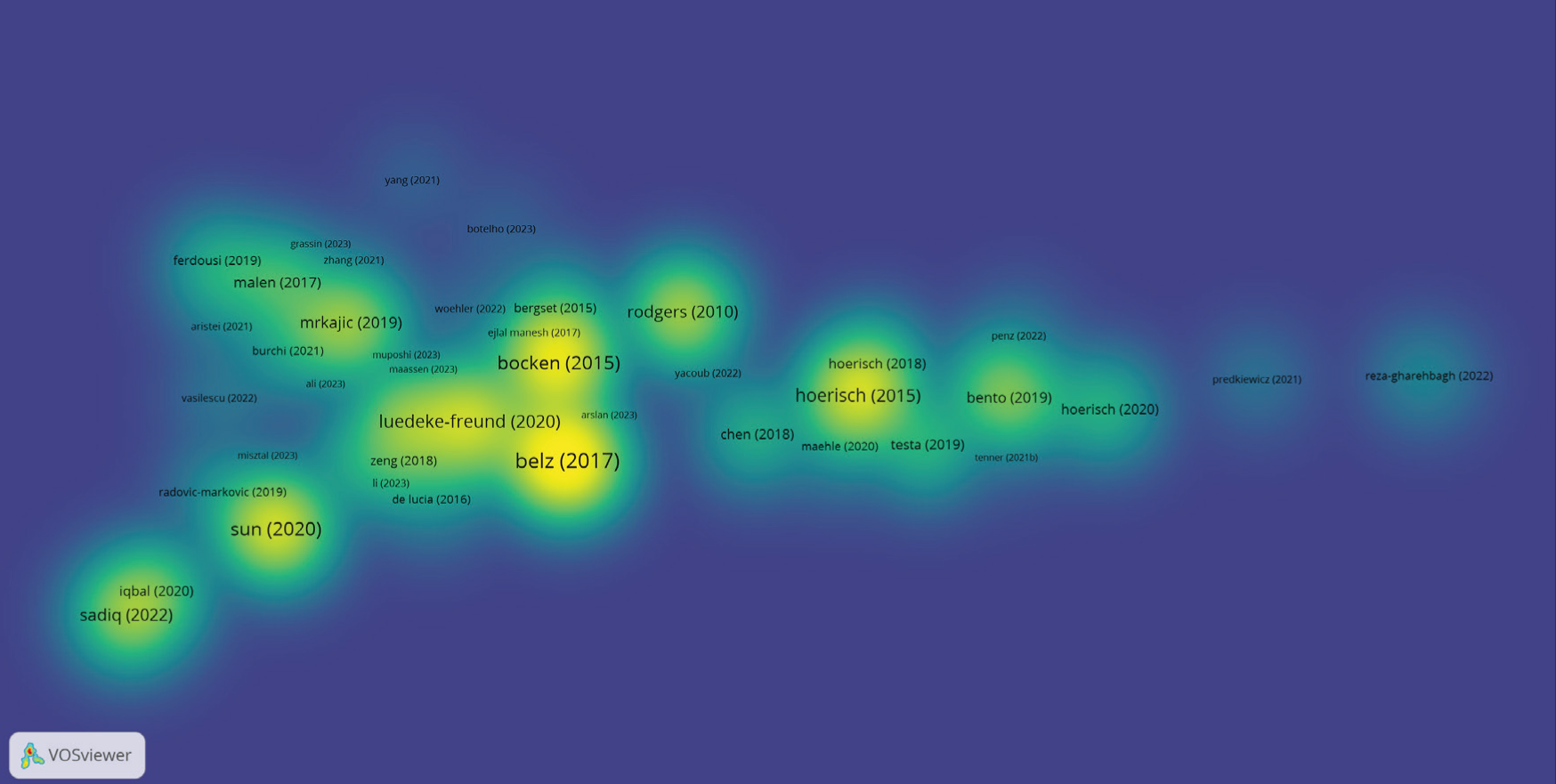
Density Visualization.
Main Information
Table 1 provides comprehensive information about the articles identified in this SLR. Although there were no restrictions regarding the time frame, a total of 64 articles published between 2010 and 2023 were used in this research. In terms of authors, a total of 166 contributors were involved in the selected articles for this review.
Main Information.
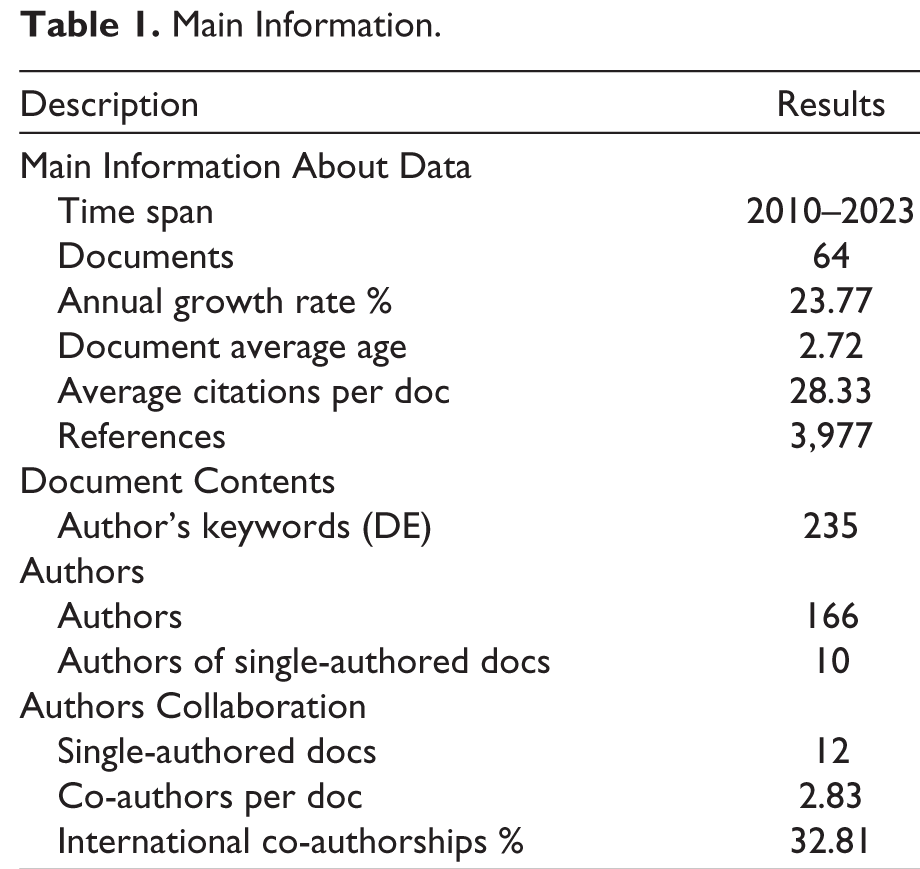
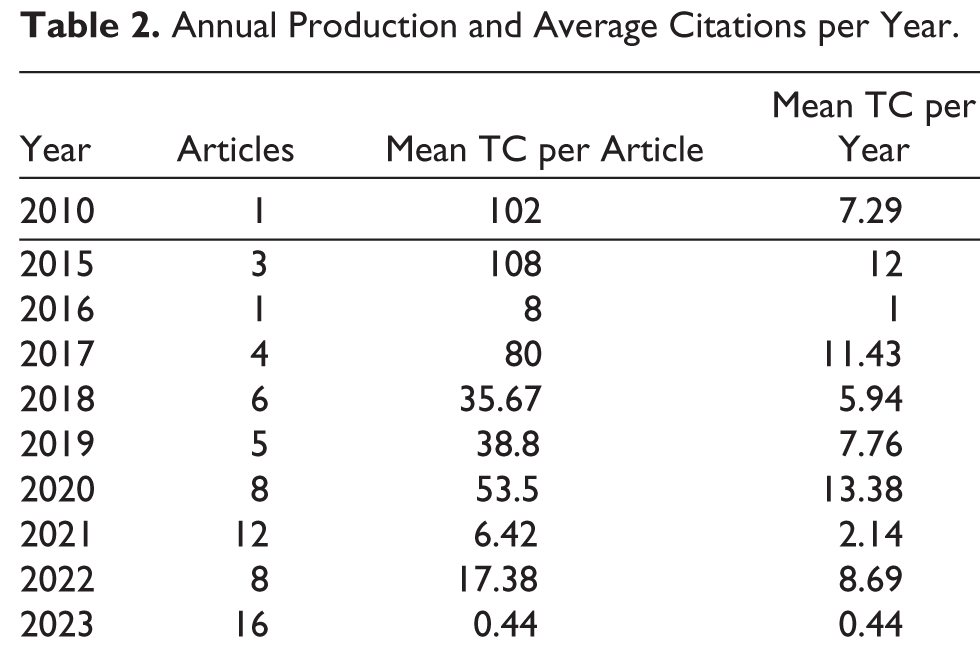
Table 2 shows the number of articles published that met the defined criteria. The first article appeared in 2010, and publication volume reached its highest point in 2023. Interestingly, the average number of citations per article peaked in 2020.
Annual Production and Average Citations per Year.
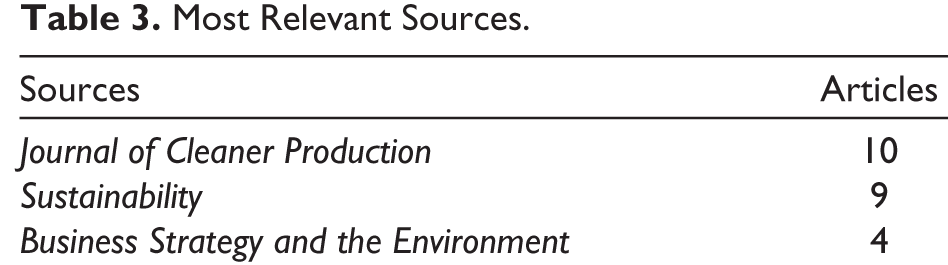
In Table 3, it is possible to see the academic journals that have made the most contributions to articles on financing and SE. It is interesting to note that the journal with the highest number of publications was the Journal of Cleaner Production, with a total of 10 articles. In the second place was Sustainability, with 9 articles, and Business Strategy and the Environment, with 4 articles.
Most Relevant Sources.
As presented in Table 4, the Journal of Business Venturing dominates the cited articles with 262, significantly ahead of the Journal of Cleaner Production (253) and Entrepreneurship Theory and Practice (163).
Top Citations.
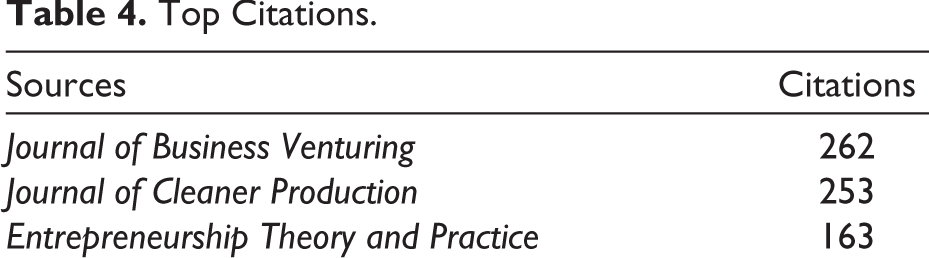
Table 5 highlights the key authors who have made significant contributions to this field. Jacob Hörisch leads the table with 5 articles. Isabell Tenner, authored 4 articles. Rounding out the list with 2 articles is Linda Bergset Abbas.
Most Relevant Authors.
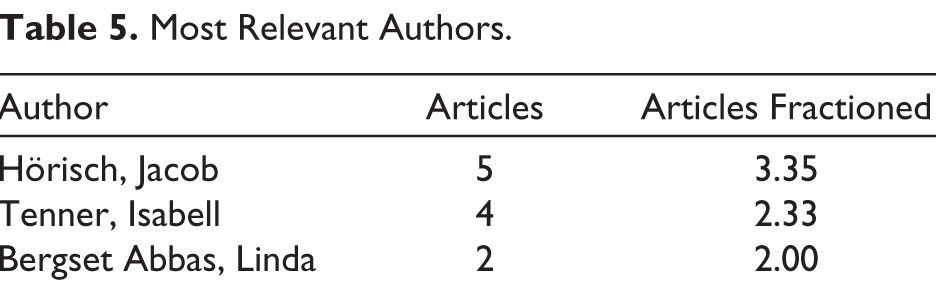
Table 6 reveals that Jacob Hörisch has the highest number of local citations (29), while Frank-Martin Belz and Julia Karina Binder tie for second place with 10 citations each.
Most Local Cited Authors.
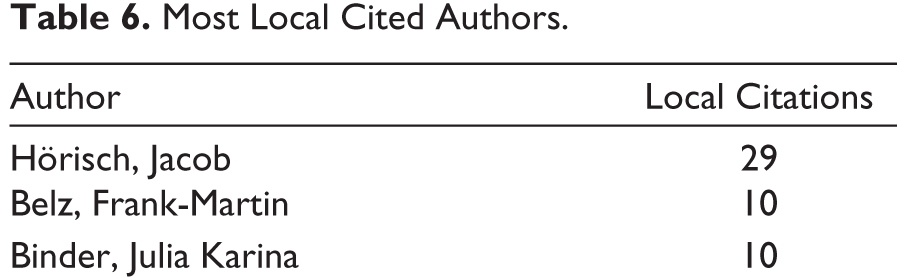
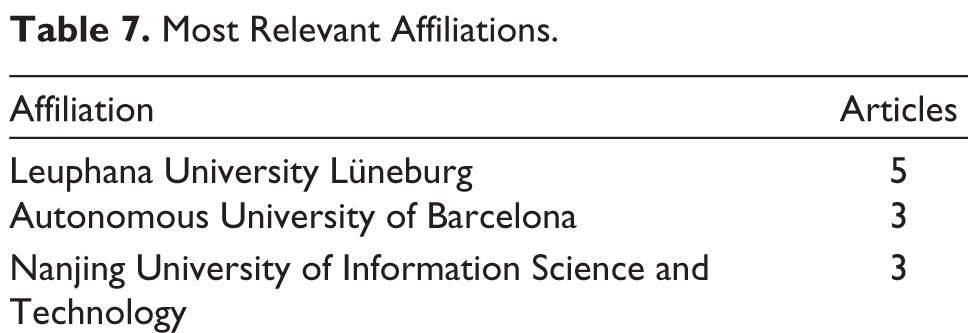
Table 7 reveals the universities with the most research output in financing and SE. Leuphana University Lüneburg (Germany) takes the top spot. Following closely behind is the Autonomous University of Barcelona (Spain). In the third place is Nanjing University of Information Science and Technology (China).
Most Relevant Affiliations.
According to Table 8, ‘Sustainable Entrepreneurship: A Convergent Process Model’ received 252 citations, while ‘Sustainable Venture Capital—Catalyst for Sustainable Start-up Success?’ and ‘The Role of Environmental Entrepreneurship for Sustainable Development: Evidence from 35 Countries in Sub-Saharan Africa’ garnered 162 and 150 citations, respectively.
Most Global Cited Documents.

Knowledge Analysis
In the development of a literature review, there are several options to consider, and one of them is the bibliometric approach (Carvalho et al., 2013), with bibliometric network analysis being more prevalent in academia (Perianes-Rodriguez et al., 2016). This type of analysis is characterized as an analytical approach that quantitatively examines and describes published articles, providing valuable information for researchers to assess academic studies in a specific field of interest (Ding & Yang, 2022).
To create this analysis, VOSViewer was used; it is a free software that allows for the presentation of easily interpretable bibliometric maps (Van Eck & Waltman, 2010). Clustering techniques play a prominent role in bibliometric research, aiming to identify sets of publications, authors or scientific journals that have relationships among them (Van Eck & Waltman, 2017). In this article, bibliographic coupling was chosen. Bibliographic coupling refers to the overlap in the reference lists of publications. The more references two publications have in common, the stronger is the bibliographic coupling relationship between them (Van Eck & Waltman, 2014). Figures 4, 5 and 6 display VOSviewer outputs, specifically Network, Overlay and Density Visualizations.
Finance and Sustainable Entrepreneurship (n = 24)
The growth of industry contributes to economic expansion but is also linked to environmental pollution and global warming. In addressing these issues, sustainable entrepreneurs play a crucial role by actively working towards reducing environmental pollution and promoting sustainable development (Mondal, 2023). In fact, significant attention has been given to sustainable practices in recent years, leading governments worldwide to take measures to achieve the SDGs established by the UN General Assembly (Aristei & Gallo, 2021).
The transition from the current economy to a sustainable economy requires structural transformation accompanied by technological innovations, providing newly established companies with opportunities to leverage and explore these new prospects (Criscuolo & Menon, 2015). In fact, crisis and growing concerns about climate change and resource scarcity have led to a global agenda for sustainable financing (Cojoianu et al., 2023).
Due to this fact, researchers and practitioners are increasingly drawn to the burgeoning field of SE (Ali et al., 2023; Li et al., 2023). Entrepreneurship has been identified as a highly impactful solution for addressing numerous social and environmental issues (Mrkajic et al., 2017). Additionally, it serves as a means to address and combat gender inequality, given that women often exhibit a preference for risk aversion when seeking financial access (Figueroa-Domecq et al., 2020) and face heightened challenges in securing financial support (Outsios & Farooqi, 2017).
Small and medium enterprises (SMEs) play a crucial role in the growth and development of sustainable economic systems. They represent the vast majority of businesses (Vasilescu et al., 2023), contributing significantly to the financial stability of countries (Burchi et al., 2021) and playing a vital role in producing innovative products and technologies (Sadiq et al., 2021). But, despite their importance, SMEs face greater complexity compared to large enterprises (Vasilescu et al., 2023), highlighting the need to adopt measures that facilitate access to financing and specialized consulting services (European Commission, 2020).
SE relies on both economic and non-economic elements, with financing playing a crucial role (Misztal & Kowalska, 2023). While sustainable businesses play a crucial role in promoting a sustainable society and economy (Aristei & Gallo, 2021), the SE sector faces additional challenges in accessing financing compared to traditional entrepreneurship (Aristei & Gallo, 2021; Mrkajic et al., 2017). This issue stands as the foremost obstacle to SE (Muposhi et al., 2023; Zhang et al., 2021).
Several factors contribute to the difficulty startups face in securing funding. Investors often exhibit a lack of knowledge about the sector or the technology used by lenders (Aristei & Gallo, 2021) but also point out the associated risks and longer return-on-investment periods (Ghisetti et al., 2017); market uncertainty, regulation or exit strategies (Wustenhagen & Teppo, 2006); costs associated with SE (Vasilescu et al., 2023) or even existing bank financing options being not suitable for some sectors (Radović-Marković & Živanović, 2019). Nevertheless, it is important to highlight, notwithstanding the obstacles, such as increased costs, that research indicates that embracing sustainable strategies can enhance the likelihood of a successful investment (Truong & Nagy, 2020). Hence, given all these limitations, a capable team becomes indispensable for any startup seeking financing (Grassin & Dijkstra, 2023).
The inability to obtain additional funding can have a significant impact as it sends a negative signal that may influence future financing opportunities (Zhang et al., 2021). However, current literature illustrates that within the realm of sustainability, profitability can be comparable, contingent upon the specific domains under consideration (Kraus et al., 2018).
The level of financial literacy of the entrepreneur impacts, among other factors, the company’s performance (Barte, 2012), enables access to credit on more favourable terms (Van Rooij et al., 2011) and plays a central role in the interaction between the entrepreneur, financial markets, financial intermediaries and potential creditors in general, by reducing the information asymmetry between lenders and borrowers, resulting in a reduction in information disparities between the parties involved (Burchi et al., 2021).
Due to the challenges of accessing financing, sustainable entrepreneurs’ resort, albeit to a limited extent, to alternative sources of external funding (e.g., crowdfunding, VC, social banks and philanthropy), where investors are interested in achieving social impact alongside profitability, adopting the blended value approach (Hebb, 2013). Individuals with limited financial capacity also seek opportunities to develop income-generating economic activities but are further constrained due to a lack of access to financing. As a result, microcredit (MC) has gained worldwide recognition as an effective instrument for simultaneously reducing poverty while stimulating long-term economic growth through entrepreneurship (Dutta & Banerjee, 2018) as individuals often lack bank guarantees and are sometimes discriminated against in bank loans; this results in a financing challenge that MC can effectively resolve (Ferdousi & Mahmud, 2019).
External support in the sustainable area can turn into a competitive advantage. While financial support is important in terms of investment, non-financial support (e.g., consulting) is important to bridge the knowledge gap or change perceptions about environmental practices. However, for this competitive advantage to materialize, a long-term strategy is required (Aristei & Gallo, 2021). Indeed, sustainable entrepreneurs view financial support as a significant incentive to make sustainability-based decisions but also consider external support, such as consulting, equally important (Vasilescu et al., 2023).
SE is extremely important for the environment. According to Cojoianu et al. (2023), cities with green startups have seen a decrease in their environmental footprint. Therefore, financing these startups is crucial to contribute to a more sustainable world. In this context, governments and governmental institutions play a crucial long-term role in formulating laws that support the creation of sustainable businesses (Cojoianu et al., 2020; Demirel et al., 2019; Maaßen et al., 2023; Malen & Marcus, 2017; Sun et al., 2020) as legislative instability is negatively associated with profitability prospects and is often conditioned by government regulation (Criscuolo & Menon, 2015). Governments should also apply fees that penalize businesses that do not adopt environmental practices (Li et al., 2023); promote financial and non-financial support aimed at stimulating innovation, competitiveness and access to financing (Camargo Calderón et al., 2021); and invest in digital transition to promote SE (Li et al., 2023). However, despite the importance of government support, there are internal and external factors, as highlighted by Iqbal et al. (2020), that can pose challenges to the creation of more support and legislation in the sustainability area. These factors include population growth and resource scarcity, which can act as obstacles.
The Motivation in Pursuit of Sustainability (n = 14)
Advancing sustainability is recognized as a key principle by the United Nations, emphasizing the crucial role of education in addressing the ongoing global transformations in contemporary economies (De Lucia et al., 2016).
Based on existing literature, it is evident that sustainability is often mistakenly linked primarily to large corporations, with the realm of SMEs frequently overlooked (Rodgers, 2010). And, in contrast to conventional entrepreneurship, which prioritizes profitability (Afshar Jahanshahi et al., 2017; Zeng, 2018), the aim of SE extends to contributing to a better world (Afshar Jahanshahi et al., 2017).
The initial drive to initiate a social or ecological business frequently originates from a problem identified in the entrepreneur’s personal or professional journey, progressing towards the acknowledgement of a viable solution for the market (Belz & Binder, 2017). Nevertheless, there are additional factors linked to the motivation of sustainable entrepreneurs, emphasizing certain market imperfections such as recognizing inefficient companies, inappropriate pricing, information gaps and awareness of environmental issues. These factors result in untapped opportunities (Cohen & Winn, 2007).
Due to distinctive characteristics, the motivation and strategies in SE may differ from those employed by traditional businesses (Bergset, 2015; Bocken, 2015). The primary drive for these entrepreneurs is the desire to contribute to making the world a better place (Bocken, 2015; Rodgers, 2010). Perhaps as a result, and guided by individual, organizational and sociocultural principles, commercial success is measured not only by financial accomplishments but also by non-monetary achievements. These can include the development of innovative skills, positive social impact and the mitigation of environmental and social damage (Lüdeke-Freund, 2020).
Innovation plays a crucial role in the realm of SE. And sustainable entrepreneurs are individuals recognized for aligning their business models, whether newly established or pre-existing, with innovations focused on sustainability. This alignment is geared towards achieving business success and creating value through collaboration with stakeholders (Lüdeke-Freund, 2020). Despite its significance, the assessment of innovation may vary depending on the size of the company. In smaller businesses, innovation can be measured through the adoption of new technology, while larger enterprises may encompass innovation through the adoption of new technologies, as well as design and knowledge transfer between clients and companies, aiming to introduce new products or services to the market (Vesci et al., 2023). However, entrepreneurs may at times harbour uncertainties regarding the success of their business based on their innovative efforts (Lüdeke-Freund, 2020). This uncertainty is acknowledged as a gap in the literature, emphasizing the need for a more thorough exploration of the connection between creativity and sustainability (De Lucia et al., 2016).
The personal characteristics and values of entrepreneurs are crucial in their sustainable orientation (Kraus et al., 2018). In fact, when comparing values, entrepreneurs who respect the values of others have a sustainable entrepreneurial orientation compared to those who respect only their own value (Afshar Jahanshahi et al., 2017), as the ethical principles of the entrepreneur also determine the success of the green orientation of companies (Rodgers, 2010). Due to the fact that SE focuses on employees, values and culture, the entrepreneur must influence and guide their employees and managers towards the core values of the company (Vesci et al., 2023).
In addition to personal values and characteristics, the organization and resources also play a role in the adoption of sustainable policies (Kraus et al., 2018), as entrepreneurs with long-term strategies and actions tend to exhibit a stronger sustainable orientation (Afshar Jahanshahi et al., 2017). The same applies when comparing companies of different sizes; while sustainable orientation is explicit, communicated and well defined in larger companies, in smaller enterprises, it is limited to the communication of the entrepreneur’s perspective (Vesci et al., 2023).
A majority of sustainable companies need financing (Genus et al., 2021), and the spotlight has been on sustainable investments due to changes in economic conditions. However, despite this importance, there is still a lack of studies on financing in the realm of SE (Kraus et al., 2018).
When it comes to SE, gaining access to financing is identified as a major hurdle for entry (Belz & Binder, 2017). This challenge in securing funding is more pronounced in SE compared to its traditional counterpart. Surprisingly, this difficulty may not necessarily be tied to the economic conditions of countries (Zolfaghari Ejlal Manesh & Rialp-Criado, 2017). Instead, it is associated with internal and external factors. These factors encompass choices made by entrepreneurs regarding their financiers, where sustainable entrepreneurs sometimes seek investors who share their values (Bergset, 2018), as well as considerations on the investor’s part. Despite recognizing the significance of SE and sharing a motivation for a better world (Bocken, 2015), investors may experience a lack of information about the market and sectors in which the company operates. This cautious approach stems from the innovations present in the companies’ product or service offerings and the dearth of information for a proper evaluation of the company or the sector it operates in (Bergset, 2015).
Despite all the challenges outlined, recent studies indicate there has been progress in the realm of sustainable financing; startups focused on R&D or lacking business expertise still encounter greater difficulties in accessing financing, partly due to the previously described characteristics. Conversely, other startups are starting to overcome this hurdle during their financing stage (Bergset, 2018). Despite some hesitancy regarding sustainable opportunities, the literature shows that the increase in the availability of products and indices reflects the financial industry’s strong acceptance of environmental, social and governance (ESG) investments. This underscores a significant demand for products adhering to ESG criteria (Kraus et al., 2018).
Given the initial costs, support needs and training requirements, it is crucial for the government to actively facilitate and support SE (Millette et al., 2020; Vesci et al., 2023). This support should extend beyond the establishment of initial investment funds to include the creation of a support network in collaboration with universities. Such collaboration would involve the exchange of knowledge and assistance in developing best practices in the field of sustainability. Moreover, fostering this connection could result in the generation of more and higher-quality jobs, as well as the cultivation of a collaborative environment between students and businesses outside of academic institutions (Millette et al., 2020).
Crowdfunding, Characteristics and Motivations (n = 17)
Economic crises, scarcity of funds and barriers to financing, coupled with the development of the Internet, have given rise to new forms of funding for companies. And, although crowdfunding is a relatively recent practice and studies indicate a certain maturity in this area (Böckel et al., 2021), crowdfunding for SE is still in its early stages (Arshad et al., 2020; Bento et al., 2019).
Crowdfunding is a term used to describe an increasingly popular form of fundraising, usually conducted online, in which a group of individuals contribute small individual amounts to support a specific goal (Ahlers et al., 2015; Penz et al., 2022) that becomes an important source of funding for new ventures (Belleflamme et al., 2014; Penz et al., 2022; Prędkiewicz & Kalinowska-Beszczyńska, 2021; Reza-Gharehbagh et al., 2022). Numerous entrepreneurs currently view it as a financing approach capable of amplifying sustainable businesses (Hörisch & Tenner, 2020; Testa et al., 2019; Yacoub et al., 2022). But unlike traditional financing methods, crowdfunding is not limited to raising financial resources; it also serves other purposes such as marketing campaigns to attract new customers or test new products or markets (Tenner & Hörisch, 2021), establishing a community to act as advocates for the company and its products (Yacoub et al., 2022).
The popularity of crowdfunding makes it an opportunity for SE projects to obtain financial resources (Chen et al., 2018; Messeni Petruzzelli et al., 2019; Pabst et al., 2021; Tenner, 2021; Tenner & Hörisch, 2021) without the involvement of traditional financial intermediaries (Mollick, 2014; Pabst et al., 2021; Rossolini et al., 2021). In fact, crowdfunding has not just emerged as an alternative to conventional financing methods but has also evolved into a crucial resource for women facing challenges in securing funding through traditional channels. However, further studies are required to ascertain whether this success stems from crowdfunding initiatives or from activist efforts (Bento et al., 2019).
The literature has shown a progression of diverse findings regarding the relationship between crowdfunding and SE. While certain studies propose that crowdfunding investors prioritize demonstrated values and ideas over traditional prerequisites like business plans (Lehner, 2013), others contend that the quality of projects likely holds more significance in successful financing indicators than their sustainability orientation (e.g., Hörisch, 2015) or does not find any positive influence on sustainability orientation (e.g., Vismara, 2019). However, later research by the same authors (Hörisch and Tanner, 2020) reaffirms that an environmental orientation positively influences the success of financing crowdfunding projects.
In spite of its growing significance, crowdfunding projects with a focus on sustainability are often of smaller scale (Hörisch, 2018), seeking more modest funding goals compared to other types of projects (Tenner, 2021), and the amounts of capital generated through crowdfunding are, on average, smaller compared to other available forms of financing (Belleflamme et al., 2013). However, to bring projects to fruition, it is essential to reach a minimum funding threshold, which requires the participation of a sufficient number of investors to achieve the established financial goal (Pabst et al., 2021). This form of collective financing has caught the interest of a growing contingent of amateur investors seeking to support new sustainable projects through financial contributions (Dinh & Wehner, 2022; Penz et al., 2022). According to Hörisch and Tenner (2020), crowdfunding projects focused on the environment attract more backers, thereby boosting the likelihood of securing funding.
Investors in crowdfunding have different motivations, whether they are financial or unrelated to monetary gain (Maehle, 2020), and while some funders seek financial returns or support projects due to their environmental and/or social impact (Dinh & Wehner, 2022; Penz et al., 2022), others are motivated by rewards, recognition, lobbying or image-building (Bretschneider & Leimeister, 2017).
The literature suggests that successful projects are associated with various factors, the crowdfunding platform (Maehle, 2020), the project’s quality (Mollick, 2014; Prędkiewicz & Kalinowska-Beszczyńska, 2021), networking and project location (Mollick, 2014), and since crowdfunding is seen as a promising means to finance environmentally oriented ventures, it is important for entrepreneurs to emphasize their commitment to sustainability (Hörisch & Tenner, 2020). In fact, the way entrepreneurs communicate and engage with potential investors plays a crucial role because the social and environmental values provided by the project may not always be evident or easily understood on their own (Prędkiewicz & Kalinowska-Beszczyńska, 2021). Depending on the industry, different types of communication (e.g., negative communication being more successful in sustainable projects, while positive communication being more successful in the agri-food industry) may yield different levels of success (Rossolini et al., 2021).
Sustainable projects have a higher probability of success when they set modest financial goals. If a project requires a specific amount, entrepreneurs should consider fixed funding goals and be aware that crowdfunding takes time (Hörisch, 2015). However, it is important to note that the campaign duration is negatively correlated with project success, as it can impact investor confidence (Cumming et al., 2020). It is also worth mentioning that entrepreneurs involved in crowdfunding initiatives seem to make efforts to fulfil the promised rewards within the agreed timeframe, but a significant number of projects face delays in their execution (Mollick, 2014).
Non-profit projects are more successful. Environmental entrepreneurs should obtain an official non-profit status and provide evidence of their beneficence to attract funders (Hörisch, 2015). However, it is unclear whether the presence of this seal is sufficient to address the funding challenges in crowdfunding, particularly in the context of SE (Pabst et al., 2021). Sustainable projects in crowdfunding face challenges. When comparing categories, projects with tangible products tend to be more successful, and equity crowdfunding is a strategic alternative for environmental entrepreneurs without pre-sellable products (Hörisch, 2015).
Investments in crowdfunding projects are uncertain, as investors feel a lack of information and validation regarding the project (Hoegen et al., 2018). It is crucial to highlight that evaluators with environmental claims focus on the project’s content rather than the project title. These investors pay attention to the details and the description of the proposed idea (Rossolini et al., 2021) since they are often seen as disruptive innovators by other stakeholders (Testa et al., 2023).
In addition to the lack of information, there is also a lack of knowledge in seeking more information about the project (Ahlers et al., 2015) or determining if the information provided by the project promoters is true (Rossolini et al., 2021). Consequently, investment decisions are often based on the investor’s perception and whether the project aligns with their values (Dinh & Wehner, 2022), or they may choose to withdraw their investment (Ahlers et al., 2015). Concerns such as financial losses, failure to deliver promised rewards and resource mismanagement can discourage conservative investors from supporting sustainable crowdfunding projects (Tenner & Hörisch, 2021).
Motivations and Traits of Business Angels and Venture Capital in Sustainable Entrepreneurship (n = 9)
Sustainable enterprises continue to grapple with various challenges, notwithstanding notable improvements in recent years (Arslan et al., 2023). The economic, social and environmental transition presents a political hurdle for numerous countries (Beblawi, 2020). Indeed, despite advancements, obstacles endure in the sustainable domain, including issues such as cultural barriers, outdated policies, bureaucratic complexities, insufficient promotion of entrepreneurial ecosystems and a lack of information regarding alternative financing avenues (Arslan et al., 2023).
The literature emphasizes the inherent difficulties associated with funding sustainable ventures through conventional sources (Wöhler & Haase, 2022), given their divergence from conventional market perspectives (Siqueira et al., 2023; Yang et al., 2021). Due to the heightened challenges in securing financing for SE compared to traditional entrepreneurship, alternative resource channels such as Fintechs (Gazel & Schwienbacher, 2021), BAs (Botelho et al., 2023) and VC (Fichter & Olteanu, 2023) have proven to be significant in supporting sustainable projects. Presently, these options not only serve a crucial function in surmounting credit constraints (Arslan et al., 2023) but also validate the business, providing it with legitimacy (De Lange & Valliere, 2020).
Entrepreneurial ecosystems encompass a variety of participants and incorporate social, political, economic and cultural elements. Together, they tackle challenges, provide funding and offer support to these projects (Spigel, 2017). And within this ecosystem are the BAs, currently playing a significant role in the entrepreneurial landscape (Botelho et al., 2023).
It is worth noting that the BA community is heterogeneous, and the majority of available literature addresses investors in socially responsible companies, similarly to traditional investors, highlighting a relevant gap in this area (Siefkes et al., 2023).
In contrast to crowdfunding, where their participation in the organizational development of the company is not expected, with BAs, this expectation is present (Miller et al., 2019). However, despite their importance to this ecosystem, their motivations are not fully explored (Falcão et al., 2023; Siefkes et al., 2023).
As they invest with their own funds, these investors enjoy increased flexibility in making investments, enabling them to embrace higher risks. They also demonstrate a greater tolerance for a longer investment horizon, making them more attractive to companies. In the early stages, these businesses may be less appealing to VCs (Botelho et al., 2023).
BAs are typically well-educated individuals in their middle age, possessing business experience and substantial net worth (Freear et al., 1994). They invest their time and capital to support promising startups, even those carrying certain risks (Falcão et al., 2023), without familial ties to these companies (Siefkes et al., 2023). Beyond contributing their own funds, they also offer valuable support, including mentoring, networking and sharing their expertise (Mason, 2006). Their investment transcends mere financial input. In fact, the direct investment by these individuals sends a positive signal to the market, validating the project and generating increased interest from other investors (De Lange & Valliere, 2020).
The age of the investor can serve as a distinguishing factor in sustainable project investments. Older and more experienced BAs tend to either abstain from investing or invest less in sustainable ventures, whereas younger and less experienced individuals exhibit greater enthusiasm for investing in projects dedicated to sustainability (Botelho et al., 2023).
Although there is a common perception that these investors are motivated solely by financial considerations in their investments, existing literature shows that there are also other motivations (Botelho et al., 2023). In fact, economic motives represent only a part of the objectives that drive these investors. Beyond these traditional goals, investors may harbour emotional, symbolic or business-related objectives, contributing to their self-development and personal and social fulfilment (Falcão et al., 2023).
Existing literature categorizes BAs into three types—traditional, light green and green—with distinct characteristics and motivations for investing in sustainable projects, revealing substantial differences in personal traits and driving factors (Siefkes et al., 2023). Investors with light-green motivations exhibit economic or hedonistic interests, maintaining a diverse portfolio that includes both green and non-green companies, without requiring sustainability reports. Conversely, green investors showcase a mixed motivation, blending elements of altruism and economic interest. They primarily allocate their investments to green or impact projects, aiming to harmonize financial success with a commitment to promoting environmentally responsible practices, and they insist on sustainability reports (Siefkes et al., 2023).
Apart from internal factors, external forces can also wield their influence when BA ventures into new investments, such as showcasing sustainable third-party certification. This certification proved to have a notable impact on BAs’ investment decisions (Shahid et al., 2023).
While VC serves as a critical funding source for sustainable projects, access to this form of financing remains a challenge for sustainable startups (Wöhler & Haase, 2022). Despite their scarcity, there has been a gradual increase in VC investments in sustainable projects (Bergset, 2015). However, these investments still hold a lesser significance when compared to investments in ‘traditional’ startups (Fichter & Olteanu, 2023).
In spite of the increasing significance of sustainability, it frequently fails to garner the requisite attention during VC investments. This is primarily due to the exclusion of the topic from business plans, potentially resulting in the rejection of such projects. Indeed, companies dedicated to sustainability are still often perceived as less appealing compared to those that do not prioritize sustainable practices (Wöhler & Haase, 2022). Because of this information gap, uncertainty prevails in investment decisions, making the trust conveyed by the project relevant (Haiyan, 2019).
In the realm of motivation, the existing literature that explores the connections between motivations and sustainability is limited and often centred on the consumer perspective, frequently neglecting investors (Wöhler & Haase, 2022). Nevertheless, based on the available literature, certain relationships can be discerned: Differences arise when comparing sustainable VCs to traditional VCs (Bocken, 2015). Similar to the diversity observed among BAs (Siefkes et al., 2023), VCs also form a heterogeneous group (Hegeman & Sørheim, 2021). In fact, there is limited information regarding the motivation of VCs in decision-making, and the available data presents contradictions when discussing the interplay between rationality and emotions (Wöhler & Haase, 2022). Nevertheless, it is worth noting that investments in sustainability may stem from an emotional response influenced by considerations related to sustainable issues, albeit occasionally in an irrational manner (Bergset, 2015).
Despite the diversity among VCs, we can pinpoint various motivations propelling VCs to invest in startups dedicated to sustainability: financial considerations; anticipation of a new industry or technology; recognition of opportunities in the green sector; the pursuit of legitimacy; a desire for active involvement in the company (Hegeman & Sørheim, 2021); practical idealism; challenging the status quo; professionalism, mainstreaming and commercialization of sustainable businesses; emotional drivers and a quest for increased transparency (Bocken, 2015).
Presently, SMEs make up approximately 95% of the global workforce. The scarcity of capital and the lack of government support may lead to the abandonment of economic activities or the pursuit of a sustainable transition (Ruozzi & Vicente, 2021). In response to the emergence of informal VC markets, numerous governments have opted to endorse the establishment of networks comprising BAs and VCs to foster the development of these markets (Bilau & Sarkar, 2016) and in the implementation of tax incentives aimed at fostering investment activity (Bilau et al., 2017).
Recognizing the need to achieve global sustainability goals, governments are conscious that political stability, robust financing and stable credit are foundational elements for reaching such sustainable objectives (Villegas-Mateos, 2022).
Conclusion
This SLR underscores the current research focus on SE, driven partly by the urgency of economic and environmental transitions highlighted in national agendas (Nikolaou et al., 2011), which draw inspiration from the SDGs set by the UN Development Programme in 2023.
Ventures embracing sustainability as a core value are primarily motivated by a distinctive trait: they prioritize not only profitability (Afshar Jahanshahi et al., 2017) but also the advancement of a better world (Bocken, 2015; Lüdeke -Freund, 2020; Rodgers, 2010).
Presently, SMEs constitute 90% of businesses globally (World Bank, 2019). Nonetheless, SMEs encounter greater challenges compared to larger enterprises (Vasilescu et al., 2023). Another fact is that sustainability is commonly associated mainly with big corporations, often neglecting the sphere of SMEs (Rodgers, 2010).
A significant obstacle, highlighted in the literature, is the difficulty in accessing financing, which plays a pivotal role in SMEs’ growth, including sustainable ventures (Li et al., 2023). This difficulty is even more pronounced for sustainable startups (Aristei & Gallo, 2021; Mrkajic et al., 2017), posing a major hurdle to SE (Belz & Binder, 2017; Muposhi et al., 2023; Zhang et al., 2021).
Despite the scarcity of studies linking financing and SE, existing research identifies numerous internal and external factors contributing to this challenge, such as technology knowledge gaps (Aristei & Gallo, 2021), higher investment return periods (Ghisetti et al., 2017), market uncertainties, regulatory issues or inappropriate financing options (Radović-Marković & Živanović, 2019). Despite these hurdles, investment in sustainable enterprises is on the rise (Bergset, 2018), indicating their potential for profitability (Kraus et al., 2018).
To address financing difficulties, alternative funding mechanisms such as crowdfunding, VC, social banks, philanthropic organizations (Hebb, 2013) and BAs (Botelho et al., 2023) have emerged. Although sustainable investments still lag behind traditional ones, their value is steadily increasing (Bergset, 2015; Fichter & Olteanu, 2023; Hörisch, 2018).
Given that sustainable development stands as one of today’s paramount concerns (Shepherd & Patzelt, 2011), this article underscores several theoretical, social and practical implications.
This article extends the knowledge of SE and the financing of sustainable ventures. First, it highlights key differences between traditional and sustainable entrepreneurship, particularly how sustainable entrepreneurs prioritize not only financial returns but also societal and environmental impact. Second, this study also reveals that SMEs face greater challenges securing external funding compared to larger firms, with sustainable entrepreneurs encountering even more difficulties. Third, it explores alternative financing options, such as crowdfunding, BAs and VC. Lastly, it offers suggestions for future research on SE and venture financing.
This study offers several practical implications. First, as entrepreneurship, particularly SE, grows in importance, governments should invest in education by incorporating financial literacy, SE and innovation into university curricula across various disciplines. Second, governments must promote sustainable practices by enacting laws that encourage sustainable business creation and penalize non-compliance, while also creating mechanisms to ease financing for sustainable ventures. Third, sustainable entrepreneurs need to communicate their values effectively to align employees with their mission. Finally, the study emphasizes alternative funding options such as crowdfunding, BAs and VC, which help entrepreneurs overcome funding challenges and gain legitimacy.
This research impacts both academic and professional communities by deepening the understanding of SE and finance. It also has broader societal implications, helping inform decision-making and promoting sustainable practices. Additionally, the study serves as a valuable resource for shaping strategies and legislation, especially in emerging economies or regions seeking insights from this literature. Lastly, alternative funding sources such as crowdfunding, BAs and VC provide practical options for securing investment, offering individuals and communities ways to start sustainable businesses without depending on traditional bank financing.
This study, like others, faced limitations. Relying solely on WoS may have restricted findings, and while exploring Scopus yielded results, their relevance was minimal. Additionally, Bibliometrix’s inability to edit database entries required manual review, increasing error potential. Future research should include multiple databases and explore advanced editing tools for improved accuracy.
Another significant contribution is the identification of research gaps that can provide directions and suggestions for future studies:
Financing barriers and their impact: Existing literature highlights that financing barriers (Aristei & Gallo, 2021; Bergset, 2015; Bocken, 2015; Mrkajic et al., 2017) challenge companies, affecting innovation and business survival. However, there is limited research on whether these barriers impact the quality of sustainable products or cause businesses to abandon their environmental goals. Legislation’s impact on alternative financing: While entrepreneurs increasingly turn to crowdfunding, VC and BAs due to traditional financing barriers (Hebb, 2013), research is needed to explore how legislation affects both promoters and investors in these financing methods. Effectiveness of green taxes and government support: Green taxes and government incentives aim to encourage sustainable businesses (Li et al., 2023; Yang et al., 2021), but it is unclear whether they effectively push conventional companies to transition to greener practices. Education beyond higher education: Education, like financing, is crucial in SE (Apostu & Gigauri, 2023). Knowledge in management area and financial literacy is linked to new venture success (Barte, 2012). However, existent literature mainly focuses on higher education, excluding professional training and non-university courses. Cryptocurrency and blockchain in financing: Blockchain technology is driving the digital economy (Islam et al., 2023), but studies on using cryptocurrencies to finance SNV ventures are lacking. VC in sustainable projects: Research on VCs’ motivations to invest in sustainable ventures is limited (Wöhler & Haase, 2022) and requires further exploration. Crowdfunding’s role in women’s access to capital: Crowdfunding has proven essential for women facing traditional financing obstacles (Bento et al., 2019), but more research is needed to determine if success stems from crowdfunding itself or activist support.
Exploring these gaps through additional research holds the potential to enhance comprehension of financing obstacles and uncover opportunities within SE.
Footnotes
Declaration of Conflicting Interests
The author declared no potential conflicts of interest with respect to the research, authorship and/or publication of this article.
Funding
The author disclosed receipt of the following financial support for the research, authorship, and/or publication of this article: The author gratefully acknowledges financial support from FCT—Fundação para a Ciência e Tecnologia (Portugal), national funding through research grant UIDB/04521/2020.