



Abstract
Our article conceptualizes the experiences of women entrepreneurs through exploring how they negotiate an entrepreneurial identity in liminal digital spaces. Providing empirically textured narrative portraits of women’s experience of transitioning from employment to a digital entrepreneurial career, this article counters the ascendant rhetoric celebrating the democratizing promise of digital technologies. We present a more critical analysis of the experience of self-doubt and existential precarity including the ways in which gender norms permeate the intimate structures of women entrepreneurs’ everyday lives and selves. We also develop the concept of liminality by illustrating how women digital entrepreneurs cope with liminality through identity play and identity work.
Introduction
Digitalization is opening up new innovation opportunities for women entrepreneurs (McAdam et al., 2020); however, analyses of women’s career experiences in digital entrepreneurship remain underexplored (McAdam et al., 2019; Ughetto et al., 2019; Von Briel & Recker, 2021). Research on digital entrepreneurship has drawn on the presumption that digital entrepreneurs are homogeneous (Wang & Keane, 2020), and therefore overlooks those who differ from normative assumptions (such as women) and the social and cultural contexts in which their experiences as entrepreneurs are embedded (Pergelova et al., 2019).
Research has begun to address this omission by drawing explicitly on a social constructionist feminist lens (Braches & Elliott, 2017; Leavy & Harris, 2018; Stead, 2017) to analyze the experiences and perceptions of women digital entrepreneurs. These include McAdam et al. (2020) engagement with institutional voids to theorize the emancipatory potential of digital technologies and Meurer et al. (2022) study on the affordances of digital technologies for women in terms of greater access to ideas, potential customers and necessary resources. Recently, Martinez-Dy et al. (2017) disrupted the digital entrepreneurship domain by revealing how systemic oppression through gender hierarchies and patriarchal structures can marginalize women in digital spaces. Other critical scholars concerned with this issue have also drawn on the work of Kimberlé Crenshaw (Heizmann & Liu, 2020), or have embarked on theoretical avenues based on the research by critical cyberfeminists including Gill and Banet-Weiser (Duffy & Pruchniewska, 2017; Elias & Gill, 2018). All share a concern with what Nambisan (2017, p. 1032) terms the question of the ‘democratization’ of entrepreneurship, and whether this refers to neoliberal, postfeminist discourses that, paradoxically, both empower and marginalize women, or to the issue of the emulation of traditional gender norms and social ideals.
While providing insightful contributions, these critical approaches to women’s digital entrepreneurship leave some questions unanswered; specifically, how women’s career transition into digital entrepreneurship is undertheorized and its current omission of the complexities of the negotiation of identities. This issue is core to women’s entrepreneurship, which has been explored using a variety of lenses, such as the need to gain legitimacy and a sense of belonging (Stead, 2017), as well as entrepreneurship as a gendered career (Braches & Elliott, 2017). Other research has discussed the manner in which women position themselves in discourse – for example, as a performance created and sustained through textual labour, termed ‘identity work’ (Leitch & Harrison, 2016; Swail & Marlow, 2018). This builds on the seminal research of Ibarra and Petriglieri (2010) who argue that while ‘identity work’ is focused on repairing and maintaining identities to achieve coherence and continuity, ‘identity play’ is described as the crafting and provisional trialing of new identities (Ibarra & Petriglieri, 2010). Authors such as Beech (2011) and Reed and Thomas (2021) have developed this understanding by drawing on van Gennep (1960) work to explore the anti-structural or liminality essence that underpins the enactment of identities during career transitions.
In examining women’s negotiation of identities as part of career changes in digital entrepreneurship as gendered, we see gender as being constructed (and co-constructed) in interactions between women and platform agents, family and peers, continuously negotiating and renegotiating the meaning of gender (Stead, 2017). Yet, because there is no specific gender profile of digital entrepreneurs, a need exists to ‘give voice’ to the experiences of women negotiating identities in this context. This exploratory study contributes to this understanding by enabling women who identify as digital entrepreneurs to tell their stories about the complexities of negotiating an identity in what are described as porous career spaces with fluid boundaries (Nambisan, 2017). Accordingly, we explore the following research question: How do women construct and negotiate identities during their career transition into digital entrepreneurship? To better understand the contextual intricacies of this question, we chose the health and fitness sector as a research site to understand identities, as women’s increasing use of digital technology in this sector as a space to understand identities has come under scrutiny (Locke et al., 2018; Martínez-Jiménez, 2020) owing to gendered assumptions that are socially embedded in health and fitness narratives (Camacho-Miñano et al., 2021; Reade, 2021; Toffoletti et al., 2018).
This article makes two primary contributions to the literature. First, we address calls for a greater understanding of entrepreneurial identity (Horst & Hitters, 2020; Jones et al., 2019; Mmbaga et al., 2020; Radu-Lefebvre et al., 2021) and the dynamics of identity work (Leitch & Harrison, 2016; Swail & Marlow, 2018) and identity play (Daskalaki & Simosi, 2018; Fachin & Davel, 2015). We expand the reach of such analyses by developing an inductively theorized framework that shows women’s identity trajectories as consisting of an oscillation between identity play and identity work stemming from the need to coordinate with the flows of culturally structured digital platforms. By focussing on the specific experiences of women negotiating intersecting discourses of gender, entrepreneurship and health and fitness cultures in digital spaces, we advance claims that digital entrepreneurs are not a homogeneous group (McAdam et al., 2019; Wang & Keane, 2020). Moreover, we argue that in this particular sector, women entrepreneurs’ identities are shaped by a range of gender norms and sociocultural practices. Second, by applying the conceptual repertoire of liminality to unravel women’s experiences of a career transition, we illustrate how women entrepreneurs structure, organize and negotiate their careers in digital spaces imbued with uncertainty, ambivalence and paradox. This is important, as there is a renewed interest in career studies and entrepreneurship in general (Akkermans et al., 2021; Barley et al., 2017; Burton et al., 2016; Rummel et al., 2019) and for women in particular (Marlow & Martinez-Dy, 2018; Merluzzi & Burt, 2021). A liminal perspective thus holds potential for advancing understanding of women’s digital entrepreneurship that is situated in broader and deeper historical processes surrounding women’s entrepreneurial careers and society.
To explore our research question, this article is structured as follows: We commence by providing a brief review of the phenomenon of digital entrepreneurship as a career pathway for women – particularly as it relates to postfeminist neoliberal subjectivities – to situate current critical debates surrounding digital self-enterprise for women. This is followed by the theoretical underpinnings of our arguments, namely, liminality and identity negotiation. We then outline our methodology. Our empirical findings are then presented and interpreted theoretically. Finally, conclusions and implications are drawn.
Literature Review and Theoretical Underpinnings
Digital Entrepreneurship as a New Career Option for Women
The concept of digital technologies is often illustrated as the consequence of three separate but embedded elements: digital artifacts, digital platforms and digital infrastructures (Nambisan, 2017). A digital technology perspective of entrepreneurship sensitizes scholars to how the incorporation of digital architectures (e.g. online communities and social media) and artifacts (e.g. digital components, applications or media content) has disrupted the nature of the entrepreneurial process by extending the spatial and temporal boundaries of entrepreneurial activities and relationships (Rippa & Secundo, 2019), as well as to the technological affordances of accessibility, anonymity, large audience reach and interactivity (Autio et al., 2018; Nambisan et al., 2019). In turn, this has rendered a move from paid employment to digital self-employment a potential career option for a wider range of individuals. Relatedly, it is argued that entrepreneurship is only one stage in a more encompassing series of career positions (Akkermans et al., 2021; Barley et al., 2017; Burton et al., 2016) embedded in boundaryless career patterns (Hytti, 2010). This is relevant for career research on marginalized groups such as women, given that digital entrepreneurship has been posited as a ‘great leveler’ (Martinez-Dy et al., 2017) leading to the ‘democratization’ of entrepreneurship, as entrepreneurs stand to benefit from greater access to ideas, potential customers and necessary resources (Pergelova et al., 2019; Ughetto et al., 2019).
One stream of scholarship characterizes digital spaces as an emancipatory context for an entrepreneurial identity and a new career (Kamberidou, 2020; Pergelova et al., 2019). These digital spaces are envisaged to be supportive and neutral environments which reduce the prevalence of social hierarchies, encouraging open communication in the form of synchronous and real-time interactions (Agarwal et al., 2012; Golnaraghi & Dye, 2016). Those adopting an emancipatory perspective thus view digital technologies as offering potential for advancing feminist agendas, as they enable the dissemination of feminist ideas, shape new discourses, connect different and diverse groups and allow for new and creative forms of protest and activism (Pruchniewska, 2019).
A body of critical research drawing on postfeminism analyses the alleged liberty and meritocratic potential of digital entrepreneurship for women (Banet-Weiser et al., 2020; Gill, 2017; Martinez-Dy et al., 2017). This understanding is embedded in more somber and contradictory accounts of how women define and experience digital entrepreneurship (Elias & Gill, 2018; Heizmann & Liu, 2020; Pritchard et al., 2019). In this article, we draw on the concept of liminality, which captures the blurring and juxtaposition between different states and identities, the hallmark of postfeminist theories, to consider how women negotiate identities as part of personal career transitions into digital entrepreneurship.
Liminality
Liminality was originally used by van Gennep (1960) to understand the process of transition from one status to another within a ‘rites of passage’ framework. Rites of passage comprise three rites, designated ‘rites of separation, rites of transition, and rites of incorporation/aggregation’ (van Gennep, 1960, p. 166). Turner (1969) is widely held responsible for the rediscovery, popularization and expansion of liminality (Greco & Stenner, 2017; Stenner et al., 2017; Thomassen, 2012). For Turner (1967, p. 96), liminality is associated with being ‘betwixt and between recognized fixed points in the space time of structural classification’.
In organizational and management literature there has been a shift away from transitional liminality to perpetual liminality (Söderlund & Borg, 2018), where the state of uncertainty lingers for a less defined period of time (Ybema et al., 2011). This has been observed in temporary agency workers and consultants, who find themselves in a permanent state of being ‘betwixt and between’ regular employment positions and organizational structures through occupying roles that are minimally stable, allowing and demanding creativity and fluidity and enforcing synergy with new connections and teamwork (Reed & Thomas, 2021). For example, Johnsen and Sorensen (2014) delineate consultant narratives of fragmented social identities as a response to permanent liminality. Individuals in such roles attach ambiguity, uncertainty, flexibility and lack of agency to their senses of self, resulting in a partial aggregation of identities (Thomassen, 2012). Specifically, the aggregation of new identities may be fragmented, resulting in continuous identity tensions. It has also been demonstrated that liminality is affected by the personal characteristics of individuals, such as age-based markers of identity (Garcia-Lorenzo et al., 2020). Furthermore, inspired by the richness of the concept of liminality, researchers have applied and extended the theoretical lens to understanding how liminal experiences arise in necessity-based entrepreneurship (Garcia-Lorenzo et al., 2018), institutional entrepreneurship (Henfridsson & Yoo, 2014), family businesses (Smith, 2018) and non-traditional entrepreneurial contexts (Daniel & Ellis-Chadwick, 2016).
Liminality and the Negotiation of Identities
A common thread within studies of liminality suggests that it activates a dialectic for identity reconstruction: if liminality is regarded as a time and place of withdrawal from normal modes of social action, it can potentially be seen as a reflexive space (Turner, 1969). This implies that liminality is characterized by both ambiguity and transformation, as individuals experience social exclusion, moments of chaos and loss of identity (Stenner et al., 2017), yet can explore the possibility of new identities. One pathway for identity reconstruction as part of liminality is that of identity work, as being between identities involves searching for new sources of establishing a position and identity that provides status and a sense of coherence (Ibarra & Obodaru, 2016; Ibarra & Petriglieri, 2010). Identity work is defined as ‘forming, repairing, maintaining, strengthening and revising identities’ (Sveningsson & Alvesson, 2003), reflecting social requirements to derive a secure sense of the self. Identity work is triggered during moments of intense questioning, self-doubt and even anxiety, such as within periods of liminality; it is described in terms of the ongoing effort towards positive constructions of the self (Brown, 2019; Brown & Coupland, 2015; Simpson & Carroll, 2020). In recent years there has been a proliferation of studies on identity work tactics including adapting, negotiating, avoiding, rejecting and resisting (Berger et al., 2017); teflonic manoeuvering (Alvesson & Robertson, 2016); legitimacy affirming and legitimacy contesting (Brown & Toyoki, 2013); and experimentation, reflection and recognition (Beech, 2011).
There are numerous accounts of how women entrepreneurs construe and reconstrue meaningful and legitimate notions of the self in entrepreneurial contexts through identity work (Chasserio et al., 2014; LaPointe, 2013; Marlow & McAdam, 2015). Although women have some agency in the identities they choose, these choices are interpersonally negotiated (Essers & Benschop, 2007) and constrained by social context (Swail & Marlow, 2018). And while the experience of women entering new digital entrepreneurial roles may be imbued with a sense of being confronted with expectations and social hierarchies and gender norms (Heizmann & Liu, 2020), the linkage with identity work remains underexplored.
Liminality is also discussed within the career literature as a transformational space in which individuals may explore the possibilities of reconstructing an identity through identity play (Fachin & Davel, 2015; Ibarra & Obodaru, 2016; Ibarra & Petriglieri, 2010). This is described as experimentation and discovery of new selves (Ghaempanah & Khapova, 2020) as part of inventing or reinventing oneself (Stanko et al., 2020). In contrast to identity work, identity play is theorized as being open-ended, guided by internal motives and based on an identity held in the future (Daskalaki & Simosi, 2018). Fachin and Davel (2015) discuss identity play in terms of a creative process of transforming dreams into a reality, while Shepherd and Williams (2018) suggest that identity play implies creativity and pleasure. Studies of identity play are situated amidst a growing but nascent scholarship that is re-evaluating the focus on identity work (Alvesson & Robertson, 2016); it is seen as an alternative means for the adoption of new identities after job loss (Conroy & O’Leary-Kelly, 2014; Daskalaki & Simosi, 2018; Shepherd & Williams, 2018). Although identity play has gained currency from a theoretical perspective (Ghaempanah & Khapova, 2020; Ibarra & Obodaru, 2016), the underlying conflicts and mechanisms of identity play are currently underexplored (Fachin & Davel, 2015). Accordingly, our research is motivated by understanding how women negotiate their identities in the liminal space of the role transition between their former and present careers. Thus, in this article we seek to enrich understanding of the career transition experiences of women in digital entrepreneurship by advancing knowledge of the corresponding complex and dynamic processes of liminal identity negotiation.
Materials and Methods
Research Design
We adopted a qualitative research design with a feminist social constructivist paradigm (Creswell & Poth, 2017; Longino, 2017; Silverman, 2020). Qualitative methods are valuable for investigations of individual women entrepreneurs’ accounts (Braches & Elliott, 2017; McAdam et al., 2019; Stead, 2017), as well as for examining social processes, such as the entrepreneurial identity negotiation process (Di Domenico et al., 2014; Muhr et al., 2019). Our qualitative research design aligns with the call for more feminist-sensitive research (Leavy & Harris, 2018) that seeks to understand women’s experiences (Fullagar et al., 2019).
Research Context
Our research context is the health and fitness sector. Our choice of this sector as a new site for analyzing the entanglement of digital technologies, health and fitness cultures, femininity and entrepreneurial identity was motivated by the increasing usage of digital spaces by women for health and fitness information (Jong & Drummond, 2016; Toffoletti et al., 2021)? It also offered the opportunity for collecting new evidence outside the high-technology sector (Martinez-Dy et al., 2017) and beauty industry (Elias et al., 2017). Specifically, we examine the transition experiences of women involved in the process of a career change from employment into digital entrepreneurship in the health and fitness sector. Fitness cultures in digital spaces are linked with patriarchal ideals of feminine beauty (Toffoletti et al., 2018). In turn, digital technologies are increasingly deemed spaces where women come to understand both their own bodies (Locke et al., 2018; Martínez-Jiménez, 2020) and identities (Camacho-Miñano et al., 2021). This unfolds through a neoliberal ideology of ‘healthism’, which places responsibility on individuals to maintain a fit and healthy body and attributes blame to individuals for their health problems (Crawford, 1980).
Our Sample
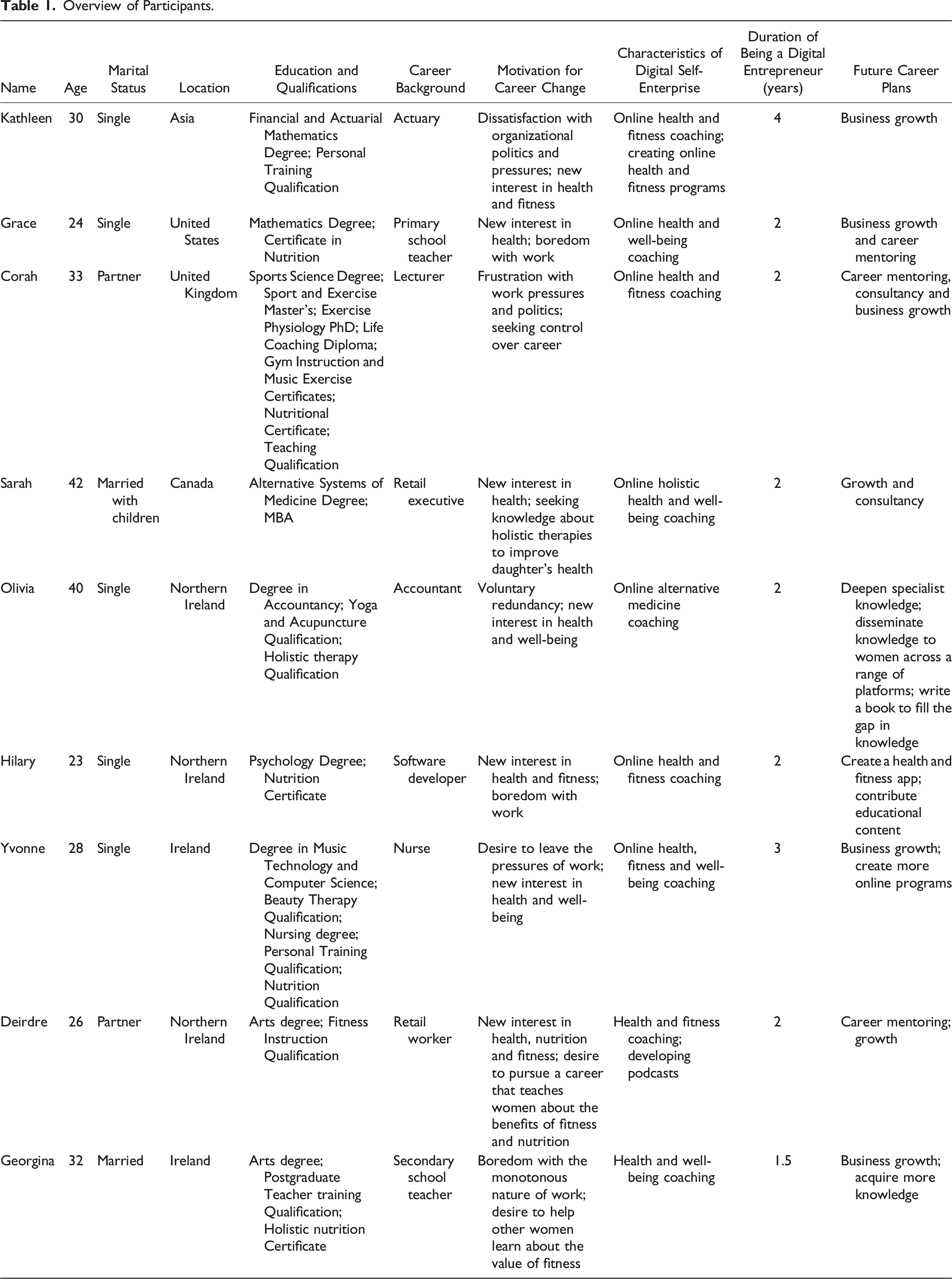
We used purposive or theoretical sampling (Silverman, 2020) to identify a sample of women digital entrepreneurs in the health and fitness sector who had founded a business on their own, were responsible for an online business that is completely reliant on digital technology (i.e. social media) and had been operating for a minimum of 1 year. This approach involved intentionally inviting individuals who were experienced in the phenomenon under study and were open to, and interested in, sharing their experiences in order to advance our understanding of a clear theoretical framework (Patton, 2014). We identified Instagram pages of women entrepreneurs and contacted account holders via direct messaging to request their participation. Our messages briefly described the purpose of the study and outlined the sample criteria.
Overview of Participants.
Data Collection
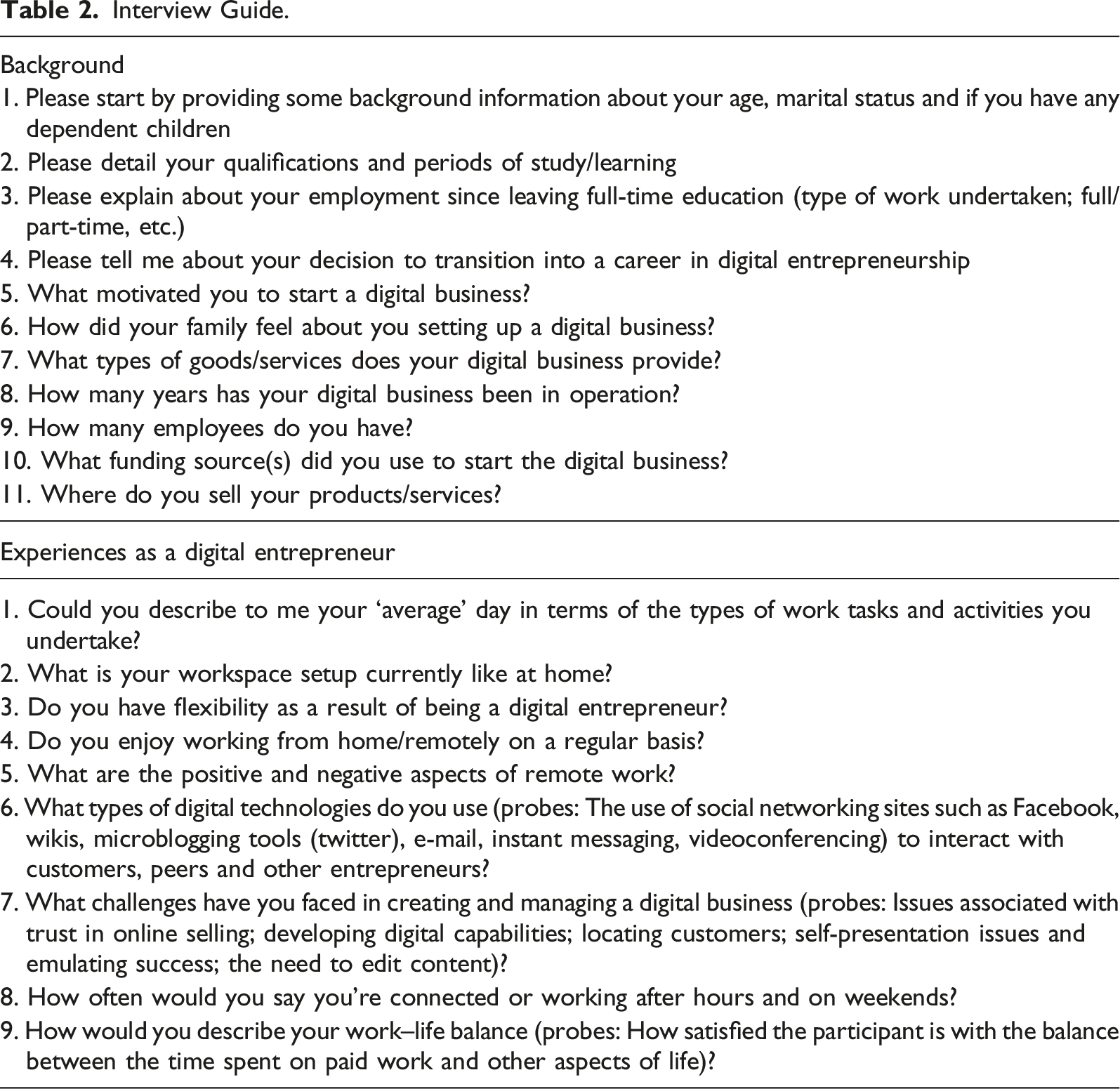
Interview Guide.
Data Analysis
Data Structure.
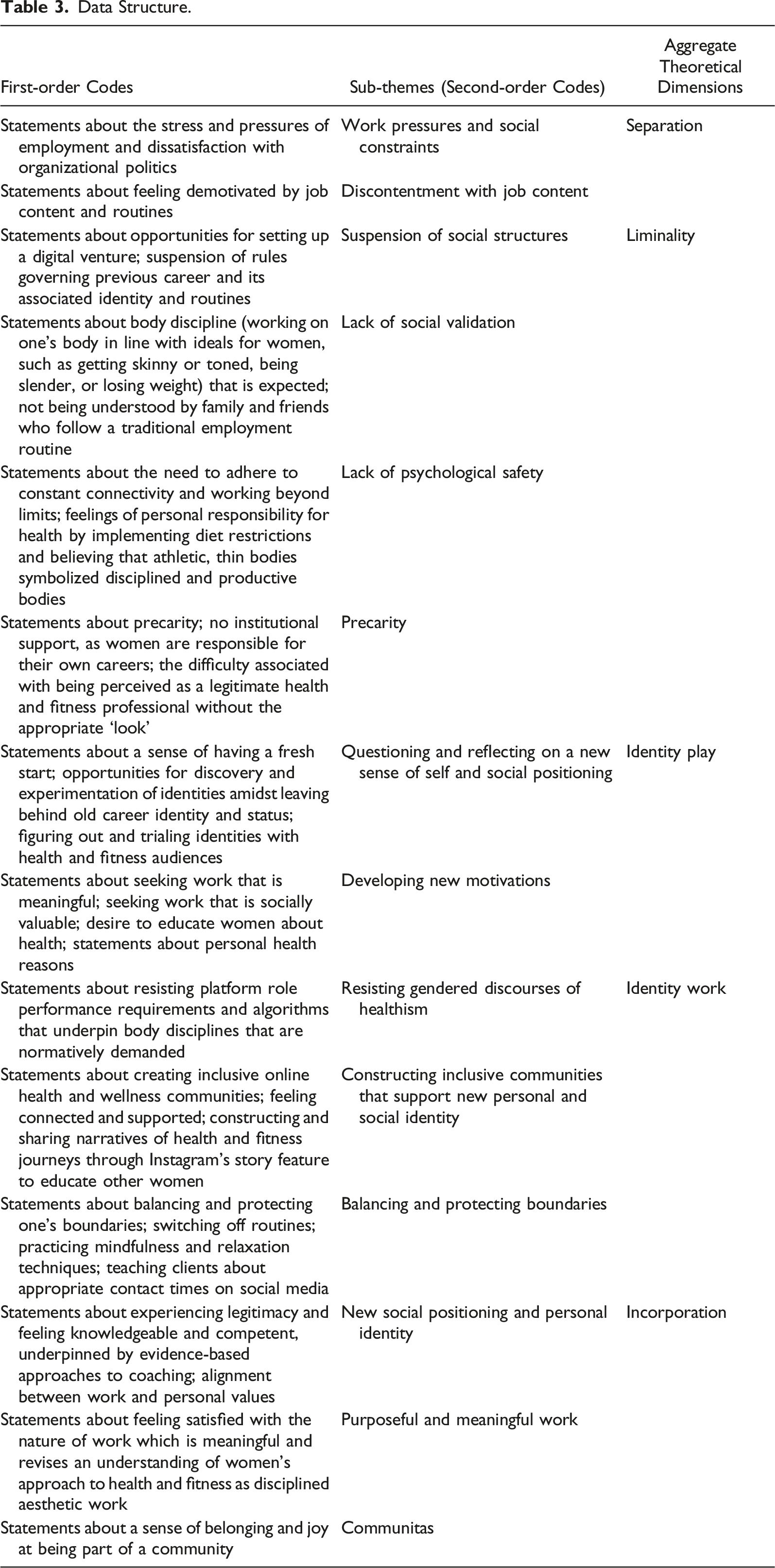
Our qualitative data analysis is based on an iterative and abductive approach (Gioia, 2021), in the sense that in structuring our coding, the analysis was informed by continuously moving back and forth between data and literature; thus, we achieved rigour by ensuring internal and external validity (Cloutier & Ravasi, 2021; Grodal et al., 2021). Internal validity decisions are usually made in the design phase but are applied to the data analysis phase, and this was established through clearly outlining our data collection and analysis approaches. Our study has a clear theoretical justification that guided our purposive sampling and data collection. We drew on constant comparison techniques across interviewees when analyzing our data, along with pattern matching between relationships in current data and previous literature as well as in the coding process between researchers (Silverman, 2020). This involved prolonged engagement with, and persistent observation of, the data by two researchers; clear documentation of all codes/themes and of how the coding process unfolded; and keeping records of notes, transcripts or reflections in well-organized folders.
External validity was ensured in the form of analytical generalization by providing a clear rationale for our sampling choices. We demonstrate transparency via the use of a purposive sample and by framing our theoretical positioning around women entrepreneurs in digital spaces, building on previous studies of women in this context. The size and nature of our sample facilitates theoretical (as opposed to numerical) generalization while informing our research objective of applying a liminality perspective to women’s digital entrepreneurship (Gioia, 2021).
Findings
We now present the results of the analysis of our participants’ perceptions and experiences of leaving employment to pursue a digital entrepreneurial career in the health and fitness sector. To undertake this objective, we use a ‘tripartite structure’ of rites of passage through liminality and the women’s identity responses, drawing on the concepts of identity play and identity work illustrated with fragments of the narrative (Pratt, 2007). Drawing inspiration from the literature on liminality and identity negotiation, we found that our participants experienced liminality related to their suspended identity as they moved from employment to digital entrepreneurship in the health and fitness context. Our fine-grained analysis of the narratives enabled us to identify trajectories in the liminal state of becoming a digital entrepreneur by unpacking the identity responses of identity play and identity work: critical junctures in our participants’ journeys at which they creatively imagined provisional selves in a reflexive manner and actively contested norms and ideals associated with their gender identity.
Separation
The women articulated and explained their experiences as digital entrepreneurs by reflecting on the period in which work no longer provided the desired meaning and aspirational sense of self. Georgina described this sense of discontentment with her professional occupation: I’m interested in things and it’s just exciting for me to find out different ways of eating, moving and how to just maximize your life. I got bored of working in a software company and wanted to do more with my life.
During such experiences of identity tensions in their roles, the women disliked the traditional institutional structures, job content and routines, with evidence of disconnect from their employment. This was discussed by Hilary, who indicated her sense of disillusionment with her job, which she felt was very monotonous and lacked stimulation: ‘I had an unrelated main job which tied me to an organization…I lost interest in it.’ Other women, such as Yvonne, referred to the everyday manifestations of incessant work demands and pressure from management, from which she sought relief: I loved my nursing role at first and then the pressure of working in intensive care in a hospital as a junior staff member just got too much. The cost of living in [city] meant I had to work a lot of nights and weekends which led to a very miserable existence with minimal social life. I spent most of my days off in the gym or on social media because exercise was my only outlet at the time, and I sought information on social media.
Liminality and Identity Negotiation: Identity Play
The health and fitness entrepreneurial identities adopted by the participants began as loosely articulated mental constructs that reflected personal health and wellness goals and generative values in conjunction with themes from social media and popular culture. The period of identity play was characterized by the motivation for a career change and finding alternatives to a professional self that was deemed no longer viable. In this regard, in comparison to the context of an involuntary job loss which might reduce the variety of identities considered (Conroy & O’Leary-Kelly, 2014; Shepherd & Williams, 2018), the women indicated a sense of choice to leave their existing occupations. This is apparent in Olivia’s story: ‘I always had a keen interest in nutrition, but it wasn’t until I took voluntary redundancy that I began to think about using this knowledge to help others and developing it further’.
Sarah discursively constructed the importance of digital technologies as a space for enabling the crafting of an entrepreneurial identity as a health and nutrition coach and deriving a more favourable sense of self: ‘I believe I can make a difference not in an inflated way but with passion for educating people about good nutrition with the help of a global digital platform’. All the participants spoke of the accessibility of digital technologies as a positive influence that in turn enabled agency and identity play of new, more acceptable and desired ways of being, with Deirdre stating: ‘I think realizing that you can make someone feel so much more confident in themselves and be a source of support, it’s quite a powerful thing to be able to do’.
The women utilized the beginning period of their career transition as a period of reflection that served as a basis for rethinking their careers. For example, Georgina explained that she experienced this as a time for contemplation that provided a powerful identity resource for understanding values and motives: What I began to learn was that we forget the power in finding and living as our authentic self. We overthink and we overwork ourselves and somehow in the process we confuse passion with work but that is not what life is about.
Kathleen’s story also highlights the role of digital technologies in terms of providing time and space to discover what one is truly passionate about: ‘Now I’ve no fixed abode, I don’t live anywhere. Once I figured out my values which are freedom and happiness, it was easy to pack up the apartment, go to Asia and see what would happen’. Corah elaborated on her discovery of a spiritual sense of self which underpinned her identity as a woman entrepreneur as follows: Although I’m a scientist, the reason that I do the work that I do now is because of the more empathetic spiritual side of me which I’ve transformed into, I’m probably one of the only holistic nutritionists who is evidence based and that’s a space that I fit into now and lead.
The transformation of identities also encompassed revising working routines, supported by the portability affordances of digital technologies that provide the agency to ‘choose when and where I work’ (Olivia). Kathleen described her experience of being unimpeded by location constraints as follows: ‘If I’m really honest with myself…someone said, “what’s your passion”? Basically, I achieved that goal, now I can work anywhere, I can work from my phone on the beach, anywhere in the world’. The lack of spatio-temporal constraints meant that the participants could construct a new work–life routine that enabled them to focus on self-care, creativity and learning. Yvonne’s narrative indicated a built-in time for learning: ‘I’m very interested in education, I always have been, it’s just now that I have a lot more time I can focus more on education’.
Liminality and Identity Negotiation: Identity Work
Contrary to early utopian views, and building on critical cyberfeminism (Duffy & Hund, 2019; Heizmann & Liu, 2020; Hurley, 2019), our findings indicate that body politics, a lack of institutional support and harassment, inscribed over time through digital interactions and controlled by algorithms, underpinned a shift towards identity work. For example, the women in our sample frequently spoke of the hostility they experienced in the online environment, reflecting other research (Duffy & Hund, 2019; Duffy & Pruchniewska, 2017) and the need to protect their sense of self from digital technology environments that enable ‘anonymity online to bullies’ (Kathleen), ‘visibility without insufficient protection from harassment’ (Georgina), ‘no harassment policies or legal frameworks’ (Grace) and ‘the selective ignorance around trolling behavior whilst encouraging media displays’ (Corah). Yvonne captured this sentiment and highlighted that: negativity and cyberbullying/online abuse is the biggest worry, as you are very much on your own in this space and I think particularly as a female you can be targeted and perceived as weak and won’t react and of course if you do, you are criticized for being too outspoken.
An insidious feature of digital environments leading to identity tensions was the normative structure of power that is deeply entrenched in the health and fitness sector which promotes the digital manipulation of images, continuous image consumption and the sharing of curated images of hobbies or healthy and fit lifestyles (Jong & Drummond, 2016). As noted by Hilary: It’s almost as if by being on the same platform that we are competing on selling people the ‘truth’ with multiple ways in which women can change their images with filters and things and you would struggle to remain true to yourself and to differentiate yourself.
The participants frequently expressed the embodied nature of their work in terms of a compliance with the role requirements of digital media fitness influencers and their display rules, and also expressed the cognitive dissonance as a result of ‘disciplinary rhetoric’ that controls women’s participation in online spaces (Duffy & Pruchniewska, 2017). This gendered picture of digital entrepreneurship is illustrated by Corah, who reflected: I was working very hard for the first few months because I realized, I had to be my own advertisement and I had to get in shape. I hired a personal trainer myself and every day I was preparing all my food.
Meanwhile, Sarah observed: ‘I lost a lot of weight to fit into this industry initially because of the idea that being slim implies perfection and success and is the norm’. In addition, the participants spoke of their anxieties regarding the burden of potential failure, economic precarity and losing popularity by choosing not to use filters to edit their images, which is captured in this statement by Kathleen: ‘it is a hypercompetitive industry, and you could lose popularity which implies the end of your business at any time’.
To cope with such gendered expectations to present a certain image, rather than solely demonstrate competence, the participants tried to challenge these by becoming experts in their respective health and fitness subjects. Yet, this required additional work in the form of constant learning in order to achieve credibility, with Sarah stating: ‘You can be attacked online for comments, so you better know what you are talking about and read everything’. Corah echoed this theme: Because I’ve been doing this for two-and-a-half years, I’m used to online personal comments that are made online and I’m getting a lot better at just saying, I’ll give you some energy and then I’ll stop, and then I’ll move forward so that’s all you can really do.
Olivia indicated related anxiety and efforts to minimize negativity online by eschewing controversial or political content: I control what I put out, I don’t put out something where I’m going to get a lot of controversy. I just don’t have the energy to fight with people…I stay within my lane…I have to be very careful that I give out the correct advice.
The participants referred to their identity work efforts regarding resisting dominant gendered social identities; this contradicted their earlier narratives of the absence of gendered experiences in digital spaces. As Hilary remarked: ‘How exciting is it to wake up daily with the ability to help women create a healthier, happier, stronger body and correct the false information that dominates online’. This contradiction also emerged in Hilary’s account of not wanting to follow social expectations in digital spaces: ‘I never fit in, and I don’t care to’. Indeed, Corah expressed that she resisted the dominant narrative pervading digital cultures by reflecting her values of integrity and honesty and by turning down work that did not fit with her self-concept: I’m really passionate about my work and I can choose the work I want to do and say no to what I don’t want to do and that’s a real privilege. I do very much feel like I’m making a positive impact for people, even via social media which can be so toxic to a lot of people, to be able to put a message out there to support people is really nice.
A second consistent identity work negotiation theme was related to the need to clarify and construct new work–life boundaries, as being constantly connected becomes an enduring feature of the temporal rhythm of digital spaces. This emerged as contradictory to the initial freedom the participants believed was part of the transition into the digital entrepreneurial environment: What I’ve actually done is condensed my working days [to] Monday to Thursday and allow myself to continue to work into the night, should I need to, and then take Friday, Saturday, Sunday off, rather than spreading it over 5 days and not giving myself time off. So, I have been a lot more concise with my time and a lot more structured in the sense of when I’m off, I’m off. I’ve set my boundaries a little bit clearer now (Corah).
Sarah’s comment was typical: One of my services is to have a chat with me as well but I keep very big boundaries around that. I give my clients times because they expect you to answer immediately, and I guess social media enables that. I say I don’t ever work on Saturday and Sunday but then they can have between 8a.m. and 8p.m. Monday to Friday.
Kathleen was aware of the danger of being ‘switched on’ all the time; this extract suggests the absence of the freedom that she initially believed would be possible: Because a lot of my online business occurs on Instagram, I would be getting messages at 10 o’clock at night from potential clients or just messages from women looking for general nutrition advice, I was on 24 hours a day. If it’s something negative which unfortunately you do get on social media every so often and I’m an empathetic person so I used to very much struggle with letting that into my personal space and then it would have a knock-on effect on myself or my relationships because it haunted me.
The back-and-forth, contradictory narrative illustrates how Kathleen experienced liminality – being ‘betwixt and between’ (Turner, 1969) freedom and control.
A third form of identity work centred on carving out online communities reflective of ‘communitas’ (Ibarra & Obodaru, 2016, p. 49; Turner, 1969). Sarah was typical in noting her efforts to introduce a sense of togetherness and solidarity which is at the core of communitas: I have private online groups for my clients. I have group-based mentoring and we can talk more openly and candidly. And it’s nice because everyone else opens up, because we trust each other. There’s 130 people in that particular group and those are the clients that choose to be in there on a yearly basis.
Hilary elucidated the benefits of online communities in terms of building social connections that improved her professional identity development: I have made great connections through Instagram, with other businesses as well. For example, some health food companies have contacted me to work together which allows me to expand my reach and allows them to have a ‘trusted’ affiliate. This would never have happened without social media connection. My followers are very trusting, and I do feel like I have a great connection with them. I recognize names of people who regularly share my content or interact with me – and I have made some great friends through the platform who share the same interests as me.
Georgina discussed the sense of pride she experienced by teaching clients through online collaborative forums: In my online groups, I teach women to be careful of what they are chasing and the life they are ‘living’. I teach them to question whether it was one designed for them or one that society told them would make them ‘successful’. Deciding to walk a different path even if it means walking it alone in order to become your true self takes time. I help women learn to stop fighting to fit in and to start fighting for themselves.
At the same time, Hilary nuanced the benefit of online communities by observing the potential loss of personal downtime: ‘I have learned that total commitment to work doesn’t mean being online all of the time even though this is possible in my online groups. You can get worn down if you don’t rest’.
Incorporation
A new identity emerged from the identity work and the identity play assemblage in the liminal space through elaboration of personal and communal selfhood. A sense of incorporation for the women emerged as they left behind their original status and social position and immersed themselves in new digital entrepreneurial projects, established entrepreneurial business goals and growth targets and achieved financial independence and success. A key outcome of the women’s liminal experience involved the crafting of roles and specialist knowledge and expertise which gave intrinsic satisfaction and a sense of becoming knowledgeable leaders and experts. As Olivia remarked, ‘I’m a leader in this space through being highly educated’. We found that the narratives indicated the way in which the women experienced confidence in their sense of self and values as professionals; for example, Hilary commented: ‘I talk loudly about aligning your nutritional protocol with your values on my podcasts and across my online channels…not quite what the textbooks say but this is my practice and I set the tone and I’m proud’.
The participants became more confident over time regarding their entrepreneurial identities. This became possible through identity work that allowed them to resolve tensions about possible ideal selves in digital spaces through narrating their personal journeys in their online communities, and through Instagram stories and podcasts which served as a positive reinforcement of their career change and thus bolstered their confidence.
Discussion
Our findings contribute to the discussion regarding the adaptation of women entrepreneurs to increasingly visible digitalized cultures heralded as new spaces for entrepreneurial self-expression and identities (Martinez-Dy et al., 2017; McAdam et al., 2020; Pergelova et al., 2019). We contribute by analyzing the notion of liminality and how women experience this construct as part of their career transitions into digital entrepreneurship. While new opportunities for women entrepreneurs have emerged in digital contexts, women’s identity negotiation, triggered by changes in their social environments (Leitch & Harrison, 2016; Lewis et al., 2021; Swail & Marlow, 2018), is less well understood.
Our findings indicate the creation of new economic activities for women embodied in or enabled by digital technologies, which include digital artifacts, platforms and infrastructures (Nambisan, 2017). Digital technologies provide opportunity space in the form of extending temporal and spatial boundaries for deconstructing existing occupational routines and identities while taking stock, re-evaluating and reflecting on internal motives and values and acquiring new knowledge and peer networks. The initial stories shared by participants proffer an emancipatory perspective (Plant, 1997) that casts the Internet as offering a sense of escape that fosters free expression and opportunities for new identity formation. Identity play is theorized as facilitating recovery after the loss of a work identity and offers an opportunity for forming new identities (Ibarra & Obodaru, 2016; Shepherd & Williams, 2018).
Our findings align with this definition and suggest that identity play may be a central process in identity construction for women embarking on a digital entrepreneurial career without role models or entrepreneurial experience. However, we deepen and add layers of complexity to the role of women’s agency in digital spaces for enacting entrepreneurial identities through identity play. Specifically, we highlight how gendered capitalist neoliberal regimes foster a growing colonization of digital spaces in which women express their aspirational selves (Banet-Weiser, 2018). As a result, we find that platform capitalist logics and neoliberalist discourses promote the presentation of an acceptable feminine identity, echoing the work of Elias and Gill (2018). In our study, this control manifests in a perception of success being tied to healthism narratives associated with being lean and fit (Crawford, 1980; Jong & Drummond, 2016; Toffoletti et al., 2021). This control occurs through the multimodal resources of Instagram and Facebook, which have recently been suggested by some scholars as digital tools of identity regulation (Elias et al., 2017; Hurley, 2019) which encourage the aesthetic and digital manipulation of images (Duffy & Hund, 2019).
In addition, women’s empowerment is undermined by imposed participatory norms and algorithms that demand the frequent sharing of personal identities and lifestyle choices, and constant connectivity. Our findings thus suggest that digital technologies disequilibrate the contexts of identity enactment for women. In response, women engage in identity work to cope with the visibility mandates that demand perfection through filtering tactics (Duffy & Hund, 2019; Jong & Drummond, 2016) linked to commercial value (Reade, 2021). In turn, we argue that although women construct their identity, or sense of individuality, through identity play in the liminal space that fosters reflexivity, identity work is the predominant means to cope with the obstacles emerging from the tensions between gendered experiences and neoliberal discourses for sustaining emerging identities. Consequently, our article offers two theoretical contributions which are consolidated in an empirically grounded model presented in Figure 1. Empirically grounded model.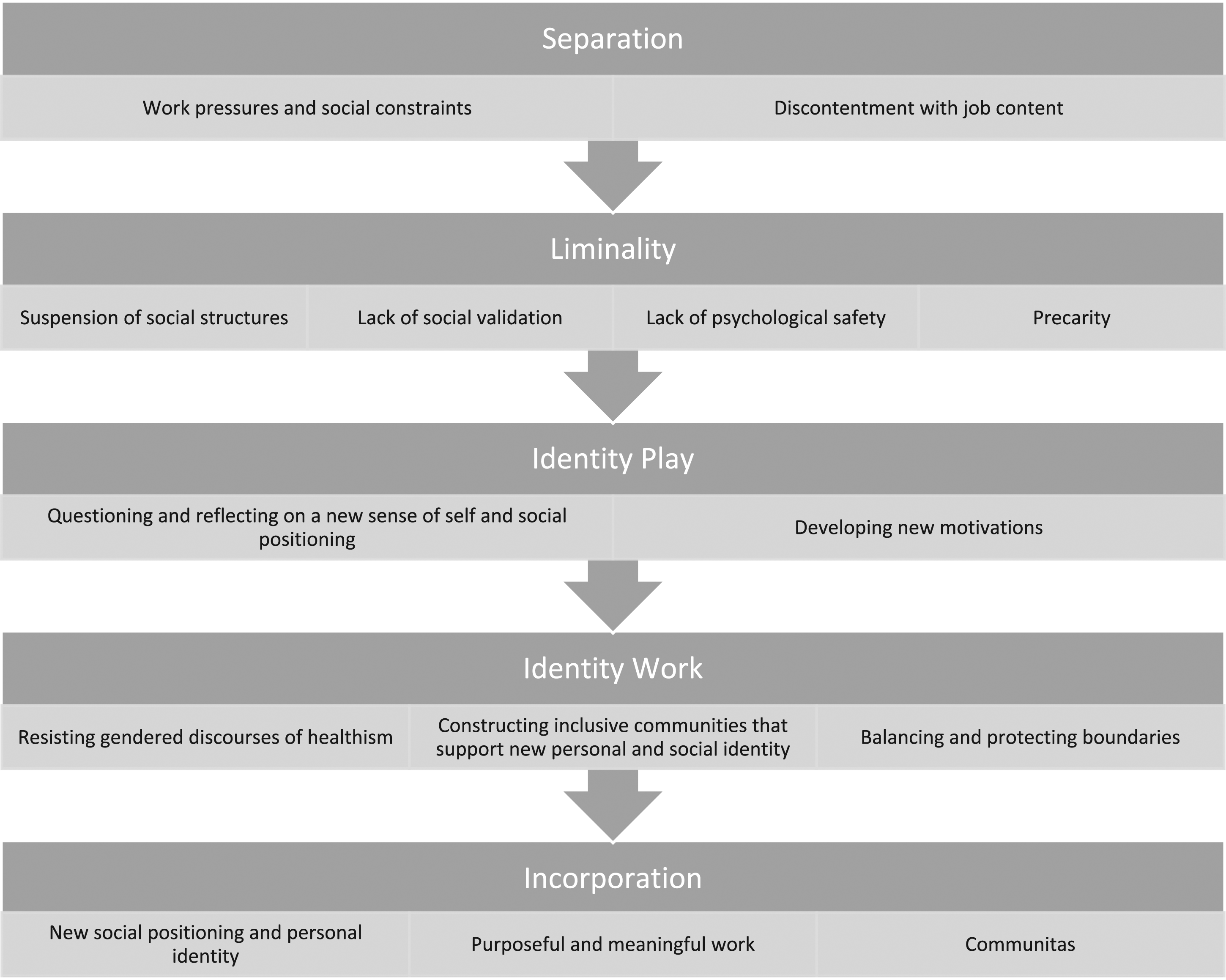
First, we extend analyses of women’s digital entrepreneurship (Martinez-Dy et al., 2017; McAdam et al., 2020) by highlighting the relationship between the transition to digital entrepreneurship and the emergence of liminal spaces where centrifugal forces of neoliberalist postfeminism axiomatically destabilize its emancipatory character. We take as our starting point the notion that entrepreneurship is a process (Moroz & Hindle, 2012) in which uncertainties and anxieties surrounding the negotiation of new identities emerge in the liminal space (Bamber et al., 2017; Muhr et al., 2019; Reed & Thomas, 2021). Drawing on the conceptual distinctions provided in the rites of passage framework (Turner, 1969; van Gennep, 1960), we identify the key transition points of separation, progression through liminality (involving the oscillation between identity play and identity work) and acquisition of a sense of coherence during incorporation.
In particular, we add to scholarship on women’s digital entrepreneurship (Heizmann & Liu, 2020; McAdam et al., 2020; Pergelova et al., 2019) by offering insights into how women construct accounts of digital entrepreneurial careers. We shed light on the positive aspects of digital spaces when societal structures and boundaries are suspended, resulting in liminality (van Gennep, 1960) that fosters agency, heightened reflexivity and creativity as part of identity play. During identity play, women find themselves existing in an as-yet indeterminate condition whose present is defined by the fact that it is no longer what they were, but also not yet what they will be and that which is unknown.
Still, we find that identity play is a precept reality of the experience of women digital entrepreneurs and does not quite capture the qualities of lack of social validation, lack of psychological safety and precarity stemming from the need to coordinate with the flows of culturally structured digital platforms. While becoming an entrepreneur was deemed preferable to being employed, the women’s narratives point to their indeterminate status, their conflicted sense of alienation and belonging, dilemmas about self-presentation and struggles with the culture of constant connectivity. Interpreted from a liminality perspective (Turner, 1969; van Gennep, 1960), the findings indicate how this transient and precarious notion of identity operates within an ephemeral digital culture that is the liminal space where women must carve out their identities. For that reason, our research complements critical studies of women’s digital entrepreneurship (Duffy & Pruchniewska, 2017; Heizmann & Liu, 2020; Martinez-Dy et al., 2017) by looking at the production of liminality in postfeminist, neoliberal fitness cultures that dissolve personal–private structures and boundaries and bring critique into everyday life, becoming mandatory and constant. Our study shows that digital technologies construct visible manifestations of postfeminist agency couched as identity play and creativity while veiling the identity work characterizing these contexts. These features indicate the need for dynamic analyses of identity negotiation that adopt a more balanced and localized understanding of the structural barriers underpinning exploratory identity play behaviours for women.
Our research is also cognizant that the concepts of identity work and identity play have been theoretically positioned in relation to liminality (Ibarra & Petriglieri, 2010), while the dynamics through which they interact in general (Daskalaki & Simosi, 2018; Fachin & Davel, 2015), and in women’s digital entrepreneurial careers in particular, is less well understood. We provide empirical insights into how women’s identity evolves through identity play and identity work, beginning with a disengagement from social roles and status followed by a period of flux that ushers in a period of identity hybridity with an unanchored identity and ambiguity that prompts the emergence of a new identity and social position. Our empirical study problematizes identity play as an ideological concept that is far from benign, as it shrouds the construction of entrepreneurial identities in digital spaces and obscures the need for identity work. We contribute to this discussion and suggest that the concept of technological affordances (Davidson & Vaast, 2010) has an uneasy relationship with, and undertheorized connection to, the ebbs and flows of constructing an entrepreneurial career for women in digital spaces without clear work–life boundaries, institutional frameworks, or regulation, leading to more ephemeral and complex identity trajectories involving risk, fragility, uncertainty and surveillance (Muhr et al., 2019; Söderlund & Borg, 2018).
As a result, women’s experiences during a transition into digital entrepreneurial career contexts does not fit neatly with the notion of an introspective, imaginative exploration of identity play (Markus & Nurius, 1986), but rather illuminates a lack of psychological safety and social validation, and the precarity of this process. Our analysis suggests the importance of process-based studies of the situated experience of women digital entrepreneurs in a way that is reflective of their nuanced and subjective perceptions in order to shed light on the liminal conditions through which gendered experiences and neoliberal digital environments interact to shape identity negotiation.
Second, our research responds to calls to theorize the conditions and transformation of the entrepreneurial self in contemporary careers (Garcia-Lorenzo et al., 2018; Horst & Hitters, 2020; Muhr et al., 2019) and in women’s entrepreneurial careers (Hytti, 2010; Merluzzi & Burt, 2021; Zimmerman & Clark, 2016). We extend this understanding by showing how women’s experiences relate fundamentally to the liminal dynamics in digital entrepreneurial career contexts imbued with uncertainty, ambivalence and paradox. As such, women digital entrepreneurs’ identities have residual attachments to embodied experiences and norms, echoing research on women’s experiences of liminality in online digital communities for mothers (Cappellini & Yen, 2016). This research thus extends conversations regarding digital technologies as a new basis for an individual’s identity or sense of self (Horst & Hitters, 2020; Mmbaga et al., 2020; Nambisan, 2017) and entrepreneurial identities as being shaped by a range of narrative and sociocultural practices (Muhr et al., 2019). Accordingly, we argue that a liminal framing has particular importance in understanding neoliberalist, postfeminist contexts, since it identifies the interstitial environment in which cultural transformation can take place and new identities are constructed. The women were insiders in their professional digital communities, but subjectively their belonging was constantly challenged. They learned to be resilient as they occupied an outsider status in the sense of the loss of their old career identity while grappling with becoming entrepreneurs without appropriate role models. Thus, they experienced the paradox of both belonging and not belonging; stuck, as it were, in between. However, such occasions also fostered transformative potential and the possibilities for creative change as a space for the elaboration of personal and communal selfhood.
Limitations
Although this study has provided significant theoretical contributions, we are conscious that there are some limitations which we now present as avenues for future research. First, we are conscious that our sample is small and centres on a qualitative study of women of a certain socioeconomic status. However, we are aware that there is a risk that those who do not have the capacity (either financially or in terms of human capital) to partake in career transitions will have their interpretations of identity silenced. Future research could therefore engage larger, more diverse samples, combined with elements of netnography, which facilitates the cultural analysis of social media and online community data (Kozinets, 2009), to study how specific technological characteristics (such as interactivity and connectivity) contribute to the co-construction of identities in various ways. This approach would result in immersion into the computer-mediated context to garner shifts in identity processes over time and elicit the communal aspects of identity formation.
At the same time, social media is a rapidly evolving landscape and is accompanied by our responsibility as researchers to ensure that how we obtain and reuse such data is done to the highest possible ethical standards (Zimmer & Kinder-Kurlanda, 2017). Yet, traditional ethical frameworks can inform researchers to some extent in this, social media data brings new contextual challenges which the more traditional approaches are not equipped to deal with, particularly in regard to issues of privacy, informed consent and the handling of data (Carter et al., 2015; Hunter et al., 2018). We also need to be mindful that men can be equally vulnerable to demands to conform to societal norms and pressures as their female peers (Giazitzoglu & Down, 2017; Gracia & Buchanan-Oliver, 2017; Rumens & Ozturk, 2019). Accordingly, further research needs to engage with the perspectives of both men and women from different social, economic and cultural backgrounds in order to facilitate a better understanding of the role of digital technologies in enabling venture creation in the sports, fitness and lifestyle industries (Jones et al., 2020) and how individuals acquire resources as part of career transitions into such contexts.
Conclusion
This article investigated how women experience a career transition into digital entrepreneurship and negotiate identities in such contexts. By undertaking an exploratory study using a qualitative methodology, we analyzed how women digital entrepreneurs undertake identity negotiation in liminal conditions through the concepts of identity work and identity play. We provide insights into the meaning and function of digital technologies for identity processes and shed light on the mechanisms of identity negotiation. Our findings describe how women construct an entrepreneurial identity as a result of liminal experiences that both empower and marginalize their sense of self. Women initially use their in-between state within social structures and positions to provide the potential for identity growth (Reed & Thomas, 2021), which is associated with higher degrees of freedom and less pressure to conform. This enables an exploration of who they are and want to be, and disidentification with their previous employment and lives.
However, women find themselves suspended between their past and future identities, as expressed through the equivocality around their fit in digital entrepreneurial contexts that stems from pre-existing stereotypical images, as well as from the postfeminist and neoliberal narratives that surround them (Elias & Gill, 2018). This suggests the importance of research eliciting women’s voices through narratives. Thus, our study echoes the shared scholarly interest in identity narratives (Brown, 2015; Caza et al., 2018; Shepherd & Williams, 2018) as an important method to reveal the dynamics of identity play and identity work.
One conclusion of our study, therefore, is that even if the rhetoric of technological affordances is ‘play’, the reality is more like ‘work’, with the interests of platform organizations prevailing over those of women. This brings us back to the tensions and contradictions contained within literature on women’s digital entrepreneurship, which suggest both empowerment and marginalization. We argued earlier that theoretical models of identity negotiation in liminality contain two processes: identity work, which focuses on maintaining, strengthening, or revising an existing identity in line with social requirements; and identity play, which is more open-ended, guided by internal motives and based on an identity held in the future (Ibarra & Petriglieri, 2010). A more empirically grounded model would, on the basis of our data, suggest that the rhetoric of technological affordances is concerned with identity play, whereas the reality experienced by women undergoing career transitions is based on the concept of continually working on negotiating identities as part of liminal experiences. Therefore, we need to retain this distinction between identity practices at the rhetorical level and the reality experienced by women in our conceptualizations and models of women’s digital entrepreneurship.
Footnotes
Declaration of conflicting interests
The author(s) declared no potential conflicts of interest with respect to the research, authorship, and/or publication of this article.
Funding
The author(s) received no financial support for the research, authorship, and/or publication of this article.
