




Abstract
The current study reports the investigation on the cause of sudden deaths associated with cardiac fibrosis in cattle in northern Rio Grande do Sul, Brazil. The exclusion of known causes of bovine cardiac fibrosis as well as the absence of the plants in that region whose consumption has already been linked to the disorder motivated this investigation. The condition, which was attributed to the consumption of Amorimia exotropica, affected draft oxen, most of which died suddenly without showing any clinical signs during usual management or work. Globular hearts with white foci at their cut surfaces were the main gross findings, which corresponded microscopically from multifocal to coalescent areas of myocardial fibrosis. To confirm the condition, A. exotropica from the ranches where cattle died from the disease was dosed to rabbits, which showed similar lesions to those seen in dead cattle after receiving 10 doses of 3.6 g/kg at 4-day intervals. Electron microscopy on rabbit tissues revealed severe tumefaction of the cardiomyocytes associated with mitochondrial swelling, displacement, and rupture of the mitochondrial crests, and of the bundles of myofibrils, apart from large glycogen deposits within the sarcoplasm. It is suggested that mitochondrial changes triggered alterations that lead to cardiac fibrosis and that all of these changes were induced by A. exotropica cardiotoxicity.
In Brazil, sudden death in ruminants caused by the ingestion of cardiotoxic poisonous plants has been associated with the consumption of species of the genera Palicourea, Arrabidaea, and Amorimia (formerly Mascagnia), in addition to Pseudocalymma elegans 14 and Nerium oleander. 9 Among the aforementioned plants, and because of its wide distribution, high palatability, and high toxicity, Palicourea marcgravii is the main cause of sudden death in ruminants. 14 Usually, cattle die after a rapid clinical disease triggered by exercise; however, animals may die without showing any clinical signs. Muscular tremors, staggering gait, dyspnea, jugular engorgement, opisthotonus, recumbence, and paddling are immediately followed by death. There are no significant necropsy changes, and the only microscopic lesion present in approximately one-third of the cases is vacuolar hydropic degeneration in the epithelial cells of renal tubules. 14 In addition, the ingestion of Tetrapterys multiglandulosa, Tetrapterys acutifolia, and Ateleia glazioviana have been most commonly associated with cardiac fibrosis and congestive cardiac failure in cattle, but sudden deaths are linked to these plant intoxications as well.3,14 In northern Rio Grande do Sul, Brazil, sudden death in cattle has been attributed to Amorimia exotropica poisoning 8 ; however, to date, there is no record of the presence or occurrence of any of the plants known as causes of cardiac fibrosis in ruminants in that area.3,14 The present study describes spontaneous cases of sudden death associated with cardiac fibrosis in cattle due to Amorimia exotropica poisoning, which was confirmed through experimental reproduction in rabbits.
An epidemiological study was conducted on 4 ranches located in northern Rio Grande do Sul, where cattle were affected and died from a condition characterized by sudden death associated with cardiac fibrosis. Tissues from cattle were routinely prepared for histology, and selected sections were stained according to Masson trichrome (MT) method. To confirm the involvement of A. exotropica as the cause of the condition, the plant was collected from the ranches where cattle died from the disease and then dosed to rabbits. Amorimia exotropica was dried in the shade, finely milled, and mixed in water immediately before dosing to rabbits through an oral probe. Rabbits were kept in individual cages and received commercial diet and water. Acute lethal dose of 18 g/kg has been established in 2 rabbits. Two additional rabbits received 10 doses of 3.6 g/kg, at 4-day intervals and were euthanized 4 days after the last dose. Two other rabbits were used as controls. Tissues from rabbits were sampled at necropsy, routinely prepared for histology, cut to 4–6-µm-thick sections, and stained with hematoxylin and eosin. Selected sections were stained with MT. Immediately after euthanasia, myocardial samples of the left ventricle and cardiac septum were collected, fixed in 2% glutaraldehyde + 2% paraformaldehyde and sodium cacodylate buffer solution, dehydrated in ethanol, and embedded in epoxy resin. Semi-thin sections were stained with methylene blue, and ultra-thin sections from selected areas of resin blocks were contrasted with uranyl acetate and lead citrate, and subsequently observed using an electron microscope at 80 kV.
In total, 5 draft oxen that died suddenly during work were necropsied. One ox died after showing fatigue and jugular engorgement, but in the remaining oxen, no overt clinical disease was noticed. Affected oxen were 2–7 years of age and were born and raised on the ranches in northern Rio Grande do Sul, where several additional previous cases of sudden death in cattle had been recorded and linked to A. exotropica poisoning. 8 Large areas infested by A. exotropica (Fig. 1) were detected on all the farms where sudden deaths in cattle occurred. Main gross lesions were globular hearts with myocardial white foci that corresponded to microscopic areas of multifocal to coalescent fibrosis, especially evidenced by MT staining. In such areas, there were intrasarcoplasmic vacuoles within cardiomyocytes, hypereosinophilic cells with pyknotic nuclei, necrotic cells characterized as contracted cell remains delimited by the sarcoplasmic membrane, and occasional mononuclear cells infiltration (Fig. 2).
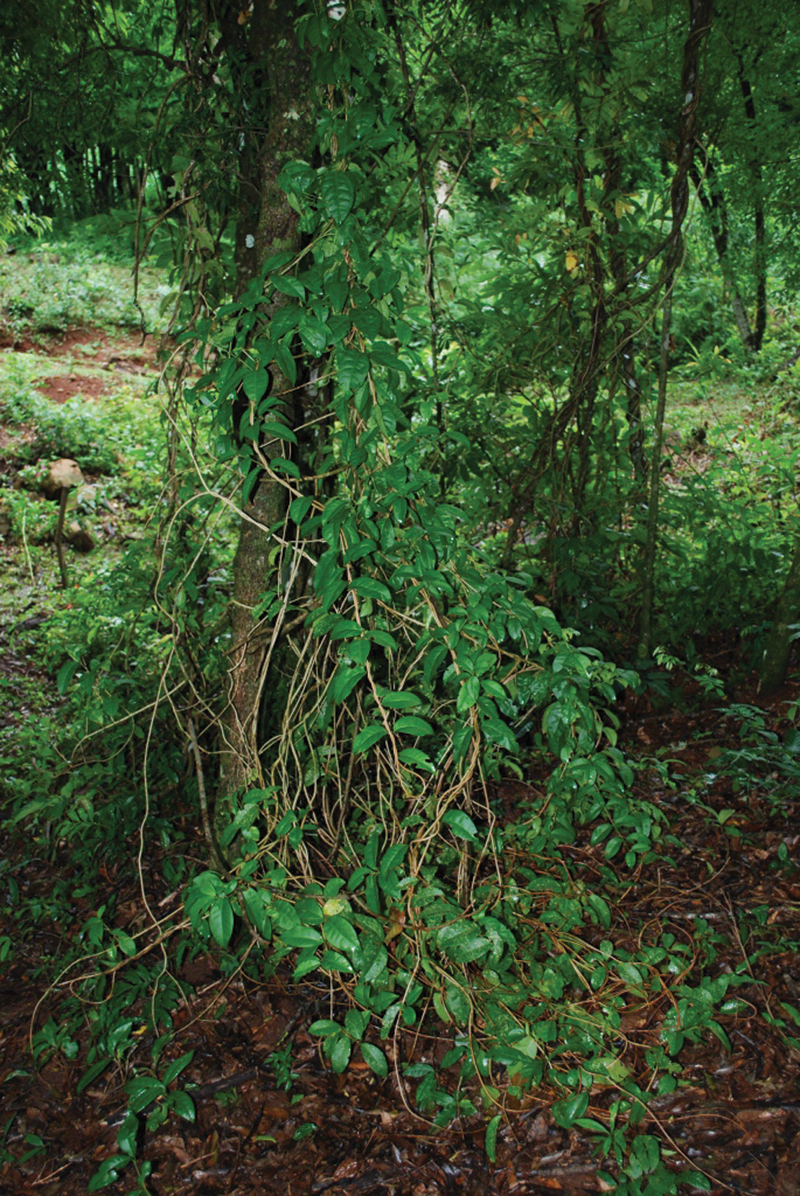
Amorimia exotropica; northern Rio Grande do Sul, Brazil.
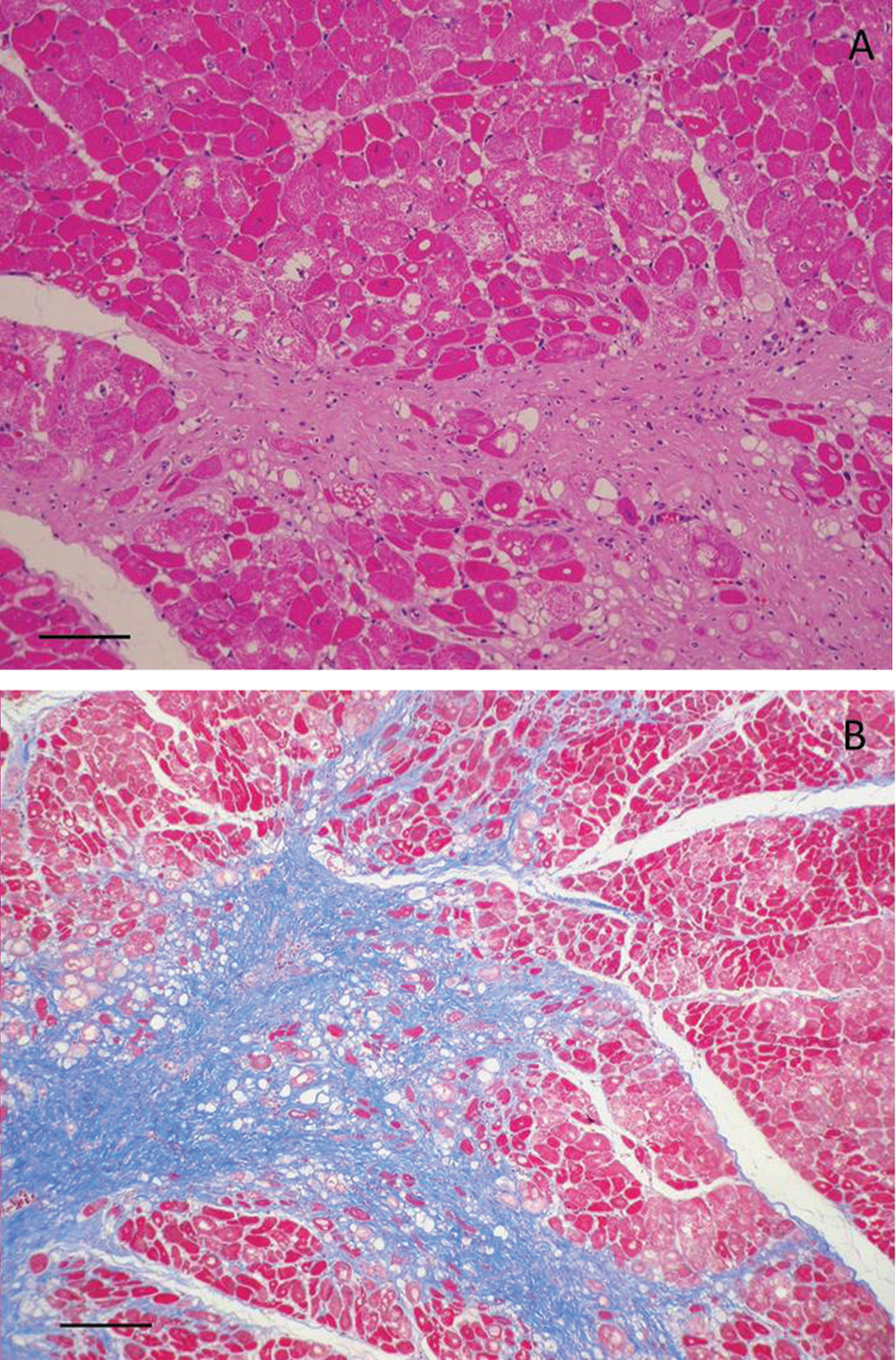
Bovine heart.
In both rabbits dosed with 36 g/kg of poisonous plant, the gross findings included swollen livers with marked lobular pattern, congested lungs, and globular hearts, the cut surface of which displayed white foci, especially located in the left ventricle. Microscopically, congestion, emphysema, and hemosiderin-laden macrophages were seen in the lungs, as well as centrolobular congestion of the liver. Microscopic changes in the hearts of the rabbits were similar (Fig. 3), if not identical to those seen in the heart of the oxen victimized by sudden death. Ultrastructurally, there was tumefaction of the cardiomyocytes associated with mitochondrial swelling, dislocation, and rupture of the mitochondrial crests, and mitochondrial membrane blebs. Myofibrils of sarcomeres were ruptured, and in some cells, there was accumulation of large volumes of fluid, while in others fluid was accompanied by glycogen deposited as monoparticles (Fig. 4). There were also interstitial collagenous deposits, which were more profusely present in the surroundings of capillaries, alongside groups of normal cardiomyocytes. No cardiac fibrosis was detected in the 2 rabbits dosed with the lethal dosage of A. exotropica, and no changes were seen in tissues from control rabbits.
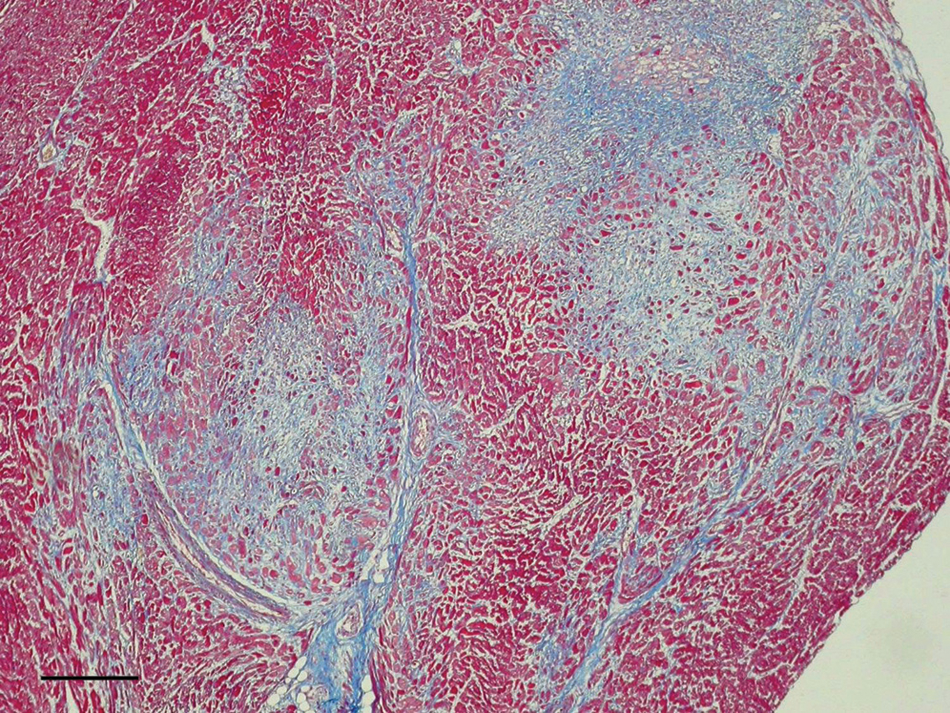
Rabbit heart. Amorimia exotropica–induced multifocal fibrosis evidenced by Masson trichrome staining. Bar = 360 µ.
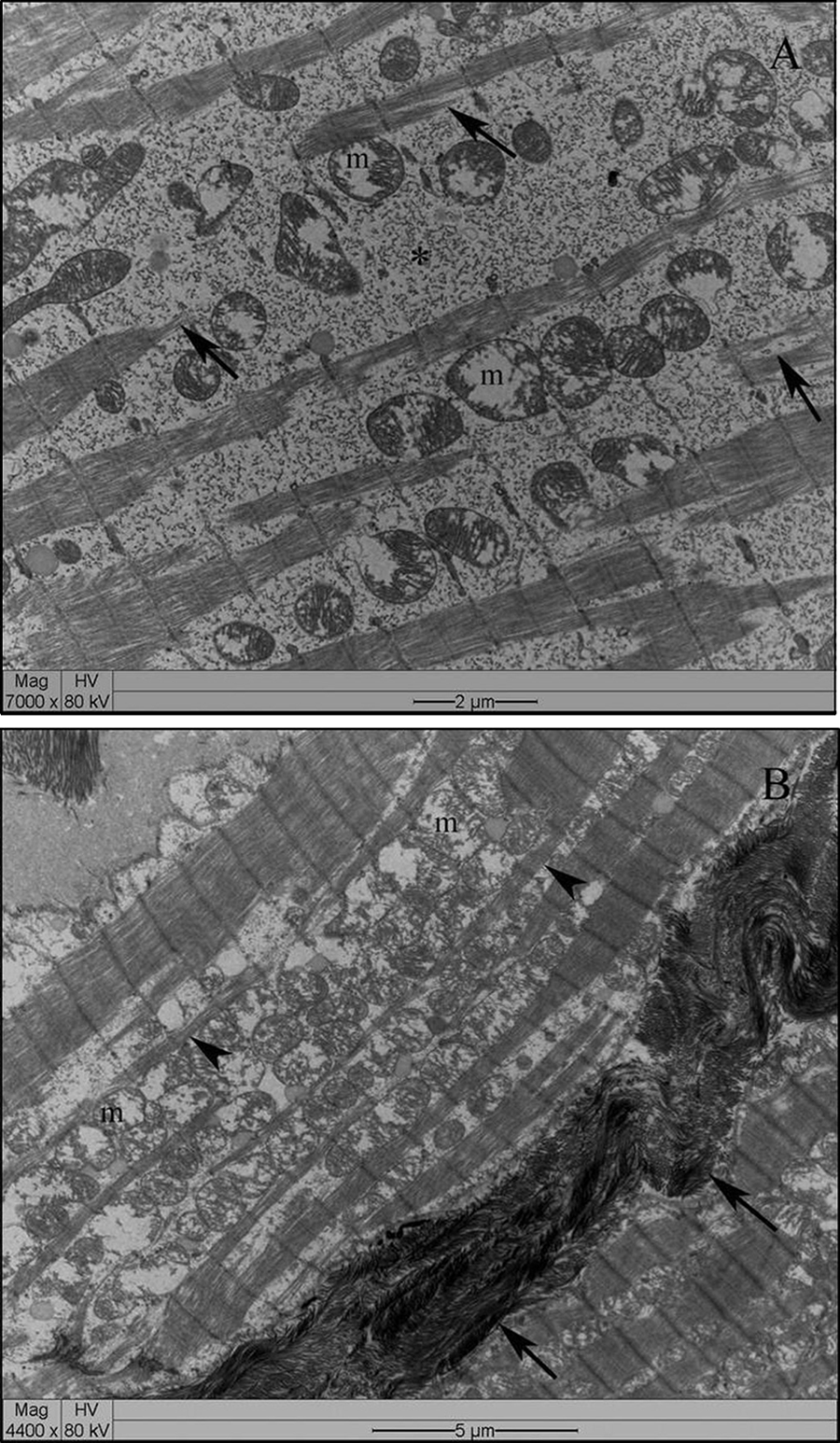
Electron micrograph, myocardium; rabbit.
In Brazil, the ingestion of Amorimia sp. as the cause of sudden death associated with cardiac fibrosis in cattle was mere speculation.12,13 To date, cases of cardiac fibrosis due to plant consumption have only been linked to poisoning with Tetrapterys spp. and Ateleia glazioviana,3,10,15 none of which have been found on the ranches where cattle sudden deaths reported herein occurred. The aforementioned species are distributed in distinct areas from those where A. exotropica occurs. 8 For differential diagnosis, the following agents were excluded from having caused these cases. Senna occidentalis poisoning is usually linked to marked degenerative or necrotizing changes in skeletal muscles with minimal myocardial change if any. 1 Outbreaks of sudden death or congestive cardiac failure have also been associated with chronic accidental ionophore intoxication of livestock; however, cases of ionophore poisoning differ from the cases reported herein due to severe degenerative changes in the skeletal muscles, which are absent in the cases involving the plant.4,11 Additionally, ionophore poisoning is associated with concentrate feeding, which was not the case of the oxen in the current report. Typical white and chalky gross lesions associated with high levels of calcification in degenerated myocytes are frequently found in nutritional muscular dystrophy caused by selenium and vitamin E deficiencies, 5 but such changes, which usually also affect skeletal muscles and preferably those muscles in young animals, were not observed in the present study. Nerium oleander poisoning is reported to induce sudden death in cattle,7,9 but this plant was not found on the farms. Although the experimental induction of cardiac fibrosis was achieved using a different species from that naturally poisoned, and considering that the rabbits did not die suddenly, induction of similar, if not identical cardiac changes in rabbits after repeated dosage with A. exotropica harvested from farms where the disease affected cattle is suggestive of a cause–effect relationship between the plant and the disease observed in the field. In addition, the experimental production of cardiac fibrosis by dosing rabbits with small doses of A. exotropica for a 40-day period suggests that the myocardial fibrosis observed in cattle naturally poisoned is probably associated with the ingestion of small amounts of the plant for long periods. The ultrastructural findings suggest that mitochondrial changes within cardiomyocytes precede and probably trigger the alterations that lead to fibrosis in these cells. In Africa, a number of plants including Pachystigma, Pavetta, and Fadogia species have been reported to induce similar myocardial lesions in cattle.2,6,7 While these plants usually cause disorders characterized by congestive cardiac failure associated with chronic myocardial lesions, they may in turn also induce sudden death.3,7,14 The current study implicates A. exotropica as the cause of cardiac fibrosis in rabbits and suggests the involvement of the plant in the etiology of the sudden deaths associated with cardiac fibrosis observed in cattle in northern Rio Grande do Sul.
Footnotes
Acknowledgements
Authors are grateful to Professor Claudio Severo Lombardos de Barros from the Universidade Federal de Santa Maria (UFSM) for reviewing this manuscript.
The authors declared that they had no conflicts of interest with respect to their authorship or the publication of this article.
This work was financially supported by Institutos Nacionais de Ciência e Tecnologia (INCT), Conselho Nacional de Desenvolvimento Científico e Tecnológico (CNPq; 573534/2008-0 and 478842/2009-0).