Abstract

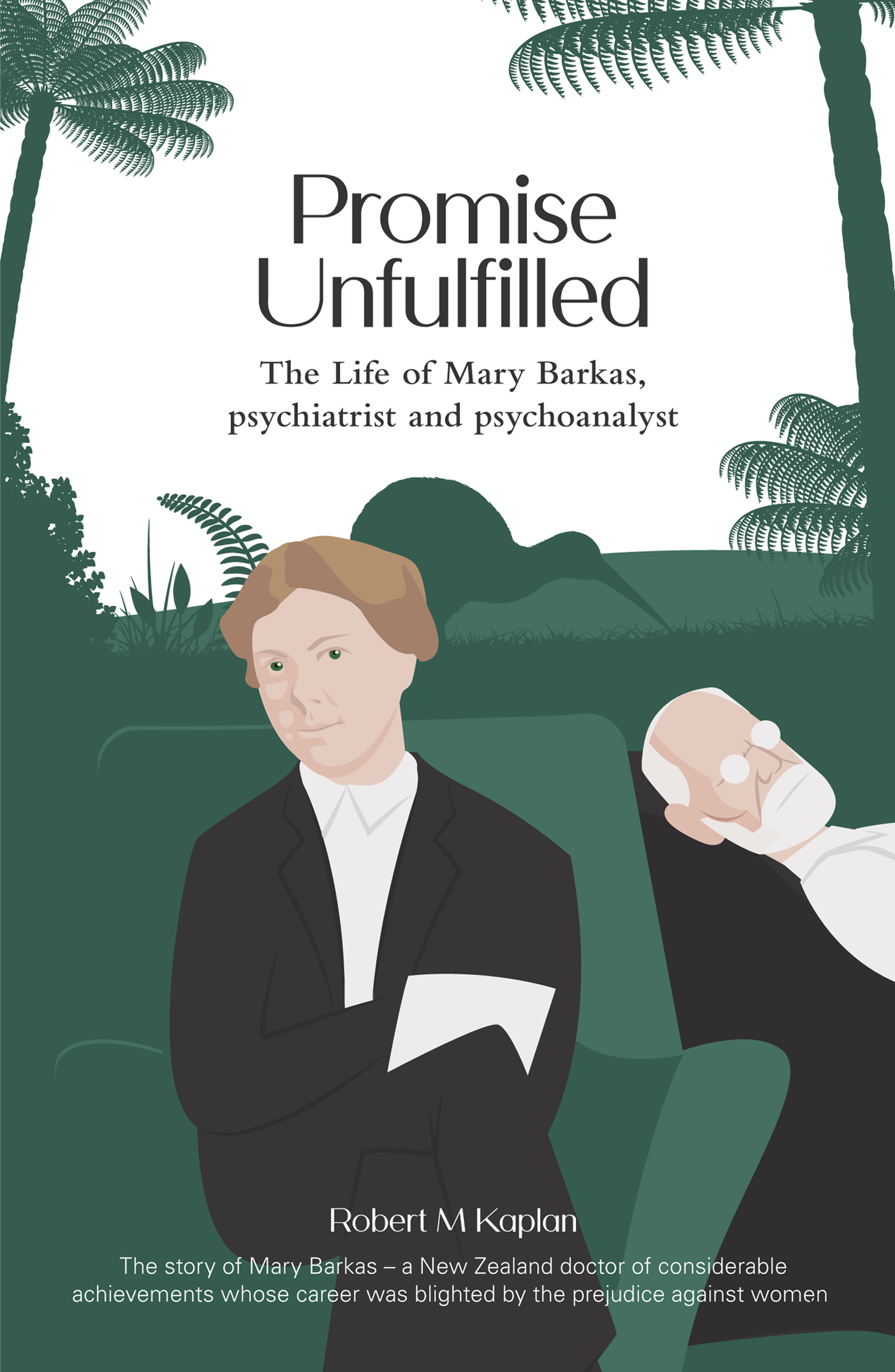
Who on earth was Mary Barkas – and why haven’t you heard of her? Both questions are ably answered in this entertaining labour-of-love biography by Robert Kaplan. Barkas (1889–1959) was a New Zealand-born psychologist and psychiatrist, the first female house physician appointed at Bethlem Hospital, and one of the first four medical officers appointed to the Maudsley Hospital in 1923. The only and late child of a difficult marriage that ended in separation, Mary became the apple of her father Fred’s eye. He in turn became the reason she never married.
Barkas was offered a job by Eugen Bleuler, was analysed by Freud’s disciple Otto Rank (Freud was too expensive), admired Jung, and corresponded with Aleister Crowley. But despite her obvious brains and ability, Barkas ran into trouble at the Maudsley in 1927 over her fondness for psychoanalysis and her possession of two X chromosomes. The latter apparently caused Alfred Petrie – who had seen action in France during the Great War – to take to his bed for 2 days with neurotic pain at the thought of having to work under her direction.
But Barkas dreaded the thought of having to return to New Zealand, a place she deplored for its conservatism, backwardness, lack of jobs, and small-mindedness. The only thing that seemed to recommend it was a lack of Jews, whom Barkas could not abide as patients. To defer the awfulness of the Antipodes, Barkas instead took a job at the The Lawn mental hospital in Lincoln.
Perhaps inevitably, Barkas’ time at The Lawn was a professional disaster whose only highlight was her teaching the inmates’ choir some sea shanties. Suffering from chronic indecisiveness all her life, Barkas’ menopause appears to have aggravated it. Fred’s death in 1932 of prostate cancer in Dunedin when Barkas was 43 finished her off completely. She quit The Lawn, returned to New Zealand, cleaned up the estate – and vanished.
How did she vanish? Our knowledge of Barkas’ complicated interior life came from her letters to and from Fred, and now that Fred was no more, all material about this remarkable woman’s life must be drawn from newspaper stories and other fragments. She never practised again, apparently utterly disillusioned with both psychiatry and psychoanalysis. Her longtime and final home was a green weatherboard house about a mile south of the little town of Tapu on the north island of New Zealand. The local eugenics society, fibre weaving, dogs, feminism, Chinese philosophy, and travel seemed to fill her later years.
Barkas lived alone, the local eccentric. She drove an old station wagon, wore trousers, swam wearing her old woollen swimsuit, smoked endless cigarettes, and hoarded animals. As with so many rugged individuals, she died eventually of dementia in squalor in April 1959. Her last recorded words on her state of life were that she was “enjoying digging and spinning and loafing as much as ever, and am well content with my peaceful home” (p. 98), which is not a bad epitaph for this remarkable woman.
This book is engagingly written and would be useful for both psychiatrists and psychologists who are interested in the early history of these professions, and in the history of the Maudsley Clinic. It also has much to offer feminist historians of medicine.