



Abstract
Objective
SPARX is an online cognitive behavioural therapy self-help intervention for adolescent depression provided in serious game format. Since 2014, it has been freely available in Aotearoa New Zealand (NZ) due to funding from the NZ government. In 2020/21, feedback from sexual and gender minority youth (SGMY) was used to refine and update SPARX.
Method
Three online focus groups and follow-up email consultations involved 12 SGMY (16 to 25 years old) in NZ. A general inductive approach was used to analyse data.
Results
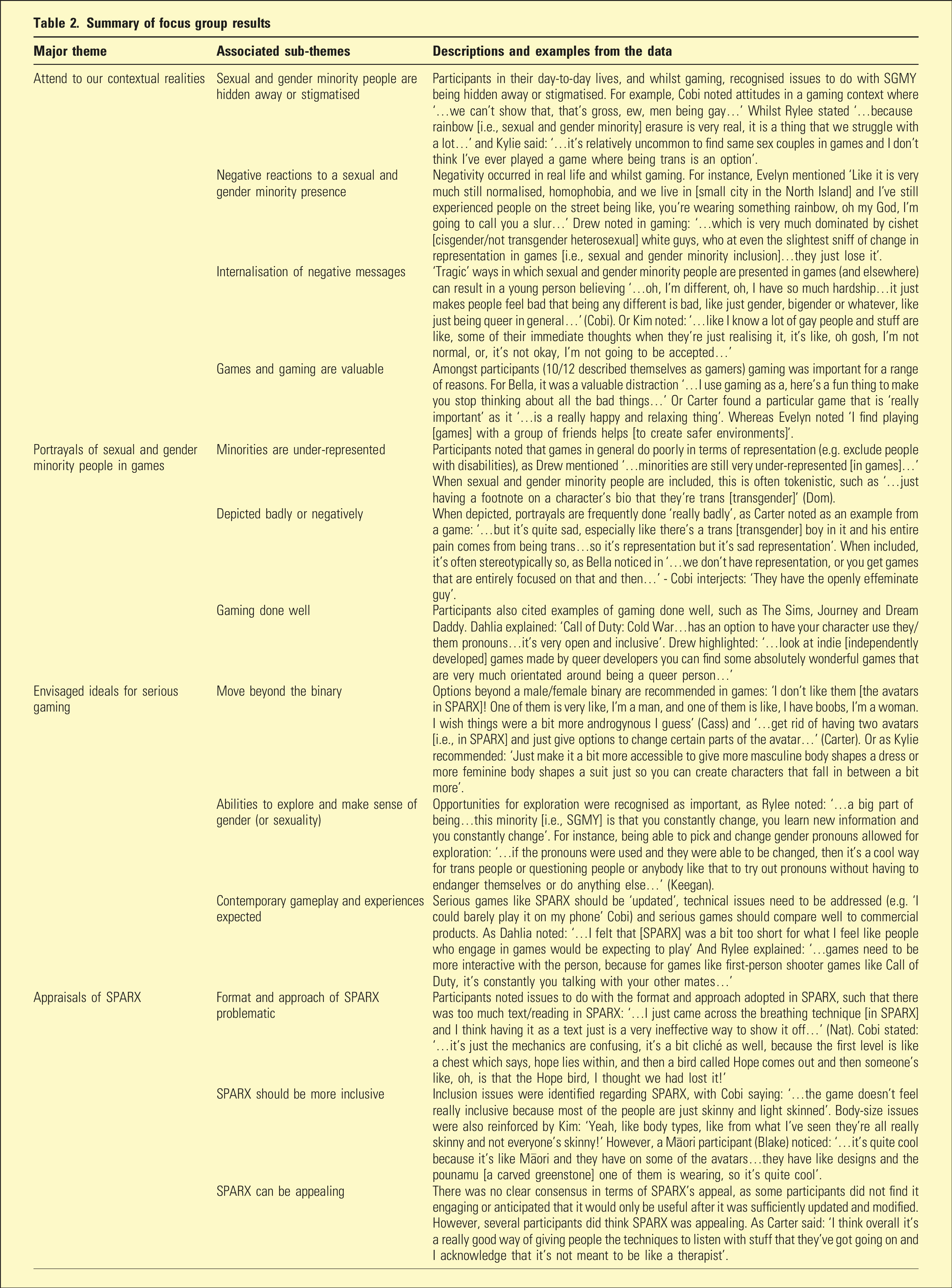
SGMY had specific needs as well as preferences and four themes were identified: attend to our contextual realities; portrayals of sexual and gender minority people in games; envisaged ideals for serious gaming and appraisals of SPARX. SGMY feedback was used to improve SPARX for this unique population, with the updates launched in October 2021.
Conclusions
SGMY are underserved in terms of their mental health needs. Refining or tailoring existing interventions proffers a potential way forward in terms of addressing these needs.
Sexual minority (e.g. lesbian, gay and bisexual) youth are at an increased risk of depression,
1
with gender minority (e.g. transgender/trans) youth having particularly high mental health needs.
2
Unfortunately, sexual and gender minority youth (SGMY) are frequently stigmatised and mistreated and, as a result, they are more likely to experience compromised mental health.
3
Limited intervention options specific to SGMY are available;
4
however, prior research indicates that these young people value the online delivery of psychological supports for their mental health.
4
One such online intervention, SPARX ( • In which ways should a serious game for mental health, like SPARX, be refined so that it better meets the needs of SGMY?
Methods
The consolidated criteria for reporting qualitative research (COREQ) 7 has informed this study’s write-up.
Sample and data collection
Participants were recruited via a staff member that was known to them from a SGMY organisation in NZ, whereby staff posted online messages about the study and those young people that expressed an interest in it were sent additional information. This information included online promotional material about the study, and this was sent to those aged 16–25 years old that were keen to take part. The participants were from one of two SGMY organisations based in major cities. However, they came from a range of locations in the North Island of New Zealand.
Ethics and consent
Ethics approval was granted by the Health and Disability Ethics Committee in NZ. All participants provided written informed consent prior to taking part in the study.
Focus groups
Three online focus groups (N = 12) consisted of ten participants aged 16–19 years and two participants aged 20–25 years; all participants were SGMY (see Table 1). Focus groups comprised of the participants (in private spaces in various locations) and ML, who facilitated all the sessions. These groups lasted between 59 and 65 minutes. A semi-structured format (questions available from the corresponding author) was used. Initial questions (and prompts) focused on participants’ experiences of games generally and then (after a short demonstration of SPARX) questions about this serious game, for example: • Do you play computer games, if so, which ones [prompts – examples of games on smartphones, games played alone versus with others and well-known games versus those not so many people know about]? • Have you used the program called SPARX? If yes, what did you think of it? If no, would you consider using a computer/digital program to help you if you were feeling stressed or low? Demographics and details about the participants aSome participants did not answer certain questions in the demographic questionnaire. bParticipants’ gender was different from their sex assigned at birth. cTo protect the identity of the participant, we have deliberately avoided providing further elaboration. dHad not used SPARX but in the past had been recommended it. eHad not used SPARX but had heard of it and engaged with demonstration.
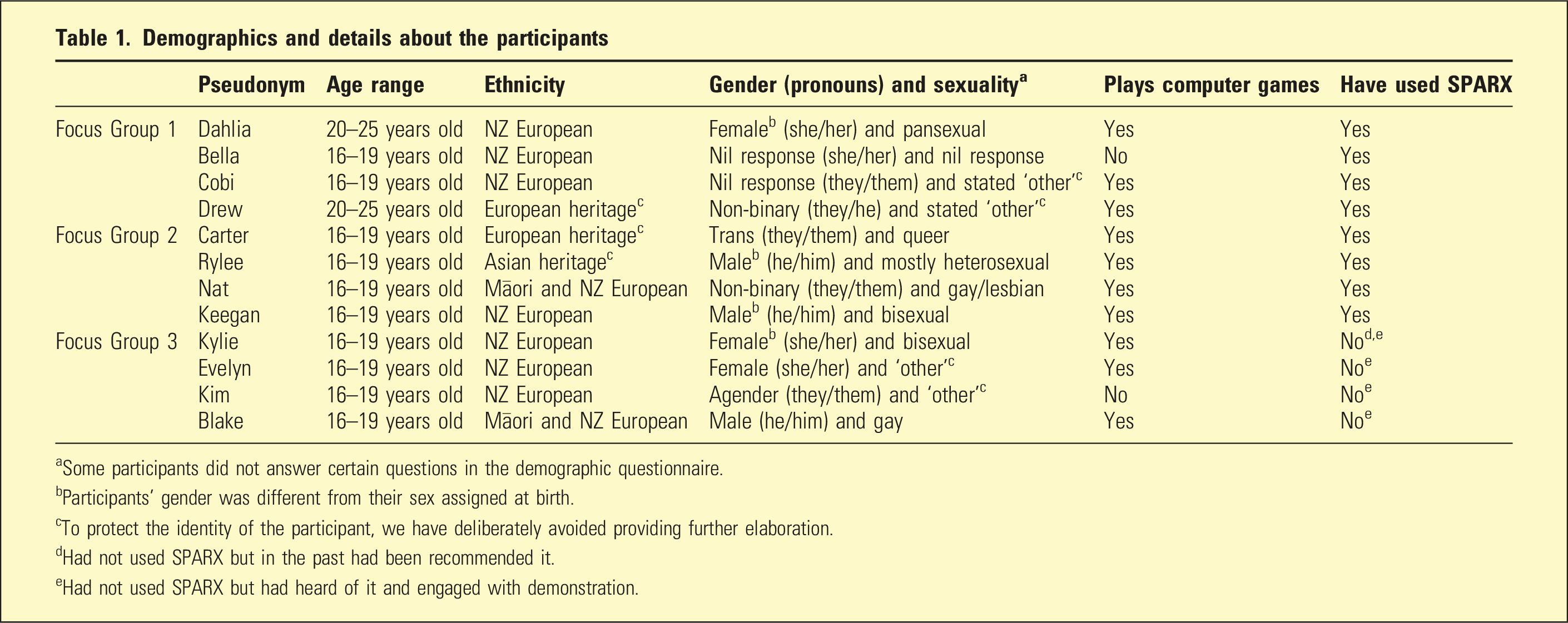
Subsequent questions focused on more specific details, for instance, if participants could change only one thing in relation to SPARX for SGMY, what it would be. After the focus groups, participants provided feedback via email regarding the game development company’s prototypes or planned refinements for SPARX.
The facilitator (ML), who is based in the United Kingdom, is an academic experienced in clinical and group-based youth mental health work. The participants had not previously met ML, but they were aware that he was a co-developer of SPARX. They also knew ML is a gay male and gender role non-conformer, and participants seemed at ease knowing this about him. Focus groups were audio-recorded and professionally transcribed. Basic field notes were taken.
Data analysis
We used a general inductive approach (GIA) for data analysis. 8 GIA is a method of content analysis which seeks to build understandings from participants’ comments on a specific research question (or questions) as opposed to testing pre-existing hypotheses. The transcripts were read with the research question in mind. ML read and re-read the transcripts and identified lower order units of meaning which were then clustered with similar units. Units were reduced to address overlap and redundancy among the categories before the final themes and sub-themes were agreed. A preliminary summary of results was sent to participants.
Results
Summary of focus group results
Discussion
Summary of recommendations from SGMY and the corresponding results
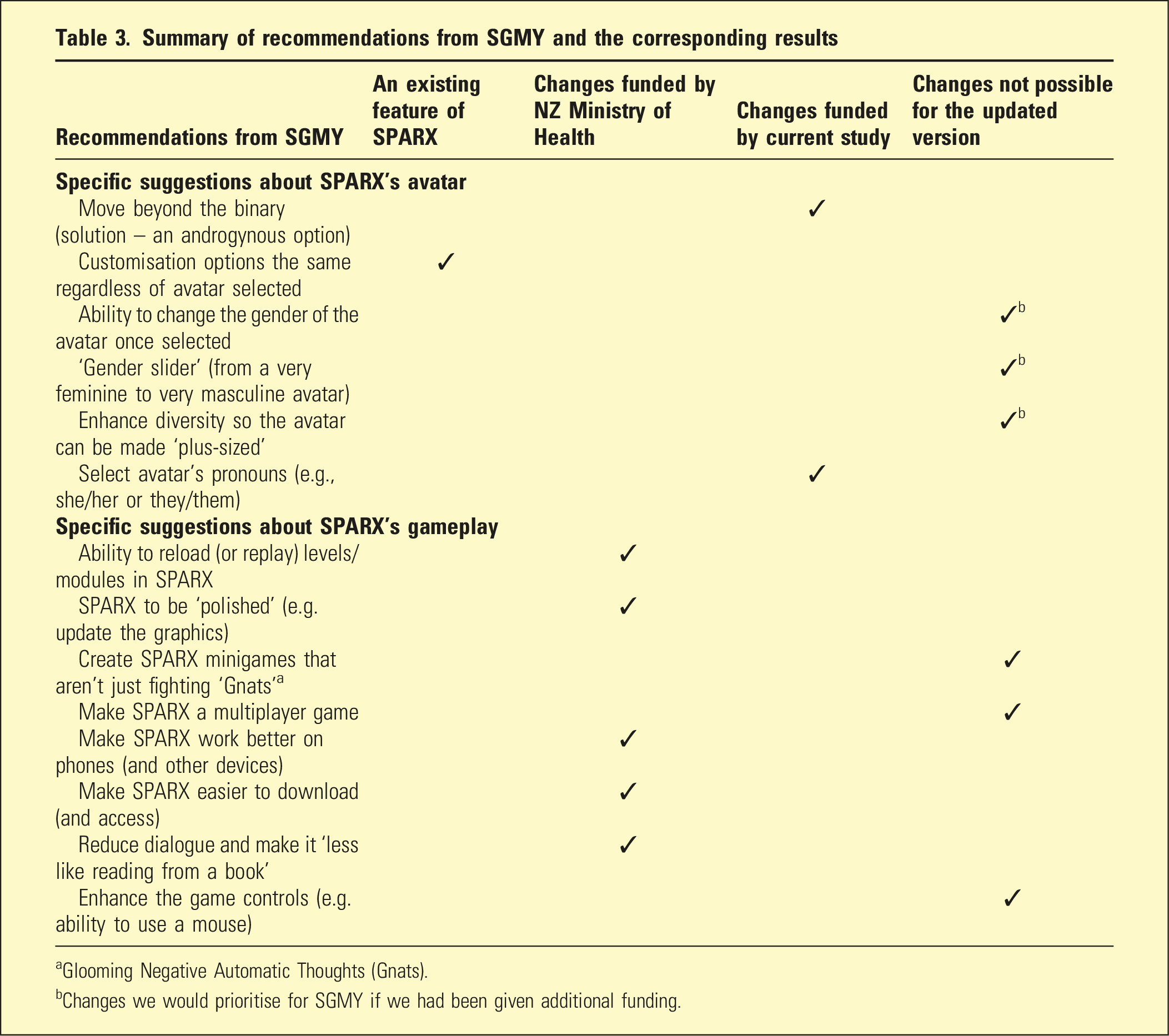
aGlooming Negative Automatic Thoughts (Gnats).
bChanges we would prioritise for SGMY if we had been given additional funding.
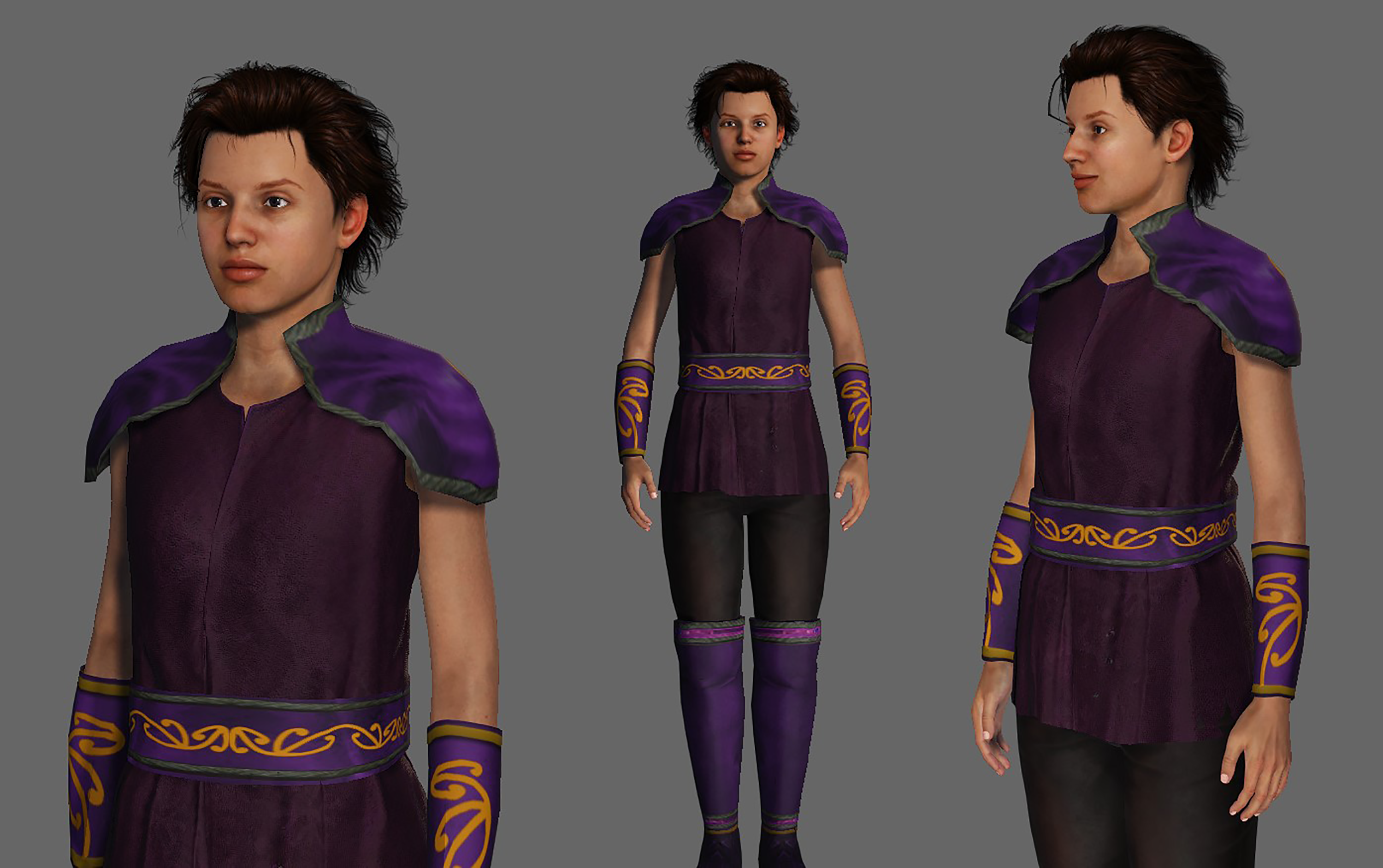
New avatar (in addition to the ‘male’ and ‘female’ options previously available in SPARX). Image used with permission of the copyright owner © Auckland UniServices Limited.
Earlier work has already investigated the importance of identity-affirming avatars in gaming for gender minority youth. 11 Similarly, we also found that games can provide valuable opportunities for young person to explore their gender identity, and yet gaming often constrains diverse gender expression, an issue that can be overcome with enhanced customisation options. 11 We have attempted to address some of the issues raised by SGMY but did not have sufficient funds to address these issues as fully as we would have liked.
Strengths of this study include using an established qualitative method to help improve a freely available evidence-based psychotherapy together with SGMY – an underserved population. Notable limitations include this being a small-scale exploratory study which only recruited from SGMY-specific organisations. ML, who facilitated the focus groups, is part of the development team that created SPARX and participants knew this, and as a result, some participants may have felt inhibited to express criticisms of the program. Recruitment was challenging, as is often the case for studies focused on this unique population 12 and even more so during a global pandemic. We attempted to include intersex young people, given earlier SPARX-related work identified their elevated mental health needs, 13 but unfortunately, we were unsuccessful in this endeavour. Ideally, more online focus groups would have taken place; however, given the potential issues related to research fatigue associated with marginalised populations 14 and the time pressures to launch the updated version of SPARX, this was not possible. Despite these factors, this study is worthwhile because it has sought to listen to the voices of a marginalised group so that SPARX better meets the needs of SGMY; this listening to underserved populations is an important initial step towards a necessary process of change. 15
Conclusion
SGMY are more likely to experience mental ill-health and interventions such as SPARX can make a difference to their wellbeing. We have demonstrated that SGMY have valuable insights and perspectives which can help enhance the acceptability of tools such as SPARX for SGMY. It is important to respond to the needs of SGMY, and this can be done by better tailoring ‘mainstream’ interventions. Ongoing monitoring of the uptake of SPARX will be useful to establish if we have increased engagement in terms of this group and other important underserved populations (e.g. Māori rangatahi/adolescents and young people with long-term physical health conditions).
Footnotes
Acknowledgements
We would like to thank the study‘s participants and the staff at the National Institute for Health Innovation (NIHI) in NZ who supported this work.
Declaration of conflicting interests
The author(s) declared the following potential conflicts of interest with respect to the research, authorship, and/or publication of this article: The intellectual property for SPARX is held by UniServices at the University of Auckland. Any proceeds from licensing or selling SPARX outside of New Zealand will be shared in part with UniServices and ML, KS, TF, MS and SM.
Funding
The author(s) disclosed receipt of the following financial support for the research, authorship, and/or publication of this article: The New Zealand (NZ) Ministry of Health funded the development, deployment and updating of SPARX in Aotearoa NZ and The Open University in the UK funded the current project as part of the university’s 2020 Coronavirus Research Funds. SPARX is currently only available in specific geographic regions and may not be available to all potential users.
Ethics and consent
Ethics approval was granted by the Health and Disability Ethics Committee in New Zealand (Reference number: 15/NTB/183). All participants provided written informed consent prior to taking part in the study.
