




Abstract
This paper explores how educators’ perceptions of the agricultural industry and associated careers, along with their self-efficacy in agricultural career education, impact outcomes related to advising students on pursuing employment in the sector. The results of a quantitative study surveying 195 secondary school educators involved in delivering career support and advice in New South Wales, Australia is presented. Data analysis employed descriptive and inferential statistics to explore relationships between educators’ perceptions of agricultural careers and their delivery of career advice. By examining attitudinal influences on career advice, the research investigated perceptions of the agricultural industry, career pathways, and discussions with students. It also explored educators’ attitudes towards industry standards, decent work, progressiveness, limiting beliefs about agricultural jobs, and self-efficacy for agricultural career education. This paper provides insights that will inform the development of interventions that support secondary school-based educators to provide agriculture career advice to students and promote interest in agricultural career paths among students.
The Australian agricultural industry has set an ambitious target, outlined by the National Farmers’ Federation (National Farmers’ Federation, 2018) of becoming a $100 billion industry by 2030. Achieving this objective necessitates a dedicated, skilled, and driven workforce. The 2021 Australian Census showed that nearly 240,000 people, or 2% of all employed Australians, work directly in agriculture. Most of these workers reside in rural and regional eastern Australia, with only a quarter being under the age of 35 (ABARES, 2023). Agricultural careers are often perceived as traditional roles involving outdoor work, manual labor, and low wages (Voconiq, 2022). However, the agricultural workforce also includes services such as food and fibre manufacturing, warehousing and logistics, food and beverage manufacturing, wholesale trade, and other business support services (ABARES, 2023; Bassett et al., 2022). With higher skill levels and experience sought across this wide array of agricultural roles, farm business employers often compete for workers from other industry sectors (Greenville & Cameron, 2022).
There is a greater understanding now of agriculture's important role in addressing global challenges such as food sustainability, security, and climate change. As such, a divide has formed between public and primary producers regarding their approaches to animal welfare, husbandry practices, and confidence in livestock professionals (Alonso et al., 2020). Public impressions on farm animal welfare and environmental impacts is also driving greater producer engagement, transparency, and future planning (Coleman, 2018). It is important to embed agricultural career advice and education into school curriculum to ensure an understanding of these issues, strengthen sector knowledge, and inform career decision-making and future career planning. With the increase of technology usage within agriculture, the need for Science, Technology, Engineering, and Mathematics (STEM) skills is also essential for developing innovation and sustainable practices (Burch et al., 2023; Cosby et al., 2019, 2024; Dockery et al., 2021; Manning et al., 2022b).
Supporting the self-efficacy of school-based educators in delivering agricultural career education can strengthen their ability to inform students of career opportunities within the sector, and to better understand the importance of decent work. The International Labour Organization (ILO) (International Labour Organization, 2019) describes decent work as the provision of fair wages, job security, freedom to express concerns, and equality in opportunities for personal development. It also involves purposeful career education (Kenny et al., 2023), and workplace attitudes aligning with family and social values so as to ensure social integration, connection, and overall well-being (Duffy et al., 2017; International Labour Organization, 2019). Social connectedness and the psychological needs of self-determination (i.e., autonomy, competency, and relatedness) (Ryan & Deci, 2000) have been identified as common outcomes of localized employment and well-being interventions within regional, rural, and remote Australian communities (Luke et al., 2024).
Promoting career opportunities and benefits within agriculture can be achieved by school educators strengthening student interest, understanding, and career exploration of the sector (Kenny et al., 2023). This approach aligns with the Social Cognitive Career Theory (SCCT; Lent et al., 1994, 2000) constructs of self-efficacy, outcome expectations, and goal-directed activities which have been studied in the context of agricultural careers and vocational psychology (McIlveen & McDonald, 2019). Reinforcing educators’ self-efficacy can increase their effectiveness in supporting students to recognize the importance of decent work and explore careers that fulfill these essential criteria (Cosby et al., 2024). Relevant and effective agriculture career guidance requires educators’ self-efficacy in understanding industry perceptions, environmental management, and decent work standards.
The embedding of career education within school curriculum and encouragement from school-based career educators provide a positive influence on the career exploration and pathways of school students (McCowan et al., 2023; McWhirter et al., 2000). Following SCCT (Lent et al., 1994, 2000), school educators can develop curriculum and targeted interventions to promote accurate perceptions of agriculture, address misconceptions and barriers, explain decent work, and encourage students to consider careers within an expansive agriculture sector. Professional development programs, industry partnerships, and experiential learning opportunities are opportunities for school-based educators to increase their understanding of the agriculture sector (Cosby et al., 2019; Duncan et al., 2006; Manning et al., 2022a; O’Dea et al., 2024), and in doing so provide students with practical information, hands-on experiences, and exposure to industry role models (Cosby et al., 2022b; O’Dea et al., 2022). Past research has shown that perceptions of careers in rural industries influence individuals’ likelihood of considering agriculture (Cosby et al., 2022a; Voconiq, 2022), and educators’ self-efficacy in teaching specific agriculture focused subjects impacts effectiveness in goal-directed activities and student outcomes (Cosby et al., 2024; Klassen & Tze, 2014).
The present research was undertaken as part of the Cultivating Futures project that aimed to contribute to the discourse on agricultural education and workforce development by investigating key outcomes necessary for improving agriculture school-based career advice. We examined general perceptions of agriculture, agricultural career prospects, study pathways in agriculture, and methods for encouraging students to pursue careers in agriculture. To address these objectives, the research questions guiding this study are:
What are school educators’ perceptions of agriculture industry careers and study pathways? What are school educators’ perceptions of decent work in agriculture? What are school educators’ perceptions of agriculture as a progressive, future-focused industry? What are school educators’ perceptions of agriculture industry environmental management and animal welfare standards? What limiting beliefs or misconceptions do school educators have about agricultural jobs?
By addressing these research questions, this study aims to provide insights for improving agricultural career advice in schools and identify ways to enhance self-efficacy and confidence in delivering career education activities. In doing so, it contributes to promoting informed decision-making and career development within the agricultural sector.
Materials and Methods
Participants
The survey was completed by 195 Australian school educators based within New South Wales (NSW) and the Australian Capital Territory (ACT). The majority of respondents (84.1%, n = 164) identified as Australian, with 3.1% (n = 6) identifying as Aboriginal and Torres Strait Islander (Indigenous Australian). Government schools employed 71.3% (n = 139) of the respondents, while the remaining worked in private schools (16.4%, n = 32), Catholic schools (11.3%, n = 22), and other schools (1.0%, n = 2). The metropolitan area of Sydney had the highest representation (32.8%, n = 62). Other regions represented included the Riverina (13.2%, n = 25), South East NSW (11.6%, n = 22), the Hunter (9.5%, n = 18), North West NSW (9.0%, n = 17), North Coast NSW (7.4%, n = 14), Central Tablelands (5.8%, n = 11), Northern Tablelands (3.7%, n = 7), Central West NSW (3.2%, n = 6), the Murray (2.1%, n = 4), the ACT (1.1%, n = 2), Western NSW (0.5%, n = 1). Almost half of the respondents (46.7%, n = 91) had 20 or more years of teaching experience, while 10% (n = 19) had less than five years of experience. Additionally, nearly one-quarter of respondents (22.1%, n = 43) held leadership positions within schools, with the majority being classroom teachers (71.3%, n = 139) and one in six working as career advisors (16.9%, n = 33).
Procedure
Developed by the present study's research team, the survey drew from previous projects (Cosby et al., 2019; McDonald et al., 2022a) and the Community Perceptions and Worker Experience Programs report (Voconiq, 2022). To create the research instruments and recruit survey participants, the team consulted with the NSW Department of Education, the Primary Industries Education Foundation of Australia, and the Career Advisors Association of NSW and ACT. Key stakeholders tested the survey for clarity to ensure that the data collected would answer the required research questions.
Secondary school educators in NSW and ACT were recruited through email and social media channels. Invitations were extended to career advisors, classroom teachers, school-based transition advisors, and school leaders. The research framework and instruments received approval from the CQUniversity Australia Human Research Ethics Committee (approval number 24295). Participation was voluntary, and data anonymity was guaranteed. Before completing the online survey via Qualtrics, participants provided consent. The survey was conducted between 15 May 2023 and 2 July 2023. Of the 240 responses collected, 45 were excluded during the initial review due to invalidity.
Measures
The survey included demographic questions covering gender, location, role descriptions, school system, and years of teaching. Additionally, participant characteristics that could influence the delivery of agricultural career advice were gathered. These characteristics included: (a) heritage connections to agriculture; (b) qualifications in agriculture and career education; (c) school subject areas taught; and (d) present-day connections with agriculture.
Survey questions also included a focus on (a) general perceptions of agriculture; (b) general perceptions of agricultural careers and study pathways; (c) approaches to discussing agricultural careers with students; (d) perceptions of industry environment management and animal welfare standards; (e) perceptions of decent work; (f) perceptions of agriculture as a progressive, future-focused industry; (g) limitations of working in agriculture; (h) level of confidence in agricultural career discussions; and (i) skill sets needed in the agricultural industry.
Analysis
Data analysis employed descriptive and inferential statistics to explore relationships between perceptions of agricultural careers and the delivery of career advice. Data was analyzed to identify the support measures and resources NSW secondary schools require, and the barriers they face when communicating and engaging with students to increase their awareness of careers in agriculture.
Descriptive analysis, excluding invalid blank responses, was performed using Microsoft Excel. Inferential analysis, including Pearson Chi-square tests and Fisher exact tests, was conducted using R or Statistical Package for Social Scientists (SPSS, version 29, IBM). Significant interactions (p < 0.05) were subjected to post hoc analysis with Bonferroni adjustment. Ordinal data analysis utilized Spearman's rank-order correlations.
Results
Perceptions of the Agriculture Industry, Careers and Study Pathways
Almost four in five respondents (n = 152; 79.6%) reported agriculture being offered at their school, while 19.4% indicated that it is not offered as a school subject (n = 37). Overall, participants demonstrated favourable attitudes and behaviors toward agriculture careers advice. The majority of respondents (n = 165; 87.8%) had a positive perception of agriculture overall, with 98.4% (n = 185) viewing it as important for Australia's future. This result is consistent with findings from a study of high school technology teachers [9] where over 95% expressed similar positive perceptions.
Surveyed educators acknowledged ample job opportunities available in the agricultural sector for their students (n = 158; 84.1%). Roughly half of all respondents indicated they often include agriculture career options in classroom discussions (n = 96; 52.5%), with just under 40% reporting occasional integration of agriculture career options (n = 72). Only 7% of educators believed that studying agriculture at the secondary school level would limit a student's tertiary options (n = 13), and 2.7% (n = 5) perceived agricultural careers as exclusively farming-related. A majority of respondents (n = 157; 83.5%) reported encouraging their students to consider careers in agriculture.
Educators were asked about their level of agreement for a range of job interests in relation to agriculture careers. Educators were most often positive that investigative skills such as identifying problems, conducting experiments, and devising solutions described work in agriculture (n = 173; 94.6%). They were slightly less positive about realistic skills, such as working outdoors with animals and plants, and using tools and machinery, being characteristic of agricultural work (n = 161; 88%). Educators were least likely to agree that agricultural work involved artistic pursuits, such as writing stories or creating visual images to express ideas and communicate with others (n = 112; 61.2%). Table 1 provides a correlation matrix illustrating the correlation between responses to questions regarding general perceptions of agriculture and agricultural careers.
Correlations Between General Perceptions of Agriculture and Agricultural Careers.
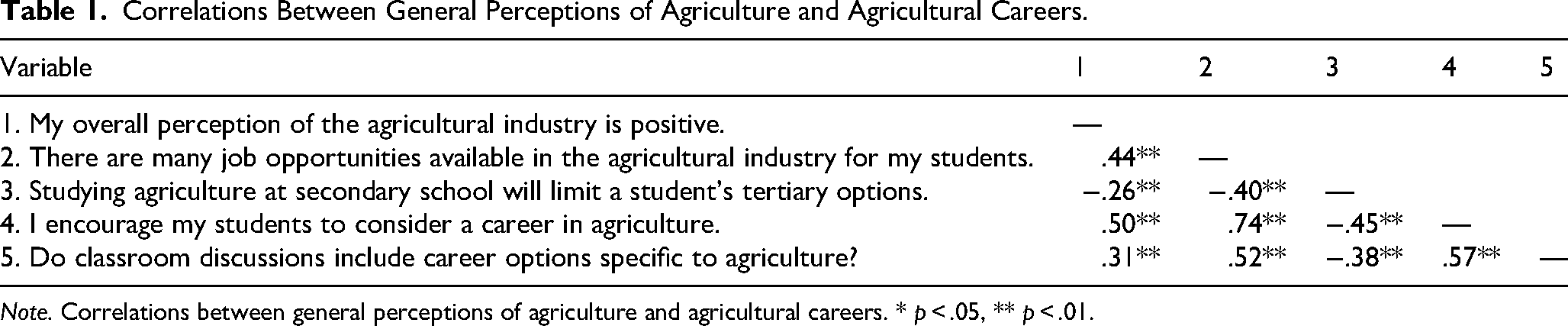
Note. Correlations between general perceptions of agriculture and agricultural careers. * p < .05, ** p < .01.
Overall positive perceptions of the agriculture industry are correlated with favorable views of career opportunities, a lower likelihood of perceiving study pathways as limiting tertiary options, and an increased likelihood of providing career advice related to agricultural careers (Table 1). The strongest relationship regarding agricultural careers and career advice is observed in educators’ understanding of the numerous job opportunities available for their students and the frequency with which they actively encourage students to consider agricultural careers. Building awareness of the diverse and rewarding jobs in agriculture is essential for effective career guidance. There is a significant relationship between encouraging students to consider agricultural careers and discussing these careers, although some variance remains unexplained. This suggests that even educators who actively promote agricultural career exploration may not always integrate these discussions into classroom activities consistently.
Perceptions of Decent Work
In the context of the agriculture industry, educators’ perceptions of decent work reveal several insights. Among the surveyed educators, 46.3% (n = 87) disagreed with the notion that the Australian agricultural sector lacks diversity compared to other industries. Additionally, 42.6% (n = 80) agreed that employers in the Australian agricultural sector listen to and respect the opinions of their workers. Only 13.3% of educators perceived agricultural jobs as posing risks to personal health and safety (n = 25). Furthermore, we found 64.4% (n = 121) of educators viewed Australian agriculture as having a positive and supportive work culture. However, only 42.6% (n = 83) of educators agreed that jobs in agriculture are generally well-paid.
Table 2 provides a correlation matrix illustrating the correlation between decent work questions and correlation between general perceptions of agriculture and agricultural careers questions. Weak correlations were found when exploring various facets of decent work, indicating that educators may perceive certain aspects independently within the agriculture industry. These correlations also failed to significantly predict general attitudes towards agriculture, careers, and study opportunities. Notable relationships include a correlation between perceptions of well-paid jobs and belief in job abundance (r s = .29), suggesting that awareness of diverse career options may influence salary perceptions. Furthermore, a negative correlation was observed between the perception of agriculture as a less diverse employer and encouragement of students to consider agricultural careers (rs = −.27), potentially impacting classroom discussions on career options.
Correlations Between Decent Work, and General Perceptions of Agriculture and Agricultural Careers.
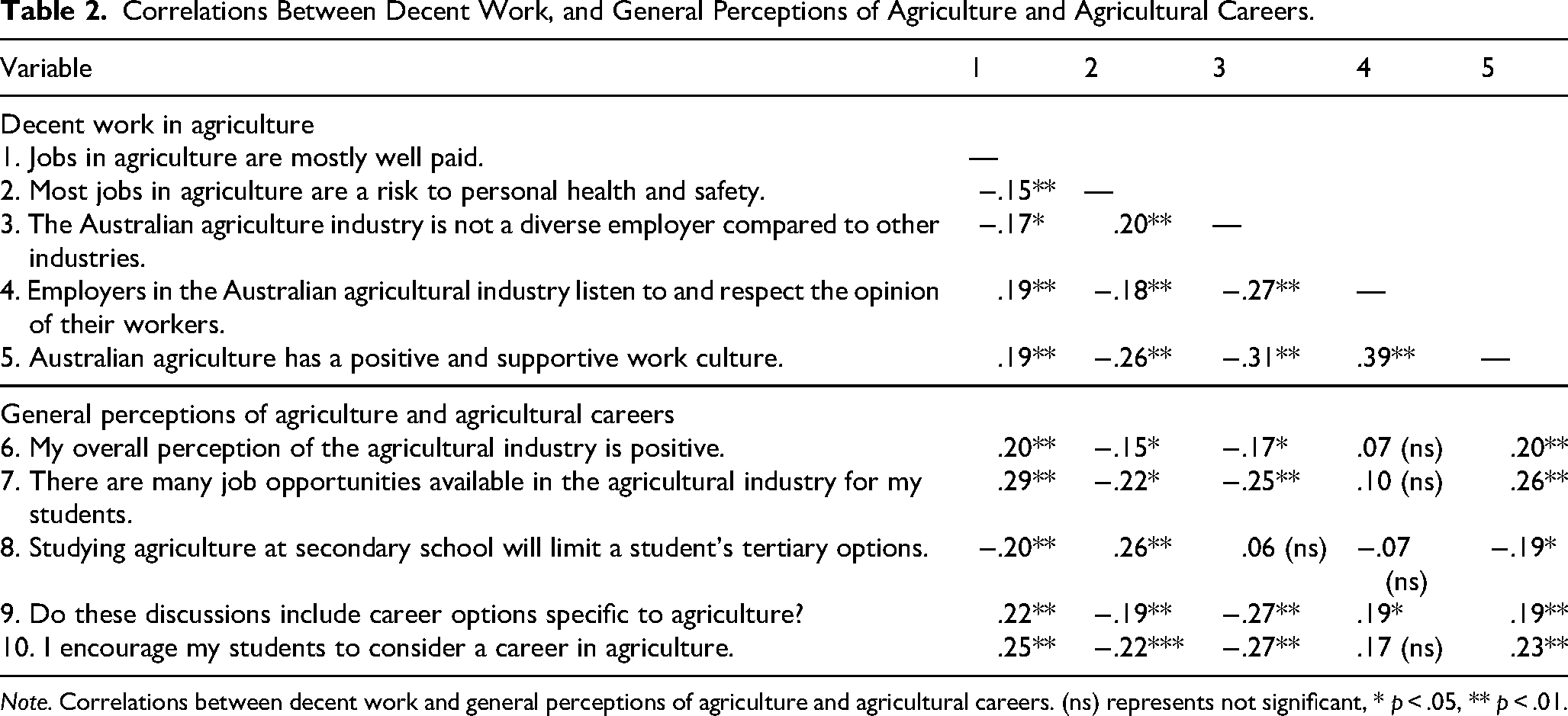
Note. Correlations between decent work and general perceptions of agriculture and agricultural careers. (ns) represents not significant, * p < .05, ** p < .01.
Perceptions of Industry Environmental Management and Animal Welfare Standards
Participants generally held favorable perceptions of animal welfare standards and environmentally sustainable production practices within the agriculture industry. The majority of educators in the current sample agreed that Australian farmers, fishers, and foresters effectively manage their environmental impact (n = 130; 69.2%). Additionally, many educators agreed that most fishers sustainably source their fish (n = 128; 68.1%), and even more agreed that the majority of farmers effectively manage livestock welfare (n = 156; 83%).
Table 3 provides a correlation matrix illustrating that strong correlations were observed among perceptions of agricultural industry environmental management and animal welfare standards, yet these were only modest predictors of educators’ overall attitudes towards agriculture, agricultural education, careers, and careers advice. The relationship between perceptions of fisheries industries’ sustainability and career advice outcomes was weaker compared to assessments of land-based animal welfare standards.
Correlations Between Perceptions of Industry Environmental Management and Animal Welfare Standards; and General Perceptions of Agriculture and Agricultural Careers.
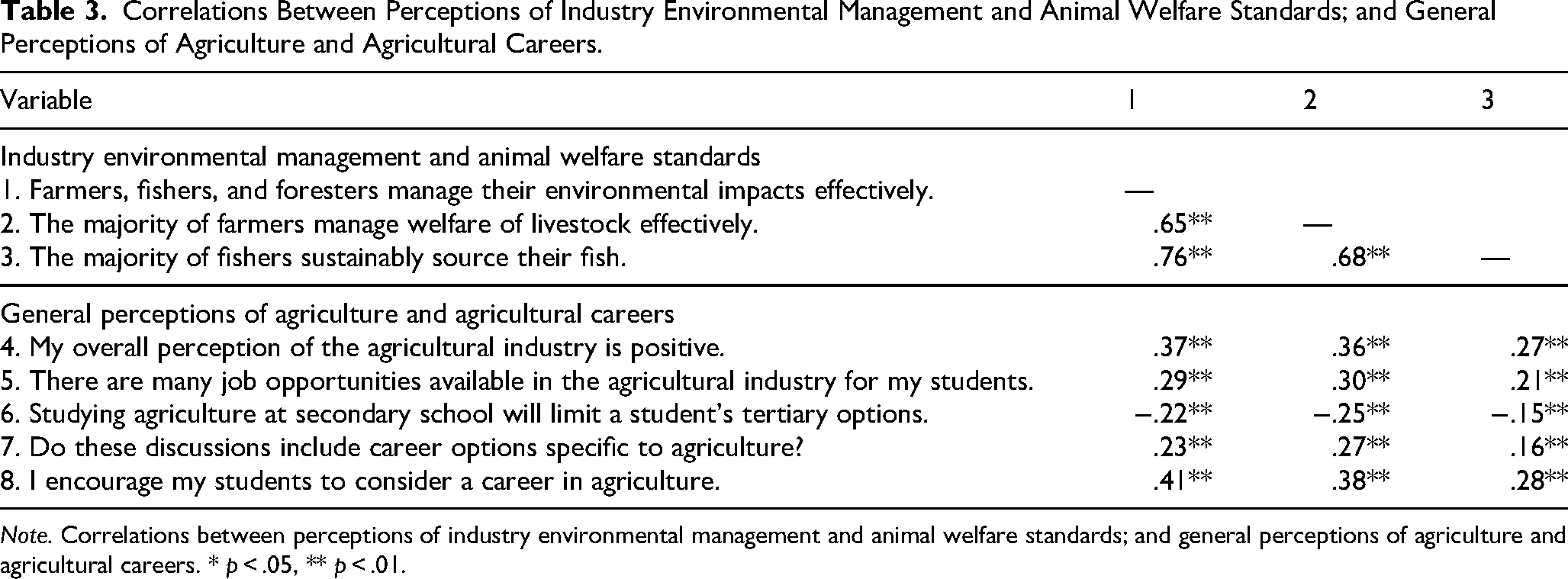
Note. Correlations between perceptions of industry environmental management and animal welfare standards; and general perceptions of agriculture and agricultural careers. * p < .05, ** p < .01.
Perceptions of Agriculture as a Progressive, Future-Focused Industry
Educators had a strong positive response to agriculture being a STEM-based industry that uses evidence to make improvements (88.8%, n = 173). The perception of agriculture's importance for Australia's future was high, with 98.4% (n = 185) of respondents holding this view. When asked about the threat posed by new technologies to the Australian agriculture workforce, only 12.8% (n = 24) of educators agreed.
Table 4 provides a correlation matrix emphasizing STEM underpinnings of agriculture was related to encouraging students to consider a career in agriculture. However, there was no significant relationship between this variable and classroom discussions of career options specific to agriculture. A greater predictor of classroom discussions of agricultural careers, and encouragement for students to consider a career in agriculture was a general perception that agriculture is important for Australia's future.
Correlations Between Perceptions of Agriculture as a Progressive, Future-Focused Industry; and General Perceptions of Agriculture and Agricultural Careers.
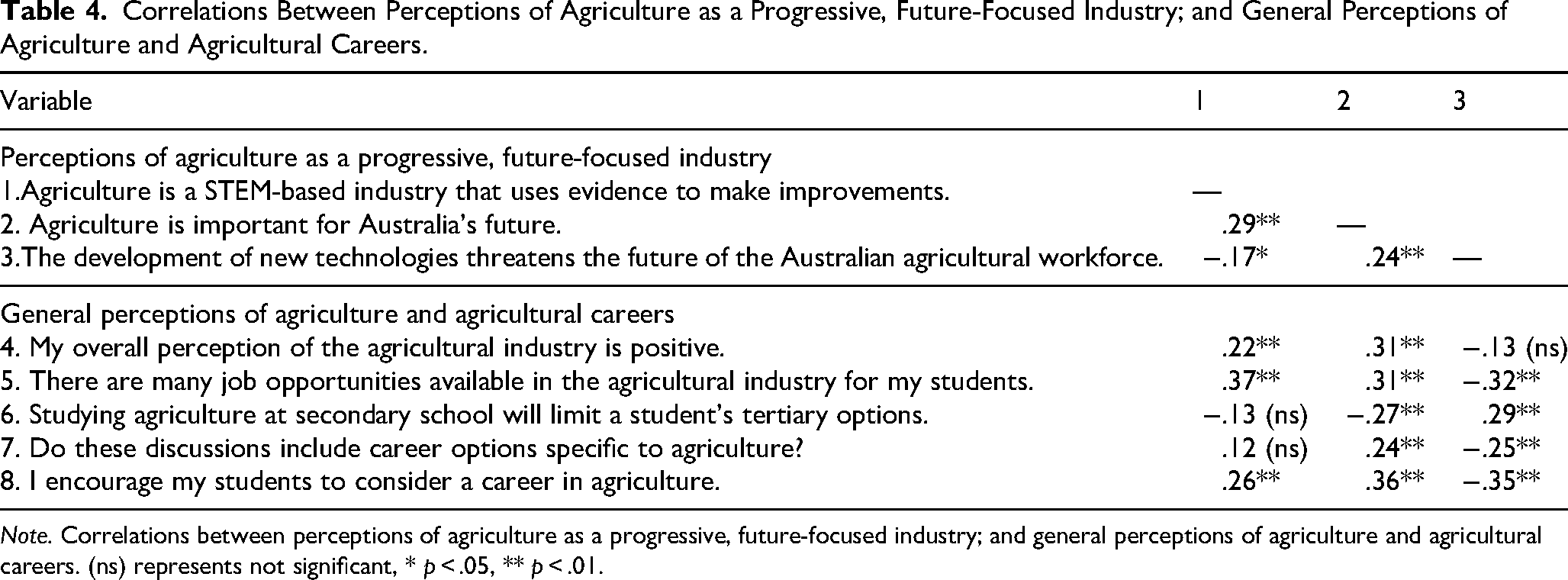
Note. Correlations between perceptions of agriculture as a progressive, future-focused industry; and general perceptions of agriculture and agricultural careers. (ns) represents not significant, * p < .05, ** p < .01.
Limiting Beliefs About Agriculture Jobs
Seven in ten respondents disagreed that working in agriculture requires living in rural areas (n = 133). Additionally, 28.7% (n = 55) of survey respondents believed that all jobs in agriculture are physically demanding, which is quite high considering the diversity of roles that may be office-based. Only a very small number thought that having a career in agriculture meant becoming a farmer (n = 5; 2.7%).
Table 5 provides a correlation matrix illustrating the correlation between responses to questions regarding limiting beliefs of agriculture jobs and correlation between those questions and questions regarding general perceptions of agriculture and agricultural careers. Perceptions of rurality and the limited understanding of agriculture as solely farming careers moderately to strongly related to several negative outcomes. These outcomes include a reduced understanding of the plentiful job opportunities, increased perceptions that studying agriculture would limit tertiary study options, and a reduced likelihood of educators encouraging students to consider a career in agriculture.
Correlations Between Limiting Beliefs About Agriculture Jobs; and General Perceptions of Agriculture and Agricultural Careers.
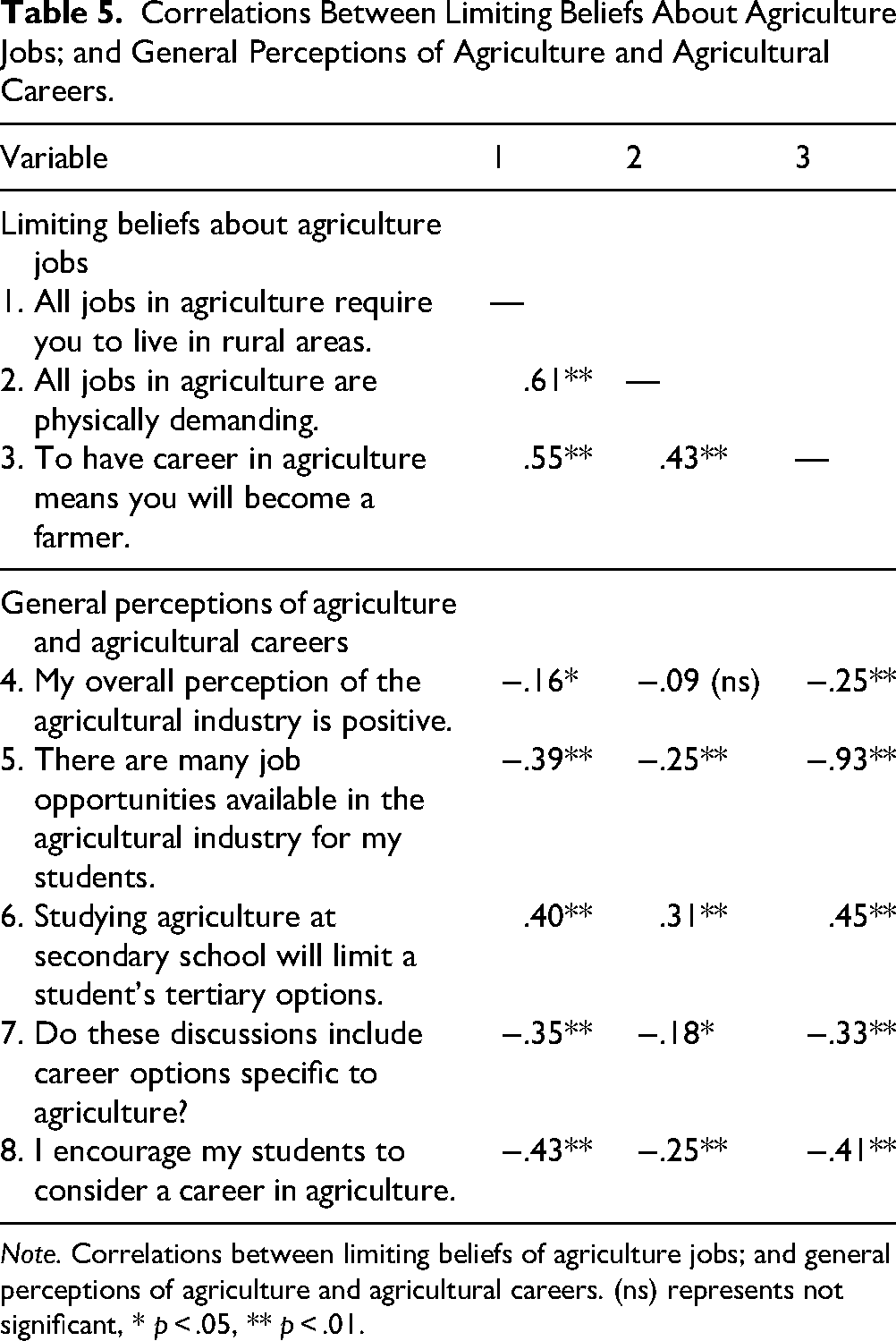
Note. Correlations between limiting beliefs of agriculture jobs; and general perceptions of agriculture and agricultural careers. (ns) represents not significant, * p < .05, ** p < .01.
Confidence in Agriculture Career Discussions
The majority of educators (n = 172, 94.5%) found integrating career education into the classroom valuable. Most participants also felt confident in discussing relevant agricultural jobs and identifying educational pathways for students interested in agriculture (n = 150, 82.4%).
Table 6 provides a correlation matrix illustrating the correlation between responses to questions regarding industry environmental management and animal welfare standards; and correlation between those questions and questions regarding general perceptions of agriculture and agricultural careers. Educators expressed confidence in conducting effective agricultural career discussions with students, linking learning with accurate career information and necessary skills for exploration (Table 6).
Correlations Between Confidence Discussing Agricultural Jobs and Ability to Identify Education Pathways; and General Perceptions of Agriculture and Agricultural Careers.
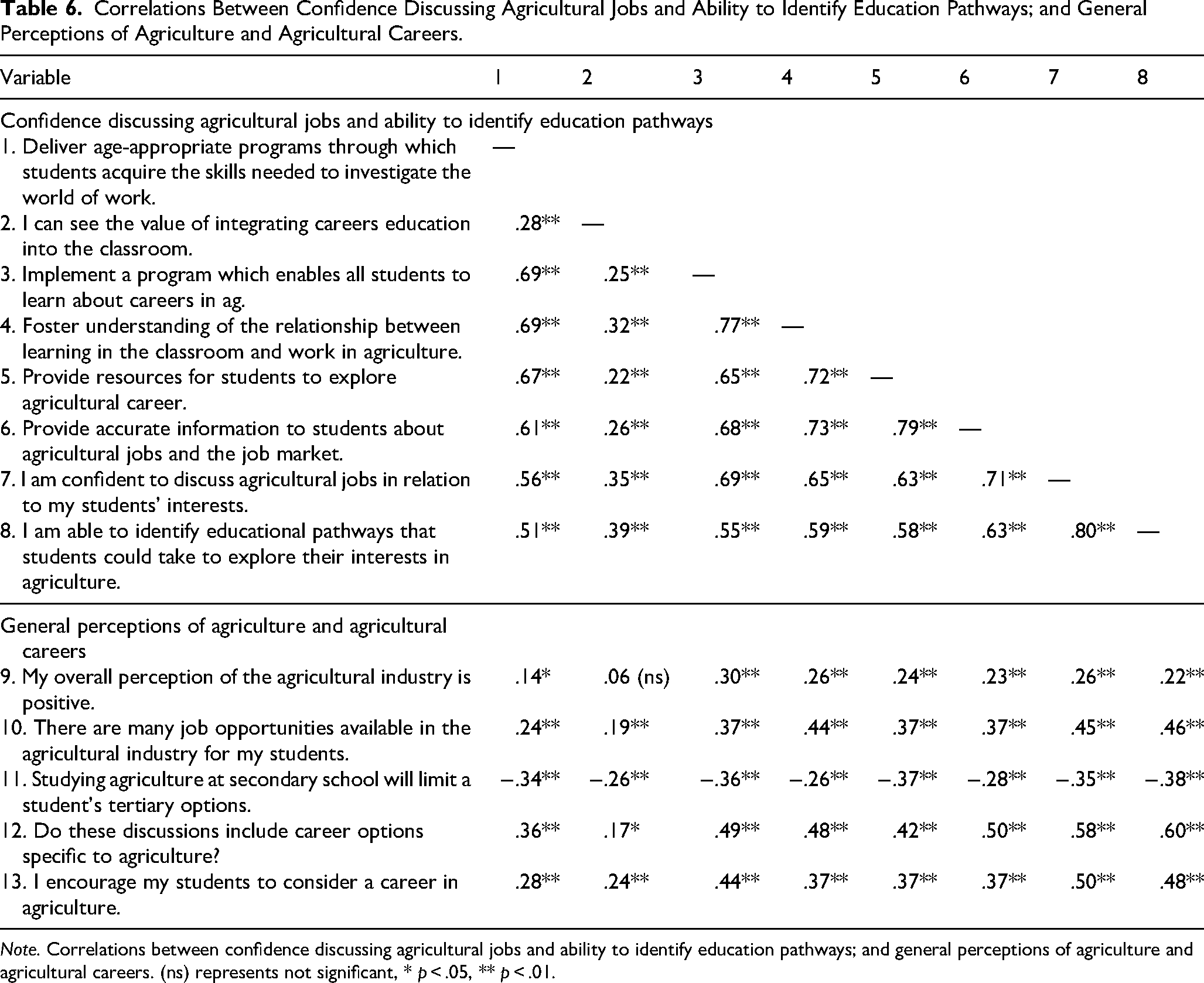
Note. Correlations between confidence discussing agricultural jobs and ability to identify education pathways; and general perceptions of agriculture and agricultural careers. (ns) represents not significant, * p < .05, ** p < .01.
While the strongest predictor of encouraging students to consider a career in agriculture was awareness of the many diverse job opportunities in the agriculture industry (rs = .74, p < .01), it is the educators confidence in their ability to connect these many opportunities to individual student interests (r = .58, p < .01) and demonstrate interest-based career development pathways (r s = .60, p < .01) that increases the exposure they provide to students through more frequent agriculture career discussions.
Discussion
The aim of this research is to enhance the discourse on agricultural education and workforce development by investigating key outcomes necessary for improving school-based career advice in agriculture. We explore general perceptions of agriculture, career prospects within the industry, study pathways, and methods for encouraging students to pursue agricultural careers. By addressing the research questions, this study provides valuable data through direct survey results and correlations between responses. The following discussion focuses on these findings, expanding and contextualizing them to promote informed classroom-based agricultural career development and decision-making, as well as educator self-efficacy. Additionally, this discussion incorporates theoretical underpinnings and recommendations for future practice, offering a comprehensive approach to enhancing agricultural career education.
Agriculture Career and Study Pathways
Overall positive perceptions of the agriculture industry are related to positive perceptions of career opportunities, lower likelihood of reporting study pathways as limiting tertiary options, and an increased likelihood to give career advice related to agricultural careers. The most notable, and strongest relationship in terms of agricultural careers and careers advice is educators’ understanding of the many job opportunities available that are suitable for their students and the frequency with which educators actively encourage students to consider agricultural careers. Building awareness of the diversity and abundance of rewarding jobs and higher education study pathways available in agriculture (Wu et al., 2019) is essential to the delivery of agricultural careers advice (McDonald et al., 2022b). In terms of considering encouragement versus discussion of agricultural careers, there is a large significant relationship between these two variables. However, some variance remains unexplained, indicating that even those educators who are actively encouraging students’ agricultural career exploration may not be taking every opportunity to integrate agricultural careers into classroom discussions.
Decent Work in Agriculture
Understanding decent work in agriculture is crucial for educators when delivering career education to students, as it encompasses various aspects of employment that contribute to individuals’ well-being and dignity at work. Most decent work variables exhibited weak correlations in our study, suggesting that educators perceive certain aspects of decent work in agriculture independently. These correlations were also weak or insignificant predictors of educators’ general attitudes towards the agriculture industry, careers, and study opportunities. Notably, perceptions of well-paid jobs in agriculture correlated positively with perceptions of abundant job opportunities (rs = .29), indicating that knowledge of diverse job options influences perceptions of good pay. Limited understanding of the breadth of agricultural careers may hinder educators’ ability to challenge stereotypes of poor work culture, including pay and conditions (Voconiq, 2022). Another notable interaction was between perceptions that agriculture is not a diverse employer compared to other industries (r s= −.27), potentially affecting student encouragement or the frequency of agricultural career discussions in the classroom. The greater educators’ perceptions of agriculture as an industry with diverse employers, the more likely educators were to discuss career options. Alternatively, those who are more frequently discussing career options with their students perhaps feel comfortable doing so as they see the industry as employing people from diverse backgrounds and career interests that are reflected in their classroom.
Interventions such as targeted educational programs, mentorship opportunities, and outreach initiatives can help address this perception and encourage diversity in agriculture (Cosby et al., 2022a; Geza et al., 2021; LaVergne et al., 2012), encompassing workers, employers, and occupations (Wu et al., 2019). Overall, the weak relationships between decent work variables and educators’ attitudes towards agriculture and agricultural careers may suggest that while these factors are important for the next generation's career choices and job satisfaction in later life stages, other aspects of work in agriculture or the industry in general are more influential on educators’ delivery of agriculture career advice.
Environmental Sustainability in Agriculture
Strong correlations were observed between each of the variables on perceptions of industry environmental management and animal welfare standards, and yet these were only small to medium predictors of educators’ general attitudes regarding agriculture, agricultural education and careers, and careers advice. The relationship between perceptions of the sustainability of fisheries industries and the career advice outcome variables were weaker than appraisals of land-based animal welfare standards. Consumers are increasingly valuing the origin of food, environmental stewardship and animal welfare (Buddle & Bray, 2019). As the next generation of consumers, students should be educated about the agricultural industry's efforts to improve these areas (Manning et al., 2021) It is essential for teachers to convey this information, as holding positive views of the industry's environmental sustainability can encourage students to consider careers in agriculture. However, while these positive appraisals are somewhat important, they don't always translate to attitudes about career or study opportunities, nor do they consistently influence classroom discussions on careers in agriculture.
STEM Careers and the Future of Agriculture
Emphasizing the STEM underpinnings of agriculture was related to encouraging students to consider a career in agriculture. However, there was no significant relationship between this variable and classroom discussions of career options specific to agriculture. It may be that a STEM-based perspective of the agriculture industry, does not necessarily assist an educator of subjects other than STEM, including Human Society and its Environment (HSIE), English, Creative Arts or Languages with how to frequently integrate these discussions into their subject areas. A greater predictor of classroom discussions of agricultural careers, and encouragement for students to consider a career in agriculture was a general perception that agriculture is important for Australia's future. Interestingly, the evidence would also suggest it is important to ensure positive impacts of digital agriculture and ag-tech on the world of agricultural work are understood by educators (Cosby et al., 2019, 2024; Manning et al., 2022a; Stephens & Ballard, 2021; Vallera & Bodzin, 2019). Furthermore, while the breadth of agriculture STEM careers present an excellent opportunity to improve educators perceptions of plentiful job opportunities on offer in agriculture, future resources are also needed on the diversity of interests beyond STEM that can be explored in agriculture careers (Consentino et al., 2023; McDonald et al., 2022b; Wu et al., 2019).
Misconceptions of Agriculture Careers
Despite the geographic diversity of the Australian agricultural workforce, many educators in this study held misconceptions of the diverse opportunities within agriculture, which can impact their support for students pursuing agricultural careers. For example, in terms of understanding of the geographic diversity of the Australian agriculture workforce, 32.9% of the agricultural workforce from Australian states live in major cities, with the remainder residing in Inner Regional or Remote/Very Remote Australia (Bassett et al., 2022). While perceiving all jobs in agriculture as physically demanding could impact educators endorsement of a career in agriculture, perceptions of rurality and limiting understanding of agriculture as solely farming careers, that were moderate to strongly related to (a) reduced understanding of plentiful job opportunities, (b) increased perceptions that studying agriculture would limit tertiary study options, and (c) reduced likelihood of educators to encourage students to consider a career in agriculture (Table 5). To improve educators’ perceptions and willingness to advocate for agricultural career opportunities to their students, future agricultural career education interventions need to include a range of careers not tied to rural locations. Many students are unaware of the wide range of agricultural jobs, which may be linked to the fact that these jobs aren't well categorized by the government (Cosby et al., 2022a; McDonald et al., 2022b).
Theoretical Underpinning and Career Educator Self-Efficacy
Our investigation thoroughly explored school educators’ perceptions of agriculture, prospects in agricultural careers, study pathways, and strategies for motivating students to pursue careers in this field. Effective guidance in agricultural careers demands an in-depth understanding of multiple factors, encompassing industry perceptions, environmental management, decent work standards, and educator self-efficacy. Farmer, researcher, and agronomist were the most frequent responses by study participants when asked to name three agricultural careers. These responses highlight the importance of broadening career educators’ understanding of agricultural career opportunities, given their role in shaping students’ perceptions and career planning. Enhancing school-based career educators’ self-efficacy and promoting awareness of the benefits of decent work in agriculture can encourage students to explore and plan toward agricultural careers.
Social Cognitive Career Theory (SCCT; Lent et al., 1994, 2000) provides a strong framework for understanding how career educators’ attitudes, beliefs, and actions are shaped by factors such as self-efficacy and outcome expectations. SCCT has been the foundation for numerous education, workforce, and agricultural studies in both Australia (Black et al., 2024; McDonald et al., 2022a) and overseas (Henry et al., 2014; Kim et al., 2022), demonstrating its broad applicability in addressing career development challenges within the wider agricultural sector and the importance of self-efficacy. These studies included a focus on technology acceptance by cotton farmers (McDonald et al., 2022a), Australian agricultural mechanics (Black et al., 2024), and bolstering agricultural literacy among students (Henry et al., 2014; Kim et al., 2022). Additionally, when investigating high school technology teachers’ perceptions of agriculture, it was direct experiences with the agricultural sector that was shown to enhance their self-efficacy in endorsing agricultural careers to students (Cosby et al., 2024).
Overall positive perceptions of the agriculture industry are related to positive perceptions of career opportunities, lower likelihood of reporting study pathways as limiting tertiary options, and an increased likelihood to give career advice related to agricultural careers. The most notable, and strongest relationship in terms of agricultural careers and careers advice is observed for educators understanding of the many job opportunities available that are suitable for their students and the frequency with which educators actively encourage students to consider agricultural careers. Building awareness of the diversity of rewarding jobs that exist in agriculture is essential to the delivery of agricultural careers advice. In terms of considering encouragement versus discussion of agricultural careers, there is a large significant relationship between these two variables. However, some variance remains unexplained, indicating that even those who are actively encouraging students’ agricultural career exploration, may not be taking every opportunity to integrate agricultural careers into classroom discussions.
Ensuring educators are aware of a diverse range of jobs, and how each career interest area can correspond to a career in agriculture is essential for agriculture careers exploration to be seen as relevant for all subject disciplines. To improve agriculture career education outcomes, careers advisors need to be able to identify a suitable potential career option to discuss with every student and be able to discuss how an interest in one career or industry can transfer to the world of agricultural work (McDonald et al., 2022b).
Conclusion
This study has contributed significantly to our understanding of the challenges and opportunities in agricultural education and workforce development. By addressing the research questions, the study has provided valuable insights into the perceptions and attitudes of school educators, which can inform strategies for improving career advice in agriculture. The findings underscore the importance of promoting awareness of industry advancements, addressing misconceptions, and fostering a positive perception of agricultural careers through effective classroom career education.
The agricultural industry is undergoing a digital transformation, developing new careers and the skills required. To ensure the agricultural industry can attract and retain a highly skilled workforce, it is vital that the next generation is aware of the variety of career opportunities, has a favorable perception of the sector as an employer of choice, and can connect their personal interests, strengths, and values to a career in agriculture. Crucial to improving and increasing the perception of careers in agriculture are educators who have the self-efficacy to provide agriculture career advice in secondary schools.
Footnotes
Acknowledgements
This journal article contains excerpts from the Cultivating Futures Project report titled “Cultivating the next generation: The role of school-based educators in promoting agricultural careers” and is published with permission from AgriFutures Australia.

Ethical Approval and Informed Consent Statements
The study was conducted in accordance with the National Statement on Ethical Conduct in Human Research (2018), and approved by Human Research Ethics Committee of CQUniversity Australia (Approval Number 24295, 15/05/2023).
Funding
The author(s) disclosed receipt of the following financial support for the research, authorship, and/or publication of this article: This research was funded by the Australian Government, Department of Agriculture, Fisheries and Forestry, Community Perceptions and Worker Experiences Research program undertaken by AgriFutures Australia. Grant number PRO-017397.
Declaration of Conflicting Interests
The authors declared no potential conflicts of interest with respect to the research, authorship, and/or publication of this article.