




Abstract
Career development learning is increasingly emphasized as a curricular strategy to prepare students for their post-compulsory school transitions to further study or employment. Educators require career development frameworks and resources to support students’ reflective learning. The present research tested a hypothesized Career Education and Development Framework (CEDF) comprising eight factors: The understanding of self; opportunities; influences; goal setting; decision-making; taking action; reflecting/reviewing; and confidence. The hypothesized framework was tested by confirmatory factor analysis (CFA) using data from two independent studies with samples (n = 567, n = 272) of senior secondary school students from different schools and jurisdictions. In addition to acceptable overall fit, invariance testing revealed consistency across gender on most factors.
While there is evidence of career education on students’ learning and development (Berger et al., 2019; Hooley et al., 2011; Lapan et al., 1997; McWhirter et al., 2000; Whiston et al., 2017), successive reviews of career education in schools have been critical of the lack of a consistent curricular framework and learning resources (Education Council, 2020; Organisation for Economic Cooperation & Development, 2002). Gonski and Shergold (2021) stated, ‘in the absence of help with career development, many students are at significant risk of embarking on educational or training courses they either fail to finish or take much longer to complete than is necessary’ (p. 17). Furthermore, the Australian Government's stated vision is that “every school student will have access to high-quality career education” because it ‘builds resilient individuals who can adapt to the evolving nature of work and manage multiple careers in their lifetime, according to their circumstances and need’ (DEET, 2019, p. 5). These reviews necessitate research and development to improve career education in Australian schools. The present research provides the first evidence for a novel Career Education and Development Framework (CEDF) that may be deployed as a curricular conceptual framework and a self-report tool for use by senior secondary school teachers and students.
Initial development of the CEDF
Career development has been defined by the Career Industry Council of Australia (CICA, 2007, p. 27) as, ‘the process of managing life, learning, work, leisure and transitions across the lifespan in order to move towards a personally determined future’. The definition for career education adopted by the Australian Education Council in 1992 and slightly modified in the more recent Australian Government National Career Education Strategy (DEET, 2019: 3) is, ‘The development of skills, attitudes and understanding through a planned programme of learning experiences in education and training settings that assist students to make informed decisions about school and post-school options and directions, to enable effective participation in working life.’
There have been three career education frameworks in Australia during the past 40 years prior to the CEDF that is the foundation of the present research. In 1992, the national working party delivered the document Career Education in Australian Schools: National Goals, Students, School and System Outcomes and Evaluative Arrangements (AEC, 1992). The curriculum framework adopted was based on four distinct but interrelated student tasks proposed in the United Kingdom in 1977 by Law and Watts (1977, p. 8), ‘in our view there are four career education tasks to be accomplished with each student facilitating the development respectively of self-awareness, opportunity awareness, decision learning and transition learning’. To date, the framework has not been tested empirically.
In 2003, the Ministerial Council for Employment, Education, Training and Youth Affairs (MCEETYA) commissioned the company, Miles Morgan, to develop a new framework based predominantly on the Canadian Blueprint for Life/Work Designs (Patton, 2019). The framework adopted a modified form of the three learning areas and the 11 competencies from the Canadian version which were an adaptation of the original American version of the framework. It was named the Australian Blueprint for Career Development (ABCD; MYCEETYA, 2010) and has been revised by the National Careers Institute (NCI, 2022). Hooley et al. (2012), note that ‘the different versions of the Blueprint have not been derived from any empirical analysis of the process of career management’ (p. 5) and ‘if the model is to influence policy-makers in a sustained way, it is important that this kind of empirical work is undertaken’ (p. 13). Despite strong encouragement from the federal government, neither the AEC nor ABCD was adopted by the jurisdictions responsible for its implementation, the individual State Departments of Education (Patton, 2019).
The third career education curriculum framework is the Victorian Careers Curriculum Framework (VCCF; DET, 2021) which is based on the ABCD but changed the three learning areas to three stages, the 11 competencies to 15 learning outcomes and the career learning model to one of six steps. To date the framework has not been tested empirically.
The CEDF is the fourth framework. This framework was initially developed by six career practitioners, with a combined experience of over 50 years in the industry, for use with individuals in career planning sessions McAlpine and McCowan (2007). McCowan and Nguyen (2014) subsequently modified the framework to become a curricula framework that included three understanding elements (self, opportunities and influences) and four action elements (goal setting, decision-making, taking action and reflecting/reviewing). McCowan et al. (2017) used the CEDF to develop a comprehensive set of aims and student competencies for different stages of schooling as well as over 40 example lesson plans across years 7 to 12.
Career constructs
The CEDF needed to be aligned with relevant theory and research. Numerous career theorists over time have identified through their respective research, the career and vocational constructs in common use in the careers field (Larson et al., 2013; Lent & Brown, 2006; Swanson & D’Archiardi, 2005). Their lists of constructs in common use are representative and allow comparisons to be made with the components and constructs of the CEDF.
Researchers such as Lent and Brown (2006) and Rottinghaus and Miller (2013) assembled their lists of commonly used constructs into integrated frameworks based on theories such as the Social Cognitive Career Theory (SCCT) of Bandura (1977, 1986) and Integrated Personality Theory (IPT) of Barenbaum and Winter (2008), respectively. Marciniak et al. (2020b) conducted a comprehensive review of the use of career development constructs such as, career maturity, career readiness and career adaptability that have been used to measure career preparedness which they define as ‘The attitudes, knowledge, competencies and behaviours necessary to deal with expected and unexpected career transitions and changes’ (Marciniak et al., 2020b, p. 2). Based on their review, they developed an organizing framework that resembles those earlier frameworks by Lent and Brown (2006) and Rottinghaus and Miller (2013) but also included an emphasis on Career Construction Theory (CCT; Savickas, 2005).
Revised CEDF
After examination of the 17 constructs revealed by Larson et al. (2013), 16 have corresponding constructs in the CEDF, with much overlap occurring, but the construct of optimism/confidence was not contained in the CEDF. Consequently, an eighth construct/factor Confidence was added to the revised CEDF to be tested in the presented research.
The core components of career preparedness derived by Marciniak et al. (2020b) reflect the major components of the revised CEDF namely: Understandings (knowledge/competencies), actions (behaviours) and attitudes (attitudes). These components also reflect the ‘development of skills, attitudes and understanding’ stated in the national definition of career education (DEET, 2019, p. 3). The framework was amended to accommodate the concepts used in the revised CEDF and the modified form is presented in Figure 1. Note that this model has been influenced by the Systems Theory Framework (STF) of career (Patton & McMahon, 2014) in that the predictors, influencers, components and outcomes all come together to form a dynamic system.
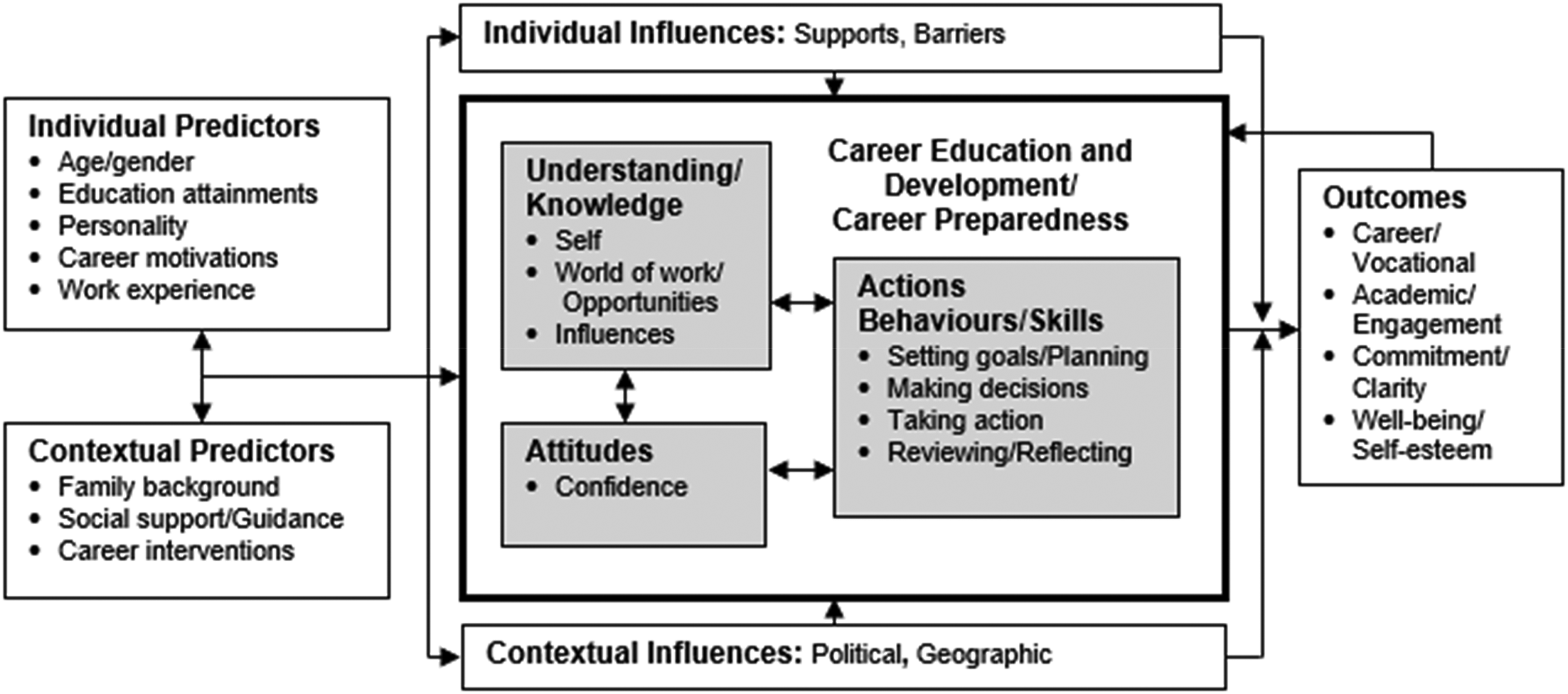
Conceptual model of the Career Education and Development Framework (CEDF) adapted from Marciniak et al. (2020b).
The revised CEDF incorporates activities and learning that transcend other areas of student development and learning, as it not only contains a cognitive function, but also behavioural, physical and psycho-social functions. Students not only require awareness of their own personal values and the ability to self-assess, but also need to know how to obtain accurate knowledge of the world of work and relevant opportunities. They also need the capacity to make sound choices, if they are to ensure successful applications and transitions beyond compulsory schooling. Moreover, students need to learn from these actions and choices. All this happens in the context of the predictors, influences, barriers and outcomes of the outer sub-system of the revised CEDF.
Indicators of the CEDF factors
For schools introducing a career education and development programme based on the revised CEDF, a self-report tool is needed to assist in determining the students’ career understandings, actions and attitudes in accordance with the inner components of the revised CEDF. The self-report results could be used to assist individual students better understand their own career development. The same measure could be given before and after any career curriculum intervention to establish if a student's level of career development had advanced as a result of the intervention and establish the value of the intervention in a similar way that Berger et al. (2019) used the Career Decision-Making Self-Efficacy Scale (CDMSES). The results from the scale scores could also be used in a career curriculum intervention or target the intervention to one or more of the three components and/or the eight constructs of the revised CEDF.
Although research has shown that career development is most meaningful when it is integrated with curricula (Hooley et al., 2011; Lapan et al., 1997), career measures tend not to reflect curriculum frameworks that educators have developed to guide their career education and development programmes and practices. Instead, measures tend to focus on specific vocational and career constructs which are being addressed within programmes and practices such as self-esteem (Rosenberg, 1965); self-efficacy (Chen et al., 2001); work values (Pryor, 1983); career decision-making self-efficacy (Betz et al., 1996); decision difficulties (Gati et al. 1996; Sampson et al., 1996); career adaptability (Savickas & Porfeli, 2012); career exploration (Stumpf et al., 1993); career interests (Athanasou, 1988); and outcomes and expectations (McWhirter et al., 2000).
An exception to this trend is the Career Resources Questionnaire-Adolescents (CRQ-A) developed by Marciniak et al. (2020a) for use with adolescents, which was adapted from the adult Career Resources Questionnaire and based on their work with adolescents on career preparedness. However, CRQ-A was developed in a country where the major educational course decision is made in Grade 9 (aged 14 years) and consequently, the key construct of career decision-making is not included in their measure. Another exception is the measure developed in the United Kingdom by Dodd et al. (2021), the Student Career Readiness Index (SCRI) which is a single-factor scale based on a blend of existing career development frameworks and the CDMSES (Betz et al., 1996). They developed this single-factor measure to ascertain the impact that the career education and development programmes had as a result of the increase in career education generated by the introduction of the Gatsby Benchmarks (Dodd et al., 2021).
Some of the commonly used measures have multiple domains of focus, such as the Childhood Career Development Scale (CCDS; Stead & Schultheiss, 2010) based on the Career Development Theory of Super (1990). The CCDS contains 52 items and includes 8 dimensions from Super's model (1990) but not 3 of the constructs included in the more recently developed, revised CEDF, namely influences, decision-making and reviewing/reflecting. The Career Development Inventory, Australian, Short Form (CDI-A-SF; Creed & Patton, 2004) includes measures of self-understanding, knowledge of the world of work, decision-making, career development attitude and some aspects of taking action but not three of the constructs in the revised CEDF (i.e. understanding influences, goal setting and reviewing/reflecting).
This brief overview shows that researchers can draw on a breadth of measures that assess various facets of CED. However, this means that there can be much overlap in career constructs sometimes causing confusion; many constructs can be assessed using different measures indicating a lack of consensus on how constructs can be operationalized; many measures assess a targeted dimension (e.g. attitudes), while omitting other relevant facets (e.g. behaviours); and no existing measure captures a sufficiently broad set of the revised CEDF components of understanding, actions and attitudes. As a result of disparate measures, a range of measures would be needed by researchers and practitioners to assess the breadth of CED (Marciniak et al., 2020b).
Present research
The present research involved two studies to test the hypothesized CEDF's eight factors: The understanding of self, opportunities and influences; the behaviours of goal setting; decision-making; taking action; reflecting/reviewing; and the attitude of confidence. The aim of Study 1 was to conduct the initial test of the hypothesized CEDF, its eight factors and their three manifest indicators. The aims of Study 2 were to test the model again with a different sample of students and to explore correlations between its factors and measures of self-efficacy and outcome expectations.
Study 1
Method
Participants
The sample for Study 1 was n = 567 students from Grades 10, 11 and 12 (aged 15, 16 and 17, respectively) in four non-government schools across Australia. Participation by girls was n = 238 (42%) while participation by boys was n = 329 (58%). Participation by school grade was Grade 10, n = 299 (53%); Grade 11, n = 214 (38%); and Grade 12, n = 54 (9%). Participation was spread across the four schools: School 1, a provincial school in inland Queensland had n = 134 (24%) participants; School 2, a provincial school in coastal Queensland had n = 215 (38%) participants; School 3, a rural school in central-western New South Wales had n = 104 (18%) participants; and School 4, a suburban school in Adelaide, South Australia, had n = 114 (20%) participants. The Index of Community Social-Educational Advantage (ICSEA; ACARA, 2020) values for the respective schools are, 1019, 1041, 1070 and 1078 which indicates that the four schools have ICSEA values that are close to the Australian ICSEA value of 1000.
Measures
Development of the CEDS-Senior
An empirical representation of the CEDF was constructed as the Career Education and Development Scale-Senior (CEDS-Senior). The scale's development used a similar process to the six steps recommended by Dodd et al. (2021), namely: Identification of outcomes and review of existing measures; mapping of frameworks and generation of items; expert review; cognitive testing with the intended users; gathering pilot data and exploring the factor structure; and using confirmatory factor analysis (CFA) to finalize the instrument.
The items used in a selection of extant instruments (viz. Career Exploration Survey, Stumpf et al., 1993; Career Thoughts Inventory, Sampson et al., 1996; and CDI-A-SF, Creed & Patton, 2004)were examined and allocated in a revised form to one of the eight constructs of the revised CEDF. For example, the item relating to ‘How much time and thought have you given to choosing subjects and choosing a career in general?’ from Study 1 section of the CDI-A-SF (Creed & Patton, 2004) was amended to become the item ‘I usually consider my course/career options carefully before making decisions’.
The other items reflected the aims competencies and lesson content in the revised CEDF. For example, in a study by McCowan et al. (2022, p. 111), the activity suggested for Goal Setting for Grade 10 was, ‘To set short/medium/long term career goals’ which translated to item, ‘My career/course plans contain short-, medium- and long-term goals’. Likewise, the activity suggested for Opportunities for Grade 11 McCowan et al. (2022, p. 112) was ‘To identify all likely post-school pathways’, translated to the item; ‘I have a good understanding of the many different career pathways open to me’.
Drafts of the list of items were forwarded to three school-based career practitioners who were each asked to conduct interviews with three parents and lead a focus group with a cross-section of five, age-appropriate students for comment on the suitability and readability of the items in a draft version of the CEDS-Senior as a fair representation of the CEDF. Modifications were based on the collated comments from the parents. For example, the draft item; ‘I have a good understanding of the thinking of my parents in relation to future courses or careers which might suit me’, was amended to ‘I have a good understanding of my parent's views regarding future course/careers that might interest me’. Revisions were also made based on the collated comments from the students. For example, an item changed from, ‘I am able to construct a high-quality resume and cover letter’ to ‘I am able to construct a competitive resume and cover letter’.
The CEDS-Senior with its 24 items representing the 8 factors of the revised CEDF is listed in Table 1 in the Results section as the table also includes factor loadings for each item. A consistent 5-point Likert-type scale was used throughout the CEDS-Senior. Participants responded to a 5-point Likert scale ranging from strongly disagree (1) to strongly agree (5). Higher scores in each of the subscales are reflective of the student's perception of his or her capability to perform the tasks pertinent to that subscale.
Items and their standardized factor loadings for study 1 and study 2.
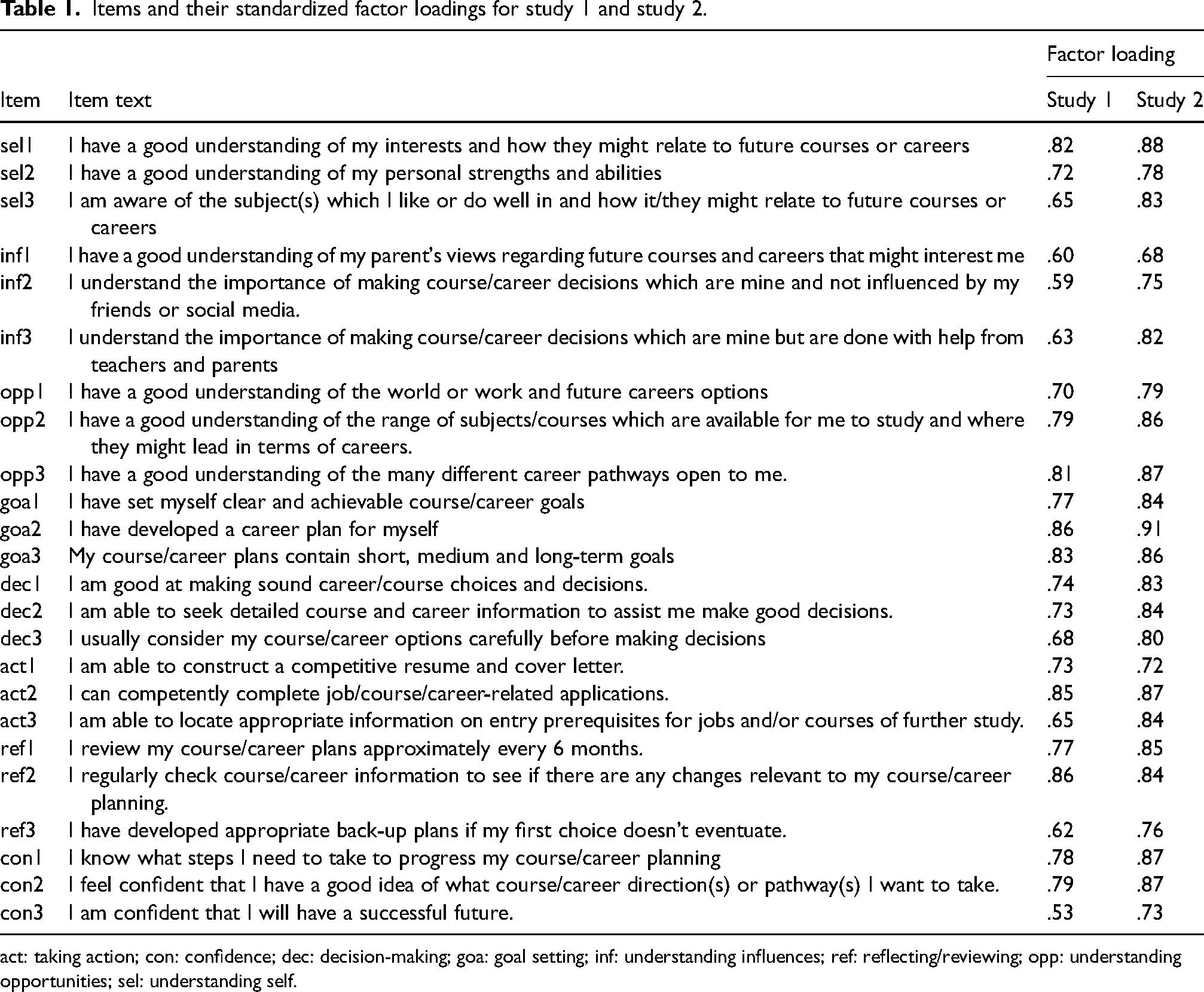
act: taking action; con: confidence; dec: decision-making; goa: goal setting; inf: understanding influences; ref: reflecting/reviewing; opp: understanding opportunities; sel: understanding self.
Procedure
Ethics approval was sought from and granted by the Human Research Ethics Committee (HREC) of the University of Southern Queensland [Approval No. H18REA258] and the parents association and management team of each of the four schools involved across Australia. Sufficient paper copies of the CEDS-Senior were posted to the career guidance counsellor in each school to enable all students in Grades 10, 11 and 12 to participate if they had appropriate parental permission. The school guidance counsellors in each school held training sessions with the relevant teachers on how to administer the scale. Alternative arrangements were made by each school for non-participants but these were not needed as all students had the appropriate parental permissions and were willing to participate. The teachers who agreed to participate administered the scale within class time and collected the completed scales which were posted back for data entry. Teachers reported the average time to complete the scale was approximately 10 minutes.
Plan for analysis
The aim of the research was to test a hypothesized model (Hurley et al., 1997; Kahn, 2006). We subjected the hypothesized 8 correlated factors model comprising 24 items (with 3 items per factor and all factors with covariances) to CFA using IBM SPSS AMOS V18 (Arbuckle, 2009) with maximum likelihood estimation. To appraise fit of the models, we used chi-square test, χ2/df < 3, and a combination of CFI > .90, RMSEA < .10 and SRMR < .08 (Mvududu & Sink, 2013) and used Δχ2 and ΔCFI ≤ .01 to compare models (Cheung & Rensvold, 2002). First, we tested the model with all cases of data to explore overall fit, then tested models for males and females separately, and then tested for model invariance across gender.
Results
Model fit
First, we tested the hypothesized eight correlated factors model and found acceptable fit to the data with all cases used, χ2(df) = 716.575 (224), χ2/df = 3.199, CFI = .924, SRMR = .061, RMSEA = .062 (.057, .067). The factor loadings for each of the 24 items are presented in Table 1. All items’ loadings on their respective factors were acceptable and ranged from .52 to .86. Analysed separately for gender, the model for boys had acceptable fit, χ2(df) = 515.412 (224), χ2/df = 2.301, CFI = .927, SRMR = .063, RMSEA = .063 (.056, .070). Similarly, the model for girls had acceptable fit, χ2(df) = 464.046 (224), χ2/df = 2.072, CFI = .906, SRMR = .069, RMSEA = .067 (.059, .076). The CFI value for girls’ model was evidently lower than that for boys’ model; nonetheless, overall, the models were acceptable.
Next, we tested for invariance between the genders. Table 2 shows the indices of fit. Configural invariance (M1) was evident in acceptable model fit. We used the AMOS multigroup function (Gaskin, 2022) to test for metric invariance and found acceptable fit (M2) on the χ2/df, CFI, SRMR and RMSEA indices. Although there was a significant difference between the unconstrained (M1) and constrained (M2) models using the Δ χ2(df) test, the ΔCFI = .003 was less than .01 criterion (Cheung & Rensvold, 2002). We explored potential sources of variance by comparing items’ regression weights for boys and girls. The constraints for items 21 (M3), 20 (M4) and 18 (M5) were sequentially removed because their differences were relatively high. All models had acceptable fit; however, the final model (M5) with no constraints on items 20 and 21 on the Reflection factor and 18 on Action, was not significantly different from the configural model (M1) using the Δχ2(df) test and ΔCFI ≤ .01 criterion (Cheung & Rensvold, 2002). These alternative restrictive models were not superior in fit compared to the initial metric model (M2) and therefore made no amendments to the model. We concluded that the model evinced partial metric invariance in this sample. We then tested for scalar invariance and the models for intercepts (M6) and covariances (M7) had acceptable fit on the χ2/df, CFI, SRMR and RMSEA indices. The Δ χ2(df) test between the metric (M2) and scalar model was significant for M6 and M7, their respective ΔCFI values were indicative of diminished fit. To be thorough, given items’ 18, 20 and 21 had an influence on the metric model, we explored their influence on the scalar models with the constraints removed. Similarly, the intercepts (M8) and covariances (M9) models had acceptable fit with the partial metric invariance model (M5) as the comparator. We, therefore, concluded the model evinced partial scalar invariance in this sample.
Measurement invariance for study 1 (n = 567).
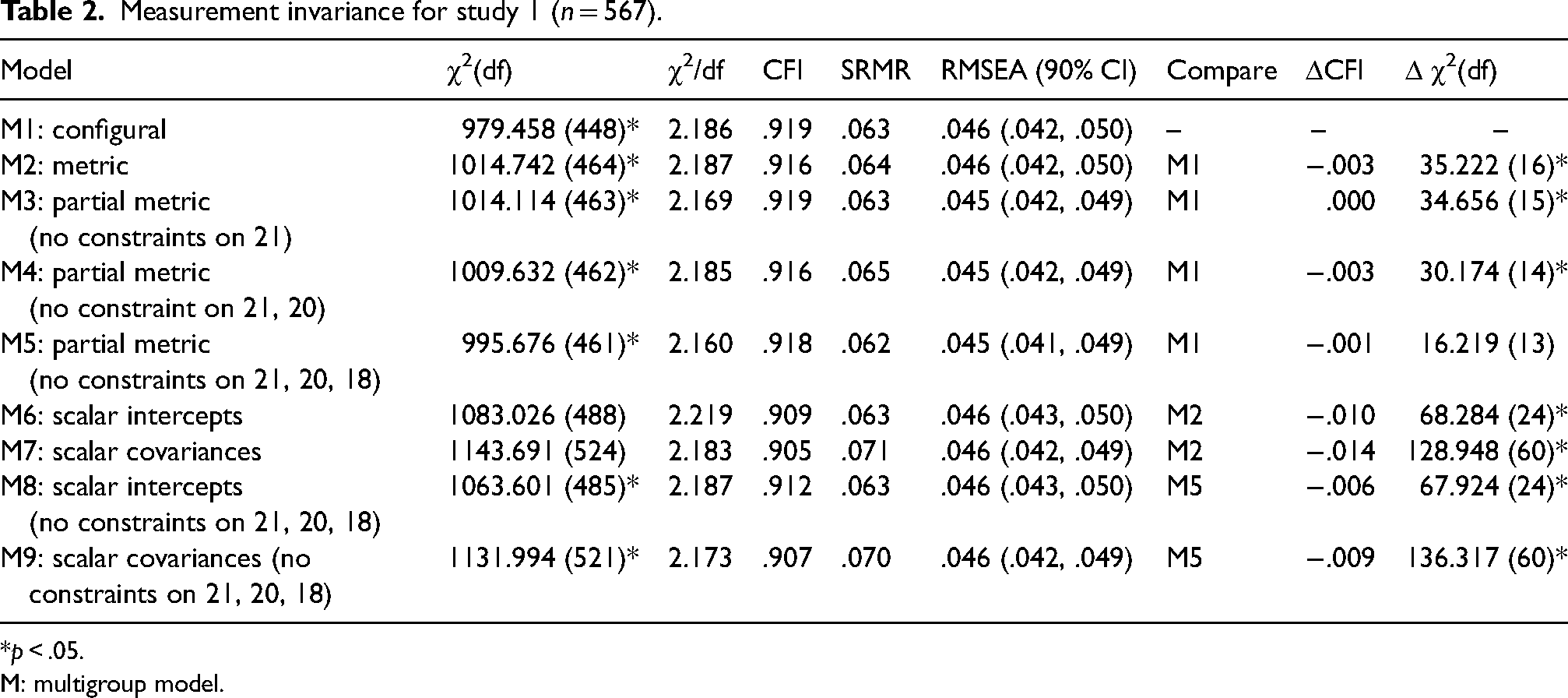
*p < .05.
M: multigroup model.
Table 3 reports the descriptive statistics, coefficients for internal consistency, correlations, skewness and kurtosis for the subscales. Table A1 in the Supplemental Appendix shows the items’ intercorrelations.
Measures’ descriptive statistics, alpha reliability coefficients, skewness, kurtosis, standard error and scale score correlations in study 1 (n = 567).
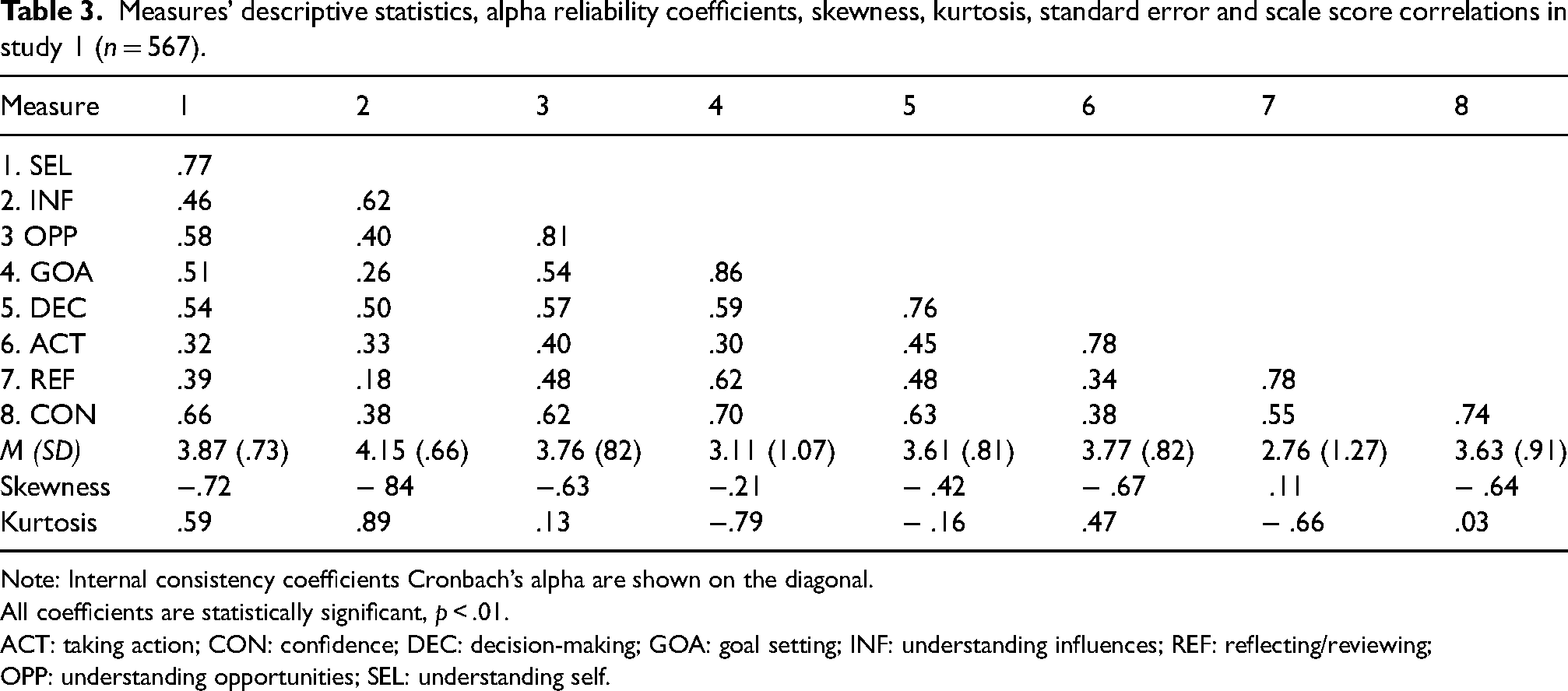
Note: Internal consistency coefficients Cronbach’s alpha are shown on the diagonal.
All coefficients are statistically significant, p < .01.
ACT: taking action; CON: confidence; DEC: decision-making; GOA: goal setting; INF: understanding influences; REF: reflecting/reviewing; OPP: understanding opportunities; SEL: understanding self.
Differences between grades and genders
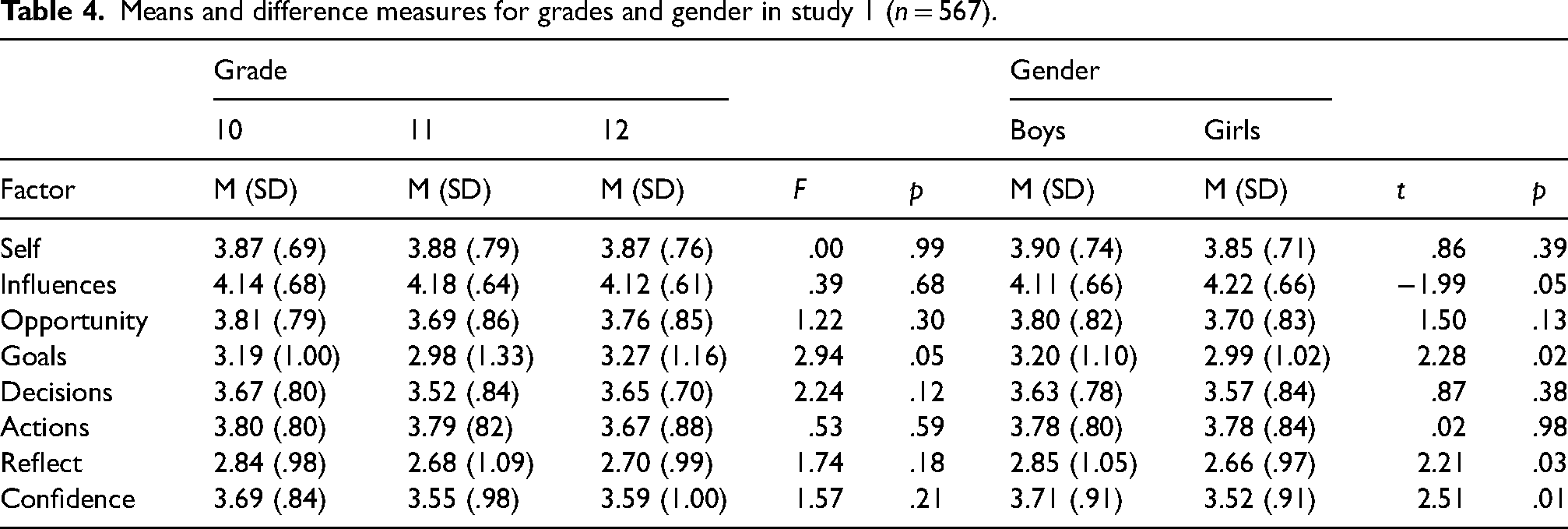
Differences between the mean scores for the eight factors across Grades 10, 11 and 12, and the genders are presented in Table 4. Students in Grade 11 had a slightly lower mean score for Goals. There are trivial differences between the means scores, Influences, Goals, Reflect and Confidence for boys and girls. The low percentage of participants from Grade 12 means that this data much be treated with caution and further investigation is needed.
Means and difference measures for grades and gender in study 1 (n = 567).
Summary
The CFA found an acceptable eight-factor model congruent with its original design and conceptual foundations. The CEDS-Senior was consistent across the three grade levels which mean that it has similar properties and can be used with students across Grade 10, Grade 11 or Grade 12. There initially appeared to be minor differences between genders in some factors but these proved to be statistically insignificant. Of note, due to the low participation by Grade 12 students, the data about grade level differences needs to be treated with caution. Having established the initial model and tested for its invariance, we then proceeded to retest the model in a separate data set.
Study 2
There were two aims for Study 2. The first aim was to determine if the model could be recovered from a separate data set from senior secondary students from a set of government schools. The second purpose was to determine the concurrent validity of the model by comparing its results with two other well-established and related measures of self-efficacy and outcome expectations.
Method
Participants
Study 2 involved students from Grades 10, 11 and 12 in five schools within a large education jurisdiction in Australia. Of the 374 students who responded online, 102 were deemed unsuitable because of incompletion, leaving a sample size of n = 272. Participation by girls was n = 143 (52%) while participation by boys was n = 129 (47%). Participation by school grade was Grade 10, n = 50 (18%); Grade 11, n = 198 (72%); and Grade 12, n = 29 (10%). Participation was spread across five schools: School 1, n = 164 (59%; ICSEA = 977); school 2, n = 93 (34%; ICSEA = 984); school 3, n = 6 (2%; ICSEA = 1011); school 4, n = 13 (5%; ICSEA = 1027); and school 5, n = 1 (ICSEA 1062). The two schools with the largest number of participating students had ICSEA values that were just under the Australian average value of 1000.
Measures
The CEDS-Senior was used again for Study 2. In order to determine the concurrent validity of the CEDS-Senior, two comparison instruments were added for Study 2. The instruments were selected on the basis of being age appropriate, attempting to measure a similar aspect of the revised CEDF and being relatively short in length. The two measures chosen for comparison purposes were the New General Self-Efficacy Scale (NGSES) (Chen et al., 2001) and the revised form of the Vocational Outcomes Expectations – revised form (VOE; McWhirter et al., 2000, Metheny & McWhirter, 2013).
The NGSES
The NGSES (Chen et al., 2001) is an 8-item measure of self-efficacy or being able to successfully execute behaviour required to produce the required outcome (Bandura, 1977; Bandura, 1986). Participants respond to a 5-point Likert scale ranging from strongly agree (5) to strongly disagree (1). Sample items include, ‘In general, I think I can obtain outcomes that are important to me,’ and ‘I will be able to achieve most of the goals that I have set for myself.’ Higher scores are reflective of higher self-efficacy. Chen et al. (2001) found that the NGSES demonstrated high reliability and high content and predictive validity. For example, the principal components analysis yielded a single factor solution on three separate occasions (α = 0.87, 0.88 and .085, respectively) and the test–retest reliability coefficients for the NGSES were high, rt1−t2 = 0.65, rt2−t3 = 0.66 and rt1−t3 = 0.62. The NGSES was found to be theory based, unidimensional, internally consistent and stable over time (Chen et al., 2001). The work of Alexcopoulos and Asimakopoulou (2009) found good psychometric properties when used with a range of 531 Greek students aged around 12 years, indicating its suitability for use with the younger students in this study.
The VOE
The revised form of the VOE (McWhirter et al., 2000, Metheny & McWhirter, 2013) is a 12-item measure of participant’s perceptions of their ability to accomplish career aspirations. Participants respond to 5-point Likert scale ranging from strongly agree (5) to strongly disagree (1). Sample items include, ‘My career planning will lead to a satisfying career for me,’ ‘I have control over my career decisions,’ and ‘The future looks bright for me.’ Higher scores are reflective of higher vocational expectations. Evidence of adequate internal consistency, test–retest reliability and concurrent validity of the measure for high school samples is reported by McWhirter et al. (2000) and Metheny and McWhirter (2013). For example, test–retest reliability over 9 weeks yielded a coefficient r = 59 and an internal consistency reliability of Cronbach's α = 0.83, and in a subsequent study an α = 0.93 was obtained.
Procedure
An amendment to the original ethics approval was granted from the HREC of the University of Southern Queensland [Approval No. H18REA258-v3] and from the senior research officer of a major educational jurisdiction in Australia. The CEDS-Senior was set up as an online scale within the secure environment of a university data management system. The relevant coordinator for the jurisdiction involved, invited schools to participate and provided training and access for the relevant person in each of the schools which agreed to participate. The online version of CEDS-Senior was accessible for 3 months and students who had appropriate parent permission were able to access the scale at any time during that period. Access closed in mid-December 2020 and the data were examined for full completions. The scales took approximately 8 minutes for students to complete online.
Results
Similar to Study 1, we tested the hypothesized eight correlated factors model and found acceptable fit to the data with all cases used, χ2(df) = 462.902 (224), χ2/df = 2.067, CFI = .952, SRMR = .049, RMSEA = .062 (.054, .070). Analysed separately for gender differences, the model for boys had acceptable fit, χ2(df) = 383.421 (224), χ2/df = 1.712, CFI = .928, SRMR = .059, RMSEA = .075 (.062, .087). Similarly, the model for girls had acceptable fit, χ2(df) = 431.911 (224), χ2/df = 1.928, CFI = .928, SRMR = .059, RMSEA = . 081 (.069, .092). The factor loadings for each of the 24 items are presented in Table 1.
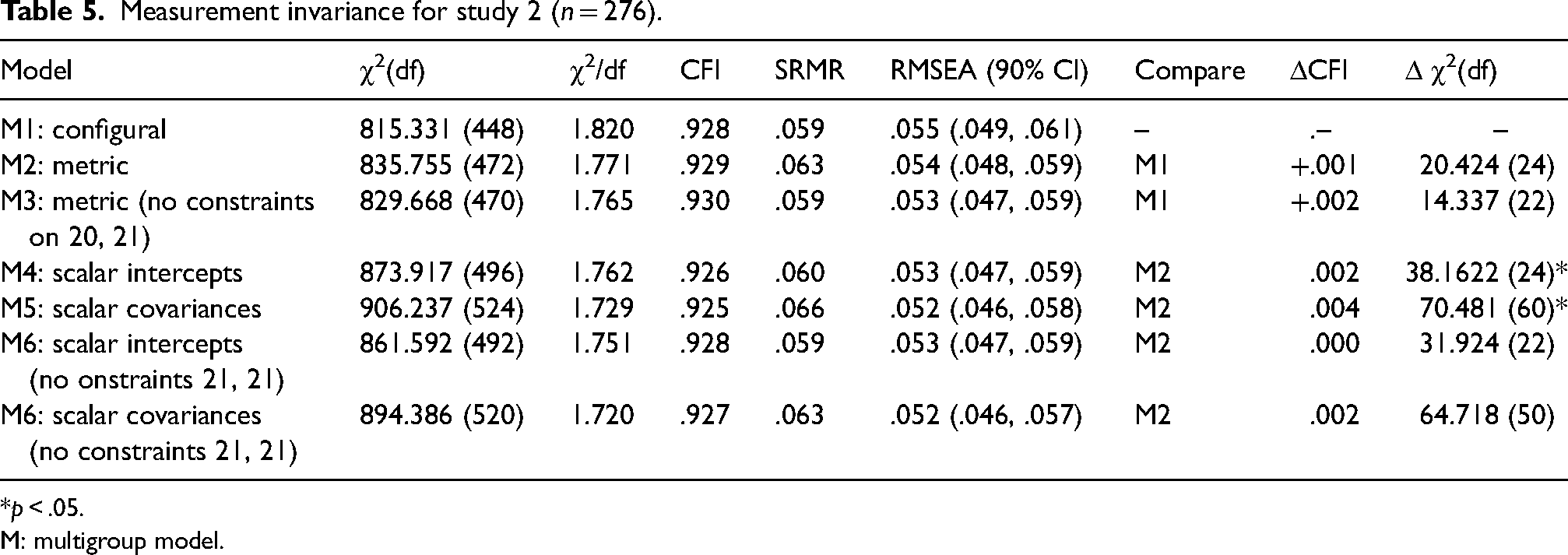
We then tested for invariance between models for boys and girls. Indices of fit are shown in Table 5. The model for configural invariance (M1) had acceptable fit. AMOS multigroup labelling function (Gaskin, 2022) was used for testing metric invariance (M2). Again, the fit was acceptable for M2. Furthermore, there was not a significant difference between the unconstrained and constrained models, χ2diff (24) = 20.424, p = .672 and the ΔCFI was in favour of the constrained model. As with Study 1, for consistency's sake, we explored differences in regression weights to detect items with relative differences. Again, items 20 and 21 on the Reflection factor had relatively higher differences. Removal of their constraints revealed a model with acceptable fit, χ2(470) = 829.668, χ2/df = 1.765, CFI = .928, RMSEA = .053, CI 90% [.047, .059]. Again, the configural and amended metric model (i.e. 20, 21 unconstrainted) was not significantly different, χ2diff (21) = 14.337, p = .889 and ΔCFI = +.002, which is less than the .01 criterion (Cheung & Rensvold, 2002). In summary, the M2 and amended M3 revealed metric invariance in this sample. Testing for scalar invariance revealed significant differences between M2 and M4 (intercepts) and M5(covariances). Removal of equivalence constraints on the intercepts of items 20 and 21 produced models that were not significantly different from the metric baseline M2, for M6, χ2diff (22) = 31.924, p = .079 and for M7, χ2diff (50) = 64.718, p = .079. Therefore, we concluded that the model/framework evinced partial scalar invariance on the Reflection factor.
Measurement invariance for study 2 (n = 276).
*p < .05.
M: multigroup model.
Correlations
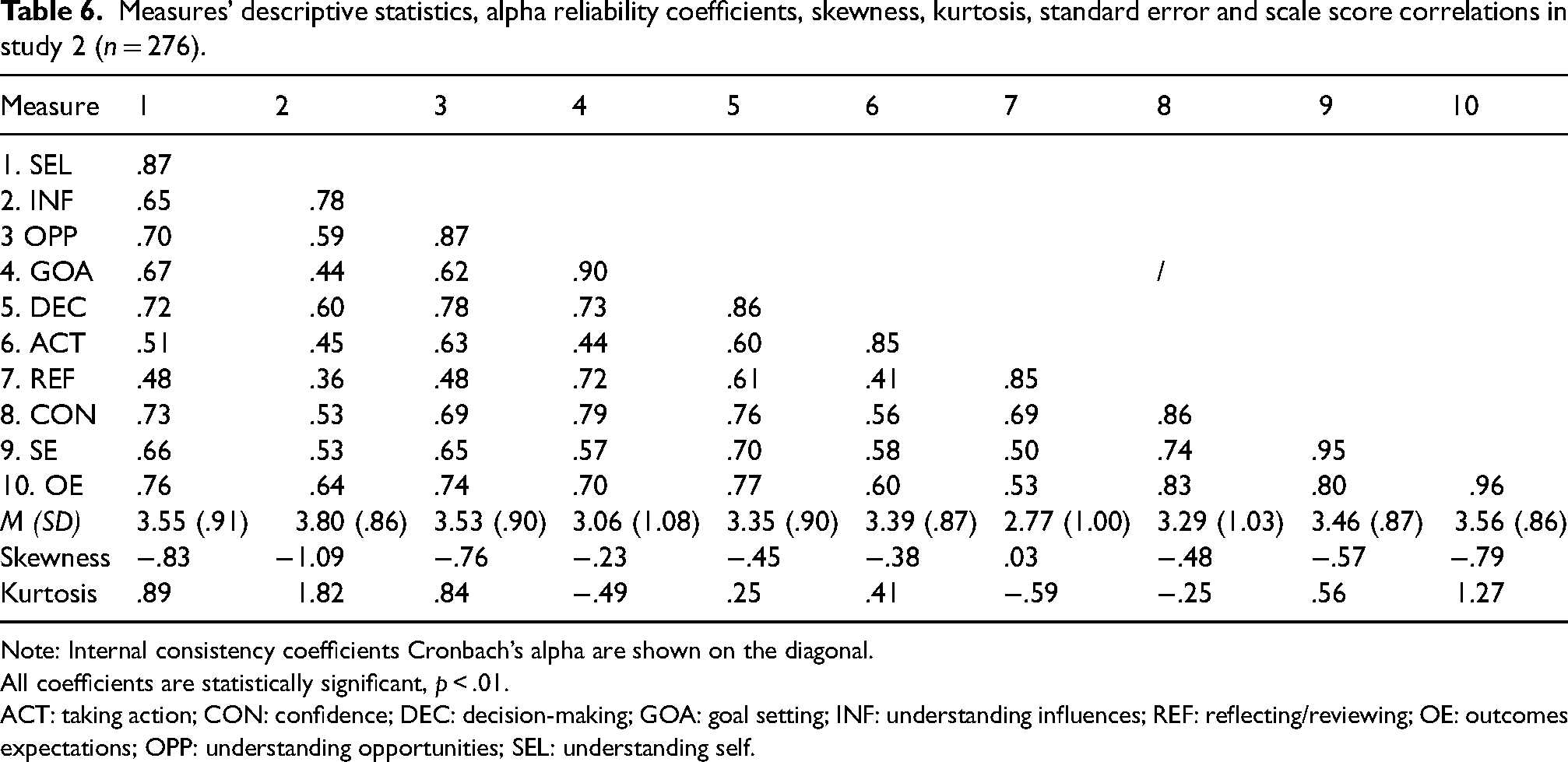
As in Study 1, the CEDS subscales correlated moderately with one another. The self-efficacy scale (NGSES), correlated strongly with each of the eight components of the revised CEDF with the coefficients ranging from 0.50 to 0.74. Similarly, the revised outcomes and expectations scale (VOE), also correlated very strongly with each of the eight constructs/factors of the revised CEDF with the coefficients ranging from 0.53 to 0.83 as shown in Table 6. These strong correlations with the two comparator measures provided evidence of the concurrent validity of the CEDS-Senior. Table A2 in the Supplemental Appendix shows the items’ intercorrelations.
Measures’ descriptive statistics, alpha reliability coefficients, skewness, kurtosis, standard error and scale score correlations in study 2 (n = 276).
Note: Internal consistency coefficients Cronbach’s alpha are shown on the diagonal.
All coefficients are statistically significant, p < .01.
ACT: taking action; CON: confidence; DEC: decision-making; GOA: goal setting; INF: understanding influences; REF: reflecting/reviewing; OE: outcomes expectations; OPP: understanding opportunities; SEL: understanding self.
Differences between grades and the gender
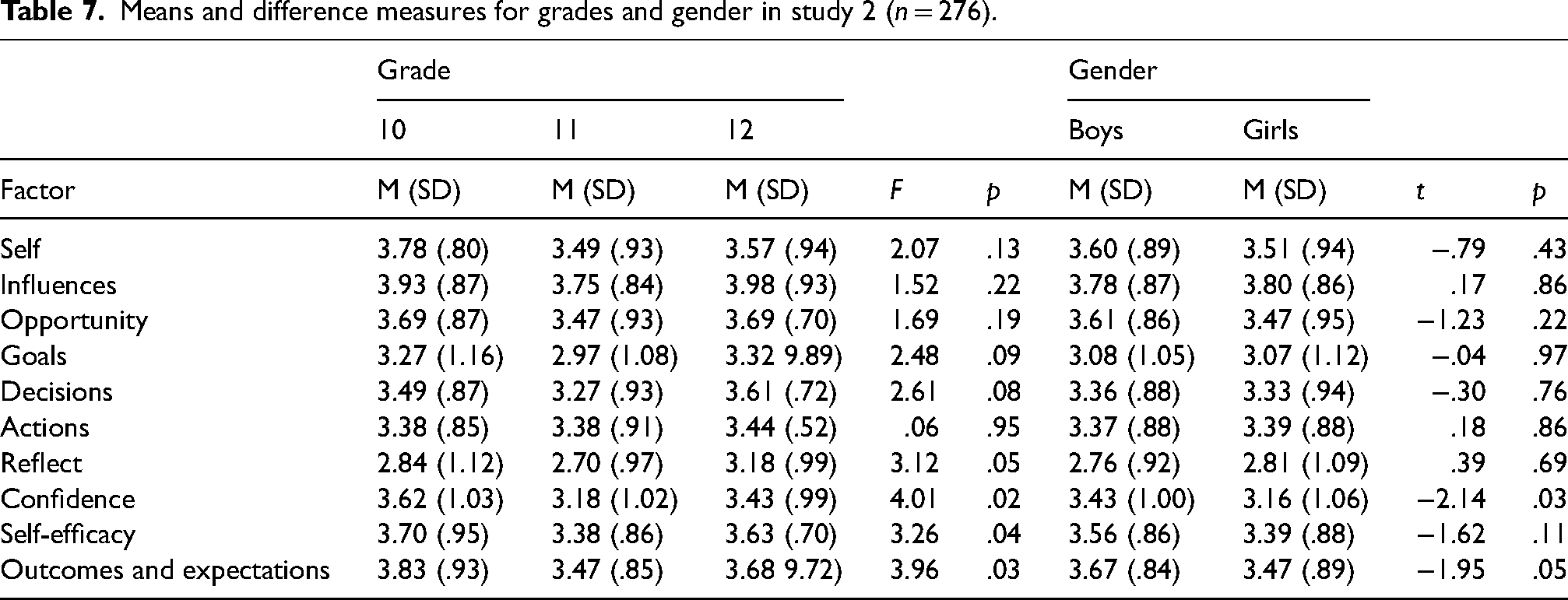
Differences between the mean scores for students in Grades 10, 11 and 12 and for boys and girls are presented in Table 7
Means and difference measures for grades and gender in study 2 (n = 276).
Discussion
The CEDF was developed as a conceptual curricular framework for career education. The CEDF was derived from practitioner experience, as well as the theoretically and empirically based model of Marciniak et al. (2020b). The CEDS-Senior was developed to empirically represent the eight constructs of the CEDF. The present findings support the revised CEDF and CEDS-Senior. Both studies’ CFAs found an acceptable eight-factor model consistent with its original design, and which was sustained in the two independent data sets. Students across a range of schools indicated consistently that they could make sense of the constructs and vocabulary used in the CEDS-Senior and that the 24 items in the eight factors held together to form a coherent scale.
Having access to this holistic measure supports the integration of CED into a school's provisioning for career development learning. In a crowded curriculum, and with enormous demands made upon them, teachers require resources to alleviate these pressures while attempting to implement important career education and development programmes (Hooley et al., 2011; Mann et al., 2020). The CEDS-Senior has the capacity to provide them with a holistic and economical measure by which to provide students with a self-report mechanism to help them understand their career development; identify areas for attention and further development; provide evidence of the value of an intervention; and facilitate participation by teachers and career practitioners in evidence-based practice. For those schools using the revised CEDF, students’ scores on the CEDS-Senior could be used to directly identify areas of strengths and weaknesses in their programme enabling them to review and address them.
The presence of relative similarities and, conversely, relatively few significant differences, among the mean scores of students in Grades 10, 11 and 12, and boys and girls, suggest that the CEDS-Senior has the potential to be used across and between the three grades across genders. The responses from the use of CEDS-Senior could be introduced as a basis for meaningful discussion with parents, particularly around career decision points. School and system administrators could also identify career-related needs and appropriate resourcing based on the outcomes.
Much like the CDI-A-SF (Creed & Patton, 2004), the CEDS-Senior will provide scores for each of the eight career constructs, the three major components of the revised CEDF (viz. understanding, actions and attitudes), and also provide access to a total single score. This variety of data collection options will facilitate future research which may need specific constructs and/or components and/or total scores, to include in the research.
This integrated model resonates with the work of recent Australian researchers, Patfield et al. (2022) and Fray et al. (2020) which examined the important components of the outer sub-system of the revised CEDF – predictors, influences, barriers and outcomes. Their work informs the content and approach that would be introduced in any career education and development intervention guided by the inner sub-system of the integrated model, understanding, action and attitudes, to address the issues of influences and equity. Research using the CEDS-Senior which measures the inside sub-system or ‘engine-room’ of the revised CEDF, could be used to provide evidence of impact from addressing the important factors from the outer sub-system.
Limitations and future research
In both studies, it was difficult to obtain large numbers of voluntary participation by Grade 12 students, given the pressures of completing their final year of secondary schooling. Because of the low response rate for this cohort of students, the findings involving Grade 12 students need to be considered with caution. Future studies which embed the use of the CEDS-Senior in Grade 12 programmes would likely address this issue and enable stronger testing of invariance.
The schools involved in Study 1 were non-government schools in different locations in three different States across Australia and the schools involved in Study 2 were Government schools across an educational jurisdiction. The design of the studies was cross-sectional. Future research which collects more comprehensive student and school data, could focus on target populations, and provide stronger evidence of the impact of socio-economic status or race/ethnicity, for example, on student responses (Choi et al., 2012). Also, longitudinal studies and regression analyses, connecting student scores to course/career outcomes as a criterion would provide evidence of predictive validity (Hooley et al., 2011; Sikora, 2020).
The CEDS-Senior is based on self-report and thus susceptible to self-report bias (e.g. where participants over- or underestimate their career understandings, behaviours and attitudes (Donaldson & Grant-Vallon, 2002). Dyadic or 360-degree data collection methodology, which compares the self-report with other relevant data and personal observations, would address this concern. In the second study, voluntary participation was online where minimal data were collected on the students who participated. Many students withdrew from the activity after only answering the first one, two or three items. Future studies would need to introduce methods to collect more comprehensive data and obtain higher completion rates.
It is understandable that there would be minor differences between the responses of adolescent boys and girls around the ages of 15–17. In these two studies, the boys reported that they checked the latest career information and possible career pathways marginally more than girls. This needs to be explored further, but in the meantime, the scores for boys and girls on the factor ‘Reviewing/Reflecting’ should be considered with some caution.
It is also understandable that the scores for students in Grade 11 be lower than for those students in both Grades 10 and 12 where students need to focus their career development in order to make imminent subject, course and career-related decisions. This information provides an opportunity for schools to advocate for increased CED activities for students in Grade 11 and conduct research on possible correlation to course/career outcomes.
Another limitation is that data collection for Study 2 occurred during a period of restrictions associated with the COVID-19 pandemic. The psychological effects of restrictions on students’ scores cannot be discerned from the current data. Future studies could also focus on teacher feedback on the use and value of the revised CEDF and CEDS-Senior, as well as continue to explore further, the minor difference between different user groups.
Conclusion
Career education and development have been found to have an impact on retention, achievement, transition and life success of secondary school students (Hooley et al., 2011). These two studies provide career practitioners, teachers, administrators and researchers, with a conceptual framework and a measure that could identify and report on the career education and development of students in Grades 10, 11 and 12 at individual, class, grade, school and system levels. The results from the use of the scale would provide access to a self-report measure that could be used to facilitate the career development of students, demonstrate the importance and effectiveness of career interventions, and facilitate participation in evidence-based practice. The two studies reinforced the empirically- and theoretically based model developed by Marciniak et al. (2020b) which underpins the revised CEDF and provides a measure that could be used to conduct further research on the framework's application with secondary school students.
Supplemental Material
sj-docx-1-acd-10.1177_10384162231164572 - Supplemental material for A Career Education and Development Framework and measure for senior secondary school students
Supplemental material, sj-docx-1-acd-10.1177_10384162231164572 for A Career Education and Development Framework and measure for senior secondary school students by Colin McCowan, Peter McIlveen, Brad McLennan, Harsha N Perera and Lucia Ciccarone in Australian Journal of Career Development
Supplemental Material
sj-docx-2-acd-10.1177_10384162231164572 - Supplemental material for A Career Education and Development Framework and measure for senior secondary school students
Supplemental material, sj-docx-2-acd-10.1177_10384162231164572 for A Career Education and Development Framework and measure for senior secondary school students by Colin McCowan, Peter McIlveen, Brad McLennan, Harsha N Perera and Lucia Ciccarone in Australian Journal of Career Development
Footnotes
Declaration of conflicting interests
The authors declared no potential conflicts of interest with respect to the research, authorship, and/or publication of this article.
Funding
The authors received no financial support for the research, authorship, and/or publication of this article.

Supplemental material
Supplemental material for this article is available online.
References
Supplementary Material
Please find the following supplemental material available below.
For Open Access articles published under a Creative Commons License, all supplemental material carries the same license as the article it is associated with.
For non-Open Access articles published, all supplemental material carries a non-exclusive license, and permission requests for re-use of supplemental material or any part of supplemental material shall be sent directly to the copyright owner as specified in the copyright notice associated with the article.
