




Abstract
Despite the clear importance of agriculture in Australia, and a diverse range of career opportunities in the sector, knowledge of agriculture and farming processes is declining. This study explores the vocational development experiences of young people within the Australian agricultural industry, highlighting the influences of life experiences, career motivations, and vocational identity on their career decision-making process. Drawing on the developmental-contextual model of career development, the research investigates how individual, social, and contextual factors shape young people's motivations to pursue agricultural careers. Through qualitative analysis of semi-structured interviews with young people working in the cotton industry, the study emphasises the significant role of early exposure to agriculture, family support, and workplace culture in shaping vocational identity and career aspirations. The findings contribute insights into the dynamic interplay between individual and contextual factors in career development and offer practical implications for stakeholders to nurture the next generation of agricultural leaders.
Keywords
Introduction
In contemporary Australian society, misconceptions about a range of occupations in agriculture challenge the sustainability of the sector. A poor understanding of the breadth and depth of modern agriculture work practices and their related occupations suggests that attracting workers to agriculture is a problem (Jones, 2005; McDonald et al., 2022; Turner & Hawkins, 2014). According to the National Agriculture Workforce Strategy (Azarias et al., 2020), the ongoing shifts in globalisation, rapid technological change, and economic uncertainty are significantly felt within the industry. This, in turn, has exacerbated the lack of young people's participation in agriculture, driven by preconceived notions such as limited career progression and outdated perceptions of work in the industry as being physically demanding, financially unrewarding, and socially isolating (Consentino et al., 2023; Girdziute et al., 2022; McIlveen et al., 2022). These observations emphasise a broader societal mindset that tends to undervalue and overlook the economic potential and stability inherent in agricultural careers (Hu et al., 2010). Recent advances in the field of career development have argued for renewed a focus on sustainable development to better understand and support people in careers in the twenty-first century (Hartung & Di Fabio, 2024). Research suggests that the future of the Australian agricultural industry relates to the aspirations, ambitions, and beliefs of the younger generation (Cosby et al., 2022; Farrugia et al., 2014; McDonald et al., 2022). The active participation of youths in agriculture presents opportunities for career exploration, innovation, and entrepreneurship, all of which contribute to the growth of an economically successful and sustainable industry (Ives, 2023).
Addressing youth participation in agriculture necessitates an inclusive approach focusing on youth development needs and training opportunities (Geza et al., 2021). VicHealth (2019) defines “young people” as individuals aged between 12 and 25, involving a critical life transition period. Therefore, stakeholders within the agricultural sector, such as policymakers, and educators have an opportunity to promote a positive image of agriculture to young people during this important decision-making time. Implementing programs and strategies, including initiatives to attract young people and invest in agricultural education and training, holds promise in bridging the gap between negative perceptions and the realities of contemporary agriculture (Moffatt, 2016). By investing in the career development of young people, a more robust advocacy and understanding of working in agriculture can be fostered (McDonald et al., 2022). Thus, recognising the perceptions and motivations of the next generation of agricultural leaders is crucial in improving the interest of young people and advancing the agriculture industry.
Early interactions and social-contextual experiences significantly shape young people's career interests, aspirations, and skill development. Vondracek et al.'s (2019) developmental-contextual model of career development emphasises the dynamic interaction between the individual and the social context within which individuals operate. The model was introduced as a theory that highlights how the nature of careers, encompassing their origins, progression, and outcomes evolve over time (Vondracek & Porfeli, 2008). As shown in Figure 1, the model explores the influences of family background, school experiences, personal characteristics, and early career choice on occupational attainment (Schoon et al., 2007; Vondracek & Porfeli, 2008).
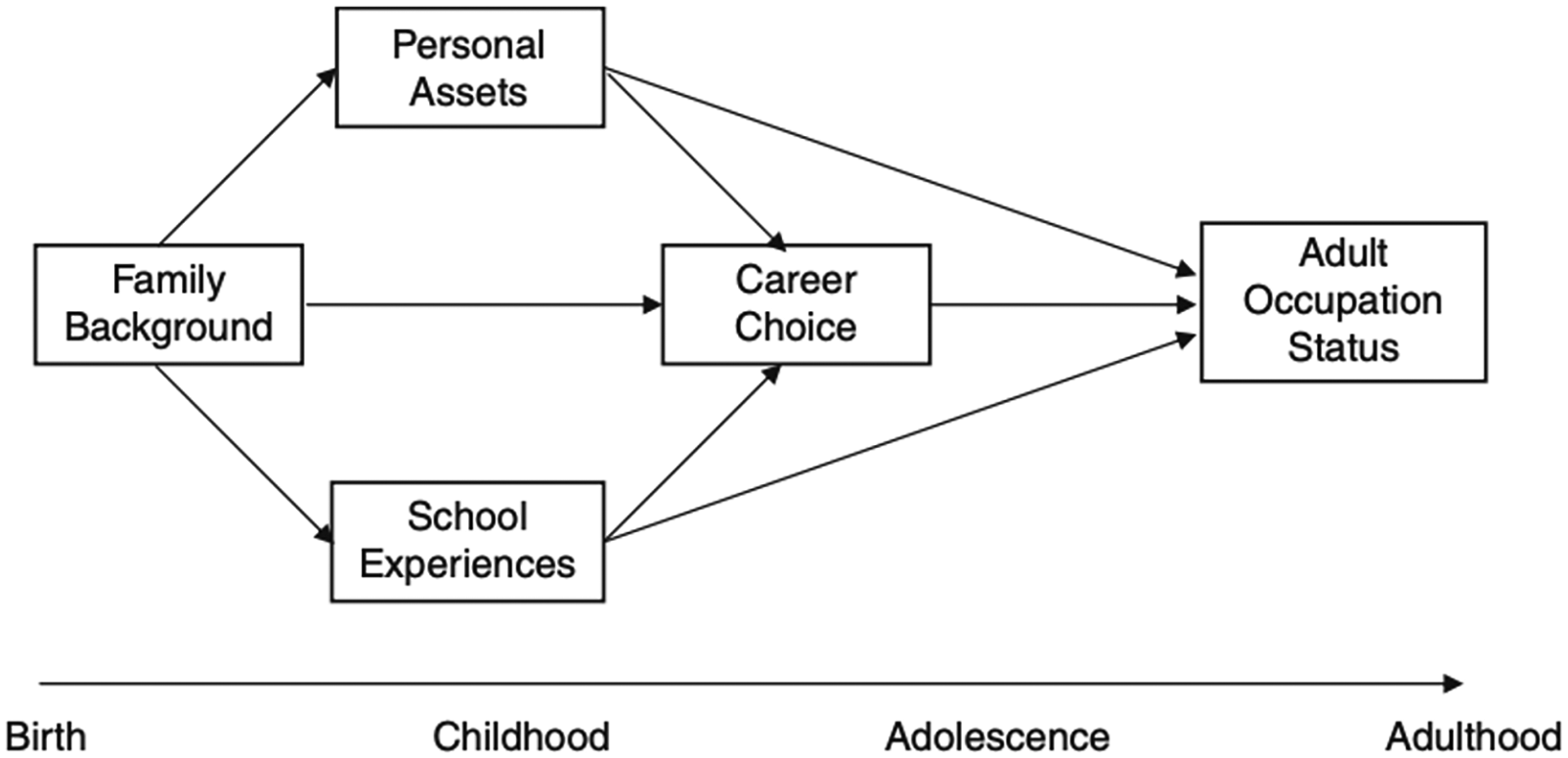
Contextual-developmental model of career development. This model was produced by Schoon et al. (2007) summarising the factors influencing later career-related outcomes. Adapted from “Science Related Careers: Aspirations and Outcomes in Two British Cohort Studies” by I. Schoon, A. Ross and P. Martin, 2007. Equal Opportunities International, 26(2), 129–143.
Adopting a contextual-developmental lens is crucial for identifying the experiences and motivational factors that shape the trajectory of lifelong career development of young people (Polvere & Lim, 2015). The foundation of adult careers emerges during early childhood, where children begin to explore the world of work vicariously through familial experiences and exposure to media-based work representations (Patton & Porfeli, 2007). These antecedents influence how individuals build career-related behaviours, interests, expectations, and aspirations (Hartung et al., 2005; Polvere & Lim, 2015). It is during this transitional period between childhood and adulthood that individuals form their attitudes, beliefs, and perceptions about the world of work and career aspirations (Porfeli & Lee, 2012).
Vocational identity is a core structure within self-concept characterised by clarity, coherence, and stability of perceived career motivation and abilities (Holland, 1997). As young people transition into adolescence and adulthood, the foundational attitudes and beliefs formed during their earlier experiences are reflected in their vocational identity (Porfeli & Lee, 2012). During this stage, career developmental tasks include recognising new interests and skills, gaining insights into the world of work, and eventually deciding upon realistic educational/career pathways (Super, 1980). In agricultural career development, an established vocational identity promotes a guiding framework for the career decision-making of young people (Ives, 2023). Therefore, fostering agricultural vocational identity would empower young people to explore career opportunities within agriculture.
Literature review
Despite the prevailing challenges inherent in the sector, the Australian agriculture industry's commitment to innovation, change and resilience has fostered economic opportunities for young people (Cosby et al., 2022; Daly et al., 2015; McDonald et al., 2022; Wallis Social Research, 2022). To demonstrate, efforts to dispel misconceptions and reshape public perceptions of agriculture have become significant components of policy and education initiatives (NAWS, Azarias et al., 2020; Cosby et al., 2023; Cosby et al., 2024). In considering the future of the industry, the influences of individual, cultural, and contextual factors that underlie the motivation of youth to pursue careers in agriculture must be understood (Bahaman et al., 2010; McDonald et al., 2022; Vondracek et al., 2019). A review of the literature on (a) youth perceptions of agriculture, (b) the impact of agricultural education, (c) the role of family influence in career development, and (d) the relationship between identity development and vocational decision-making will now be discussed.
Youth perceptions and agricultural education
The Food and Agriculture Organisation of the United Nations (FAO, 2014) reported that formal and informal educational experiences and early opportunities for vocational training significantly shape young people's perceptions of agriculture. As outlined by the FAO (2014), formal primary and secondary education provides young people with fundamental skills in numeracy, literacy, business proficiency, and an introductory understanding of agriculture. Meanwhile, non-compulsory education, encompassing vocational training along with tertiary agricultural education, offers more specialised knowledge relevant to agricultural careers (Cosby et al., 2022; FAO, 2014). Several studies have highlighted the continuity in individual career trajectories, and the association between academic achievement and career development. For example, in a study of teachers’ perception of agriculture, Cosby et al. (2022) established formative learning experiences, exposure, and educational background as influential in increasing knowledge and perceptions of agriculture. The study revealed that childhood upbringing in rural settings not only influenced teachers to pursue careers within agricultural contexts but also increased the active encouragement among students to promote understanding of the job opportunities in the sector (Cosby et al., 2022). The dynamics of local contexts mould young people's work environments, learning experiences, and social interactions, consequently shaping their perceptions and understanding of agriculture (Cosby et al., 2022). Additionally, research by Pinquart et al. (2003) and Wiesner et al. (2003) found that the relationship between early life experiences and long-term outcomes in adulthood is important. Pinquart et al. (2003) reported that higher self-efficacy beliefs in childhood correlate with better school performance and lower unemployment rates in adulthood. Self-efficacy refers to the adaptive processes through which individuals assess and believe in their capacity to perform specific tasks or duties associated with their job (Bandura, 1977). Concurrently, Wiesner et al. (2003) found that poorer levels of educational attainment in childhood and adolescence, along with subsequent adverse personal characteristics and family background, are associated with long-term unemployment in adulthood. These findings highlight the importance of fostering self-efficacy beliefs and providing access to quality education during critical developmental stages to achieve positive long-term outcomes in adult employment and job satisfaction.
While traditional education pathways often emphasise the value of tertiary education, there is increasing recognition of on-farm professions that offer valuable career opportunities without requiring a university degree (Graham, 2021). Vocational education and training, apprenticeships, and direct entry into farm work are increasingly being recognised as critical pathways to meet the industry's needs and provide meaningful employment for young people (Acuna et al., 2014). These pathways offer practical skills and hands-on experience crucial for success in various agricultural roles, from farm management to specialised technical positions (Azarias et al., 2020; Ayres, 2006). According to Black et al. (2021), these professions ensure the productivity and sustainability of the industry while providing meaningful and satisfying career opportunities. The reliance on skilled on-farm workers was particularly highlighted during the COVID-19 pandemic, which disrupted global food supplies, demonstrating the vulnerability of agricultural operations to workforce shortages (McDonald et al., 2022). The emphasis on university education for entering agricultural careers has been questioned by various stakeholders, including educators, industry professionals, and policymakers (FAO, 2022). Acuna et al. (2014) advocated for the inclusion of vocational knowledge in agricultural education, emphasising the need to prepare students for direct entry into the workforce through practical skills and experiential learning. Programs that focus on vocational training and certification in specific agricultural skills are gaining traction as effective means of preparing young people for successful careers in agriculture. These programs are designed to meet the needs of the industry by equipping participants with the practical skills and knowledge required to manage complex agricultural tasks, often in a shorter timeframe compared to traditional university education (Cosby et al., 2022; Bahaman et al., 2010). For the agricultural sector, focusing on vocational training and on-farm professions helps to address the skills gap by creating a workforce that is both technically skilled and adaptable to the demands of modern agriculture. Programs that integrate vocational knowledge can increase the attractiveness of agricultural careers, especially among younger generations who may not see traditional farming roles as viable career options (Acuna et al., 2014).
Family influence in career development
As individuals progress through adolescence and into young adulthood, the influences of family continue to shape their career development, values, and decision-making processes (Howard & Walsh, 2011; Vondracek et al., 2019). In the context of career exploration, several studies have shown that early exposure to agriculture through family farming and upbringing significantly influences young people's vocational identity and career development (Akosah-Twumasi et al., 2018; Sawitri & Creed, 2015; Sawitri et al., 2015). In a systematic review underlying the factors that influence youth career choices, Akosah-Twumasi et al. (2018) found that higher career congruence with parental expectations contributes to increased career confidence and self-efficacy among young people. Moreover, parental professions significantly shape the career trajectories of children, which is particularly evident in families with agricultural backgrounds where young people commonly pursue the vocational pathways of their parents (Howard et al., 2009). This tendency to inherit family careers reflects the intergenerational continuity within agricultural communities and the impact of familial roles in the career decisions of the younger generation (Consentino et al., 2023; Wright et al., 2020). From observing parental career trajectories to supporting educational and vocational pursuits, family shapes the lens through which individuals view their career possibilities and ambitions (Wiesner et al., 2003).
Identity development and vocational identity
In line with the influence of familial context research on self-concept and identity constructs in developmental career psychology, research on self-concept and identity development in career psychology highlights a strong link between career interests and a stronger sense of self (Blustein et al., 1989; Vondracek et al., 1995). Vondracek et al. (2019) emphasised the role of self-determination and agency in shaping young people's career developmental trajectories. Central to this lies the fundamental desire of many adults to engage in work that carries personal significance. This approach allows individuals to effectively pursue personal growth and success, achieve economic independence, and contribute actively to society. Additionally, this perspective fulfils individuals’ inherent human nature, allowing them to balance their need for self-fulfilment with their relational connections to others (Vondracek & Porfeli, 2008). It involves being self-directing, self-organising, self-regulating, and self-achieving, enabling individuals to become active contributors to personal development and meaningful participation in various social groups (Vondracek et al., 1995). Turner and Hawkins (2014) further support this view by demonstrating that careers in agricultural science offer a pathway for students to achieve self-fulfilment, personal growth, and economic independence. They emphasised that agricultural careers are not only vital for addressing global food security and environmental challenges but also provide young people with meaningful work that aligns with their values and interests. Significantly, identifying careers that resonate with students’ personal and relational goals offers opportunities for self-direction and active participation in community and professional networks. This aligns with broader trends in career development where meaningful work is increasingly seen as significant for personal development and social engagement (Turner & Hawkins, 2014; Vondracek & Porfeli, 2008).
In summary, the literature underscores the multifaceted influences shaping young people's vocational development in the agricultural industry, ranging from familial backgrounds and early life experiences to individual self-concept and identity constructs. Understanding these factors is crucial for developing effective interventions and strategies to increase the engagement of youth in agriculture.
The current study
While existing studies highlight the importance of fostering a strong vocational identity for young people's career development (Porfeli & Lee, 2012), a gap persists in the empirical literature concerning the use of a contextual developmental approach to agricultural career development. Previous research in the field of career development in agriculture has predominantly centred on career outcomes (Turner & Hawkins, 2014), and the construction of theoretical frameworks aimed at understanding career pathways in agriculture (Moffatt, 2016). While the influence of personal and contextual factors on vocational identity has been recognised, there is a lack of research focusing on how vocational identity formation aligns with the complexities and demands of the Australian agricultural industry (Ives, 2023; Vondracek & Porfeli, 2008). This gap suggests the need to examine how contextual factors motivate young people to pursue careers in agriculture and shape their vocational identity.
The purpose of this study is to understand the vocational development experiences of youths within the Australian agricultural industry by exploring the influences underlying vocational identity, life experiences, and career motivations on the career decision-making process of young people. To realise this purpose, two key research questions have been developed:(1) What role does ‘life experience/s’ play in motivating young people to pursue careers in agriculture? and (2) How does this influence young people's formation of an agricultural vocational identity?
This study holds significant implications for understanding the factors that influence the vocational development and the career decision-making of young people in the Australian agricultural industry. By addressing such factors, this study seeks to contribute to the development of targeted interventions and strategies to enhance the engagement, interest, and success of young people within the agricultural sector.
Methods
Participant recruitment
The current research selected participants from an existing data set. The primary objective of the initial study was to understand the career motivations of the future workforce and existing employees who are relatively new to the Australian cotton industry. Recorded semi-structured interviews explored effective approaches for skill transfer and examined the future skills required of workers to ensure sustainable workforce development.
The current study specifically focuses on young people employed on-farm in the cotton industry, aged below 25 years as this aligns with the study's central objectives, emphasising the exploration of career motivations, life experiences, and vocational identity of young people in agriculture. This sample of 9 participants were aged between 17 and 25 years (M = 22 years) and consisted of 8 males and 1 female. All employees have existing heritage links to agriculture and have been employed in their current role in the industry for 5 years or less.
Procedures
For the current study, data collection involved semi-structured interviews (n = 9) that were conducted over Zoom and took between 38 min, 36 s and 1 h and 11 min (M = 45). Questions focused on topics such as career motivations, the acquisition of skills, any potential concerns related to their work and their perceptions regarding the skill requirements within the cotton industry. To ensure accurate documentation of responses, all interviews were audio recorded and subsequently transcribed verbatim. The primary study provides accounts of the processes involving career development. It represents the participants’ voices regarding the topics explored, allowing for verification and validation of the thematic analysis process.
Measures
A semi-structured interview schedule was designed to elicit valuable insights from participants regarding their career motivations, and perceptions of the cotton industry. Additionally, the interview schedule was designed to prompt participants to discuss latent constructs that underlie their career decisions and aspirations. For instance, a notable question aimed at capturing the participants’ perspectives is, “What makes a job a good job?”. Similarly, questions such as “How did you come to pursue a career in the cotton industry?” explored career motivation, while
Moreover, the interview schedule was structured to encompass various areas that influence the career motivations of participants. This includes demographics, educational background, agricultural career choices, employability, skill acquisition and development, error climate management, workplace interactions, encountered challenges, and future career aspirations.
Data analysis
Reflexive thematic analysis (TA) was used to analyse qualitative data on vocational development experiences, career motivations, and contextual factors among young people in the Australian cotton industry. This method involves an exploration and interpretation of qualitative data to identify underlying themes and patterns (Braun & Clarke, 2021). Specifically, a six-phase reflexive TA approach was employed to systematically track the transition from raw data to final themes (Braun & Clarke, 2006, 2021). These phases include data familiarisation, initial coding, searching for themes, reviewing and refining themes, defining and naming themes, and producing the report. The analysis followed an iterative process, with continuous movement between phases to refine interpretations (Terry et al., 2017). Through this analytical approach, we aim to identify influential factors that shape young people's career decisions within the cotton industry.
A deductive approach guided both data familiarisation and subsequent coding (Braun & Clarke, 2021). Initial observations during familiarisation were primarily shaped by theoretical interests, facilitating an analyst-driven examination where preconceived notions guided the process (Braun & Clarke, 2021). Immersion into existing datasets provided a comprehensive understanding of participants’ experiences. The transcribed data underwent repeated readings and careful listening to audio recordings to ensure thorough comprehension. The practice of note-taking also played a crucial role in prompting critical engagement within the data set. This was particularly important in recognising the underlying patterns and latent meanings within the participants’ experiences.
Following the data familiarisation phase, further exploration of the data involved manual analysis of the transcript to develop initial codes (Braun & Clarke, 2021). Initial thoughts were noted down using a reflexive journal as this is considered an essential stage in analysis (Braun & Clarke, 2006). The process of coding and theme development sought to encompass both descriptive and interpretive elements (Braun & Clarke, 2013). The interpretative stance facilitated the development of ideas regarding participants’ descriptions and the exploration of relationships among these experiences. The data associated with each code was examined to determine its relevance to understanding the pre-determined themes of the developmental-contextual model of career development (Vondracek et al., 2019), and other variables of interest. Following the initial code generation phase, relevant data extracts were collated and codes were organised to create potential candidate themes (Braun & Clarke, 2021).
Furthermore, the process of refining and defining themes began with the use of a thematic table to derive meanings and interpretations from the dataset. Codes were matched with corresponding themes, and some themes were merged during analysis. A thorough review of excerpts associated with each theme followed refining and defining themes for the full thematic analysis. The construction of themes followed a collaborative and iterative approach, involving regular meetings among all authors to discuss findings and examine interpretations, ensuring a rigorous process applied to the analysis (Frost, 2016; O’Brien et al., 2014).
Results
The thematic analysis process (Braun & Clarke, 2021) that was applied to the transcripts resulted in four overarching themes identified from the data: (1) Opportunities for growth through community support and connection, (2) Imagining a future self in agriculture, (3) Self-efficacy and work-related behaviours, (4) Discovering passion, pride, and purpose in agriculture. These themes determine the motivations underlying the participants’ vocational identity and career development and provide insights into the role of life experiences in shaping the career decision-making process of young people within the Australian agricultural industry. The next sections present the research findings through a narrative lens using excerpts from the participant data to illustrate and preserve the meaning of each construct (Krueger & Casey, 2015).
Opportunities for growth through community support and connection
The theme, Opportunities for Growth through Community Support and Connection encompasses the significance of relational influences of personal networks, mentorship, and familial support on the career development of young farm workers. Data coded as community recognition and acceptance within the agriculture community, family support, employer support, role models, acceptance, doing meaningful work, and sense of belonging underpin this theme. Accordingly, recognition of the importance of relationships in career development was identified as influential in shaping growth and development within the agricultural sector. All workers described having the presence of a strong support system from family, employers, and the broader community, with most emphasising the profound influence of familial acceptance and encouragement on their career trajectory within the agricultural industry. Participant 42 demonstrated gratitude and attributed success to the support provided by their families:
My family and my parents…they’re the sound board for everything that sort of goes on … they have supported me through – whatever I have done they have been 100% supportive of me
In this context, the participant described the relational influences from childhood through young adulthood on their career trajectories in the agricultural industry. The participant portrayed the meaningful role of parental figures along with their expectations in fostering career outcomes and the development of motivation. Describing family as the “soundboard for everything”, highlights the integral role that family play in providing guidance and support across various aspects of life.
Additionally, the workers’ confidence in their abilities to perform was often guided by the supportive nature of their employers. Participant 19 encapsulates the meaning of working in a supportive environment claiming that its “easier for me to just approach them if I need them…, and they are always willing to help, so there's no issue of feeling unsupported.”. This participant's confidence to approach their supervisors was increased with the knowledge that seeking support is encouraged.
The presence of supportive mentors in the early stages of their agricultural careers was influential for participants in their career development. In reflecting on the support received in their first year of employment in the industry, Participant 22 explained:
I had a very good mentor… he taught me my foundation of cotton from day one…he definitely took me under his wing and said, you know, “This is cotton. This is how we grow it, this is how you count you know, nodes at a cotton plant”…So, I guess having that mentor really was the key to my first year of employment
Participant 22 acknowledges the role of mentorship in imparting the foundational skills acquired in their early career in agriculture/cotton farming. Through mentoring relationships, the transfer of practical knowledge from experienced individuals to new farm workers provides invaluable insights into practices that might not be readily available through formal education. When reflecting on their experiences of schooling in high school, Participant 47 pointed out, “Yeah there wasn't really a great knowledge coming from the Ag teachers”. This suggests that the formal education system might have had limitations in providing comprehensive knowledge in the field of agriculture. This contrast emphasises the distinct contributions of mentorship in addressing the practical aspects of cotton farming and helps bridge the gap between theoretical and practical knowledge necessary for achieving success in the field.
Community connections were also identified as a foundational construct in shaping the participants’ sense of identity and motivation to pursue careers in agriculture. For many of the participants, recognition and acceptance within the agriculture community significantly impacted their decisions to work directly with farmers and contribute to the industry where they were raised. One young farm hand expressed::
I suppose the big thing that they (young people) really enjoy is the community aspect of it. Like it's traditionally living or working on any sort of farm or agricultural operation…it's long hard work – you are working outside in all conditions and you know it can be exhausting at times but the thing that sort of keeps you going is – well the thing for me is specifically is that it's the community…like you can see a tangible difference each day.
Despite facing challenging work conditions, the resilience and dedication of young workers are often built on the foundations of connection within their community. Within a work context, the participant's notion of a shared purpose speaks to the satisfaction derived from the community's effort to maintain a supportive environment.
These findings suggest that relational influences, mentorship, familial support, and community connections are important in shaping the career motivations of young farm workers. The narratives consistently underscored the transformative impact of these interconnected relationships in nurturing both personal and professional growth within the agricultural industry.
Imagining a future self in agriculture
Among the narratives shared by young farm workers, the theme of Imagining a Future Self in Agriculture was identified to recognise the influence of educational experiences and significant life transitions. Data coded as education experiences, significant life transitions, agriculture as a progressive environment for growth and learning, returning happily, person-environment fit, continuity and development, and job security and stability in the sector illustrate how individuals shape their career aspirations and to agriculture. As such, the theme explores the experiences and reflections of young farmworkers, providing insights into how educational experiences and attainment of meaningful roles influence their personal identity and career fulfilment.
The participants highlighted the ongoing development of identity influenced by significant life and academic transitions as a key construct. Participant 40 recalled:
Not only did I study Ag, but I did a… Traineeship at the same time, so I started doing a Certificate III in Agriculture…which was really great because then I'd come home in the holidays from school and I would be able to work. The things I had learned on paper, you could put it into practical skills and then you know, and things that didn't work on paper.
Participant 40's words illustrate how their educational experiences extended beyond theoretical learning, actively guiding their career path in agriculture. Their career path is encompassed by a combination of practical integration, as evidenced by their involvement in a traineeship and the immediate application of learned concepts during hands-on experiences on the farm. The experiences of active engagement in education along with the chance to promote practical farming skills and knowledge have encouraged a farming habitus that they had started to identify with since childhood.
While some participants highlighted ongoing identity development through academic transitions, a minority found school education significantly beneficial for workplace advancement. Dissatisfaction with traditional education, especially at the tertiary level, was common due to perceived irrelevance to practical agricultural experiences. Despite similar rural backgrounds, participants varied in their recollections of agricultural education experiences:
I definitely had aspirations of forging a career in health and a number of opportunities came up… I suppose I just got to a point about a year and a half ago where I said I am done doing this and I don’t want to be here anymore and I just want to go out west again, and that's what I did and that's probably the best thing I have done (Participant 42)
I studied a Bachelor of Agriculture and I did my first trimester and I just didn't really like it… I remember going before Uni and thinking to myself “I'll just do Agronomy for five years, and then I'll come home.” And I remember being at Uni and just going, “I can't do this, like this isn't what I wanna do”. (Participant 40)
The participants’ attempts to progress their careers through an academic pathway seem to misalign with their inherent preference for experiential learning. Although participants engage in formal education, there remains a disparity between the academic trajectories they pursue and their natural inclination towards practical experiences. The observed shift in career pathways and academic transitions may be attributed to their pre-existing knowledge and practical foundations in agriculture. This shift highlights the disconnection the participants have from conventional educational models and the preference for choosing varied approaches that prioritise real-world engagement. As such, existing knowledge likely plays a pivotal role in guiding young people towards educational and career choices that better align with their professional identities, interests, and aspirations.
Self-efficacy and work-related behaviours
The theme of Self-efficacy and Work-related Behaviours was prominently recognised in the narratives of young people embarking on careers in agriculture. Data coded as self-motivation for progress, intrinsic drive, affective and proactive traits, autonomy, confidence in skills, improved self-efficacy, and desire to succeed underpin this theme. Consequently, this theme explores how farm workers’ beliefs in their capabilities influence behaviours, motivation, and commitment to the demands of working in the cotton industry. The theme encapsulates the intrinsic motivation and proactive traits that influence participants to engage in continuous learning and career advancement within the sector. This theme captures the participants’ strong desire to build their capacity to work in the cotton industry through goal-directed learning and skill development strategies. Upon reflecting on their motivations and commitment to engage in learning, Participant 42 explained:
I’m always willing to really learn and yeah I suppose I told him that I really want to really broaden my knowledge and broaden my spectrum of knowledge of agriculture in Australia and I had never worked in an industry like cotton and it's a big industry and I want to build from that
Participant 42's proactive approach to their professional development reveals a clear intention to broaden and build their understanding of agriculture in Australia. Notably, this participant's recognition of the industry's complexity, anda “big industry”, highlights their awareness of the challenges and opportunities inherent in pursuing a career in cotton farming.
Participants shared a collective desire for knowledge expansion and continuous improvement through a proactive and future-oriented mindset among many of the participants. Participant 32 claimed that they “pretty much knew everything” in one particular role they had mastered, which provided a platform for their next step in the industry in their pursuit of skills and knowledge. This skills and knowledge self-assessment emphasised their commitment to continuous learning and their desire for competence and continuous development. Moreover, Participant 47's perspective emphasises that intrinsic motivation stems from a sense of accomplishment and contribution specific to the farming context. They explained:
So I don’t want to see myself working let's say a farm hand all day that gets told what they are doing and how it's going to be done. I’d like the responsibility and the pressure to be put back on me to be able to make those decisions of what we are doing or how we are going to do something. So that one is big.
The participant's desire for challenges speaks to a proactive and forward-thinking approach to work. The participant further expresses a desire to be actively engaged in decision-making processes and highlights the importance of personal agency in determining how tasks are accomplished. This tendency towards autonomy suggests confidence in their ability to handle responsibilities effectively and make decisions autonomously. In the same way, Participant 43's insights provide an understanding of self-efficacy and intrinsic motivation within the farming context:
I suppose I am just keen to learn and I think anyone that employs anyone – any sort of enthusiasm to learn and better themselves you are going to get a pretty decent employee out of them. So, I suppose that would have played a part in his decision to put me on I suppose.
This participant recognises the role of personal development and a proactive attitude in contributing to one's efficacy at work. Participant 43's speculation that their enthusiasm for learning played a part in the employer's decision to hire them underscores the perceived value of self-motivation and a growth-oriented mindset in the eyes of employers. Furthermore, the participant's understanding of the employer's perspective reflects an awareness of the practical implications of their motivation on their employability and success within the industry. The participant's enthusiasm for learning reflects a growth-oriented mindset that can positively influence their approach to acquiring new skills and knowledge.
The participants recognise the intricacies of the cotton industry and express a commitment to contribute to its growth and development actively. The emphasis on building from experiences further suggests a long-term perspective, where participants aspire not only to meet the current demands of their roles but also to position themselves as valuable contributors to the broader agricultural landscape.
Discovering passion, pride, and purpose in agriculture
The theme, Discovering Passion, Pride, and Purpose in Agriculture encapsulates the connection young people establish between finding significance in their work and aligning it with their values. Data coded as passion, care, life satisfaction, career choices aligned with values and beliefs, career adaptability, and alignment of interest and knowledge with purpose highlight how a deep connection to agriculture fosters a strong sense of purpose, identity, and career satisfaction. Within this theme, young people experience self-discovery in the agriculture sector, where they identify suitable careers in line with their core beliefs. The core premise of this theme is that passion for work provides young farm workers with the perseverance, pride, and purpose to achieve work goals and sustain job satisfaction.
Passion was explicitly evident in the participants’ reports of motivation in the pursuit of achieving their vocational goals. The participants conveyed emotional attachment to their roles, expressing a strong desire to contribute meaningfully to their work with purpose. This was particularly evident in Participant 47's reports of their commitment to overcoming challenges and continuously learning within the industry:
(I have a) passion for the industry. I take a lot of pride in my work,completing at an acceptable standard, at a high standard…Like if I am doing a job I like to do it right, I don’t like to muck it up. I think also that I am quite young as well and I’m studying as well.
Participant 47 emphasised the importance of passion and love for their job, especially in the context of cultivating crops, which signifies a deep emotional connection to their work. This emotional bond likely serves as a source of motivation, resilience, and commitment, influencing their dedication to agricultural practices. In their reflection, the refusal to “muck it up” reflects a determination to consistently produce work of the highest quality.
Like many of the participants, passion instils a sense of pride in their work, shaping a conscientious attitude towards responsibilities. Upon reflecting on individual traits considered beneficial for success in cotton farming, Participant 40 expressed the crucial role of having passion at work:
I think it's drive, like it's care and then you need to have the drive to be able to work on your own or work in a team environment… So I think you need to be really resilient…just to have the passion to want to do everything and to want to do it to such a good standard.
Participant 40 highlights that passion is intertwined both with drive and care in the context of cotton farming. This drive reflects a proactive motivation that encourages the participant to consistently strive for excellence in their vocational pursuits in cotton farming. Concurrently, the notion of care indicates a genuine concern for the tasks at hand and emphasises the need for resilience in the face of challenges inherent in their roles.
Passion significantly shapes the decision-making processes of these young people in determining career choices in agriculture. Participant 47, for instance, articulates a dynamic approach to career development, by rationalising the reason “ why I didn’t go and do a science degree, I have passion for agriculture, and I have passion for business.”. This highlights the participant's deliberate choice to combine their passions for agriculture and business, indicating a conscious effort to align career decisions with personal interests. Another participant highlights how their innate curiosity about the natural world led them to study agriculture science, “I’ve always been curious about how things work, especially in the natural world. Studying agriculture science allowed me to combine my love for science with my passion for agriculture” (Participant 22). Despite the potential exploration of alternative career paths, the participant's “love” for agriculture secures their commitment to the cotton industry.
This theme provides an insight into young farm workers’ passion for agriculture, enthusiasm for their work and a strong desire to progress in their careers, capturing not only a commitment to present tasks but also a forward-looking perspective, where passion serves as a driving force for continuous growth and development. The influences of passion, enthusiasm, and aspiration for career progression highlight the dynamic nature of their relationship with the agricultural sector, underscoring the transformative impact of passion on their overall career development.
Discussion
The themes constructed in this study offer insights into the influence of life experiences, career motivations, and vocational identity on the career decision-making process of young people working in the agriculture industry. Drawing on the development-contextual approach to career development (Vondracek et al., 2019), the findings underscore the integral role of individual, social, and contextual factors in shaping the motivations guiding young people to pursue careers in the Australian agricultural industry. The narratives presented articulate that the nature of the environments young people experience significantly impacts their career development and influences their exploration of agriculture.
Positive work environments and agricultural communities play a crucial role in fostering career development and vocational identity. The theme of opportunities for growth through community support/connection implies that professional guidance in the early stages of young people's careers encourages the exploration of new opportunities and the development of skills. Despite attributions of declining youth engagement in agriculture to negative industry perceptions (Girdziute et al., 2022; Kusis et al., 2014), Cuervo and Wyn (2012) emphasise the interconnectedness of young individuals’ sense of belonging and community affiliation. Consistent with our findings, Cuervo and Wyn (2012) found that the place and time that young people inhabit are constructed through community connections, social relationships, processes, and structures inherited locally. This suggests that addressing the decline in youth participation in agriculture may benefit from actively promoting and strengthening community connections and supportive relationships to help attract and retain young people in agriculture (McIlveen et al., 2022).
An unexpected outcome of our research revealed a marked difference in how participants perceived formal education. Dissatisfaction with traditional approaches and subsequent career shifts among young individuals could be linked to their upbringing in family farming environments. This highlights the importance of assessing how agriculture disciplines are taught to Australian youth, as emphasised by Cosby et al. (2022) and Dodd (2011). Significantly, Cosby et al. (2022) highlight the pivotal role of direct agricultural experiences in enhancing knowledge and perceptions, particularly stressing the influence of childhood and school locations on teachers’ connections to agriculture. Similarly, Wu et al. (2019) advocate for equipping youths with relevant skills and promoting agricultural knowledge across all education stages, aligning with the call for educational approaches bridging theory and practice in family farming contexts (Cosby et al., 2022). However, this raises concerns about challenges faced by urban youth with a limited understanding of agricultural communities and practices (Fraze et al., 2011). Wu et al. (2019) suggest fostering awareness about agricultural career opportunities among urban and regional school students, addressing the disconnect between formal education and experiential learning prevalent among young people in family farming.
Furthermore, our analysis underscores the significance of self-efficacy, self-determination, and agency on the task selection, intensity of effort and persistence of young people engaged in cotton farming. Our findings suggest that recognition of competence contributes to a positive sense of self-efficacy and further enhances the participants’ motivation and commitment (Bandura, 1977). The affective and proactive stance present among the participants aligns with Bandura's (1977) concept of self-efficacy influencing adaptive processes, where commitment to learning is linked with confidence in one's ability to navigate and excel in a changing environment. Cherian and Jacob (2013) and Lunenburg (2011) have similarly delved into the implications of self-efficacy in the workplace. Specifically, in a meta-analysis on the relationship between self-efficacy, employee motivation and work-related performance, Cherian and Jacob (2013) found that individuals encompassing the motivational constructs of self-efficacy are likely to exhibit proactive behaviours. While studies by Tjano and Janse van Rensburg (2020) and Schopp et al. (2015) emphasise the impact of self-efficacy on work efficiency and engagement, there is limited research establishing this relationship among young Australian farm workers. However, in exploring the career motivations of Australian agricultural workers, McDonald (2017) emphasises how high self-efficacy in agricultural workers enhances their value to the industry through high levels of knowledge and confidence in their abilities. This suggests the importance of self-efficacy in shaping the attitudes and performance of agricultural workers within the farm environment.
Additionally, young people's passion for agriculture drives a strong sense of willingness and desire to pursue careers in the industry. According to Baum and Locke (2004), passion is characterised by a profound affection for or intense emotional connection to their work. Our findings indicate that those who discover ‘passion, pride, and purpose’ in their roles within agriculture experience transformative personal and professional growth. Specifically, this connection cultivates feelings of fulfilment and meaning among young people, leading to increased job satisfaction and a stronger commitment to their agricultural careers. In a meta-analysis by Pollack et al. (2020) on passion's impact on work outcomes, they adopt the hedonistic well-being approach, indicating that passionate individuals invest significantly in work to derive positive affect and overall well-being. Additionally, Forest et al. (2011) applies the dualistic model of passion to work contexts, highlighting how harmonious and obsessive passion have distinct affective, behavioural, and cognitive consequences. Nevertheless, research by Thephavanh et al. (2022) and Saili et al. (2018) underscores the role of passion in driving active behaviours such as persistence, intensity of efforts, and tenacity, which are linked to the continuity of youth participation in agricultural entrepreneurship. Collectively, these studies support the notion that passion fosters sustainability and growth within the agricultural industry through the dedicated efforts and commitment of young people.
Theoretical implications
This study offers a contribution to the emerging fourth paradigm of the career development field, sustainable development (Hartung & Di Fabio, 2024). The study's findings offer theoretical insights for guiding interventions and policies to support young people in agriculture; an industry that is central to addressing multiple global challenges including the management and use of natural resources in balance with economic development and ongoing food security. Adopting a developmental-contextual perspective (Vondracek et al., 2019), career pathways evolve shaped by the dynamic interplay between individuals and their contexts. This framework aligns with the significance of social contexts (Porfeli & Lee, 2012), emphasising the impacts of familial structures, educational experiences, and broader community dynamics on youths’ career development in agriculture. Significantly. the observed shifts in career pathways among the participants highlight the fluidity of career planning and the need for flexibility for young people. These changes emphasise that career trajectories may undergo significant transformations based on evolving interests, experiences, and personal growth. To deepen understanding, assessing youths’ career development should analyse contextual influences, including demographic variables like family dynamics, locality, community support, and parental beliefs (Wu et al., 2019). Moreover, investigating personal characteristics such as agency, motivation, and self-efficacy beliefs is crucial for understanding developmental progress. Future research should prioritise studying career development outcomes and the underlying processes of change across the lifespan (Turner & Hawkins, 2014). Longitudinal studies are recommended to grasp the evolving nature of career development among youths in agriculture comprehensively. Additionally, understanding the motivational factors among young people pursuing agricultural careers can benefit from sequential career assessments, tracing individuals from childhood to adulthood, and informing targeted interventions to support their career development.
Limitations and future research
The results of the study should be considered in light of some limitations. The research design and focus on specific contexts caution against generalising the findings beyond the scope of the study. One notable limitation is the reliance on qualitative secondary analysis of existing semi-structured interviews. While the original study offered valuable insights into career motivations within the Australian cotton industry, it was not specifically designed to explore vocational identity formation and its contextual determinants. Consequently, the study's scope is constrained by the predefined questions of the initial research, limiting the depth of exploration into certain aspects of vocational identity.
Agriculture encompasses various sub-industries and roles, each with unique opportunities and contextual factors. Focusing on one subgroup of young people working as on-farm cotton workers may not fully capture the diverse array of experiences, challenges, and motivations within the agricultural sector. This exclusive focus on the cotton industry may introduce an industry-specific bias, as different agricultural sectors present distinct challenges and opportunities. Future studies should explore the longitudinal implications of the developmental-contextual model, considering how these processes unfold over time. Diverse demographic representations beyond on-farm cotton industry workers should be included to enable a more comprehensive analysis of contextual variations across different facets of the Australian agricultural landscape.
Practical implications
Our study offers practical implications for the development of targeted interventions and strategies aimed at fostering the attraction and retention of youth in the sector. Identified factors influencing career decisions, such as early exposure to agricultural practices (Cosby et al., 2022; Geza et al., 2021), family support (Cuervo & Wyn, 2012; Zaremohzzabieh et al., 2022), and positive workplace culture (Girdziute et al., 2022; Kusis et al., 2014), highlight targeted intervention areas. Early exposure to farming activities significantly influences youth engagement, necessitating accessible extension services and hands-on training. Addressing negative perceptions of agriculture requires diverse exposure, showcasing its varied career opportunities. Policymakers, educators, and industry leaders should invest in programs offering early exposure to agriculture, challenging stereotypes, and fostering positive career perceptions. Family and community support underscore the need for mentorship programs, while educational reform, integrating hands-on experiences, is crucial for shaping youth vocational identity (Cosby et al., 2022; Wu et al., 2019). Recognising self-efficacy's role in shaping work behaviours, stakeholders should cultivate empowering environments aligning with youth aspirations (McDonald, 2017; Tjano & Janse van Rensburg, 2020). These implications advocate for collaborative efforts among governmental bodies, educational institutions, and the agricultural community to nurture the next generation of agricultural leaders.
Conclusion
In conclusion, this study highlights the influences that shape the vocational development of young people in the Australian agricultural industry. By adopting a developmental-contextual lens, the research explores the complex interplay between individual experiences and social-contextual factors in guiding career decisions and aspirations. The findings emphasise the significance of early exposure to agriculture, family support, and positive workplace environments in fostering vocational identity and career motivation among youth. Importantly, our findings offer practical implications for policymakers, educators, and industry leaders to design targeted interventions aimed at attracting and retaining youth in agriculture. By investing in programs that provide early exposure, educational reform, and empowering work environments, stakeholders can cultivate a robust pipeline of agricultural leaders equipped to address the challenges inherent in the industry.
Footnotes
Declaration of conflicting interests
The author declared no potential conflicts of interest with respect to the research, authorship, and/or publication of this article.
Funding
The author received no financial support for the research, authorship, and/or publication of this article.
