



Abstract
University graduates have invested significant time, money, and effort into completing their studies, with many discovering that their chosen discipline is not what they were expecting, nor the right fit for their individual values or goals. Transition between disciplines is particularly common in the helping professions, but little is known about the motivation for these transitions. To better understand motivations for transitioning disciplines, we investigated why psychology graduates chose to transition to post-graduate counselling studies. Using semi-structured interviews, we asked the participants (n = 8) to describe their perceptions, motivations, and experiences of studying psychology and counselling. Applying reflexive thematic analysis, we identified a meta-theme that the transition to counselling was facilitated by the participants’ desire to have a profession that aligned with their core values; and they viewed counselling as a strength-based, flexible, holistic, and humanistic approach to helping others.
Introduction
Although university graduates invest significant time, money, and effort to undertake university degrees, students who only complete an undergraduate degree are often left with limited career options (Kinash et al., 2017). It is therefore not uncommon, particularly within the helping professions, for students to complete an undergraduate degree and then transition into a related field or discipline for further post-graduate studies (Bridgstock & Jackson, 2019; Brown et al., 2019; Hamilton et al., 2018). Students seeking a career in helping others with personal difficulties, for example, may have several occupational fields to choose from, including psychology, counselling, and social work.
Despite the ubiquity of career transition within the helping professions, little is currently known about the motivations and perceptions of students who transition disciplines, and what impact these drivers have on students’ career prospects. This gap in understanding is particularly true of students who transition from psychology to counselling, as the two professions are closely related and students often have similar motivations for studying both disciplines (Beel et al., 2022). Indeed, an American study found that 91% of psychology graduates perceived a career in counselling as the most likely outcome and represented the career with the greatest level of interest (Collisson & Eck, 2022). However, in Australia, there is limited data relating to psychology undergraduates’ intentions and career perceptions (Australian Psychological Society, 2022), and none specifically relating to those undergraduates who transition to post-graduate counselling studies. Although psychology and counselling are related disciplines, within Australia they are considered two distinct professions with markedly different qualification requirements, education pathways, registration requirements, and career pathways. In this study, we address this gap by investigating psychology graduates’ motivations for pursuing post-graduate studies in counselling, providing future students with an opportunity to make more informed choices at the outset of their studies, allowing them to reach their study and career goals in the most efficient manner possible.
Literature review
Career directions change and transition. Transitions can take many forms, whether from school to university, university to work, work to university, or changing direction whilst at university. According to the social cognitive career theory (SCCT), people make career related decisions based on their behaviour, their self-efficacy beliefs, their outcome expectancies, and their goals whilst being influenced by their environment (Lent, 2021). Many internal factors impact an individual's choice of career, including values, personality, interests, abilities, aptitudes, skills, and goals (Hoare & Luke, 2022). External factors, such as employment market demand, geographical availability of jobs, remuneration, and political climate, also influence career decisions. These push-and-pull factors are subjective and dynamic depending on an individual's age, aspirations, and needs. Substantial research exists relating to theories of career change (McMahon & Patton, 2019; Yates, 2020) including the impact of career satisfaction (McGinley, 2018), unconscious motivations (Hoyer & Steyaert, 2015), and inaction (Verbruggen & De Vos, 2020)However, there is little research that explores a student's decision to change study disciplines prior to commencing their career. Existing research suggests that perceived employability is a major factor in career choice for students across a range of disciplines in both the UK and Australia (Jackson & Tomlinson, 2020; Jackson & Wilton, 2016). In addition, a review by Bridgstock and Jackson (2019) indicated that most graduates aspire to professional careers in their chosen study disciplines after graduating. However, many of these graduates end up having to balance work and non-work commitments. They may choose to use their education to contribute in other ways to society and some elect to study solely for internal motivations to learn, rather than with a focus on precise career outcomes.
The goal of both psychology and counselling is to improve the lives of others through therapeutic relationships and interventions. Additionally, internal motivations of students studying psychology and counselling in Australia are often similar (Beel et al., 2022); however, despite these commonalities, there are distinct differences between the two professions.
The profession of psychology in Australia
Australian psychologists are government-regulated professionals and may work in several different organisations and sub-disciplines within the field of psychology itself (Psychology Board of Australia, 2023). Becoming a registered psychologist takes a minimum of six years of study and includes a four-year undergraduate degree (including an honours year) and a masters degree (Australian Psychological Society, 2022). A high standard of academic achievement is required throughout an undergraduate degree to be eligible to continue with a psychology honours programme, and a high level of academic achievement is required in an honours programme to be eligible for entry into a masters programme (Australian Psychology Accreditation Council, 2019). Graduates must also sit a psychology exam and be registered with the Australian Health Professionals Regulation Authority to use the title of psychologist (Australian Psychological Society, 2022). Entry into the psychology profession can be highly competitive and, for some students, may require a higher level of academic commitment than initially understood (Hoare & Luke, 2022).
Pathway options to becoming a registered psychologist have undergone a recent and substantive change with the retirement of the ‘4 + 2 Internship’ pathway to psychology registration. The ‘4 + 2 Internship’ pathway provided an opportunity for registration as a psychologist via four years of undergraduate study with an additional two years of training via an industry-based internship without post-graduate study (Psychology Board of Australia, 2022). The retirement of this pathway means that from June 2022 every undergraduate psychology student wishing to practise as a psychologist must now secure a place in the highly competitive post-graduate psychology training programmes. The retirement of the ‘4 + 2 Internship’ pathway was implemented to reduce the regulatory burden of psychology training in Australia, and to ensure all registered psychologists undergo accredited post-graduate training (Psychology Board of Australia, 2022). However, it does further limit options for undergraduate psychology students.
Once registered, however, career prospects for psychologists are strong. Qualified psychologists are held in high regard, and demand is predicted to grow in the psychology sector (Australian Government, 2023a). Compared to counsellors, psychologists on average earn more, have completed more years of discipline specific study, and have a higher growth rate predicted within their occupation (Australian Government, 2023b).
From an educational perspective, psychology undergraduate degrees are largely considered ‘theoretical’ with no mandatory placement elements delivered within the programme and no contact with the public (Psychology Board of Australia, 2023). Psychology graduates overwhelmingly reported that they most value the practical elements of their post-graduate training, including case studies, role plays and clinical placements, and wanted increased exposure to interventions covering a wide range of therapeutic interventions (Wong et al., 2021). Wong et al. (2021) concluded that Australian universities may not be preparing psychology graduates adequately for the modern workplace and that a greater focus needs to be placed on the practical elements of the role, including more opportunity to learn a broad range of interventions.
It is estimated that 50% of first year psychology students will not become registered psychologists (Meuter, 2021). Psychology undergraduates may have uncertainty of where their training may lead in terms of career opportunities, and a lack of clarity in understanding what their educational training will encompass (Machin et al., 2022). Some psychology graduates are unaware of alternative career pathways aside from counselling (Collisson & Eck, 2022) such as working as support workers, welfare workers, assisting with research or branching off into corporate areas such as marketing and human resources (Hoare & Luke, 2022). One option psychology graduates have is to change direction from pursuing post-graduate psychology training, to pursuing post-graduate counselling training, which has less stringent and less competitive entry requirements.
The profession of counselling in Australia
The counselling profession in Australia is self-regulating and increasingly receiving recognition as a profession in its own right (Australian Counselling Association, 2023; Day, 2015). The Australian Counselling Association (ACA) and the Psychotherapy and Counselling Federation of Australia (PACFA) are the two peak registration bodies for counsellors in Australia, and both require specific training standards be met for counsellors to gain membership, with ongoing professional development, compliance with ethical conduct standards, and supervision requirements to maintain membership with these bodies (ACA, 2023; PACFA, 2022). Registering with one of these bodies assists members in distinguishing themselves from others practising as counsellors who may not have any membership with professional counselling bodies.
There are various training pathways available for students wishing to register as counsellors (ACA, 2023; Beel et al., 2022; PACFA, 2018a). Students seeking to enter the counselling field may complete an ACA and/or PACFA accredited three-year undergraduate degree, or two-year post-graduate degree in counselling (Beel et al., 2022). Entry into many post-graduate counselling programmes requires students to have previously completed an undergraduate or post-graduate degree in a relevant field. Therefore, at the time of completing a post-graduate qualification, typically a Master of Counselling. students are likely to have completed between four and five years of tertiary study in a human science related field.
Whilst the job prospects for counsellors do not rate as highly as psychologists, income and job stability are still quite attractive. Demand for mental health professionals, including counsellors, is at the time of writing, predicted to remain high (Australian Government, 2023b).
From a training perspective, counselling education emphasises acquiring practical relational and therapeutic skills required to become an effective counsellor. While it requires learning of key theoretical frameworks of practice, it maintains a practical emphasis throughout training, by way of face-to-face classes and counselling placements (PACFA, 2022).
Psychology to counselling
Psychology is a popular discipline of study in higher education (Stolzenberg et al., 2019). Students who undertake psychology undergraduate degrees frequently expect that careers open to them after completing their degrees are those related to counselling (Collisson & Eck, 2022). For those who undertake undergraduate psychology training, only half will go on to become registered psychologists (Meuter, 2021). Those who do not undertake further studies are left with an allied health profession qualification that does not entitle them to the use of a professional label that captures their identity and capabilities (Baldry et al., 2018). While there are recent efforts to promote the value of psychology degrees in relation to employability (Machin & Gasson, 2022; Machin et al., 2022; Newell et al., 2022), possession of an undergraduate degree in psychology alone leads to lower than average graduate fulltime employment rates (Quality Indicators for Learning and Teaching, 2021).
For students studying with the purpose of becoming psychologists who provide psychological counselling, there is a substantial risk that they will complete the degree and be unable to progress towards registration as a psychologist. This risk may be due to reasons such as not satisfying the entry criteria to psychology honours or masters programmes, not being sufficiently competitive in comparison with other applicants competing for limited positions, or the financial implications of embarking upon a prolonged course of study that may be inflexible with hours.
Undergraduate psychology students typically mistakenly expect to be trained in practical helping and clinical skills (Gaither & Butler, 2005), whereas, for undergraduate training, the focus is more on generic skills and discipline knowledge (Goedeke & Gibson, 2011). Students who enrol in an undergraduate psychology degree with the hope it will prepare them to be a practitioner, and that they will one day become a registered psychologist, may instead find themselves without the training they hoped, without the future they envisaged, and lower than average employability prospects. This outcome occurs after three years of study, lost income opportunities, and the accrual of student debt. For a prospective student wanting to train to be a therapist, becoming a psychologist, while it offers relatively higher job prospects, status, and pay (Australian Government, 2023a) in comparison to counselling (Australian Government, 2023b), also carries higher costs and risks (e.g., risk of profession-specific barriers to completion). For students who complete their psychology undergraduate degree but are unable to progress towards registration as a psychologist, they can shift career focus towards post-graduate qualifying degrees in counselling or social work, enabling them to acquire a professional identity, registration, and recognition. These post-graduate degrees typically add on an additional two years of study.
In this study, we sought to understand the motivations and perceptions of psychology undergraduates who enrol into post-graduate counselling study. The students have experiences of being socialised towards entry into two similar yet distinct helping professions, so can offer perspectives about the perceived similarities and differences of the disciplines. Understanding students’ perceptions and motivations may assist career advisors in providing more informed guidance for students commencing or completing their psychology studies.
Methods
In this study, we utilised a qualitative approach to explore the motivations and perceptions of Australian psychology graduates studying a post-graduate counselling programme. Qualitative methods provide a rich source of information and allow for the exploration of the reasoning or causes behind a person's actions or beliefs (Schutt, 2012). This research study was approved by {DETAILS REDACTED FOR PEER REVIEW}
Participants
Purposive sampling was used to select a specific cohort of participants (n = 8) who were most likely to yield relevant, in-depth and rich information (Shaheen & Pradhan, 2019), and significant data directly related to the research question (Hong & Cross Francis, 2020). Eligible participants were current post-graduate counselling students enrolled at a university in Australia, who had previously completed any recognised degree in the psychological sciences, from any higher education provider. All participants were either currently enrolled in a Graduate Diploma of Counselling or a Master of Counselling. There was no restriction on the length of time that had passed since completing their psychology undergraduate degree, nor any restrictions regarding age or gender. The sample consisted of seven female participants and one male participant.
Data collection
Invitations to participate in the study were posted on a university student online forum and within a social media group used by post-graduate counselling students. Students who indicated an interest were provided with a participant information sheet, a consent form, researcher contact details and a list of interview questions. We conducted semi-structured interviews, using the video-internet platforms Microsoft Teams and Zoom, with each of the participants at a date and time convenient to the participant. The interviews lasted between 35 and 65 minutes, with an average interview length of 55 minutes.
We asked the participants to reflect upon their own perceptions and motivations for pursuing study in psychology, and subsequently, counselling. We, used open-ended questions focussed on the participants’ motivations, expectations, levels of satisfaction, and knowledge about psychology and counselling. The interviews were recorded, and all interview transcripts were reviewed and endorsed by the participants before completing the data analysis and were de-identified by assigning participant numbers to each filename. Notes were made by the researcher immediately after each interview concerning each participant's engagement, affect and presentation, to provide additional information and a deeper understanding of the themes and concepts that emerged from the interviews (Schutt, 2012).
Data analysis
Reflexive thematic analysis is a method of analysing and identifying patterns or themes within data, highlighting commonalities and differences and allows for the exploration of unexpected insights that may present during the study (Braun & Clarke, 2019). Braun and Clarke's (2014, 2019) six steps to using reflexive thematic analysis was used, which included familiarisation with the data, generating initial codes, and searching for themes that were subsequently named and defined. A second sweep of data allowed for a more in-depth opportunity to uncover subtleties (Braun & Clarke, 2014) that may have been present in the data that were not recognised earlier and, provided a greater insight into the codes in relation to the entirety of the data collected. To reduce potential bias, a second researcher (NB) was engaged to review the coding and thematic analysis undertaken. Theme names were discussed and compared to the data collected to ensure they aligned with the content, with a subsequent renaming of theme titles to more closely align with the subtleties uncovered during the second sweep of data. Finally, the written analysis of the results was prepared as per the sixth step of reflexive thematic analysis.
Results
The major finding, which was consistent throughout the interviews, was that the participants’ perceptions of the way in which each discipline aligned (or did not align) with their core values was a major driver of their decision to transition to studying counselling. Linked to this core finding were three distinct themes – (1) practical skills; (3) enhanced accessibility; and (3) enhanced flexibility (consisting of sub-themes of study flexibility and practice flexibility). Figure 1 shows the relationship between these themes.
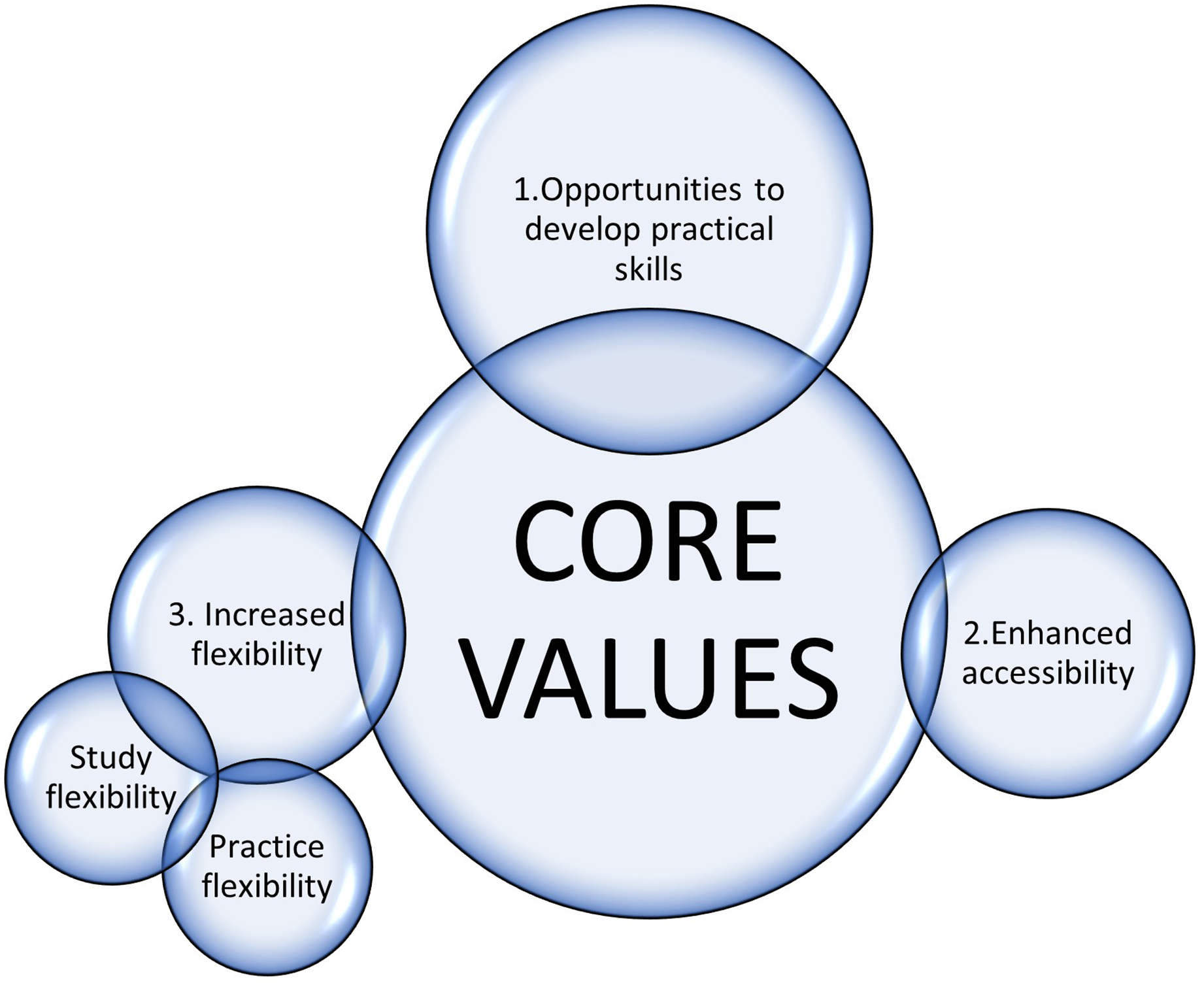
Diagrammatic representation of findings.
What motivates psychology undergraduates to transition to post-graduate counselling studies?
Meta-theme: alignment with core values
All participants reported an underlying desire to empower clients, utilising the client's own internal strengths to address life stressors. In addition, the participants all had a primary motivation to help others. The sentiments of wishing to help and empower clients were associated with an overarching theme of a desire to practise in a humanistic and non-judgmental way that was aligned with each participant's personal values. These core values influenced the participants’ responses throughout the interviews and became evident as each major theme emerged.
Psychology studies were viewed as relating mainly to theory, research, and experiments, with little emphasis on applying the principles to helping people. I wanted to be someone that … worked in the space where I am working with real people, caring for real people versus studying people. (Participant 2)
The terms ‘human’ and ‘people’ emerged throughout the interviews with a large emphasis on working one-on-one with clients; to ‘sit through’ their emotions, without a prescriptive agenda to move them forward or to assess and diagnose. I guess with counselling … it's more the client or the patient understands themselves as to why they might be thinking about how they feel, how they’re thinking, a bit more, if you like – at a ‘personable’ level to what psychology is. (Participant 3)
The participants perceived psychology and counselling as distinctly different, with psychology studies being more impersonal and counselling practise more empowering for clients. Counselling seemed to better align with the participants’ personal values of using strength-based principles and client-centred therapy. I believe that counselling is more people focussed and from, at least at our uni, we’re coming from a strengths-based perspective that the client has all the ability in the world to know what their life is and what their issue is and how they can best go about fixing that. (Participant 4)
Theme #1: opportunities to develop practical skills
The major motivation for all participants to transition to the counselling discipline was a desire to acquire practical skills. Students reported that they had expected to learn practical skills of how to work with people as part of their psychology studies, only to find that their psychology studies were primarily theoretical. And I found that while my theory was good, I didn’t have the skills that I thought were necessary for the role I was in. (Participant 1)
The participants reported a disproportionate focus on theory was a key driver of dissatisfaction with their undergraduate psychology studies. This dissatisfaction was the primary reason the participants gave for choosing to not continue their psychology studies. So, the thought of doing five years of study with only one year of practical study … was like, very daunting to me. (Participant 8)
The participants consistently reported that they were not aware of the extent of the theoretical content prior to enrolling in psychology studies, nor were they aware of the necessity of studying statistics. In addition, the participants felt that they had not been provided sufficient information regarding the educational components to make an appropriate decision that would best suit their career goals and learning preferences. I would have liked to have known that psychology was extremely theory based and I would have liked to have known that I could have gone into counselling, like not worried about my psych. degree, gone straight into counselling, and started getting the hands-on work that I would have preferred. (Participant 8) All of a sudden you finished fourth year and you’re expected to either do two more years of study or go straight into supervised practice with no face-to-face experience and having not actually spoken to anybody outside of your course. (Participant 1)
Theme #2: enhanced accessibility
Whilst most participants reported enjoying the psychology content they had studied, continuing with a psychology stream posed challenges and risks for the participants to achieving their career objectives. These barriers included not achieving the required academic results to enter an honours year, the length of time it would take to complete the requirements for registration as a psychologist, and the limited number of field placements available for graduating students. And when I got my overall GPA grades back, and I was point two off getting into honours, I’ve gone ‘OK, honours and stuff is not for me, what else can I do that will get me working with people doing a similar type of role?’. (Participant 8)
The participants cited that not having enough information regarding the psychology pathway and what was required to become registered and practise as a psychologist were the largest barriers to completing post-graduate psychology studies. Know exactly how long you need to study before you can be qualified for anything like of value in the field … I think I was almost up to my third year before anyone kind of said that and I was like ‘Oh okay, that's a lot longer than I anticipated’. (Participant 5)
The participants perceived the psychology honours programme and further post-graduate psychology study to be highly competitive with considerably fewer places available than qualified students, making even high-performing graduates seek alternative educational pathways. Oh, I wish I had known about the barriers to entry into post-graduate psychology. So, I did honours equivalent because, yes, I didn’t get into honours as part of my undergrad degree, so I did the alternative degree. I didn’t get in – in terms of high marks – like fourth year had maybe 80 places and then fifth year [had fewer places] because you needed a supervisor. (Participant 1)
In response to these barriers, the participants perceived that changing to counselling provided them a higher likelihood of study acceptance, success, and professional registration. In addition, changing to counselling provided an opportunity for the participants to reflect upon their own personal values and career goals, to ensure their next steps were aligned with their core values and professional goals.
Theme # 3: increased flexibility
The participants perceived inflexibility with the psychology practice and educational delivery, which was difficult to overcome with normal, and sometimes, abnormal life pressures and stressors already facing students. The need for flexibility, both practice flexibility and education flexibility, was a key driver for selecting post-graduate studies in counselling rather than in psychology.
A strong desire was expressed by all participants for the ability to have more flexibility in their future therapeutic practice. This flexibility related to the style in which treatment was given, with psychology perceived as being quite structured, diagnostic, and rigid in its approach. … you can have your own way of doing counselling, where psychology seemed to be a very one way or the highway type. Being structured, I know, doesn’t work for everybody. (Participant 8)
Those transitioning to counselling were seeking a more personable, human, and holistic approach to treatment, where the opportunity and the timeline for change were led by the client, rather than the therapist. … you had to tick all the boxes, yeah, I felt like that would frustrate me in psychology. So, I feel like as a counsellor, I’ve got more flexibility to work in that, you know, perhaps what I would call pioneering space. (Participant 2)
The participants reported dissatisfaction with having to perform assessments and completing very structured, diagnostic, therapist-led interventions with clients, which was not in line with their preferred style of therapy. So, yeah, when I found out like, we have to like stick to the standard rules of being there to assess people and be like ‘All right, now I am going to help you get through your diagnoses so you can live better’, I was like – that's not quite what I wanted to do. (Participant 4)
The participants held a common perception that a psychologist was focussed on diagnosing and ticking the boxes, creating a greater power imbalance over a client. Whereas I feel that a psychologist who is counselling maybe is a bit more directive and a bit more of ‘that is that’ and ‘that is that’, you know, very quick to attach names to things and very firm in their beliefs that they’re telling me the right thing. (Participant 7)
Study flexibility was related to the educational requirements of completing a psychology pathway, which were considered stricter and more inflexible, whereas the counselling discipline seemed to offer a greater number of options, exit points and flexibility in how the course could be completed. So, I was working really hard to get a good grade point average to go into honours and then my situation changed, and I became a sole parent, so I needed to work. So, I can’t actually do 12 months’ face to face at Uni with my honours … it all just seemed too hard to keep going down that pathway at the time. There wasn’t a lot of flexibility around continuing on that pathway. (Participant 7)
The participants perceived that a counselling pathway offered greater opportunities to complete post-graduate studies and graduate with nested qualifications, providing flexible entry and exit points. I could still continue on for another six months in the second semester and graduate with a – with a graduate diploma, and even if I change my mind, I could still do a masters after the completion of the graduate diploma, so there's lots of backstops along that route. (Participant 3) It (the undergraduate degree) was a really hard slog and I feel like I’ve got all this knowledge, but I can’t really go and use it for anything – I’m still not actually qualified really to do anything. (Participant 7)
This need for flexibility of both practice and study required the participants to consider their individual options and needs, leading them to transitioning to the counselling discipline. The counselling discipline was considered far more flexible in both practise style and the completion of qualifications.
Discussion
In this study, we elicited the perceptions and motivations of eight psychology graduates to change career direction by transitioning into post-graduate counselling study. Results were characterised by a pervading emphasis of philosophical misalignment of undergraduate psychology training with the participants’ preferences and values. In addition, the participants identified several practical reasons for preferring to continue their studies in counselling instead of continuing psychology studies to registration.
Ideological fit
Internal pull factors that led to the participants transitioning to counselling included values, personality, and skills, as Hoare and Luke (2022) identify. External factors included barriers, finances, and geographical location (accessibility), however, parental and peer influences, and chance opportunities did not emerge as clear factors as to why these participants chose to change career direction. At the heart of the decision to transition to counselling, lay core values of the participants wishing to practise in a way that was ‘more human’, with greater flexibility and consistency with their values, pulling them towards the counselling profession and pushing them away from the psychology profession.
A primary desire of helping others was the common motivation when choosing to study both psychology and counselling disciplines, however, the participants noted contrasting values emphasised by each. The students recognised differences in what the psychology training (specifically undergraduate psychology training) emphasised in contrast to what the counselling training emphasised. Psychology has a strong commitment to empiricism (Australian Psychology Accreditation Council [APAC], 2019; Machin & Gasson, 2022), captured in the scientist-practitioner model (Johnson & Kaslow, 2014). This model emphasises the importance of knowing, integrating and translating empirical evidence into practise and that practitioners should have a comprehensive grounding in general psychological principles from which to support practise. In addition, students are taught about psychological disorders and their associated evidence-based treatments (APAC, 2019), emanating from within the medical model framework (Wampold & Imel, 2015). This training approach tends to emphasise the importance of gaining and utilising expert knowledge, correctly assessing for the presence of psychological disorders, and selecting and applying evidence-based treatments accordingly. The correct application of scientific knowledge is emphasised as critical for treating clients within psychological training.
The counselling profession does not prioritise the empirical approach over other ways of knowing (Noble & Day, 2016). Rather, counselling emphasises the subjective experience and knowledge of the client, the relationship between the therapist and the client, and that the therapist enacts humanistic values. Counselling emphasises person-centred, recovery-oriented frameworks that emphasise client empowerment in the therapeutic process (ACA, 2020; PACFA, 2018b).
Humanistic values, and a focus on the relationship between the therapist and client, are emphasised within counselling training programmes. This focus has been found to be included to a notably greater extent than that of psychology post-graduate studies (McMullen & Krantz, 2022). Master of Counselling programmes in Australia have been shown to consistently, and without exception, incorporate a focus on the relationship between therapist and client into published post-graduate student curriculum (McMullen & Krantz, 2022). In contrast, only 50 to 60 per cent of post-graduate psychology programmes make any reference to the therapist and client relationship in their published curriculum (McMullen & Krantz, 2022).
Practical skills
Even with the ideologically different emphases, all the students interviewed noted they were interested in or enjoyed learning about psychology. They were, however, disappointed that their undergraduate psychology degree study was disproportionately theoretical and did not prepare them directly or adequately for therapeutic practice. Students often expect undergraduate psychology studies to have more training in practise skills to enhance their employability (Gaither & Butler, 2005; Goedeke & Gibson, 2011). As a discipline, psychology has tended to prioritise the science over the practise in undergraduate study (Jones, 2008), as the students in this study alluded to.
There are several solutions proposed including those designed to better educate students to make more informed choices and adjust expectations (Hoare & Luke, 2022). One is to provide an introduction to a major unit for students to help determine whether psychology will be a good fit for their preferences and goals (Dillinger & Landrum, 2002), or to better educate psychology students as to the practical relevance of their learning, including better employability knowledge (Mair et al., 2013). Another is to increase the practical elements of training to better prepare psychology undergraduates for employability, partly argued from the very low full-time employment rate after the completion of psychology undergraduate degrees (Neall et al., 2022).
In contrast to the psychology training pathway, counselling is focused predominantly and more narrowly on preparing students for therapeutic practice (including theory as it relates to practise) and emphasises the integration of theory and practise throughout. It has comparatively fewer years to prepare students for therapeutic practice, so its focus is more targeted and streamlined. This narrowing of focus, however, means that counselling students may not gain as wide, rich and deep theoretical preparation in comparison to students who complete a psychology undergraduate qualification.
Barriers and enablers
Flexibility and accessibility were of greater concerns in this sample than academic requirements, in that students would be required to follow very structured and stringent pathways to become registered psychologists. Such structure and inflexibility were seen as less feasible to manage with everyday life pressures and responsibilities. Psychology has a training pathway of six years fulltime equivalent to become fully registered, the longest training of allied health professionals (Reupert et al., 2018). Counselling, by comparison, has one- (i.e., Graduate Diploma), two- (i.e., Master) or three-year (i.e., Bachelor) options to prepare students for practise. Counselling training does not have additional performance or competition-based hurdles as psychology does. Counselling training does have attendance hurdles, whereby, students are required to attend online synchronous and in-person to person teaching (and placement) requirements, as required by the training standards (ACA, 2012; PACFA, 2018a). The counselling placement has fewer hours of practice and clinical supervision required, thus, requiring less commitment. This counselling pathway to full professional membership is more certain and quicker than the comparable psychologist registration pathway.
Recommendations
Most students studying psychology aspire to do therapy (Collisson & Eck, 2022). Given the expense in time and cost for undertaking study, it is important that students align their study choices with their training preferences, aspirations, and potential to succeed. The participants in this study reported a lack of information regarding the disciplines of psychology and counselling to make an informed decision prior to commencing their psychology undergraduate degrees.
SCCT emphasises the importance of assisting people to make optimal decisions in their selection of occupations (Brown & Lent, 1996). This assistance is partly done by helping individuals to gain an accurate awareness of their values, interests, and capabilities; and ensuring individuals are aware of sufficient and accurate information about a range of available career options (Lent, 2021). While much of the focus of SCCT is on the individual's own faulty self-efficacy and outcome expectations, it also stresses the importance of having correct occupational information.
Professional accreditation standards require that accurate and detailed information be available to students (ACA, 2012; APAC, 2019). However, a more proactive approach may be required by educational institutions to ensure prospective students are not only aware of the course they are considering enrolling in, but also aware of similar professional pathways and how they relate and differ from each other. The information of relevance might include the length of study, the key skills, competencies, knowledges, and underpinning philosophies of each pathway, and when these are learnt, the average pay of practitioners, the employment opportunities, the specific disciplinary hurdles and challenges, and the inherent requirements. Academics, career counsellors, and student advisers can inform students there are numerous pathways to becoming a professional therapist. Students can consider counselling, social work, mental health nursing, or psychology. The qualifying pathways for each discipline have a different focus in the training, different philosophical values, different duration of training, and different levels of risk. Likewise, as these participants have done, students can start on one pathway and change direction later.
This study revealed the relative importance of the professions’ training and treatment philosophies in relation to students’ motivations to study. This finding may be the result of these students having had exposure to two different philosophies, whereby, they could compare and contrast, providing an opportunity for the students to discover a deeper personal resonance with the counselling values. When career counsellors work with prospective students interested in the helping professions, they might assist them to undertake a personalised core values assessment prior to selecting their course of study. There are several methods of considering one's core values and reflecting upon individual priorities; an example of such an exercise is included in Beel et al. (2022), whereby individual key factors are identified and then rated on a scale of one (not well aligned) to five (very well aligned). It is important for individuals to consider the differences and similarities between the professions, and reflect upon the type of work that they wish to perform. Several values assessment tools and quizzes are available online, such as the Life Values Inventory (Brown & Crace, 1996). Additionally, students should be encouraged to seek assistance from career counsellors or student support services at higher education institutions to assist in the reflective process of determining values and goals.
Limitations
It is acknowledged that due to the limited sample size of the study and the exclusive cohort that these participants belonged to, these findings have limited generalisability. The restricted sample is unable to comprehensively represent the diverse experiences and perspectives of counselling students across various educational institutions, thereby, limiting the ability to extrapolate these findings to a wider context. In particular, the availability for flexibility of online studies and multiple exit points may not be accessible to counselling students from alternative educational providers. It is recommended that further studies be completed with larger sample sizes and from varying cohorts, including a broad selection of higher education providers within Australia, to further explore these topics. This approach could offer a more holistic view of the perspectives and experiences of undergraduate psychology students by encompassing the varied contexts and practices across different educational institutions.
Conclusions
In this research, we have described and explored the motivations and perceptions of students who transitioned from undergraduate psychology studies to post-graduate counselling. While the students indicated aligning more to the ideology of the counselling profession as being more humanistic and practical, it was also viewed as a pathway that would enable them to achieve their goals of becoming therapists and helping people. For these students, the pathway to become a psychologist presented as misaligned with their philosophical approach to practice, misaligned with their preferences and expectations for training and presented barriers to progress towards their goal of helping people. Recommendations from this study will provide additional guidance to university academic staff and career counsellors on how to effectively support university students interested in becoming therapists to make more informed choices about their intended career paths, choosing courses that best fit their values, training preferences, and desired outcomes as closely as possible.
Footnotes
Declaration of conflicting interests
The authors declared no potential conflicts of interest with respect to the research, authorship and/or publication of this article.
Funding
The authors received no financial support for the research, authorship, and/or publication of this article.
