




Abstract
Transitioning from high school is known to be challenging for students. Utilising the Preferred Reporting Items for Systematic Reviews and Meta-analysis for scoping review guidelines, this scoping review examined the extent of existing research on the association of career indecision with depression, negative thoughts, and the role of self-efficacy and sense of control among school leavers. The extensive database search indicated only nine studies met the specified inclusion criteria. Results showed that more decided high school students tended to have more positive affect and higher levels of well-being. Conversely, levels of depression were found to be higher in less decided adolescents, with a direct relationship as well as the possible causal relationship indicated. The results indicate that integrated counselling in vocational and mental health support services is needed in schools through the leaving years and tertiary institutions as students commence study. Further research is needed to better understand the interrelatedness and specific relationships between these variables.
Introduction
Depression and subthreshold depression are pervasive mental health issues among young people (Keyes et al., 2019). The incidence of depressed mood and symptomatology among this population may be as high as 60%, leading to impaired school functioning and an increased risk of overall functional impairment (Carrellas et al., 2017). In fact, depression is estimated to be the leading cause of disease burden in individuals aged 14 years to 24 years, with few prevention or large-scale universal intervention programmes in place (Perry et al., 2015; Werner-Seidler et al., 2017).
It has also been found that the prevalence rates of depressive symptoms and psychological distress increase during adolescence, and then these individuals are at greater risk of depression or depressive episodes in young adulthood (Avenevoli et al., 2015). Psychological distress or distressed mood is described as the presence of feelings of anger, sadness, or unhappiness. Distress may lead to depressive symptoms and thereafter to a major depressive disorder. With depressive symptoms often triggered by stressors or stressful events, end-of-year examinations are cited as a significant stressor for young people. This may exacerbate pre-existing symptomatology or trigger depressive symptoms in school leavers, particularly in cultures where university entrance is highly prized (Perry et al., 2015; Werner-Seidler et al., 2017). Similarly, transitioning from secondary school to vocations in the wider community or tertiary education is a daunting prospect, and stress, or symptoms of depression have been linked to these transitional phases (Boyraz et al., 2016; Doane et al., 2014).
The importance of making a decision around a career, or what is next, is continually emphasised through the high school years (Perry et al., 2015). Career decision-making is the process of resolving internal and external conflict while determining a career direction (Bullock-Yowell et al., 2014). There are several aspects of indecision about career direction, such as being undecided regarding the subjects to include in later years of school, being undecided regarding career direction or interests, or struggling with decisions with respect to tertiary institutions, majors, and defined courses (Andrews et al., 2014; Womack et al., 2018). Some of this may be temporary and resolve as young people transition, but some students remain undecided through the choices they make, from defining subject choices at school to entering tertiary studies or work (Bullock-Yowell et al., 2014; Krumboltz & Worthington, 1999).
Walker and Peterson (2012) have conducted one of the first studies to investigate the relationship between negative career thinking, career indecision, and depression in college students. Walker and Peterson (2012) found that dysfunctional career thoughts and career indecision were significantly related to depression, although they also concluded that this relationship is not fully understood, and causality has not been established. The researchers have suggested that there is a significant need to address mental health issues and career indecision using an integrated approach. Further research findings have suggested that depression and depressive symptomatology limit the ability of a young person to form good decisions and process their thinking around career choices (Paivandy et al., 2008; Saunders et al., 2000). Therefore, depression, depressive symptoms, and negative thinking maybe both consequences and precursors to career indecision. Having clear career goals could reduce the prevalence of depressive symptoms (Rottinghaus et al., 2009). Regular calls have been made for further research to better understand the co-occurrence of depressive symptomatology and career indecision (Dieringer et al., 2017; Rottinghaus et al., 2009; Walker & Peterson, 2012).
A scoping review is best suited to map out a body of knowledge that has not yet been reviewed and to fill potential gaps in less-defined fields (Malley & Arksey, 2005). The present scoping review aims to systematically establish what gaps may exist and to highlight possible areas for future research. Using the Preferred Reporting Items for Systematic Reviews and Meta-analysis (PRISMA), the review methodically examines what studies have been specifically conducted across school leavers as they transition in relation to depressive symptoms, negative thinking, and career indecision. The review also explores the evidence on the sense of control and self-efficacy as potential mediating motivational constructs. Motivational constructs such as a sense of control and self-efficacy are key deterministic factors influencing adolescent behaviour and decision-making and are explored as part of this review (Bandura, 1993). Expectations of adolescents around career choices, as well as contextual developmental pressures and future orientation, including a sense of control over personal or external constraints and self-efficacy, are all likely to impact the well-being and mental health of the young person. Self-efficacy is the perception and belief of a person regarding their capabilities and skills to achieve and perform in a variety of different areas (Betz & Hackett, 2006). Bandura et al. (1999) suggested that a low sense of efficacy in one's ability to control events and the various challenges or aspects of life can lead to depression through unrealised aspirations. The present scoping review importantly includes all these key constructs as part of the search and review process.
The following key questions were used in the scoping review:
When depressive symptoms or negative thinking are examined, is career indecision also examined? What specific relationships, key findings, and interventions, if any, were described in these studies? When depressive symptoms, negative thinking, or career indecision are examined, is self-efficacy or sense of control also investigated? What is the scope and breadth of research conducted on these variables in the defined population?
Therefore, the objective of this scoping review is to describe and highlight the evidence and gaps regarding the association between career indecision and depression symptoms and/or negative thoughts, clarify concepts, and outline any possible mediating effects of self-efficacy and sense of control.
Method
This scoping review aimed to investigate the range of research that examines these constructs, given the importance of the developmental stage of adolescence. This review entailed searching for all sources of evidence that investigated depression or depressive symptoms and/or negative thinking, career indecision or decision, self-efficacy, and sense of control. The review considered the available range of study designs being used, including longitudinal, intervention trials, before and after studies, and interrupted time-series studies. In addition, the database search included quantitative correlative and exploratory studies and analytical cross-sectional studies along with qualitative studies and systematic and literature reviews.
The following steps were taken in this scoping review: (a) identifying the research questions and scope of the enquiry, particularly the constructs of interest; (b) defining the eligibility criteria; (c) searching the literature; (d) selecting the studies to be included in the full-text review using PICO and SPIDER (Methley et al., 2014) methods; (e) extracting the results; (f) qualitatively analysing the selected studies; and (g) presenting the results. The overview of the results was informed by the PRISMA for Scoping Review (PRISMA-ScR) guidelines (Joanna Briggs Institute, 2020). The search strategy and the results are outlined below.
Search strategy
The search strategy aimed to identify published research studies and reviews. A preliminary search of the MEDLINE, OVID, EBSCO, and JBI Evidence Synthesis databases was conducted, and no systematic reviews or scoping reviews on the topic were identified. A detailed search using a wide range of text words (see Table 1) was used to develop a full online search strategy for the SAGE, Scopus via EBSCO, education journals via OVID, PsycInfo via OVID, EBSCO Wiley, Web of Science, Google Scholar, and NACADA databases. Databases were selected according to subject matter coverage, particularly education, vocational research, psychology, and mental health research, along with a full university academic library search. The full search of education journals via Ovid is included as an example in the Appendix. In each database, subsequent searches for sources of evidence that met the inclusion criteria were expanded, by using text words contained in the titles and abstracts of relevant articles and the index terms used to describe the articles. Specific search terms, filters and strategies were aligned to each database convention, and the Boolean operators “OR” and “AND” were used to combine the terms. The reference lists of the included sources of evidence were hand-screened for additional studies. Studies published since 1990 were included to cover thirty years of research, ensuring coverage and depth to better identify gaps and highlight key findings. The full database search was conducted during June and July 2021.
Key words and key variables used in the search.
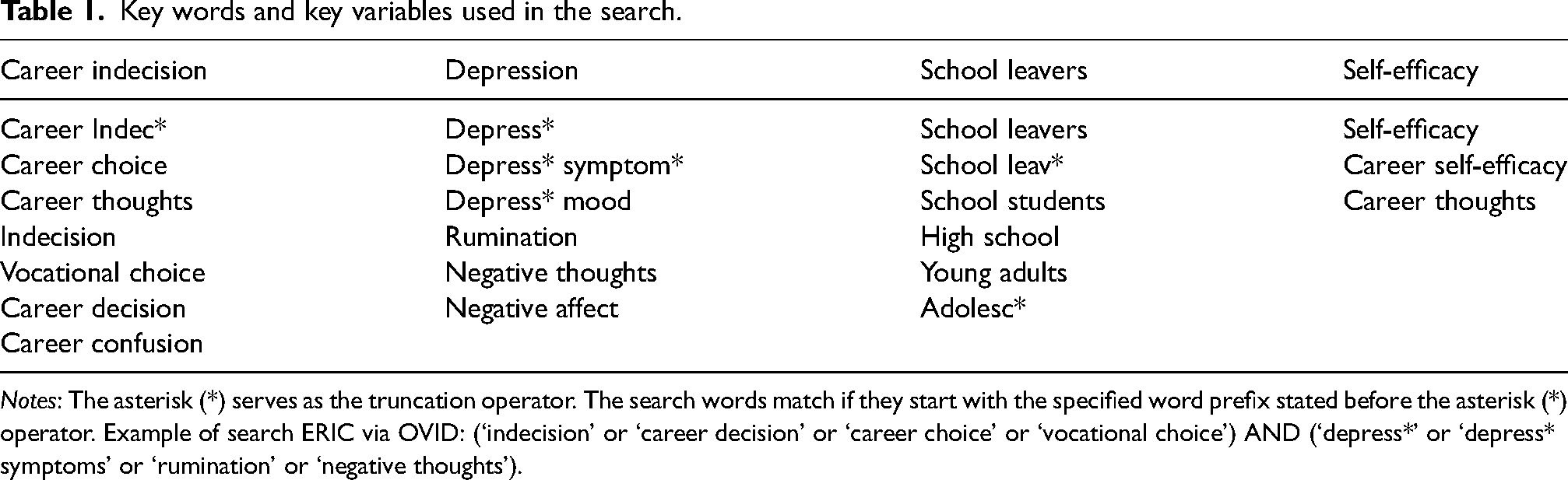
Notes: The asterisk (*) serves as the truncation operator. The search words match if they start with the specified word prefix stated before the asterisk (*) operator. Example of search ERIC via OVID: (‘indecision’ or ‘career decision’ or ‘career choice’ or ‘vocational choice’) AND (‘depress*’ or ‘depress* symptoms’ or ‘rumination’ or ‘negative thoughts’).
Eligibility criteria
The following inclusion criteria were used in the search, screening, and selection of studies. The included populations were defined as school leavers or transitioning high school students and those students just entering tertiary studies. The populations age bracket was specified and included adolescents 15–20 years. The present review included all genders, races, and ethnicities and evaluated only research published in English. The research had to include the key criteria variables and contexts across mental health, career indecision, self-efficacy, and sense of control. Mental health constructs included depression, symptoms of depression; rumination; or negative thoughts and emotion, in the included population and as it related to transitioning from school, career decidedness or career decision-making. Career indecision has been defined as the state of confusion or difficulties associated with the pursuit of a career through first study or into work (Gadassi et al., 2015). Research that investigated the effects of self-efficacy and/or sense of control was also included.
The review specifically excluded studies of university or college students who were well past the post-high-school transition period as well as employed individuals. The review specifically excluded any research conducted in sample populations that investigated clinically depressed or major depressive disorders. Only studies that included all the key constructs under investigation, that is symptoms of depression and negative thoughts and/or emotion or rumination and career indecision were included. Studies of individuals in the early stages of high school and those making career-related decisions at younger ages were also not included. Finally, studies on gifted or disabled students were not included.
If the studies met the inclusion criteria after the title and abstract screening, they were selected for full-text review. A total of 39 full-text articles were qualitatively assessed against the inclusion criteria using both the PICO and SPIDER methods (Methley et al., 2014) based on the purpose of this review and key research questions outlined above.
Each of the selected 39 studies included for the full-text review were assessed according to the source methods, population, interventions, and key findings. The selection process for the data sources was entered into an Excel spreadsheet and mapped according to the PRISMA method (Joanna Briggs Institute, 2020). The results were synthesised to meet the objectives of this scoping review. The results were tabulated and summarised in relation to the defined scope and gaps in the evidence in relation to each study's scope against the variables of career indecision, negative thinking, and depression specifically, as well as assessed against the extended effect of possible mediating variables of self-efficacy and sense of control, and the consistency of findings was noted. The reasons for excluding studies during the full-text review were then recorded, leaving a final selection of studies meeting the inclusion criteria.
Results
As shown in the PRISMA-ScR diagram (Figure 1), a total of 568 articles were identified in the full database search. After all duplicates were removed, 385 articles remained, further citation and local search added 13 to extend review list to 398 articles. After the title and abstract review, 53 articles were qualitatively reviewed against the research questions using the PICO and SPIDER methods. The main reasons for exclusion were the sample or population criteria were not met, or the key constructs of depression; symptoms of depression; negative thoughts and career indecision; or decision-making were not included in the research. Twenty-six articles then remained, and an additional 13 articles were added after manually searching the reference lists of the initially included studies. A further full-text review was conducted on the 39 studies. Nine studies were finally selected as meeting the objectives of this scoping review.
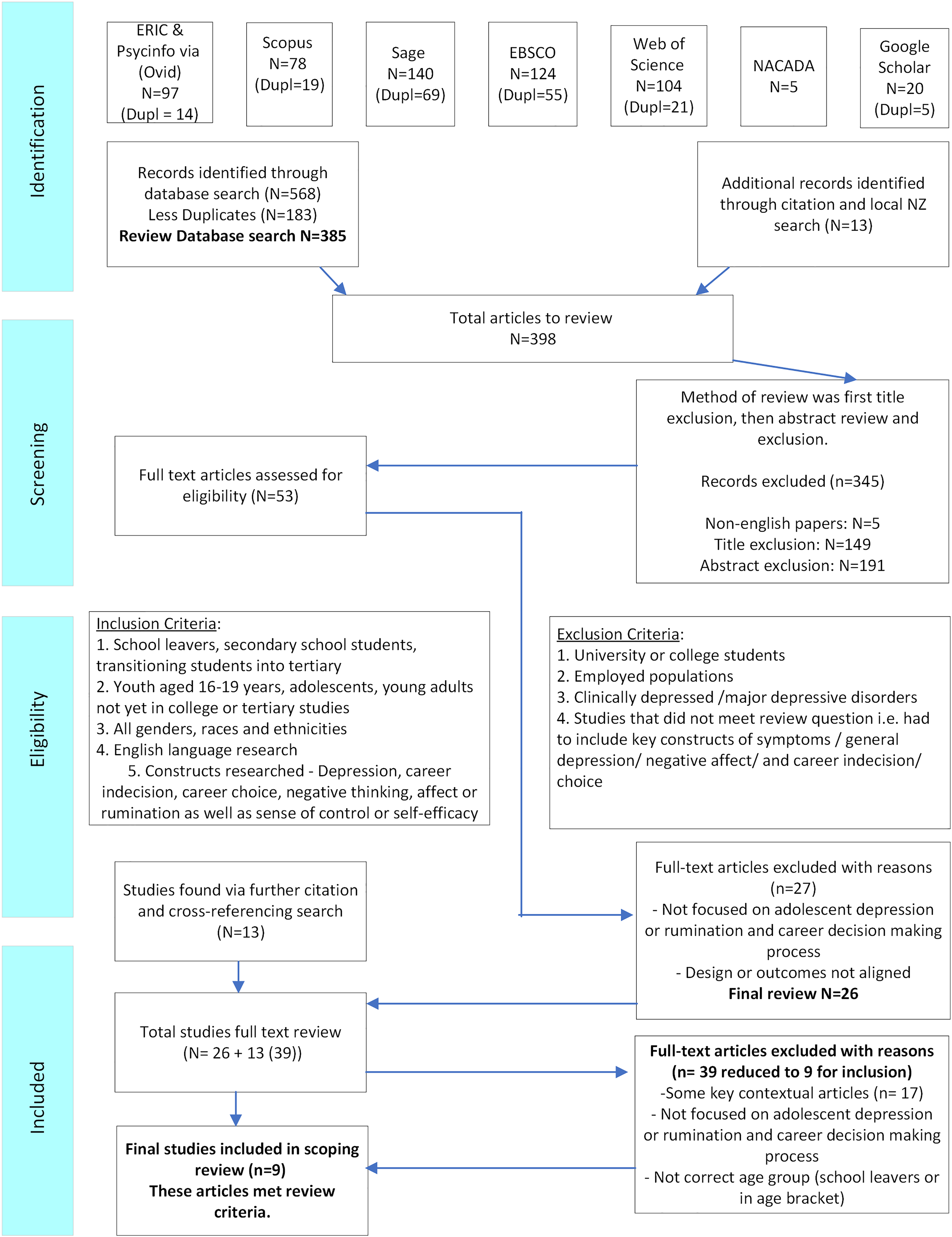
Preferred Reporting Items for Systematic Reviews and Meta-analysis (PRISMA) flow diagram used in the search strategy with results.
The full-text review showed several articles that were partially in scope, but upon detailed review, it was determined that these studies did not investigate the constructs in the core defined population, or they did not combine the constructs in a manner that answered the key research questions for the review. Of the 39 full-text reviews, only 46% included the defined population of adolescents between 15 and 20 years of age or school leavers. A total of 72% of the studies in the full-text review included a measure of career decision-making or vocational choice. As identified in the final full-text review, only 33% of the studies included depression or psychological distress as key variables. Only eight studies (21%) specifically investigated the relationship between career indecision and symptoms of depression. Much of the research that included the key constructs in the review was across older, university-going samples, predominantly in the USA. None of the research studies included all the defined variables, that is, career indecision, depression, negative thinking, self-efficacy, and sense of control. The nine articles selected for final review met all the inclusion criteria based on the population, design, most key phenomenon of interest, and key variables.
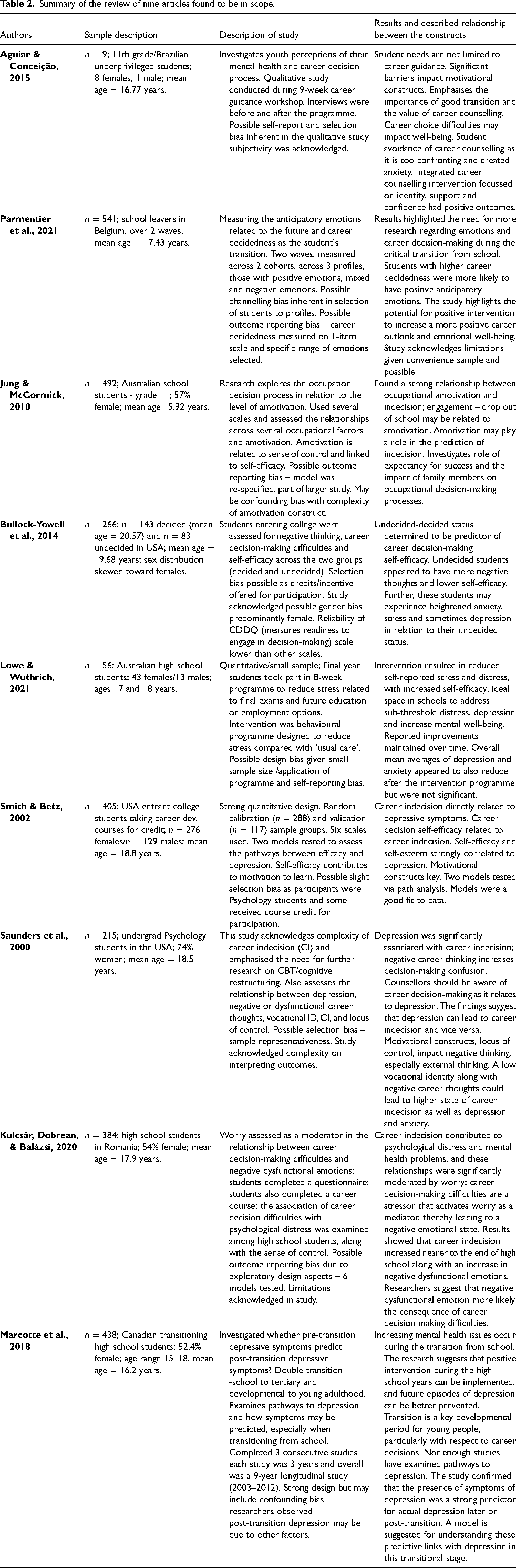
Table 2 lists descriptions of the final nine included articles, the characteristics of the studies, a description of the research designs, and relevant findings. Each of the studies is cited along with a description of the populations in the sample. The nine studies were fairly diverse, representing several countries, with three studies in the USA, all of which were college entrants. Two of the studies were in Australia, both with high school students. Of the nine studies, six were with high school students specifically in the leaving years. The final included studies had participants with a mean age between 15 years and 20 years, all included both genders, albeit most were skewed to female participants. One study was a qualitative study. The studies largely did not overlap in the use of scales, with specific variables examined by each study varying quite substantially, although all studies investigated a measure of career indecision or career choice, depressive symptoms; or negative emotion; and/or negative thinking. Some studies investigated a sense of control or self-efficacy. Most studies were unique research contributions to the field, and all noted the relative lack of research into the relationship between career decision-making and emotional factors, mental health, and negative thoughts.
Summary of the review of nine articles found to be in scope.
Research question 1: When depressive symptoms or negative thinking were examined, was career indecision also examined? What specific relationships, key findings, and interventions, if any, were described in these studies?
The results of the nine studies included in this review indicated that there is evidence suggesting that career indecision, depressive symptoms and negative thinking are directly related. Specifically, the studies concluded that undecided students were more depressed than decided students. The findings also suggested that depression can lead to indecision. More specifically, of the nine final studies reviewed in this scoping review, certain claims were evidenced. Smith and Betz (2002) found that career indecision was directly related to symptoms of depression. Furthermore, negative thoughts about career decision-making were directly related to symptoms of depression. Saunders et al. (2000) examined students with a mean age of 18.5 years and found that depression was significantly associated with career indecision, and negative career thinking increased decision-making confusion. Further researchers showed that the state of indecision may result in heightened anxiety, stress and depression (Bullock-Yowell et al., 2014). Marcotte et al. (2018) conducted a longitudinal study and found that the transition from high school was a key developmental period for young people, particularly regarding occupation choice. The research showed that there are increasing mental health issues in this transition phase, suggesting that more interventions should be implemented to prevent further depression. Parmentier et al. (2021) found that students with less career-related indecision had a more positive outlook and higher levels of well-being. Kulcsar et al. (2020) investigated the relationship of worry as a moderator between career indecision and negative dysfunctional emotion. Career indecision in high school students and the effect of worry contributed to psychological distress and mental health problems in the study by Kulcsár et al. (2020).
Research question 2: When depressive symptoms, negative thinking, and career indecision were examined, were self-efficacy or sense of control also investigated?
The results of the studies that met the scoping review inclusion criteria showed that increased self-efficacy was associated with lowered levels of depression and lowered career indecision. Results also suggested that increased motivation, sense of confidence in the future and sense of control increased career decision confidence and reduced the impact on health and well-being. The nine studies reviewed revealed certain findings. In the study by Lowe and Wuthrich (2021), self-efficacy was hypothesised to be related to distress and anxiety, whereby increased self-efficacy would result in reduced emotional distress; in interventions designed to reduce stress in the last two years of high school there were lowered levels of distress and increased self-efficacy. The same study showed elevated levels of observed symptoms of depression in these high school students. Smith and Betz (2002) found that career indecision was directly related to depressive symptoms and that career decision self-efficacy was also directly related to career indecision. Lowered self-efficacy was also strongly correlated with depression. The mean age of students in the study was 18.8 years. Bullock-Yowell et al. (2014) found that students with career-related indecision appeared to have more negative thoughts and lower self-efficacy. Few studies have also investigated the sense of control, barriers, or locus of control along with the key defined variables in this review. In a small study by Aguiar and Conceição (2015), the positive impact of gaining confidence in the future was seen to positively influence the career guidance process and students felt less anxious. This study also investigated the impact of perceived and real barriers that impact motivational constructs. Amotivation was investigated by Jung and McCormick (2010) and was found to play a role in predicting career indecision and potential school dropout. Only 4 studies included an aspect of a sense of control with both career indecision and depression (Aguiar & Conceição, 2015; Dieringer et al., 2017; Saunders et al., 2000; Smith & Betz, 2002). The evidence of the relationships was indicated in the research; however, the exact nature of the relationship has not been established, and establishing clear causality remains a key gap.
Research question 3: What is the scope and breadth of research conducted on these variables in the defined population?
The results of this scoping review showed that there are limited studies that focus on career indecision, depression, negative thinking, as well as the sense of control and self-efficacy, particularly in high school students leaving school or transitioning into higher learning. The results from the search indicated that only 2.3% or 9 of the 398 studies found in the search examined the relationship between career indecision and depression, and fewer also examined the possible impact of self-efficacy and sense of control in the transition from high school to vocational studies or work. More specifically, the findings presented in the final nine reviewed studies highlighted certain points of interest. Marcotte et al. (2018) suggested that not enough studies examined pathways to depression in the transitional stage from high school to vocational training or work. Marcotte et al. (2018) pointed out that the rate of recurrence of depressive symptoms was between 50% and 70% in adolescents, and that adolescents were reticent to seek help, suggesting that prevention programmes are important prior to transition (Marcotte et al., 2018). The results from this scoping review suggested that there is limited research available that investigated these variables in the defined population. The most significant finding of this review was that research into this defined population, that is, high school students in the transition from school to vocational studies or work, has been limited, particularly in relation to career indecision, negative thoughts, depression, self-efficacy, and sense of control. It was highlighted throughout the nine studies assessed that there has been limited research in this population and that more research and intervention studies are needed to understand the pathways to depression in the context of transition and career decision-making.
The results of this scoping review suggested that there could be a direct and measurable relationship between career indecision and negative thinking or symptoms of depression. The review findings further specified that career decision difficulties could act as a stressor, which in turn may lead to negative emotions or distress. The results of the review also indicated a significant relationship between negative thinking and career indecision, whereby negative thinking could increase career confusion and subsequent distress. The results from the review identified the relationship between self-efficacy and career indecision, as well as the impact of lowered self-efficacy on negative career thoughts. Sense of control, barriers, and perceived external factors were also identified as impacting both career decision-making and mental health. The results of the review illustrated that there is an existing gap in the breadth and depth of the research around students transitioning from high school and their career decision-making, rumination, negative thinking depressive symptomatology, self-efficacy, and sense of control.
Discussion
The purpose of this scoping review was to establish the extent of research on the relationships among career indecision, negative thinking, and depression in school leavers transitioning into vocational training or work. This review also examined the impact and possible effects of self-efficacy and sense of control on career indecision and depression in school leavers. A significant gap was identified in the research conducted to date in terms of the impact of the process of career decision-making and transitioning from school on mental health, particularly in reference to symptoms of depression and negative thoughts or rumination. The findings further suggested that key researchers in the field have identified the need for greater awareness of the impact of career confusion, indecision, and processing on young people. The complexity of making career choices after school likely adds to adolescent confusion, distress, negative thinking, and hopelessness (Dieringer et al., 2017; Rottinghaus et al., 2009). The studies identified in the review support the need for more integrated approaches in both research and counselling at schools and in postschool settings. Globally, there is a distinction drawn between the practice of career counselling and clinical or personal counselling, and this distinction spills into the research domain as well as counselling interventions (Blustein et al., 2019; Dieringer et al., 2017; Rottinghaus et al., 2009). Blustein et al. (2019) presented a strong case for a more integrated approach both in counselling practice and research involving career development, processing and the interconnectivity of well-being or mental health and work.
Based on our scoping review, there is evidence to suggest that career indecision and depression are directly related (Aguiar & Conceição, 2015; Gadassi et al., 2015; Saunders et al., 2000; Smith & Betz, 2002), whereby students in schools or transitioning out of school who were more decided were significantly less depressed than those who were undecided. Positive interventions in the high school years addressing transition stressors, including career choice, may minimise future depressive episodes (Marcotte et al., 2018; Parmentier et al., 2021). The review results indicated that leaving school is a key transitional period for young people and that pressure around career choice processing is significant for them in this stage (Aguiar & Conceição, 2015; Jung & McCormick, 2010; Kulcsár et al., 2020; Lowe & Wuthrich, 2021; Marcotte et al., 2018). Studies with positive interventions to address career indecision in the transitioning phases showed reduced symptoms of depression after the interventions. Similarly, increased career indecision resulted in increased symptoms of depression (Anghel & Gati, 2021). The review results showed that negative career thoughts increase decision-making confusion, and undecided students have higher levels of negative thoughts and lower self-efficacy.
Several of the studies in scope showed that increased negative career thoughts are linked to increased negative affect or distress (Paivandy et al., 2008; Saunders et al., 2000; Walker & Peterson, 2012). Furthermore, interventions to increase self-efficacy and sense of control over exams and future employment options showed reduced self-reported distress (Lowe & Wuthrich, 2021). Results indicated that lowered self-efficacy, career indecision and depression are highly correlated, with self-efficacy impacting the motivation to learn and negative thinking patterns (Saunders et al., 2000; Smith & Betz, 2002). The interrelationship between career decision-making and mental health is discussed below with specific reference to career indecision, mental health constructs, that is, depression or negative thinking, and motivational constructs self-efficacy and sense of control.
Career exploration and the impact of indecision on mental health
The results from the nine reviewed articles suggested that career decision processing-related difficulties are strongly correlated with mental health concerns and that career counsellors in schools and also tertiary institutions should be better equipped to identify these issues and support students (e.g., Anghel & Gati, 2021; Gadassi et al., 2015; Marcotte et al., 2018). The complexities of transitioning from school along with the changing nature of work add to the complexities in career decision processing, as well as potential mental health issues. The need for integrated counselling in schools and universities is expressed and tabled within the reviewed sources. The results, in this scoping review, suggested that a better understanding of the rise of symptoms of depression in high school students and the associated levels of career uncertainty and indecision will assist in providing better preventative care for students before they reach vocational training or work.
Marcotte et al. (2018) conducted an extensive longitudinal study and found that mental health indicators increased in the transition from high school; they also suggested that there is insufficient research examining the pathways to depression around this transitional stage to introduce preventative measures earlier on. Marcotte et al. (2018) further suggested that making choices and decisions as related to career path and direction are particularly stressful and can lead to anxiety and depression, in turn making decisions more difficult. This transition stage is complex; the results from the present scoping review showed that there may be increasing mental health issues through this time, and there are not enough studies investigating the impact of career choice difficulties on mental health (Lowe & Wuthrich, 2021; Marcotte et al., 2018).
Of the nine studies in the review, eight studies supported the need for further research into mental health concerns directly associated with the transition from school and career decision processing. In the study conducted by Parmentier et al. (2021), school leavers with lower levels of indecision had a more positive outlook and higher levels of well-being. The results from this scoping review suggest that there is very little published research that examines depression, depressive symptoms, and negative thinking alongside career decision-making. The is also limited research investigating self-efficacy or sense of control and how this affects career decision-making, particularly in school students transitioning from school.
The additional impact of self-efficacy and sense of control
This scoping review also aimed to investigate the possible impact of self-efficacy and sense of control on students’ transitions, particularly in relation to career decision-making, negative thinking, and depression. The review results show that increased self-efficacy contributes to the motivation to learn and is directly associated with reduced mental distress and depression. The results of the review also showed that there is likely a direct relationship between lower self-efficacy and career indecision and depressive symptoms (Smith & Betz, 2002). In this scoping review, the results show that low social and academic self-efficacy contributed to later depression (Smith & Betz, 2002). Furthermore, the results of the review indicate that there is very little research exploring the relationship between self-efficacy and career indecision in relation to depression or negative thoughts. There was no research that explored all of these constructs and the impact of a sense of control. This review suggests that there remains a significant gap in the research regarding the links between these constructs and transitioning from school and career decision-making in adolescents.
Impact on high school students
Depressive symptoms have also been linked with high school drop-out, whereby one out of four high school drop-outs had significant depressive symptoms in the three months prior to leaving school (Dupéré et al., 2018). In the review results, the study by Jung and McCormick (2010) indicated that there are links between amotivation, indecision, drop out and disengagement. Ultimately, “investments in comprehensive mental health services are needed in schools struggling with high dropout rates, the very places where adolescents with unmet mental health needs tend to concentrate” (Dupéré et al., 2018, p. 205). The scoping review results demonstrated that there is a gap in the research into the mechanisms underlying the relationship between career indecision and depressive symptoms, particularly in school leavers. The review findings suggest there are indications of the value of interventions at school that could increase self-efficacy, reduce stress, reduce worry, and may minimise the advent of increased mental distress, as well as the onset of anxiety and depression. The review findings also suggested that more research is needed into the interrelatedness of emotion and career processing in school leavers as they approach transitioning.
The present scoping review may have been limited by the fact that it was restricted to English language research, particular databases chosen for the search and key words that ultimately may have been further substituted with further synonyms. This scoping review was further limited by the nature and specificity of the inclusion and exclusion criteria. The research findings may be limited with respect to the qualitative nature of the assessment of the eligible sources of evidence. The review may be limited in that only completed and published studies were included, therefore studies included may be subject to publication bias. Finally, this review may also be limited by the chosen scope overall, the specified inclusion criteria or the limitations around ethics that are inherent in the field of study, particularly with respect to the age group defined in this review.
Conclusion
Despite the stated limitations, the results from the scoping review revealed that although there is some research that investigates the relationship between depression and career decision-making, there is no research investigating the interrelatedness among depression, negative thinking, self-efficacy, sense of control and career indecision in school leavers as they transition into vocational training or work. The pressure to choose a path, along with perceived barriers or lowered career self-efficacy, as well as the development of negative thoughts, is not only a cognitive journey but also an emotive journey. The review findings suggested that there are very few studies that explored depressed mood or symptoms among school leavers with career-related indecision (Park et al., 2017; Rottinghaus et al., 2009; Saunders et al., 2000; Walker & Peterson, 2012). The research is therefore currently limited in scope and breadth.
In conclusion, the review results suggested that there is a direct relationship between career indecision and depression and/or negative thinking. However, there are gaps in the research with respect to school leavers particularly and the possible further impact and effect of self-efficacy and sense of control on career decision-making in relation to depression, as well as negative thinking in school leavers. These constructs have not yet been integrated into comprehensive research studies, and thus, the exact nature of the relationships between these constructs and their influence on the adolescent developmental stage of transitioning out of school has yet to be fully elucidated. Further studies need to be conducted to explore the exact nature of the relationships between the constructs of career indecision or choice processing, depression symptoms, rumination or negative thinking, self-efficacy, and sense of control in school leavers as they transition.
Supplemental Material
sj-docx-1-acd-10.1177_10384162231180339 - Supplemental material for Career indecision, depressive symptoms, self-efficacy and negative thoughts when transitioning from high school: A scoping review
Supplemental material, sj-docx-1-acd-10.1177_10384162231180339 for Career indecision, depressive symptoms, self-efficacy and negative thoughts when transitioning from high school: A scoping review by Fay A. Amaral, Chris Krägeloh, Marcus A. Henning and Fiona Moir in Australian Journal of Career Development
Footnotes
Author contributions
All authors contributed to the study conception and design. Material preparation, data collection and analysis were performed by Fay Amanda Amaral. The first draft of the manuscript was written by Fay Amanda Amaral and all authors commented on previous versions of the manuscript. All authors read and approved the final manuscript.
Data/code availability statement
Data sharing and Code availability is not applicable to this article as no datasets were generated or analysed during the current study.
Declaration of conflicting interests
The authors declared no potential conflicts of interest with respect to the research, authorship, and/or publication of this article.
Funding
The authors received no financial support for the research, authorship, and/or publication of this article.

Supplemental material
Supplemental material for this article is available online.
References
Supplementary Material
Please find the following supplemental material available below.
For Open Access articles published under a Creative Commons License, all supplemental material carries the same license as the article it is associated with.
For non-Open Access articles published, all supplemental material carries a non-exclusive license, and permission requests for re-use of supplemental material or any part of supplemental material shall be sent directly to the copyright owner as specified in the copyright notice associated with the article.
