



Abstract
This article explores the vital role of written reasons in legal decision-making, emphasising their importance for transparency, accountability and thorough analysis. It discusses the challenges posed by delayed written reasons, especially in urgent cases, and the potential impact on public trust and fairness. The focus on the Administrative Appeals Tribunal (now the Administrative Review Tribunal) in Australia highlights concerns about transparency when reasons are delayed. Drawing on Justice Thawley's analysis in Verrill, the article underscores the need for timely written reasons to support effective judicial review and to uphold the integrity of the decision-making process.
The purpose of this article is to underscore the critical importance of providing timely and well-reasoned written explanations in the decision-making process of judicial and quasi-judicial bodies. It highlights how written reasons help decision-makers systematically address legal and factual issues, fostering transparency and accountability. This process ensures that decisions are not only grounded in thorough analysis but are also clear and understandable for the parties involved, thereby promoting fairness and allowing for effective scrutiny, appeal or review.
The article also examines the consequences of delayed written reasons, particularly in urgent cases. Delays can leave parties in uncertainty, unable to fully comprehend the decision or take appropriate action in a timely manner, such as seeking legal advice or pursuing judicial review. The absence of immediate reasons risks perceptions of arbitrariness, erodes confidence in the decision-making process and undermines the credibility of tribunals like the Administrative Appeals Tribunal (‘AAT’) (now the Administrative Review Tribunal (‘ART’)). The article emphasises that, while urgent decisions may preclude the immediate provision of reasons, the intellectual rigour of decision-making should never be compromised.
Finally, the article uses Verrill v Minister for Immigration, Citizenship and Multicultural Affairs (‘Verrill’) 1 to illustrate the real-world implications of delayed written reasons. In Verrill, the AAT's delay in providing reasons hindered the applicant’s ability to file for judicial review within the statutory timeframe, leading to complications that could have been avoided. The article argues that timely written reasons are essential for maintaining justice, preventing backlogs in the judicial system and upholding public confidence in tribunals. Through thoughtful engagement with the legal issues, decision-makers can ensure that the decision-making process remains fair, transparent and accountable, even in complex or time-sensitive cases.
The critical role of written reasons in decision-making
Written reasons play a critical role in decision-making for at least five reasons.
First, identification and evaluation of legal and factual issues. 2 Writing reasons compels decision-makers to systematically address relevant legal and factual issues so as to ensure that the decision is grounded in a sound foundation. 3 This process is intended to prevent crucial matters from being overlooked and promotes thorough analysis of complex legal interpretations and conflicting evidence. 4 Written reasons foster transparency and accountability by clearly explaining the decision-making process, allowing for scrutiny by stakeholders and contributing to consistent legal standards.
Second, the evaluation of arguments and evidence. Preparing written reasons is intended to ensure a thorough evaluation of arguments and evidence. 5 Decision-makers must outline, assess and weigh these elements critically, engaging meaningfully with the material to avoid superficial judgments. This is intended to ensure decisions are rational, legally sound and just. In cases with multiple possible outcomes, careful consideration of the strengths and weaknesses of arguments and evidence is essential for reaching the appropriate conclusion.
Third, the re-examination of initial views. The process of writing reasons also encourages decision-makers to revisit and refine their initial assessments. 6 Re-evaluating evidence and legal issues may lead to revised conclusions, ensuring decisions are well-reasoned and based on a comprehensive understanding of the case. This reflection allows decision-makers to adjust their views as necessary for a rational and legally sound outcome. 7
Fourth, to assist in reaching the correct or preferable outcome. 8 Upon careful analysis, balancing competing interests and reflecting on the practical implications, decision-makers promote legal consistency and just outcomes. 9 The process of writing reasons is designed to encourage careful reflection, often leading to the recognition of more appropriate outcomes. However, it is important to note that the final decision may not always be perceived as fair by the losing party.
Fifth, promoting rational and considered decision-making. 10 Writing reasons promotes thoughtful decision-making, ensuring that decisions are not made hastily. It requires detailed preparation, consideration of different perspectives and a commitment to fairness. This promotes transparency, accountability and public confidence. The process serves as a safeguard against superficial judgments and ensures decisions are made with careful consideration of all relevant factors.
Ultimately, the preparation of written reasons is essential to rational and just decision-making – enhancing transparency, legal accuracy and public confidence. 11 Even when written reasons cannot be provided immediately, the decision-making process must remain thorough and deliberate to maintain fairness and integrity.
The consequences of delayed reasons
There are at least seven themes involved in delays in producing written reasons.
First, the challenges of urgent decision-making. Written reasons are essential for transparency and accountability, but urgent situations sometimes require rapid decisions without immediate written explanations. In such cases – emergency administrative actions or interim orders – the decision-maker must balance swift action with the need for a reasoned, sound decision. 12 Even without immediate written reasons, decisions must still follow a thorough intellectual process, considering legal and factual issues to ensure fairness. 13
Second, urgency does not eliminate the need for intellectual rigour. Decision-makers must engage deeply with the material, reviewing relevant documents, legal principles and evidence. 14 While written reasons may be delayed, documentation of key considerations ensures the rationale is preserved for later articulation, maintaining the integrity of the decision. 15
Third, timely written reasons are preferable. While immediate written reasons are ideal, especially for transparency and trust, delays can occur. 16 Timely reasons allow for scrutiny and provide a record for appellate review. They also enhance consistency and predictability in decision-making, creating precedents that help guide future cases.
Fourth, transparency. Written reasons – whether immediate or delayed – ensure transparency by making the decision-making process clear. 17 Delayed reasons must still reflect the full reasoning behind the decision to maintain accountability. This helps prevent arbitrary decisions and ensures fairness.
Fifth, the implications of delayed written reasons. Delayed reasons can cause practical difficulties and perceived injustice, as parties may not fully understand the decision. 18 To mitigate this, clear communication about delays and the timeline for providing reasons is essential. The eventual written reasons should fully capture the decision-making process, ensuring transparency and maintaining public confidence.
Sixth, the relationship between urgency and intellectual process. Even in urgent cases, decisions must follow a careful intellectual process, ensuring thorough consideration of representations and legal issues. As the High Court of Australia has emphasised, decisions should never be hasty, even if written reasons are delayed. 19
Seventh, the role of written reasons in accountability. 20 Written reasons document the decision-maker’s reasoning, crucial for public confidence and fairness. Delayed reasons can lead to uncertainty but, by ensuring the decision is well-founded, the decision-making process remains accountable and transparent, even in urgent situations.
In summary, while urgent decision-making may sometimes preclude the immediate provision of written reasons, the integrity of the decision-making process must be upheld through a thorough intellectual process that considers all legal and factual issues.
Timely written reasons remain preferable for fostering transparency, accountability and trust, as they allow for scrutiny and consistency in future cases. Even when delays occur, decision-makers must clearly communicate with the parties and ensure that the eventual reasons reflect the complete rationale behind the decision. This approach preserves fairness, prevents arbitrary judgments and maintains public confidence in the decision-making process.
Character cases before the Tribunal
In character cases before the ART, 21 there are non-discretionary time frames governing the review of s 501 cases. Under s 501 of the Migration Act 1958 (Cth) (‘the Migration Act’), visa refusal or cancellation involves two stages: determining if the person fails the character test (eg, due to a criminal record or risk of future offences), and deciding whether to refuse or cancel the visa, guided by Ministerial Direction No 110. This Direction lists primary considerations such as community protection, children's best interests and international obligations, plus other factors like impediments overseas and business impacts. Delegates must follow this Direction; the Minister personally is not obliged to. 22
For example, if the Tribunal does not make a decision within 84 days from the date the applicant was given notice of the delegate’s decision, the decision under review is deemed to be affirmed. 23
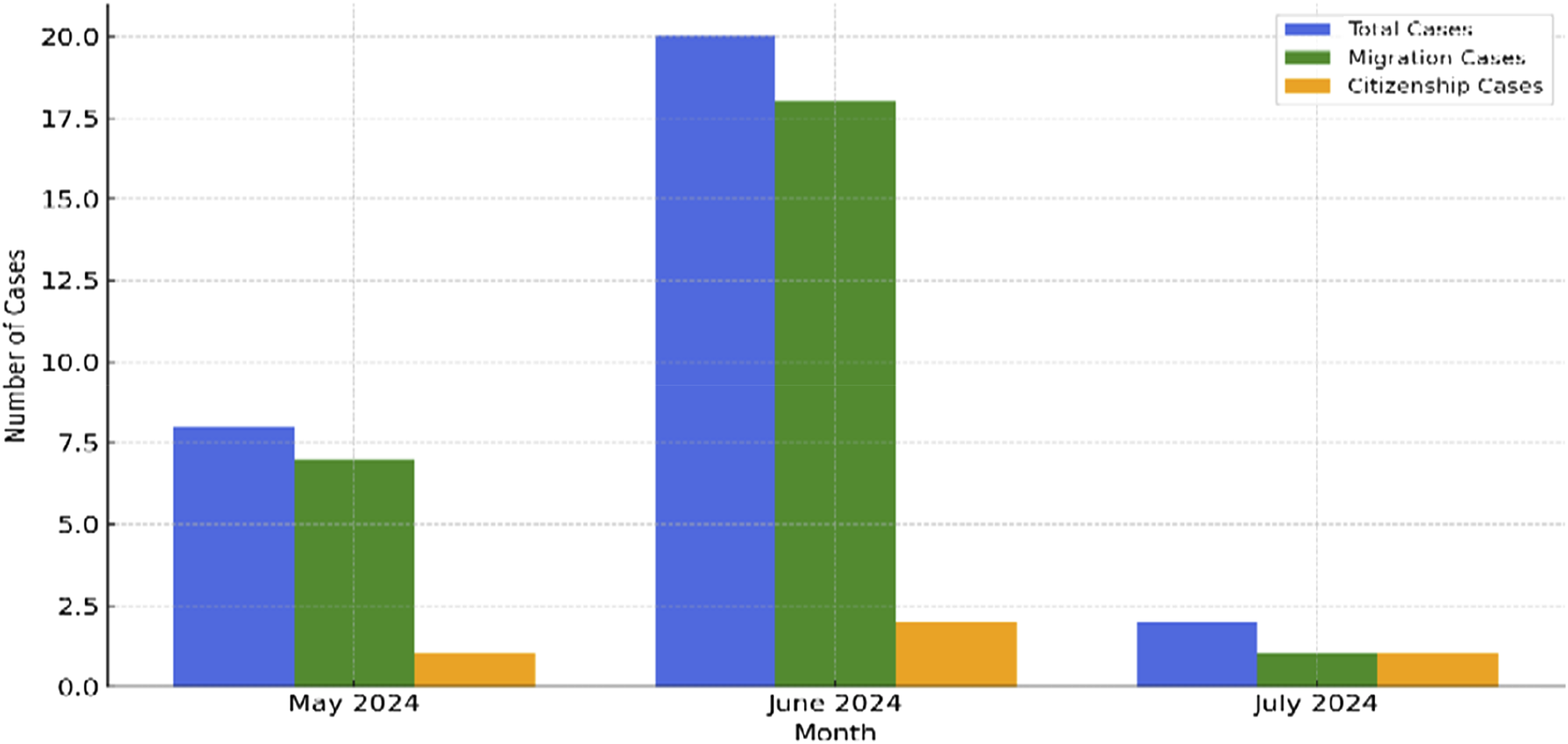
Despite the preceding, a concerning trend arose in the AAT, where Tribunal members were progressively publishing their rulings while postponing release of their explanatory statements for multiple weeks. 24 This practice raises substantial concerns about the transparency, accountability and equity of the Tribunal's decision-making procedures.
For instance, during the period from May to July 2024, the Tribunal released orders and a delayed statement of reasons pertaining to character-related cases as shown in Figure 1. AAT Cases by Month and Type (May – July 2024).
25
The timely provision of written reasons is fundamental to the integrity of any judicial or quasi-judicial process. 26 When a decision is made public without the accompanying rationale, it leaves the affected parties and the public in a state of uncertainty. 27 The absence of immediate reasons undermines the ability of the parties to fully understand the basis of the decision, which is crucial for determining whether an appeal or review might be warranted. 28 This delay can also impede the parties' ability to take timely and appropriate action, as they lack the necessary insight into the Tribunal’s reasoning. 29
Moreover, the delayed publication of reasons can create a perception of arbitrariness in the decision-making process. 30 Without an immediate explanation of the reasoning behind a decision, there is a risk that the decision may be viewed as being made without sufficient consideration or justification. 31 This can erode confidence in the Tribunal's processes and lead to a broader perception of injustice, particularly in sensitive cases where the stakes are high, such as those involving character assessments.
In cases before the ART, where decisions often have profound implications on individuals' lives – such as decisions regarding visa cancellations on character grounds – the need for clear and prompt reasoning is even more pronounced. 32 The delayed publication of reasons not only affects the individuals directly involved but also sets a concerning precedent for the handling of future cases. 33 It suggests a potential lack of rigour in the decision-making process and raises questions about the adequacy of the intellectual engagement with the issues at hand. 34
Furthermore, this pattern of delay may impact the Tribunal's overall efficiency and effectiveness. If reasons are not published promptly, it may lead to an accumulation of unresolved issues, creating bottlenecks in the appeals process and potentially overwhelming the Tribunal's capacity to manage its caseload. 35 This, in turn, could contribute to further delays and a backlog of cases, exacerbating the challenges faced by those seeking justice through the ART. 36
The delay in publishing reasons also complicates the review process for higher courts and oversight bodies. 37 If reasons are not available, it becomes difficult to assess whether the decision was made in accordance with the law and whether the appropriate legal standards were applied. 38 This lack of immediate transparency can hinder the ability of appellate courts to perform their function effectively, 39 potentially leading to increased litigation and further delays in the resolution of disputes. 40
In summary, the emerging pattern of delayed publication of statements of reasons is a matter of significant concern. It has far-reaching implications for the transparency, accountability, and perceived fairness of the Tribunal's decision-making process. Addressing this issue is essential to maintaining the integrity of the ART and ensuring that it continues to serve as a reliable and just forum for resolving complex and sensitive matters. The ART must take steps to ensure that decisions are accompanied by timely and well-reasoned explanations, thereby upholding the principles of justice and reinforcing public confidence in its processes. 41
A good example of the preceding issues was recently discussed by Justice Thawley in Verrill. 42 The case of Verrill concerned an application for judicial review following a decision by the AAT which affirmed the cancellation of the applicant’s visa. 43 The applicant in this case was a citizen of the United States who arrived in Australia in 1978 at the age of six. 44 Over the years, the applicant accumulated a significant criminal record in Australia, including various offences related to domestic violence. 45
On 3 February 2023, the applicant’s Class BF transitional (permanent) visa was cancelled under s 501(3A) of the Migration Act due to his criminal history. 46 Following the cancellation, the applicant sought to have this decision revoked, filing an application on 24 August 2023. 47 However, a delegate of the Minister for Immigration, Citizenship and Multicultural Affairs decided not to revoke the cancellation under s 501CA(4) of the Act. 48
Dissatisfied with the delegate's decision, the applicant lodged an application for review with the AAT on 25 August 2023. 49 The AAT conducted a hearing on 30 October 2023, during which the applicant was unrepresented. Subsequently, on 16 November 2023, the AAT affirmed the delegate’s decision, meaning the cancellation of the applicant’s visa stood. 50 The significance of this date, being the 84th day after the delegate’s decision was notified to the applicant, is tied to s 500(6L)(c) of the Migration Act. 51 This provision dictates that, if the AAT fails to make a decision within 84 days, the decision under review is deemed affirmed by operation of law. 52
Written reasons for the AAT’s decision were not provided until 21 December 2023, 35 days after the decision was made. 53 This delay is crucial because, under s 477A(1) of the Migration Act, an application for judicial review must be lodged within 35 days of the decision date. 54 The applicant subsequently filed an application for an extension of time under rule 31.23 of the Federal Court Rules 2011 (Cth) on 4 February 2024, after missing the 35-day deadline due to the delayed provision of the AAT’s written reasons. 55
Verrill’s application for an extension of time was not opposed by the Minister, although it was not explicitly consented to either. 56 The Federal Court was required to determine whether it was necessary to grant the extension in the interests of the administration of justice. 57 The Court, upon reviewing the merits of the applicant’s proposed grounds for judicial review, decided to grant the extension of time. 58
The grounds for Verrill’s application for judicial review were primarily focused on alleged errors made by the AAT, including the failure to properly consider the impact of the visa cancellation on Australian business interests, particularly the effect on his son’s roofing business. 59 Additionally, the applicant argued that he was denied procedural fairness because the AAT failed to inform him of his right against self-incrimination during questioning about his past illicit drug use. 60
Writing in the context of the AAT’s delayed publication of its statement of reasons, Justice Thawley concluded: There is some delay, but account should be taken of the fact that the Tribunal’s written reasons only became available 35 days after its decision was made. One of the primary purposes of a statement of reasons is to enable determination of whether a decision is affected by error. […] A decision-maker’s views can change during the course of preparing written reasons, both in relation to the outcome and the reasons for that outcome. For this reason, whilst it is not always possible to provide written reasons at the time of making a decision, particularly in circumstances of urgency, it is generally preferable to do so provided they can be adequately expressed given the relevant time constraints.
61
Justice Thawley's reasoning on delayed statements of reasons by the AAT offers the following key insights:
The critical role of written reasons
Justice Thawley stresses that written reasons are essential for identifying potential legal errors in a decision. Without them, it is extremely difficult to evaluate the validity of the decision or assess the grounds for judicial review. This highlights the necessity of timely and comprehensive documentation of a decision-maker’s rationale.
Enhancing rational decision-making
The process of drafting written reasons plays an active role in decision-making itself. It ensures that the decision-maker has thoroughly identified relevant legal and factual issues, weighed the evidence appropriately, and critically examined their initial views. This reflection helps achieve the correct or preferable outcome, particularly when multiple options are available.
Justice system integrity
Section 477A(2) of the Migration Act allows for an extension of time to file for judicial review when necessary for the administration of justice. Justice Thawley’s reasoning emphasises that this power is broad, and its exercise must focus on maintaining fairness and integrity in the justice system, rather than prioritising individual interests. Considerations such as the length of the delay, its reasons, and the case’s merits are all central to this determination.
Intellectual rigour in decision-making
Even in urgent situations, Justice Thawley insists that decisions must still result from a thoughtful intellectual process. This involves reviewing the case carefully, evaluating representations made, and ensuring that the decision complies with statutory requirements. This principle guards against rushed or superficial decisions, thereby preserving the integrity of the process.
Consequences of delayed reasons for legal advice and review
Delays in providing written reasons can severely impact an applicant’s ability to obtain legal advice or pursue judicial review. In this instance, the applicant’s inability to supply reasons to their lawyer hindered the lawyer’s ability to assess the case and comply with legal certification requirements. This demonstrates the practical ramifications of delayed reasons and the necessity of timely communication. Furthermore, this issue is exacerbated by the significant challenges non-citizens face in accessing legal services while in immigration detention. 62
Extending time in the interests of justice
The court must be convinced that extending time to file for judicial review serves the interests of justice. 63 Here, the merits of the underlying application and the challenges faced by the unrepresented applicant were crucial factors in granting the extension, illustrating the court’s role in ensuring justice is achieved, even in the face of procedural delays.
Judicial discretion and fairness
Justice Thawley underscores the importance of judicial discretion in balancing procedural rules with fairness. By considering the delay in providing reasons, along with the applicant’s efforts to seek legal advice, the court can ensure a just outcome, reflecting the broader interests of justice.
A concerning trend existed in the AAT involving issuing decisions without immediate written reasons, delaying their release for weeks. This practice undermines transparency, accountability and fairness, leaving parties unable to understand decisions or pursue timely appeals.
The delay in providing written reasons exacerbates perceptions of arbitrariness, particularly in critical character cases, where the absence of timely and transparent reasoning gives rise to concerns that decisions are based on subjective discretion rather than a structured and principled process. This perceived lack of accountability undermines confidence in the fairness of the system and diminishes the ability of higher courts to meaningfully scrutinise and review decisions, further entrenching the sense of arbitrariness.
In the Verrill case, delayed reasons hindered the applicant’s access to legal advice and timely judicial review. Justice Thawley stressed the need for timely reasons to identify legal errors and ensure rigorous decision-making, underscoring the broader impact on justice. This becomes even more troubling when considering the consequences for a non-citizen subject to an adverse cancellation decision under Part 9 of the Migration Act – permanent exclusion from Australia. 64
Conclusion
The provision of timely and well-reasoned written explanations is a cornerstone of fairness, transparency and accountability within the decision-making processes of judicial and quasi-judicial bodies such as the ART. Written reasons not only clarify the legal and factual foundations of a decision but also allow the parties involved, as well as the broader public, to understand the reasoning behind the outcome. This process fosters transparency and enables parties to assess the potential grounds for appeal or judicial review, ensuring that justice is both done and is seen to be done.
The analysis throughout this article has highlighted several critical themes. The act of preparing written reasons compels decision-makers to engage in a thorough evaluation of the legal and factual issues, weigh the evidence with care, and reflect on their initial views. This intellectual rigour promotes rational, consistent and legally sound outcomes. When decisions are grounded in a well-documented rationale, they uphold the principles of justice and strengthen public confidence in the decision-making process. The ability to revisit and refine a decision during the drafting of written reasons also enhances the accuracy and fairness of the final outcome.
However, as explored in this article, the delayed provision of written reasons, particularly in urgent or high-stakes cases such as those involving character assessments, can undermine these foundational principles. Delays in issuing reasons leave parties in uncertainty, unable to understand the basis for the decision or take timely action in response, whether by seeking legal advice or filing an appeal. This issue is further compounded in cases where the stakes are significant, such as decisions regarding visa cancellations on character grounds, which can have profound and immediate impacts on individuals’ lives. The perception of arbitrariness created by delays erodes confidence in the Tribunal’s processes and raises questions about the adequacy of the intellectual engagement with the issues at hand.
The case of Verrill, discussed at length, illustrates the real-world consequences of delayed reasons. In this case, the AAT's failure to provide timely written reasons hindered the applicant’s ability to seek legal advice and file for judicial review within the required timeframe, leading to the need for an extension of time in the Federal Court. Justice Thawley’s observations in Verrill underscore the importance of timely written reasons in ensuring that decisions can be scrutinised for legal error and that the decision-making process itself is fair and transparent.
Moreover, delays in providing written reasons can impact the efficiency of the Tribunal and the broader justice system. Prolonged delays may create backlogs, complicate the work of appellate courts and, ultimately, lead to further litigation, exacerbating delays in the resolution of disputes. As this article has emphasised, it is crucial that decision-makers strike a balance between the urgency of issuing a ruling and the need for a thoughtful, well-reasoned explanation. Even in urgent cases where immediate reasons are not feasible, decision-makers must ensure that their decisions are supported by a rigorous intellectual process and provide the parties with clear communication regarding the timeline for the provision of reasons.
Footnotes
Acknowledgment
The author expresses sincere gratitude to the anonymous reviewers for their valuable feedback and the time they dedicated to this work.
Declaration of conflicting interests
The author(s) declared no potential conflicts of interest with respect to the research, authorship, and/or publication of this article.
Funding
The author(s) received no financial support for the research, authorship, and/or publication of this article.
