




Abstract
Sir Hēnare Ngata was the first Māori Public Accountant in New Zealand in 1949. Using a biographical approach, we explore his accounting career and the use of his knowledge of the Indigenous and Anglocentric worlds to empower his wider community. The research utilises a career crafting theoretical framework, archival sources and unstructured, in-depth conversations and meetings conducted with family and work associates to examine his role in Māori community and impact as an accountant. Career crafting analysis reveals how Sir Hēnare Ngata combined Māori culture, Māori practices and beliefs with the tools of Anglocentric accounting and knowledge of Māori land law to support Māori in navigating land development, business financial requirements and policies and programmes. He made a significant contribution to Māori self-determination including bicultural management practices and Māori economic development. His bicultural approach combining the holistic Māori worldview and Anglocentric accounting provides rich insights for those involved in social and environmental accounting and governance reporting.
Introduction
Titiro whakamuri, kia anga whakamua
Look to the past in order to move forward.
Accounting was an integral part of imperial rule in many parts of the world, with those impacted inheriting colonial structures that separated Indigenous peoples from their own cultures and structures (Vidwans and De Silva, 2023). As a result, the pathway for Indigenous people to become Public and later Chartered Accountants (hereafter CAs) 1 has been restricted and problematic (Hammond et al., 2009). Indigenous people of Aotearoa New Zealand 2 (hereafter Aotearoa NZ) are no exception – Māori in the accountancy profession are still highly under-represented (Huang et al., 2016; Potae, 2017). Māori currently comprise around 16.5 per cent of Aotearoa NZ's population, but there are only just over 900 Māori CAs, around 3 per cent of the total number of CAs (Tutty, 2022).
Reasons for the lack of Indigenous accountants centre around the colonisation of Aotearoa NZ by the British in the 1800s that infringed on Māori power and rights and resulted in marginalisation of the Māori, economically, socially and politically (McNicholas, 2009; Mutu, 2019). Moreover, the conventional Western characterisation of accounting education is Eurocentric which created cultural barriers to Māori access to accounting (Gallhofer et al., 1999: 793). Accounting societies established in British-colonised countries were generally based on the UK professional accounting societies (Institute of Chartered Accountants in England and Wales or Institute of Chartered Accountants of Scotland) and promoted a short-term commercial viewpoint (Bakre, 2005; Lombardi and Cooper, 2015). This view was contrary to the prevailing Māori holistic and intergenerational worldview at that time and that has continued to be (Craig et al., 2018). Additionally, the newly established colonial professional accounting societies restricted entry based on educational and social requirements which effectively precluded Indigenous members (Hammond et al., 2009).
Challenges to entering the accounting profession due to ethnicity have mounted over the last century (Huang et al., 2016; Sian, 2006). There are stories of resistance, hope and empowerment by Indigenous peoples including Māori; nonetheless, the under-representation of Māori continues today (Gilkison and Hart, 2023; Tutty, 2022). This study provides a historical biographical narrative of Sir Hēnare Ngata's achievements in breaking exclusionary barriers and crafting his career as the first Māori Public Accountant in Aotearoa NZ. 3 This study uses kōrero (conversation) 4 and hui (meeting) 5 with the participants, and career crafting analysis to explore how he used his accounting knowledge along with aligned legal and political understanding to support Māori economic development and be involved in policies and programmes that affected Māori (Soutar, kōrero, 6 2019). Therefore, our research question is, how did Sir Hēnare Ngata use his career-based accounting knowledge to empower his wider Indigenous community?
In exploring Sir Hēnare Ngata's career and life, this study makes several contributions. First, it adds significantly to the sparse literature on Indigenous Public and CAs (McNicholas and Barrett, 2005) by presenting an Indigenous-based biography. Second, it analyses the career journey of Sir Hēnare Ngata using a different theoretical perspective (Bodle et al., 2018), that of career crafting. The application of a career crafting framework to historical biography is a new area of research in accounting history (e.g. Vidwans and Whiting, 2022). Importantly, it discusses how Sir Hēnare used British-based accounting, and knowledge of land law to prioritise the empowerment of Māori. Finally, its historical focus increases our understanding of past events, which helps us navigate a better future for Indigenous CAs and the accounting profession.
The next section discusses the context and literature surrounding Aotearoa NZ's colonisation and the exclusion of Māori from the accountancy profession and concludes with the research question. The following section describes the career crafting theoretical framework, and the qualitative method followed in this study. After that, we present the story of Sir Hēnare Ngata and then provide conclusions and future research directions.
Māori and professional accounting (Kaute Ngaio)
Māori are the Indigenous tangata whenua 7 (people of the land) of Aotearoa NZ. They are the country's first human inhabitants, migrating from Polynesia around the thirteenth century, and were well-established in Aotearoa NZ by the seventeenth century (King, 2003). Māori were self-governing, organised around many different iwi 8 (tribe) and hapū 9 (subtribes) and had their own Indigenous worldview. Māori worldview acknowledges the interconnectedness of all things through the concepts of kaitiakitanga (guardianship of the land, stewardship and sustainability), whanaungatanga (collectivism, family and relationships) and manaakitanga (caring for others) and places great emphasis on mana 10 (respect) and rangatiratanga (leadership) (Craig et al., 2013, 2018; Tutty, 2022).
Colonisation and the impact on Māori
Pākehā 11 (white settler) colonisation of Aotearoa NZ occurred from the beginning of the nineteenth century but began in earnest after the Te Tiriti o Waitangi (The Treaty of Waitangi) (hereafter the Treaty) was signed in 1840 between the British Crown and about 540 Māori rangatira 12 (chiefs). The Treaty is Aotearoa NZ's founding document and professed to have three objectives, the protection of Māori interests such as tino rangatiratanga (control of land and resources according to Māori custom), the promotion of settler interests and the securement of strategic advantage for the Crown (Craig et al., 2013; Durie, 1998; McNicholas et al., 2004; Stokes, 1992). However, it was not used to protect Māori as the early bicultural ideals were undermined by the dominance of the Pākehā world including its requirement for individual property ownership and stewardship (Durie, 1998; Durie, 2011; Pringle and Ryan, 2015). 13
British colonisation and subsequent breaches of the Treaty were extremely destructive to Māori society (McNicholas et al., 2004). There are two versions of Te Tiriti o Waitangi, the Māori version which the vast majority of Māori signatories signed, and the English version. These versions differ considerably with Māori typically prioritising the Māori version that their ancestors negotiated and signed.
Through illegal land occupation, wars and confiscation, Māori lost 95 per cent of their lands and resources (Mutu, 2019). For example, the Crown had compulsorily acquired or purchased and leased at sub-market value a significant quantity of Ngāti Porou 14 land since the 1870s (Ngati Porou et al., 2010). Land has a special meaning for Māori, not only for its productive value but also in establishing a connection with ancestors, identity and mana (Craig et al., 2013). In te reo, land (whenua) also means placenta indicating the ‘inextricable connection’ between people and their place (Matunga, kōrero, 2022). Under British colonisation, Māori cultural identity, power and authority and the iwi governance structure were diminished (Humpage, 2006; Kent, 2011). As a result, Māori were left in a state of poverty, deprivation and marginalisation (Mutu, 2019).
Assimilation of Māori into an Anglocentric life appears to be the colonisers’ goal (Gallhofer et al., 1999; Walker, 2016). This was to be encouraged through religion, intermarriage and an Anglocentric education system (McNicholas et al., 2004). A nationwide Pākehā-based education system was imposed in 1877 (controlled by locally based education boards). However, Māori schools were to be administered differently (under the Native Schools Act). They were transferred from the control of the Native Affairs Department to direct control of the Education Department in 1879. This allowed the Government to mandate that ‘the medium of instruction should be English, not the Māori Language’ (Butchers, 1932: 87).
To survive and prosper in a Pākehā world, Māori looked to education to expand their literacy and knowledge (Derby, 2021; Ngati Porou et al., 2010). However, for most, education served to reinforce their subordinate status and perpetuate racial stereotypes by suppressing the use of te reo in schools, contributing to the sharp loss of Māori language (Gallhofer et al., 1999; Ngati Porou et al., 2010; Walker, 1990). Simon (1994) argues that the small minority of Māori who were successful in the education system were mostly those who had retained their lands. For example, Sir Apirana Ngata 15 was involved in Māori education at the turn of the twentieth century (Butchers, 1932). However, for most Māori, Pākehā-centric education has led to under-achievement in schooling. Since the 1960s, Māori have initiated the process of ‘renegotiating and reclaiming the past’ (Te Huia, 2015: 18). The Waitangi Tribunal was set up in 1975 and breaches of the Treaty have been recognised by the Crown in Treaty settlements since the 1980s (King, 2003). Apologies from the Crown, support for Māori language, land returns and financial compensation have been made and are still ongoing. 16
Anglocentric accounting practised by professional accountants and others along with the law was used to confiscate and occupy Māori land (Hooper and Kearins, 2004, 2008; McNicholas and Humphries, 2005). As mentioned, for Māori land has a special place. By Māori understanding and training in Pākehā professional accountancy, they can use it to protect the land and other aspects of culture (McNicholas and Humphries, 2005). As such accounting plays a role as a mediating technology or language, that if mastered by Māori accountants, can help them to move between the Indigenous and Anglocentric worlds and empower their communities.
Professional accountancy in Aotearoa NZ
To maintain the quality and accountability of the accounting but also the homogeneity, status and privilege of its members, accountancy professional bodies practised and continue to practise exclusionary, elitist and self-protectionist exclusionary strategies (Chua and Poullaos, 1998; Hammond et al., 2009, Huang et al., 2016). Entry was restricted to those who met formal criteria including educational credentials, examination passes and work experience requirements (McKeen and Richardson, 1998; McNicholas et al., 2004). Underlying this formality were unrelated informal ‘competencies’ such as gender and socio-economic status or class (Hammond et al., 2009; Vidwans and Whiting, 2022). As a result, in Aotearoa NZ, Pākehā well-educated males dominated the accountancy profession until the twenty-first century (McNicholas et al., 2004; Vidwans and Whiting, 2022).
No explicit exclusionary practices were documented for Indigenous peoples, although other informal social processes were employed to keep the accounting profession out of reach of ethnic minorities (Annisette, 2003; Hammond, 1997; Musundwa and Moses, 2024; Sian, 2006), resulting in nil or limited Indigenous participation. Four key exclusionary practices prevented Māori people from entering the profession in Aotearoa NZ. First, the short-term focus of accounting periods, combined with the financial emphasis and an Anglocentric economic viewpoint, conflicts with the sustainability and intergenerational equity values of Māori (Bakre, 2005; Craig et al., 2018). Generally, the, Māori world-view values co-operation over competition and preserves natural resources for future generations. Māori regard ‘value’ as something that is both intrinsic and extrinsic and resides in phenomena which are financial and non-financial, tangible and intangible, and seen and unseen. (Craig et al., 2018: 434)
The conflict in worldviews made it difficult for Māori to engage in the premise of Anglocentric accounting (Gallhofer et al., 1999). As a result, accounting enabled the Pākehā to establish legislative, economic and social dominance within Aotearoa NZ (Hooper and Kearins, 2008; Vidwans and De Silva, 2023).
One key underpinning of this Pākehā worldview is the concept of stewardship which refers to the act of taking care of or managing something. As a subset of this, stewardship in accounting represents the act of taking care of or managing money or other resources such as land on behalf of the owner and provides information relating to managing these resources to the owner (Miller and Oldroyd, 2018; Pannell, 1979). Accordingly, ‘stewardship is the paramount objective … of accounting’ (Irish, 1950: 216, cited in Chambers, 1995: 68). Although stewardship (kaitiakitanga) is a concept within the Māori world, it has a different meaning. It relates to the guardianship and protection of the land and the natural environment. In Māoritanga, people are seen as being ‘deeply connected to the land and to the natural world’. People and land are as one and guardianship or stewardship ‘grows out of this connection’. In the last few decades, this connection has been recognised in legislation such as the Resource Management Act 1991 and the Foreshore and Seabed Act 2004 (Royal, 2024). This Māori worldview is slowly starting to permeate stewardship through the need to account for sustainability (Craig et al., 2022).
Nonetheless, the taking of the land has impacted Indigenous peoples well-being. ‘Māori land loss has contributed to the intergenerational degradation of Māori culture and many of the socioeconomic deficits that Māori face are related to this cultural loss’ (Thom and Grimes, 2022: 3) As Fanon (1963: 44) says ‘for a colonized people, the most essential value, because the most concrete, is first and foremost the land: the land, which will bring them bread and, above all dignity’. By walking in both worlds, a person is better able to act as a steward in protecting and retaining tribal land – an important role for Indigenous accountants.
Second, despite a history of entrepreneurial skills and trading between Māori and Pākehā, Indigenous peoples are generally not credited by colonising cultures as being engaged in commerce due, in part, to the belittling of Indigenous forms of commerce, mainly due to a lack of written expression (Baskerville et al., 2016; Constable and Kuasirikun, 2007; King, 2003). Instead, Māori (like many other Indigenous peoples) have a strong oral-based tradition of knowledge communication and are well respected as orators (Gallhofer et al., 1999).
Third, Māori were seen as having lower socio-economic status in part due to their lack of property ownership, which was a direct result of British colonisation (Walker, 2016). This lower status acted as an exclusionary factor for Māori entry into the accountancy profession as those of ‘lower statuses’ were not seen as suitable individuals to interact with their propertied clients and as lowering the prestige of the profession (Annisette, 2003; Hammond, 1997; Hammond et al., 2009).
Finally, Indigenous people often lack the formal integrated education systems necessary to obtain the required professional entry requirements (Carnegie and Fowler, 2019; Rkein and Norris, 2012). To enter the accountancy profession, Māori require English-language skills both oral and written, and high levels of educational achievement (university and/or professional examinations). Many factors disadvantage Māori and preclude them from achieving these requirements. In the early 1900s, Māori were typically educated in under-resourced rural native schools (under the Native Schools Act) with low expectations from teachers in terms of academic performance which did not prepare them well for university education (Ngati Porou et al., 2010; Walker, 2016). Further stereotypical views of Māori being of lower status (or class) steered them into blue-collar or labouring jobs (Gallhofer et al., 1999; Walker, 2016). Even as late as 1961, the Hunn Report described the invisibility or ‘statistical black-out’ of Māori in post-compulsory education (Hunn, 1961). 17 In most secondary schools, Māori were not offered the Latin or other studies required for entrance to university (Theodore et al., 2016). University was also seen by Māori as a ‘white place’ where cultural identity would need to be hidden and as a place that did not support their collectivist culture (Gallhofer et al., 1999). Generally, Māori lacked role models of university achievement, and because of land confiscation they lacked property and other resources to enable educational engagement (Atewologun and Sealy, 2014).
Helin (2008) argues that it is time to move on from the image of Indigenous peoples as impoverished and helpless to that of empowered. Although accounting has been identified as one of the tools of oppression of Indigenous people used by those colonising their land (Buhr, 2011; Lombardi, 2016, Vidwans and De Silva, 2023), more recently it has been explored as a potential means of empowerment for Indigenous individuals, businesses and communities (Fukofuka et al., 2023; Yong, 2019). Further, research suggests that Indigenous accountants can exert their own agency to effect change by knowing and engaging in the ‘rules of the game’ and ‘playing within the field’ (Lombardi and Cooper, 2015). In this study, we explore Sir Hēnare Ngata's engagement in the Anglo-centric field of accountancy and how he used this accounting knowledge and his related knowledge of law and government processes to benefit Māori.
Sir Hēnare Ngata seems to have used his knowledge of accounting, his understanding of the aligned fields of law and politics and his ability to move between the Pākehā and Māori worlds to assist Māori to take charge of their development and autonomy, including being involved in policies and programmes that affected them (Soutar, 2011). Sir Hēnare died in 2011 at the age of 93, and many of his contemporaries have also passed. Before time renders this impossible, this research, through kōrero with those who personally and professionally knew Sir Hēnare will enable us to gain a wider understanding of how he used accounting and aligned knowledge to help Māori in contexts where they were under-valued and dispossessed of their lands and culture (Easton, 2018). Therefore, the research question addressed is, ‘How did Sir Hēnare Ngata use his career-based accounting knowledge to empower his wider Indigenous community?’
Theoretical framework and method
Career crafting theoretical framework
This research utilises the career crafting framework (Figure 1) to analyse the relationships between an individual and the constraints and opportunities provided by family, organisations and the environment that Sir Hēnare Ngata negotiated as a Māori CA in Aotearoa NZ. Conceptual or theoretical frameworks in historical research ‘help promote understandings and explanations of the behaviours of individuals and groups’ (Napier, 2020: 43). Career crafting is positioned within management theory and is an extension of job crafting (Vidwans, 2016; Wrzesniewski and Dutton, 2001).
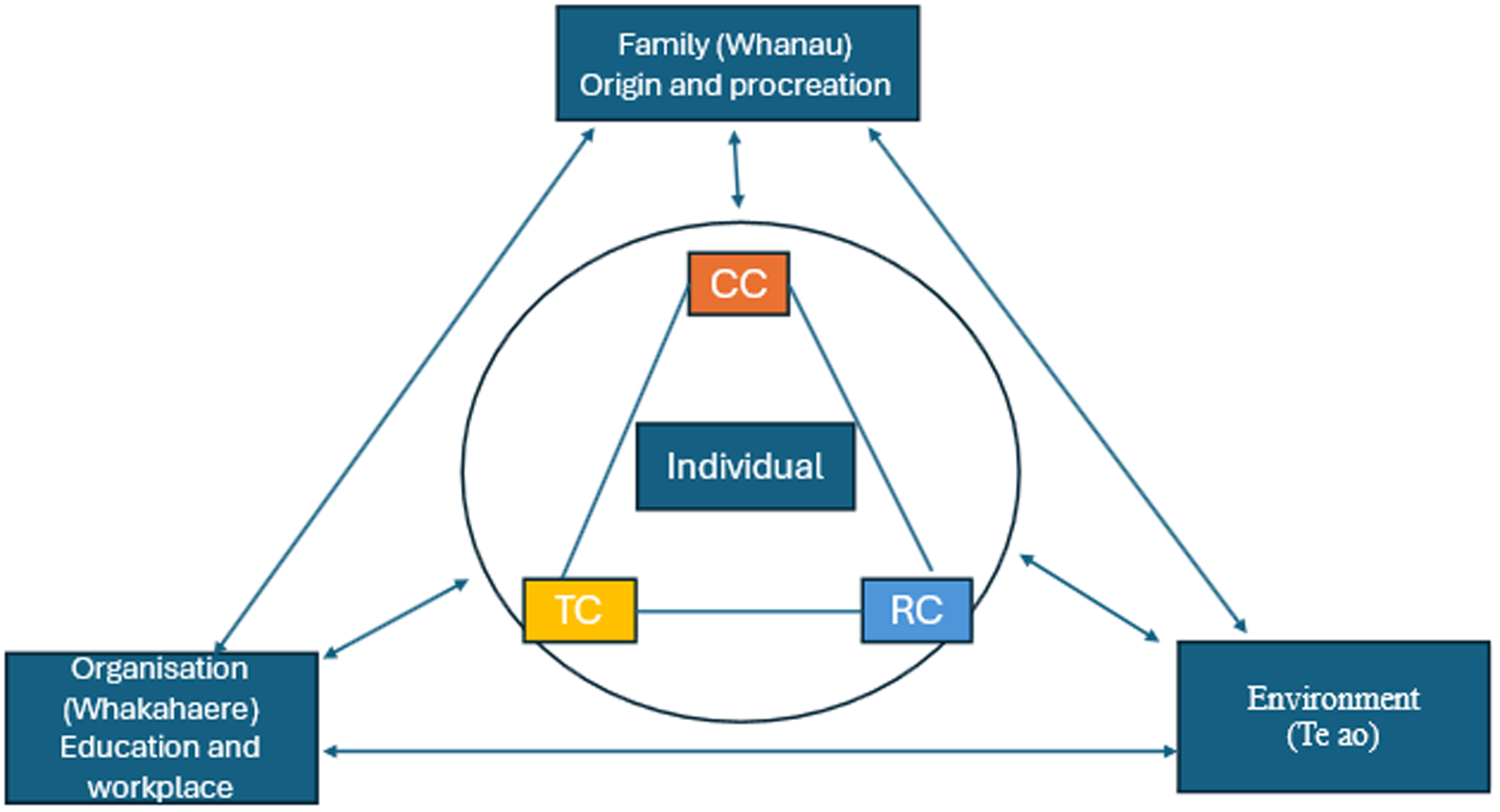
Career crafting framework (adapted from Vidwans and Whiting, 2022: 362).
Previously applied in an accounting and gender context (Vidwans and Du Plessis, 2020; Vidwans and Whiting, 2022), the career crafting concept provides a ‘way of seeing’ that enables an understanding of the contextual setting, and theorising about individual careers (Taylor, 2018). It covers individual and external factors that affect career pathways and progression. Personal crafting involves agency and interconnections between cognitive, relational and task crafting, components developed from the job crafting model of Wrzesniewski and Dutton (2001). Cognitive crafting is associated with thinking, understanding, learning and decision-making. It results in prioritising, conceptualising ideal career goals and reframing them as desired outcomes. Relational crafting focuses on managing personal and professional relationships and reworking and consolidating relationships with key people. Through task crafting, individuals select and manage tasks to achieve, and balance personal and professional demands on their time. By doing this they craft their individual careers (Vidwans, 2016).
External factors of family (whānau 18 ), organisation (whakahaere) and environment (te ao) influence initial and later career development, particularly career orientation, focus and pathway. Nonetheless, ‘personal [individual] crafting practices have to intersect cohesively with these [external factors] for effective outcomes’ (Vidwans and Whiting, 2022: 362). Individual crafting is related to familial concepts of origin and procreation, and entails both support from and responsibilities to the family and the environment. It also relates to environmental factors that have an impact on a person's career path such as conscious or unconscious ethnicity and gender exclusion, and economic, political and legal situations. These will have an impact on a person's ability to craft along with their educational and professional (organisational) work experience that shapes the career choices made. Personal crafting practices have to intersect cohesively with the external factors for effective outcomes (Vidwans and Whiting, 2022: 362).
Vidwans and Whiting (2022) explored the struggle for entry and career success of early pioneer female CAs in Great Britain and its former colonies USA, Canada, Australia and Aotearoa NZ. It established that the ‘predominant career limitation was restricted entry to the profession’ (Vidwans and Whiting, 2022: 361). That study also demonstrated how interconnections between individual, family, education, workplace, socio-cultural and legal–political factors are vital determinants for self and community empowerment and career paths. Incorporating the ethnic dimension, the crafting concept was further applied to the career of Nonkululeko Gobodo, the first Black South African female accountant, who strove to bring empowerment and advancement for her people through her accountancy career and skills (Vidwans et al., 2022). Our study also uses the career crafting concept to investigate the use of accountancy to promote advancement for a disadvantaged ethnic group, that of Māori.
Historical biography
This study uses a historical biographical approach. By understanding the lives of influential human beings, we can understand society, culture and the institutions of that time (Carlyle, 1843; Flesher and Flesher, 2003). Lee (2002: 124) further observes ‘paying attention to its [accounting] history is a major part of the solution to a problem and paying attention to the background and role of individual actors is a more specific solution’. As Burrows (2019: 138) states ‘… “biography in accounting” refers to portrayals of the lives of individuals who possess some accounting connection’. This connection is revealed in many ways in a historical and contemporary context including accounting practice and accountants.
Australian historical biographies on accountants include Mary Addison Hamilton who was the ‘first woman to be admitted to a professional accounting body in the British Empire’ (Burrows, 2019: 147; Cooper, 2008), Harriet Amies – Melbourne's first BCom female graduate (Hronsky et al., 2015) and Sir Edwin Van-der-Vord Nixon whose accounting firm was critical to the establishment of Ernst & Young in Australia (Cobbin and Burrows, 2020). From an Aotearoa NZ perspective, there is a limited amount of historical biographical work that focuses on accountants in practice. Two such biographies relate to Alice Basten, one of the first female public accountants (1911) in New Zealand (Vidwans and Whiting, 2021) and Robert Muldoon, accountant, and New Zealand Prime Minster from 1975 to 1984 (Keeper and Baskerville, 2007). However, this article is the first such biography that considers the accounting career historical context from a Māori accountant's perspective and the impact that the use of accounting had on the empowerment of Māori. As far as we can determine it is one of the few Indigenous accountant studies internationally (Vidwans et al., 2022).
This statement is confirmed by an author-conducted review of biographies in five relevant journals 19 where of the 71 biographical articles identified 81.6 per cent were non-Indigenous males, 17 per cent were non-Indigenous females and 1.4 per cent were ethnic minority males (African-American slave). Looking wider than academic publications, scattered biographical details can be found on Sir Hēnare Ngata (and used in this study) and Professor Whatarangi Winiata who was the first Māori Professor of Accountancy in 1974 (Zeff et al., 2020).
It is essential for historians to understand the historical context of the subject of the biography and to find their voice (Burrows, 2019; Tosh, 2002). As the subject of this biography is no longer with us, we must tell the story of Sir Hēnare Ngata from the perspective of his whānau, iwi and others in his community.
Collecting evidence and telling his story the Māori way
Archival sources (including meeting minutes and newspaper and video archives), oral history and other publicly available information are used to collect historical information about Sir Hēnare Ngata's role and impact as an accountant. Oral history, an effective method for gaining in-depth knowledge from a participant's perspective (Leavy, 2011; Shopes, 2011) helps link individual experiences and memories to gain an understanding of Sir Hēnare as an accounting practitioner and advisor. As Tyson (1996: 97) argues ‘oral histories can best reveal the previously undocumented, human side of accounting's past’. Epistemologically, oral history positions the researcher and participant in a collaborative relationship (Leavy, 2011: 8), and meaning is generated during the research process of analysis and interpretation of that narrative. This approach is also considered respectful and congruent with the cultural practices of Indigenous communities, allowing their voices to be heard (Lombardi and Cooper, 2015).
Māori have a strong oral-based tradition of communication, and this study thus employs a narrative oral method, where a narrative refers to a participant's experience about his/her association with Sir Hēnare. The method utilised in this study is hui and kōrero which support and establish trust and respect between researchers and Māori contributors. The highly inductive format meant no two sessions were the same. Stan Pardoe at the Arai Matawai land block also made available the meeting minutes (1954–1968) which helped in understanding Sir Hēnare's role as a secretary and accountant.
The non-Māori research team was conscious of the possibility of being perceived as outsiders operating from cultural perspectives that do not accurately reflect the views or reality of those being researched (Walker et al., 2006). It may have impeded dialogue and understanding to some extent. Several steps were taken to overcome this limitation. A Māori cultural advisor was sought to provide guidance. After gaining approval from the Human Ethics Committee at the lead researcher's university, data collection proceeded. As per the advice of a Māori cultural advisor a familiarisation trip was planned for kanohi ki te kanohi 20 (face-to-face) to Gisborne, East Cape. A second visit followed for kōrero and hui. This multi-day trip also involved a day-long visit to Sir Hēnare's birthplace, Waiomatatini. The visit was important, as defining Ngāti Porou history, the role of kōrero, whakapapa, 21 Māori tikanga 22 and reo are vital, creating the invaluable components that weave together forming the foundational worldview (Mahuika, 2011). The research team was cognisant that the behaviour of ancestors has a bearing on their descendants, as mana is a hereditary quality (King, 1985). This respectful approach to research involving indigeneity (Bodle et al., 2018) underpins the data collection of this project, utilising unstructured, in-depth kōrero and hui conducted with 10 of Sir Hēnare Ngata's whānau, clients and past work colleagues in Gisborne. Access to contributors was facilitated by key Māori contacts. All 10 participants were Māori, aged between 30 and 87 years, with an equal number of wāhine (women) and tāne (men). Two hui involving four to six people lasted for about 1.5 hours and five individual kōrero for one to two hours were completed. Two of the kōrero happened in two parts. With the participants’ consent, the kōrero were audio-recorded and transcribed, notes were taken at the hui and photos were taken of the historical documents. Permission was also sought and granted to use their names in this study. Archival sources and public documents that contained relevant information were also consulted. In this in-depth biography, there are only a few surviving colleagues and whānau of Sir Hēnare Ngata's generation, so kōrero with those elders was limited. COVID-19 and Cyclone Gabrielle 23 (2023) constrained travel and further kōrero.
Data analysis of the transcribed kōrero and publications was systematically guided by the career crafting framework (Taylor, 2018). A directed approach to thematic analysis was implemented (Hsieh and Shannon, 2005) and following Vidwans and Whiting (2022), the thematic analysis focused on individual, familial, organisational and environmental contexts that shape career outcomes (Appendix 1). Six codes relating to the four main themes of the career crafting concept – individual crafting, family (origin and procreation), organisation (education and workplace) and the environment – were identified. The coding scheme comprised of the code name, code definition, text examples and coding rules (Burla et al., 2008). Coding rules included a brief description of a theme and inclusion criteria which was decided by the presence of one or more features of the description (Bernard et al., 2016). The lead researcher who was involved with the kōrero and hui coded the data, which was checked and confirmed by one other member of the team. In addition, the analysis was reported back to two key Māori participants who were willing and available for verification. They were involved from two different perspectives – one was a family member who knew Sir Hēnare intimately, both personally and professionally, the other was an accountant and understood accounting processes and challenges in Māori locality and also had an experience of working with Sir Hēnare. One suggested no changes and the second made a few minor corrections that were incorporated into the article. The final draft was also reviewed by a Māori cultural advisor, which resulted in a few further changes.
The story of Sir Hēnare Ngata
Sir Hēnare Ngata's career as a CA extends beyond his individual journey to that of making a significant contribution to Māori self-determination including bicultural management practices and Māori community development. The crafting lens, consisting of family, organisation, individual crafting and environment, is used to examine how Hēnare, progressed in his career and beyond, the facilitating factors and his contribution to the empowerment of Māori (Figure 2).
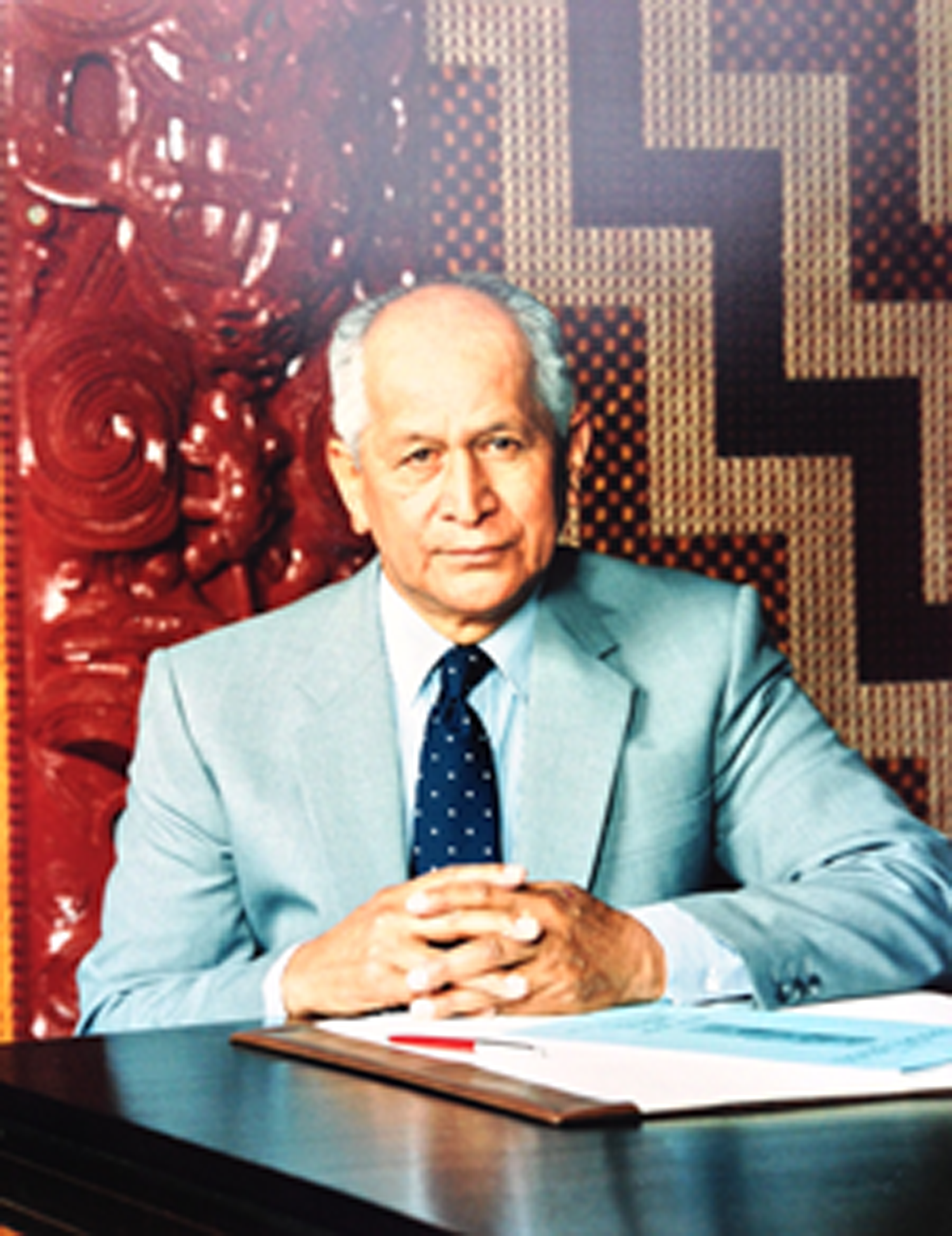
Sir Hēnare Ngata in front of tukutuku panel, Mangatu Blocks conference room, Gisborne. (Photo credit and copyright permission: Dunstan & Kinge Photographers, Gisborne.)
Whānau (family of origin and procreation) factors
Sir Hēnare Ngata (born in 1917) was from the East Cape of the North Island of Aotearoa NZ (Figure 3) and the youngest child of Sir Apirana Ngata and Lady Arihia Ngata. Their iwi was Ngāti Porou, which although suffering significant land loss at the hands of the Crown (Ngāti Porou et al., 2010), managed to retain some of their tribal land on the East Cape and were determined to develop and administer it themselves (Boast, 2019). Hēnare's background differed from that of most Māori as his father, Sir Apirana, was well-educated through the Pākehā education system. Sir Apirana had attended Te Aute secondary college and was the first Māori to complete a degree at an Aotearoa NZ university in 1893 and the first New Zealander to gain a double degree in 1896, completing an LLB and BA in political science. He was also awarded a Doctor of Literature in 1948. After his legal graduation, he practised as a lawyer for a short time and subsequently served 39 years as an elected Member of Parliament. As the Minister for Native Affairs, he made political headway on blocking the sale of Māori land, assisting Māori land development (Boast, 2019) and reviving Māori culture in the early twentieth century. Before him, Apirana's father, Paratene Ngata (1849–1924), was an important Ngāti Porou leader and Native Land Court Assessor (Boast, 2019).
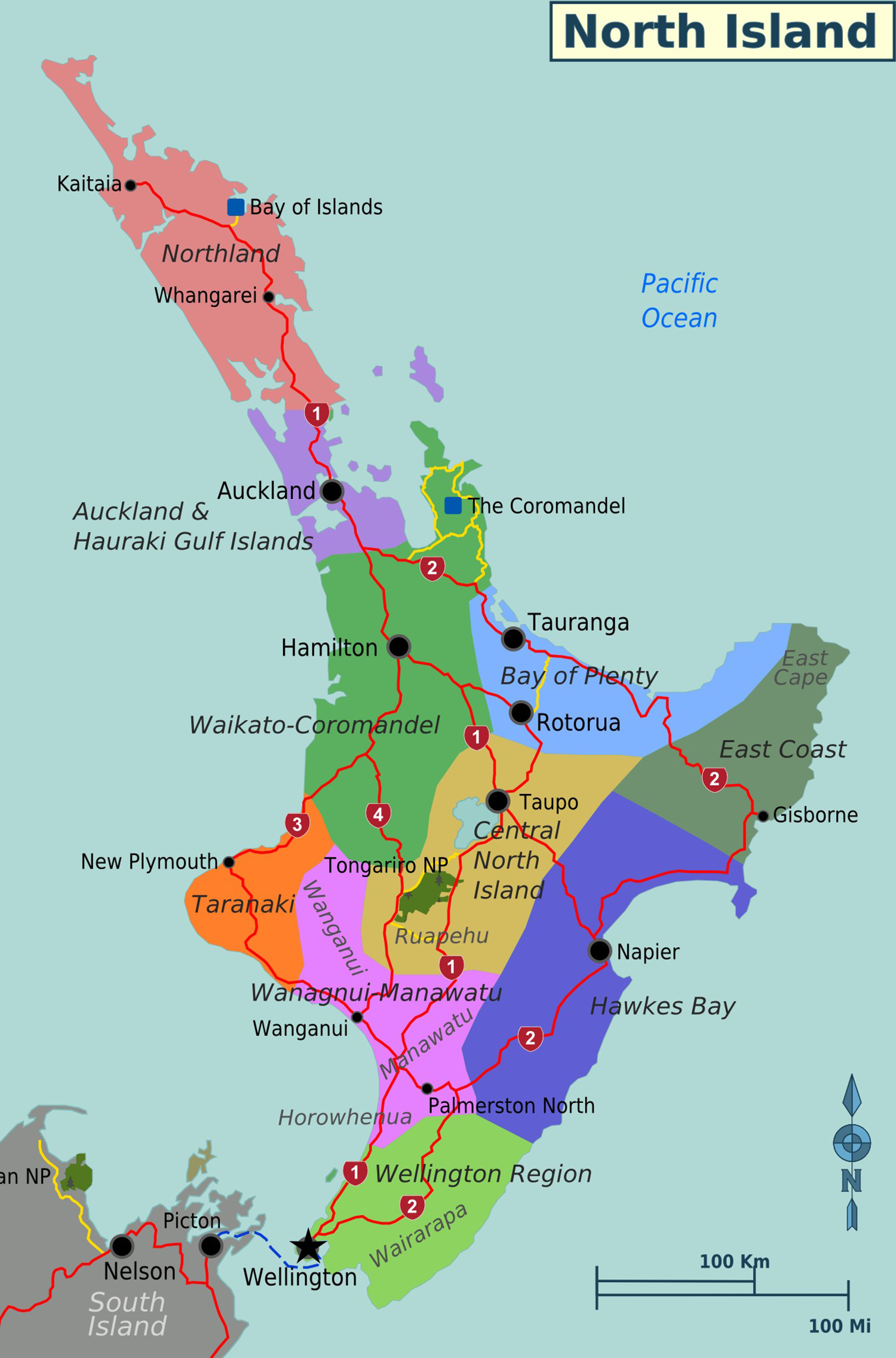
Map of Aotearoa NZ's North Island (this photo by unknown author is licensed under CC BY-SA-NC).
Sir Hēnare was raised at the ‘Bungalow’ (the Ngata residence at Waiomatatini) in the Waiapu Valley. He grew up in a household that honoured Māori tradition and Māoritanga 24 and sought to advance it by integrating it with the Pākehā world (Soutar, 2021). From a young age, Hēnare was exposed to political, legal, religious and tribal thinking at both the homestead and the pā. As Hēnare came from a line of Ngāti Porou leaders and an iwi that had managed to retain some of their tribal lands, his upbringing was less ‘marginalised’ than most Māori. Recognising his abilities, his parents groomed him for leadership from a young age (Swann, kōrero, 2019).
Sir Hēnare was very close to his distinguished father. The bond between Sir Apirana and his pōtiki (youngest son) was known to all (Ramsden, 1948). In 1948, Sir Hēnare provided Eric Ramsden with his own brief analysis of his father's lifetime of work which Ramsden published in a book about Sir Apirana (Soutar, 2011). Hēnare said, ‘He [Apirana] devoted himself to keep the torch of Māoritanga alight’ (Ramsden, 1948: 15). Hēnare learnt from his father that knowledge is an instrument for the fulfilment of this sole objective (Ramsden, 1948). Sir Apirana used his knowledge of the Pākehā world and his professional skills to assist Māori to develop and farm their land while also encouraging them to preserve their culture and maintain their own identity (Sorrenson, 1996). His great granddaughter Zandria says, ‘His [Sir Apirana's] work ethic came off on to Papa [Sir Hēnare, her grandfather]. He [Sir Hēnare] was not just working doing his own mahi, 25 he was also doing mahi for kaupapa Māori 26 like his father’ (Taare Z, kōrero, 2019).
When Sir Hēnare decided to become an accountant, his father was aware of the challenges his son was undertaking and had confidence in him. Sir Apirana wrote to his friend Sir Peter Buck, 27 ‘Henry is attacking the citadel of Pākehā business, and aims to be a Public Accountant. If the lad is not oppressed by the hack of work of adding up columns of figures, if he can get above the trees to get the right perspective of the forest – he will do’ (Sorrenson, 1988: letter of 5 March 1950). According to later Māori leaders, Hēnare carried forward the standards of excellence and the determination to lay the platform for a secure future which characterised the legacy left by his father (Turia and Sharples, 2011 28 ).
Sir Hēnare married Rora Lorna Mete-Kingi of o Te Ātihaunui-a-Pāpārangi in February 1940 (Taare, Z, kōrero, 2019). Hēnare says, ‘When war broke out, I did not enlist immediately. At the time my girlfriend [Lorna] and I were going together. So, I was not that excited about signing up to become a soldier’ (Kay, 2011). But recognising his duty as Sir Apirana's son, he joined up and left on active service in May 1940. Upon his return he completed his university education and was keen to get closer to home. Hēnare returned to Gisborne in 1949 with Lorna and lived there with their whānau for the rest of their lives (Soutar, 2021). Gisborne was a small community with a population of around 17,000, but Hēnare was instantly accepted as he was Sir Apirana Ngata's son (Brown-Haenga, kōrero, 2019; The New Zealand Yearbook, 1950).
Lady Lorna was a huge support to Sir Hēnare. His granddaughter says, ‘They were married for over 70 years and were an awesome team. Papa would be “out the front” running the hui, while Nana and her Māori Women's Welfare League stalwarts would be preparing the kai’ (Taare Z, kōrero, 2019). Kai or food is important in Māoritanga (Māori culture and traditions) as the process of gathering, preparing and sharing food demonstrates ‘hospitality and respect for visitors’. 29 ‘They were a lovely couple, a good example for Gisborne; well known in Māori and European world’ (Brown-Haenga, kōrero, 2019). Zandria recalls, ‘She [Nana] brought me up to be proud of [being] both a Māori and a wahine’ (Taare Z, kōrero, 2019).
Lady Lorna and Sir Hēnare had one adopted son, Apirana Turupa Maihi Ngata, and two whāngai (foster) daughters, Wikitoria Whyte, a granddaughter of his stepmother Lady Te Riringi, and Hēnare's niece, Sue Hinehou Rahera Cooper (Taare, Z, kōrero, 2019). Sir Hēnare was a family man who was always there to support his mokopuna (grandchild) (Taare, Z, kōrero, 2019). Zandria recalls Hēnare helping her with a whaikōrero (speech), suggesting the topic and preparation of the speech. She learnt from him that some things in life are a necessity, like working for a living. But some things you do for aroha (love, affection), like helping out at your marae (iwi meeting grounds) or church, caring for your children or your tipuna (grandparents). He gave a series of thoughtful interviews for his great granddaughter's school history assignment, on hosting controversial Springbok tours to Māori carving (Taare, 2011). His granddaughter, Zandria (kōrero, 2019) maintains, ‘I am now a chairperson, secretary, trustee and committee member on several Māori blocks or trusts, so by following him and seeing how things were done, I learned how to represent our family’. Lady Lorna was also involved in Māori community support and was awarded the Queen's Service Order in 2005 for her lifelong commitment to Māori communities. Sir Hēnare died in 2011 at the age of 93 30 and Lady Lorna passed away in 2014 at the age of 96 (Soutar, 2021; Waatea Team, 2014).
Thus, although Sir Hēnare belonged to the Indigenous minority, his family heritage, upbringing and social standing in Māori community facilitated his education and subsequent professional achievements (Lareau, 2002). That foundation shaped the parameters of Hēnare's agency and sense of possibility to achieve other goals later in life (Edgerton and Roberts, 2014). However, he was aware that, ‘the complete fulfilment of his [father's] purpose [Māori empowerment] will never be achieved in his lifetime, nor in ours: so long as there are a Māori people, the objective will remain, growing with life itself’ (Ramsden, 1948: 15).
Whakahaere (organisation – education and workplace) factors
Hēnare was educated at Waiomatatini Native School (East Cape), Te Aute College and Victoria University of Wellington, New Zealand. As well as providing subject knowledge, education equips one to consider different perspectives and positions that constitute the social world (Graham, 2009). Hēnare certainly amassed these benefits from his education. After his initial schooling at Waiomatatini School, he attended and matriculated from Te Aute College in 1934 (the equivalent of gaining university entrance). Te Aute College is a Māori Anglican boarding school 31 which taught its students the Pākehā way while retaining strong cultural identity and mana. It instilled leadership qualities and gave them a sense of purpose. Modelled on an English grammar school, its students were among the first wave of Māori university graduates and esteemed leaders from the turn of the twentieth century, Hēnare's father, Sir Apirana, being one of those (Graham, 2012). Te Aute College served to bridge the traditional Māori context with the post-colonial transformational context (Katene, 2010). The education made young men like Hēnare bicultural citizens who could stand confidently, competently and knowledgeably in both a Māori world and a Pākehā world. In 2009, recognising Sir Hēnare's contributions, he was inducted as one of the first 15 leaders into the Te Aute College Hall of Honour (Pardoe, kōrero, 2019).
Māori students were largely invisible within universities until the 1970s and 1980s and found it hard to be away from their whānau (Theodore et al., 2016). One of the handful of Māori students, Hēnare commenced a Bachelor of Arts at Victoria University, Wellington in 1939. Due to his father's existence in both worlds, he had already lived away from home (Te Aute College), and he had a bicultural upbringing. During his university years, he was also involved in extra-curricular activities: he joined the Ngāti Poneke Young Māori Club (Association) (established in 1937), whose purpose was to provide a welcoming environment and social events for Māori new to Wellington (Meredith, 2024). Additionally, he won the Weir House (his boarding establishment) billiard championship twice and worked at the National Broadcasting Service (Soutar, 2021).
While at university he enlisted to serve in the army during the Second World War and left on active service in May 1940. Hēnare was captured in Greece in 1941 and spent four years in German prison camps (Soutar, 2011). Upon his return in 1945, Hēnare returned to university determined to make the most of the opportunity. These were hard times, as he and Lorna had little income, but it was nothing in comparison to what he had endured in the prison of war camps (Soutar, 2011). Because he had the benefits of a tertiary education, the accountancy profession was open to him, unlike most Māori who did not have the educational basis to even attend university at that time or later on. He was admitted to the New Zealand Society of Accountants (NZSA) as a registered accountant in 1949 (membership no. 7622, 21/06/1949). He became a Public Accountant in 1953 (NZSA, 1951–1952, 1953–1954). The difference in title between the two is related to the work undertaken (see endnote 1). All these educational experiences enhanced his experience of the Pākehā world, and along with the tools of accountancy and his ability to move in both worlds, prepared him for his future as a leader in both the accounting profession and Māori community.
Accountant and advisor on Māori matters
After completing his studies and qualifying as a registered accountant of the NZSA, Lorna and Hēnare decided to return to Gisborne where he gained practical experience at the Gisborne Sheep Farmers’ Frozen Meat and Mercantile Company and later at the accounting offices of McCulloch, Butler and Spence (now BDO Gisborne) (Soutar, 2021).
In 1953, despite a potential partnership offer, he started his own business, making him the first independent Māori Public Accountant at a time when there were few Māori in business and little support from Māori clients (Soutar, 2021). Like other pioneer accountants (Vidwans and Whiting, 2022), he established his own practice, H K Ngata Public Accountant, situated in a small office in Gregory Chambers, Derby Street, Gisborne. A humble and simple man, this was his office for his whole working life (Taare, Z, kōrero, 2019). In 1970, his contribution to the profession and community was recognised with the prestigious NZSA Fellowship award (Taare, Z, kōrero, 2019). Interestingly, in a detailed historical account of the first 50 years (1909–1959) of NZSA, the only mention of Māori in the entire book is a stereotypical and racist comment of ‘fierce Māori assaults’ (Graham, 1960: 11). Moreover, Sir Hēnare Ngata's name is conspicuously missing, despite qualifying as the first Māori Public Accountant in 1949.
His was a Māori accountancy practice that was unique in the East Coast area, with clients from whānau land holdings on the East Coast, from Tolaga Bay through to Hicks Bay. His clients were mainly Māori Incorporations, Trusts and individual farmers (Swann, kōrero, 2019). The Department of Māori Affairs was then in the process of returning control of Māori land to its owners. It sought Sir Hēnare's advice, and much of his early business came from the Department's properties. As new businesses started up and numerous Māori incorporations turned to him for help, his client base steadily grew (Soutar, 2021). His upbringing as Sir Apirana Ngata's son meant he knew both Māori protocol and government practices and, aligned with his specialist accounting knowledge, he helped many Māori landowners access finance to develop their properties. It could be argued that his role as a CA served his Māori clients by protecting further depredation by settler interests.
Many Māori had trouble managing their financial affairs in line with the colonial-imposed requirements. Hēnare was aware of these impediments, and he shook the ‘shackle from their neck’ (Pardoe, 2019). He could explain financial matters to his older Māori clients so that they were understandable. He was respected for this, and they had confidence in him. Pardoe (2019) remembers how Sir Hēnare patiently tried to explain concepts like depreciation – but always believed that ‘as a lay person I don't want you to get bogged down by these concepts. That's my job’.
Arai Matawai 32 was Sir Hēnare's first Māori land block client. It was a rundown farm, much in need of competent management and a capable accountant. He worked as their secretary and accountant from 1953 until he retired in 1990. Not only did he manage the accounts, but he also advised on matters such as appointing a supervisor and the purchase of neighbouring property. He helped to return the loss-making block to profitability in 10 years. Stan Pardoe, a close associate and Arai Matawai shareholder, remembers Sir Hēnare as an astute, incredible and disciplined bookkeeper who knew how to read between the lines, and went beyond his role as an accountant (Pardoe, 2019).
One of Sir Hēnare's clients, Brown-Haenga (kōrero 2019), recalls her experience, ‘When he took over, looking after the land block, I noticed that things progressed better – financially and everything. He was very well organised. He knew the history of all the lands, and he knew the people, his clients were his whānau’.
Mangatu Blocks Incorporation 33 is another example of Sir Hēnare's contribution to his people. The Mangatu Committee valued his contribution, and he was re-elected as Chairman of the Committee every year from 1959 until he retired in 1987 (Soutar, 2021). Mangatu Blocks Incorporation was having problems in terms of governance, but Sir Hēnare brought stability, credibility and recognition. Pardoe (kōrero, 2019) maintains, ‘Once he got all the systems in place, Mangatu started to roll like a big snowball!’. Hohepa Brown 34 further adds, ‘He was a commander, he knew what he talked about, he stabilised everything, he was a top, man we have to pay homage to him’.
When the Block was forced to sell some land in 1961 to the government for forestry purposes, they presented several alternatives to the Crown that would not have involved them breaking their connection to the land (kaitiakitanga). The Crown pressed ahead regardless, failing to consult on alternatives in any meaningful way, insisting that sale was the only option, and denying the owners a role in the afforestation of their ancestral land. Sir Hēnare argued, ‘they [Mangatu owners] did not wish to lose part of a heritage which had been handed down to them by their forebears, and that no price would have been sufficient to compensate for the anguish of losing ancestral land’ (Mangatū Remedies Report, 2014: 53).
In 1993, Sir Hēnare spoke at an event to mark the centenary of Mangatu Empowering Act of 1893. Reflecting on the coerced sale of land in 1961, he said, ‘I believe there is in the records sufficient evidence of “pressure” to warrant the [Mangatu Blocks] incorporation putting a case to the Waitangi Tribunal for recovery of the land acquired by the Crown for forestry’. 35 He further added that it was a period of uncertainty and instability. But he also highlighted the absolute necessity to work together as what was at stake was the future of one of the largest land-owning enterprises in the country. If it were not properly run, the government had the power to step in and assume control. As an outsider, he said, ‘I was very much the meat in the sandwich’, as within the committee there was a great deal of tension (see endnote 35). An important principle they upheld was that Māori land should never be sold unless it was on a land-for-land basis. Mangatu Incorporation filed a case with the Tribunal for the grave cultural and spiritual prejudice as a result of the forced sale of land in 1961. After more than two decades of hearings and reports relating to the claims, in 2023 the High Court gave the verdict in favour of Mangatu corporation – but many elders, including Sir Hēnare, did not live to witness this historic win.
During his time, important decisions were taken that strengthened the remaining Mangatu land – three blocks were amalgamated into one corporation as per the 1967 Māori Affairs Amendment Act. This cleared the way for development work. In 1971, the Kaiwhakareirei Incorporation was amalgamated into Mangatu, and this showed the determination to work together. The first Māori was appointed to the position of supervisor in 1958 (see endnote 35). Sir Hēnare attributes the success of the corporation to the supervisors, managers, field and admin staff. His advice of keeping the land-based operations and commercial investments separate and distinct was valued by his clients and the community. Under his chairmanship, the committee encouraged Māori members of the staff to advance their skills so they could contend for positions as station managers. In 1987, 11 out of 17 managers were Māori. Sir Hēnare endeavoured to keep the owners as fully informed as possible. The reports presented at the annual meetings were comprehensive and detailed and for the most part, were given in Māori. When important issues arose, ‘they would meet with the representatives of the local Mangatu families to keep in step with the owners and they with us’ (see endnote 35). As a means of reducing the division and friction, they asked the owners and candidates for committee elections to refrain from the use of proxies. This enabled Sir Hēnare to use his Pākehā world knowledge in the Māori world to support and empower his community.
Sir Hēnare practised accounting in a way in which the financial progress of the books had to equate with a statement of the health of Māori people. According to those who attended his hui, he would tell it as it was, and present the ups and downs, with a clarity and sensitivity that meant people would listen and inevitably concur with his conclusions (Sharples, 2006). His clients appreciated that his advice was always given as an advisor and not as a decision-maker, unlike other accountants [Pākehā] of those times. They felt that the Pākehā accountants were focused on dollars and cents but that Hēnare was about that and more (Brown-Haenga, kōrero, 2019). Pohatu (kōrero, 2019) says, Land could not keep up with the demands [for produce] nor could people, but he helped his clients [keep] afloat. He arranged loans from Rural Bank. It's been a hard road for Māori, but he helped. When he retired, we understood what he did for us, as the new firm charged us more for the same work, and from one year we went from $5000 to $13000, he did that mahi for us for nothing.
David Swann worked for him as his ‘right-hand man’ for over three decades. David remembers his boss as a private and serious man, and people were in awe of him. He was very particular, and even minor mistakes were not tolerated. His attention to detail was appropriate for his role as an accountant. Most of the clients were Māori land blocks, incorporations, farms and a few Pākehā businesses. David also remembers a constant stream of top Māori intellectuals coming to see him for advice. Sir Hēnare was very reserved and humble and set very high standards. David says, To him, time was of the essence; there was no excuse for things not being completed on time. The office had to be left clear and tidy at the end of each day. Everything had to be accounted for, even a rubbish bag!. (Swann, kōrero, 2019)
Individual crafting factors
Sir Hēnare was closely involved with the political affairs of Ngāti Porou specifically and Māori people in general and was devoted to the pursuit of equity for Māori in Aotearoa NZ (Soutar, 2021). He had a considerable range of interests from accounting and management of incorporations, politics, to promotion of sports and arts. He used his accounting training and legal knowledge to advise on the vexing problem of Māori land management (Soutar, 2021). Those involved in the hui and kōrero characterised him as realistic and practical.
Sir Hēnare's outlook on life was in part shaped by his experiences in the Māori Battalion, a time of hardship after he was captured by the Germans (Kay, 2011). While in prison, he kept his mind active. He had time to read and in order to improve his skills, he resolved that if he ever got the chance to attend university again, he would not waste it (Soutar, 2021). As his father Sir Apirana noted, ‘the regime of P.O.W. was a good preparation to undertake training to be a public accountant. Hēnare being of good report, steady, competent, reliable, he was sticking well’ (Sorrenson, 1988: letter 5 March 1950).
Astute and a man of few words, Sir Hēnare ‘got the message across’ (Swann, kōrero, 2019). He was a ‘stickler for the rules’. If there were no receipts, no reimbursements were made; he did not compromise for anyone (Tibble, kōrero, 2019). Pardoe (kōrero, 2019) says he never saw him lose his temper or raise his voice. He always responded with fairness, professionalism and cultural finesse (Sharples, 2006). He was also very thoughtful and considered in his advice. In reply to a question about setting aside funds for buying back shares, he said although there was no legal obligation, there was a moral one (Arai Matawai minutes, 25/10/1968).
Sir Hēnare maintained relationships with the locals, and the elders had much affection for him. He respected elders and advised them (Pardoe, kōrero, 2019). Brown-Haenga (kōrero, 2019) confirms, ‘he wasn't biased, we were not his whānau, but he cared for all his clients, he was impartial’. By knowing his clients personally, he was very straight up, he wasn't a pushover. You knew where you were with him, everything was spelt out clearly according to the books. Sir Hēnare kept in close contact on all matters affecting Māori with the Tairāwhiti (Gisborne region) leaders. Many Members of Parliament and government ministers visited Sir Hēnare at home to discuss matters of importance affecting Māori with him (Swann, kōrero, 2019).
Māori leadership has been characterised by leaders who share a vision, a sense of mission and an agreed course of action, and who earn the respect, confidence and loyalty of their followers (Katene, 2010). Various qualities made Sir Hēnare Ngata an agent of change and a widely accepted leader. A quietly spoken and extremely dignified man, he was considered by many to be the consummate gentleman (Soutar, 2021). Pardoe (kōrero, 2019) says, ‘Sir Hēnare was never the person to take credit, he would stand back and say the success is because we have a wonderful team’. Potae (kōrero, 2019) adds, ‘He sought positive change and was a hundred per cent focused on the people’. ‘He built a core team of people that he could trust; not just accounting clients, but land blocks, incorporations and also C Company [28th battalion]’ 36 (Taare, Z, kōrero, 2019).
Sir Hēnare was also a role model for young people. Pardoe (kōrero, 2019) recalls, ‘My grandmother used to say, if you want to be like someone look at Hēnare. Always try to act and behave like him. He is a gentleman’. Sir Hēnare felt there was a need for a bigger group of young people to promote Māori interests. In a quiet way, he prepared them for transition, he would say – ‘I have been here for a long time, and I am proud of what I have done with your assistance, but you need to start looking forward’ (Pardoe, 2019). Pardoe further adds that ‘when the time came [upon Sir Hēnare's retirement], the transition was smooth’.
Sir Hēnare was able to look at the whole rather than the parts. On dealing with a sensitive question on a scheme for tangi (funeral) expenses for deceased shareholders, he suggested that it should be studied very closely, and various factors would have to be taken into account (Arai Matawai minutes, 13/11/1966). He knew how to bring Māori worldview into practice. Potae (kōrero, 2019) recalls a meeting with the Gisborne District Council, in which it was investigating how to collect outstanding rates on Māori freehold land. Sir Hēnare's answer to them was not about how you find defaulters. It was, ‘If you help enable the block to become economic you would never have to worry about your rates being paid’. Potae further says, ‘He came at the issue from a totally different angle, which was constructive rather than punitive’.
Making money for himself was not important to Sir Hēnare. His clients would offer him land shares out of affection, but he would decline politely (Pardoe, 2019). He worked as a secretary at the land block Arai Matawai from 1953, for an annual fee of £150 37 to be paid quarterly (Arai Matawai minutes, 17/11/1954). This amount was increased to £500 in 1965 when Arai Matawai finally made a profit and the committee felt that an adjustment had long been overdue; however, Sir Hēnare thought it to be an excessive payment (Arai Matawai minutes, 21/11/1965).
Sir Hēnare was aware that, due to colonisation, Māori were continuing to lose their separate identity and mana, and that it was important not to be overwhelmed by the Pākehā culture (Taare, 2011). His cultural expertise made his accountancy firm distinctive. Best practice for him meant never forgetting whose territory he was in, and how to recognise the mana whenua. 38 His wealth of knowledge of whakapapa was a constant strength to the practice, through understanding the importance of maintaining respectful relationships (Sharples, 2006). Sir Hēnare was an impressive orator, both in te reo Māori and English. At the Mangatu annual meetings, Sir Hēnare's chairman reports, 6–10 pages long, were written in English. However, when he delivered those reports, he did this in te reo Māori, ad-libbing as he went (Pardoe, 2019) to meet the demands of both worlds. This is one of the earliest examples of bicultural management (Moeau, 2014).
During his working life, Sir Hēnare Ngata served as Chair of many incorporations and land blocks across the East Coast, served on several committees related to Māori land and tax issues (he had become an expert on Māori land law), was Chair of the 28th Māori Battalion Association (1964 to 1966) and Chair of committees responsible for three royal tours and Springbok rugby tours. Hēnare says that during the Second World War when he visited South Africa, he had a pleasant experience of spending time there briefly and did not experience any discrimination and was welcomed by both white and Black communities (though separately). He also maintains that there was little tension/animosity between Pākehā and Māori on the East Coast, so although he was aware of th anti-Springbok rugby tour protests, personally, he was not against hosting Springboks (he did not go to watch the matches); that aligned with Māori tradition of manaakitanga. 39
Sir Hēnare followed his father into the National political party, serving as its Māori vice president from 1967 until 1969 but unsuccessfully contesting the Eastern Māori Parliamentary seat in 1969 (Soutar, 2021). Sir Hēnare was recognised with the Order of the British Empire in 1967, a Knight of the British Empire in 1982 for his services to Māori people and an honorary Doctor of Law by Victoria University in 1979 for his legal knowledge (Soutar, 2021). Even after his retirement in 1990, Sir Hēnare worked relentlessly on Māori matters, often without recompense. On the day he passed away, Sir Hēnare spent the morning reviewing changes to Māori land law, which he considered placed unfair restrictions on owners (Soutar, 2021).
Te Ao (environment) factors
Māori empowerment
In the years following the Second World War, there was a growing awareness of the negative impact of colonisation on Māori (Humpage, 2006; Te Huia, 2015). The emergence of tertiary-educated Māori like Sir Hēnare who were brought up fully in Te Ao Māori (the Māori world) brought a new dimension. They became the latter-day tohunga (experts) because they could articulate Māori values to Pākehā and, conversely, they could translate to Māori the Pākehā ways (Katene, 2010). For example, there was a feeling among Pākehā that the Treaty was irrelevant, but it was still very much alive for Māori people (Stokes, 1992). Sir Hēnare Ngata identified the acts that breached the Treaty and argued for the Treaty as an ‘ancestral initiative that still retained mana’ (Butterworth, 1995: 5). Realising the need for education, Sir Hēnare often wrote articles, submissions and articles expressing his views on concepts like ownership and land, which appeared in various publications. Responding to one of Sir Hēnare's newspaper articles, a reader (Seater, 2010: B4) noted, ‘Land is part of Māori … and we Pākehā need to understand and respect that. Sir Hēnare said that his ancestors had had this land for “hundreds of years” and we tend to forget that’. Sir Hēnare had knowledge of both worlds – Pākehā and Māori, and he utilised the power that knowledge brought to bring about change for Māori. Keelan-Reedy (2012: 2) maintains that ‘Sir Hēnare fought not only on the battlefields of foreign countries but in the corridors of power to fight for our [Māori] rights’.
Sir Hēnare was the Chairman and convener of the Māori Land Committee of the New Zealand Māori Council (1960‒1984) where much of his regional experience was expended to effect positive change for all of Māoridom. He was an impressive speaker, being able to interpret the impact of legislation such as the Māori Trustees Act, the Public Works Act and the 1967 Māori Affairs Act while at the same time providing powerful explanations about the alienation of land (Turia and Sharples, 2011). Potae (kōrero, 2019) maintains that Sir Hēnare advocated for the Māori economy when nobody really talked about it and made sure Māori were not disadvantaged. His expertise in land transactions and policy gave him the skills to make a valuable contribution to the Tairāwhiti district in land development. He helped many Māori landowners access development finance and, through persistent lobbying, gradually removed some of the difficulties that faced Māori farmers (Soutar, 2021).
Sir Hēnare was an accountant of repute to those in Inland Revenue, Aotearoa NZ's tax department. Māoridom needed a voice to articulate its views and for many years he was that person for comments on Māori land, legislation and taxation (Pardoe, 2019). Sir Hēnare was part of a group in Tairāwhiti that assisted with the 1993 Te Ture Whenua Māori Act which played a role in ensuring not one more acre of Māori land was sold, while also providing a framework for the landowners to be commercial and derive returns from the land asset to sustain the owners, now and in the future (Potae, kōrero, 2019). Ingrid Collins worked with Sir Hēnare in the formation of the legislation. She says, ‘Having been involved in the creation of the legislation … it is now time to bring us into the new century’. 40 Pardoe further asserts that Sir Apirana was the architect of land blocks, 41 and his son, Sir Hēnare made them financially successful using his accounting knowledge.
Upholding Māoritanga
Hēnare was aware that culture, art, sport, songs and poetry were a means of providing Māori with a foundation on which to build their self-respect (Taare, 2011). Aware of the challenge, Sir Hēnare maintained, ‘We are still battling; I think it is more and more difficult percentage wise to retain the language. We are not just people who are overrun by colonisers, we are us, we have our own separate identity’ (Taare, 2011).
Hēnare maintained, no single individual is complete in himself, he must be related to his environment and his origins (Ramsden, 1948). Sir Hēnare admired his father, Sir Apirana for revitalising Māori culture through arts and literature, and promotion of sports. Sir Hēnare followed this legacy in multifarious aspects – by supporting arts, crafts, sports – as a foundation to build self-respect and to inculcate in Māori a sense of their identity (Ramsden, 1948). He opened an inaugural exhibition of contemporary Māori art at Tairāwhiti museum 42 ; spoke at New Zealand Māori Artists and Writers Annual Hui, University Māori Graduates (New Zealand Māori Council, 1971), Korimako and Pei Te Hurinui Jones Contest, Māori Incorporations hui and so on. Sir Hēnare's vision was to see the Te Matatini national kapa haka 43 festival return to the East Coast and it was a matter of great pride for him when the festival took place in Gisborne in 2011 (Turia and Sharples, 2011).
Talking to a young group of accountants, Dr Sharples said, ‘You must maintain your professional integrity, be honest, be straight up – as Sir Hēnare inspired us to do’. We deserve to have accepted accountability practice working alongside tikanga-based practice. His wealth of knowledge of whakapapa was a constant strength to the practice, understanding and respecting the importance of maintaining respectful relationships. 44
After he passed away, many obituaries were written about him which show the respect in which he was held (Gisborne Herald, 2011; Kay, 2011; New Zealand Herald, 2011; Turia and Sharples, 2011). Ngāti Porou iwi chief executive Dr Soutar said, ‘Sir Hēnare made a huge contribution to public life and will be remembered for, amongst other things, his intellect and leadership for Māori from Gisborne to East Cape over many years’ (Radio New Zealand, 2011). In August 2021, the Māori accounting community Ngā Kaitatau Māori o Aotearoa (NKMoA) gave Sir Hēnare the Hikatoa award, symbolising his whakapapa and in recognition of his achievements in the accounting profession (Sharma, 2021). The accountancy firm BDO established the Sir Hēnare Ngata Scholarship for Māori accounting students in 2022. The scholarship citation says, ‘Hēnare Ngata paved the way for all Māori accountants that would follow, a trailblazer who epitomised hard work and dedication to the wellbeing of Māori, using accounting as a tool for advocacy’. 45
The above career crafting analysis highlights how Sir Hēnare Ngata pursued his career and life journey using his bicultural upbringing, specialist accounting training and legal knowledge of land transactions and policy to support and empower Māori. Sir Hēnare's deep understanding of Indigenous cultural expertise, mana whenua and accountancy knowledge led to his distinctive practice (cognitive crafting) in Gisborne. He was mindful of maintaining respectful relationships with his whānau, associates and government officials (relational crafting). Even after his retirement, he worked until the very end on Māori matters related to land and tax issues (task crafting). Similar to other pioneering historical accounts (Vidwans and Whiting, 2022), Sir Hēnare's career was significantly shaped by support to and from his whānau, education, his independent accounting practice (whakahaere) contributing to community empowerment and preserving iwi mana and navigating them through a challenging environment (te ao).
Conclusion
Notwithstanding the limitations of this study mentioned above, we find that the story of Sir Hēnare Ngata contributes to the sparse literature on Māori CAs by profiling the distinguished career of the first Māori public accountant, Sir Hēnare Ngata, in a settler-colonial context. His career journey is dominated by the background of the British colonisation of Aotearoa NZ and the subsequent marginalisation of the Indigenous Māori. Importantly, this study discusses how Sir Hēnare Ngata used his English-based specialist accounting knowledge and his expertise in Māori land law to prioritise the development of Māori in alignment with his own personal career.
By analysing the career journey of Sir Hēnare Ngata using career crafting (a different theoretical perspective) we can see how he used British-based accounting and knowledge of land law to prioritise the empowerment of Māori. Family (whānau), organisation (whakahaere) and environment (te ao) along with his individual crafting were all key influences in his initial and later career development. Applying the career crafting framework to historical biography is a new area of research in accounting history. Further, this study expands work on pioneer accountants by focusing on an Indigenous perspective.
Sir Hēnare Ngata was a man steeped in two worlds, Te Ao Māori and the Pākehā world, and he used this duality to benefit Māori people. His professional life was dedicated to the pursuit of equity for Māori in Aotearoa NZ, a noble yet tremendously challenging commission bequeathed to him by his father Sir Apirana Ngata.
Through their connection with their own land, Sir Hēnare's whānau and iwi maintained their mana which was stripped from many Māori when their land was confiscated by the colonising powers. His whānau had produced many leaders and Hēnare had a great example in his father Sir Apirana Ngata. His family's emphasis on gaining a Pākehā education as well as Māoritanga, meant that Hēnare gained the credentials necessary for entry to the accountancy profession, and so did not suffer the same exclusion as other Indigenous people. This allowed him to break down exclusionary barriers and craft his career as the first Māori Public Accountant. He displayed his own agency in crafting his uniquely oriented career, demonstrated by his commitment to his study, the establishment of his sole practice, his commitment to the standards of accounting, his acquisition of Māori land law and taxation knowledge, his respect for Māoritanga and local iwi and his humility and approachability. Along with the assistance of his wife Lady Lorna, Sir Hēnare Ngata's role as an accountant extended beyond his individual career journey to that of making a significant contribution to Māori self-determination including bicultural management practices and Māori economic development. Best practice for Sir Hēnare meant never forgetting whose territory he was in, and how to recognise the mana whenua. He used his accounting knowledge and his expertise in Māori land law to understand what was important for Māori and to support Māori communities to achieve these goals by navigating Pākehā requirements, and also to explain to Pākehā the concerns of Māori.
Future research could profile the first female Māori CA (at present unidentified) which might be a useful attractor for Māori women to join the accountancy profession. Other iwi may have had prominent Māori CAs who displayed agency in assisting Māori land block development and who deserve recognition, but of whom the authors are not aware. These lead to implications for current practice. Many organisations in Aotearoa NZ are now using a Māori lens to understand and explain their own roles and impacts. The current moves in accountancy and business to report on environmental, social and governance measures may do well to study Sir Hēnare Ngata's bicultural approach to accountancy and his incorporation of the holistic Māori worldview.
The effects of colonialisation on Māori still prevail because the fundamental structures of domination and discrimination still exist; but Sir Hēnare Ngata showed that accounting knowledge can be a potential means of support for Indigenous individuals, businesses and communities. Despite the financial impact of Waitangi Tribunal claim settlements and the resurgence of a Māori economy, 46 the number of Māori becoming CAs in Aotearoa NZ is still small. Understanding Sir Hēnare Ngata's story may provide insight into how the accounting profession can be embraced by Māori. The study's historical focus increases our understanding of past events, which helps us navigate a better future for Indigenous CAs and the accounting profession.
Footnotes
Acknowledgements
We are grateful to Zandria Taare, Venus Taare, Kylee Potae, the late Lewis Moeau, David Swann, Alice Brown-Haenga, Stan Pardoe, Frank Tibble, Monty Soutar, Mere Pohatu and Hone Matawhaiti Pohatu for the kōrero, hui and notes. We are also grateful to the cultural advisor, Hirini Matunga, Professor of Maori and Indigenous Development, Lincoln University for the valuable guidance. We are grateful for the comments provided by the two reviewers of the article along with participants at Twelfth Accounting History International Conference, Italy, 21st Accounting History Symposium and A-CSEAR International Conference, New Zealand where the article has been presented.
Funding
The authors received no financial support for the research, authorship and/or publication of this article.

Notes
Appendix 1. Crafting themes exemplars.
Crafting concept elements
Exemplar
Whānau (family)
Family of Origin
He grew up in a household that honoured Māori tradition and culture and sought to advance it by integrating it with the Pākehā world.
Whakahaere (Organisation)
Education
The education [Te Aute College] made young men like Hēnare highly bicultural citizens who could stand confidently, competently and knowledgeably in both a Māori world and a Pākehā world.
Workplace
His clients appreciated that his advice was always given as an advisor and not as a decision maker like those other accountants [Pākehā] of those times.
Individual crafting
Best practice for him meant never forgetting whose territory he was in, and how to recognise the mana whenua. Indeed, his wealth of knowledge of whakapapa was a constant strength to the practice, understanding the importance of maintaining respectful relationships.
Te Ao (Environment)
Sir Hēnare was the Chairman and convener of the Māori Land Committee of the New Zealand Māori Council where much of his regional experience was expended to effect positive change for all of Māoridom.