




Abstract
The historical literature appears limited in investigating the accountability and functioning of hybrid organisations engaged in countering natural disasters. Therefore, in the context of the phylloxera infestation disaster, this work aims to explore both the informative value and characters of some accountability documents and the role of anti-phylloxera consortia (public-private entities) during the response and recovery phases of the disaster. We apply content analysis through a thematic approach to two reports dating back to 1911 and 1912–1914, respectively, on the action of the anti-phylloxera consortia. On the one hand, this analysis highlights that the documents investigated have a relevant informative capacity, supporting knowledge dissemination and coordinated action. On the other hand, they account for the success of experimental vineyards in terms of agricultural parameters and re-gained productivity, but they do not present accounting data. Finally, the reports analysed show that public-private collaboration enacted by the consortia can be an effective tool for dealing with natural disasters and reducing their impact.
Introduction
Natural disasters are a topical issue, although they have an important historical presence in the literature (Coetzee and Van Niekerk, 2012; Eshghi and Larson, 2008). In classifying natural disasters, the literature identifies, among others, ‘natural calamities, catastrophes or other events that, due to their intensity and magnitude, require the application of extraordinary means and powers’ (Sargiacomo, 2015: 69). The phylloxera infestation can be included in this category, considering that it was one of the greatest calamities in the history of viticulture between the nineteenth and twentieth centuries (Garrier, 1989; Morrow, 1973; Scaramuzzi, 1979). This type of natural disaster is particularly interesting to analyse because it is characterised by the long duration of both the response and recovery phases.
The literature on the accountability of natural disasters shows an increased focus on the public sector, predominantly collecting data on these phenomena to quantify damages (Baker, 2014; Healy and Malhorta, 2009; Sargiacomo, 2015; Sciulli, 2018; Taylor et al., 2014; Warren, 2007), while studies investigating the accountability and functioning of hybrid organisations engaged in long-term interventions are less widespread (Sargiacomo and Walker, 2022).
In the case of natural disasters, the public administration is committed to both preserving the safety of the population (Senellart, 2007) and developing tools to account for public intervention and public impact in containing the effects of the disaster. The complex ensemble formed by the institutions, procedures, analyses and reflections, calculations and tactics that enable the exercise of power is defined as governmentality (Foucault, 1991), and the population as its addressee, political economy as its main form of knowledge and security apparatus as its essential technical means (Jessop, 2007). Based on this definition of governmentality, in this work, we consider the disaster of the phylloxera infestation, during which the Italian state (urged by the political representatives of the mostly affected Italian region, Apulia) enacted a law for:
The constitution and administrative operation of consortia aimed at the cooperation between public bodies and vine growers. The restoration and securing of vineyards. The solution to the economic and social problems arising from the natural disaster to the detriment of the community.
The Foucauldian approach implies that the government should be fully aware of the characteristics of the individuals to be governed and have their expectations and interests at heart (Foucault, 2005). In this sense, Foucault recognises governmentality as an ‘art of governance’ based on investigation, critical reflection and refined calculations to foster an accurate knowledge of what is to be governed. This approach highlights the relevance of accounting and accountability tools, understood as tools that deepen the knowledge of a phenomenon (in our case, the disaster and the activities developed to counter its damage), thus enabling the development of effective governance of the phenomenon.
Moreover, the concept of governmentality is not confined to the public sphere alone but rather can be extended to subjects or groups of subjects who, within different organisations, seek to have a shared conduct (network). Therefore, governmentality does not merely delve into what governance does but must go as far as interpreting the role of institutions and their practices through which governance (not only public governance) operates at the organisational and individual levels (Foucault, 1982).
In this regard, as highlighted by Stacchezzini (2012), the analysis of the links between accounting/accountability and the exercise of power concerns how the following power relations are implemented (left-hand side of Figure 1):
Relations that each firm of the ‘company network’ engages in with government institutions and with individuals (dashed arrow). Relations among private institutions (companies) of the same ‘company network’ (continuous horizontal arrow). Relations that the ‘company network’ as a whole entertains with governmental authorities and individuals (vertical continuous arrow).
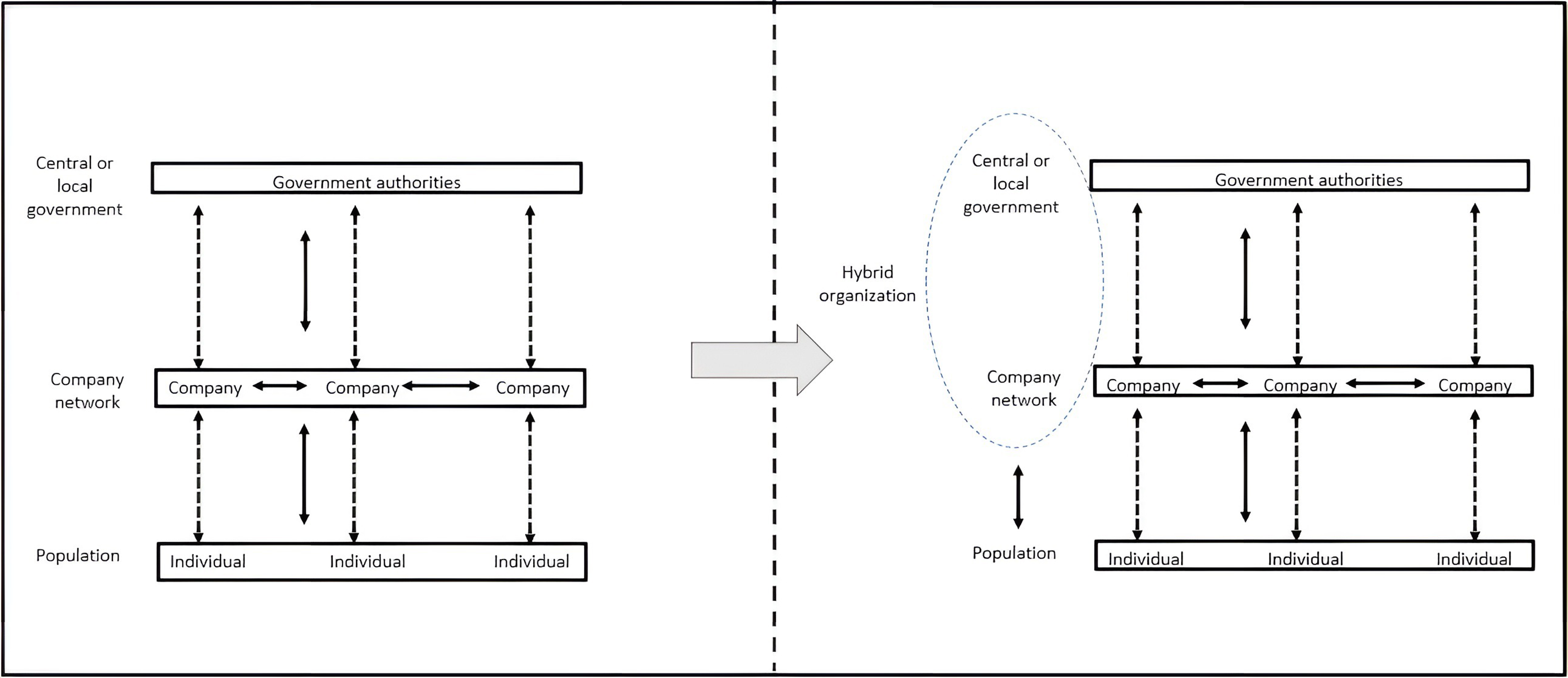
Power relations in the governmentality framework.
Based on this approach, this article assumes a further possible relationship that may characterise a different form of governance and the consequent exercise of power. In particular, reference is made to the relationship between companies and government when they operate jointly in the form of a public-private entity: this is highlighted by the dashed ellipsis in the right-hand side of Figure 1, which identifies a hybrid organisation. The latter, in turn, has relations with the population (vertical continuous arrow between the hybrid organisation and population).
Research on hybrid organisations, regarded as a mix of private and public entities, is increasing due to their potential to combine business interests and social values (Lusiani et al., 2019). On the one hand, hybrid organisations are evidently characterised by greater complexity starting with their governance structure. On the other hand, this public-private coexistence that characterises their structure may be suited to dealing with articulated and multidimensional situations, such as natural disasters.
Examining hybrid organisations and the public-private cooperation that takes place through them is in line with Foucauldian thought that the exercise of power is linked to the well-being of the community and the territory of reference. ‘Governing’ means dealing not only with the population but also with the qualities of the territory and the relations between the population and the territorial qualities. This appears relevant in natural disasters: these events may threaten and damage the population as well as compromise the quality of the territory (Foucault, 1991). In the specific case of phylloxera infestation, that entailed the risk of the loss of a typical crop and related biodiversity. Consequently, it generated negative repercussions from an environmental, social and economic point of view.
Hybrid organisations are relevant for disaster accountability when interventions in the response and disaster recovery phases are carried out by them (Sargiacomo and Walker, 2022). Moreover, hybrid organisations form a crucial collaboration between public and private actors for the population and the territory. Disasters are scenarios that require the activation of ‘exceptional’ measures for the economic and social life of the affected territories through the mobilisation of different kinds of actors, populations, welfare, resources and territories (Miller and Rose, 1990; Rose and Miller, 1992).
Hence, the twofold objective of this article is:
To analyse the informational value of accountability (Hoskin, 2017; Sian and Smyth, 2021) during the response and recovery phases, highlighting both the characteristics and role of accountability, from a historical perspective (Carnegie and Napier, 2017; Parker, 2015; Sargiacomo et al., 2021). To investigate how hybrid organisations at the local level (anti-phylloxera consortia that involved public-private collaboration) contribute to the development of common objectives to combat phylloxera infestation during the response and/or recovery phases. This aspect, only most recently debated in the literature (Sargiacomo and Gomes, 2011), needs further investigation, especially in relation to private companies (McKnight and Linnenluecke, 2016; 2019; Salvato et al., 2020).
This article is structured as follows. The second section contains a brief literature review on the topics of accountability in the event of natural disasters and public-private cooperation in dealing with natural disasters. This section supports the research objectives guiding this work. The third section illustrates both the main features of the phylloxera infestation disaster (spread and damage) with the possible solutions evaluated and the features of the anti-phylloxera consortia created in Italy, following Law No. 355 of 1901. The fourth section is dedicated to the description of the applied research methodology and the sources of the historical material used. The fifth section examines and discusses the contents of the documents under investigation in light of the dual objectives of the research. Finally, the sixth section contains some concluding remarks.
Disaster accountability and hybrid organisations
In the literature, the topic of accountability has been widely studied and analysed in different contexts (Roberts and Scapens, 1985; Shearer, 2002). In the context of disasters and natural catastrophes, scholars originally paid little attention to accountability issues (Sargiacomo, 2014). That attention has increased in recent years, due to various reasons such as the particular frequency of disasters, the high costs associated with each event and the risk of corruption (Everett et al., 2007) related to the huge use of financial resources.
In general, the different phases that characterise the management of any disaster, such as floods (Agyenim-Boateng and Oduro-Boateng, 2019), earthquakes (Sargiacomo, 2015) or other events, are very costly and require enormous financial and organisational efforts, as well as careful planning of activities (Lai et al., 2014).
Sargiacomo and Walker (2022) highlight the importance of accountability by analysing the reconstruction phase following the earthquake in Abruzzo (Italy) in 2009 with the related social impact on the territory and population. They considered the accounting and reporting issues that the bodies in charge of the recovery interventions were required to deal with.
Accountability should be considered as part of the disaster management process in which all stakeholders participate. Regardless of the actors involved, accountability has an impact on the outcome of the entire disaster management process (Baker, 2014; Taylor et al., 2014).
While the previous literature (Quarantelli, 1998) on natural disasters’ accounting and accountability was focused on responsibility and damages related to the disaster, more recent literature (Sargiacomo, 2015; Sciulli, 2018; Taylor et al., 2014) analyses the accounting and accountability, especially in relation to the response to and recovery phases from natural disasters.
This trend highlights the need to move from a narrow interpretation of accountability, usually limited to the financial reporting of the public and private resources disbursed, to a broader and more holistic interpretation that illustrates the commitment of the different actors in restoring pre-disaster conditions and, thus, the results achieved through their actions.
Furthermore, it is possible to identify two strands of studies on the topic that identify, respectively, ‘calculative accountability’ and ‘narrative accountability’ in disasters (Coronella et al., 2017; Everett and Friesen, 2010; Kamuf, 2007; McKernan and McPhail, 2012; Perkiss and Moerman, 2020; Sargiacomo et al., 2016). The ‘calculative accountability’ mainly refers to occurring facts demonstrable by concrete elements and quantitative data related to the disaster analysed (e.g., the number of people affected by the disaster, the value of the damages, accounting records related to the allocation of financial resources to cover the costs resulting from the disaster). Moreover, according to Jayasinghe et al. (2020), ‘calculative accountability’ may also concern principles and rules for the establishment of third parties (institutions) that make accountable both the companies and the public administration involved in disaster management, towards the different stakeholders. The concept of ‘narrative accountability’ refers to non-quantitative and subjective aspects, such as the emotions experienced by those affected by the disaster or their evaluation of the actions undertaken during the different phases of the disaster.
In addition to these two forms of accountability, other accountability forms highlight the complexity of the phenomenon in situations of disaster management. The literature (Jayasinghe et al., 2020) identifies vertical, horizontal, downward and diagonal accountability, depending on the ‘direction’ of accountability with respect to the subjects involved. This articulation is typical of the new public governance approach, and it should lead to collaborative accountability whereby all those involved in disaster management are considered collectively accountable. The implementation of collective accountability, characterising disaster management that brings together different actors, is particularly ‘valuable’ (Jayasinghe et al., 2020) for collaborative engagement in the recovery from disasters.
According to Safari et al. (2020), the concept of ‘disaster accountability’ can be better implemented if principles to assess environmental and social risk are defined ex ante. This would allow the adoption of proactive prevention strategies and the development of suitable accountability tools. These tools adhere to predefined standards and include environmental and social aspects, and moral considerations, thereby enhancing the ‘levels of responsibility for the other’ (Baker, 2014).
From the literature referred to so far, and in relation to ‘calculative accountability’, the first objective of this article is to analyse the informational value of accountability tools used during the disaster response and recovery phase by adopting a historical perspective (Carnegie and Napier, 2017; Parker, 2015).
Considering major natural disaster events (floods, earthquakes, tsunamis and others), part of the literature has focused on the study of disaster management and has illustrated the different stages that governments and other entities plan to provide their response to coping mechanisms. These include reacting during and immediately after a catastrophic event and taking measures to recover afterwards.
Disaster management allows for the application of a holistic view that implies a shift from a reactive to a proactive approach to natural disasters, according to the ‘principles of resilience and disaster risk reduction’ (Vermiglio et al., 2022). Generally, the disaster management cycle consists of four equally important phases: prevention/mitigation, preparedness, response and recovery (Coppola, 2011; FEMA, 2017; 2020).
The first phase, prevention/mitigation, involves actions taken in advance, such as the construction of sea walls to protect against tidal waves. These actions should be carried out continuously, based on the monitoring and updating of indicative parameters that are specifically identified and associated with the risk of possible disasters (Adamo and Imperiale, 2017; McConnel and Drennan, 2006).
The second phase, preparedness, consists of deciding, creating and testing plans, training, educating and sharing information, on an on-going basis, to prepare communities in the event of an emergency (Keyton et al., 2012).
The third phase, response, takes the form of assistance and intervention during or immediately after an emergency, with the aim of saving lives and protecting community assets (buildings, roads, animals, crops, infrastructure), and it involves a strong collaboration among all levels of government (Jong et al., 2015; Park et al., 2022).
Finally, the fourth phase, recovery, includes the coordinated process of supporting emergency-affected communities in rebuilding physical infrastructure and restoring emotional, social, economic and physical well-being in the medium to long-term future (Muzamil et al., 2022).
The first two phases, mitigation/prevention and preparedness, take place before catastrophic events, and they are generally conceived based on the lessons learnt from previous disasters, in the phases of response and recovery (Eshghi and Larson, 2008).
Thus, although natural disasters are beyond anyone's control, the response phase can be managed so that economic and human losses can be minimised or eliminated.
In emergency management and disaster risk contexts, responsible action is required from all actors acting on behalf of the community, including federal, state and local governments, businesses and non-governmental organisations (Parlak and Gunduz, 2015).
In particular, governments need to create the conditions necessary to operate in a streamlined manner without too much bureaucracy by preparing appropriate policies, allocating sufficient resources, defining roles and responsibilities and establishing effective accountability systems.
While national governments have the overall responsibility to lead disaster, recovery and mitigation efforts, especially in the aftermath of a disaster, a variety of other actors also step in to provide economic and other types of support. Natural disasters have wide impacts: environmental, economic and social ones, and as a result, at all stages of the disaster management cycle, cross-sectoral intervention and collaboration between the many actors operating in both the public and private sectors are required (see Chen et al., 2013). Collaboration forms involve the creation of public-private partnerships (PPPs) (Stewart et al., 2009). Vosslamber (2015) highlights the different roles played and the relationship between central and local government and the private sector in PPPs. In particular, the central government carries out a coordination and monitoring activity and allocates the financial resources necessary for the recovery phase. Financial support, in most cases, takes place through a transfer of funds to local governments, which are operationally responsible for managing the recovery. Furthermore, the private sector also contributes to fundraising and to determining the use of funding in the phase immediately after the catastrophic event. This highlights the relationships among the public and private institutions involved and the individuals/population. The investigation of such relationships requires more research (Vosslamber, 2015).
As highlighted in the work of Auzzir et al. (2014), PPPs have become a popular way for governments to engage private actors in the provision of infrastructure and services, with the aim of increasing quality and providing better value for money. But it is also noted that nowadays, in disaster management, special attention is paid to, and a prominent role is given to, local governments, which potentially can manage emergency operations by being more aware of the conditions in the local community (Kusumasari et al., 2010). Strong collaboration among all levels of government certainly helps ensure that actors at each level operate in an integrated manner and are involved in building resilience within the community, through activities’ planning for disaster management (Jing and Besharov, 2014; Kapucu et al., 2010).
A further evolution of the collaboration among different actors in dealing with natural disasters concerns the involvement of the community, which is why the work of Zhang et al. (2014) refers to the public-private-people partnerships or 4Ps approach. Indeed, the authors believe that the community involvement approach to disaster management is most fruitful if the community is involved during all phases of the disaster management cycle.
Busch and Givens (2013) note different kinds of effects (strategic, operational and tactical) of partnerships in disaster management. They illustrate how these effects can increase social resilience.
In the work of Chandra et al. (2016), it is argued how private sector involvement in disaster recovery can open opportunities to increase resilience and reduce pre-disaster risks; in other words, private sector involvement can also enable faster and more efficient recovery in both the short- and the long-term future.
Some literature considers public-private-community forms of collaboration as hybrid organisations. These are, precisely, organisations that encapsulate some characteristics of the public sector, the market and civil society (Brandsen and Karrè, 2011). The urgency of addressing complex problems that are often global in scope implies the need for interaction among private actors, public institutions and civil society (Vakkuri et al., 2021). This type of cooperation leads to the characterisation of hybridity and, thus, to the analysis of hybrid organisations (Grossi et al., 2022). They are arrangements of a different nature characterised by a mix of ‘cultures’, ‘coordination mechanisms’, ‘rationales’ or ‘logics of action’ (Brandsen et al., 2005) and multiple values (Campanale et al., 2021). Through hybrid organisations, a balance is sought between public policy objectives and private economic goals. This variety can be considered congenital to the complexity that characterises natural disasters. The magnitude and severity of natural disasters require an exceptional government of public interventions, economic support and the population (Sargiacomo and Walker, 2022).
Sargiacomo and Walker (2022) analysed the case of the 2009 earthquake in central Italy. They defined a consortium that was composed of public and private members as a hybrid organisation. The anti-phylloxera consortium analysed in this article can also be defined similarly, based on the characteristics detailed in the following sub-section.
Hybrid organisations, by their very nature, deal with critical issues related to their inter-institutional relations, enabling them to play a major role in ‘value creation’. Although central and local governments continue to be a relevant point of reference for the creation of public value, citizens, businesses and non-profit organisations are also important. The relationships that bind these entities in the form of hybrid organisations have an increasingly important role in the resolution of public problems (Grossi et al., 2022).
These organisations are often engaged in utility services delivery, and although there is some production of business studies analysing these organisations in different contexts (Secinaro et al., 2019), less attention has been paid by researchers to the functioning of hybrid organisations during natural disaster interventions (Sargiacomo and Walker, 2022).
To contribute to filling this gap in the literature, the present work has a second objective of analysing the role of public-private collaborations in natural disasters from a historical perspective.
Phylloxera infestation and anti-phylloxera consortia
Phylloxera was one of the greatest calamities in viticulture history. Viticulture represented one of the most important sectors in the economies of many countries, particularly France, Italy, Portugal and Spain in the European area, in the late nineteenth and early twentieth century (Badia-Miró et al., 2010; Garrier, 1989).
Due to its magnitude, this type of natural disaster has had serious economic and social consequences, and is of particular interest because it is characterised by a response and a recovery phase of long duration and simultaneous occurence.
The spread of phylloxera
Phylloxera is a tiny species of aphid (parasite) that destroys vines by attacking their leaves and roots and sucking the sap from the plants until the vines die. To stop the infestation, a large number of vineyards were uprooted and burnt in a desperate attempt to stop the spread of the disease, not only ruining the livelihood of thousands of family agricultural businesses but also triggering a deep economic and social crisis due to the halt of important wine production and commercialisation (Visintin, 2011).
The infestation affected not only European vineyards but also those of Australia, New Zealand, South Africa and the USA. A few countries, however, were unaffected by the infestation, namely, Argentina, Chile, parts of Australia and some Mediterranean islands.
The presence of phylloxera in Europe was first detected in France and England at the end of the nineteenth century and then spread to other countries. Its presence in Italy was recorded in 1880, initially in the northern regions, particularly Piedmont, Lombardy and Liguria, and then in the southern regions, such as Apulia, Calabria and Sicily (Grimaldi, 1902; Lentini, 2015). Figure 2 shows the areas of the European countries infested by phylloxera in the period 1868–1920. The figure identifies the geographical areas where the infestation began (white circles), those where phylloxera spread from 1880 (dark grey areas), those where the development of the aphid has been more intense since 1900 (dashed areas) and the directions assumed by the spread of the infestation (arrows). The geographical area considered in this article (the province of Lecce, in the Apulia region, Italy) has been affected by the disaster since 1900. Starting from that period, legislation was passed to establish an anti-phylloxera consortium dedicated to combating the infestation and recovering viticulture activities.
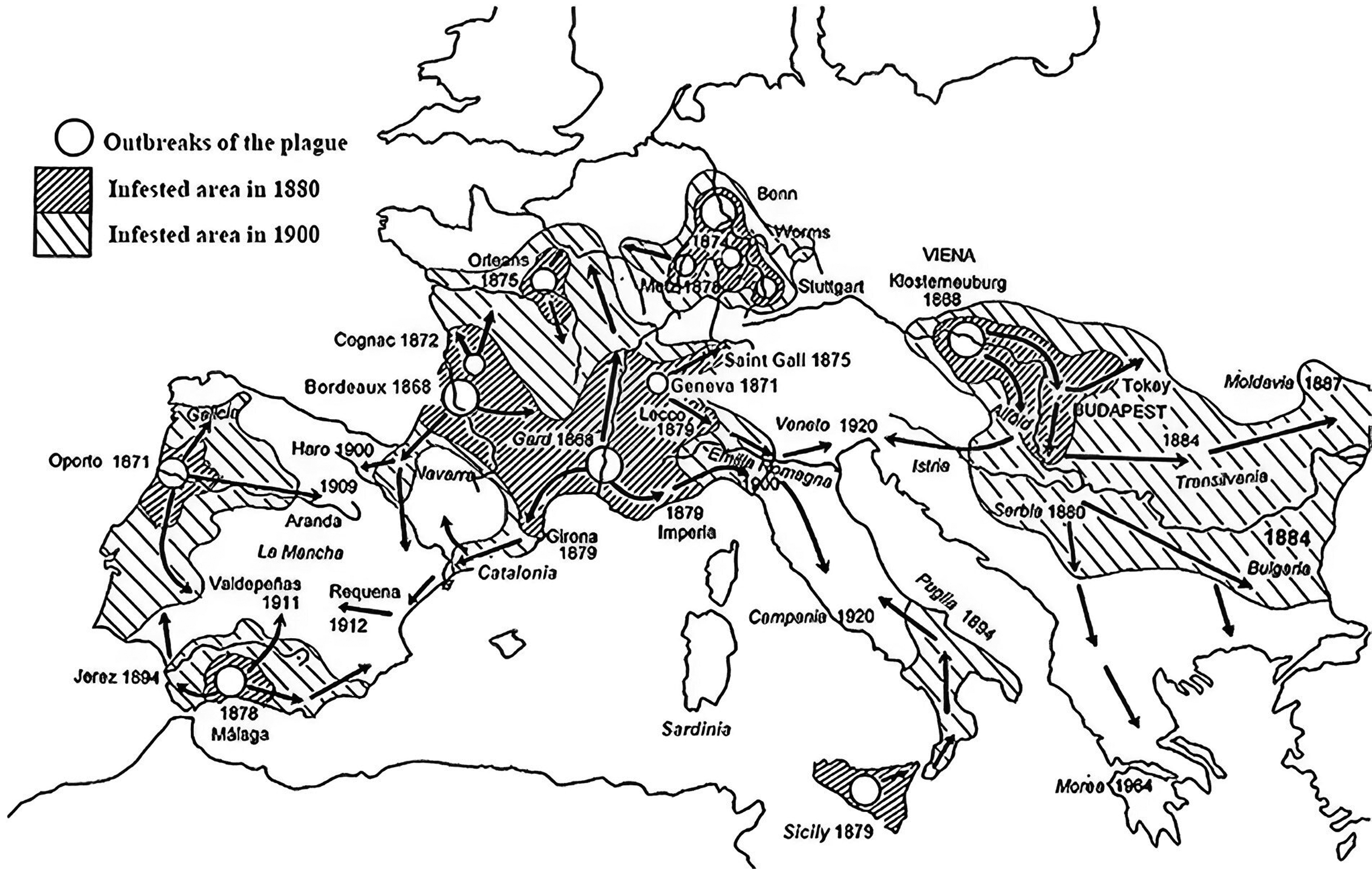
The spread of phylloxera in Europe, 1868–1920.
These insects spread across Europe through agricultural import and export activities, which were intense at the time, and included the exchange of plants for experimentation, which was a common practice. The phylloxera caused a very serious damage to the European grapevine (Vitis vinifera). This particularly aggressive insect attacked the root system, leading to the death of the vine within 4–5 years. In contrast, in the American vine (Vitis rupestris), phylloxera caused only marginal damage that was concentrated on the leaves.
To block the damage of the infestation, many different attempts were made to find the most suitable solution: from chemical control to the use of cultivation methods, until the grafting method was identified (Bandinelli et al., 2007; Visintin, 2011). Regarding the first solution (chemical control), phylloxera control involved injections into the roots of chemicals that were not toxic to the vine, such as carbon disulphide. Although this technique was particularly expensive and not very effective on deep roots, it allowed some vines to survive. Another solution involved brushing the vines with a mixture of water, quicklime, crude naphthalene and heavy coal oil.
Regarding the use of cultivation methods as a solution to phylloxera, farmers flooded the fields to destroy pests by asphyxiation and treated the roots with smoke from burning brushwood to the point where the vines were silted up. Then, it was noticed that in sandy soils, mainly of marine origin, the phylloxera was much less virulent, if it appeared at all (Baccarini and Angelillis, 1896).
The spread of aphids was of such proportions that it was feared that Vitis vinifera and wine production would have disappeared, until it was noticed that American vines, unlike European ones, were highly resistant to phylloxera. The problem of phylloxera was therefore overcome with the practice of grafting: that is, it was decided to plant roots of American vines (Vitis labrusca, Vitis rupestris, Vitis riparia and others), more resistant to phylloxera, and graft European vine varieties (Vitis vinifera) onto them.
It was necessary to study which rootstocks of American vines were the most similar to the varieties cultivated in Europe and best suited to the calcareous soils typical of Mediterranean areas (Fabiani, 1970). Subsequently, mixed cuttings called ‘bimembre’ began to be produced: they had American vines (the rootstock) in the root part and European vines (the graft) in the upper part of the vine.
The practice of grafting European vines onto the roots of American species became the method par excellence for growing vines for wine production and is still valid today.
The development of this technique made it possible to reinvent vineyard management techniques and broadened agricultural knowledge by discovering that the choice of grafting can have implications for the vine's adaptation to the type of soil in which it is planted. Therefore, the use of grafting was no longer just a method for controlling phylloxera, but it became a method for gaining agronomic advantages in terms of plant adaptation.
The anti-phylloxera consortia in Italy as hybrid organisations
In Italy, phylloxera was first detected in 1880. In the following years, this insect infested about a quarter of the Italian vine-growing area, causing, in some cases, the definitive extinction of native varieties of Vitis vinifera (Mori et al., 2018; Villani, 1990; Zaninelli, 1977).
At first, to isolate and combat the infestation, only the national government intervened with methods of surveillance, exploration and destruction of the crops in infected areas. If that was not sufficient, after the stripping and incineration of the vines, the last measure taken was to spray the land with oil or carbon disulphide.
Agricultural experts were undecided about the widespread adoption of the destructive method for infected vines, for two main reasons:
At an international level, and especially in the French countryside, this method had proven ineffective, while other strategies, such as grafting European vines onto American vines, had been successfully tested. Heavy burdens were placed on the Italian state to compensate the owners of infected vineyard fields.
Subsequently, private vine growers were grouped into compulsory consortia and required to cooperate in the fight against phylloxera. In the meantime, the large landowners in Apulia, who represented the largest region's parliamentary deputation, decided to draw a law proposal to regulate the establishment of anti-phylloxera consortia. Following the initiative of Eugenio Maury, a large vineyard owner in Cerignola (Apulia region) and an eminent southern Italian politician, a bill was drafted in 1900 (Atti Parlamentari, Camera, Legislatura XX). The document was presented to the Minister of Agriculture, Antonio Salandra, on the occasion of his trip to Bari (in the Apulia region) in 1900, immediately after the first phylloxera infestations were discovered.
The proposal had innovative features because it suggested – for the first time in Italy – the creation of anti-phylloxera consortia, supported in part by financial contributions from the owners of the vineyards in the affected areas and in part by financial contributions from the local authorities belonging to the consortia. The financial contributions were collected by the local authorities.
Minister Salandra accepted the proposal and made a decree, which was quickly transformed into Law No. 355 of 6 June 1901. Thus, with the help of the Italian state and local authorities, the creation of consortia was institutionalised among the owners of vineyards for the defence of viticulture against phylloxera (Mastrolia, 2000), according to the following indications provided for in Law No. 355 of 1901:
Consortia could be created spontaneously by provinces, districts, municipalities or groups of municipalities with identical vine-growing interests. Their establishment was compulsory if a quarter of the vineyard owners, owning at least a third of the area under vines, had not yet proceeded spontaneously. The application to form a consortium was submitted by the owners to the prefect (state representative in a province). The prefect gathered the opinion of the provincial commission and the Royal Commissioner (in charge of supervising anti-phylloxera consortia), and then, they established the district or geographical boundaries of the consortium. The Minister of Agriculture could order the establishment of consortia, having heard the opinion of the phylloxera advisory committee. This was an ad-hoc body established at a national level and were in charge of assessing whether the absence of a consortium could potentially affect the neighbouring areas not yet infected (Dandolo, 2010).
The anti-phylloxera consortia can be considered hybrid organisations because they mix different logics (Brandsen and Karrè, 2011): public (related to the socio-economic impacts of the disaster) and private (regarding the specific economic interest of the landowners). This combination was achieved both through the composition of their governance bodies and the functioning of the consortia and the activities carried out by the same.
Regarding the governance/functioning of the anti-phylloxera consortium, tasks were distributed between publicly and privately appointed bodies: delegates of the Ministry of Agriculture, consortium commissions and supervisory commissions, as detailed below.
The agricultural management of the vineyards was entrusted to the anti-phylloxera technical delegates appointed by the Ministry of Agriculture.
The administration was in the hands of a consortium commission consisting of the president and six members with a five-year term. This body was appointed using elections. The mechanism of election was based on the number of landowners and the number of municipalities involved.
Each elected consortium commission was responsible for the budget and final accounts of the consortium; it allocated the consortium's funds, which consisted of the consortium contributions (one to five liras 1 per hectare of land or vineyard pertaining to landowners of the consortium and a contribution paid by the municipality), and the sale of cuttings, that is, the wild and grafted rooted cuttings produced by the consortium nurseries. Consortium commissions chose their administrative and accounting officers.
The supervision in respect of the consortia regulation and the coordination of the work of the consortium commissions were entrusted to a supervisory commission established in each province. The supervisory commission was composed of a Royal Commissioner assisted by two vice-commissioners.
The main activities carried out by each consortium commission can be grouped into three types:
Inspective, each consortium commission were required to explore suspected fields and supervise vineyards. Executive, since the consortium commissions were involved in the creation and management of nurseries for the production of phylloxera-resistant cuttings and vines with American rootstocks, needed to speed up the recovery phase (Bandinelli et al., 2007). Dissemination of knowledge, as the technical delegates of each consortium commission were engaged in the dissemination of phylloxera knowledge and the use of resistant vines, through specialised publications and newsletters, such as the consortium's journal Il viticoltore modern [The modern vine grower], conferences and practical exercises. The same technical delegates were also invited to give lectures at grafting schools, the purpose of which was to prepare the workers for the re-planting or recovery of the vineyards following the possible destruction that phylloxera would cause (Dandolo, 2002). This ‘instructive propaganda’ was so popular that several women also participated in the grafting courses. To strengthen the importance of the dissemination activity, Figure 3 shows the number of lessons delivered for each year, from 1903 to 1909, distinguishing between theoretical and practical lessons; the number of male and female students, distinguishing between those enrolled, attending, eligible and proficient.
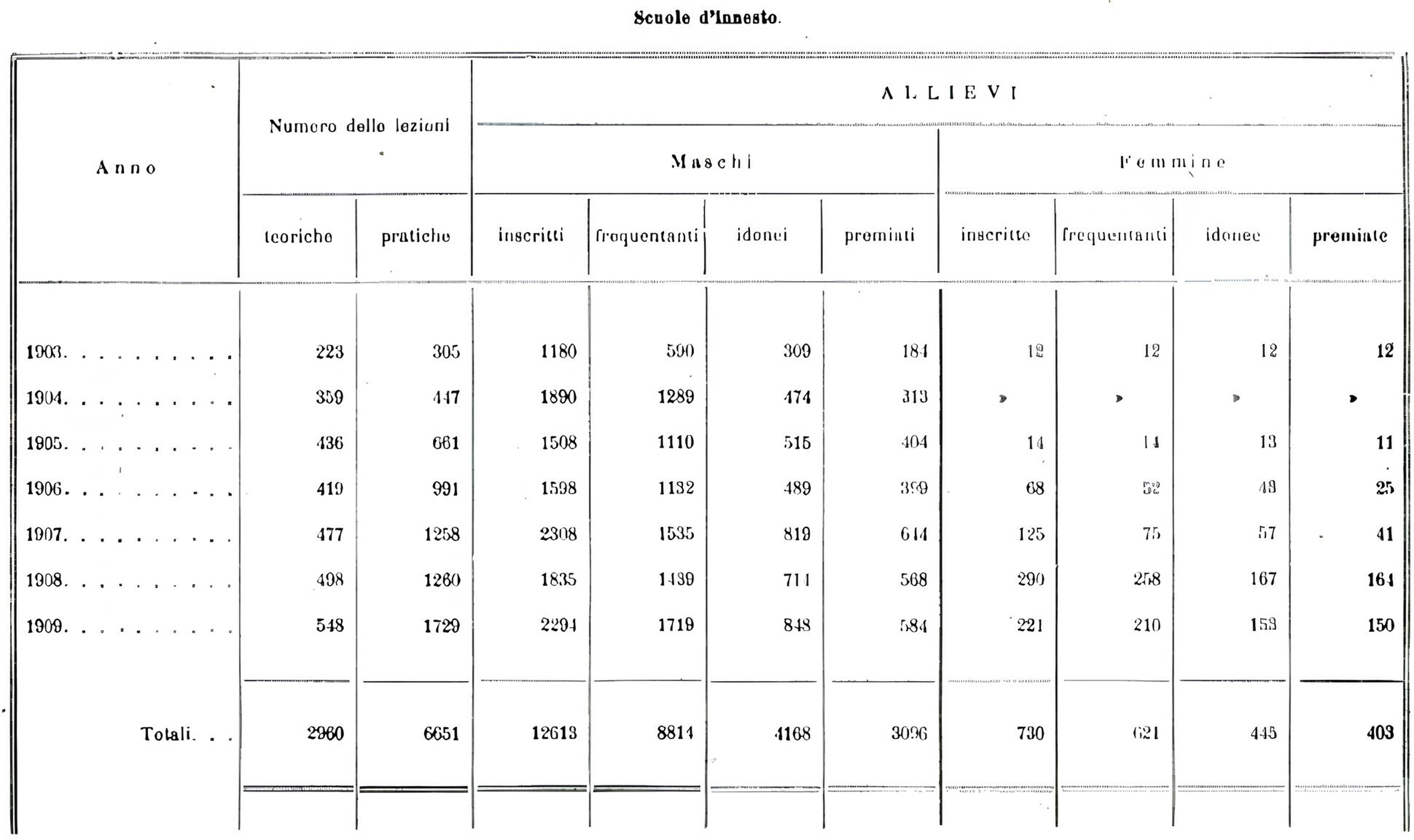
Attendance to grafting lessons in the Apulia region.
The various activities carried out by the anti-phylloxera consortia highlight the central role of these hybrid organisations in the response/recovery phases of disaster management.
The technical delegates were also called upon for several site consultations and inspections to verify the presence of phylloxera in soils and imported goods from infested areas.
The allowances and indemnities of the Royal Commissioner, the vice-commissioners and the technical delegates were paid by the state. The payment for the activities carried out by the administrative and accounting officials of each consortium commission was provided by the municipalities of each consortium. This expense was split among municipalities in proportion to the land size that each municipality represented.
Each municipality was required to compile and publish lists and rolls of vineyards or vineyard owners, in order to be able to calculate the annual contribution of the consortium land owners. Their contribution, in no case, could exceed one lira per hectare of vine-growing land. The contribution was established by each consortium commission and approved by the Ministry of Agriculture, after consulting the provincial commission (Mastrolia, 2018).
The required contribution was in full if the size of the land was at least half a hectare, but it was reduced to half if the land size was less than half a hectare. Vineyard owners who owned, even in several plots, less than a quarter of a hectare were exempt. Municipal tax collectors were in charge of collecting the consortium's contributions. They were obliged to deposit all the sums collected on behalf of the consortium at the Post Office Savings Bank when the sum exceeded 500 lire.
Research methodology and sources
Content analysis, based on a thematic approach (Solomon and Thomson, 2009), is used to analyse the 1911 ‘Report of the President of the Provincial Commission of Lecce for the Protection of Vineyards’ and the report entitled ‘American Vines on Trial in Terra d'Otranto. Observations made in experimental/demonstrative vineyards during the three-year period 1912–1914’ (referred to as ‘Observations … period 1912–1914’, hereafter). The contents of historical documents need careful analysis to allow researchers to understand the contribution that these documents can make to the objectives of the research (Prior, 2003). According to Vermiglio et al. (2023), document analysis can be considered the most appropriate research methodology for the in-depth analysis of some research areas, from a historical perspective.
Both documents were found in the State Archives of Lecce province (Apulia region): the first document was presented to the then Minister of Agriculture by the President of the provincial commission of Lecce, and the second document analysed is the three-year report drawn up by the Technical Director of the consortium for the protection against phylloxera for the Lecce area.
The criteria used for the selection of the aforementioned documents are the following:
Compliance with the research objectives, the selected documents represent the accountability tools that effectively allow investigation of the role of hybrid organisations in dealing with the phylloxera natural disaster. Geographical relevance, it was decided to focus on documents related to an infested area of the Apulia region. The consortium of the Province of Lecce was chosen as representative of the established consortia in the region: the constitution of these hybrid organisations at a local level was established by the decree law of 1901 with the inputs of the Apulian region. Later, this law was extended to the entire Italian territory. Archival availability, the selected documents are the only ones available on the subject in the archives consulted. Identifying the most relevant accountability aspects disclosed and the way public-private collaboration worked through anti-phylloxera consortia that can be inferred from the two documents. Labelling the aspects emerging from the analysis in order to cluster them in either one or the other of the two themes guiding the research.
The application of the content analysis methodology, according to a thematic approach, assisted in:
This analysis allowed us to achieve the research objectives: to investigate the role of accountability mechanisms during the phases of response and recovery from the natural disaster, phylloxera, and to explore how public-private collaboration at the local level contributed to the development of government objectives to support interventions during the response and recovery phases.
The thematic approach is affected by limitations in terms of the validity and reliability of the analysis. To reduce these limitations, we independently analysed the two documents and then combined our independent analyses. Whenever possible, we validated the results of each analysis through the consultation of secondary sources, such as parliamentary acts, a report to the assembly of the vine growers of the anti-phylloxera consortium of Lecce (see Archival sources) and historical publications (Badia-Miró et al., 2010; Lella, 1912; Mastrolia, 2018; Morrow, 1973; Reale, 1923).
Analysis of the accountability instruments of the anti-phylloxera consortia in the province of Lecce
In the province of Lecce, 11 anti-phylloxera consortia were set up between 1902 and 1903, following Law No. 355 of 6 June 1901. They were coordinated by the provincial commission for the protection of the vineyards of the province of Lecce (Reale, 1923).
The document examined is a report by the President of the provincial commission for the protection of vineyards, Apostolico Prince Orsini-Ducas, addressed to the then Minister of Agriculture, Nitti, and it consists of two parts:
The first part highlights the importance of vine growing in the province of Lecce and the importance of the anti-phylloxera consortia in re-planting or recovering vineyards from phylloxera damages. In that regard, the President suggests some options to optimise the management and operation of this form of public-private collaboration. The relevance of the consortia is based on direct experience and expertise since those in the geographical area under consideration were established in the early 1900s, and the report under examination dates back to 1911. The second part contains reports from the technical directors of each of the 11 phylloxera consortia of the province of Lecce.
In the first part of the report, the President of the provincial commission indicates that 21 per cent of the total land in the province of Lecce is dedicated to vine cultivation. The President highlights that the composition of the soil and the weather conditions of the province make the land more suited to vineyards than to the cereal cultivation. Cereal cultivation would require intense ploughing since the soil is rocky. The report compares vine and cereal crops, showing how, based on the same crop size, viticulture is more profitable and requires a greater number of working days than cereal cultivation. Hence, it is clear how the survival of vineyards from phylloxera in the geographical area under consideration represents an ‘economic and social problem that involves the entire life of the region’ (Relazione del Principe Apostolico Orsini-Ducas, Presidente della Commissione Provinciale …, 1911: 4). This highlights the importance of anti-phylloxera consortia since the destruction of vineyards would not only damage the vineyards but also the community: ‘the wealth would drop … and misery would overwhelm everyone. Indeed, it [phylloxera infestation] would make survival absolutely impossible for the 750,000 inhabitants of the province of Lecce. They have switched their activity to vineyards, in many municipalities of the province: former sharecropper families are now owners of small vineyards. Now, all the prosperity created by such a prosperous agricultural activity would shatter miserably in a short time’ (our translation from the Relazione del Principe Apostolico Orsini-Ducas, Presidente della Commissione Provinciale …, 1911: 7).
However, the importance of the consortia is also highlighted in the following terms: ‘the inhabitants of this province consider the consortia to be a necessary institution for the economic development of the region and wish their operation to be strengthened’ (our translation from the Relazione del Principe Apostolico Orsini-Ducas, Presidente della Commissione Provinciale …, 1911: 5). In order to improve the operation of the consortia by increasing their effectiveness, the President of the provincial commission for the protection of vineyards suggests extending the land size comprised in each consortium or reduce their number. These measures would avoid the creation of new small consortia and limit their administrative costs: ‘limiting the number of consortia reduces the general administrative costs’ (our translation from the Relazione del Principe Apostolico Orsini-Ducas, Presidente della Commissione Provinciale …, 1911: 11). Moreover, these measures would ensure the presence of one technical director for each consortium, a figure demanded by vine growers and justified by the volume of work in larger consortia.
The President outlines some useful aspects regarding the operations of phylloxera consortia, including:
The importance of the cultivation of several experimental fields, where solutions to phylloxera infestation are tested, thanks to public-private collaboration involved in the consortia. Only adequate experimentation can lead to the identification of the most effective remedies. The usefulness of a proportional allocation of the rooted cuttings to be grafted onto the various consortium landowners’ vines: the rooted cuttings available to the consortia should be distributed to the consortia landowners in proportion to the size of their land. Any extra cuttings could also be sold outside the consortium. The need for an organisation dedicated to the protection and development of the wine industry also through the definition of common rules for all the consortia in the province. These rules include the allocation of cuttings and rooted cuttings to landowners of the consortia and the definition of a single organic plan for the protection of vineyards to be applied to the entire province, without discrimination. The creation of a provincial or regional welfare fund to cover the interest on loans granted by banks for the re-planting of vines
2
affected by phylloxera. The approval of a law that would institutionalise government funding for the anti-phylloxera consortia which indicates a greater government commitment to the fight against phylloxera through the allocation of larger budget amounts. Activities of the consortia concerning, in particular, raising awareness across vine growers of the anti-phylloxera measures. Indeed, in the first years of this form of public-private collaboration, some consortia reported that vine growers viewed the activity of the consortia with a certain diffidence
3
, because they were unaware of the phylloxera issue, and they were not concerned about possible phylloxera damage (Atti Parlamentari, Camera, Legislatura XXII). Lessons from the grafting schools to disseminate the most effective techniques of grafting European vines onto the roots of American vines, thus helping to limit phylloxera damage and recover the productive capacity of vineyards. Sometimes, these schools increased participation by rewarding proficient participants in practical grafting. Management of experimental vineyards: these vineyards were managed directly by the consortium or by landowners on their own land. In experimental vineyards, various grafting solutions were tested to define and spread the most effective ones. Activites of nurseries to produce phylloxera-resistant rooted cuttings for the distribution to the consortia's vine growers. In order to support vine growers in limiting phylloxera damage and re-planting their vineyards, the consortia engaged in the development of nurseries to meet vine growers’ needs for plants resistant to the infestation. Results of the inspection of lands (on-the-spot inspections), delivery and examination of agricultural material from infected locations to check for the presence of phylloxera and prevent its spread. To strengthen the importance of the inspection activity, Table 1 summarises the number of inspection visits carried out for each Apulian province and for each year considered (1902–1909 up to March), as reported in ‘I consorzi di difesa della viticoltura contro la diffusione della fillossera’ (Camera dei Deputati, 1913). It is interesting to note that the number of inspections carried out in the province of Lecce (on which this work focuses) is one of the highest numbers: this shows how consortia were particularly active in this geographical area. Activities related to wine production and, therefore, related to vine growing. For example, the Galatina consortium set up an eno-chemical laboratory, while the Gallipoli consortium implemented a wine cellar for wine-making experiments.
Lastly, President Orsini-Ducas presents the following proposals to the Minister of Agriculture for the adequate functioning of the consortia:
The second part of the report contains the technical reports of the individual consortia highlighting their main activities. In summary, these reports illustrate the:
Inspection visits per province.
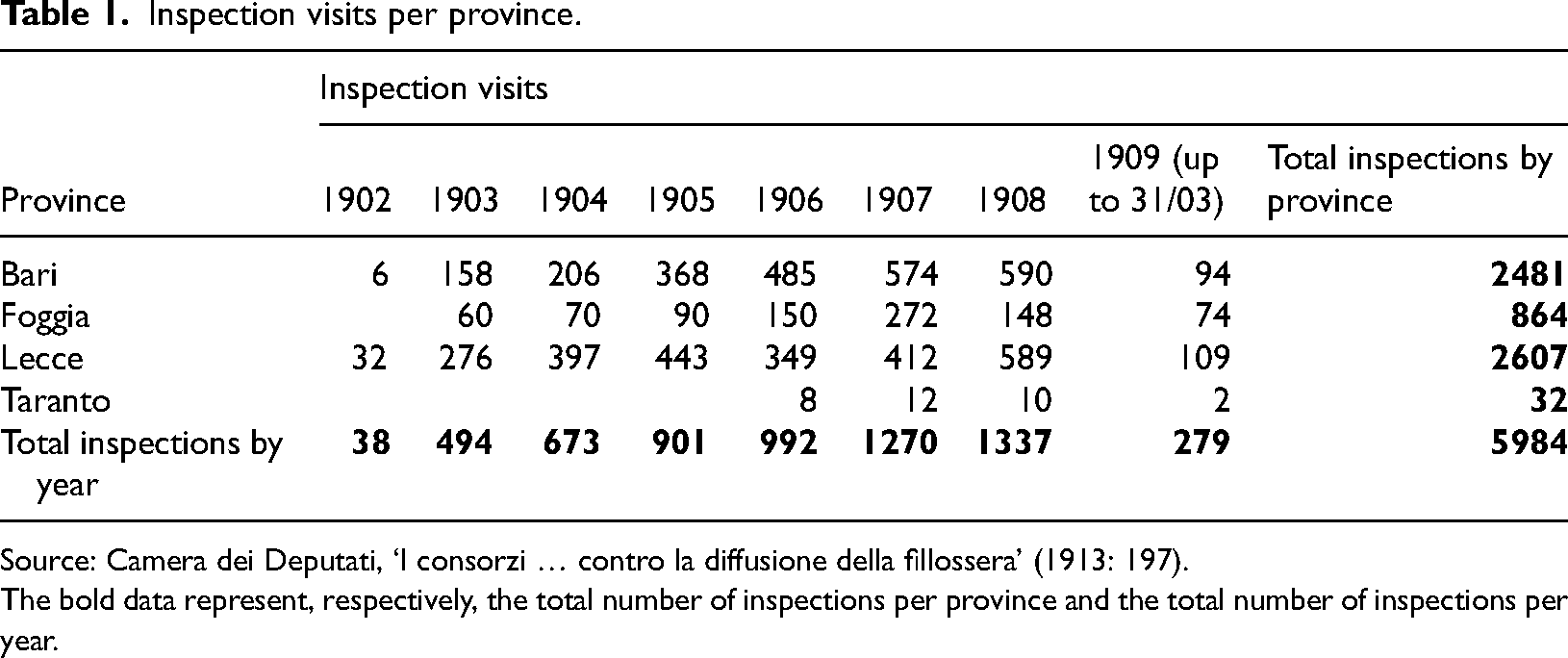
Source: Camera dei Deputati, ‘I consorzi … contro la diffusione della fillossera’ (1913: 197).
The bold data represent, respectively, the total number of inspections per province and the total number of inspections per year.
Finally, the technical reports of each consortium conclude with some considerations regarding their administrative functioning. Mostly, these are evaluations of a formal nature, concerning the regularity and correctness of administrative procedures. An element of a more substantial nature, found in many of the consortia in the province of Lecce, is represented by the delay in the payment of consortium contributions by the local authorities belonging to the consortia. Inevitably, this creates operational problems in the functions assigned to the consortia, and, consequently, it leads to the request for a greater financial commitment from the government to support the anti-phylloxera consortia.
Report titled ‘Observations made in the experimental/demonstrative vineyards during the three-year period 1912–1914’
This report is written by the Technical Director of the anti-phylloxera consortium of the Lecce province (Maggioni N.) at the end of the three-year period from 1912 to 1914, during which he had kept under observation a number of experimental vineyards, dedicated to experimenting with solutions to defend crops from the phylloxera attack.
It is a report aimed at accounting for the experimental tests carried out to identify the characteristics and the applied conditions that proved effective in combating the phylloxera infestation and recovering vineyard productivity. Therefore, the report is a useful support tool for the recovery stage. Furthermore, the report states that the experiments and the results achieved represent valuable information to encourage vine growers not directly involved in the experimentation to apply the tested techniques. In other words, it enhances the ‘emulation’ of good practices to orient the vine-growing and wine production sector towards the application of such practices to cope effectively with natural disasters. This perspective places attention on the outcomes/impact of the reported experiments, in a formal and practical way. The report highlights both the advantages of the experimentation and its failures to avoid the replication of the failure and prevent vine growers from having negative experiences.
Of the 29 experimental vineyards planted in the Lecce province, three are part of the Lecce phylloxera consortium and located in the municipalities of Campi S., Novoli and Lecce. In terms of results, 17 vineyards are disclosed in a synthetic and descriptive manner, probably as a result of more scattered observations, which were not subjected to precise planning. For the remaining 12 experimental vineyards, the reporting appears more detailed, and it contains further data on the effective grapes’ production for each of the three years observed (1912, 1913 and 1914).
With reference to the descriptive part of the report, of the 17 vineyards examined, 15 are privately owned, meaning vineyards belonging to large landowners who make them available so that anti-phylloxera solutions could be experimented there, while two are directly managed by the anti-phylloxera consortium of Lecce, and experiments are carried out there. Table 2 summarises some of the information contained in the descriptive part of the report.
Experimental vineyards (no. 17 vineyards accounted for).
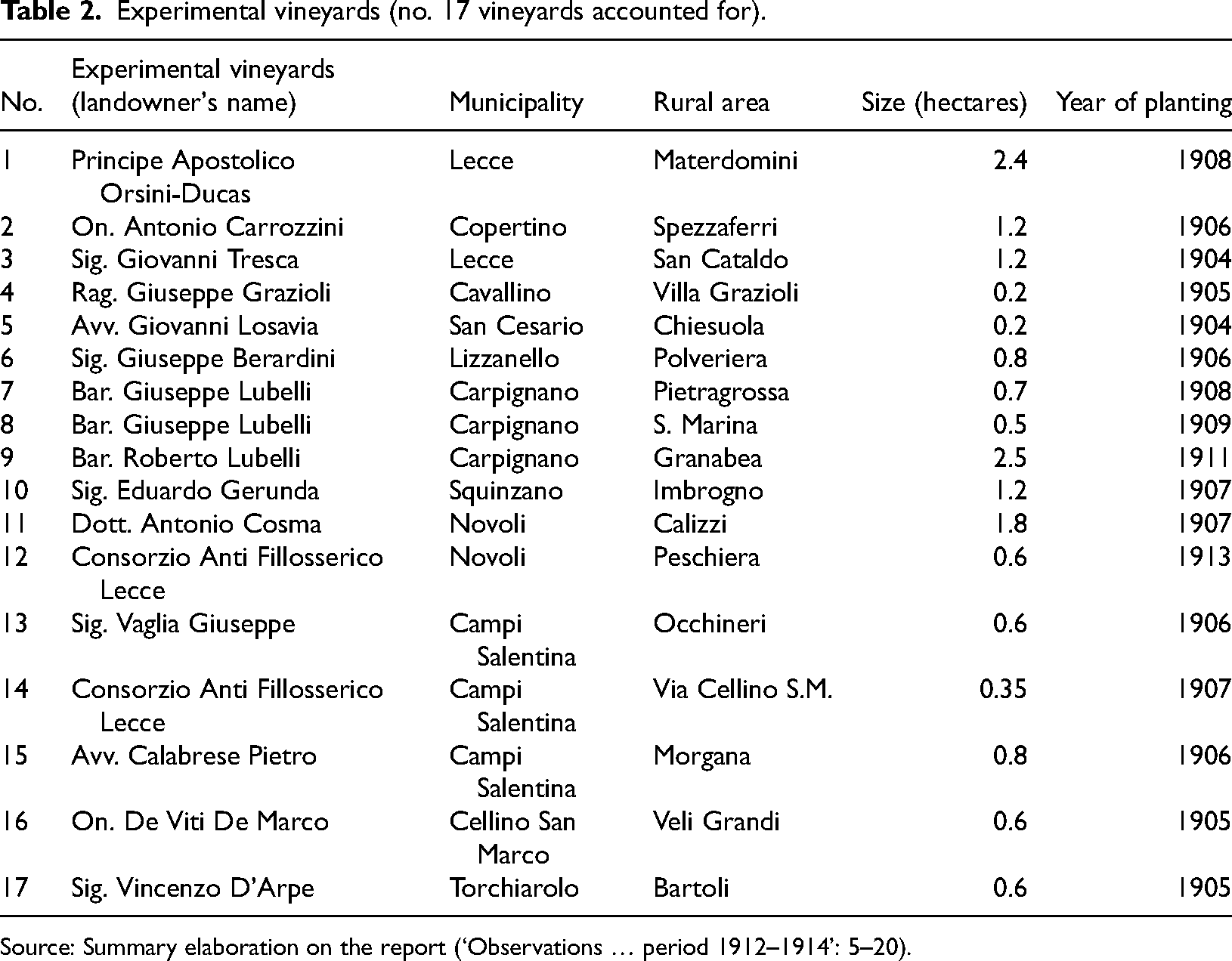
Source: Summary elaboration on the report (‘Observations … period 1912–1914’: 5–20).
For each vineyard accounted for in the descriptive part of the report, the following aspects are recorded:
The ownership and location of the vineyard. In addition to indicating the name of the owner (if it is a private experimental vineyard), the municipality and the rural area in which the vineyard is located are also indicated. The vineyards are located throughout the province of Lecce (see the technical aspects of the experimentation in point 3). The size of the vineyard (expressed in hectares) and the year of planting. In the 17 vineyards covered by the descriptive part of the report, the experimentation starts between three and seven years prior, including the three-year period of the report: 1912–1914; only in a couple of cases did the experimentation start one to two years prior. Therefore, this report is based on a longer experimental period, which aims at reinforcing the reliability of the results recorded. Some technical aspects related to experimentation. In particular, they concern:
The nature of the soil, for instance, dry or deep siliceous-clay soil or rocky soil, with banks of calcareous tuff (typical of the area). The variety of rootstock cultivated (riparia rupestris, aramon rupestris, riparia gloire and others) and the scions used (negro amaro, malvasia, primitivo and others). The planting system (hole or bush) and the type of grafting (in situ, rooted grafts). The observations on the state of the crops taken into consideration: the degree of development and health status of the vines are reported, by type of vines. These observations include practical notes on how certain elements impact on the development of the crops, for example, the type of planting (the total bush system appears to be more productive than the hole system, traditionally used in the Lecce area) and the type of soil (the siliceous-clay soil withstands drought better as it retains more moisture).
Figure 4 shows an example of the tabular part of the report: the main information summarised in the tables is the same as the descriptive one, illustrated in the descriptive part of the report, in relation to the three-year period 1912, 1913 and 1914. The ownership and location of the vineyard, the size of the vineyard (expressed in hectares) and the year of planting, some technical aspects related to experimentation and observations on the state of the crops are taken into consideration.
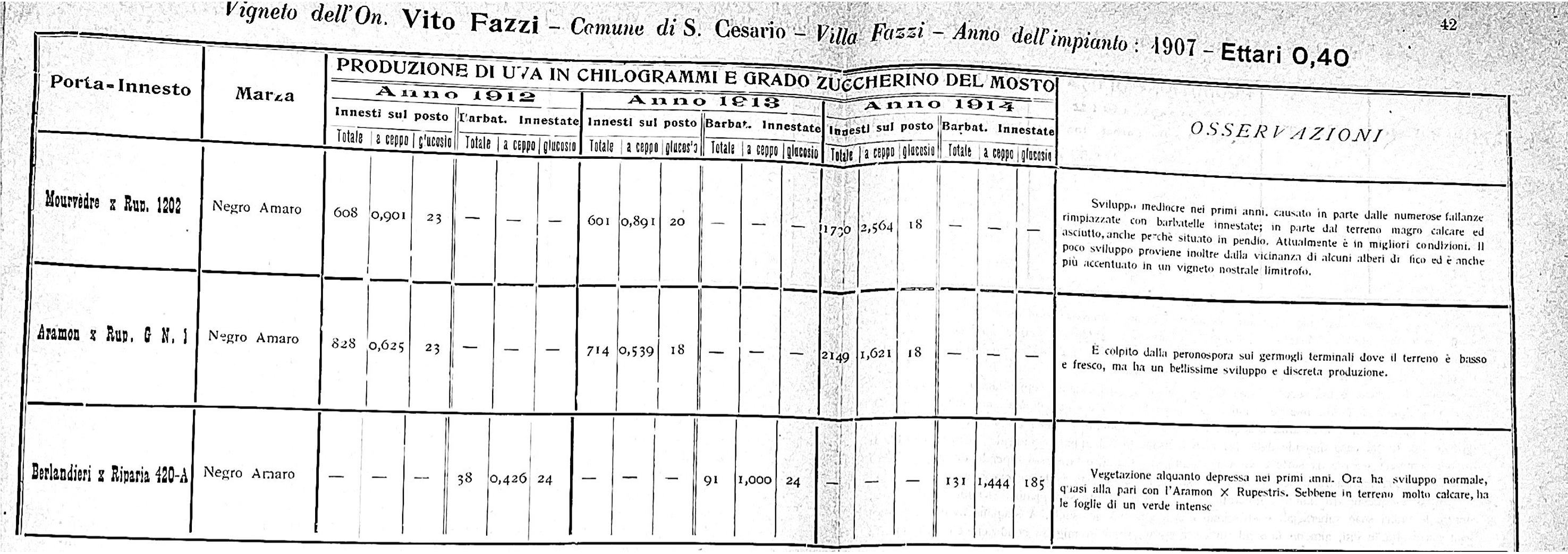
Example of a table used for reporting on some experimental vineyards.
In addition, the tables provide data on the productivity of the further 12 experimental vineyards, expressed in kilograms of grapes produced for each rootstock/vine variety tested in the vineyard. The following table summarises the productivity data for each of the 12 experimental vineyards (Table 3).
Productivity of 12 experimental vineyards.
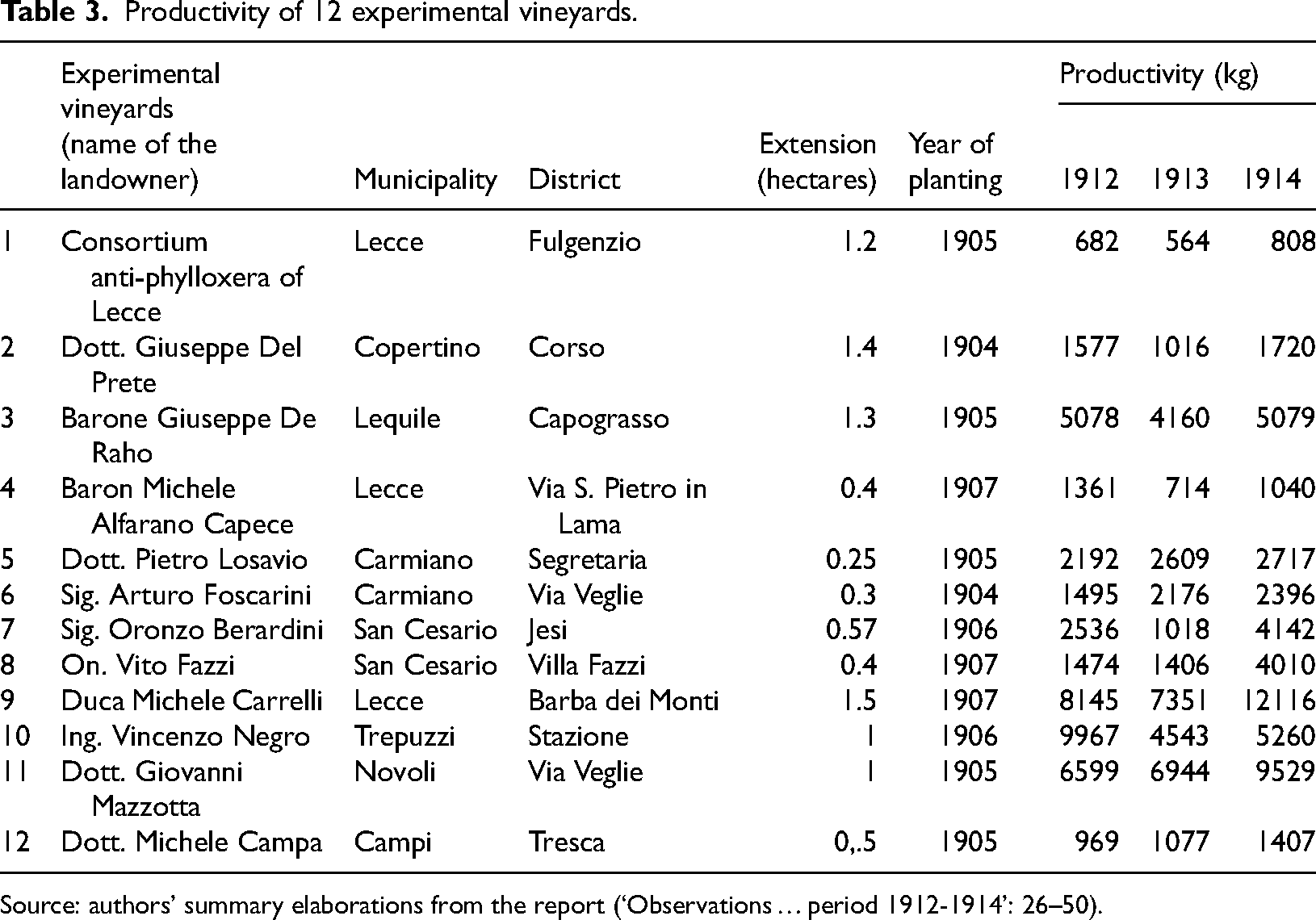
Source: authors’ summary elaborations from the report (‘Observations … period 1912-1914’: 26–50).
This aspect appears particularly relevant as it shows how the report, as an accountability tool, provides data and information about both the experimental activity carried out and the effects and impact of this activity, through data on resulting grape production. The information also discloses the impact in terms of whether and to what extent the experiments were able to hinder the spread of phylloxera, by reducing its negative effects.
To make the comparison between the three years considered in the report more readable, we calculated the productivity for each hectare of the 12 experimental vineyards considered by year, from 1912 to 1914, obtaining the results summarised in Figure 5.
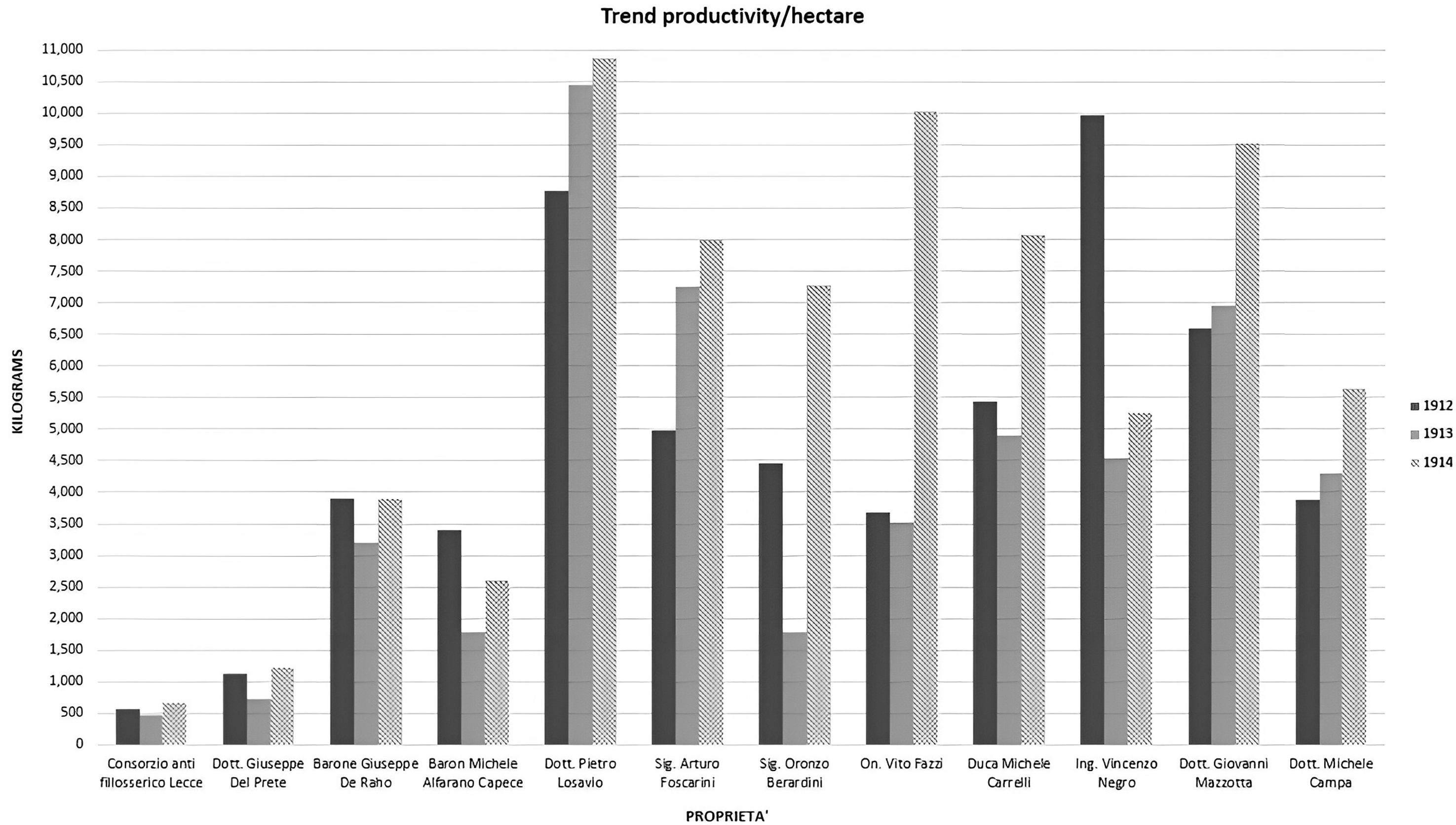
Productivity per hectare (kilograms of grapes).
The graphical elaboration in Figure 5 shows how the trend in productivity declined in most cases between 1912 and 1913. This can essentially be traced back to the fact that in 1913 there was a drought, which led to a drop in productivity. However, an increase in productivity was observed between 1913 and 1914. In both the 17 and 12 vineyards considered, experimentation is an activity implemented through the initiative of the anti-phylloxera consortium of Lecce. This initiative is characterised by the collaboration of private individuals (landowners), experts from the consortium and a mix of private and public resources (assets and tools for experimentation and funding). Therefore, we interpret the positive productivity trends of the experimental vineyards as an indicator of the success of the public-private collaboration carried out through and within the anti-phylloxera consortia.
Discussion and conclusion
The phylloxera infestation was one of the greatest disasters in the history of viticulture between the nineteenth and twentieth centuries, characterised by long-term response and recovery phases and heavy economic and social repercussions. We build on the Foucauldian approach (Senellart, 2007) to show the usefulness of developing accountability tools for reporting on natural disasters’ interventions and their impact on the containment of the damage. We consider a case of interventions carried out by hybrid organisations (Sargiacomo and Walker, 2022) to counter the phylloxera disaster in Italy, in the twentieth century.
Our research investigates the value of historical forms of accountability (Hoskin, 2017; Sian and Smyth, 2021) during the response and recovery phases of phylloxera infestation and the role of hybrid organisations (anti-phylloxera consortia) in these phases.
This analysis reveals that the accountability tools taken into account (1911 and 1912–1914 reports on anti-phylloxera actions) represent a rich source of information.
With reference to the informative role of the reports examined, they illustrate the activities carried out by the anti-phylloxera consortia concerning:
The interventions in the response phase to phylloxera infestation (in particular, reference is made to the testing of certain types of scions to verify their effectiveness against phylloxera attacks). The activities developed in the recovery phase (training schools and grafting lessons to teach grafting techniques).
These two types of activities are carried out almost simultaneously, probably because this is a ‘long-term’ disaster in which the response and recovery phases coincide. Moreover, it is interesting to note that the documents analysed record the interventions carried out by the consortia and endeavour to measure the results of those interventions in terms of their impact on the productivity of the experimental vineyards. These data serve to demonstrate the effectiveness of the consortia's activities and may represent a vehicle to generate or reinforce the legitimacy of the consortium institution, which is initially viewed with mistrust by vine growers.
The data show that education is an indispensable element in disseminating the knowledge acquired about phylloxera to cope with the disaster. Knowledge is also central to government activities (Rose and Miller, 1992), and processes put in place on the affected territories and populations. The development of related accountability processes and documents increases the cohesion and action alignment among the different actors involved. The documents analysed have a precise accountability function related to the role of the anti-phylloxera consortia and the anti-phylloxera practices.
Thus, the evidence demonstrates the contribution of accountability tools to disaster management: the collaboration between public and private actors and, therefore, their interaction promotes impactful work among the different actors involved in the response/recovery stage (see also Jayasinghe et al., 2020).
The documents analysed have a relevant informative value in the disaster management process, but that is not free from limitations. The information provided is detailed but unstructured. The documents do not follow a precise structure, reporting heterogeneous content. This limits the possibility of a systemic benchmarking across different years and consortia (Sian et al., 2020).
Furthermore, the reports examined do not show any accounting data on the expenditures incurred in the delivery of disaster interventions. Probably, this limited accounting information stems from the target audience of the documents analysed (national government, interested in the overall activity carried out by the anti-phylloxera consortia, and local vine growers, interested in the results of the experimental vineyards). In terms of practical implications, the absence of accounting data does not allow for assessment of the amount of the resources deployed by the public and private sectors through the consortia or the way in which such resources are allocated to the given disaster management actions (Servalli and Gitto, 2021). Consequently, this accounting deficiency impacts on the information value of the accountability documents analysed.
With reference to the role of the collaboration between the public sector and vine growers, that is carried out in the legal form of the consortium. As highlighted in the literature, the governance of hybrid organisations (consortia) is set up through the coordination and balance of public and private actors who may have different/divergent goals (Weisel and Modell, 2014). In the case of the anti-phylloxera consortia, balanced governance is achieved through the involvement of delegates and authorities’ representatives from both the public and private sectors. In addition, there are also technical figures (technical delegates) appointed to provide agricultural expertise to the solution of the phylloxera disaster.
The analysis of the reports makes visible that the local government's interest is eradicating phylloxera to support the economic wealth of the territory and the landowners’ interest is safeguarding their crops from the damage caused by phylloxera, so these two interests have fruitfully merged in a public-private collaboration. The interventions carried out by the consortium result in an increase of grape production (see Figure 5).
Furthermore, the governance of hybrid organisations has an impact on accountability practices (Vakkuri et al., 2021), as the accountability tools of hybrid organisations can enhance the balancing of private and public actors by providing both parties with valuable information. The documents analysed show a mix of data/information, for example, data on grape productivity in experimental vineyards are useful to private actors such as local vine growers, while information on the role played by anti-phylloxera consortia in the wine sector of the province of Lecce would satisfy the interests of policymakers.
Lastly, the approach used in this analysis and the measures illustrated can be useful to study similar types of disasters, for example, of the xylella infestation that has affected Apulia region, devastating a large part of its olive groves, the recent cases of phylloxera discovered in central and northern Italy, the bark beetles affecting conifer forests and others. Specifically, the case demonstrated that it is important to make a careful account of the actions undertaken and the positive impacts achieved, to develop accountability tools to evaluate the effectiveness of such actions. Furthermore, it is relevant to note that the development of forms of cooperation between public and private actors can balance different but equally relevant interests to overcome the natural disaster.
Footnotes
Acknowledgements
The authors are grateful for the useful comments received from the anonymous referees and the chairs/discussants/participants of the 26th Conference of the Italian Society of Accounting History (SISR) held in Naples in 2022, where the article was presented.
Funding
The authors received no financial support for the research, authorship and/or publication of this article.
