



Abstract
This archival research aims to explore the role of accounting for natural disasters. It is focused on the 1966 Florence flood. Considering the role of Florence in the worldwide cultural context, our attention is focused on the cultural patrimony in the Florence State Archive and on the role that accounting and accountability had in its rescue. The work refers to Foucault's and Derrida's concept of the archive and draws on the notion of accounting as ‘naming and counting’ practices. The investigation highlights the pivotal role of accounting in the rescue process of archival documents. Using ‘naming and counting’ practices, the damaged documentation was identified and inventoried and the accountability activities offered researchers knowledge of historical documents not available for investigation. These accounting practices realised the exercise of the power of re-‘consignation’ permitting an invaluable cultural patrimony to be re-consigned to the community.
Introduction
Natural disasters are a recurrent feature of human life. They have affected different geographical areas, organisations and communities multiple times throughout history. Natural calamities have been investigated by different scientists, such as historians (Bonelli, 1969; Brommelle, 1970; Clark, 2008; Messeri and Pintus, 2006; Taylor, 1967), sociologists (Cohn, 1996), geographers (Alexander, 1980, 1993, 1997) and economists (Albala-Bertrand, 1993; Barro, 1997; Benson and Clay, 2004; Cavallo et al., 2013; Dacy and Kunreuther, 1969; Eisensee and Stromberg, 2007; Noy, 2009; Skidmore and Toya, 2002 and 2007).
From a historical perspective, despite accounting not being peripheral to the understanding of these phenomena, few studies have been conducted on this topic. As underlined in the literature (Sargiacomo et al., 2021; Servalli and Sargiacomo, 2021), this limited number of accounting history works has been mainly devoted to earthquakes (Hunter and Ogasawara, 2019; Imaizumi et al., 2016; Miley and Read, 2013; Odell and Weidenmier, 2004; Okazaki et al., 2019; Pereira, 2009; Shimizu and Fujimura, 2010; Siodla, 2017; Vosslamber, 2015) 1 , with a few exceptions related to drought (Walker, 2014) and pandemics (Manetti et al., 2017).
In this regards, Sargiacomo et al. (2021: 194–195) suggest disaster loci which may eventually be explored by accounting history researchers regarding a variety of natural calamities in different geographical areas (2021: 195), including floods. Among the examples of flood loci provided by Sargiacomo et al., the Florence flood in 1966 had been highlighted as a case that deserves accounting history investigation (2021: 195). Answering this call, our work is focused on the flood hitting this Italian town.
The view we adopt for exploring this natural disaster is fairly specific. We do not investigate the effects on the population in terms of deaths and displaced people or the financial rescue in the aftermath of the disaster, as excellently done by other works on contemporary floods (e.g., Baker, 2014; Lai et al., 2014, Sciulli, 2017). Considering the town that is the subject of our investigation, Florence, a town that for centuries ‘has represented the universal spirit of civilisation, culture, and art in the western world’ (RFA, 1966), our attention will be focused on the role of accounting and accountability processes in the rescue of cultural patrimony collected in the Florence State Archive (FSA).
In so doing, we will refer to Michel Foucault's (1972) and Jacques Derrida's (1996) writings on the concept of ‘archive’, mainly adopted in fields such as archival science and humanities (e.g., Harris, 2005; Van Zyl, 2002), which is used here for the first time in the accounting context. We draw on the notion of accounting as ‘naming and counting’ practices (Ezzamel and Hoskin, 2002). The use of the Foucauldian and Derridean conceptualisations of the archive is justified by the specific object of our investigation, which is specifically referred to as the FSA. The adoption of the ‘naming and counting’ notion offers a lens capable of revealing the key role played by accounting and accountability in the FSA rescue and complements and extend the findings of previous accounting history investigations founded on this approach (Bassnett et al., 2018: Ezzamel, 2009; Ezzamel and Hoskin, 2002; Servalli and Gitto, 2021).
This work is based on archival sources collected in FSA, the Municipal Historical Archive of Florence (FHA) and the Ragghianti Foundation Archive (RFA) in Lucca. The archival sources were integrated with information collected through interviews conducted with key figures within the FSA: the director of the archive and the manager responsible for the restoration laboratory. Information about the interviews is provided in Appendix 1.
The investigation highlights the pivotal role of accounting in the rescue process of archival documents. The ‘naming and counting’ practices carried out by specialists (archivists with in-depth knowledge of the archive content), meant that the damaged documentation was identified and inventoried, initially by handmade notations and in a few months with the publication of the inventory in scientific journals. Simultaneously, information on the work done and progress was offered to citizens. These accountability activities immediately offered researchers knowledge of historical documents that were not available for investigation and updated news on the recovery and restoration process to citizens. In addition, a strict ‘naming and counting’ practice was realised to trace all the movements of these archival documents to and from storing and restoration centres. These accounting practices realised the exercise of the power of ‘re-consignation’ (Derrida, 1996), permitting an invaluable cultural patrimony to be re-consigned to the worldwide community.
The remainder of this article is organised as follows. First, we discuss the theoretical underpinnings that help interpret the case study. We then present the adopted research method and the scenario of the investigation. Next, we propose a case study analysis of the FSA rescue. The article ends with an empirical discussion and concluding remarks.
Theoretical framework
In dealing with the specific object of our investigation, we refer to the conceptualisation of ‘archive’ offered by Foucault (1972) and Derrida (1996) and consider the notion of accounting as a ‘naming and counting’ practice, illustrated by Ezzamel and Hoskin (2002).
To better understand the concept of the archive, it would help to examine the etymology of the word. It derives from arché, which, as recognised by Derrida (1996), names both the commencement and the commandment in a logic that coordinates the ontological and the nomological principles. The former refers to the nature or history, ‘there where things commence’ (physical, historical or ontological principle), the latter refers to the law and authority, ‘there where men and gods command’ […] the ‘place from which order is given’ (nomological principle).
Considering the Latin word archivum or archium, Derrida underlines that it derives from the Greek αρχείον (arkheion) which is a house, the residence of archons, and the superior magistrates who commanded. These citizens had the right to make the law, and for this publicly recognised role, their house was the place where official documents were filed. The archons were both guardians and interpreters of the documents.
To make these documents guarded, a guardian and a localisation were required It is thus, in this domiciliation, in this house arrest, that archives take place. The dwelling, this place where they dwell permanently, marks this institutional passage from the private to the public (Derrida, 1996: 2).
In the archive, archontic power includes different functions: unification, identification and classification and is aligned with the power of consignation (Derrida, 1996). The latter indicates not only the act of assigning residence (to consign, to deposit) but also the ‘act of consigning through gathering together signs’. This means that the power of ‘consignation’ is not to be intended merely in literal terms as written proof, but it is also what all consignations presuppose since the beginning, that is the coordination ‘in single corpus, in a system or a synchrony in which all the elements articulate the unity of an ideal configuration’ (Derrida, 1996: 3).
In this regards, Foucault (1972: 129) asserts that the archive permits, all the things said do not accumulate endlessly in an amorphous mass, nor are they inscribed in an unbroken linearity, nor do they disappear at the mercy of chance external accidents; but they are grouped together in distinct figures, composed together in accordance with multiple relations, maintained or blurred in accordance with specific regularities; that which determines that they do not withdraw at the same pace in time, but shine, as it were, like stars, some that seem close to us shining brightly from afar off, while others that are in fact close to us are already growing pale.
Based on the ideas of ‘archive’ expressed by Derrida and Foucault, we will investigate the FSA in the aftermath of the 1966 flood, exploring the role played by accounting and accountability in the re-constitution of the ideal unity on which the archive was based.
In doing so, we consider accounting a ‘naming and counting’ practice (Ezzamel and Hoskin, 2002). This approach has been adopted in contemporary (Frandsen, 2009) and historical accounting investigations (Bassnett et al., 2018; Ezzamel, 2009; Ezzamel and Hoskin, 2002; Servalli and Gitto, 2021). The original conceptualisation of accounting as a ‘naming and counting’ practice derives from Ezzamel and Hoskin (2002), who proposed a re-theorisation of the relationship between accounting, writing and money in Mesopotamia and ancient Egypt, where accounting is considered a system of naming and counting predating the invention of writing. In relation to ancient Egypt, Ezzamel (2009) recalled the concept of ‘naming and counting’, exploring the link between accounting and order in the New Kingdom (1552–1080 BC). In their historical–theoretical study, Bassnett et al. (2018) drawing on ‘naming and counting’ ideas, extend the accounting dimension to include non-glottographic/unspeakable statement forms. The historical work of Servalli and Gitto (2021) unveils the ways accounting effectively operated as a ‘naming and counting’ activity in redefining management and in keeping goods and people under control.
In relation to contemporary accounting, Frandsen (2009) highlights that named numbers are mobilised by paper and electronic texts which are pivotal to both financial and non-financial coordination of resources and actants.
In the ‘naming and counting’ perspective, accounting practice implies three dimensions: the entry in a visible format of a record (an account); the use of signs ‘naming and counting’ recorded items and lastly the production of forms of valuing (Ezzamel and Hoskin, 2002: 335). Considering the first dimension, accounting is a practice used to record a series of items/activities using a visible format. At the beginning of human history, this visible format did not imply glottographic representations, as underlined by Ong (2005: 82). Human beings had been drawing pictures for countless millennia […] and various recording devices or aides-mémoire had been used by various societies: a notched stick, rows of pebbles, other tallying devices such as the quipu of the Incas […] and so on.
The second dimension, underlying the above notion of accounting (Ezzamel and Hoskin, 2002), involves signs capable of naming and counting the items we want to record. In this practice, linguistic-numerical non-glottographic or glottographic sign names are used to count a specific quantity of an identified item (e.g., ten tons of grain).
The third dimension implies the practice of producing an account that is extrinsically and intrinsically a form of valuing; extrinsically, because it captures and re-presents values derived from outside for external purposes and intrinsically because itself generates the possibility of precise valuing (Ezzamel and Hoskin, 2002: 335).
In the present investigation, we intend to complement and extend this literature, applying the ‘naming and counting’ conceptualisation to the aftermath of a natural disaster to show the fundamental role played by accounting and accountability practices in the rebuilding of the flood-broken linkage of FSA documents with their physical location and the order that constituted them as a unique corpus. In relation to the third dimension, we intend to complement the production of accounting forms of valuing, highlighting that the valuing aspect can be intended both in financial and non-financial terms, considering in this latter case dimensions such as social, cultural or other non-financial dimensions.
Research method
This work is founded on archival research based on the different primary sources available at the FSA, Florence Historical Archive (FHA) and Fondazione Ragghianti Archive (FRA) in Lucca.
FSA sources are related to accounting documents, intended as ‘naming and counting practices’ (FSA, 1966a; FSA, 1966b; D’Addario, 1966a; FSA, 1967–today; FSA, N.d.a); notes by archivists (FSA, 1966a; FSA, 1966b); list of damages (FSA, N.d.a); first emergency plans (FSA, N.d.b); transfer plans (FSA, 1987–1988); instructions for laboratories (FSA, 1969a; FSA, 1969b; FSA, 1969–1970; FSA, 1969c; FSA, 1976; Morandini, 1980; Signorini Paolini, 1982); and photo-documentation of the FSA immediate rescue (FSA, 1966–1967).
FHA sources expanded our knowledge of this context in relation to guidelines and technical information on temperature and humidity levels for the rescue (FHA, 1966a; FHA, 1966b). The RFA collects and holds the archive of the International Fund for Florence Committee (Comitato Fondo Internazionale per Firenze), an international committee created for providing financial help to Florence in the aftermath of the flood. The documents collected in RFA refer to reports of damage that occurred to public and private archives (RFA, 1966; RFA, 1967), and have been used to understand both the importance of public and private archives and the support offered by the international community.
A series of interviews were also conducted with the Director of the FSA and the Responsible (manager) of the FSA Restore Laboratory, which supported us in identifying and interpreting the FSA documents relevant to our investigation and illustrated the activities realised by the FSA in the aftermath of the flood.
It is worth noting that the process of emergency recovery and restoration of FSA items lasted for years and, in some cases, is still in progress (Magrini, 1st interview, and 2nd interview; Cappuccini, 1st interview), as summarised in Figure 1. Within this timeline, the period of our investigation covers approximately five years, starting from the flood days (4–6 November 1966).
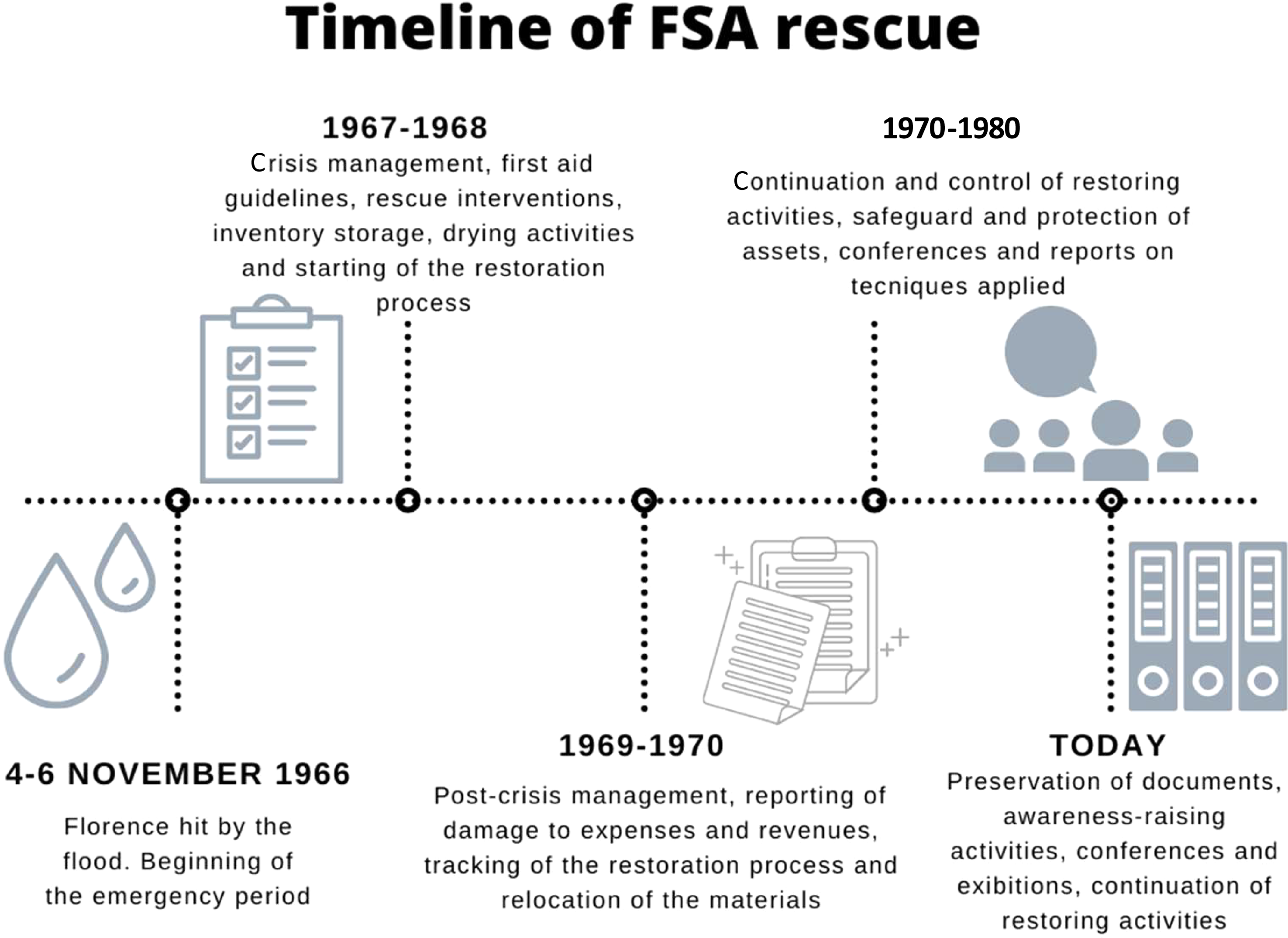
Timeline of Florence State Archive (FSA) rescue.
The above choices derive from our intention to explore the emergency period related to FSA items, with the aim of investigating the role played by accounting and accountability.
Scenario of the investigation
In this section, a brief exposition of the context of our investigation is offered, with reference to the 1966 Florence flood and its impact on the town, its institutions, and the international impact of this natural disaster 2 . This section also focuses on Uffizi Palace, which was the location of the FSA at that time.
Floods of the Arno River have always been part of Florence's history and have been recorded all the way back to 1177. They have occurred 56 times since the twelfth century (Arno River Autority, 1999), and the 1966 floods have been considered among the most catastrophic (Galloway et al., 2017; 2020).
In 1966, the city of Florence was submerged by the raging water of the Arno River. On the 3rd and 4th of November, about 180 mm of water fell on Florence which is an exceptional amount of water for a two-day period (Principe and Sica, 1967). After days of terrible weather that raged over the whole north of Italy, the Arno River broke its banks and Florence was submerged under water. The night before the tragedy, a good part of the territory crossed by the river had already been invaded by the waters, causing serious damage. The watercourses returned to their natural dimensions only after many days, isolating many villages and country areas, which had become reachable only by boats (Antoniella, 1967). Other regions were also devastated by the flood and, exceptionally bad weather – Veneto, Trentino Alto Adige and Friuli experienced serious damage too.
At first, no one realised what was happening. The telephones and the electricity were out (by 10 AM and 9 AM, respectively), the roads and the railway were blocked, and the city was isolated. The mayor at the time, Pietro Bargellini went out to tour the city to see what was happening: Florence was covered by a blanket of mud (Clark, 2008). The water quickly inundated and carried away all types of objects, blowing up sewers, cesspools and fuel depots. Having ascertained the gravity of the facts, the mayor went to the headquarters of the RAI, the Italian state television institute, where he transmitted a message addressed to all citizens, requesting them to remain calm, to stay at home, and for those who own boats to arrive immediately at Palazzo Vecchio, to facilitate first aid (Maccabruni, 2016).
According to Kumar (2020), the Florence flood of 1966 was probably one of the first recorded examples of crowdsourcing during disasters, and it should be seen as a catalyst for disaster preparedness, art conservation and historic preservation in the context of international cooperation as well.
At that time, the FSA, the object of our investigation, was located in the Uffizi Palace, in about 250 rooms, distributed on different floors containing about 60 km of documentation (Maccabruni, 2016). During the flood, the water (as well as mud and debris) invaded 40 rooms on the ground floor, submerging shelves at a height of approximately two metres (Clark, 2008).
On November 7th, a regiment of the Italian Army arrived in support of the population, completely lacking clothes and tools suited to the situation. The need for heavy vehicles became increasingly evident, and the mayor launched the slogan ‘More bulldozers and fewer ministers!’ (Antoniella, 1967). The city, however, was not left to fight alone. Carlo Ludovico Ragghianti, a renowned Italian art historian, led the establishment of the International Fund for Florence Committee (IFFC), which was composed of influential members of the art world. The committee was able to collect contributions for the restoration of cultural heritage through personal and public channels of communication: money, materials, volunteers and knowledge were received from various parts of the world (Pellegrini, 2018).
A ‘Central Coordination Committee for restoration and conservation of artistic and cultural patrimony damaged by 4th November 1966 flood’ (hereafter Central Coordination Committee) was also created in December 1966 with the aim to favour coordination on the post-flood activities related to art and culture (FHA, 1967).
In addition, thousands of young people, on their own initiative, came not only from different parts of Italy but also from all around the world. The protagonists of those days, boys and girls who arrived in Florence were named ‘the Mud's angels’, a term coined by the correspondent of the ‘Corriere della Sera’, a well-known national newspaper, in an article that appeared on 10th November (Grazzini, 1966).
Case analysis: FSA rescue
In Florence, it was immediately clear that it was fundamental to re-constitute the corpus of FSA, that is, ‘a system or a synchrony in which all the elements articulate the unity of an ideal configuration’ (Derrida, 1996: 3). This required re-establishing the usability of the Uffizi Palace and the recovery of the archival documentation. The 40 flooded rooms had become a pile of debris and scattered papers, and rapid intervention was pivotal to saving as many historical documents as possible (Maccabruni, 2016; RFA, 1967).
Hereafter, the main steps of the recovery process will be analysed, considering the time span of our investigation, which relates to the short-medium term (1966–1970).
Assessment of the flooded rooms and recollection of the archival items
The first immediate problem faced by the FSA was the removal of flooded archival documentation from the submerged and damp rooms of the Uffizi Palace. The flood damaged about 10 per cent of all Florentine State archival documentation, an estimation considering that the last three or four shelves of all the Uffizi ground floor rooms were reached by water and mud (Figure 2) (D’Addario, 1966b: 423).
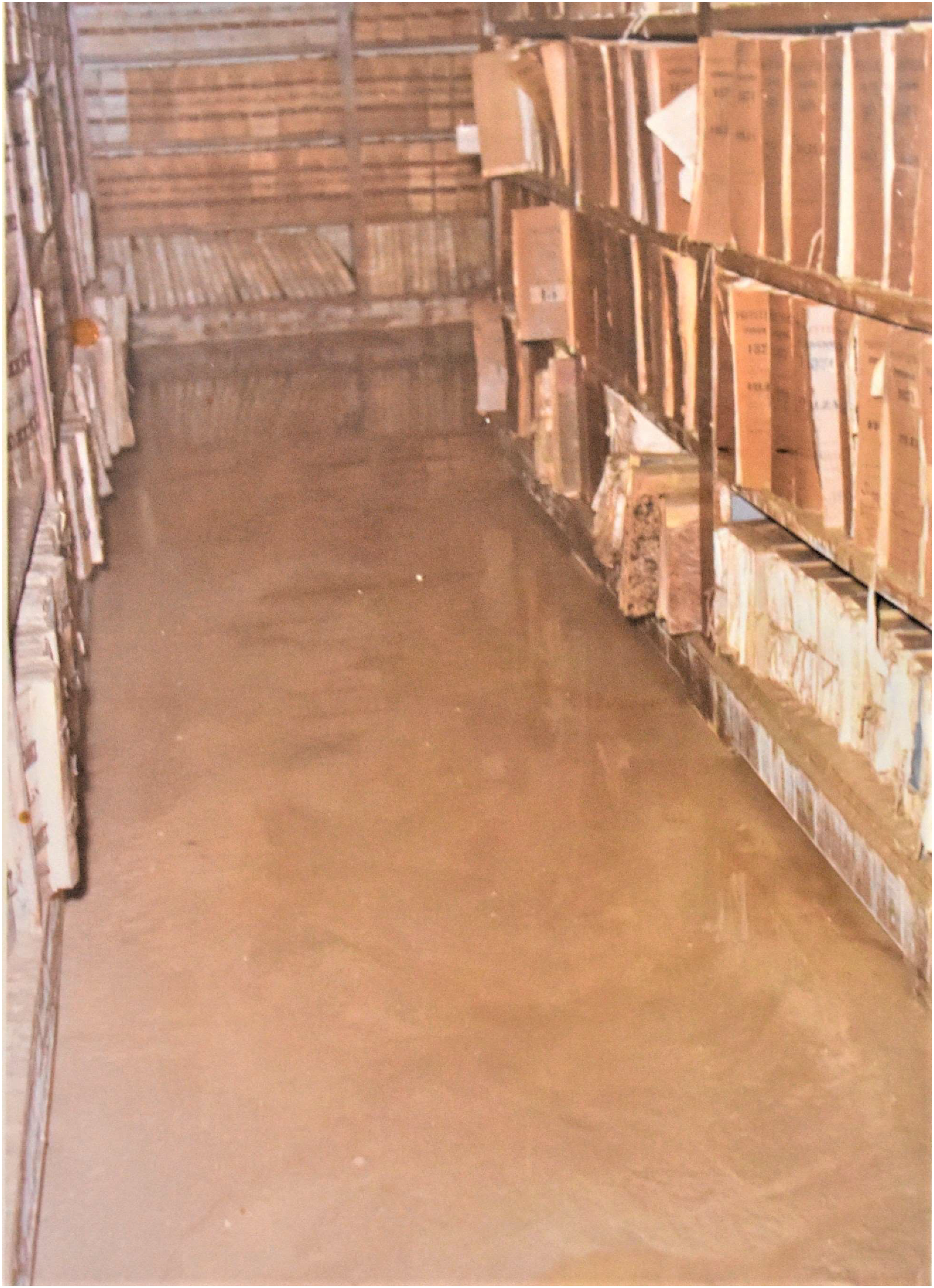
Flooded shelves and water level (FSA-PD, 1966a, photographical documentation florence flood).
A procedure involving kerosene-ovens was used to reduce the humidity in the Uffizi rooms, and documents were collected and initially located on the upper floors and outside the building, under the loggia (FSA, N.d.b).
The recollection activity was realised by archival workers and volunteers, the so-called Mud's Angels, who literally got their hands dirty and saved thousands of documents by creating long human chains (FSA, N.d.b) (Figure 3).
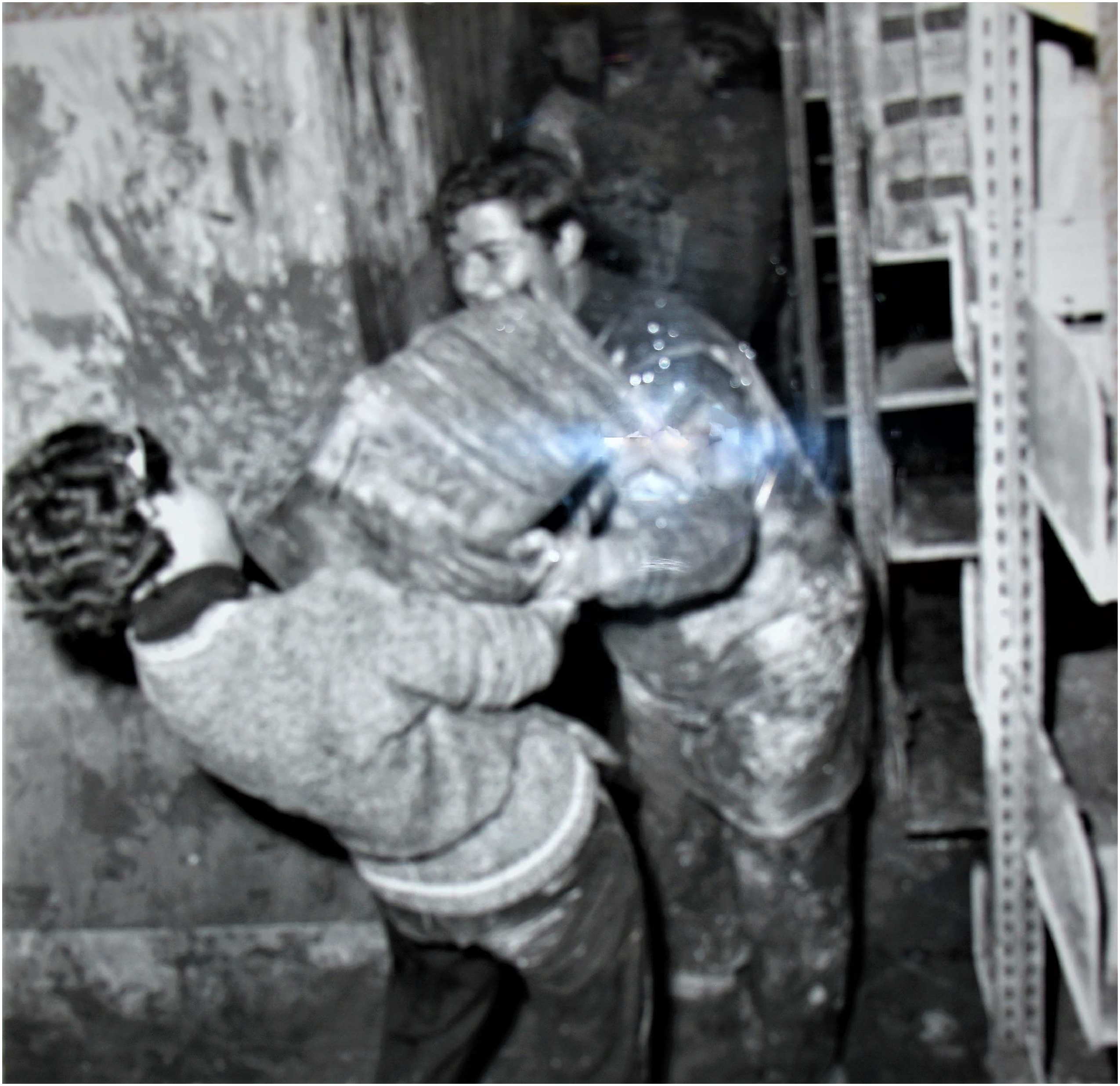
Mud's angels at work (FSA-PD, 1966b, photographical documentation florence flood).
Inventory of damaged archive items
If the flood had realised a dissociation in the unity of the FSA, in the logic of the archontic principle of the archive (Derrida, 1996: 3), activities for salvaging the documentation were started, to identify the flooded archives of the FSA, to recognise the damaged items and to recover and restore them. A critical activity to be immediately realised was the recognition of the FSA-damaged sources. The methodology adopted in this recognition was realised through a naming and counting activity (Ezzamel and Hoskin, 2002). A cross-check between the empty shelves and FSA Inventories, which fortunately were all saved from the flood and were located on the upper floor, was performed. This work was supported by Mr Vittorio Merendoni, an archivist who had perfect knowledge about both the different locations of documents and the correspondence between the description given in the FSA Inventories and the real situation of the archives (D’Addario, 1966b: 423). Mr Merendoni's activity was fundamental in re-establishing the broken linkage of flooded elements to re-constitute the single corpus of the FSA (Derrida, 1996: 3; Foucault, 1972: 129).
This recognition of the FSA-damaged sources implied a description of items capable of providing or permitting knowledge of the nature of damaged documents and their specific content (Pansini, 1966). This naming activity was matched with a counting activity based on the counting of archival damaged items, intended in terms of registers, files (with loose or unloose sheets) and envelopes with homogenous documents. All documents collected in folders only for archival ease, but singularly inventoried, were counted as single items (e.g., Podestà archive, Capitano del Popolo archive, Ordinamenti di Giustizia archive, Economato dei Benefici Vacanti archive).
The ‘accountant’ of this recognition process was Mr Merendoni, who initially used a primary school notebook for the first writing of his ‘naming and counting’ activity (Ezzamel and Hoskin, 2002) (Figure 4).
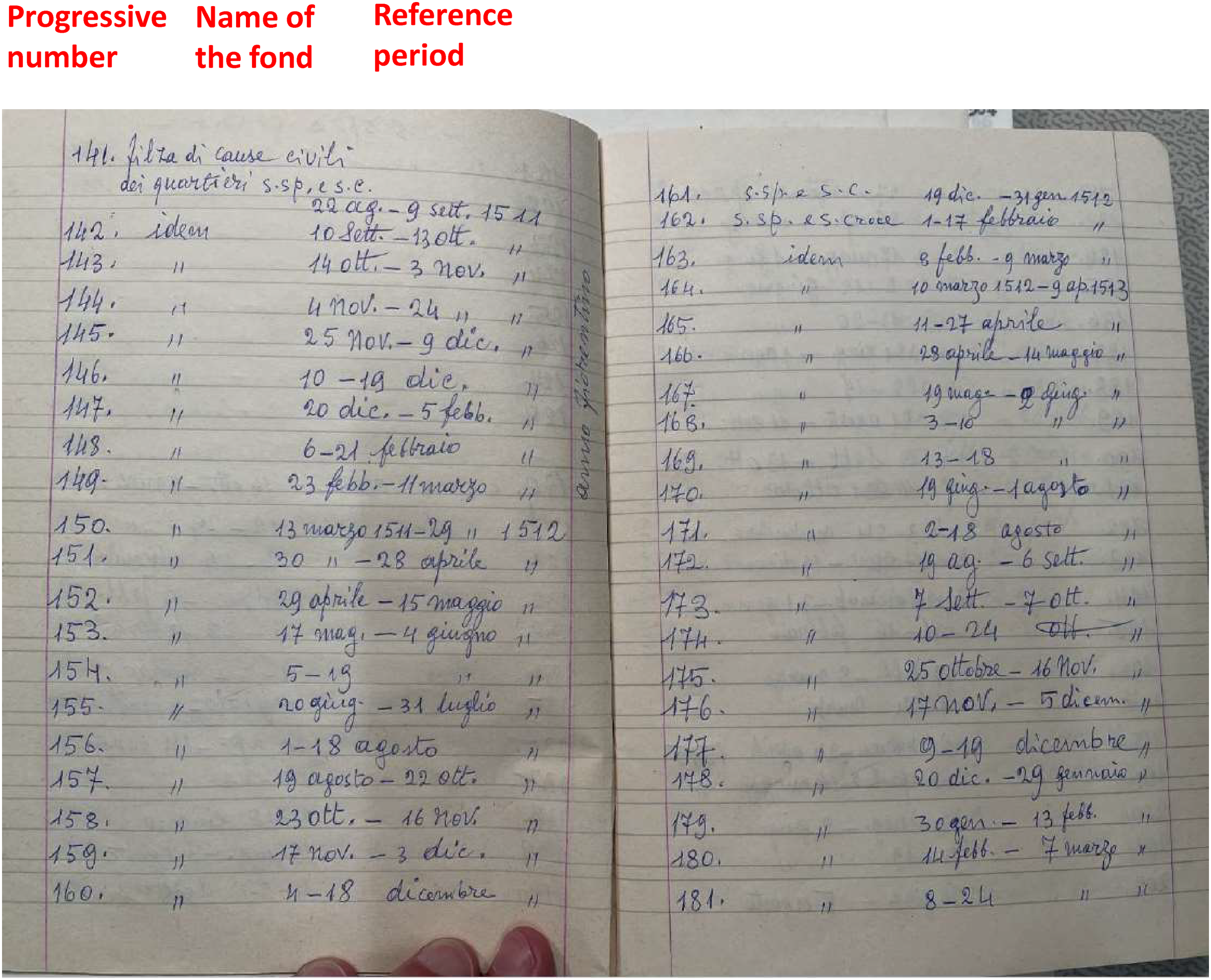
Excerpt from Merendoni's notes (FSA, 1966a).
This activity was systematised and reproduced in a typewritten full inventory of FSA-damaged items and finally published by D’Addario in scientific journals (1966a; 1966b) (Figure 5).
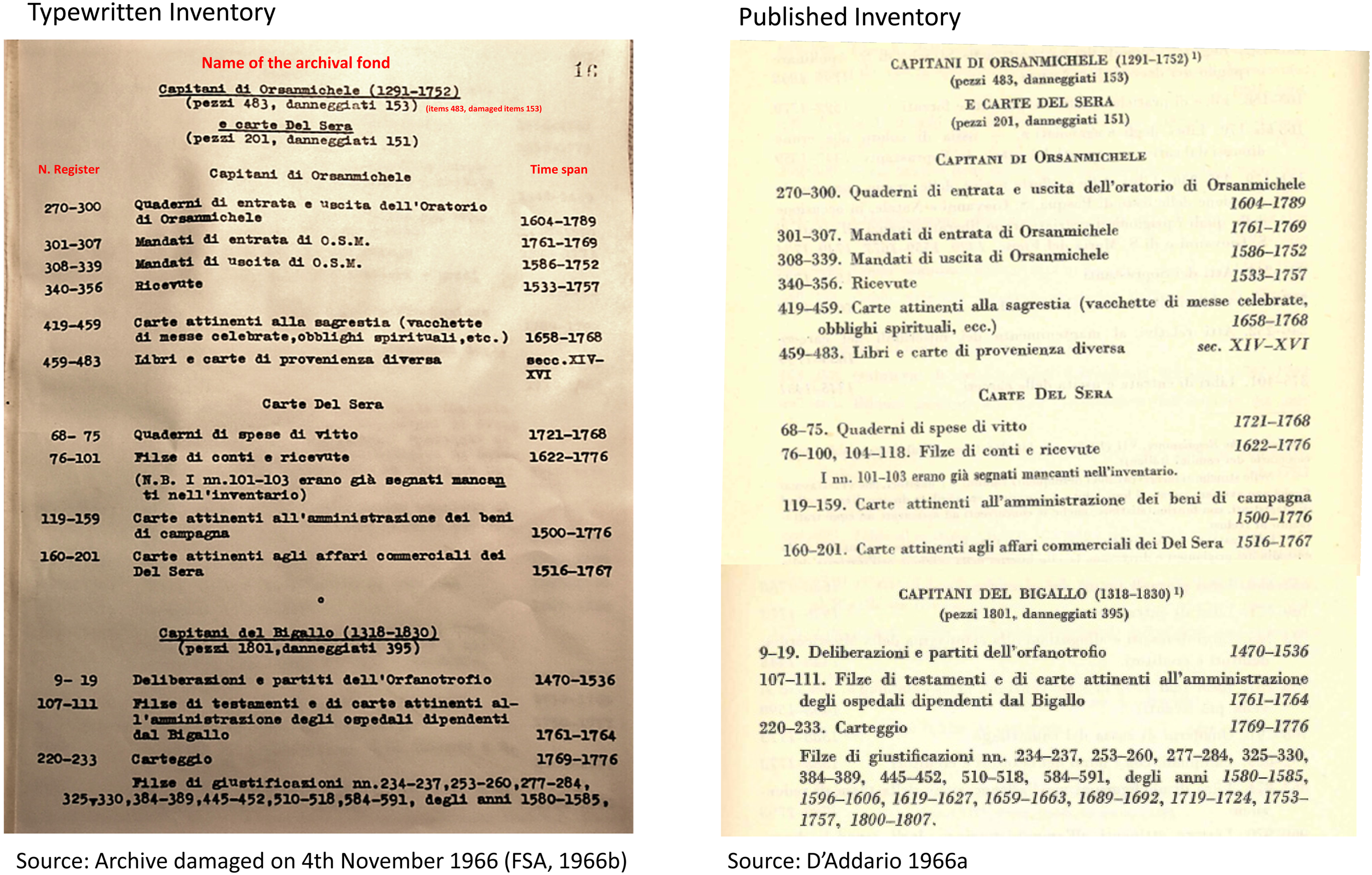
Typewritten and published inventory of the damaged archives.
The inventory in all its forms, from the original handwritten version to the final published versions, included the name of the archive at the top (e.g., Archivi di Uffici e Magistrature – Capitani di Orsanmichele), the years covered by the archive (e.g., 1291–1752, in the case of Figure 5), the indication of the number of items of the archive (483) and the number of damaged items (153). For each section of the archive, the name of the items with the time span was determined by the number of items in the original inventory, (e.g., 270–300) was presented.
The total number of damaged items was 44,412, with a row calculation of approximately 3500 files and volumes for all archives without original inventories (D’Addario, 1966b: 424).
The next step in the process was the identification of the damaged items. This accounting activity was also realised through ‘naming and counting’ practices (Ezzamel and Hoskin, 2002). Specific accounts in table format were prepared to favour the re-constitution of the original unity of the FSA in the logic of the power of consignation (Derrida, 1996).
In these accounts, the number of identified items for each damaged archival item found was accounted for (Figure 6, upper part), and a detail of each single item was offered (Figure 6, lower part). In Figure 6, considering the ‘Soprastanti alle Stinche's’ 3 damaged archive, we can see the existence of five identified damaged items, whose details are presented with a description of the items and a specification of their time span, proceeded by the number of their records and the original number of FSA inventory.
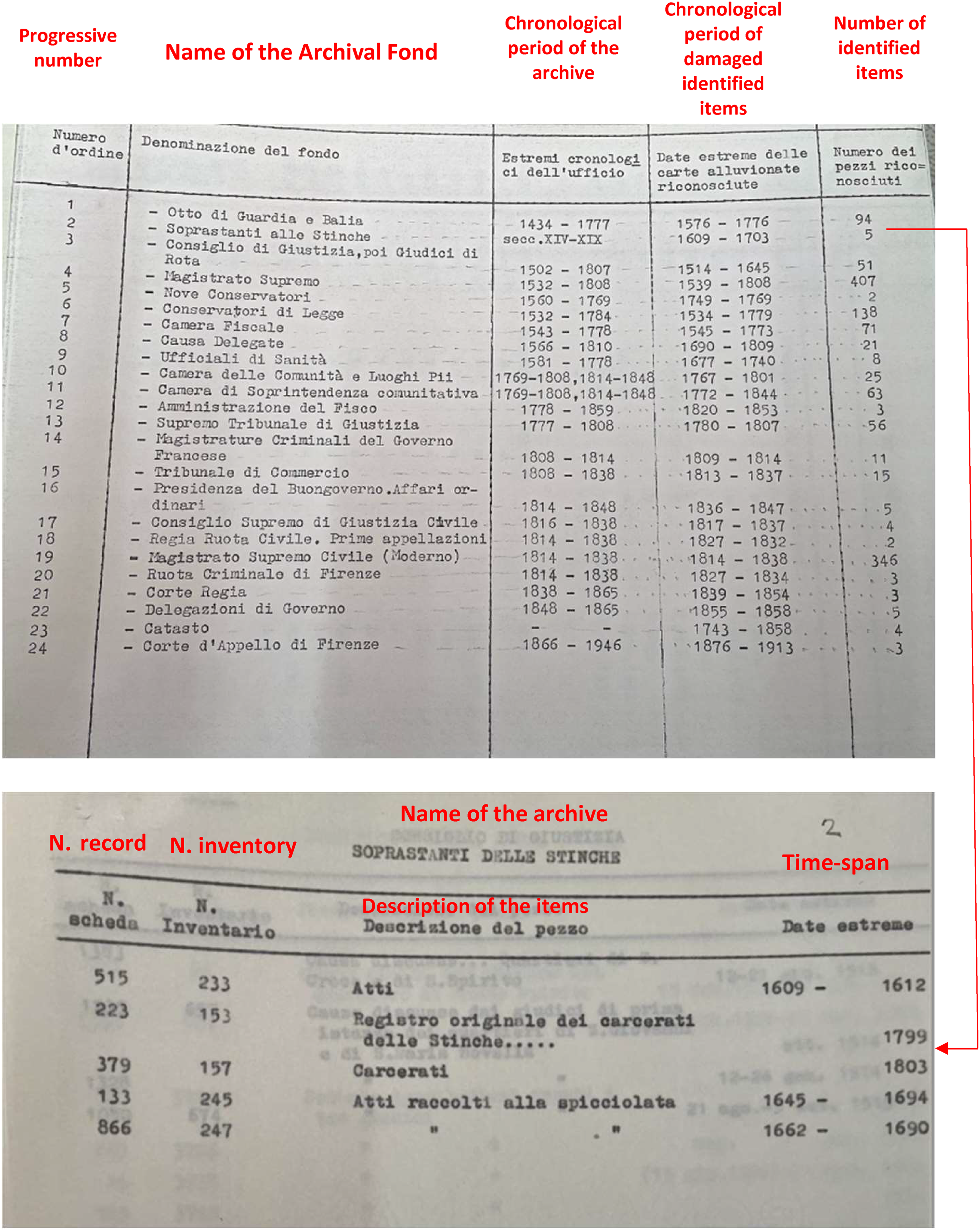
Identified items of flooded archives (FSA, N.d.a).
Storage of the documents and drying activities
After the transfer of archival items to the upper floors or just outside the Uffizi building and their inventory, a systematic rescue activity started (Camerani, 1966; D’Addario, 1966a; 1966b), which also implied ‘naming and counting’ practices (Ezzamel and Hoskin, 2002).
For the first intervention, archival documents were moved from the Uffizi Palace to a series of storage centres located in the State Archives of Roma, Perugia, Siena, Lucca and Pistoia, and into buildings made available by civil and religious authorities of Prato, Arezzo and Vallombrosa (FSA, N.d.b; FSA, 1969a). From these storage locations, the documents were moved towards tobacco factories in Città di Castello, Perugia and San Giustino Umbro. Indeed, an important role was played by the Tobacco Consortium and some factories, where approximately 50,000 documents by the FSA were dried using modern and large drying systems (FSA, N.d.b).
At the end of the drying and first cleaning process, the documents were returned to storage centres where strict technical indications regarding temperatures and humidity levels and the typologies of shelves had to be followed (FHA, 1966a; FHA, 1966b; FSA, 1969a; FSA, 1969b; FSA, 1969c; FSA, 1976).
The drying and storage process, carried out in the different centres, was carefully followed and coordinated by the Superintendence for the archives which had the responsibility of checking and monitoring the correct technical, organisational and logistic procedures that underlie the whole process (FHA, 1966a; FHA, 1966b).
The archival sources we investigated testify that all activities related to the archival items were systematically accounted for (FSA, N.d.b; Morandini, 1980; FHA, 1966a). All movements to and from storage centres or (later) restoration laboratories were regularly accounted for and supported by confirmation of receipt of the material and transport documents (FSA, 1987–1988).
In case of the destruction of extremely damaged documents, a specific process was identified by the Tuscany Region Superintendent to protect the cultural heritage and avoid the risk of deleting important documents (FHA, 1966a). This activity, supported by the Italian Red Cross, implied both the meticulous examination of documents and the preparation of discharge lists approved by the State Archive, accompanied by the authorisation of the Superintendence (FHA, 1966a).
Restoration of documents in different national and international laboratories
After the completion of the abovementioned steps, the damaged documents were dried and stored in identified centres, returned to the State Archive in July 1968, and their restoration started (FSA, N.d.b).
The lengthy restoration process spanned different time and space dimensions (Magrini, 1st interview, and 2nd interview; Cappuccini, 1st interview). On the one hand, the timing of restoration was distributed in relation to the financial sources available at the time, while on the other hand, the amount and typologies of restorations implied the intervention of many national and international institutions specialised in these restoration activities (FSA, 1969–1970).
As for the previous steps, having a control mechanism for single and whole documentation was also pivotal in relation to restoration activities. In this regards, the FSA prepared a handwritten register of the material to be restored, following the unloading/loading logic of the documents (Figure 7).
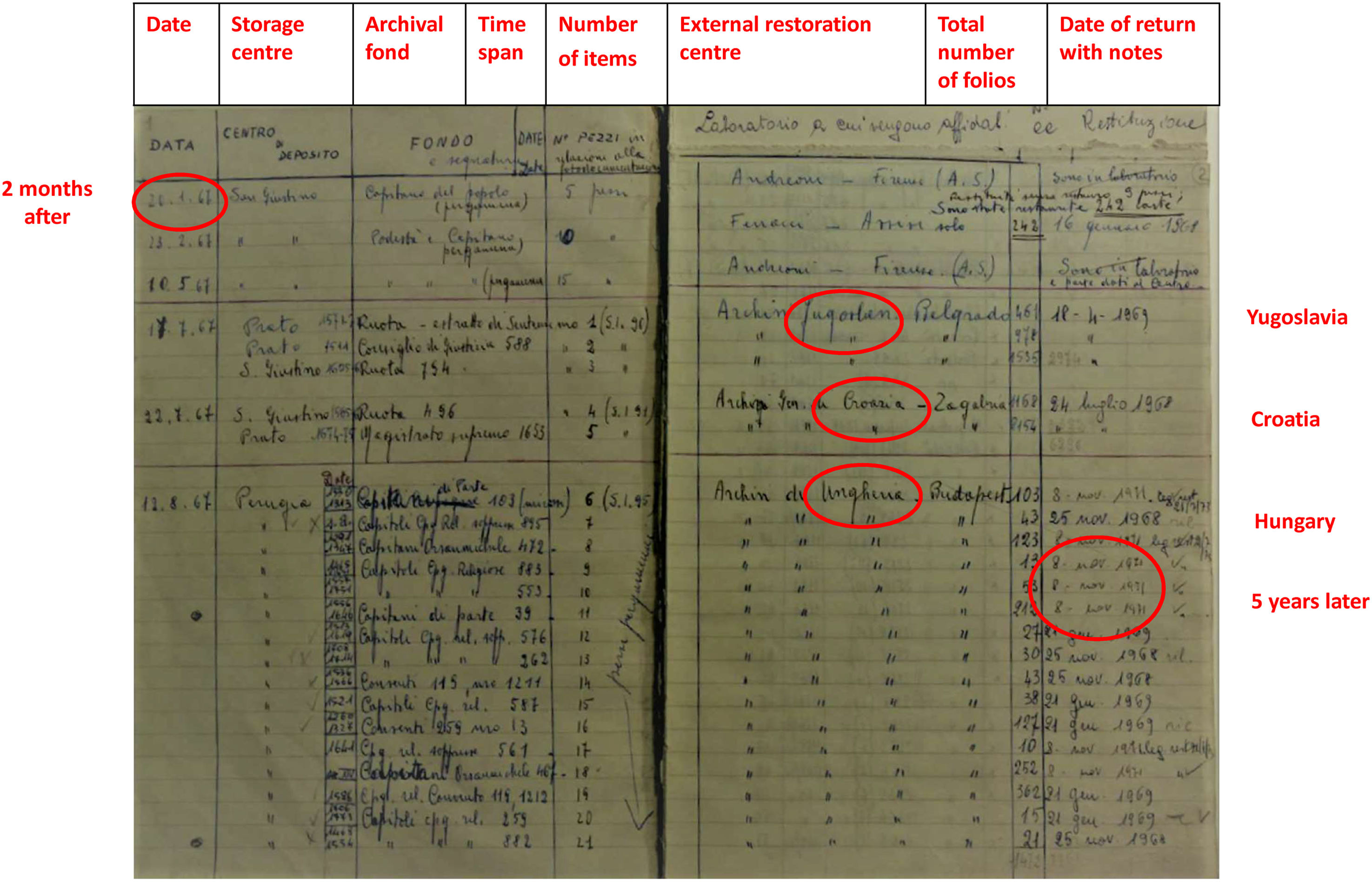
Register of the volumes in restoration out of Florence (FSA, 1967-today).
The register had a series of columns reporting:
- the date of dispatch to the restoration laboratory; - the storage centre; - the name of the archival collection and its time span; - the number of items in relation to the photo documentation; - the external restoration centre in charge; - the total number of folios; - the date of return to FSA with annotations.
A detailed accounting of the entire process was performed. It permitted a full view of the entire documentation during the restoration activity, which involved many different national and international institutions and could also require many years.
The complex and long recovery and restoration processes described above were reported to national and international public domains by the Central Coordination Committee (FHA, 1967). This Committee created an ad hoc accountability tool, named ‘News from the Central Coordination Committee’ (Notiziario del Comitato Centrale di Coordinamento), whose aim is established in the first issue, where the Minister of Public Instruction specified that: The ‘News of the Central Coordination Committee’ will be published each time the Committee considers necessary to inform the national and international public domain on particular topics under its competency (FHA, 1967: 1).
Discussion and conclusions
The 1966 Florence flood represented a natural disaster that greatly damaged an extraordinary cultural patrimony represented by monuments, works of art, libraries and archives. Within the broad impact of this catastrophe, we have focused our attention on the FSA, where large sections were damaged by water and mud (Antoniella, 1967).
After this dramatic flood, the need to re-constitute the integrity of the archive has emerged as a predominant concern. There was a need to restore ‘an amorphous mass’ of wet and damaged documents, whose linearity had been broken by the flood and at risk of disappearing, to the previous condition where they were grouped together in distinct units and classified in the light of multiple relations, maintained in accordance with specific regularities (Foucault, 1972: 129).
The above analysis shows the pivotal role played by accounting and accountability in the rescue of the FSA documents. The findings complement and extend the existing ‘naming and counting’ literature (Bassnett et al., 2018; Ezzamel, 2009; Ezzamel and Hoskin, 2002; Servalli and Gitto, 2021), applying this conceptualisation to the aftermath of a natural disaster that broke both the linkage of FSA documents with their physical location and the original order that constituted them as the unique corpus (Derrida, 1996). This theoretical perspective has shown that accounting has operated as per its above-illustrated three dimensions: the entry in a visible format of a record (an account); the use of signs ‘naming and counting’ recorded items and lastly the production of forms of valuing (Ezzamel and Hoskin, 2002: 335).
Considering the first dimension, accounting related to FSA has been adopted as a practice used to record a series of items/activities using a visible format throughout the different moments of the rescuing process that were pivotal in bringing back to memory the cultural patrimony and re-submitting it to researchers’ investigation (FSA, 1966a). Considering the second dimension of the ‘naming and counting’ conceptualisation, signs capable to name and count the items were realised from the items’ inventory to the recording of their different movements in and out of storing and restoration centres. In the immediate aftermath of the flood, Mr Merendoni's registrations were based on the creation of entries in a visible format of records (accounts), first handwritten and later typewritten (Figures 4 and 5). Using visual/non-glottographic and glottographic signs, such as columns, words and numbers, the damaged items were named and counted (Ezzamel and Hoskin, 2002).
In relation to the third dimension, the valuing aspect, our investigation extends previous literature, showing the contribution of ‘naming and counting’ to non-financial aspects, specifically related to socio-cultural dimensions. Indeed, the accounting practices realised the ‘archivist-accountant’ and the publication of scientific journals of the inventory of damaged archives and related items (D’Addario, 1966a; 1966b) offered visibility to the whole rescue process and contributed to informing on the in-progress FSA unity re-constitution (Derrida, 1996). In this regards, it is worth noting that this accounting dimension was also complemented by the information prepared by the Central Coordination Committee (FHA, 1967), which permitted accountability toward the national and international public domains.
In particular, a specific accountability tool was created to report on the Fine Arts, Libraries and State Archives after the flood informing on details of the recovery and restoration processes, the public and private finance required, and the short-, medium- and long-term interventions (FHA, 1967: 8–10).
In addition, an accountability activity focused on the damaged items (D’Addario, 1966a) permitted immediate identification of the categories of archives damaged by the flood. These categories were represented by:
- sources covering a long period of jurisdictional, financial and administrative function offices: magistrates and tribunal archives of the Communal period; local and central administration and political bodies of the Republican State, Medici and Lorena Principality, French Empire and Italian Kingdom. - archives of families and religious organisations that were suppressed in the eighteenth and nineteenth centuries.
In doing so, the accountability activity contributed to the classification of damaged sources that revealed the research areas that were, at least temporarily, precluded or limited in their investigation.
In Foucauldian terms (1972: 129), we can assert that the complexity of accounting and accountability practices has permitted these archival documents (Figures 4, 5 and 6; FSA, 1966a; FSA, 1966b; D’Addario, 1966a; 1966b) to regain their intertwined individual and collective dimensions, that is, single elements and groups of classified documents. Not only the starting inventory and its publication in scientific journals (D’Addario, 1966a; 1966b), recording the damaged sections of FSA and their content, but also the records of movements to and from multiple storing and restoration centres (Figure 7; FSA, 1967–today) have contributed to permit the identification of individual items (Figure 5; Figure 6; FSA, N.d.a) and their location within groups (Figure 5 and 6). In this way, a re-establishment of the broken linearity that could have determined the disappearance of a cultural heritage ‘at the mercy of chance external accidents’ (Foucault, 1972: 129) was realised. The accounting activities allowed the rebuilding of a universal dimension (re-constitution of the archive), which was still capable of permitting the historical investigation of human beings in the network of relationships where their lives played out.
The ‘naming and counting’ practice (Ezzamel and Hoskin, 2002) realised in the FSA has been a tool of the archontic power (Derrida, 1996), allowing the re-unification of damaged documents (Figure 5; D’Addario, 1966a; 1966b), the identification of single damaged items (e.g., Figure 6: Acts) and their classification in groups (e.g., Figure 6: ‘Soprastanti alle Stinche’). This practice has permitted the exercise of the power of re-consignation (Derrida, 1996) by the act of re-assigning residence to these documents (re-deposit them in the FSA) and the act of re-consigning through ‘gathering together signs’ (Figures 5, 6 and 7).
Accounting registers have shown the use of both ‘naming and counting’ activities, where the signs identified were: single items/documents (unit), names of the categories of these items/documents (groups), chronological references and the number of items (Figure 5).
In doing so, the items were grouped together in distinct categories in the process of maintenance of the multiple relations identified in the original archival organisation (Foucault, 1972: 129). These accounting activities realised in the aftermath of the flood permitted the reconstitution of the ‘archive’, conceived in Derridean terms (1998), which includes both the commencement and the commandment, coordinating the ontological and the nomological dimensions.
From a theoretical perspective, the work has unveiled how the accounting practice has offered the opportunity of re-constituting the commencement, that is, ‘there where things commence’ (ontological principle), facilitating a physical re-constitution of the archive and the commandment, that is, the system of rules and authority exercising the power (nomological principle), as emerging in the original archival organisation. In this way, accounting gave the archive the possibility of re-including documents damaged by a natural disaster that could have silenced them forever. The preparation of discharge lists (FHA, 1966a) also testifies to the narrative of the exclusion, due to the impossibility of recovering some of the documents. In so doing, the work has also extended the adoption Foucauldian and Derridean conceptualisation of archive in a literature domain that is different from archival science and humanities, where it is mainly used.
Therefore, the article has also complemented and extended the concept of accounting as a ‘naming and counting’ practice (Bassnett et al., 2018; Ezzamel, 2009; Ezzamel and Hoskin, 2002; Servalli and Gitto, 2021), showing its use with reference to a socio-cultural patrimony, such as the archival sources located in the FSA and underlining its role, not only in the preparation of the inventory of damaged items but also tracking the identified items during the restoration activity (Figure 7). In this context, the ‘naming and counting’ practice permits the highlighting of the social and cultural re-gained value of the re-constituted archive.
As this study addresses FSA rescue in the aftermath of the 1966 flood, the emerging pivotal role played by accounting offers an opportunity for accounting scholars to explore the rescue of cultural heritage in different natural disasters and/or spatial–temporal dimensions.
Footnotes
Acknowledgements
This work is dedicated to Sabrina Magrini, Director of the State Archives of Florence, who died a few days after the interviews with her for this project. She was the Director whom all scholars would like to meet in archival investigations. R.I.P.
Funding
The author(s) received no financial support for the research, authorship, and/or publication of this article.

Notes
Appendix 1
Details on Interviews and Interviewees.