



Abstract
Some music performance situations are more stressful than others for performers. Through comparison of heart rate or heart rate variability during different categorical levels of difficulty, researchers have begun to understand the situational factors impacting stress. However, to date, there has been no systematic investigation of how musical difficulty (“musical factors”) may impact performers’ physiological stress. We addressed this gap in the literature by analyzing n = 356 excerpts of cardiac activity from 22 opera trainees performing in four different opera productions. We next modeled cardiac activity as a function of an ensemble parameter (i.e., whether the singer performed solo, in an ensemble, or in a chorus), and the musical characteristics of melodic range and tempo. Although participant-related characteristics had the largest influence on the variability of cardiac activity, Bayesian regression modeling showed small but systematic effects of melodic range and tempo on cardiac activity which depended on whether the excerpt was performed solo or with others. These results suggest that musical factors do impact stress and should be considered alongside situational factors impacting stress.
Keywords
Some musical pieces are more difficult to perform than others—this assumption forms the basis of repertoire selection, for example, for the different levels aspiring musicians can achieve at The Royal Conservatory of Music (The Royal Conservatory, 2022). Differences in the difficulty of repertoire may also lead to variations in psychological and physiological performance stress (Harmat & Theorell, 2010), such that more difficult pieces lead to higher stress.
While psychological stress is most often measured at single timepoints, before or after a performance, physiological stress can be measured throughout a performance through continuous measurement of cardiac activity (Brotons, 1994). Notably, psychological and physiological measurement of stress do not always relate (Brotons, 1994), so much so that opera trainees report a pattern of psychological stress that is opposite to the pattern of physiological stress (Cui et al., 2022).
Over the last decade, researchers have illuminated the different performance conditions which may influence both psychological and physiological stress. These conditions can include, for example, the presence of a jury (Brotons, 1994) or an audience (Chanwimalueang et al., 2017; Fancourt et al., 2015; Guyon et al., 2020; Iñesta et al., 2008; Williamon et al., 2013). These effects have been found in different types of musicians, including singers, flutists, violinists, and pianists.
However, few studies have attempted to illuminate the influence of factors that might change within a performance itself, for example, the difficulty of a musical passage. In one such study, the authors showed that the difficulty of a piece may play a role (Harmat & Theorell, 2010). In two others, cardiac activity—as a measure of physiological stress—varied between different pieces within the same concert (Horwitz et al., 2021; Williamon et al., 2013). From this pattern of results, the authors inferred that musical characteristics of the performance material themselves may influence stress. Last, externally rated difficulty of an opera role may be related to physiological stress during the performance (Cui et al., 2022).
Among the characteristics of different musical passages within an opera that could influence the physiological stress of its singers are the melodic range of an excerpt, the tempo of an excerpt, and whether the excerpt is performed solo or with others. A greater melodic range is seen as more difficult for singers (Nair et al., 2016; Ralston, 1999), as the production of a greater range requires greater control over vocal folds and larynx given their influence on the resonance space (Unteregger et al., 2017, 2020). Variations of tempo are known to influence breathing patterns (Sakaguchi & Aiba, 2016) and cardiac activity (Vellers et al., 2015) in musicians.
Through its potential effects on pronunciation, a higher tempo may also indirectly contribute to the difficulty of a song (Ralston, 1999). In the case of collaborative music performances, higher tempo may also contribute to the difficulty of a piece through increasing the difficulty of coordinating with others. This suggests a potential interaction of tempo and whether the excerpt is performed solo or with others. Overall though, solo performances are seen as more stress-inducing than group performances (Cox & Kenardy, 1993; Papageorgi et al., 2013), including by opera singers (Kenny et al., 2004).
To the best of our knowledge, no study to date has attempted to study the influence of the complex interplay of melodic range, tempo, and ensemble parameters on physiological stress. The complexity of this interplay is further underscored by research suggesting that the melodic range of musical passages that are performed solo might differ from the range of passages for individual singers when performing in a group (Huron, 1991). Thus, the melodic range might depend on whether an excerpt is performed solo or with others.
Based on the evidence regarding the perceptual organization of auditory events, also known as “auditory scene analysis” or “auditory grouping,” one would further predict that the perception of distinct melodies in an ensemble passage might be enhanced by a higher tempo and that consequently composers may support audiences’ perceptual ease by choosing higher tempi for ensemble passages (Bregman, 1994; Darwin & Carlyon, 1995; McAdams & Bregman, 1979). In turn then, the ensemble parameter may influence the relationship between melodic range and tempo such that for non-solo passages with a larger melodic range (a range which would make the perception of distinct streams more difficult), a higher tempo is chosen to support auditory grouping.
Apart from these musical, participant-external factors, internal factors may also influence participants’ degree of stress, such as personality (Butković et al., 2022) or neurocognitive characteristics (Motamed Yeganeh et al., 2023). Furthermore, some have argued that experience may decrease performers’ anxiety (Matei & Ginsborg, 2017). Consequently, a greater number of operas a trainee has performed decreases their music performance anxiety though other indicators of experience were not significantly related to music performance anxiety (Cui et al., 2022). While the overall experience with the particular opera or opera in general cannot be modeled in our study, we include language as an additional factor in our model given that different singers may have different levels of experience with each language and thus experience different levels of music performance anxiety depending on the language in which an opera is sung.
Here, we aimed to study the effects of musical characteristics on opera trainees’ cardiac activity as an indicator of physiological stress. We hypothesized that greater melodic range, faster tempi, and performing solo are associated with higher physiological stress. We further hypothesized that these factors would be interrelated. Our hypotheses can be visualized with the help of a causal model that integrates the predicted causal effects of musical factors on each other as well as on cardiac activity. Furthermore, participant-internal factors may influence physiological stress. One such factor may be levels of experience with different languages. This causal model is shown in Figure 1.
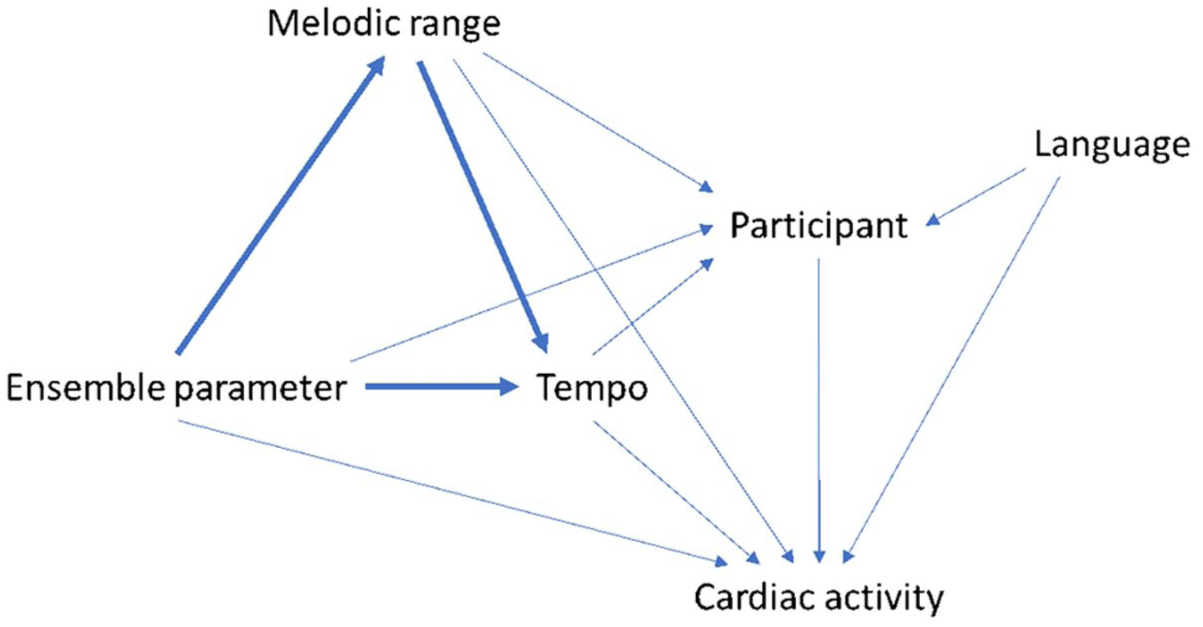
Directed acyclic graph of our full causal model (all arrows) and a smaller model containing only the interrelated musical factors (thick arrows).
Methods
Data acquisition
Cardiac activity
The ethics committee of The University of British Columbia approved this study (H19-03946). After providing informed consent, intervals between R peaks, that is, intervals between heartbeats, from which different measures of physiological stress can be calculated (“RR intervals”), were collected from 22 different opera trainees (M = 25.43 years, SD = 4.03; 17 female, 5 male) who performed in live, fully staged productions of four different operas: Mansfield Park by Jonathan Dove, The Passenger by Mieczysław Weinberg, Il viaggio a Reims by Gioachino Rossini, and Le nozze di Figaro by Wolfgang Amadeus Mozart. The roles included were sung in English (Mansfield Park, The Passenger), Italian (Le nozze di Figaro, Il viaggio a Reims), or French, German, Polish, and Russian (The Passenger). RR intervals were collected via Polar H10 chest straps worn by the singers throughout their performances (Gilgen-Ammann et al., 2019). They were then exported through the Elite HRV app (Perrotta et al., 2017). Participants were enrolled at the opera program of the university (8 at the undergraduate and 14 at the graduate level). The operas were produced as part of the program’s regular season and not for the purposes of this study. As such, participants were instructed to simply perform as they would without wearing the chest strap.
Ensemble parameter
The ensemble parameter was defined on the basis of whether the singer performed solo, performed their own melodic line with others (ensemble), or shared melodic lines with others (chorus). Given that indicators of physiological stress based on cardiac activity are calculated over a certain length of time, we sought out all passages from these opera performances during which the ensemble parameter of the passage stayed constant for at least 30 s. This selection was achieved through visual analysis of video recordings.
Melodic range
Two volunteer raters with extended music experience independently proceeded to capture the melodic range of these passages through score analysis in semitones. There were no inconsistencies between raters for melodic range. All volunteer raters were musically trained.
Tempo
Two volunteer raters with extended music experience also independently captured the tempo through tapping on a metronome app of these passages. Since the just noticeable difference for tempo is 8% (Thomas, 2007), we used the average perceived tempo whenever the difference between volunteer raters was less than 8% of the lower tempo. For 5% of the coded excerpts, there were inconsistencies between raters for tempo exceeding the just noticeable difference. For these excerpts, LV provided an expert rating. The inconsistencies occurred mostly for recitative passages or were based on different interpretations of the metric structure (e.g., 2/4 time vs 4/4 time).
Dataset
For each passage cardiac activity, melodic range, and tempo were measured. In order to estimate physiological stress, two cardiac activity metrics were calculated based on the RR intervals: The average interval (AVNN) and the standard deviation of the intervals (SDNN). Smaller AVNN and SDNN are seen as indicators of greater physiological stress (Kim et al., 2018).
We removed 50 excerpts with missing or impossible cardiac activity values (AVNN > 9000 ms). We removed an additional five excerpts with abnormally large cardiac activity values—cardiac activity > M (cardiac activity) + 2*SD (cardiac activity). For each musical passage, we also recorded the singer’s identity, the opera from which the passage originated, and the language in which the passage was sung. Because language and opera were confounded in this sample, we opted to include only language as a predictor of cardiac activity in both causal and statistical (regression) models, with the caveat that its effects cannot be disentangled from the effects of opera in this sample. The singer’s identity was also included as a factor that could potentially have a causal influence on cardiac activity (see Figure 1). The final dataset included n = 356 musical passages.
Data analysis
Because the current data were collected in a naturalistic setting using an observational study design, we had to adjust for possible confounding covariates to estimate the effects of musical and participant factors on the cardiac activity of opera trainees. The bias resulting from confounding variables cannot be adjusted for by including all available predictors in a single multiple regression model because of the complexity of the causal effects among the predictors and the outcome (see, for example, Greenland et al., 1999; McElreath, 2020). Instead, a causal model, shown in Figure 1, was used to specify the statistical (regression) models for estimating the causal effects of single predictors on the outcome, after adjusting for confounding covariates as appropriate.
The hypothesized causal model was implemented as a directed acyclic graph using the DAGitty software package (Textor et al., 2016). This package was used to determine which predictors should be included in the formulation of Bayesian regression models for estimating total and direct causal relationships among the variables included in the causal model. In order to estimate the posteriors of the Bayesian regression models, we used the Rethinking software package (McElreath, 2020). This package implements the Markov Chain Monte Carlo (MCMC) sampling process using the Stan probabilistic programming language (Stan Development Team, 2022). These packages run within the R statistical programming language (R Core Team, 2022) via RStudio (RStudio Team, 2020).
In a causal model, one can both investigate total causal effects and direct causal effects. A total causal effect of a predictor on a specified outcome is the joint effect of all causal paths connecting that factor to an outcome. In contrast, a direct causal effect isolates the effect of a predictor on an outcome (Greenland et al., 1999; Tennant et al., 2021). We used the DAGitty package to calculate the d-separation in the model with respect to the direct and total causal effects of specific variables so as to inform us on the necessity of conditioning statistical (regression) models on other factors.
We first investigated the causal relationships among the musical factors, that is, the smaller causal model shown with thick arrows in Figure 1, to estimate the total and direct causal effects of musical parameters on each other. In the results section, we refer to this model as the “musical parameters” model. As an overview, we formulate the regression models here as questions: (A). Does the ensemble parameter influence melodic range? (B). Does the ensemble parameter influence tempo, taking melodic range into account? (C). Does the association between melodic range and tempo depend on the ensemble parameter?
We then implemented regression models for the causal effects in the full causal model shown in Figure 1. We investigated causal effects on two outcomes, AVNN and SDNN. The first question asked was: (D). Which predictors have a direct causal effect on the outcomes? We used the results from these first regression models to decide whether the model shown in Figure 1 should be modified before estimating (E), the total causal effects of the musical parameters on AVNN and SDNN.
Robust Bayesian regression models were used in order to minimize the impact of extreme data points on the posteriors. These models employed a Student-t likelihood distribution, ν = 3. For all models, the MCMC sampling process was run with 8,000 iterations of which 3,000 were used for warm-up. For each model, we visually inspected the trace plots of the MCMC samples to verify that the sampling process had converged, as well as the WAIC penalty, and Pareto k values to confirm that there were no data points that had a disproportionate influence on posterior parameter estimates. Priors were selected through prior predictive analyses in order to set them to reasonable values. These priors were normally distributed for intercept and slope coefficients, and exponential distributions for standard deviation parameters (see the Supplementary Materials for details of each model, including prior specifications and sensitivity analysis with different prior parameters).
We opted for this Bayesian approach instead of classical, frequentist methods for the following reasons: First, Bayesian methods can incorporate prior knowledge in the form of priors, which improves estimation accuracy and is advantageous when analyzing relatively small data samples (McNeish, 2016; Rognli et al., 2023; van de Schoot et al., 2015). Second, the Bayesian approach is more flexible and informative than classical statistics, because Bayesian models can easily be fitted with different likelihood functions, and the models’ posterior quantifies uncertainty for all parameters (Kruschke & Liddell, 2018). Third, a Bayesian model’s parameters are estimated as probability distributions, and the corresponding uncertainty intervals can be interpreted intuitively as probability statements, unlike p-values and confidence intervals of classical methods (see, for example, Greenland et al., 2016). Frequentist versions of all regression models are included in the Supplementary Materials to allow for comparison.
Results
For each analysis, we report here the mean of the marginal posterior as well as the 90% highest posterior density intervals (HPDIs), that is, the interval of the parameter values that contains 90% of the probability mass of the marginal posterior.
Musical parameters model
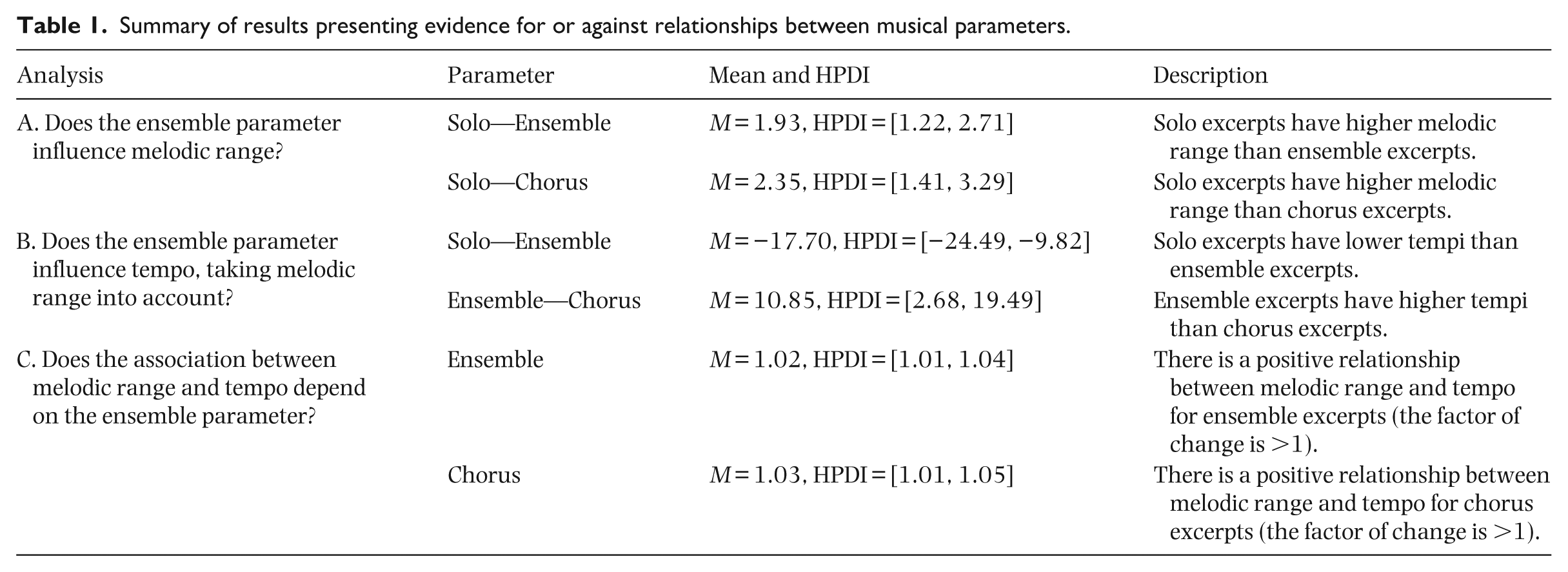
Table 1 summarizes the results with evidence for or against relationships between the musical parameters.
Summary of results presenting evidence for or against relationships between musical parameters.
A. Does the ensemble parameter influence melodic range?
To estimate the direct causal link between the ensemble parameter and melodic range, we did not need to condition on tempo. Melodic range in semitones was scaled such that the mean melodic range score was M = 1 to facilitate the selection of priors. The predictor was the categorically coded variable ensemble parameter. The effective sample size was higher than 6,100 for each ensemble parameter value.
The HPDIs for the contrasts between ensemble parameters were rescaled to semitones for ease of interpretation. The mean difference between solo and ensemble excerpts was M = 1.93, HPDI = [1.22, 2.71], indicating that solo excerpts had a larger melodic range than ensemble excerpts. The model was also confident that solo excerpts had a larger melodic range than chorus excerpts, M = 2.35, HPDI = [1.41, 3.29]. By contrast, the difference between ensemble and chorus excerpts was of uncertain sign, M = 0.42, HPDI = [−0.45, 1.27]. Overall, our results support a direct causal effect of the ensemble parameter on melodic range.
B. Does the ensemble parameter influence tempo, taking melodic range into account?
To estimate the direct causal link between the ensemble parameter and tempo, we needed to condition on melodic range. Tempo in beats per minutes was first log-transformed before it was scaled such that the mean log-tempo score was M = 1 to facilitate the selection of priors. The predictors were the categorically coded variable ensemble parameter and the centered variable melodic range. The effective sample size was higher than 4,200 for all parameters.
The HPDIs were rescaled to beats per minutes for ease of interpretation. The mean difference between solo and ensemble excerpts was M = −17.70, HPDI = [−24.49, −9.82], indicating that solo excerpts had slower tempi than ensemble excerpts. The mean difference between solo and chorus excerpts was M = −6.86, HPDI = [−16.44, 2.58], indicating uncertainty about the sign of the difference. The mean difference between ensemble and chorus excerpts was M = 10.85, HPDI = [2.68, 19.49], indicating that ensemble excerpts had faster tempi than chorus excerpts. Overall, our results support a direct causal effect of the ensemble parameter on tempo, after adjusting for melodic range.
C. Does the association between melodic range and tempo depend on the ensemble parameter?
To answer this question, we employed a regression model that included the ensemble parameter and the interaction of ensemble and melodic range as predictors. The melodic range and log-tempo for each excerpt is shown in Figure 2, separately for the three ensemble groups. Log-tempo was scaled such that the mean log-tempo score was M = 1 to facilitate the selection of priors. The effective sample size was higher than 4,300 for all parameters.
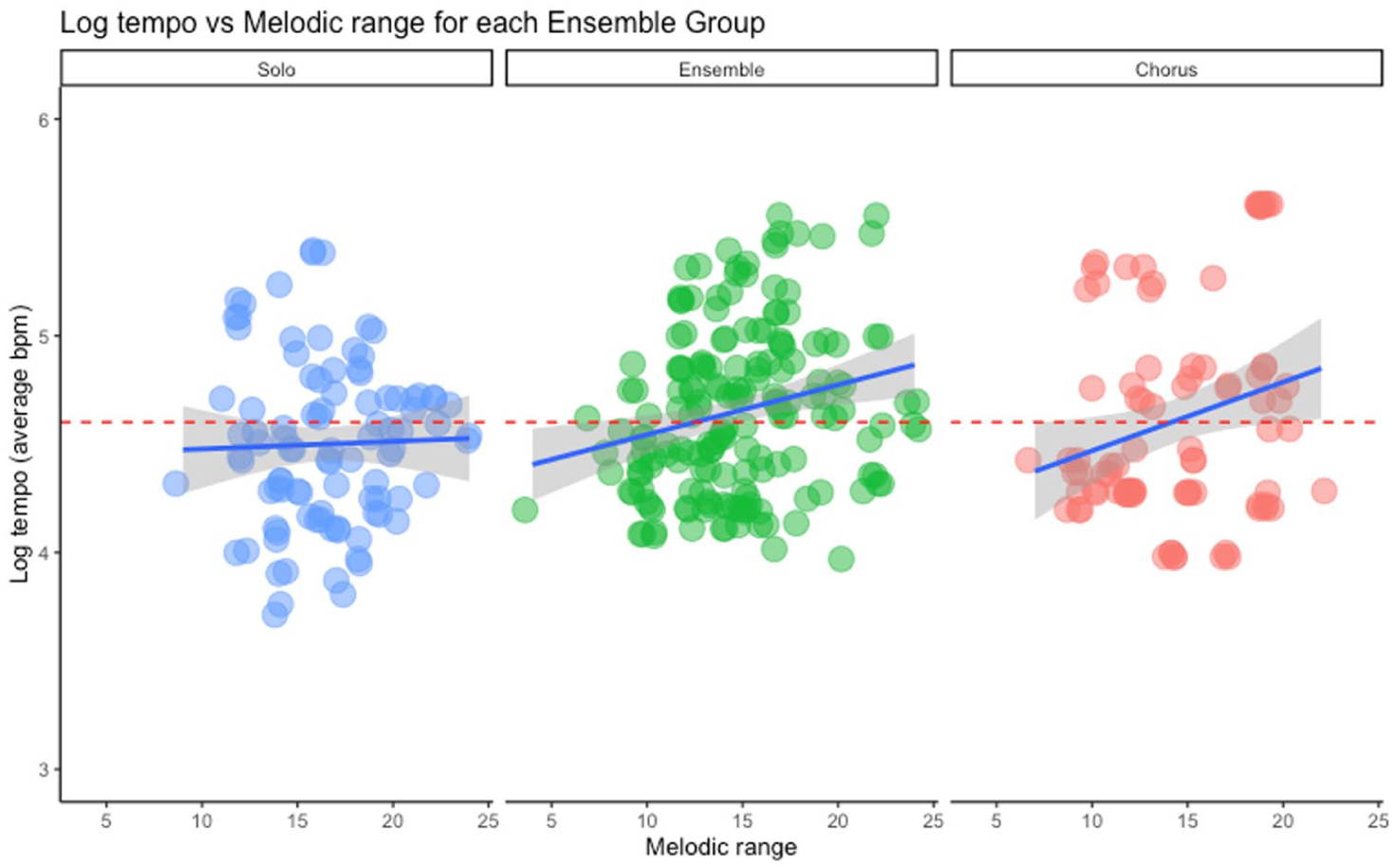
Melodic range and log-tempo for solo, ensemble, and chorus excerpts. Solid blue lines indicate linear regression lines. The dashed line indicates the average log-tempo across all excerpts.
Next, we calculated predicted regression lines for the relationship between melodic range and tempo for each level of ensemble. The HPDIs were rescaled such that the given numbers indicate the percentage of rate at which the tempo changes for every semitone increase in melodic range (with 1 or indicating no change in tempo, values higher than 1 indicating an increase of tempo in percentage, and values lower than 1 are indicative of a decrease of tempo in percentage). The mean slope of the regression line for solo excerpts was M = 1.00, HPDI = [0.98, 1.02]; for ensemble excerpts it was M = 1.02, HPDI = [1.01, 1.04]; for chorus excerpts it was M = 1.03, HPDI = [1.01, 1.05]. Thus, there was uncertainty about the direction of change for solo excerpts, while for ensemble and chorus, there was an increase of 2% and 3% in tempo for a one-semitone increase in melodic range, respectively.
The mean difference in slope solo and ensemble excerpts was M = −0.00, HPDI = [−0.01, 0.00]; between slopes for solo and chorus excerpts it was M = −0.01, HPDI = [−0.01, −0.00]; between slopes for ensemble and chorus excerpts it was M = −0.00, HPDI = [−0.01, 0.00]. Although the values for these differences were small, the probability mass for differences were 9.67%, 5.17%, and 27.13% respectively. These results show that there was a probability of 90% or higher that the slope for solo excerpts was smaller than that of ensemble and chorus ensembles, but that there was not enough evidence for a difference in slope between ensemble and chorus excerpts. Overall, our results support the idea that the relationship between melodic range and tempo depends on the ensemble parameter.
Frequentist versions of these models largely had similar outcomes (see the Supplementary Materials for details). In summary, our models show that (A) solo excerpts had a larger melodic range than ensemble and chorus excerpts, (B) solo excerpts had lower tempi than ensemble and chorus excerpts, and (C) the slopes of the regression line between melodic range and tempo depended on the ensemble parameter. Thus, our models support the idea that the ensemble parameter influences melodic range, that the ensemble parameter influences tempo when one accounts for melodic range, and that the ensemble parameter influences the relationship between melodic range and tempo.
Causal effects of participant, opera, and musical characteristics on cardiac activity
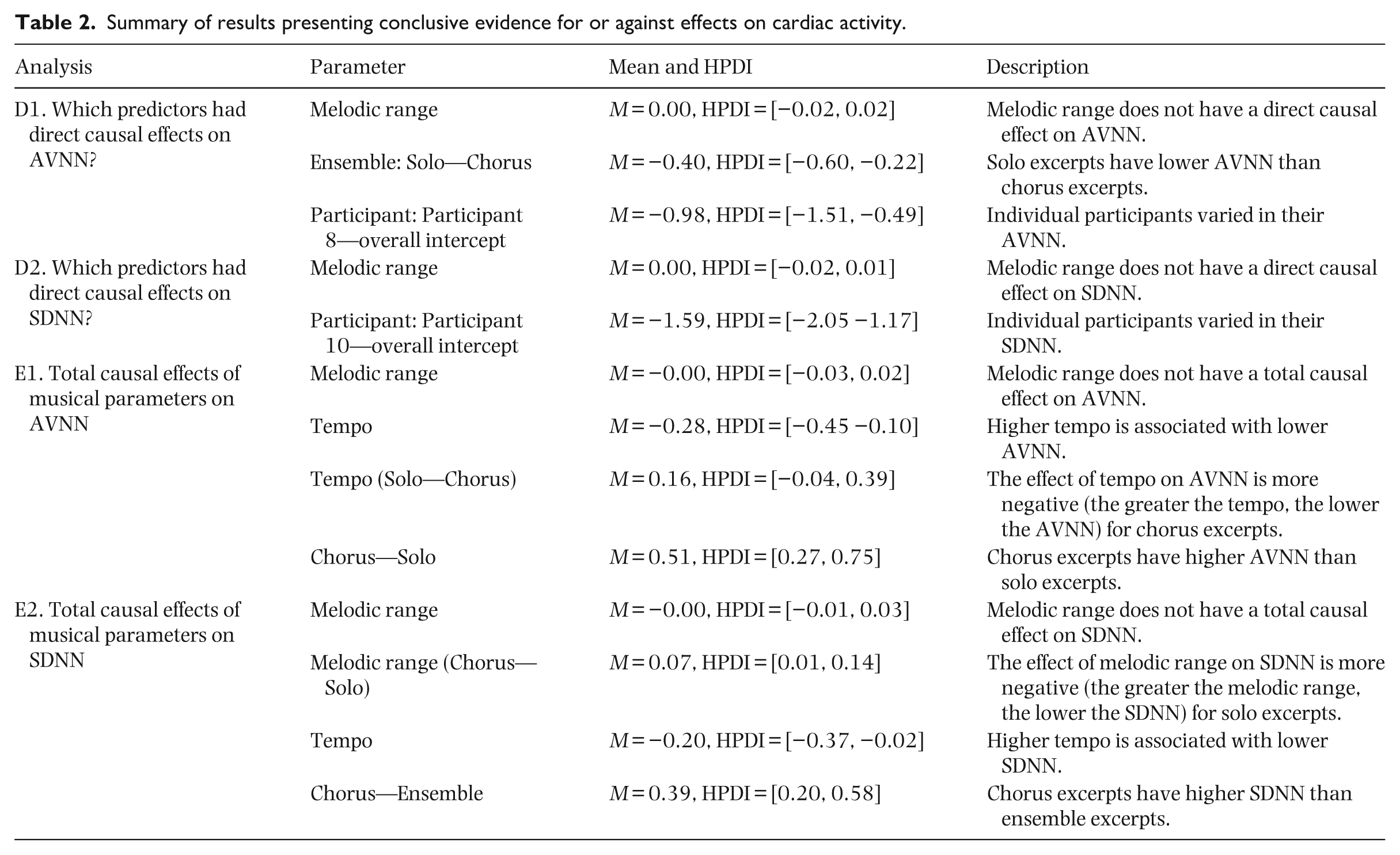
In order to assess the direct causal effects of the predictors on cardiac activity in the model shown in Figure 1, we considered regions of practical equivalence (ROPEs). As the outcomes AVNN and SDNN were standardized in the respective analyses, standard scores could be considered as corresponding to estimates of effect size. Hence, we defined ROPEs as intervals of ±0.1 in standard scores as ±half the size of a small effect (Kruschke, 2018). The Supplementary Materials contain the posterior means, standard deviations, and the uncertainty intervals for all parameters. Below, we highlight a selection of parameters or contrasts. Table 2 summarizes the results with evidence for or against effects on cardiac activity.
Summary of results presenting conclusive evidence for or against effects on cardiac activity.
D1. Which predictors had direct causal effects on AVNN?
The predictors included in the analysis to answer this question were melodic range (centered), log-tempo (centered), and the categorical predictors participant, ensemble, and language. The outcome log-AVNN was standardized to facilitate the selection of priors and for interpreting the parameter estimates in terms of effect size. Participant was modeled as a varying intercept effect; all other predictors were modeled as fixed effects. The effective sample size was higher than 1,900 for all model parameters.
The mean slope of tempo was M = −0.24, though the HPDI = [−0.39, −0.09] overlapped with the ROPE, thus indicating that the results were inconclusive with regards to a direct causal effect of tempo on AVNN. The mean slope of melodic range, M = 0.00, and the HPDI = [−0.02, 0.02] were very small. Thus, we concluded that the direct causal influence of melodic range on AVNN was practically equivalent to 0.
For the categorical parameters, we calculated contrasts to determine their direct causal effect on AVNN. We made inferences about the presence of a direct causal effect by estimating whether the difference between the most discrepant levels lies within or outside the ROPE. For the ensemble parameter, the mean difference between solo and chorus excerpts was M = −0.40, thus equivalent to a small effect size. The HPDI = [−0.60, −0.22] was all negative and outside the ROPE boundaries. Thus, there was a high probability that there was a direct causal influence of the ensemble parameter on AVNN, such that chorus excerpts had higher AVNN than solo excerpts.
For language, the mean difference between German and Italian was M = −0.32, corresponding to a medium effect size, and the HPDI = [−0.52, −0.10] was all negative but overlapped with the ROPE, indicating that the results were inconclusive with regards to a direct causal effect of language on AVNN.
The effect of participant was quite noticeable by examining the contrast of individual participants from the overall intercept. For example, the difference between the latter and Participant 8 was M = −0.98, HPDI = [−1.51, −0.49], indicating high model confidence that this participant’s AVNN was above the overall mean, while it was M = 1.30, HPDI = [1.01, 1.60] for Participant 7, clearly indicating that this participant’s AVNN was below the overall mean. Individual participants’ mean AVNN and uncertainty intervals (UIs) for these values are shown in blue in Figure 3. The log-AVNN values were converted into z-scores, such that a value of 0 would correspond to the overall mean.
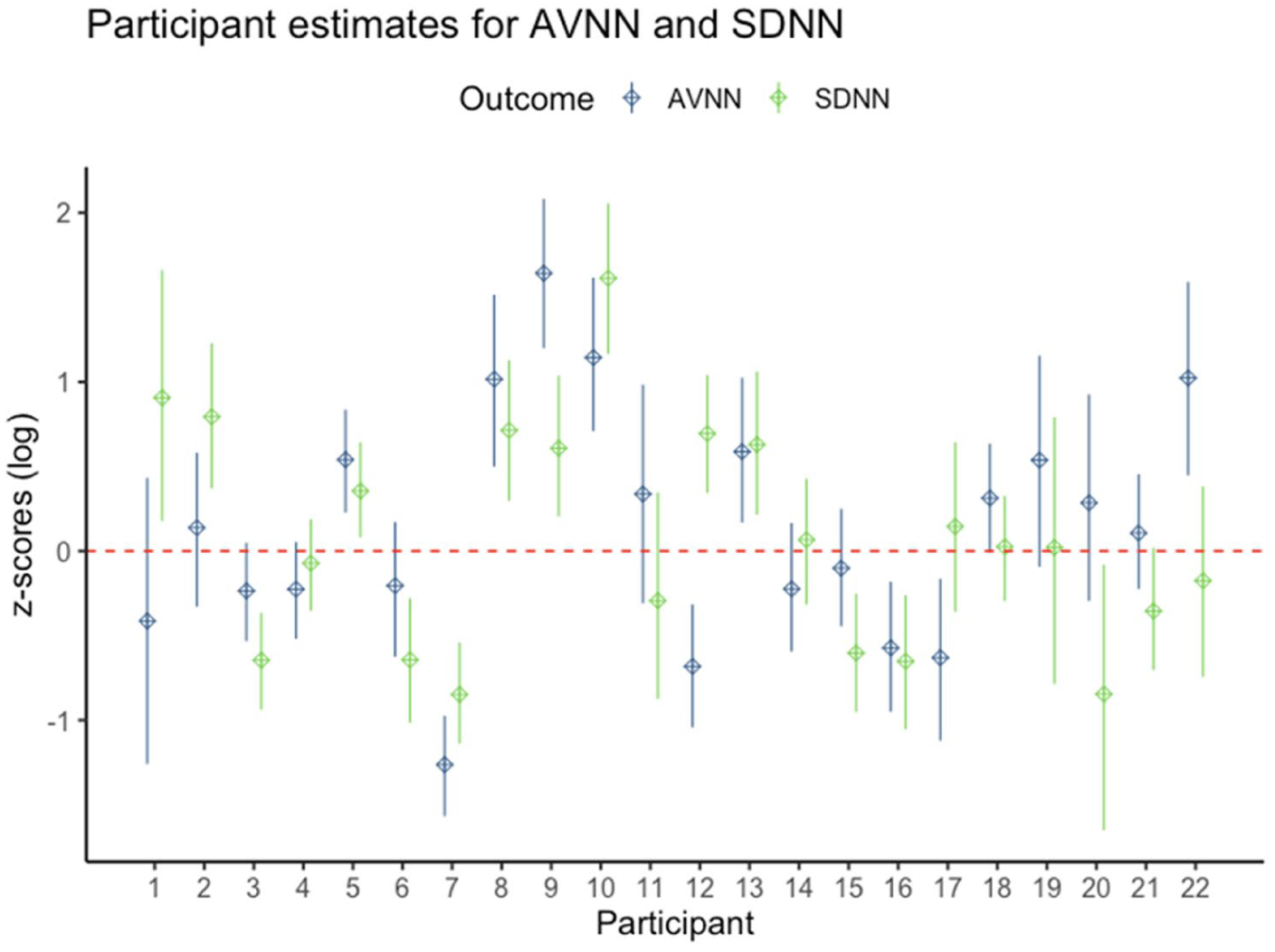
Participant estimates for AVNN and SDNN. Individual participants’ mean AVNN and SDNN and the UIs for these values are shown in blue and green, respectively. Log-transformed values were further z-scored, so that the dashed line indicates the overall mean.
In summary, we found sufficient evidence for removing the direct link between melodic range and AVNN in the causal model. We have found inconclusive evidence for removing the direct link between tempo and AVNN and language and AVNN from the causal model. We found evidence that the ensemble parameter directly affects AVNN. We found clear evidence that there is a direct causal link between participant and AVNN.
D2. Which predictors had direct causal effects on SDNN?
The predictors included were melodic range (centered), and log-tempo (centered). We also included the categorical predictors: participant, ensemble, and language. The outcome log-SDNN was standardized to facilitate the selection of priors and for interpreting the parameter estimates in terms of effect size. Participant was modeled as a varying intercept effect; all other predictors were modeled as fixed effects. The effective sample size was higher than 1,800 for all model parameters.
The mean slope of tempo was very small, M = −0.03, and the HPDI = [−0.17, 0.12] exceeded the ROPE. Thus, the results on the direct effect of tempo on SDNN were inconclusive. In contrast, the mean slope of melodic range was very small, M = 0.00, and the HPDI = [−0.02, 0.01] was contained within the ROPE. Thus, we concluded that the direct influence of melodic range on SDNN is practically equivalent to 0.
For the categorical parameters, we calculated contrasts to determine their influence on SDNN to decipher whether the difference between the most discrepant levels lies within or outside the ROPE. For the ensemble parameter, the mean difference between solo and ensemble excerpts was M = 0.16, thus equivalent to a small effect size, though the HPDI = [0.01, 0.32] overlapped with the ROPE, indicating that the result was inconclusive.
For language, the mean difference between Italian and French was M = 0.23, corresponding to a small effect size, but the HPDI = [−0.03, 0.48] was uncertain in sign, indicating that the results were inconclusive.
The effect of participant was quite noticeable by examining the contrast of individual participants from the overall intercept. For example, the difference between the latter and Prticipant 10 was M = −1.59, HPDI = [−2.05, −1.17], indicating high model confidence that this participant’s SDNN was above the overall mean, while it was M = 0.87, HPDI = [0.58, 1.17] for Participant 7, clearly indicating that this participant’s SDNN was below the overall mean. Individual participants’ mean AVNN and UIs for these values are shown in green in Figure 3. The log-SDNN values were converted into z-scores, such that a value of 0 would correspond to the overall mean.
In summary, we found sufficient evidence for removing the direct link between melodic range and SDNN in the causal model. We found inconclusive evidence for removing the direct link between tempo and SDNN and language and SDNN from the causal model. We found inconclusive evidence that the ensemble parameter directly affects SDNN. We found clear evidence that there was a direct causal link between participant and SDNN.
E1. Total causal effects of musical parameters on AVNN
Melodic range and log- and z-scored AVNN values are shown in Figure 4. To estimate the total causal link between melodic range and AVNN, we conditioned the model on the ensemble parameter by including it as a covariate. The effect of melodic range was close to zero and within ROPE boundaries, M = −0.00, HPDI = [−0.03, 0.02]. We next ran a model with the interaction of melodic range and ensemble to estimate the association of melodic range and AVNN at each level of ensemble.
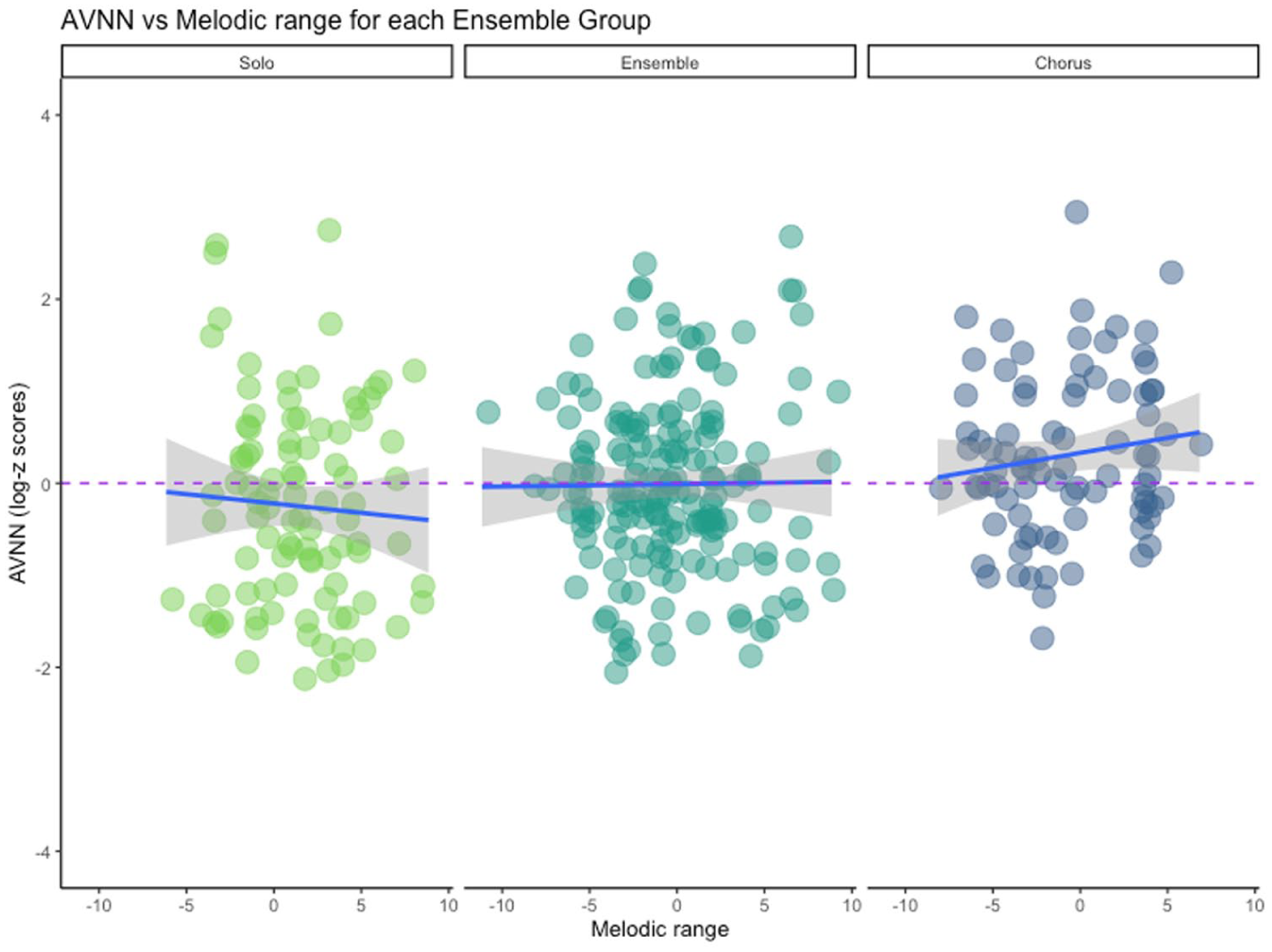
Melodic range and log- and z-scored AVNN for solo, ensemble, and chorus excerpts. Solid blue lines indicate linear regression lines. The dashed line indicates the average log- and z-scored AVNN across all excerpts.
Figure 4 shows that there was a negative slope for solo and a positive slope for chorus. The mean difference between solo and chorus excerpts was M = 0.03, with the mean slope for solo excerpts M = −0.01 and for chorus excerpts M = 0.03. The HPDI for the mean difference was [−0.04, 0.10], indicating inconclusive evidence for an interaction between melodic range and ensemble.
Log-tempo and log- and z-scored AVNN values are shown in Figure 5. To estimate the total causal link between tempo and AVNN, we needed to condition on the ensemble parameter as well as melodic range. After adjusting for the ensemble parameter and melodic range, the slope of tempo was negative, M = −0.28, HPDI = [−0.45, −0.10]. Thus, higher tempo was linked with lower AVNN. We next ran a model with the interaction of tempo and ensemble, and adjusting for melodic range, to explore the association between tempo and AVNN at each level of ensemble.
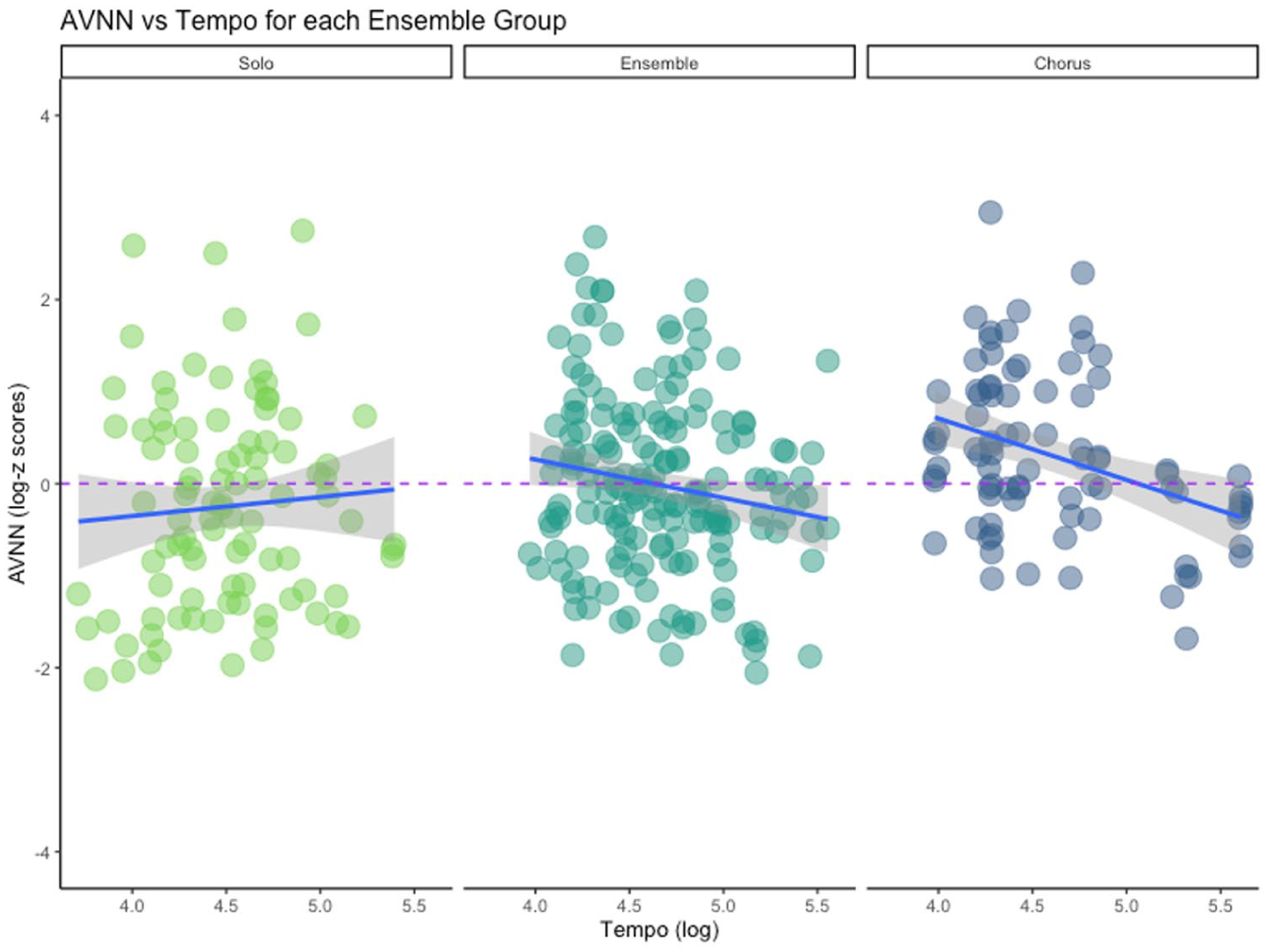
Log-tempo and log- and z-scored AVNN for solo, ensemble, and chorus excerpts. Solid blue lines indicate linear regression lines. The dashed line indicates the average log- and z-scored AVNN across all excerpts.
Figure 5 shows that there was a positive slope for solo and a negative slope for chorus. The mean difference between solo and chorus excerpts was M = 0.16, with the mean slope for solo excerpts M = 0.02 and for chorus excerpts M = −0.14. The HPDI for the mean difference was [−0.04, 0.39], indicating weak support for an interaction between tempo and ensemble, such that the slope was more negative for chorus than solo excerpts.
To estimate the total causal link between the ensemble parameter and AVNN, we did not need to condition on any other predictor. The mean difference between chorus and solo excerpts was M = 0.51, indicating a medium effect size. The HPDI = [0.27, 0.75] was all positive and did not overlap with the ROPE. This result supports a total causal link between the ensemble parameter and AVNN, such that AVNN was higher for chorus excerpts than solo excerpts.
E2. Total causal effects of musical parameters on SDNN
Melodic range and log- and z-scored SDNN values are shown in Figure 6. To estimate the total causal link between melodic range and SDNN, we conditioned the model on the ensemble parameter by including it as a covariate. The effect of melodic range was close to zero and within ROPE boundaries, M = 0.01, HPDI = [−0.01, 0.03]. We next ran a model with the interaction of melodic range and ensemble.
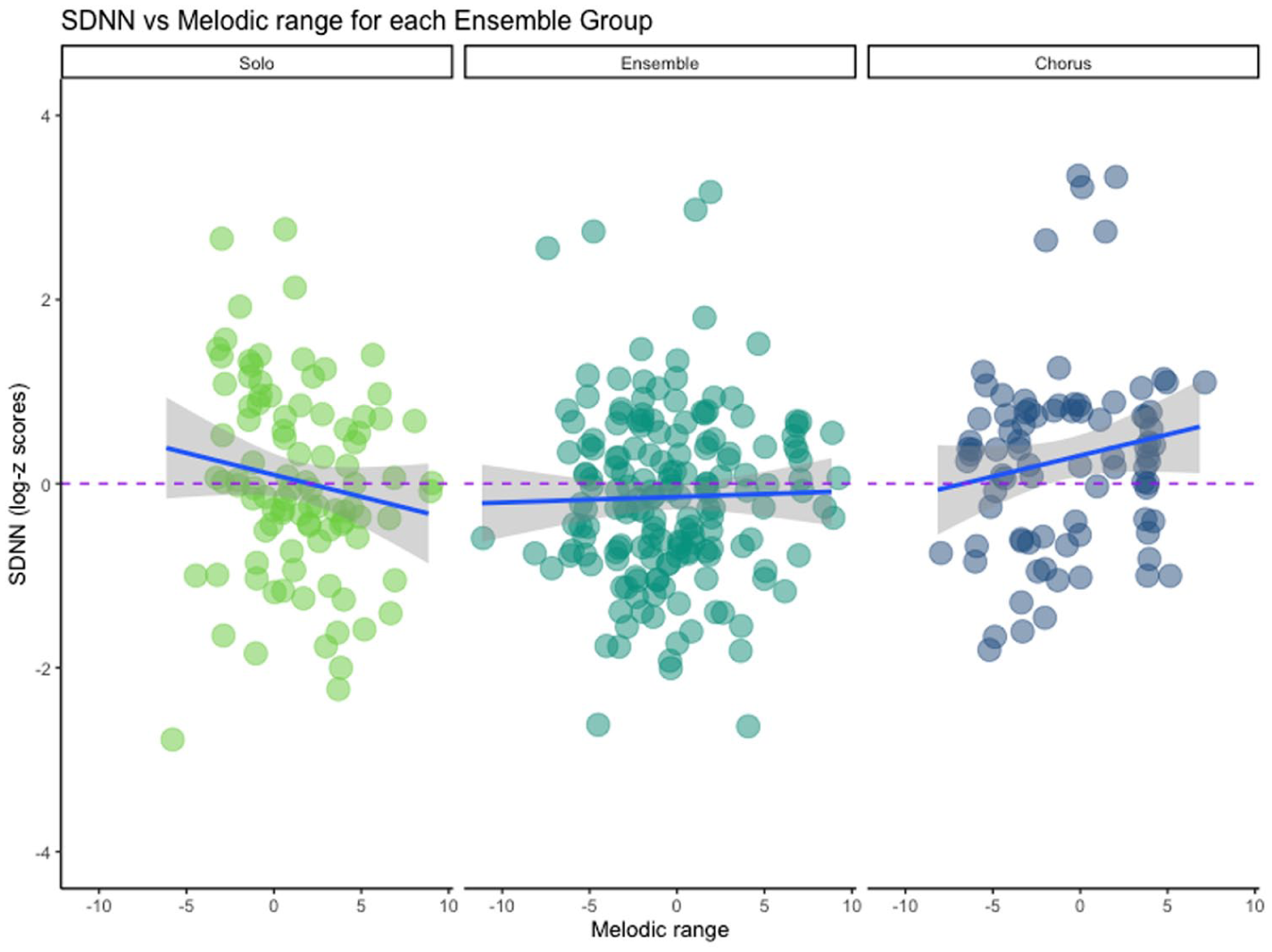
Melodic range and log- and z-scored SDNN for solo, ensemble, and chorus excerpts. Solid blue lines indicate linear regression lines. The dashed line indicates the average log- and z-scored SDNN across all excerpts.
Figure 6 shows that there was a negative slope for solo and a positive slope for chorus. The mean difference between solo and chorus excerpts was M = 0.07, with the mean slope for solo excerpts M = −0.05 and for chorus excerpts M = 0.03. The HPDI for the mean difference was [0.01, 0.14], indicating that melodic range and ensemble may interact, such that the slope for solo excerpts was more negative than for chorus excerpts, though the size off the effect was very small.
Log-tempo and log- and z-scored SDNN values are shown in Figure 7. To estimate the total causal link between tempo and SDNN, we needed to condition on the ensemble parameter as well as melodic range. After adjusting for the ensemble parameter and melodic range by including them as covariates, the slope of tempo was negative, M = −0.20, HPDI = [−0.37, −0.02]. Thus, although the effect was small, it corresponded to a negative slope, meaning that higher tempo was linked with lower SDNN. Figure 7 shows that the slope of the relationship between log-tempo and SDNN was negative for all ensemble groups.
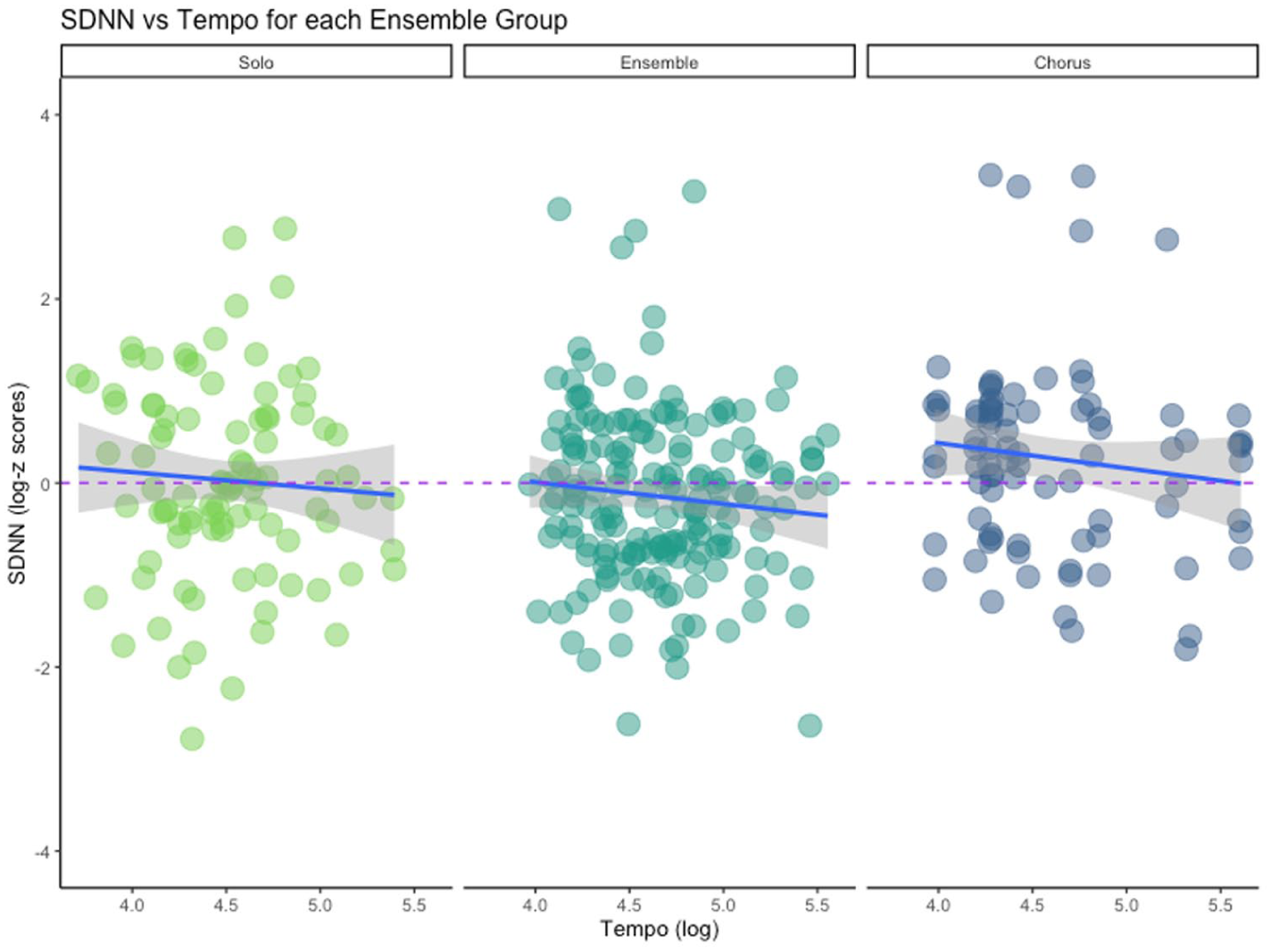
Log-tempo and log- and z-scored SDNN for solo, ensemble, and chorus excerpts. Solid blue lines indicate linear regression lines. The dashed line indicates the average log- and z-scored SDNN across all excerpts.
To estimate the total causal link between the ensemble parameter and SDNN, we did not need to condition on any other predictor. The mean difference between chorus and ensemble excerpts was M = 0.39, indicating a small effect size. The HPDI = [0.20, 0.58] was all positive and did not overlap with the ROPE. This result indicates that a total causal link between the ensemble parameter and SDNN, such that SDNN was higher for chorus than ensemble excerpts.
Comparison of models of AVNN and SDNN
Figure 8 visualizes the directed acyclic graph, presented in Figure 1, which has been modified based on the outcomes of our analyses of direct causal links, for AVNN and SDNN. Links that could not be estimated directly from the data are shown in black (Tennant et al., 2021), while solid blue arrows indicate links for which we found conclusive evidence and dashed blue arrows indicate links for which we found inconclusive evidence. In cases where we found conclusive evidence against a causal link, we removed the arrow.
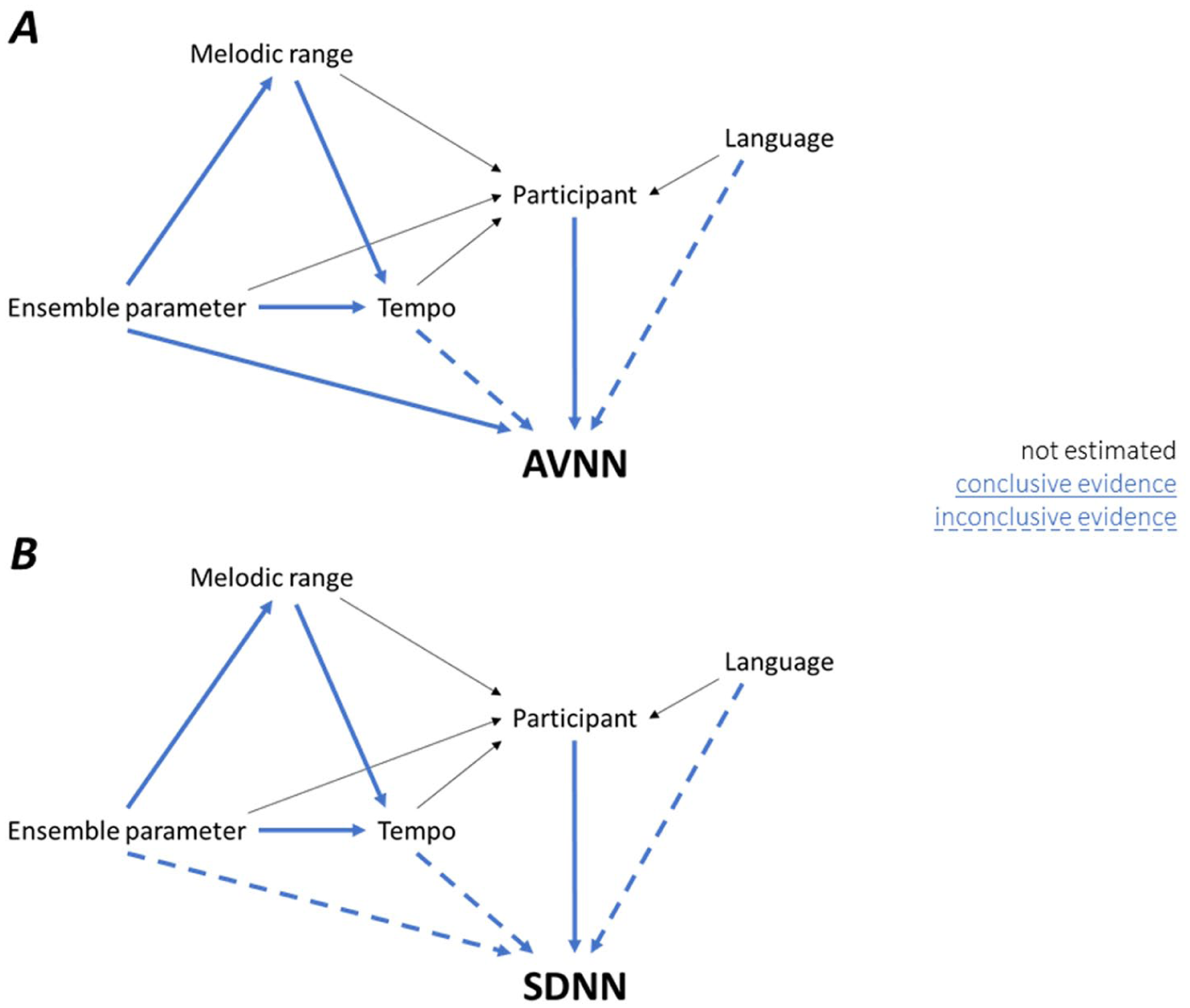
Directed acyclic graphs for AVNN (Panel A) and SDNN (Panel B), modified through the results of our analyses. A solid blue arrow indicates support for a direct causal effect, while a dashed blue arrow indicates inconclusive evidence for a direct causal effect. The absence of an arrow (in comparison with Figure 1) indicates evidence against the presence of a causal effect. A solid black arrow indicates causal links that could not be estimated directly from the current data.
In both models of AVNN and SDNN, we found clear evidence that there is a direct causal link between participant and cardiac activity. As can be seen in Figure 3, however, AVNN and SDNN are different albeit related measures. AVNN is an indicator of heart rate such that higher AVNN indicates lowered heart rate, while SDNN is an indicator of heart rate variability such that higher SDNN indicates higher heart rate variability.
For 12 out of 22 participants, the AVNN and SDNN metrics were consistent. That is, participants had average AVNN and SDNN (see, e.g., Participant 11), higher than average AVNN and SDNN (see, e.g., Participant 10), or lower than average AVNN and SDNN (see, e.g., Participant 7). However, some participants had either average heart rate but higher or lower than average heart rate variability, or vice versa (see, e.g., Participants 21 and 22). And notably, Participant 12 had lower than average AVNN, that is, high heart rate, but higher than average SDNN, that is, high heart rate variability.
In both models of AVNN and SDNN, we further found sufficient evidence for removing the direct link between melodic range and cardiac activity and inconclusive evidence for removing the direct link between tempo and cardiac activity, and language and cardiac activity. There was evidence for a direct effect of the ensemble parameter on AVNN, such that solo excerpts had lower AVNN than chorus excerpts. In contrast, the evidence for a direct effect of the ensemble parameter on SDNN was inconclusive.
Differences between models of AVNN and SDNN were also found when considering the total causal effects of musical characteristics on cardiac activity. While we found no evidence for an interaction of melodic range and ensemble characteristics on AVNN, we did find support for this interaction when considering SDNN as the outcome. There, the slope of the regression line between melodic range and cardiac activity was more negative for solo than chorus excerpts.
We found evidence for a total causal effect of tempo on cardiac activity, such that higher tempo was associated with lower AVNN and lower SDNN. In addition, we found weak support for an interaction of tempo and ensemble on AVNN. There, the slope of the regression line between tempo and cardiac activity was negative for ensemble and chorus excerpts but not for solo excerpts. Last, we found evidence for a total causal effect of the ensemble parameter on cardiac activity, such that AVNN and SDNN were highest for chorus excerpts. However, while solo excerpts had the lowest AVNN, ensemble excerpts had the lowest SDNN.
Frequentist versions of these models largely had similar outcomes, though estimated coefficients were often larger for frequentist than Bayesian models. For details of the frequentist versions, please see the Supplementary Materials.
Discussion
Here, using highly ecologically valid data collected from 22 opera trainees during performances of four different operas, we showed that both participant and musical characteristics influenced cardiac activity, as a measure of physiological stress. The musical characteristics coded for each excerpt are thought to relate to the difficulty of these excerpts: A larger melodic range is more difficult to sing, higher tempi increase pronunciation and coordination difficulties, and singing solo is seen as more stressful. We showed here that only the latter two had a total causal effect on cardiac activity. While generalizability of our findings to professional musician contexts is limited given the small sample size of opera trainees, the diversity of performed roles in four different operas lends robustness to the uncovered patterns of relationships between musical characteristics and physiological stress.
Musical characteristics influence each other
As expected, we found that solo excerpts had a larger melodic range than ensemble and chorus excerpts. We further found that solo excerpts were slower than ensemble and chorus excerpts when taking melodic range into account. Furthermore, we found that the ensemble parameter influenced the relationship between melodic range and tempo: Only for ensemble and chorus excerpts did we find that higher melodic range was associated with higher tempo.
These results fit well within the framework of auditory scene analysis (Bregman, 1994; Darwin & Carlyon, 1995; McAdams & Bregman, 1979), which suggests that when multiple singers are performing at the same time, that is, in ensemble and chorus excerpts, we would find a lower melodic range and a higher tempo compared to solo excerpts to support auditory streaming. Furthermore, in such excerpts, a higher melodic range which would negatively impact auditory streaming is compensated for by higher tempo.
Participant characteristics influence physiological stress
Above all, we found that participant characteristics had the largest influence on AVNN and SDNN. This presents a limitation to our study as there are many unmeasured variables which are included in the variable “participant,” for example, music performance anxiety, though previous work has shown that it may not relate to cardiac activity during performance (Cui et al., 2022), or cognitive skills (Motamed Yeganeh et al., 2023). Additional participant characteristics which may influence physiological stress include the possible use of medication and personal strategies for stress management as well as experience (Matei & Ginsborg, 2017). However, given the small range of experience represented in our sample of opera trainees, we were unable to model this aspect. Future research including more participants with a greater range of professional experience is needed to investigate the contributions of experience.
Furthermore, we were unable to separate the influence of the participant from the influence of the performed character or role: We included excerpts from 24 different characters but only for 11 of these characters did we have data from two rather than one singer. Thus, variance in “participant” may have also included variance in the motor, emotional, and other demands of performing different characters, as well as participant-specific comfort with different musical parameters and their familiarity with different languages. To the latter point however, our results were inconclusive regarding a direct causal effect of language on cardiac activity.
Although there was general agreement in the results of both models of AVNN and SDNN, there were also differences (see Figure 3). AVNN is an indicator of heart rate such that higher AVNN indicates lowered heart rate, while SDNN is an indicator of heart rate variability such that higher SDNN indicates higher heart rate variability. Thus, lower AVNN and lower SDNN are typically indicative of heightened physiological stress (Kim et al., 2018).
Some of the opera trainees’ cardiac activity measures differed from the group mean in the same manner, for example, Participants 8, 9, and 10 had higher than average AVNN and higher than average SDNN, indicating lowered physiological stress. However, Participant 12 had lower than average AVNN but higher than average SDNN, presenting contradictory evidence regarding their physiological stress levels relative to the group. Though heart rate and heart rate variability are related (Sacha, 2014), our data indicate the value of studying and reporting both in the context of stress during music performances and the need for future research on the aspects of stress modeled by heart rate and heart rate variability, respectively.
While there was no direct effect of melodic range on cardiac activity, whether assessed with AVNN or SDNN, there were differences in the strength of evidence for direct effects of the ensemble parameter on cardiac activity. While we found evidence for a possible direct effect on AVNN, these effects were less clear for SDNN. Overall though, our results indicated that performing a chorus section, that is, sharing melodic lines with other performers, was less stressful than being the soloist for the studied sample. These findings are in line with others showing that solo performances are more stressful than group performances (Cox & Kenardy, 1993; Kenny et al., 2004; Papageorgi et al., 2013).
Musical characteristics influence physiological stress
In addition to the large influence of the participant on cardiac activity, we found total causal effects of the assessed musical characteristics. Of particular interest is the finding of an interaction effect of tempo and ensemble characteristics on AVNN. Thus, the relationship between tempo and AVNN depends on the ensemble characteristics of the excerpt: Only for ensemble and chorus excerpts did we find that higher tempo was linked to lower AVNN and thus higher stress. This could indicate that higher tempi in opera performance are associated with difficulty of coordination. Additional research is necessary to specify in which scenarios the higher stress associated with higher tempi is likely due to the difficulty of pronunciation (Ralston, 1999). Nevertheless, in our sample of opera trainees, AVNN was higher for chorus excerpts overall, as indicated also by the total causal effect of ensemble.
In addition, we found suggestive evidence for an interaction effect of melodic range and ensemble characteristics on SDNN. Thus, the relationship between melodic range and SDNN depends on the ensemble characteristics of the excerpt: Only for solo excerpts did we find that higher melodic range was linked to lower SDNN and thus higher stress. Greater melodic ranges may thus not automatically be more difficult as suspected (Nair et al., 2016; Ralston, 1999), but rather become difficult when the metaphorical or literal spotlight is on the singer. We also saw a total causal effect of the ensemble parameter on SDNN such that chorus excerpts had the highest SDNN, aligning with our AVNN results.
Future directions
In future research, it would be beneficial to incorporate more data and include additional factors within a causal model. For instance, it would be valuable to encode the emotional impact of the performed excerpt, as certain pieces may induce varying levels of stress for performers. It has been well documented that listeners may infer the affect of music from its tempo (Balkwill & Thompson, 1999; Gabrielsson & Juslin, 1996; Gundlach, 1935; Peretz, 1998) and that music performers modulate tempo in order to communicate affect (Adachi & Trehub, 1998; Juslin, 2000). The affect being expressed in an opera excerpt may thus not only directly influence stress, but may also be related to the musical characteristics studied here.
It would also be of value to consider opera singers who have been performing professionally after completion of their studies as well as instrumentalists. We are aware that by studying opera trainees there are limits to the generalizability of our findings, not only given the still limited experience of our participants but also regarding the instrument. With a greater number of participants, including those with greater experience, models with additional factors accounting for more participant characteristics can be assessed.
The musical characteristics that are related or seen as related to difficulty may also vary depending on the instrument and thus necessitate the comparison of our results to those obtained from different participant samples. The use of qualitative tools, designed to reveal contextual details such as instrument-specific characteristics related to difficulty, would nicely complement the present approach. A holistic understanding of which factors may lead to greater stress for different musicians will ultimately help us tailor stress management techniques to the individual musician.
Conclusion
Using highly ecologically valid data from opera trainees, we found that participant and musical characteristics influence physiological stress during live performance. The participant factor had the largest influence on stress, measured either through assessing heart rate or heart rate variability. In addition, we found that musical characteristics commonly related to difficulty in singing opera had direct or total causal effects on physiological stress. Specifically, we found that sharing melodic lines with others, led to less stress compared to singing solo or singing ensemble excerpts. The ensemble characteristics further modulated relationships between melodic range and stress as well as between tempo and stress: While a greater melodic range is associated with more stress only for solo excerpts, higher tempi are associated with more stress when the singers need to coordinate with others, that is, during ensemble and chorus excerpts.
Supplemental Material
sj-docx-1-msx-10.1177_10298649251385724 – Supplemental material for Participant and musical characteristics influence singers’ physiological stress during opera performances
Supplemental material, sj-docx-1-msx-10.1177_10298649251385724 for Participant and musical characteristics influence singers’ physiological stress during opera performances by Anja-Xiaoxing Cui, Grace Hu, Negin Motamed Yeganeh, Leigh VanHandel, Nancy Hermiston, Janet F. Werker, Lara A. Boyd and Valter Ciocca in Musicae Scientiae
Footnotes
Declaration of conflicting interests
The authors declared no potential conflicts of interest with respect to the research, authorship, and/or publication of this article.
Funding
The authors declare that financial support was received for the research and/or publication of this article. Data collection was supported through the Peter Wall Institute for Advanced Studies to N.H., J.F.W., and J.A.B. During data collection, A.-X.C. was supported through a postdoctoral fellowship through the Social Sciences and Humanities Research Council of Canada. Open access funding was provided by the University of Vienna.

Supplemental material
Supplemental material for this article is available online.
References
Supplementary Material
Please find the following supplemental material available below.
For Open Access articles published under a Creative Commons License, all supplemental material carries the same license as the article it is associated with.
For non-Open Access articles published, all supplemental material carries a non-exclusive license, and permission requests for re-use of supplemental material or any part of supplemental material shall be sent directly to the copyright owner as specified in the copyright notice associated with the article.
