




Abstract
People are living longer than ever. Loneliness is prevalent across various age groups, posing a serious threat to both wellbeing and health. The social surrogacy hypothesis predicts that people make use of temporary substitutes for interaction with other people. In this qualitative study, we explored the role of self-chosen music as a social surrogate. A sample of older adults (N = 35) was asked to name three pieces of music they would choose to make them feel better if they were feeling very lonely and to explain their choices. We carried out a reflexive thematic analysis of their responses, which revealed six main themes: musical characteristics, coping mechanisms, memory and engagement, emotional reflection, bodily movement and dance, and listening context. These findings offer insight into how self-chosen music serves as a social surrogate in the absence of other people, through fulfilling social needs and mimicking human expressions or emotions through its characteristics and the context in which it is listened to. Age-specific factors including reminiscence and engagement with meaningful memories are likely to enhance emotional reflection, enabling familiar music to deepen connections to personal experiences. Overall, this study highlights the potential of music as a social surrogate to alleviate the loneliness often experienced by older adults.
Human longevity has reached its highest level in recorded history, with more people living to older ages than ever before. By 2050, more than 22% of the world population will be more than 60 years old (World Health Organization, 2022). Older adults are people with rich experiences and knowledge who have adapted to their lives and contribute greatly to society (Baker et al., 2018; Herff et al., 2020; Lazar et al., 2018; Taylor et al., 2018; Villar et al., 2023). Even if older adults have rich social lives, however, they can experience feelings of loneliness that can have detrimental effects on their physical and mental wellbeing (Jarvis et al., 2020; Larsson et al., 2019). As meaningful interpersonal relationships are crucial for successful healthy aging, loneliness poses a severe danger to wellbeing and health for older adults (Hawkley & Cacioppo, 2007; Nummela et al., 2011). In the light of the recent COVID-19 pandemic, when social distancing became a key instrument for the protection of the population—especially older people—this topic is more relevant than ever before. In this article, we draw on the social surrogacy hypothesis, which predicts that people make use of temporary substitutes for interaction with other people. This suggests the possibility that media such as music can have social benefits for individuals including the reduction of loneliness in older people (Groarke et al., 2022; Schäfer & Eerola, 2020). The goal of the present study was to understand older adults’ reasons for choosing specific pieces of music to make them feel better when they feel lonely and find out how music serves as a social surrogate, particularly in relation to age-specific factors such as generational experiences.
Loneliness as a risk factor
Loneliness is generally characterized as an uncomfortable or negative feeling that stems from the quality of one’s social network or the number of people in it (Cohen-Mansfield & Eisner, 2020; Kharicha et al., 2021). It is noteworthy that, compared with prior generations, present-day older adults are often more physically active, educated, well-off, and healthier (Katz, 2000; Principi et al., 2018). Conversely, they often find themselves without a close partner, friend, or children of their own, which can sometimes limit the social support their network can provide (Tang & Lee, 2011). It has also been shown that approximately up to 40% of older adults have experienced loneliness because they lack emotional and social support (Newall & Menec, 2019). Furthermore, a recent systematic review by Dahlberg et al. (2022) identified 34 studies that were consistent in reporting links between loneliness and risk factors, notably depression or increased depressive symptoms; self-perceived poor health; few social activities; limited social networks; not being or not having been married; and/or having lost a partner. In addition, while low-income and poor financial conditions were associated with increased loneliness, there was little evidence linking level of education with loneliness. These risk factors have additional negative health consequences, such as smoking and obesity (Donovan & Blazer, 2020), as well as a heightened risk of mortality (Hakulinen et al., 2018). Hence, considering loneliness as a risk to life itself, it is increasingly important to explore older adults’ strategies for reducing it.
Benefits of music for older adults
When older adults are feeling lonely, they often include leisure activities in their daily lives that involve either listening to or making music (Krause, 2020; Laukka, 2007; Neves et al., 2019, 2023). Listening to music as a solitary activity, often via the radio or other forms of media, has been found to be related to psychological wellbeing in terms of relaxation and mood regulation (Krause, 2020). The results of a study in which a sample of older adults living in a care home for the elderly received individualized music interventions including listening sessions were promising, in that the interventions had short-term effects on measures of cognitive functioning, physical health, emotional wellbeing, happiness, and pain (Castillejos & Godoy-Izquierdo, 2021). Whether people engage in musical activities alone or in a group, such activities are widely acknowledged to be beneficial for healthy aging and can broaden individuals’ social networks (Creech et al., 2023; Solé et al., 2010). According to the findings of a global survey in which participants reported on the activities they had undertaken during the COVID-19 pandemic, music was most effective for maintaining wellbeing in terms of enjoyment, venting negative emotions, and self-connection, and was second only to socializing for creating a feeling of togetherness (Granot et al., 2021).
Despite the widely reported positive effects of music, including listening to music, on different aspects of wellbeing, it is important to consider its role as a social surrogate in daily life. Although reducing loneliness has been identified as a powerful motivator for older adults to engage with music (Groarke & Hogan, 2016), investigating older adults’ choices of music when they feel lonely can offer valuable insights.
Music as a social surrogate
The need to belong is so deeply rooted in human nature that its effects on our psyche and behaviors often go unnoticed (Gabriel et al., 2016). It manifests a desire for positive and enduring social interactions, constantly driving our engagement with others (Baumeister & Leary, 1995). In this context, social cognition theories suggest that private music listening might evoke the sensation of another’s presence; persona theory, for instance, proposes that listeners subconsciously perceive music as the emotional expression of an imagined individual (Elvers, 2016). Indeed, music, as opposed to silence, has recently been associated with more detailed narratives and imaginings characterized by emotional richness, social elements, including imagined interactions, and a sense of confidence (Herff et al., 2023; Taruffi et al., 2023). Engaging in directed mental imagery, whether with music or in silence, can enhance these experiences of social interaction (Holmes et al., 2007; Honeycutt et al., 1989). Furthermore, a study conducted by Schäfer et al. (2020) discovered that self-chosen music lessened feelings of loneliness and enhanced participants’ emotional state, while also boosting empathy, indicating that listening to music can stimulate social-cognitive processes and act as a social surrogate. As individuals find meaning in engaging with self-chosen music, it is important to note that meaningful engagement in activities such as those involving music is a crucial determinant of successful aging (Low et al., 2023; Peck & Grealey, 2020). Moreover, individualized music interventions for patients with severe Alzheimer’s disease were shown to have beneficial short-term effects on their levels of stress and relaxation (Sakamoto et al., 2013). Studies of people’s choices of music to listen to when experiencing negative affective states such as loneliness have produced inconsistent results. For some people, choosing negative mood-congruent pieces can be maladaptive and intensify feelings of depression, whereas it can help others to process and validate complex emotions (Garrido & Schubert, 2015a, 2015b; Sachs et al., 2015). It is more ecologically valid to give individuals a free choice of music to listen to when feeling lonely because this accommodates a range of mood-regulation strategies (Schäfer et al., 2020).
Where direct social contact is limited, music may serve as a social surrogate, fulfilling individuals’ inherent need for social connection when they cannot engage in traditional forms of interaction (Schäfer et al., 2020). A recent study by Groarke et al. (2022) found that listening to music was an emotional resource and social surrogate for older adults during the COVID-19 pandemic. Specifically, participants chose to listen to music to evoke positive feelings, regulate their emotions, and use it as a surrogate for other people to accompany them and help them remember social interactions and experiences. Serving as a social surrogate, music could be used as a temporary substitute for personal interactions, creating a feeling of belonging (Schäfer & Eerola, 2020). Consequently, listening to music, even as a solitary activity, could lead to social benefits for the individual. It might evoke a sense of empathic company, regulate emotions, and thereby reduce feelings of loneliness (Schäfer & Eerola, 2020; Schäfer et al., 2020).
Possible motivations for listening to self-chosen music when feeling lonely
Older adults’ motivations for listening to music when they feel lonely may vary. Their motivations may be social, such that music serving as a surrogate creates social worlds in which listeners can immerse themselves in narratives, helping to counteract the effects of social isolation (Gabriel et al., 2016). These narratives are found not only in books and TV shows but also in music and lyrics, reminding the reader, watcher, or listener of other people or facilitating their parasocial relationships with media personalities (Maus, 1991). Other motivations for listening to music include the possibility of obtaining therapeutic benefits such as affect regulation and fulfilling the human tendency to find meaning in music (Groarke & Hogan, 2020). Reasons for choosing particular music to listen to are often shaped by generational experiences and a strong desire for the emotional comfort that can be provided by hearing familiar songs from one’s past (El Haj et al., 2012; Jakubowski et al., 2023).
Schäfer and Eerola (2020) identified seven factors underlying individuals’ social motives for listening to music: Comforting company, Reminiscence, Shared experiences, Isolation, Understanding others, Culture, and Group identity. The findings suggest that music does serve as a social surrogate, potentially validating negative emotions, evoking nostalgia, and promoting identification, especially through song lyrics.
Aims
In the present study, we aimed to understand why older adults choose specific songs when they are feeling lonely by exploring the reasons for their choices, including generational experiences and the desire to obtain emotional comfort from hearing familiar music, and how these choices align with the social surrogacy hypothesis.
Method
Design
We administered a paper-based survey exploring the role of music and regulation strategies in stress reduction (based on Baltazar et al., 2019) and analyzed participants’ free-text responses using reflexive thematic analysis (Braun & Clarke, 2022). This study was approved by the ethics committee of the Faculty of Humanities and Social Sciences at Humboldt-Universität zu Berlin (approval number: HU-KSBF-EK_2021_0021). Participants provided informed consent, and all procedures adhered to the European Union General Data Protection Regulation (GDPR) guidelines to ensure confidentiality and data protection.
Participants
In total, 35 participants (M = 71.10 years, SD = 6.79, range = 62–87, missing data = 6), of whom 21 were female, completed the survey. Thirty-four of the participants were German and one was Swiss, and all were living in Germany. On the University of California Los Angeles Loneliness Scale (UCLA-LS; Döring & Bortz, 1993), which ranges from 1 (not at all) to 5 (entirely) their mean score was 1.60 (SD = 0.54, missing data = 3) suggesting an overall low level of loneliness (see Table 1 for all demographic characteristics).
Demographic characteristics of participants (N = 35).
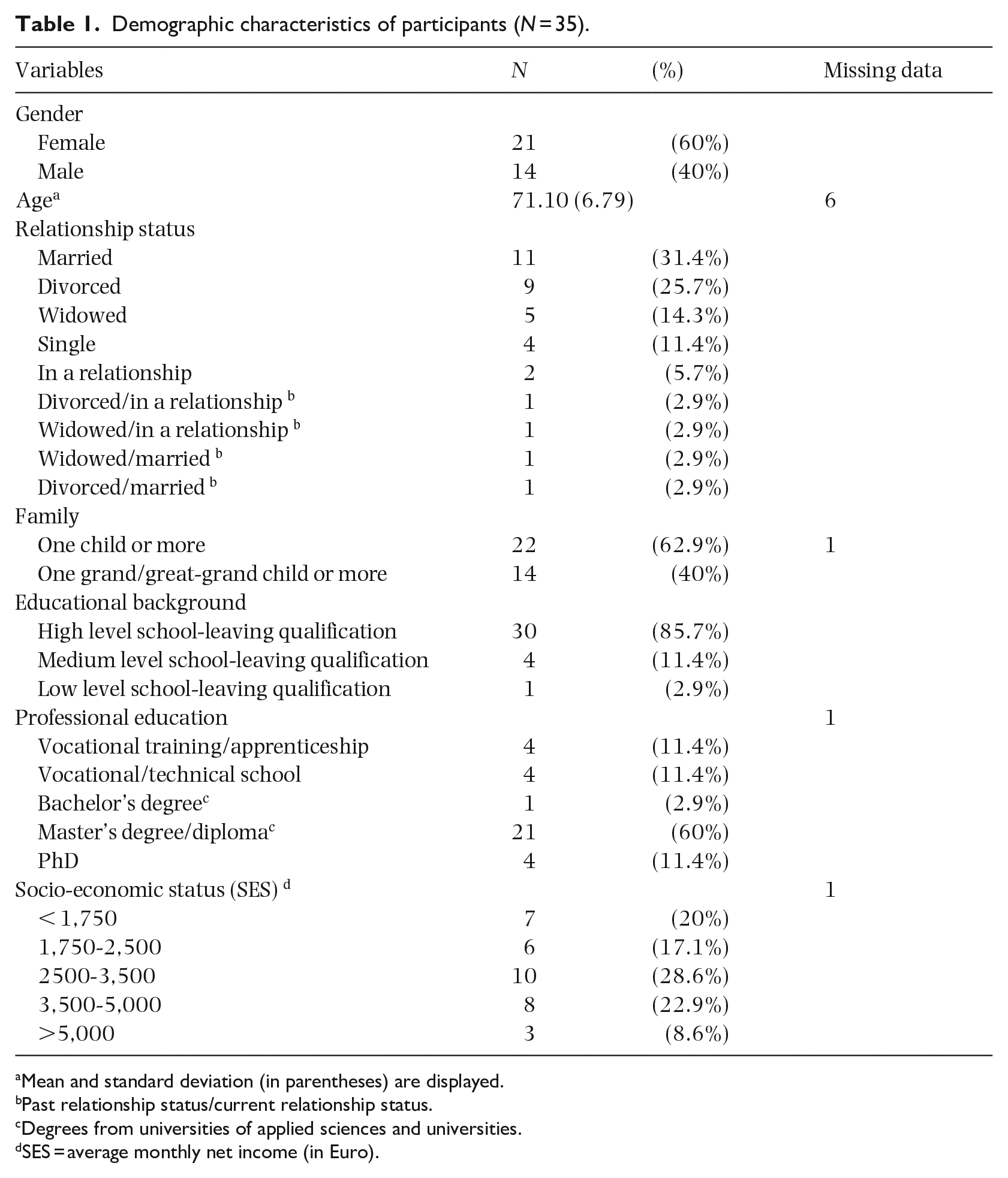
Mean and standard deviation (in parentheses) are displayed.
Past relationship status/current relationship status.
Degrees from universities of applied sciences and universities.
SES = average monthly net income (in Euro).
Participants had been recruited via flyers, word-of-mouth, and visits to local clubs for seniors. Facilities for seniors, including music-related facilities, were also contacted via e-mail. Interested individuals received a detailed description of the study with all relevant information on the procedure and data protection regulations.
Participants were required to be at least 60 years old, ideally willing to communicate by mail using pen and paper, and able to fill out documents in German by hand. We chose to use pen-and-paper questionnaires because they are more inclusive and do not discriminate against people who prefer not to complete questionnaires online, despite growing evidence that a large proportion of older adults have begun to use technology to connect with others (Hou et al., 2017; Siette et al., 2024; Strutt et al., 2022). Our recruitment strategy and mode of delivering the questionnaire did not discriminate against those who are still working and/or adept at using computers, thus addressing potential biases while still ensuring inclusivity. The exclusion criteria were severe acute hearing problems and/or diseases of the auditory system interfering with everyday life; diagnoses of acute psychological disorders and/or current therapeutic or medical treatment for such a disorder; and diagnoses of age-related memory impairments.
Interested individuals were given the opportunity to ask questions by mail or phone. In this first communication, we checked that they met the inclusion criteria. If they agreed to participate, we asked them for their contact details. We posted the documents to them so that they could complete the survey. We sent out 39 envelopes to interested individuals, of which 36 were returned. One person returned the documents blank, without having completed any of the survey.
Materials and measures
Personal information
Participants were asked to provide information on their age, gender, nationality, family status, education, professional background, and economic situation. These questions can be found in the Supplemental Material.
Trait loneliness/social wellbeing
Trait loneliness was assessed using the German version of the UCLA-ULS in which participants rated their agreement with 20 statements including “I feel comfortable with the people around me.” As loneliness is still stigmatized in our society, the document was masked as a social wellbeing questionnaire.
Choice of music
Recognizing that music can be used to alleviate feelings of loneliness (Cheetu et al., 2022; Schäfer et al., 2020), we adapted the instruction given to participants in a study in which they were asked to “imagine a situation of acute stress with a specific affect regulation goal” [i.e., relaxing] (Baltazar et al., 2019, p. 4) before nominating three pieces of music and rating its characteristics in terms of meeting the goal. We modified the instruction to align with the aims of our own study: “Select the music: Imagine you are in a situation where you feel very lonely. However, you have the opportunity to listen to music at that moment. What pieces of music would you choose to make you feel better?” We did this to simulate a real-world context and to learn the reasons for their choices of music. Participants could nominate up to three pieces of music and explain, in their own words, why they had chosen them.
Procedure
The participants were asked to work through the questionnaire in a calm environment by themselves and return the documents in the envelope provided. When they had given their signed, informed consent, they provided demographic information and completed the trait loneliness questionnaire before responding to the instruction to nominate the pieces of music they would choose to make them feel better and explain why. The final document was an information sheet with the contact details for relevant social services in case they felt the need to talk to someone. In addition to the use of the pen-and-paper format, the materials were adjusted to the needs of an older population (e.g., size of typeface).
Data analysis
We analyzed the free-text responses using reflexive thematic qualitative analysis (Braun & Clarke, 2022). The data were translated from German into English by a member of the research team who joined later, and the translation was reviewed by two bilingual German–English speakers, one who had been part of the original team and another who also joined later.
We used an inductive approach to identify themes deriving from the content of the data because there are no relevant theoretical frameworks in this emerging field of research (Joffe & Yardley, 2004). We followed the recommended six-step procedure: (1) familiarizing ourselves with the data, (2) creating initial codes, (3) searching for potential themes, (4) reviewing them, and (5) finally outlining and labeling the themes to (6) produce the analysis report including a thematic map to illustrate groupings of main themes and subthemes.
Our approach was recursive, such that we revisited the data several times to refine and develop themes iteratively, sometimes combining redundant themes to better capture the complexity of the responses. This process allowed for flexibility in examining participants’ responses and integrating reflexivity to foster a dynamic interaction between the participants’ narratives and our interpretations of them. In addition to our analysis of semantic (surface-level) meanings in the free-text responses, which helped us understand the participants’ choices and reasons for them, the translation from German into English also ensured that we would be able to triangulate and evaluate the themes rigorously. Following preparation of the analysis report, an independent researcher re-evaluated it, and the team reached a consensus on the final report through discussion.
As researchers, we were at different stages in our careers (three postgraduate students and three senior academics) in various disciplines including musicology and psychology, with different levels of experience of undertaking thematic analysis, and different knowledge of the literature both directly related to and unrelated to the study, including older adults, loneliness, the social surrogate hypothesis, and imagery. Throughout the course of the analysis, we reflected on our own biases through discussions with one another.
Results
The 35 participants provided 110 free-text responses in all. Reflexive thematic analysis of the data produced six major themes: (a) musical characteristics, (b) coping mechanisms, (c) memory and engagement, (d) emotional reflection, (d) bodily movement and dance, and (f) listening context. Figure 1 shows the thematic map (see Figure 2 for percentages of participants’ responses containing the respective theme and Figure 3 for percentages of participants’ responses containing the respective subtheme).
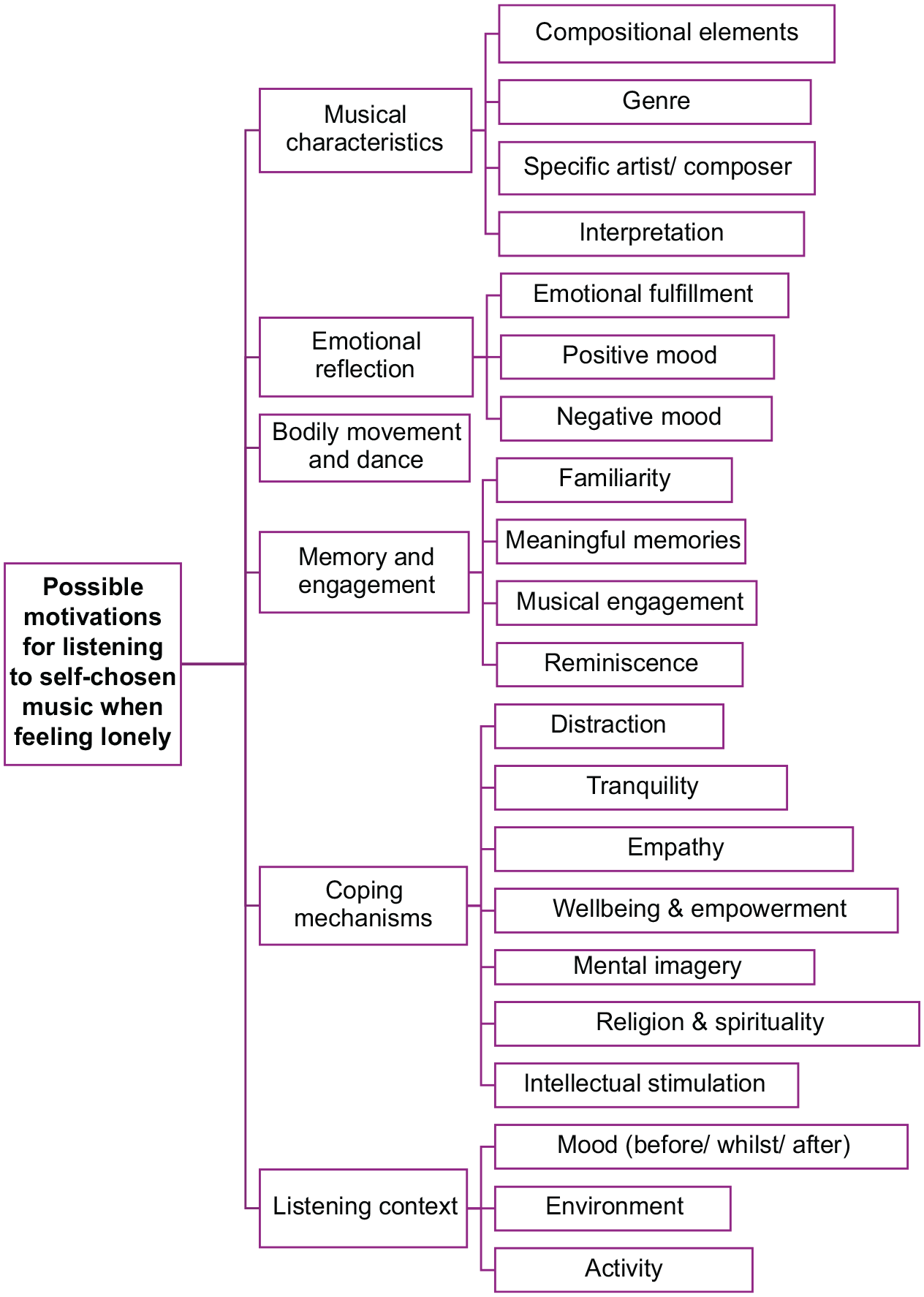
Thematic map displaying themes and their subthemes of the possible motivations for older adults choosing music to alleviate loneliness.
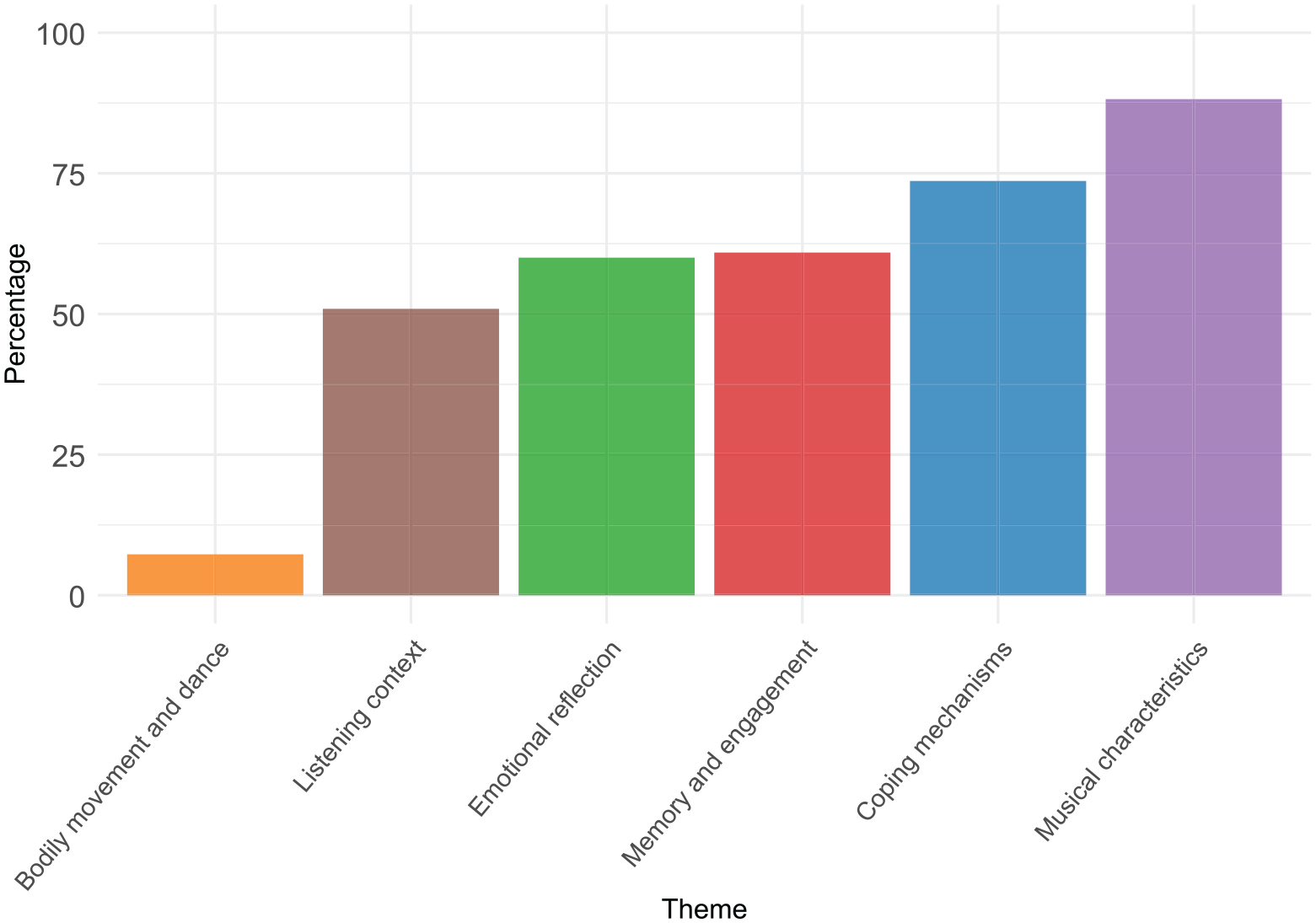
Percentages of participants’ responses containing the respective theme.
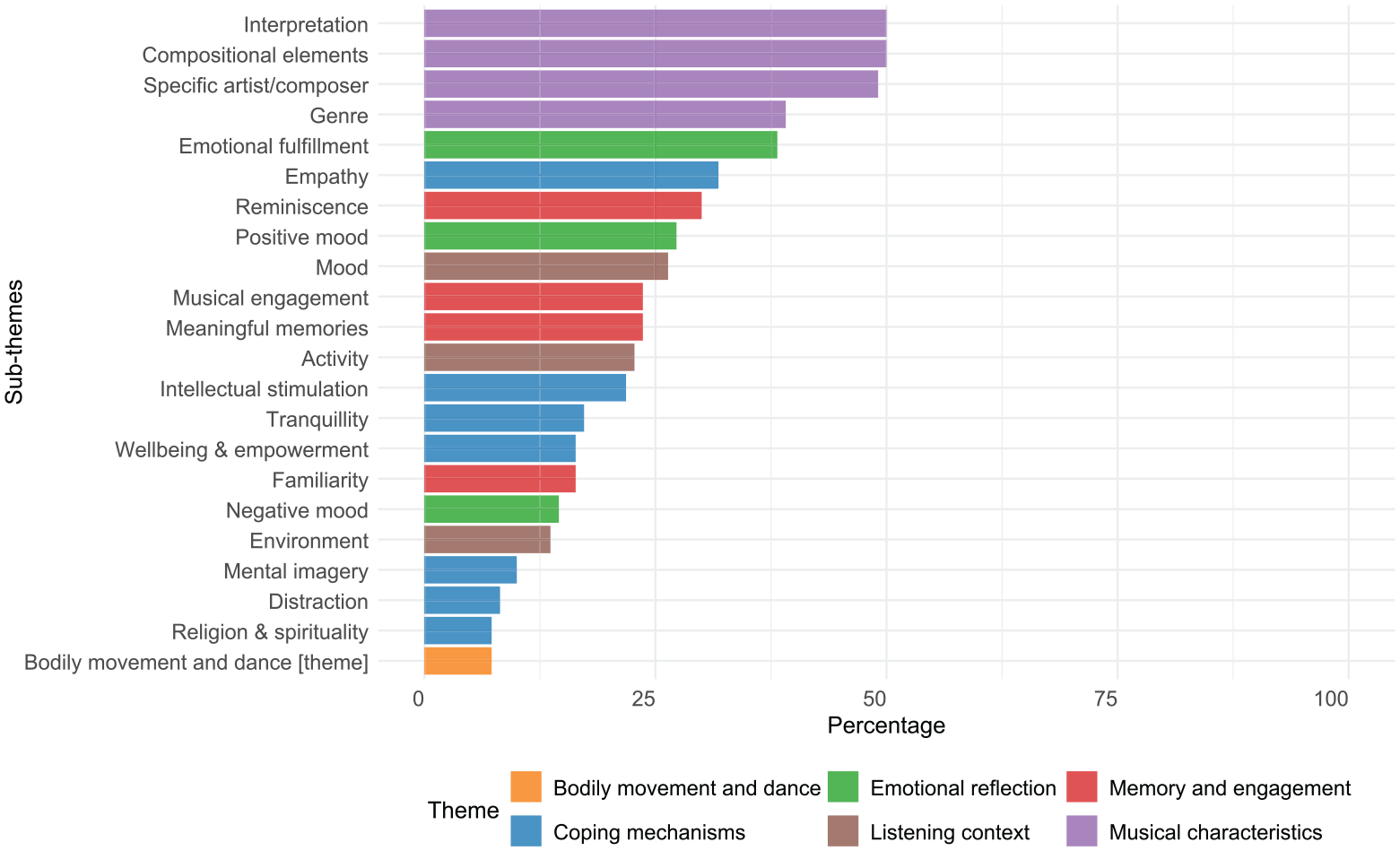
Percentages of participants’ responses containing the respective subtheme.
Musical characteristics
The main reason participants chose pieces of music to make them feel better when they were lonely was the musical characteristics of the piece. Four subthemes emerged from this theme: compositional elements, genre, specific artist/composer, and interpretation. First, participants explained how compositional elements made them feel or kept them company. They included structure, for example “The piece begins very solidly and simply structured” (P1, male, 77) and “theme and variations” (P20, female, 77); rhythm and tempo, for example, “upbeat music, fast music” (P2, female, 70) and “3/4, 6/8 time” (P8, female, 72); vocal techniques, for example, “has soul in her voice, expressive” (P16, female, 63); instrumentation and timbre, for example, “The timbre of the horn” (P8, male, 62); melody and lyrics; and harmony and tonality with reference to octaves, minor key, and major key. Most participants mentioned specific compositional elements independently of each other, for example, “I chose this piece of music because . . . parallel rhythms” (P7, female, 72).
Second, participants chose music in one or more genres such as western classical music, including hymns, operas, Bach chorales, piano preludes and fugues, and symphonies; jazz; music for meditation; pop; flamenco; blues; and folk music. These varied from one participant to another. Third, participants chose music from specific artists/composers, emphasizing their admiration for their skills and artistry, and often associated with the music that participants had listened to when they were younger. Fourth, participants chose music on the basis of their interpretation of its inherent message and how it reflects on (their) self, enabling them to realize that they are not alone. One participant wrote,
I chose this piece of music because the title is well-known and Eva Cassidy’s interpretation reduces it to the bare essentials. Her voice “goes deep.” Her fate of “dying of cancer” also resonates, because what possibilities might she have had? (P3, male, 71)
Another wrote,
From a purely pop and rock point of view, the piece of music is both pompous and melodically pleasant, it contains many connecting and varied elements, according to the motto, life goes up and down, and we carry on somehow. (P23, male, 63)
Coping mechanisms
The second main reason participants chose pieces of music to make them feel better when they were lonely was that listening to this music would serve as a coping mechanism, and this was the case for most participants. Seven subthemes emerged from this theme: distraction, tranquility, empathy, wellbeing and empowerment, mental imagery, religion and spirituality, and intellectual stimulation. First, participants reported using music as a distraction, to pass the time, for example, as a mental escape from daily stresses:
I chose this piece of music because it is the most beautiful of all violin concertos for me, as I particularly love the violin and still took violin lessons in my mid-70s, so romantic, elegiac, so tender, so atmospheric that you forget everything; everything— your surroundings, worries, problems, and even yourself. (P10, female, 80)
Others, however, found that music was seamlessly integrated into their solitary daily routines, enhancing their activities, and reducing their sense of loneliness:
When I’m sitting in peace and quiet, I like to listen to the longer classical pieces. When I don’t have much time, I listen to the short modern pieces on my cell phone while I do my housework here in the apartment (cleaning, vacuuming, laundry, etc.). The work then almost goes by itself. (P21, female, 68) The only music that I could leave on in the car, that I could listen to, that didn’t get on my nerves, that didn’t become too much, that accompanied me in a calming way, while I was driving long distances (e.g., drifting through the Iberian Peninsula for months), alone, without any accompaniment, not even in my head. It wasn’t a conscious choice. It was just the way it was. (P32, male, 67)
Second, participants referred to tranquility, highlighting the role of music as a conduit for calming and meditative activities, helping the search for internal balance. They noted the serenity of instrumental music, especially piano sonatas and music for flute. One participant shared her emotional journey through the movements of a piece as follows: “The theme in the first movement strengthens my life-affirming feelings. The second movement is intimate and rather meditative” (P28, female, no age given). Third, they referred to empathy, describing how their choices of music offer support, understanding, and comfort, thus embodying empathetic qualities as well as evoking empathy in the listener. In this context, empathy refers to the sense of emotional resonance and shared feeling that participants experience through music, where the music seems to understand and reflect their emotions, offering comfort in moments of loneliness. For example,
I chose this piece of music because it was a comfort to me when my best and oldest friend died. The lyrics reminded me a lot of her. The chorus still fits and I usually think of her when this song is played. (P22, female, 62) I chose this piece of music because it sometimes helps me to come to terms with my feelings in very sad, lonely situations, e.g., after a break-up. Where to go with this disappointment, despair, the emotional wounds? In this piece, Sven Regner gives you the feeling that others have felt the same . . . It doesn’t make it any better, but it does make it a little easier. (P14, male, 68) I chose this piece of music because the lyrics and the rather melancholy, but not too heavy music best reflect my suffering at that moment, or my feeling of loneliness. At this moment, a more uplifting song or piece of music would often not fit, it would be too fast. For now, it’s just about feeling myself, my forlornness at that moment, possibly crying or feeling the pain. At that moment, it is also very good to listen to the piece absolutely for myself and alone, that is incredibly healing. (P23, male, 63)
Fourth, participants described their choices as providing wellbeing, and empowerment in the form of healing, strength, and inspiration: “When I am sad and questioning, this theme gives me a lot of comfort. The harmony between the music and myself gives me peace and wellbeing. You no longer feel alone, much more at home in the big picture” (P10, female, 80); “The piece inspires me again and again. Rio managed to call for a new beginning in difficult times, not just to look back but to look forward with hope” (P14, male, 68).
Fifth, participants’ reasons for choosing pieces of music included the mental imagery they evoked: “Because this powerful music, above all others, nature, water, forests, rivers, etc., is a unique musical representation of what can be heard, experienced and even seen with the human eye in high mountains” (P13, male, 78); “During periods of severe pain, this music helps me to calm down and do pain-relieving relaxation techniques. It helps me to think in peace and brings joyful images to my mind” (P18, male, 63).
Sixth, participants made their choices on the basis of religion and spirituality: “This intimacy touches my soul and makes me happy and grateful and leads me to prayer, to praise God. That is a special kind of happiness” (P10, female, 80); “I have chosen these pieces of music because they comfort and strengthen me and create a connection with something “higher” and/or other people” (P17, female, 66)
Seventh and finally, participants chose pieces of music because they provided intellectual stimulation. Having described the characteristics of her choice, one participant added that it represented a “program > intellectual challenge” (P15, female, 75).
Memory and engagement
The third main reason participants chose pieces of music to make them feel better when they were lonely was that listening to this music would enhance memory and engagement, evoking personal memories and fostering engagement with the music or their own thoughts. Four subthemes emerged from this theme: familiarity, meaningful memories, reminiscence, and musical engagement. First, participants chose music representing familiarity, that was personally meaningful to them and evoked past experiences, often generational: “I chose this piece of music because the Beatles are part of my childhood and youth, unforgotten to this day” (P16, female, 63). Another participant highlighted the comforting continuity provided by music: “I have grown up with these pieces of music since my youth, they give me a sense of familiarity, ‘everything is in flow,’ I sing along inside, then I feel good!” (P21, female, 68).
The second subtheme, meaningful memories, often intersected with the first subtheme of familiarity and the third subtheme of reminiscence. Participants chose pieces of music because they evoked vivid memories from their own past, for example, “I dream and think of the first time I was married, over 60 years ago. Strangers in the Night, with Frank Sinatra. How sensitively a song can be interpreted—music with life” (P24, female, 87). Third, participants chose music that would enable them to recall and relive past experiences, generating a sense of nostalgia. Reminiscence allows people to reflect on their past, focusing on its emotional significance, and its role in the present and future:
I chose this piece of music because it is a love song that I got to know in Havana. I took a trip to Cuba with my “oldest friend,” whom I have known since we were three years old. We treated ourselves to a week of dance lessons in Havana on the 3-week trip. This song was our practice song for the salsa steps for a week. We each had a dance teacher. They were special moments in life for me (and for my girlfriend too) that we will never forget! My niece has a host sister (she spent a year with the family in Argentina). The host sister is getting married in February 2022. Unfortunately, I will not be present at the wedding, but I was allowed to make a music request. I chose this song because it tells of a love that will last a lifetime. Toda una vida! (P16, female, 63)
Fourth, participants chose pieces of music because they represent their own musical engagement, in the form of singing or playing an instrument as well as listening, and including earworms (i.e., a catchy piece of music that continually repeats through a person’s mind after it is no longer playing): “Chorales (Bach): Well-loved songs from the hymnbook are ‘embellished’— especially tenor and bass parts are earworms and it’s fun to sing or blow them (trombone)” (P6, female, 68).
Emotional reflection
The fourth main reason participants chose pieces of music to make them feel better when they were lonely was that they responded emotionally to these pieces. Three subthemes emerged from this theme, which we labeled emotional reflection. The three themes were emotional fulfillment and uplift, positive moods, and negative moods. First, statements referring to emotional fulfillment included “in general this piece conveys something positive, combative, and energetic as a ‘statement,’ which probably suits my temperament quite well” (P4, female, 65). Second, positive moods included references to emotions such as happiness, joy, cheerfulness, and sensuality. Third, negative moods included references to emotions such as sadness, melancholy, and feelings of abandonment. Single statements could include references to both positive and negative moods. There was little consistency across participants who reported an array of emotions evoked by the pieces of music they would choose to make them feel better when they were lonely.
Bodily movement and dance
The fifth main reason participants chose pieces of music to make them feel better when they were lonely was bodily movement and dance, although this theme derived from the fewest number of responses. Specifically, participants referred to physical responses to the music related to this theme, for example, “Even if I don’t really dance, music always gets my whole body moving” (P7, female, 72); “The joy of dancing is my main motive here too” (P7, female, 72); and “Listening to this song . . . makes me want to dance” (P18, male, 63). Their choices of upbeat, danceable music, jazz, and music from different cultures suggested an inclination for rhythmic and culturally diverse sounds inspiring bodily activation, while memories of dancing with friends highlight the emotional and social aspects of music-induced movement as a way of alleviating loneliness.
Listening context
The sixth main reason participants chose pieces of music to make them feel better when they were lonely depended on listening context. Three subthemes emerged from this theme: mood (before/while/after), environment, and activity. First, mood—shaped by the listener’s emotional state before listening, influenced during, and transformed after listening: “Depending on my mood, different styles and composers from different eras” (P29, male, age not given). Another participant wrote,
The powerful beginning immediately dispels the tiredness, the lethargy. I can’t help but be led by the music. Then the piano enters, the sparkling lightness of the theme—especially in the descant—awakens the tender feelings within me . . . I understand the alternation between solo instrument and orchestra as an alternation between individual activity and collective action, which overcomes loneliness. (P28, female, age not given)
Second, participants referred to the environments in which they would listen to their chosen music: in their home, on the radio, or on a car ride. Third, they referred to engaging with music through activity, including singing, dancing, and playing an instrument, resulting in creativity and personal expression: “As a listener, I usually find it difficult not to sing along spontaneously” (P28, female, 68). Performing, too, provided uplift:
When I’m lonely or in a bad mood, I play the piece myself on my flugelhorn and thus pull myself out of any bad, lonely mood, because I also associate the connection and togetherness and sociability with the other musicians with music I’ve made myself. (P19, male, 63)
Discussion
In this study, we explored older adults’ choices of music to alleviate loneliness, in the context of our understanding of the role of music as a surrogate for personal interaction. We also explored the influence of age-specific factors, including generational experiences and the emotional comfort to be derived from familiar music, on older adults’ choices of music. Our analysis of free-text responses from 35 participants to the question as to the pieces of music they would choose to make them feel better when they were lonely revealed six main themes and 22 subthemes. The main themes were musical characteristics, coping mechanisms, memory and engagement, emotional reflection, bodily movement and dance, and listening context. Age-specific factors were evident in the themes of memory and engagement, and emotional reflection. Familiar music seems to evoke emotional support and resonates with personal and generational experiences. This is probably because it triggers memories, reminding listeners of what is particularly meaningful to them when they feel lonely.
The characteristics of music chosen as a social surrogate vary across older adults
Older adults choose particular pieces of music to alleviate loneliness, and some of these choices may serve as a social surrogate due to their characteristics, including compositional elements such as its structure, rhythm, melody, and tonality; genre; the artist who performs it; the composer who wrote it; and the listener’s own interpretation of the music. The compositional elements of the music underlie its expressive nature and provide support to listeners perhaps because they seem to mimic human emotions and expressions, as well as reflecting the listener’s own experiences. There were some commonalities between the musical characteristics of the pieces that participants chose, but these varied across participants, and many participants described a single characteristic of the music. This variation is consistent with previous research indicating the role of individual differences in subjective responses to music (Fuentes-Sánchez et al., 2022; Gibbs & Egermann, 2021). In light of the social surrogacy hypothesis, which predicts that people make use of temporary substitutes for interaction with others, we argue that older adults engage with music because of its characteristics, and that there is more to their engagement than mere musical choice. Music plays a role in alleviating loneliness because older adults find it personally and generationally relevant to them. Choosing music that was popular and/or meaningful to them when they were younger reflects and reinforces their experiences and facilitates their sense of shared human connection (Schäfer et al., 2020).
Self-chosen music: A social surrogate and coping mechanism for loneliness
Participants often reported that they would choose to listen to specific pieces of music to help them when they felt lonely as a coping mechanism, primarily to distract themselves from stressors by listening to music that would induce positive emotions. Positive distraction can be used as a coping strategy for detaching oneself from long-term stressors such as anxiety (Waugh et al., 2020). Everyday stressors are also present in the lives of most individuals and music listening could be used as a self-directed tool for coping with these (Krause et al., 2021). Participants described their chosen music in terms of tranquility, and wellbeing and empowerment, suggesting that they engaged emotionally with its calming and meditative nature (Huang et al., 2021). They also described it in terms of empathy, referring to the emotional resonance and shared feeling they experienced with the chosen music, which seemed to understand and mirror their emotions while providing comfort, support, and understanding. At times, they were also empathetic toward the music itself. This supports the finding of Schäfer et al. (2020) that private engagement with music reduced loneliness, increased empathy, and improved mood.
By asking participants to “imagine that you are in a situation where you feel very lonely” and choose the pieces of music that would make them feel better, we gave them the opportunity to make use of mental imagery. There is increasing evidence that mental imagery influences individuals’ thoughts, emotions, and the vividness of their imagination (Herff et al., 2021, 2022; Küssner et al., 2022; Taruffi et al., 2023). Mental imagery has been used as a tool in cognitive behavioral therapy for the treatment, for example, of post-traumatic stress disorders (Mota et al., 2015). Music stimulates introspection and emotional processing. As a social surrogate, it can serve as a temporary substitute for other people so that the listener can interact with it, holding a form of simulated dialogue with it, or with imaginary others (Elvers, 2016). Our findings suggest that older adults use mental imagery while listening to or interacting with music as a coping mechanism to alleviate their loneliness. While this approach of giving participants the opportunity to imagine may introduce a level of hypotheticality, in particular from those participants who may not naturally gravitate toward using music for this purpose to alleviate loneliness, it still provides valuable insight into participants’ subjective preferences and associations with music as a social surrogate in such situations.
Religion and spirituality are often used as coping mechanisms (Schmidt & Roffler, 2021). Some participants described the music they chose in these terms, describing it as a bridge to the divine and/or promoting communal unity. Such descriptions echo those found in the literature on the capacity for music to enhance both spiritual experiences and social cohesion (Dingle et al., 2021; Perry et al., 2022; Wald-Fuhrmann et al., 2020). Spirituality may play an important role in the lives of adults, helping them experience positive emotions and manage stress (Can Oz et al., 2022). Music was also chosen because it offered intellectual stimulation, presenting a cognitive challenge that enhances mental engagement. Taken together, these findings suggest that familiar music serves as a social surrogate. In this way, it supports meaningful social connections and promotes cognitive health, thus alleviating loneliness.
Age-specific factors
The themes of memory and engagement, emotional reflection, and subtle bodily movement and dance all reflect age-specific factors in that they are particularly relevant to older adults, linked to the emotional support that, as we have seen, is provided by familiar, personally and generationally meaningful music. Salakka et al. (2021) found that the emotions evoked by music in healthy older adults were associated with the memories evoked by the music. In the present study, our participants chose music that was familiar and reminded them of events from their past, helping them reminisce, sometimes recalling memories that had particular meaning for them. In line with the findings of Groarke et al. (2022), our participants reflected on the emotions associated with their chosen music, whether these were fulfilling, positive, or negative. In a recent study, Jakubowski and Francini (2023) showed that the familiarity and emotional expression of musical prompts can influence autobiographical memories. They found that more familiar and liked music tends to evoke more positive and arousing memories. The findings of the present study provide insight into older adults’ reasons for choosing specific pieces of music to alleviate their loneliness. The pieces are personally relevant to each individual, evoking emotionally charged memories that provide comfort, but they also serve as social surrogates, reflecting shared experiences and the societal values of the individual’s generation, thus promoting a sense of social connection in the absence of others.
Listening context matters
Participants took the context in which they would be listening into account when they reported their choices of music that would make them feel better when they were lonely, and how they would interact with it. Such contexts included intimate, solitary settings such as the home or car, as has also been shown by Krause (2020) and Groarke et al. (2022). Participants also observed that their choices would depend on their mood, and how listening itself can evoke emotional changes over time. This finding supports evidence from research by Cohrdes et al. (2020) as to the importance of current emotional state for shaping the perception of music at different ages from 12 to 75 years. Finally, participants described not just listening to music but also singing, dancing, and playing an instrument; these are typically social activities and illustrate the role of music as a social surrogate when people are lonely.
Limitations and future recommendations
One limitation of the present study is that participants were relatively young, within the category of older adults, and our findings may not therefore be generalizable to all older adults. Future studies could involve the participation of an older sample to verify and extend our findings. Another limitation is that although we asked our sample to “imagine . . . they were very lonely” they scored low on the measure of self-reported loneliness we administered. Future studies could involve the participation of a sample of older adults who score high for loneliness. It would then be possible to compare the choices of music made by older adults who are not very lonely with those who are. Indeed, music listening is a personal and diverse behavior, encompassing a wide range of experiences. While this study focuses on music as a means of social surrogacy, many other aspects of music listening, not necessarily age-related, fall beyond its scope.
Conclusion
In an imagined scenario of feeling very lonely, older adults choose specific pieces of music to make them feel better, and their choices suggest that music can provide comfort as a social surrogate. Many listen to music, generally, because it can function as a coping mechanism amongst other things. The selection of music generally seems to take into consideration both musical characteristics and listening context. Age-related factors include emotional reflection, powerful generational memories, and the fostering of a sense of continuity through familiar music that resonates with social and collective experiences. Our study highlights the potential for self-chosen music to be used as an intervention for alleviating the loneliness experienced by many older adults, whether in their own homes or in therapeutic settings, as it can be both a comfort and a social surrogate.
Supplemental Material
sj-docx-1-msx-10.1177_10298649251319403 – Supplemental material for Music as social surrogate? A qualitative analysis of older adults’ choices of music to alleviate loneliness
Supplemental material, sj-docx-1-msx-10.1177_10298649251319403 for Music as social surrogate? A qualitative analysis of older adults’ choices of music to alleviate loneliness by Ceren Ayyildiz, Olivia Geibel, Steffen A. Herff, Sarah Hashim, Tuomas Eerola and Mats B. Küssner in Musicae Scientiae
Footnotes
Author contributions
O.G., T.E., and M.B.K. contributed to conceptualization. O.G. contributed to data curation. C.A. and O.G. contributed to formal analysis. C.A., S.H., S.A.H., and M.B.K. contributed to funding acquisition. O.G. contributed to investigation. O.G., T.E., and M.B.K. contributed to methodology. O.G. contributed to project administration. O.G. and M.B.K. contributed to resources. S.A.H., T.E., and M.B.K. contributed to supervision. C.A. and O.G. contributed to visualization. O.G. contributed to writing—original draft. C.A., O.G., S.A.H., S.H., T.E., and M.B.K. contributed to writing—review & editing.
Funding
The authors disclosed receipt of the following financial support for the research, authorship, and/or publication of this article: This project was supported by the Deutscher Akademischer Austauschdienst (DAAD) and the Universities Australia (UA) under the Australia-Germany Joint Research Cooperation Scheme, awarded to S.A.H., M.B.K., C.A., and S.H. (DAAD-ID 57701563). S.A.H. is supported by the Australian Government through the Australian Research Council (ARC) under the Discovery Early Career Researcher Award (DECRA, DE220100961) and by the University of Sydney, through the Sydney Horizon Fellowship.

Supplemental material
Supplemental material for this article is available online.
References
Supplementary Material
Please find the following supplemental material available below.
For Open Access articles published under a Creative Commons License, all supplemental material carries the same license as the article it is associated with.
For non-Open Access articles published, all supplemental material carries a non-exclusive license, and permission requests for re-use of supplemental material or any part of supplemental material shall be sent directly to the copyright owner as specified in the copyright notice associated with the article.
