




Abstract
Performance profiling (PP) has been used by elite athletes and their coaches and/or trainers for more than three decades to identify, select, and implement the qualities they believe are most important for them to achieve peak performance in their own sport. It thus enhances athletes’ awareness and ability to establish task-relevant goals contributing to their pursuit of excellence. Given the similarities between athletes and musicians, and in particular the psychological, physiological, and technical requirements of their professions, I believe that PP could usefully be applied in the context of higher music education, with benefits for music students and their teachers. In this article I provide an overview of the theories on which PP is based and, review the ways in which it has been implemented, adapted for use with populations other than athletes, and evaluated. To date, musicians have used PP only to a limited extent, and research on its effectiveness for musicians is therefore scarce. I propose specific adaptations of existing approaches to PP for athletes with a protocol that can be used by music students with their peers and/or teachers.
Keywords
Music students invest significant time in honing their skills in their striving for musical excellence (Jørgensen, 2008). Music performance involves an intricate relationship in the form of a dynamic interaction between the musician, the instrument, and the music itself (Neuhaus, 1993). Highly respected music educators argue that, if musicians are to cultivate spontaneity and musical freedom, this dynamic interaction should be accompanied by an objective assessment of practice and performance habits (Bruser, 1997; Leimer & Gieseking, 1972; Starker, 1975):
I became aware that only through conscious understanding of the elements that allow music to be produced on an instrument can one become a professional and reasonably independent of the constant hazards. Only through conscious understanding can one control the “skill” part of producing art and distinguish the gifted dilettante from the master professional. (Starker, 1975, p. 135)
Self-regulated learning (SRL), a process by which students engage with motivational, metacognitive, and behavioral strategies to monitor and control their learning process (Zimmerman, 2002), has emerged as a way of ensuring purposefulness—already highlighted in earlier research by Ginsborg (2000) and Nielsen (2001), among others, as important for instrumental practice—thus facilitating strategic planning, focused attention, evaluation, and adaptive coping among musicians (McPherson et al., 2013). Yet many music students encounter difficulties in establishing clear goals and maintaining concentration on the tasks at hand, which can have negative consequences (Hatfield, 2016). Such challenges often lead to premature attempts at mastering musical expression, characterized by error-filled repetitions, accompanied by stress and impatience (Jørgensen, 2008). These ineffective practice habits are associated with an increased risk of physical injury, lack of motivation, and intention to quit playing among music students (Hatfield et al., in press). Starker (1975) noted the common occurrence of students “endlessly repeating a difficult passage without realizing . . . the real problem” (p. 272). A recent study indicates that, despite their extensive experience of instrumental practice, music students face challenges in implementing SRL strategies, particularly strategic planning, and goal setting (Miksza & Brenner, 2023). There is thus an evident need for intuitive assessment tools that can facilitate and sustain ongoing SRL practices among music students.
Performance profiling (PP) is a tool used in psychological skills training (PST) by athletes, as outlined by Butler and Sellars (1996). PP enables athletes to identify, plan, evaluate, and monitor the essential elements of high-level performance. Systematic assessment procedures are used in PP to enhance self-awareness by fostering the athlete’s conscious understanding of the factors, both supportive and inhibitory, that underlie performance. The use of PP could form a basis for sustained SRL among music students, not only ensuring purposeful practice schedules but also helping students avoid the unproductive practice routines that prevent them from realizing their maximum potential (Jørgensen, 2000).
While there has been extensive research on the use of PP in elite sports, there has been little on its use in music (Drum, 2017; Hatfield et al., 2022; Weston et al., 2011a, 2011b). This article has three primary objectives: first, to provide a theoretical foundation for PP and its practical implementation; second, to review currently available research on PP and explore the ways it has been and continues to be applied in sports; and finally, to propose potential applications of PP specifically tailored to music. It thus offers practical guidance to music students and their teachers in the form of insights and recommendations (see the Supplemental Appendix).
Performance profiling
PP emerged in the field of sport psychology during the late 1980s (Butler, 1989; Butler & Hardy, 1992). At that time, the coach–athlete relationship was typically unidirectional, coach-led, and prescriptive. This led to the realization that an athlete-centered approach was needed (Butler et al., 1993; Butler & Hardy, 1992). Drawing on personal construct theory (PCT; Kelly, 1955), PP provides tools that can be used to encourage athletes to develop personal constructs pertaining to the individual athlete’s perceptions of the qualities of an elite performer in their own sport (Butler & Hardy, 1992; Gucciardi & Gordon, 2009, p. 99). As such, athletes develop an internal locus of causality via PP—rather than following a prescribed path to a particular goal—by identifying their own strengths and weaknesses in relation to the qualities associated with high-level performance. These strengths and weaknesses are categorized and integrated into a performance profile (see Figures 1 to 3). Since Butler (1989) first described the use of PP in the context of English amateur boxing, it has undergone various adaptations and the introduction of new procedures (Doyle & Parfitt, 1996; Gucciardi & Gordon, 2009; Jones, 1993).
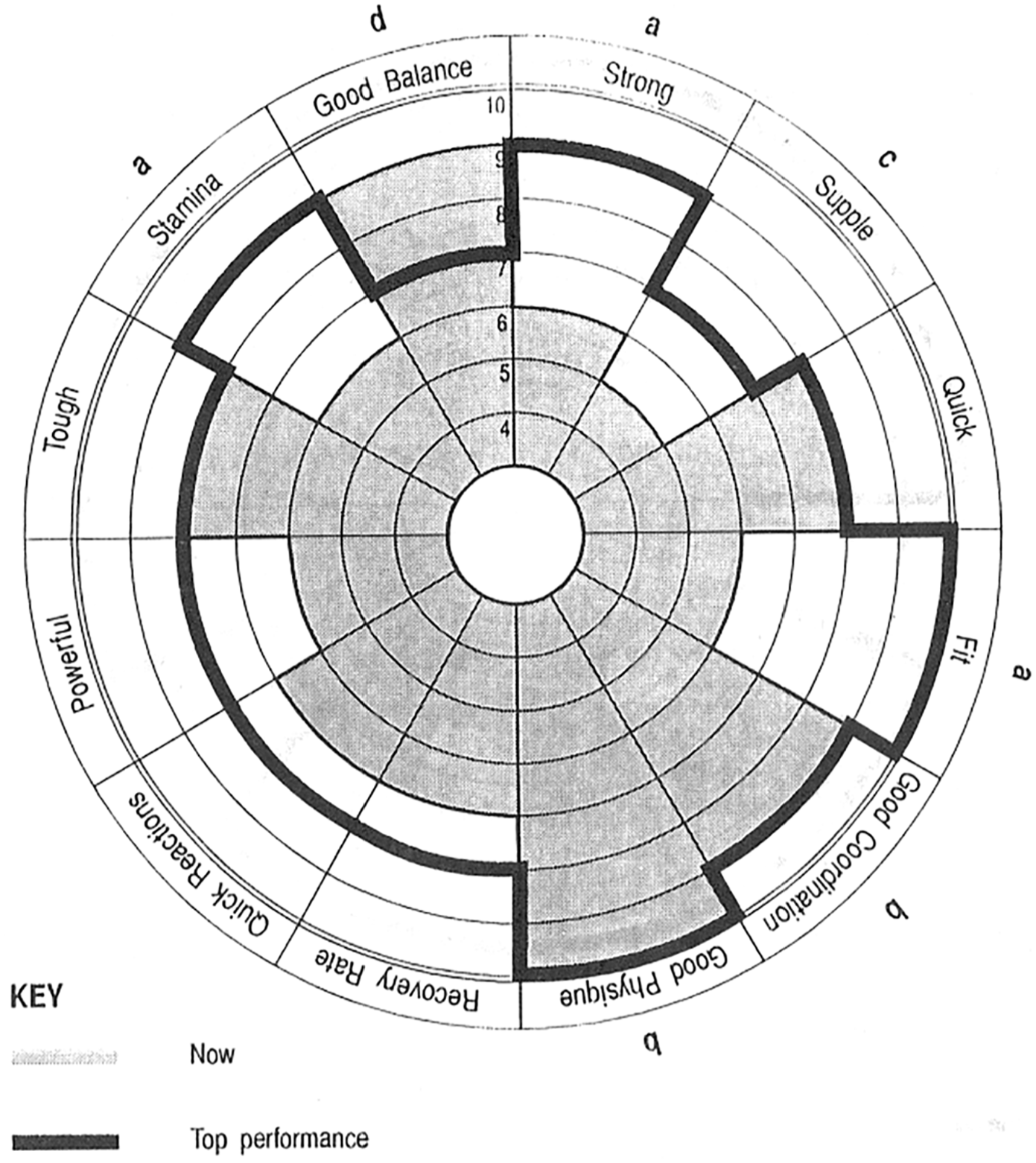
Physical performance profile of a weightlifter. (a) The areas the weightlifter felt he needed to develop in order to perform at his best; (b) those areas he perceived as stable and characteristic of him as a weightlifter; (c) where a top performance had been achieved despite perceived weaknesses (low rating of top performance), thereby possibly suggesting areas upon which training might focus in order to pursue an even better performance; and (d) aspects of his performance that he perceived were already in advance of the requirements of his best previous performance.
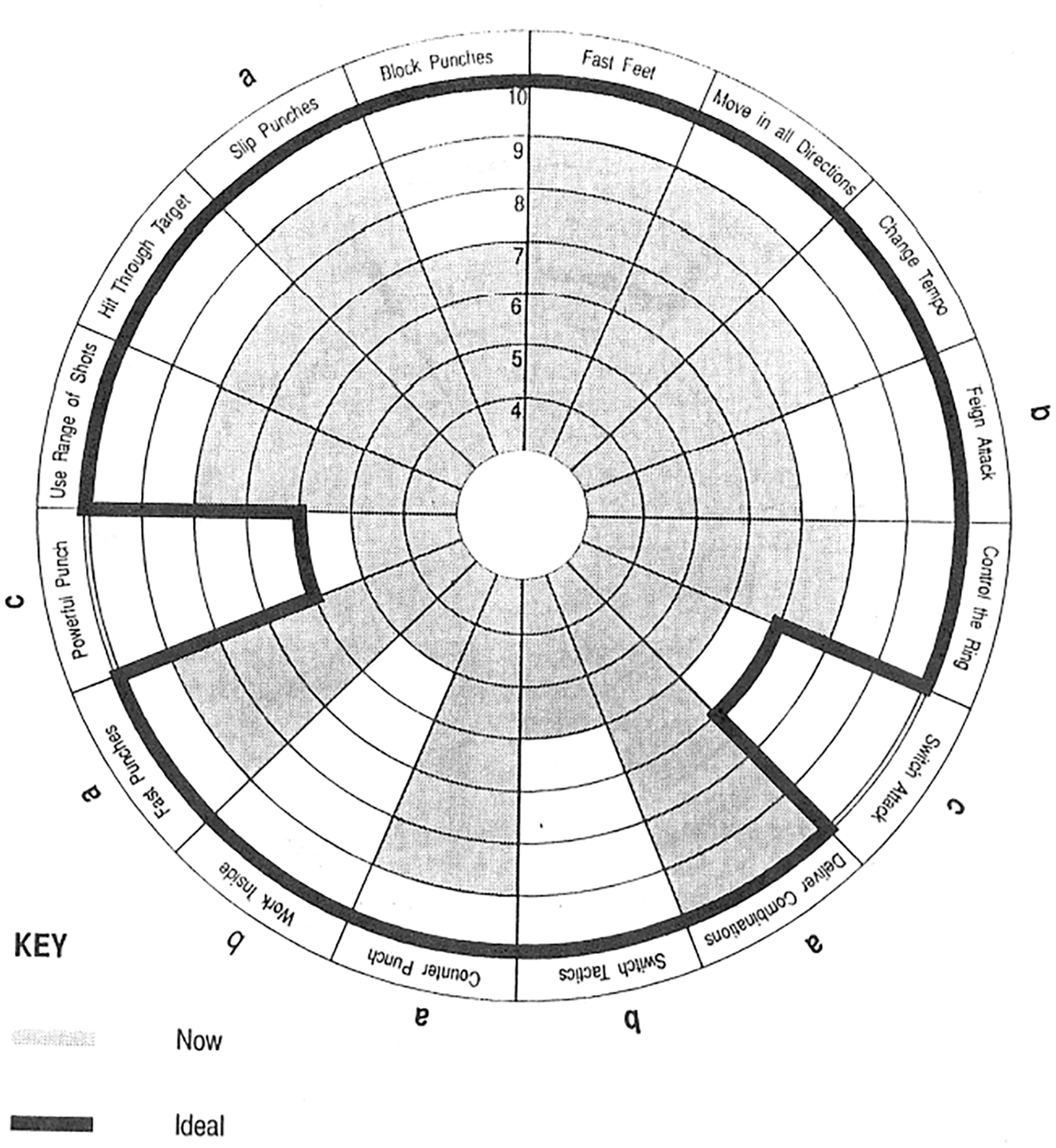
Technical performance profile of an amateur boxer. (a) Areas of perceived strength; (b) areas of desired change; and (c) areas resistant to change.
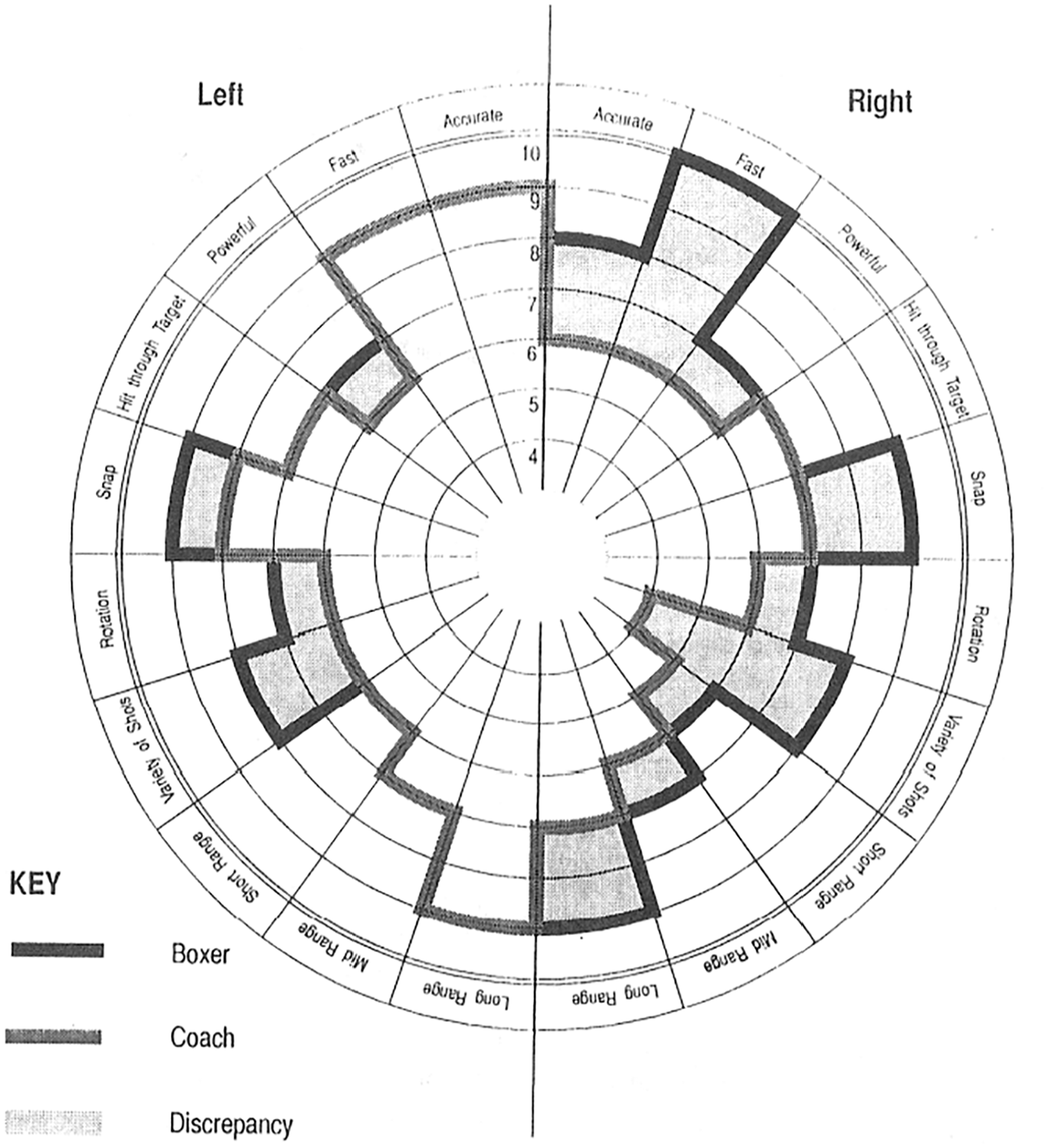
Analysis of a boxer’s punch performance profile. The area in gray shows the discrepancy between the boxers’ and the trainer’s perceptions of perceived strengths along the various constructs.
Theoretical foundations
PP draws upon PCT (Kelly, 1955), which proposes that individuals actively construct their own reality. PP also incorporates the principles of self-determination theory (SDT; Deci & Ryan, 1985), emphasizing the importance of basic psychological needs such as autonomy, relatedness, and competence. PP is thus a qualitative pragmatic approach that focuses on identifying and evaluating actions that either facilitate or hinder desired outcomes over time.
According to PCT, an individual’s cognitive processes are influenced by their anticipation of events (Kelly, 1955). In contrast with the determinism of drive reduction theories (e.g., Hull, 1943), PCT allows for personal predictions to be confirmed or revised. It proposes that people develop their own theories of the world based on their personal predictions (like their own perceived strengths and weaknesses, these are also personal constructs). Like other constructivist philosophers, Kelly (1955) argues that conclusions are not derived from objective facts, but from the individual’s subjective interpretation of those facts. Consequently, individuals are encouraged to shape their understanding of reality based on future possibilities rather than being bound by past experience. If they use their imagination and consider alternative interpretations, they can perceive even everyday occurrences in a different light (Kelly, 1955). Thus, personal constructs may encompass both ineffective and effective (imaginary) outcomes.
Athletes can use PP as a tool for identifying and selecting the strategies that are most suitable for a given task. The effectiveness of the strategies selected can only be ascertained, however, if they are implemented and subsequently evaluated. It is crucial to exercise caution when formulating predictions, as alternative perspectives or frameworks may offer more effective solutions, as highlighted by Kelly (1955). Butler and Hardy (1992) recommend that athletes and coaches use performance profiles to record their individual approaches and anticipated performance. By comparing their predictions with actual performance data over a period of time, they can meet the aim of achieving specific desired outcomes by adjusting elements of the strategies that were used.
Cognitive evaluation theory (CET) is a subset of SDT focusing on specific aspects of human motivation (Deci & Ryan, 2000; Evans, 2015; Ryan & Deci, 2020). CET seeks to explain how the environment influences intrinsic motivation (Deci & Ryan, 1985). It is based on the observation that contingent rewards can undermine intrinsic motivation in various contexts (Deci, 1971; Deci et al., 1999), and has been used to study the differences between motivation in controlled and autonomous environments (Ryan & Deci, 2020). PP offers tools that can promote autonomous motivation, whereby individuals learn by actively engaging with their own cognitive processes (Butler & Hardy, 1992). Unlike the controlled motivation typically observed in learning environments influenced by hierarchical power dynamics, in which students’ motivation is likely to be regulated through external rewards or approval by teachers (Jang et al., 2010; Olafsen et al., 2017; Reeve et al., 2008), autonomous motivation is fostered when students can define their own personal goals and monitor their own progress within a collective and supportive professional setting.
The original performance profile
Butler (1989) introduced PP in the domain of amateur boxing as a screening process for enhancing awareness of areas of perceived need for athletic improvement. Butler and Hardy (1992) subsequently developed the theory and practice of PP. It can be used, for example, to identify athletes’ perceived strengths and weaknesses, and the need for improvement; athletes’ perception of what constitutes high-level or top performance; and where athletes may resist improvement. It can be used to monitor progress over time and any discrepancies between how athletes and coaches perceive performance or what they consider to be important; and it can be used for the evaluation of performance. PP is implemented in three stages.
In Stage 1, athletes or groups of athletes are introduced to PP and provided with a comprehensive rationale for its implementation. They receive guidance on how to complete their profile and do exercises involving brainstorming (e.g., pointing out the important qualities of a top performer in their own sport) and self-reflection (e.g., comparing their own current levels of important skills with those of a top performer). It is emphasized that there are no right or wrong answers. The initial profiling should be a spontaneous and unrestricted process.
In Stage 2, athletes are encouraged to identify the qualities or attributes of their sport that they deem essential for attaining elite performance. Depending on their level of proficiency, they may carry out this task independently or in collaboration with a coach or teacher. The focus is on identifying strengths and weaknesses across technical, tactical, physical, and/or psychological facets of performance. The objective is to augment their awareness of qualities that may have been overlooked in previous training, but which could contribute to improved performance.
In Stage 3, athletes rate themselves for performance on each of the qualities they have identified, using a Likert-type scale from 1 (poor) to 10 (excellent). Typically, they complete performance profiles pertaining to their individual needs, as well as encompassing the physical, technical, attitudinal, and psychological dimensions of their sport. By assessing both past and present performance, athletes can pinpoint the attributes, or parameters, they associate with attaining the highest level of performance (see Figures 1 and 2 for the physical performance profile of a weightlifter and the technical performer profile of an amateur boxer, respectively). These parameters inform strategic planning, goal setting, and ultimately the focus of their daily training.
Butler and Hardy (1992) anticipated that athletes and coaches would hold divergent views on the parameters of high-level performance (see Figure 3). They therefore suggested using video-recordings and training diaries to support the identification and discussion of athletes’ strengths and weaknesses in screening sessions.
Adaptations of the original performance profile
Jones (1993) reports a single-case study in which the original performance profile reported by Butler and Hardy (1992) was adapted for use by a sports psychologist with an elite tennis player. The purpose of the adaptation was to provide the tennis player with a way of identifying her perceived strengths and weaknesses, which would help her optimize her training efforts. In line with the principles of PCT, she initially generated a list of qualities that she believed to be generally important for playing tennis (referred to as GI; see Table 1). Additional constructs suggested by other elite players were also included. Using a 10-point Likert-type scale she responded to two questions: “How important is each of these qualities to the ideal player?” (ideal self or IS) and “How good would you rate yourself at the present time on each of the qualities listed?” (current self or CS).
Performance profile of an elite female tennis player.
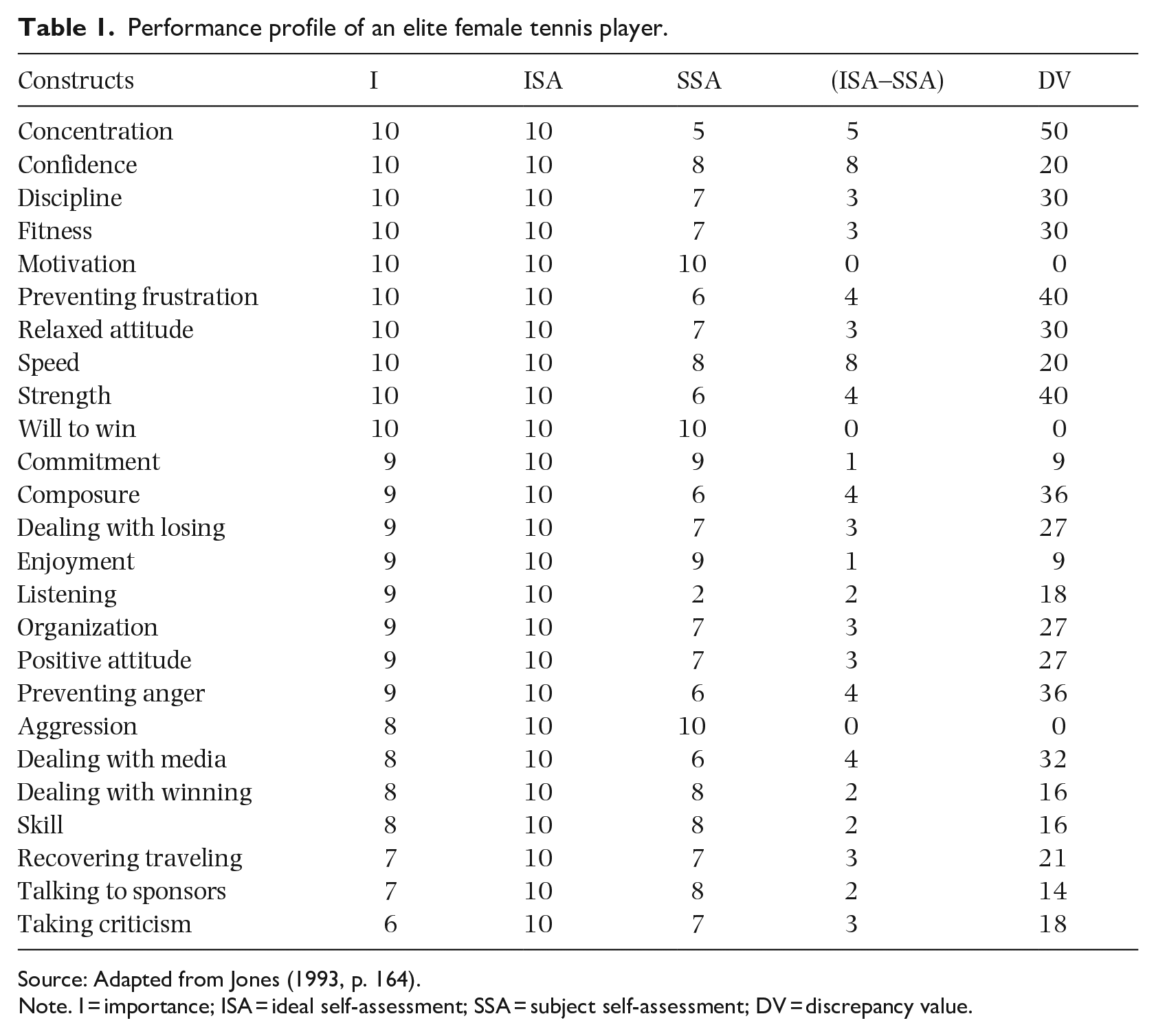
Source: Adapted from Jones (1993, p. 164).
Note. I = importance; ISA = ideal self-assessment; SSA = subject self-assessment; DV = discrepancy value.
A discrepancy value (DV) was calculated to determine the tennis player’s perceived strengths and weaknesses by subtracting the CS from the IS for each quality and multiplying the resulting values by the value assigned to GI (IS − CS × GI = DV). As shown in Table 1, personal constructs (or qualities) with the highest DVs indicated the areas requiring the most improvement. Finally, she identified the most important qualities with high DVs, which could be used to guide the setting of relevant goals for future training (Jones, 1993). This assessment process provided a basis for the tennis player and the sports psychologist to establish meaningful training objectives.
Nearly two decades later, Gucciardi and Gordon (2009) revisited the original formulation of PP in light of PCT, which suggests that constructs are dichotomous rather than categorical (Kelly, 1955). Gucciardi and Gordon therefore modified the original performance profile by employing bipolar items, such as concentration versus mind wandering, instead of unipolar ones (see Table 2). Stage 1, in their approach, was the same as reported by Butler and Hardy (1992). Three additional steps were introduced in Stage 2. First, the athlete is required to identify the qualities of an elite performer in their sport (emergent poles), each one with contrasting poles to form bipolar personal constructs. Second, they are asked to rank the personal constructs from the most to least important, as shown in Table 2. Third, they link the ranked constructs to demanding performance situations in which it could be useful to apply them, documenting specific examples and visualizing specific ways of applying each construct. These modifications provided a more detailed framework for athletes to evaluate their personal constructs and identify strategies for improvement.
Example of steps 1 and 2 in Gucciardi and Gordon’s revised performance profile.
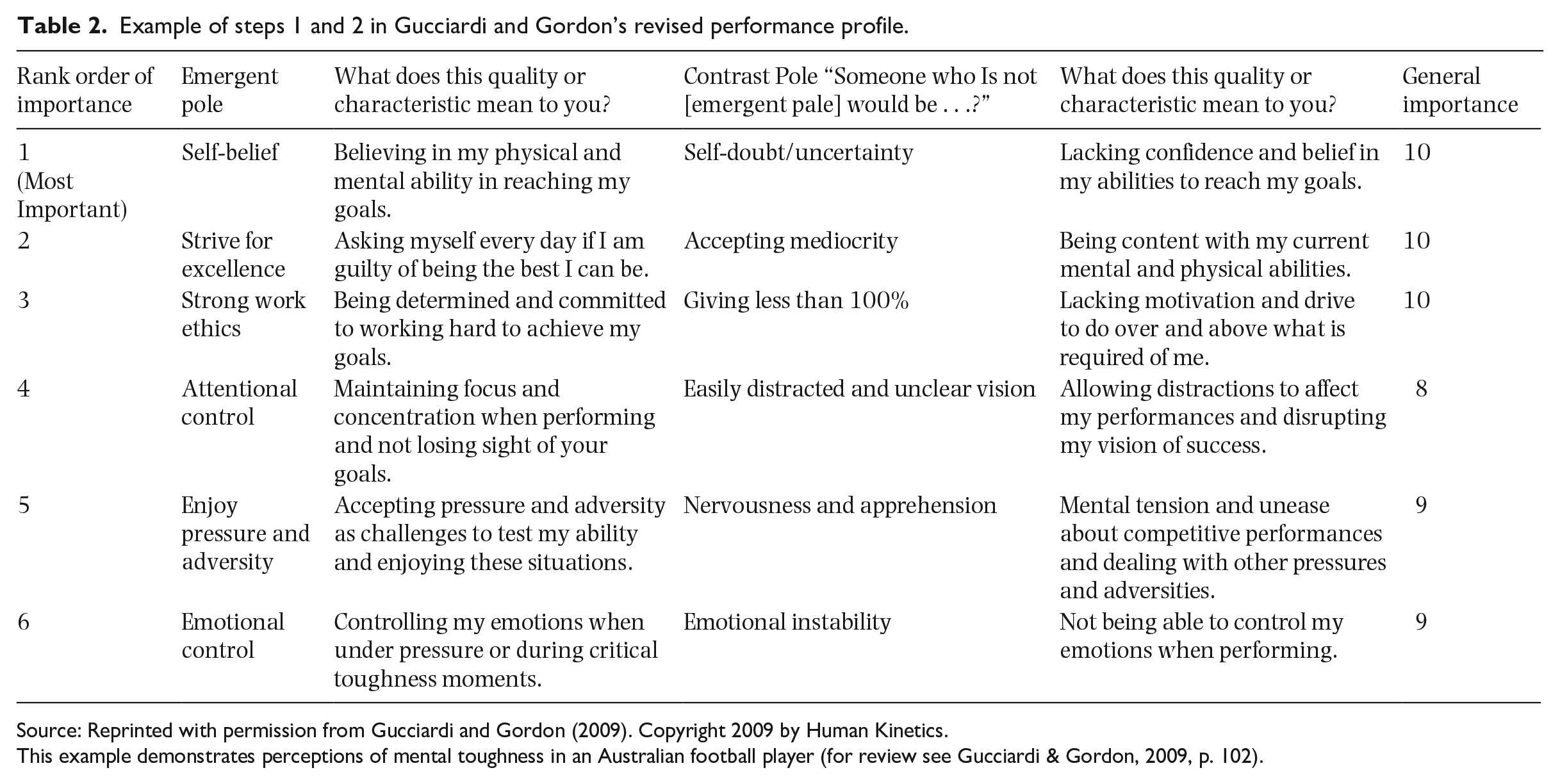
Source: Reprinted with permission from Gucciardi and Gordon (2009). Copyright 2009 by Human Kinetics.
This example demonstrates perceptions of mental toughness in an Australian football player (for review see Gucciardi & Gordon, 2009, p. 102).
In Stage 3, the athlete uses a self-assessment form to evaluate their own current skills on each construct, anchored by the contrasting poles they identified in Stage 2 (see Table 3). The coach also completes the same assessment form for the purposes of comparison and discussion. When the performance profile is used as part of a PST intervention, it is typically completed pre- and post-intervention (Gucciardi & Gordon, 2009).
Example of an athlete’s self-assessment of mental toughness including current self-assessment, ideal self-assessment, and the coach’s assessment of the athlete’s current self.
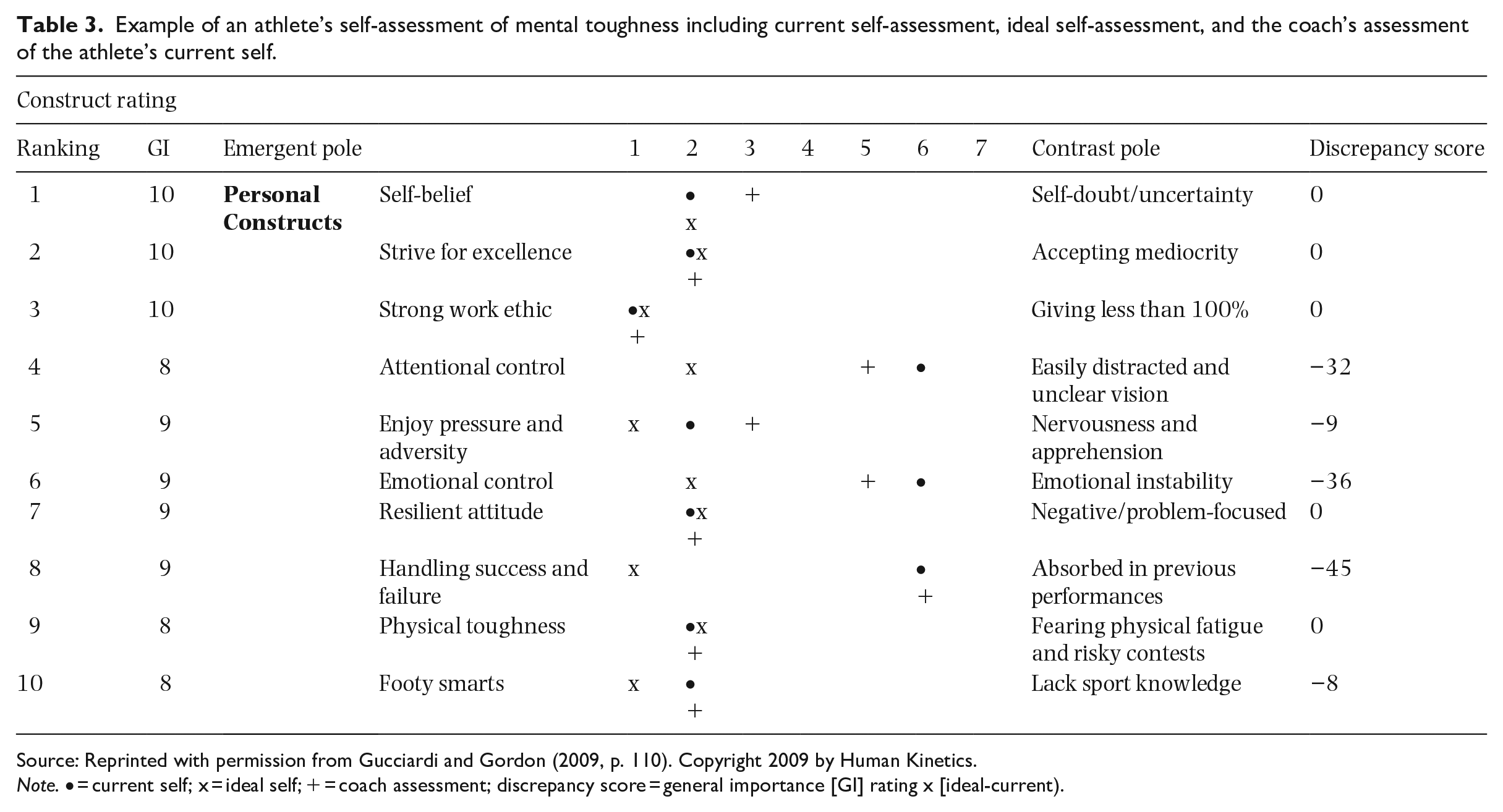
Source: Reprinted with permission from Gucciardi and Gordon (2009, p. 110). Copyright 2009 by Human Kinetics.
Note. • = current self; x = ideal self; + = coach assessment; discrepancy score = general importance [GI] rating x [ideal-current).
More recently, Castillo and Bird (2022) introduced strength-based PP, in six stages, building upon the original PP principles but emphasizing the development and application of already-established strengths within pre-performance routines and actual performance situations. Its aim is to encourage athletes to focus not on their shortcomings but on the positive psychological aspects of performance.
Research on PP
PP has been used to enhance self-awareness and self-regulation among elite athletes for over three decades, yet research on its effectiveness is relatively scarce. Those studies that have been undertaken consistently indicate that it enhances athletes’ self-awareness and goal-setting abilities (Butler & Sellars, 1996; Doyle & Parfitt, 1996; Hatfield & Lemyre, 2016; O’Brien et al., 2009; Weston, 2016; Weston et al., 2011a), and helps them identify their performance attributes and prioritize areas for improvement (Butler et al., 1993; Castillo & Chow, 2020; Jones, 1993; Weston et al., 2010, 2011a).
Specifically, Weston et al. (2011a) investigated athletes’ perceptions of PP and their impact on training, revealing increases in their self-awareness, self-monitoring, ability to evaluate performance, motivation, and sense of responsibility for personal development. Weston et al. (2011b) recruited athletes to an experimental group (prolonged use of PP) and two control groups, one active (sport science education) and one passive. The experimental group scored significantly higher than the active control group for intrinsic motivation, but there was no difference between the scores of the experimental and passive groups.
Drum (2017) compared the effectiveness of the original PP approach (Butler & Hardy, 1992) with the adaptations made by Jones (1993) and Gucciardi and Gordon (2009) and found that both had a greater impact on athletes’ self-awareness, motivation, and willingness to use PP in future. Castillo et al. (2022) also compared groups using the original and adapted PP protocols with a control group and found higher levels of self-awareness among both PP groups. The original PP group demonstrated the largest increase in intrinsic motivation from pre- to post-assessment, while the adapted PP group showed the largest increase in commitment.
Finally, Castillo and Chow (2020) recruited dancers to an experimental group applying Gucciardi and Gordon’s (2009) adaptation of PP and an active control group. The experimental group scored significantly higher for self-awareness, but the groups did not differ on measures of behavior change, such as willingness to work on identified strengths and weaknesses. Qualitative findings suggested that participants who used PP increased their motivation for comprehensive dance analysis, structured self-assessment, and self-awareness; also, to continue applying individual PP worksheets in their future dance practice.
Research on the use of PP in music is currently lacking. However, two studies incorporating PP as part of PST interventions for music students found that PP increased self-awareness and self-regulatory skills related to instrumental practice and performance (Hatfield, 2016; Hatfield & Lemyre, 2016). Further research is warranted to explore its applications and potential benefits for music students and their teachers.
Applications and advances: PP for musicians
Like athletic performance, music performance is influenced by a variety of physiological, technical, and psychological factors; unlike athletes, however, musicians must integrate their knowledge and understanding of the music into their performance. This should be taken into consideration when managing PP and adapting PP for musicians.
Managing PP in higher music education
PP is widely used as a screening tool in PST for identifying and defining elite athletes’ strengths and weaknesses (Weinberg & Gould, 2011). PST, which is typically offered by sport psychologists or performance consultants (e.g., Jones, 1993), is less accessible to music students. There is therefore a lack of practice and research in using this tool in music settings. As a tool, however, PP is simple and straightforward to use; it can therefore be delivered by providers such as music teachers (Andersen, 2000), so long as they are familiar with the particular PP protocol they are using and appropriate measures for assessment.
Adapting PP to music performance
The main advantage of Butler and Hardy’s (1992) original approach to PP is its use of a visual screening process that takes less time to complete than its successors. For this reason it may be regarded as an introduction to PP and preferred by music students and their teachers. The main advantages of Jones’s (1993) approach are that it is more rigorous, using a three-step scoring system to pinpoint specific qualities within a single framework, and thus enabling students and teachers to obtain an objective overview of the student’s individual strengths and weaknesses (see Supplemental Appendix).
Gucciardi and Gordon (2009) instructed athletes to identify bipolar personal constructs (see Table 2); this could be used in PP to enable musicians to distinguish between opposite states (i.e., emergent vs. contrasting poles) and optimize their performance accordingly. The musician would first identify all the characteristics of their desired performance (e.g., playing with relaxed wrists) and then conceptualize them in terms of opposites (e.g., relaxation vs. tension). This would raise their awareness of relaxation or tension in their wrists when playing, leading them to form the intention of playing with relaxed wrists and deliberately change their playing behavior so as to do so. In their strength-based PP approach, Castillo and Bird (2022) encourage athletes to focus on strengths rather than weaknesses, empowering them to maintain a positive attitude toward their performance, avoiding negative emotions such as pessimism (Castillo, 2022). When focusing on strengths rather than weaknesses, it is of course necessary to consider the temporal dimension. It is vital to address weaknesses during practice so that they can be remedied, but paying conscious attention to them in performance can have adverse outcomes. Nevertheless, it can be hard to ignore them when they occur (Levin et al., 2012). Juncos and de Paiva e Pona (2018) recommend, instead, adopting a receptive and accepting mindset while performing. Seeing weaknesses as opportunities to improve rather than weak personal traits can promote constructive process-driven practice activities.
In summary, the aim of PP is to identify and prioritize the characteristics of performance that are most relevant to the individual user, who should choose the PP approach most appropriate to their goals. Novices may prefer to use simpler approaches, such as those of Butler and Hardy (1992) and Jones (1993). If the goal is to explore the full spectrum of each personal construct, however, it would be better to follow the recommendations of Gucciardi and Gordon (2009). Although this approach is more complicated, it offers a more detailed analysis of performance characteristics. It would be worth carrying out research with musicians, comparing the effectiveness of the different approaches described here, to determine the extent to which PP is applicable to performers in the field of music as well as sport.
Concluding remarks and future directions
The use of PP has shown promising results in the fields of sports and, more recently, dance (Castillo & Chow, 2020; Weston, 2016; Weston et al., 2011a), so it is surprising that it is relatively underused in music. The present article describes a first step toward its successful adaptation to be used with and by music students, with the aim of enhancing their self-awareness and motivating them to identify, select, and act upon the elements of their practice and playing that are most likely to promote peak performance. PP is multifaceted, so it can be used in different ways: to evaluate personal strengths and weaknesses in specific categories of performance such as bowing technique and stage presence, for example, or across multiple categories. It involves a process of self-assessment that can pave the way for setting goals and thus facilitating SRL. The use of PP in small peer groups is likely to be particularly effective (Hatfield, 2016; Hatfield & Lemyre, 2016), and is therefore recommended. Because of its demonstrated benefits in the fields of sport and dance, and its flexibility, PP has great potential for musicians; protocols such as the model provided in the Supplemental Appendix should be developed, applied by music students and their teachers, and evaluated systematically.
Supplemental Material
sj-docx-1-msx-10.1177_10298649241252292 – Supplemental material for Performance profiling: A systematic approach to the enhancement of music practice and peak performance
Supplemental material, sj-docx-1-msx-10.1177_10298649241252292 for Performance profiling: A systematic approach to the enhancement of music practice and peak performance by Johannes Lunde Hatfield in Musicae Scientiae
Footnotes

References
Supplementary Material
Please find the following supplemental material available below.
For Open Access articles published under a Creative Commons License, all supplemental material carries the same license as the article it is associated with.
For non-Open Access articles published, all supplemental material carries a non-exclusive license, and permission requests for re-use of supplemental material or any part of supplemental material shall be sent directly to the copyright owner as specified in the copyright notice associated with the article.
