



Abstract
Today, most everyday music listening is an accompaniment to other activities; it is far less common that listening is someone’s primary activity, receiving most of their attention. In this article, we present a case study, Listen Up, run by Indigo Project, a mental health organization in Sydney, Australia, in which we explored relationships between participants’ responses to the experience and their demographics and styles of music engagement. A sample of 187 Australian residents (aged 20–64 years) who attended Listen Up completed a survey measuring music engagement; emotional responses to the experience; perceived outcomes of the session; pre- and post-measures of stress, mood, and anxiety; and free-text responses to questions concerning their experiences of listening mindfully and any thoughts or feelings that arose during the session. Participants experienced an increased mood and decreased levels of stress and arousal after taking part in Listen Up. Their focused-listening experiences were not simply characterized by enjoying the music; rather, the emotions evoked were varied and complex. We characterized their emotional responses as negative, positive, evocative and expressive, and sad; in addition, participants characterized their own experiences as a cathartic journey resolving into a positive, peaceful, and calm state. Reported outcomes of participating in Listen Up included experiences described as being emotionally challenging, therapeutic, and physically uncomfortable. An affective music engagement style was positively associated with evocative and expressive and sad emotional experiences, and therapeutic outcomes. As a focused-listening experience, Listen Up provides participants with the opportunity not only to attend to music but also to reflect on and process their personal thoughts and feelings. This research provides evidence for the emotional and mental health benefits of focused music listening, such that, focused listening reflects opportunities for strong experiences with music in today’s listening landscape.
With the listening technologies of the 21st century influencing the ways in which people interact with music (Nill & Geipel, 2010; North et al., 2004; Sloboda et al., 2009), people are able to control—to a greater degree than hitherto—what they hear in many, varied environments at any time (Krause et al., 2016; North et al., 2004). Because our access and ability to listen to music has never been more extensive, much of modern listening accompanies other activities in daily life (Krause, et al., 2014). For instance, many people listen to music while exercising, working, and commuting, among other activities (Greb et al., 2018; Krause & North, 2017; Krause et al., 2015; North et al., 2004). When used in the practice of mindfulness, however, music is often listened to in a very intentional, focused way, such that, other distractions are removed, and individuals are encouraged to maintain their complete focus on the music. Graham (2010) proposed that musical stimuli may serve as an ideal source of focus for mindfulness, and the literature suggests that music in mindfulness interventions can lead to a decrease in fatigue and an improvement in focus and mood (Lesiuk, 2016; Liu et al., 2021). Intentionally, listening to music has been shown to promote well-being in several ways, including the reduction of pain through physiological arousal, cognitive recovery, and mood (Dingle et al., 2021).
In therapeutic settings, a commonly used focused or intentional listening technique is known as guided imagery and music (GIM). GIM is a method of receptive music therapy that uses music in conjunction with relaxation techniques, visualization, and active imagination to treat a range of health concerns (Bonny, 2001; Grocke, 2010). During GIM, the client’s experiences are guided by a trained therapist whose role is to accompany the client therapeutically on the journey in the music (usually pre-selected, Western, and classical music) (Bonny, 2001). GIM has been shown to have positive effects on the well-being of clients (Jerling & Heyns, 2020), with improvements to anxiety, depression, work stress, mood disturbance, quality of life, and interpersonal problems, among other benefits (e.g., Beck et al., 2015; Burns, 2001; McKinney & Honig, 2017). While originally designed as an intervention for use with individuals, GIM has also been utilized in group settings with similar effectiveness (e.g., Rudstam et al., 2022, and their use of group music therapy for women with post-traumatic stress disorder [PTSD]). GIM has also been fostered in the practice of mindfulness as it allows individuals to experience the present moment and to take time to focus on a stimulus (Shum, 2020).
Music is used not only in the context of GIM but also in other ways, in mindfulness practices (e.g., Alqatari et al., 2022; Hernandez-Ruiz et al., 2021; Lesiuk, 2016; Liu et al., 2021; Sorensen et al., 2018). It has also been utilized to facilitate engagement in help-seeking (de l’Etoile, 2002), and to increase feelings of hope and ameliorate distress (McFerran et al., 2018), with music-based therapies shown to be particularly effective for those known to be ambivalent to or highly resistant to seeking health treatment (de l’Etoile, 2002).
Indeed, a growing body of research has evidenced the role of music and music listening in promoting health and well-being (Krause et al., 2018, 2021; McCrary et al., 2022; Raglio, 2021; Vidas et al., 2022), including both explicitly therapeutic and everyday engagement. Benefits arise, for example, through the association of listening with relaxation and enjoyment (e.g., Baylan et al., 2018; Diaz, 2013) and its use as a coping mechanism for dealing with stress (Adiasto et al., 2022; Krause et al., 2023; Vidas et al., 2021), pain (Howlin et al., 2022), and anxiety (Harney et al., 2023). Research has supported the use of everyday listening practices to cope with stress (e.g., Krause et al., 2023) manage one’s moods and emotions (Randall et al., 2014; Saarikallio et al., 2013), and help with self-awareness (e.g., Elvers et al., 2018; Schäfer et al., 2013), although the extent to which music listening is effective (e.g., on reducing stress) depends on the individual (Galanakis et al., 2009) and their listening style (e.g., Miranda & Claes, 2009). For instance, people with an affective listening style are more likely to use music to cope with everyday stressors (Krause et al., 2023). It is also possible that these benefits may be related to the nature and level of the listener’s attention; Shifriss et al. (2014) report that individuals who indicated that they use music for mood regulation also reported focusing, or directing more attention, to their emotions.
Listening to music also has the potential to create strong emotional responses, including those known as strong experiences with music (SEM—e.g., Gabrielsson, 2010; Gabrielsson & Wik, 2003). SEM refers to intense (or peak) listening experiences that often bring about feelings of transcendence and transformation, expressed through both positive and negative reactions (Gabrielsson et al., 2016). Gabrielsson and Wik (2003) outlined common reactions reported during SEM, which included intense and/or powerful, positive and negative feelings; mood and/or affect regulation; existential, transcendental, and religious aspects; self-confidence; community; and mixed, conflicting, and changed emotions. Gabrielsson (2011) also found that SEM has a wide range of personal and social consequences. For example, people reported that they experienced feeling free, refreshed, or as though they had experienced an inner purification (catharsis) that had had a healing effect (Gabrielsson, 2011). For some people, SEM provided the impetus for them to go on, relieving their mental pain, and offering them fresh hope and courage. Other people described feeling more open and unreserved, or reported that SEM had effected a change in their beliefs and view of the world (Gabrielsson, 2011). Similarly, Green (2016) found that participants attribute inspiration, influence, conversion, and continued motivation to epiphanies during, or as the result of, peak listening experiences.
This brief review indicates, then, that music listening is associated with benefits to health and well-being and, further, that focused listening, in particular, may affect emotional experiences. While recent research has begun to theorize contextual, everyday listening (e.g., Krause & North, 2017); little is known about focused listening in the contemporary, digital age. In this article, we present a case study, the Indigo Project’s Listen Up, to examine a modern, focused, listening experience.
The Indigo Project’s Listen Up
The Indigo Project is a mental health organization encompassing a psychology practice and a creative workshop academy hosting a range of workshops, courses, and events. Drawing on positive psychology, mindfulness, and neuroscience, it helps people deal with their overactive minds, reach their potential, and find greater meaning and value in their lives (https://www.theindigoproject.com.au/). The Indigo Project’s range of workshops, courses, and events, in which music often plays a central role, address core themes, such as self-awareness and empowerment, as well as stress and anxiety management. The Indigo Project describes Listen Up as an immersive music mindfulness experience, designed to enhance the way we listen to music (https://www.theindigoproject.com.au/workshop/listen-up/; see also Welsh, 2017). The experience is designed for participants to experience music without distractions; therefore, participants are encouraged to pay attention, on purpose, and to use music as an anchor to the present moment. The Indigo Project’s creative director, Rich Lucano, works with the founder, Mary Hoang, to curate the music for the experience. The music is selected to ground participants, calm them, and heighten their awareness of thoughts and emotions. During each Listen Up session, Mary guides attendees through a series of exercises designed to help participants listen mindfully to the soundtrack of the session.
Listen Up sessions traditionally take place in person, rather than online, in the Indigo Project’s studio, and last for approximately 50 min. The lights in the studio are dimmed and participants are invited to lie down on cushions and mats. Two versions of Listen Up are available. The guided-album experience uses a single album as the listening stimulus. The sound-journey experience involves listening to stimuli curated by Rich, drawing on soundtrack, ambient, and experimental music. 1 In both versions, the stimuli are listened to in full, with subtle guidance designed “to aid participants in maintaining an awareness of thoughts, emotions and body sensations” (M. Hoang, personal communication, October 13, 2019). At the conclusion of the session, light gradually returns to the room, and the participants are invited to sit up and chat with each other, sharing their experiences, before leaving the session.
As a case study, Listen Up has the potential to further our theoretical understanding of the differences between focused listening, the type of listening promoted by Listen Up, and background listening, typical of modern everyday life in which people tend to listen when they are alone and doing something else at the same time. The study aimed to consider participants’ experiences of Listen Up and was guided by the following research questions:
Method
Participants
Individuals who attended a Listen Up session were invited to complete an anonymous short post-session survey. Anyone who attended more than one session may have received multiple invitations to participate (these were not tracked), so that, it is not possible to calculate an accurate response rate. Participation was voluntary and the Human Ethics Research Committee at The University of Melbourne approved this study (ID: 1750816).
A convenience sample was recruited. A total of 213 individuals participated in the project but because of incomplete or missing data, the final sample consisted of 187 people aged 20–64 years (M = 34.22, Mdn = 33, SD = 9.10), of whom 138 identified as female (73.8%), 48 as male (25.7%), and one who did not report their gender (0.5%). The majority (67.4%) had low levels of music experience and training, as rated independently (see below), while 27.3% and 5.3% of participants had moderate and high levels, respectively. Only 14 participants (7.5%) described themselves as active musicians. On average, the sample listened to 3 hr of music per day (SD = 2.96, range = 0–24 hr). The majority (63.2%) completed the survey with reference to their first experience of participating in a Listen Up session.
Procedure and materials
Information about the study was sent by email to individuals who had taken part in a Listen Up session. The email included a web-link to the participant information sheet. When participants had provided their consent, they were asked to complete a post-session survey in the form of a series of web pages hosted on the Qualtrics platform. The survey consisted of items and measures designed to obtain participants’ details and characterize their experiences of taking part in Listen Up.
First, participants were asked to report their age and gender. To assess their musical background and experience, they were asked how important they felt music was, using a 7-point Likert-type scale from 1 (Not at all) to 7 (Extremely). They stated whether they considered themselves to be an active musician (yes/no) and provided an open-text response to Krause et al.’s (2015) prompt on their music experience and training. As per Krause et al. (2015; see also North & Hargreaves, 1995), three raters assessed each participant’s level of music training and education as low, medium, or high.
Participants also used a 7-point Likert-type scale from 1 (Strongly disagree) to 7 (Strongly agree) to respond to 23 items from the music engagement test (MET; Greenberg & Rentfrow, 2015) (e.g., “Music makes me want to dance” and “I am able to vent my frustrations through music”). These items examined participants’ cognitive, affective, physical, narrative, and social processes when listening to music. Scores for each of the five MET subscales were computed for each participant.
To characterize their experiences of Listen Up, participants reported whether it was the first time they had heard the music stimuli (yes/no), and the number of Listen Up sessions they had attended in total including the present session. Participants used a 7-point Likert-type scale from 1 (Very low) to 7 (Very high) to respond to simple statements concerning their stress, mood, and anxiety pre- and post-sessions (e.g., “your stress level at the beginning of Listen Up today” and “your stress level at the conclusion of Listen Up today”).
Participants used a 7-point Likert-type scale from 1 (Strongly disagree) to 7 (Strongly agree) to indicate their emotional responses to the Listen Up session. The 17 items included nine from Tröndle et al.’s (2014) scale, amended to address the music (e.g., [it] “pleased me” and “made me think”) and eight from Krause et al.’s (2018) scale, as used in the work of Kiernan et al. (2022) (e.g., [it] “made me calm” and “made me tense”).
The first author developed 16 items to probe the perceived outcomes of Listen Up sessions, in consultation with the Indigo Project, and piloted them prior to the full-scale data collection. Each item began “As a result of participating in Listen Up . . .” and continued, for example, “I found myself crying” and “I gained perspective.” Participants responded to each item using a 7-point Likert-type scale from 1 (Strongly disagree) to 7 (Strongly agree).
Finally, participants were asked to comment, in their own words, on their experiences of “mindfully paying attention to sound during Listen Up” and the “thoughts, reflections, contemplations, and/or feelings [you] experienced during Listen Up.”
Data analysis
We used factor analyses to examine participants’ (1) emotional responses to the session (RQ1) and (2) perceived outcomes of the session (RQ2). We used principal components analysis with promax rotation because our primary purpose was to identify and compute composite scores for the underlying factors. We computed scores for subsequent analyses by averaging the items that loaded onto each resulting factor.
We conducted multiple regression analyses to further examine participants’ emotional responses to Listen Up (RQ1; α = .013) and their perceived outcomes of attending Listen Up (α = .017; RQ2). In these regressions, each of the factor scores derived by the principal components analyses served as the dependent variable, and we entered gender, age, session attendance, and each of the five MET subscale scores (social, physical, cognitive, narrative, and affective) as the independent variables. We used three paired-samples t-tests (α = .017) to calculate mean differences between pre- and post-stress, mood, and anxiety scores (RQ3).
We used a reflexive and recursive approach to thematic analysis to analyze the participants’ free-text responses. Specifically, we followed Braun and Clarke’s (2013, 2019) six-step procedure. We began by familiarizing ourselves with the data. We identified semantically similar responses across the data set to generate codes rather than deriving them from a theory. We then reviewed and clustered the codes to develop themes, considering semantic similarities and implicit concepts as appropriate. We refined and finalized the themes and sub-themes to best represent the data relative to the research questions. The first author led the analysis, and the second author helped to review and refine the themes and sub-themes, taking the role of a critical friend (Sparkes & Smith, 2014). We acknowledge that we knowingly brought our experiences and knowledge into the analysis process (Braun & Clarke, 2013; Hemming et al., 2021). Both authors had observed Listen Up sessions, and the first author also drew on her experience researching everyday music experiences and well-being.
Results and discussion
Emotional responses to the session
A four-factor solution explained 60.75% of the variance in participants’ emotional responses to the session (see Table 1). One of the 17 items (“the music pleased me”) was eliminated because it failed to meet the minimum criterion of having a primary factor loading of .4 or above. Participants’ emotional responses to the music (RQ1) can be characterized by four dimensions: negative (e.g., “made me tense,” “made me frustrated,” “made me angry”), positive (e.g., “made me laugh,” “made me joyful,” “made me happy”), evocative and expressive (e.g., “made me feel a sense of awe,” “made me surprised”), and sadness (e.g., “moved me to tears,” “made me sad”). The structure of the factors indicates that participants’ emotional experiences were both positively and negatively valanced. Moreover, the correlations between the dimensions (Table 1) indicate that participants’ emotional experiences may have been characterized by more than one of these dimensions.
Loadings for principal components analysis with promax rotation of the emotional response items.
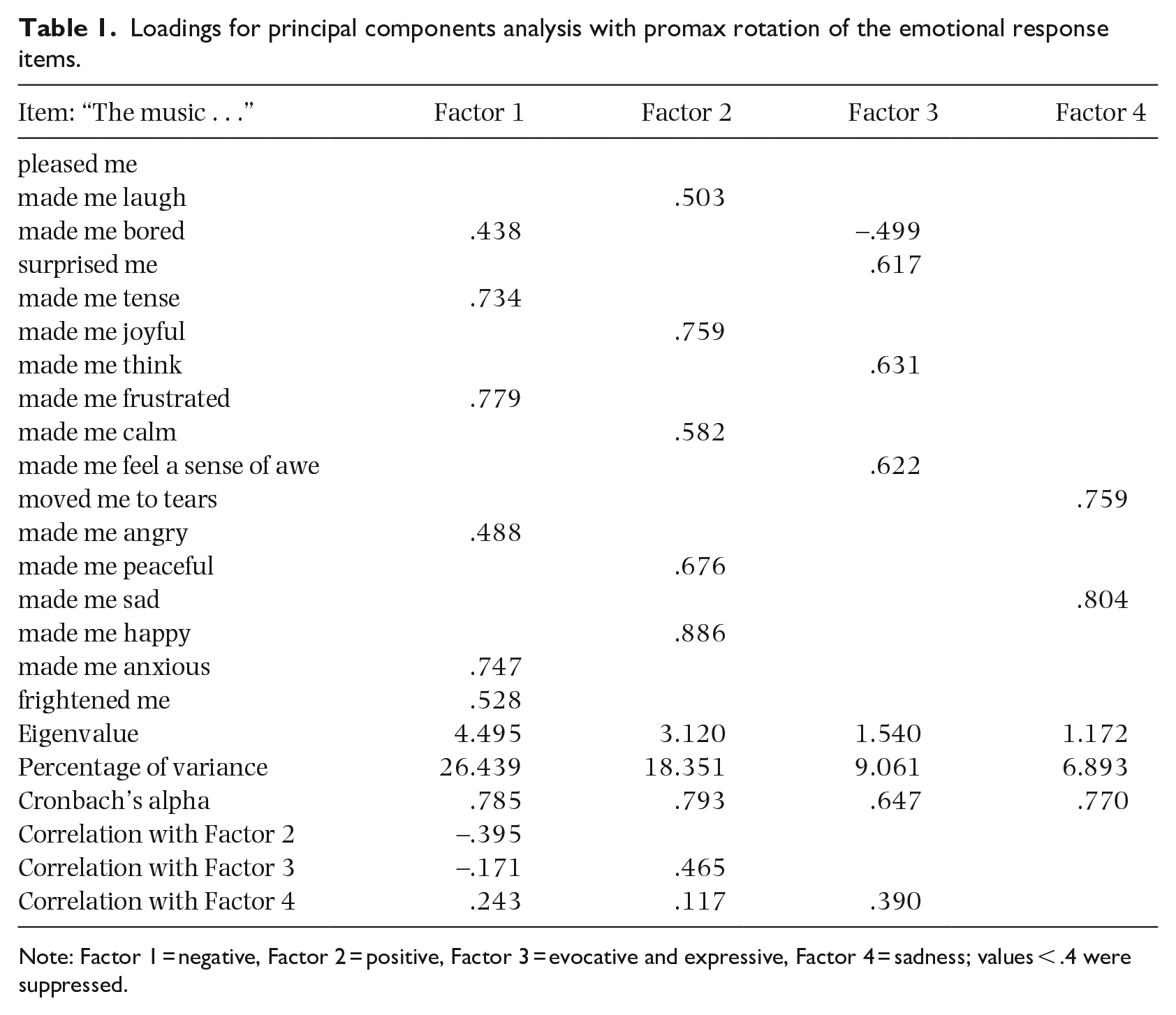
Note: Factor 1 = negative, Factor 2 = positive, Factor 3 = evocative and expressive, Factor 4 = sadness; values < .4 were suppressed.
The multiple regression analyses concerning the negative and positive factors were statistically non-significant, F (8, 161) = 1.053, p = .399, R2 = .050 and F (8, 162) = 1.839, p = .073, R2 = .083, respectively. Experiencing positive and negative emotions was not determined by age or gender, or style of music engagement, but an emotional experience commonly felt by all who participated in a Listen Up session. As shown in Table 2, the models concerning the evocative and expressive factor, and the sadness factor were statistically significant, F (8, 160) = 6.358, p < .001, R2 = .241, and F (8, 162) = 3.009, p = .004, R2 = .129, respectively. Participants with an affective style of music engagement were more likely to experience emotional responses characterized as evocative and expressive, and sadness. In addition, a cognitive style of engagement was positively associated with evocative and expressive emotional experiences. Furthermore, those who had attended more than one Listen Up session were more likely to experience sadness.
Multiple regression analyses predicting the evocative and expressive, and sadness factor scores.
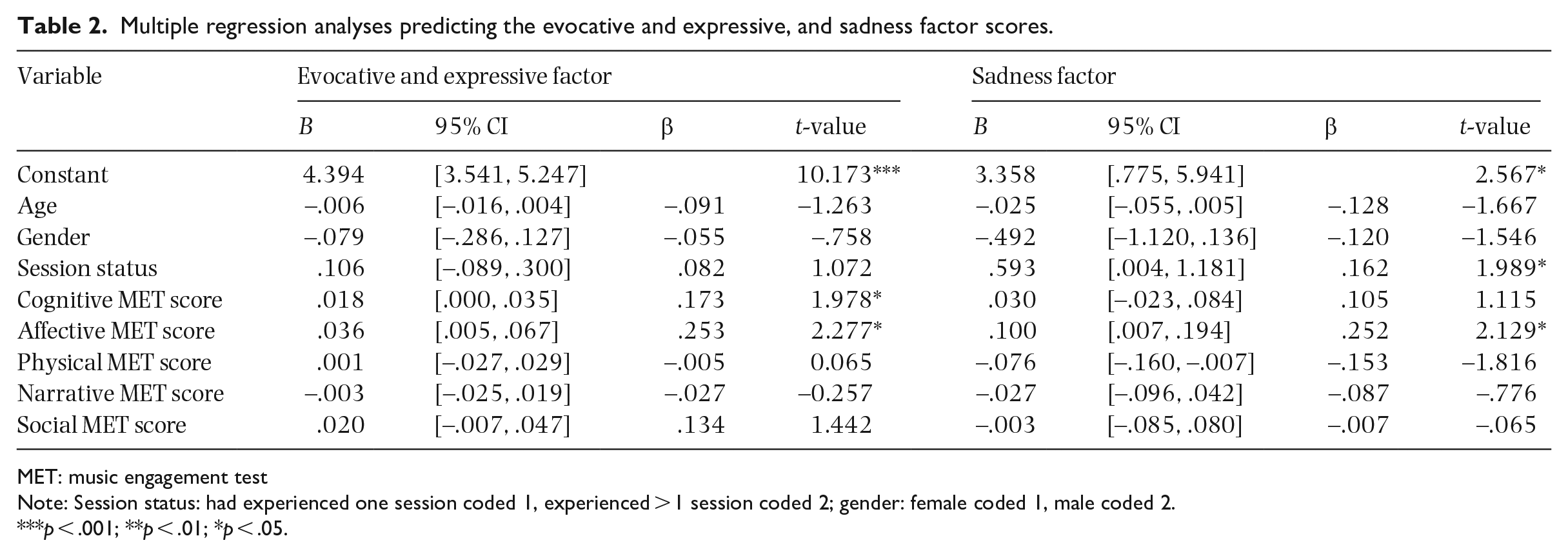
MET: music engagement test
Note: Session status: had experienced one session coded 1, experienced > 1 session coded 2; gender: female coded 1, male coded 2.
p < .001; **p < .01; *p < .05.
Perceived session outcomes
The principal components analysis with promax rotation used to examine the factors underlying participants’ perceived session outcomes (RQ2) resulted in a three-factor solution explaining 61% of the variance (see Table 3). Three of the 16 items were eliminated because they failed to meet the minimum criterion of having a primary factor loading of .5 or above and only loaded on one factor (i.e., “I was aware of my feelings,” “I gained perspective,” and “I had space to process/explore thoughts/emotions”).
Promax-rotated solution for the principal components analysis of the perceived outcomes.
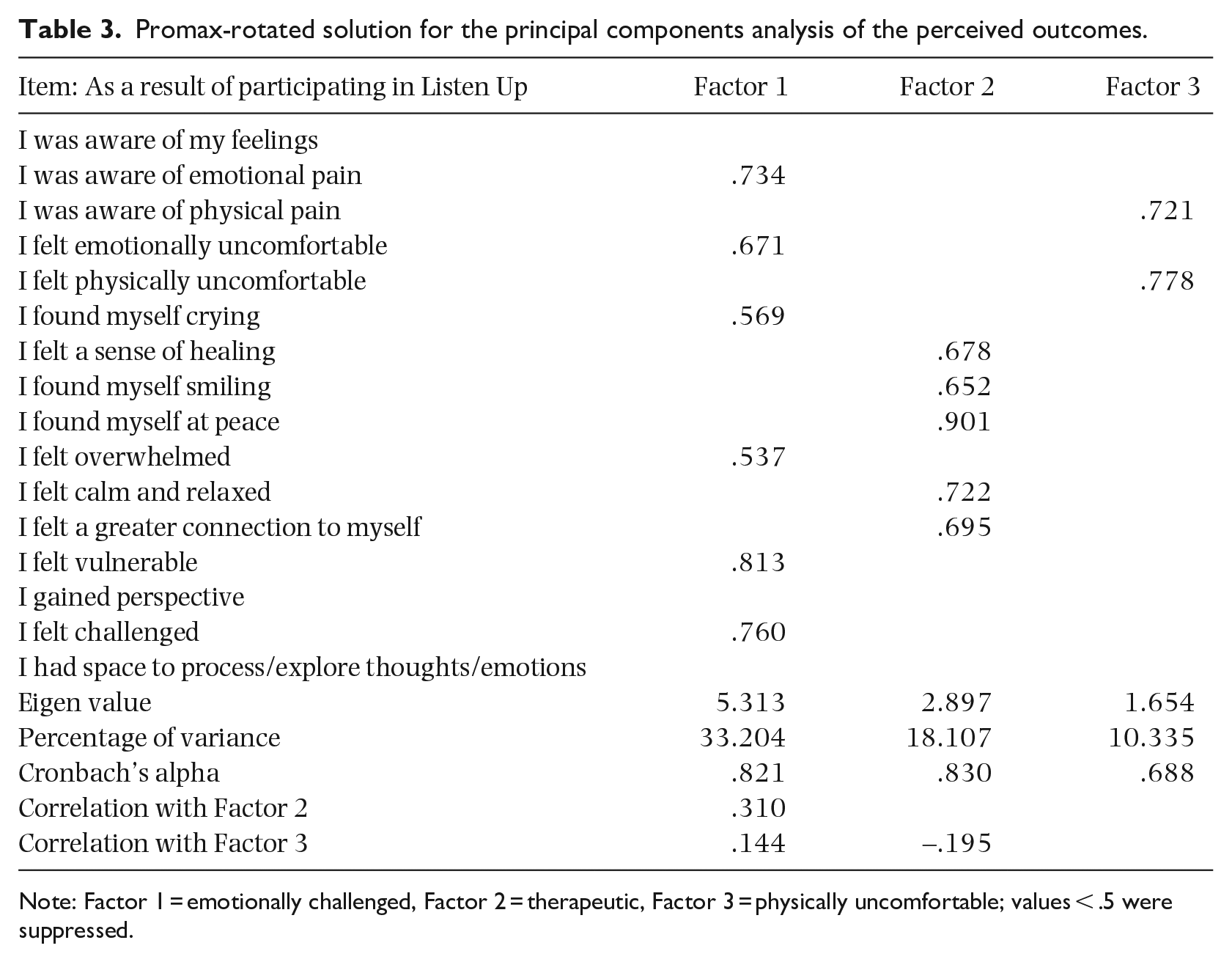
Note: Factor 1 = emotionally challenged, Factor 2 = therapeutic, Factor 3 = physically uncomfortable; values < .5 were suppressed.
As shown in Table 3, the perceived outcomes of participating in a Listen Up session can be characterized by three dimensions: emotionally challenged (e.g., “I felt emotionally uncomfortable,” “I found myself crying”), therapeutic (e.g., “I felt a sense of healing,” “I found myself at peace”), and physically uncomfortable (e.g., “I was aware of physical pain,” “I felt physically uncomfortable”). As with the emotional responses, these factors indicate both positively and negatively valenced outcomes for participants. Again, the outcomes they perceived were varied and complex.
The multiple regression analyses concerning the emotionally challenged and therapeutic factors were statistically significant, F (8, 160) = 5.328, p < .001, R2 = .210 and F (8, 163) = 3.726, p < .001, R2 = .155, respectively. See Table 4 for all relevant regression output values. The overall model concerning the physical discomfort factor was statistically non-significant, F (8, 163) = 1.868, p = .068, R2 = .084.
Multiple regression analysis predicting the emotionally challenged and therapeutic factor scores.
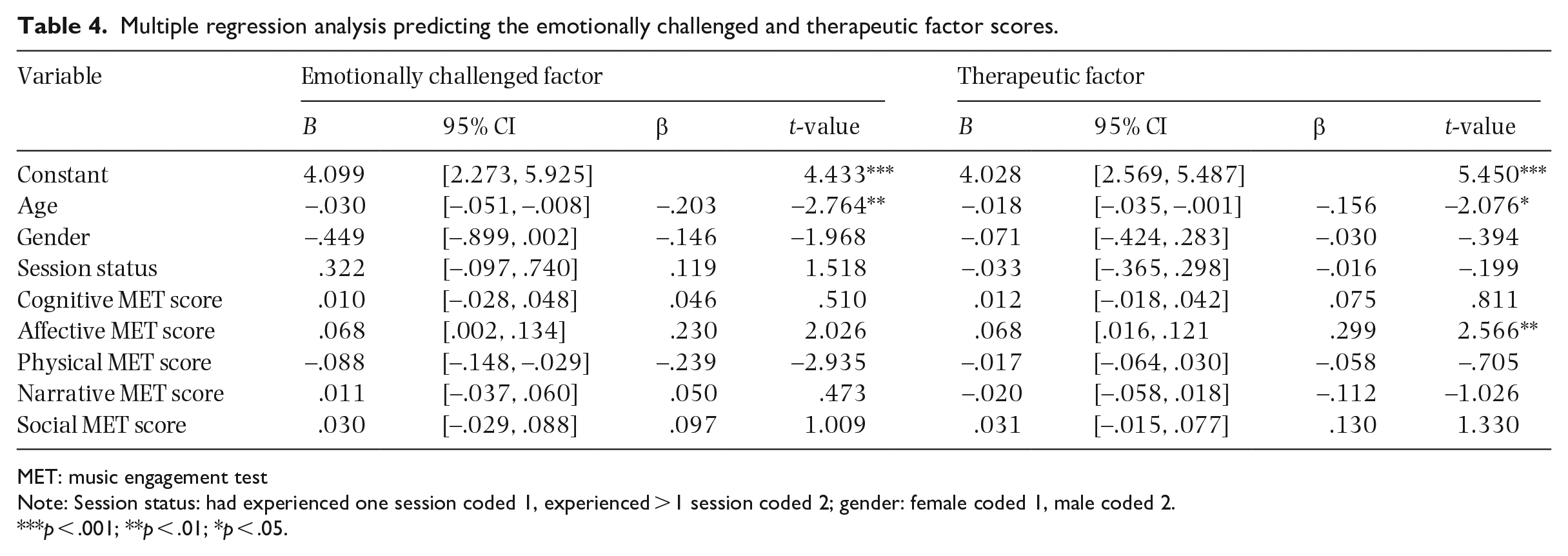
MET: music engagement test
Note: Session status: had experienced one session coded 1, experienced > 1 session coded 2; gender: female coded 1, male coded 2.
p < .001; **p < .01; *p < .05.
The results show that younger people were significantly more likely to have found their experiences both emotionally challenging and therapeutic, perhaps because it was unusual for them to focus on listening to music as opposed to hearing it as an accompaniment to another activity. It is not surprising that an affective style of music engagement was positively associated with the therapeutic as well as the emotionally challenged factor, probably because common therapeutic goals loaded onto this factor (i.e., healing, gaining peace and perspective, having a greater connection to oneself).
Self-reported outcomes for mental health
As indicated in Table 5, the pattern of results from the paired-samples t-tests was such that, at the end of the session, people reported being less stressed, less anxious, and in a better mood (RQ3). It appears that participation in Listen Up sessions may improve individuals’ mental health as well as affecting their emotions and reflections.
Means and standard deviations of pre–post mood, stress, and anxiety scores.
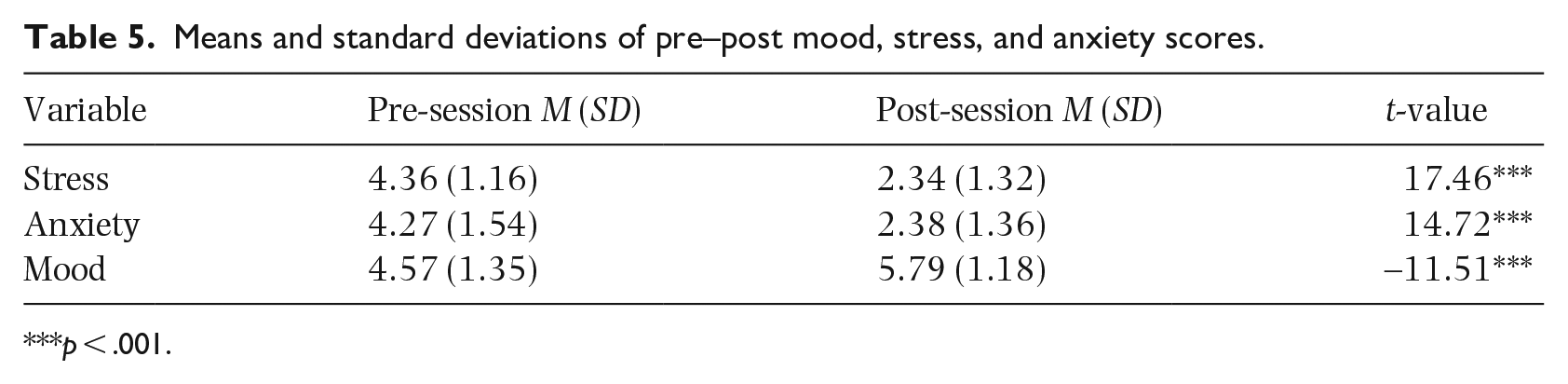
p < .001.
Characterizing participants’ experiences via their free-text responses
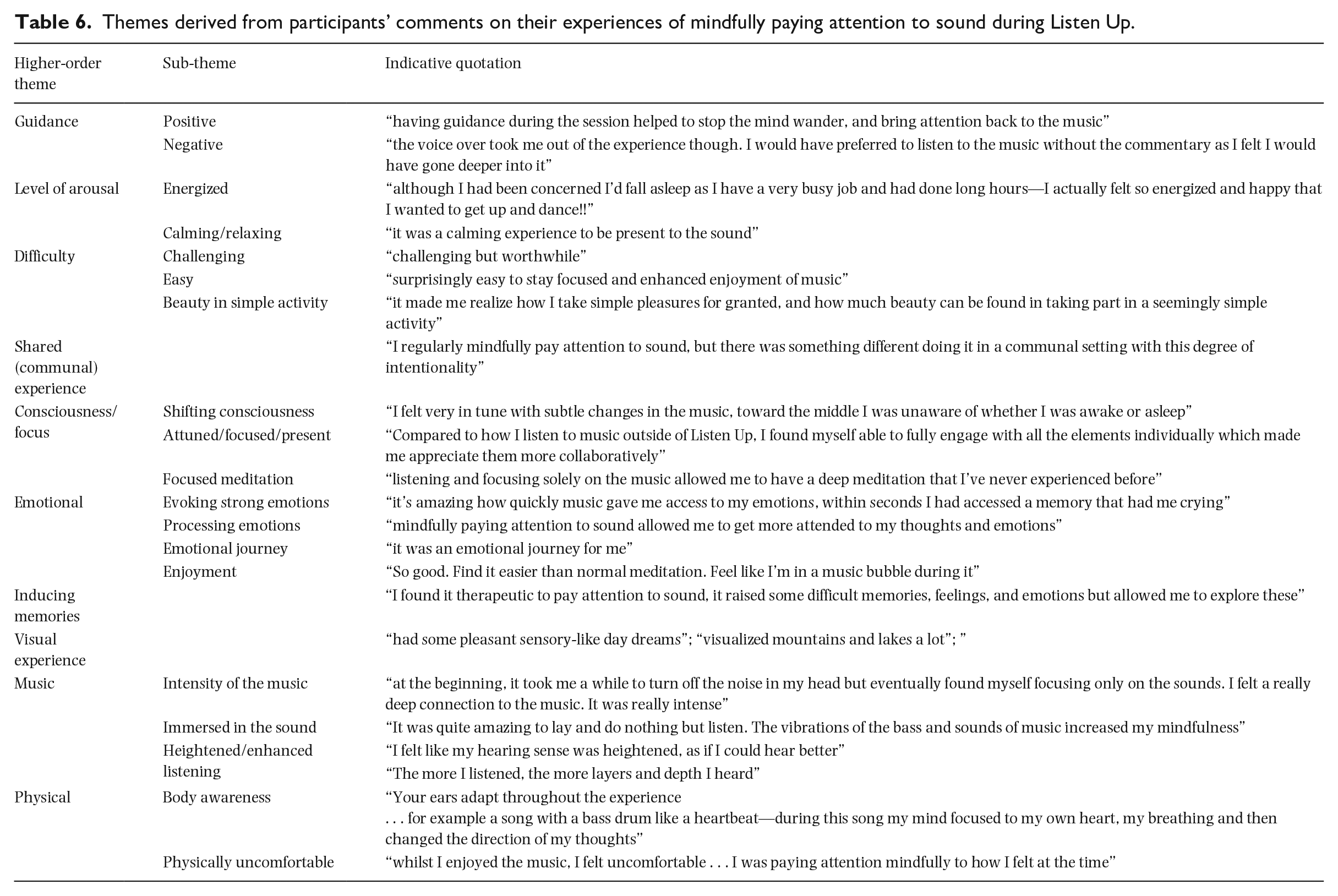
Ten higher-order themes were derived from a first thematic analysis of participants’ comments on their experiences of mindfully paying attention to sound during the Listen Up session. The themes pertinent to the results of the quantitative analyses reported above are shown in Table 6 together with relevant sub-themes and indicative quotations (please see Table 1 in the Supplemental Materials for further themes and quotations). One such theme concerned participants’ efforts to pay attention mindfully to sound; some participants reported finding it difficult, and others were pleasantly surprised to find it easy. While some participants distinguished between the two types of sound to which they were exposed in the session (i.e., the facilitator’s guidance and the music), the majority of responses referred to one or more outcomes of listening mindfully, such as evoked emotions and memories; levels of arousal and consciousness; and physical responses, including visual experiences and physical sensations. In some responses, participants compared the focused way in which they listened during the Listen Up session with their usual way of listening. They attributed the differences between them to the intentionality of the Listen Up activity, the involvement of other people, and/or the music itself, which deepened their meditative experience. Overall, it would seem that focused listening requires much more than being exposed to aural stimuli; it is the act of listening intentionally that affords individuals the opportunity to reflect meaningfully on memories, and experience induced emotions and changes to their physical and cognitive arousal. We would suggest that our participants reported SEM, as defined by Gabrielsson (2011), and that, accordingly, participating in Listen Up could bring about feelings of transcendence and transformation.
Themes derived from participants’ comments on their experiences of mindfully paying attention to sound during Listen Up.
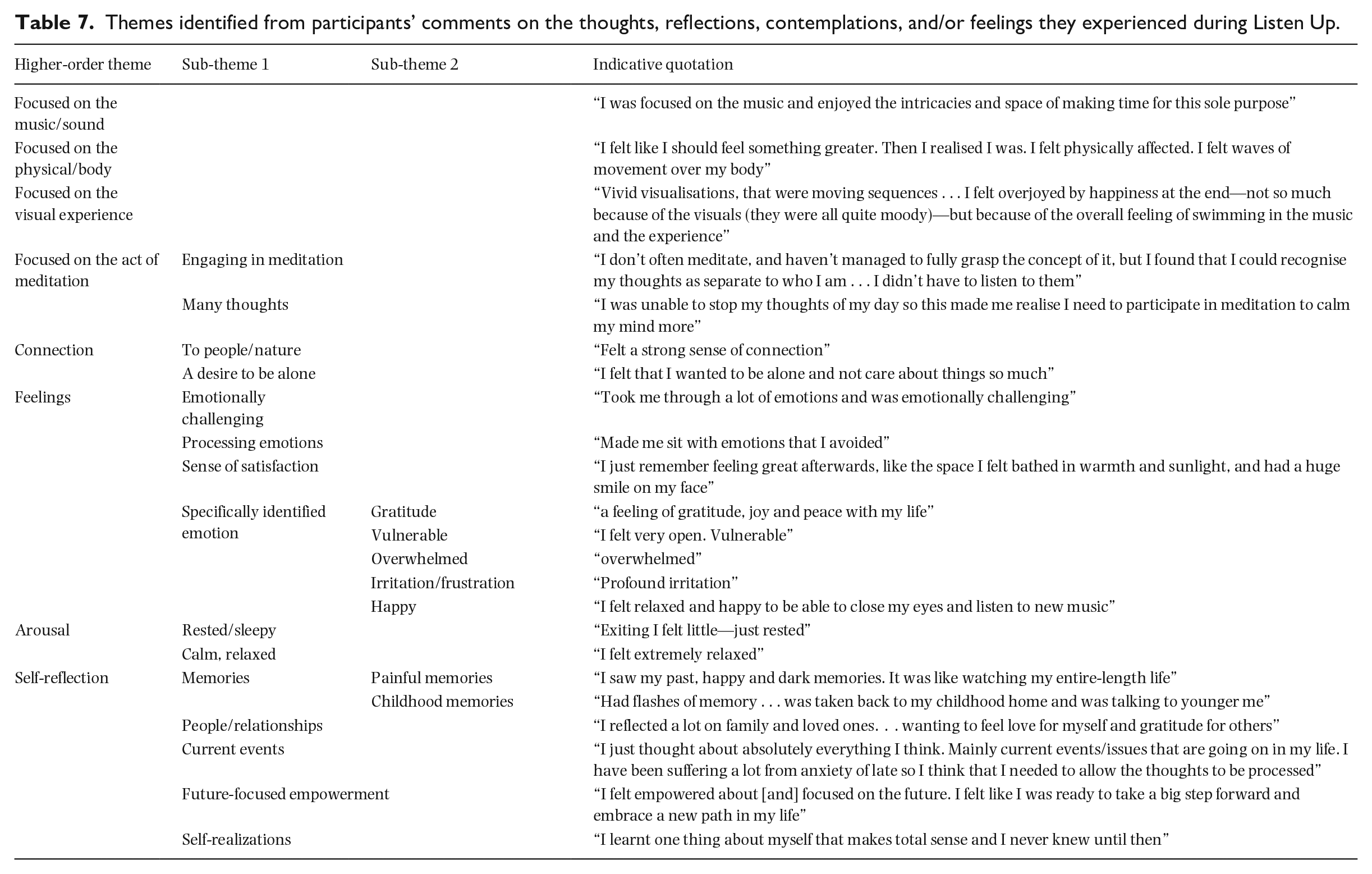
These suggestions are supported by the findings of our second thematic analysis. Eight higher-order themes were derived from participants’ comments on the thoughts, reflections, contemplations, and/or feelings [they] experienced during Listen Up. The themes pertinent to the results of the quantitative analyses reported above are shown in Table 7 together with relevant sub-themes and indicative quotations (please see Table 2 in the Supplemental Materials for further themes and quotations). Although the premise of Listen Up may seem quite simple (“mindfully paying attention to sound”), participating in a focused-listening activity seemed to have quite complex consequences. Thus, while one higher-order theme did pertain to focused listening, it did not account for the majority of participants’ responses; other higher-order themes pertained to focus on other elements (the body, visual experience, and meditation), connection, feelings, arousal, and self-reflection. It is clear from the sub-themes that participants felt they had used the Listen Up session to process often intense and challenging feelings as well as memories and relationships, and to consider future goals.
Themes identified from participants’ comments on the thoughts, reflections, contemplations, and/or feelings they experienced during Listen Up.
Our analysis of the free-text responses to both open questions characterizes our participants’ experiences as dynamic and complex in nature, and suggests that focused listening to music involves more than simply enjoying it. Complementing the results of our quantitative analyses, the findings of our qualitative analyses reveal the juxtaposition of positive and negative emotions, and positive and negative memories and self-reflections. Even when the Listen Up activity elicited feelings of vulnerability, challenge, and/or other negative emotions, participants typically judged their experiences as positive and/or having a resolution. Participants did not just report reductions in stress and anxiety, and improvements in mood. They also engaged in reflection and introspection, often leading to catharsis, as evidenced by the following free-text responses:
I had a HUGE cry in the middle (thank you). I have a lot of painful things going on in my life. It allowed me to be with the pain I’m feeling, including the anger at the things that have been happening . . . So nice to release it. Peace, rest, pain, sadness, loss, hope, wonder, reflection, calm. Mainly calm, at the end, feeling more grounded to myself and the present and less overwhelmed by neurotic thoughts of recent, painful experiences. More at peace with myself and positive/hopeful about the present moment.
General discussion
In the present research, we used Listen Up as a case study to consider the experience of focused music listening against the backdrop of modern, everyday life where most listening accompanies other activities. Our guiding research questions asked, in particular, about emotional responses to the Listen Up activity and its perceived outcomes for participants, including its potential benefits for their mental health. First, it is not surprising that participants experienced enjoyment, stress reduction, and relaxation, because these are commonly reported outcomes of music and mindfulness interventions (e.g., Baylan et al., 2018; Diaz, 2013).
Yet both the results of our quantitative analyses and the findings of our qualitative analyses indicate that focused listening involves more than simply engaging with and enjoying music. Participants’ emotional responses were complex, as revealed by the four underlying factors consisting of combinations of emotions that we characterized as negative, positive, evocative and expressive, and sadness. We interpreted their free-text responses as indicating that they commonly experienced catharsis. As Cox (2016) argues, in contexts where we remain silent while listening, we amplify the element of receptivity: we agree to adopt the role of a quiet, attentive listener, and this act of giving up a measure of power offers a particular kind of affective reward. (p. 196)
Participants in Listen Up took part in an activity that involved listening to music not as they typically did in everyday life, as an accompaniment to other activities, but intentionally, focusing on the music itself, with the help of the facilitator’s guidance. This produced strong emotional responses reported by participants in a way described by Cox (2016) as “affective [i.e.,] including emotions, moods, desires, and urges, as well as the feelings of exertions, balance, alertness, warmth, and other sensory experiences” (p. 177).
Moreover, people with a more strongly affective style of music engagement were more likely to report evocative and expressive and sad emotional experiences. This aligns with previous findings that emotion regulation is the primary reason for listening to music (Schäfer et al., 2013) and that an affective style is positively associated with listening to music to cope with everyday stressors (Krause et al., 2023). The affective style of music engagement is also characterized by “emotional processes involved with cathartic and expressive engagement” (Greenberg & Rentfrow, 2015, n.p.), which may be why people with this style of music engagement reported better therapeutic outcomes in the present study.
Participants also reported engaging in meaningful reflection and introspection leading to catharsis, as well as reduced stress and anxiety and improved mood. They reported physical discomfort and tears; psychological outcomes, such as the experience of intense and complex feelings and memories; and reflecting on their selves, their relationships, and the past and future. We suggest that Listen Up is a vehicle for peak listening or SEM, given that our participants’ responses reflect the wide range of personal and social consequences of music described by (Gabrielsson, 2011), including intense feelings, emotions that are conflicting and both positively and negatively valenced, self-confidence, relationships, and community. Our participants’ free-text responses, in particular, echo the feelings of transformation and transcendence often reported in SEM research (Gabrielsson et al., 2016), and Green’s (2016) finding that peak listening experiences can lead to epiphanies. The focused-listening experience offered by Listen Up, unlike typical everyday listening, could thus provide an opportunity to experience peak listening or SEM.
Implications, limitations, and future directions
In the present study, we have extended previous research identifying the benefits of listening to music, which is a cheap and effective way of reducing both psychological and physiological stress (de Witte et al., 2020). In particular, people who use music for self-regulation may find they can manage their own well-being by learning to use focused music listening techniques to complement their usual, everyday listening practices. Health practitioners, such as psychologists and music therapists, can draw on these findings when helping clients to improve their health and well-being using non-pharmacological strategies. Our findings have practical applications, as they add to the growing body of evidence that focused music listening can be used as a therapeutic tool. It would be worth exploring how it could be included as a component of existing interventions to improve mental health, medical, or otherwise, especially those that involve mindfulness practices. Future researchers could also ask participants to reflect on their Listen Up session experiences using longitudinal or ecological momentary assessment methodologies. These methodologies would enable consideration of the roles of both participants’ individual characteristics and those specific to a particular session.
The present study was limited, first, in that, Listen Up is a single focused-listening activity conducted as a group session with oral guidance from a specific facilitator; it would not be possible to generalize the findings to other focused-listening activities, guided or otherwise. These should be explored in future research. Second, although some participants had attended several Listen Up sessions, they were only asked to respond with reference to one; it would be worth investigating its potential as a multi-session intervention. Third, for a better understanding of the effects of focused music listening, in general, Listen Up could be compared with another focused-listening intervention, such as GIM, which involves a music therapist (McKinney & Honig, 2017; Shum, 2020), and individual, personal, everyday listening. Fourth, future researchers should try to disentangle the roles of music and guidance to explain their respective contributions to the effects of Listen Up. Fifth, to help clinicians who wish to offer similar opportunities for focused listening, researchers should investigate potential ways of structuring them, and choices of music.
While the findings of the present study provide evidence for the benefits of focused music listening, it is important to note that music listening is not always positively associated with well-being. People do not always engage in healthy listening practices (e.g., Saarikallio et al., 2015) and listening to music can affect mood negatively even when the listener’s intention was to improve it (e.g., McFerran & Saarikallio, 2014). Mental health organizations should consider carefully, therefore, how they promote and conduct focused-listening interventions, such as Listen Up. This is another reason for examining the music used in such interventions (Baltazar et al., 2019), and listeners’ preferences and intentions; it will also help clarify the benefits of focused music listening.
Finally, we have shown that the experience of focused listening can provide the opportunity not only to attend mindfully to music but also to engage meaningfully with introspection eliciting thoughts and emotions. Our findings suggest that—as music-based therapies promote therapeutic engagement (McFerran et al., 2018), especially for people who are ambivalent or resistant to seeking treatment (de l’Etoile, 2002)—participating in a focused-listening session may be a good first experience of therapy. It would thus be well worth finding out whether, and if so how, intentions to (continue to) seek support for health and well-being are influenced by participating in Listen Up and similar interventions. This would help both individuals and health practitioners to make the best use of music listening to support health and well-being.
Supplemental Material
sj-docx-1-msx-10.1177_10298649231203628 – Supplemental material for Listen Up: A case study examination of focused listening
Supplemental material, sj-docx-1-msx-10.1177_10298649231203628 for Listen Up: A case study examination of focused listening by Amanda E Krause, Madelyn Pardon, Mary Hoang and Richard Lucano in Musicae Scientiae
Footnotes
Acknowledgements
The authors express sincere gratitude to the participants who participated in this research, William Scott who worked on the project as a Research Assistant, and to participants of the International Symposium on Performance Science 2019 conference for their early feedback on this project.
Author contributions
A.E.K. collaboratively developed the idea for the study with M.H. and R.L. A.E.K. gained ethical approval and conducted participant recruitment. A.E.K. oversaw data collection and conducted the qualitative data analysis; M.P. conducted quantitative data analysis, with input from A.E.K. A.E.K. and M.P. collaborated to draft the manuscript. All authors approved the final version of the manuscript.
Funding
The authors received no financial support for the research, authorship, and/or publication of this article.

Supplemental material
Supplemental material for this article is available online.
Notes
References
Supplementary Material
Please find the following supplemental material available below.
For Open Access articles published under a Creative Commons License, all supplemental material carries the same license as the article it is associated with.
For non-Open Access articles published, all supplemental material carries a non-exclusive license, and permission requests for re-use of supplemental material or any part of supplemental material shall be sent directly to the copyright owner as specified in the copyright notice associated with the article.
