



Abstract
Passionate music engagement is a defining feature of music fans worldwide. Although benefits to psychosocial well-being are often experienced by fans of music, some fans experience maladaptive outcomes from their music engagement. The Dualistic Model of Passion proposes that two types of passion—harmonious and obsessive—are associated with positive and negative outcomes of passionate engagement, respectively. This model has been employed in research on passion for a wide range of pursuits including music performers, but not for passionate listeners. The present study employed this model to investigate whether (1) harmonious passion for music is associated with positive music listening experiences and/or psychological well-being and (2) obsessive passion for music is associated with negative music listening experiences and/or psychological ill-being. Passionate fans (n = 197) of 40 different musical genres were surveyed about their experiences when listening to their favorite music. Measures included the passion scale, affective experiences with music, and psychological well-being and ill-being. Results supported the Dualistic Model of Passion. Structural equation modeling revealed that harmonious passion for music predicted positive affective experiences which, in turn, predicted psychological well-being. Conversely, obsessive passion for music predicted negative affective experiences which, in turn, predicted psychological ill-being. The findings suggest that the nature of passionate engagement with music has an integral role in the psychological impact of music engagement and implications for the well-being of music fans.
Psychological well-being, conceptualized as a combination of life satisfaction, positive affect, and personal development, is an integral aspect of optimal functioning (Vallerand, 2012; Winefield et al., 2012). Many benefits are associated with psychological well-being, including its protective capacity against mental illness, psychopathology, and physical illness (Ryff, 2014; Weiss et al., 2016). Intentional engagement in happiness-increasing activities is one way of facilitating psychological well-being (Lyubomirsky et al., 2005). Engaging with music is among the most commonly sought positive experiences that promote psychological well-being in a range of contexts, from informal everyday listening to clinical music therapy settings (Laukka, 2007; MacDonald, 2013). Recently, listening to music has been shown to provide a vital pathway for regulating negative moods, stress management, and life satisfaction throughout the COVID-19 pandemic (Hansen et al., 2021; Kiernan et al., 2021; Krause et al., 2021; Vidas et al., 2021).
Although passionate engagement with music listening can provide psychosocial benefits including positive affective experiences, mood regulation, and social bonding (Olsen, Powell, et al., 2022), it does not always guarantee psychosocial benefits. For example, maladaptive outcomes such as negative emotional responses and cycles of rumination are sometimes associated with passionate music engagement (Olsen, Powell, et al., 2022; Saarikallio et al., 2015). Moreover, individuals who listen to negatively valenced music, such as sad or violently themed music, may occasionally experience maladaptive outcomes (Garrido & Schubert, 2013; Olsen, Powell, et al., 2022; Powell et al., 2022; ter Bogt et al., 2021). This investigation examined whether certain forms of passionate engagement with music predict whether fans experience positive affective experiences that underpin psychological well-being or negative affective experiences and psychological ill-being.
Passion and music
Passion is characterized by intense and prolonged enthusiasm for a particular pursuit or object and may be experienced as an emotional feeling of devotion. Fans of music are ubiquitous and crucial to the success of the music industry. Some fans exhibit particularly high levels of aesthetic commitment to particular musicians and genres, and may be described as passionate fans. While the concept of passion has been discussed and debated in philosophy (Meyer, 2000; Rony, 1990), Vallerand et al. (2003) were the first to develop a psychological conceptualization of passion for pursuits such as dancing, swimming, painting, and music listening. According to Vallerand et al. (2003), passion for an activity involves enjoying, valuing, and subsequently investing substantial time, energy, and resources in an activity, such that the activity becomes central to a person’s identity. Passion explains how one can make the transition from merely enjoying listening to metal music to becoming a fan of metal music, and then describing oneself as a metalhead. The internalization of the activity means the activity forms a meaningful part of one’s sense of identity. Drawing on existing theory and evidence, Vallerand et al. (2003) proposed the Dualistic Model of Passion, which posits that this internalization process can take one of two forms, harmonious passion and obsessive passion, and developed the Passion Scale to measure these two types of passion.
A person with harmonious passion can internalize the passion into their identity purely for the fulfillment and joy that the activity provides, allowing them to engage with the activity with secure self-esteem and with no internal or external pressures (Vallerand, 2010). This engagement is characterized by a flexible persistence that allows time for both engagement with the activity and with other important aspects of life, such as time with family, physical activity, and other hobbies (Bonneville-Roussy et al., 2011; Vallerand et al., 2003). A flexible persistence means that a person engages with the activity only when positive outcomes are experienced or anticipated, and they can cease engagement when negative outcomes arise or to attend to other activities in life (Chichekian & Vallerand, 2022; Vallerand, 2008). Harmonious passion has been associated with adaptive outcomes such as positive emotions and flow states while engaging in the activity, as well as post-activity satisfaction, autonomy, and life satisfaction in domains such as work, education, sports, and hobbies (Curran et al., 2015; Fuster et al., 2014; Vallerand et al., 2008; Vallerand & Houlfort, 2019). In the context of music listening, harmonious passion has been associated with positive emotional experiences such as wonder, peacefulness, and transcendence, as well as the use of music for self-regulation, self-reflection, and social bonding (Olsen, Powell, et al., 2022). However, no research has yet investigated the relationship between harmonious passion, measured using the Passion Scale, and psychological well-being for self-reported passionate music listeners (i.e., fans of music).
Obsessive passion is characterized by a rigid, rather than flexible, persistence with the activity (Vallerand, 2008). This rigid persistence has been proposed to stem from a person internalizing the activity into their identity with attached internal and external pressures, such as overly attaching one’s self-esteem or desire for social acceptance to the activity (Mageau et al., 2011). For example, the individual may become dependent on the activity for their sense of self and then suffer emotionally when unable to engage with the activity. The resultant inflexible and uncontrollable engagement with the activity can lead to continued engagement when negative outcomes are experienced or expected (Schellenberg & Bailis, 2018; Vallerand, 2008). Obsessive passion has been associated with maladaptive outcomes such as negative affective experiences during task engagement, as well as post-activity rumination, aggression, and relationship problems in many domains (Curran et al., 2015; Lajom et al., 2017; Mageau et al., 2009; Vallerand, 2012; Vallerand et al., 2008). In the context of music listening, obsessive passion has been associated with negative emotional experiences such as sadness, tension, fear, and anger (Olsen, Powell, et al., 2022). Researchers have yet to investigate the relationship between obsessive passion and psychological ill-being for passionate music listeners.
Researchers have, however, established a connection between harmonious passion and psychological well-being in passionate music performers. For example, Bonneville-Roussy and Vallerand’s (2020) investigation of 225 classical musicians found that harmonious passion predicted enhanced psychological well-being, measured through life satisfaction and psychological growth and mastery, while obsessive passion was negatively associated with these measures of well-being. As active participants in the creation of music, harmoniously passionate performers may experience enhanced psychological well-being through positive music experiences, such as a sense of accomplishment for the advanced skills they acquire and employ as performers, and from the approval and admiration of others. Music listening is a highly pleasurable experience for its fans and is associated with physiological rewards and positive affective experiences (Salimpoor et al., 2009). However, these rewards are likely to differ from those described for music performers, who have agency over the production of music and an embodied experience that is more detailed than a listener’s response. Thus, it remains an open question as to whether passion facilitates well-being equally for music listeners and performers.
Passion, psychological well-being, and the mediating role of affective experiences
Psychological well-being is discussed here as the combination of two different facets: hedonic and eudaimonic well-being (Philippe et al., 2010). Hedonic well-being refers to an individual’s general happiness and the pursuit of pleasure, whereas eudaimonic well-being is defined by experiences of personal growth and self-development (Philippe et al., 2009; Ryan & Frederick, 1997). Experiencing harmonious passion for an activity has been shown to predict psychological well-being through well-validated measures of both hedonic (e.g., satisfaction with life; Diener et al., 1985) and eudaimonic well-being (e.g., subjective vitality and meaning in life; Ryan & Frederick, 1997; Steger et al., 2006), as well as combined measures such as the concept of thriving (Su et al., 2014). The key indicators of psychological well-being measured in the present study are self-reported satisfaction with life, subjective vitality, meaning in life, and thriving.
The positive experiences that accompany a passionate activity also play a role in the relationship between passion and well-being (Rousseau & Vallerand, 2008; Vallerand, 2012). The relationships between harmonious passion, positive experiences in activity engagement, and well-being have been described as a spiral-up relationship, whereby harmonious passion for an activity leads to the enjoyment and positive outcomes that, in turn, permeate psychological well-being (Fredrickson, 2001; Vallerand, 2012). Various studies have observed such relationships in the context of work and physical activity programs, whereby harmonious passion predicted positive affect and positive experiences from such activities which, in turn, predicted subjective well-being at a later time (Rousseau & Vallerand, 2008; Vallerand, 2012). how often people engage with these activities, and the positive affective states experienced during and after wards, a positive spiral is created that promotes psychological well-being (Vallerand, 2012). As music is one of the forms of media most often consumed worldwide (Upadhyay et al., 2017), positive affective experiences with music listening should occur regularly enough to promote and sustain the experience of psychological well-being for its fans. As harmonious passion for music listening leads to positive emotional experiences (Olsen, Powell, et al., 2022), these positive experiences should promote psychological well-being. The present study sought to investigate these relationships.
Research has also revealed a relationship between obsessive passion and psychological ill-being. Psychological ill-being not only refers to the absence of well-being but rather the continued experience of negative or distressing mental states such as anxiety and depression (Stebbings et al., 2012; Swar et al., 2017). Ill-being is commonly measured using questionnaires that ask participants to self-report symptoms of anxiety and depression (Vallerand, 2012), two of the most prevalent mental health issues that young adults face in Australia (Kitchener & Jorm, 2009). The present study uses this approach to investigate the relationship between ill-being and obsessive passion for music.
The relationship between obsessive passion and ill-being may be conceptualized in a spiral-down manner whereby obsessive passion for an activity may lead to negative affective outcomes, preventing well-being, or even facilitating or exacerbating psychological ill-being (Fredrickson, 2001; Vallerand, 2012). While this relationship has not been researched as extensively as that of the spiral up in the context of passion, evidence suggests that in work and academic contexts, obsessive passion is associated with task conflict and rumination, which in turn contribute to experiences of psychological ill-being and burnout (Carpentier et al., 2012; Vallerand 2010). However, this conflict and rumination pertain more to the experience of negative emotions when the individual is unable to perform a desired activity (e.g., when working or studying), rather than experiencing negative emotions from the activity itself. We investigated the potential for negative affective experiences to occur from obsessively passionate musical engagement. The impact of such experiences on psychological ill-being, measured by self-reported symptoms of anxiety and depression, was also investigated in this study.
The present study
Although the role of passion in music performers’ well-being has been tested and supported in past research (Bonneville-Roussy et al., 2011; Bonneville-Roussy & Vallerand, 2020), it has not been examined in a sample of music listeners. Thus, the present study was designed to address this gap in the literature, and to investigate the relationships between music fans’ harmonious and obsessive passion for music, their affective experiences with music, and their psychological well-being and ill-being across a broad range of music genres. We asked two main research questions: (1) Is harmonious passion for music associated with positive music experiences and/or psychological well-being in passionate fans of music? (2) Is obsessive passion for music associated with negative music experiences and/or psychological ill-being in passionate fans of music? To address these questions, we utilized the Passion Scale and several well-validated and commonly used measures of well-being and ill-being. Specifically, this study employed the Satisfaction with Life Scale (SWLS; Diener et al., 1985), the Subjective Vitality Scale (SVS; Ryan & Frederick, 1997), the Meaning in Life Questionnaire (MLQ; Steger et al., 2006), and the Brief Inventory of Thriving (BIT; Su et al., 2014) to measure psychological well-being and the Depression Anxiety Stress Scale (DASS) to measure ill-being (Lovibond & Lovibond, 1995).
We also sought to assess the impact of passion on both positive and negative affective experiences in response to music in a broad range of music fans. This aim expands upon the findings of Olsen, Powell, et al. (2022), who observed significant positive associations between harmonious passion and positive affective responses to music in three groups of passionate fans of violently themed extreme metal, violently themed rap music, and classical music. Olsen, Powell, et al. (2022) also reported significant positive associations between obsessive passion and negative affective responses to music in these three fan groups. Finally, we sought to assess the mediational role of listening experiences on the relationship between passion and well-being.
Our first hypothesis was that harmonious passion for music would predict higher scores on measures of psychological well-being: self-reported satisfaction with life, subjective vitality, meaning in life, and thriving (H1a). Conversely, obsessive passion for music would predict higher scores on measures of psychological ill-being: self-reported symptoms of depression and anxiety (H1b). The second hypothesis was that harmonious passion for music would predict positive affective experiences with music listening across fans of all genres of music (H2a), whereas obsessive passion for music would predict negative affective experiences across fans of all genres (H2b). Finally, we hypothesized that harmonious passion would predict positive affective experiences with music listening that, in turn, would predict psychological well-being (H3a). Similarly, obsessive passion would predict negative affective experiences with music listening that, in turn, would predict psychological ill-being (H3b).
Method
Participants
A sample of 197 university students (35 males, 160 females, and 2 people identifying as neither male nor female or preferring not to say) completed the survey. Participants were recruited using an online undergraduate participant website and were reimbursed for their participation with course credit. The survey was not specifically advertised to any one group of participants but was available to all students in the first-year Psychology participant pool from Macquarie University. The sample size was considered adequate as it was only very slightly less than the recommended ideal ratio for structural equation modeling of 10 observations for each parameter, as there were 20 parameters (Kline, 2005). Participants responded to five passion-for-music items (e.g., “Listening to this music is part of who I am”). These five items were scored on a 7-point Likert-type scale from 1 (Does not correspond to me at all) to 7 (Corresponds exactly to me). For participants to be considered passionate music fans and eligible for inclusion in the study, they needed to have a mean score of 4 or more across the five items. These questions and eligibility criteria have been used in other passion research, including research on passionate musicians (Bonneville-Roussy & Vallerand, 2020).
The mean age of participants was 20.9 years (SD = 6.5), ranging from 17 to 47 years. All participants reported one favorite music genre that they were highly passionate about. Forty genres were selected, with the most popular being Pop (including K-Pop and J-Pop; n = 33), R’n’B/Soul (n = 32), Indie Rock (n = 18), and Rap/Hip-Hop (n = 18). The full list of the favorite genres selected and the percentage of participants selecting each one is presented in Appendix 1. Participants reported that they actively listened to an average of 18.9 h of music per week (SD = 13.3), reflecting the hours they listened to self-selected music. Reported hours ranged from 2 to 60 h. A histogram of these scores is also presented in Appendix 1.
Measures
The Passion Scale
The Passion Scale (Marsh et al., 2013; Vallerand et al., 2003) was used to measure passion for one’s favorite genre of music. The Passion Scale is divided into two subscales—the harmonious subscale and the obsessive subscale—each containing six items. Each item of these two subscales is rated on a 7-point Likert-type scale from 1 (Does not correspond to me at all) to 7 (Corresponds exactly to me). The original phrasing of the items was adapted here to pertain to music. Items include “Listening to this music is in harmony with the other activities in my life” (harmonious passion) and “I have difficulties controlling my urge to listen to this music” (obsessive passion). Five general passion items were also included to ensure participants had an adequate amount of passion for their favorite music. High construct validity and internal consistency have regularly been reported for the Passion Scale over a broad range of studies on various activities (Bonneville-Roussy & Vallerand, 2020; Fuster et al., 2014; Mageau et al., 2005; Vallerand et al., 2008).
Satisfaction with Life Scale
The SWLS (Diener et al., 1985) is a well-validated 5-item scale used to measure hedonic well-being via individuals’ global life satisfaction. The SWLS utilizes a 7-point Likert-type scale from 1 (Strongly disagree) to 7 (Strongly agree). A sample item is “I am satisfied with my life.”
Subjective Vitality Scale
The SVS (Ryan & Frederick, 1997) is a 7-item measure of vitality, which is considered a key aspect of psychological well-being and optimal functioning, and thus eudaimonic well-being (Ryan & Deci, 2001). The SVS utilizes a 7-point Likert-type scale from 1 (Not at all true) to 7 (Very true). A sample item is “I have energy and spirit.”
Meaning in Life Questionnaire
The MLQ (Steger et al., 2006) is a 10-item measure used to help understand and monitor self-perceptions of one’s life, with two subscales: presence of meaning in life and search for meaning in life. Because we were studying an already existing passion for music, and because the presence subscale is often used as a measure of eudaimonic well-being, we only used this one subscale. The MLQ presence subscale has five items and is scored on a 7-point Likert-type scale from 1 (Absolutely untrue) to 7 (Absolutely true). A sample item is “I understand my life’s meaning.”
Brief Inventory of Thriving
The BIT (Su et al., 2014) is a 10-item scale used as a holistic measure of positive functioning via the combination of hedonic and eudaimonic psychological well-being. The BIT utilizes a 5-point Likert-type scale from 1 (Strongly disagree) to 5 (Strongly agree). A sample item is “I am achieving most of my goals.”
The Depression Anxiety Stress Scale–21
This 21-item version of the DASS (Lovibond & Lovibond, 1995) includes three subscales each containing seven items to measure depression, anxiety, and stress. As we were only interested in symptoms of depression and anxiety, we report only scores on these items. Participants were asked how many times they felt a certain way over the past week, with responses on a 4-point Likert-type scale from 0 (Did not apply to me at all) to 3 (Applied to me very much or most of the time). Items include “I felt that I had nothing to look forward to” (depression) and “I felt I was close to panic” (anxiety).
Scale of Positive and Negative Experience (SPANE)
The SPANE (Diener et al., 2010) was used to measure listeners’ positive and negative experiences when listening to their favorite music. Participants were asked to report how much they usually experience each of 12 emotions during and immediately after listening to music on a 5-point Likert-type scale from 1 (Very rarely or never) to 5 (Very often or always). The scale consists of two subscales of six items, one for positive experiences and one for negative experiences. An example of a positive item is “joyful,” and an example of a negative item is “unpleasant.” The internal consistency scores for all measures containing multiple items are presented in Table 1, revealing good to excellent internal consistency scores for the scales used in the study.
Internal consistency coefficients for each measure.
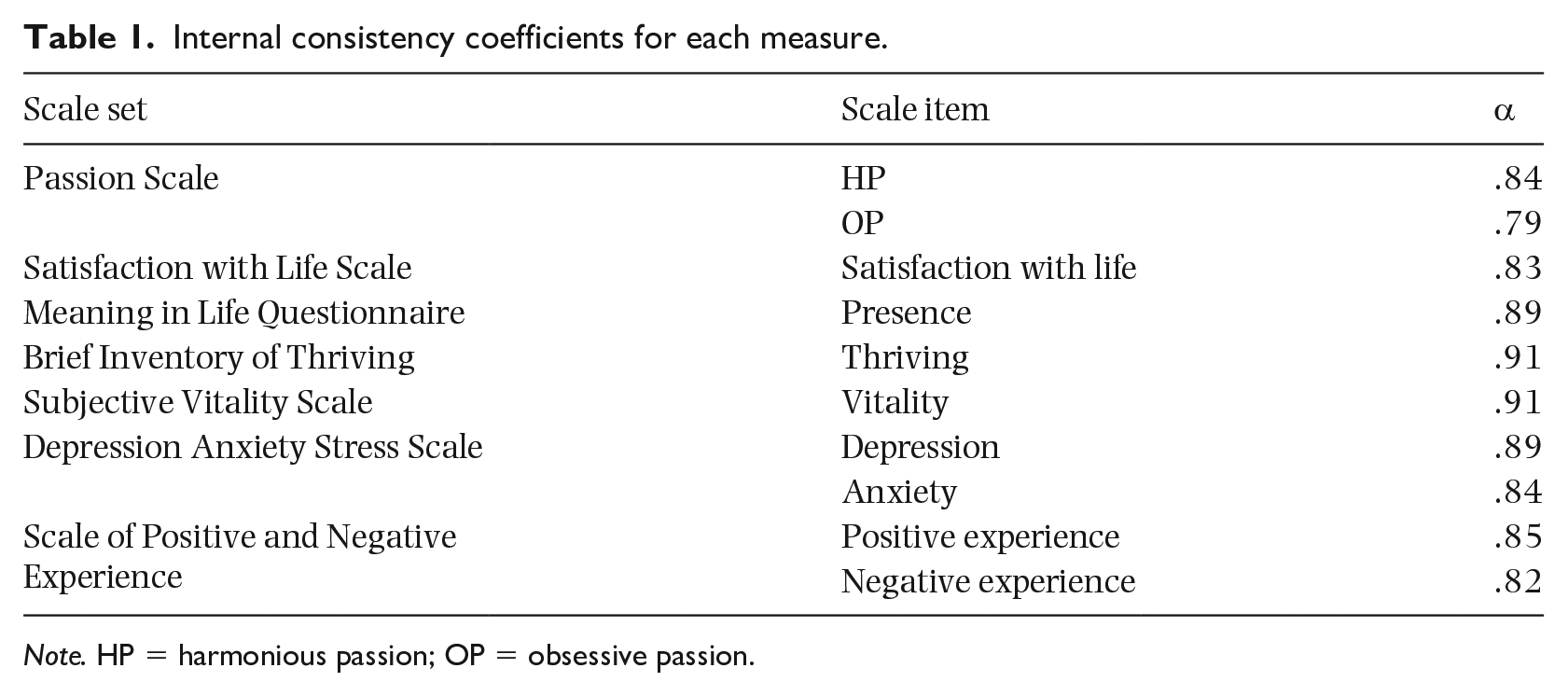
Note. HP = harmonious passion; OP = obsessive passion.
Procedure
The study was approved by the Macquarie University Human Research Ethics Committee. Participants signed up to complete a survey that was described as a study about people’s passion for listening to their favorite music. While the study was conducted online and it was possible to complete the study from anywhere, participants were instructed to complete the study in a quiet and relaxed environment. To be included in the final sample, participants had to self-identify as a passionate fan of music and meet the passion criteria mentioned above. They were asked a series of demographic questions including gender, age, and the hours of self-selected music they consumed per week, and then completed the SWLS, SVS, MLQ, BIT, and DASS-21. Participants were then told to think about one genre of music that they “love and enjoy, identify with, strongly value, and spend a lot of time listening to.” They were then instructed to identify this genre, either by selecting one from a list of 25 options or by adding their own, before completing the Passion Scale and SPANE in direct response to their nominated genre. The study took about 15 min to complete on average.
Data analysis and preparation
Data analyses were performed using SPSS 27, except for the path analysis which was conducted using SPSS AMOS 27. Potential outliers were identified by calculating standardized z-scores and Cook’s distance scores. No scores had a Cook’s distance greater than 1. Some participants’ z-scores were more than ±3.29 standard deviations from the mean. These outliers were transformed by assigning new raw values that were either one unit larger or smaller than the next most extreme score in the data set. This is a validated and commonly employed strategy when dealing with univariate outliers (Tabachnick et al., 2019). One participant did not complete the vitality scale. Their data were excluded pairwise in the regression analysis and listwise in the path analysis, to obtain the relevant fit indices.
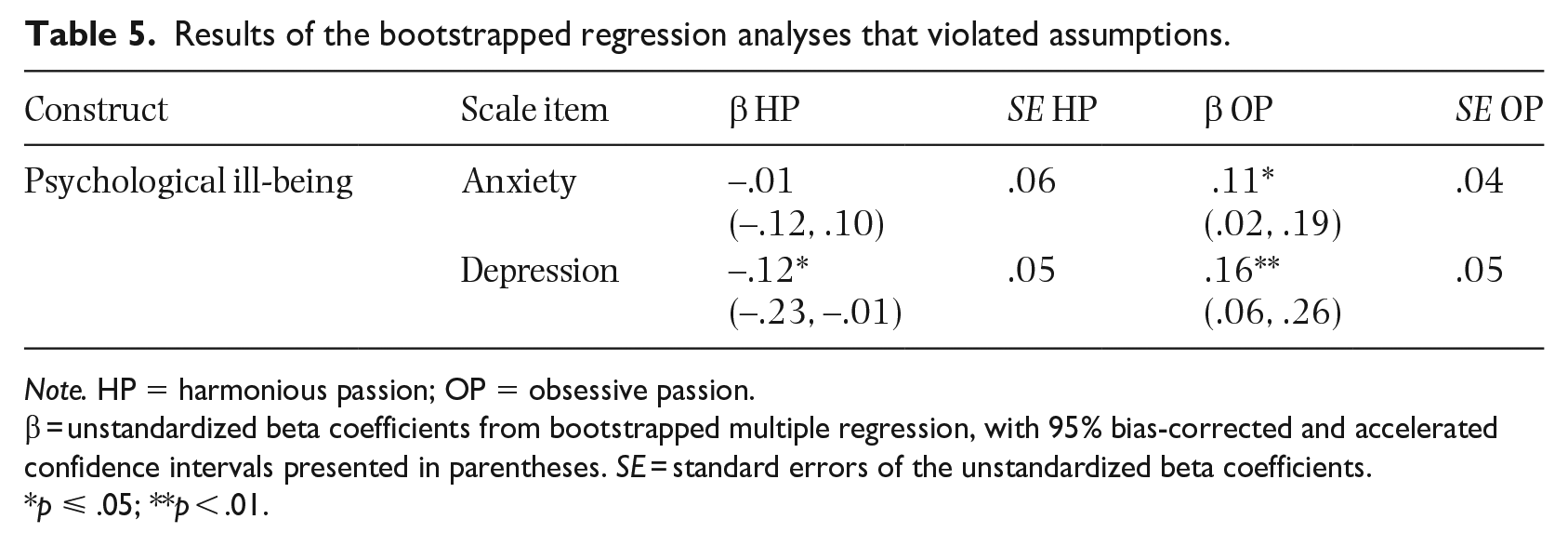
Partial plots and scatterplots of residuals versus predicted values did not reveal any notable trends or patterns, suggesting minimal issues with linearity or homoscedasticity. Investigation of probability–probability plots and histograms of the residuals revealed that the residuals of anxiety and depression measures were not normally distributed. Therefore, bias-corrected bootstrapping using 1,000 samples was conducted for these variables, as this analysis is robust to violations of normality of residuals (Field, 2013). As the bootstrapped values did not differ significantly from the original regression results, the original regression results were reported and interpreted. The bootstrapped coefficients, standard errors, and 95% confidence intervals for these variables are presented in Appendix 1. The correlation coefficient between the two independent variables was .32, meaning the assumption of multicollinearity was satisfied.
Results
Descriptive statistics
The means, standard deviations, and correlations between the different variables are presented in Table 2. Total scores for each variable were calculated by summing all item scores. The possible ranges of these total scores were 5 to 35 for satisfaction with life and presence of meaning in life, 7 to 49 for vitality, 5 to 50 for thriving, 0 to 21 for anxiety and depression, and 5 to 25 for positive experiences and negative experiences.
Descriptive statistics and correlations for all variables in the study.
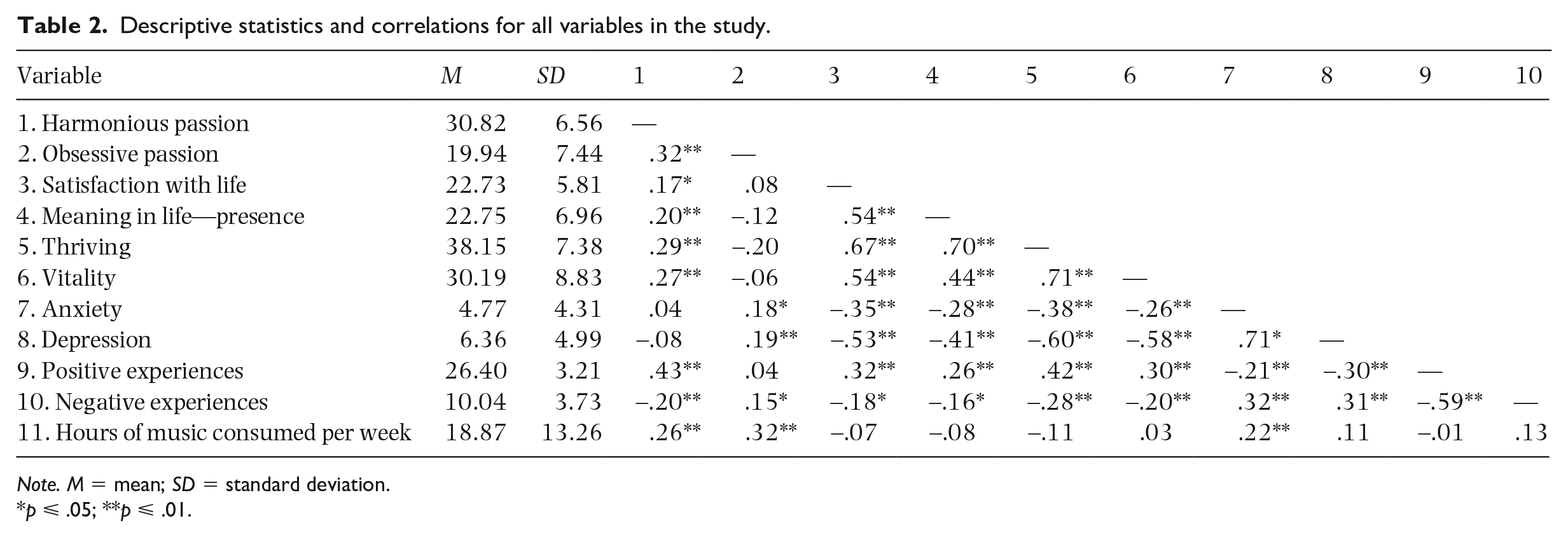
Note. M = mean; SD = standard deviation.
p ⩽ .05; **p ⩽ .01.
Well-being and ill-being
To test relationships between the two types of passion and psychological well-being and ill-being, we conducted multiple regression analyses with harmonious and obsessive passion as predictor variables, and scores on the measures of subjective psychological well-being (satisfaction with life, subjective vitality, presence of meaning in life, and thriving) and ill-being (depression and anxiety) as outcome variables. The results are shown in Table 3 and support both hypotheses H1a and H1b. Harmonious passion was found to be significantly positively associated with all measures of psychological well-being and negatively associated with depression, one of the two measures of ill-being, but there was no significant relationship between harmonious passion and anxiety.
Harmonious passion and obsessive passion as predictors of measures of well-being and ill-being.
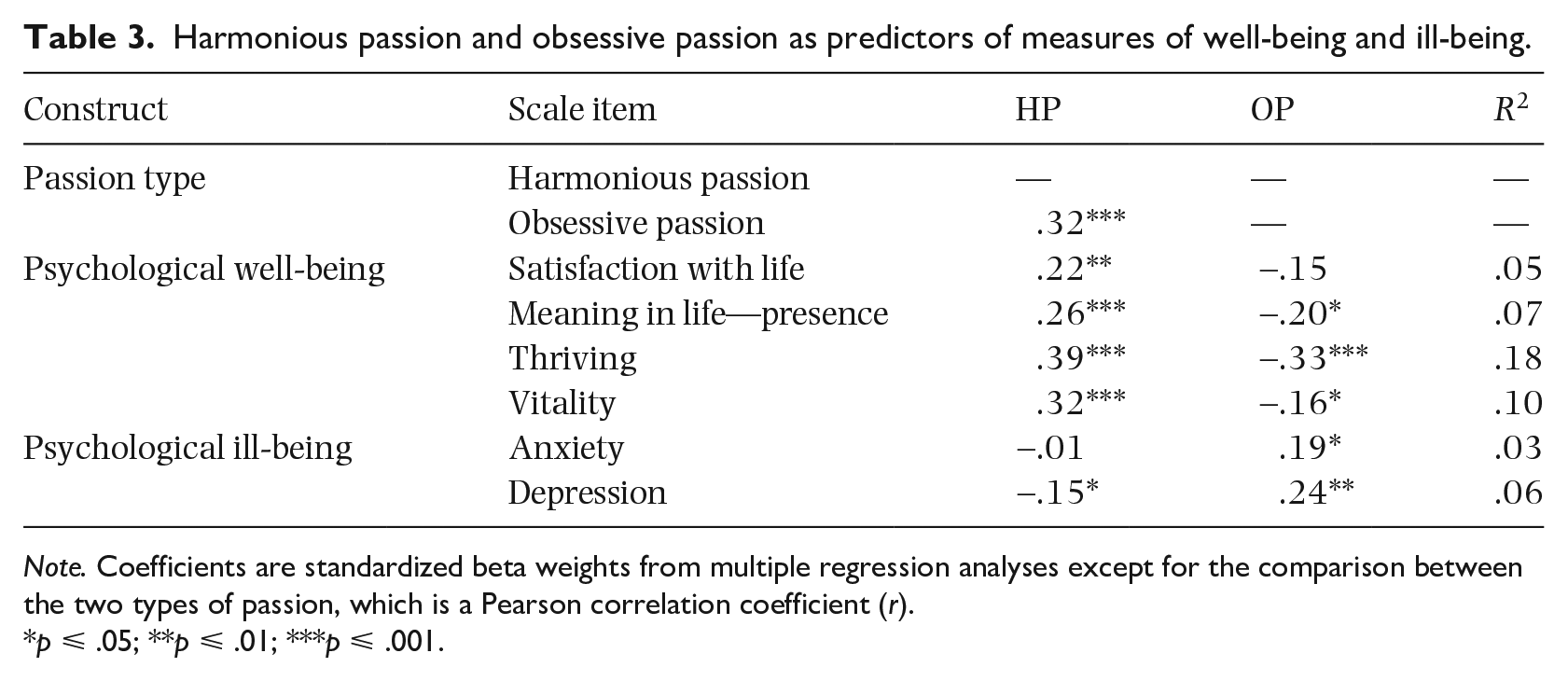
Note. Coefficients are standardized beta weights from multiple regression analyses except for the comparison between the two types of passion, which is a Pearson correlation coefficient (r).
p ⩽ .05; **p ⩽ .01; ***p ⩽ .001.
Obsessive passion was found to be significantly positively associated with both measures of psychological ill-being, depression and anxiety, and negatively associated with three of the four measures of well-being (subjective vitality, presence of meaning in life, and thriving) although there was no significant relationship between obsessive passion and satisfaction with life.
Affective experiences
To test relationships between the two types of passion and affective experiences when engaging with music, we conducted multiple regression analyses with harmonious and obsessive passion as predictor variables and positive and negative affective experiences with music, as measured by the two subscales of the SPANE, as outcome variables. The results are shown in Table 4 and support both hypotheses H2a and H2b. Harmonious passion was found to be significantly positively associated with positive affective experiences and negatively associated with negative affective experiences with music. Obsessive passion was significantly positively associated with negative affective experiences of music.
Harmonious passion and obsessive passion as predictors of experiences with music.
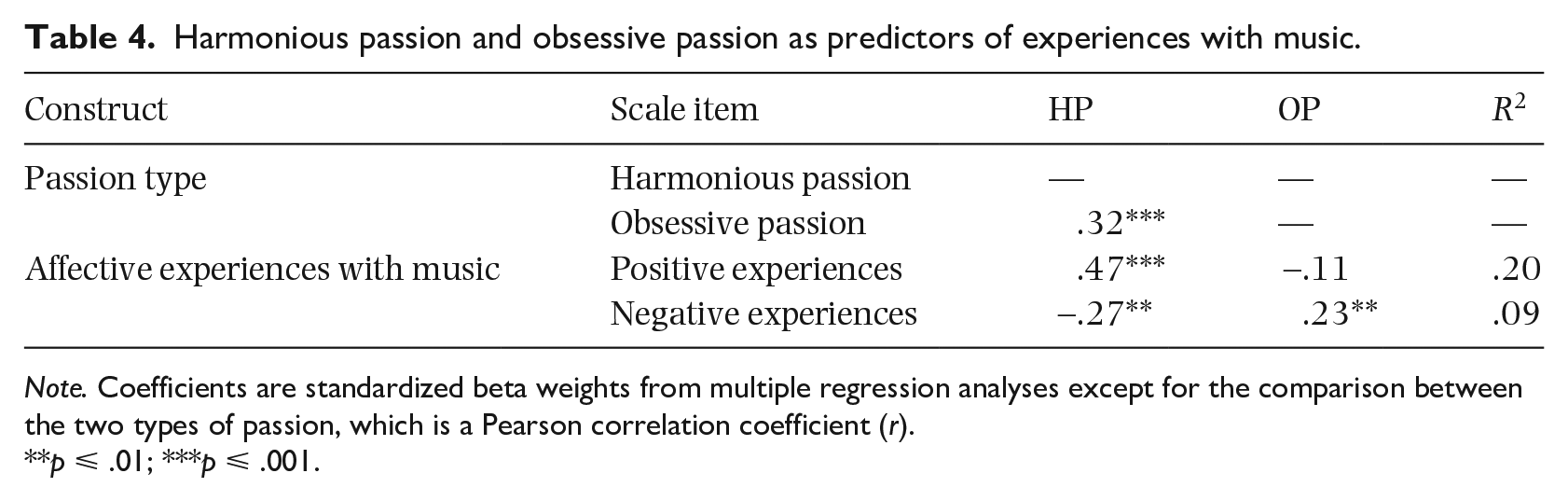
Note. Coefficients are standardized beta weights from multiple regression analyses except for the comparison between the two types of passion, which is a Pearson correlation coefficient (r).
p ⩽ .01; ***p ⩽ .001.
Affective experiences as mediating the relationships between passion and well-being/ill-being
To test the hypotheses that harmonious passion would predict positive affective experiences with music listening that, in turn, would predict psychological well-being (H3a) and that obsessive passion would predict negative affective experiences that, in turn, would predict psychological ill-being (H3b), we conducted a path analysis. We created composite measures of psychological well-being and ill-being by standardizing and summing the scores on the four measures of psychological well-being, as they used different measurement scales, and summing the scores for depression and anxiety.
We created a path model according to the two hypotheses, estimating positive covariances between the two types of passion, and between the two types of passion and weekly music consumption to control for the influence of hours of music consumed per week. Based on modification indices of the model, we added a direct path from obsessive passion to psychological well-being, which we included in the final model. The path analysis revealed an adequate fit of the model, χ2 (df = 8) = 12.83, p = .118 (NS). Other fit indices were also adequate, Comparative Fit Index (CFI) = .98, Root Mean Square Error of Approximation (RMSEA) = .06, Goodness of Fit Index (GFI) = .98, Normed Fit Index (NFI) = .96.
The final model, in which all estimated paths were significant, is shown in Figure 1 and supports both hypotheses H3a and H3b. Furthermore, the paths between harmonious passion and psychological well-being and between obsessive passion and psychological ill-being remained significant, suggesting that relationships between them are partially mediated by affective experiences.
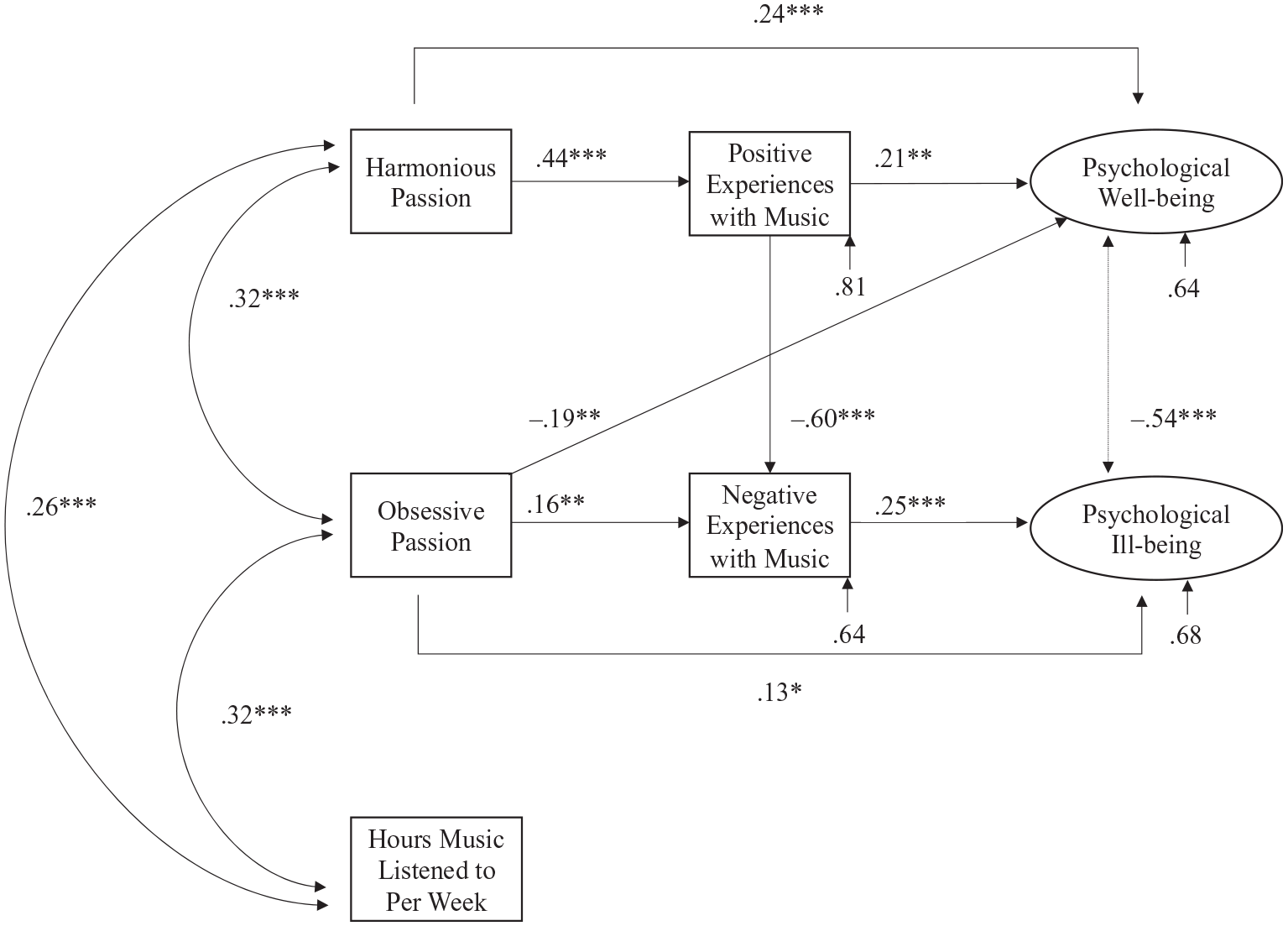
The role of the two types of passion and affective experiences with music on ratings of psychological well-being and ill-being, controlling for hours of music consumed weekly.
Discussion
In the present study, we investigated the relationships between passion, affective experiences with music listening, and psychological well-being in passionate fans of music from a range of different genres. Harmonious passion for music was positively associated with measures of psychological well-being (satisfaction with life, subjective vitality, the presence of meaning in life, and thriving) and positive affective experiences with music. Obsessive passion was positively associated with measures of psychological ill-being (depression and anxiety) and negative affective experiences with music. Path analysis revealed that harmonious passion predicted positive affective experiences with music listening that, in turn, predicted a composite measure of psychological well-being. The still-significant relationship between harmonious passion and psychological well-being was partially mediated by positive affective experiences. In short, all our hypotheses were supported.
The findings of the study strongly support the application of the Dualistic Model of Passion (Vallerand et al., 2003) to passionate music listeners and provide evidence for relationships between passion and psychological well-being and ill-being in this population. Further, they extend the findings of previous research in the musical domain revealing similar relationships among passionate music performers (Bonneville-Roussy et al., 2011; Bonneville-Roussy & Vallerand, 2020). Indeed, harmonious and obsessive passion significantly predicted psychological well-being and ill-being to the same extent among listeners experiencing music, even though their social motivations and reinforcements, and the musical rewards they gain, are very different from those of skilled performers who produce music.
Using a sample of participants including fans of 40 different genres of music, harmonious passion for music is associated with positive music-related affective experiences and general psychological well-being. These results underline the importance of music in the lives of passionate fans of many different music genres. They show that positive musical engagement is integral to the psychological well-being of harmoniously passionate fans.
The results also provide strong evidence that it is partially through the experience of positive emotions with music listening that harmonious passion is associated with psychological well-being, supporting evidence from previous studies of spiral-up well-being, whereby frequent positive affective experiences from engaging with an activity promote psychological well-being (Rousseau & Vallerand, 2008; Vallerand, 2012). As participants reported listening to music for almost 20 h per week, the frequency and positive nature of affective engagement with music has important implications for psychological well-being.
Harmonious passion for music can facilitate both the hedonic and the eudaimonic aspects of psychological well-being, as it was found to be associated with satisfaction with life (a measure of hedonic well-being), subjective vitality and the presence of meaning in life (measures of eudaimonic well-being), and thriving (both hedonic and eudaimonic). In this way, harmonious passion for music provides benefits above and beyond mere satisfaction and experiences of positive affect (for a relevant discussion of music appreciation, see Thompson et al., 2022). The finding that music listening can provide both kinds of well-being for harmoniously passionate fans is notable, as both hedonic well-being and eudaimonic well-being are important for the achievement of authentic and sustained psychological well-being (Seligman et al., 2005). Indeed, those who engage in music listening with a stable sense of self, and balance fandom with other activities and aspects of life, do not just enjoy their experiences of music but benefit from improved general well-being.
The results also reveal the potential for music fandom to have detrimental outcomes when an individual is obsessively passionate. The mediating effect of negative emotions supports the notion of spiral-down well-being, whereby negative affective experiences of engaging in an activity not only do not support general psychological well-being, but decrease it (Fredrickson, 2001; Vallerand, 2012). The associations between obsessive passion and ill-being measures of depression reflect previous findings regarding the maladaptive implications of obsessive passion for psychopathologies such as depression and anxiety (Vallerand, 2010).
Individuals can be overwhelmed by obsessive passion for an activity, taking part even when it has negative outcomes, or when they cannot stop ruminating when unable to participate (Vallerand, 2012). Even when experiencing negative outcomes from listening to music, fans may be unable to disengage from it, and this can have negative outcomes for their general well-being. While the relationship between depressive symptoms and negative emotional experiences with music listening has been explored previously (Garrido & Schubert, 2013; McFerran & Saarikallio, 2014), the findings of the present study can inform questions as to individuals’ susceptibility to negative outcomes from musical engagement as the result of obsessive passion, and how this might relate to unhealthy music listening habits.
The findings have important clinical applications for practitioners who are (or should be) aware of a client’s deep passion for, and frequent engagement with, music. For example, if a client presents with indicators of psychological ill-being such as symptoms of anxiety and/or depression, and reports that they use music as a means of mood regulation, it would be helpful to employ the Passion Scale to find out if their musical passion may be a risk factor, exacerbating their psychological ill-being. If they score high for obsessive passion, it may be helpful for the client to undergo psychoeducation focusing on the negative impact of obsessive passion for music to help them understand their relationship with music more broadly, and how they could work toward a more harmonious type of passionate engagement that would foster psychological well-being.
One limitation of the present study was its cross-sectional nature. To fully understand the short- and long-term benefits and detriments of different types of passion, it would be necessary to conduct a longitudinal study showing how effects change over time. Second, the online survey did not involve a listening component but instead relied on self-reports of how participants typically feel when engaging with their favorite music. It would be possible to obtain a more accurate impression of participants’ affective responses to music by conducting the study in a controlled laboratory environment and having them select a specific piece or pieces of music from their favorite genre. Third, the findings may have been influenced by an uneven distribution of men and women in the sample (there were more women). In future research, a more balanced sample should be recruited.
A strength of the study is that participants reported enjoying listening to a wide range of genres, so the findings are highly generalizable across genres. Nevertheless, fans of specific genres should be recruited in future research to understand potentially unique benefits and risks associated with certain music genres and their subcultures (e.g., see Olsen, Terry, et al.,2022). This could lead to a greater understanding of the features of specific types of music and the extent to which they influence different affective and well-being outcomes. For example, genres conveying negatively valenced themes, such as sad music and music conveying violent themes, may be of particular interest, given the content of their lyrics and the emotions they elicit (Olsen, Powell, et al., 2022; Thompson et al., 2019; Thompson & Olsen, 2018; Vuoskoski & Thompson, 2012). It would also be worth investigating the experiences of individuals who exhibit extreme and excessive degrees of fandom (stans: Blistein, 2019). Specifically, it would be of interest to find out if stans have a particular type of passion, whether they are likely to experience well-being outcomes or if they are more susceptible to maladaptive outcomes.
In conclusion, the findings of the present study reveal that passion for music listening can either facilitate or hinder psychological well-being, depending on its nature. Harmonious passion facilitates well-being, whereas obsessive passion hinders it. Furthermore, such relationships are mediated by affective experiences while listening to music. These findings highlight the importance of investigating people’s engagement in music listening, focusing on fans’ experiences, rather than superficially on the content of their activities. Further research on the forms of passion that people develop, and why, may assist in identifying strategies for promoting healthy engagement with music.
Footnotes
Appendix 1
Results of the bootstrapped regression analyses that violated assumptions.
| Construct | Scale item | β HP | SE HP | β OP | SE OP |
|---|---|---|---|---|---|
| Psychological ill-being | Anxiety | –.01 (–.12, .10) |
.06 | .11*
(.02, .19) |
.04 |
| Depression | –.12*
|
.05 | .16**
|
.05 |
Note. HP = harmonious passion; OP = obsessive passion.
β = unstandardized beta coefficients from bootstrapped multiple regression, with 95% bias-corrected and accelerated confidence intervals presented in parentheses. SE = standard errors of the unstandardized beta coefficients.
p ⩽ .05; **p < .01.
Author contributions
All authors were involved in the design, analysis, and interpretation of results. MP wrote the first draft, and all authors reviewed, edited, and approved the final version of the article.
Funding
The author(s) disclosed receipt of the following financial support for the research, authorship, and/or publication of this article: This research was supported by an Australian Research Council Discovery Project grant (DP160101470) held by the fourth author.
