




Abstract
While there is extensive research on student workload in higher education, research-based findings relating to music students’ workloads are, to a great extent, lacking. In this study, we aim to review the literature systematically (a) to identify the factors that have an impact on students’ experiences of workload (experienced workload) and (b) to better understand music students’ experiences of their workloads in relation to their studies. The overall aim is to offer recommendations for students, teachers, administrators, and student health and well-being services as to how to deal with music students’ workload. We conducted a systematic search of literature in 23 electronic databases and 19 music research journals following the Preferred Reporting Items for Systematic Reviews guidelines. Eligibility criteria consisted of design, sample, phenomenon of interest, evaluation, and type of research. Twenty-nine qualitative, quantitative, and multistrategy studies fulfilled the inclusion criteria. Data were extracted and the quality of the studies was appraised. Extended meta-ethnography was used to create a synthesis revealing specific themes offering recommendations for good practice to (a) increase music students’ ability to cope with their workload, (b) provide tools for teachers to support music students to manage and cope with workload, and (c) develop learner-centered environments in higher music education. In addition to presenting recommendations for good practice, we conclude that more research using high-quality designs is needed to investigate music students’ discipline-specific experienced workload.
Higher education is a vast and complex field to study, particularly when examining students’ perceptions and experiences of their studies. Research by Salmela-Aro and Read (2017) indicates that studying in higher education can be a demanding task—often related to workload—which influences students’ overall academic experience and well-being. For instance, in the context of higher education in Finland over recent years, psychological distress among university students has increased, which may reflect growing multifaceted environmental and institutional demands on them (Oksanen et al., 2017). In fact, recent research by the Finnish Student Health Service on students attending Finnish universities and universities of applied sciences (polytechnics) (e.g., Salmela-Aro & Read, 2017) suggests that burnout increases and engagement decreases as a student progresses through their program of study at the university.
The higher education context for music students differs from that of students in other disciplines, as it entails specific field-related challenges. For example, studying music may include performance anxiety, perfectionism, and career concerns that can cause discipline-specific sources of stress (e.g., Bernhard, 2007a). Painful musculoskeletal conditions and other health issues are also common concerns for music students (e.g., Ginsborg et al., 2009). Various aspects of the physical and psychological demands on music students have been examined in recent studies, such as music students’ perceptions and behaviors concerning their health (Araújo et al., 2017); levels of burnout and engagement and their effects on music students’ well-being (Zabuska et al., 2018); location and level of pain among musicians (Cruder et al., 2018); and music performance anxiety in classical musicians (Matei & Ginsborg, 2017). Also, Perkins et al. (2017) indicate that research is needed on the challenges, for students, of receiving feedback on their performance in high-pressure situations. The findings of an increasing body of research on music students’ workload may help to improve learning and teaching environments and better support music students’ well-being, learning, and future careers.
Defining students’ workload in educational contexts
In educational research, workload is often defined objectively in terms of the hours that students spend in classes and independent study. In a qualitative study of students’ perceptions of workload and the factors influencing it, Kember (2004) found that perceived and objectively measured workload were only weakly related and suggests that workload should be considered a complex construct, influenced by the teaching and learning environment. Kember and Leung (2006) therefore tested the hypothesis that perceived workload is influenced by seven elements of this environment, in a study using structural equation modeling (SEM), and found that it is directly (if weakly) influenced by teaching and teacher–student relationships. Given the impact of workload on students’ daily lives, it is therefore worth exploring not only hours of study but also other elements of the teaching and learning environment. Thirty years ago, Chambers (1992) suggested that these should include the view held by the higher education institution on what constitutes a reasonable workload. Research published since then has addressed factors that have an impact on student workload, such as motives, expectations, interests, skills, abilities, and previous experience (Lockwood, 1999). Marsh (2001) defined good workload (hours spent on class believed to be valuable) as being useful in a student’s development and education, whereas the effects of bad workload (total hours minus good hours) are negative. Karjalainen et al. (2008) considered an appropriate workload to be represented by students having enough time to complete tasks as part of their studies, when their own capacity to complete this work is taken into account. Bowyer (2012) suggested that student workload could be thought to consist of the time needed for contact and independent study, the quantity and level of difficulty of the work, the type and timing of assessments, the institutional factors such as teaching and resources, and student characteristics such as ability, motivation and effort. (p. 240)
However, to our knowledge, no prior studies have focused on different degrees of workload associated with students’ positive, negative, or neutral experiences during their programs of study. It may also be useful to consider the effects of specific disciplines on students’ perceived workload. For example, bodily experiences are important in higher music education (Bresler, 2005), as music is made through and with the musician’s body, and skill development in music may be more complex than in some other fields.
Kember (2004) argued that higher education institutions should pay attention to what is taught, and how, if students are to be supported to cope successfully with their workloads. Previous research on students’ health and well-being also gives recommendations for supporting students to manage their studies through orientation or induction and counseling, and stress-, life-, and time-management techniques (e.g., Bernhard, 2010; Kausar, 2010; Renard & Snelgar, 2015). For instance, Renard and Snelgar (2015) recommend that students use both proactive coping styles and stress management techniques, such as “avoiding overloading, spending time on things of importance, avoiding interruptions and procrastination, keeping a diary, being assertive, and developing a problem-solving mode of thinking” (p. 180).
Norton (2016) emphasizes the complexities of the relationship between music teachers and students, which is typically highly influential on the latter. She questions the extent to which teachers should be considered responsible for their students’ general as well as musical development. Renard and Snelgar (2015) suggest that teachers should provide constructive feedback on assessments and support students who are struggling to cope. Holistic and learner-centered teaching that promotes “a deep understanding based on the integration of students’ prior knowledge and curricular outcomes, as well as helping students to take metacognitive control of their own learning” (López-Íñiguez et al., 2014, p. 158) can support student agency and make teaching and learning more engaging and satisfying for both teacher and student (López-Íñiguez & Pozo, 2016). The aim is for students to learn to regulate and manage their own cognitive and motor processes autonomously, and to develop their own individual musicianship, under the guidance and supervision of teachers who focus on their students’ reflective, metacognitive, emotional, and affective processes (López-Íñiguez, 2017).
There are elements of students’ lives affecting their workload over which teachers and course administrators have no control. For example, changes in the way higher education institutions are funded, and rising tuition fees, have resulted in financial concerns for students. They may have to take on (more) extracurricular paid work. Coupled with inequalities between students from different levels of family income and support, these are potential sources of stress (Beban & Trueman, 2018). Sudden, unexpected changes in learning circumstances such as those caused by the COVID-19 pandemic may also affect music students’ well-being (Habe et al., 2021), practice habits and behaviors, and everyday life (Rosset et al., 2021), and these changes may, in turn, affect their perceptions of workload.
Research on students’ experiences of their studies, including perceived workload, can provide knowledge that may be valuable for institutions when making decisions that have an impact on the academic community, and seeking to enable staff to support students as effectively as possible. We refer to students’ experiences of their studies as experienced workload, since these experiences include students’ perceptions of the components of workload, the factors contributing to it, and its consequences. We therefore conducted a systematic review to identify research on music students’ experienced workload and offer recommendations for students, teachers, administrators, and student health and well-being services as to how best to manage this. We defined students as people studying at higher education institutions and music students as students registered on an academic degree program, in a university music department or at a conservatoire, with the aspiration of becoming a professional musician or working in a music-related profession (e.g., orchestral, chamber, or church musician; solo singer or performer; conductor; composer; music teacher; festival manager). We defined teachers as people teaching music students at higher education institutions.
Aims of the study and research questions
In this study, we were interested in all aspects of students’ workload during their years of study. We took a holistic approach, considering the nature, meaning, and components of workload, and how it is described in the published literature. We also considered students’ curriculum-related workload (e.g., attendance at lectures, rehearsals, and practice sessions), and extra-curricular activities that may contribute to experienced workload (e.g., paid and unpaid work). We deliberately sought research revealing students’ subjective experiences of workload and its consequences, rather than reporting objective measures (such as time spent studying, completed credits, grades, or effects on memory and cognition). Our definition of workload derived from the Finnish term kuormittavuus (load). According to the Finnish Thesaurus and Ontology Service (Finto, 2021), this encompasses the burden related to work under- and overload and includes both physical (e.g., musculoskeletal strain) and psychological (e.g., cognitive, ethical, emotional, mental, and psychosocial) aspects of workload, which can be experienced in positive, neutral, or negative ways to different degrees. Thus, in line with previous research on students’ perceptions of workload (e.g., Bachman & Bachman, 2006; Hernesniemi et al., 2017; Jacobs & Dodd, 2013; Kember, 2004; Kember & Leung, 2006; Parkinson et al., 2006), we considered workload not in terms of objectively measured hours of study but as the complex construct suggested by Kember and Leung (2006), with a range of components and effects.
We aim to review the literature on students’ workload systematically, focusing on music students’ experiences of workload associated with their studies, so as to inform recommendations likely to be helpful for teachers, administrators, and student health and well-being services in supporting students to cope with their workload and plan their own studies. The following research questions (RQs) guided the review:
What factors have an impact on students’ experienced workload?
What are music students’ experiences of workload in relation to their studies?
Method
We conducted an extended meta-ethnography (EME), a method of systematic review developed by Booker (2010, p. 59) as an application of Creswell’s (2003) concurrent nested strategy and Noblit and Hare’s (1988) seven-phase meta-ethnography. Noblit and Hare pioneered meta-ethnography as a review method for synthesizing ethnographic and interpretive qualitative studies to create holistic interpretations as an alternative to meta-analysis based on quantitative studies. EME differs from Noblit and Hare’s meta-ethnography in that quantitative studies are also reviewed. Instead of using data from primary studies, EME aims to aggregate and give meaning to previous studies by identifying and consolidating the findings of qualitative studies and interpreting and discussing those of quantitative studies. Our seven-phase EME is described in detail in Supplemental Appendix 1 and presented in figures and tables.
Having defined the research topic in Phase 1, we selected the relevant studies in Phase 2. The Preferred Reporting Items for Systematic Reviews (PRISMA) flowchart for the process of selecting studies is presented in Figure 1.
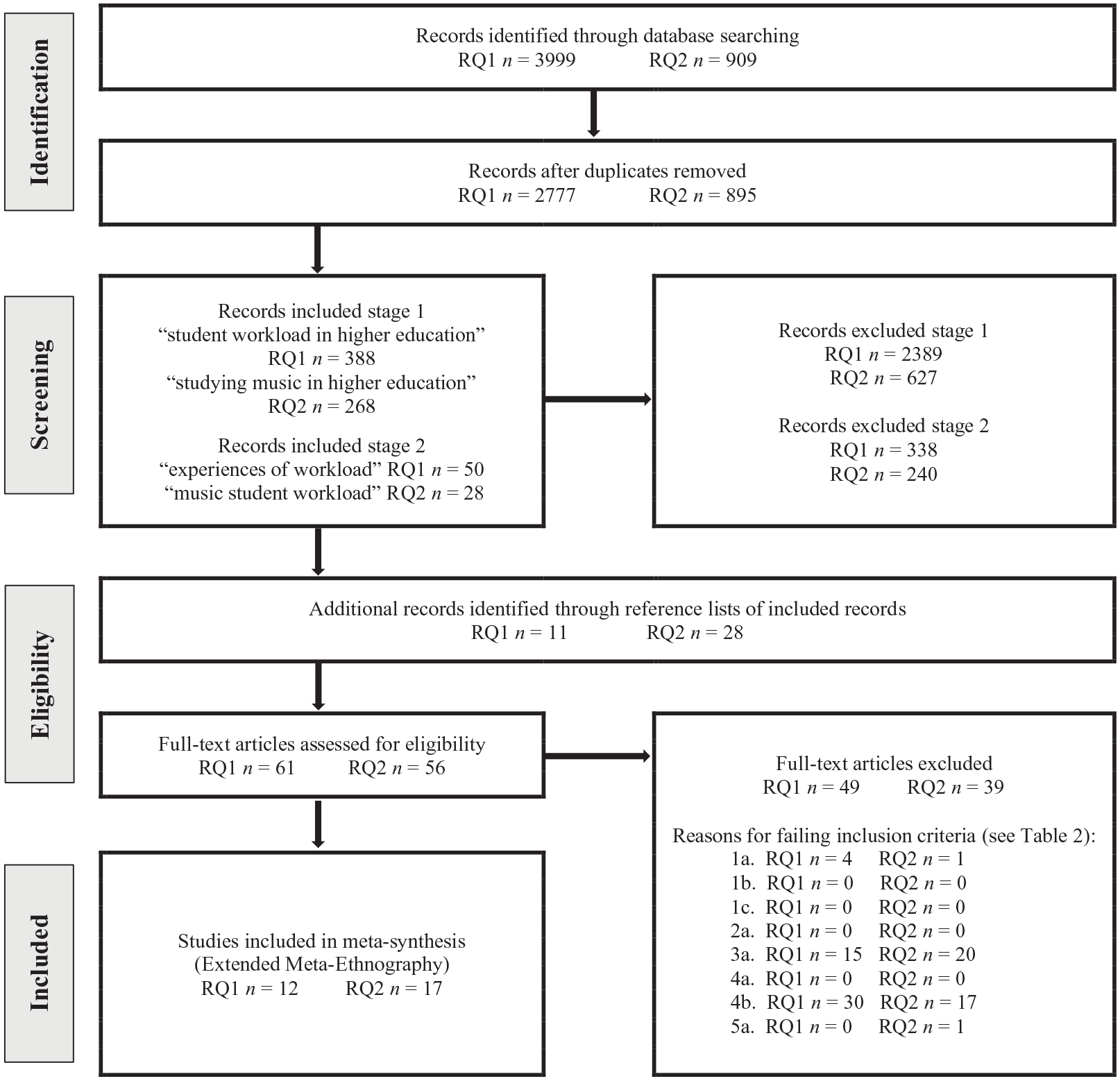
Process of selecting studies grouped by RQs in PRISMA flowchart (Moher et al., 2009).
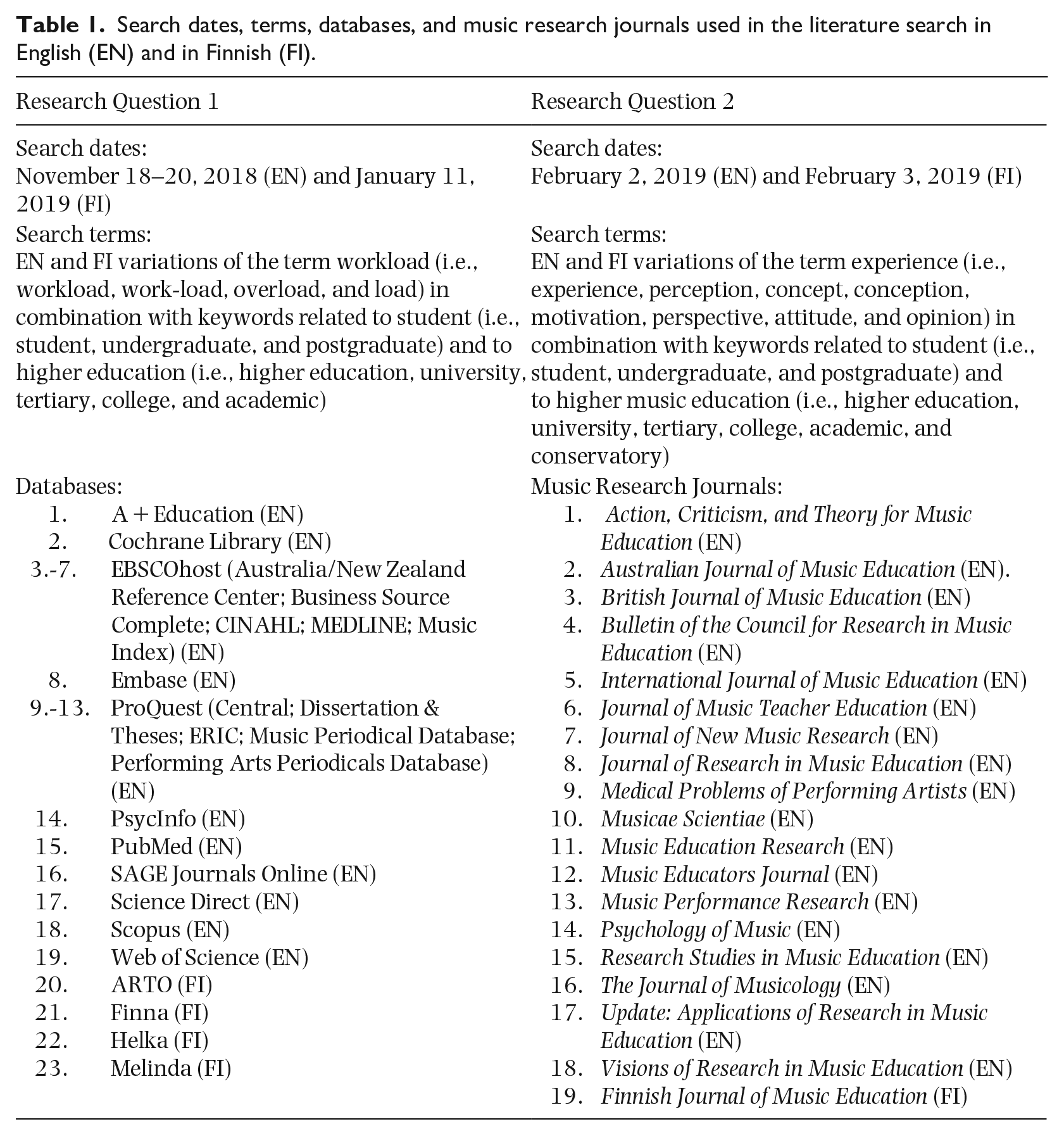
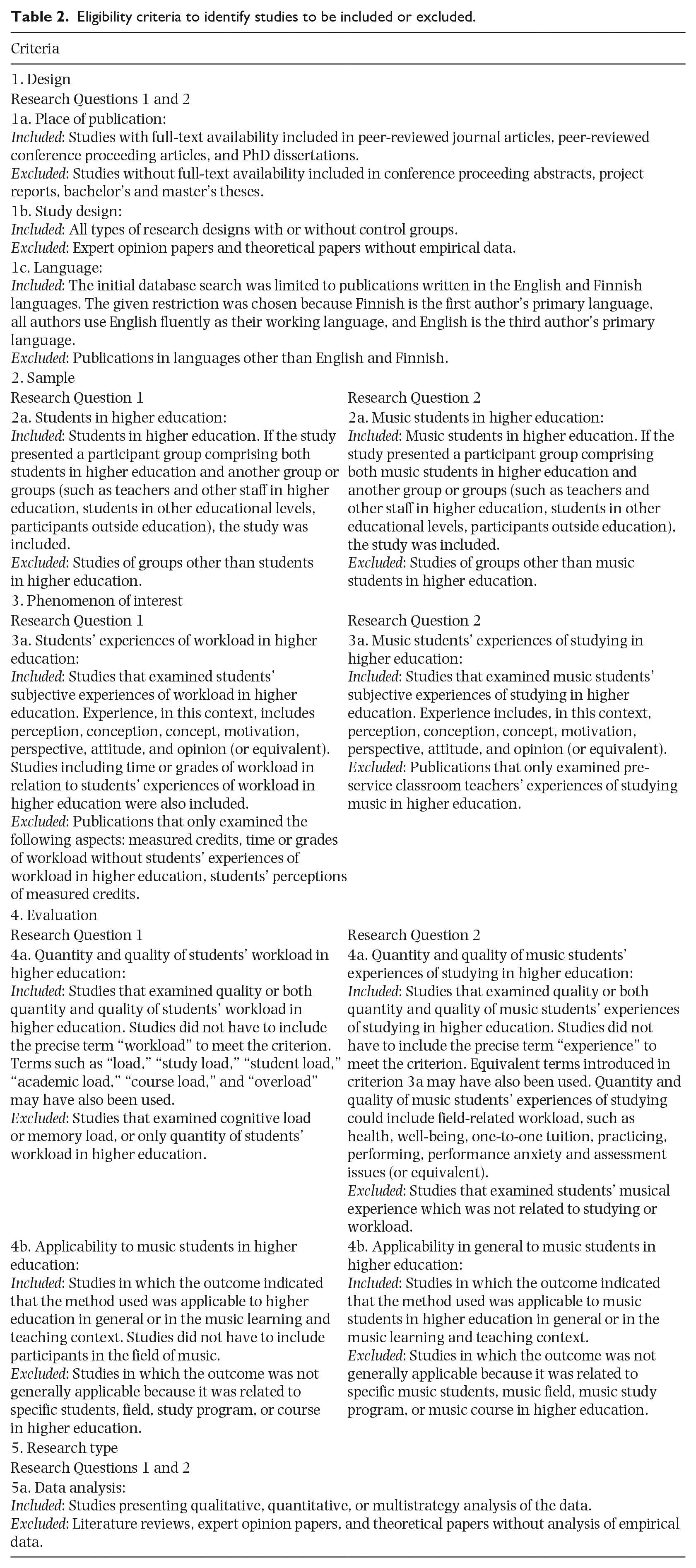
In Phase 2, we conducted the systematic literature search and drew up eligibility criteria for selecting the studies to be reviewed. When searching literature in relation to the first RQ, we used English and Finnish variations of the term workload in combination with keywords related to student and higher education. The results of the search were included in the first screening stage if the studies explored student workload in higher education and in the second screening stage if they explored experiences of workload. Studies were also considered relevant if they concerned students’ perceptions of workload. When searching existing literature in relation to the second RQ, we used English and Finnish variations of the term experience in combination with keywords related to student and higher music education. The results were included in the first screening stage if the studies explored studying music in higher education and in the second screening stage if they explored music student workload. Details of how the searches were conducted are shown in Table 1 and the eligibility criteria are listed in Table 2.
Search dates, terms, databases, and music research journals used in the literature search in English (EN) and in Finnish (FI).
Eligibility criteria to identify studies to be included or excluded.
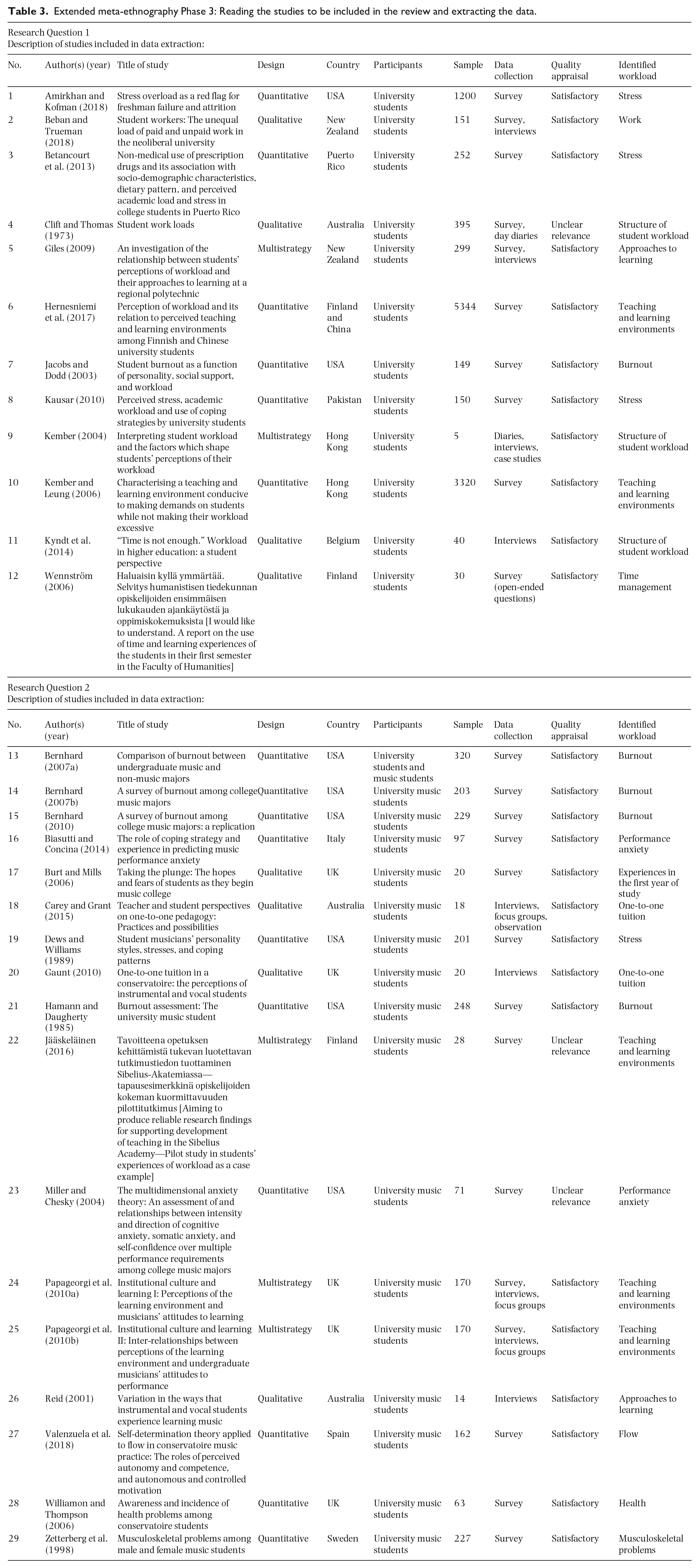
In Phase 3, we read the studies to be included in the review and extracted the data by appraising the quality of their RQs and methods using the Mixed Methods Appraisal Tool (MMAT; Hong et al., 2018). We also conducted a thematic content analysis. The results are shown in Table 3.
Extended meta-ethnography Phase 3: Reading the studies to be included in the review and extracting the data.
In Phase 4, we further analyzed the studies we reviewed, and in Phase 5, we compared them. In Phase 6, we constructed an overall analysis, and in Phase 7, we finally formulated a complete synthesis of all of the interpretations emerging from previous phases. This process is presented in Figure 2.
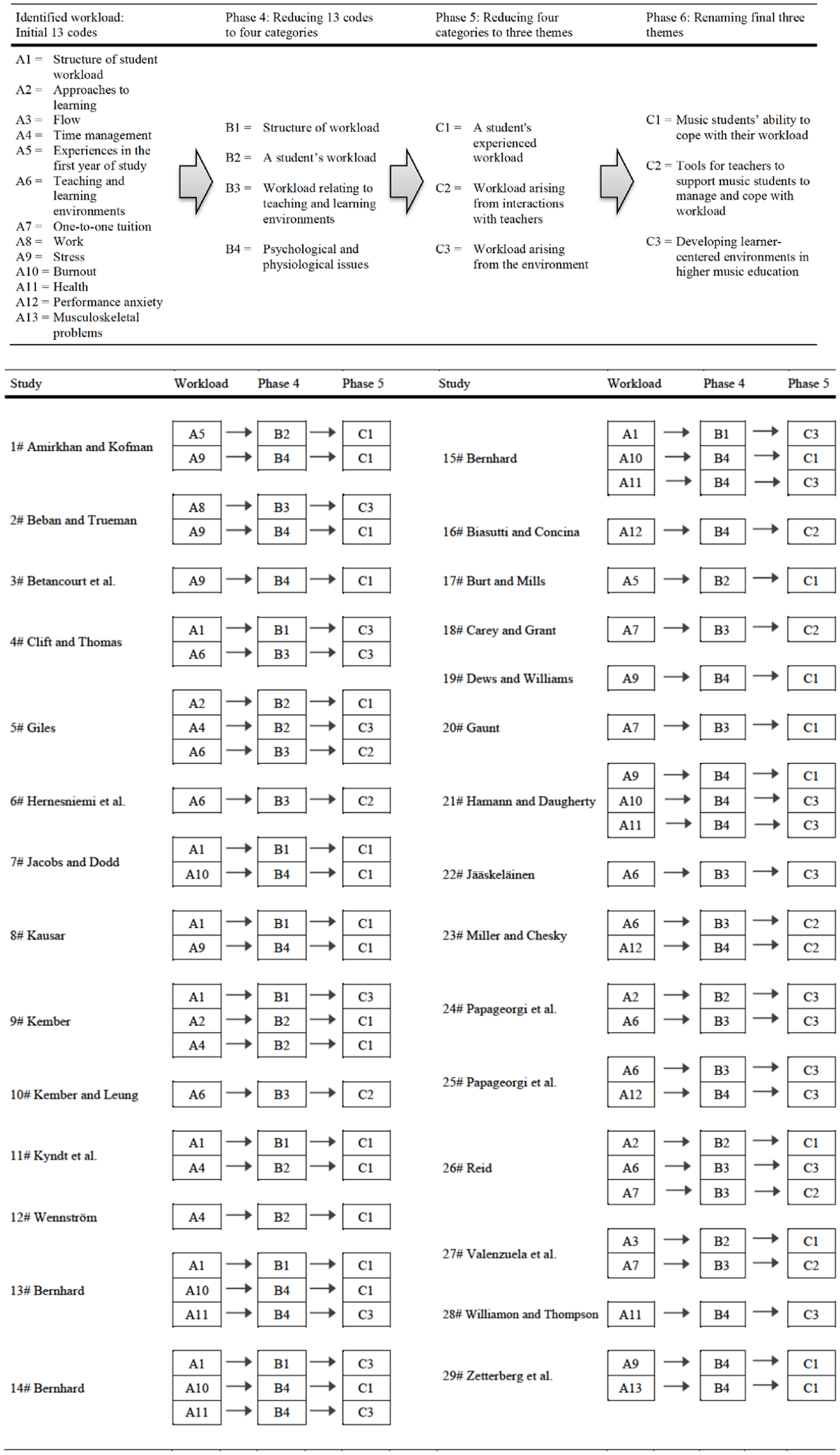
Extended meta-ethnography: Phase 4 (Analyzing the studies), Phase 5 (Comparing the studies), and Phase 6 (Constructing an overall analysis).
Description of the process
Having defined the research topic in Phase 1, we selected the relevant studies that would form part of Phase 2. In Phase 3, we read the studies to be included in the review and extracted the relevant data to be used in the subsequent phases. The 29 studies included in this review were conducted in the United States (n = 8), the United Kingdom (n = 5), Australia (n = 3), Finland (n = 3), Hong Kong (n = 2), New Zealand (n = 2), Belgium (n = 1), China (n = 1), Italy (n = 1), Pakistan (n = 1), Puerto Rico (n = 1), Spain (n = 1), and Sweden (n = 1). A total of 13,596 students took part in the 29 studies, of whom 2,261 were music students. The search terms used to explore 23 databases in relation to the first RQ did not identify any relevant studies about music students. Therefore, the number of music students is based on the studies that were identified using the search terms to explore 19 music research journals in relation to the second RQ. We did not apply date boundaries in the article search because we did not find previous evidence indicating that relevant studies had been reported during a specific time period. This resulted in some outdated studies being included, for example, some that were published before the beginning of the 21st century. However, we felt that it was important to include these early studies as they provided evidence of when researchers began to be interested in students’ experienced workload in higher education, and how this field of interest has developed since those initial studies. Most of the studies were quantitative (n = 16), with the remainder either qualitative (n = 8) or multistrategy, combining quantitative and qualitative approaches (n = 5). Data were collected via surveys (24 studies), one-to-one interviews (9 studies) and focus groups (3 studies), case studies (1 study), daily diaries (1 study), and video-recorded lesson observations (1 study). Using the quality appraisal categories developed by Dixon-Woods et al. (2007), we did not find any key papers. However, most studies were assessed as being of satisfactory quality (n = 26), although the relevance of three papers was unclear, and there were no studies deemed flawed or irrelevant.
Using EME, we identified 13 codes across the 29 studies that related to students’ experienced workload. Eight codes were identified in the 12 studies addressing the experience of students regardless of discipline: approaches to learning, burnout, experiences in the first year of study, stress, organisation and management of a student’s workload (hereafter structure of student workload), teaching and learning environments, time management, and extracurricular paid and unpaid work. Five additional codes were identified in the 17 studies addressing the experiences of music students: flow, health, musculoskeletal problems, one-to-one tuition, and performance anxiety.
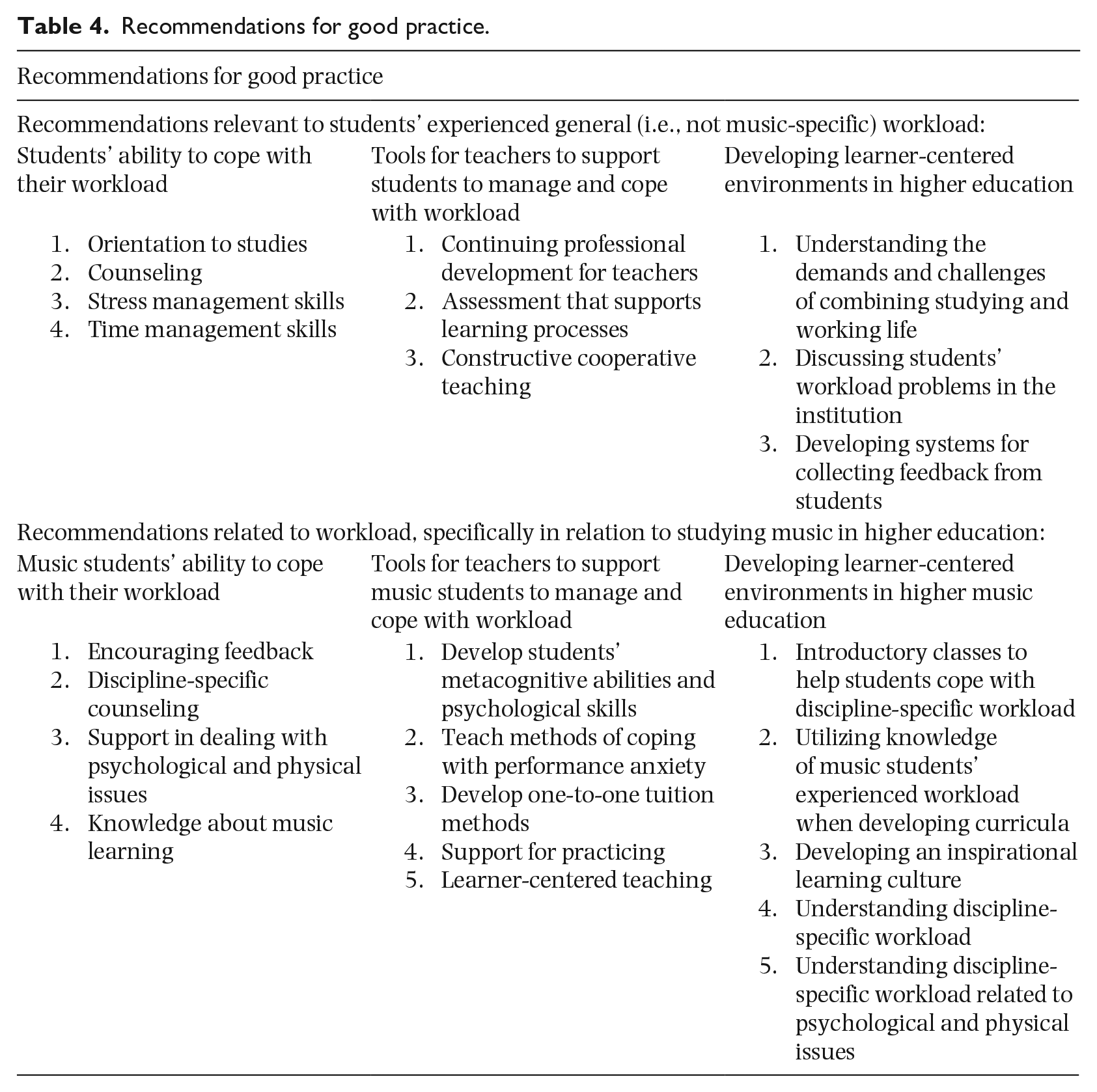
To analyze the 29 studies in Phase 4, we clustered these 13 codes into four categories: organisation and management of workload (hereafter structure of workload), a student’s workload, workload relating to teaching and learning environments, and psychological and physiological issues. To compare the studies in Phase 5, we reorganized these four categories into three themes including the sources of students’ experienced workload: a student’s experienced workload, workload arising from interactions with teachers, and workload arising from the environment (i.e., studies and paid and unpaid work both inside and outside the institution, and society). Finally, we constructed an overall analysis in Phase 6 that revealed three new overarching themes: music students’ ability to cope with their workload, tools for teachers to support music students to manage and cope with workload, and developing learner-centered environments in higher music education. On the basis of these themes, we formulated a complete synthesis with 24 recommendations that are presented in Table 4 and, in more detail, in the “Results” section.
Recommendations for good practice.
Results
Music students’ ability to cope with their workload
The first overarching theme concerned students’ general workload and their ability to manage it, which they may have developed by themselves and/or with some support from their teachers and institutions. It is essential to help students cope with experienced (general, i.e., not music-specific) workload because this is related to surface approaches to learning (Kember, 2004). Workload predicts perceived stress overload (Kausar, 2010), potentially leading to failure and attrition (Amirkhan & Kofman, 2018). To help students cope with their workload, we recommend that institutions provide the following for students:
Orientation to studies. At the beginning of the academic year, an orientation or induction session can familiarize students with learning, evaluation, and grading processes (Kausar, 2010). It is also important for every course to provide orientation regarding the course’s expectations and requirements that the students must fulfill (Kyndt et al., 2014).
Counseling. Counseling should be readily available for students to help them to cope more effectively with everyday challenges in their studies (Kausar, 2010) and to develop generic study skills (i.e., those that are necessary for students to be able to succeed in their studies, such as writing skills for assignments and reading skills in preparation for exams; Giles, 2009).
Stress-management skills. Good peer relationships seem to help students to cope with stress experienced in relation to their studies, and leisure activities can support students to reduce stress when studying (Kyndt et al., 2014). Negative coping strategies may intensify stress and cause problems with alcohol intake, lack of sleep, lack of exercise, and less time spent with friends and family (Beban & Trueman, 2018) and increase the non-medical use of prescription drugs (Betancourt et al., 2013). Students should therefore be offered stress management programs.
Time-management skills. Students need time-management skills for setting priorities and planning to use their time efficiently. It helps if they understand that their experienced workload may be different from their actual workload (Kyndt et al., 2014). For example, Wennström (2006) found that students in their sample who felt that they had a heavy workload used only half of the time allocated to study in the curriculum for studying.
More research is needed to understand how daily activities and stress management and time management skills may be related to students’ workload, learning, stress, and burnout in higher education (Amirkhan & Kofman, 2018; Jacobs & Dodd, 2003; Kember, 2004).
This theme also included music-specific workload and, in particular, music students’ ability to cope with it. Some aspects of music students’ workload may be discipline-specific so it is important to identify these aspects when developing suitable support systems; the nature and amount of work music students are required to complete in the course of their studies should be acknowledged. Bernhard (2007a, 2007b, 2010) found that more academic and performance demands are made on music majors than non-music majors, especially at the undergraduate level. They are therefore likely to experience high levels of psychological problems such as performance anxiety, perfectionism, and career concerns. There can also be differences attributable to program of study, music genre, and sex or gender. For example, in a study of university music students by Zetterberg et al. (1998), those studying to be church musicians had the highest psychosocial demand scores (evaluated by work environment factors influencing mood, bodily tension, and somatic symptoms), and women experienced more stress than men. To help music students manage their music-specific experienced workload, we recommend that institutions provide:
Encouraging feedback. It is crucial to give encouraging feedback to students, especially at the beginning of their studies, to support them in giving their first performances, and to help them to cope with possible feelings of inadequacy, given that they will find themselves among many outstanding musicians (Burt & Mills, 2006).
Discipline-specific counseling. Music students may need the support of specialized counselors who are familiar with the demands of the music profession and the unique challenges associated with studying music (Dews & Williams, 1989). Counseling is important—even for what might be perceived as minor workload and stress-related issues—to prevent student burnout and provide support for students in dealing with other issues, which have an impact on students during their studies and also after they graduate (Hamann & Daugherty, 1985).
Support in dealing with psychological and physical issues. Music students need support not only to deal with psychological issues such as performance anxiety, but also to manage any physical issues that may arise, as music students experience a high incidence of musculoskeletal problems, especially in areas such as the shoulders, neck, wrists/hands, and thoracic spine (Zetterberg et al., 1998).
Knowledge about music learning. Administrative staff in higher education institutions, as well as teachers, should have some understanding of music students’ practice habits and interactions with music teachers. Better knowledge of how students learn music may help institutions improve teaching and learning environments so that students are better supported as individual learners and have more positive experiences of their workloads. Institutions could do this by creating more carefully designed course content, using more diverse teaching methods, and investing more in support systems for students. Reid (2001), for example, recommends adapting teaching strategies and techniques to the needs of individual students. In addition, research on flow among music students by Valenzuela et al. (2018) shows that perceived competence and motivation affect variations in flow. This knowledge may help the teacher set optimal challenges for each student and give them more effective feedback, thus promoting students’ competence and intrinsic motivation, which may then result in improved student well-being, high-quality performance, and persistence.
Tools for teachers to support music students to manage and cope with workload
The second overarching theme concerned workload in relation to, or arising from, interactions between teachers and students. To help teachers support their students to manage their experienced workload, we recommend that institutions and teachers (as appropriate) provide:
Continuing professional development for teachers. According to Giles (2009), teachers can support students to manage their workload by continually updating their own professional knowledge and pedagogical skills. Professional development can involve learning how to review and develop curricula and assessment and/or how to create more stimulating and responsive methods of instruction, for example, by being enthusiastic about a subject, and showing empathy and understanding when students encounter difficulties. Professional development can also help teachers to create networks within the community of an institution and students to develop important skills for studying.
Assessment that supports learning processes. According to Hernesniemi et al. (2017), those modes of assessment that align with the students’ learning journey may help students to feel that their workload is suitable. For example, assessments could involve students being required to engage in peer assessment throughout a module consisting of multiple activities, rather than students being required to complete multiple-choice and essay examinations at the end of the module.
Constructive cooperative teaching. When teachers deliver what Kember and Leung (2006) describe as “constructive cooperative” teaching (p. 195), they can expect more of students without making them feel overloaded. For example, teachers can give the students attending the course a sense of belonging by aiming to form warm and supportive relationships with them, and encouraging such relationships between students.
Specific recommendations for teachers to help music students manage their experienced workload are as follows:
Develop students’ metacognitive abilities and psychological skills. Biasutti and Concina’s (2014) results highlight the importance of understanding the psychological processes underlying the study of music and music performance in higher education. Music teachers wishing to support music students’ well-being should also focus on developing their metacognitive abilities and psychological skills, for example, helping them to cope with the psychological challenges associated with performing.
Teach methods of coping with performance anxiety. Miller and Chesky (2004) compared music students’ and teachers’ perceptions of performance anxiety by measuring intensity and direction of cognitive anxiety, somatic anxiety, and self-confidence in relation to music students’ performance requirements. One issue highlighted by their results is that teachers may find it hard to recognize music students’ performance anxiety. Miller and Chesky suggest that, once it has been acknowledged, performance anxiety can be reduced by using methods directed at the particular type of anxiety that is experienced. For example, cognitive anxiety affects undergraduate students and women in particular, so it is vital to include cognitive strategies in interventions to prevent performance anxiety. Other methods for reducing or preventing the symptoms of performance anxiety experienced by some music students include mindfulness strategies (Czajkowski et al., 2020). Matei and Ginsborg (2017) emphasize that the complex relationship between performance quality and performance anxiety needs to be acknowledged when investigating these methods.
Develop one-to-one tuition methods. One-to-one instrumental/vocal tuition is a large and essential part of music students’ training. According to Carey and Grant (2015), although one-to-one tuition has benefits for instrumental and vocal teaching and learning, it could be improved. For example, teachers could enhance their relationships with their students by considering their individual needs, dependency, and self-sufficiency. In addition, the dominant position of one-to-one tuition could be reconsidered in the context of collaborative teaching-learning environments.
Support for practicing. Within the one-to-one model of tuition, teachers can help students with their practice, especially in their learning of techniques, such as recommending warm-ups and exercises to be performed prior to singing or playing that are based on the learner’s current needs and circumstances (Gaunt, 2010).
Learner-centered teaching. Students learn in different ways, so teaching approaches and methods should be tailored to them as individuals, to support their learning (Reid, 2001) and agency (López-Íñiguez & Pozo, 2016). Teachers can do this by understanding their students’ individual psychological needs and providing optimal challenges for promoting their perceived competence and intrinsic motivation, which may increase their experience of flow when practicing and playing (Valenzuela et al., 2018).
Developing learner-centered environments in higher music education
The third overarching theme of learner-centered environments related to workload associated with the social and environmental factors involved in studying music in higher education, and to ways in which institutions could help students cope with experienced workload by focusing on their agency and thus increase their engagement in and satisfaction with learning. These include:
Understanding the demands and challenges of combining studying and working life. To fully understand the experience of students in higher education, generally, the complex, often contradictory, subjectivities of students navigating the neoliberal university and the world of work (Beban & Trueman, 2018) must be acknowledged. If the workloads associated with combining studying with both paid and unpaid work were understood better, institutions would be more likely to find ways of supporting students’ engagement in their studies.
Discussing students’ workload problems in the institution. It should become policy and practice in higher education institutions that administrative staff, teachers, and students discuss the workload problems of students in relation to teaching and learning environments, curricula, assessment, capacity of students to study, and support services for students (Clift & Thomas, 1973; Giles, 2009). Such discussion could focus on students’ capabilities and knowledge, which, in turn, could increase their satisfaction with learning. For example, Kember (2004) suggests that “by making effective use of feedback and evaluation data teachers can work towards the implementation of courses which do encourage students to put in many hours of study towards quality learning ends” (p. 182).
Developing systems for collecting feedback from students. Systems should be developed for collecting feedback from students on multiple aspects of the curriculum. Such feedback should be gathered using what Kember (2004) calls an “open approach” (p. 182). For example, students could provide feedback in focus group interviews about specific aspects of the curriculum, and be encouraged to suggest changes that may help them to meet the course learning outcomes.
Specific recommendations for helping music students to manage their experienced workload by developing more learner-centered environments include the following:
Introductory classes to help students cope with discipline-specific workload. Introductory classes focusing on the demands of studying music in higher education could help first-year students to develop coping strategies to support their learning. Such classes could help them manage a healthy lifestyle, gain support and respect in the community, and deal with music-specific challenges to studying, such as performance anxiety, perfectionism, and obtaining a balance between practical music-making and academic studies (Bernhard, (2007a). These should also be available to students from the second year onwards, either as part of the curriculum or as an extracurricular activity (Bernhard, 2007b, 2010).
Utilizing knowledge of music students’ experienced workload when developing curricula. Course credits should reflect the amount and quality of work that students are expected to do (Bernhard, 2010). They may be prevented from learning by programs that are too intensive, courses that are overloaded, and scheduling conflicts (Jääskeläinen, 2016). Staff should discuss methods that could be built into institutional systems and procedures for preventing burnout in students and helping music students to cope with its symptoms (Hamann & Daugherty, 1985). Curricula that allow for reasonable workloads may help students regulate and manage their own learning autonomously.
Developing an inspirational learning culture. Students may have positive experiences of learning when they see themselves as members of an inspirational learning community, for example, when the institutional culture is such that they have opportunities to meet and work with other musicians, and when it supports their personal interests and development as both academic and performing musicians (Papageorgi et al., 2010a).
Understanding discipline-specific workload. Music students have varying self-efficacy beliefs and coping strategies for performance anxiety (Papageorgi et al., 2010b). It is essential for higher education institutions not only to teach music but also to develop students’ skills for coping with the stress of performing and the mental challenges of studying music, and practicing techniques (Papageorgi et al., 2010b). This may help students to hone their metacognitive skills. In addition, they should be familiarized with artistic, social, political, and cultural debates and topics during their studies to help them find their own approaches to learning music and ways of becoming musicians (Reid, 2001).
Understanding discipline-specific workload related to psychological and physical issues. Many music students experience physical pain and psychological problems associated with performing and intensive practice (e.g., Williamon & Thompson, 2006), so higher education institutions should pay particular attention to such problems. Students are more likely to seek initial advice from their teachers rather than experts in physical and psychological health. To promote students’ self-regulation, it is essential for institutions to provide students and teachers with knowledge of music-specific workload and sources of professional help for students with physical and psychological issues.
More research into music students’ workload is needed. Institutions aiming to develop more learner-centered teaching of music should have the resources to acquire and utilize research-based knowledge of music students’ workload, medical problems, health, and well-being (Williamon & Thompson, 2006).
Discussion
This systematic review explored the published literature reporting research on students’ workload in higher education. Its aims were, first, to understand experienced workload better, particularly that of music students, and second, to inform recommendations likely to be helpful for teachers, administrators, and student health and well-being services in supporting music students to cope with their workload and plan their own studies. RQ 1 asked what factors have an impact on students’ experienced workload. To answer this question, we selected publications describing the general workload of students in all disciplines including music. RQ 2 asked about music students’ discipline-specific experiences of workload, and to answer this question, we selected publications describing the experiences of music students only.
The 29 studies included in this systematic review were conducted in 13 countries. Sixteen of the studies were quantitative, eight were qualitative, and five used a multistrategy approach. We identified eight codes in the 12 studies, all of which addressed the experience of students of a variety of disciplines, which suggests that this research topic has already been investigated widely. Five additional codes that did not appear in studies of students’ general workload were identified in the 17 studies addressing the experiences of music students in particular. In the 29 studies included in this systematic review we did not find any entirely novel results related to students’ coping strategies, teachers’ pedagogical methods, or institutional structures. However, we were able to gain more detailed insight into music students’ experienced workload. Crucially, we were able to show how students could be supported to cope more effectively with their studies, as musicians typically use coping strategies that are different in many ways from those required in other fields of education.
The overall analysis of the 29 studies revealed three overarching themes on the basis of which we formulated a complete synthesis to make specific—and in some cases overlapping—recommendations for good practice. The first theme, music students’ ability to cope with their workload, highlights the need for institutions to provide orientation (or induction) sessions and counseling, and teach stress- and time-management skills; also, for more research to be carried out in the institutions themselves, on this topic. Perceptions of workload are only weakly influenced by time spent studying (Kember, 2004); students may feel that they have a heavy workload even though they do not use all their allocated study time (Wennström, 2006). Jacobs and Dodd (2003) claim that it is the subjective experience of overload, which is related to personality, rather than measured workload, that often contributes to burnout. Workload-related interventions, such as teaching students to use all of their allocated study time efficiently and cope with stress, can help students to develop their study skills. However, Beban and Trueman (2018) argue that workload is not just a personal problem for students. Rather, neoliberal policies recently introduced in higher education have increased students’ (already extensive) paid and unpaid work commitments, which may contribute to high stress levels and lead to structural inequalities in their experiences as students. Therefore, it is crucial to investigate and understand students’ experienced workload, to be able to provide suitable social support for them and to create institutional programs promoting greater academic and personal fulfillment for students (Jacobs & Dodd, 2003).
In relation to music students’ ability to cope with workload, it is wise to provide encouraging feedback, offer discipline-specific counseling and support for psychological and physical issues in studying music, and gather more knowledge about music learning. Bernhard (2010) has shown that university students’ perceptions of workload—rather than workload as it is measured—relate to burnout. If burnout is related to personality, as suggested by Jacobs and Dodd (2003), then their individual study needs must be considered (Burt & Mills, 2006) as the consequences of burnout can include health problems, dropping out of studying, and even suicide (Hamann & Daugherty, 1985). It is crucial that teachers and administrators in higher education institutions understand the discipline-specific characteristics of music students including perfectionism, motivation for studying music, and major stressors such as the psychological issues associated with practicing and performing, conflicts between musical and personal life (Dews & Williams, 1989), the challenges of balancing studying and working, and career concerns (López-Íñiguez & Bennett, 2020).
The second theme, tools for teachers to support music students to manage and cope with workload, points to the importance of teachers’ continuing professional development, assessment that supports learning processes, and constructive cooperative teaching (Kember & Leung, 2006). Excessive workload can have a negative effect on students’ well-being and success in their studies (Hernesniemi et al., 2017), so it is worth trying to reduce it. When teachers promote a cooperative atmosphere in their teaching, for example, they can both make more demands on students and improve the quality of their learning without increasing their perceived workload (Kember & Leung, 2006).
To support music students, in particular, to cope with their workload, it may be helpful for teachers to develop students’ metacognitive abilities and psychological skills, teach methods of coping with performance anxiety, develop methods for delivering one-to-one tuition and more learner-centered teaching, and provide support for practicing. One-to-one tuition is essential in music education and is appreciated by music students but can limit learners’ autonomy (Gaunt, 2010; López-Íñiguez et al., 2014). Problems can occur when teachers’ practices and students’ expectations diverge (Carey & Grant, 2015). Music students typically experience performance anxiety, so higher education institutions should offer courses on coping skills in relation to music performance (Biasutti & Concina, 2014). Institutions should also utilize evidence-based approaches to developing music students’ self-confidence (Miller & Chesky, 2004). Teachers should be aware of research findings on flow in one-to-one tuition to be able to present optimal challenges to their students and increase their perceived competence; both of these are crucial to flow experiences (Cohen & Bodner, 2021; Valenzuela et al., 2018).
The third theme, developing learner-centered environments in higher music education, underlines the importance of understanding the demands and challenges of combining studying and working life, discussing students’ workload problems in the institution, and developing systems for collecting feedback from students on their experiences. Beban and Trueman (2018) argue that the neoliberal university culture can be a challenging learning environment for students trying to find an optimal balance between studying, paying bills, managing debt, caring for family members, and securing their future employability in an uncertain world. Women with large unpaid work commitments, students from minority groups and lower-socioeconomic backgrounds working long hours are particularly likely to experience more stress than their fellow students. This may result in poorer academic outcomes and fewer career opportunities for them, thus reproducing social inequality in the institutional culture. However, it is possible to increase students’ motivation and the time they devote to learning if workload is considered carefully when designing curricula, teaching, and assessment (Kember, 2004).
Teachers can help music students to cope by offering introductory classes on managing their discipline-specific workload, utilizing knowledge of music students’ experienced workload when developing curricula, developing an inspirational learning culture, and understanding discipline-specific aspects of music students’ workload including performance and its associated psychological and physical issues; in addition, more research on music students’ workload is needed and institutions should have the resources to make use of it when developing curricula. These should be examined and revised to optimize both workload and musical expectations to the likelihood of music students experiencing burnout, and help them manage their academic and personal lives better (Bernhard, 2007a, 2007b, 2010). Although Zabuska et al. (2018) found in their sample of 331 music performance students that only one in ten could be classified as burned out, they highlight the importance of raising awareness of its symptoms and the coping strategies that students can use to avoid or mitigate it. Institutions can also help to reduce burnout in music students by considering individual students’ goals (Hamann & Daugherty, 1985).
A transparent curriculum, including a clear outline of its content and how it has been designed with music students’ workload and associated needs in mind, can help students to cope. It is essential to offer appropriate financial support and assistance to students when needed. It is important for the development of learning and teaching processes in music settings that students are encouraged to participate in educational research and can give feedback, and that teachers should show themselves willing to acknowledge and act on it (Jääskeläinen, 2016). The institutional environment should promote student collaboration and initiate learning activities that allow students to flourish and realize their potential (Papageorgi et al., 2010b; Reid, 2001). Finally, universities should provide teachers and students with up-to-date findings regarding musicians’ and music students’ health and well-being (Williamon & Thompson, 2006; Zetterberg et al., 1998).
Limitations
The limitations of this systematic review must be acknowledged. First, we selected studies only in English and Finnish, which means that we probably did not review all the research that has been published on the topic. The findings of research reported in other languages might shed more light on students’ experienced workload. Second, future reviews could consider different definitions of music students’ experienced workload. Third, methodological differences between studies, and the fact that several dealt with experiences in both educational and musical contexts and used non-replicable methodologies, meant that we could not conduct a meta-analysis as is more typical in medical and health sciences. Instead, we used EME. Fourth, we did not take account of when studies were published, so some of the studies we analyzed are now out of date. In addition, further research may have been published since we searched the literature.
Implications for further research and interventions
It is worth noting that, for the past 20 years and more, some higher education institutions at least have offered lectures and counseling on health issues and lifestyle management that could help music students to cope with their experienced workload (e.g., Joukamo-Ampuja et al., 2007; Matei et al., 2018). Conducting research using both qualitative and quantitative approaches to studying students’ workload would produce further information on how to develop teaching and learning environments to help them. It is essential to provide research evidence for teachers to help them to develop their pedagogical practices to plan suitable workloads for students. This could be done through promoting relevant research at learning and teaching conferences and in other institutional events (e.g., staff conferences). Conducting, analyzing, and interpreting longitudinal studies, in particular, with samples more representative of the population, would provide further evidence to support the planning of effective interventions to help students to cope with their studies. Longitudinal studies are also needed to test potentially causal relationships between music students’ strategies for coping, such as time- and stress-management, and experienced workload. Future studies should explore the characteristics of those studying music and their relationship with students’ experienced workload, including sex and gender, degree level, music genre, and program of study. Given the rise of globalization, research on music students’ experiences in multicultural societies may help identify culture-specific musical and pedagogical factors, and their connections with workload (e.g., Westerlund et al., 2015).
Conclusions
The findings of this systematic review support those of previous research in different learning domains by strengthening the understanding of the characteristics of music students’ experienced workload. The findings give rise to the recommendation that teachers, administrative staff, and student healthcare personnel should make informed decisions when planning learning and teaching environments to optimize students’ learning and health (Perkins et al., 2017). They also show where efforts should be made to help students overcome challenges associated with studying and resolve health issues (Ginsborg et al., 2009). Students too may benefit from learning within an evidence-based framework that can help them to reflect on their workload and make changes as necessary to cope better with it. More research using high-quality designs is needed to investigate music students’ discipline-specific experienced workload.
Supplemental Material
sj-docx-1-msx-10.1177_10298649221093976 – Supplemental material for Music students’ experienced workload in higher education: A systematic review and recommendations for good practice
Supplemental material, sj-docx-1-msx-10.1177_10298649221093976 for Music students’ experienced workload in higher education: A systematic review and recommendations for good practice by Tuula Jääskeläinen, Guadalupe López-Íñiguez and Michelle Phillips in Musicae Scientiae
Footnotes
Acknowledgements
The protocol for this systematic review was registered on January 21, 2020 on PROSPERO [CRD42020140497]. The authors would like to give special thanks to the following people for their involvement in the review: Ryan Weymouth and Harri Ollikainen for their assistance in preparing the protocol and search strategy; Kimmo Vehkalahti for his consultation in considering different methods for data analysis; and Heidi Westerlund and Kai Lehikoinen for their expertise as co-supervisors of the first author. They also thank the anonymous reviewers and the editor-in-chief of Musicae Scientiae for their useful suggestions.
Funding
The authors disclosed receipt of the following financial support for the research, authorship, and/or publication of this article: This work was undertaken in the Sibelius Academy Music Education Doctoral Programme and supported by the Center for Educational Research and Academic Development in the Arts (CERADA), University of the Arts Helsinki, Finland.

Supplemental material
Supplemental material for this article is available online.
References
Supplementary Material
Please find the following supplemental material available below.
For Open Access articles published under a Creative Commons License, all supplemental material carries the same license as the article it is associated with.
For non-Open Access articles published, all supplemental material carries a non-exclusive license, and permission requests for re-use of supplemental material or any part of supplemental material shall be sent directly to the copyright owner as specified in the copyright notice associated with the article.
