




Abstract
The classical music sector faces an urgent challenge as increasing numbers of performance graduates struggle to establish themselves as full-time professional musicians. In part, this situation relates to narrow higher music education curricula that do not sufficiently prepare musicians for the precarious and nonlinear careers that characterize music work. The study reported here employed Version 1 of the Musical Identity Measure (MIMv1) together with three open-ended questions to explore student musicians’ motivations to engage in music and their career-related meaning-making. A lexicometry analysis based on Bayesian statistics was applied to six psychological and environmental areas identified in MIMv1: (1) resilience and adaptability, (2) approach to learning, (3) emotional attachment, (4) social factors, (5) music and self, and (6) career calling. Results indicate that postgraduate classical music performance students have a strong musical calling and emotional attachment to music. They also recognize the importance of identifying themselves as learners to thrive in the profession, and they accept that the development of social capital, resilience, and adaptability needs attention both during their studies and during their professional life. The article presents recommendations for higher music education and identifies potential risks related to strong identification with music.
Keywords
Previous studies have acknowledged that professional classical musicians’ education is often too narrow to confront the realities of the labor market (Bull, 2018; López-Íñiguez & Bennett, 2020; Young et al., 2019) and that musicians’ work takes the form of multiple professional roles within community music practices (e.g., Higgins, 2012). In that light, there is broad agreement that higher music education institutions should help emerging musicians to be ready to manage a diverse professional practice (e.g., REACT—Rethinking Music Performance in European Higher Education Institutions, 2021).
Ironically, many student musicians focus exclusively on the development of performance skills, and even those students who understand the importance of acquiring broader professional capabilities can be unaware of how to address these needs (e.g., López-Íñiguez & Bennett, 2021; Rowley et al., 2021). Embedding professional capabilities within the curriculum could enable more graduate musicians to both engage in meaningful work as rounded professionals and embrace the social and moral turn that is required for a musician to become a maker in/for/of society (in line with Gaunt et al., 2021). At the root of student engagement in such a curriculum is the development of a broad musical identity and an openness to exploring the opportunities for graduate careers.
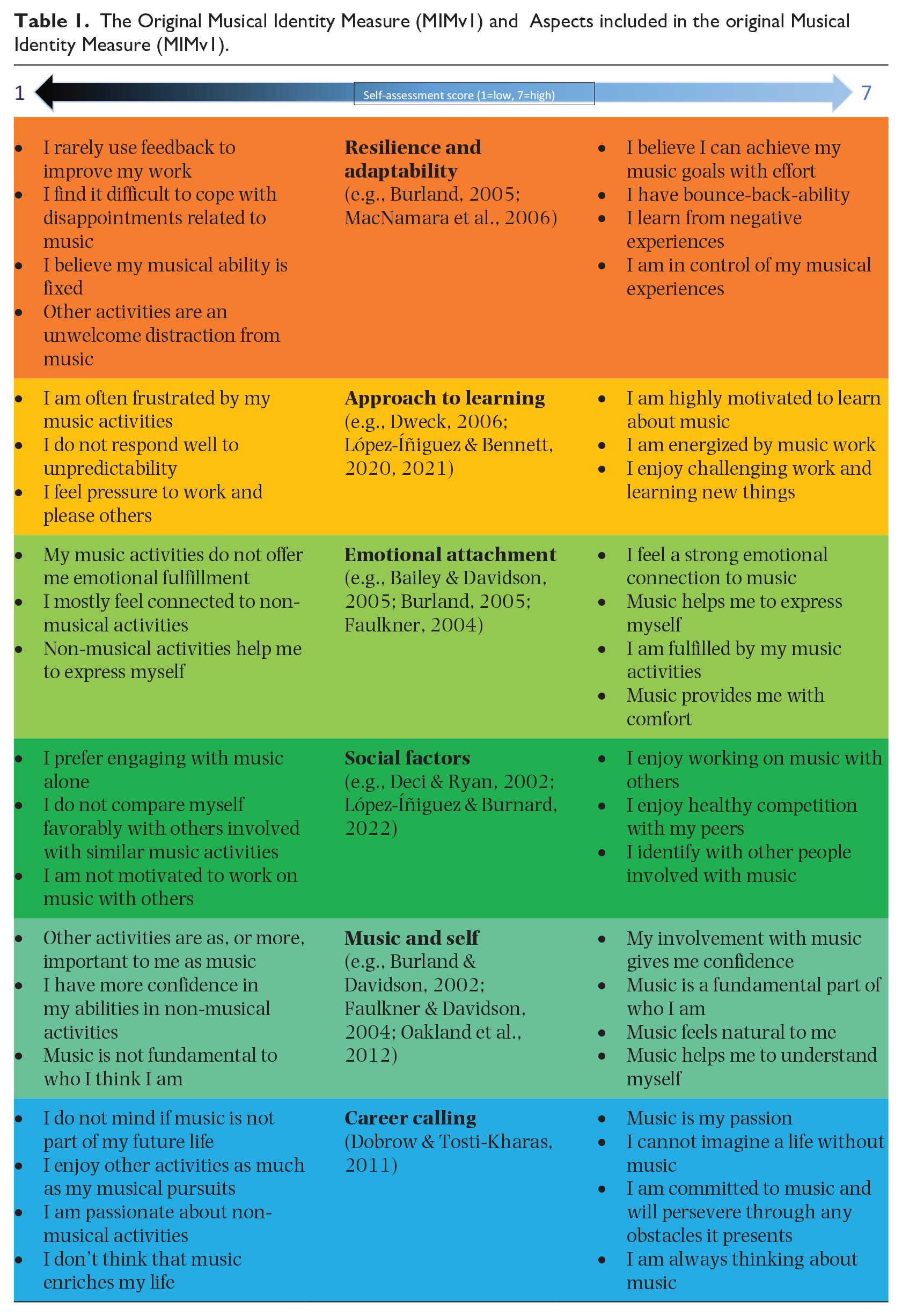
Making music is mainly a social activity—something we do with and for others—and thus it is an important channel of communication that gives opportunities to connect people and to share emotions, intentions, and meanings (MacDonald et al., 2017). Music contributes to the development of an individual’s sense of identity within a society, and musical identity enables people to look at the widespread and varied interactions between individuals and music (e.g., Burland, 2005; Davidson & Burland, 2007; MacDonald et al., 2005). With this in mind, the current study employed Version 1 of the Musical Identity Measure (MIM) reported by Burland et al. (2022—this Special Issue; see also Table 1 and Supplemental Appendix for version MIMv1) together with three open-ended questions to explore student musicians’ motivations to engage in music and their career-related meaning-making.
The Original Musical Identity Measure (MIMv1) and Aspects included in the original Musical Identity Measure (MIMv1).
Theoretical frameworks
Social cognitive career theory
The current study was grounded in social cognitive career theory (SCCT), which is derived from Bandura’s (1986) social cognitive theory (SCT). SCCT is an established framework within which to understand student perception and decision-making (Janz & Nichols, 2010) because it recognizes the social construction of career identity, the influences of proximal and distal factors, and the role of psychological capital.
Graduate success is strongly correlated with self-beliefs or efficacy beliefs since higher perceived employability is associated with positive feelings about work and better health and well-being (Berntson & Marklund, 2007). In the higher education setting, students with higher perceived employability are also likely to demonstrate higher self-determination (Parker et al., 2010).
SCCT theories have evolved over time from an original focus on interest, goals, and performance (Lent et al., 2000) through to well-being (Lent & Brown, 2008) or adaptive behavior and self-management (Lent & Brown, 2013). Lent et al. (1994) emphasize that efficacy appraisals are largely the result of cognitively mediating “the effects of learning experiences on future career behavior” (p. 87). This illustrates the intersection of SCCT with human capital theory (Becker, 1964) in that the amount and effectiveness of human capital and the individual’s investment in its development are posited as determinants of career success.
The MIM
The MIM (see Burland et al., 2022) was designed to elicit a deeper insight into individuals’ motivations to engage in music, including the ways in which individuals’ sense of self in relation to their musical activities might inform and support their future development as musicians. Its development was informed by the work of MacDonald et al. (2017), who posit that definitions of musical identity have over the past decade or so become broader and are increasingly understood to be connected to our behaviors and social interactions with others. Spychiger’s (2017) discussion of the Musical Self Concept Inquiry (MUSCI) provides a fascinating overview of the relationship between musical self-concept and musical engagement and experience, and we hypothesized that there might be many overlaps between MUSCI and MIM.
The study employed MIMv1, which featured six psychological and environmental areas (see Table 1) relating to musician identity: (1) resilience and adaptability, (2) approach to learning, (3) emotional attachment, (4) social factors, (5) music and self, and (6) career calling. The six areas are summarized as follows and indicative examples of items within each proposed area can be seen in the Supplemental Appendix.
• Resilience and adaptability refer to coping strategies and positive/negative experiences that influence the individual’s attitude toward the profession (e.g., Burland, 2005; MacNamara et al., 2006).
• Approach to learning refers to a growth mindset—the belief that abilities can be developed (Dweck, 2006)—to a learner identity in music (López-Íñiguez & Bennett, 2020, 2021) that acknowledges the existence of incremental rather than entity beliefs.
• Emotional attachment highlights the meaning and emotional connection, self-expression, and comfort offered by music (Burland, 2005) and understands that music enables people to express themselves in ways that words do not allow (Bailey & Davidson, 2005; Faulkner & Davidson, 2004).
• Social factors connect musicians’ professional learning pathways with sociocultural influences from peers, performers, family, and other influencers (López-Íñiguez & Burnard, 2022) and to relatedness (i.e., social connectedness) within the self-determination (SDT) framework (Deci & Ryan, 2002), where peer support, interactive motivation, idols in touching distance, or networks are crucial.
• Music and self highlight the common perception that music is a significant part of the self (Burland & Davidson, 2002; Faulkner & Davidson, 2004; Oakland et al., 2012); the music feels natural and enables individuals to understand themselves and to present aspects of themselves to others. Previous research suggests that understanding identity is vital for developing self-efficacy and self-esteem in students (Mancini et al., 2015). Items from Mancini’s et al. (2015) identity status measure were adapted for inclusion in MIMv1.
• Career calling describes the passion and deep meaning ascribed to a particular area of activity. The characteristics of career calling as described by Dobrow and Tosti-Kharas (2011) resonate with conceptualizations of identity, for example, the ways in which people define themselves to others and in people’s descriptions of passion and commitment to a career. Dobrow and Tosti-Kharas’s 12-item Career Calling scale was validated with musicians and was included in its entirety in MIMv1.
The main objective of the study was to understand student musicians’ motivations to engage in music and their career-related meaning-making. As educators, we were also interested in whether the MIMv1 might help student musicians to become conscious of their musical identities and whether this growing awareness might help students to identify priorities for career- and self-development. The study posed one primary research question and two sub-questions:
What are the motivation and career thinking of postgraduate classical music students? (a) To what extent might the use of MIMv1 help students to become more conscious of their identity? (RQ1a) (b) To what extent might identity awareness help students to identify priorities for career- and self-development? (RQ1b)
Materials and method
Recruitment and sampling
The participating students (see Table 2) were six classical musicians (female n = 4, male n = 2) enrolled in postgraduate classical music performance studies at a European higher music institution. Participants were from four different nations and a variety of socioeconomic backgrounds and all were fully proficient in English. Participants were purposefully selected for maximum variety (Stake, 2005).
Demographics of the sample.
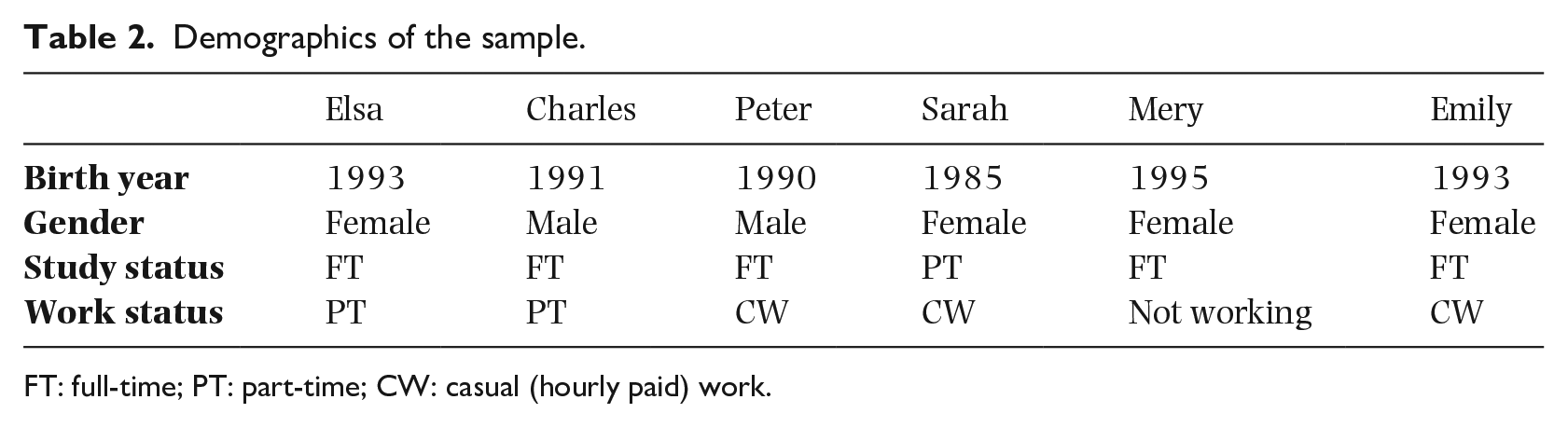
FT: full-time; PT: part-time; CW: casual (hourly paid) work.
Ethics
The study’s ethical acceptability was reviewed prior to the study by the Research Ethics Committee at the university where the study took place. Students signed consent forms following the guidelines of the local Advisory Board on Research Integrity and were not obliged to participate. Participants were informed of the purpose of the study and given the opportunity to ask questions. The names of participants have been changed to protect their anonymity.
Compensation for the participants was given by adding study credits to their personal degree records by following the European Transfer Credit and Accumulation System (ECTS), which in this case was 0.5 ECTS. The first author accessed the participants via an open invitation to participate in the study, sent by the Head of the Department in charge.
Materials and procedure
This was a descriptive, multiple-case study (León & Montero, 2002) designed to elicit personal narratives from participating postgraduate classical music performance students. We employed MIMv1, which includes Likert-style items relating to resilience and adaptability, approach to learning, emotional attachment, social factors, music and self, and career calling (see Table 1).
The responses to MIMv1 generated an individual report in which mean scores were displayed as a spider diagram. Participants were then given a copy of their individual report and asked to respond to three open-ended, reflective questions.
Do you feel that your profile is an accurate reflection of the way in which you perceive yourself in relation to music? What do you find most/least accurate?
Which aspects of the profile reflect your strengths?
Which aspects of your profile make you think about what your musical future might look like? Which aspects of your musical engagement/experiences do you value most or least? What might this mean in terms of your priorities for the future (at work or play)?
Data analysis
First, numerical data from MIMv1 were analyzed using descriptive statistics. Second, we quantified and coded participants’ responses to the open-ended questions using the six areas of MIMv1. For this, we used the content analysis tool Leximancer v4.5 (2018)—which has been previously used successfully in music studies (e.g., López-Íñiguez & Bennett, 2021; López-Íñiguez & McPherson, 2020)—to identify the main concepts in participants’ discourse in relation to their relative frequency, strength, and prominence.
Leximancer software uses a combination of techniques such as Bayesian statistics; it records segments of text to identify semantic concepts and then associates those concepts to a thesaurus that links words with their definitional properties. Using lexicometry analysis, the software produces an algorithmic interpretation of the identified concepts. These are assigned to prototypical phrases of wider meaning that contain positive and negative factors for interpretation by the researchers based on the theoretical framework(s).
Findings
MIM Version 1
Participants’ responses were grouped according to the six areas of MIMv1. These are shown as an aggregate radar diagram in Figure 1 and mean scores of the participants’ musical identity profiles can be observed in Table 3. We emphasize that the study was based on students’ self-report, or perceived ability, and not on an external measure of performance.
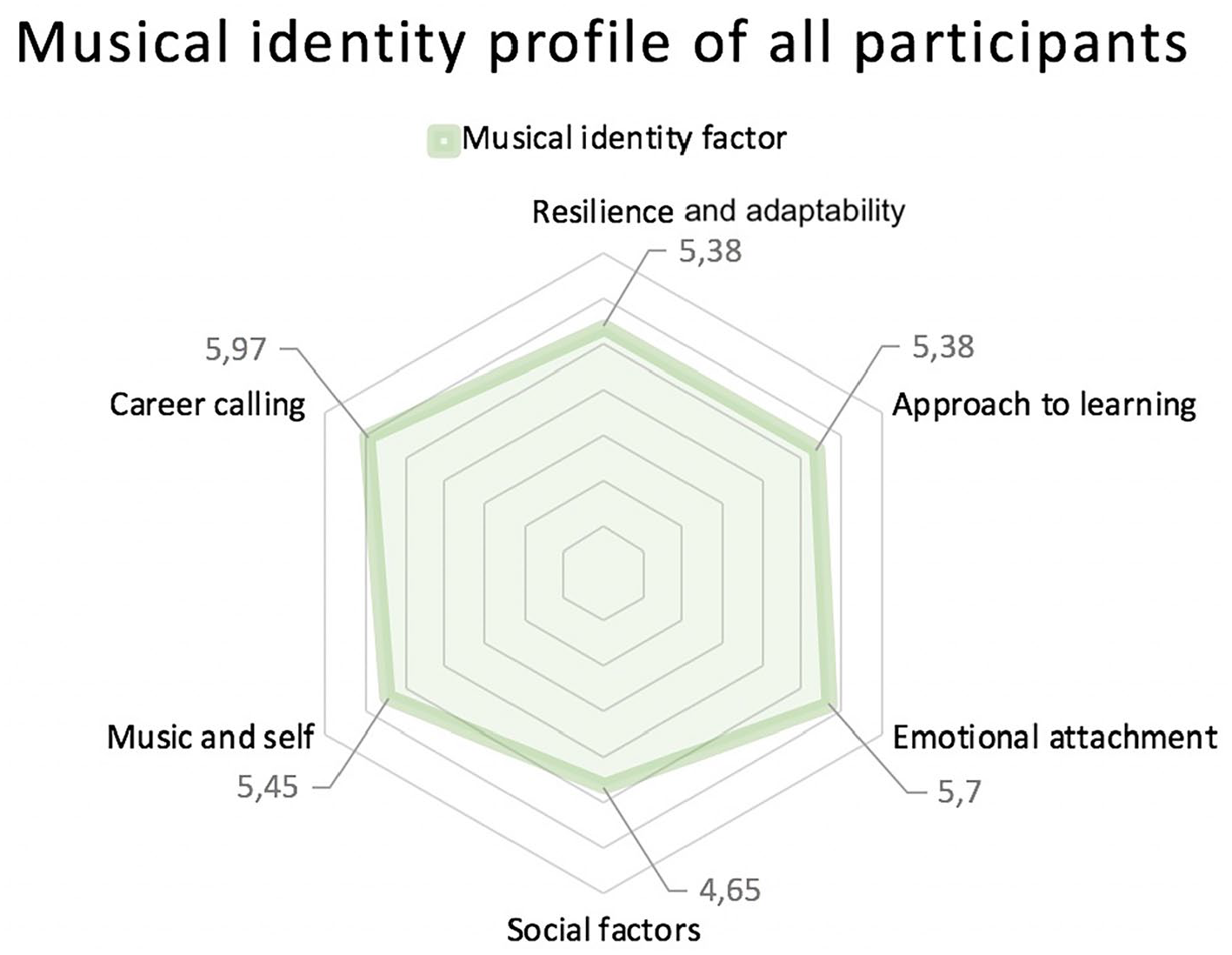
Cohort-wide spider graphic illustrating combined students’ confidence in relation to the different elements of their musical identity profiles.
Mean scores of the participants’ Musical Identity profiles.
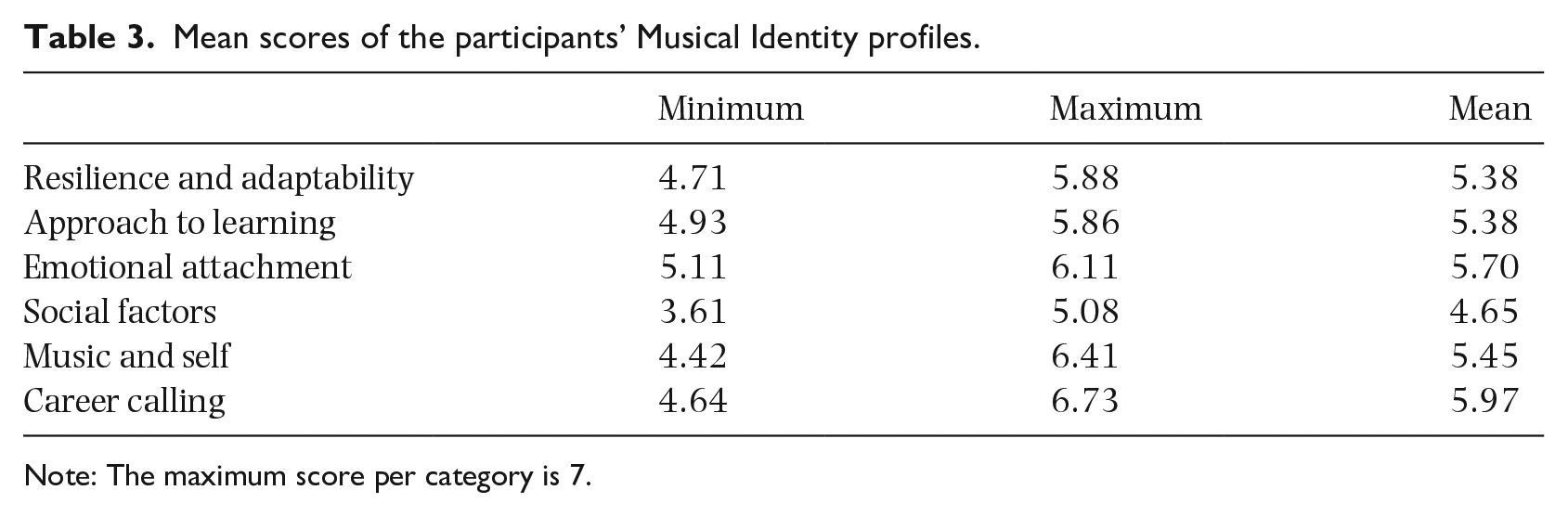
Note: The maximum score per category is 7.
Participants’ text-based reflections on their musical identity
Participants reflected on their MIMv1 profile using open-ended questions. These were coded by applying lexicometry analysis, employed a standard granularity threshold (i.e., what is visible on a conceptual map) of 100% for visible concepts and 50% for theme size. Figure 2 illustrates the prototypical phrases that support the main concepts selected by Leximancer, organized into the six areas of MIMv1. Following common practice in lexicometry studies (Bécue-Bertaut, 2010), the concepts and themes shown in Figure 2 are emphasized using bold text in participants’ prototypical quotes.
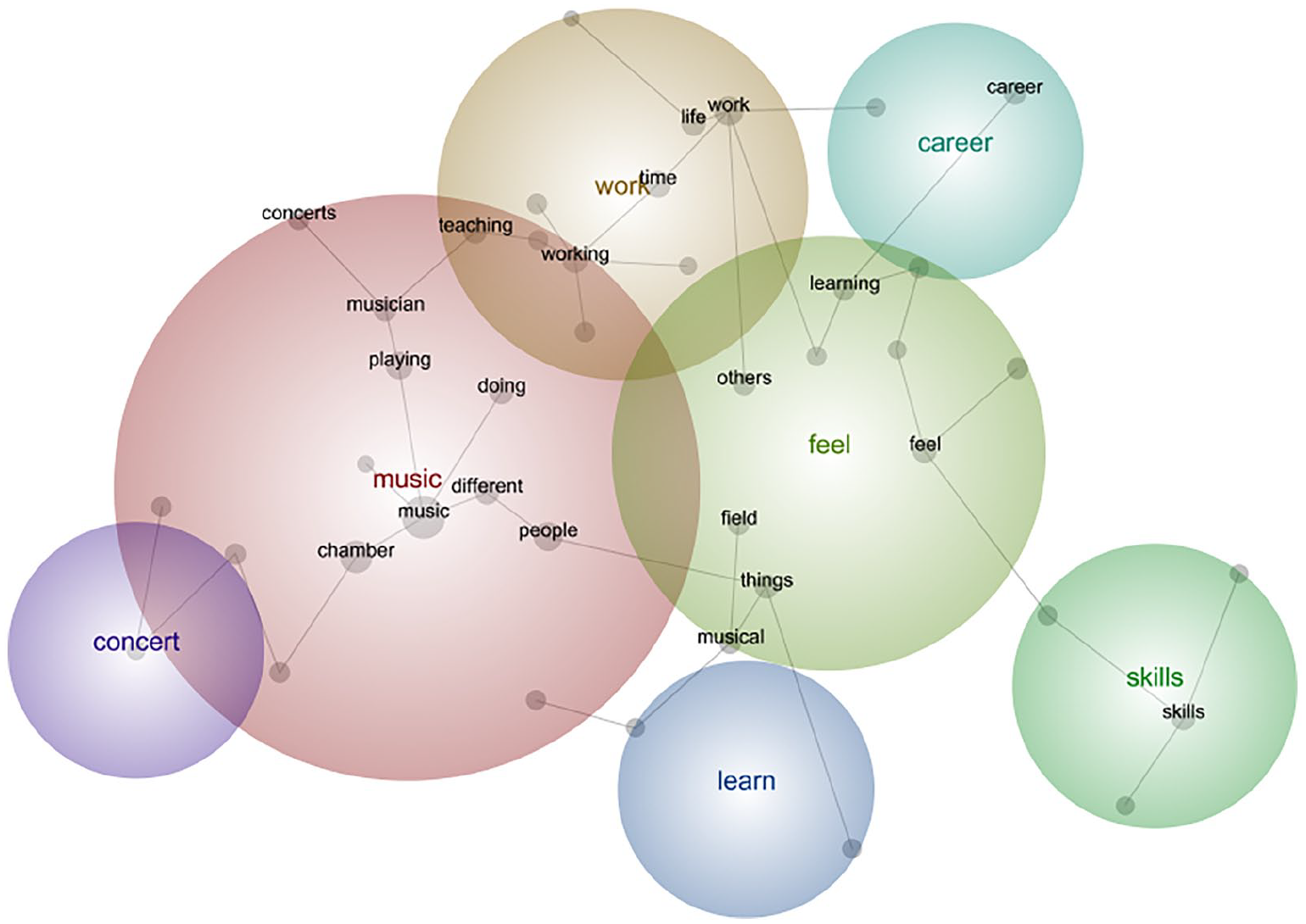
Leximancer-generated concept map for participants’ self-assessment of their musical identity profiles.
Overall, participants highlighted the low and high scores in each of the six areas of MIMv1 as an accurate representation of themselves as musicians at that time. They easily identified perceived strengths and areas for development in these areas and they were able to use this information to formulate possible actions. Examples from each of the six areas are provided below.
Social factors
The lowest scores were reported in social factors. Within this area, participants referred to isolation as typical of soloist-oriented performers’ practice: I am all in to be a Social factors seem surprisingly low. I tend to be somewhat isolated in my
Social factors were also connected with aspects of self-efficacy and self-confidence by some participants: I don’t really like
Participants also mentioned that being more or less social could be affected by shifting their performing focus from chamber/orchestra to solo work: “I really enjoy
Developing social skills was considered to have a potential influence on musicians’ success and opportunities in the labor market, as networking is a crucial part of the profession: Social factors might be a thing affecting quite a bit of securing paid
Approach to learning
Participants’ scores for Approach to learning were quite similar. Although learning to develop a variety of skills was considered important by all participants, they identified networking and funding seeking skills as clear weaknesses they should address: “To develop my
Financial considerations were also connected to feeling exhausted as freelancers, and how that left little space for any new learning to happen: I am getting bored most of the
Technical shortcomings were identified as negative influential factors on their eagerness to learn, and were also connected to low self-efficacy and self-confidence: I don’t think too much about
Despite this, it was also mentioned that learning plays a crucial role in future-making, as it might enable positive outcomes in the profession: I imagine my
Resilience and adaptability
Psychological and physical resilience were connected to general perseverance in life: “Resilience or perhaps even a good kind of stubbornness is perhaps something that I find in myself in many One point that I am I know I have a will to
Participants also mentioned finding it difficult to be resilient and adaptable due to the shifting nature of the classical music profession in a changing, complex world. This included the importance of thinking laterally in terms of projects with societal—and not exclusively musical—intrinsic opportunities: At the moment the grant system is somewhat biased towards programs and ideas directed at
Music and self
For some of the participants, music was described as an intrinsic part of the self for a variety of reasons, including having engaged with it since early childhood: “I have been following this
On the other hand, this area was seen in a more negative light when discussing the precarious nature of classical music careers: “My perceived
Emotional attachment
This is one of the areas that received the highest scores, together with Career calling. Participants explained that they felt a strong attachment to music because it was the most intense and fulfilling activity in the present moment, or because it arouses strong feelings and emotions: “Nothing still moves and touches me as much as
Career calling
This last area featured the highest scores. Some of the participants mentioned that their call to music was connected to positive earlier experiences as performers, though they were not prepared for the reality of the profession and, thus, needed further learning: There are two sides affecting my
Career calling was also negatively influenced by de-motivated peers, or the challenges associated with developing/focusing on short-term contracts: [. . .] Least rewarding have been in such projects where the lack of commitment from some participants is obvious and perhaps my own effort has little impact on the end result, such as some school orchestra/
Participants were divided in their opinions about the usefulness of seeking advice from other professionals regarding musicians’ working lives and other aspects relating to Career calling, particularly those they associated with lower confidence scores. One student said that talking to professionals, like careers advisors or program coordinators, was not something she would do, preferring instead to talk to those who know her well. Others had spoken to teachers and mentors but acknowledged the challenges associated with seeking advice from others: I have talked with some of my professors, who are very successful musicians themselves, and discovered that they can hardly answer the questions concerning your own path. A good teacher of course supports his students, but every person has a
The participants had clear ideas about the kinds of professional peer support that might be helpful, such as a desire to hear about alternative career paths, getting career feedback, writing successful funding applications, or overcoming the various trials and tribulations associated with pursuing work as a professional performer: How to use feedback more effectively, how to cope with disappointments in the future and in history, how to build stronger confidence and how to build more control towards my own I think talking with someone who has actually made a
Discussion and conclusions
This study employed MIMv1 together with open-ended reflective questions to explore student musicians’ motivations to engage in music and their career-related meaning-making. Our primary research question was to understand the motivation and career thinking of postgraduate classical music students. In general terms, we found that the participants had a close relationship or identification with music and that this informed their reflections on their futures with music. The lexicometric analysis allowed us to identify themes connected to positive factors related to a musician’s musical calling (identification of the self with a music career and music seen as an intense and fulfilling activity) and emotional attachment (music arousing strong feelings and emotions, having positive formative experiences in music since childhood).
Student reflections on the open-ended questions also highlighted the value of MIMv1 for enabling students to become more conscious of their identity (RQ1a). For example, the participants recognized the value of identifying themselves as learners and understood that learning plays a crucial role in future-making. This is related to the concept of a growth mindset, first coined by Dweck (2006), and which in music education has been related to student musicians’ perceived employability and learner identities (López-Íñiguez & Bennett, 2021). These factors (musical calling, emotional attachment, growth mindset) formed part of MIM Version 2 (Burland et al., 2022) as they relate to the motivation to overcome challenges of the profession, as previously identified in research outside the study of musical identities (Bull, 2018; López-Íñiguez & Bennett, 2020; Young et al., 2019).
The participants also referred to negative aspects of career-related challenges such as being exhausted as freelancers while pursuing their studies, or the challenges associated with focusing on short-term contracts, again identified in previous studies on postgraduate music students’ work (e.g., Jääskeläinen et al., 2020). These aspects were associated by the participants with issues such as the precarious and shifting nature of the classical music profession in a changing, complex world (see REACT—Rethinking Music Performance in European Higher Education Institutions, 2021).
RQ1b was concerned with the extent to which identity awareness might help students to identify priorities for career- and self-development and as discussed above, reflections on MIMv1 prompted reflections on strengths and weaknesses along with ideas about future actions and mitigations. For example, the participants understood that coping strategies could include developing networks, enhancing their ability to secure funding, or shifting their performing focus to enable a broader range of opportunities. However, they also mentioned aspects of resilience and adaptability that related to their lack of autonomy and agency in their studies and professional performing roles, or to their perseverance in life versus their lack of self-efficacy and self-confidence (e.g., technical shortcomings). This echoes Gross and Musgrave’s (2017) report on the numbers of musicians with mental health problems in the United Kingdom and signals the need to prepare musicians for a future of uncertainty to be more adaptable and self-reliant (Burland & Bennett, 2022). Self-reliance, for example, links to the social factors of MIMv1, employed in this article.
Within social factors, the participants also referred to the strong influence of networks, and how certain attitudes of sociocultural agents surrounding them (e.g., dis-motivated peers) negatively impacted their motivation to be professional musicians. They also highlighted the lack of influence and decision they had on their studying and professional choices, as identified in earlier studies where such decisions and choices are positively/negatively determined by peers, performers, or family members surrounding music students (e.g., López-Íñiguez & Burnard, 2022). Burland and Bennett (2022) have discussed the tension between relying on peers at the same time as competing with them, while acknowledging the value of career preview, mentoring and realistic support and guidance, and access to communities of practice for expanding and developing skills; however, some participants did not see the benefit of seeking advice from other professionals.
At the beginning of this article, we argued that postgraduate classical music performance students’ musical identities could be understood as an additional, relevant angle to understand their future career making with the potential to expand SCCT. However, it is important to note that, as in Spychiger’s (2017) research on musical identity and self-concept, social items were absent in MIMv2. This could be because professional musicians and music students typically refer to the isolation of the profession, including the practice room (in line with Burwell et al., 2017). Thus, this research has some implications for music teaching and learning in highlighting the risk of social isolation and supporting musicians to find healthy strategies for protecting themselves.
Finally, a close relationship with music was perceived positively by the participants, but it is also worth considering the potential risks associated with a strong identification with music; what happens, for example, if levels of exhaustion make it difficult to continue to pursue a working life in music? MIM offers the value of turning attention to identity to facilitate meaningful discussions about the future with postgraduate classical music performance students. In that sense, conversations of the type reported in our study can be helpful for aspiring musicians who wish to pursue music careers beyond performance, including composers, producers, community musicians, portfolio careerists, and entrepreneurs.
Supplemental Material
sj-docx-1-msx-10.1177_10298649221089869 – Supplemental material for Understanding the musical identity and career thinking of postgraduate classical music performance students
Supplemental material, sj-docx-1-msx-10.1177_10298649221089869 for Understanding the musical identity and career thinking of postgraduate classical music performance students by Guadalupe López-Íñiguez, Karen Burland and Dawn Bennett in Musicae Scientiae
Footnotes
Acknowledgements
We thank the participants of this research for allowing us to study their narratives. We would also like to thank Cecilia Runneboom for supporting the first author on the use of the Leximancer software.
Declaration of conflicting interests
The author(s) declared no potential conflicts of interest with respect to the research, authorship, and/or publication of this article.
Funding
The author(s) disclosed receipt of the following financial support for the research, authorship, and/or publication of this article: This research was undertaken as part of the Transforming Musicianship: Developing Musicians’ Learner Identity Through Multidisciplinary Pedagogy project (no. 315378) funded by the Academy of Finland and supported by the Center for Educational Research and Academic Development in the Arts (CERADA) at the University of the Arts Helsinki.

Supplemental material
Supplemental material for this article is available online.
References
Supplementary Material
Please find the following supplemental material available below.
For Open Access articles published under a Creative Commons License, all supplemental material carries the same license as the article it is associated with.
For non-Open Access articles published, all supplemental material carries a non-exclusive license, and permission requests for re-use of supplemental material or any part of supplemental material shall be sent directly to the copyright owner as specified in the copyright notice associated with the article.
