




Abstract
The purpose of this paper is to examine how the United Arab Emirates (UAE) has progressed as an international education hub and assess the development of its innovation capability in alignment with its aim to transition into a knowledge-based economy. Specific developmental indicators derived from secondary data sources are used to assess the UAE's progress in terms of attracting international students and institutions, developing and retaining a skilled workforce, and building capacity to support research and innovation. The paper finds that the UAE has made modest progress in terms of developing its innovation capability, and that it currently lags behind other education hubs in international co-inventions, multi-stakeholder partnerships, and university-industry collaborations. Findings of this study indicate a need for the UAE to takes a more strategic approach to building international partnerships that are informed by its developmental needs, prioritizing both innovation capabilities and regional relevance.
Introduction
Education hubs are considered an important development in international higher education, with a growing emphasis in several countries, particularly in Asia and the Middle East, to become centers of higher learning (Lee, 2014). Knight (2011) defines an education hub as “a planned effort to build a critical mass of local and international actors strategically engaged in education, training, knowledge production, and innovation initiatives” (p. 233). A key element of a globally competitive education hub is collaboration among domestic and foreign actors (such as educational institutions, research centers, government agencies, and companies), which can have a substantial impact on access to education, national reputation for higher education and research, and economic development (Knight, 2014a).
One of the most widely cited rationales for developing as an education hub is to prepare a skilled workforce that, in turn, helps a country transition towards a knowledge-based economy (Knight, 2011). This contrasts with the educational and cultural benefits traditionally associated with the internationalization of higher education, such as incorporating global perspectives in education and building cross-cultural skills (De Wit, 2019). Although countries may adopt different models to develop as an education hub, they are typically driven by a need to shift from a natural resources or manufacturing economy to one based on knowledge and service industries (Knight, 2011). One such country is the United Arab Emirates (UAE), which has heavily invested in international education initiatives over the last two decades in its efforts to move away from its reliance on oil to support its economic growth (Fox & Al Shamisi, 2014).
While the exceptional growth of international branch campuses (IBCs) in the UAE has helped build its position as a prominent education hub, excessive reliance on IBCs may not serve as a sustained competitive advantage as other countries in the region are expanding their higher education sector to provide similar opportunities (Lane et al., 2021; Sawahel, 2024). In addition, declining enrolment and evidence of market saturation suggest that the UAE's short- and medium-term goals of attracting international universities to meet local demand have largely been met (Ashour & Fatima, 2016; Badry, 2019). It is important, therefore, to examine more recent developments in the country and assess how well it is advancing towards its long-term aspiration of becoming a knowledge/innovation hub.
The purpose of this paper is to examine how the UAE has evolved as an education hub over time. Using Knight's (2014b) analytical framework, the study focuses on the progress made in the UAE in terms of attracting international students and institutions, developing and retaining a skilled workforce, and building capacity to support research and innovation. The paper also specifically examines the UAE's performance on indicators for innovation capability to explore its potential to advance as a knowledge-based economy in alignment with its national priorities.
The next section provides a review of the literature focusing on education hubs as an important development in international higher education, including an overview of how the UAE has progressed as an education hub. The analytical framework and methodology used for this study are described next, followed by a section on the analysis and discussion of the findings. The paper concludes with recommendations on how the UAE can sustain its growth and remain competitive as an international education hub.
Literature Review
International Education Hubs
The development of an international education hub involves strategic initiatives to transform a country into a center for higher education and research through cross-border collaborations (Liu & Coates, 2024). Depending on their focus, education hubs may be classified into three broad categories: student, talent, or knowledge/innovation hubs (Knight, 2013). Student hubs are those that are mainly interested in internationalizing their higher education sector by providing local students access to foreign credentials. Talent hubs focus on human capital development and are interested in partnering with foreign institutions to train local and international students who would transition into the workforce as skilled employees. Knowledge/innovation hubs, on the other hand, seek to collaborate with international universities, research institutions, and companies to build a strong research and innovation culture.
Depending on the internationalization objectives of institutions and countries engaged in cross-border education, the rationale behind the creation of an education hub may vary. While transnational partnerships of this nature often tend to be profit-oriented, many host countries pursue them to increase access to higher education, build research capacity, and enhance domestic education systems (Marginson & McBurnie, 2004). Being recognized as an education hub also has geopolitical implications (Erfurth, 2022; Wilkins & Juusola, 2018). Adam and Adam (2024), for instance, note that the UAE and Qatar have capitalized on their positioning as education hubs to support the development of soft power, elevate their regional leadership in the Gulf, and build their capacity for knowledge diplomacy. Thus, strategic initiatives to develop as an international education hub may allow countries to better compete in a global knowledge economy (Knight & Lee, 2013).
Glass and Cruz (2023) note that regional education hubs that host an increasing number of globally ranked international universities tend to see a rise in international student mobility. Students typically prefer these regional hubs as they offer a more affordable pathway to gain international academic credentials. International students may also be drawn to regional hubs due to cultural similarities and geographic proximity (Kondakci et al., 2018). An analysis of international student mobility trends over time provides evidence of an increase in regional education hubs, and an associated decline in the dominance of traditional developed countries as the destinations of choice for international education (Hou & Du, 2022). This, in turn, has supported a shift whereby emerging hubs in Asia, South America, Africa, and the Middle East have started to gain influence in the global higher education landscape.
United Arab Emirates as an International Education Hub
The UAE is a federation of seven emirates with a total population of approximately 10.04 million, the vast majority of which are expatriates. It is recognized as a high-income country with the fastest GDP growth amongst Gulf states (Central Intelligence Agency, 2025). While primarily an oil producer, the UAE has actively worked to diversify its economy to reduce its reliance on oil. According to the Federal Competitiveness and Statistics Centre (FCSC), non-oil GDP accounted for 74.6% of total real GDP in 2024, representing a 4.5% increase compared to 2023, with growth experienced in key sectors including transportation, finance, and construction (FCSC, 2025). The UAE has also invested significantly in centers of higher learning to internationalize its higher education system with an overarching aim to build national capacity, attract foreign talent, and compete globally as a knowledge-based economy (FCSC, 2014). Its political stability and strategic geographic location make it particularly appealing for international universities looking to expand their operations in the Middle East (Fox & Al Shamisi, 2014).
The UAE positioned itself as an education hub in the early 2000s and has made considerable progress since its inception using a combination of commercial and investment approaches (Knight, 2014a). It is considered one of the world's most competitive markets for post-secondary education, with over one hundred higher education providers for a population of just over 10 million (Wilkins & Huisman, 2021). The country is classified as a student/talent hub due to its emphasis on the development of a skilled workforce and investment in IBCs to support the recruitment of international students and faculty. Its key features include multiple free zones, with relaxed tax regulations and limited bureaucratic interventions, which are appealing to international higher education institutions interested in expanding their operations in the UAE (Fox & Al Shamisi, 2014).
While the UAE's National Strategy for Higher Education highlights the importance of building partnerships for a knowledge-based economy (Ministry of Education, 2023), planning and administration of cross-border activities are decentralized in the UAE. In other words, each emirate independently leads its internationalization initiatives. For instance, Dubai's Knowledge and Human Development Authority (KHDA) released Education 33 (E33) as its strategy to develop Dubai as a global hub for education and innovation (KHDA, 2023). Similarly, Abu Dhabi's Economic Vision 2030 commits to making the emirate of Abu Dhabi a regional center of learning and culture and an international education hub with world-class universities (Government of Abu Dhabi, 2008). This is in contrast to other major education hubs, such as Singapore and Qatar, that have an overarching national plan to guide education hub development (Knight, 2013).
Due to this decentralization of planning and administration, each emirate in the UAE takes distinct approaches to education hub development. While Dubai has mainly focused on attracting numerous IBCs through its economic free zones, Abu Dhabi has pursued strategic partnerships with a small number of leading international universities by offering substantial financial and infrastructural support. Ras Al Khaimah forms the smallest of the UAE's education hubs and has opted for a low-cost structure, offering several transnational education programs in partnership with international universities using the franchising model, with a limited number of IBCs (Wilkins & Juusola, 2018).
Scholars disagree on how successful these distinct approaches have been in supporting the UAE's vision of becoming a knowledge-based economy. While there is evidence to suggest that the country is prioritizing and investing in education infrastructure and science, technology, engineering, and mathematics (STEM) education (Esposito et al., 2017), some have argued that most institutions rely heavily on student-fee-based models and have limited funding for research (Ashour, 2020). This restricts its ability to build a culture of research and innovation necessary to develop as a knowledge-based economy (Badry, 2019). With little alignment between the strategies adopted by each emirate, it is difficult to determine whether the country is addressing its developmental aims and progressing towards becoming a knowledge/innovation hub — the central focus of this study.
Methodology
The paper uses the methodological approach proposed by Knight (2014b) to examine the extent to which the UAE has progressed since it established as an education hub in the early 2000s. As outlined in Figure 1, this approach involves classifying hubs into three main types (student, talent, and knowledge/innovation) and identifies a set of indicators to measure a hub's performance in leading cross-border education initiatives in terms of education, training, and research activities.
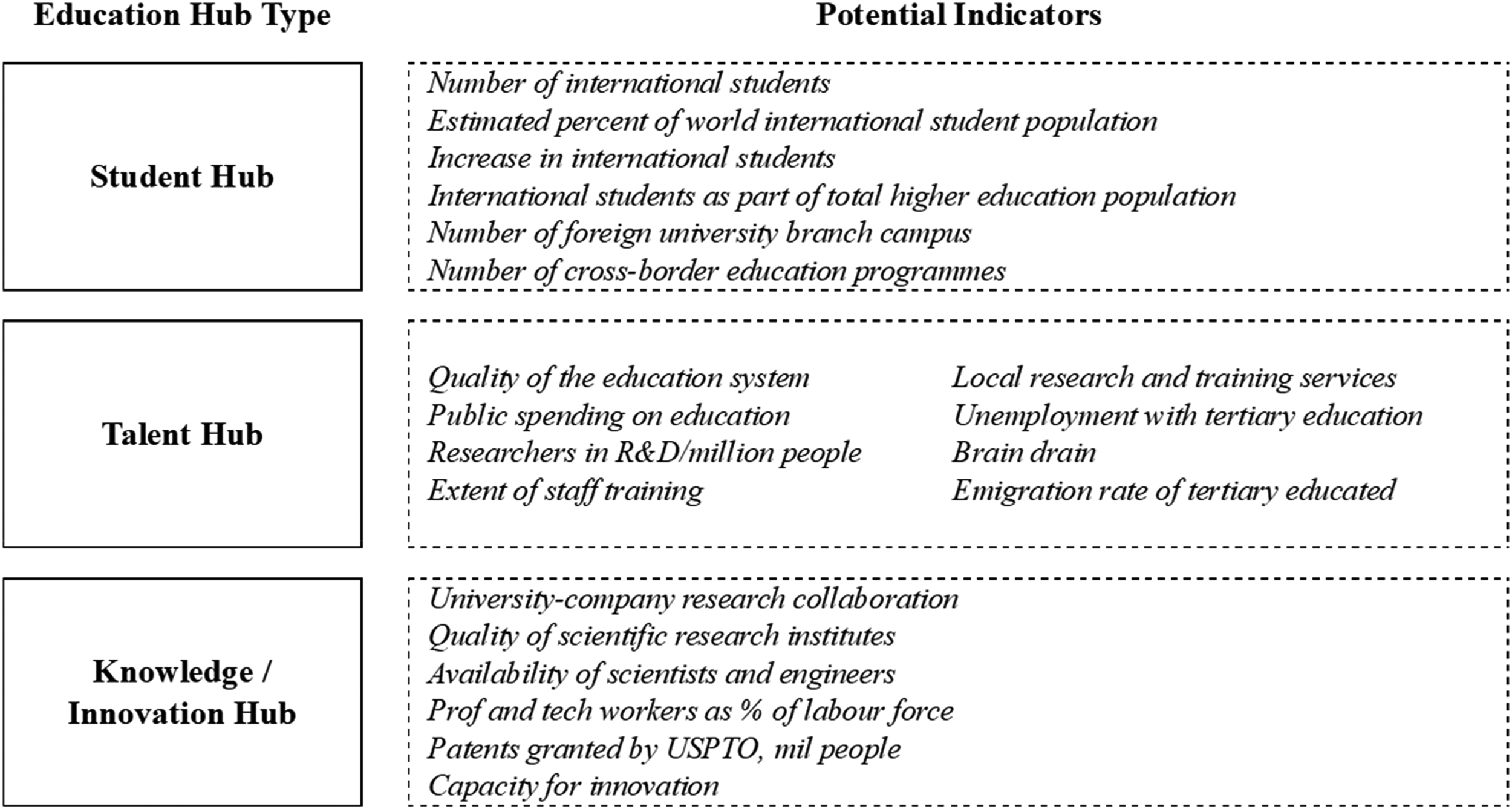
Analytical Framework (Adapted from Knight, 2014b).
Given the lack of consistency in the way countries tend to define and measure cross-border activities, Knight (2014b) recommends the use of comparable data from world organizations or international data banks to assess the level of development for each hub type. Accordingly, this study uses publicly available data through a range of secondary sources, such as the United Nations Educational, Scientific, and Cultural Organization (UNESCO) and the World Economic Forum (WEF), to examine how the UAE has progressed. For a comprehensive assessment, multiple variables are used for each hub type with a mix of opinion-oriented (scale of 1–7) and quantitative metrics.
Since the focus of this study is to examine progress over time, indicators were selected based on relevance as well as availability of comparable data across multiple years for a given set of indicators. Specifically, data from UNESCO was used for indicators related to international enrolment and inbound mobility rate. Similarly, data from the WEF was used for relevant indicators of talent and knowledge/innovation hub. Information on branch campuses was retrieved from Observatory on Borderless Higher Education (OBHE) Reports (OBHE, 2012) and Cross-Border Education Research Team (C-BERT) (C-BERT, 2023). Data specific to global rankings on research and innovation was retrieved from SCImago Institutions Rankings (SCImago, 2025). Where possible, data was validated using information available through institutional websites and official government sources, including the Ministry of Higher Education and Scientific Research (MoHESR), Commission for Academic Accreditation (CAA), KHDA, and Ras al Khaimah Economic Zone (RAKEZ).
It should be noted that, even though these are reliable sources for country-specific data, it is not often possible to retrieve data for each year to make a consistent comparison across different points in time. For the purpose of this study, the most recent comparable data available across 2008–2024 is used for analysis. To provide context and inform the analysis, findings were discussed using policy documents and available literature on the subject, particularly peer-reviewed articles and case publications on the internationalization of the higher education sector in the UAE.
Findings
Progress as an International Education Hub
To examine the progress made by the UAE as an international education hub, this section makes use of a series of developmental indicators that are associated with recruitment of international students and institutions (student hub), attract and retain a skilled workforce (talent hub), and capacity to support research and innovation (knowledge/innovation hub). The results are summarized in Table 1.
UAE's Progress on Indicators for Each Hub Type.
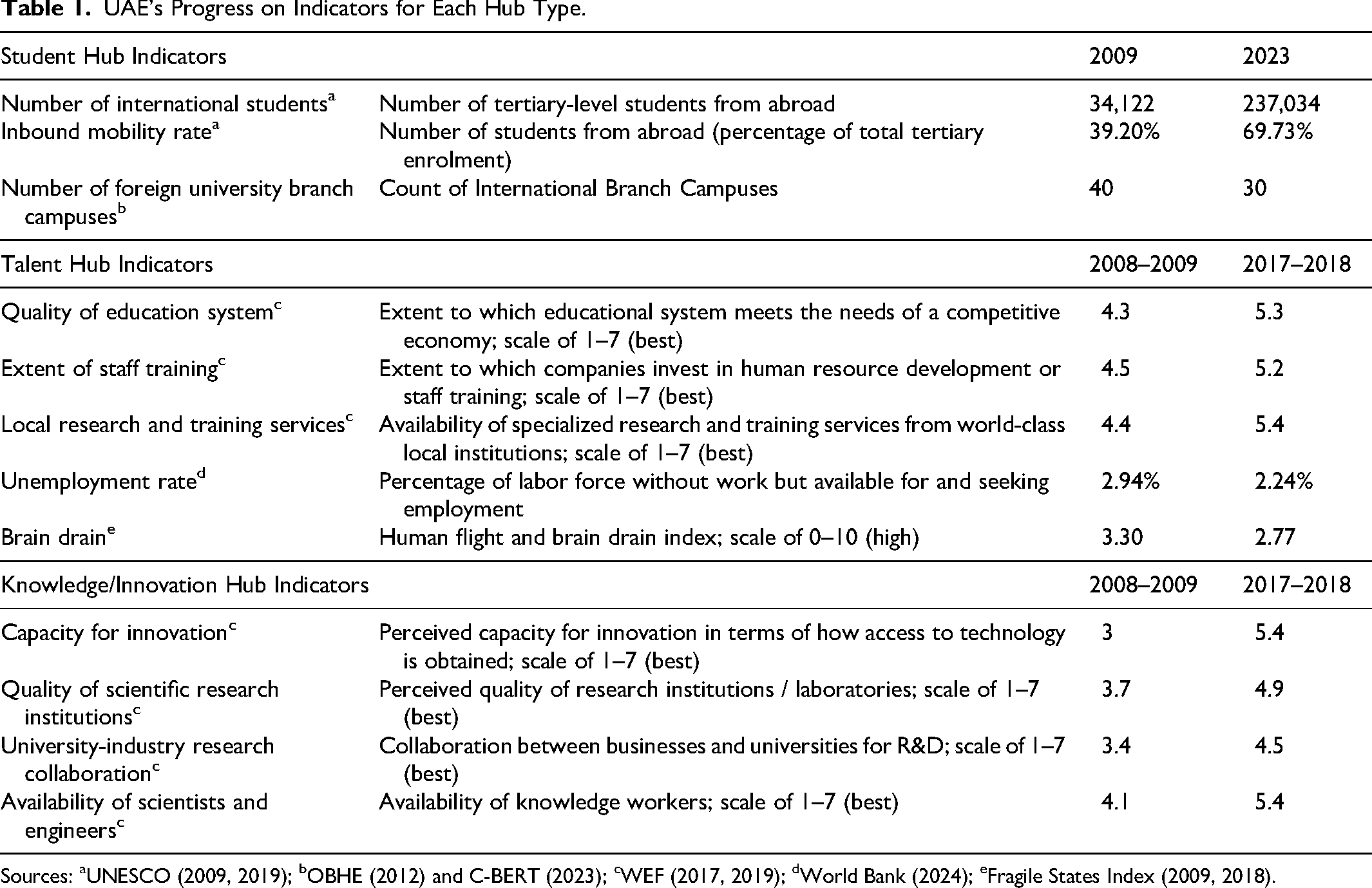
Sources: aUNESCO (2009, 2019); bOBHE (2012) and C-BERT (2023); cWEF (2017, 2019); dWorld Bank (2024); eFragile States Index (2009, 2018).
Several foreign institutions have stopped operating in the country due to operational or regulatory reasons (Ashour & Fatima, 2016), with China recently surpassing the UAE as the largest importer of higher education (C-BERT, 2023). For example, the University of Waterloo (Bradshaw, 2012) and Michigan State University (Swan, 2010) closed their branches a few years after the launch of their programs in Dubai due to financial setbacks. Similarly, the George Mason University campus established in Ras Al Khaimah closed due to reduction in its subsidies and low student enrollment (Stripling, 2012). While these instances raise concerns around the long-term viability of IBCs in Dubai, there are several IBCs, such as the University of Wollongong and the University of Bradford, that have maintained a sustained presence in the emirate.
It should be mentioned that, at the time of writing, four of the 30 IBCs were found to be permanently closed. Moreover, there are an additional 22 international education providers currently operating in the UAE and licensed by either the CAA, KHDA, or RAKEZ academic zone, which did not appear on the C-BERT database. A list of these institutions is provided in the Appendix.
Over the observed period, a decline is also noticeable in the UAE's human flight and brain drain index (from 3.30 to 2.77), which signifies that fewer skilled professionals are leaving the country for better opportunities. While several political, economic, and social factors may explain this decline, talent retention has been a key priority for the country (Government of Abu Dhabi, 2008). Recent measures to support the development of strong human capital include introducing a national strategy for attracting and retaining talent (Ministry of Economy, 2021) and immigration policy measures that allow high-skilled professionals to attain long-term residency (Federal Authority for Identity, Citizenship, Customs & Port Security, 2023).
Prioritization of research and innovation is most clearly evident in the international institutions based in Abu Dhabi. For example, the emirate invested in the development of the Masdar Institute for Science and Technology (now known as Khalifa University) in collaboration with the Massachusetts Institute of Technology to form the region's first research-intensive university specializing in sustainable technologies (Geddie, 2012). Abu Dhabi also provides generous financial support to New York University Abu Dhabi (NYUAD), which has developed a strong research infrastructure and gained access to external funding to advance its research mandate (CAA, 2020).
The next section examines the extent to which these developments align with the UAE's ambition to establish itself as a knowledge/innovation hub. This analysis is conducted by comparing the UAE with other international education hubs in terms of innovation capability and examining global research and innovation rankings of internationally affiliated universities in the UAE.
Development of Innovation Capability
As discussed previously, the UAE has improved its performance over time across different developmental indicators associated with knowledge/innovation hubs. However, its performance relative to other education hubs remains modest. This is illustrated in Table 2, which presents a comparative overview of the performance of various education hubs across a range of innovation capability indicators.
Sample Indicators for Innovation Capability (WEF, 2019).
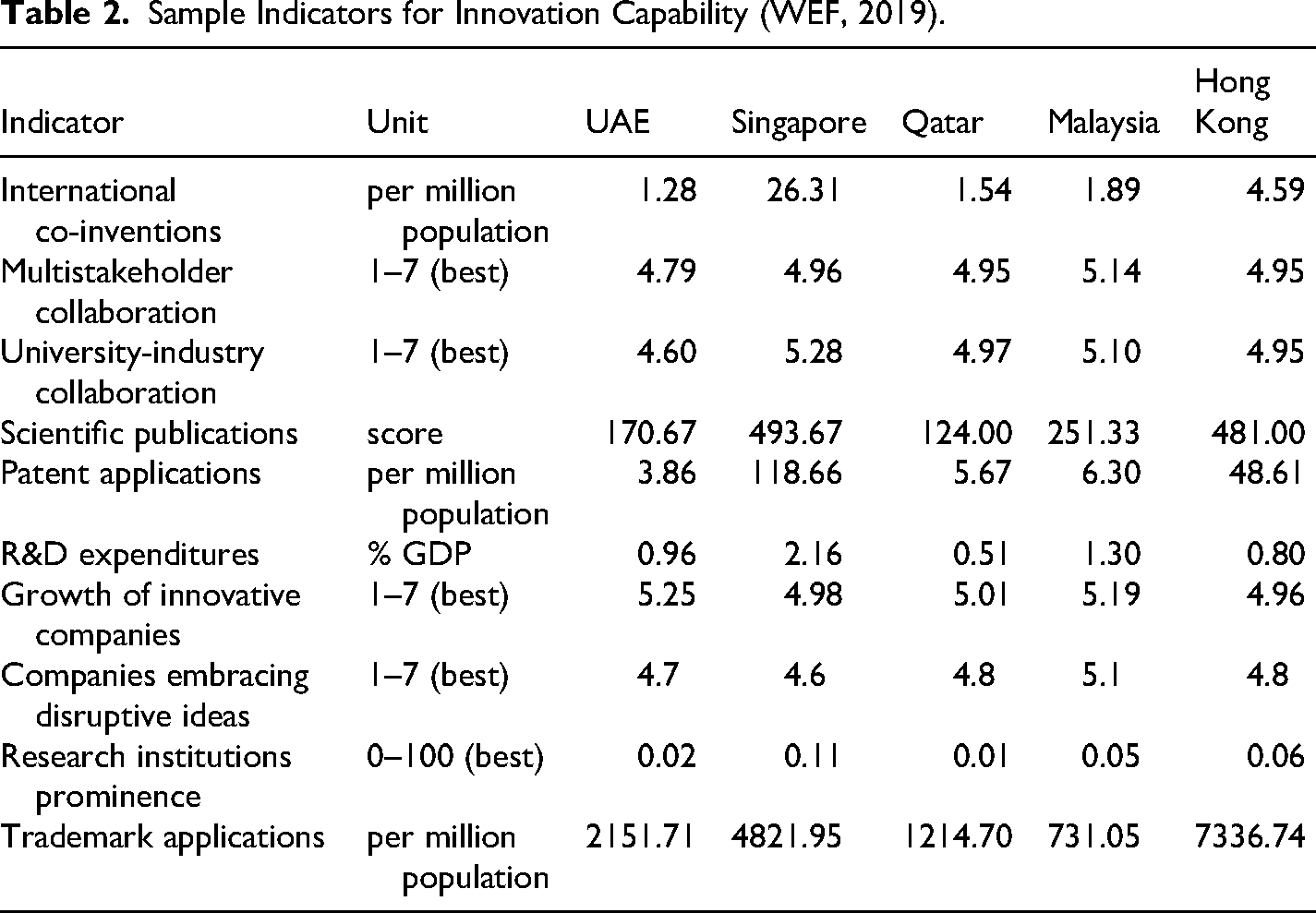
In comparison to the other education hubs, the UAE scores the lowest on several key indicators, such as international co-inventions, multi-stakeholder collaborations, and university-industry collaboration in research and development. These are also identified as some of the main weaknesses of the UAE by the World Intellectual Property Organization (WIPO) in addition to its limited labor productivity growth and absence of global corporate partners for investment in research and development (WIPO, 2022). While the UAE and Singapore are comparable in terms of multistakeholder collaborations, Singapore outperforms the UAE in international co-inventions, scientific publications, and patent and trademark applications. Except for scientific publications and trademark applications, the UAE lags behind Qatar in most indicators for innovation capability. Similarly, both Malaysia and Hong Kong appear to be surpassing the UAE in this area.
The UAE has a relatively higher score for the growth of innovative companies, which signifies a supportive environment for new businesses to thrive. However, it has not leveraged its growing higher education sector to sufficiently build on its knowledge development and innovation capabilities. Figure 2 provides an overview of how well the domestic and international universities based in the UAE have ranked globally for research and innovation over time (2009–2024). As illustrated, while there is a considerable increase in the number of globally ranked institutions, there is an overall downward trend in their performance on research and innovation rankings, with increasing disparities between individual institutions (as signified by the widening interquartile range).
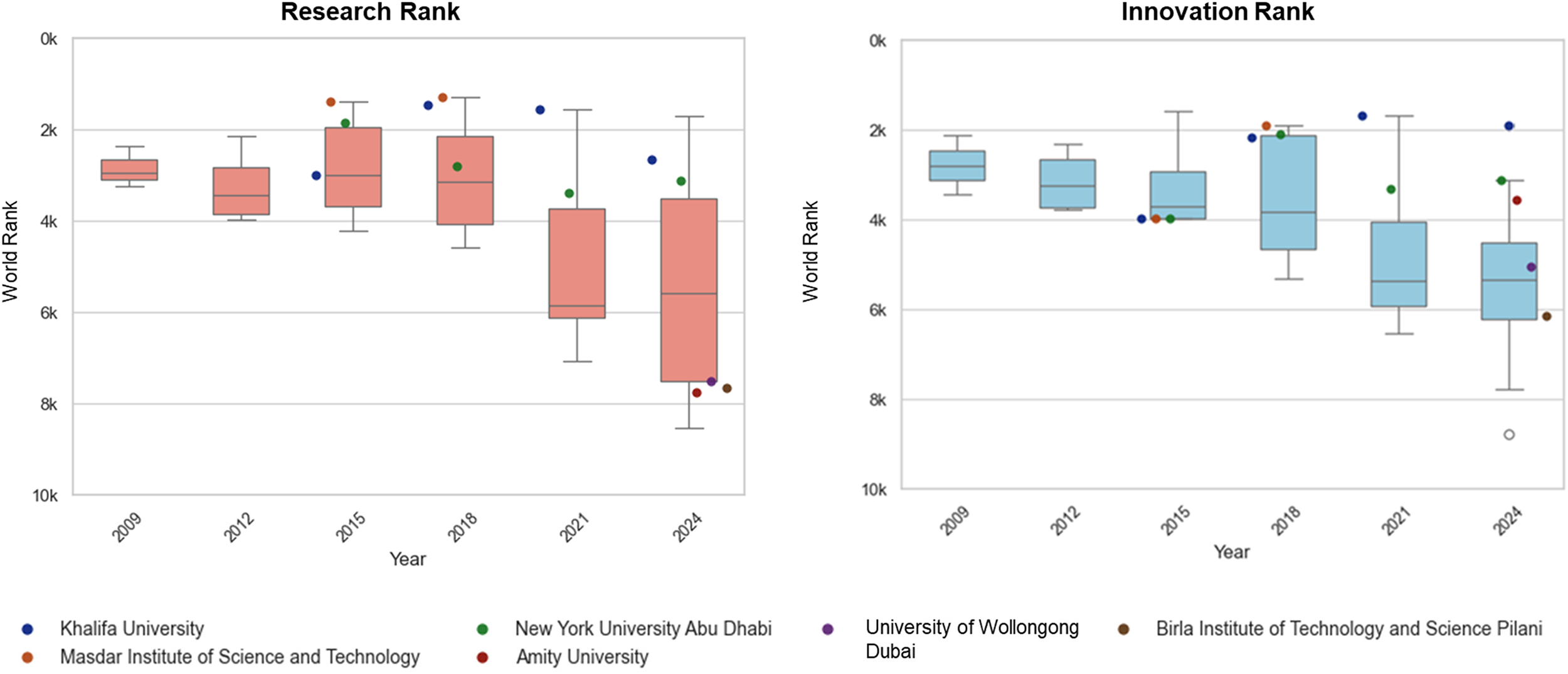
Research and Innovation Rankings of Universities in the UAE. Source: SCImago (2025).
A total of 21 universities were ranked in the year 2024. These included four IBCs (New York University Abu Dhabi, University of Wollongong Dubai, Birla Institute of Technology and Science, and Amity University). To examine the research and innovation contributions of internationally affiliated universities in the UAE, the individual rankings of these institutions have been labeled on the graphs. In addition, the rankings for Masdar Institute of Science and Technology (now known as Khalifa University) have also been highlighted on the graphs, given the institution's significant affiliations with international partners.
As illustrated, Masdar Institute/Khalifa University has consistently ranked higher than the other institutions across both research and innovation rankings. Amongst the IBCs, NYUAD ranks higher than others in the research and innovation rankings; however, it appears to be on a downward trend. The three IBCs from Dubai have only recently appeared on the rankings and perform very similarly for research, but significantly lower than other institutions. In the global innovation rankings, Amity University appears to be stronger than both the University of Wollongong Dubai and Birla Institute of Technology and Science. Apart from the declining trend in the global rankings of UAE-based institutions, it is also evident that most of the IBCs currently operating in the UAE are not directing their efforts substantially towards research and innovation activities that could help bridge the country's innovation gaps.
Given that the UAE has established itself as a prominent international education hub, it is well-positioned to foster academic and industry partnerships that go beyond international student recruitment to support knowledge production and innovation. In other words, for the UAE to advance its efforts towards becoming a knowledge-based economy, it would be necessary to adopt a more strategic approach to international partnerships that aligns with its developmental goals and national priorities.
Discussion
Despite being a prominent education hub for over 20 years, the UAE's innovative capacity appears to be in its formative stages. Instead of strategically leading partnerships with industry, government agencies, and research centers, it has opted for an education hub model that focuses on becoming an attractive destination for IBCs. Given that this model can be replicated by other countries in the region with similar resources, it is unlikely to support global competitiveness in the long-term. In addition, most IBCs are profit driven and offer programs that do not necessarily align with the needs of the host country (Wilkins & Juusola, 2018). Therefore, it is unlikely that this model would facilitate development of national innovation capacity or substantially contribute to broader educational or developmental objectives (Ding, 2018). Several scholars have indicated that a complete transformation of the higher education landscape in the UAE is required to facilitate its transition to a knowledge-based economy (Ashour, 2020; Wiseman et al., 2014).
One way to lead this transformation is through strategies that closely align with broader national priorities. The UAE's overarching vision for 2031 focuses on the essential role of society, economy, diplomacy, and ecosystem to inform strategic initiatives for national development and growth (Ministry of Cabinet Affairs, 2023). The plan identifies key national priorities, which include highly productive human capital, advanced research and innovation, as well as preservation of its cultural heritage. While the UAE has made progress over the years as an international education hub, its national priorities are not well-supported by the current IBC model. For example, existing IBCs in the country offer a disproportionately high number of programs in the field of management and business administration, instead of programs designed to help meet labor market needs (Badry, 2019). In addition, with the exception of a few, most of the IBCs do not produce impactful research that is competitive at a global level (Wilkins, 2010).
Similarly, the UAE's aim to uphold its national identity and culture is not reflected widely across the current education hub model. Fox and Al Shamisi (2014) have noted concerns around the ability of IBCs to go beyond providing foreign credentials to effectively contribute towards the local cultural and intellectual aspects of the host country. The authors also highlight the need for new programs that are designed to address local or regional priorities, noting the example of the Dubai School of Government (now known as the Mohammed bin Rashid School of Government) — the first higher education institution in the region that specializes in governance and public policy in the Arab World with programs that have been developed in collaboration with the Harvard Kennedy School.
The concept of regionality and an emphasis on intraregional engagement is an important aspect of education hubs (Knight, 2014b). However, most of the IBCs in the UAE are of Western origin and offer programs in English (Fox & Al Shamisi, 2014), with a notable absence of collaboration with other Gulf countries with similar internationalization aims. This emphasis on Western forms of education is often cited as a move towards homogenization of education (Miller-Idriss & Hanauer, 2011) and a form of cultural imperialism (Bilsland et al., 2020). This is specifically relevant in the context of the UAE as it seeks a balanced modernization while safeguarding Emirati values (Ministry of Cabinet Affairs, 2023). This could be better achieved through strategic partnerships with other countries in the region, rather than relying primarily on Western models of education.
Drawing from the work of Hettne and Söderbaum (2000), international education initiatives in collaboration with other Arab countries can facilitate the transformation of the UAE's regional space to a regional complex, gradually leading up to the development of a regional society. One example of this is the Great Arab Mind initiative recently launched by the UAE to support knowledge-based development by recognizing individuals from the region who are making substantial contributions in scientific or cultural fields (Al Nowais, 2022). The initiative is an important step towards becoming a knowledge hub that, in collaboration with global partners, highlights the strengths of the Arab civilization.
Recommendations
Given the misalignment between the UAE's national priorities and its current education hub model, it is recommended that the country takes a more strategic approach to seek international partnerships that are informed by its developmental needs, prioritizing both innovation capabilities and regional relevance. Both policymakers and local educational institutions have a role to play in this. For example, there is a need for increased government funding and initiatives in projects that can help build local research capacity. It is also important that the government incentivizes synergistic collaborations between academia and industry to make meaningful progress towards its innovation objectives (Dornbusch & Neuhaeusler, 2015).
For sustained growth as an educational hub, the UAE may also increase its efforts to collaborate with member countries in the Gulf Cooperation Council (GCC) and combine resources for scientific research institutions and the creation of joint research centers. Given their close geographical proximity as well as the similarity of their institutions, the UAE and Qatar can be strong allies in collectively using their network of international associations and diplomatic strengths to promote peace and growth in the region (Adam & Adam, 2024).
Similarly, higher education institutions in the region can play an important role in reinforcing the UAE's position as an education hub by collaborating with global corporate research and development investors to enhance the country's technological readiness and innovation capacity. As university degrees serve as an important hiring criterion amongst companies operating in the UAE (WEF, 2023), it is also important to work with regulatory bodies to develop a unified approach for credential assessment, so degrees granted by institutions in the GCC or Middle East are recognized across the region, facilitating greater knowledge exchange.
Universities can also support the UAE's ambitions to develop as an innovation hub by prioritizing partnerships with international research centers, strengthening industry collaborations, and expanding their research program to promote locally relevant research. By leading research of regional importance, the UAE can establish a competitive advantage and gain influence as a knowledge-based economy (Knight, 2013).
Implications
Since the term education hub is a self-ascribed label and can be used as a branding mechanism (Knight, 2014a), it can be difficult to determine if a hub's educational initiatives are intended to strategically build national capacity or simply to enhance international status. While the UAE has emerged as an important player in the international education landscape, it does not have a national strategy to guide its development as an education hub. Findings of this study highlight the importance of transitioning to a more integrated approach to progress as an education hub by replacing the IBC model with strategic partnerships that align with the country's economic aspirations and developmental goals. This would enable it to effectively leverage its current growth to transition to the next stage of development and advance as a knowledge-based economy in the region.
The findings also suggest that higher education institutions should be viewed not only as centers for education and training, but also as facilitators of national development and economic diversification. Given the UAE's national priorities, collaboration with institutions and organizations in the region to develop culturally compatible programs in alignment with the labor market needs would be an important consideration. The study also suggests that, instead of adopting Westernized models of higher education and replicating international best practices, the UAE may strengthen its position as a regional leader by adopting a knowledge/innovation hub model that is rooted in its own cultural and regional identity. This approach would not only help address regional needs, but it will also provide a competitive advantage through the development of a distinctive knowledge ecosystem. Incorporating a regional perspective in its education hub model would also allow the UAE to use its advanced educational infrastructure and research capabilities to strengthen relationships with other countries, thereby advancing its role in knowledge diplomacy (Adam & Adam, 2024).
Conclusion
The purpose of this paper was to examine how the UAE has evolved as an international education hub and examine the extent to which it has been able to develop its innovation capacity to transition into a knowledge-based economy. With an extensive reliance on IBCs, it appears that the UAE's approach to develop as an international education hub does not necessarily align with its national priorities or developmental aims.
Findings of this study, however, need to be interpreted within the broader national and historical context that shapes the UAE's approach to education hub development. While this study examined the UAE's progress towards developing a knowledge/innovation hub by comparing its measures of innovation capability with other education hubs, it is important to recognize that such comparative analyses should take into consideration the distinct characteristics and contextual nuances specific to each country or region. Similarly, while developmental metrics used in this study are helpful to gain an understanding of progress over time, the use of country-level indicators for the UAE poses a limitation, as planning and implementation of education hub initiatives in the country occur at a sub-national level.
To address these limitations, future studies may focus on operationalizing the concept of education hubs into specific indicators that can be used to examine the process and outcomes of education hubs in a more systematic and targeted manner to identify stages of development and their impact. Studies may also use broader conceptual frameworks for comparative analysis by incorporating cultural, geopolitical, and economic factors that are relevant to international education hubs.
Footnotes
Acknowledgement
This article builds on ideas developed during a course on International Academic Relations taught by Professor Ruth Hayhoe, whose insightful perspectives on regionalism and its impact on higher education were especially formative.

Funding
The authors received no financial support for the research, authorship, and/or publication of this article.
Declaration of Conflicting Interests
The authors declared no potential conflicts of interest with respect to the research, authorship, and/or publication of this article.
Author Biographies
Appendix: International Branch Campuses and Transnational Education Institutions in the United Arab Emirates
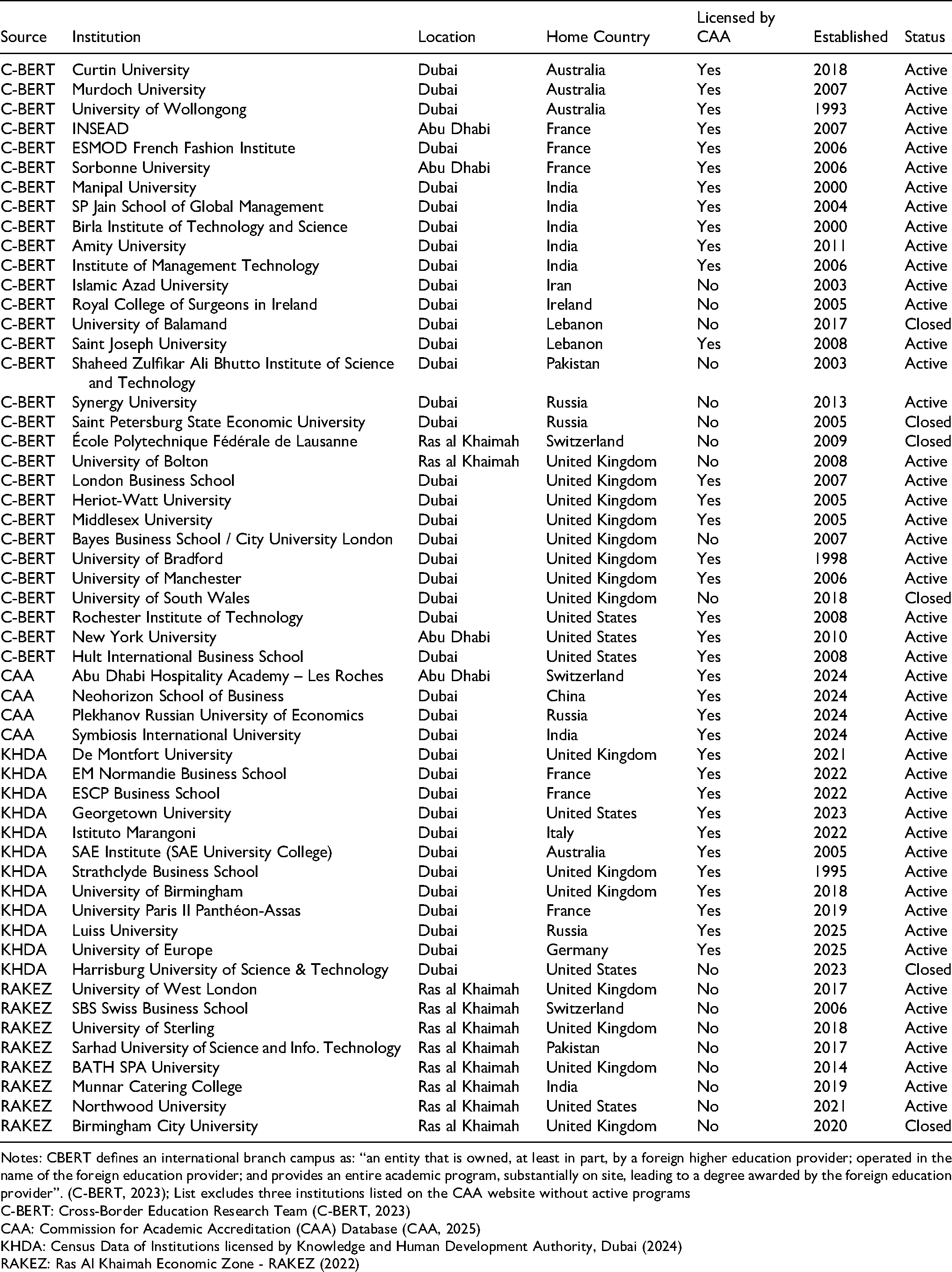
| Source | Institution | Location | Home Country | Licensed by CAA | Established | Status |
|---|---|---|---|---|---|---|
| C-BERT | Curtin University | Dubai | Australia | Yes | 2018 | Active |
| C-BERT | Murdoch University | Dubai | Australia | Yes | 2007 | Active |
| C-BERT | University of Wollongong | Dubai | Australia | Yes | 1993 | Active |
| C-BERT | INSEAD | Abu Dhabi | France | Yes | 2007 | Active |
| C-BERT | ESMOD French Fashion Institute | Dubai | France | Yes | 2006 | Active |
| C-BERT | Sorbonne University | Abu Dhabi | France | Yes | 2006 | Active |
| C-BERT | Manipal University | Dubai | India | Yes | 2000 | Active |
| C-BERT | SP Jain School of Global Management | Dubai | India | Yes | 2004 | Active |
| C-BERT | Birla Institute of Technology and Science | Dubai | India | Yes | 2000 | Active |
| C-BERT | Amity University | Dubai | India | Yes | 2011 | Active |
| C-BERT | Institute of Management Technology | Dubai | India | Yes | 2006 | Active |
| C-BERT | Islamic Azad University | Dubai | Iran | No | 2003 | Active |
| C-BERT | Royal College of Surgeons in Ireland | Dubai | Ireland | No | 2005 | Active |
| C-BERT | University of Balamand | Dubai | Lebanon | No | 2017 | Closed |
| C-BERT | Saint Joseph University | Dubai | Lebanon | Yes | 2008 | Active |
| C-BERT | Shaheed Zulfikar Ali Bhutto Institute of Science and Technology | Dubai | Pakistan | No | 2003 | Active |
| C-BERT | Synergy University | Dubai | Russia | No | 2013 | Active |
| C-BERT | Saint Petersburg State Economic University | Dubai | Russia | No | 2005 | Closed |
| C-BERT | École Polytechnique Fédérale de Lausanne | Ras al Khaimah | Switzerland | No | 2009 | Closed |
| C-BERT | University of Bolton | Ras al Khaimah | United Kingdom | No | 2008 | Active |
| C-BERT | London Business School | Dubai | United Kingdom | Yes | 2007 | Active |
| C-BERT | Heriot-Watt University | Dubai | United Kingdom | Yes | 2005 | Active |
| C-BERT | Middlesex University | Dubai | United Kingdom | Yes | 2005 | Active |
| C-BERT | Bayes Business School / City University London | Dubai | United Kingdom | No | 2007 | Active |
| C-BERT | University of Bradford | Dubai | United Kingdom | Yes | 1998 | Active |
| C-BERT | University of Manchester | Dubai | United Kingdom | Yes | 2006 | Active |
| C-BERT | University of South Wales | Dubai | United Kingdom | No | 2018 | Closed |
| C-BERT | Rochester Institute of Technology | Dubai | United States | Yes | 2008 | Active |
| C-BERT | New York University | Abu Dhabi | United States | Yes | 2010 | Active |
| C-BERT | Hult International Business School | Dubai | United States | Yes | 2008 | Active |
| CAA | Abu Dhabi Hospitality Academy – Les Roches | Abu Dhabi | Switzerland | Yes | 2024 | Active |
| CAA | Neohorizon School of Business | Dubai | China | Yes | 2024 | Active |
| CAA | Plekhanov Russian University of Economics | Dubai | Russia | Yes | 2024 | Active |
| CAA | Symbiosis International University | Dubai | India | Yes | 2024 | Active |
| KHDA | De Montfort University | Dubai | United Kingdom | Yes | 2021 | Active |
| KHDA | EM Normandie Business School | Dubai | France | Yes | 2022 | Active |
| KHDA | ESCP Business School | Dubai | France | Yes | 2022 | Active |
| KHDA | Georgetown University | Dubai | United States | Yes | 2023 | Active |
| KHDA | Istituto Marangoni | Dubai | Italy | Yes | 2022 | Active |
| KHDA | SAE Institute (SAE University College) | Dubai | Australia | Yes | 2005 | Active |
| KHDA | Strathclyde Business School | Dubai | United Kingdom | Yes | 1995 | Active |
| KHDA | University of Birmingham | Dubai | United Kingdom | Yes | 2018 | Active |
| KHDA | University Paris II Panthéon-Assas | Dubai | France | Yes | 2019 | Active |
| KHDA | Luiss University | Dubai | Russia | Yes | 2025 | Active |
| KHDA | University of Europe | Dubai | Germany | Yes | 2025 | Active |
| KHDA | Harrisburg University of Science & Technology | Dubai | United States | No | 2023 | Closed |
| RAKEZ | University of West London | Ras al Khaimah | United Kingdom | No | 2017 | Active |
| RAKEZ | SBS Swiss Business School | Ras al Khaimah | Switzerland | No | 2006 | Active |
| RAKEZ | University of Sterling | Ras al Khaimah | United Kingdom | No | 2018 | Active |
| RAKEZ | Sarhad University of Science and Info. Technology | Ras al Khaimah | Pakistan | No | 2017 | Active |
| RAKEZ | BATH SPA University | Ras al Khaimah | United Kingdom | No | 2014 | Active |
| RAKEZ | Munnar Catering College | Ras al Khaimah | India | No | 2019 | Active |
| RAKEZ | Northwood University | Ras al Khaimah | United States | No | 2021 | Active |
| RAKEZ | Birmingham City University | Ras al Khaimah | United Kingdom | No | 2020 | Closed |
Notes: CBERT defines an international branch campus as: “an entity that is owned, at least in part, by a foreign higher education provider; operated in the name of the foreign education provider; and provides an entire academic program, substantially on site, leading to a degree awarded by the foreign education provider”. (C-BERT, 2023); List excludes three institutions listed on the CAA website without active programs
C-BERT: Cross-Border Education Research Team (C-BERT, 2023)
CAA: Commission for Academic Accreditation (CAA) Database (CAA, 2025)
KHDA: Census Data of Institutions licensed by Knowledge and Human Development Authority, Dubai (2024)
RAKEZ: Ras Al Khaimah Economic Zone - RAKEZ (2022)