




Abstract
This current research explores the relationships among self-determined study abroad motivations, perceived service quality and satisfaction in the field of international higher education. A sample of 426 international students from 56 countries was analyzed via PLS-SEM.
The results show that self-determined motivations positively affect satisfaction, and that perceived service quality partially mediates the effect of self-determined motivations on satisfaction. This research is unique as it provides quantitative evidence that the influence of self-determined study abroad motivations on satisfaction through perceived service quality as a partial mediator is 70% stronger (ß=0.202) than the direct influence (ß=.119) of these motivations on satisfaction.
Students who had a higher level of self-determined motivation rated service quality dimensions higher and subsequently were more satisfied with their experience at the host university and in the host country.
Our insights may help higher education institutions customize their study abroad experience through understanding motivations and service quality requirements.
Keywords
Introduction
Internationally mobile students or international students are students who leave their country of origin and move to another country for the purpose of study (OECD, 2023). Across the OECD, 10% of all first-time entrants into tertiary education are international students (OECD, 2023). The internationalization of higher education institutions (HEIs) has been increasing worldwide, and students can choose from over 25,000 universities worldwide (research.com, 2024).
Globalization of higher education has increased competition and changed how universities approach the market, resulting higher education institutions focusing more resources to promote their programs, prioritizing student satisfaction as crucial factor for future success (Carvalho & Mota, 2010). Competitiveness is particularly important when higher education institutions export transnational education, in which case they must maintain or increase their competitive advantage through superior service quality (Arambewela & Hall, 2009; Arrivabene et al., 2019, Bui et al., 2021; Carvalho et al., 2023). Amidst the competition for students, it is imperative for HEIs to have satisfied customers (students), who then, as loyal ambassadors, can spread positive word of mouth about the institution (Arambewela & Hall, 2009), resulting in more cost-effective ways of recruiting international students.
The importance of service quality and student satisfaction in the higher education industry has been widely acknowledged by the scientific community (Alves & Raposo, 2007; Faizan et al., 2016; Marimon et al., 2019; Wong & Chapman, 2023), and, on the basis of the prospective model of Tsiligiris and Hill (2021), it is recommended that HEIs understand the expectations of students regarding service quality even prior to commencing their studies.
International students are most often motivated to study abroad when the perceived living conditions, for instance, price, climate, culture, and lifestyle, and learning conditions, such as university service quality, accreditation policies, and teaching quality (Arambewela & Zuhair, 2003), are superior in the host country and host institution than in the home country/local institutions (Mazzarol & Soutar, 2002). To measure international student satisfaction at the host institution, in addition to the abovementioned quality factors, the level of autonomy in study abroad decision-making must be considered. Self-determined motivations are autonomous decisions (leading to higher levels of satisfaction), whereas lower levels of self-determination refer to less autonomy and result in lower levels of satisfaction (Yang et al., 2017).
Although study abroad motivations and the autonomy level of decisions are the starting points of the international student experience, most researchers and HEI surveys focus solely on service quality and satisfaction, presenting an underresearched area in view of the overall student experience. The current research fills this gap by investigating whether study-abroad motivations could be significant predictors of both perceived service quality and satisfaction.
Our analysis establishes the direction and strength of connections among self-determined study abroad motivations, perceived service quality, and satisfaction in the international higher education context, where motivation is an antecedent to satisfaction and service quality serves as a mediator between motivations and satisfaction.
Our study is innovative, as the influence of self-determined study abroad motivations on satisfaction through perceived service quality as a mediator has not yet been investigated, and this study provides quantitative evidence on the basis of a survey of 426 international students arriving in the host country (Hungary) of 56 countries.
Literature Review
Motivations: Self-Determination Theory (SDT)
International students have a variety of motivators, such as academic self-image, degree aspirations, personal and professional goals, a desire for recognition, and expectations for success, which contribute to their persistence (Lesjak et al., 2015).
Mazzarol and Soutar (2002) used a dual assessment of motivational factors, stating that ‘push’ factors originate in the home country (e.g., disadvantages in the economic or social environment and lack of access to higher education) and prompt students to decide to study abroad. ‘Pull’ factors operate within the host country, making that country relatively attractive to international students. The host country choice depends on ‘pull’ factors, with students tending to select a country first and then an institution within that country. Pull factors include the socioeconomic environment, culture, climate, and reputation of education quality of the host country and the opportunity to settle in the host country after graduation. As Lee (2014) summarized, push factors create motivations for studying abroad, whereas pull factors influence the choice of destination country and host institution.
The push‒pull model describes the selection process from the perspective of the action steps taken by international students; however, it does not consider internal factors, such as the level of autonomy in study abroad decision-making (Yang et al., 2017). According to self-determination theory (Deci & Ryan, 2000; Ryan & Deci, 2017), the behavior of individuals depends on the degree of autonomy and self-determination and predicts different functional outcomes. In the case of self-determined behavior, individuals perceive that their actions are triggered by their own will (Ryan and Connell, 1989), and it seems that these actions are consistent with their preferences, intrinsic values, and interests. On the other end of the continuum, controlled motivation is driven by external factors, where the actions of individuals are defined by forces such as material rewards, internal pressure, or the avoidance of less favorable outcomes (Sheldon et al., 2017).
Finally, international students’ motivations can be categorized by the expected outcome. Leutwyler and Meierhans (2013) defined three main categories that may influence the decision to participate in an exchange program: personal motives (e.g., to become more autonomous and independent), professional motives (e.g., to make useful experiences for the future profession) and culturally oriented motives (e.g., to make friends from other cultures).
It is crucial to gain a better understanding of this construct, as fulfilled intrinsic motivations may increase learning performance and decrease dropout rates (Cho et al., 2021; Messerer et al., 2023).
Service Quality in Higher Education
Service quality in education refers to the quality of unique learning experiences that universities create for their students to gain a competitive advantage (Latif et al., 2019). Managers and researchers have started to focus on service quality in HEIs because of its importance in terms of business performance, cost reduction, and student satisfaction (Noaman et al., 2017).
Arambewela and Hall (2006) used a generic service quality model, SERVQUAL (tangibles, reliability, responsiveness, assurance, and empathy constructs), to measure service quality perceptions among international students. To adequately assess service quality in the higher education setting, several researchers elaborated on the importance of HEI-specific models, where academic aspects appeared, creating the higher education performance (HEdPERF) scale (Abdullah, 2006; Arrivabene et al., 2019).
The current paper utilized the modified HEdPERF model of Faizan et al. (2016), which consists of five areas: academic aspects (communication, attitude, courtesy, knowledge of professors, and feedback on progress), nonacademic aspects (the quality of the services received from the administrative staff), access (the timely deliveries and availability of the faculty staff), program issues (the course or program-specific deliverables) and the reputation of the institution.
Student Satisfaction in Higher Education Institutions
Student satisfaction is a desired outcome for institutions (Parahoo et al., 2013) and it can be determined by the expectancy-disconfirmation theory (Oliver, 1980), that with its related models dominated the field before the millennium (Parasuraman et al., 1994; Arambewela & Zuhair, 2003) and are still in use (Tsiligiris & Hill, 2021). In more recent research, Ammigan and Jones (2018) sought to highlight the HEI specific aspects of satisfaction (arrival, living, learning, and support services) and found that all dimensions of satisfaction were positively associated with the overall university experience.
After reviewing the literature on motivations for studying abroad, service quality in HEIs, and the satisfaction of international students, we formulate our research question and hypotheses.
Research Question and Hypothesis Development
The research explores the direct and mediating relationships among self-determined motivations for studying abroad, perceived service quality, and satisfaction. The research question explores to what extent self-determined study abroad motivations affect study abroad satisfaction directly and indirectly through service quality.
Direct relationship between self-determined motivations for studying abroad and study abroad satisfaction. There was relatively little research material concerning the connection between motivations for studying abroad and international student satisfaction prior to the results of Chirkov et al. (2003; 2005). In the current work, the self-determined motivation construct is an antecedent of satisfaction, comprising intrinsic and external factors, where the level of autonomy predicts the satisfaction of individuals (Chirkov et al., 2005; Yang et al., 2017). Self-determined actions are based on intrinsic values (Ryan and Connell, 1989); hence, we naturally expect higher levels of satisfaction when the results of the action materialize, whereas actions driven by the external environment presume less autonomy in decision-making and are likely to result in lower satisfaction (Sheldon et al., 2017).
In the context of international higher education, international students are more likely to collect satisfying experiences if they make a self-determined decision to study abroad, as in that case, they are driven by interest, curiosity, or self-actualization, instead of pursuing material rewards or being pressured by family members or the wider society (Yang et al., 2017). Thus, we hypothesize the following:
Hypothesis 1 (H1): Self-determined study abroad motivations have a positive influence on satisfaction.
Proposed mediator: service quality. The mediating role of service quality between self-determined motivations for studying abroad and study abroad satisfaction. Many researchers have established a direct connection between service quality and satisfaction in the field of international higher education (Faizan et al., 2016; Arrivabene et al., 2019); thus, the service quality provided by the host institution has a crucial effect on the study abroad program satisfaction of international students (Abu-Rumman & Qawasmeh, 2022).
On the other hand, research on the connection between motivations for studying abroad and service quality is scarce. The initial motivation is the beginning of the journey of international students (Mazzarol & Soutar, 2012); however, international students examine various available evidence to determine the best service quality on the market (Tsiligiris & Hill, 2021). To fully understand the motivations of students for studying abroad, it is particularly important to consider the level of autonomy of their decisions. Chong and Ahmed (2015) reported that autonomous motivations in self-determination theory have a positive effect on service quality in the case of full-time undergraduate students, which may also be extended to international students. Accordingly, if international students have highly self-determined motivations for studying abroad, which are consistent with their intrinsic values (for example, they are interested in learning about the host culture), then the service quality provided by the host institution (including the academic staff, administrative staff and the overall program) will be perceived more favorably, leading to higher levels of student satisfaction. Thus, we hypothesize the following:
Hypothesis 2 (H2): the relationship between self-determined motivations for studying abroad and study abroad satisfaction is mediated by service quality Figure 1.
Method
Data Collection and Analysis
International students in the host country (Hungary) were considered the total population, and the sampling criterion was having at least two months of study abroad experience in Hungary to be able to evaluate the service quality of the host institution. The Tempus Public Foundation (TPF) recruited respondents through its newsletter, distributing the survey to Hungary's higher education institutions.
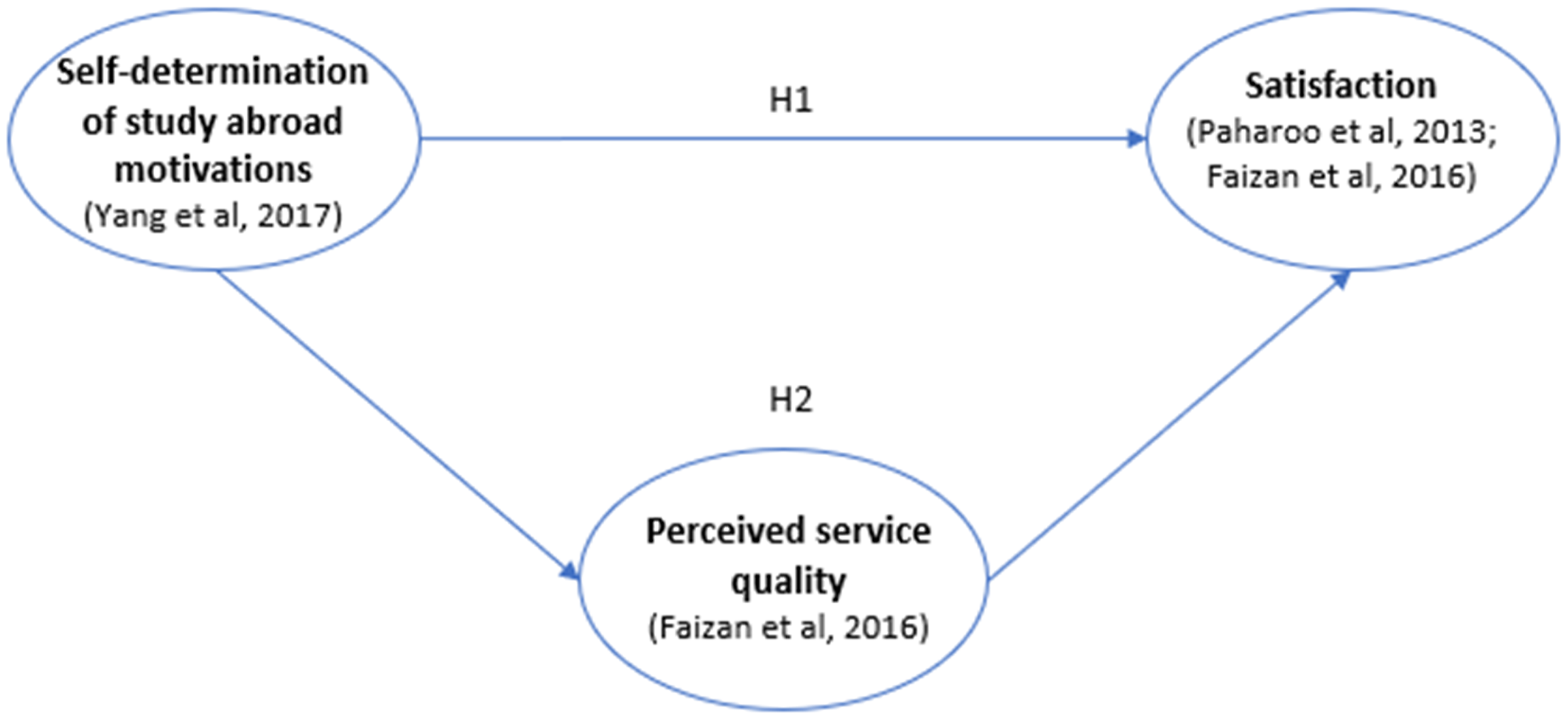
Proposed framework and hypotheses.
The questionnaire was hosted in Qualtrics, and a total of 463 responses were recorded. The data collection was conducted from April–May 2021.
After rigorous data cleaning, the final valid sample of 426 international students is a fraction of the 32 thousand international students who studied in Hungary at the time of the research in 2020 (KSH, 2021); hence, the results cannot be generalized.
PLS-SEM is a widely used analytical method in international marketing for complex constructs (Hair et al., 2012) and has been extensively used to analyze service quality and satisfaction in the higher education industry.
Participants
The students in the sample arrived to study in Hungary from 56 countries. Most of them were from Asia (54.5%) or Africa (21.6%), but many responses were given by students from Europe (14.6%) or South America (6.6%), and only 1.6% of students were from North American countries. The top 10 sender countries account for 46% of the nationalities represented in the sample Figure 2.
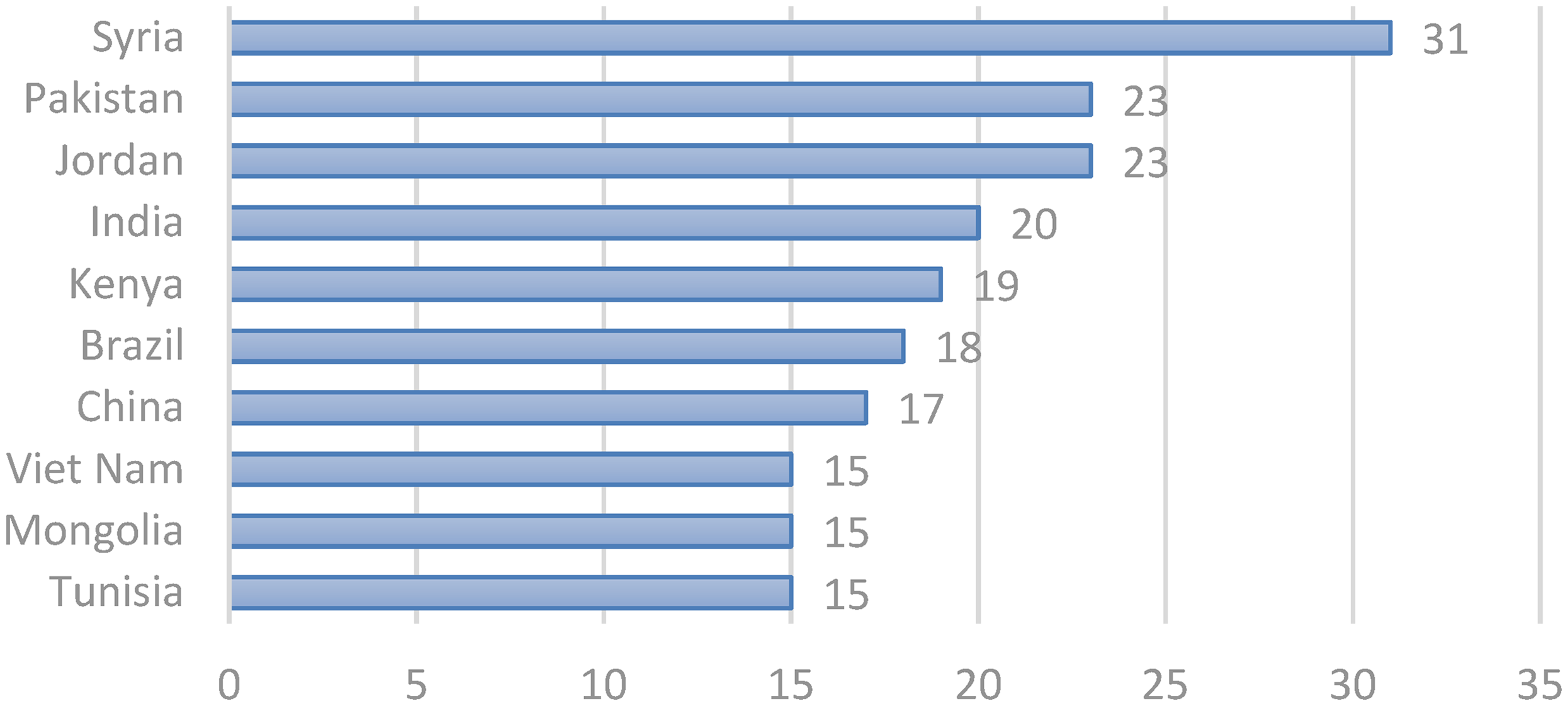
Top sender countries.
A total of 48.1% of the international student participants in the survey were older than 26 years (48.1%), while the three other age groups combined (18–26) reached 51.9%. A total of 226 male and 200 female respondents provided their answers. A total of 66.0% chose Hungary as their host country in the first place; however, 34.0% initially planned to study abroad somewhere else. A total of 52.3% of the respondents were in capital cities, whereas 47.7% were in other cities.
The Stipendium Hungaricum program provided scholarships to 35.7% of participants in bachelor's, 31.9% in master's, and 31.0% in PhD programs.
Most respondents (78.9%) had prior intercultural experience either studying abroad before or having substantial travel or intercultural exposure.
Most students started their study abroad program before the outbreak of the pandemic (81.5%), but 18.5% arrived in Hungary from the 2021 spring semester, when most COVID-19 restrictions came into effect in Hungary. Only a fraction of the respondents had a study abroad program shorter than 1 year (6.8%), a quarter of the international students had lived for 1–2 years (25.6%), and most had come to Hungary for longer programs (65.2%).
Measurement and Instrument Design
The research instrument consisted of multiple-choice questions in English using 1–5 likert-type scales. After a pilot study with 10 international students, minor wording changes were made.
The construct of self-determined motivations for studying abroad is conceptualized as an antecedent to satisfaction (Yang et al., 2017). The self-determined motivations construct has lower autonomy items grouped around amotivation (no specific reason to study abroad), external motivations (pressure from people or wants to escape difficult circumstances), and negative introjection (avoid guilt or shame). At the higher end of the spectrum, such as positive introjection (proving worthiness and increasing self-esteem), identification (deeper value and meaningful experience) and intrinsic motivations (joy and fun), autonomy levels are increasing alongside with overall satisfaction (Yang et al., 2017).
Service quality is conceptualized as a combination of academic aspects, nonacademic aspects, access, program issues, and reputation (Faizan et al., 2016), where service quality is an antecedent to satisfaction, which is supported by multiple researchers (Fernandes et al., 2013; Faizan et al., 2016; Marimon et al., 2019). The service quality items represent the key touchpoints with international students mainly via the teachers’ professional preparedness and communication skills (academic aspects), the administrative staff's knowledge, attitude and efficiency (non-academic aspects), the timely answers and availability of the overall faculty staff (access), course or program specific quality and flexibility (program issues) and the reputation of the institution. Faizan et al. (2016) found that access was the most important predictor of student satisfaction, followed by the academic aspects and program issues dimensions.
Measurement items for satisfaction were based on Faizan et al. (2016), in addition, the host institution-specific satisfaction indicator from Parahoo et al. (2013) has been added, with a similarly phrased question about the host country. The construct captures the multi-attribute nature of satisfaction, including the host country and host institution-specific indicators.
Results
PLS–Outer Model Results
The database had 66 missing values (<0.15% of the total database); during the construct analysis, the missing values were replaced by the means.
The PLS algorithm was applied with 300 iterations (stop criterion 10−7) for the construct analysis. The analysis checked for multicollinearity and revealed that in the case of 6 items, the required criterion of a VIF < 5 (Hair et al., 2011) was not met; accordingly, these indicators were also deleted (4 items: satisfaction; 2 items: service quality). Furthermore, 12 items were removed from self-determined motivations for studying abroad because the factor loadings were less than .4 (Malhotra & Dash, 2011; Hair et al., 2012). Items with factor loadings between .4 and .7 were retained in the motivation construct because of their explanatory power. The highest-loading items for each factor (above .7) are listed in Table 1.
Highest-Loading Items for Each Factor in the Measurement Model.
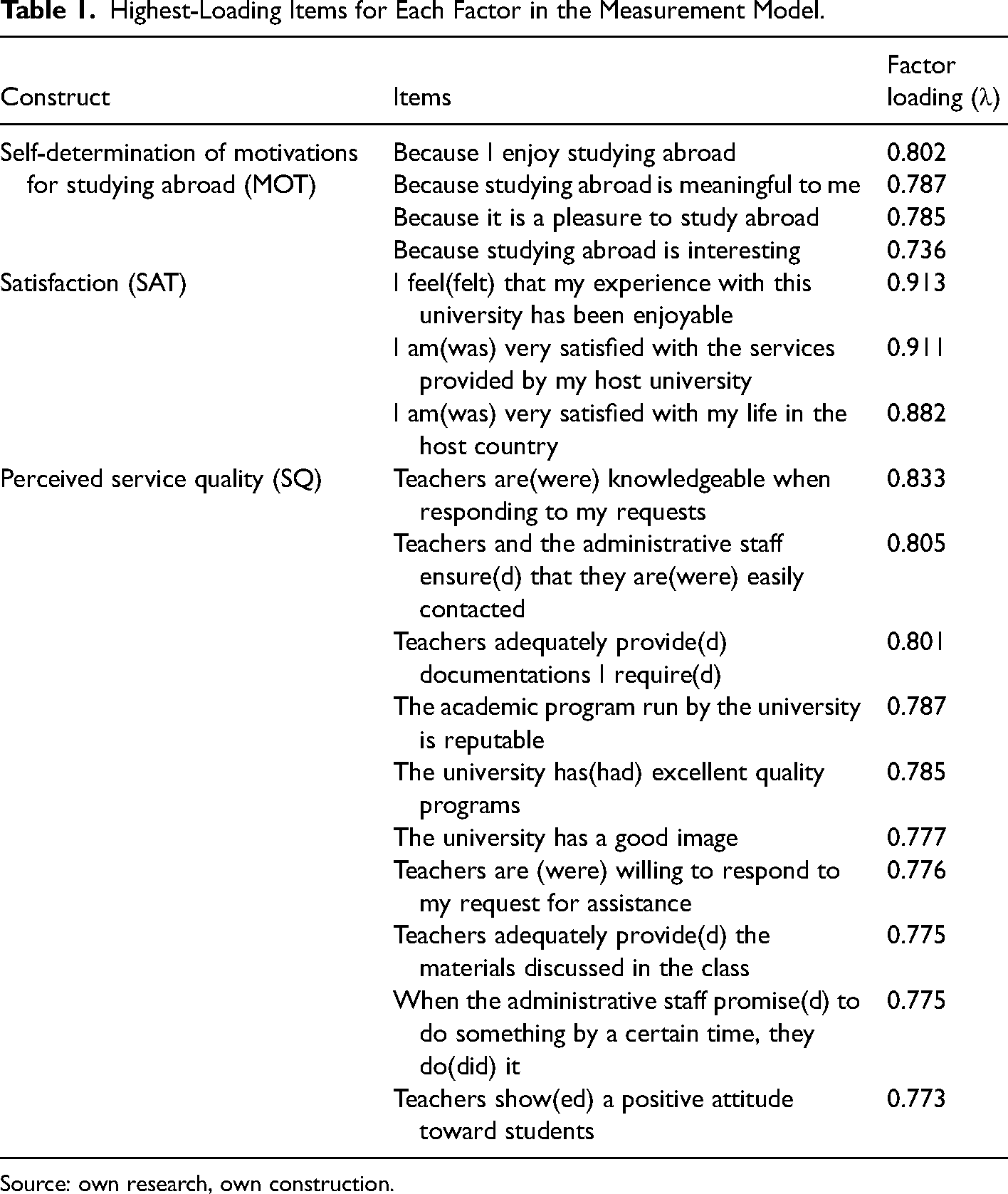
Source: own research, own construction.
After the indicators with a low contribution or due to multicollinearity were removed, all the examined constructs met the recommended criterion of CR > 0.7 (Hair et al., 2012); hence, the constructs are reliable and valid, even in the case of AVE < .5, due to the high composite reliability (Malhotra & Dash, 2011) (Table 2).
Reliability and Convergent Validity of the Constructs.
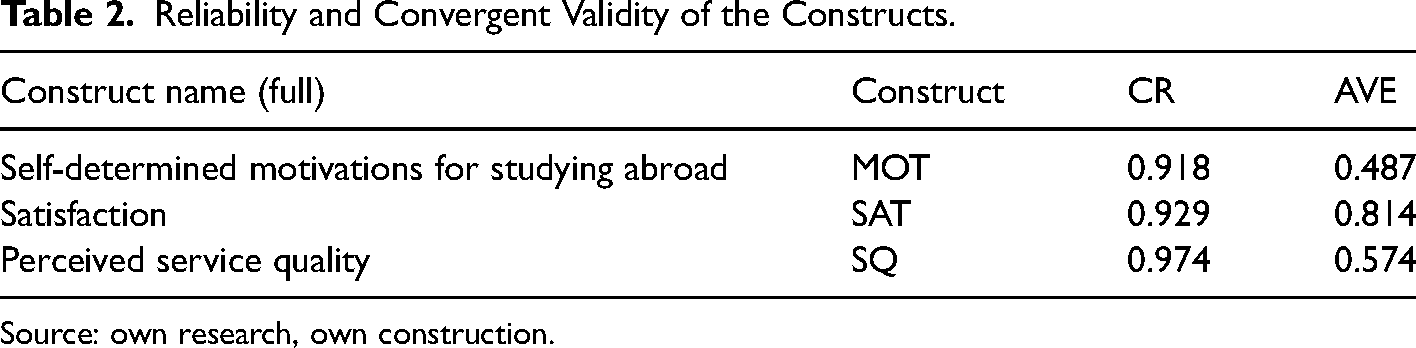
Source: own research, own construction.
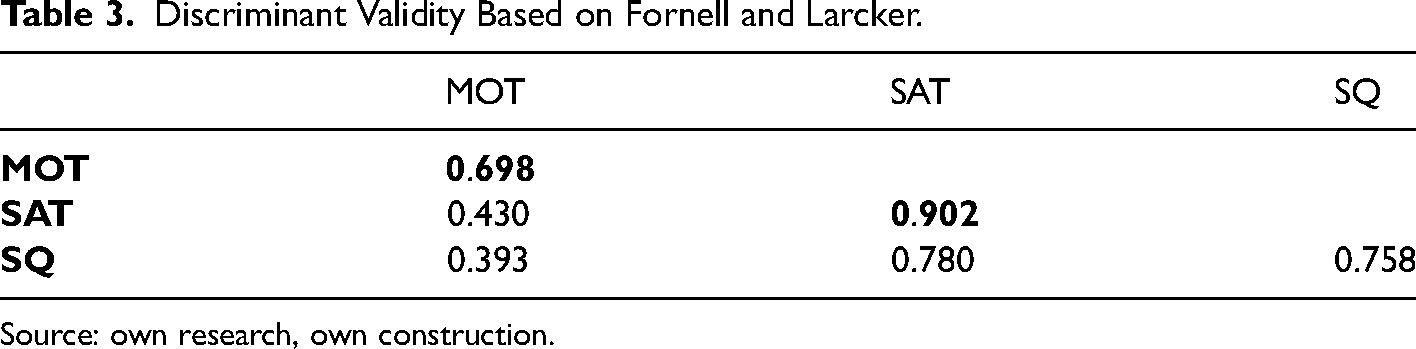
The AVE of each construct was similar or higher than its squared correlation with any other construct (Table 3), based on the Fornell–Larcker criterion (1981) for discriminant validity. Discriminant validity met the requirement of HTMT.85 (Henseler et al., 2015).
Discriminant Validity Based on Fornell and Larcker.
Source: own research, own construction.
Additionally, each indicator has the highest loading in the construct it was intended to measure, so there are no cross-loadings in the model (Hair et al., 2011).
PLS–Inner Model Results
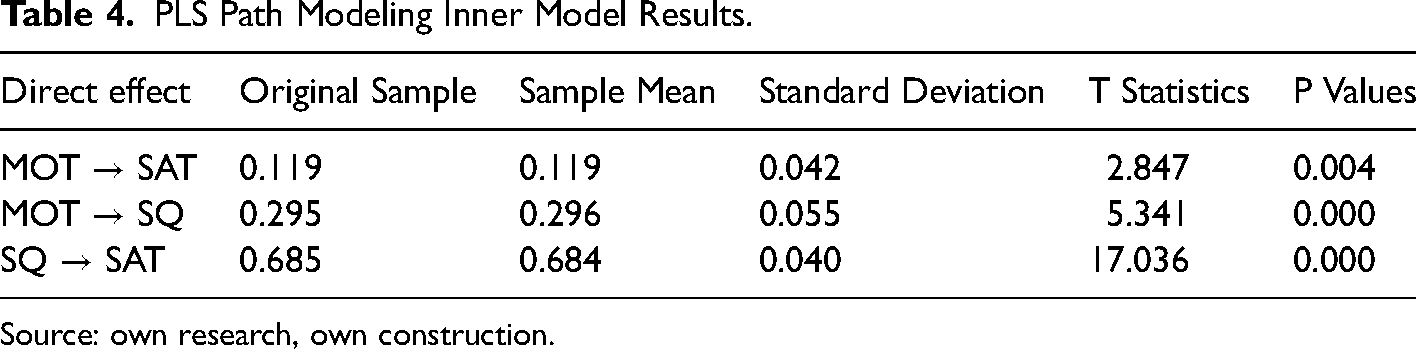
To conduct significance testing, bootstrapping samples (resampling) were applied when delivering the model evaluation (Henseler et al., 2009). The bootstrapping parameter was set to 5000 subsamples (Hair et al., 2011), and complete bootstrapping was run at the 0.05 significance level. Path modeling revealed that all the hypothesized construct relationships were significant, as shown in Table 4.
PLS Path Modeling Inner Model Results.
Source: own research, own construction.
On the basis of the original samples (Table 4), MOT has a direct influence on SAT (ß=0.119) and an even stronger impact on SQ (ß=0.295). As expected, SQ is a solid antecedent of SAT (ß=0.685); accordingly, SQ is a partial mediator in the relationship between MOT and SAT (ß=0.202), where the indirect effect is 70% stronger than the direct effect.
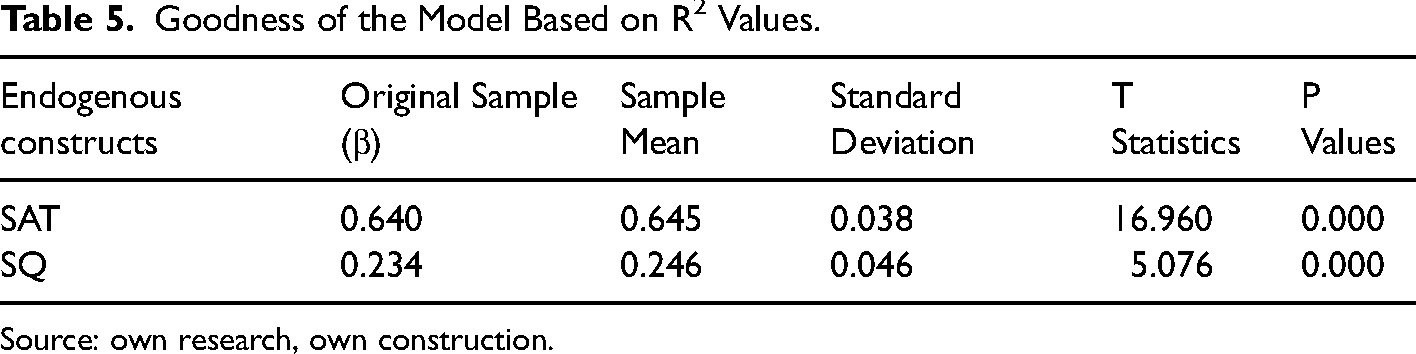
In Table 5, the reported R2 values exceed .1 (Falk & Miller, 1992) for all the examined endogenous constructs.
Goodness of the Model Based on R2 Values.
Source: own research, own construction.
The SAT (R2 = 0.640) has good predictive ability, as in marketing studies, the 0.5–0.75 range reflects moderate to high explanatory power, whereas the MOT weakly explains the SQ construct (R2 = 0.234) (Hair et al., 2012) Figure 3.
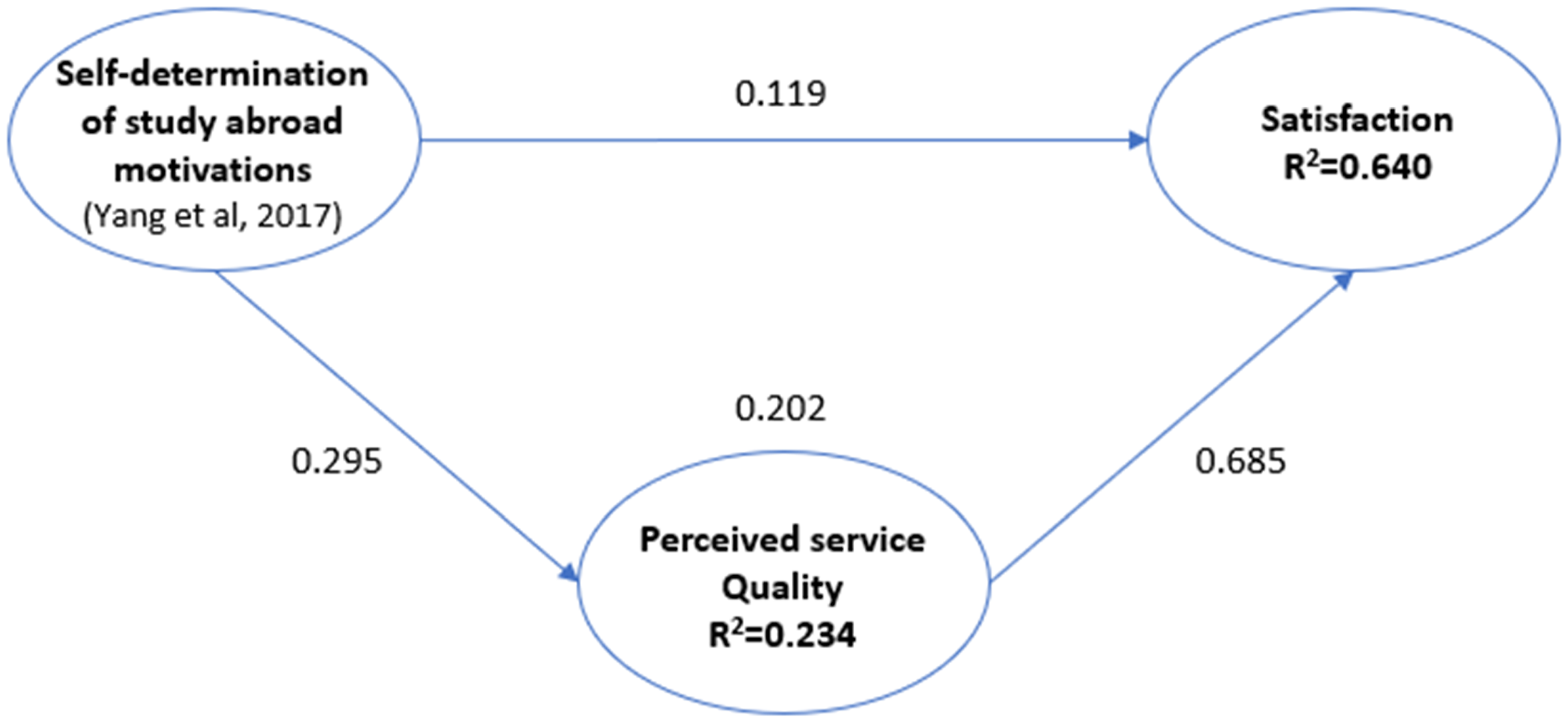
Significant paths and R2.
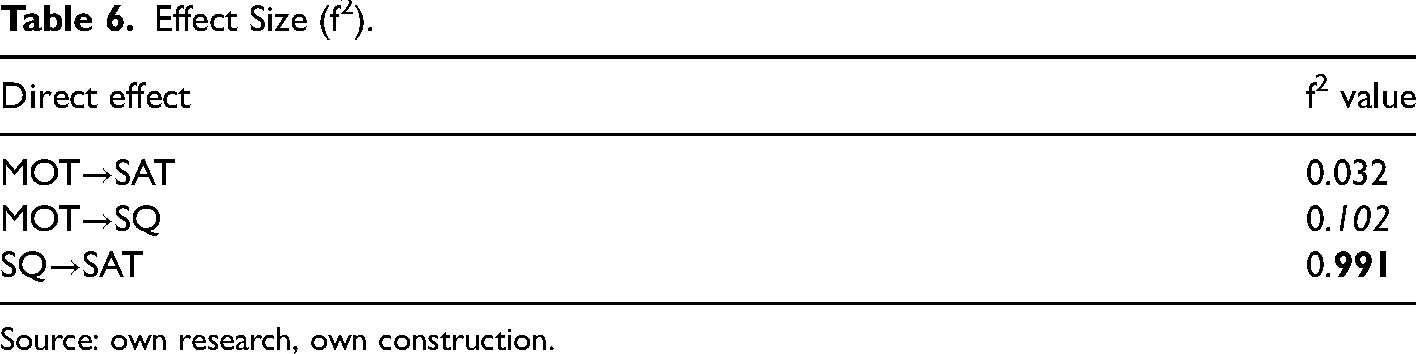
The effect size (f2) based on Cohen (1988) shows (Table 6) that SQ has a strong effect on SAT (f2 = 0.991). On the other hand, the effect sizes of MOT and SQ (f2 = .102) have moderately strong predictive relevance for the model, whereas a weaker but still significant effect is observed between MOT and SAT (f2 = 0.032).
Effect Size (f2).
Source: own research, own construction.
Summary of the Results
All the examined hypotheses were accepted as a significant path in the model and are summarized in Table 7.
Summary of Research Hypotheses Results.

Source: own research, own construction.
Discussion
Self-Determined Motivations for Studying Abroad and Study Abroad Satisfaction
The current study revealed a positive direct connection between MOT and SAT (H1 is accepted with β=.119). These findings are consistent with the results of previous research (Chirkov et al., 2003; 2005) and confirm those of Yang et al. (2017), who theorized that the level of autonomy may impact study abroad decisions. Although the effect size of MOT and SAT was relatively small (f2 = 0.032), the current study fills this gap by confirming the connection in a quantitative manner.
On the basis of the results, the construct of MOT was valid and reliable, retaining all items connected to intrinsic motivations (joy, fun, pleasure and interest with an avg. λ= 0.738), identification (making choices that reflect values and searching a deeper meaning with an avg. λ= 0.728), and positive introjection (enhancing self-esteem and proving self-worth with an avg. λ= 0.728). These motivations imply a high level of autonomy and can be translated into the main reasons for studying abroad, as described by Leutwyler and Meierhans (2013).
On the basis of the highest loading factors in the MOT construct, the authors contend that international students driven by intrinsic motivations may have decided to study abroad to experience something new out of sheer curiosity, connect with people with different cultural backgrounds and enjoy life through exploring a foreign country. Students who choose identification-related motivation items may have wanted to emphasize that they take their investment in their own education seriously and aim to increase their opportunity for a global career or decide to study abroad to practice their foreign language skills. Positive introjected motivations may reflect the initial desire to prove self-worth by taking on a new challenge or increasing self-esteem by becoming more independent while being away from home. In connection with recent findings, the academic performance of international students may be enhanced by fulfilling these motivations (Cho et al., 2021), and decreased dropout rates could be achieved (Messerer et al., 2023).
The remaining motivation categories (amotivation, external, and negative introjection) reached lower factor loadings and hence did not contribute significantly to the motivation construct. The low contribution of the eliminated indicators could be due to the combined impact of the characteristics of the sample and the country-wide lockdown. Since most of the respondents had been in Hungary for more than 3 years, they could have had difficulties recalling their initial motivations for studying abroad. Additionally, during the lockdown, international students had ample time to reflect on their goals and priorities, so they could have re-evaluated their motivations. Based on a literature review (Mazzarol & Soutar, 2002), introjection, identification, and intrinsic motivations were expected to be less prevalent; however, owing to the lockdown, international students had to rely more on themselves. Moreover, expectations from the home country may have been deprioritized, which could indicate a greater level of desire to settle in Hungary (Maringe, 2006).
By understanding the motivations of international students, HEIs can better customize the overall international student experience (Tsiligiris & Hill, 2021) to increase perceived service quality, which is crucial for the long-term success of the host institution (Marimon et al., 2019).
Mediating Effect of Service Quality
Path modeling confirmed that the relationship between MOT and SAT is mediated by SQ (H2 is accepted with ß=0.202). The indirect path (ß=0,202) is 70% stronger than the direct path (ß=0,119), which is a significant difference. The main reason for this could be that international students are directly influenced by the teaching and administrative staff of the host institution and mostly rely on the information they receive from them before and during their study abroad program, which is consistent with the findings of Tsiligiris and Hill (2021), who recommend engaging with international students prior to the start of their program.
Consistent with our expectations, the effect size of SQ and SAT were very high (f2 = 0.991), while the effect sizes of MOT and SQ were also moderately strong (f2 = 0.102). MOT and SQ explained nearly two-thirds of the variance in SAT (R2 = 0.640), and MOT explained almost a quarter of the variance in SQ (R2 = 0.234). This is an important finding of the empirical research, as the extant literature did not yield quantitative research results connecting these constructs in the context of higher education. Both the SQ and SAT constructs were valid and reliable. The SQ retained every measurement area with almost all the items, which is consistent with the results of Faizan et al. (2016), who stated that knowledge, availability, attitudes, helpfulness, and punctuality of the academic staff and international coordinators effected the level of satisfaction. Only the administration efficiency and positive attitude items were insignificant. This finding could be explained by the largely online administration at the time, which resulted in less face-to-face contact with the members of the faculty administration and less paperwork (which may cause stress when students do not speak the local language) to determine the relevance of these factors. Access (avg. λ=0.797) ranked the highest for international students, followed by academic aspects (avg. λ=0.755), highlighting the importance of the teaching staff being easily available, ready to support students with private consultations, and providing the required documentation. similar to the findings of Fernandes et al. (2013), the teaching staff was expected to be knowledgeable in their field and show a positive attitude toward students. These factors may have been important because most students (85.4%) originated outside of Europe; hence, they may have required more support (and had fewer means to gain help from home) to adjust to the cultural and academic environment in Central Europe. The program issues (avg. λ=0.751) and the nonacademic aspects (avg. λ=0.750) were almost equally well perceived, where the overall quality, flexible structure, counseling services and timely, sincere and appropriate communication of the administrative staff of the program scored the highest. Studying abroad may introduce considerable uncertainty in the lives of students; thus, the flexibility of a program may reduce stress in students, so they dare to ask for help, and properly trained administrative staff can adequately support international students in their academic and personal lives. The reputation aspect scored slightly lower (avg. λ=0.739), which was heavily influenced by the employability item (λ=0.637), as students could have felt that their chances of being employed in the host country or in Europe are slightly lower than those of the local workforce. Interestingly, Faizan et al. (2016) reported that employability was the highest scoring item (λ=0.864) for Malaysian public universities, indicating that their sample of international students had much greater hopes in finding a job after graduation.
In the case of the SAT construct (avg. λ=0.902) items regarding the description of the earlier decision, whether enrolling at this institution was a reasonable decision was not significant, whereas items pertaining to the overall academic and life experience were significant. It may be assumed that students focused more on their current or recent life events (considering that years have elapsed since enrollment), rather than the feelings and perceptions associated with the decision to choose a certain institution. The current paper is consistent with the results of previous researchers who conceptualized service quality as an antecedent to satisfaction (Alves & Raposo 2007; Fernandes et al., 2013; Arrivabene et al., 2019; Marimon et al., 2019).
On the basis of the factor loadings and the unveiled connections among MOT, SQ and SAT, appropriate and timely interactions with the teaching and administrative staff of the institution can strengthen the initial motivations of students. However, the lack or incorrect form of interactions may create conflicts between self-determined motivations and perceived service quality. This finding reinforces the results of previous studies on the importance of academic staff and international administrative staff (Fernandes et al., 2013; Faizan et al., 2016; Arrivabene et al., 2019).
Conclusions
The constructs of the paper were self-determined motivations for studying abroad, perceived service quality, and satisfaction in the context of international higher education. This study explored the motivations of international students, how they impact their satisfaction, and to what extent host institution services influence overall study abroad program satisfaction. During the empirical research, 426 valid responses were analyzed via PLS path modeling.
The quantitative research provided insights into the examined constructs and their interrelationship. Since the quantitative data collection occurred during the lockdown, the final constructs reflect the circumstances provided by the virtual education system and the lockdown measures that were in effect in Hungary in 2021 (public places, bars were closed, and events and public gatherings were heavily restricted).
Also, the institutional context has not been controlled in our study, future research could explore patterns of student satisfaction within and between institutions Finn et al. (2022) also recommends.
Nevertheless, the results confirmed the examined constructs and uncovered theoretical connections, adding to the extant literature and opening ways for new research directions.
Considering the sample, the quantitative data collection was impacted by the COVID-19 pandemic, as the sample consisted of international students who were in lockdown in Hungary for at least one year. It would be interesting to test the same model when face-to-face education is available.
Most students already spent three years in Hungary, which might have resulted in lower accuracy in terms of recalling initial motivations for studying abroad. It would be beneficial to collect a sample of international students who spend only a few months in the host country or are preparing to embark on their international journey.
Footnotes
Funding
The authors received no financial support for the research, authorship, and/or publication of this article.
