




Abstract
To reach the non-mobile majority, universities in many contexts, especially in the Global North, are investing in the internationalization of the curriculum at home (IoCaH); however, experience shows that top-down strategies are implemented differently across disciplines. It has been suggested that the role of academic disciplines, an under-investigated dimension, can explain this variation. Through a systematic literature review of nine disciplines, this study adds to the limited understanding about discipline-specific orientations towards internationalization. Findings confirm that there are indeed discipline-specific rationales for IoCaH as well as preferred internationalized strategies. These findings provide more detail about the exact ways in which disciplines vary in their orientation towards IoCaH which have historically been poorly understood due to too few studies that disaggregate findings by discipline. By understanding these nuances, university leaders, educational developers, administrators, and educators will be better equipped to assess discipline-specific needs and assist in the design, development, and implementation of an internationalized curriculum.
Keywords
Introduction
Already from 2011, the Internationalization of Higher Education (IoHE) was gaining prominence worldwide and considered compulsory in some (high-income) contexts (Kaur & Sidhu, 2011). Motivated by economic, political, academic, or sociocultural factors (de Wit & Knight, 1995), or a humanism rationale (Streitwieser et al., 2019), universities worldwide continue to invest financial and human resources in internationalization strategies to further their three missions: research, education, and service. International research collaboration has grown in recent decades (Adams et al., 2019), however, there are varying levels of interest in the Internationalization of the Curriculum (IoC) and Internationalization at Home (IaH), and a recent focus in the Global North on connecting the outcomes of internationalization with its contributions to society (Brandenburg et al., 2020).
Internationalization of the Curriculum at Home (IoCaH) (Coelen & Gribble, 2019; Jones, 2014, 2019; Thondhlana et al., 2021) is, however, gaining momentum due to the recent pandemic and increased climate consciousness which place virtual substitutes for mobility in the spotlight (Bedenlier et al., 2018; Whitsed et al., 2024; Woldegiyorgis et al., 2018; Yemini & Sagie, 2016). This substitute for physical mobility is encouraging but still falls short as most students never took part in education/traineeship abroad in the first place. Considering this, Jones (2019) argues that by adapting curricula to include both intercultural and international perspectives, mobility can be viewed as just one element of an internationalized curriculum rather than the primary institutional strategy as it seems to be for many universities. Research, however, suggests that top-down management driven measures to implement IoCaH policy are often ineffective leading to a one-size-fits-all approach (Green & Whitsed, 2015).
Internationalization activities in Western Europe and the United States are increasingly moving away from the academic coalface towards central structures with little direct contact with the curriculum or its development (de Wit, 2012; Faupel, 2021). Previously, academics were directly involved in identifying appropriate academic opportunities (for credit) at partner universities (usually driven by disciplinary content opportunities). As international non-credit mobility increased, student placement became more of a standardized logistical operation rather than an academically focused exercise. The role of the academic was significantly diminished possibly due to the prevalence of (supra-)national funding programs (e.g., Erasmus, Fulbright, etc.) as the standardization of mobility opportunities shifted the organization of such activities to administrative offices (e.g., study abroad or international offices), the integration of student mobility into institutional internationalization plans, and the expanding role of international offices in shaping partnerships and facilitating global initiatives on campus. This may have in part led to a recent surge of research on academic developers and their role in the IoC process (Gregersen-Hermans, 2021; Gregersen-Hermans & Lauridsen, 2021; Killick, 2015; Wimpenny et al., 2020). The massification of international mobility and the organization to e.g., international offices have led to the frequent adoption of generic approaches to student learning instead of those that consider discipline-specific nuances.
It has been widely accepted that disciplinary culture influences why and how academics engage with internationalization (Agnew, 2013; Clifford, 2009; Green & Whitsed, 2015; Leask & Bridge, 2013; Marantz-Gal & Leask, 2020; Proctor, 2016). What is less often discussed is how academic staff usually prioritize disciplinary and personal motivations over institutional ones (Criswell & Zhu, 2018; Klyberg, 2012). Internationalization is often top-down decision making led by university leaderships in high-profile initiatives (Taylor, 2019). Centralization of core internationalization activities could be understood as an attempt to protect institutional priorities from the range of motivations of academic staff (Taylor, 2019). Moreover, the use of a singular approach allows for executive expediency to “steer” the whole university into a certain direction. This situation presents a challenge because top-down approaches used by university leadership are often implemented diversely within a single institution, leading to varying levels of success.
To assist with strategic planning, especially regarding the curriculum, universities must understand the discipline-specific conceptualization and practice of internationalization (Agnew, 2013). However, evidence suggests that top-down approaches are largely considered ineffective at best and are complex due to various understandings across disciplines (Clifford, 2009; Leask, 2015; Proctor, 2015). As such, there is a need for establishing a common understanding from the top-down as well as bottom-up (Almeida et al., 2019). Since disciplinary culture is rarely the focus of research and discourse this debate is still poorly understood within the context of internationalization (Becher, 1994; Leask, 2013a).
Over time, IoCaH management has shifted often from academic departments to international offices, in the European and US context in particular. Top-down policies resulted in diverse outcomes across disciplines with no clear explanation provided for the discrepancies in these outcomes. Furthermore, commonalities within the same discipline in different geographical contexts remain unknown. This study, therefore, aims to explore IoCaH rationales and practices across disciplines and contexts to explain these differences and serve as a tool for achieving better outcomes.
Teaching and Learning in the Disciplines
Becher (1994) found that disciplinary culture often transcends both institutional and sometimes national boundaries. This is evident through the presence and influence of “national and international discipline-specific associations, international collaboration in research, mobility of academic staff, common readership of academic texts and international conferences, among other things” (Becher, 1994, p. 4). Leask (2013a) offers similar observations that academics often feel a stronger bond with colleagues in their discipline across borders than with those in the same university from different disciplinary communities. The literature also shows discipline-specific pedagogies for teaching and learning in higher education (HE) (Fry et al., 2019; Hutchings et al., 2002; Neumann, 2001; Neumann et al., 2002; Parker et al., 2016; Shulman, 2005; Smeby, 1996).
Biglan's Classification of Academic Disciplines, a widely used framework, differentiates between disciplines based on pedagogy and research methods and classifies disciplines based on three dichotomies: (1) the degree to which a paradigm exists (hard/soft); (2) the degree of concern with application (pure/applied); and (3) concern with life systems (life/non-life). The first and second dichotomies are most often referenced in research while the third dichotomy appears in less than 10% of research citing Biglan's framework (Simpson, 2017). As such, the following are the four most common classifications: hard/pure (e.g., traditional sciences), soft/pure (e.g., humanities and pure social sciences), hard/applied (e.g., technologies), and soft/applied (e.g., applied social sciences). Using Biglan's framework, Neumann et al. (2002) offer an analysis of disciplinary preferences related to teaching and learning that shows that disciplinary culture affects not only curricular sequence, assessment, and principal cognitive purpose, but also teaching and learning processes. How this affects the whys and hows of IoCaH remains unknown.
Internationalizing Academic Disciplines
Research on academic disciplines in HE shows substantial differences across fields (Braxton & Hargens, 1996). As such, generalization about the nature of IoCaH, based on research on one specific or a few related disciplines would be impossible. Yet, generalizations made from few studies has been the case within the field of IoHE.
Several studies have explored disciplinary approaches to internationalization focusing mostly on the process, conceptualization, and approaches across disciplines. These studies typically focused on a single case or collected data from multiple sites within one country, which aligns with the findings from earlier studies. Furthermore, few studies reported their findings by discipline (see Agnew, 2013; Bulnes & de Louw, 2022; Clifford, 2009; Karram Stephenson et al., 2022; Sawir, 2011; Zadravec & Kočar, 2023; Zou et al., 2023) meaning that most studies report their findings in aggregate, rather than by individual disciplines. That is, data is collected from academic staff across multiple disciplines, the results are often presented as overall percentages rather than being broken down by specific fields. This lack of attention to the nuanced differences across academic fields is problematic as this oversight prevents a comprehensive understanding of discipline-specific characteristics and practices which promote or hinder IoCaH.
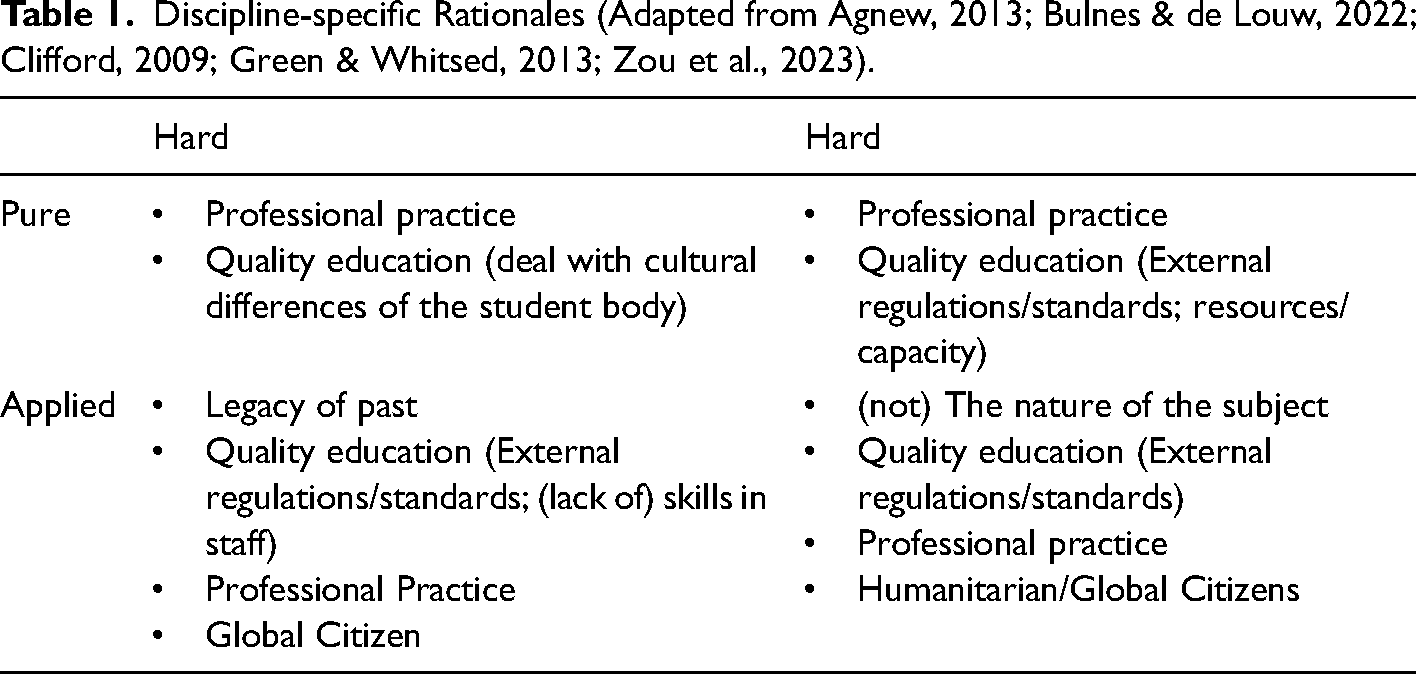
The comparative studies show diverse rationales and strategies for internationalizing the curriculum across disciplines (Table 1). However, conflicting findings exist. Bulnes and de Louw (2022) reported that the hard-applied disciplines mentioned the use of “international guest lecturers” and “global content”, while Agnew (2013) and Karram Stephenson et al. (2022) noticed the opposite. Zadravec and Kočar (2023) found that within a constructively aligned internationalized curriculum, alignment was effectively present in both hard and soft disciplines. Finally, Landorf et al. (2018) present a list of “approaches to global learning”, which is based on their knowledge of the literature and not based on research findings. Despite this foundational knowledge, insufficient empirical comparative data impedes the identification of varied approaches to IoCaH, prompting the need for further investigation of discipline-specific IoCaH rationales and strategies.
Discipline-specific Rationales (Adapted from Agnew, 2013; Bulnes & de Louw, 2022; Clifford, 2009; Green & Whitsed, 2013; Zou et al., 2023).
Limitations of Biglan's Framework
The allure of a framework for comparing and understanding different dimensions of disciplinary culture is not without limitations. First, the literature suggests similarities between disciplines partly because universities and academia operate similarly, despite differences in disciplinary or national contexts (Clifford, 2009; Green & Whitsed, 2015; Leask, 2013a, 2013b; Leask & Bridge, 2013). Second, since Biglan's original work, pedagogical strategies have developed in ways that minimize differences in preferred teaching methods (e.g., the move to online education during and after the pandemic). Furthermore, research in methodologies among disciplines suggest there might be less difference between disciplinary preferences (Doberneck & Schweitzer, 2017). Third, academics, irrespective of their discipline, face common challenges in the globalized HE landscape, including the need to publish to advance professionally, (lack of) funding opportunities for fields; colonial structures in HE, and/or the greater value ascribed to experiential learning (e.g., soft disciplines; Agnew, 2013). Finally, existing classification schemes often overlook emerging inter-, multi-, and trans-disciplinary fields (Green & Whitsed, 2015).
Despite these limitations, Biglan's framework remains the most cited and validated and has been used in HE research for decades (Doberneck & Schweitzer, 2017; Jones, 2011; Simpson, 2017). Simpson (2017) assessed whether the framework suits contemporary university structures and explored its applicability in a new context (previous studies examined the US HE system). The study found that Biglan's framework does retain validity, even in the UK context.
Although Becher's framework (built on Biglan's framework) is often referenced in international HE literature, neither these frameworks, nor those reviewed by Braxton and Hargens (1996), provide an in-depth analysis of the discipline-specific orientations toward IoCaH. Therefore, the authors adopted Biglan's framework for the organization of disciplines as the basis for this study due to its widespread use and to ensure comparability with past studies.
Internationalization of the Curriculum at Home (IoCaH)
The research on internationalization and curriculum are most often categorized using one of two terms: internationalization of the curriculum (IoC) or internationalisation at home (IaH). IaH is a term more commonly used in Europe while IoC originated in Australia and is often used outside of Europe. There has been much discussion about the significant overlap in the two terms (Beelen & Jones, 2015), however, the biggest difference is that IoC includes curriculum taking place both at home and overseas while IaH excludes that context. It is also worth noting that there is a growing discourse embracing a new global learning approach for all, as differentiating between IoC and IaH detracts from internationalization's core purpose (Hunter et al., 2024).
After a review of both IaH and IoC literature, the authors adopted the term Internationalization of the Curriculum at Home (IoCaH) to refer to the formal curriculum at home (Coelen & Gribble, 2019; Jones, 2014, 2019; Thondhlana et al., 2021). As such, education abroad was excluded from this investigation. A few studies have used this term in the past to emphasize the formal curriculum at home but none have defined the concept as such (see Coelen & Gribble, 2019; Jones, 2014, 2019; Thondhlana et al., 2021). Henceforth, the authors use the existing term IoCaH without redefining or further developing it conceptually while acknowledging its potential to conceptually bridge IoC and IaH, given their similarities.
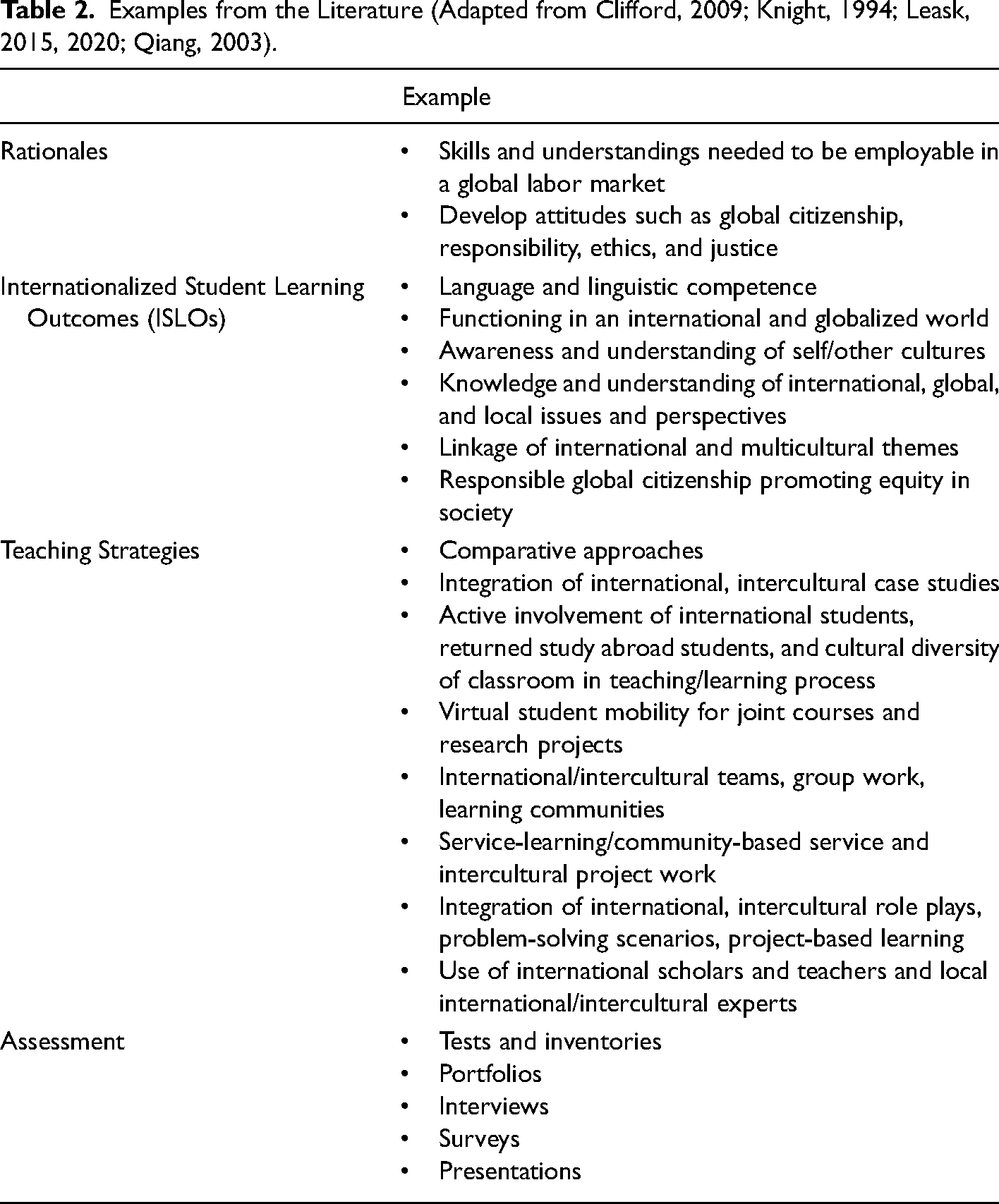
In 2022, there was a renewed call to “prioritize all learning outcomes”, “pay attention to the curriculum”, and “design for learning”, among other priorities (Brewer & Leask, 2022). Given the novelty of IoCaH research across disciplines, it is necessary to explore how and why academics engage with IoCaH. Specifically, their rationales for and use of a constructively aligned internationalized curriculum: intended internationalized learning outcomes; teaching and learning activities; and assessment (Green & Whitsed, 2015; Jones & Killick, 2013; Leask, 2015; Zadravec & Kočar, 2023). A summary of these findings from the literature is presented in Table 2.
Examples from the Literature (Adapted from Clifford, 2009; Knight, 1994; Leask, 2015, 2020; Qiang, 2003).
Rationales
There are four widely accepted rationales for IoHE at the institutional level—political, economic, academic, and cultural/social rationales (De Wit & Knight, 1995). More recently, a humanitarian rationale has also been included (Streitwieser et al., 2019). Jones and Killick (2007), however, propose a more appropriate classification for IoCaH rationales: pragmatically based, values-based, or hybridization of the two. Pragmatically-based rationales focus on skills and understandings needed to work in a globalized world and values-based rationales seek to develop an underpinning set of attitudes to inform the application of both knowledge and abilities, such as, but not limited to global citizenship, responsibility, ethics, and justice. In other words, those that focus on professional practice and those that have a more humanitarian orientation. The authors of this paper add one other rationale—the educational rationale—as IoCaH is commonly attributed to an improvement of educational quality, which can also be seen as a rationale.
Internationalized Learning Outcomes
Experts agree on three common outcomes of an internationalized curriculum: to prepare graduates to address global problems, to act ethically and responsibly concerning these problems and the global community, and to develop a sense of global citizenship, variously referred to as international awareness, intercultural competence, and global citizenship (or affiliated terms: global learning, global competence, global awareness, global mindedness, global engagement, etc.) (Clifford, 2009; Leask, 2015). In this study, intercultural competence is being able “… to collaborate effectively in the international arena” (Coelen et al., 2017, pp. 6–7) and refers to general or professional settings. International awareness, on the other hand, is “… knowing the vision on professional practice from within another culture … [and/or] … knowing the impact of your activities on others elsewhere in the world” (pp. 6–7). With this understanding, intercultural competence is seen as a transdisciplinary learning outcome and is therefore arguably poorly understood by disciplinary experts. On the contrary, international awareness is required to be more embedded within the disciplinary context as experts will be aware of the cultural variations within their profession. From this point of departure, discipline-specific understandings of the terminology related to learning outcomes must be constructed as well as the emphasis placed on developing competencies for professional practice versus private life (Jones & Killick, 2013).
Teaching Strategies
According to the literature, any traditional instructional method can be internationalized (e.g., ‘case study’ vs ‘international case study’), and that disciplinary culture influences how academics conduct research and make pedagogical choices (Becher, 1994; Biglan, 1973; Neumann et al., 2002; Swarat et al., 2017). Several teaching methods have already been identified after a review of the internationalization literature (see Table 2) but there is no information on disciplinary preferences. Only one study addressed “approaches to global learning” across disciplines (Landorf et al., 2018). However, the approaches suggested were based on a literature review lacking details on the methods. Without additional evidence to support their recommendations, it will be necessary to investigate this relationship further.
Assessment
According to the key characteristics of assessment in an internationalized curriculum, it is important to recognize assessment forms and tools (Leask, 2015). Choices for proper assessment tools will look different across disciplines and programs as they must be aligned with individual programs, course outcomes, and performance rubrics.
Methods
Systematic Quantitative Literature Review
Examining the presence or absence of IoCaH in discipline-specific literature indicates its perceived relevance. This study employed a systematic quantitative literature review (SQLR) to uncover the discipline-specific IoCaH discourses of first-cycle programs in select disciplines. This process, like the PRISMA (“Preferred Reporting Items for Systematic Reviews and Meta-Analyses) model for systematic review, is systematic, because of the article selection methods, and quantitative by measuring both research presence and gaps (Moher et al., 2009; Pickering & Byrne, 2014). SQLR is well suited for the initial exploratory stages of assessing literature, especially for new fields. It provides a clear structure and process for undertaking a review with an initially large volume of articles and makes it possible to identify where generalizations occur as well as limitations.
To address the limitations of a monolingual search, two experts from non-Anglo contexts contributed insights on global IoCaH discourses. Their input aimed to supplement our search results with comparative information on discourses occurring in non-Anglo contexts, in Europe and elsewhere. The authors acknowledge that there may be content in other languages that were inaccessible even after consultation with these experts.
Selection of Disciplines
Based on Biglan's framework, the following disciplines were chosen according to their location in the framework as well as their prevalence in major universities: biology, business, engineering, law, mathematics, medicine, music, nursing, and psychology. Although variations exist according to sub-disciplines, this study explores the parent disciplines since little empirical data is currently available.
Data Collection
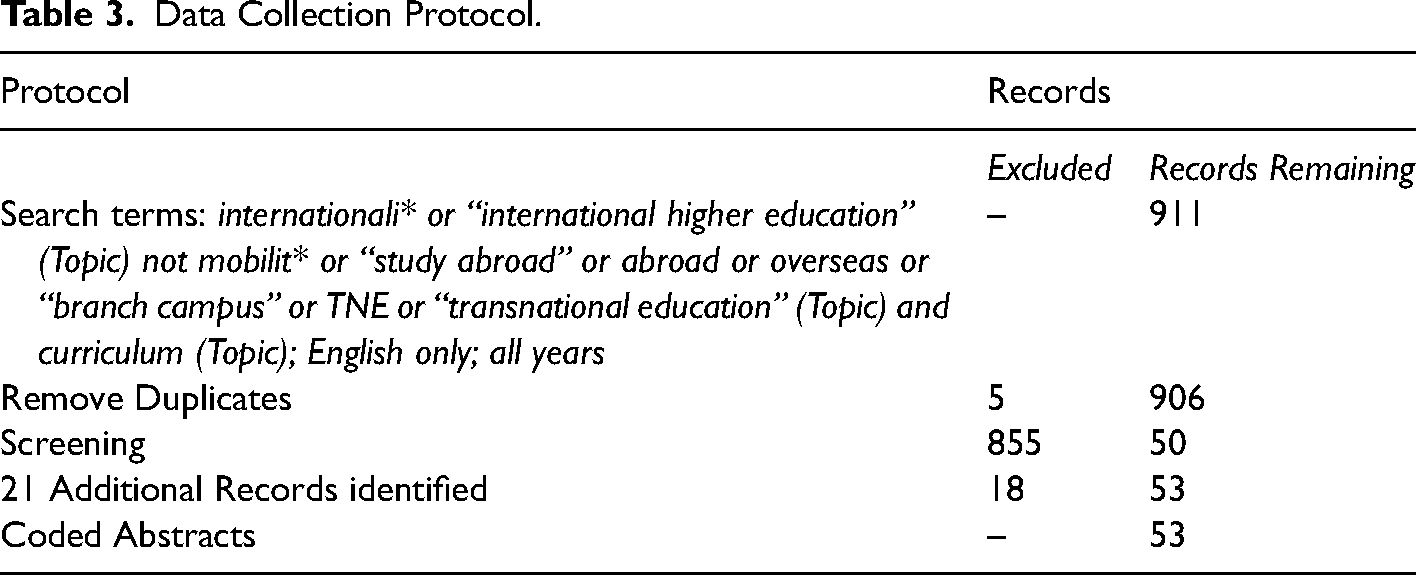
In July 2021, a search of the following terms was conducted using the Web of Science Database (all databases) (see Table 3): international, and its relevant, variant terms (e.g., international HE, internationalization, etc.), and curriculum. The search also excluded terms related to ‘education abroad’ (e.g., study abroad, mobility, branch campus, overseas, transnational education). The authors excluded commonly used terms (e.g., IoC, IaH, global learning) to avoid analyzing literature by IoCaH champions to increase the likelihood of identifying literature that presents diverse conceptualizations across disciplines, which is at the core of this study. The search parameters were set to include all years, only ‘peer-reviewed and review articles’ and those published in English. Excluding other materials, like contributions to edited book chapters, maintained the review's integrity since assessing their peer-review quality is unfeasible. The search yielded 906 articles after the removal of five duplicates.
Data Collection Protocol.
Inclusion/Exclusion Protocol
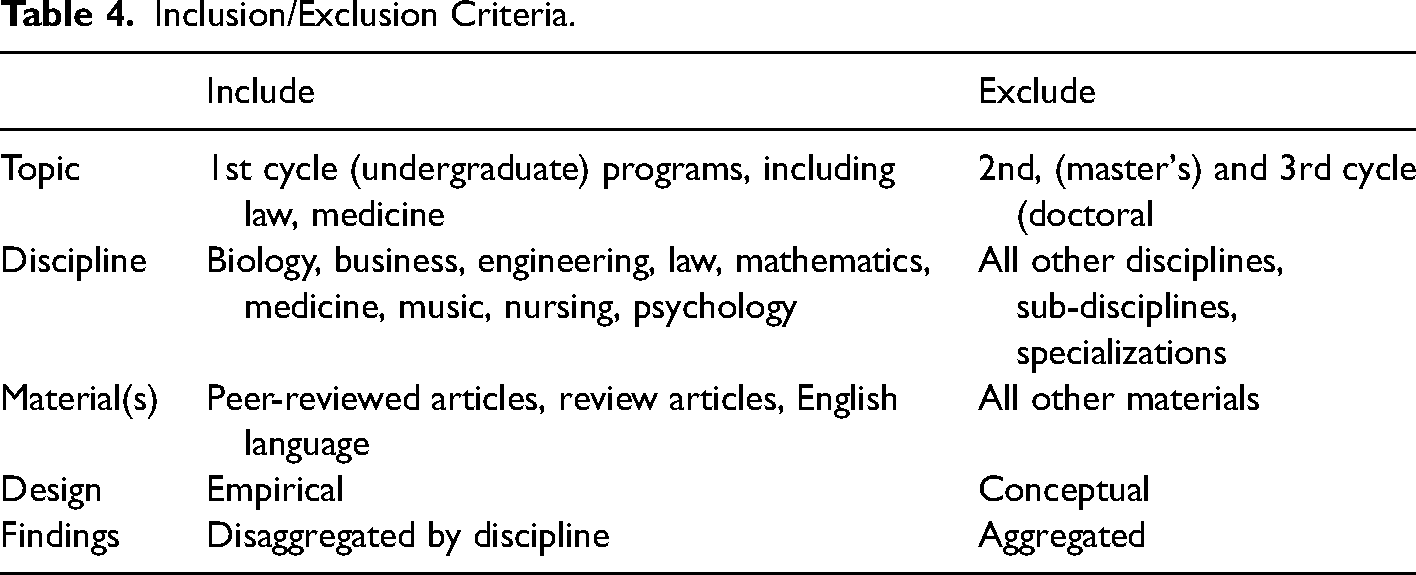
Articles that did not refer to first cycle higher education of one (or more) of the disciplines selected for this study and/or were conceptual, rather than empirical, studies were excluded (see Table 4). The exception was medicine and law, which in some countries (e.g., USA, Netherlands, Australia) is a post-graduate level program. The application of this criterion excluded 855 articles, leaving fifty articles for analysis. Two additional searches took place in 2022 and early 2023. Only three additional articles met the inclusion criteria, bringing the total number of articles to fifty-three.
Inclusion/Exclusion Criteria.
Data Analysis
Using NVivo, fifty-three abstracts were coded to extract geographical area, sample details, IoCaH rationales, strategies, and assessment methods. To maintain consistency in data extraction, we focused on abstracts which often follow a structured format with key information. Intended learning outcomes (ILOs) were excluded since program plans/curricula documents were not reviewed. Future research on ILOs at national, program, and course levels, and included in disciplinary accreditation would further our understanding. Full-text articles were consulted for missing or unclear information in the abstract. The coded data was analyzed using text searches and matrix coding in NVivo. While this study employs Biglan's classification as an organizing framework for the data, an inductive approach helped to remain open to potentially modifying the use of Biglan's framework based on a conceptual analysis of IoHE rationales and strategies.
Characteristics of the Reviewed Articles
The reviewed articles were single discipline (92%) case studies (90.5%) using a single instrument (73.6%) for data collection. Only 8% of the studies were comparative (multiple disciplines). There was an uneven distribution of disciplines and geographic contexts. Furthermore, 31.8% of the contexts identified included or focused solely on Anglo-speaking countries (Australia, Ireland, UK, Canada, USA), while just 21.2% of all contexts identified were in the Global South.
Of the sixty-nine rationales identified, 45% were professional, 35% educational; and 20% humanitarian. This illustrates an alcmost even emphasis on improving the quality of education and developing students into competent future professionals. Only studies about psychology showed an overwhelming interest in IoCaH to develop for humanitarian purposes (e.g., global citizens, etc.).
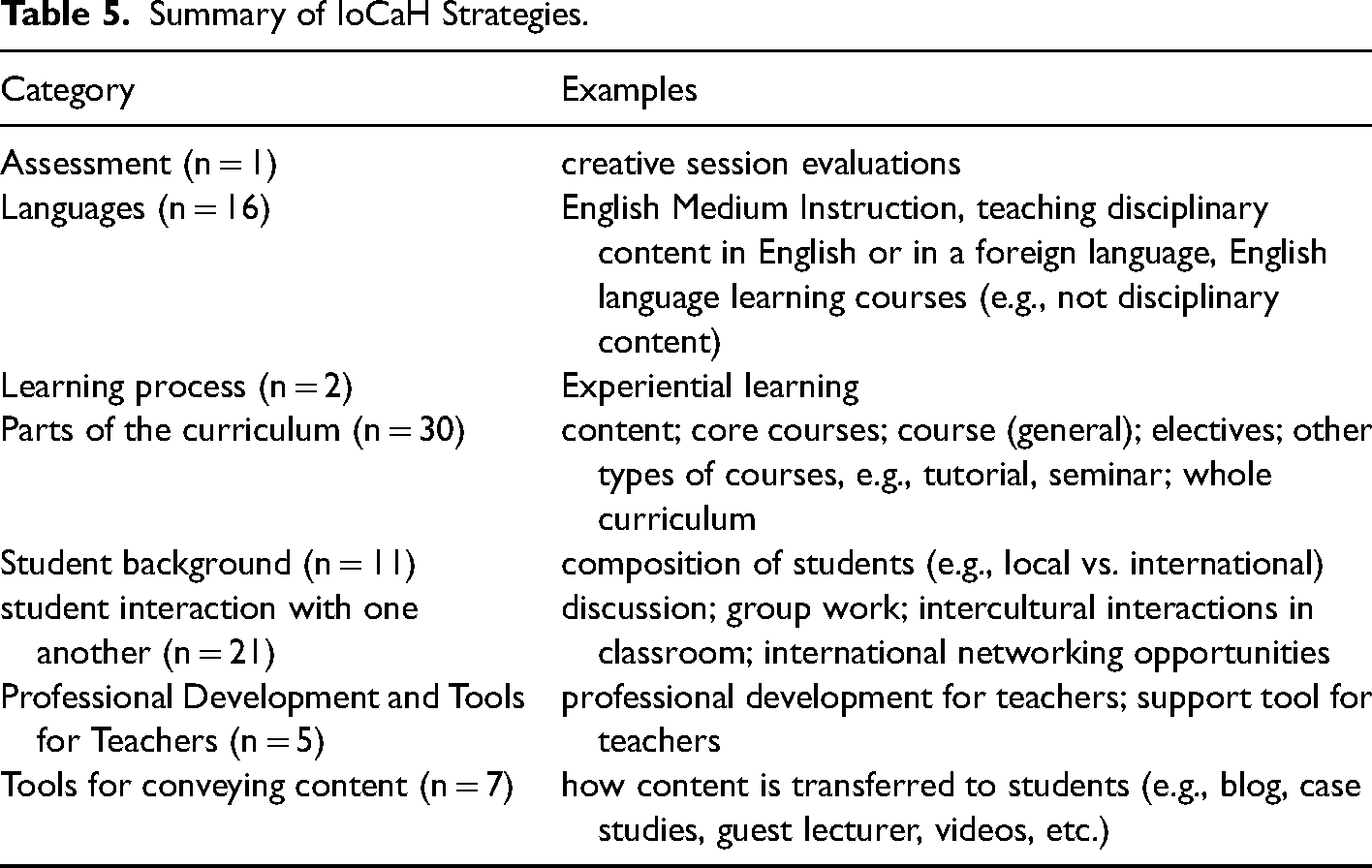
When broken down, ninety-three strategies were mentioned, which are grouped into eight broad categories (see Table 5): assessment, learning process, parts of the curriculum, languages, student background, student peer interaction, teachers, and tools for conveying content. Business, engineering, medicine, and nursing used more than three internationalized strategies. Specifically, 80% of all curriculum-related strategies were identified in studies about business, law, medicine, and nursing and about 44% of language-related strategies came from business. Furthermore, just over 5% of the identified strategies focused on teachers (e.g., professional development for teachers; support tools for teachers).
Summary of IoCaH Strategies.
Trends Across Disciplinary Groupings
Returning to the point of departure—that groups of disciplines share certain characteristics—the findings are interpreted according to Biglan's framework: 2% hard-pure (biology); 35% hard-applied (engineering, medicine), 7% soft-pure (music, psychology), 56% soft-applied (business, law, nursing). Through this lens trends across groupings are more apparent and allow for comparison with earlier studies. Due to the small number of studies in the hard-/soft-pure categories, it is difficult to make meaningful assertions. The analyses are therefore presented under the relevant disciplinary grouping or as “hard-disciplines” and “soft-disciplines.” A summary of the findings can be found in Table 6. Of the ninety-three strategies identified, the three main types of strategies employed fall into the categories: ‘parts of the curriculum,’ ‘student interaction,’ and ‘student background.’ Regarding the diversity of strategies used, hard-applied disciplines employed strategies from eight distinct categories; soft-applied from six distinct categories; and soft-pure from four distinct categories. ‘Parts of the curriculum’ made up just over 32% of all identified strategies with 32% employed by hard-applied and 72% by the soft-pure/applied disciplines, making it the largest strategy employed by each of these groups. What remains unclear is why only part versus the entire degree program was the focus of the IoCaH process.
Summary of Findings.
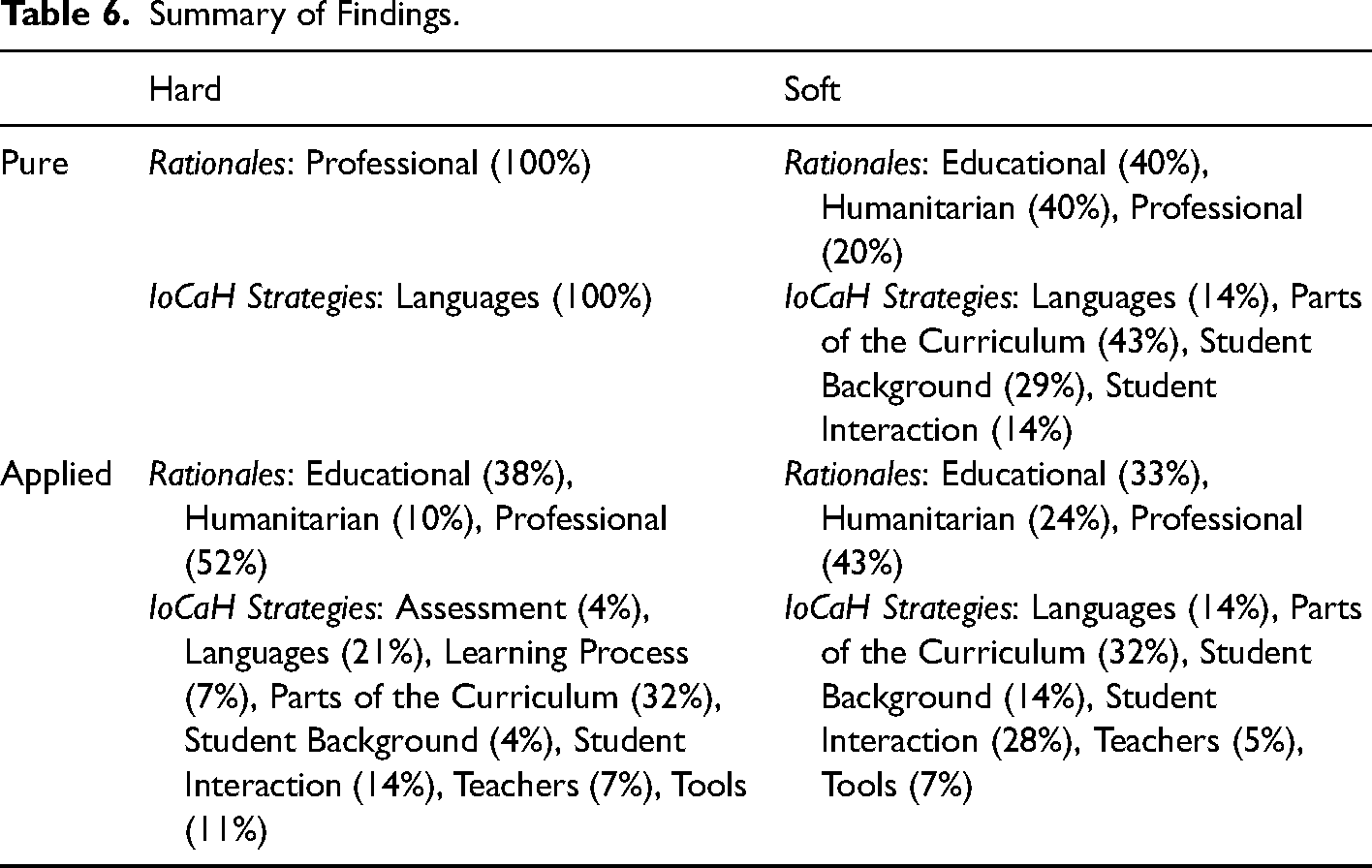
The second most utilized teaching strategy for each disciplinary group was ‘languages’ (hard-applied); ‘student background’ (soft-pure); and ‘peer interaction’ (soft-applied). This choice made by soft-applied disciplines might be explained by two key characteristics of programs in this category: ‘human experience’ and ‘reflective practice.’ Finally, it is worth noting that of the references made to language, thirteen articles were about the English language and three (two in the soft-applied and one in hard-applied) were about a foreign language other than English.
In comparison to prior research, there is substantial alignment of identified teaching strategies, mirroring the earlier categorization presented in this paper, e.g., except for the hard-pure grouping where Bulnes & de Louw (2022) identified activities of the ‘learning process’ and ‘parts of curriculum’ categories (where this study only identified ‘languages’), this study added several teaching strategies to their findings; including assessment (hard-applied), teachers (hard-applied, soft-applied), tools (hard-applied, soft-applied), languages (soft-pure), student background (soft-pure), and student interaction (soft-pure). Interestingly, Bulnes & de Louw (2022) found many examples of ‘parts of the curriculum’ in the hard-applied grouping, where Agnew (2013) noted that while international faculty were represented in the hard-applied disciplines, there was little “foreign presence” in the curriculum.
Rationales
Our data shows that there was a significant focus on educational rationales in the hard-applied (38%) and soft-applied (33%) disciplines. This aligns well with data on strategies (both groups employed strategies related to the category ‘parts of the curriculum’). Soft-applied disciplines identified 24% of humanitarian rationales, confirming findings from earlier studies that soft-applied value the application of learning, human experience, and the multiple ways of knowing (Agnew, 2013). Hard-applied disciplines, on the other hand, have a strong preference for professional-related rationales (52%), potentially because they are competitive and/or functional, technology and/or product-driven, and very global in nature (Agnew, 2013). The few soft-pure studies reviewed showed equal importance to educational and humanitarian rationales and a single hard-pure study mentioned a rationale related to professional practice.
These findings align with earlier research, as all rationales were present in all disciplinary groupings. The exceptions were the absence of the humanitarian rationale in the literature for the soft-pure grouping, and the absence of the educational rationale in the hard-pure grouping (possibly due to the small sample size in this study). The differences in findings might also stem from the fact that this study quantified the frequency of rationale and strategies whereas Bulnes & de Louw (2022) and Agnew (2013) did not. However, this research both confirms and extends their previous findings.
Complexities of an Internationalized Curriculum
This study aimed to understand discipline-specific IoHE rationales and strategies based on the topics mentioned in peer-reviewed articles. Related to curriculum design, none of the identified studies centered on learning outcomes and/or assessment. This is problematic for two main reasons. First, without observable and measurable learning outcomes, it is difficult to assess student learning effectively (Jones & Killick, 2013). Furthermore, without the articulation of clear learning outcomes, it can lead to ambiguity and uncertainty for students on what they should learn (Aerden, 2015).
The purpose of assessment is not only for lecturers to identify achievement of ILOs but also to help students understand new knowledge, skills, and/or attitudes because of the educational intervention. For some disciplines, the students’ recognition of these outcomes will be obvious, such as language learning competence. For other disciplines, like mathematics or computer science, explicit criteria are needed to help students understand ILOs (Leask, 2015). According to our findings, these features of an internationalized curriculum—intended learning outcomes and assessment—remain unexplored across all disciplines.
Exploring Nuances Across Disciplines: Broadening Perspectives and Insights
This study echoes earlier findings on how and why the curriculum is internationalized across disciplines. The findings also align with earlier studies in that few comments can be made about the hard-pure disciplines. This gap concerning hard-pure (and even soft-pure) disciplines could be due to disciplinary characteristics—researchers already believe they are international by nature (Agnew, 2013) and therefore give less attention to this topic, or because of other variables (e.g., focus on gender diversity vs. national/ethnic diversity, etc.). We also found that the available research is not generalizable as the case studies we analyzed were rarely comparative.
This study is one of few comparative studies on discipline-specific conceptions of IoCaH, thus empirical studies that provide a holistic, comparative perspective spanning all groupings are still needed. This will ensure clarity surrounding the nuances between and across disciplines. Furthermore, conducting a monolingual search for peer-reviewed articles in English while logical given the pressure for non-Anglophone researchers to publish in English, leaves much unknown in terms of the discourses taking place in non-Anglo contexts and serves as a possible explanation for the uneven distribution of data collection sites identified (López-Navarro et al., 2015).
We agree with the experts consulted on this topic that expanding the search to include other languages and types of materials could illuminate lively conversations being had in, for example, Germany (e.g., conferences (2017 German Rektor's Conference; 2016 international conference at the University of Göttingen); books (Casper-Hehne & Reiffenrath, 2017; Ittel & Meyer do Nascimento Pereira, 2018); and special journal issues (Zeitschrift für Hochschulentwicklung (Year 12/No.4)); Brazil (e.g., The Center of Internationalization of Education Brazil-Australia; BRaVE programme); Sweden (e.g., report on increased IoHE at institutions (SOU, 2018)) and several other countries like France and The Netherlands (Thondhlana et al., 2021) where English is not the dominant language. The inclusion of only peer-reviewed literature also excludes seminal pieces (e.g., Green & Whitsed, 2015; Leask, 2015) and other sources (e.g., ioc.global [digital repository]) necessary to understand IoCaH across disciplines.
Concluding Remarks
What is now known is that IoCaH is approached differently across disciplines. Expanding our understanding requires research using non-English language literature; other types of materials; and interviews to facilitate a deeper understanding of the discipline-specific discourse and terminology surrounding IoCaH. There also remains a knowledge gap around the relationship between individual versus institutional versus disciplinary priorities. At best, they can be in alignment but often are in contradiction with one another. Blockers (cultural, institutional, and personal), enablers, and the roles of national and disciplinary accreditors also warrant further investigation. Most crucial, however, is the need for comparative studies—both disciplinary and geographical. Despite these limitations, this study contributed novel discipline-specific IoCaH rationales and strategies previously unexplored in prior research. These findings hold significance for various stakeholders:
university leaders need tailored strategies and resource allocation to engage academics in IoCaH initiatives due to diverse interpretations of top-down policies; educational developers must comprehend diverse IoCaH conceptualizations across disciplines and their impact on teaching methods for discipline-specific ILOs; and staff working with IoCaH should consider discipline-specific orientations when developing communication strategies to engage academics beyond IoCaH champions.
To engage those who question, show a lack of interest in, or oppose IoCaH, it is wise to discuss the needs for and availability of professional development for teaching staff (Gregersen-Hermans & Lauridsen, 2021; Zou et al., 2023). One way forward is through discussion, debate, and critique of disciplinary norms (Leask, 2015). The findings of this study are a good starting point for such reflection and conversations. Finally, while recent global crises present motivation for universities to focus on IoCaH, “… without a new sense of urgency, a new language, sense of purpose, and commitment … it is likely to progress at a very slow pace and remain a low priority for HEIs” (Green, 2021). Therefore, all relevant stakeholders must act with urgency to fill the research and practice gaps related to IoCaH across disciplines.
Footnotes
Declaration of Conflicting Interests
The authors declared no potential conflicts of interest with respect to the research, authorship, and/or publication of this article.
Funding
The authors received no financial support for the research, authorship, and/or publication of this article.
