




Abstract
In the literature on international student mobility, foreign language skills are usually discussed as an outcome rather than a driver of study abroad programmes. In contrast, this article focuses on their role in study abroad aspirations and destination choices of credit mobility students. The study is based on an online survey, conducted at three European HEIs (n = 2,327), located in Belgium and the Netherlands, and revealed that students who assess their skills as advanced are more likely to aspire to study abroad compared to those who evaluate their skills at an intermediate level. Students who speak a foreign language daily are also more likely to aspire to study abroad. Furthermore, our analysis suggests that the number of languages students speak does not seem to play a role. Finally, the findings demonstrate a significant influence of knowing the official language of the country on the choice of study abroad destination.
Keywords
Introduction
Higher education institutions (HEIs) worldwide emphasise the crucial role of language skills for successful international experiences. Cologne University of Applied Sciences underscores this, stating “Good foreign language skills are one of the most important prerequisites for a successful stay abroad. For admission to a host university, acceptance by an employer, or for scholarship applications, proof of proficiency in the host country's language of instruction or working language is often required” (TH Köln 2022, Preparation for a Stay Abroad, section 5). Language skills offer direct and indirect benefits, supporting preparation, acclimatising to the destination society, and integrating into local student communities and higher education life. Additionally, the desire to enhance language skills is frequently cited as motivating participation in study abroad programmes (Bell, 2016; Bourke, 2000; Cubillo et al., 2006; Lesjak et al., 2015; Rodriguez Gonzalez et al., 2011).
This study is based on a 2019 online survey conducted at three HEIs in the Netherlands and Belgium which explored language proficiency and use, aspirations for short-term study abroad programme participation (before making the decision to take part), and preferred destination choices. The research investigates the roles of language proficiency and frequency of use on study abroad aspirations and choice of destination, focusing on two stages: the decision to take part in short-term mobility, and selection of country for study abroad.
The article makes three main contributions to existing research. First, it empirically evidences the language factor's importance in study abroad decision-making and destination choices, extending literature on the role of language in short-term international student mobility. Second, it focuses on both language proficiency and frequency of use, demonstrating how these factors can either facilitate or impede study abroad aspirations. Third, it reveals that, regardless of self-reported foreign language proficiency levels, students tend to choose short-term study abroad destinations where they are familiar with the language.
Context
Language as a Driver of Decision-Making in Short-Term Student Mobility
Numerous studies have explored language proficiency as an outcome of international student mobility (see e.g., Jackson et al., 2020; Lafford & Collentine, 2006; Luo & Jamieson-Drake, 2015; Ożańska-Ponikwia & Carlet 2021).
However, the impact of language skills as a driver of international student mobility has received less attention. Empirical research consistently indicates that a lack of language confidence can be a potential barrier to study abroad (e.g., Beerkens et al., 2016; Findlay et al., 2006, Van Mol & Timmerman, 2014). Not feeling confident in language skills is one common reason for students to avoid participation in study abroad programmes or causing them to choose countries where the same language is spoken as their own. Around 40% of first-year students in a study by Findlay et al. (2006) marked language skills as very important and 70% as a slightly important reason for not going abroad. Conversely, language skills can facilitate study abroad by reducing associated ‘migration costs’ (Isphording & Otten, 2014) and encouraging participation. Students who speak other languages might more willingly participate in study abroad and have a broader choice of destination countries which may positively influence their decision to study abroad.
Language and Destination Choices
Students often express a desire to improve language proficiency through immersion while studying abroad, making language a key factor in destination choice. Brown et al. (2016) found that medical students preferred countries with the same or linguistically close language in destination selection. Some explicitly sought countries with a language similar to their own for easier acquisition. The authors observe that while students aim to experience other cultures, they prefer countries with a similar language to their own (Brown et al., 2016).
Motivations and criteria for destination choice may differ for credit and degree mobility. Unlike degree seeking students, credit mobility is often determined by cooperation agreements between HEIs. Lesjak et al. (2015) note that credit mobility is influenced by both general and touristic factors, to destinations enabling personal and professional growth. Speaking the language of the country can enhance cultural understanding and facilitate interaction with peers inside and outside the classroom, thus helping improve cultural and social capital. Castillo Arredondo et al.'s (2018) study on international students in Spain and Germany supports the significance of language in destination choice. The current study extends this perspective by examining a broader array of languages and destination choices.
Theoretical Framework
The theoretical framework for the study is Personal Investment Theory, initially developed to understand the reasons and motivations behind investing time, energy and resources into a particular activity (Maehr & Braskamp, 1986). This posits that the decision to engage in an activity is based on a combination of three factors, namely facilitating conditions, sense of self, and perceived goals. King et al. (2019) analysed the role of these factors in the decision to study another language. A similar approach has been used in relation to study abroad decision making (see e.g., Van Mol, 2021). These three factors are now described in more detail.
Facilitating Conditions
Facilitating conditions explain the role of the socio-cultural environment in deciding to undertake an activity. Thus the influence of parents, peers, schools and wider socio-cultural context play an important role in language learning motivation and use and participation in study abroad programmes (Brooks & Waters, 2020; King et al., 2019; Netz et al., 2020; Van Mol & Timmerman, 2014). Students from higher socio-economic groups might exhibit enhanced language proficiency through the cultural capital derived from their socio-cultural context (Gerhards, 2014). For example, exposure to different languages at home and at school, travel experiences, parental investment in extra classes, and/or diverse languages offered outside the formal curriculum. Mobile students are more likely to come from higher income families, and financial barriers remain a significant deterrent to study abroad engagement (Netz et al., 2020).
Furthermore, the influence of parents who have lived in another country positively correlates with the probability of studying abroad (Van Mol & Timmerman, 2014). This experience may signal the openness of the family towards international experience and consequently to foreign language exposure. Similarly, a family's migration background can facilitate additional language learning as students born abroad or with foreign-born parents may already possess multilingual proficiency, using other languages regularly at home.
Peer support is instrumental in language learning, with positive experiences from peers who have participated in study abroad programmes, or having friends who live abroad, may stimulate the desire to enhance and use language skills, prompting students to enrol in international learning programmes (Brooks & Waters, 2020; King et al., 2019; Van Mol & Timmerman, 2014).
Sense of Self
A student's sense of self encompasses their perception of educational skills, including language proficiency. King et al. (2019) distinguish between the “ideal self” referring to the learner's internal aspirations and the “ought-to self” influenced by social pressures in the learner's environment. Therefore, self-perceived language proficiency can be assumed to influence a student's engagement in study abroad programmes. Positive self-assessment encourages participation, whereas fear of insufficient language skills may prevent students from going abroad, or from using the language if they do (Beerkens et al., 2016; Findlay et al., 2006; Souto Otero et al., 2013; Van Mol & Timmerman, 2014). Moreover, beyond confidence issues, some studies indicate that students explicitly report ‘studying in a language other than English’ as a barrier (e.g., Brown et al., 2016; Doyle et al., 2010; Lane-Toomey & Lane, 2012). The importance of self-perception is illustrated in Ożańska-Ponikwia and Carlet's (2021) comparison of Spanish and Polish students planning to study abroad with those who were not, revealing that the group planning to study abroad perceived their language proficiency as much higher.
Perceived Goals
Perceived goals encompass reasons for undertaking the activity, ranging from genuine interest to achieving higher social status. King et al. (2019) categorise language learning motivations into mastery (language learning intrinsically, for its own sake); performance (outperforming others at speaking the language); extrinsic (seeking tangible rewards); and social goals (subdivided into affiliation, status, approval and so on).
Mastery goals strongly link to participation in study abroad, since motivations are frequently cited as the desire to enhance language skills, gain cultural insights, and experience a new linguistic and cultural environment (Bell, 2016; Bourke, 2000; Castillo Arrendo et al., 2018; Cubillo et al., 2006; Lesjak et al., 2015; Rodriguez Gonzalez et al., 2011). Extrinsic factors, including weighing costs and benefits can also influence the decision to study abroad, with language enhancement to potentially improving future career opportunities and earnings.
If language indeed plays the kind of roles suggested by Personal Investment Theory, it is likely also to influence decision-making processes in terms of destination choice.
Methodology and Data
The analyses presented in this article are based on data collected in 2019 using an online survey among higher education students at two Dutch HEIs and one Belgian. The survey investigating barriers and drivers for student international engagement at home and short-term mobility abroad, was developed to assist the Belgian HEI's international office in refining their internationalisation strategy, based on empirical evidence, and following a similar exercise in 2014.
Through the professional network of one the authors of this article, international offices of the two Dutch HEIs heard about the survey and asked to join the study. All students from the three participating institutions received an invitation to complete the online survey (total population sampling). The response rate was low, namely 7.3 percent, with a total of 3,607 respondents, but this is in line with recent reports of survey fatigue among higher education populations (see e.g., Maineri & Van Mol, 2022). After excluding students who dropped out before the mobility intentions question and those with prior study abroad experience, our final sample included 2,327 observations for the first analysis (decision-making processes). In the second analysis (destination choices) out of 1,389 students who considered going abroad 28% did not specify a destination, resulting in a final sample of 1,005 observations.
Belgium and the Netherlands share the same official language and the three institutions had comparable sizes, ranging from 20,000 to about 29,796 enrolled students in 2020–2021. While Belgium's outward credit mobility aligns with many other European countries, the Netherlands reported the second highest outgoing credit mobility rate in 2017 across European nations (Van Mol et al., 2024). Despite these national variations, the three institutions are similar, and do not rank among the top sending institutions in their respective countries, sending abroad only a small (but comparable) share of students annually (outgoing students in 2018–2019 ranged between 1.81 and 2.29 percent, according to numbers provided by their international offices).
First Analysis: Language and Study Abroad Decision-Making
Dependent Variable
The dependent variable in the first analysis was a categorical variable indicating the student's intention to study abroad based on the question, ‘Do you intend to spend some time abroad (again) for studying/an internship during the remainder of your degree?’. This variable consists of three groups, namely (1) potential movers, students who planned to go abroad (answer: ‘Definitely’ or ‘Definitely, I have already signed up’), (2) doubters, (answer: ‘Might or might not’ and ‘I don’t know’), and (3) non-mobile students, (answer: ‘Probably not’ and ‘Definitely not’).
Independent Variable
In the first analysis independent variables focused on self-reported language proficiency and use. Respondents could name up to five languages, first rating proficiency on a scale from 1 (mother tongue) to 4 (basic command) and, second, usage from 1 (daily use) to 5 (almost never). The language proficiency variable considered the highest self-reported language excluding mother tongue, while usage scores considered the highest named language except the first, which was assumed to be the mother tongue. The third was a categorical independent variable indicating ‘only (a) mother tongue(s)’, ‘1 foreign language’, ‘2 foreign languages’, ‘3 foreign languages’, ‘4 or more foreign languages’.
Control Variables
Control measures were implemented to address confounding factors influencing international student mobility choices. First, students’ social status, was measured by the question ‘In our society there are groups which tend to be towards the top and those that are towards the bottom. With a scale from top (1) to bottom (10), where would you put yourself on this scale?’ This resulted in five categories: higher class (groups 1–2); upper middle class (groups 3–4); middle class (groups 5–6); lower middle class (groups 7–8); and working class (groups 9–10) with most students placing themselves in the upper middle, middle or lower middle classes.
In addition to subjective social status, parental education also influences the decision to study abroad (Findlay et al., 2006), and is especially important for female students (Van Mol, 2021). To control for parental educational levels, answers to the question about the highest level of education completed by parents were categorised into three groups based on the International Standard Classification of Education (ISCED). The ‘high’ category encompasses ‘bachelor's degree or equivalent’, ‘master's degree or equivalent’ and ‘doctorate’, corresponding to ISCED 5-8; the ‘middle’ category aligns with ISCED 3-4 including ‘secondary school or equivalent’; and the ‘low’ category corresponds to ISCED 1-2 comprising ‘less than primary school or primary school’.
Second, prior international experiences of students and parents were controlled for. Roughly one-third of students’ parents had lived abroad, while approximately 20% of students had themselves lived abroad before entering higher education. Around 15% of students took a gap year before starting higher education, with over half spending this time abroad. Almost all students in the sample engaged in leisure travel abroad, either with family, friends, in groups or alone, with an average of 24 such trips per student.
Third, students’ migration background can influence their decision to study abroad, both positively and negatively. Netz et al. (2020) found students from a migration background overrepresented in study abroad programmes in some European countries, whereas in others they have lower participation rates than the majority population. To control for this, questions about the original nationality of their parents were used. Most parents shared the nationality of the country where the students lived, 7% had only one parent with this nationality, and in 30% of cases, the students’ parents did not have at birth the nationality of the country where their children studied. Fourth, social network effects were controlled by whether students’ siblings studied abroad (0 = no, 1 = yes), and whether respondents had friends abroad (0 = no, 1 = yes).
Finally, gender, study field, HEI and study year were controlled for. Multiple studies show female students tending to be more represented in study abroad programmes (Findlay et al., 2006; Netz et al., 2020), while humanities students are more likely to engage in international study experiences (Brooks & Waters, 2020).
Second Analysis: Language and Study Abroad Destination Choices
Dependent Variable
The second analysis included only potential movers and doubters (n = 1,005), as they had indicated preferred destinations in the questionnaire, and non-mobile students had not 1 . The dependent variable here was a dummy variable based on responses to the question about their destination choices. Students in the sample could indicate up to five countries, resulting in 108 countries of preference overall. Consequently, a panel sample was created with 108 observations for each respondent on destination choice, resulting in a total of 108,540 observations. For each of these observations (defined by the student i and the country j) the dependent variable is equal to ‘1’ if the student i indicates the country j among his destination choices, and ‘0’ if otherwise.
Independent Variable
The independent variable in the second analysis was a dummy variable based on responses to the languages students speak. Each observation is defined as the combination of student i and country j, with the variable equal to ‘1’ if the student speaks the destination country's official language and ‘0’ if not.
Control Variables
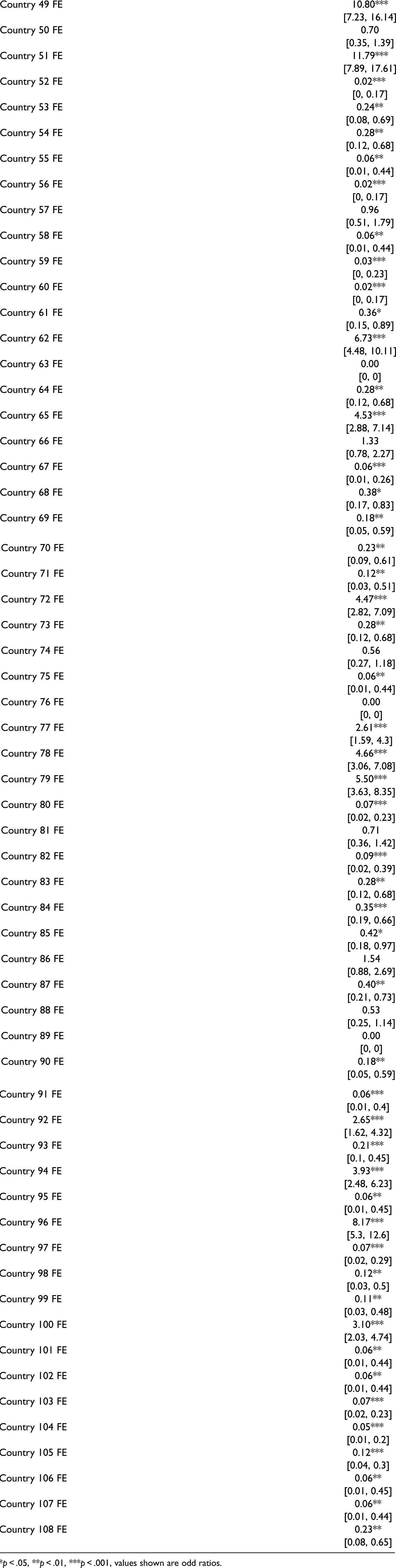
For the second analysis, instead of student-level characteristics of the first analysis, we used fixed effects for students and destination countries. We chose to use student fixed effects to avoid the problem of dependency between observations. In this analysis, we only controlled for parental country of birth and whether students had already experienced living in that country with their family, both variables being country-student dependent, thus avoiding multicollinearity issues.
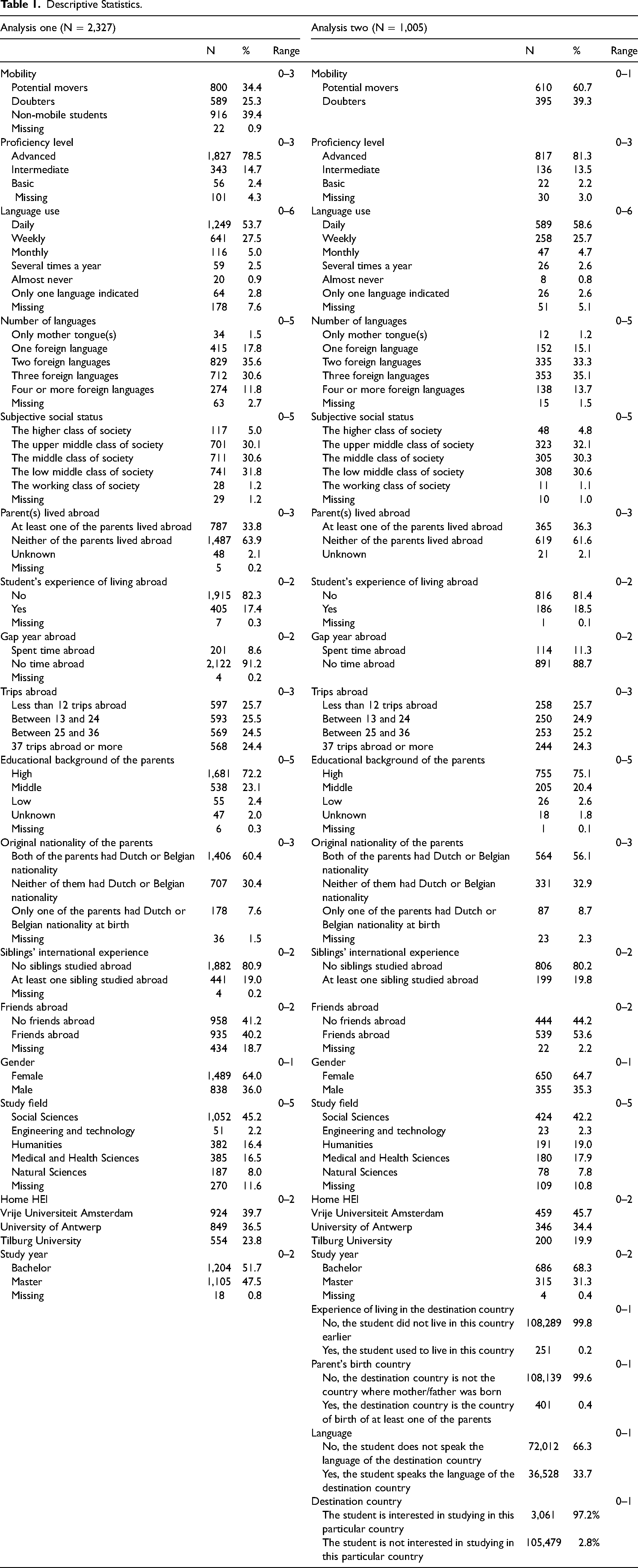
An overview of all descriptive statistics can be found in Table 1.
Descriptive Statistics.
Analytic Strategy
To analyse the role of language use and proficiency in the decision to engage in study abroad programmes, a multinomial logistic regression model was applied. To investigate the role of language skills in destination choices, a binary logistic regression was applied to our panel data, with clustered errors at the student level. Logistic regressions are typically used with independent categorical variables to analyse the outcome of a discrete event (two in a binary regression or several in the case of multinomial regression). In the first regression, multinomial regression is the most logical choice given the fact that the dependent variable consists of different categories, which do not present an order. Data screening revealed a significant number of missing values (34 percent of students had missing data on at least one variable of interest). To address this, multiple imputation by chained equations (MICE) was applied, one of the principal methods for dealing with missing data. A multiple imputation approach has many advantages: in particular, contrary to simple imputations, it allows us to take into account the increased uncertainty resulting from the use of imputed values, diminishing the risk of overestimated significance (Azur et al., 2011).
Results
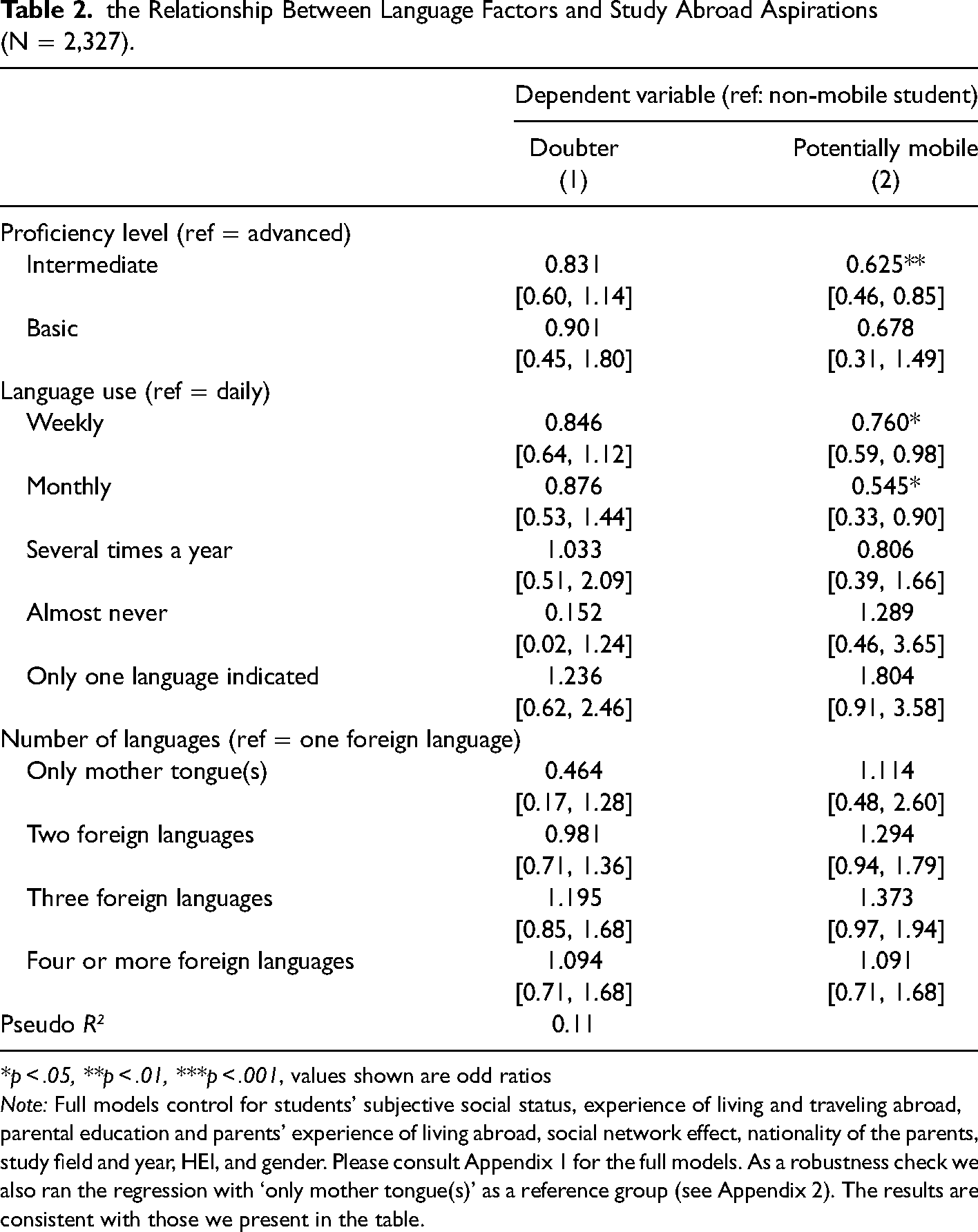
First, we ran three separate multinomial logistic regressions (to avoid multicollinearity) to analyse the relationship between self-reported language proficiency, language use, number of spoken languages and the probability to engage in study abroad programmes (Table 2). The results indicate that students with advanced proficiency in a foreign language have a significantly higher propensity to aspire to participate in study abroad programmes compared to students who evaluate their language proficiency level as intermediate. In addition to the significance, the magnitude of the effect associated with language proficiency is important: the odds of being potentially mobile as opposed to non-mobile are 37.5% lower among intermediate students compared to advanced speakers of a foreign language. There were no statistically significant differences between students with an advanced foreign language proficiency level and those with a basic level, albeit the coefficients were in the expected direction (the odds of being potentially mobile over being non-mobile are lower for basic level students). That is, those with advanced language proficiency are more inclined to indicate an aspiration to study abroad.
the Relationship Between Language Factors and Study Abroad Aspirations (N = 2,327).
*p < .05, **p < .01, ***p < .001, values shown are odd ratios
Note: Full models control for students’ subjective social status, experience of living and traveling abroad, parental education and parents’ experience of living abroad, social network effect, nationality of the parents, study field and year, HEI, and gender. Please consult Appendix 1 for the full models. As a robustness check we also ran the regression with ‘only mother tongue(s)’ as a reference group (see Appendix 2). The results are consistent with those we present in the table.
In terms of language use, students who use a foreign language daily are more likely to aspire to study abroad compared to those who only use it on a weekly or monthly basis. The odds are 24% and 45% lower for students who speak a foreign language weekly and monthly to be in a mobile group than for daily speakers of a foreign language. Interestingly, no such statistically significant differences are observed with those who use foreign languages less frequently (several times a year or almost never). Finally, no statistically significant differences were observed in relation to the number of languages students speak.
Second, we analysed the relationship between knowledge of foreign languages and students’ destination choices (Table 3). The results indicate that destination choices clearly correlate with the languages students have knowledge of. The odds of choosing a specific country as a potential destination is 2.6 times higher if the student speaks an official language of the country. This suggests that students tend to choose a study abroad destination where they can speak or practise a language with which they are already familiar.
the Role of Foreign Language Skills in Destination Choices (N = 1,005).

*p < .05, **p < .01, ***p < .001, values shown are odd ratios.
Note: The full model also controls for student and country fixed effects. Please consult Appendix 3 to see the full model.
Discussion
This article has investigated the role of foreign language proficiency, use and the number of languages students speak on their study abroad aspirations, as well as the relationship between language and destination choices. Analysing this online survey, conducted with 2,327 students at three HEIs in Belgium and the Netherlands in 2019, leads to the following conclusions.
According to Personal Investment Theory perception of self, including language skills, is one factor influencing a student's decision to participate in study abroad programmes. Students who feel confident in their language skills, evaluating them as advanced or using them daily in the home country, more willingly embrace activities where language plays an important role, such as study abroad programmes where they are exposed to the host country language within and beyond the institution. In contrast, those perceiving their language skills as intermediate or lower with less frequent use at home, may see this as a barrier and refrain from study abroad opportunities.
This result aligns with various articles that view language as both a barrier and facilitator of study abroad programmes (Beerkens et al., 2016; Findlay et al., 2006; Nilsson, 2015; Van Mol & Timmerman, 2014). Notably, no statistically significant differences were found in the aspiration to study abroad when comparing those with advanced versus basic language skills, or in daily language use versus less than once a month. The limited numbers in these groups (only 2.4% of respondents indicated basic language knowledge, and 3.4% using foreign languages less than once per month) could contribute to these results. Interestingly, no statistically significant findings related to the number of languages spoken, underscoring the importance of foreign language mastery and use in shaping study abroad decisions. Despite variations in self-reported language proficiency, number of languages spoken or used, students demonstrate a strong preference for destination countries where they can communicate in familiar languages, as revealed by our second analysis. Unlike degree mobility students, who place greater emphasis on academic issues and career prospects, credit-mobility students focus more on personal development (Beerkens et al., 2016; Doyle et al., 2010; Lesjak et al., 2015; Perez-Encinas et al., 2020). Speaking the language of the destination country can help enhance social and cultural capital by increasing exposure to local culture and offering a better understanding of the host country, facilitating student interaction, and easing sociocultural adaptation, all of which extends beyond the HEI.
Additionally, knowing the language aids in accessing certain goods and services, for example banking, administration, visa issues or registration with local authorities. As posited by Personal Investment Theory, whether students are guided by extrinsic goals such as future career prospects, mastery goals aiming to improve their language skills or having closer contact with the culture of the host country, speaking the language of the destination country facilitates adaptation and immersion into the recipient culture, contributing to the achievement of goals.
Recommendations, Limitations, and Conclusion
Recommendations
Several recommendations arise from these findings. First, to increase the number of outgoing students, higher education institutions should prioritise supporting foreign language learning. Offering extra language courses at home or promoting introductory language courses in the destination country, may help increase learning mobility, encouraging students to participate in study abroad programmes. As the findings indicated, addressing language barriers is crucial since some students are deterred from such opportunities due to insufficient language skills. Second, for policymakers, the findings align with recommendations outlined in the European Commission's Communication on achieving the European Education Area by 2025 (2020). Specifically, the emphasis on “fostering language learning and multilingualism” (p. 6) resonates with our results, which show students prefer short-term study abroad destinations where they speak the language, regardless of their proficiency level. Although many short-term programmes are delivered in English, nevertheless our study indicates that foreign language diversity in schools and HEIs should be encouraged.
Third, another recommendation from the European Commission (2020) is to pay closer attention to students’ linguistic backgrounds and foreign language skills. Given that our results highlight the influence of these factors in study abroad aspirations it is essential to address potential language learning concerns. Some students may not feel “sufficiently prepared when it comes to language learning” (ibid, p.6) impacting their willingness to engage in learning mobility.
Limitations
As with any study, there are some limitations to be acknowledged. First, our study focused on three HEIs located in the Netherlands and Belgium, countries known for their linguistic plurality. As the descriptive statistics show, most respondents are characterised by a high level of linguistic capital (78.5% of students see themselves as advanced speakers of a foreign language and 53.7% describe themselves as daily speakers). To enhance generalisability, it would be valuable to replicate this study in other linguistic contexts to explore potential variations in language proficiency and use.
Second, we cannot exclude the possibility of reverse causality between study abroad aspirations and self-reported proficiency levels. Ożańska-Ponikwia and Carlet (2021) suggest that students who have already decided to participate in study abroad programmes (answer ‘yes’ in our results) tend to assess their language skills as higher than those who do not plan to engage or are having doubts. There may also be the possibility of reverse causality between the decision to study abroad and the original motivation for learning a language. While the survey did not allow us to definitively eliminate reverse causality, some elements indicate that the likelihood is minimal. Students listed up to five countries as potential destinations and up to five languages they speak indicating it is unlikely this will be true for all the languages named. Furthermore, over 70% of survey respondents considered improving language skills during study abroad as ‘important’ or ‘very important’, contradicting the notion of studying a language solely for the purpose of studying abroad.
Finally, this article was based only on the responses of credit mobile students. Future research could investigate the role of individual language skills in the destination choices of degree-seeking students and expand the study to other geographical areas.
Conclusion
This article has made three main contributions to the academic literature. First, it challenges previous macro-level analyses, which suggest that international student flows are mainly directed to a) countries with similar official languages between origin and destination countries, b) to English-speaking countries and c) to countries where the most popular languages are spoken (Abbott & Silles, 2016; Baláž et al., 2018; Beine et al., 2014; Borjesson, 2017; Kahanec & Kralikova, 2011; Maringe & Carter, 2007; Ovchinnikova et al., 2022; Van Bouwel & Veugelers, 2013). However, these studies focused on official languages of the country of origin and destination, without reference to other languages that students speak. In contrast, our micro-level study has shown that students’ broader language proficiency can influence destination choice as well.
Second, it extends existing research by examining not only language proficiency but also frequency of use. Recognising this distinction is important, as students might have studied another language during secondary education but never use it in daily life. This study highlights the importance of considering both proficiency and use in decision-making processes.
Third, unlike many studies that focus on general motivations to study abroad, this article connects language skills to destination choices. It reveals that students are more likely to choose countries with an official language they are familiar with, emphasising the personal and professional growth facilitated by studying in a country where a known language is spoken (Beerkens et al., 2016; Doyle et al., 2010; Lesjak et al., 2015; Perez-Encinas et al., 2020). The findings underscore the importance of being able to use the language within and beyond the HEI to enhance language skills and may be what students themselves mean when aiming for foreign language improvement during study abroad.
In conclusion, our study establishes the pivotal role of foreign language skills in short-term study abroad decisions and destination choices. The recommendations arising from our findings could guide institutions, while future research could usefully extend the current study by exploring different country and language contexts, as well as examining whether language plays a similar role in longer-term student mobility.
Footnotes
Acknowledgment
Elena Ovchinnikova is grateful to Alexandra Snegireva for her excellent research assistance and to the Center for Study of Diversity and Social Interactions at the New Economic School for its support. This article received travel funding from COST Action CA20115 ‘European Network on International Student Mobility: Connecting Research and Practice (ENIS)’, supported by COST (European Cooperation in Science and Technology), to present a draft of the paper and get feedback from ENIS-members.
Data Statement
A data package, containing the base version of the fully anonymised data as well as the working version, syntaxes and anonymised questionnaires of the research project is stored at Open Science Framework (https://osf.io/). This data package is available upon simple request and will be accessible for a minimum of 10 years.
Declaration of Conflicting Interests
The author(s) declared no potential conflicts of interest with respect to the research, authorship, and/or publication of this article.
Ethics
This survey was reviewed by the ethical board of Tilburg University, the ethical approval number is EC-2019.36. All respondents gave their informed consent to use the data for research purposes before accessing the survey.
Funding
The author(s) disclosed receipt of the following financial support for the research, authorship, and/or publication of this article: The article has been funded by COST Action CA20115 ‘European Network on International Student Mobility: Connecting Research and Practice’.

Notes
Correction (November 2024):
Author Biographies
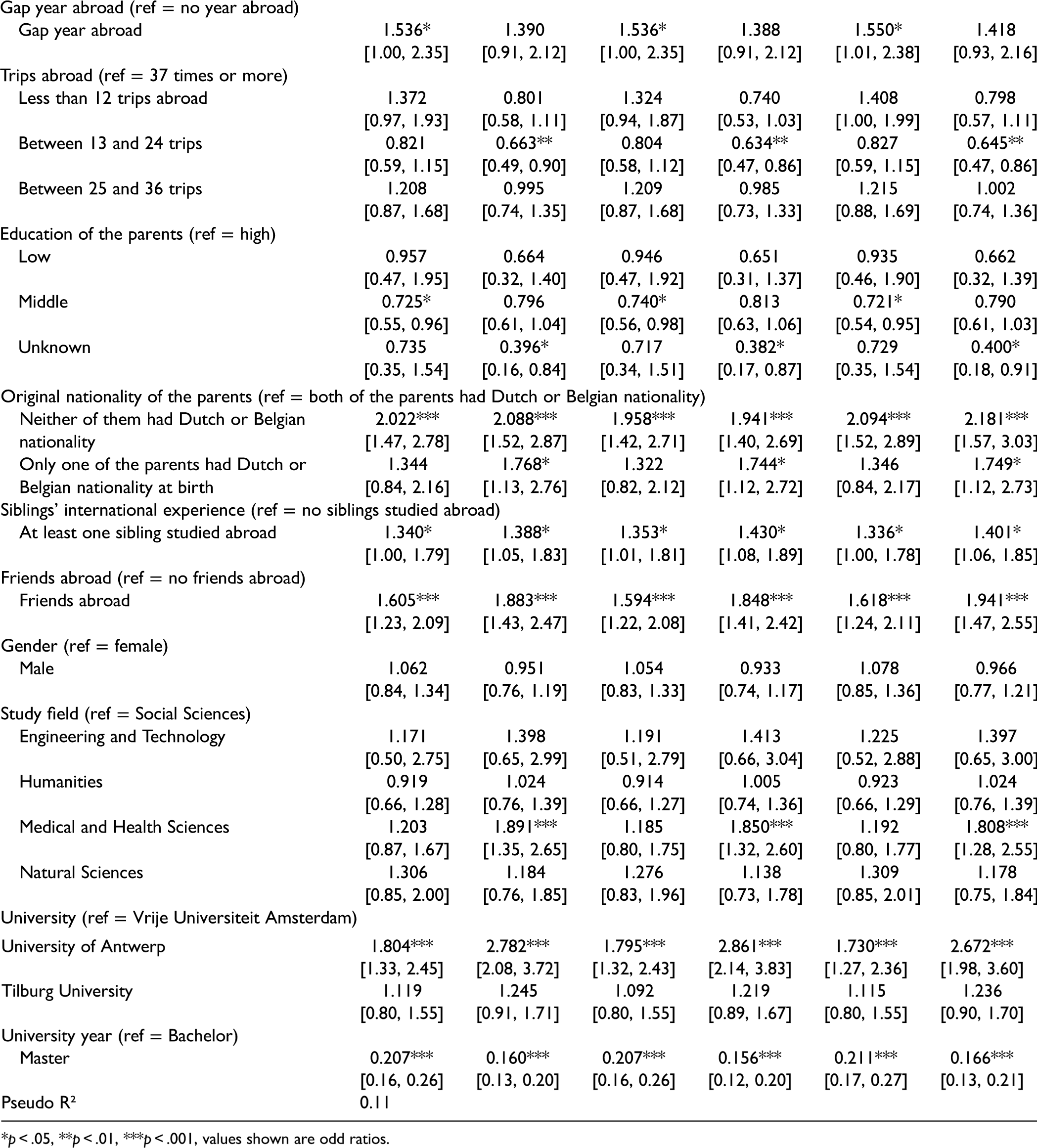
Appendix 1. The relationship between language factors and study abroad aspirations,full table (N = 2,327).
| Gap year abroad (ref = no year abroad) | ||||||
| Gap year abroad | 1.536* [1.00, 2.35] |
1.390 [0.91, 2.12] |
1.536* [1.00, 2.35] |
1.388 [0.91, 2.12] |
1.550* [1.01, 2.38] |
1.418 [0.93, 2.16] |
| Trips abroad (ref = 37 times or more) | ||||||
| Less than 12 trips abroad | 1.372 |
0.801 |
1.324 |
0.740 |
1.408 |
0.798 |
| Between 13 and 24 trips | 0.821 |
0.663** |
0.804 |
0.634** |
0.827 |
0.645** |
| Between 25 and 36 trips | 1.208 |
0.995 |
1.209 |
0.985 |
1.215 |
1.002 |
| Education of the parents (ref = high) | ||||||
| Low | 0.957 |
0.664 |
0.946 |
0.651 |
0.935 |
0.662 |
| Middle | 0.725* |
0.796 |
0.740* |
0.813 |
0.721* |
0.790 |
| Unknown | 0.735 |
0.396* |
0.717 |
0.382* |
0.729 |
0.400* |
| Original nationality of the parents (ref = both of the parents had Dutch or Belgian nationality) | ||||||
| Neither of them had Dutch or Belgian nationality | 2.022*** |
2.088*** |
1.958*** |
1.941*** |
2.094*** |
2.181*** |
| Only one of the parents had Dutch or Belgian nationality at birth | 1.344 |
1.768* |
1.322 |
1.744* |
1.346 |
1.749* |
| Siblings’ international experience (ref = no siblings studied abroad) | ||||||
| At least one sibling studied abroad | 1.340* |
1.388* |
1.353* |
1.430* |
1.336* |
1.401* |
| Friends abroad (ref = no friends abroad) | ||||||
| Friends abroad | 1.605*** |
1.883*** |
1.594*** |
1.848*** |
1.618*** |
1.941*** |
| Gender (ref = female) | ||||||
| Male | 1.062 |
0.951 |
1.054 |
0.933 |
1.078 |
0.966 |
| Study field (ref = Social Sciences) | ||||||
| Engineering and Technology | 1.171 |
1.398 |
1.191 |
1.413 |
1.225 |
1.397 |
| Humanities | 0.919 |
1.024 |
0.914 |
1.005 |
0.923 |
1.024 |
| Medical and Health Sciences | 1.203 |
1.891*** |
1.185 |
1.850*** |
1.192 |
1.808*** |
| Natural Sciences | 1.306 |
1.184 |
1.276 |
1.138 |
1.309 |
1.178 |
| University (ref = Vrije Universiteit Amsterdam) | ||||||
| University of Antwerp | 1.804*** |
2.782*** |
1.795*** |
2.861*** |
1.730*** |
2.672*** |
| Tilburg University | 1.119 |
1.245 |
1.092 |
1.219 |
1.115 |
1.236 |
| University year (ref = Bachelor) | ||||||
| Master | 0.207*** |
0.160*** |
0.207*** |
0.156*** |
0.211*** |
0.166*** |
| Pseudo R² | 0.11 | |||||
*p < .05, **p < .01, ***p < .001, values shown are odd ratios.
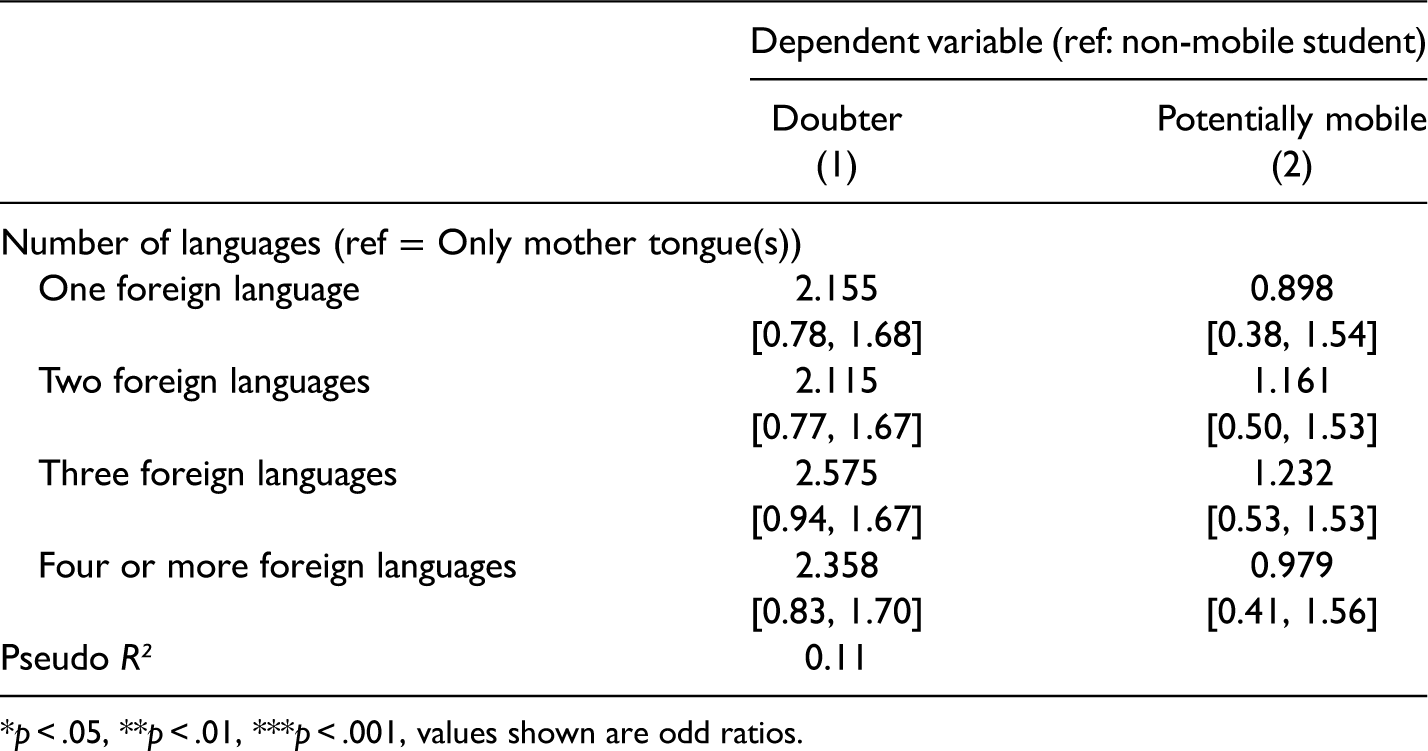
Appendix 2. The robustness check. ‘Only mother tongue’ as a reference group.
| Dependent variable (ref: non-mobile student) | ||
|---|---|---|
| Doubter |
Potentially mobile |
|
| Number of languages (ref = Only mother tongue(s)) | ||
| One foreign language | 2.155 [0.78, 1.68] |
0.898 [0.38, 1.54] |
| Two foreign languages | 2.115 [0.77, 1.67] |
1.161 [0.50, 1.53] |
| Three foreign languages | 2.575 [0.94, 1.67] |
1.232 [0.53, 1.53] |
| Four or more foreign languages | 2.358 [0.83, 1.70] |
0.979 [0.41, 1.56] |
| Pseudo R² | 0.11 | |
*p < .05, **p < .01, ***p < .001, values shown are odd ratios.
Appendix 3. The role of foreign language skills in destination choices (N = 1,005).
| Country 49 FE | 10.80*** [7.23, 16.14] |
| Country 50 FE | 0.70 [0.35, 1.39] |
| Country 51 FE | 11.79*** [7.89, 17.61] |
| Country 52 FE | 0.02*** [0, 0.17] |
| Country 53 FE | 0.24** [0.08, 0.69] |
| Country 54 FE | 0.28** [0.12, 0.68] |
| Country 55 FE | 0.06** [0.01, 0.44] |
| Country 56 FE | 0.02*** [0, 0.17] |
| Country 57 FE | 0.96 [0.51, 1.79] |
| Country 58 FE | 0.06** [0.01, 0.44] |
| Country 59 FE | 0.03*** [0, 0.23] |
| Country 60 FE | 0.02*** [0, 0.17] |
| Country 61 FE | 0.36* [0.15, 0.89] |
| Country 62 FE | 6.73*** [4.48, 10.11] |
| Country 63 FE | 0.00 [0, 0] |
| Country 64 FE | 0.28** [0.12, 0.68] |
| Country 65 FE | 4.53*** [2.88, 7.14] |
| Country 66 FE | 1.33 [0.78, 2.27] |
| Country 67 FE | 0.06*** [0.01, 0.26] |
| Country 68 FE | 0.38* [0.17, 0.83] |
| Country 69 FE | 0.18** [0.05, 0.59] |
| Country 70 FE | 0.23** [0.09, 0.61] |
| Country 71 FE | 0.12** [0.03, 0.51] |
| Country 72 FE | 4.47*** [2.82, 7.09] |
| Country 73 FE | 0.28** [0.12, 0.68] |
| Country 74 FE | 0.56 [0.27, 1.18] |
| Country 75 FE | 0.06** [0.01, 0.44] |
| Country 76 FE | 0.00 [0, 0] |
| Country 77 FE | 2.61*** [1.59, 4.3] |
| Country 78 FE | 4.66*** [3.06, 7.08] |
| Country 79 FE | 5.50*** [3.63, 8.35] |
| Country 80 FE | 0.07*** [0.02, 0.23] |
| Country 81 FE | 0.71 [0.36, 1.42] |
| Country 82 FE | 0.09*** [0.02, 0.39] |
| Country 83 FE | 0.28** [0.12, 0.68] |
| Country 84 FE | 0.35*** [0.19, 0.66] |
| Country 85 FE | 0.42* [0.18, 0.97] |
| Country 86 FE | 1.54 [0.88, 2.69] |
| Country 87 FE | 0.40** [0.21, 0.73] |
| Country 88 FE | 0.53 [0.25, 1.14] |
| Country 89 FE | 0.00 [0, 0] |
| Country 90 FE | 0.18** [0.05, 0.59] |
| Country 91 FE | 0.06*** [0.01, 0.4] |
| Country 92 FE | 2.65*** [1.62, 4.32] |
| Country 93 FE | 0.21*** [0.1, 0.45] |
| Country 94 FE | 3.93*** [2.48, 6.23] |
| Country 95 FE | 0.06** [0.01, 0.45] |
| Country 96 FE | 8.17*** [5.3, 12.6] |
| Country 97 FE | 0.07*** [0.02, 0.29] |
| Country 98 FE | 0.12** [0.03, 0.5] |
| Country 99 FE | 0.11** [0.03, 0.48] |
| Country 100 FE | 3.10*** [2.03, 4.74] |
| Country 101 FE | 0.06** [0.01, 0.44] |
| Country 102 FE | 0.06** [0.01, 0.44] |
| Country 103 FE | 0.07*** [0.02, 0.23] |
| Country 104 FE | 0.05*** [0.01, 0.2] |
| Country 105 FE | 0.12*** [0.04, 0.3] |
| Country 106 FE | 0.06** [0.01, 0.45] |
| Country 107 FE | 0.06** [0.01, 0.44] |
| Country 108 FE | 0.23** [0.08, 0.65] |
*p < .05, **p < .01, ***p < .001, values shown are odd ratios.